The mainstream news media’s reaction to the new movie, “Kill the Messenger,” has been tepid, perhaps not surprising given that the MSM comes across as the film’s most unsympathetic villain as it crushes journalist Gary Webb for digging up the Contra-cocaine scandal in the mid-1990s after the major newspapers thought they had buried it in the 1980s.
Not that the movie is without other villains, including drug traffickers and “men in black” government agents. But the drug lords show some humanity and even honesty as they describe how they smuggled drugs and shared the proceeds with the Nicaraguan Contra rebels, President Ronald Reagan’s beloved “freedom fighters.”
By contrast, the news executives for the big newspapers, such as the Washington Post and the Los Angeles Times, come across as soulless careerists determined to maintain their cozy relations with the CIA’s press office and set on shielding their failure to take on this shocking scandal when it was playing out in the 1980s.
So, in the 1990s, they concentrated their fire on Webb for alleged imperfections in his investigative reporting rather than on U.S. government officials who condoned and protected the Contra drug trafficking as part of Reagan’s Cold War crusade.
Webb’s cowardly editors at the San Jose Mercury News also come across badly as frightened bureaucrats, cringing before the collective misjudgment of the MSM and crucifying their own journalist for the sin of challenging the media’s wrongheaded conventional wisdom.
That the MSM’s “group think” was upside-down should no longer be in doubt. In fact, the Contra-cocaine case was conclusively established as early as 1985 when Brian Barger and I wrote the first story on the scandal for the Associated Press. Our sourcing included some two dozen knowledgeable people including Contras, Contra supporters and U.S. government sources from the Drug Enforcement Administration and even Reagan’s National Security Council staff.
But the Reagan administration didn’t want to acknowledge this inconvenient truth, knowing it would sink the Contra war against Nicaragua’s leftist Sandinista government. So, after the AP story was published, President Reagan’s skillful propagandists mounted a counteroffensive that elicited help from editors and reporters at the New York Times, the Washington Post and other major news outlets.
Thus, in the 1980s, the MSM treated the Contra-cocaine scandal as a “conspiracy theory” when it actually was a very real conspiracy. The MSM’s smug and derisive attitude continued despite a courageous investigation headed by Sen. John Kerry which, in 1989, confirmed the AP reporting and took the story even further. For his efforts, Newsweek dubbed Kerry “a randy conspiracy buff.”
This dismissive treatment of the scandal even survived the narcotics trafficking trial of Panama’s Manuel Noriega in 1991 when the U.S. government called witnesses who implicated both Noriega and the Contras in the cocaine trade.
The Power of ‘Group Think’
What we were seeing was the emerging power of the MSM’s “group think,” driven by conformity and careerism and resistant to both facts and logic. Once all the “smart people” of Official Washington reached a conclusion – no matter how misguided – that judgment would be defended at nearly all costs, since none of these influential folks wanted to admit error.
That’s what Gary Webb ran into in 1996 when he revived the Contra-cocaine scandal by focusing on the devastation that one Contra drug pipeline caused by feeding into the production of crack cocaine. However, for the big newspapers to admit they had ducked such an important story – and indeed had aided in the government’s cover-up – would be devastating to their standing.
So, the obvious play was to nitpick Webb’s reporting and to destroy him personally, which is what the big newspapers did and what “Kill the Messenger” depicts. The question today is: how will the MSM react to this second revival of the Contra-cocaine scandal?
Of the movie reviews that I read, a few were respectful, including the one in the Los Angeles Times where Kenneth Turan wrote: “The story Webb related in a series of articles … told a still-controversial tale that many people did not want to hear: that elements in the CIA made common cause with Central American drug dealers and that money that resulted from cocaine sales in the U.S. was used to arm the anti-communist Contras in Nicaragua.
“Although the CIA itself confirmed, albeit years later, that this connection did in fact exist, journalists continue to argue about whether aspects of Webb’s stories overreached.”
A normal person might wonder why – if the CIA itself admitted (as it did) that it was collaborating with drug dealers – journalists would still be debating whether Webb may have “overreached” (although in reality he actually understated the problem). Talk about missing “the lede” or the forest for the trees.
What kind of “journalist” obsesses over dissecting the work of another journalist while the U.S. government gets away with aiding and abetting drug traffickers?
Turan went on to note the same strange pattern in 1996 after Webb’s series appeared: “what no one counted on was that the journalistic establishment — including elite newspapers such as the Los Angeles Times — would attempt to discredit Webb’s reporting. The other newspapers questioned the shakier parts of his story and proving the truth of what one of Webb’s sources tells him: ‘You get the most flak when you’re right above the target.’”
Sneering Still
However, other reviews, including those in the New York Times and the Washington Post, continued the snarky tone that pervaded the sneering treatment of Webb that hounded him out of journalism in 1997 and ultimately drove him to suicide in 2004. For instance, the headline in the Post’s weekend section was “Sticking with Webb’s Story,” as in the phrase “That’s my story and I’m sticking to it.”
The review by Michael O’Sullivan stated: “Inspired by the true story of Gary Webb — the San Jose Mercury News reporter known for a controversial series of articles suggesting a link between the CIA, the California crack epidemic and the Nicaraguan Contras — this slightly overheated drama begins and ends with innuendo. In between is a generous schmear of insinuation.”
You get the point. The allegations, which have now been so well-established that even the CIA admits to them, are “controversial” and amount to “innuendo” and “insinuation.”
Similarly, the New York Times review by Manohla Dargis disparaged Webb’s “Dark Alliance” series as “much-contested,” which may be technically accurate but fails to recognize that the core allegations of Contra-cocaine trafficking and U.S. government complicity were true – something an earlier article by Times’ media writer David Carr at least had the decency to acknowledge. [See Consortiumnews.com’s “NYT’s Belated Admission on Contra-Cocaine.”]
In a different world, the major newspapers would have taken the opening created by “Kill the Messenger” to make amends for their egregious behavior in the 1980s – in discrediting the scandal when the criminality could have been stopped – and for their outrageous actions in the 1990s in destroying the life and career of Gary Webb. But it appears the big papers mostly plan to hunker down and pretend they did nothing wrong.
For those interested in the hard evidence proving the reality of the Contra-cocaine scandal, I posted a Special Report on Friday detailing much of what we know and how we know it. [See Consortiumnews.com’s “The Sordid Contra-Cocaine Saga.”]
As for “Kill the Messenger,” I had the pleasure of watching it on Friday night with my old Associated Press colleague Brian Barger – and we both were impressed by how effectively the movie-makers explained a fairly complicated tale about drugs and politics. The personal story was told with integrity, aided immensely by Jeremy Renner’s convincing portrayal of Webb.
There were, of course, some Hollywood fictional flourishes for dramatic purposes. And it was a little weird hearing my cautionary advice to Webb – delivered when we talked before his “Dark Alliance” series was published in 1996 – being put into the mouth of a fictional Kerry staffer.
But those are minor points. What was truly remarkable about this movie was that it was made at all. Over the past three decades, many directors and screenwriters have contemplated telling the sordid story of Contra-cocaine trafficking but all have failed to get the projects “green-lighted.”
The conventional wisdom in Hollywood has been that such a movie would be torn apart by the major media just as Webb’s series (and before that the AP articles and Kerry’s report) were. But so far the MSM has largely held its fire against “Kill the Messenger,” relying on a few snide asides and knowing smirks.
Perhaps the MSM simply assumes that the old conventional wisdom will hold and that the movie will soon be forgotten. Or maybe there’s been a paradigm shift – and the MSM realizes that its credibility is shot (especially after its catastrophic performance regarding Iraq’s WMD) and it is losing its power to dictate false narratives to the American people.
~
[To learn how you can hear a December 1996 joint appearance at which Robert Parry and Gary Webb discuss their reporting, click here.]
Investigative reporter Robert Parry broke many of the Iran-Contra stories for The Associated Press and Newsweek in the 1980s. You can buy his new book, America’s Stolen Narrative, either in print here or as an e-book (from Amazon and barnesandnoble.com).
In his speech before the meeting of the 69th session of the United Nations General Assembly on September 24, U.S. President Barack Obama resurrected yet another turn of phrase used most often by those wishing to make the case for dropping bombs on people and things.In an effort to justify U.S.-led airstrikes in Syria, Obama declared that the militant organization known as ISIS (or ISIL or IS, the ‘Islamic State’) not only commits the “most horrific crimes imaginable,” but is so vicious, violent, and uniquely brutal that it “forces [the international community] to look into the heart of darkness,” adding later:
No god condones this terror. No grievance justifies these actions. There can be no reasoning, no negotiation, with this brand of evil. The only language understood by killers like this is the language of force. So the United States of America will work with a broad coalition to dismantle this network of death.
The rhetoric used by Obama to defend yet anotherillegal and ill-conceived American air campaign in the Middle East – an undefined, unconstitutional operation designed to inevitably expand and escalate – is well-worn. The very same word salad, notably the “language of force” line, has been routinely served up to justify lethal action against a seemingly intractable foe and it puts the onus on the target of that aggression for bringing such violence upon itself: if they weren’t such barbarians, we too wouldn’t have to resort to barbarism.
So, bombs away. After all, military action was our only choice, we are told, despite the fact that the declared targets of our artillery pose no direct or imminent threat to the United States. The irrational and bloodthirsty comprehend only the heat-seeking and bunker-busting. Diplomacy is impossible, thus destruction is imperative.
One of the most noticeable and ubiquitous features of the language of counter-terrorism is its invariable appeal to identity: terrorists are endlessly demonised and vilified as being evil, barbaric and inhuman, while America and its coalition partners are described as heroic, decent and peaceful – the defenders of freedom.
“At its most basic level, the language used by officials is attempt to convince the public that a ‘war’ against all forms of terrorism is necessary, reasonable, inherently good and winnable,” he added.
Over the past few decades, whenever bombing Iraq is on the horizon, we’ve heard much of the same from government officials and their pro-war mouthpieces in the media and think tank establishment.
In late 1990, Martin Indyk, founder and executive director of the AIPAC-launched Washington Institute for Near East Policy (WINEP) and later senior advisor to presidents Bill Clinton and Barack Obama, wrote, “Saddam Hussein has demonstrated that he only speaks and understands the language of force.”
In 1991, Maine Representative Olympia Snowe supported the authorization of Operation Desert Storm due to her determination that successfully confronting Saddam Hussein required “a credible military threat be maintained against a brutal aggressor who only understands the language of force.”
Just days before Bill Clinton’s first inauguration as president in January 1993, the George H.W. Bush administration was again bombing Iraq. Utah Senator Orrin Hatch insisted, “Unfortunately, Saddam Hussein knows only the language of force. President Bush has delivered a message that Saddam is certain to understand,” adding, “The air strikes are not enough.”
In September 1996, when the Clinton administration itself was routinely bombing Iraq, Secretary of State Warren Christopher expressed his frustration with Russian condemnation of such attacks. He told the press he was “disappointed” the Russians “don’t understand as we do that the only language that Saddam understands is the language of force.” This became a go-to phrase in the administration’s talking points.
Speaking to members of the group “Seeds of Peace” on September 3, 1996, Christopher made arguments eerily reminiscent of what we’ve heard recently with regard to Obama’s current operation:
The record is, unfortunately, all too clear. Saddam has threatened and invaded his neighbors, developed and used weapons of mass destruction, sponsored countless acts of terrorism, and for the last two decades he has relentlessly persecuted the Kurds and the Shiites. When Saddam tests the will and resolve of the international community, our response must be and will be forceful and immediate.
Time and again we’ve seen that the United States leadership is essential to provide that response. Military action that the United States launched today has made it clear that Saddam will pay a price whenever he engages in aggression. We are answering in the only language he understands, the language of force.
Later that month, on September 12, 1996, former Secretary of State James Baker testified before the Senate Armed Services Committee and encouraged more military attacks, saying, “Iraq under Saddam Hussein only understands force. And more to the point, it seems only to understand overwhelming force. When we respond in a situation like this, I do not believe that it needs to be limited so as to be proportionate to the provocation.”
In their book about the 2003 invasion of Iraq and subsequent occupation, New York Times correspondent Michael R. Gordon and former Marine lieutenant general Bernard Trainor recount the words of a high-ranking officer of the U.S. Army’s Fourth Infantry Division sent to attack the city of Tikrit. “The only thing these sand niggers understand is force,” the officer remarked, “and I’m about to introduce them to it.” General Ray Odierno, who led the 4th ID’s attack, is currently the U.S. Army’s Chief of Staff.
The messaging is clear. As Richard Jackson notes, “In this most rudimentary sense, the language accompanying the ‘war on terrorism’ is a public relations or propaganda exercise; it is designed to ‘sell’ the policies of counter-terrorism.” In order to build support for military action, the public is repeatedly told that “the terrorists are inhuman barbarians who deserve to be eradicated from civilised society; the threat posed by terrorism is catastrophic and it is only rational to respond with all due force; and the American-led war against terrorism is by definition a good and just war.”
In a video message allegedly made and distributed on October 20, 2001, al-Qaeda leader Osama bin Laden declared, “Bush and Blair… don’t understand any language but the language of force. Every time they kill us, we kill them, so the balance of terror is achieved,” according to a declassified report released by British intelligence in November 2001.
Al-Qaeda leader Ayman Al-Zawahiri, in a 2003 sermon, reportedly announced, “The Crusaders [Americans] and the Jews only understand the language of force, and they only understand the return of coffins and destroyed interests and burned towers and destroyed economy.”
In a statement claiming responsibility for simultaneous suicide bombings that killed 155 people in Baghdad on October 25, 2009, an anti-occupation, al-Qaeda linked group known then as the Islamic State in Iraq explained, “Among the chosen targets were the ministry of oppression known as the Ministry of Justice and the Baghdad provincial assembly… The enemies only understand the language of force.”
Prior to the beheading of American journalist James Foley, on August 12, 2014, ISIS reportedly sent an email to Foley’s family announcing their intention to murder him in retaliation for U.S. airstrikes and delivering a wider message to the American government and people. Claiming to have provided “many chances to negotiate the release of your people via cash transactions” and “prisoner exchanges,” ISIS wrote that it was clear “this is NOT what you are interested in.”
The email went on: “You have no motivation to deal with the Muslims except with the language of force, a language you were given in ‘Arabic translation’ when you attempted to occupy the land of Iraq! Now you return to bomb the Muslims of Iraq once again, this time resorting to Arial [sic] attacks and ‘proxy armies’, all the while cowardly shying away from a face-to-face confrontation!”
“You do not spare our weak, elderly, women or children so we will NOT spare yours!” the email warned. “You and your citizens will pay the price of your bombings!”
In his speech before the United Nations last week justifying expanded airstrikes against ISIS, Obama thus recycled the very phrase used by ISIS to justify its own violence.
Still, the phrase has even older roots.
Zionism and Its Malcontents
In 1891, after one of his frequent travels through Palestine, Ahad Ha’am, the Ukrainian-born Jewish essayist known widely as the founder of cultural Zionism, lamented that Zionist settlers acted like “the only language the Arabs understand is that of force” and “behave towards the Arabs with hostility and cruelty, trespass unjustly upon their boundaries, beat them shamefully without reason and even brag about it, and nobody stands to check this contemptible and dangerous tendency.”
This linguistic articulation of Zionist sentiment was already so prevalent prior to the establishment of the State of Israel that renowned political theorist Hannah Arendt turned the phrase on its head in her 1948 essay, “Peace or Armistice in the Near East?,” published two years later in the Review of Politics. “All hopes to the contrary notwithstanding,” she wrote, as the Nakba raged on, “it seems as though the one argument the Arabs are incapable of understanding is force.”
In February 1992, following the assassination of Hezbollah leader Sheikh Abbas Moussawi, killed in southern Lebanon in an Israeli airstrike along with his wife and five-year-old son, Israeli Defense Minister Moshe Arens boasted, “We’ve learned that terror organizations like Hezbollah only understand one language – the language of force.”
Prior to Israeli parliamentary elections in 2009, supporters of the fascistic Avigdor Lieberman enthusiastically endorsed this narrative. “He’s the kind of leader we’ve been waiting for, he knows how to talk to Arabs in their own language, the language of force,” an Israeli woman who resides in a town close to the border with Gaza told the press.
Predictably, those opposed to Israel policies of colonialism, annexation, occupation, and military aggression have also resorted to such rhetoric. “Our enemy knows only the language of force and negotiations are useless,” Palestinian officials have longeddeclared. In 1998, a resident of the Jabaliya refugee camp in Gaza said this of Israeli leadership: “They only understand the language of force, not of peace.” A decade later, a Palestinian professor in Gaza said that same of Hamas.
From Stalin to Putin
While the “language of force” has long been used in the West to describe the supposed base nature and unsophisticated lack of humanity of the savage “Oriental” – a colonial, supremacist discourse popularized all the more after the attacks of September 11, 2001 – this discursive process has not been reserved for Arab or Muslim targets alone.
In his famous March 1946 “Iron Curtain Speech,” Winston Churchill expressed his conviction that, for Soviet Russia and its Communist satellites, “there is nothing for which they have less respect than for weakness, especially military weakness.” Thus, he reasoned, “Western Democracies” must “stand together” lest “they become divided or falter in their duty and if these all-important years are allowed to slip away then indeed catastrophe may overwhelm us all.”
68 years later, speaking at a Center for Strategic and International Studies forum in March 2014, New York Times columnist Roger Cohen paraphrased Churchill’s admonition, saying of Russian president Vladimir Putin that “the language he understands is force” and warning that, “unless there is a strong response, and a united response above all,” to Russian actions in Crimea and eastern Ukraine, “from the United States and Europe together to this, and a reassertion of the transatlantic alliance and NATO, then we could be heading in a very worrying direction.”
In May 2014, prior to his election as new Ukrainian president, billionaire confectionery magnate Petro Poroshenko stated that, in order to deal with pro-Russian separatists — whom he called “terrorists” — “we should find out the right language they understand, and that would be the language of force.”
Vietnam
On April 19, 1965, as American bombs fell in Vietnam, conservative columnist Russell Kirk wrote, “Like the Nazis, the Asiatic Communists prefer guns to butter,” and accused North Vietnamese leader Ho Chi Minh of aggressive “conquest”:
At this stage of affairs, only effective military resistance and retaliation can dissuade Ho Chi Minh from pursuing the war with increased vigor. The language of force, indeed, Communists understand.
General William C. Westmoreland, commander of U.S. forces in Vietnam at the time of the My Lai Massacre, and soon-to-be Army Chief of Staff, often and openly maintained that “meaningful force” was “the only language they [the North Vietnamese] understood.”
As late as March 1975, after nearly all American troops had been withdrawn from the conflict, and following a meeting with President Gerald Ford, the then-retired Westmoreland told journalists that “the culprit in this whole thing is Hanoi,” adding, “The only language Hanoi understands is the language of force and I think it’s too bad that we couldn’t again mine Haiphong harbor and that the President doesn’t have authority to use tactical air and B52 strikes to hit the Communist supply lines.”
Six weeks later, Saigon fell to the North Vietnamese Army.
Nicaragua
On the floor of the United States Congress on February 4, 1988, long-serving South Carolina Senator Ernest Hollings advocated for increased military aid sent to the Contras in Nicaragua. Denouncing Congressional Democrats as “not committed to fight for anything” and “only willing to posture and talk,” Hollings declared that “there is no hope in Nicaragua without aid to the Contras.” Dismissing diplomacy, he bellowed, “Peace plans? The Marxists only understand the language of force.”
Later that year, in August 1988, Nicaraguan Contra founder and commander Enrique Bermúdez also made the case for continued military support from the U.S. government. “The only language the Sandinistas understand or respect is the language of force,” he insisted. “If the Sandinistas weren’t receiving massive assistance from the Soviet Union, Cuba and other communist countries, the Nicaraguan people wouldn’t have any need of foreign sources of support.”
Repeated Rhetoric
The ubiquity of the “language of force” line has rendered the phrase effectively meaningless, levied at one’s enemies in order to silence debate and promote military action.
The same rhetoric is used by tyrants as well to describe dissident, resistance, and revolutionary movements. For instance, in early February 2011, as Cairo’s Tahrir Square swelled with increasing demands for Egyptian dictator Hosni Mubarak’s resignation, a CNN report noted that the U.S.-backed leader had long “argued that Egypt had to adopt a tight security policy to combat terrorism; that the forces of political Islam do not understand anything but the language of force and a strong government grip.”
A year ago, in a September 20, 2013 article, David Sanger of the New York Times credited Obama’s economic warfare on Iran and threats of military action in Syria with restarting nuclear negotiations and, with the help of Russia, dismantling Assad’s chemical weapons. With regard to “President Bashar al-Assad of Syria, President Vladimir V. Putin of Russia, and Iran’s erratic mullahs,” Sanger wrote, Obama was experiencing “the long-delayed fruits of the administration’s selective use of coercion in a part of the world where that is understood.”
Speaking before the United Nations General Assembly two weeks later, Israeli Prime Minister Benjamin Netanyahu said that, “when it comes to Iran, the greater the pressure, the greater the chance” of successfully denying the nation their inalienable right to a domestic nuclear energy program.
For years, however, Iranian officials from three successive presidential administrations have consistently pushed back against this offensive presumption.
Back in June 2003, as U.S.-led pressure over Iran’s nuclear program increased, Iranian Foreign Ministry spokesman Hamid Reza Asefi warned that unjust accusations and illegal threats would strengthen the resolve of conservative elements in the government opposed to diplomacy with the West. “Excessive pressure on Iran would untie the hands of those who do not believe in dialogue,” he said, “Even those who favour constructive talks would not accept the language of force and threat.”
Two years later, as dubious allegations, wild predictions, and threats of unprovoked attack mounted, Iranian President Mahmoud Ahmadinejad addressed the nuclear issue in his first speech before the UN General Assembly on September 17, 2005. Western powers and Israel, he said,
have misrepresented Iran’s healthy and fully safeguarded technological endeavors in the nuclear field as pursuit of nuclear weapons. This is nothing but a propaganda ploy. The Islamic Republic of Iran is presenting in good faith its proposal for constructive interaction and a just dialogue. However, if some try to impose their will on the Iranian people through resort to a language of force and threat with Iran, we will reconsider our entire approach to the nuclear issue.
The next year, leading Iranian cleric Ahmad Khatami, a senior member of the Assembly of Experts, noted in a nationally broadcast weekly sermon, “Iran is favourable toward negotiations that are just, logical and without preconditions, but refuses the language of force,” adding, “Using the language of force with Iran is a foolish and clumsy attitude.”
“Resolutions, sanctions and threats have always made the issue more complicated,” Iran’s IAEA envoy Ali-Asghar Soltanieh said in late 2009 before a Board of Governor’s vote on a resolution focusing on the recently-announced uranium enrichment facility at Fordow. “We recommend the IAEA not to refer to such methods and use the language of logic rather than force.”
Throughout 2012, Ahmadinejad reaffirmed his assertion that Iran would never buckle to the West’s “language of force and insult.”
Earlier this year, following a round of nuclear negotiations in Vienna, Iranian Foreign Minister Mohammad Javad Zarif remarked that “the language of force has no place in foreign policy agendas” and that “any state using the ‘all-options-on-the-table’ rhetoric is actually taking outdated measures.”
In late 2009, then IAEA chief and Nobel Peace Prize laureate Mohamed ElBaradei concurred with this message. “[U]sing the language of force is not helpful. It leads to confrontation, to the other country taking counteraction,” he said in an interview with The Hindu. “It is better to forget the language of coercion and focus on trying to engage in dialogue.”
The Force of Language
Barack Obama, the drone president who defended perpetual war while receiving his own Nobel prize, disagrees. In his UN speech, Obama has again joined the ranks of those who justify the use of force through the abuse of weaponized language. The appeal to an adversary’s unprecedented “brand of evil” serves not to illuminate the challenges faced, but rather to obfuscate an informed comprehension of current affairs. It is the ultimate conversation-stopper.
… the language of good and evil suppresses questions: we don’t need to ask what the motivations or aims of the terrorists were if they are ‘evil,’ as ‘evil’ is its own motivation and its own self-contained explanation. Evil people do not have any politics and there is no need to examine their causes or grievances. Evil people do what they do simply because they are evil. Clearly, the use of this language is a way of encouraging quiescence and displacing more complex understandings of political and social events. As such, it qualifies as demagoguery by appealing to ignorance and arrogance through a distorted representation of the nature of evil.
As the United States and its coalition partners embark once again on an ill-fated, military misadventure in the Middle East, the recycled language used to promote such policies is predictable. And this time around, as in the past, it’s effectiveness is proven.
A FoxNewspoll released this week shows that upwards of 78% of Americans approve of U.S. airstrikes against ISIS in Iraq and Syria, while 55% believe such action is “not aggressive enough.” Additionally, 57% of respondents are supportive of a ground operation if the bombing campaign proves ineffective or indecisive. A Washington Post/ABC News poll this week produced similar results.
Yet, beyond all the political rhetoric and domestic jingoism, for those on the ground in Iraq and Syria, including the dozens of civilians already killed in U.S. airstrikes against ISIS, bombs drop louder than words.
Russian President Vladimir Putin has endorsed a call by his Argentinean counterpart Cristina Fernandez de Kirchner to curb Western dominance in international politics.
Putin gave his support during a meeting with Kirchner in the Argentinean capital, Buenos Aires, on Saturday.
The Russian leader also said Moscow and Buenos Aires share a close view on international relations.
During the meeting, Kirchner emphasized that global institutions must be overhauled and made more multilateral, adding, “We firmly believe in multipolarity, in multilateralism, in a world where countries don’t have a double standard.”
In addition, the two leaders discussed military cooperation and oversaw their delegations signing a series of bilateral deals, including one on nuclear energy.
Putin’s visit to Argentina is part of his six-day tour of Latin America aimed at boosting trade and ties in the region, according to Russian state media.
The Russian leader’s trip will next take him to Brazil, where he is scheduled to attend the gathering of the economic alliance, BRICS (Brazil, Russia, India, China and South Africa), in Brazil on July 15 and 16.
Putin’s Latin American tour began on July 11 in Cuba, where he met with President Raul Castro and his brother, Fidel Castro. During his stay in the capital, Havana, Putin signed a law writing off 90 percent of Cuba’s USD 35-billion Soviet-era debt.
Following his visit to Cuba, Putin made a surprise visit to Nicaragua, where he held talks with President Daniel Ortega.
The torture death of US Drug Enforcement Administration (DEA) agent Enrique (“Kiki”) Camarena near Guadalajara in the western Mexican state of Jalisco in February 1985 was linked to drug running by the US-backed “contra” rebels seeking to overthrow the leftist government of Nicaragua, according to two former DEA agents and a former pilot for the US Central Intelligence Agency (CIA). Camarena was kidnapped by criminals working for Rafael Caro Quintero, a founder of the so-called Guadalajara Cartel, and was executed at one of Caro Quintero’s ranches. According to the US, the cartel targeted Camarena because he had uncovered Caro Quintero’s marijuana growing and processing operation. Under pressure from the US, the Mexican government eventually captured Caro Quintero and sentenced him to 60 years in prison for Camarena’s murder.
The new allegations appeared on an Oct. 10 broadcast by the rightwing US-based Fox television network and in an Oct. 12 article published by the left-leaning Mexican weekly Proceso. Both reports were based on interviews with Phil Jordan, an ex-director of the DEA’s El Paso Intelligence Center (EPIC); former DEA agent Héctor Berrellez, who said he directed the investigation of Camarena’s death; and Tosh Plumlee, who worked as a pilot for SETCO, a CIA-linked airline that flew military supplies to the contras. It isn’t clear why Fox chose to air the allegations now, but attention on the Camarena murder increased after a Mexican judge released Caro Quintero from prison on a technicality on Aug. 9 of this year.
According to the Fox and Proceso reports, CIA operatives had infiltrated Mexico’s now-defunct Federal Security Directorate (DFS), many of whose agents provided protection for Caro Quintero’s criminal activities in the 1980s, including the Camarena kidnapping and murder. CIA infiltrators were present when the DEA agent was killed, the reports allege. “I was told by Mexican authorities… that CIA operatives were in there,” Jordan said to Fox News. “Actually conducting the interrogation. Actually taping Kiki.” Ex-DEA agent Berrellez gave Proceso the name of at least one CIA operative he claimed was involved. “Two witnesses identified Félix Ismael Rodríguez,” he said.
The Cuban-born Rodríguez was a long-time US agent who was active in the Bay of Pigs invasion, in the Vietnam war and in the October 1967 execution of Argentine revolutionary Ernesto (“Che”) Guevara in Bolivia. In the middle 1980s Rodríguez was in El Salvador working with another Cuban-born agent, Luis Posada Carriles, supplying contra operations [see Update #1185]. According to the Proceso report, Rodríguez introduced the Honduran drug trafficker Juan Matta Ballesteros to the Guadalajara cartel. Matta allegedly used his Colombian connections to supply cocaine to the cartel, with the complicity of the CIA, which received part of the money and used it to supply arms and other military equipment to the contras. The reason for Camarena’s murder, according to Proceso, was that Camarena had “discovered that his own government was collaborating with Mexican narco trafficking in its illicit business.”
The CIA denies the accusations. “[I]t’s ridiculous to suggest that the CIA had anything to do with the murder of a US federal agent or the escape of his killer,” a CIA spokesperson told Fox News on Oct. 10.
A number of sources reported in the 1980s and early 1990s that the contras were funded in part through drug sales with the help or complicity of the CIA. In 1998 CIA Inspector General Fred Hitz told Congress that the CIA “worked with a variety of … assets [and] pilots who ferried supplies to the contras, who were alleged to have engaged in drug trafficking activity.” The “CIA had an operational interest” in the contras and “did nothing to stop” the drug trafficking, Hitz said. Mainstream US media generally avoided the subject. In 1996 the Mercury News of San Jose, California, ran a series linking the contras to the sale of crack in South Central Los Angeles in the 1980s, but the paper later repudiated the articles. The reporter, Gary Webb, lost his job at the Mercury News and was never employed by a major newspaper again. He died in December 2004, an apparent suicide [see Update #777]. (Fox News 10/10/13; Proceso10/12/13; El País(Madrid) 10/15/13)
Rene Nuñez, president of Nicaragua’s national assembly, announced today that a Chinese investment firm will fund construction of a channel through Nicaragua, an alternative trade route to the Panama Canal.
The new channel will link the Pacific Ocean with the Caribbean Sea, and will be built by a “consortium of investors combined into one firm,” Nuñez, who declined to give more information on the group, said.
The government of Nicaragua’s President Daniel Ortega has introduced two bills to streamline the environmental impact study on the new works, so that the channel can be constructed as soon as possible.
“This is a project that is very important to the country, so we are pursuing it with urgency,” Nuñez said.
President Ortega said that the channel will serve as an alternative to the overcrowded Panama Canal, which is currently undergoing a US$5.2bn expansion project. He also stressed that the Nicaragua Canal will bring jobs to the impoverished in Nicaragua and other Central American countries.
Others oppose the canal, saying the government is pursuing it recklessly.
“I don’t know what is the rush, especially with such a sensitive topic,” said congressman Luis Callejas. “There should be a full consultation with the people, I do not understand why they are rushing the decision.”
Originally the channel was planned to go through the San Juan River, but now Ortega announced it would be built further north, through the waters of Lake Nicaragua.
“Lake Nicaragua should be a source of drinking water for Nicaragua and South America,” argued Environmental Affairs Chair Jaime Incer. He said the lake is currently protected as a “potable water reserve” by a law that Ortega himself passed.
The Nicaraguan National Assembly will debate the two bills on the project, taking into account the environmental impact, on Friday.
The United Nations Food and Agriculture Organization (FAO) will soon recognize Venezuela and 15 other countries for achieving part of the Millennium Development Goal of eradicating hunger.
According to a statement by the FAO Director General José Graziano Da Silva, Venezuela will receive a certificate of recognition at the organization’s next conference to be held in Rome beginning June 15. The recognition is for successfully halving the proportion of people who suffer from hunger, a goal established in 1996 to be achieved by 2015.
FAO statistics say that 13.5% of Venezuelans suffered from hunger in 1990 – 1992, compared to 5% in 2007 – 2012.
The other countries that will be recognized for meeting this goal are Armenia, Azerbaijan, Chile, Fiji, Georgia, Ghana, Guyana, Nicaragua, Peru, Samoa, São Tomé and Principe, Thailand, Uruguay, and Vietnam.
Since the start of the Bolivarian Revolution in 1999, the Venezuelan government has developed a series of policies regarding food and nutrition, that have been recognized by the FAO as helping eradicate hunger in the country.
Local FAO representative Marcelo Resende said in March that the government has been able to “understand that food is everybody’s right and not just the privilege of a few, and it worked based on that.”
MANAGUA – Nicaraguan naval forces and Russian drug enforcement agents seized 100 packages of cocaine on the high seas, state media reported, citing military spokesmen.
The seizure was made 30 nautical miles from Quitasueño key in the Caribbean waters administered by Colombia for 84 years until an International Court of Justice ruling on Nov. 19, 2012, restored sovereignty over the area to Nicaragua, armed forces spokesman Col. Orlando Palacios said.
The cocaine was being smuggled in a two-engine boat and arrests were made, Palacios said, without specifying how many suspects were detained.
Nicaragua’s Caribbean region provides a natural smuggling corridor for drug traffickers moving narcotics from Colombia into the United States.
The Nicaraguan armed forces seized 6,870 kilos of cocaine, arrested 143 people and confiscated 52 boats in 2012, the government said.
Nicaragua and Russia signed an agreement to fight drug trafficking.
Russian officials placed the cornerstone for an anti-drug training center in Managua in March.
The first of three phases of a mega project to build Central America’s largest oil refinery is well underway in Nicaragua. The $6 billion plus initiative was given the rubber stamp last week when it was authorized by the National Assembly.
World champions in arbitrary detention, the United States and the European Union, are now behind a campaign to free a person convicted for drug trafficking in Nicaragua. The US is notorious for its prisons at Guantanamo and Abu Ghraib and for its global network of secret detention centers. Its overseas accomplice, the EU, is also notorious, for having collaborated in setting up that network as well as for its own detention centers wherein tens of thousands of undocumented immigrants languish. Their support for the Puracal campaign is just one more political ploy, another clear example of the US-EU tandem at work to co-opt and corrupt the entire international human rights system.
“Midnight Express” in Central America
On August 2011, U.S. citizen Jason Puracal Zachary was convicted in a Nicaraguan Court of Justice to 22 years in prison for narcotics trafficking and money laundering along with 10 Nicaraguans, also sentenced to long prison terms.
Nine months earlier, Puracal’s home and office had been raided by Nicaraguan authorities without a warrant, an extraordinary procedure permitted in the country’s criminal code for serious cases in which there is suspicion that the investigation risks having evidence destroyed or concealed. Using the latest technology (provided, incidentally, by the United States) traces of narcotics were found in Puracal’s vehicle along with extensive documentation supporting the investigation, which the Nicaraguan judicial authorities argue justifies the charges against him and the other members of the network in which he participated.
As a U.S. national, Puracal has appealed the sentence and hearings begin this week in the district appeals court in Granada.
Jason Puracal is a former Peace Corps volunteer for the United States in Nicaragua. After having met and married a Nicaraguan, he decided to stay in the country, buying a real estate franchise after his volunteer service tour ended. His arrest has led to an unprecedented international campaign in the form of a petition organized in favour of his release which has gathered more than 90 thousand signatures on the internet.
The sentiment is understandable given the ease with which the situation can be turned into a parallel of the famous film Midnight Express (1978), by Alan Parker, from the screenplay by Oliver Stone. In the film, an American drugs trafficker is sentenced to 30 years in a Turkish prison. Over the decades the film, based on a true story, has become a classic of Islamophobia with all the clichés that portray countries of the non-Western “periphery” as lawless places where whites are exposed to all kinds of torture, including sexual abuse, at the hands of corrupt, ruthless and unpredictable locals. After years of enduring inhumane conditions and abandoning all hope of support from the U.S. government, Billy Hayes, the film’s protagonist, decides to escape from prison on his own.
Puracal’s case has been supported by groups in U.S. such as the Innocence Project and has received support from such influential persons as the former director of the U.S. Drug Enforcement Agency (DEA) Tom Cash (who helped prosecute Colombian narcotics kingpin Pablo Escobar) and Irwin Cotler, former Canadian justice minister and Attorney General. Cotler wrote an inflammatory letter to Nicaraguan President Daniel Ortega referring to the Puracal case as one of “arbitrary detention” and “a serious abuse of justice”, according to Nicaragua Dispatch. Even the supposedly prestigious UN Working Group on Arbitrary Detentions recommends the “immediate release” of Jason Puracal.
According to the version of events put forward by the defenders of Puracal, Puracal’s rights were violated by Nicaraguan authorities in their failure to produce a search warrant when entering his home and business office. They also argue that he was denied the right to a proper defense and that his prison sentence is longer than Nicaraguan law allows. Finally they allege that he has been forced to live with seven other prisoners in the same cell, and that at one point he suffered burns from a water kettle used in the prison.
All of these allegations have been rejected outright by the President of the Court of Appeal, Dr. Norman Miranda Castillo, who in turn accused the U.S. Embassy in Managua of interfering in the course of Nicaraguan justice.
“Responsibility to Protect” the Narcos
This past May 24, the Secretary for the UN’s Working Group on Arbitrary Detentions, Miguel De la Lama, sent a letter in response to a request by Jared Genser, on behalf of the “non-profit organization” Perseus Strategies LLC. In the letter, Lama informs Genser that the Working Group on Arbitrary Detention in its sixty-third session issued a “text of opinion”, number 10/2012 on Puracal.
The Working Group on Arbitrary Detention was established by Resolution 1991/42 of the now superseded UN Commission on Human Rights, among other things to investigate cases of arbitrary detention inconsistent with the Universal Declaration of Human Rights, a task that according to the United Nations should be carried out “with discretion, objectivity and independence.”
The “text of opinion“, sent by the UN Group to the Government of Nicaragua, clarifies that the human rights body cannot comment on the charges against Puracal, nor about the evidence presented against him by the State of Nicaragua. However, given that the Nicaraguan government did not respond to the allegations made by the group within the stipulated period of two months, the Council recommended Puracal’s immediate release, and for a new trial to be conducted if deemed necessary, along with with an indemnity to Puracal for alleged damage to his person. Clearly, this letter from the UN body immediately became a powerful media weapon.
The Working Group’s members are Malick El Hadji Sow from Senegal, Shaheen Sardar Ali from Pakistan, Roberto Garreton of Chile, Mads Andenas from Norway and Vladimir Tochilovsky, from the Ukraine. It is not difficult to discern the influence of the European Union and NATO prevalent in this UN Working Group.
The Working Group chairman Malick Sow, is a Supreme Court judge in Senegal, a strong regional ally of France and a country lauded as a “strong and stable democracy” by the European Union. Senegal ranks 155th of the 169 countries that make up the Human Development Index, and is heavily reliant on EU aid, which exceeds 10% of the national budget. Meanwhile, the Working Group’s Pakistani vice-president is actually a law professor at the University of Warwick in England and at the University of Oslo, in Norway. It is hardly possible to expect actions deviating from the official line by a Chilean representative who, although a recognized human rights defender during the Pinochet era, today represents a state that practices arbitrary detention of indigenous Mapuche of all ages, as if it were a sport. Nor can one expect independent action from a Ukrainian trial lawyer involved in the first stages of organizing the International Criminal Court, widely criticized for its bias against any head of State identified by Washington as an enemy, and for its reluctance to investigate the crimes by allies of the White House.
Lastly, the Norwegian, Andenas is, like the Pakistani Shaheen Ali, a professor at the University of Oslo’s Law Faculty, but he has also been a member of the board of a very exclusive organization, the Association of Human Rights Institutes (AHRI) of the European Union. This group, funded by the European Cooperation in Science and Technology (COST) organization, brings together some 41 universities in Europe to conduct research in the area of human rights. In December 2010, with funding from COST, AHRI conducted the seminar “International Criminal Court and the Responsibility to Protect – Synergies and Tensions.” One of the seminar themes was the suggestive name of “The Way Ahead”, a “discussion of the ways in which the “international community could coordinate their future actions” to implement the doctrine known as R2P.
The Responsibility to Protect, or R2P, is an idea that NATO countries have been promoting for several years within the United Nations. The basic concept of R2P is that when a state fails to protect its population, either deliberately or through being unable to, it is the responsibility of the “entire international community” to intervene, even when this is in contradiction with one of fundamental principles of the United Nations: non-interference in the internal affairs of other States. At the UN World Summit in September 2005, a majority of member states, under pressure from NATO countries accepted the idea of R2P in principle, but recommended a more extensive discussion of the topic. Little more than five years later, that doctrine would be put into practice by NATO forces through a war of aggression against the Libyan people.
Within the stretch of a few days in March 2011, Soliman Bouchuiguir of the Libyan League for Human Rights (LLHR) released a statement to an assembly of more than 70 NGOs for the 15th Special Session of the UN’s Human Rights Council beginning February 25, 2011. The session for the first time in its history decided to expel a member state, Libya, for alleged bombings against its civilian population. A few weeks later would mark the beginning of a NATO slaughter against the North African country.
“To be honest, it’s was not a very difficult undertaking because all these NGOs are known to each other (…) and finally, the session of the UN Human Rights Council made it all come together in Geneva, and so the statement was launched, signed by all members,” said Bouchuiguir interviewed for the documentary film “The Humanitarian War”, directed by Julien Teil.
The figures that Bouchuiguir convinced the other members of the Council of were shocking: March 17, 2011, reported 6,000 dead, 12,000 wounded, 500 missing, 700 rapes and 75,000 refugees. Just two weeks later, Bouchuiguir spoke of 18,000 dead, 46,000 wounded, 28,000 missing, 1600 sexual assaults. It was these figures that were used to justify the “no fly zone” and NATO bombing that resulted in a veritable slaughter. All these figures were invented.
Remember that on March 2, the Joint Chiefs of Staff of the U.S., Mike Mullen, testified before Congress: “we could not confirm that Libyan planes had opened fire on their own population.” Around the same time, the Russian Joint Chief of Staff reported that satellite monitoring over Libyan territory since the crisis’ beginning in mid-February, failed to detect any kind of bombing.
“There is no way to do it”, replied Bouchuiguir to Teil’s question about how to check whether the figures he had given the UN were true. “The Libyan government never, ever, gives information on human rights (…) so you have to do an estimate,” he said. “… his information (on the number of civilian casualties in Libya) I did not receive from just anyone. I received it from The Libyan Prime Minister – on the other side,” added Bouchuiguir referring to the National Transitional Council (NTC) sponsored by the so-called “rebels” in turn supported by NATO.
“It was Mr. Mahmoud… of the tribe Warfallah. It was he who gave me these figures. I used them, though with some caution,” he adds. Bouchuiguir was referring to Mahmoud Jibril, the “Prime Minister” of the “Libyan rebels” designated by NATO and the CIA.
Ali Zeidan, introduced in early March as the LLHR spokesman, would also become spokesman for the NTC. Later, when pressed by Teil, Bouchuiguir recognized that several members of the NTC were also members of the above mentioned “human rights” organization. “You know, these people in the government (the NTC), we are all part of the same group! They are members of the Libyan League for Human Rights! The Minister of Information, for example, the Education Minister, the Minister for Oil, the Finance Minister, all are members of our league! … None occupy positions of responsibility, but are members of our league,” he explains.
The true scale of the slaughter committed against the Libyan people may some day be known. For now, though, through some heavily embellished figures from NATO itself, detailing the use of 7,700 missiles and bombs on some more than 10,000 flights, one can get an idea, one that would very probably pale against the horror of the true facts. As long as those in charge of the task of counting the bodies on the ground continue to show the same unethical behaviour as individuals such as Bouchuiguir Soliman and the officials of the 70 “human rights” NGOs – who without even thinking voted so that others would execute their “responsibility to bomb” the Libyan people – the truth may never be known, simply because there are interests to ensure it never does.
All this begs the question: If these kinds of humanitarian bureaucrats have no qualms about inventing a genocide so as to sanction their own genocide in accordance with the interests of Western powers, why would they refrain from demanding the release of a convicted drug dealer like Jason Puracal?
What are the chances that the UN Working Group will deal seriously with these issues? None whatsoever, because its members are totally supportive of countries that are known human rights violators. Israel, arguably the closest ally of the United States, and it’s largest recipient of military aid, is also a de facto member of the European Union under generous trade and other agreements of cooperation and association.
Rising stars
Nothing happens spontaneously in the corrupt world of institutional “human rights”, controlled by NATO. As an example, one should ask, who is the person charged with requesting the UN Working Group to investigate the case of Jason Puracal?
Jared Genser, named by the National Law Journal as one of the “40 rising stars under 40 in Washington”, is the manager of Perseus Strategies, LLC and founder of Freedom Now, an “independent”, “non-profit ” organization devoted to defending alleged prisoners of conscience worldwide. Genser worked for the law firm DLA Piper LLP and the famous consulting firm McKinsey & Company, among whose clients are several multinational companies and governments along with their militaries. One detail in this bright star’s career: In 2006-2007 he was a visiting professor at the National Endowment for Democracy (NED), one of whose founders, Allen Weinstein, said back in 1991, “much of what we do today is what the CIA was doing covertly 25 years ago.” Another detail: amongst his official clients are former Czech president Vaclav Havel, Myanmar’s Aung San Suu Kyi, the Chinese Nobel prize winner Liu Xiaobo, South African Bishop Desmond Tutu, and the Hungarian-Jewish Nobel Prize winner Elie Wiesel. Genser is a graduate from prestigious universities such as Cornell, Harvard and Michigan. Nor should one omit from his curriculum a year spent as Raoul Wallenberg Scholar at the Hebrew University of Jerusalem.
Genser is also the author of “Review and Practical Guide” for the UN Working Group on Arbitrary Detention (to be published in 2013) and co-editor of another work on the R2P doctrine: “The Responsibility to Protect: The Promise of Stopping Mass Atrocities in Our Times “(Oxford University Press, 2012). Who was the editor of that book? None other than the former Canadian justice minister who sent the inflammatory letter to President Daniel Ortega demanding the immediate release of drug trafficker Jason Puracal in the first place: Irwin Cotler. With such a backdrop, it’s not surprising that the Nicaraguan Government has not paid much attention to the Puracal campaign, nor replied to the letter from the UN Working Group on Arbitrary Detention. When a group of influential allies with close contacts within the most powerful circles of the empire begin a campaign of letters and statements to the media, this is not a social movement, but a conspiracy.
One of Genser’s partners in Perseus Strategies, LLC, is Chris Fletcher, more a CIA agent than an idealistic lawyer. Fletcher is an expert on human rights and corporate social responsibility with office experience within the UN, he participated in the trials of the Khmer Rouge in Cambodia and worked for the NGO Oxfam in the United States among other organizations. Furthermore, Fletcher has been involved in “Tibet Forum, Governance and Practice”, at the University of Virginia. This university is a well-knownCIA recruiting ground with professors active in national security and intelligence circles for decades, such as Frederick P . Hitz, at the university’s law school. Other temporary appointments of Chris Fletcher have been at the State Department and the World Bank.
Perseus Strategies, LLC, is a company dedicated to providing legal consulting services to large NGOs, multinational corporations and governments in the field of human rights, corporate social responsibility and the implementation of R2P. Their activities often include the promotion of U.S. interests in various countries, and the preparation of various documents to justify the application of imperialist aggression under the guise of R2P against target, as in the case of North Korea.
In parallel, or indeed as a special division within the organization, Genser and Fletcher operate a sui generis “social movement”, Freedom Now. This organization works to free “prisoners of conscience” from around the world by giving them “pro bono” legal assistance. It is no surprise that the list of Freedom Now defendants fails to include cases such as the Cuban-American citizens René González and his four Cuban comrades unjustly incarcerated in maximum security prisons for working to obtain information in order to prevent terrorist acts against Cuba from Miami. Incidentally, this August 13, within three days of Puracal initiating his appeal in Nicaragua, René González turned 56 years old somewhere in the U.S., unable to be with most of his family still living in Cuba.
These cases are of little or no interest or concern for the UN Working Group, for Genser, or for Fletcher and other individuals like them. They are only interested in cases that promote US government interests: for now, these include Chinese dissidents, Iranian “activists”, perhaps some journalists in some dark nether region of the Third World, or convicted U.S. drug traffickers in countries like Nicaragua, or some other nation being targeted by White House smear campaigns.
Genser is just one member of the Freedom Now board. Another, the president of Freedom Now, is the lawyer Jeremy Zucker, a former law clerk at the International Criminal Court and a member of the influential Council on Foreign Relations, where the elite of American power, both Democrats and Republicans, decide United States and allied foreign policy. In Norway, the Cuban-American Teresita Alvarez-Bjelland, works as a specialist “non-profit” consultant with the directors of the Norwegian-American Association, positioned to exert pressure on the UN Working Group through their strong Norwegian influence there. Peter Magyar, the attorney in charge of expanding the activity of Freedom Now in Europe, is an influential lawyer in the fields of privatization and international capital markets.
Freedom Now does not defend just anybody. Their work is designed “strategically” so as to promote political changes in the countries where they have selected defendants. Nor is their work limited to the courts, but is also devoted to developing public relations and propaganda campaigns with a broad range of agents and actors.
Freedom Now say they only defend prisoners of conscience. But in the case of Jason Puracal, convicted for drug trafficking, it is difficult if not impossible, to use that argument. In short, their activity is merely one more way, under the guise of human rights campaigns, to intervene with political motives in countries targeted by the United States.
Innocence? What innocence?
One of the most influential organizations sponsoring the campaign for Puracal is the group called the Innocence Project, whose mission is to protect the rights of American citizens unjustly imprisoned inside and outside the United States. In addition to media support, the organization has given Puracal legal support through its network of lawyers in the United States. This organization in 2011 received a grant of $ 400,000 for two years for overhead as part of US financial magnate George Soros’ “Open Society Foundations”, belonging to his Open Society Institute.
According to U.S. investigator Eva Golinger, the Open Society Institute has been involved in the destabilization of governments that have withstood the post-Soviet colour revolution offensive. The Open Society Institute was active in Yugoslavia, Ukraine and Georgia, working closely with both Freedom House and the Albert Einstein Institution (AEI) to overthrow governments by financing media and opposition groups. While the area of most interest for the Open Society Institute is Eastern Europe and the Caucasus, it is also very active in Africa and Latin America.
According to Barry C. Scheck in the New York Times late last year, the new director of Soros’ “philanthropic empire”, Christopher Stone, “has a passion to change things and a great vision and understanding of how to build institutions and re-engineer them to endure”. Scheck, co-director of the Innocence Project, is notorious as O. J. Simpson’s lawyer in the highly publicized 1995 case.
Scheck’s organization is just another in the dozens of NGOs and other groups that Soros has co-opted throughout the world to follow the empire’s agenda with his millions, last year alone, some 860 of them. An expert in breaking central banks around the world via speculative attacks on vulnerable national currencies, Soros criticizes the excesses of the financial system and advocates regulation, yet, he says, “not excessive regulation. Regulators are human beings who are fallible and are also bureaucrats who make decisions slowly and are subject to political influence.”
Soros’s speech about open societies, free markets and his criticisms of Bush have made him popular among Democrats, but he is by no means progressive. With respect to the strategy of empire, Soros is a leading player among the global power elite. He is a member of the Council on Foreign Relations, Bilderberg, the International Crisis Group and Human Rights Watch, all organizations working to achieve U.S. geopolitical goals, often using “human rights” as a pretext for US and NATO interventions.
The white rags of the DEA
The “recommendation” by the UN Working Group on Arbitrary Detention turned out to be political engineering at the highest levels of the U.S. government’s self-interested, politicized, corrupt “human rights” network. The former Canadian Justice Minister who so severely criticized Commandante Daniel Ortega, turns out to be an old friend of Jared Genser, the network’s orchestrator. Soros provides far-from-innocent funding to the international human rights “Innocence” organization
Likewise, there is more than meets the eye to former DEA chief Tom Cash as regards his support for Puracal. Thomas V. Cash is one of the men who helped prosecute Pablo Escobar. When he left the DEA, Cash went to work at the information and intelligence consulting company Kroll Inc., becoming head of it’s Miami office. Among its services Kroll offers advice to governments of various tax haven countries on how to improve their image and get themselves removed from the anti-money laundering lists of the Organization fro Economic Cooperation and Development.
Kroll hires former intelligence officers when they leave public office to go into the private sector. Kroll assigned Cash to whitewash the tax haven of Antigua by giving it a financial facelift and creating the loopholes through which contemporary Pablo Escobars can continue flushing drug revenues. What made Tom Cash fall from grace, however, was a different matter.
Last June, the fraudster R. Allen Stanford was sentenced to 110 years in prison. An investigation into his Ponzi scheme found that over a period of 20 years he stole $7 billion from 30,000 depositors, promising fabulous interest rates on their deposits at the Stanford International Bank in Antigua. The case first burst open three years ago, in 2009, when federal authorities raided the offices of the Stanford Group to investigate fraud.
In late July of that year, Cash left his position at Kroll. The reason? As a consultant working for Kroll, Cash gave investors the green light to invest in Stanford, but never bothered to report that his company had once been “hired and paid” as a consultant for Stanford. An electricians’ organization which lost more than $6 million in the Ponzi scheme then denounced Cash. Cash never told the electricians that Stanford had been penalized by the Financial Industry Regulatory Authority. Nor did he inform them that a former Stanford employee had sued the company charging that the scheme was all a scam.
Among Cash’s credentials, according to the New York Post, he has served as chairman of the Fraud Prevention International Bankers Association of Florida. The newspaper adds that the connections amongst the circles between Cash and state police were so large that a judge assigned to the electricians’ demand against Kroll, had to give up the case because he had been a personal friend of Cash for many years.
Blatant interference
On August 16th the appeal hearing begins in Nicaragua in the case of Jason Puracal. The Granada district appeal court will decide whether or not there are enough elements to declare a mistrial in the original trial that ended with his prison sentence of 22 years based on the procedures in Nicaragua’s Constitution and Penal Code. Even so, via their networks of political interference, false US human rights groups are using Puracal’s case for blatant anti-Nicaraguan propaganda. That in its turn does very little to help Puracal’s defense.
The campaign to free Jason Puracal, a convicted narcotics dealer, perfectly illustrates, yet again, the extent of the corrupt manipulation of human rights by the United States and its allies around the world.
On July 18, a huge bomb blast killed or critically wounded several top Syrian security officials. While the “Free Syrian Army,” claimed credit, the highly sophisticated July 18 bombing in Damascus has the earmarks not of an operation by a recently organized paramilitary group, but instead of the CIA and/or the Israeli Mossad.
The bombing was greeted by U.S. Secretary of Defense Leon Panetta as showing “real momentum” for the Western-backed opposition in that country. The New York Times, in a July 19 front page article, extolled the opposition bomb makers’ “honing” of their skills. The White House and State Department weighed in with similar, very thinly veiled expressions of approval.
It would be impossible to imagine similar sentiments emanating from Washington and New York policy makers and their corporate media propagandists in regard to a truly progressive or revolutionary movement.
July 19 also marked the 33rd anniversary of the triumph of one such revolution, led by the Sandinista National Liberation Front of Nicaragua (FSLN).
Then, there was no praise for the FSLN in either the halls of Congress or in the capitalist media. The Carter administration engaged in a strenuous effort to prevent the FSLN from taking power against the brutal and thoroughly corrupt regime of Anastasio Somoza which had ruled the country for more than four decades. It was only the Sandinistas’ fighting spirit, organization and sacrifice that ended the Somoza dictatorship.
The heroic achievements of the Sandinista fighters against Somoza’s U.S.-created and armed National Guard were never hailed by the mainstream media here. No celebratory articles about how the youthful FSLN combatants were “honing” their skills to such a remarkable degree that they were able, while receiving little outside aid, to defeat the far-better armed Guard.
On the contrary, while there were tactical differences in ruling class circles—reflected in various competing newspapers, radio and TV networks—there was consensus from day one on the aim: destruction of the Sandinista revolution.
A July 10, 1979 New York Times article bluntly characterized the role of the U.S. “as final arbiter of Nicaragua’s political destiny.” It went on to say that the Carter administration, “has indicated that General Somoza’s resignation will become effective only when the U.S. is satisfied with the composition and political program of the successor regime … The U.S. had convinced him [Somoza] to delay his departure until it had, in the words of one U.S. official, ‘neutralized’ the radical elements of the opposition.”
By July 1979, the death toll stood at close to 50,000—mostly civilian victims of the National Guard—in a country of fewer than 2.5 million people. Much of the country lay in ruins. But the Carter administration had no problem prolonging the fighting and adding to the already staggering casualties and destruction in pursuit of its aim: continued domination of Central America.
When the new FSLN government refused to bow to the dictates of Washington, the people of Nicaragua were subjected to a decade of deadly punishment. The U.S. allowed the criminal Somoza to bring the devastated country’s treasury with him when he was granted asylum.
Harsh economic sanctions were imposed on the country, one of the poorest in the Americas. The country’s main port was mined by the U.S. navy, and a total U.S. embargo put in place in 1985.
The CIA created, funded and armed a murderous counter-revolutionary paramilitary known as the Contras. More than 50,000 Nicaraguans died in the war that followed. The Contras’ tactics were murder, rape, torture and destruction. They killed doctors, nurses, teachers; burned health clinics, schools, co-operatives. Their thuggish leaders were wined and dined by Congresspersons and presidents.
Today, the CIA is coordinating the arming and many operations of the “Free Syrian Army, ” vetting which forces should receive weapons. (NY Times, June 21, 2012) U.S. intelligence agencies and their counterparts in the former colonizers of the Middle East, Britain and France, along with Israel’s, are undoubtedly doing much more.
The Syrian National Council, a group mainly made up of long-time and mostly unknown exiles, is treated by the U.S. and its allies as a legitimate government-in-waiting.
U.S. leaders are 100 percent behind the armed FSA/SNC revolt in Syria for the same reason that they opposed the Sandinista revolution and supported the Contras in Nicaragua. They are confident that the victory of the Syrian opposition would be their victory as well, and another step toward full U.S. domination of the Middle East.
Series Synopsis (from VHS box):
A chilling documentary on U.S. policy in Central America, this three volume series, which took six years to make, was researched and filmed by Allan Francovich, best known for his award winning film about the CIA, On Company Business.
An astonishing range of characters tell their stories, from soon-to-be-assassinated Archbishop Oscar Romero to Salvadoran right wing leader Robert D’Aubuisson; from three then-Presidents of the three republics to Guatemala’s impoverished indigenous peoples; from ousted American Ambassador Robert White, CIA operatives, and National Security officials to the founder of El Salvador’s secret police, who speaks directly of the rape and murder of four American missionary women there, from the top death squad officials to remorseful triggermen whose gruesome accounts of kidnapping, torture and killing lend compelling moral urgency to the case against right-wing dogma.
“The issue is really whether the U.S. government instigated, trained and has direct knowledge regarding a whole series of murders – including American citizens plus hundreds of thousands of local people – and has covered it up. What people know about the world is controlled. These issues are crucial to democracy: without information you can’t expect the population to make decisions knowingly.” – Allan Francovich
The collection of US diplomatic cables published by WikiLeaks includes some 20,000 documents pertaining to Latin America. Roughly 13,000 of them came to the US Department of State from the US embassies in Mexico, Brasilia, Buenos Aires, Lima, Santiago de Chile, and Bogota, while the remaining 7,000 originated from Caracas, Quito, La Paz, and Managua. Dates on the majority of the documents fit into the last decade.
It is hard to say at the moment what led WikiLeaks founder Julian Assange to dump the archive to Spain’s notoriously rightist El País, chances being that the decision was not entirely up to him. El País is a part of Grupo Prisa, a media holding with close business links to the right and conservative US and Latin American media. It is an open secret that El País is heavily influenced by the Miami-based anti-Castro mafia and its satellites from the ranks of the radical immigrants from Venezuela, Ecuador, Nicaragua, and Bolivia. El País permanently floats media campaigns aimed at destabilizing the political regimes in the above countries, and the materials contributed by WikiLeaks will likely be put to use accordingly.
Currently the WikiLeaks information is disseminated in a redacted form via the channels operated by El País and other Western media companies. They carefully avoid calling into question the reliability of the reporting by the US embassies and the Department of State regardless of the methods employed by the US agencies. Some of the cables do mention the financial support provided by various US foundations to NGOs, human rights groups, and political opposition which also happen to be the sources from which the US typically draws information on the corresponding countries. Effectively, this is the same as buying information.
US ambassador to Nicaragua Paul A. Trivelli resorted to the assistance of anti-Sandinista political forces to collect information for his reports alleging that president Daniel Ortega regularly sent his government’s ministers to solicit petro-dollars from Chavez. According to Trivelli’s accounts, roughly half a billion dollars were delivered in suitcases from Caracas to Managua to be spent on bribing the Nicaraguan constituency. The mythical suitcases then served as evidence of Chavez’s plan to turn Nicaragua into a country run by a “Cuban-style dictatorship”.
Trivelli’s successor Robert Callahan supplies the US Department of State with similarly generated data. He seems to enjoy alarming Washington by churning out reports that – in breach of the Nicaraguan constitution – Ortega is going to seek reelection in 2011 and therefore takes a keen interest in Chavez’s experience of the kind. Callahan’s reports are also saturated with claims that Iran is gaining ever stronger positions in Managua and using Nicaragua as the starting point for its subversive expansion across Central America and for reaching the US territory via Mexico. Clearly under the impression left by one of Callahan’s papers, H. Clinton expressed concern in May, 2009 that Iran was building the single largest embassy in Nicaragua, as if the embassy could pose a threat like some missile launchpad. Truly speaking, the single largest embassy in Nicaragua is the US one, which is a heavily fortified compound built to survive anything short of a nuclear strike and overloaded with advanced surveillance devices. Such fortress-style embassies were built by the US over the past decade in the majority of Latin American countries, leaving the impression that Washington is bracing for a global catastrophe. Shall we assume the perceived threat is the end of the world which the Mayan priests anticipate in 2012?
US diplomats in Latin America seem convinced that constant invocations of the Iranian theme are the best way to demonstrate their awareness of what is going on in the intelligence field. The vigilant watchers spotted Iranians on the Caribbean islands and in the region’s every part from Mexico to the south of Chile. The materials which saw the light of day thanks to WikiLeaks reflect the US paranoid worries that Iran struck a secret deal with Hugo Chavez and Evo Morales and is already mining uranium in Venezuela and Bolivia. The lie has been broadcast by the US propaganda machine over the recent years. For example, the US diplomats attempted to portray an Iranian bicycle factory built in Venezuela as a secret uranium facility. In response, Chavez appeared in a TV program riding a bike and promised to present “a nuclear bike” to G. Bush, adding that the device was at least equipped with brakes.
One of the US Department of State documents exposed by WikiLeaks happens to be H. Clinton’s request sent to the US embassy in Buenos Aires containing questions about president Cristina Fernández de Kirchner’s way of fighting stress and the medications she was taking. Implicitly, the cable cast doubts over the Argentinian leader’s mental health. US department of State cables also describe Cristina Fernández de Kirchner and her husband Nestor Kirchner as individuals obsessed with lust for power, an unpleasant couple, and talentless politicians. The explanation behind the view is that both never bowed to the US pressure and befriended Chavez. Eventually, H. Clinton was forced to apologize, but her sincerity is hard to trust.
Overall, US diplomats never seem to stop monitoring the health condition of Latin American leaders. Predictably, the focus is on Chavez. US diplomats arrived at the conclusion that he acted inadequately and spread a markedly provocative psychological portrait of the Venezuelan leader put together by CIA psychiatrists which depicted him as an insane, primitive, and uncontrollable individual. The US Department of State was excited to learn from the US embassy in Brazil that Evo Morales was diagnosed with a tumor and seriously disappointed later when it became known that he underwent a successful surgery. When the electoral campaign in Paraguay was in process, the US Department of State asked for information on the health condition of all of the country’s presidential candidates. The incumbent Fernando Lugo’s cancer for which he had to endure exhausting chemotherapy could be a logical consequence of the request.
Simply browsing the WikiLeaks publications is enough to realize that in many cases they are identical to propaganda pieces featured by various newspapers and journals. Allegations are made that Mexican president Felipe Calderon’s popularity is evaporating and that he is losing the war against drug cartels, that Cuban intelligence operatives have direct access to Chavez and enjoy full freedom of activity in the Venezuelan army, and that in Nicaragua the rating of president Ortega sank so low that even elderly nuns pray for his being killed the sooner the better.
Notably, WikiLeaks released nothing about the Mission of the US Interests Section in Havana, the torture experiments staged in Guantanamo, or the creation of US bases in Costa Rica and Columbia. The Wikileaks materials shed light in minimal quantities on the preparations for the coup in Honduras and the police mutiny in Ecuador. Nor does WikiLeaks find much to tell about the US intelligence activity in Latin America. Such omissions add up to a fairly long list.
Currently efforts are made to replicate the WikiLeaks success. The OpenLeaks outlet is being put on track to widen the audience of shocking revelations. Will it go so far as to bring to the surface the operational materials of the CIA, the US Defense Intelligence Agency, etc.?
The single greatest feat of Israel and its overseas missions has not been material success, or the military conquest of millions of unarmed Palestinians, it has been ideological – the widespread acceptance in the US of a doctrine that claims ‘Jews are a superior people.’
Apart from small extremist rightwing sects who exhibit visceral anti-Semitism and denigrate everything Jewish, there are very few academics and politicians willing to question this supremacist doctrine. On the contrary, there is an incurable tendency to advance oneself by accepting and embellishing on it.
For example, in August 2015, US Vice-President Joseph Biden attributed ‘special genius’ to Jews, slavish flattery that embarrassed even New York’s liberal Jewish intellectuals.
Israel’s dominant role in formulating US Middle East policy is largely a product of its success at recruiting, socializing and motivating overseas Jews to act as an organized force to intervene in US politics and push Israel’s agenda.
What motivates American Jews, who have been raised and educated in the US to serve Israel? After all, these are individuals who have prospered, achieved high status and occupy the highest positions of prestige and responsibility. Why would they parrot the policies of Israel and follow the dictates of Israeli leaders (a foreign regime), serving its violent colonial, racist agenda?
What binds a majority of highly educated and privileged Jews to the most rabidly rightwing Israeli regime in history – a relationship they actually celebrate?
What turns comfortable, prosperous American Jews into vindictive bullies, willing and able to blackmail, threaten and punish any dissident voices among their Gentile and Jewish compatriots who have dared to criticize Israel?
What prevents many intelligent, liberal and progressive Jews from openly questioning Israel’s agenda, and especially confronting the role of Zionist zealots who serve as Tel Aviv’s fifth column against the interest of the United States?
There are numerous historical and personal factors that can and should be taken into account to understand this phenomenon.
In this essay I am going to focus on one – the ideology that ‘Jews are a superior people’. The notion that Jews, either through some genetic, biologic, cultural, historical, familial and/or upbringing, have special qualities allowing them to achieve at a uniquely higher level than the ‘inferior’ non-Jews.
We will proceed by sketching the main outline of the Jewish supremacist ideology and then advance our critique.
We will conclude by evaluating the negative consequences of this ideology and propose a democratic alternative. … continue
This site is provided as a research and reference tool. Although we make every reasonable effort to ensure that the information and data provided at this site are useful, accurate, and current, we cannot guarantee that the information and data provided here will be error-free. By using this site, you assume all responsibility for and risk arising from your use of and reliance upon the contents of this site.
This site and the information available through it do not, and are not intended to constitute legal advice. Should you require legal advice, you should consult your own attorney.
Nothing within this site or linked to by this site constitutes investment advice or medical advice.
Materials accessible from or added to this site by third parties, such as comments posted, are strictly the responsibility of the third party who added such materials or made them accessible and we neither endorse nor undertake to control, monitor, edit or assume responsibility for any such third-party material.
The posting of stories, commentaries, reports, documents and links (embedded or otherwise) on this site does not in any way, shape or form, implied or otherwise, necessarily express or suggest endorsement or support of any of such posted material or parts therein.
The word “alleged” is deemed to occur before the word “fraud.” Since the rule of law still applies. To peasants, at least.
Fair Use
This site contains copyrighted material the use of which has not always been specifically authorized by the copyright owner. We are making such material available in our efforts to advance understanding of environmental, political, human rights, economic, democracy, scientific, and social justice issues, etc. We believe this constitutes a ‘fair use’ of any such copyrighted material as provided for in section 107 of the US Copyright Law. In accordance with Title 17 U.S.C. Section 107, the material on this site is distributed without profit to those who have expressed a prior interest in receiving the included information for research and educational purposes. For more info go to: http://www.law.cornell.edu/uscode/17/107.shtml. If you wish to use copyrighted material from this site for purposes of your own that go beyond ‘fair use’, you must obtain permission from the copyright owner.
DMCA Contact
This is information for anyone that wishes to challenge our “fair use” of copyrighted material.
If you are a legal copyright holder or a designated agent for such and you believe that content residing on or accessible through our website infringes a copyright and falls outside the boundaries of “Fair Use”, please send a notice of infringement by contacting atheonews@gmail.com.
We will respond and take necessary action immediately.
If notice is given of an alleged copyright violation we will act expeditiously to remove or disable access to the material(s) in question.
All 3rd party material posted on this website is copyright the respective owners / authors. Aletho News makes no claim of copyright on such material.
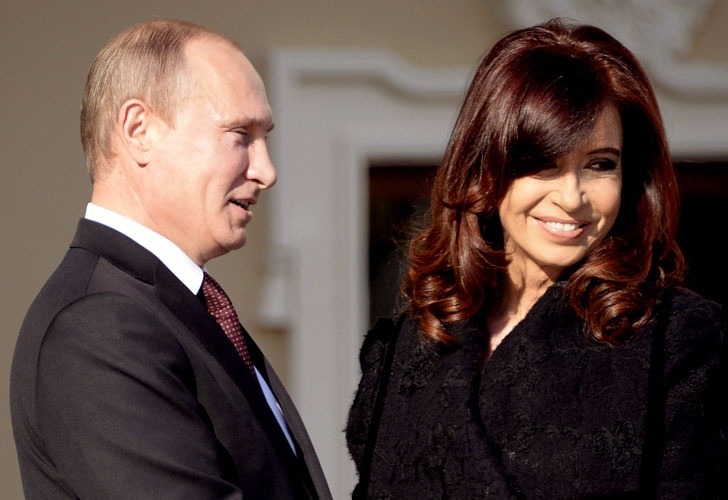


 Aletho News