David Ignatius’ 15 Years of Running Spin for Saudi Regime
By Adam Johnson | FAIR | April 28, 2017
Last week, in “A Young Prince Is Reimagining Saudi Arabia. Can He Make His Vision Come True?,” Washington Post foreign affairs columnist David Ignatius (4/20/17) wrote what read like a press release for the Saudi regime. What’s more, he’s written the same article several times before. For almost 15 years, Ignatius has been breathlessly updating US readers on the token, meaningless public relations gestures that the Saudi regime—and, by extension, Ignatius—refer to as “reforms.”
Ignatius columns on Saudi Arabia break down roughly into two groups: straight reporting mixed with spin and concern trolling, and outright press releases documenting the dictatorship’s spectacular reforms. First the latter:
- “Home-Grown Saudi Reform” (3/7/03)
- “Saudis Act Aggressively to Denounce Terrorism” (6/13/10)
- “Change and Balance in the Saudi Kingdom” (11/21/11)
- “Women Gain Newfound Stature in Saudi Arabia” (1/18/13)
- “Reshuffling the House of Saud” (2/3/15)
- “A 30-Year-Old Saudi Prince Could Jump-Start the Kingdom — or Drive It Off a Cliff” (6/26/16)
Let’s begin by taking a look at his most recent iteration of this genre (4/20/17), featuring a brave Saudi prince taking on “religious conservatives” (vague reactionaries who are never named or defined) to change his own monarchy:
Two years into his campaign as change agent in this conservative oil kingdom, Deputy Crown Prince Mohammed bin Salman appears to be gaining the confidence and political clout to push his agenda of economic and social reform.
Ignatius begins by doing something a lot of “reformer” boosters do in Saudi Arabia: conflating “economic reform” with social reform. The latter is typically the neoliberal lubricant to get to what really matters, the further privatization and leveraging of Saudi’s immense wealth. Indeed, the only social reforms even mentioned in the glowing report are “a Japanese orchestra that included women” performing to “mixed audience,” and a co-ed Comic Con. Perhaps by 2025 they’ll have mixed-gender D&D tournaments.
Ignatius’ cheerleading columns always rely on vague person-on-the-street sources as a placeholder for the Voice of the People. Take, for example, this framing in “Women Gain Newfound Stature in Saudi Arabia” (1/18/13):
King Abdullah announced January 11 that 30 women would join the kingdom’s Shura Council, a consultative body of 150 persons, and that women henceforth would hold 20 percent of the seats. Skeptics cautioned that it’s a symbolic move, since this is an advisory group that doesn’t actually enact any legislation. But it’s a powerful symbol, according to men and women here.
Which men and women? Was a poll done? It’s unclear. He goes on to interview a Cambridge-educated woman who appears hand-picked by the regime for a glossy profile. She’s from a humble background and was about to drop out of college until the king stepped in and benevolently paid her tuition. A story Ignatius, of course, dutifully repeats without skepticism.
Then there’s the other genre of Saudi coverage we’ll call Checking In On the House of Saud:
- “Can Saudi Arabia Help Combat the Islamic State?” (7/28/14)
- “Saudi Arabia’s Coming Struggle” (1/22/15)
- “Saudi Arabia Stirs the Middle East Pot” (8/21/13)
- “The Son Who Would Be the Saudis’ King?” (9/8/15)
- “A Cyclone Brews over Saudi Arabia” (10/13/15)
- “The Costly Blunders of Saudi Arabia’s Anxiety-Ridden Monarchy” (1/5/16)
These pieces generally consist of down-the-middle updates about the status of Saudi Arabia, with some light criticism around the margins. Saudi Arabia is painted as a fearful, almost childlike place, whose evil deeds are animated by paranoia rather than ambition—bumbling “misfires” and “mistakes” rather than sinister motives.
The one piece whose headline seems to indicate actual criticism of the Saudi regime is anything but. In “The Costly Blunders of Saudi Arabia’s Anxiety-Ridden Monarchy” (1/5/16), our tough-luck Saudis are bumbling around the Middle East under siege:
Saudi Arabia is a frightened monarchy…. Countries that feel vulnerable sometimes do impulsive and counterproductive things, and that has been the case recently with Saudi Arabia.
Counterproductive? Saudi Arabia has been a bad boy and needs a timeout.
Strangely, in 15 years of writing columns about the monarchy, David Ignatius has not himself used the term “human rights,” much less addressed their abuse in a meaningful way. In one of the few columns (1/5/16) in which Ignatius actually levels criticism of the Saudi rulers’ gross human rights abuses, they are stripped of all autonomy, with the beheading of a minority religious figure painted as a response to the Evil Iranians: “The kingdom’s fear of a rising Iran led it to execute a dissident Shiite cleric.”
Ignatius went on to lament the execution in equally middle-management terms, saying it was a “mistake” and an “error.” What it wasn’t: “criminal,” “immoral” or “murder.” Moralizing is reserved for US enemies; US allies are simply under-performing employees in need of guidance and mild chiding.
Saudi Arabia, despite being an oppressive absolute monarchy that arbitrarily detains, tortures, executes and mercilessly bombs civilians, is never given the dreaded “regime” moniker like Assad and Gaddafi and North Korea. Actions are not done by an anthropomorphized state, but a nebulous blob of reluctant bureaucrats. And they are not even actions; they are always good-faith reactions to “Iranian hegemony.”
The Saudis’ ruthless bombing of Yemen, which has claimed over 10,000 civilian lives since March 2015, is almost never mentioned by Ignatius, and the few times it is touched upon it is glossed over as “costly and unsuccessful.” It is bad—not in terms of morals, but in process. It’s “costly” like an ill-advised real-estate investment.
Even more shockingly, Ignatius simply takes the regime’s word that all 47 people—including two minors—subject to its 2016 mass execution were guilty of being “extremists”:
A defensive, anxious Saudi leadership tried to show its resolve with last week’s execution of 47 extremists.
That “defensive, anxious Saudi leadership”—a caged animal always responding to threats and occasionally over-correcting.
In 2015, when King Abdullah died, Ignatius (1/22/15) insisted that the monarch who ruled for ten years over a country that didn’t allow women to drive, swim, own property or travel alone “was seen by many Saudi women as their secret champion.” A pretty well-kept secret, it must have been—aside from allowing women to take part in meaningless local “elections” and meaningless advisory councils, it’s unclear what Ignatius’ evidence is for this, but it’s “seen by many Saudi women,” so that’s good enough.
One Washington Post reader put it best in a letter to the editor (2/4/15):
The Saudis have been talking reform at least since I was a student of Middle East affairs in the 1960s. Yet it still is the epicenter of inequality, human rights violations and gratuitous state-sponsored violence.
The wheels of alleged reform in that country are perpetually spinning but going nowhere. The rulers continue to steal the oil revenue that belongs to the people; civil liberties and personal rights are repressed; beheadings, stonings and whippings for nonviolent offenses continue unabated; and people such as Mr. Ignatius still crow about how the regime is a force for change.
Ignatius, of course, is not alone. He joins a long line of faithful Western pundits who frame the Saudi regime as a reformist entity, earnestly pushing change in a fundamentally reactionary country under perma-threat from Shia forces. The Al Saud mafia is not in league with religious extremists, but a bulwark against them; they are not an illegitimate dictatorship, but an enlightened ruling class helping usher in “reform” in the face of a hyper-religious population.
And throughout it all, they are on a 71,500-year reform plan where they are effusively praised for moving their country toward the 19th century every five years or so. Other regimes that oppress their people and bomb civilians “must go” now, and are beyond the moral pale—mere allegations of being friendly with them, a career-ender. But the Saudi regime, a friendly host to light-touch US pundits, is just a well-meaning scrappy band of reformers this close to turning into Switzerland. All they need is a bit more time.
Messages can be sent to the Washington Post at letters@washpost.com, or via Twitter @washingtonpost. Please remember that respectful communication is the most effective.
Time to Confront the Media’s Anti-Corbyn Bias
By Jonathan Cook | Dissident Voice | June 1, 2017
Those journalists who should have been behind Corbyn from the start – who could have been among his few allies as he battled the corporate media for nearly two years as Labour leader – are now starting to eat humble pie. Polls suggest that Corbyn may be gradually turning the election around, to the point where the latest poll, published in the Times, indicates that Britain could be heading for a hung parliament.
No one is surprised that the Daily Mail, Telegraph and Times have been relentless in their hatchet jobs on Corbyn. But it has been disconcerting for the left that the Guardian and BBC never gave him a chance either. He was in their gun-sights from day one.
Owen Jones, a Labour stalwart and Guardian columnist, should have been Corbyn’s number one ally in the press. And yet he used the invaluable space in his columns not to challenge the media misrepresentations, but to reinforce them. He engaged in endless and morose navel-gazing, contemplating a Labour rout.
In an Evening Standard interview in February, he imparted the following wisdom: “Things change but only if people will it to be.” But then almost immediately ignored his own advice, saying that if another Labour leadership election were held: “I’d find it hard to vote for Corbyn.”
In early May, Jonathan Freedland, the Guardian’s most senior columnist, wrote a commentary entitled: “No more excuses: Jeremy Corbyn is to blame for this meltdown.” In fact, though he did not mention it, he had been making that very same argument for the previous two years.
But as Corbyn has begun chipping away at Theresa May’s lead – and equally significantly, forced the media to widen the public debate into political territory it has avoided for nearly four decades – Freedland finally admitted this week, very reluctantly, that he and others may have misjudged the Labour leader.
Freedland’s reassessment, however painfully made, was still an evasion. He and Jones continue to avoid facing up to the central problem of British politics – and must do, because they are at its very heart.
The lesson of Corbyn’s much-improved polling, according to Freedland, is this:
If May is returned with a Commons presence far below the expectations of even a month ago, it will suggest that one more bit of conventional wisdom needs to be retired along with all the rest. It will prove that campaigns matter.
But that is not the real lesson. The turnaround in Labour’s fortunes is not chiefly about the party getting its act together, staying on-message and communicating better with the media. Rather, it is that the formal requirements of an election campaign – equal coverage, reporting the speeches of candidates, leaders’ debates – have made it much harder for the media, especially the broadcasters, to entirely obscure Corbyn’s winning qualities. His honesty, warmth and humanity eclipse May’s stiff, evasive and charmless demeanour.
It was precisely those qualities in Corbyn that proved so attractive to voters in the Labour leadership elections. He inspires a rare passion for politics when he is heard. That is why he is the only politician filling stadiums. That is why the Labour party now has hundreds of thousands of members, making it the largest party in Europe. That is why young people have been registering for the election in record numbers.
The demographic breakdown of support for Corbyn and May is largely generational. Corbyn enjoys a huge lead among young people, while May can rely on overwhelming backing from those aged over-65.
It may be comforting to imagine this is simply the natural order of things. Radicalism is the preserve of those starting out in life, while old age encourages caution and conservatism. This may be one factor in explaining the generational divide, but it clearly will not suffice. In much of the post-Thatcher era, the young have proved to be even more conservative than their parents.
The reason for the Corbyn-May split has to be found elsewhere.
The fact is that the young are least likely to trust the traditional, corporate media, and most likely to seek out information from alternative sources and social media, which have been fairer to Corbyn. Youtube clips of Corbyn’s speeches, for example, are one way to bypass the corporate media.
Conversely, elderly voters are mostly still relying on the BBC, Sky and the Daily Mail for the bulk of their information about politics. The over-65s have little sense of who Corbyn is apart from what they are told by a media deeply wedded to the current neoliberal order he is threatening to disrupt.
But neither Freedland nor Jones has been prepared to admit that all of the corporate media – not just their trusted scapegoat of the “rightwing press” – have been to blame for preventing Corbyn getting a fair hearing. It is an admission they cannot make because it would expose their own complicity in a media system designed to advance the interests of corporate power over people power, oligarchy over democracy.
A desire to avoid facing this simple truth has led to some quite preposterously contorted reasoning by Freedland. In a commentary before his recent reappraisal of Corbyn, he dismissed suggestions that the media had played any significant role in the Labour leader’s troubles. Freedland cited two focus groups he had witnessed. It is worth quoting the section at length to understand quite how ridiculous his logic is.
With no steer from the moderator, who remained studiedly neutral, they described Jeremy Corbyn as a “dope”, “living in the past”, “a joke”, as “looking as if he knows less about it than I do”. One woman admired Corbyn’s sincerity; one man thought his intentions were good. But she reckoned he lacked “the qualities to be our leader”; and he believed Corbyn was simply too “soft”. …
Corbyn’s defenders will blame the media, but what was striking about these groups was that few of the participants ever bought a paper and they seldom watched a TV bulletin. Corbynites may try to blame disloyal MPs, but, whatever its impact elsewhere, none of that Westminster stuff had impinged on either of these two groups, who couldn’t name a single politician besides May, Corbyn and Boris Johnson. They had formed their own, perhaps instinctive, view.
Blaming others won’t do.
How do people form an “instinctive view” on political matters, if they never read a paper, never watch TV and never attend a political rally? Through the ethers?
The answer should be obvious. They can do so only through conversations with, or impressions gained from, family, friends, acquaintances and work colleagues who do watch TV and read papers. Given that it is impossible for most voters to see Corbyn in the flesh, most are either getting their information and opinions directly mediated for them by the media, or receiving the mediated information second-hand, from people they know who have been influenced by the media.
Freedland’s assumption that it is possible for voters to form a view instinctively that Corbyn is a “dope” – the view of him that has been uniformly cultivated by the media – is laughable. It is evidence of a profound unwillingness to confront the power of the media, and his own irresponsible complicity in wielding that power.
Corbyn is a “dope” not because that’s the way he’s seen by voters. He is a “dope” because that is the way he has been characterised for two years by all of the media, including the Guardian. The fact that a growing number of voters are starting to question whether Corbyn is quite the dope they assumed is because he has finally had a chance to talk to voters directly, even if in the leaders’ debate Jeremy Paxman did his best to prevent Corbyn from forming a complete sentence.
If we had a fair, pluralistic media driven primarily by the desire to serve the public’s interests rather than those of corporations, who can doubt that Corbyn would be winning hands-down in the polls?
Featured Video
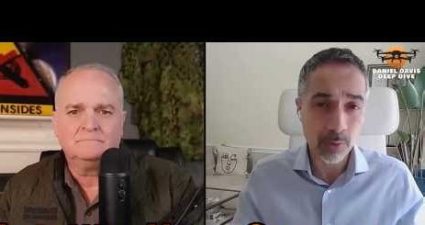
No Threat Can Force Iran’s Surrender /Trita Parsi & Lt Cl Daniel Davis
or go to
Aletho News Archives – Video-Images
From the Archives
An Expert Military Analysis of War with China
Actually, None is Necessary
By Fred Reed • Unz Review • December 13, 2020
The Correlation of Armed Forces: U.S. goods and services trade with China totaled an estimated $634.8 billion in 2019. Exports were $163.0 billion; imports were $471.8 billion. The U.S. goods and services trade deficit with China was $308.8 billion in 2019. Trade in services with China (exports and imports) totaled an estimated $76.7 billion in 2019. Services exports were $56.5 billion; services imports were $20.1 billion. The U.S. services trade surplus with China was $36.4 billion in 2019.
There is talk within the Washingtoniat of a possible war with China. Steve Bannon, who apparently was dropped on his head as a child, actually favors such a war. We hear the usual shoo-the-boobs alarm about how the Chinese are doing something terrible and we must gird our loins and American values and show them what for, bow wow, woof. The danger is that the current game of who-blinks-first in Asian waters might actually provoke a shooting war. You know the kind of thing: One warship refuses to get out of the way of another, a collision ensues, some retard lieutenant who signed up on waivers opens fire, and we’re off and running. It is not a good idea to let children play with matches.
The said war is discussed either in emotional terms by idiots or in purely naval terms by those familiar with such things, so we hear of the First Island Chain and the Second Island Chain and whose missiles against the other’s missiles and so on. This would be appropriate if we were fighting World War Two again. Which we aren’t. Let’s take a quick-and-dirty look at how such a war might go.
To begin the war, America would overestimate itself and underestimate China. This is doctrine in the Pentagon. … continue
Blog Roll
 Aletho News
- Theodore Postol: Iran’s Missiles & Drones Were Underestimated
- Iran To Target Military Industrial-Tech Complex That Facilitated Gaza Genocide
- Collapsing Empire: The Resistance Disarms ‘Israel’
- Suicide Should Not Be a Government Service
- Rethinking America’s greatest threat: Iran vs. Israel-Firsters
- Iran accuses adversaries of false flags to strain Turkey ties
- Poland rules out sending Patriot missiles to US/Israel amid war on Iran
- Tehran approves new Hormuz plan with major restrictions
- No Threat Can Force Iran’s Surrender /Trita Parsi & Lt Cl Daniel Davis
- UK’s New Pandemic Plan Would Turn Big Tech Into a Mass Location Tracking Network
- If Americans Knew
- Ann Coulter Rips Into Fox News for Iran War Coverage, Compares to False Rigged 2020 Election Reporting
- Joe Kent Urges Americans To Call White House and Congress To Object To Sending Troops Into Iran
- DNC Resolution to Reject AIPAC Funding Puts Democratic Leaders in the Hot Seat
- Swedish foundation to build 400 schools as over 650,000 Gaza children remain without education for 2 years
- Israeli army admits photshopping image of slain Lebanese journalist
- This is how Israel is systematically killing health workers under the cover of war in Lebanon
- Carrying life under fire: Israeli invasion of Lebanon leaves pregnant women facing deadly risks
- Champagne all around for the new death penalty (for Palestinians) law – Not a ceasefire Day 172
- Why are Palestinian books struggling to be seen on Amazon?
- The Line Between Affinity and Conspiracy
- No Tricks Zone
- New Study Finds Warming Saves Lives…Cold Temperatures 12 Times More Deadly Than Excess Heat
- German Science Blog Accuses PIK Climate Institute Of Hallucinating Climate Tipping Points
- Devastating Assessment Of Comirnaty Vaccine By Former Senior Pfizer Europe Toxicologist
- New Study: CO2 Is ‘Effectively Negligible’ As An Explanatory Climate Change Factor Since 2000
- Former Pfizer Toxicologist Dr. Helmut Sterz Tells Bundestag Hearing Pfizer Vaccine Should Have Never Been Approved
- Energy Expert: Germany’s Nuclear Phaseout Was A “500 Billion Euro Mistake”
- New Research: South Australia’s Mid-Holocene Sea Surface Temperatures Were 4°C Warmer Than Today
- Storing Green Energy To Last Germany 10 Days Would Require A 60-Million Tonne Battery
- New Studies: UK Sea Levels Were 4 Meters Higher Than Today During The Mid-Holocene
- Destructive Green New Deal: German Energy And Metal Group Warns Of Drastic Crisis
 Aletho News