October 7 “Rape” Hoax Exposed
Norman Finkelstein’s new book debunks Zionist tall tales
By Kevin Barrett – September 13, 2026
Last May, an Israeli commission published a report alleging an organized campaign of rape and sexual abuse by Hamas during its October 7, 2023 concentration camp breakout. The Civil Commission on October 7th Crimes by Hamas Against Women and Children, chaired by Cochav Elkayam-Levy, titled its report “Silenced No More.”
October 7 rape claims, like similar accounts of babies beheaded and roasted in ovens, have long been greeted with skepticism in nations whose media and politicians are not owned and operated by Zionists. Perhaps for that reason, the Israelis felt the need to “document” their rape stories in the Elkayam-Levy report.
But in publishing their “rape” report, the Israelis inadvertently exposed the mendacity of their own assertions. The Commission included many “rape survivor” testimonies that read uncannily like the breathless stories of alleged Holocaust survivors who claim they were raised by wolves, or who, like Anthony Blinken’s stepfather Samuel Pisar, claim to have sneakily walked backward toward the door of the gas chamber and then snuck out right before it was closed and the gas was turned on.
The “Hamas rape” stories are exaggeratedly lurid and full of outrageously improbable or impossible details. But the real problem is that all Hamas fighters wore bodycams recording everything they did—and roughly half of the 3,000 or so who entered Israel were killed, and in most cases their body cams were recovered by Israeli authorities. The Ekayam-Levy Commission says it had access to 10,000 pictures and videos from those bodycams as well as others from Israelis filming with phones. And then there are the Israeli surveillance cameras. If, as the Commission alleges, Hamas pursued a deliberate policy of terrorizing Israelis with widespread sexual violence, obviously there should be, at minimum, hundreds of images and videos documenting these heinous acts.
But there are none. Zero. As Jewish scholar Norman Finkelstein shows in his new book GAZA’S GRAVEDIGGERS: An Inquiry into Corruption in High Places:
“Neither the Israeli State nor the Civil Commission has released even one frame, from among the ten thousand photographs and digital segments it amassed, that depicted Hamas committing rape or other acts of sexual violence… Not a single Israeli CCTV, traffic surveillance camera, or individual cellphone captured Hamas committing rape or other acts of sexual violence. The Commission collected ‘extensive’ digital evidence from Hamas digital paraphernalia. Hamas allegedly exploited its gruesome images from 7 October and of the Israelis held hostage as ‘an instrument of terror.’ If inspiring terror was the avowed objective, then, it would seem, the more barbaric the sexual violence it disseminated the better. But not a single confiscated Hamas bodycam, GoPro, or dashcam contained an image of rape or other acts of sexual violence.”
The October 7 Israeli rape allegations, in reality, have always been just as patently ridiculous as the tales of roasted and beheaded babies. Everyone with the slightest knowledge of Hamas and the cultural and religious context in which it operates knows that it would never pursue a policy of sexual misbehavior. Hamas rigorously and scrupulously adheres to futuwwa or “Islamic chivalry.” Anyone who has viewed the videos of hostages being released by Hamas, in which smiling Israelis almost wistfully say goodbye to their chivalrous captors, knows that claims of widespread systematic mistreatment of captives are hysterical exaggerations at best, outright propaganda lies at worst.
This is not to say that no Israelis were harmed on October 7. But Hamas did not deliberately kill or hurt civilians. It engaged in firefights with some of the IDF’s elite units, and in most cases won, as described by Scott Ritter in his memorable article “The most successful military raid of this century: the October 7 Hamas assault on Israel.”
Hamas’s orders were to 1) engage and defeat the IDF, 2) take IDF prisoners as hostages, and 3) as a fallback measure if all else failed, take civilian hostages. Scott Ritter explains:
“The taking of hostages was meant to provide Hamas with negotiating leverage for the release of the 10,000 prisoners held by Israel.”
Hamas fighters stumbled on the Nova Music Festival by accident. In the midst of firefights and chaos, some Hamas fighters took the opportunity to capture Israeli hostages. The abduction scenes, with Hamas fighters dragging off women as well as men and heading back toward Gaza in vehicles, have been well documented. It wasn’t a pleasant experience for the hostages…especially the more than 500 of them who were deliberately massacred by Israel’s tanks and helicopter gunships under its Hannibal Doctrine.
But there is no hard or convincing evidence that a single Hamas fighter perpetrated even one sexual assault, much less that there was any deliberate policy of rape. The Israelis, as usual, are lying outrageously and shamelessly, exhibiting the chutzpah for which they are justly renowned.
Subscribe to American Free Press to get early or exclusive access to great articles like this.
Hamas welcomes BRICS declaration on Palestinian rights, rejecting displacement and changes to Gaza
Palestinian Information Center – September 13, 2026
GAZA – The Hamas Movement on Sunday welcomed the New Delhi 2026 Declaration issued by the 18th BRICS Summit, describing its positions on the Palestinian cause as positive and significant and highlighting its reaffirmation of the legitimate and inalienable rights of the Palestinian people.
In a press statement, Hamas praised the declaration for affirming the Palestinian people’s right to self-determination and return, supporting the establishment of an independent and sovereign Palestinian state along the 1967 borders with Occupied Jerusalem as its capital, and calling for the State of Palestine to be granted full membership in the United Nations.
Hamas also welcomed the declaration’s rejection of any forced displacement of Palestinians, whether temporary or permanent, as well as any attempt to impose geographical or demographic changes on the Gaza Strip.
The Movement highlighted the declaration’s call for an end to the illegal occupation and its rejection of unilateral measures aimed at altering the legal and historical status of Occupied Jerusalem. It also welcomed its emphasis on protecting holy sites and upholding international law and international humanitarian law.
Hamas further praised the declaration’s condemnation of the use of starvation as a method of warfare, attacks on civilians and civilian infrastructure, and the obstruction, politicization or militarization of humanitarian aid. It also welcomed the declaration’s reaffirmation of support for the United Nations Relief and Works Agency for Palestine Refugees (UNRWA) and its UN mandate.
Hamas called on BRICS countries to translate these positions into concrete action to end Israeli violations and the occupation, protect the Palestinian people, and enable them to exercise their rights to freedom, self-determination, and an independent state with Jerusalem as its capital.
Final declaration
The final declaration issued Saturday at the conclusion of the 18th BRICS leaders’ summit in India expressed opposition to the forced displacement of Palestinians from the Gaza Strip and the occupied West Bank.
The joint declaration called for compliance with UN Security Council resolutions concerning Gaza.
It also expressed concern over continuing violence in the Palestinian territories despite the ceasefire reached in October 2025 and called for maximum restraint amid the ongoing conflict in the Middle East.
Blaming the Victim in the Gaza Genocide
Amnesty International blames the victim in a time of genocide
By Paul de Rooij • Unz Review • September 8, 2026
The late Dr. Israel Shahak once related that during WWII when a collaborator at the Warsaw ghetto was eliminated, the jubilant inmates (himself included) danced with joy.[0] Maybe the extreme situation didn’t permit the semblance of a legal process, but natural law ran its course. Now imagine if at that time a sanctimonious body were to pop up and chastise the inmates for this “crime”. Under the circumstances, it would appear hypocritical for anyone to criticise the inmates, let alone refer to their action as “unlawful” and demand “accountability”.
Well, Amnesty International just published an article that fits that description in a contemporary setting. It just published a news release, “Hamas must stamp out extrajudicial executions…”[1], which is an indictment of the execution or beatings of collaborators in Gaza. Amnesty’s rumination amounts to blaming the victim.
About Collaborators
For many decades Israel sought to recruit Palestinian collaborators. These were used as an enforcement arm of the oppressor; to inform on the Palestinian society and the resistance; to undermine the cohesion of the society, to sow distrust; act as propaganda agents; and to create dependence on the oppressor. The Israeli desire to destroy the Palestinian society has been ever present.
From the early days prior to the formation of Israel, zionists sought informers and traitors. Bedouins and the “peace bands” acted as trackers to find and eliminate Palestinian fighters. Wealthy Palestinians sold land or acted as agents for the zionists to acquire land. There are gradations of collaboration — from the ones who were involved in violence against their own people, to those engaged in acts that undermined Palestinian society[2].
Today the so-called Palestinian Authority (PA) are collaborators in the Israeli project; they suppress Palestinian resistance, maintain dependence and subjugation, and protect the network of Palestinian collaborators created by Israel. Prominent Palestinians opposed to Israeli oppression have been murdered by the PA; the PA goons have been tasked with suppressing resistance in key areas such as Jenin and Nablus; and PA forces coordinate their actions with Israeli forces.
Israeli prisons use collaborators (aka Asafir) placed in cells together with Palestinian prisoners to get them to divulge information. Asafir collaborators are also used to break the solidarity between prisoners; any activity that might create a spirit of resistance is broken up.
Notorious armed collaborators roam in the West Bank where they harass and intimidate victims at the behest of their handlers. But to create a culture subservient to the Israeli occupation, Palestinians are told to petition the collaborators to obtain permits, access to land or work. The collaborators simply do Israel’s dirty work.
Drug dealing and collaboration go hand in hand. There is a history of Israel supplying drugs and fostering the criminal gangs in Gaza and the West Bank.[3]
Yet another true and tested way to undermine a society. Drug dealers also act as armed enforcers.
It is fairly easy for Israelis to recruit collaborators. Any Palestinian who has to cross a checkpoint is easy prey for Israeli agents to coerce or bribe victims to become collaborators. No cooperation results in blocked access, and thus no work and the like. If a child requires to go to an Israeli hospital or a health facility in Jerusalem, the parents are often confronted with the choice of obtaining a permit by collaborating, or being turned back. Students seeking to go to study abroad are also put in the same quandary, collaborate or have passage denied. There is an upside to collaborating (obtaining access or favours), and the downside is minimal because collaborators aren’t persecuted. So, now there are collaborators everywhere in the West Bank.
Collaborators in Gaza
When Hamas took over Gaza after it won the elections in 2006, it displaced the collaborationist Palestinian Authority. But most of the ejected members of the PA forces, predominantly Fatah members, remained in Gaza and many were willing to collaborate with Israel. The Palestinian resistance has to contend with collaborators who would pinpoint tunnels, weapons or key personnel. Several resistance commanders were likely killed when exposed by collaborators. Hooded collaborators enable the Israeli military to identify and separate Palestinian prisoners who are either in or assist the resistance.
Some collaborators were tasked with spreading false rumours in crowded places. A favourite tactic was for a collaborator to take a shared taxi ride, and then loudly claim that a given official was corrupt or criminal. Others were instructed to paint defeatist or hateful graffiti.
And at present Israel is arming and organising Palestinian criminal gangs to terrorise neighbourhoods to drive people out of their homes. The Middle East Eye reports:[4]
Based on testimony from Israeli soldiers, UN reports and satellite imagery, the investigation found that increasingly well-armed collaborator militias have expelled Palestinians from their homes and carried out operations across Gaza. Israel has trained at least five militia groups, and potentially a sixth, operating from heavily fortified bases inside Israeli-occupied areas of the enclave.
One Israeli soldier described how the state, army and Shin Bet intelligence service send armed and “trained militias to commit war crimes, …”.
One can well understand Palestinian anger against the collaborators’ treasonous and criminal behaviour, and their attempts to poison Palestinian society.
Amnesty on rough justice
Although Israel is responsible for recruiting and exploiting a collaborator network, Amnesty portrays Hamas’ rough justice as “unlawful” and it calls for Hamas to be held accountable. It doesn’t portray the collaborators as an Israeli instrument.
Amnesty portrays the issue of collaborators as one between the Palestinian population at large and Hamas; not as one where Israel is the oppressor, and the Palestinians are the oppressed. And under the circumstances (Amnesty plainly admits there is “a collapse of law and order in Gaza”), how are Palestinians supposed to dispense justice? On the one hand Amnesty wants Hamas to operate under a legal framework, yet it plainly downplays the Israeli violations of most laws that should confer all Palestinians some protection. It is a clear double standard.
Israeli forces have targeted the police and courts. On day one of the 2014 attack, dozens of police were bombed and killed. In the recent past, police have been similarly targeted. So, it seems that Amnesty expects Hamas to operate within a legal framework meant to mediate societal tension in a state of peace. When Hamas establishes that organised crime in Gaza operates in tandem with Israeli forces, then it has the right to defend itself. Amnesty may not like the rough justice this entails, but it has no standing to criticise the way Palestinians defend themselves.
Erika Guevara Rosas, the author of the “Hamas must stamp out extrajudicial executions” article, seems to dismiss the accusations made by Hamas against collaborators. When referring to the collaborators, the article is sprinkled with the usual Amnesty weasel words: “suspected”, “alleged”. The word informant is put in quotation marks. Amnesty confers no credibility to statements made by Hamas. One wonders why Palestinians should be required to justify their actions when Israel carries on with impunity.
A legal argument
Anyone hiring a hitman for an assassination or any serious crime would face severe legal consequences. In the same manner, when Israel hires or coerces collaborators to perpetrate serious crimes, e.g., murder, then the contracting party should also bear severe legal consequences. Alas, this is not an argument that Amnesty understands.
There is a pattern
Most articles/news releases published by Amnesty seem to follow a pattern. One article will criticise Palestinians, and it is shortly thereafter followed by an article which criticises Israel. In the current context, we have the article about execution of collaborators, and it was followed a few days later by an article restating that Israel has done nothing to end the genocide and to abide by the ICJ’s ruling.[5] Amnesty seeks to portray itself as a neutral organisation which sits on the fence criticising “both sides”. Amnesty’s actions are neither proportional to the violence or injustice of the current situation. The reason it takes this dubious stance is because it doesn’t want to be in solidarity with the Palestinians, but it similarly doesn’t want to be antagonistic towards Israelis. The actions of the oppressed and oppressor are held to the same ahistorical standard.
Amnesty and genocide
It took a long time for Amnesty to unequivocally refer to Israeli crimes as genocide. On 28 October 2023, Craig Mokhiber, the former UN official in the High Commission for Human Rights, resigned because his agency was not reacting given the unfolding situation in Gaza, and stated in his resignation letter: “this is a textbook case of genocide”. It was only 13 months later that Amnesty acknowledged the nature of Israeli crimes, thus Amnesty was rather late to announce that Palestinians were subject to a genocidal campaign.[6] But then one would expect more action from “the leading human rights organisation”. Currently, several weeks transpire before it cursorily mentions genocide. It seems that Amnesty’s actions aren’t proportional to the severity of the crime — and to boot, Amnesty will regularly chastise Palestinians for the way they deal with collaborators or protestors.
A matter of timing
There are many egregious cases of Israeli violence or threats to perpetrate heinous acts. On 15 August 2026, Itamar Ben Gvir, the Israeli security minister, stated that he sought to kill 30 to 40 Palestinians every day. The man interviewing him helpfully volunteered to kill with his own bare hands. This is only Ben Gvir’s latest statement about an intent to kill many Palestinians, and he certainly belongs in the same dock as Benjamin Netanyahu and Yoav Gallant to answer for all their mass crimes. Amnesty’s article chastising Palestinians for the assassination of collaborators coincided with Ben Gvir’s statements about criminal intent. What is worse, the elimination of collaborators or the threat to kill 30 to 40 Palestinians every day? What is surprising is that Amnesty didn’t utter a peep about Ben Gvir’s threats — hardly empty threats.
Human rights are for the birds
Human rights organisations think that they can opine on everything, and they believe that they can offer recommendations to everybody. Alas, the human rights framework is problematic and deficient, and human rights organisations are mostly compromised and propaganda tools for those who pay for them.
When confronted with mass crimes what is needed is justice, and not one of its bastardised, neutered, malleable and ineffective substitutes. If one wants justice then it behooves one to speak in terms of justice, and to avoid the human rights mumbo jumbo. When faced with mass crimes one should demand justice, and not merely seek some bandages. This is specially the case when human rights have been cynically exploited and weaponised by the US and UK. A framework that can be used to justify wars, the so-called humanitarian interventions (even humanitarian bombing!!), cannot be a framework that advances justice or motivates people to act against mass crimes.
Most human rights NGOs don’t even condemn the forever wars, the US/Israeli wars of aggression. Amnesty International is “not an anti-war organisation”.[7] How one can favour human rights and not oppose wars is a mystery. But then Amnesty is against capital punishment, but not opposed to some killing by the military. However, all killings by the Palestinian resistance are condemned or criticised in Amnesty’s weasel-like inimitable style. The same demands don’t apply when Israel bombs refugee camps, or hires, arms and organises collaborators to terrorise and expel the residents of the refugee camps. Here another standard applies.
Amnesty International is not part of the solution; it is part of the problem.
Notes
[0] Frank Collins, “Why Palestinians Kill Palestinians in Israeli-Occupied Territories”, WRMEA, Nov. 1989.https://www.wrmea.org/1989-november/why-palestinians-kill-palestinians-in-israeli-occupied-territories.html
[1] “Palestine: Hamas must stamp out extrajudicial executions and ensure justice for victims”, 21 August 2026.
https://www.amnesty.org/en/latest/news/2026/08/palestine-hamas-must-stamp-out-extrajudicial-executions-and-ensure-justice-for-victims/
[2] A good overview of early Palestinian collaboration see: Joseph Massad , “Palestinian elites have been collaborating against the resistance for a century”, 12 June 2026.
[3] Here is a recent example: Joe Glenton, Israel is smuggling narcotics into Gaza, Palestinian tribal council warns, The Canary, 17 December 2025.
https://www.thecanary.co/global/world-analysis/2025/12/17/israel-narcotics/
[4] Israel arms drug dealers to commit new ‘Sabra and Shatila’ in Gaza, MEE Staff, MEE, 27 August 2026.
See also: Palestine Information Center, “Agent militias in Gaza: Temporary occupation tool or project to reshape society”, 3 September 2026.
https://english.palinfo.com/reports/2026/09/03/369484/
[5] “Israel/OPT: South Africa ICJ submission must spur states to press Israel to end its genocide in Gaza”, Amnesty International, 1 September 2026.
[6] Amnesty International investigation concludes Israel is committing genocide against Palestinians in Gaza, Amnesty International, 5 December 2024.
[7] Personal communication with Donatella Rovera, an Amnesty researcher, January 2003.
Two Palestinians killed, others injured in Israeli attacks on Gaza
Palestinian Information Center – September 4, 2026
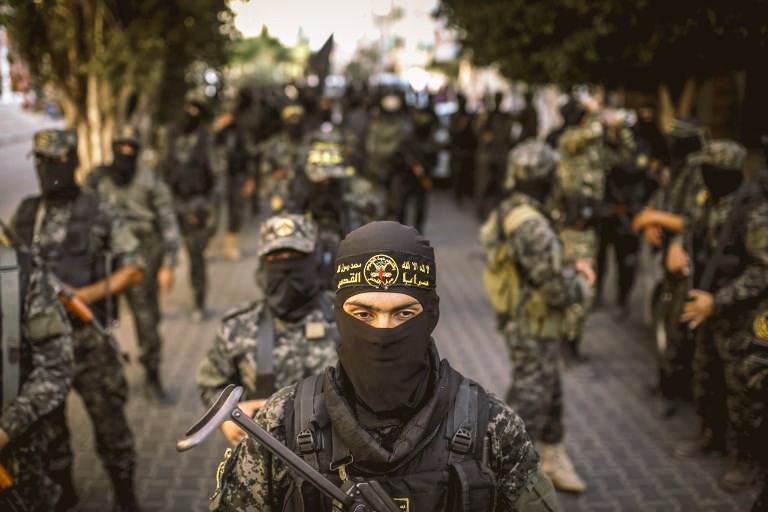
GAZA – Two Palestinians were killed and several others injured on Friday as Israeli forces continued attacks across the Gaza Strip, including airstrikes, artillery shelling and gunfire, amid ongoing violations of the ceasefire.
An ambulance and emergency services source said one Palestinian was killed and others were injured in an Israeli drone strike west of Khan Younis in the southern Gaza Strip.
The Al-Quds Brigades, the military wing of Palestinian Islamic Jihad, announced that one of its fighters, Fadi Ali Saeed Al-Abadla, a member of the Al-Qarara Battalion in the Khan Yunis Brigade, was killed.
Providing details of the incident, the Brigades said that at around 3:30 a.m. Friday, a force belonging to what it described as “collaborator militias,” backed by Israeli drones, advanced towards Al-Jumeiza Street in the Al-Qarara area north of Khan Yunis in an attempt to abduct one of its fighters.
The Al-Quds Brigades said its fighters detected the infiltrating force during the attempted abduction and engaged it at point-blank range with grenades and medium weapons, saying that several members of the force were killed or wounded.
The Brigades said Israeli drones then intervened to provide cover for the force’s withdrawal. It added that members of the force shot and killed Al-Abadla, leaving his body at the scene before withdrawing with their dead and wounded.
Three Palestinians, including a girl, were also injured by Israeli fire near Hamad City, north of Khan Younis.
Israeli artillery shelled areas east of Khan Yunis, while Israeli military vehicles opened heavy fire near the Al-Matahin area north of the city.
Israeli military vehicles also opened heavy fire towards northern areas of the Bureij refugee camp.
Israeli airstrikes, artillery shelling hit Gaza City
In Gaza City, an Israeli warplane carried out an airstrike near Mushtaha Street in the Al-Shuja’iyya neighborhood, east of the city, as Israeli artillery simultaneously shelled eastern areas.
Israeli military vehicles and drones also opened fire toward Palestinian homes in the Al-Tuffah neighborhood, northeast of Gaza City, while Israeli forces fired illumination flares over the eastern part of the neighborhood.
A local source reported heavy gunfire from Israeli tanks near the Al-Sanafour area, east of Gaza City, as an Israeli Apache helicopter opened fire toward eastern parts of the city.
In the Al-Zaytoun neighborhood, southeast of Gaza City, an Israeli quadcopter drone opened fire, while another quadcopter fired east of the Sheikh Radwan neighborhood in northern Gaza City.
Since the ceasefire took effect on Oct. 10, 2025, 1,338 Palestinians have been killed and 4,429 others injured, while 815 bodies have been recovered, according to the latest figures.
The cumulative death toll since the start of the Israeli assault on the Gaza Strip on Oct. 7, 2023, has risen to 73,474 Palestinians killed, while 174,540 others have been injured.
Netanyahu rejects Trump’s post-genocide 15-point plan for Gaza
Press TV – August 9, 2026
Israeli prime minister Benjamin Netanyahu says Israel has rejected US President Donald Trump’s Board of Peace 15-point plan and will not withdraw forces from the territory until the Palestinian resistance group Hamas fully disarms.
“Israel rejects the 15-point document,” Netanyahu said at a cabinet meeting on Sunday, referring to a US-backed Gaza peace plan.
The Israeli army “will not carry out any withdrawal until Hamas is genuinely disarmed and will continue to thwart threats against our forces”, he added.
“And when I say disarm Hamas, that means heavy weapons, less-heavy weapons, all weapons. And we are talking about real disarmament, not a fictitious disarmament,” Netanyahu said.
This comes days after the US-backed board made Israeli withdrawal from the blockaded Palestinian territory conditional on Hamas’s complete disarmament, in a move that runs counter to the terms of last year’s agreement, even as Israel has yet to fulfill its own withdrawal commitments.
In a statement last week, the board said Israeli forces would not withdraw beyond the so-called “Yellow Line” until the Palestinian resistance movement had fully completed the decommissioning of its weapons.
Meanwhile, Hamas on Sunday reaffirmed its commitment to a roadmap agreed upon with mediators and the Board of Peace to complete the second phase of the plan for Gaza.
In a statement, the Palestinian movement said it remains serious about “responsibly engaging” in the implementation of the 15-point plan and establishing a clear timetable for its execution.
“The priority at this stage must be to ensure the implementation of all phases and obligations of the agreement,” Hamas said.
The group added that the process should lead to a complete ceasefire, an end to Israeli attacks, the completion of Israel’s withdrawal, the reopening of crossings, the entry of humanitarian aid and shelter supplies, the start of reconstruction, and the enabling of the National Committee for the Administration of Gaza to begin its duties.
Hamas called on the mediators, guarantors and the Board of Peace to “shoulder their responsibilities,” ensure that all parties comply with the agreement, and prevent violations that could obstruct its implementation or undermine the ceasefire.
Under last year’s agreement, the “Yellow Line” was designated as the initial withdrawal boundary for Israeli occupying forces, with further pullbacks to take place alongside the gradual decommissioning of resistance weapons.
Israeli forces, however, did not carry out the planned withdrawals. Instead, they continued their military aggression, moved beyond the “Yellow Line” and established permanent military positions after Washington launched the initiative in October 2025.
Meanwhile, the Hamas resistance movement has announced that it would dissolve the emergency committee administering Gaza but declined to disarm its military wing.
Palestinian resistance groups have made clear that surrender is not an option in the face of the US-led effort to reshape Gaza’s future.
Reconstruction has barely begun across most of Gaza, with only a fraction of the estimated $17 billion in pledged funds actually secured. Wealthy donors have largely refused to finance projects in areas still under Israeli control, viewing such efforts as legitimizing the occupation.
Israel has continued to carry out near-daily deadly attacks across the besieged Palestinian strip since agreeing to a ceasefire with Hamas last October.
The Israeli genocide has already killed more than 73,375 Palestinians, wounded over 171,000, and destroyed around 90 percent of Gaza’s infrastructure, according to Gaza authorities.
Since the so-called ceasefire deal was signed, at least 1,250 Palestinians have been killed and another 4,110 injured in Israeli attacks, according to Gaza’s Health Ministry.
Israeli broadcaster Channel 12 reported on July 4 that Israel could resume a full-scale military offensive in Gaza within two months.
Qatar says Hamas honored its ceasefire obligations, calls for action against Israel
Palestinian Information Center – August 4, 2026
DOHA – Qatar’s foreign ministry has urged the international community to press Israel to honor its Gaza ceasefire commitments, affirming that Hamas has met all obligations under the agreed roadmap.
During a news conference held in Doha on Tuesday, spokesman for the foreign ministry Majed al‑Ansari confirmed that Hamas fulfilled its first‑phase commitments of the agreement, including the release of Israeli prisoners.
Ansari accused Israel of shirking its ceasefire obligations by maintaining strikes and restricting food, medical, and shelter aid into Gaza.
Ansari said that 2.4 million Palestinians in Gaza, among them 1.5 million displaced people, endure dire humanitarian conditions as Israel maintains tight restrictions on the entry of food, medicine, and other vital needs.
The spokesman said that Doha urges global actors to press Israel to abide by the ceasefire deal to pave the way for the launch of reconstruction efforts in the Gaza Strip.
He noted that Israel has not yet announced an official position on the roadmap for the next phase of the agreement, which includes an Israeli withdrawal from Gaza and the disarmament of Hamas.
No question of surrendering weapons; proposal only covers heavy weapons storage: Hamas representative
Press TV – August 2, 2026
A Hamas official says the newly announced agreement to end Israel’s genocidal war on Gaza does not signify abandoning resistance, but outlines a conditional, Palestinian-led process contingent on the Tel Aviv regime fulfilling its obligations under the agreement.
Speaking to the Press TV website, Khaled Qaddoumi, the representative of Hamas in the Islamic Republic of Iran, expounded on how the Palestinian resistance movement views the newly announced agreement, which has been widely portrayed in media reports as a “Hamas disarmament” deal.
“There is no question of surrendering or relinquishing weapons. What we specifically offered was to discuss the gathering or storage of heavy weapons under a Palestinian administrative authority – from Palestinian factions to a Palestinian authority. No authority other than a Palestinian one has any role in this matter,” he stated.
The remarks came after Hamas announced it had agreed to a phased deal intended to bring Israel’s genocidal war on Gaza to a complete end.
The proposal, announced by US President Donald Trump after mediators from Egypt, Qatar, Turkey and the United States finalized a roadmap for the next phase of the ceasefire, outlines a mechanism under which heavy weapons would be inventoried and stored under a Palestinian National Committee while Israeli occupation forces gradually withdraw from Gaza.
Israel has not publicly endorsed the proposal, while Hamas has maintained that no provisions related to its weapons can be implemented unless Israel first fulfills its own obligations under the agreement.
Addressing concerns among Palestinians that any discussion of weapons could undermine Gaza’s future ability to defend itself from external aggression, Qaddoumi rejected media portrayals of the proposal as a disarmament deal.
“It is not a relinquishment of weapons. It is not an isolated step. It is not a withdrawal from, or retreat from, the concept of resistance,” he told the Press TV website.
Resistance inherent right of Palestinians
The Hamas representative noted that resistance, in all its forms and by all its means, “is an inherent right of any nation living under occupation – especially the Palestinian people, who have lived under occupation for nearly a century.”
“They have the right to defend themselves in whatever way they consider appropriate, including armed resistance,” he stated.
According to Qaddoumi, even that discussion would depend entirely on the Israeli regime implementing the broader agreement.
“Moreover, this step is conditional upon Israel fulfilling and implementing the other parts of the agreement, including the withdrawal of its forces, the opening of the border crossings, the entry of humanitarian aid into Gaza, and the complete cessation of the genocide,” he said.
He further noted that Israel would have to allow the Palestinian National Committee to enter Gaza to administer civilian affairs, oversee reconstruction and prepare for “a political electoral process that will ultimately lead to an independent Palestinian state.”
“Only within that framework and according to those benchmarks can any discussion regarding weapons take place. Beyond that, there is no such thing as the resistance relinquishing its weapons,” he remarked.
“Our strength comes from our faith, our people, and our just cause. We will continue until this occupation ends and until our nation achieves independence, peace, and prosperity.”
The proposed roadmap envisages a phased process in which heavy weaponry, military production sites, weapons depots and tunnel infrastructure would be inventoried and stored under Palestinian oversight while Israeli troops withdraw in stages.
Hamas has repeatedly said those steps cannot proceed independently of Israel’s commitments regarding withdrawal, humanitarian access and reconstruction.
The genocidal onslaught on the besieged Gaza Strip has killed more than 73,000 Palestinians and injured over 174,000 others since October 23, 2023, most of them women and children, and caused widespread destruction affecting 90% of civilian infrastructure.
The UN estimates reconstruction costs at approximately $70 billion.
‘No trust’ in US, Israel
Asked whether Hamas trusted Washington and Israel to uphold any agreement, Qaddoumi said experience had left little room for confidence.
“There is no such thing as trust or confidence. Historical experience has not been positive when dealing with the Americans or the Israelis,” he told the Press TV website, pointing to failures to implement previous commitments. “On the one hand, President Trump, before the whole world, proposed this ceasefire agreement, saying that the genocide would stop. It did not stop.”
Since the ceasefire came into effect, he noted that more than 1,200 innocent civilians lost their lives, killed in cold blood by the Israeli occupation forces in the refugee camps.
Qaddoumi also noted that border crossings remain closed, humanitarian aid has yet to enter Gaza, reconstruction materials continue to be blocked, and the Palestinian National Committee formed in Egypt has not been allowed into the territory.
“That’s why we’re skeptical,” he said. “We have every right to be.”
Even so, he added that Hamas has continued participating in negotiations in coordination with other Palestinian factions.
“On the other hand, we are still moving toward improving the lives of our people because we have carried this responsibility in consensus with the other Palestinian factions,” he stated.
“With an open mind and a good heart, we entered these negotiations to prevent the genocide from resuming. We sought to achieve a fair political solution for our people.”
Palestine has nothing more to give
The Hamas official said Palestinians have already fulfilled their part of the process.
“At this point, nobody should ask the Palestinians to give anything more, because the Palestinian side has already given everything that was asked of it. There is nothing more to give,” he told the Press TV website.
Instead, he said, responsibility now rests with international guarantors. “Now it is time for the guarantors. It is time for the President of the United States to put sufficient pressure on Israel to abide by its commitments.”
Qaddoumi said statements by members of Israeli regime prime minister Benjamin Netanyahu’s coalition have further reinforced Hamas’s doubts about the implementation of the deal.
“The presence of extreme figures in Netanyahu’s cabinet, such as Ben-Gvir, gives us little reason for optimism because they openly say that these proposals do not meet Israel’s demands; but what are Israel’s demands? What we see today is that Israelis are obsessed either by personal agenda or ideological extremist agenda,” he said.
“Netanyahu wants to remain in power, while ideological fanatic elements like Ben-Gvir are driven by the belief that Palestinians have no right to live in Gaza. They believe Palestinians should leave Gaza and that Israelis should replace them and build settlements there. With such a mentality, hope is very scarce.”
Nevertheless, he said Hamas would continue urging international actors to ensure implementation of the agreement to end the Israeli genocidal war on Gaza.
“We will continue to call on the international community to fulfill its responsibility by guaranteeing the implementation of the agreement and creating mechanisms to move the process forward, rather than allowing the genocide to resume,” he stressed.
“The world must compel and pressure the Israeli forces to withdraw from Gaza, allow the Palestinian National Committee to enter Gaza, permit the entry of food, water, and reconstruction materials, and reopen the border crossings.”
Palestinian consensus
On coordination among Palestinian resistance factions, Qaddoumi said the latest proposal reflects a unified Palestinian position.
“The latest statement announcing a positive step toward strengthening the ceasefire stems from Palestinian consensus. Our brothers in Islamic Jihad and the other Palestinian factions were with us in Egypt, and we discussed it together,” he noted.
He emphasized that discussions about weapons should not be confused with surrendering resistance.
“By the way, the term ‘disarmament’ must be clearly understood,” Qaddoumi said. “When we talk about heavy weapons, we have conditioned any discussion on the implementation of the first stage of the agreement, and the political solution to a Palestinian independent state”
He reiterated that those conditions included humanitarian measures, Israeli military withdrawal, reconstruction, reopening crossings, allowing the Palestinian National Committee into Gaza and progress toward an independent Palestinian state.
“Only then can any political solution and any step toward disarmament–or, as we have said, gathering or storing the weapons, whatever term is used–be addressed,” he said.
“First, this is a matter of national Palestinian consensus; second, it is an entirely Palestinian issue that concerns the future shape of Palestine, its political life, and how Palestinians choose to address these matters.”
Qaddoumi said the Hamas resistance movement views the sacrifices of its martyred leaders, including Haniyeh, as part of a broader struggle for Palestinian self-determination.
“Those great people gave their lives for a noble cause,” he said. “Martyr Haniyeh himself said that there is a price for this cause and this responsibility.”
Haniyehs assassination came a day after he attended the inauguration ceremony of President Masoud Pezeshkian.
“We carry this responsibility knowing that the price will be heavy and that our lives are at stake — for the sake of our people, for the sake of our noble cause, and for the sake of our homeland,” Qaddoumi said.
He concluded by recalling remarks delivered by Hamas’s newly-elected leader Khalil al-Hayya at Haniyeh’s funeral in Tehran one day after the assassination.
“The enemy is deluded if they think that we will be diverted from our path or from the path of those great leaders and martyrs. On the contrary, we will insist on continuing our road toward independence because those people who offered their lives for the sake of their people did so for a reason. That reason is to live in peace and prosperity and to give our children a better life. Martyrdom is a school that teaches us how to live, he said.
“Martyrdom is the art of those great people who gave their lives to grant future generations a prosperous, peaceful, and dignified life. Today, we are strong enough to carry the flag of those great people and move forward toward the development of our people and our nation.”
The not-so-secret Israeli strategy: This is the real Gaza plan
By Ramzy Baroud | MEMO | July 15, 2026
Here is the bottom line: Israeli Prime Minister Benjamin Netanyahu has no intention of leaving Gaza, either before Israel’s general elections—likely to be held in October—or after. Conceding an inch from the roughly 70 percent of the territory his army currently occupies in Gaza will be considered a weakness by the majority of Israeli voters and would result in an open revolt within his extremist coalition.
He has made his intentions clear time and again. Recent statements by Israel’s political leadership have only reinforced that reality, with officials insisting that Israel must maintain indefinite military dominance over the Strip and explicitly rejecting any framework that requires a full withdrawal of troops. To Netanyahu, the military footprint in Gaza is a permanent fixture, not a temporary bargaining chip.
Some may argue that Netanyahu’s statements are merely political fodder aimed at prolonging his career and avoiding the disastrous outcomes awaiting him—in terms of state investigations and court trials—should he be ejected from power. However, his extremist policies throughout his entire career at the helm of Israeli politics say otherwise.
There has never been a period in Netanyahu’s history in which he showed a genuine willingness to compromise or engage in an authentic political process with the Palestinians.
This reduces the point of the Washington-led Board of Peace and its subsequent administrative bodies to near irrelevance. These entities—including the National Committee for the Administration of Gaza (NCAG) and a multinational International Stabilization Force (ISF)—were supposedly assembled with the sole aim of managing a transitional phase, delivering humanitarian aid, and deploying a peacekeeping buffer to facilitate a gradual Israeli military withdrawal.
It seems that two separate, irreconcilable tracks are taking shape. One is the Israeli track of continued war, entrenched military occupation, and prolonged genocide. The other is an international track, controlled firmly by Washington, aimed largely at finding alternative ways to manage Gaza on behalf of Israel.
Yet even with its obvious limitations, the Gaza plan’s first phase theoretically promises a phased Israeli military repositioning, a sustainable ceasefire, a massive influx of reconstruction aid, and the gradual handover of civil administration to a non-factional Palestinian authority.
Little of that has actually been delivered. While the United States and international envoys claim the ceasefire hinges on disarmament, Israel has used the diplomatic deadlock to advance its troops further into the Strip rather than withdrawing them. Aid remains choked at the borders, and the promised reconstruction has not even begun.
Indirect talks are ongoing in Cairo, though it seems that only Palestinians are being held accountable or expected to carry out heavy concessions. Moreover, after 19 years of Hamas governing Gaza, the movement announced on 6th July that it has officially dissolved the Emergency Committee that has been administering the Strip. The movement declared its full readiness to transfer governance to the National Committee, intended to administer Gaza under the framework of the US-brokered plan.
On paper, this suggests that a political transition is finally underway. In reality, no such transition is taking place.
Israel is actively preventing this technocratic government from assuming any real duties. Rather than facilitating a civil handover, the Israeli political security cabinet has completely dismissed the transition.
Israeli Foreign Minister Gideon Sa’ar openly labeled the move a “trick,” arguing that a technocratic administration would merely be responsible for municipal tasks like garbage collection while allowing resistance networks to persist.
Instead, Israel’s military strategy continues to fuel conditions that undermine any possibility of stabilizing the devastated Strip. Its objective is not merely to reject an alternative Palestinian administration, but to ensure that no functioning Palestinian governing authority can emerge at all. By doing so, Tel Aviv wants to create a permanent governance vacuum, sowing further chaos and fragmentation.
If no alternative Palestinian political body is permitted to stabilize Gaza, the default collapse will inevitably force local factions to reassert control over daily survival, thus giving Israel yet more pretenses to exact more punishment on a helpless population.
Following the Hamas political move, Israel simply responded with its standard currency: immediate violence. This was starkly illustrated on 9th July, when Israeli forces carried out a targeted airstrike on a vehicle in Gaza City in a failed attempt to assassinate Hamas spokesman Hazem Qassem. Though the assassination attempt failed, the strike sent a clear message that Israel has no intention of respecting political transformations or ceasefires.
While no houses are being built, no schools are being constructed, and no hospitals are being revived, the only numbers that keep growing are those of the dead and wounded.
The human cost has reached unfathomable proportions: the Palestinian death toll in Gaza has surpassed 73,000, with the number of wounded exceeding 173,200. Tragically, these numbers continue to climb daily: over 1,098 Palestinians have been killed since the so-called ceasefire framework was initially agreed upon, proving that the truce exists only in media rhetoric, not on the ground.
This leaves us with a single, inescapable conclusion: the political track aimed at reconstructing Gaza and ending the Israeli military presence has little bearing on the grim realities unfolding on the ground.
The only way out is a stronger, independent international will that wrestles the future of Gaza from the grip of Netanyahu, translating political agreements into immediate humanitarian outcomes and a definitive end to the Israeli occupation.
Until Israel is compelled to relinquish its military control over Gaza, every new committee, reconstruction mechanism, or diplomatic initiative risks becoming little more than political theatre.
Hamas had no option but to govern Gaza and repeatedly tried to find solutions
By Robert Inlakesh | Al Mayadeen | July 14, 2026
Hamas’ decision to dissolve its committee governing the Gaza Strip was not a trick or simple gesture; the movement has long sought to hand over control of the territory’s civil administration. While the Zionists have claimed that Hamas governing the territory has long been the key impediment to “peace”, nothing could be further from the truth.
Despite the Israeli-US refusal to implement the agreed-upon terms of the Gaza ceasefire, never entering into the second phase of the agreement and remaining in limbo instead, Hamas recently took a measure that aimed to show the international community that it was willing to take the initiative in good faith. Immediately, the Israelis and their defenders began to invent narratives arguing that Hamas had engaged in some kind of trick, while asserting that the Palestinian group needed to disarm for the second phase of the agreement to begin.
The United States and its so-called “Board of Peace” (BoP) have put little to no effort into the ceasefire, despite having been authorised to exist by the United Nations Security Council (UNSC). When there have been any measures taken, they usually come in the form of guarding the Israelis from criticism, despite the fact that they have killed over 1,000 Palestinians since the ceasefire began and blocked many basic goods from crossing into the territory inhabited by the internally displaced.
As a measure to try and get the process jump-started once again, Hamas announced the dissolution of the temporary committee set up to govern the people after they had suffered an all-out genocide. The critics of this move claim that Hamas-affiliated individuals could be involved in the future technocratic body that the movement has just made way for, which is simply an excuse to prevent further progress.
Unfortunately, even if a technocratic Gaza governing body can be achieved, the Israelis are likely to point to its members as agents of Hamas. This could come in the form of pointing to these technocrats previously working for the civil administration in Gaza, which evidently has been run by Hamas. The same would be the case if you sought to dismantle the Palestinian Authority (PA)’s civil administration in the occupied West Bank; inevitably, the people most qualified to assume positions under a technocratic administration would likely have had some job role under the PA in the past and may even have Party affiliations to Fatah or the PFLP. This wouldn’t mean they are agents of those organisations, it just means that all the available jobs in their field require being employed with the PA.
Hamas did not simply seize control of the civil administration in Gaza as a power-hungry movement that was desperate for control. They were pressured into running in the 2006 Palestinian Legislative elections, which, to their own surprise, they won in a landslide. Immediately upon their election to power, the United States, their EU partners, and “Israel” sought to punish them for daring to engage in democracy.
The EU and US immediately placed sanctions upon the Gaza Strip, the Israelis imposed a blockade, and then the Bush Jr. administration covertly armed a coup plot that sought to violently overthrow Hamas. The coup plot was ultimately foiled by the Qassam Brigades (armed wing of Hamas) in 2007, which is when the Israelis tightened their blockade on Gaza.
Following this, the Palestinian civil war between Hamas and Fatah raged on. Despite countless attempts to mend ties, both Gaza and the West Bank were split from one another. This was a scenario brought about by US-Israel-EU interference, not the Palestinians alone.
After years of failed unity attempts, in 2014, there appeared to be a diplomatic breakthrough between Hamas and Fatah, which is when the Israelis found a convenient pretext to launch a massive assault on the Gaza Strip. Not only did the Zionist regime murder over 2,300 Palestinians, but their allies in Washington helped to ensure that the Palestinian Authority would back away from any unity agreement.
Again, in 2017, there was a unity agreement that was almost reached between Hamas and the PA. Hamas was on the verge of handing over control of the civil administration to the Palestinian Authority (PA). On November 1, Hamas dissolved its governing committee and handed over control of the Rafah border crossing to the PA, an event which was celebrated across the Gaza Strip. However, the US and Israel again intervened to pressure the PA to collapse the agreement.
Control over the civil administration in Gaza has never been the demonstrated or publicly stated goal of the Hamas movement. Time and time again, they have made strides towards relinquishing governance. The reason why the US, EU, and Israelis don’t allow it is for two reasons:
They don’t want the PA to govern both Gaza and the West Bank, because they fear this will give legitimacy to the idea of a Palestinian State.
Hamas and allied resistance movements refuse to disarm as a part of any such agreement.
The problem was never that Hamas was clinging to power; it was that the Israelis and their complicit Western partners sought to prevent the formation of a Palestinian State and to rob the people of Palestine of their ability to defend themselves.
Hamas is leaving government, not the resistance

A view of the destruction caused by Israeli attacks on Gaza since October 7, 2023, as seen from Israel on June 02, 2026. [Mostafa Alkharouf – Anadolu Agency]
MEMO | July 7, 2026
Hamas’s decision to dissolve the Government Emergency Committee in the Gaza Strip and transfer civilian administration to the National Committee for the Administration of Gaza marks a significant strategic shift. To interpret it as capitulation or defeat is to misunderstand the current stage of the Palestinian national liberation struggle.
The movement has reaffirmed its commitment to implementing the ceasefire agreement and fulfilling its responsibilities until Gaza’s civilian administration is fully transferred.
The decision should be understood as a tactical repositioning aimed at preserving three strategic objectives: Hamas’s political survival, the reconstruction of Palestinian national unity and the continuation of resistance.
The first is to preserve Hamas as a political, social and military force deeply rooted in Palestinian society.
For almost two decades, the movement has carried the dual burden of governing and resisting, administering a population subjected to blockade, repeated wars and the systematic destruction of the material conditions necessary for life.
After the most devastating war in contemporary Palestinian history, the occupation failed to achieve one of its principal declared objectives: eliminating Hamas.
Leaving Gaza’s day-to-day administration allows the movement to reduce its institutional exposure, reorganise its structures and concentrate on its historical reason for existence: the Palestinian national liberation struggle.
The second objective is to contribute to rebuilding Palestinian national unity.
The political and geographical fragmentation between Gaza and the West Bank, together with internal Palestinian divisions, has long constituted one of the occupation’s greatest strategic advantages.
By transferring civilian administration to a Palestinian national body, Hamas signals that governmental control over Gaza is subordinate to the broader objective of rebuilding national unity.
Gaza does not belong to Hamas. It belongs to the Palestinian people.
The new administration, however, cannot become an instrument of foreign tutelage or a mechanism for excluding political forces with genuine roots in Palestinian society.
The central challenge remains rebuilding a representative Palestinian leadership capable of speaking for Palestinians in the occupied territories, refugee camps and the diaspora.
The third objective is to preserve the continuity of resistance.
Governing and resisting are different political functions. A national liberation movement may participate in elections, administer territories, negotiate ceasefires and accept transitional governments. It may also withdraw from administrative structures when remaining within them threatens higher strategic objectives.
To confuse tactical flexibility with strategic abandonment is to misunderstand the history of anti-colonial struggles.
For years, “Israel” claimed that Hamas’s presence in government justified the blockade, military aggression and collective punishment imposed on Gaza.
Now that the movement has completed the procedures necessary to transfer civilian administration, the occupation is seeking to obstruct the implementation of the agreement, prevent the National Committee from assuming its responsibilities and create an administrative vacuum capable of prolonging Palestinian suffering.
The contradiction is revealing. The objective was never simply to remove Hamas from government, but to deprive the Palestinian people of their capacity to resist.
By demanding that mediators and guarantor states pressure “Israel” to comply with the agreement and allow the National Committee to begin its work, Hamas is also confronting these actors with their responsibilities.
The establishment of the new administration could restore essential public services, strengthen Palestinian resilience and begin confronting the humanitarian catastrophe produced by the war.
Hamas’s decision therefore puts the occupation’s own narrative to the test.
If the war was necessary because Hamas governed Gaza, then the movement’s departure from government should pave the way for the withdrawal of occupying forces, the opening of border crossings, reconstruction and an end to military aggression.
If new conditions continue to be imposed, the political reality will become impossible to conceal: the problem was never simply who governed Gaza, but the existence of a people who refuse submission, displacement and disappearance.
Hamas may leave ministries, dissolve committees and transfer civilian administration. But leaving government does not mean abandoning resistance.
Governing Gaza was a historical circumstance. The liberation of Palestine remains the strategic objective.
Gaza Reconstruction Plan Sent by US to ‘Israel’ Leaves Out Hamas Disarmament: Report
Al-Manar | June 30, 2026
The United States has reportedly delivered a document to ‘Israel’ outlining a framework to move forward with the reconstruction of the Gaza Strip even if Hamas does not surrender its weapons, according to Israeli Public Broadcasting Corporation.
The report said Washington is seeking written approval from ‘Israel’ for the proposal, which reportedly reflects US pressure to advance President Donald Trump’s post-war Gaza plan while avoiding a renewed war in the enclave.
Neither the United States nor ‘Israel’ had officially commented on the reported document as of Tuesday.
According to the report, the framework would require ‘Israel’ to allow major infrastructure projects across the Gaza Strip, including work on water, electricity, and other essential services in areas that have yet to be specified.
The proposal also reportedly calls for relocating residents from areas “controlled by Hamas” to zones administered by the Peace Council by the end of 2026.
It further includes establishing the headquarters of a technocratic government, permitting the construction of bases for an international stabilization force, and rebuilding the European Hospital. The plan would also allow the entry of construction materials and medical equipment, along with the creation of an access corridor to the hospital through Hamas-controlled areas.
According to the reported document, ‘Israel’ would transfer Palestinian Authority tax revenues related to Gaza to the Peace Council while gradually recognizing the technocratic government as the governing authority in the territory.
The proposal would also grant the technocratic administration freedom of movement inside and outside the Gaza Strip for official purposes, allow digital payments, expand fuel distribution, and introduce fourth-generation (4G) mobile services, which are currently unavailable in Gaza.
The report said these measures are intended to “reduce Hamas’ ability to collect taxes and administrative fees.”
The framework also includes conditional amnesty for individuals who “surrender their weapons and commit to maintaining peace.”
The reported proposal envisions security being overseen by an international stabilization force supported by an unarmed Palestinian civil guard.
At the same time, it would preserve “Israeli right to take what it considers necessary security measures if Hamas does not comply with calls to disarm.”
According to the broadcaster, the overall message of the document suggests Washington no longer sees resuming the war in Gaza as a preferred option and instead wants to accelerate efforts to establish an alternative governing authority, even if Hamas refuses to relinquish its weapons.
Featured Video

The Search for Truth: Charlie Kirk’s Assassination One Year Later
or go to
Aletho News Archives – Video-Images
From the Archives
The 9/11 “Double-Cross” Conspiracy Theory
BY LAURENT GUYÉNOT • UNZ REVIEW • SEPTEMBER 6, 2022
Is it true that “9/11 was an inside job”? Yes, insofar as Israel is “inside” the U.S. But for the 9/11 truthers who have identified Israel as the main perpetrators, “9/11 was an inside job” is at best a half-truth, and at worst an integral part of the Zionist operation, like a secondary flag sewn as a lining under the false flag of Islamism. Victor Thorn (1963-2017) wrote in his book 9/11 made in Israel: The Plot Against America (2011): “In essence, the ‘9-11 truth movement’ was created prior to Sept. 11, 2001 as a means of suppressing news relating to Israeli complicity. . . . The slogan ‘9-11 was an inside job’ was quite possibly the greatest example of Israeli propaganda ever devised.” In milder terms, it is “controlled opposition”.
A genuine truth movement would have pointed to Israel as the prime suspect from the start. From day one, it was obvious who would benefit. … continue
Blog Roll
 Aletho News
- Europe’s mounting social chaos… chickens coming home to roost for proxy war against Russia
- US-Russia Diesel Deal Becomes Massive Defeat for Ukraine
- Hormuz and the Looming Economic Catastrophe
- Dhubab offensive, media blitz and the rapid unraveling of Saudi-backed coalition’s new gambit
- Putin Conveys to Trump Iran’s Vision on Possible Conflict Resolution – Kremlin
- The Search for Truth: Charlie Kirk’s Assassination One Year Later
- ‘Harsh reality’: Iran says France seeks monopoly on power and intimidation, not peace for all
- When Will This White House Madness End?
- Huckabee aide goes to ‘unusual lengths’ to portray ‘Israel’ positively
- Trump Announces Diesel Supply Deal With Putin Following Phone Call
- If Americans Knew
- Israeli forces kill another child in Gaza – Daily Update
- Gaza ceasefire exists in name only, say more than 100 organizations
- Nearly 2 Million in Gaza Need Urgent Shelter Assistance as Winter Looms: IOM Chief Warns
- Suppressing Palestinian resistance: US charity under fire for AI monitoring of Gaza classrooms
- Thousands Are Held in Israeli Torture Camps. This Is What Happens Inside
- Israel puts Gaza’s sick, injured, newborn in peril – Daily Update
- Report claimed Mark Levin used by Israeli government to influence Trump
- Over 2,000 Gazans have died awaiting medical evacuation amid Israel’s continued siege
- How a U.S. Diplomat Suppressed and Altered Reports Critical of Israel
- 5 Palestinians Die from Israeli Strikes in Gaza as Relentless Attacks Continue
- No Tricks Zone
- New Study: 50 Years Of The Most Aggressive ‘Net Zero’ Policies Can Only Affect The Global Climate By 0.03°C
- US September “Heat” Was No Record…Many Records Set Decades Ago
- Latest European Green Energy Debacle; Portugal’s Largest Flagship Solar Park Insolvent!
- Green Energy Debacle: German Expert Professor Fritz Vahrenholt Warns Of Severe Economic And Social Consequences
- Two More Paleo Reconstructions Affirm Meters-Higher Sea Levels Across Ireland, Brazil 7000-6000 Years Ago
- New Study: Earth And Venus Surface Warmth Largely Explained By Convection And Lapse Rate, Not CO2 Or Radiation
- 2025 Nature Paper Claiming Worsening Global Drought Gets RETRACTED …Heavily Flawed
- New Study: ‘Global Drought Shows No Detectable Recent Acceleration Under Climate Warming’
- Economic Masterminds: German Socialists Suggest Taxing Productivity Gains Stemming From Using AI
- The South China Sea Has Not Been Cooperating With The Climate Change Narrative

