Hamas: Israeli shift of Gaza’s “Yellow Line” constitutes blatant ceasefire violation

Palestinian Information Center – June 12, 2026
GAZA – Hamas spokesperson Hazem Qassem said on Friday that the Israeli military’s movement of the so-called “yellow line” westward in Gaza City, accompanied by shelling and the displacement of Palestinians, represents a blatant violation of the ceasefire agreement.
In a statement, Qassem said the move reflects threats made by the Israeli prime minister to expand Israeli control over parts of the Gaza Strip. He also criticized the silence of the “Peace Council” and its head, Nickolay Miladinov, as well as the inability of mediating and guarantor countries to prevent what he called a new breach of the agreement.
Qassem noted that the developments come amid ongoing negotiations in Cairo and a positive approach by Palestinian factions toward the talks.
He said that the latest actions demonstrate Israel’s unwillingness to implement the ceasefire agreement, accusing it of attempting to derail negotiations, undermine diplomatic efforts, and continue escalation for political and electoral purposes.
Palestinian factions submit response to mediators, reject disarmament proposal

MEMO | June 11, 2026
Palestinian factions have submitted their official response to a revised ceasefire proposal presented by Egyptian, Qatari and Turkish mediators, with attention now turning to Israel’s position on the proposed amendments, Palestinian sources told Quds Press.
According to the sources, the response was delivered on Tuesday after several days of intensive consultations among factions participating in talks in Cairo.
The mediators have reportedly forwarded the Palestinian observations and proposed amendments to the Israeli side and are awaiting a formal response, particularly regarding clauses eight and nine of the proposal, which have emerged as key points of disagreement during the latest round of negotiations.
The sources said discussions remain complex despite continued mediation efforts aimed at bridging differences between the parties.
Negotiations, which began earlier this week in Cairo, have focused on reaching arrangements that could secure broader agreement on the implementation of a ceasefire and the future governance of Gaza.
According to the sources, Israeli Prime Minister Benjamin Netanyahu continues to insist on two central demands: the surrender of weapons held by Palestinian factions and the dismantling of military infrastructure in the Gaza Strip.
The sources said those demands have been rejected by Hamas, the Islamic Jihad Movement and the Popular Front for the Liberation of Palestine.
Palestinian factions informed the mediators that they oppose any agreement requiring the disarmament of resistance groups or the dismantling of their military structures, describing the issue as a fundamental national principle.
The sources said the factions maintained that the question of weapons cannot be separated from the broader issue of the Israeli occupation and should not be addressed independently of a comprehensive political settlement.
Hamas: Iran seeking end to war on all fronts, including Gaza
MEMO | June 9, 2026
Hamas spokesman Hazem Qassem said the movement highly valued the Iranian and Yemeni responses to what he described as escalating Israeli aggression against the Lebanese people, saying the stance represented a genuine model of solidarity among the region’s nations in confronting Israeli attacks.
In a press statement on Monday, Qassem said Hamas viewed the position as “the true form of solidarity that should prevail among all components of the nation”. He called on regional forces to regard this level of support and backing as a duty at this stage in support of the Palestinian and Lebanese peoples.
Qassem said Hamas had received repeated assurances from Iranian and Yemeni officials that they were seeking to end the war on all fronts, including the ongoing war in the Gaza Strip.
He added that Iran had provided the movement with political, military and financial support and continued to declare its backing for the Palestinian people and their right to resist, while also supporting efforts aimed at securing a ceasefire.
Qassem said Hamas hoped that the current state of solidarity and direct support would extend to Gaza and that the enclave would remain central to regional efforts linked to ending the war and halting the aggression.
The journey to the second liberation of South Lebanon
The spider’s web theory lives on
By Robert Inlakesh | Al Mayadeen | May 25, 2026
Twenty-six years on from the liberation of South Lebanon, the message has become clear: as long as the Israeli regime remains, peace will never be possible. This year’s Liberation Day anniversary will be observed by a population that is now fighting another struggle against occupation, one that will have implications beyond the freeing of Lebanese lands alone.
On May 25, 2000, the Israeli occupation forces withdrew from most of the Lebanese lands they had occupied illegally in 1982; a move that came following nearly two decades of brutal oppression and was triggered as a result of the fierce resistance waged by the local population. For the Arab World, and specifically for the Palestinian cause for national liberation, that day became a signal that resistance does work.
A day later, former Hezbollah Secretary General, martyr Sayyed Hassan Nasrallah, delivered his famous ‘Spider’s Web’ speech from a small football stadium in Bint Jbeil, arguing that the Lebanese model of armed resistance is a blueprint for the Palestinian people. This address has haunted the Israeli senior leadership ever since.
What Sayyed Nasrallah laid out was the theory that the Zionist regime was frailer than a spider’s web, meaning that despite its exterior, internally it was weak and could easily be cut down. He paid particular attention, when stating this metaphor, to ensuring the public knew precisely what he meant, which was that the Israeli society was incapable of enduring the repercussions of the regime’s policies. Today, this speech could not be more relevant.
The Israeli military doctrine, since the entity’s founding, has been based on the concept of always fighting short wars and avoiding wars of attrition. David Ben-Gurion, the first Israeli Prime Minister, was the first to ensure that his settler project implemented this doctrine, arguing that because his military was more advanced, they could manage to inflict defeats on the enemies, but that the wars it fought had to be limited due to the overwhelming numerical advantages on the Arab side.
If you look back through Israeli military history, you will also notice a pattern of short wars, especially those in which the Zionist entity achieved significant gains. Their most successful war was the “6-Day War” for example. Even last year, their attack on Iran became the “12-Day War”.
The Israelis withdrew from South Lebanon because they understood that the fight they were facing was going to bog them down and drain them, especially as the Lebanese Resistance was gradually growing in strength. In the Gaza Strip, the same concept applied in 2005. They ran cost-benefit analyses and decided it was best to leave.
Over the years, having only fought short wars against militarily inferior opponents, the Israeli society was able to live in its own bubble world. The consequences of their actions were a small price to pay, especially if these consequences were only felt during shorter periods of time. Other than this, they maintained belligerent occupations, meaning that their army was transformed into more of a riot police force than a proper standing army.
During the Second Intifada, which began in 2000, only months after the liberation of South Lebanon, the Israelis then transitioned into a method of warfare that depended more heavily on “targeted assassinations” and special forces raids. They implemented this strategy, alongside their counterinsurgency approach to warfare, and specialized in occupying civilian populations.
In 2006, they encountered a new obstacle, sustained rocket fire on their settlements, managing to blast as deep into occupied Palestine as Haifa. Later on, the Palestinian Resistance would develop its own rockets and eventually reach Tel Aviv and beyond. However, due to Gaza’s resistance being significantly weaker than Hezbollah, they settled for limited wars of aggression where they would implement the infamous “Dahieh Doctrine” – targeting the civilian population as a means of achieving future “deterrence”.
Lebanese Hezbollah managed to deter the Israelis for 17 years, even managing to force the Zionists to accept an agreement demarcating Lebanese maritime borders. However, the October 7 Al-Aqsa Flood operation jolted the Israelis into a reactionary and accelerationist mindset; they were no longer willing to slowly achieve their goals; instead, they had to do things at a pace in their minds.
But they fell into a trap; they were dragged into a war of attrition. In Gaza, this was something they could survive because the rocket fire gradually dwindled, and their soldiers refused to actually fight the Palestinian Resistance head-on. Instead, they carried out a genocide from a distance, mainly, with their main goal being to destroy buildings.
Which brings us back to South Lebanon. As you read this, the second guerrilla war of liberation is being waged, aiming at achieving an even bigger goal than was achieved in 2000. Hezbollah is now facing a similar predicament to what occurred in 1982 when the Israelis declared a “security zone” in southern Lebanon, which they maintained until the formal occupation was declared in 1985.
The major difference is that the Lebanese Resistance was still in its infancy in the 1980s, and the Palestinian Resistance had left in 1982. This time, the Israelis have been drawn into a trap, one that they cannot easily get out of. It is the beginning of the spider’s web theory proving itself in real time.
Although the war is being fought at a somewhat lower intensity since the announcement of a temporary ceasefire, the invading Zionist militants are being dealt blows on an hourly basis in the south and northern occupied Palestine. You need only look at their media to realize that Israeli society is under pressure in the north already, and the war of attrition has just begun.
The people of Lebanon and Palestine, who form the backbone of their national liberation movements, have proven themselves hardy and capable of enduring the hardships of war, while standing behind their Resistance fighters who come from amongst them. In the case of the Zionists, their army is formed of their public, who are conscripted into it, meaning it is a settlers’ armed forces, but they are a fundamentally weak society.
For the Israelis, they are more interested in living a Western European style of life and aren’t willing to make the necessary sacrifices to win wars of attrition, despite the superiority of their military equipment and intelligence services. A few occasional rockets are enough for tens of thousands to flee their homes, while a Lebanese farmer will remain in his fields as the bombs drop on his village. Right after the so-called ceasefire of November 2024, the people of the South immediately returned home; the settlers did not.
The Israeli army is also suffering a manpower shortage, has drawn back its presence in South Lebanon already due to the FPV drone threat, and has to score fake symbolic victories, such as planting flags in Bint Jbeil, while failing to properly maintain control of the area where Hezbollah fighters continue to watch and target them.
While the initial period between 1982 and 1985 was simple for the Israelis in the way of securing their occupation of the South, this time they are already being battered and have not achieved one goal yet. Desperately, they cling to their targeted assassinations, believing this will transform the battlefield. Another mistake born out of arrogance.
South Lebanon’s liberation in May 2000 birthed the Spider’s Web Theory of Sayyed Hassan Nasrallah. In May 2026, that theory is being put to the test. So far, we see that the fighters on the ground are proving Sayyed Nasrallah correct.
Fars debunks NYT claims ‘Israel’ was exempted from US-Iran agreement
Al Mayadeen | May 24, 2026
Claims that President Donald Trump exempted “Israel” from commitments under a potential agreement with Iran appear to be baseless, Fars News Agency revealed, based on a review of the final draft text.
Fars reported that The New York Times had alleged “Israel” was granted an exemption from the obligations outlined in the emerging draft MoU with Tehran.
However, an examination of the explicit wording of the prospective agreement shows the opposite. According to the draft text, should the agreement be finalized, the United States and its allies would be bound not to launch any form of aggression against Iran or its allies.
In return, Iran has committed that neither it nor its allies would carry out preemptive military strikes against the United States and its allies.
Consequently, the media outlet’s claim that “Israel’s” regime is exempt from any commitments toward Iran directly contradicts the explicit provisions of the final agreement, rendering the assertion false and unfounded.
US and Iran reportedly near agreement
This closely follows a report by Axios citing a US official familiar with the talks, stating that the United States and Iran are nearing a draft agreement that would reopen the Strait of Hormuz, ease pressure on global oil markets, and launch a new round of talks over Tehran’s nuclear program.
The proposed deal, which mediators and President Donald Trump have suggested could be announced as early as Sunday, would establish a 60-day ceasefire framework that could later be extended by mutual consent. However, officials cautioned that talks remain ongoing and the agreement could still collapse before being finalized.
According to the US official, both sides would sign a memorandum of understanding under which Iran would reopen the Strait of Hormuz, remove naval mines deployed in the waterway, and allow unrestricted maritime traffic to resume. In return, Washington would lift its blockade on Iranian ports and issue sanctions waivers enabling Tehran to freely export oil.
The official acknowledged that the arrangement would provide a major boost to Iran’s economy, but argued that it would also stabilize global energy markets by restoring oil flows through one of the world’s most strategically important shipping lanes.
Hamas leaders say targeting families will fail to extract concessions
Palestinian Information Center – May 8, 2026
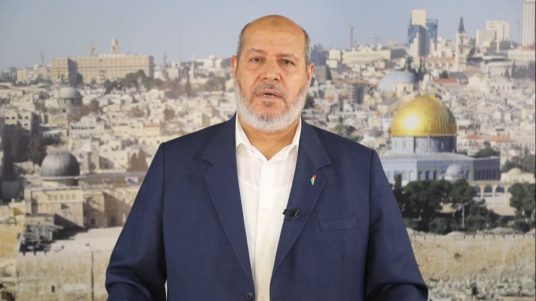
Khalil al-Hayya, head of the Islamic Resistance Movement, Hamas, in the Gaza Strip, said Israel’s attempts to impose its will through assassinations and attacks on political leaders and their families “will fail,” following the assassination of his son Azzam al-Hayya in an Israeli strike on Gaza City.
Speaking during a memorial gathering on Thursday, al-Hayya described the martyrdom of his son, alongside several other Palestinians, including neighbor Hamza al-Sharbasi, as part of a continuing campaign targeting Palestinian families and resistance leaders.
He said the martyrdom of Palestinians would only strengthen the struggle for the liberation of Palestine and Jerusalem, adding that Israel’s efforts to pressure negotiators through violence would not succeed.
Al-Hayya also linked the attack to previous Israeli strikes targeting Hamas negotiators in Qatar last year, saying the Movement continued negotiations “on behalf of its people and national interests,” despite ongoing attacks.
Meanwhile, Khaled Mishaal, head of the Hamas Movement abroad, praised al-Hayya’s resilience during the funeral gathering, describing the loss of multiple sons and relatives as “a great sacrifice.”
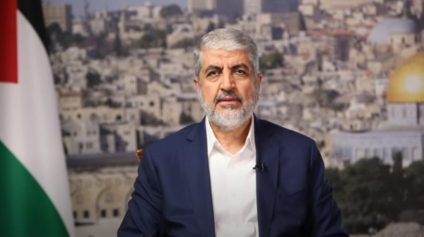
Mishaal said Gaza continues to “write epics of steadfastness and sacrifice” despite the Israeli war, siege, and destruction, arguing that the suffering endured by Palestinians increases the responsibility of the wider Arab and Muslim world toward Gaza and the Palestinian cause.
He also called for greater support for Palestinians in Gaza, the West Bank, Jerusalem, and Palestinian prisoners, while stressing that the sacrifices made during the war were “not only for Palestine but for humanity as a whole.”
‘Israel’ kills Azzam al-Hayya, son of Hamas chief Khalil al-Hayya
Al Mayadeen | May 7, 2026
Azzam al-Hayya, the son of Khalil al-Hayya, leader of the Hamas Resistance movement in Gaza, was martyred on Thursday after succumbing to wounds he sustained in an Israeli attack on Gaza City on Wednesday evening, according to Al Mayadeen’s correspondent.
The correspondent reported on Wednesday night that Hamza al-Sharbasi was killed and Azzam Khalil al-Hayya was injured in an Israeli airstrike near the Jabalia bus stop in the al-Daraj neighborhood, in central Gaza City.
PIJ condemns assassinating Resistance forces, their leaders
The Palestinian Islamic Jihad movement condemned the assault, saying, “The government of war criminals in the occupying entity continues to escalate its crimes against the Gaza Strip.”
In a statement, the movement noted that “the occupation army is carrying out ongoing assaults aimed at assassinating Resistance forces and their leaders, particularly within Islamic Jihad and Hamas.”
It further highlighted that the latest in these assassinations was “the treacherous airstrike that targeted Hamza al-Sharbasi, a leader in the al-Qassam Brigades, yesterday.”
“The attack also injured several others, including the martyr Azzam, the son of Khalil al-Hayya, the head of the Hamas movement in Gaza, who succumbed to his wounds this morning,” the movement added.
The PIJ accused “Israel” of using the strikes to impose its terms on Gaza, evade agreed-upon ceasefire commitments, block reconstruction efforts, and continue committing massacres, including by disrupting the Rafah crossing.
‘Israel’ continues its genocide amid so-called ceasefire
In a separate incident on May 6, and as part of ongoing Israeli violations, several Palestinians were wounded when an Israeli strike targeted a displacement camp in Gaza City’s al-Zaytoun neighborhood.
Further south, police colonel Naseem al-Kalzzani was killed and others were injured after an Israeli strike targeted his vehicle in the al-Mawasi area of Khan Younis.
Hamas said the escalation by the Israeli occupation forces, which continued to target civilians in Gaza, constituted a clear violation of the ceasefire agreement. The movement called on the United States administration and the guarantor states of the Sharm el-Sheikh agreement to intervene immediately to restrain Israel.
Despite the ceasefire reached in October 2025, Israeli forces have continued near-daily aggression across the Gaza Strip.
According to Gaza’s Ministry of Health, the death toll has risen to 837, with 2,381 wounded and 769 bodies of martyrs retrieved since the ceasefire took effect.
The cumulative toll since the start of the Israeli genocide on 7 October 2023 has reached 72,619 killed and 172,484 injured.
Ceasefire no longer viable after 200 days of Israeli violations: Hamas
Al Mayadeen | May 2, 2026
One Palestinian was killed in an Israeli drone strike targeting the vicinity of al-Qastal Towers, east of Deir al-Balah in the central Gaza Strip, Al Mayadeen’s correspondent reported on Saturday.
In a separate development, Israeli forces carried out a large-scale demolition operation east of Khan Younis in southern Gaza, according to the same correspondent.
In light of the continued Israeli violations, Basem Naim, a member of the political bureau of Hamas, said that after 200 days, it is no longer possible to speak of a ceasefire in Gaza. He stated that the situation is a continuation of a “war of extermination,” despite the Resistance’s adherence to the agreement.
Speaking to Al Mayadeen on Saturday evening, Naim stressed that the future of the Gaza Strip and the broader Palestinian cause remains a solely internal Palestinian matter. He added that the Resistance has fulfilled all obligations requested of it, as confirmed by mediators, while Israeli attacks have continued.
Naim also stated that the Rafah crossing has not been opened in accordance with the agreement, noting that the number of people allowed to pass remains limited. He said mediators had been informed of the need to review the implementation of the first phase of the agreement before moving on to the second.
US providing cover for ‘Israel’ to violate ceasefire
The Hamas official further accused the United States of providing cover for Israeli violations, revealing that a technical committee comprising mediators and relevant parties is being supplied with daily documentation of the breaches.
According to Naim, the negotiating position is based on previous agreements and the rights of the Palestinian people, with insistence on the full implementation of the first phase, including the entry of humanitarian aid and reconstruction materials. He added that the agreement includes a political track aimed at securing Palestinian rights, including the establishment of a state with its capital in al-Quds.
Naim emphasized that armed resistance is a legitimate right and that its weapons are an essential component of that right. He also highlighted unity among Palestinian factions and ongoing coordination between them, while warning that the occupied West Bank is facing a “silent and continuous war,” amid escalating attacks on religious sites.
‘Israel’ working to ‘annex’ West bank as a ‘fait accompli’
In this context, Naim said “Israel” is working to consolidate the “annexation” of the West Bank as a “fait accompli”, while restricting the work of international organizations in Gaza unless they operate under its conditions.
He added that the negotiating delegation remains in Cairo and is serious about continuing talks, while maintaining its demand for the full implementation of the first phase. He stressed that the Resistance is not seeking war and does not oppose political pathways if they lead to ending the occupation, but rejects discussing the issue of its weapons separately from a permanent ceasefire.
Naim also praised international activists expressing solidarity with the Palestinian people and condemned attacks on ships attempting to break the blockade, stressing Gaza’s need for an international humanitarian corridor. He concluded by emphasizing the importance of Palestinian unity and rejecting internal divisions that could serve Israeli interests.
Israeli military ‘failed on all fronts’: Poll
The Cradle | April 28, 2026
A poll published by Israel’s Public Broadcaster (KAN) on 28 April found that a majority of Israelis believe the state has failed to secure victory in any war since October 2023.
According to the survey, 57 percent of respondents said no victory had been achieved, while 28 percent believed success had been reached in at least one arena, and a further 15 percent said they were unsure.
The findings come after more than two years of Israel’s genocide in Gaza – which Israel threatens to reignite – during which Tel Aviv waged multiple offensive military campaigns against Gaza, Lebanon, and Iran, alongside attacks in Yemen and Syria and a campaign of destruction and displacement in the occupied West Bank.
Confidence levels across all the fronts remain low, with only 17 percent viewing operations in Syria as successful and 16 percent saying the same for Gaza and Iran.
Perceptions dropped further on the Lebanese front at 14 percent, followed by Yemen at 12 percent and the occupied West Bank at 11 percent.
The poll also points to persistent security concerns, with a total of 73 percent of respondents saying the continued armed presence of Hamas and Hezbollah poses a direct threat of a repeat of a 7 October-style event.
Only 10 percent dismissed that possibility, while 17 percent remained uncertain.
On the ground, Israel has reportedly begun withdrawing troops from southern Lebanon. Israeli outlet Maariv described the campaign as ending in “failure” and “bitterness,” as forces pull back under continued Hezbollah attacks, including drone strikes that exposed major gaps in Israeli preparedness.
The poll also showed divisions over Netanyahu’s legal status, with a majority – 56 percent – supporting a pardon for his corruption charges, while 26 percent opposed the move and 18 percent remained undecided.
Netanyahu had requested a presidential pardon on 30 November without admitting guilt or stepping down from office, despite Israeli law requiring an admission of guilt for such a measure.
He is currently facing trial in three separate corruption cases involving fraud, bribery, and abuse of power, with court proceedings ongoing since 2020 after charges were filed in 2019.
Netanyahu’s court testimony was delayed once again on 27 April over a “serious” security incident in southern Lebanon, as the prime minister seeks to prolong the wars to keep his corruption trial from moving forward.
At the same time, the International Criminal Court (ICC) has listed Netanyahu as wanted since 2024, issuing arrest warrants for him and former defense minister Yoav Gallant over their direct involvement and orchestration of the genocide in Gaza, as well as war crimes and crimes against humanity, including the use of starvation as a weapon.
After the ceasefire illusion: Why Gaza’s “Day After” still has no buyer?
By Dr Mustafa Fetouri | MEMO | April 23, 2026
The international community remains fixated on a phantom: Gaza’s “Day After.” While Washington, Cairo, and Doha debate elaborate governance frameworks and the “Board of Peace,” these plans share a fatal flaw—they lack a viable “buyer” on the ground.
This diplomatic theatre has been eclipsed by the US-Israeli aggression against Iran that began on 28th February. Since then, Gaza has been sidelined globally, yet the genocide—begun in October 2023—has never stopped. Even before the Iran escalation, the 10th October ceasefire was a hollow promise; Israel violated the agreement over 2,400 times through near-daily air raids and shelling.
Since that supposed de-escalation, nearly 1,000 Palestinian civilians have been killed, pushing the total death toll past 72,300. This grim reality proves the “Day After” is not a sincere peace plan, but a cynical mask for a permanent, lethal status quo. Far from transitioning to Phase II, the current impasse suggests the ceasefire was merely a tactical suspension of a conflict Israel refuses to end. With the occupation intact and violations occurring daily, Gaza is not moving toward a post-war era. Instead, it is being forced into a state of managed catastrophe, where “peace” serves as a placeholder for the next phase of destruction.
The “Day After” blueprints—specifically the Trump-led Board of Peace and the National Transitional Committee (NTC)—envision technocratic governance for Gaza but face a wall of refusal. For the Israeli government, any plan offering a pathway to Palestinian sovereignty is a non-starter; Netanyahu’s coalition instead prioritises “forward defence” and indefinite military hegemony. Conversely, the Palestinian Authority (PA) remains wary of being “parachuted” into the ruins on the back of Israeli tanks, a move that would permanently strip them of national legitimacy.
The vacuum is further complicated by the survival of the Resistance on the ground. Despite the fanfare surrounding the Board of Peace’s “Phase II,” Hamas has explicitly rejected any form of international guardianship, viewing the NTC not as a governing partner, but as a Trojan horse for disarmament. Meanwhile, the wealthy Arab states—the intended financiers of a reconstruction effort now estimated to cost $71.4 billion—have failed to commit any tangible funds.
Their hesitance is rooted in a grim economic reality: the regional losses they have accumulated, and continue to accumulate, from the spillover of the war on Iran have depleted the very sovereign wealth once earmarked for Gaza.
Without a “buyer” willing to assume the immense security and political risks of governing a site of ongoing genocide, the various “roadmaps” coming out of Washington and Brussels serve as little more than academic exercises in a theater of the absurd. The international community continues to pitch governance models to a phantom audience, while the reality on the ground remains one of systematic destruction, leaving Gaza caught in a loop where “reconstruction” is discussed as a future hope but never funded as a present necessity.
The “Day After” illusion is further sustained by the inflammatory rhetoric of Nickolay Mladenov, the High Representative for the Board of Peace. In his recent April 2026 briefings, Mladenov has essentially weaponised Gaza’s reconstruction, explicitly linking the release of the $71.4 billion in aid to the immediate and total disarmament of Palestinian factions.
By framing the situation as a binary choice—disarm or continue to suffer—Mladenov has abandoned the role of a neutral mediator.
Hamas has responded by accusing Mladenov of siding with the Israeli occupation and ignoring the thousands of ceasefire violations that have occurred since October 2026 effectively freezing the process in Phase II. By prioritizing the “decommissioning of weapons” over the immediate cessation of the genocide and the lifting of the blockade, Mladenov’s framework has become a symbol of international bias rather than a bridge to peace. This disconnect is why the “Day After” has no buyer: the brokers are selling a plan that demands the surrender of the victims while the aggressor continues its military operations with impunity.
Sensing that the Resistance groups are not convinced by his frameworks, Mladenov has recently attempted to soften his public tone while maintaining his rigid demands. In an interview with Reuters on 20th April, he admitted that negotiations with Hamas are “not easy,” yet he struck a jarringly optimistic note, claiming he is “optimistic that we will be able to come up with an arrangement that works for all sides and, most importantly, works for the people in Gaza.” Since neither Israel—which continues its strikes—nor the Resistance—which has rejected international guardianship—has publicly shifted their positions, Mladenov’s forward-looking posture appears increasingly detached from the ground reality.
In recent high-level meetings in Cairo (ending 17th April), Hamas negotiators, led by Khalil al-Hayya, delivered a firm list of prerequisites to the Egyptian mediators. They made it clear that they will not consider any decommissioning of weapons without:
- A definitive and irreversible plan toward a sovereign Palestinian State.
- The complete and immediate lifting of the 19-year blockade.
- A full Israeli withdrawal to the pre-October lines (specifically removing the “Yellow Line” military zones).
- The prior implementation of all Phase I humanitarian commitments, including the reopening of all commercial crossings and the restoration of Gaza’s power plant.
By insisting on these core national rights as a baseline, the Resistance has effectively neutralized Mladenov’s “aid-for-arms” trade-off, exposing the Board of Peace as a seller with a product that the actual stakeholders refuse to buy.
Ultimately, the “Day After” is failing because it has lost its primary architect. Donald Trump, once the loudest champion of these regional “deals,” is now completely bogged down by the escalating war on Iran, a conflict that is siphoning away the political capital and attention once directed toward Gaza. His schedule for next month confirms this pivot: a rescheduled state visit to China (May 14-15) and a high-stakes reception for the UK’s King Charles later this month, both of which were delayed specifically by his war on Iran.
With Trump preoccupied by a naval blockade in the Strait of Hormuz and a domestic battle over war powers, Gaza has been relegated to a secondary theatre.
This lack of American bandwidth means the “Board of Peace” is effectively a rudderless ship. For the people on the ground, this means the “Day After” is not just a geopolitical myth, but a casualty of a larger regional fire that the White House is currently more interested in fuelling than extinguishing.
Featured Video

Iran’s Next Strike May Not Explode. It Could Shut You Down
or go to
Aletho News Archives – Video-Images
From the Archive
Zionism’s Violent Legacy
By Donald Neff | Washington Report On Middle East Affairs | January 1996
On January 4, 1948, Jewish terrorists drove a truck loaded with explosives into the center of the all Arab city of Jaffa and detonated it, killing 26 and wounding around 100 Palestinian men, women and children.[1] The attack was the work of the Irgun Zvai Leumi – the “National Military Organization,” also known by the Hebrew letters Etzel – the largest Jewish terrorist group in Palestine. The Irgun was headed by Revisionist Zionist Menachem Begin and had been killing and maiming Arabs, Britons and even Jews for the previous ten years in its efforts to establish a Jewish state.
This terror campaign meant that at the core of Revisionist Zionism there existed a philosophical embrace of violence. … continue
Blog Roll
 Aletho News
- Trump’s Iran war is on an Israeli leash
- Saudi oil boss issues global supply warning
- Riyadh Says Its Oil System Is Intact. The Numbers Say Otherwise.
- Trump and Netanyahu Want to “Finish the Job” on Iran
- US ‘one-sided dictation’ not Iran’s beliefs makes rational talks impossible: Baghaei
- Iran’s Next Strike May Not Explode. It Could Shut You Down /Col Doug Macgregor
- Iran: US political targets legitimate if assassinations return
- Iraq shuts key border crossing with Iran under US pressure: Report
- Undersea Internet cables could be targeted in retaliation for attacks on Iran: IRGC deputy chief
- EU sending ‘biased’ observers to interfere in Serbian election – president
- If Americans Knew
- The Israel Lobby’s Changing Fortunes
- AIPAC has become such a political liability that it’s shifting to a more “nimble” approach to buying politicians
- At least 160 Israeli settler attacks in 2 weeks
- Will Gaza’s Ancient Christian Community Disappear Forever?
- Israel’s vision of regional security rests on keeping Arab states weak
- Heidi Levine recounts how Palestinian youths helped save her in settler attack
- DAILY UPDATE: Latest essential news on Palestine, Israel, & region
- Trump’s Intensifying Sabotage of the ICC, for Israel’s Sake
- Israeli military detain US and UK volunteers in West Bank including Democratic NY politician Brad Lander
- Americans at National Conservatism Conference held in Israel this year criticize Israel
- No Tricks Zone
- E-Cars Reduce CO2 Emissions By Only 41% Compared To Internal Combustion Engine Vehicles
- Predictions Made By Renowned Climate Professor Over Past Decades Have Been Proven To Be Poor
- New Study Suggests Large Regions Of The Pacific Ocean Have Been Cooling For The Last 80 Years
- Germany’s Green Energy Debacle: High Energy Costs Force Kahla Porzellan to Close After 182 Years!
- New Study: 50 Years Of The Most Aggressive ‘Net Zero’ Policies Can Only Affect The Global Climate By 0.03°C
- US September “Heat” Was No Record…Many Records Set Decades Ago
- Latest European Green Energy Debacle; Portugal’s Largest Flagship Solar Park Insolvent!
- Green Energy Debacle: German Expert Professor Fritz Vahrenholt Warns Of Severe Economic And Social Consequences
- Two More Paleo Reconstructions Affirm Meters-Higher Sea Levels Across Ireland, Brazil 7000-6000 Years Ago
- New Study: Earth And Venus Surface Warmth Largely Explained By Convection And Lapse Rate, Not CO2 Or Radiation

