Declassified UK exposes British man who fought for ‘Israel’ in Gaza

Al Mayadeen| October 14, 2026
A four-month investigation by Declassified UK has identified a British man who fought with the Israeli occupation army in Gaza and found evidence linking him to a unit involved in the destruction of residential buildings and an incident involving a school that was set on fire.
Jonathan Burman, a Manchester native in his mid-20s, posted photographs on his private Instagram account showing himself serving with the Israeli occupation army in Khan Younis early in the Gaza war, according to the exclusive investigation published by Declassified UK.
Newly obtained photographs show Burman standing beside another soldier in front of a burning primary school in Gaza. The images were posted in January 2024, around six weeks after Israeli forces entered and took control of the school.
The investigation comes after a UN commission said Israeli soldiers who fought in Gaza after October 2023 should be considered potential suspects in war crimes investigations.
An analysis of Israeli occupation army documents linked Burman to a unit that repeatedly destroyed residential buildings in Gaza. A former Israeli soldier who served in the same battalion told Declassified UK that the conditions in Gaza amounted to an “absolute apocalypse”.
“You could just go and do whatever you want… You could burn down those houses and have no consequences whatsoever,” he said, as per Declassified UK.
Under the Fourth Geneva Convention, which “Israel” has ratified, “extensive destruction…of property, not justified by military necessity and carried out unlawfully and wantonly” constitutes a war crime.
An Israeli occupation military spokesperson told Declassified UK that weapons had been found at the school shown in Burman’s photographs but provided footage from a different school as evidence.
Burning school in Khan Younis
According to six witnesses and experts interviewed by Declassified UK, the school shown in Burman’s photographs was Al-Farabi Primary School in the Bani Suheila area of Khan Younis in southern Gaza.
Palestinian civilians who sheltered there told Declassified UK that they had sought refuge because the school was operated by UNRWA. Satellite imagery from November 2023 showed white tarpaulins covering the playground and the initials “UN” visible on its roof.
The civilians said they were forced to leave in December 2023 as Israeli forces advanced into the area.
Ayman Sahmoud, 56, told Declassified UK that he and his family sought refuge at the school after being forced from their home by Israeli bombardment and evacuation orders.
“We left our home with nothing,” he recalled. “We abandoned everything behind us. When we arrived at the school, it was already overflowing with displaced families… We could barely find a place to sleep.”
Sahmoud said repeated attacks on an area adjacent to the school shook the building and that the surrounding area was systematically demolished.
“After some time, the Israeli military bombed the school’s main gate,” he said. “Two people were killed right before our eyes. At that moment, we understood the message was clear: we had to evacuate the school completely.”
He said Israeli aircraft then dropped leaflets ordering displaced Palestinians to leave, forcing his family and others to flee toward Rafah.
Randa Abu Assi, 42, also told Declassified UK that she remained at the school until December 2023 as bombardment intensified.
“My foot was struck by shrapnel,” she said. “My son, Bahaa, 21 years old, was also wounded by shrapnel that remains lodged in both of his legs to this day.”
“We fled under fire and survived by a miracle,” she added.
Abu Assi later learned that Israeli forces had entered the school on December 12, 2023. Arabic-language reports cited by Declassified UK also documented Israeli troops entering the school and detaining Palestinians there.
Geolocation links photographs to Al-Farabi school
The school lies beyond the “Yellow Line” in Gaza and remains under Israeli military occupation following last year’s ceasefire agreement between “Israel” and Hamas, according to Declassified UK.
Three witnesses identified the building in Burman’s photographs as Al-Farabi School. Declassified UK also submitted the photographs to three geolocation experts, who independently identified the location as the same school.
Ryan Geitner of Airwars compared Burman’s photographs with Reuters footage filmed in April 2024 showing a destroyed school in Khan Younis.
“Reviewing footage from Reuters and the photos posted to social media, we have a high level of certainty that this is the same location.
“Satellite imagery indicates that the school suffered major damage in the months after November 2023, signs of which are visible in both sets of material.”
The Hind Rajab Foundation’s analysis of Israeli occupation army documents further suggested that Burman may not have been stationed at the school until January 8, 2024, weeks after Israeli forces had removed Palestinian civilians.
‘Erase them, their families, mothers and children.’
Another photograph posted by Burman and captioned “Khan Yunis” shows him kneeling with a rifle among destroyed residential buildings, with an overturned bed and a child’s bicycle visible in the rubble.
The Israeli occupation military indicated to Declassified UK that Burman served in the 55th Reserve Paratrooper Brigade, while the Hind Rajab Foundation found evidence suggesting he served in its 66th Battalion, B Company.
Yuval Green, a former medic in the same battalion, described the atmosphere among soldiers before and during the Gaza operation.
The battalion commander, Ofir Adani, reportedly told soldiers before they entered Gaza, “I want you to be angry. I want you to rage. I want you to have a deep sense of revenge. Anyone who messes with us should die. He and his family. And his relatives. And everyone who supported him.”
Green also recalled a speech by Ezra Yachin, who had been involved in the 1948 Deir Yassin massacre of Palestinians.
“This guy comes to us, a group of soldiers, and he’s just telling the story of how he massacred villagers… and no one blinks an eye. And I think this shows you very very well what type of atmosphere we’ve had before we went into Gaza. The writing was on the wall.”
Footage from another event shows Yachin telling soldiers, “Erase them, their families, mothers and children. These animals can no longer live.”
Asked about Burman’s photographs in front of the burning school, Green said he “felt awful. [It] really takes me back to one of the worst times of my life.”
“Look at their smiles. It’s just, you know, that’s the first time they’re burning down a building. For them, it’s some type of a crazy experience. And they don’t think about the consequences because it’s a place without rules.”
Green also described the destruction of residential properties during his deployment. “Fifty days after we went into Gaza, they’re telling us to burn down the houses we were at.
“And I go to my commander and ask him, why are we burning down those houses? And he has no good answer. Absolutely no good answer. If you were to destroy a house in London, you live in a country of law. You live in an organized country. No one can just go and burn down the house.”
“But this war zone is a wild west. No rules. Absolute apocalypse. So you could just go and do whatever you want. You can go and steal whatever you want from those houses. You could burn down those houses and have no consequences whatsoever. And I went to him and I told him, if we’re burning down those houses, I’m leaving the next day. I’m not willing to be a part of it. This is the last straw. And, that’s what happened. They burnt down the houses. I went back, and this was it.”
Burman later served in Lebanon and Syria
Burman’s Instagram photographs also show him relaxing with fellow soldiers during his deployment, including a December 31, 2023 photograph of him in occupation military uniform sitting inside the ruins of a house. He captioned it “happy new year” and identified the location as the “Gaza Strip.”
On January 31, 2024, he wrote, “I’ve been out of Gaza for a few days now.”
Israeli Army Radio reported that the 55th Brigade had withdrawn from Gaza on January 28.
Declassified UK also found evidence suggesting Burman later served in Lebanon and Syria. In November 2024, he posted photographs identifying his location as Lebanon, including one showing him with his weapon beside him. A post dated October 6, 2025, showed him in Syria.
Burman later returned to Britain, where his social media showed him attending a Manchester United match at Old Trafford on May 17.
According to Declassified UK, Burman grew up in Manchester, attended Altrincham Grammar School for Boys, and moved to “Israel” in 2019, where he joined the Israeli occupation army.
UN investigator calls for further investigation
Burman is among more than 2,000 British nationals who served in the Israeli occupation army during the Gaza genocide, according to a previous Declassified UK investigation.
The British government does not track British nationals serving in the Israeli army, while returning soldiers have not been routinely questioned about their activities. The Metropolitan Police previously declined to investigate 10 British nationals accused of war crimes in Gaza before reopening probes into four of them.
More than 25,000 people have signed a letter calling on the British government to track British nationals who have served in the Israeli army, screen them at ports of entry, and support investigations into alleged war crimes.
Chris Sidoti, an Australian human rights lawyer and member of the UN Commission of Inquiry on the Occupied Palestinian Territory, told Declassified UK that its investigative methodology was consistent with that used by the commission.
“We have found that there are very large numbers of digital material published by Israeli soldiers or soldiers serving with the Israeli forces about their exploits.
“The boastfulness of these soldiers is quite incredible but they produce material like the material that you describe that put themselves at places where war crimes have been committed or at least serious events have occurred that give rise to the possibility of war crimes, crimes against humanity and post it openly on social media accounts.
“So that information is important information, it’s almost confessional information and in many cases it is confessional. I note that you’re not saying this person is guilty of war crimes, we don’t say that either, we say that the evidence is sufficient to support further investigation and prosecution where warranted. I think that’s exactly correct.”
Sidoti said the Metropolitan Police’s war crimes unit should examine Burman’s activities, adding, “There is the obligation that when this person is within the jurisdiction of that state there should be an investigation and prosecution when warranted.”
MOE: Nearly 22,000 Students and Education Workers Killed
IMEMC | October 7, 2026
Nearly 22,000 Palestinian students and education workers were killed during three years of Israeli attacks, according to a statistical report released Wednesday by the Palestinian Ministry of Education and Higher Education. The report documents Israeli violations against the education sector from October 7, 2023, through October 7, 2026.
Issued under the slogan, “Three Years After the Genocide: Education Is a Will That Cannot Be Broken,” the report said Israeli forces killed more than 19,189 school students and 1,386 university students in the Gaza Strip. Another 28,586 school students and 3,082 university students suffered injuries of varying severity.
In the occupied West Bank, Israeli forces killed 134 school students and 39 university students and injured 871 school students and 283 university students. The forces also abducted 416 school students and 481 university students.
Among educational and administrative personnel in Gaza, Israeli forces killed 805 school employees and 246 university lecturers and staff members.
The report also documented the injury of 3,298 school employees and 1,493 university personnel. In the West Bank, Israeli forces killed seven school staff members and injured 26 others, while abducting more than 176 teachers and school employees and 21 university staff members.
Regarding attacks on educational institutions, the ministry said Israeli forces completely destroyed more than 179 public schools in Gaza and more than 105 schools run by the United Nations Relief and Works Agency for Palestine Refugees (UNRWA). More than 63 university buildings were also completely destroyed.
In response to the widespread destruction and in an effort to maintain the educational process, 700 teaching and learning centers were opened throughout the Gaza Strip, along with 12 virtual schools serving students from Gaza inside Palestine and abroad.
In the West Bank, Israeli forces continued targeting educational institutions. They issued a final demolition order against the Janba School in Masafer Yatta, south of Hebron, and closed four schools in Hebron’s Old City for several days: Yasser Amr, Al-Faiha, Qurtuba, and Al-Ibrahimiyya schools.
Israeli authorities also denied work permits to teachers at private schools in occupied Jerusalem, preventing them from reaching their workplaces, and continued invading Palestinian universities, most recently Birzeit University.
France cleared dozens of military sales to Israel between May and September: Report
The Cradle | October 6, 2026
France greenlit 35 military sales to Israel between May and September 2026, according to a joint investigation by the Palestinian Youth Movement and the French collective Urgence Palestine, with all shipments bound for subsidiaries of lead Israeli arms maker Elbit Systems.
The report states that suppliers based in five French regions manufactured the equipment, which includes cooling units used in tanks and missile launchers, visors fitted to the helmets of helicopter and fighter jet pilots, surveillance systems, and assorted electronics.
French arms firm Thales built and shipped control panels used to fire weapons remotely, a technology that rights groups and Gaza-based journalists have repeatedly reported Israel using to shoot civilians in their tents and on the streets, children among them.
Of the 35 shipments, 33 left from Paris’s Charles de Gaulle Airport, 32 of them aboard Israel’s national carrier El Al.
French Defense Minister Catherine Vautrin told parliament last week that France supplies no offensive weapons to Israel, repeating the government’s position that such sales ended in 2024.
Thomas Nayla, a lawyer with Urgence Palestine, dismissed that distinction, telling Middle East Eye that, given items such as tank cooling units and pilot visors, “there is no way these can be considered defensive.”
The new findings follow an April report by the same two groups, which counted more than 525 shipments of French military-use equipment to Israel between October 2023 and March 2026, arming the Israeli military throughout the genocide in Gaza.
The French shipments are part of a broader pattern in which European governments and companies continued to supply Israel with military and dual-use equipment throughout the Gaza genocide, even as several governments publicly criticized Israeli apartheid and war crimes, and announced partial or symbolic restrictions.
Germany, Israel’s largest European arms supplier, approved more than $930 million in export licenses to Israel in the first five months of 2026 alone, according to Germany’s news magazine Der Spiegel, citing Economy Ministry data
Britain, meanwhile, has touted its suspension of some export licenses while keeping F-35 components largely exempt, and has still approved at least $236 million in fixed-value military export licenses to Israel since October 2023, according to Campaign Against Arms Trade, a figure that excludes the open licenses covering much of its F-35 contribution.
Elbit Systems, which supplies roughly 85 percent of Israel’s drones and ground-based equipment, has been central to the Israeli military’s relentless onslaught across West Asia.
The arms company’s Hermes drones provided near-total aerial surveillance and target selection for attacks, and its AI-enabled Tzayad system identified more than 800,000 “targets” across Gaza and Lebanon in two years by the company’s own account.
The firm posted record profits throughout the genocide, boasting that its Tzayad system had flagged “up to or over half” of Gaza’s civilian population and infrastructure as targets while marketing its Gaza-used weapons to buyers as “battle-tested” to command a higher premium.
While Gaza dominates the UN, these are the people keeping it alive
By Ramzy Baroud | MEMO | September 30, 2026
When I first saw footage of Gaza doctor Munir al-Bursh and his family kneeling beside the white-shrouded body of his son, surrounded by mourners, I thought it was an old video. It was not.
My conclusion, however, was understandable. In December 2023, only months after the start of the Israeli genocide in Gaza, the al-Bursh family was targeted in an Israeli attack. Dr. Munir, director-general of Gaza’s Ministry of Health, was wounded. So were other members of his family. His daughter, Jinan, only 13, was killed.
That same day, Gaza’s beloved doctor was back at work, joining the many doctors across the Strip trying to save lives as Israel’s killing machine claimed them by the thousands.
Alas, the latest footage was not old footage resurfacing. It was a new coffin, a new funeral, another child buried by the same family. This time, the attack took place during what some in the media continue to call the ‘Gaza ceasefire.’
On September 19, an Israeli drone strike killed al-Bursh’s eldest son, Basir, outside a tent west of Jabaliya refugee camp.
“We were together side by side,” the grieving father recalled. Basir had warned him: “The Israelis are targeting both of us.” Moments later, his son stepped outside the tent and was killed.
One can be forgiven for confusing Gaza’s present with its recent past. The scenes emerging today are almost indistinguishable from those that preceded the so-called ceasefire of October 2025. The sequence repeats itself with terrible familiarity: Israeli strikes, shelling and sniping; Palestinians killed; the bereaved carrying their dead through Gaza’s destroyed streets, searching among the ruins for somewhere to bury them.
Al-Bursh’s story is part of this terrible continuum, but its significance extends beyond his personal loss. Throughout the genocide, he and other Palestinian doctors became Gaza’s de facto spokespeople. They counted the dead and wounded, documented hunger and destruction, and chronicled the collapse of the medical system from within its hospitals.
In the process, they became Gaza’s highest moral authority, more credible than politicians or self-proclaimed leaders.
And the world listened. Gaza’s doctors forged a bond with global civil society that no political institution could manufacture.
Perhaps that helps explain the staggering price Gaza’s medical community has been made to pay. According to the World Health Organization, more than 1,700 healthcare workers have been killed since 2023, amid at least 920 attacks on healthcare.
Dr. Hussam Abu Safiya, like Dr. al-Bursh, became a symbol of that medical resistance. The director of Kamal Adwan Hospital remained at his post through siege and repeated Israeli attacks before Israeli forces detained him in December 2024. He remains imprisoned without charge or trial, amid reports from his lawyer of beatings and deteriorating health.
Dr. al-Bursh, meanwhile, remains steadfast despite repeated blows that would have broken many others. His wife, too, embodies sumud, the Palestinian tradition of steadfastness nurtured at home and passed from one generation to the next.
Even in the immediate aftermath of his son’s killing, al-Bursh continued warning about Gaza’s collapsing healthcare system. Indeed, hospitals have been forced to suspend scheduled surgeries and outpatient services, while severe shortages of fuel, medicines and equipment continue.
“The limited quantities of fuel reaching the enclave barely keep health facilities alive,” al-Bursh warned a day after his son’s murder.
His statement came as world leaders gathered thousands of miles away, in New York, for the 81st session of the United Nations General Assembly.
And once again, Palestine echoed through speech after speech, though this time the language carried a new urgency.
Spanish Prime Minister Pedro Sánchez condemned “the genocide that Netanyahu continues to perpetrate in Gaza.” UN Secretary-General António Guterres described Israel’s mass extermination as involving “a scale of killing and destruction unlike anything I have witnessed” during his tenure. Even French President Emmanuel Macron called Gaza “a spectacle that shames us all,” asking: “What is our credibility worth if we remain inactive on Gaza?”
Then came Israeli Prime Minister Benjamin Netanyahu.
Dozens of delegates walked out as he approached the podium, leaving row upon row of empty seats, while protests continued outside the UN. Netanyahu responded by calling those who departed “moral cowards.”
One might pause here and speak of tides turning, currents changing and a world slowly loosening the decades-long grip of Israel and its American benefactor.
But Gaza does not have the luxury of time. While the words reverberate through the halls of the United Nations, children are still killed in front of their families. Mass funerals remain part of Gaza’s daily rhythm.
Approximately 1.7 million people remain displaced, many under inadequate shelter, without sufficient clean water or sanitation. Hospitals remain crippled. And above this landscape of ruin, the drones still circle.
Between today and the next UN General Assembly lies an entire year—365 days in which those words can either acquire meaning or become yet another entry in the long archive of speeches on Palestine. However, there is time for rhetoric to become policy: for sanctions to be imposed, boycotts activated, meaningful aid delivered and those responsible for war crimes held accountable.
Until then, Dr. Munir al-Bursh and thousands of Gaza’s men and women will continue to hold the fort amid shattered hospitals, destroyed homes and an exhausted population.
Their resilience is extraordinary. But Gaza cannot be expected to endure simply because it has proved capable of enduring.
In New York, Palestine is spoken of from the podium. In Gaza, Palestinians are still being carried to their graves.
It is time to close the distance between words and action, once and for all.
Israeli finance minister calls for genocidal war on West Bank, annexation of south Lebanon
The Cradle | September 27, 2026
Israeli Finance Minister and settler leader Bezalel Smotrich has called on Israel to “go to war” in the occupied Palestinian West Bank and “do there what we did in Gaza,” Israeli media reported on 27 September.
“I certainly have solutions” to the situation in the West Bank, he said. “I think we need to go to war in Judea and Samaria, to do there what we did in Gaza, to dismantle the Palestinian Authority, which is a terror authority.”
The Religious Zionism Party leader also called on Israel to annex the areas of southern Lebanon and Gaza occupied by Israeli troops.
“I would very much like to annex at least up to the Yellow Line in Gaza and up to the Litani [River] in Lebanon,” he says.
As part of its genocide of Palestinians since 2023, Israel has occupied an estimated 70 percent of Gaza, which is divided by a yellow line demarcating areas under direct Israeli occupation from those remaining under Hamas control.
Israel has also occupied territory in Lebanon amounting to 7 percent of the entire country.
Israel carries out demolition campaigns in both, seeking to wipe out any trace of Palestinian and Lebanese villages and cities already largely destroyed by Israeli bombing.
Smotrich made the comments after he was asked on a podcast how to advance Israel’s project in the West Bank amid Palestinian resistance.
Israel has accelerated its construction of illegal Jewish settlements and outposts in the West Bank this year, including in the E1 settlement.
E1 is designed to cut the West Bank in half and separate it from occupied East Jerusalem, making the establishment of a territorially contiguous Palestinian state impossible.
At the same time, Jewish settlers enjoying protection of the army regularly carry out violent pogrom-style attacks on Palestinian villages in hopes of forcing Palestinians to abandon their homes and agricultural lands.
In response, Palestinians have carried out several car ramming and shooting operations targeting Jewish settlers in recent weeks.
Smotrich also repeated his call to dismantle the Palestinian Authority (PA), which provides civil administration to parts of the West Bank, including the Palestinian cities such as Ramallah, Nablus, Jenin and Bethlehem.
The PA was established following the Oslo Accords in 1993 to serve as an interim government until the establishment of a Palestinian state.
However, the PA has in practice served as an arm of the Israeli occupation, assisting the Israeli military in suppressing Palestinian resistance.
Smotrich has previously called on Israel to annex more than 80 percent of the West Bank, which Israel conquered in 1967.
Since then, Israel has established some 160 Jewish settlements and 360 outposts, housing more than 700,000 Jewish settlers as part of a long-term campaign to colonize and Judaize the Palestinian territories.
In his campaign for next month’s Knesset election, Smotrich has touted the expansion of Israeli settlements under the current coalition government, which includes Smotrich, Prime Minister Benjamin Netanyahu, and National Security Minister Itamar Ben Gvir.
As head of the Likud Party, Netanyahu is seeking his seventh term as prime minister. Ben Gvir leads a religious nationalist party, Jewish Power, known for its extremism and calls for violence against Palestinians.
Meanwhile, Israeli authorities decided to impose a week-long “comprehensive closure” on the occupied West Bank, closing crossings to the territory until Saturday for the Jewish religious holiday of Sukkot.
The order will prevent Palestinians with work permits from entering Israel and Jewish settlements to go to their jobs.
Local sources told the Wafa News Agency that the entrance gate to Turmus Ayya, north of Ramallah, was closed and residents were “harassed.”
Wafa also reported that entrances to Aboud, Nabi Saleh, Atara and Taybeh were closed, while military checkpoints were set up at the entrances to Yabroud and Ein Sinyah.
‘A Big Victory’ – Palestine Chronicle Wins Two-Year Legal Battle
By Romana Rubeo | Palestine Chronicle | September 22, 2026
A US federal court dismissed the lawsuit against the Palestine Chronicle and its editor, Dr. Ramzy Baroud, after the three plaintiffs asked to withdraw it.
Almog Meir Jan filed the case in July 2024. Shlomi Ziv and Andrey Kozlov joined an amended complaint the following year. The suit sought to link the Chronicle to their captivity in Gaza through its publication of reports by Palestinian journalist Abdallah Aljamal.
The Chronicle rejected the accusations throughout the proceedings. The plaintiffs moved to withdraw their case in July, and US District Judge Tiffany Cartwright granted the request on September 15. The court record closed the case after more than two years of litigation.
“After a struggle of over 2 years, we have won a big victory. We have beaten back a calculated attempt to chill the free speech of some of the most critical voices of the Palestinian people — The Palestine Chronicle and Ramzy Baroud. I have been so proud and honored to represent these clients and am happy for the outcome,” Attorney Dan Kovalik said.
“Still, we must remain vigilant for the inevitable attacks to come against people whose only ‘crime’ is advocating for the lives and rights of the Palestinian people. We are fully prepared for this ongoing struggle,” Kovalik added.
For his part, Baroud welcomed the outcome but said that the case “should have been thrown out from the start.”
“It was initially dismissed, only to be refiled and treated as though the accusations had any legitimacy, despite there not being a single piece of evidence to prove any wrongdoing on our part,” he said.
A Gaza Journalist at the Center of the Case
The lawsuit grew out of an Israeli massacre in central Gaza in June 2024. Israeli occupation forces freed four captives during the operation, which also killed hundreds of Palestinians.
Among those killed was Abdallah Aljamal, a Palestinian journalist who had contributed reports to the Palestine Chronicle. His wife, father and neighbors were also killed. After the raid, Israeli officials alleged that three of the captives had been held in Aljamal’s home.
The three former captives later sued the Chronicle and Baroud. They alleged that the outlet had aided their captivity by publishing Aljamal’s work and paying him for it. The Chronicle denied paying Aljamal and rejected any suggestion that publishing his reports, which were also widely disseminated in both Arabic and English, connected the outlet to the captives’ detention.
Aljamal had filed many reports during the first six months of the war. Baroud said the value of that work lay in its attention to Palestinians whose experiences rarely reached an international audience.
“When Abdallah was sending articles, what I liked about his work is that he spoke to ordinary people,” Baroud said in an earlier interview with journalist Rachel Blevins.
“(We) did not want political commentary; we already have analysts. We wanted the voices of people you never hear from. That’s all,” he added.
In the same interview, Kovalik challenged the allegation that the Chronicle had financed Aljamal’s activities. “The claim is that the Palestine Chronicle paid a journalist, and somehow that money was used to hold hostages. It’s not true. There’s no evidence,” he said.
For the Chronicle, the case put an ordinary editorial decision—publishing firsthand reports from Gaza—at the center of an accusation of wrongdoing. It also forced a small newsroom to defend its work in court while continuing to cover the genocide facing the people and journalists on whom that work depended.
“The saddest aspect of all this is that the victims once again became the accused,” Baroud said in his latest statement. “Some of us have lost hundreds of family members, relatives, friends, neighbors and colleagues, only to find ourselves having to defend against entirely politically and ideologically motivated accusations.”
Israeli authorities have repeatedly accused Palestinian journalists killed or targeted in Gaza of ties to Hamas. The Committee to Protect Journalists has documented a pattern of labeling journalists as “terrorists” without substantiated evidence, while Reporters Without Borders has reported smear campaigns against Gaza’s journalists. Those allegations should be assessed on evidence, rather than treated as established facts because they come from the army that targeted them.
According to the International Federation of Journalists, at least 240 Palestinian journalists and media workers have been killed in Gaza as of September 2026. The federation described the toll as “the greatest massacre of journalists in the history of modern journalism”.
A Silver Lining
Baroud reflected on the people who helped the Chronicle through the case.
“There is a silver lining. This case made us stronger. Dan Kovalik and his team fought with extraordinary dedication on our behalf, while countless readers and intellectuals stood by us.
“Throughout it all, we refused to let the case slow us down. We expanded our coverage and our network, sharpened our journalism and emerged more resilient and more committed than ever to telling Palestinian stories.”
The Palestine Chronicle dedicated the outcome to its readers, solidarity activists, intellectuals, independent journalists and all those who stood beside it and defended the right of Palestinians to tell their own stories.
– Romana Rubeo is an Italian writer and the managing editor of The Palestine Chronicle.
Haaretz Editorial Board Acknowledges The Truth: Israeli ‘Consensus’ Is Pro-Genocide
By Justin K.P. | The Dissident | September 14, 2026
Haaretz, one of Israel’s largest newspapers, published an article on the new film ‘NAZA’, which features multiple IDF terrorists admitting to committing genocide in Gaza, titled “Israelis Must Finally Confront What Israel Has Done in Gaza”.
By the title, one would assume the paper is claiming that regular Israeli citizens are unaware of the genocidal crimes its government committed in Gaza and need to confront that fact.
But within the article, the editorial board acknowledges the truth: the overwhelming majority of Jewish Israelis know full well about the genocide unleashed in Gaza and fully support it.
“The Israeli consensus largely maintains,” the paper wrote, “that there are no innocents in Gaza, and therefore no such thing as collateral damage”.
In other words, the “Israeli consensus” is that slaughtering Gaza’s civilian population, including women and children, is justified (i.e. support for genocide).
The fact that the vast majority of Jewish Israelis hold openly genocidal views towards Palestinians is documented in opinion polls.
Opinion polls in Israel have shown that 75 percent of Israeli Jews agree with the openly genocidal slogan that “there are no innocents in Gaza”.
84 percent of Jewish Israelis have given the IDF an “excellent or very good grade regarding the moral conduct of the army” in Gaza, and 79 percent say “they are ‘not so troubled’ or ‘not troubled at all’ by the reports of famine and suffering among the Palestinian population in Gaza”.
Another poll found that 82 percent of Jewish Israelis “supported the forced expulsion of Gaza’s population to other countries” and 52 percent “he expulsion of Israel’s Arab citizens”.
47 percent even agreed with the idea of “killing all of the inhabitants” of “an enemy city”.
There is not a crime committed in Gaza that Israeli officials have not boasted about in Hebrew, from Israeli president Isaac Herzog openly stating that “It’s an entire nation out there that is responsible. It’s not true this rhetoric about civilians not aware not involved. It’s absolutely not true. … and we will fight until we break their backbone” to Science and Technology Minister Gila Gamliel boasting that the Israeli plan is to “make the Gaza Strip uninhabitable until the population leaves, and the same thing will happen in the West Bank” to Likud lawmaker Hanoch Milwidsky openly endorsing rape against Palestinian prisoners.
The truth, finally acknowledged by Harretz, is that the Jewish Israeli public knows full well about the Genocide unfolding in Gaza and has cheered it on from day one.
Israel’s destruction of Gaza’s sewage system triggers algal bloom, shutting down Israeli desalination plants

The Cradle | September 5, 2026
Israel’s destruction of Gaza’s water and sewage infrastructure has backfired into a domestic water emergency, with five of Israel’s six desalination plants supplying over 80 percent of Israeli drinking water shut down after an enormous algal bloom choked the coastline, Haaretz reported on 3 September.
Scientists cite two aggravating factors behind the algae – elevated sea temperatures and nutrient loads from Gaza’s sewage – which has poured untreated into the Mediterranean since Israeli bombardment deliberately destroyed the besieged enclave’s sanitation network.
The algae originated as microalgae in the Nile Delta and traveled east on sea currents, according to the satellite imagery firm Satalize, which recorded dense chlorophyll readings in the water as far north as Tel Aviv and lighter traces up to Caesarea.
With flow through the national supply lines weakening, the Israel Water Authority ordered local councils to curb consumption for farming, gardening, and other public use, while the Israeli government completely shut off external water supplies to Gaza.
The self-inflicted blowback comes after nearly three years of Israeli bombardment left close to 90 percent of Gaza’s water and sanitation infrastructure damaged or destroyed throughout the genocide in the strip, including desalination units, wells, reservoirs, and distribution networks.
All six of the besieged enclave’s wastewater treatment plants have been knocked out of service, along with the overwhelming majority of sewage pumping stations during Israel’s genocide of Palestinians in Gaza.
Roughly 40,000 cubic meters of untreated waste now empties into the sea every day, with a further 15,000 cubic meters draining into the ground through cesspits and broken lines.
The collapse has poisoned Gaza’s coastal aquifer and driven cholera and other water-borne diseases through a population already facing starvation and lacking proper healthcare due to Israel’s genocide, with the rainy season set to deepen the contamination.
Israeli blockade on fuel, spare parts, and equipment classed as dual-use has strangled every attempt to repair the ruined facilities.
Israel’s targeting of Gaza’s water and sewage systems was a deliberate campaign to manufacture the conditions for the spread of disease throughout the enclave, and render life unbearable for its almost 2 million residents by stripping them of the basic requirements for survival.
Two Palestinians killed, others injured in Israeli attacks on Gaza
Palestinian Information Center – September 4, 2026
GAZA – Two Palestinians were killed and several others injured on Friday as Israeli forces continued attacks across the Gaza Strip, including airstrikes, artillery shelling and gunfire, amid ongoing violations of the ceasefire.
An ambulance and emergency services source said one Palestinian was killed and others were injured in an Israeli drone strike west of Khan Younis in the southern Gaza Strip.
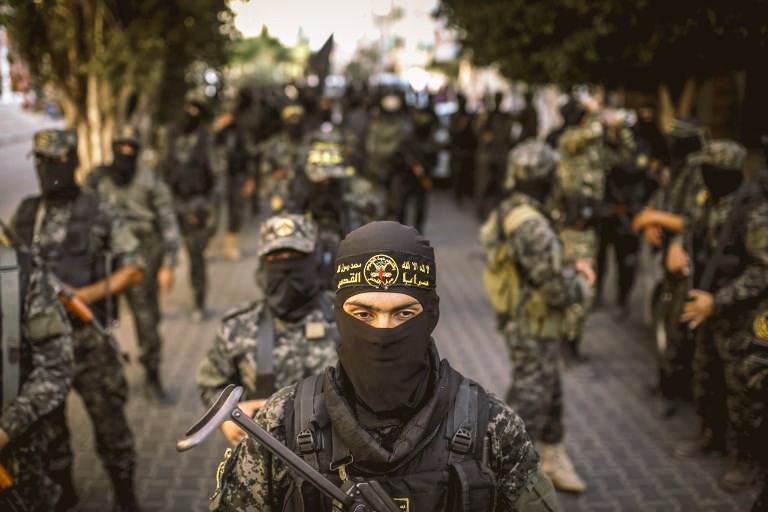
The Al-Quds Brigades, the military wing of Palestinian Islamic Jihad, announced that one of its fighters, Fadi Ali Saeed Al-Abadla, a member of the Al-Qarara Battalion in the Khan Yunis Brigade, was killed.
Providing details of the incident, the Brigades said that at around 3:30 a.m. Friday, a force belonging to what it described as “collaborator militias,” backed by Israeli drones, advanced towards Al-Jumeiza Street in the Al-Qarara area north of Khan Yunis in an attempt to abduct one of its fighters.
The Al-Quds Brigades said its fighters detected the infiltrating force during the attempted abduction and engaged it at point-blank range with grenades and medium weapons, saying that several members of the force were killed or wounded.
The Brigades said Israeli drones then intervened to provide cover for the force’s withdrawal. It added that members of the force shot and killed Al-Abadla, leaving his body at the scene before withdrawing with their dead and wounded.
Three Palestinians, including a girl, were also injured by Israeli fire near Hamad City, north of Khan Younis.
Israeli artillery shelled areas east of Khan Yunis, while Israeli military vehicles opened heavy fire near the Al-Matahin area north of the city.
Israeli military vehicles also opened heavy fire towards northern areas of the Bureij refugee camp.
Israeli airstrikes, artillery shelling hit Gaza City
In Gaza City, an Israeli warplane carried out an airstrike near Mushtaha Street in the Al-Shuja’iyya neighborhood, east of the city, as Israeli artillery simultaneously shelled eastern areas.
Israeli military vehicles and drones also opened fire toward Palestinian homes in the Al-Tuffah neighborhood, northeast of Gaza City, while Israeli forces fired illumination flares over the eastern part of the neighborhood.
A local source reported heavy gunfire from Israeli tanks near the Al-Sanafour area, east of Gaza City, as an Israeli Apache helicopter opened fire toward eastern parts of the city.
In the Al-Zaytoun neighborhood, southeast of Gaza City, an Israeli quadcopter drone opened fire, while another quadcopter fired east of the Sheikh Radwan neighborhood in northern Gaza City.
Since the ceasefire took effect on Oct. 10, 2025, 1,338 Palestinians have been killed and 4,429 others injured, while 815 bodies have been recovered, according to the latest figures.
The cumulative death toll since the start of the Israeli assault on the Gaza Strip on Oct. 7, 2023, has risen to 73,474 Palestinians killed, while 174,540 others have been injured.
No Matter Who Is In Power, Israel Will Stay Genocidal.
By Justin K.P. | The Dissident | August 29, 2026
There is a possibility that Benjamin Netanyahu will no longer be Prime Minister of Israel following the upcoming elections in October, with the opposition party Yashar led by former IDF Chief of the General Staff Gadi Eisenkot leading in many polls.
But removing Netanyahu and replacing him with Gadi Eisenkot will not change Israel’s genocidal nature.
In fact, it was Gadi Eisenkot who invented the Israeli military doctrine that functioned as the blueprint for the Genocide in Gaza, called the Dahiya Doctrine.
This Doctrine was invented by Eisenkot when he was Chief of Northern Command during the Israeli assault on Lebanon in 2006.
“What happened in the Dahiya quarter of Beirut in 2006 will happen in every village from which Israel is fired on… We will apply disproportionate force on it (village) and cause great damage and destruction there. From our standpoint, these are not civilian villages, they are military bases… This is not a recommendation. This is a plan. And it has been approved”, Eisenkot said, referring to the doctrine in 2008.
It was exactly this doctrine of collective civilian punishment which was used during Israel’s Operation Cast Lead in Gaza in 2008, which killed 1,400 Palestinians, including 300 children, and Israel’s Operation Protective Edge in Gaza in 2014, which killed more than 1,500 Palestinian civilians, including 500 children.
This doctrine was eventually applied during the Israeli genocide in Gaza starting in October of 2023.
Gadi Eisenkot was also responsible for the mass slaughter of peaceful Palestinian protestors during the Great March of Return in 2018.
As the Institute for Middle East Understanding documented:
- Eisenkot was chief of staff of the Israeli military in 2018 when Israeli snipers killed at least 189 unarmed Palestinian protesters in Gaza, including 35 children, three paramedics, and two journalists, and wounded more than 6,000 others, during the Great March of Return. As noted by the Israeli rights group, B’Tselem.
- “Over the course of the protests, the Israeli military implemented an open-fire policy of using live fire against unarmed protestors who posed no threat to the well-armored soldiers on the other side of the fence or to anyone else.”
- An independent U.N. commission of inquiry into the protests concluded there were: “reasonable grounds to believe that during the Great March of Return, Israeli soldiers committed violations of international human rights and humanitarian law. Some of those violations may constitute war crimes or crimes against humanity.”
Gadi Eisenkot opposes any kind of sovereignty for Palestinians, recently telling Israel Hayom “The two-state solution is a grave mistake” and “Anyone who thinks about a two-state solution after Oct. 7 is simply delusional.”
As for the West Bank, journalist Séamus Malekafzali noted in the Nation that he has espoused support for “maintaining settlements in the West Bank, opposing full annexation not because it is against international law or morally wrong, but because the new Arab population would endanger the Jewish majority in Israel.”
As for Lebanon, Gadi Eisenkot has positioned himself as more extreme than Netanyahu.
Malekafzali noted that, “In some respects, Eisenkot has gone even further than Netanyahu. He criticized the original ceasefire agreement in Lebanon that still allowed Israel almost total freedom of action, and in March, advocated ‘maximum force in minimum time,’ hoping to cause religious strife in Lebanon by ‘humiliating’ the Shia population by forcing them into Christian areas.”
In reality, Gadi Eisenkot, if he is able to win a majority or minority government in October, will be a more suitable face for the Israeli occupation than Benjamin Netanyahu.
While he likely will shy away from the same genocidal rhetoric as Netanyahu and the Likud coalition, this will only be done for propaganda purposes.
In reality, he is the creator of the doctrine the Gaza genocide is based on, and engineered the slaughter of Palestinian protestors during the Great March of Return.
He will put a more respectable face on Israel, while continuing to deny any kind of sovereignty for Palestinians and pushing forward with an Israeli occupation of South Lebanon.
Up to 3,000 people forcibly disappeared in Gaza during Israeli war: Rights group
MEMO | August 29, 2026
Between 2,500 and 3,000 people are estimated to have been subjected to enforced disappearance in the Gaza Strip during Israel’s war, a Palestinian rights group said Saturday, on the eve of the International Day of the Victims of Enforced Disappearances, Anadolu reports.
The Palestinian Center for Missing and Forcibly Disappeared Persons issued the estimate based on an analytical study of a sample of 317 cases, saying the findings showed indicators warranting an investigation into the possibility of a broader pattern of enforced disappearances in Gaza.
The center said its study was based on reports submitted by families of missing people and cases documented in the field and did not represent all cases of missing or forcibly disappeared people in Gaza.
Of the 317 cases examined, 302, or 95.27%, were males and 15 were females. The sample included 41 children and 17 people aged 60 or older.
Gaza City recorded the largest number with 89 cases, followed by northern Gaza with 74, Khan Younis with 59, central Gaza with 37 and Rafah with 32.
Regarding the circumstances of the disappearances, 76 cases occurred during Israeli military raids on homes or sieges of neighborhoods, while 60 occurred as people attempted to return to their homes or retrieve necessities.
Another 42 cases were recorded during displacement or while passing through military checkpoints, and 39 while people were searching for food or waiting for aid.
The center also documented 22 cases linked to the siege or storming of medical facilities or the transfer of patients and 10 involving journalistic or field work.
Separately, the organization estimated that between 4,000 and 5,000 people are missing and believed to be under the rubble of destroyed buildings, stressing that these cases should not be conflated with suspected enforced disappearances.
In April, the Palestinian Justice Ministry said more than 11,200 Palestinians had been reported missing or forcibly disappeared since October 2023, including more than 4,700 women and children.
The UN defines enforced disappearance as the arrest, detention or abduction of a person by state authorities or actors operating with their authorization, support or acquiescence, followed by a refusal to acknowledge the deprivation of liberty or disclose the person’s fate or whereabouts.
The center called for the fate of all missing people to be disclosed, access for the International Committee of the Red Cross to detainees and the establishment of an independent international mechanism to investigate cases of enforced disappearance and hold those responsible accountable.
With US support, Israel launched its war on the Gaza Strip in October 2023, killing more than 73,000 Palestinians and injuring over 174,000, most of them women and children.
Israeli airstrike destroys water desalination plant in northern Gaza
MEMO | August 25, 2026
Israeli warplanes struck and destroyed a water desalination plant in the Sheikh Radwan neighbourhood of northern Gaza City on Monday, injuring several civilians, according to Palestinian local sources.
The facility provided potable water to thousands of families and displaced Palestinians in Sheikh Radwan and surrounding areas. Local sources said its destruction would further exacerbate water shortages affecting residents of the Gaza Strip.
The strike comes despite a ceasefire agreement that has been in effect since October 10, 2025, amid continuing Israeli military operations in the territory.
According to Gaza’s Government Media Office, Israeli forces have committed 4,379 violations of the ceasefire since it took effect. The office said those actions have killed 1,286 Palestinians, wounded 4,257 and resulted in the arrest of 180 others. The figures could not be independently verified.
Palestinian authorities have repeatedly warned that damage to water and sanitation infrastructure, combined with restrictions on fuel and essential supplies, has severely reduced access to safe drinking water across Gaza.
The latest strike comes amid continuing disputes over implementation of subsequent phases of the ceasefire agreement, including Israeli military withdrawal, the disarmament of Hamas, reconstruction and humanitarian access.
Palestinian authorities say Israeli restrictions continue to limit the quantities of food, medicine, medical equipment and shelter materials entering Gaza, while continuing airstrikes and other military operations have caused further casualties.
Featured Video

Iran’s Next Strike May Not Explode. It Could Shut You Down
or go to
Aletho News Archives – Video-Images
From the Archive
Zionism’s Violent Legacy
By Donald Neff | Washington Report On Middle East Affairs | January 1996
On January 4, 1948, Jewish terrorists drove a truck loaded with explosives into the center of the all Arab city of Jaffa and detonated it, killing 26 and wounding around 100 Palestinian men, women and children.[1] The attack was the work of the Irgun Zvai Leumi – the “National Military Organization,” also known by the Hebrew letters Etzel – the largest Jewish terrorist group in Palestine. The Irgun was headed by Revisionist Zionist Menachem Begin and had been killing and maiming Arabs, Britons and even Jews for the previous ten years in its efforts to establish a Jewish state.
This terror campaign meant that at the core of Revisionist Zionism there existed a philosophical embrace of violence. … continue
Blog Roll
 Aletho News
- Trump’s Iran war is on an Israeli leash
- Saudi oil boss issues global supply warning
- Riyadh Says Its Oil System Is Intact. The Numbers Say Otherwise.
- Trump and Netanyahu Want to “Finish the Job” on Iran
- US ‘one-sided dictation’ not Iran’s beliefs makes rational talks impossible: Baghaei
- Iran’s Next Strike May Not Explode. It Could Shut You Down /Col Doug Macgregor
- Iran: US political targets legitimate if assassinations return
- Iraq shuts key border crossing with Iran under US pressure: Report
- Undersea Internet cables could be targeted in retaliation for attacks on Iran: IRGC deputy chief
- EU sending ‘biased’ observers to interfere in Serbian election – president
- If Americans Knew
- The Israel Lobby’s Changing Fortunes
- AIPAC has become such a political liability that it’s shifting to a more “nimble” approach to buying politicians
- At least 160 Israeli settler attacks in 2 weeks
- Will Gaza’s Ancient Christian Community Disappear Forever?
- Israel’s vision of regional security rests on keeping Arab states weak
- Heidi Levine recounts how Palestinian youths helped save her in settler attack
- DAILY UPDATE: Latest essential news on Palestine, Israel, & region
- Trump’s Intensifying Sabotage of the ICC, for Israel’s Sake
- Israeli military detain US and UK volunteers in West Bank including Democratic NY politician Brad Lander
- Americans at National Conservatism Conference held in Israel this year criticize Israel
- No Tricks Zone
- E-Cars Reduce CO2 Emissions By Only 41% Compared To Internal Combustion Engine Vehicles
- Predictions Made By Renowned Climate Professor Over Past Decades Have Been Proven To Be Poor
- New Study Suggests Large Regions Of The Pacific Ocean Have Been Cooling For The Last 80 Years
- Germany’s Green Energy Debacle: High Energy Costs Force Kahla Porzellan to Close After 182 Years!
- New Study: 50 Years Of The Most Aggressive ‘Net Zero’ Policies Can Only Affect The Global Climate By 0.03°C
- US September “Heat” Was No Record…Many Records Set Decades Ago
- Latest European Green Energy Debacle; Portugal’s Largest Flagship Solar Park Insolvent!
- Green Energy Debacle: German Expert Professor Fritz Vahrenholt Warns Of Severe Economic And Social Consequences
- Two More Paleo Reconstructions Affirm Meters-Higher Sea Levels Across Ireland, Brazil 7000-6000 Years Ago
- New Study: Earth And Venus Surface Warmth Largely Explained By Convection And Lapse Rate, Not CO2 Or Radiation

