Amidst widespread confusion about the Saudi-Yemen War, British journalist Sami Hamdi has weighed in on the debate. Unfortunately, his stance and analysis not only miss the mark, but are replete with factual errors, undemonstrable assumptions, and an incorrect timeline of how events transpired.
Until recently, the war in Yemen has long been ignored by the corporate media in the West. Despite the conflict being over a decade old, most references to it highlighted a humanitarian crisis and presented a narrative that a Saudi-Iranian proxy war was raging on. “The Houthis” have been labeled as terrorists, and many have found it rather difficult to understand what is truly going on inside the country.
Therefore, the goal of this article is to push back against Sami Hamdi’s portrayal of events inside the country and provide key context that will help a wider audience understand this issue in greater depth. It is not an attack on Hamdi himself, or an attempt to discredit him as a journalist; instead, it is a criticism of his narrative on this issue and a correction of false information he has presented.
The “Both Sides” Argument
Note: Sami Hamdi refuses to call Ansarallah by the actual adopted name of their movement and instead uses the label “Houthis”, which is considered derogatory and tribalistic by their supporters inside Yemen. To be clear, “the Houthis” is used interchangeably with Ansarallah.
The crux of Hamdi’s argument rests upon the narrative that both sides in the war are in the wrong, presenting his analysis as coming from a somewhat neutral stance. He also draws a moral equivalency between the ills of “the Houthis”, Saudi Arabia, and the United Arab Emirates. In this regard, he has argued that “the Saudis and the Houthis agree that Yemenis should not have the right to choose their leader”, going a step further to even posit that “the Saudis and Houthis believe that Yemen should not belong to Yemenis”.
To begin with, Ansarallah are a Yemeni movement composed entirely of Yemenis, publicly arguing that their war effort is to return Yemen to its people. Therefore, the concept that they don’t believe that Yemen should belong to Yemenis themselves makes little sense. The argument he employs additionally tries to separate Ansarallah from the Yemeni people, framing the issue as if they are a kind of foreign occupier.
In order to justify this claim, Hamdi argues that “the Houthis” imposed themselves on the country and do not even represent any authentic will of the Yemeni people. This not only attempts to relegate the Houthi family themselves, but also the millions of followers of the Ansarallah movement and its supporters, which represent a large portion of the nation’s populace.
A moral equivalency argument also does not work here. Ansarallah is an indigenous Yemeni movement that runs a government out of the nation’s Capital City and rules over the majority of the nation’s population. Saudi Arabia is a foreign country that has imposed a blockade on Yemen’s people for over a decade. The land, naval, and aerial siege manufactured a man-made famine that wiped out hundreds of thousands of people, while collectively punishing over 26 million others and depriving them of basic necessities.
Despite warnings from the United Nations and footage streaming out of the country, clearly showing the impacts on civilians, with children being disproportionately impacted, the Saudis continued their blockade.
The lower estimates for how many Yemeni civilians have been killed by Saudi airstrikes are around 9,000, while the higher figures often presented by the Ansarallah-led government are closer to 20,000. These attacks have included strikes on mosques, hospitals, schools, funerals and weddings.
The Royal Saudi Air Force (RSAF) would conduct routine massacres, such as bombing a packed school bus on August 9, 2018, killing 51 civilians, including at least 40 children. In October of 2016, a funeral was held for the father of Yemen’s Interior Minister, which drew a number of officials from the Ansarallah movement. The Saudi air force bombed the funeral before launching a double-tap strike that targeted the first responders – 155 were killed and 525 others were injured; the vast majority of whom were civilians.
Riyadh systematically destroyed Yemen’s energy and fuel infrastructure, in addition to its transportation sector. It bombed Yemeni airports at least 227 times, struck countless food storage facilities, and indiscriminately bombarded commercial and public facilities. Nothing was off limits. This was also a war of choice, not of necessity. It asserted itself over Yemen and its decision-making since 2011, in an attempt to dictate who would rule the country, still refusing to lift its blockade after more than a decade of suffering inside the country.
Ansarallah are, factually speaking, a Yemeni movement; Saudi Arabia is a foreign country. As for Iran’s support for them, the Iranians are not responsible for launching a direct attack, imposing a blockade, carrying out civilian massacres, or dictating the post-revolutionary process like Saudi Arabia. No political Party or armed group inside Yemen is without any foreign backers or support from abroad.
Factually Inaccurate Framing Of History
Hamdi sets the stage for his analysis of the Saudi-Yemen War by falsely claiming “the Houthis had just lost their sixth attempt to take over Yemen”. In his narrative, the Ansarallah movement is a rebel faction attempting to impose a tribalistic theocracy on the entire country through a series of wars. According to this logic, the only reason they were not able to achieve this in the past was because of their weakness and because they were blockaded in the northern Sa’ada Province by the Yemeni State.
The six conflicts, taking place between 2004 and 2010, were never in any way attempts to take over Yemen, the Ansarallah movement was not fighting with this as a justification for their armed action against the State, nor does any authoritative source argue this. Either Hamdi is mistaken and should retract this claim, or he is deliberately spreading false information to bolster his narrative.
The movement that calls itself Ansarallah today began forming in the 1990s and was led by a Zaydi Shia scholar, Hussein al-Houthi.
In 1992, members of the Houthi family in the northern Sa’ada Province founded Al-Shabab al-Mu’minoun (The Believing Youth) movement. Their goal was to revive the Zaydi sect of Shia Islam, which they believed was being slowly lost, compromised and directly threatened. To achieve their goals of reviving their religious teachings, they began starting summer schools and cultural clubs.
Hussein al-Houthi, the movement’s founding leader, would go on to participate in Yemeni politics in the mid-1990s, getting elected to parliament on behalf of the al-Haqq Party. He offered scathing critiques of State corruption and mismanagement, while condemning Saudi Arabia, Israel and the United States. As a leader of the movement, his platform was built upon anti-imperialism and pan-Islamic unity, teaching that this strategy was the most effective means of defeating the US and Israel.
This kind of anti-imperialist rhetoric was initially tolerated by Yemeni President Ali Abdullah Saleh, who was himself of a Zaydi-Shia background. President Saleh had initially sided with Iraq’s Saddam Hussein during his invasion of Kuwait in 1990. In retaliation for Saleh’s stance in support of the Iraqi President during the Gulf War, Saudi Arabia expelled around a million Yemeni workers and Yemen grew increasingly isolated.
Then came the US’s so-called ‘War on Terror’ in the early 2000s, when President Saleh decided to switch sides and back the United States, also growing closer to Saudi Arabia. Hussein al-Houthi was causing immense embarrassment to the nation’s dictator. The Believing Youth movement would chant anti-US and anti-Israel slogans in their mosques, while advocating against Washington’s wars in the Muslim World.
In 2004, President Saleh decided to launch a military raid, aimed at arresting Hussein al-Houthi, but it was resisted by members of the movement. The conflict ended with the killing of the Zaydi leader. Although Saleh believed this would be the end of the movement, they had transformed Hussein al-Houthi into a martyr, and his forces achieved the very opposite of crushing the movement. Not a single one of the battles between the rebels in Sa’ada and the Yemeni Army was about who would rule Yemen; they were localized and had nothing to do with an attempt to impose their rule over the entire country.
In fact, President Saleh made a number of requests that the United States intervene in order to help crush the rebels, attempting to argue that they were receiving support from Iran. The US assessed that there was no such evidence that they were being armed by the Iranians, therefore treating the issue as a local problem. Instead, the Americans discovered that the weapons being used against Saleh’s forces were primarily coming from his own army.
The Ansarallah movement never aimed to take over Yemen through these conflicts; it was simply not even on the cards for them to think further than the north at that point. There are no public statements from them that indicate that any of these wars were fought over a divine right of the Houthi family to rule Yemen; this notion is simply false.
“The Houthi” Takeover and the “Internationally Recognized Government”
When Hamdi was recently interviewed on ‘The Thinking Muslim’ program, he made a number of assertions about the Ansarallah takeover of Yemen’s Capital, Sana’a – misrepresenting the series of events that led to this outcome.
He begins the timeline with the overthrow of longtime Dictator Ali Abdullah Saleh, then claims that the Yemenis “get together and decide to host a national dialogue”.
“So a national dialogue begins under the auspices of the United Nations. Everybody engages with it and the Qataris insist that the Houthis should also take part in it as well.” Hamdi continues:
“They come to an agreement that the country will be ruled through democratic elections; there will be an interim government; a southerner will be put as President (Abdrabbuh Mansour Hadi) in order to ease the southern separatist tendencies. There will be an election where this President will run on his own, so he will have a democratic mandate; then there will be widespread elections, and Yemenis will choose who should rule over them.”
This timeline is totally incorrect. In 2011, the Yemeni people initiated an uprising against President Ali Abdullah Saleh, which ended when the Gulf Cooperation Council (GCC) drafted an arrangement whereby the dictator would step down and make way for a new leadership in 2012.
The Yemeni national dialogue, as described by Hamdi, did not take place during this period. Instead, the Saudis and their GCC allies decided that the Yemeni Dictator’s Vice President would be installed in power as part of the agreement to allow for a transition of power. An election was held, in which then Vice President Abdrabbuh Mansour Hadi was the only candidate on the ballot. The election was widely rejected by a range of Yemeni political parties.
Then came the 2013-2014 National Dialogue Conference (NDC) period, which was brokered by the Saudis and their GCC allies. It was endorsed and supervised by the United Nations on the ground, but it was not a UN initiative as Hamdi’s framing suggests.
President Hadi would be granted a two-year mandate to rule as the interim President. This mandate was then extended by a year, which did not come about by any democratic consensus of the Yemeni people.
Although his timeline is incorrect, it is true that Ansarallah participated in the National Dialogue, yet he leaves out key details as to why they decided to take measures into their own hands. In March of 2013, the dialogue began. By November, a member of the Ansarallah delegation had already been assassinated. On January 21, 2014, another member of their delegation was also assassinated, prompting Ansarallah to withdraw from the process and take over the Capital, alongside allied forces. President Hadi then resigned, before escaping and rescinding his announcement.
Another claim that Sami Hamdi makes is that Ansarallah simply toppled the “Internationally Recognized Government” of Yemen in Sana’a, with the process occurring as follows:
“They literally walk into the city and say: ‘This national dialogue that you guys have, this idea Yemenis decide who should rule, is Haram (A sin), we do not accept it. Abdul Malik al-Houthi, a descendant of the Prophet Mohammed, is the only one entitled to rule in this country’.”
Simply put, this is utter nonsense. There are no such statements that exist to suggest that this was their reasoning; Ansarallah have never publicly argued this position and did not use this reasoning to justify their takeover of the Capital at the time.
He then goes on to offer another invention:
“The Americans, Obama, who is negotiating his nuclear deal with the Iranians, doesn’t want to provoke Tehran; he doesn’t react to the Houthis taking Sana’a; instead, John Kerry comes out and says these Houthis can be reliable allies against Al-Qaeda.”
No such statement exists from John Kerry, who was US Secretary of State in 2015 when Ansarallah took over. In fact, the US reaction was the very opposite of what Hamdi describes. The takeover happened in February, which triggered fierce US condemnation and statements in support of the exiled President Hadi.
Within a month, the Obama administration had already greenlit the Saudi war against Yemen, with the goal of regime change, providing weapons and logistical support to the Saudi-led coalition. Washington also decided to permit the inhumane blockade on Yemen, deploying its own naval armada to help enforce that blockade. In April of 2015, the U.S. also backed United Nations Security Council (UNSC) Resolution 2216 that demanded Ansarallah withdraw from the territories they had captured. It wasn’t until 2016 that John Kerry would actually initiate his ‘Yemen Peace Plan’, which ultimately failed.
To address another of Hamdi’s points, he directly states that the US did not want to take a firm stance against the Houthis because it was negotiating its nuclear deal with Iran. This is also false; the American stance was not only anti-Ansarallah, but it also endorsed and supported Saudi military action. The Iran Nuclear Deal was signed in July of 2015; in April of that year, John Kerry said the following:
“There are obviously supplies that have been coming from Iran. There are a number of flights every single week that have been flying in and we trace those flights and we know those… The United States is not going to stand by while the region is destabilized.”
There is no evidence to support the claim that the US didn’t act because it sought to appease Iran. The opposite is true; they openly threatened the Iranians and took a firm stance, including military action.
When it comes to what is referred to as the “internationally recognized government” of Yemen, between 2015 and 2022, this was the deposed President Abdrabbuh Mansour Hadi, who fled to Riyadh, in Saudi Arabia. He long outstayed his mandate, in an election designed by the GCC States and in which he was the only candidate.
Then in 2022, the Saudis decided to remove Hadi and establish a Yemeni Presidential Leadership Council (PLC). The PLC was formed in the Ritz-Carlton Hotel in Riyadh, and all its leaders were both selected by the Saudis and live there too. It has no “democratic mandate,” and nobody even knows where the deposed leader Hadi is today. Not exactly a sovereign government.
“The Houthis” Alleged Tribalistic-Theological Belief in Running Yemen
Sami Hamdi elaborates on his point about Ansarallah not wanting Yemeni self-determination in a number of interviews, then going on to argue that “the Houthis” believe that their current leader Abdul-Malik al-Houthi is divinely ordained to rule over Yemen. This argument demonstrates a lack of any depth or understanding of the dynamics inside the country, and fails to take into consideration the track record of the movement, which has never promoted such a platform.
The current leader of Ansarallah and his predecessor, who ran the Zaydi revivalist movement that laid the foundations for what exists today, never advocated that they are divinely ordained to run Yemen. There is no statement that indicates this is the movement’s platform or assertions by its leadership that they have such intentions. Neither Hussein al-Houthi nor the current leader, Abdul Malik al-Houthi, have mentioned the concept as a goal.
However, the argument about the divine right to rule as descendants of the Prophet Mohammed’s family is a real belief. Yemen’s northern tribes have also experienced rivalries because of this concept within Zaydi Shiism. Amongst the tribes, there are those who are considered Qahtani and those who are Adnani. Qahtanis are those tribes who descend from the local population of the country, while Adnanis are those who originate from the north (modern-day Saudi Arabia). The Houthis are Adnani.
One major hurdle that Ansarallah has had to tackle in ruling the country is tribalism, which they have managed to find great success in combating and have gone to great lengths to mend ties with historically opposing tribes. In fact, the Ansarallah movement has managed to dismantle some of the traditional tribal power structures – such as parts of the Hashid and Bakil confederations – to achieve peace amongst tribes.
In 2019, Ansarallah released a document entitled the “National Vision for the Modern Yemeni State,” in which they advocated a democratic approach. They also allow for a parliament and government, composed of multiple parties, to run the nation’s affairs out of the Capital City, Sana’a.
It is true that the Zaydi faith teaches that only descendants of the Ahlul Bayt (Prophet Mohammed’s family) have the right to rule; it is also true that Abdul Malik al-Houthi remains the Ansarallah leader. Yet, arguing that this is what the movement is openly advocating inside the country is off the mark. It removes potential for elements of growth and what the Ansarallah public platform actually is, in addition to ignoring facts on the ground from the overall equation.
Their public platform in Yemen is not sectarian; it is actually advocating pan-Islamic Unity, and it has even taken up the banner of endorsing a democratic system publicly, arguing that the nation cannot be run by foreign influences. Its government is in many ways more representative and certainly more democratic than the surrounding hereditary monarchies surrounding it.
It is important to note that it would be totally inaccurate to describe the Ansarallah-led government in Sana’a as fully democratic; that is not what is being argued. There are advisors from the Ansarallah movement who are present at each level of the government and advocating the overthrow of the system is evidently not tolerated. However, it is a nation under siege, one whose infrastructure has been crippled by over a decade of war and has no access to the outside world, beyond support and recognition provided by their allies in Tehran. Like Hamas in Gaza, they have never been given a chance to properly govern.
If the argument is that Ansarallah has no right to govern based upon their current predicament, then the leaderships in Syria, Egypt, Saudi Arabia and across the region should also be considered non-States and illegitimate. The criteria here simply makes no sense, especially given that the people whom the Ansarallah movement rules over have not revolted against them. Bear in mind here that the population they currently govern has for long been roughly a 50-50 split between Sunni and Shia. With the takeover of Taiz City, the Shia will actually be a minority.
One of the main reasons why “the Houthis” is viewed as a derogatory term, as opposed to using Ansarallah to describe a much broader movement that does not just consist of one family, is that the term is deliberately designed to encourage tribalism and sectarianism. In addition to this, it is simply no longer an accurate term to call them “the Houthis” or describe them as “rebels” either.
Another assertion made by Hamdi is that “they (Ansarallah) have shifted dramatically to the Twelver Shia sect”. Not only is this claim baseless, but if it were to be true, then it would completely defeat his argument regarding their alleged belief in a divine right to rule. This is because Twelver Shias do not share the Zaydi belief that only descendants of the Prophet Mohammed have the exclusive right to rule.
Ansarallah are known to be adherents to the Jaroudi School of thought, which is widely regarded as the strictest Zaydi branch. While other Zaydi schools of thought were accused of shifting their positions in order to appease the Republicans in North Yemen – after the fall of the Mutawakkilite Kingdom in 1970 – this school of thought resisted. In fact, the reason why Ansarallah exists today is because of a movement to revive the Zaydi sect.
This is also a conspiracy theory often promoted by Saudi-backed opponents of Ansarallah, who find it difficult to make extreme religious rulings against Zaydi Shiism. This is because the Zaydi branch of Shiism is much closer to Sunni Islam than Twelver Shiism (the sect that currently runs Iran). By claiming that they are no longer even Zaydis, it makes discriminatory sectarian arguments appear more logical. Above all, it lays the foundation for the argument that “the Houthis” are a proxy of the Islamic Republic of Iran and that they have no real agency beyond a greedy family desire to rule.
As a point of history, Hussein al-Houthi was vocally critical of the Twelver Shia doctrine and offered various critiques of the Islamic Republic. This clearly didn’t come out of a place of animosity toward Iran, but from theological disagreements, which is demonstrated through the public admiration of the Islamic Revolution in Iran and its stances against both Zionism and US imperialism.
If Sami Hamdi were making the argument that it is his personal belief that Ansarallah are lying in their public platform, then that would be a different matter. Yet, that is not what he is out there arguing; he jumbles up the timeline of events, attaches positions to the Ansarallah movement that are not those that it advocates, while seemingly inventing things that simply never happened. At best, it is a complete misunderstanding of reality; at worst, it is a completely dishonest approach.
It appears from his narrative that Sami Hamdi shares the Muslim Brotherhood perspective on Yemen. The Party connected to the Muslim Brotherhood there is called al-Islah and it is aligned with Saudi Arabia. Its leadership is also based in Riyadh. In addition to this, the Party that once had enormous influence and a large youth base inside the country, especially in the Taiz area, has since lost much of its support. It has become a hollowed-out shell of the former Party it was and is now working as an agent of Saudi Arabia, while having previously sought to only align itself strategically with them.
From a pro-Muslim Brotherhood perspective, al-Islah has failed and Saudi Arabia is in large part responsible for this. If Sami Hamdi’s intentions are to argue this stance, then his position makes perfect sense here. Because there is no longer any hope for the Muslim Brotherhood to take over and it has lost its ability to operate independently of its Saudi backers.
Preempting Potential Death Toll Arguments
Unlike the statistics for victims of targeted Saudi airstrikes, there is no comprehensive breakdown of civilian casualties caused by all sides on the ground in Yemen; claims from rights groups that are partisan to either side have published a range of claims, none of which have been independently substantiated.
Independent inquiries conducted by United Nations experts and leading international Rights Groups accuse all sides on the ground of inflicting civilian casualties and a litany of human rights abuses. The most comprehensive investigation was a 41-page report published by the UN Human Rights Council that documented acts of violence between 2014 and 2018.
If we look strictly to the international Human Rights Groups and the United Nations, their conclusions appear to maintain that thousands of civilians have been killed by all sides throughout a large number of battles, and tens of thousands of others were injured. However, all agree that when it comes to the category of who committed the most direct civilian deaths, it is the Saudi-led coalition – and this is not including those who died as a result of the blockade.
As an example of the kinds of unreliable figures produced in order to influence public opinion and claim that Ansarallah are responsible for the most civilian deaths, take the example of ‘The Yemeni Network for Rights and Freedoms’. Although presenting itself as if it is an independent rights group, it works in favor of the Saudi-backed Presidential Leadership Council (PLC)’s narratives and publishes reports that exclusively list alleged crimes committed by “the Houthis” but provide no figures on crimes committed by the Saudi-backed forces.
It also refuses to disclose its funders publicly, claims to be based out of Sana’a in Yemen on its website – which it isn’t – and has praised Saudi Arabia as the “sole guardian of the international resolutions that stipulate the protection of civilians in Yemen”.
In every warzone on earth, especially when fighting takes place in urban areas, it is a guarantee that all sides will inevitably end up killing civilians. However, the war of choice, launched by Saudi Arabia and its allies, cannot automatically be compared to the moral standing of the various factions inside Yemen itself.
Riyadh is in a league of its own when it comes to civilian deaths in Yemen. Nearly 400,000 civilians are estimated to have died due to the war, with most of these deaths being attributed to the results of the Saudi-imposed blockade, which continues to be imposed on the country. It deliberately manufactured a famine. Due to the blockade, between April 2015 and October 2018 alone, 85,000 children under the age of 5 died due to starvation and preventable illnesses, according to Save the Children.
If we want to look at the Saudi-backed forces on the ground, they have openly accepted the help of Al-Qaeda against Ansarallah, a fact that even shocked BBC journalist Nawal Al-Maghafi in 2016, when she was covering a battle taking place in the Taiz province.
The UAE was also exposed for having recruited a large number of former Al-Qaeda fighters into its own “counter-terrorism” and “security forces” that it backed inside Yemen; the Southern Transitional Council (STC) being the biggest faction it supported. The main officer core of the Southern Giants Brigades militia, which fights on the side of the Saudi-backed PLC, is composed of former Al-Qaeda and Daesh fighters.
It suffices to say that the moral equivalency argument doesn’t work; it rings a very similar tone to the arguments employed against Hamas in Gaza: “Israel did bad things but”. Interestingly, when we look at the corporate media coverage of the conflict in Yemen, there is more than one similarity to the reporting on Palestine. For example, we hear about claims from a “Houthi-run Yemeni Health Ministry”, just as we hear about a “Hamas-run Gaza Health Ministry”.
History also always begins whenever those the media favor start the clock, like when Riyadh’s King Khalid Airport was attacked with a ballistic missile, ignoring hundreds of strikes on Yemeni Airports. Or that Saudi Arabia began its attack on Yemen on March 26, 2015, by committing a civilian massacre at Sana’a International Airport, or that it broke the Yemen ceasefire by bombing that same airport earlier this July.
Conclusion
Intentions aside, Sami Hamdi’s argument works to achieve the same goal as those who argue that there is a moral equivalency between Hamas and Israel. Through this lens, both are guilty and neither side should be considered different from the other; instead, the focus is diverted away from culpability. Both sides are bad; history can be twisted in any way we choose; therefore, there is no stance that can be taken on the issue.
Using his logic, it should not come into consideration that Israel is openly backing Saudi Arabia’s war effort, even providing it with direct targeting data. Meaning that US-manufactured fighter jets are being used by Saudi pilots who pull the trigger on targets chosen by the same Israeli military that chooses targets across Gaza.
In the case of Yemen, Hamdi’s obfuscation shrouds the issue in ambiguity, presenting the war as too complex for the average person to understand. “The Houthis” are an evil foreign Iranian proxy that believes in a Zaydi concept of a divine right to rule, while simultaneously being Twelver Shia’s (who don’t believe this).
Just as Israeli propagandists have historically sought to depict the Palestine issue as too complex to understand, only to inject misleading propaganda into their “both sides” arguments, the Yemen propaganda works upon the same premise. The timeline is always inaccurate, there are countless unsubstantiated claims, and then there is always an accusation that if you identify an aggressor, you don’t care about the blood of the innocents.
The Ansarallah-led Yemeni Armed Forces are the only Arab government that fought Israel in response to the Gaza genocide. They sacrificed ongoing negotiations that could have helped them achieve economic relief in 2023 by deciding to open fire on Israel and to impose a blockade on Israeli Ports. Various Palestinian resistance factions, their fighters and leadership, openly praised and thanked Ansarallah for what they did. Meanwhile, the rest of the Arab governments were either complicit in the Gaza genocide or simply watched on, only offering occasional condemnatory statements.
While Sami Hamdi argues about the Yemeni people, not specifically articulating which Yemenis or Parties he is talking about, there are actually two sides that are fighting in Yemen:
One is backed by Israel and the United States. The other is fighting against Israel and has directly engaged both in battle. It is Saudi Arabia versus Ansarallah in this war. If Riyadh were to win, that means that Israel and the United States would win. These are the broader implications of what is going on and would mean that no Arab government supporting Palestine would be left standing.
Arguing a critique of Ansarallah does not justify Saudi Arabia’s attack on Yemen with US-Israeli backing. Iraqi President Saddam Hussein was not exactly an angel; he stood accused of killing hundreds of thousands of his own people. Just because the former Iraqi leader committed crimes did not justify the US invasion and toppling of his government.
The same argument that Sami Hamdi uses in Yemen was deployed to explain away the invasion of Iraq in 2003. It is a regime change war argument. People are able to acknowledge that Saddam Hussein committed various crimes, but still opposed the foreign war and understood that it was waged against Iraq, not just the Iraqi Ba’ath Party. In the early 2000s, there were also people who claimed that those discussing Israel’s role in promoting regime change, and the broader regional repercussions, believed that “Iraqi blood is cheap”.
Whether someone decides to support the Ansarallah as a movement, believing they should be the rulers of Yemen when the foreign-imposed war is over, is another question entirely. This question is also for the Yemeni people to answer internally and should not be dictated by Saudi Arabia or any outside power.
– Robert Inlakesh is a journalist, writer, and documentary filmmaker. He focuses on the Middle East, specializing in Palestine.
What is it with anti-Zionist Jews claiming that Christians invented Zionism? The image above is from the beginning of a video by Zachary Foster where he makes the bold claim that “Zionism was a Christian idea”. He begins his story in the 1640s, saying “In the 1640s, you had this movement founded in England known as the Restorationist movement.”
Many comments on this video go something like this:
“Another attempt to absolve them of their crimes”
“You are diminishing Jewish Zionism and its actions”
“hasbara propaganda”
He responds: “The 17th century Christian origins of Zionism have absolutely 0 political implications today. Doesn’t make Israel less genocidal. Doesn’t have an impact on the ICC arrest warrants for Netanyahu or Gallant. Doesn’t make Israel any less of an apartheid state. Doesn’t make Zionism any less racist or settler-colonialist. Doesn’t absolve Jewish institutions today of their complicit in apartheid and genocide. It’s just a curios [sic] point of history.”
It may be curious, but it’s also wrong. His argument echoes that of Ilan Pappé who, in his book Lobbying for Zionism, claimed the key figure in the invention of Zionism was Lord Shaftesbury in about 1839. Pappé was wrong about that, as I showed in my review of his book. Unfortunately, even though Foster manages to go back two hundred years further than Pappé, he is still incorrect.
Tracking Power update is a reader-supported publication. To receive new posts and support my work, consider becoming a free or paid subscriber.
Below is a (non-exhaustive) list of significant moments in the building of Jewish settlements in Palestine from 1211 to 1890, the year in which Nathan Birnbaum coined the term Zionism in his journal Selbstemanzipation, seven years before the First Zionist Congress in 1897. As one can see from the list, the development of settlements in Safed and Hebron long predated the 1640s. So the idea that Jews got the idea from Christians after the 1640s is false. Let’s start with an event celebrated in Zionist historiography, some four centuries before the 1640s.
1211 – The “Aliyah of the 300 Rabbis” – A notable group of hundreds of European rabbis was predominantly French-Ashkenazi and Provençal, though some sources say there were also English participants: the 16th-century chronicler Solomon ibn Verga wrote that “the Rabbis of France and England” went to Jerusalem, “more than three hundred” of them. Historians call this wave the Aliyah of the Tosafists. The key figures in this group, such as Rabbi Samson of Sens, were the leading giants of northern French and Rhenish (German) Jewish scholarship. While others came from Provence (southern France), and the Spanish scholar Nahmanides (also known as Ramban) followed half a century later, arriving in Acre in the summer of 1267, the linguistic and cultural core of that 1211 wave was French-Ashkenazi.
The fate of the Judeans
They settled in Jerusalem, which had been recaptured by Saladin in 1187. The 300 were, thus, among the first Jews to live in Jerusalem for more than a century after they had been banished in 1099 by the Crusaders. It’s worth noting that these Ashkenazi settlers had no connection to the ancient Judeans who had existed in “Judea” more than a millennium before. What’s more, it is suggested by Israeli academic Paul Wexler that the Jewish population before the 300 Rabbis arrived was not the original biblical Judeans either. Wexler, emeritus Professor of Linguistics at Tel Aviv University, argues that most Jewish groups, the Ashkenazim and Sephardim, including the Musta’arabim (Arab or Arabic-speaking Jews), are primarily the descendants of non-Jewish populations. We can note that the term Musta’arabim is preferable to, and older than, the propaganda term adopted by the Zionists to refer to supposedly “indigenous” Jews who spoke Arabic: the “Mizrahim”. The term came to prominence as a classification only after the creation of the Zionist colony and referred to “Eastern” or “Arab” Jews, though it included incoming settler colonists who spoke a variety of languages and were not all “Arab”, including Jews from Iraq, Morocco, Yemen, Iran, or Syria.
In the case of the Musta’arabim and other Arabic-speaking Jews, Wexler argues that they descend largely from Arab, Berber and other West Asian and North African converts to Judaism in the centuries up to about 1200 AD. Long before then, Hebrew had ceased to be a living language. The older view, which is still reflected in standard reference works, was that Aramaic began to supplant Hebrew as early as the 3rd or 4th century BC. The discovery of the Dead Sea Scrolls overturned that view. After this the consensus became that Hebrew ceased to be spoken around the beginning of the third century AD, a few generations after the Bar Kokhba Revolt (132–135 AD, i.e. in the second century), in which the Judeans were defeated. Estimates differ, but it is generally agreed that Hebrew died out as a native tongue between the second and fourth centuries. Effectively then, on this account, the remaining “Judeans” were either killed or exiled and integrated into other populations.
Those Jews that later spoke Arabic were – says Wexler – converts who “relexified” Arabic with Hebrew words, as opposed to having switched from Hebrew to an Arabic form of the language. In his 1996 book, The Non-Jewish Origins of the Sephardic Jews, Wexler claims that Sephardic and North African/Middle Eastern Jewish communities are largely composed of converted Berbers and Arabs. He views the term Musta’arabi (”Arabised”) literally, suggesting an ethnic Arab substrate that took on a Jewish religious identity, rather than ethnically Judean populations taking on the Arabic language. So, by the time that Sephardic and Ashkenazi Jews came to settle in the Levant and replace or overwhelm the “Arab Jews”, there had been very few or – most likely – no “Judeans” living in the territory for perhaps a millennium.
Safed – the first major Jewish settlements in the Levant
Phase 1: The Medieval Trickle (Pre-1492)
Long before the mass expulsions from Spain and Portugal in the 1490s, individual Sephardic scholars, merchants, and pilgrims also made their way to Palestine.
1488 – The Arrival of Rabbi Obadiah of Bertinoro – This famous Italian commentator on the Mishnah arrived in Jerusalem shortly before Passover 1488, and his letters home describe the Jewish communities he found. Safed already had a functioning Jewish community, numbering some 300 families in 1481, and in Bertinoro’s time, as an Ashkenazi writer recorded a generation later, “the prayers were said according to the rite of the Mustarabim”. Naturally Zionists see the Musta’arabi as the living link to the biblical Israelites or Judeans at the time of Jesus. But even that tenuous connection is disputed, as we have seen.
Phase 2: The Great Influx (1492–1516)
The definitive arrival of the Sephardim as the dominant cultural force was triggered directly by the Spanish Expulsion of 1492, followed by the expulsions and forced conversions in Portugal in 1496–97.
1492–1498 (The First Wave): Tens of thousands of Jews were expelled from the Iberian Peninsula. Many fled to North Africa, Italy or the Ottoman Empire; relatively few at first entered the territories of the Mamluk Sultanate, which controlled Palestine at the time and was “quite inhospitable” to them. Even so, Spanish refugees began arriving in Safed towards the end of Mamluk rule, and the town, with its cooler climate, became a magnet for these refugees.
Before 1492, the tiny existing population of Safed and Hebron consisted of Musta’arabi Jews (Arabic-speaking Jews who had lived in West Asia and beyond for some centuries). Because the Iberian influx was so massive, the Sephardim culturally overwhelmed the existing Musta’arabi population and absorbed it into the Sephardic umbrella, something the small trickle of Ashkenazim could not have done. Within a generation, one observer noted, the Sephardim had “practically eliminated every other usage”. Even the genocidal Chabad cult agrees that the Arabic-speaking Jews were “overshadowed by and merged into” the Sephardim, effectively wiping out any claim that any of the Jews in the contemporary state of Israel are indigenous to the Levant.
So what did these Jews actually speak? Not Hebrew, which had long survived only as a liturgical and literary language, and not Aramaic, which had replaced it in Palestine but lasted only until the seventh century. After the Arab conquest the Jews of the region adopted Arabic, keeping only their religion and their alphabet: the Musta’arabim spoke Judeo-Arabic, their own Arabic written in Hebrew letters. Aramaic lived on only on the page, in the Talmud and in the Zohar, the classic text of Jewish mysticism, which was written in Aramaic long after anyone spoke it.
After 1492 that changed too. In the towns the Musta’arabim gradually adopted Judeo-Spanish along with the rest of Sephardic culture, though for some decades the Jews of the countryside remained Arabic speakers. Judeo-Spanish, also called Ladino or Judezmo, is at base Old Castilian written in Hebrew characters: the language of Toledo, not of Judea. (The claim that “Ladino” properly means only the language of Bible translations and prayers is one the Encyclopaedia Judaica finds “hardly tenable”.) Yiddish, the language of the Ashkenazim, came later and in smaller numbers: at the start of the 18th century only a few hundred Ashkenazim lived in the whole country, and Menachem Mendel’s party of 1777 were, in Michael Freund’s words, “Yiddish-speaking immigrants”.
1516 (The Ottoman Conquest): The Ottoman Empire conquered Palestine from the Mamluks, and the Sephardi element in Safed increased further. Ottoman rule was far more welcoming, and Safed experienced a massive boom in the 16th century: Turkish tax records show some 48 European families there in 1525, and 143 Portuguese-Jewish and 324 Spanish-Jewish households by 1555. While overwhelmingly Sephardic, the town also drew Ashkenazi scholars, who arrived to collaborate, publish, and practise, and in time formed a community of their own.
1522 (The Report of Rabbi Moses Basola): Rabbi Moses Basola visited Safed and found 300 Jewish families, made up of Sephardim, Musta’arabim, and Jews from the Maghreb.
1524 (The Leadership of Rabbi Jacob Berab): By this year Rabbi Jacob Berab, an eminent Spanish exile born near Toledo, was living in Safed, at least for periods. He became its leading rabbi and in 1538 tried to renew rabbinical ordination, cementing Sephardic administrative and halakhic (legal) dominance over the city just as the first small groups of Ashkenazim began trickling in.
1520s–1530s (Initial Influx): Small groups of Ashkenazi Jews arrived and, alongside the existing Sephardic (Spanish-descent) Jews, emerged as a distinct group among the Jews of Safed, later with their own congregation.
1550s (Scholarly Prominence): Renowned figures, including Rabbi Moses Alshech (a biblical commentator born in Adrianople to a Sephardic family, who studied under Joseph Caro and later sat on Caro’s court in Safed), became cornerstones of Safed’s legal and spiritual institutions.
1570 (The Lurianic Kabbalah Revolution): Rabbi Isaac Luria (known as the Ari), who was born in Jerusalem to an Ashkenazi father and a Sephardic mother, moved to Safed in 1569 or early 1570. Over a brief period before his death in 1572, his teachings revolutionised Jewish mysticism globally. He bridged both heritages and reshaped the liturgical customs of European Jewry: the Hasidic prayer rite, according to Chabad, follows his custom.
1577 (Printing in Safed): Eliezer ben Isaac Ashkenazi and his son Isaac of Prague left Lublin in 1573 and, after three years in Constantinople, set up a Hebrew printing press in Safed, issuing three books between 1577 and 1580. This technology helped carry Safed’s spiritual texts – including the works of Sephardic and Ashkenazi rabbis alike – to the global diaspora: the rapid spread of mysticism from Safed has been attributed to Hebrew printing in the Ottoman Empire.
Early 1600s (Institutional Growth): At the beginning of the 17th century Safed had 21 synagogues, 18 schools and 300 rabbinical scholars, and its community was split into four congregations: Ashkenazim, Portuguese Jews, Provençal Jews, and Italians. One of the synagogues associated with Luria, still known as the Ari Ashkenazi Synagogue, belongs to the Ashkenazim.
1740s–1770s (The Decline and Shift): An epidemic (1747) and a devastating earthquake (1759), which killed 2,000 people, among them 190 Jews, severely crippled the town; by 1764 only 50 Sephardi families remained. However, the community was revitalised from 1777 with the arrival of Ashkenazi Hasidic pioneers led by Menahem Mendel of Vitebsk.
Hebron: The Spanish Enclave Absorbs European Immigrants
Unlike Safed’s rapid expansion, Hebron was a smaller, more tightly knit community. Its Jewish Quarter was structurally re-founded in 1540, by the traditional dating, when Rabbi Malkiel Ashkenazi settled in the town and bought the walled courtyard in which Hebron’s Jews lived, although he is recorded as dying around 1620. He led a group of Sephardic Jews there and founded the Avraham Avinu Synagogue, the town’s oldest.
1540s–1590s (The Sephardic Foundation): The community was tiny: the Ottoman tax registers recorded no more than 20 Jewish households. It was consolidated around a single walled courtyard and the Avraham Avinu Synagogue, while Spanish exiles increasingly shaped its spiritual leadership. Malkiel Ashkenazi served as Hebron’s first rabbi, and the community treated his legal decisions and customs as binding for generations. Late in the century, kabbalists from Safed, including Elijah de Vidas, moved to the town.
1700 – The Aliyah of Judah He-Hasid: A large group of Ashkenazi Jews from Europe, reportedly some 1,300 of whom about 500 died en route, set out with Rabbi Judah He-Hasid for Jerusalem, intending to settle there. He arrived on 14 October 1700 and died a few days later; several hundred of his followers reached the city.
1720s–1740s (Ashkenazi Newcomers): Hebron’s Jewish population rose somewhat after the breakdown of Jerusalem’s Jewish settlement in 1721, and with the arrival of Abraham Gershon of Kutow, the Baal Shem Tov’s brother-in-law, who visited in 1748. He related that the single Jewish courtyard was so crowded that his family could not join him there.
1738 (The Avraham Avinu Restoration): As the shared community expanded, the Avraham Avinu synagogue was restored; it was enlarged again in 1864.
1740s–1760s (Socio-Economic Collaboration): Hebron had sent emissaries of its own since the middle of the 17th century, and its emissaries (shadarim) now toured Europe. Between 1753 and 1758, for example, Rabbi Hayyim Joseph David Azulai toured Italy, Germany, Holland, France and England as emissary of the Hebron yeshivah. These emissaries raised charitable funds (Halukkah) to sustain the poor back in Hebron.
1770s (Pre-Modern Transition): By the late 18th century, the foundational groundwork was complete. This set the stage for the early 19th century, when, according to Chabad, a group of Chabad Hasidim founded Hebron’s Ashkenazi community.
After the 1760s many further settlement ventures were undertaken.
1788 – The Alter Rebbe (Rabbi Shneur Zalman of Liadi): While he remained in Europe to lead the Chabad movement, he was a fierce supporter of those who moved. He established a permanent fundraising system to support the settlers, which eventually evolved into the Colel Chabad (est. 1788), the oldest continuously operating charity in occupied Palestine. He was the author of the Jewish supremacist “bible” of the genocidal Chabad cult, the Tanya.
1816 or the 1820s – The Mitteler Rebbe (Rabbi Dovber Schneuri) – Accounts differ on when the second leader of Chabad sent his followers to Hebron. The Jewish community of Hebron traces Chabad’s roots there to 1816–1823, when a wave of Hasidim moved from Safed at his behest, and Steve Rodan’s Times of Israel blog dates Chabad’s arrival to 1816, when Hasidim directed by Dovber Schneuri relocated from Safed. Chabad’s own historian, Shalom Dov Ber Levin, records instead that the families who came in 1816–17 settled in Safed, Tiberias and Jerusalem, and that the Mitteler Rebbe directed them to Hebron in 1821–23, the move taking place between 1821 and 1826. Chabad’s world headquarters dates its history in the city to 1823.
1838 – Moritz Steinschneider – In 1838, along with two lifelong friends, Albert Löwy and Abraham Benisch, he set up a secret society among students at Vienna, called Die Einheit, to encourage Jewish colonisation in Palestine. Some two decades later, in 1860, Steinschneider coined the term “antisemitic”, mistakenly imagining that the scholar he was referring to thought Ashkenazi Jews were Semites and that he was a Judeosceptic. In reality he was a Judeophile. His two friends went on to play significant roles in the founding of the Zionist movement. Benisch later became the editor of the Jewish Chronicle. Together Benisch and Löwy founded and ran the Anglo-Jewish Association which bought them into contact with the largesse of the Rothschild family.
1839 – Rabbi Yehuda Alkalai published Darkhei No’am, a Hebrew grammar in whose introduction he called on Jews to prepare for redemption through devotion to Zion and material support for those already living in the Land of Israel. He developed these ideas in Shelom Yerushalayim (1840) and Minhat Yehuda (1843), arguing that the physical return of the Jews to Zion must precede the messianic redemption.
1840s – After the 1840 Damascus affair Alkalai’s writing grew more urgent, and a society he founded in Zemun for the Jewish return to the Land of Israel was active in several of Serbia’s Jewish communities.
1852 – Alkalai established the Society for the Settlement of Eretz Yisrael in London during a tour of Western Europe. While the society was short-lived and disbanded shortly after its creation, it served as a platform for Alkalai to publish his pamphlet, Mevaser Tov (Harbinger of Good Tidings), which called for an organised Jewish association to promote the “regaining of their fatherland”.
1860 – Association for the Colonisation of Palestine (Kolonisations-Verein für Palästina) – Alkalai was an active member of this group, established by Chaim Lorje in Frankfurt an der Oder. He worked alongside Rabbi Zvi Hirsch Kalischer to promote agricultural settlement in Palestine.
1860 – Sir Moses Montefiore (1784–1885): A British philanthropist who visited the “Holy Land” seven times (as far back as 1827), backing agricultural settlement and building residential areas in Jerusalem, such as Mishkenot Sha’ananim in 1860.
1871 – Kol Israel Haverim: On a visit to the Land of Israel, Alkalai founded this society for the settlement of “Eretz Yisrael”. He gave it the same name as the Hebrew translation of the Alliance Israélite Universelle, in an attempt to create a local branch dedicated to settlement. He settled in Jerusalem himself in 1874.
All of this happened before the invention of the term “Zionism” by Nathan Birnbaum in 1890. So, the next time you hear someone – Zionist or anti-Zionist – talk about the Christian origins of Zionism, feel free to disabuse them of this fanciful notion.
Jennifer Kavanagh is a Senior Fellow and Director of Military Analysis at Defense Priorities and an Adjunct Professor at Georgetown University’s Center for Security Studies. Kavanagh discusses her policy paper advocating a US withdrawal from the First Island Chain to avoid war with China, and explains why it sparked such a strong reaction.
On June 10, 1975, Dr. Chester Stock, a vice president at Memorial Sloan-Kettering Institute for Cancer Research, wrote to a Canadian nurse named Rene Caisse: “Enclosed are test data in two experiments indicating some regressions in sarcoma 180 of mice treated with Essiac.” The sentence sat in a letter from one of the world’s largest private cancer research centers, concerning an herbal tea an elderly English woman had learned from an Ojibwa medicine man at a northern Ontario mining camp in the 1890s. The tests were terminated the following year after Sloan-Kettering admitted, in sworn affidavit three years later, that they had prepared the injectable solution improperly from the dried material supplied — freezing and thawing the herb rather than boiling it as Rene had instructed. By the time Calling of an Angel was published in 1988, Rene Caisse had been dead for a decade, having treated thousands of cancer patients across fifty-six years in her Bracebridge, Ontario kitchen, never charging a fee, and refusing every offer — from Memorial Sloan-Kettering, the National Cancer Institute, Merck, Parke Davis, and private corporations dangling contracts up to $1 million — to release her formula before the medical establishment admitted her remedy had merit.
Dr. Gary Glum was a Los Angeles chiropractor running a thriving practice treating professional athletes, world-class weight lifters, and NFL team members when a friend introduced him to one of Rene’s cured patients in 1985. His prior work included a pain-relief technique contracted by Baptist Hospital in Nashville, Tennessee for its orthopedic pain control unit. He wrote the book after a year of persuading Rene’s friend to release the formula, after reading Rene’s own papers that Mary McPherson had kept in boxes under her bed in Bracebridge, after flying to Cambridge Massachusetts to meet Dr. Charles Brusch — the physician who had treated John F. Kennedy for Addison’s disease and who had worked with Essiac in his own clinic since 1959 — and after his own chronic bronchitis cleared within days of drinking the tea. He wrote as an outsider to oncology, which the summary treats as the position he actually held rather than disguising it.
The book appeared in 1988, in the sixth year after the Canadian government had shut down Resperin Corporation’s trials of Essiac, calling the quality control flawed while admitting the preparation itself was safe. Seven years earlier, the Washington Post had reported that over the previous decade more than 150 experimental cancer drugs had been given to tens of thousands of patients under National Cancer Institute sponsorship, many derived from pesticides, herbicides, and industrial dyes, producing hundreds of deaths and a list of adverse reactions including kidney failure, liver failure, bone marrow destruction, paralysis, coma, and in some cases tumor stimulation. An FDA official told the Post : “Almost all investigational cancer drugs are highly toxic.” Fluorouracil, 5-FU, carried a manufacturer’s warning that therapeutic benefit was unlikely without evidence of toxicity. Against this backdrop sat a non-toxic herbal preparation with six decades of documented clinical results, which no major institution would investigate without first obtaining the formula, and which no major institution would acknowledge after obtaining it. Nixon’s 1971 “War on Cancer” had absorbed billions of dollars by the time Rene died in 1978. The war’s chosen weapons were the ones the Post had described.
Calling of an Angel sits in the terrain canon as a documented record of what happens when a non-toxic remedy that strengthens the body’s own repair processes confronts an industry structured around patentable toxic interventions — the pattern Rene saw plainly, writing in the 1950s that cancer was systemic rather than localized, that surgery and radium attacked symptoms rather than causes, and warning in the same era about pesticides, food additives, and atmospheric nuclear testing years before Rachel Carson and President Kennedy made those warnings mainstream. The full summary unpacks the 1939 Royal Cancer Commission hearings, where 387 of Rene’s patients traveled to testify under oath and only 49 were permitted to speak while 338 were sent home; Dr. Charles Brusch’s own cancer in 1973 and his continued use of Essiac for the thirty years that followed; the eleven-year survival of esophageal cancer patient Patrick McGrail and the step-by-step documented reversal of Ross Nimchick’s stage 3-4 lymphoma with 95% node reduction; and the Catch-22 that held across six decades — Rene would release the formula once the institutions admitted merit, the institutions would admit merit once Rene released the formula, neither side moved, and the herbs grew wild across Ontario the whole time, available from any major herbal distributor in America for under $50.
30 Q&As
Question 1: What did Rene Caisse learn in 1922 from the elderly woman recovering from surgery in Haileybury, Ontario, and how did that encounter alter the trajectory of her life?
Answer: The woman was nearly 80 and bore a badly scarred right breast. She had come from England thirty years earlier to join her husband prospecting in northern Ontario, where she developed a swollen, painful mass that Toronto doctors diagnosed as advanced breast cancer requiring immediate removal. She refused surgery — a friend had recently died from the same operation and she could not afford it anyway. An Ojibwa medicine man at the mining camp told her he could cure her with an herbal tea and showed her how to prepare it. She drank the tea daily, her tumors diminished and disappeared, and she lived more than two decades cancer-free. Rene, then a 33-year-old surgical nurse held in high regard by the physicians she assisted, wrote down the names of the herbs the woman recited.
A year later, Rene was walking in the garden of an elderly retired doctor she knew. He lifted a weed with his cane and said, “Nurse Caisse, if people would use this weed there would be little or no cancer in the world.” He named the plant — the same name the old woman had given as an ingredient of the medicine man’s tea. The convergence settled the matter in Rene’s mind. She would spend the next 56 years brewing the formula in her kitchen, treating thousands of patients without charge, fighting the Canadian government and medical establishment through near-arrests, parliamentary battles, and a national Royal Commission, and never once veering from the conviction formed that day in a hospital room and sealed in that garden.
Question 2: How did Rene first apply the herbal formula to a family member, and what role did her mother’s recovery from inoperable liver cancer play in her commitment to the work?
Answer: About the time Rene opened her clinic in Bracebridge in 1935, her 72-year-old mother was diagnosed with inoperable cancer of the liver. Four local doctors said she was too weak for surgery. Rene called in one of Ontario’s top specialists, Dr. Roscoe Graham, who confirmed the diagnosis and reported that the liver was “a nodular mass.” Asked how long her mother had to live, Dr. Graham said a matter of days. One local doctor who disapproved of Rene’s work asked her sarcastically why she did not do something. Rene replied she was certainly going to try. She did not tell her mother the diagnosis. She administered daily injections of Essiac, calling it a tonic prescribed by her doctor.
Her mother completely recovered. She lived to 90 and died quietly after her birthday, in Rene’s words, “without pain, just a tired heart.” Rene said this one case repaid her for all her work — giving her mother eighteen years of life she would not otherwise have had — and made up for a great deal of the persecution she had endured. The case carried additional weight because the attending specialist was no obscure country doctor but one of the province’s leading physicians, and because the diagnosis had been confirmed by four other doctors before Essiac began. It was the kind of case Rene could never fully use in her public campaign, because it was her mother, but it was the case she returned to in her own mind whenever the attacks on her work grew unbearable.
Question 3: What happened when the Canadian Department of Health and Welfare sent two doctors to arrest Rene in 1926, and how did Dr. W.C. Arnold’s reversal shape the pattern that would recur for decades?
Answer: The department dispatched two doctors to Rene’s door carrying official papers authorizing them to arrest her or restrain her from practicing medicine without a license. Rene was badly shaken but explained that she was treating only patients abandoned by their physicians as terminally ill, that she charged nothing, and that she accepted only voluntary contributions. She showed them her reports, her letters from physicians, her records. They listened, decided to back off, and told her they were not going to have her arrested or order her to stop. One of those two doctors was Dr. W.C. Arnold. He left so impressed by what he had seen that he arranged for Rene to conduct experiments on mice at the Christie Street Hospital in Toronto under the supervision of two of the hospital’s physicians. The mice were inoculated with Rous Sarcoma, and Rene kept them alive 52 days — longer than anyone else had been able to.
Arnold went on to become chief physician of the Canadian Pension Board. He corresponded with Rene for the next fifteen years, writing long letters of encouragement, advising her through political battles, helping her round up support, and always pressing her to release the formula to him. The pattern established in that first encounter would recur through every decade of Rene’s working life. Officials arrived to shut her down and left persuaded. A health officer sent to Peterborough with a warrant for malpractice sat down, listened, and returned to his superior to explain the situation instead of arresting her. In 1958, nearly thirty years later, an officer again came to arrest her, heard her out, and told her to stop treating patients rather than take her in. The threats never stopped and the arrests never came, because the people sent to execute them kept finding something they could not reconcile with the task they had been given.
Question 4: What did the 1926 petition signed by eight physicians say, and why did Rene later describe the petition as “the opening gun in the war over Essiac”?
Answer: The petition was signed by R.O. Fisher, R.A. Blye, C.E. Becker, E.F. Hoidge, J.A. McInnis, Chas. H. Hair, A. Moore, and W.F. Williams, with J.N. Robert also attached. These were licensed physicians staking their professional reputations on an endorsement of a nurse without a medical degree who was treating cancer with an herbal tea in her apartment. Rene was, in her own words, “joyful beyond words at this expression of confidence by such outstanding doctors regarding the benefits derived from my treatment.” She was naive enough to believe that her work would now be recognized and advanced through official channels. She assumed that the signatures of eight physicians would open doors rather than close them.
Her joy was short-lived. The petition backfired entirely. The Department of Health and Welfare interpreted the document not as evidence of a promising remedy but as evidence of a nurse practicing medicine, and immediately dispatched the two doctors with authority to arrest her. For the next fifteen years she lived under siege. The pattern the petition inaugurated — supporting physicians speaking up at professional cost, the medical establishment moving to shut her down, Rene narrowly surviving each threat — would repeat continuously. By 1936, a second petition carried nine physician signatures, seven of them new, bringing the total to sixteen licensed physicians who had publicly backed her work. By 1937, forty doctors joined a 17,000-signature petition to the Ontario government. The war the first petition opened would run until her death in 1978 and beyond.
Question 5: How did Rene’s clinical practice work in operational terms — the requirement for a written diagnosis, the no-charge policy, the kitchen brewing, the patient volume at peak?
Answer: Rene accepted only patients who brought a written cancer diagnosis from a licensed physician. The requirement was both legal protection and medical gatekeeping — she would not treat someone who had not been examined and diagnosed by qualified doctors first. In practice this meant most of her patients had already been through surgery, radium, X-ray, or chemotherapy and been declared terminal or inoperable. She charged nothing. She accepted voluntary contributions — fruit, vegetables, eggs from those who had them, nothing from those who did not. One grateful husband who slipped a $50 bill under a book on her shelf was yanked into the house by his collar on his next visit and given a piece of her mind until he reframed it as a donation for the next patient who could not pay. “I never had $100 I could call my own,” she used to laugh with friends.
The brewing was done alone in her kitchen, late into the night. She stayed up half the night cooking Essiac after days spent treating as many as thirty patients at her Toronto apartment, later hundreds a week at the Bracebridge clinic. The scene at peak was described by Homemaker’s magazine as reminiscent of the Shrine of Lourdes — cars parked solidly along the shoulders of Dominion Street, people from all walks of life waiting patiently to enter the red brick British Lion Hotel building, some carried, others helped up the steps, ambulances arriving to double-park while Rene came down to treat stretcher cases. A doctor stood by as she injected scores of patients every day. The administrative apparatus was Rene herself. There were no staff, no fees, no advertising. The system ran on her refusal to stop and the word-of-mouth of patients who credited her with their lives.
Question 6: What did the documented cases of Mrs. DeCarle, Mr. F. Maxwell, and John Tynan establish about what Essiac was producing in patients who had been written off by their physicians?
Answer: Mrs. DeCarle was a 55-year-old woman examined by Dr. J.A. McInnis in late 1928 with a hard, nodular tumor in her upper abdomen and another distinctly palpable mass in the region of the uterus. Two specialists in Brockville had confirmed malignancy and given her several months to live. The case was inoperable. McInnis documented in a two-page single-spaced letter dated March 22, 1929 what happened under Essiac. After ten days of treatment, improvement was observed in both the patient’s general condition and the two tumors. The abdomen became less rigid, appetite returned, pain after eating lessened considerably. By March the tumor in the upper abdomen had reduced by more than two-thirds, the nodular condition had entirely disappeared, the pelvic tumor was scarcely palpable, and Mrs. DeCarle had gained twenty pounds. McInnis concluded the results were “decidedly remarkable” and “conclusive.”
Mr. F. Maxwell had been diagnosed in February 1932 with malignant disease of the pancreas by Dr. J. Masson Smith of Beaverton, who addressed Rene with a curt “Dear Madam” letter. Five weeks later Smith wrote again. He could not have been friendlier. Maxwell had gained seven and a half pounds, his hemoglobin was ninety percent, and he moved with vigor and alertness. Five years later Maxwell himself wrote asking Rene to treat his brother. John Tynan had been diagnosed by four doctors with rectal cancer and given about three weeks to live. The surgeons had opened him up, found they could do nothing, and sent him home to die. Within 24 hours of his first Essiac treatment he felt relief; within four days, a wonderful change. After his first few treatments he could drive himself to the clinic. Four years later he had gained 39 pounds. These were not isolated anecdotes. They were documented in physician letters, pathological reports, and sworn testimony — and the pattern they established repeated across hundreds of cases over the next five decades.
Question 7: What specific offer did Sir Frederick Banting extend to Rene in 1936, why did she refuse it, and what did she tell him about leaving her patients to inject mice?
Answer: Banting was publicly credited as the co-discoverer of insulin and ran his own research facility, the Banting Institute at the University of Toronto. His offer, extended in July 1936 after a meeting arranged by Ontario Minister of Health Dr. Faulkner, was that Rene could work under his supervision in his laboratory, performing tests on animals. “You will not be asked to divulge any secret concerning your treatment,” Banting wrote. All experimental results would be submitted to him for approval before being announced to anyone, including the newspapers or published in medical journals. The catch was that Rene would have to prove the merit of Essiac on lab animals before treating any more human patients. She would give up her clinic for months, possibly years, while she injected mice.
Rene refused. She wrote to Faulkner on August 4, 1936 explaining that her relatives and friends did not approve of her going back to animal research when she had already proven the merit of her treatment on human beings — and that they therefore absolutely refused to help her financially. Since she could not charge her patients, she had no means to carry out what she had not the means to do. She later told reporters: “I felt it was inhuman for them to ask me to give up treating patients while I showed them whether it would work on mice. I’d already done work on mice. There was a big uproar about it because the patients were terrified I would leave them, but many doctors said I should jump at the chance to work with Dr. Banting. I said I’d be willing to, but I’m not going to let people die while I do it. It was an agonizing decision, but I refused his offer.” According to Rene, Banting had told her that what he had seen of Essiac showed more promise than any other cancer treatment he had encountered, and he had been particularly impressed by one case in which a diabetic cancer patient was taken off insulin during Essiac treatment and the diabetes did not worsen — leading him to speculate that Essiac must have stimulated the pancreatic gland into functioning properly.
Question 8: How did the Bracebridge town council come to turn over the British Lion Hotel to Rene in 1935, and what did the scene at her clinic look like at its peak?
Answer: The town of Bracebridge turned the old British Lion Hotel over to Rene for use as a cancer clinic, subsidizing the arrangement partly through municipal funds. Dr. A.F. Bastedo was the physician who persuaded the Bracebridge City Council to make the decision. The red brick building sat on Dominion Street, with the town jail directly across the street — the keeper of which used to joke with Rene that he was saving her a cell. The clinic opened as the political battle over Essiac was starting to heat up, and it transformed the small lumber-and-fur-trapping town into the destination of cancer patients from across North America.
Homemaker’s magazine described the scene in the 1930s as reminiscent of the Shrine of Lourdes. Dominion Street took on an atmosphere of pilgrimage. Cars were parked solidly along the shoulders. People from all walks of life waited patiently to enter the red brick building. Some were carried. Others were pushed gently up the steps while the rest managed on their own. Ambulances shrieked their arrival as they double-parked, and Rene would be seen coming quickly down to treat a stretcher case. Always with a doctor standing by, she injected scores of patients every day. One Bracebridge boarding house ran by the mother of a man Mayor Jim Lang later knew hosted dozens upon dozens of patients at a time, staying two, three, or four months while they took treatments. People came from Timmins, Sault Ste. Marie, the United States, Europe. The village of about 9,300 people became the center of a national controversy that would reach the floor of the Ontario legislature and make headlines all over the continent.
Question 9: What did Dr. Emma Carson of Los Angeles find during her month-long investigation in Bracebridge in 1937, and what did she tell the Ontario government about non-recognition?
Answer: Carson traveled from southern California in the summer of 1937 intending to stay a couple of days to satisfy herself that there was nothing to the story. Her friends who had told her about Rene were reliable people, but she arrived skeptical. She ended up staying almost a month and becoming a close friend of Rene’s. In her first interview with the Huntsville Forester a week after her arrival, she could barely contain her enthusiasm. She was “simply amazed” at what she had found in her brief investigation, and the farther she investigated, the stronger became her conviction that Rene had made a cancer treatment discovery of worldwide importance. She called upon the government to recognize Rene’s work.
Carson’s conclusion to the Ontario Medical Council, delivered through a five-page report later released to the press, was blunt: if in view of what she had seen with her own eyes the council remained indifferent, it would be “a crime against civilization.” She found that the vast majority of Rene’s patients had been brought to her after surgery, radium, X-rays, and emplastrums had failed to help, with the patients pronounced incurable or hopeless. The progress obtainable and the actual results from Essiac treatments, she wrote, and the rapidity of repair, were “absolutely marvelous, and must be seen to be believed.” As she reviewed case histories and interviewed patients, she realized her skepticism had deserted her. She said she would go directly to Premier Hepburn’s office and give him her report. She never changed her mind. She corresponded with Rene for years after returning to Los Angeles, and her report, quoted at length in several newspapers, became one of the central pieces of documentation in the public campaign that followed.
Question 10: How did public support for Rene build between 1935 and 1938 through petitions, and what did the final 55,000-signature petition precede?
Answer: The grassroots pressure built in stages, each petition larger than the last. In late 1935, local residents of the Bracebridge area rounded up thousands of signatures on petitions demanding government backing for Rene’s work, presented to Dr. Faulkner alongside a second physician petition with nine signatures that brought the licensed-doctor endorsement total to sixteen. In 1936, the mayor of Bracebridge, Wilburt Richards, visited Faulkner’s office with a group of prominent citizens and a petition of 2,700 signatures. In March 1937, a deputation went to the government offices in Toronto consisting of local officials, 40 doctors, and 18 of Rene’s patients, carrying a petition that now bore 17,000 signatures. The composition itself was telling — this was no fringe gathering but a cross-section of ministers, mayors, physicians, and recovered patients.
By early 1938, the number had reached 55,000. The petition was presented to the Private Bills Committee of the Ontario legislature as it considered a bill that would authorize Rene to treat cancer patients with Essiac. Fifty of Rene’s former patients watched from the visitor’s gallery. The debate was fierce. One of Rene’s patients stood up and yelled out that three doctors had refused to give her mother a written cancer diagnosis for Rene though they had given it verbally. The gallery erupted in cheers. The Speaker threatened to clear the room. When the vote came there was confusion, a flood of motions, and the chairman recognized a motion that the bill not be reported. A show of hands indicated a narrow margin in favor of rejecting it. Rene’s bill was defeated by three votes. Within days the Kirby Bill passed, creating the Cancer Commission and effectively criminalizing her practice. The 55,000 signatures had come within three legislators of making her the first private citizen in Canadian history to be licensed by statute to practice medicine without the proper credentials.
Question 11: What happened in the Ontario Private Bills Committee in March 1938, and how was Rene’s bill defeated?
Answer: The committee considered a bill that would authorize Rene to treat cancer patients with Essiac. The 55,000-signature petition was presented. Fifty of Rene’s former patients watched from the visitor’s gallery. J. Frank Kelly, the MP from the Bracebridge area and an ardent backer, argued that Rene had been “hounded around the country for years like a criminal” and that even if she had no cure, she could prolong life — just as Sir Frederick Banting could prolong life with insulin without curing diabetes. L.M. Frost asked whether Rene was not already carrying on. Kelly answered that she was, but without fee and without recognition. Rene’s lawyer John Garrick claimed that doctors were refusing to give diagnoses to patients wanting Rene’s treatment and that a cabal had been organized against her. Some MPs shouted “Untrue” and “Shame.” At that, one of Rene’s patients stood up and declared that three doctors had refused to give her mother a written diagnosis though they had given it verbally. The gallery erupted. Speaker David Croll threatened to clear the room.
Dr. M.T. Armstrong, MP from Parry Sound, said he had talked to practically every medical doctor in the legislature and there was not one against her. W.A. Summerville said he had heard from all sorts of people claiming to have been helped. T.F. Stevenson, whose wife had been treated, made an impassioned plea: “Why hold this woman up? You won’t do any harm by passing this bill and it’s inhuman to stop it.” Rene herself spoke, declaring she would submit her formula to any investigating commission on one condition — that the medical profession admit Essiac had merit based on the results she had already obtained. When the time for the vote came, newspaper accounts described confusion, many voices speaking at once, and a flood of motions. The chairman recognized a motion that “the bill be not reported,” and a show of hands indicated a narrow margin in favor of rejecting it. The newspapers reported that Rene’s bill had been defeated by three votes.
Question 12: What was the Kirby Bill, and how did Minister of Health Harold Kirby’s public assurances contradict the law’s actual operation?
Answer: The Kirby Bill passed into law within days of the Private Bills Committee’s defeat of Rene’s bill. It created a Royal Cancer Commission with authority to investigate unorthodox cancer treatments and, after finishing its investigation, to compel Rene to turn over her formula. It effectively criminalized the practice of medicine by anyone treating cancer without proper credentials. Rene immediately announced that because of the Kirby Bill she was closing her clinic. The press and the public flocked to Kirby’s door. Kirby publicly stated that nothing in the Act prevented Rene from carrying on as she had been doing in the past, and that she was in the same position after the bill as before it. He told reporters this directly and put it in writing to Rene’s lawyer.
Rene called it nonsense. Dr. Noble of the College of Physicians and Surgeons had informed her that they were going to demand her formula if she kept the clinic open. She knew the law was the law, and if the government wanted her to open her clinic, they should change the law. The clinic remained closed. The pattern that followed went on for the better part of two years. Rene would close, saying the Kirby Bill made her a criminal. Kirby would publicly deny the law was being enforced and urge her to reopen. Patients would weep, faint, and plead. Mayors would send angry telegrams to Premier Hepburn. Rene would reopen. Someone would then frighten her that Kirby was coming after her, and she would close again. The Bracebridge Gazette editorialized that if a cancer sufferer died while the clinic was closed there would be a veritable roar of bitter condemnation and the target would not be Rene. The Kirby Bill was still the law. The government had publicly promised not to enforce it. Both conditions remained in place simultaneously, which was precisely how the government had designed the arrangement.
Question 13: What was the structure of the 1938-39 Royal Cancer Commission hearings, how many patients came to testify, and how many were permitted to speak?
Answer: Six physicians with expertise in diagnostics, surgery, and radiology were named as members in late August 1938. The chairman was J.G. Gillanders, an Ontario Supreme Court Justice. They were charged with investigating several unorthodox cancer treatments in use in Canada, but the focus was clearly on Rene and Essiac. Preliminary sworn and secret testimony was taken from several patients in Bracebridge in February 1939 by two Commission members with Dr. B.L. Guyatt serving as mediator. The main event was scheduled for early March 1939: public hearings before the full Commission at the Royal York Hotel in Toronto. Rene’s supporters mobilized. So many came that Rene had to rent one of the hotel’s ballrooms as a gathering place.
Among those present were 387 former patients from across Canada, prepared to wait their turn to be sworn to oath and tell their stories. The Commission was not interested in hearing from 387 witnesses. Commissioner Valin complained, “She’s got an army of people here.” Ultimately, pleading the pressures of time, the Commission allowed only 49 to testify. The remaining 338 waited in the ballroom and were sent home. The hundreds of pages of transcript from those 49 sworn witnesses are filled with heart-rending testimony — complete recoveries after near-death, partial recoveries when all else had failed, the consistent theme of pain relief within days. George Mahon testified, “She helped me. If it was not for her, I would be buried.” Elizabeth Stewart told how her doctor had sent her home two years earlier to make out her will; now she was milking five cows morning and night, running a boarding house, and doing it all herself. The structure guaranteed that the record would be incomplete — 338 witnesses whose cases were never heard, their testimony never entered, their existence noted only in the ballroom count.
Question 14: What did May Henderson, Eliza Veitch, Augusta Douglas, and other sworn witnesses testify to under oath before the Commission?
Answer: May Henderson’s testimony was perhaps the most dramatic. After thirty years of chronic ill health, her doctors told her that her whole body was riddled with cancer and that they would have to remove both breasts and most of her insides. She was not up to the torture of that and basically gave up on living. “My eyes just looked like stones, and I simply hadn’t any life in me. I couldn’t walk.” Someone told her about Rene. She dragged herself to a doctor for the required signed diagnosis — he told her it was useless, she would not last long anyway, but he gave her the paper. Right away she noticed a wonderful change. She slept better, ate better, and after about 65 treatments was able to take temporary work. Asked if she regarded herself as cured, she answered: “Well, pretty nearly.” She was still alive and corresponding with Rene nearly forty years later.
Eliza Veitch had been operated on in 1935 for cancer of the bladder. The cancer returned and she gradually went downhill, unable to stand on her feet without terrible pain. She refused further treatment, deciding to die rather than be tortured again. In May 1938 she went to Rene after seeing neighbors cured. For eight treatments she noticed no change, then had a bad reaction that proved to be the turning point. “I owe my life to Miss Caisse. I would have been dead and in my grave months ago.” Augusta Douglas had been diagnosed with cervical cancer in August 1938 and told she needed radium. She refused — “With my boots on.” She was carried to Bracebridge on a mattress in the back of a car, unable to tolerate any jolt. After six weeks flat on her back in bed receiving treatments, then eight weeks of weekly 220-mile round trips, her doctor told her the results were marvelous and worth a million. Clara Thornbury weighed 72 pounds when her husband carried her into the clinic; she later weighed 107 and did her own housework. Annie Bonar was scheduled for arm amputation at 90 pounds; four months later she was back to 150 and her arm was fine. Each story carried the same architecture — written off by physicians, near death, recovery under Essiac, years of continued life.
Question 15: What did the Commission’s December 1939 Interim Report conclude, and what did the contradiction in its final paragraph — dismissing Essiac while still asking for the formula — reveal?
Answer: The report dismissed several diagnoses of cancer as incorrect or produced letters from doctors disavowing their own prior diagnoses. Other cases were ruled cured by previous radium or X-ray treatments — Dr. Richards maintained that even when long periods had elapsed between radium and Rene’s treatments, and even when recurrences had appeared in between, the radium was still working and was responsible for the cure. If the patient died, however, radium had nothing to do with it. “In the 49 cases presented there were only 4 in which the diagnosis was accepted and in which recovery occurred apparently from Miss Caisse’s treatment,” the report stated. But even in those four cases, the Commission later received signed statements calling into question the validity of the cure — in one, a signed statement from the surgeon declaring the growth he had removed was not cancer. The report was tortuously written and designed to deny any credit to Rene. It implied that only 49 people had stepped forward “out of this large practice,” completely ignoring the 338 others sent home from the ballroom.
The contradiction came in the final paragraph. Having dismissed Essiac for once and for all, the Commission wrote: “If, however, Miss Caisse is desirous of having her treatment further investigated, and wishes to submit thereon further evidence, and is prepared to furnish the Commission with the formula of ‘Essiac,’ together with samples thereof, the Commission will be glad to make such investigation.” The commissioners had said repeatedly that they only wanted to investigate remedies that might hold promise. They had better things to do with the Commission’s budget than pursue worthless remedies. Yet in the paragraph after they tried to write off Essiac for all time, there it was again: give us the formula. The contradiction revealed the operation of the whole exercise. The Report’s purpose was never to determine whether Essiac worked. It was to produce an official document discrediting the remedy while continuing to extract the formula from the only person who held it.
Question 16: What was the Catch-22 at the heart of the formula standoff, and what was Rene’s reasoning for refusing offers from Memorial Sloan-Kettering, the National Cancer Institute, Merck, Parke Davis, and private corporations?
Answer: The structure of the standoff never changed across six decades. Rene would release the formula only after the medical and governmental institutions admitted that Essiac had merit as a cancer treatment. The institutions would admit merit only after Rene released the formula so they could study it. Dr. Charles Brusch summarized Sloan-Kettering’s position: “They said to her, ‘You’d better send us more material and the formula.’” Rene’s response was always the same. Admit the merit based on what she had already demonstrated — the physician letters, the case files, the thousands of recovered patients — and the formula would follow. The institutions refused. The remedy sat suspended in the gap.
Rene had two concrete fears. The first was that the medical establishment would exploit Essiac — charge exorbitant prices to make a fortune, place it beyond the means of the poor. The second was that it would be discredited and buried. She saw both possibilities as roughly equally likely and both as outcomes she could not accept. She rejected Ernest H. Ashley’s 1932 contract offer of $20,000 the first year, a $2,000 salary, and $100,000 in operating capital. She rejected the 1937 Buffalo businessmen’s offer of $100,000 the first year, $50,000 annually, 50% of all sums received, and a sweetener of a $1 million “donation.” She rejected Merck’s demand that she turn over the formula so they could make up their minds in their own way in their own time. She rejected Sir Frederick Banting’s offer to work in his lab. She rejected Memorial Sloan-Kettering repeatedly. In hindsight, Glum argues, Rene should have given the formula to anyone, anywhere, at any time, who wanted it for any reason, on the grounds that the more people who had it, the better the chance that truth would out. But the fear that drove her refusal was not paranoia. She had watched the Canadian government and the medical association try to crush her work for forty years. Her fears were calibrated to what she had seen with her own eyes.
Question 17: What did Rene write in April 1940 to Parke Davis about her hemorrhage-stopping preparation, and what does that letter show about her instincts?
Answer: Rene wrote to the general manager of Parke Davis — a huge American pharmaceutical corporation — on April 3, 1940, a few months after Hitler invaded Poland and World War II broke out. She explained that she had a solution she used effectively to stop hemorrhaging and had been using it as long as she had been treating cancer. Someone had pointed out how valuable this would be in wartime for treating soldiers. It would stop any bleeding almost instantly. She had affidavits from many patients to this effect, and Dr. B.L. Guyatt had specifically mentioned it in connection with her treatment. She wondered if the company would be interested, and whether they could suggest any way this could be made available for use in hospitals overseas, first aid stations, and soldiers’ kits. She closed: “I never thought of this as a separate discovery; it was just a part of my treatment of cancer cases, but now I feel that I should make every effort to make this available to all those who need it.”
The letter captures something essential about Rene that gets lost in the long record of her fights over Essiac. During her political battles of the 1930s she had never boasted of, or even claimed, any special hemorrhage-stopping solution. It was just part of her cancer treatment. She had not developed it to patent, to sell, or to leverage. The Second World War began, and her first instinct was that soldiers were going to be bleeding on battlefields and she had something that could help them. She wrote to a major American pharmaceutical corporation offering it. There is no record of what Parke Davis did with the letter. What the letter shows is a woman who, four months after the Cancer Commission had dismissed her life’s work in a tortuously written report, was still looking for ways to be useful. The formula standoff over Essiac was never, for her, about the formula. It was about where the formula would end up. For a preparation she had never fought over, she simply offered it.
Question 18: What did Ralph Daigh and Paul Murphy find when they interviewed the three Bracebridge doctors — Bastedo, Ellis, and Grieg — in 1959, and what pattern emerged across the three conversations?
Answer: Dr. A.F. Bastedo was the physician who had persuaded the Bracebridge City Council in 1935 to turn over the British Lion Hotel to Rene for her clinic. When Daigh and Murphy appeared at his porch on a Sunday morning asking to discuss Rene, Bastedo was extremely uncooperative, even rude. “I will not discuss her in any manner.” When Daigh persisted, Bastedo said, “You will get no help from me or any other doctor, I don’t think.” He turned his back and walked across the street to his garage, apparently to drive off to church. Dr. E.G. Ellis, in his late 70s and still practicing, graciously invited them into his house but became disturbed when they explained their purpose. He answered their questions with extreme economy of words. Asked if he had ever signed a petition for Rene, he denied it. Daigh had the original in his briefcase. Asked if he had ever sent patients to Rene, he denied it. Daigh had the case histories showing he had. Daigh chose not to confront him with either document. Ellis intimated strongly that it was not a good thing for a doctor in Canada to discuss Rene in any way, and that it would be very bad for any doctor who admitted faith in her treatment or admitted sending her patients.
Daigh then asked Ellis three direct questions. Did he think Rene was a charlatan or a fraud? No. Did he think she was only after money? No. If not those, then she must be a psychotic — did he believe that? “No, she is not a psychotic. She is a sincere, well-balanced person.” Then Murphy asked whether Rene’s preparation should be evaluated scientifically and clinically. Ellis paused briefly, then: an emphatic “Yes.” Dr. E.M. Grieg, a bachelor in his late 70s and for many years one of the leading doctors in the community, showed extreme reluctance to discuss Rene at all. He denied knowledge of her activities, denied having ever sent her patients, denied signing a petition — all documented in Daigh’s briefcase. Then he surprisingly admitted that he knew of a case of stomach ulcers Rene had cured, a man he had been patient of. Asked the same three-part question, Grieg too answered: not a charlatan, not after money, not psychotic. She was “a well-intentioned woman, who thought she had a cure.” Should Essiac be investigated by a qualified laboratory? “I think it would be a good thing to test it once and for all.” The pattern across all three was identical: public denial, private admission, no coherent dismissal available, and an underlying truth none of them would speak aloud — that doctors in Canada had been forbidden to discuss Rene Caisse, and the prohibition was being enforced thirty years later.
Question 19: What happened at the Brusch Medical Center in Cambridge, Massachusetts beginning in May 1959, and what did Dr. Charles McClure and Dr. Charles Brusch conclude about Essiac after three months of clinical observation?
Answer: Rene flew to Boston on May 22, 1959 and was given a comfortable apartment in the Commander Hotel in Cambridge, not far from the Brusch Medical Center. Three rooms — waiting room, dispensary, treatment room — were made available for her use. Her treatments were supervised by Dr. Brusch’s director of research, Dr. Charles McClure, who personally maintained the case history files. Dr. Brusch himself was no fringe practitioner. In 1955 he had administered the first polio vaccine in Cambridge. He had treated John F. Kennedy for Addison’s disease; Kennedy laid the cornerstone to Brusch’s medical clinic. His patients included former House Speaker John McCormack. The Brusch Medical Center was one of the largest medical clinics in Massachusetts. Patients treated during Rene’s three months there included Lena Burcell, with metastatic breast cancer in the lung, whose ability to breathe improved markedly within her first treatment; John Cronin, with inoperable right lung cancer, who could climb several flights of stairs without discomfort after seven treatments; Wilbur Dymond, with prostate cancer, whose hardness vanished except for one small nodule; and Russell McCassey, with basal cell carcinoma of the right cheek, whose lesion was healed after seven weeks.
McClure wrote: “After having personally observed Miss Caisse administer her remedy for cancer on known cases of malignancy for about three months, and the results of such administration, I am certain the remedy is efficacious.” The sense of well-being engendered in patients was heartening and easily noticed. The return of strength and will to do, obvious. The relief from pain was possibly the most dramatic change. In cases of cutaneous cancer the evidence of quick healing and regeneration was visible and positive. The final joint report by McClure and Brusch concluded that on mice Essiac had caused a decided recession of the mass and a definite change in cell formation. On patients suffering from pathologically proven cancer, it reduced pain, caused recession in growths, patients gained weight, and showed improvement in general health. “This, after only three months’ tests and the proof Miss Caisse has to show of the many patients she has benefited in the past 25 years, has convinced the doctors at the Brusch Medical Center that Essiac has merit in the treatment of cancer.” The doctors did not say Essiac was a cure. They said it was of benefit, non-toxic, and administered both orally and by intramuscular injection. Dr. Brusch would remain an outspoken advocate for the rest of Rene’s life and beyond.
Question 20: What did Memorial Sloan-Kettering find in its 1959 and 1975 mouse experiments, and why did Rene terminate the agreement in 1976?
Answer: In mid-June 1959, during Rene’s time at the Brusch Medical Center, the first group of mice treated with Essiac was returned to Sloan-Kettering. According to Dr. Brusch’s records, Dr. Philip C. Merker of Sloan-Kettering called to report that Sloan-Kettering was very interested in what it was seeing — namely, a physiological change in the cancer growth characterized as “a tendency of the cancer cells to amalgamate and localize.” Then Sloan-Kettering said it would need the formula to continue any further studies. The familiar Catch-22 closed, and the collaboration ended. Fourteen years later, in 1973, when Rene was 85, she contacted Sloan-Kettering herself and asked whether they wanted to renew the testing. Dr. Chester Stock, a vice president and associate director for administrative and academic affairs, agreed to run tests on mice if she would send material. She sent one of the herbs — the one her earlier Christie Street experiments had identified as responsible for tumor regressions — along with detailed instructions for preparing an injectable solution.
On June 10, 1975, Stock wrote: “Enclosed are test data in two experiments indicating some regressions in sarcoma 180 of mice treated with Essiac. With these results we will wish to test enough more that I should ask if you can send more material.” The next sentence written by a top Sloan-Kettering official in 1975 — “two experiments indicating some regressions in sarcoma 180 of mice treated with Essiac” — should alone have been enough to warrant serious investigation. Yet the tests then came to a halt the next year. Other results were coming out negative. When Rene received an explanation of how Sloan-Kettering was preparing the injectable solution, she was horrified. They had ignored her instructions. They were not boiling the herb. They were freezing it, then thawing it. She wrote on their explanation in angry scrawl: “All wrong. Rene M. Caisse.” She terminated the agreement. Three years later, in a sworn affidavit in the 1978 Detroit federal class action suit seeking to legalize Essiac importation, Stock admitted: “After our testing was done we were informed that we should have had two preparations for test and also that we made improperly the injection solution from the dried material supplied to us. We were never provided full information about the nature of Essiac.”
Question 21: How did the 1977 Homemaker’s magazine investigation come about, what did its reporters conclude, and what was the executive vice president’s turning-point admission?
Answer: In 1977 the editors of Homemaker’s, a nationally distributed Canadian magazine based in Toronto, heard an awesome story: an 88-year-old nurse from Bracebridge had been successfully treating terminally ill cancer patients for 50 years with her secret herbal formula. By its own account, the magazine assigned a team of very skeptical reporters to investigate. What they discovered over the next six months caused a profound transformation in their attitude. The Summer 1977 issue reported: “Essentially, Rene’s story was true. She had been getting remarkable results against many kinds of cancer with Essiac, and she had been prevented from carrying on treatment unless she revealed the formula.” Until the last moment the staff had real reservations about publishing a story that would give false hope to cancer patients. The knowledge that their decision would possibly cause traffic jams in Bracebridge as the public beat a pathway to an old lady’s door did not help. But the consequences of not publishing were too ghastly to contemplate.
The editor described asking colleagues individually when their skepticism had crumbled. They all had the same answer. Shearer, the magazine’s executive vice president, was the last person queried: “It was the day I realized that if I was told I had cancer, I would visit Rene. It wouldn’t be the only thing I’d do. Hell, I’d try anything — the works, conventional and otherwise — but I’d go see Rene first.” The reporters interviewed Dr. Chester Stock at Sloan-Kettering, Dr. Charles Brusch, former patients who had testified in 1939 — Tony Baziuk, May Henderson at 81 — all still alive and still crediting Essiac. The article caused an immediate sensation in Canadian media. Newspapers picked up the story. Television crews arrived in Bracebridge. Rene’s two phones rang around the clock. She received threats from people demanding the formula and had to accept police protection. The article concluded: “There’s a tragic and shameful irony in the Essiac tale. In the beginning, a simple herbal recipe was freely shared by an Indian who understood that the blessings of the Creator belong to all. In the hands of more sophisticated (and allegedly more ‘civilized’) healers, it was made the focus of an ugly struggle for ownership and power.”
Question 22: What was the Resperin Corporation arrangement in 1977, how much did Rene receive, and what happened when the Canadian government shut down Resperin’s tests in 1982?
Answer: The most significant breakthrough of Rene’s defenses — perhaps in her whole life — was made by Dr. David Fingard, a handsome and well-dressed man of about 70 who could really turn on the charm. Fingard was a vice president of the Resperin Corporation, a Canadian company with interests in the pharmaceutical field. Resperin had physicians on its board of directors, including Dr. Matthew Dymond, who had once been Ontario Minister of Health — the official Rene had complained to about government harassment in the late 1950s. After reading the Homemaker’s article, Fingard met with Rene and did his own research. He came out of it wildly enthusiastic and shared that enthusiasm with her. In the fall of 1977, Rene was persuaded to turn over the formula to Resperin. Her contract granted her $1.00 upon signing and $250 a week for the six months Resperin agreed to conduct tests. She was 89. She believed Resperin was big enough and powerful enough to prove Essiac’s legitimacy. She was tired of battling the medical establishment.
What was initially supposed to be a six-month study dragged on for years. Within months Rene complained publicly: “I think I was able to accomplish more myself.” She charged Resperin with carelessness. In 1982 the Canadian government shut down Resperin’s tests, calling them flawed and accusing Resperin of poor quality control. The director of the Canadian Health and Welfare Department’s bureau of prescription drugs admitted there was no concern about Essiac’s safety — it was safe, all right — but said they could not call it an effective treatment. Patients already using Essiac would be allowed to continue, purely on humanitarian grounds. Future patients who could fight their way through the bureaucracy might also be allowed legal access. Ed Zalesky of Surrey, British Columbia, a cancer patient who had been given six months to two years in 1977 and was still alive and working full-time in 1987, wrote to a newspaper: “That Essiac gives relief from suffering in many cases and prolongs life there is no doubt. Why can’t the people who administer the cancer funds give it a fair trial? It isn’t going to hurt anyone.” Fingard told the press Resperin could sell Essiac as an herbal tea if they made no curative claims. He refused. “We don’t want to sell it as a tea through stores. The only way we want to sell it is as a cure.”
Question 23: How did Dr. Charles Brusch’s own 1973 cancer and his continued use of Essiac shape his willingness to speak publicly, and what did he say about the medical establishment’s silence?
Answer: Brusch mentioned the cancer almost in passing during his meeting with Glum. In 1973 he had cancer. He had three operations. “I had the Essiac, and so I was able to take it and I’m still taking it now. And I had a test done a few months ago, and I’ve been negative.” He was convinced Essiac had played an important role in keeping him free of cancer. The admission transformed what Brusch was willing to say about the remedy. He had treated it for nearly thirty years as a physician observing other people’s recoveries. He now spoke of it as a patient whose life it had helped preserve. In his conversation with Glum he said without hesitation: “I know Essiac has curing potential. It can lessen the condition of the individual, control it, and it can cure it.” As far as Brusch was concerned, after being involved with Essiac since 1959, this was a well-established matter of fact. The cancer establishment ignoring it did not change that fact one bit.
Asked why, after all these years and all these cases, the governments, pharmaceutical corporations, and cancer research institutions had failed to give Essiac the serious research it so obviously deserved, Brusch hesitated for the first time in a ninety-minute talk. His cryptic remarks were an attempt to communicate without directly saying what he believed. “The trouble is… all these centers that have gotten a tremendous amount of grants and done tremendous amounts of work, you don’t seem to see much difference. These other companies, I can’t understand. Sloan-Kettering, they tell you there’s a recession in the growth of the carcinoma and keep wanting medicine, well, there’s some merit to it. You’ve got to wonder. Is it for mercenary acts? A lot of reports have been written about cancer and all and always a hope of getting close to it, but we don’t get anywhere. The medications you can buy now — well, the action of that medication, a lot of it, isn’t good. But they’re making a great penny on it. Why should they go ahead and — I don’t know. It surprises me. A lot of people are getting large sums.” Then he returned to Essiac itself and the enthusiasm returned. “I know: the stuff works. It’s very inexpensive. You can get a gallon of the stuff for about $40. Just try and get radiation and chemotherapy and see what it’ll cost you.”
Question 24: What did Patrick McGrail’s eleven-year survival after esophageal cancer surgery and Ross Nimchick’s documented lymphoma reversal demonstrate in Dr. Brusch’s files?
Answer: Patrick “Sonny” McGrail was operated on at New England Baptist Hospital in February 1975 for esophageal cancer. After the operation he was given radiation. His weight dropped to 109 pounds. He called Brusch: “Will you please see me? I’m going to die. I can’t eat. I can’t sleep. I’m losing weight. I’ve got severe pain. I’ll be dead in two years.” Brusch loaded him up with Essiac, vitamins, and nutrition. McGrail improved steadily, went up to 125 pounds. Years later his surgeon wrote in his hospital report: “Mr. McGrail is doing well and essentially asymptomatic and looks better than he has over the past couple of years. We are delighted with his progress.” In February 1979 McGrail wrote to Brusch himself: “I was just using it one week when I started to improve and put on weight. I went from 109 to 130 pounds in six months, and the pain eased. If Dr. Brusch did not give it to me, I would not be alive today.” Twelve years after his cancer diagnosis — in May 1987 — McGrail wrote: “I am still being treated by Dr. Brusch for my cancer of 11 years and am doing good. When I was operated on, they said I would not live two years. The Essiac worked wonders.” Brusch summarized the case in a single line: “It was the Essiac that does the trick.”
Ross Nimchick’s lymphoma case was even more recent and even more precisely documented. In June 1986 he came down with a cold, loss of voice, and swollen glands with a lump near his left collarbone and in the groin area. By late July, biopsy results confirmed malignant lymphoma, and Dr. Ross staged him as third-to-fourth stage. Beginning September 3 he started vitamins and a food program. Beginning September 12 he began Essiac, two ounces mixed in two ounces of warm water, all water purified by reverse osmosis. By October 2 the sweating had stopped and he felt stronger. In February 1987 his nodes had decreased by about 50%. By March 2, 1987, his white and red blood counts were normal — Dr. Ross had the test re-run, assuming an error, and got the same result. Nodes under his left armpit were gone. Nodes under his right armpit, both groins, and his neck had decreased by about 95%. On May 30, 1987 Nimchick wrote to Brusch: “I remember how tired and weak I used to feel. But today I am strong, full of energy and back to my old self prior to having lymphoma. Your program with Essiac has returned me to 100% health.” The hospital records in Brusch’s file corroborated every step. Both cases carried the architecture Brusch wanted on record: pathological diagnosis documented, timeline documented, outcome documented, verifiable at every point.
Question 25: What was Rene’s theory of how Essiac worked, how did she describe the body’s response to abnormal cells, and what did she believe about cancer as a systemic rather than localized condition?
Answer: Rene described her theory to Ralph Daigh in April 1959 in terms she had refined across decades of clinical observation. “Occasionally nature makes an error in cell construction, and when this cell attempts to fit into the pattern to which it is assigned, it is repelled by the healthy cells with a violence only nature is capable of producing. The natural tendency of the normal cells is to throw out, destroy or consume the unnatural cell, and if the body is strong enough, this fact is accomplished. If, however, the abnormal cell is strong enough to get a foothold in the human body, and the normal cells cannot throw it out or surround it and thus inhibit it, the cells in that particular area go wild and the body destroys itself in that area with a cancerous growth. My remedy, in some way I do not understand and am unable to explain, strengthens the natural defense mechanisms of the body and enables the normal cells to destroy the abnormal cell as nature might expect a strong body to do.” She noted that Essiac also seemed to weaken abnormal cells directly, since she had observed the sloughing off of great masses of diseased tissue from cancer of the breast, rectum, and internal cancers. She was forced to look upon Essiac as a great tonic and giver of strength to the body so that nature was aided in removing abnormalities of growth — stomach ulcers, goiter, hemorrhoids, and cancer.
Her view of cancer itself was that it was systemic, not localized. She wrote many times in essays and letters that cancer is spread through the body via the blood stream, and that surgery, radium, or X-rays targeted specifically at the area of a tumor was attacking the symptom and not the cause. A healthy system purified by healthy blood would not sustain a cancerous tumor. In a diseased system, if the tumor was surgically removed or destroyed with radium, the cancer would eventually reappear elsewhere unless the system was cleaned out and purified. Some of the herbs in Essiac acted as blood purifiers — attacking the cause rather than the symptoms. In one essay she wrote: “There are those of us who feel that cancer is more than a local disturbance in some distant organ of the body. This was impressed on me very deeply when, after making the rounds of a cancer ward in one of our best treatment centers, the surgeon in charge said to me: ‘This is not the answer.’” The theory was straightforward, offered without pretension, and framed in the humility of someone who said plainly she did not fully understand the mechanism. The clinical results across six decades were what she asked others to look at.
Question 26: What did the chemotherapy warnings on Fluorouracil and the Washington Post reporting on 150 experimental cancer drugs reveal about the toxicity accepted as normal in conventional treatment?
Answer: One of the commonly administered cancer drugs is Fluorouracil, 5-FU. The manufacturer’s brochure carries this warning: “Precautions: Fluorouracil is a highly toxic drug with a narrow margin of safety. Therefore, patients should be carefully supervised since therapeutic response is unlikely to occur without some evidence of toxicity. Severe hematological toxicity, gastrointestinal hemorrhage and even death may result from the fluorouracil despite meticulous selection of patients and careful adjustment of dosage.” The warning accepts as a working assumption that therapeutic benefit is unlikely without evidence that the drug is poisoning the patient. Death is listed among the possible outcomes “despite meticulous selection of patients and careful adjustment of dosage.” This is a drug approved for widespread clinical use against cancer, labeled by its manufacturer.
The 1981 Washington Post reporting went further. Over the previous decade, more than 150 experimental drugs had been given to tens of thousands of cancer patients under sponsorship of the U.S. Federal Government’s National Cancer Institute. Many of these drugs had come from a list of highly toxic industrial chemicals — pesticides, herbicides, and dyes. The experimental drugs had led to hundreds of deaths and a nightmarish list of serious adverse reactions: kidney failure, liver failure, heart failure, respiratory distress, destruction of bone marrow so the body could no longer make blood, brain damage, paralysis, seizure, coma, visual hallucinations. In some cases the experimental drug actually stimulated tumor growth rather than stopping the cancer. In other tests, the experimental drug itself caused cancer. A U.S. Food and Drug Administration official told the Post : “We knew from the beginning that this caused toxicity in animals. Almost all investigational cancer drugs are highly toxic.” Rene’s response to this landscape was blunt: “Chemotherapy should be a criminal offense,” she told one reporter. The contrast with Essiac stood on the record. Not even her worst enemies ever argued that patients were hurt by drinking the tea. Every investigator who looked at it — including the 1982 Canadian government officials who shut down Resperin — agreed Essiac was safe. The question was whether non-toxicity combined with six decades of clinical results was worth investigating. The answer kept coming back no.
Question 27: What historical precedents exist for plant-derived medicines entering accepted practice — cinchona bark, foxglove, periwinkle, white willow bark — and what does the NOVA documentary statistic about 80% of the human population reveal?
Answer: South American Indians treated fevers, especially malarial fevers, with a tea made from cinchona bark long before science could explain why it worked. Scientists eventually discovered that cinchona bark was nature’s source of quinine, the standard antimalarial for generations. Digitalis, which comes from the leaves of the foxglove plant, became an important heart medication. Since the 1950s doctors have used vincristine, an alkaloid from the periwinkle evergreen plant, in the treatment of childhood leukemia and other cancers. For centuries American Indians treated various aches and pains with an herbal tea made from white willow bark. It must have seemed terribly primitive to the first doctors who heard of it. They were trusting their science; the Indians were trusting nature. Eventually science caught up. Synthesized and refined white willow bark is the basis for what we call aspirin. Science did not discover that vitamin C prevented scurvy — English sailors discovered it without knowing it, taking lemons and limes on long voyages, which is why they came to be called “limeys.” Science did not even discover vitamin C until 1932.
A 1987 NOVA documentary on “The Hidden Power of Plants” aired on the Public Broadcasting System stated: “The history of medicine has been largely the story of plants and the potent chemicals they produce. Around the world, traditional healers, using plant medications, provide health care to eighty percent of the human population — over four billion people.” The same documentary reported that over 25 percent of the drugs prescribed in the United States still contain plant materials as their principal active ingredients. The pattern across every one of these cases is the same. Traditional knowledge identifies a plant that works. The medical establishment dismisses it as primitive folk belief for a period that may run decades or centuries. Eventually science catches up, isolates an active compound, patents it, and markets it. In the case of white willow bark the lag was centuries. In the case of vitamin C the gap between English sailors and the laboratory was more than a hundred years. There is nothing exceptional about Rene’s claim that an herbal tea from an Ojibwa medicine man had medicinal value. The exception, and the scandal, is that this one did not get the laboratory investigation the others eventually received. The medical establishment’s position across the twentieth century was that living proof — testimony of ordinary individuals, even sworn to oath — did not meet the standards of scientific proof. The question Rene’s story poses is why, when living proof arrived accompanied by physician letters, documented case files, parliamentary testimony, and three decades of Dr. Brusch’s clinical records, the laboratory investigation still did not come.
Question 28: What did Rene write in her 1960s pamphlets and essays warning about pesticides, food additives, chemical processing, and nuclear fallout, and how did her warnings compare to Rachel Carson’s later work?
Answer: By the late 1950s, with the same prescience as Rachel Carson who won international fame for her book Silent Spring, Rene was writing in her personal essays warning about agricultural pesticides and food preservatives, about the chemicals being sprayed into the environment. Five years before scientific fear of Strontium 90 in radioactive fallout persuaded President Kennedy to sign the treaty against atmospheric testing of nuclear weapons, Rene was writing essays warning of the dangers from nuclear testing. She was ahead of the public conversation on both subjects by half a decade or more, working alone in a small town in northern Ontario, drawing conclusions from what she had seen in forty years of treating cancer patients. Her instinct was that the environment was being poisoned, that food was being poisoned, and that the body — her terrain, though she did not use the word — was increasingly unable to maintain itself under the accumulating load.
In her “I Was Canada’s Cancer Nurse” pamphlet produced in her spare time in the 1960s and 1970s, she railed against poisoned additives, chemical processing of flours and oils and fats, and chemical aging of such foods as cheese. She urged people to take four steps. Do not eat these foods if alternatives are available. Urge governments to take action against these conditions. Read the labels — especially the small print — on everything you buy to eat or drink. Patronize manufacturers who produce foods without added colors and other additives, and who grow foods in soil not contaminated with chemicals, where they do not use poisonous sprays. The guidance would read as current health-food advice today. In the 1960s it was uncommon. What distinguishes her warnings from Carson’s is that Rene had spent four decades watching individual bodies trying to survive the chemical load. She was not writing from the position of a scientist examining ecosystems. She was writing from the position of a cancer nurse who had seen thousands of patients and who had come to believe, by the end of her life, that cancer was a condition of accumulating insult to a body no longer able to clear what was being poured into it. Her essays never reached a mass audience. The warnings sit on the record alongside Carson’s and arrived earlier.
Question 29: What did the anonymous Caisse relative tell Gary Glum about the family’s private knowledge, and what did he mean by saying “she had a cure for cancer… We all knew”?
Answer: The relative was in his eighties, healthy and alert, with a lifetime of experience across several continents. He had refused to let his name be used, refused the tape recorder initially, had been afraid for his family, afraid for his business, afraid of the authorities. For years he had not shared what he knew even with his own friends. Hearing that someone was finally writing a book about Rene was enough to prompt him to talk. He wanted to talk. He drove to Glum’s motel one night and spent two hours reminiscing. He could remember the clinic, remember people waiting there, remember Rene in her nurse’s uniform, very professional and highly regarded. One of his aunts had cancer of the breast — doctors had given up on her, she was carried into the clinic — and she was still alive decades later. The relative himself had taken Essiac on and off all his life as a tonic. He described Rene as always cheery, with a good sense of humor, strong-willed and strong physically — he thought the reason she lasted as long as she did was that she had a goal in life, letting the world know about Essiac so people could get better by it.
Then he said the thing he had been waiting to say. “She had a cure for cancer. She has got a cure for cancer. We all knew. A lot of the family were cured. I think even maybe Valleen has been cured. We knew that she could cure cancer, and I think something that we were always afraid of — every single one of us — was the fact that we knew somebody in the family who could cure cancer and that this cancer cure was going to die with Rene. We weren’t going to be able to be cured someday in the future. Rene was afraid of that, too. She wanted to make sure that the family was looked after. The frustration of having the cure, but not being able to talk about it was terrible. Terrible. What can we do to help her? How can we help?” He felt the Cancer Society was a farce, a money-making scheme that would be an everlasting money-making scheme as long as a cure for cancer was never found. As far as the medical association was concerned, the doctors did not dare breathe a word. He thought the reason Rene finally released the formula to Resperin was because they promised they would actually use it on human beings. He was not sure she had lived long enough to realize that Resperin was not getting very far. “I’ve often wondered, is this formula just going to evaporate? Is nothing going to happen with it? I feel very bad about it, very sad. We need to be able to give to humanity what’s there, what is available right in front of us, and nobody is doing it. The very fact that this thing may die, it’s just making me sick. Just making me sick.”
Question 30: How did Gary Glum come into possession of the formula in 1985-86, what persuaded him of its validity, and why did he choose to release it through a videotape rather than printing it in the book?
Answer: In 1985 Glum was running a thriving chiropractic practice in Los Angeles treating professional athletes, world-class weight lifters, members of NFL teams. He had never heard of Essiac. A friend introduced him to a woman who was striking in how private she was. Small and raw-boned, obviously having lost weight, she gave the impression of great fragility — a balance between life and disappearance from life. As they came to trust each other she began telling him about Rene Caisse and Essiac. She had met Rene years earlier when she had gone to her for cancer treatment. She had been in remission ever since. She regarded it as a miracle. Eventually she admitted Rene had left her a copy of the formula. Glum began gently trying to persuade her to trust him with it. Their conversations stretched over almost a year, interrupted by days or weeks of withdrawal and silence. The break came during one of those periods of hiatus. He got an indistinct message on his answering machine: “Come now.” He flew to the city where she lived. When he arrived at her home there was a soft silence, then she stirred and said, “Well, all in God’s good time.” Her eyes, normally a faded blue, were burning. “Gary, there are things better learned by you only when they happen to you.” She handed him a sheet of paper with a list of herbs typed out and the instructions for brewing the tea.
The first thing he did on returning to Los Angeles was brew a batch for himself. He had been suffering from chronic bronchitis for years. Within two days of taking Essiac the bronchitis disappeared and had not returned. He then tracked down Rene’s closest friend Mary McPherson in Bracebridge, flew to Toronto, drove 170 kilometers through a blizzard, and spent eight hours in her home listening to the full history of Rene’s life. Mary was shocked when he recited the formula over dinner — “How did you get that?” — then confirmed its accuracy and eventually gave him the suitcases of original documents that no one had seen since Rene’s death. The reading of those papers took two weeks and established beyond reasonable doubt that Essiac had helped thousands of patients over sixty years. The decision to release the formula via videotape rather than in the book itself was Mary’s warning and Glum’s own first experience taking shape. Mary told him Rene’s deep fear in releasing the formula was that people would make mistakes and not know they had made them. She could not personally train everyone. If they took written instructions and got them wrong, the whole purpose was defeated. Even Sloan-Kettering had botched the preparation — freezing and thawing instead of boiling. Glum’s own first attempt required a phone call to his friend to walk him through the steps and reassure him he had not made silly mistakes. The videotape, released at $79.95, was his attempt to ensure that anyone brewing the tea would do it the way Rene did it, the same precise measurements, the same instructions at every step, so that the gift from an Ojibwa medicine man to an elderly English woman to a Canadian nurse to a Los Angeles chiropractor would not finally be lost in the kitchens of people who did not know they had got it wrong.
Analogy
Imagine a small-town baker who, by accident of inheritance from an old recipe passed hand to hand across generations, bakes a bread that cures scurvy. People who eat the bread recover. People who do not eat it, do not. The baker charges nothing. She bakes it in her own kitchen late at night, after days spent kneading and shaping loaves for whoever walks through her door with a doctor’s note confirming they have scurvy.
Word spreads. The town’s physicians divide. Some drive their patients to her door. Others petition the government to shut her down for practicing medicine without a license. The government sends two officials to arrest her. They sit in her kitchen, listen to her, examine her records, meet her patients, and leave convinced. They write letters of support instead. The medical establishment demands the recipe before they will consider whether the bread works. The baker says she will give them the recipe once they admit the bread works. The standoff holds for fifty years. During those fifty years the baker continues to bake. Patients continue to recover. Petitions reach fifty-five thousand signatures. A parliamentary committee comes within three votes of granting her the legal right to continue. A royal commission takes testimony from forty-nine sworn witnesses and dismisses the bread while asking in the final paragraph for the recipe. A famous Boston physician brings her to his clinic. His records show the bread works. Memorial Sloan-Kettering’s own mouse tests indicate regressions. The results are published nowhere, acted upon by no one. The baker dies at ninety. Her formula passes to a friend, then to another friend, then to a chiropractor in Los Angeles who releases it to the public.
The bread, in this analogy, is Essiac. The scurvy is cancer. The ingredients, as the elderly retired doctor said to Rene in his garden in 1923 while lifting a weed with his cane: “If people would use this weed there would be little or no cancer in the world.” The baker’s name was Rene Caisse, and the only remarkable thing about the whole story is that it is not an analogy at all.
The One-Minute Elevator Explanation
In 1922 a Canadian nurse named Rene Caisse met an elderly woman in a hospital whose breast cancer had been cured thirty years earlier by an Ojibwa medicine man using an herbal tea. The nurse wrote down the names of the herbs. For the next fifty-six years, she brewed that tea in her kitchen and treated thousands of cancer patients — most of them written off as terminally dying by their physicians. She charged nothing. She accepted only voluntary contributions. She required a written diagnosis from a licensed doctor before taking any patient. Hundreds of her patients, under sworn testimony before a Royal Commission in 1939, credited her with saving their lives. Petitions on her behalf reached 55,000 signatures. The Canadian parliament came within three votes of legalizing her practice. A Boston physician — John F. Kennedy’s own doctor — brought her to his clinic in 1959 and remained an outspoken advocate of her treatment until his own cancer was reversed by it in 1973. Memorial Sloan-Kettering’s own mouse tests in 1975 indicated regressions in sarcoma 180. The Canadian government, the National Cancer Institute, and the pharmaceutical corporations all demanded her formula before they would admit her remedy had merit. She refused to give it to them before they admitted the merit. The standoff held for her entire life. She died in 1978 at ninety. The author of this book obtained the formula from her closest friend and released it publicly in 1988. [Elevator dings]
Threads to follow for your own research: the Resperin Corporation’s shuttered 1977-82 Canadian trials and what became of their data; the 1978 federal class action suit in Detroit seeking legal importation of Essiac; the sworn testimony record of the 1939 Royal Cancer Commission hearings; Dr. Charles Brusch’s clinical files from the Brusch Medical Center in Cambridge; the 1977 Homemaker’s magazine investigation; the Washington Post 1981 series on 150 experimental cancer drugs derived from pesticides, herbicides, and dyes.
12-Point Summary
1. The origin was a chance hospital encounter. In 1922, Rene Caisse was a 33-year-old surgical nurse in Haileybury, Ontario, caring for an elderly woman whose scarred right breast turned out to be the record of a healing. The woman had been diagnosed in Toronto thirty years earlier with advanced breast cancer requiring immediate removal, refused the surgery, and been cured by an Ojibwa medicine man at a northern Ontario mining camp using an herbal tea. She was still cancer-free in her late seventies. Rene wrote down the names of the herbs. A year later, an elderly retired doctor she knew lifted a weed in his garden with his cane and said, “If people would use this weed there would be little or no cancer in the world” — naming the same plant the old woman had named. The convergence settled the matter in Rene’s mind. She would spend the next fifty-six years brewing the tea in her kitchen and treating cancer patients without charge.
2. The clinical practice was ethical, documented, and massive. Rene accepted only patients with a written cancer diagnosis from a licensed physician — most had already been through surgery, radium, or chemotherapy and been pronounced terminal or inoperable. She charged nothing, accepting only voluntary contributions. By the mid-1930s her clinic in the converted British Lion Hotel in Bracebridge was treating hundreds of patients a week. Ambulances double-parked. Boarding houses filled. Patients came from Timmins, Sault Ste. Marie, the United States, Europe. The scene was compared to Lourdes. The record of her six decades of practice included tens of thousands of patients, hundreds of them documented in physician letters, pathological reports, and sworn testimony, with the same architecture repeating case after case: written off as dying, recovered under Essiac, years of continued life.
3. Physicians who looked carefully kept defecting to her side. In 1926, eight physicians signed a petition on her behalf. By 1937, forty doctors were part of a deputation to the Ontario government carrying 17,000 signatures. The pattern across six decades was that doctors sent to arrest her left persuaded, specialists who examined her patients confirmed the recoveries, and investigators who spent time with her — Dr. W.C. Arnold, Dr. J.A. McInnis, Dr. Emma Carson of Los Angeles, Dr. B.L. Guyatt of the University of Toronto, Dr. Charles Brusch of Cambridge Massachusetts, Dr. E. Bruce Hendrick of the University of Toronto’s Hospital for Sick Children — stayed persuaded for the rest of their careers. In 1959, three Bracebridge doctors interviewed by magazine editors denied under direct questioning what the editors had documented proof of in their briefcases, and none would call Rene a charlatan, a fraud, after money, or psychotic — leaving no coherent dismissal available while simultaneously making clear it was “not a good thing for a doctor in Canada to discuss Nurse Caisse in any way.”
4. The political battle came within three votes of legalizing her practice. Grassroots petitions escalated across the 1930s: 2,700 signatures, then 14,000, then 17,000, then 55,000. In March 1938, the Ontario Private Bills Committee considered a bill that would have authorized Rene to treat cancer patients legally. The debate was fierce; patients in the gallery erupted; the Speaker threatened to clear the room. The bill was defeated by three votes. Within days the Kirby Bill passed, creating the Royal Cancer Commission and effectively criminalizing her practice. The Minister of Health then publicly denied the law was being enforced against her, launching a two-year cycle of closures, reopenings, denials, and reversals that kept the government’s hands officially clean while leaving the statute on the books.
5. The Royal Cancer Commission was a procedural exercise, not an investigation. In the public hearings held at the Royal York Hotel in Toronto in March 1939, 387 of Rene’s former patients traveled to testify. The Commission permitted only 49 to speak. The remaining 338 were sent home. The transcript of the 49 who did testify records recovery after recovery under oath. The December 1939 Interim Report dismissed the diagnoses as incorrect or credited the recoveries to prior radium treatments — maintaining that radium was still working even when long periods had elapsed and recurrences had appeared in between, but had nothing to do with it if the patient died. The report concluded Essiac had no merit, then in its final paragraph still asked for the formula. The contradiction revealed the purpose of the whole exercise.
6. The formula standoff held for fifty years because both sides had reasons. Rene would release the formula only after the institutions admitted Essiac had merit. The institutions would admit merit only after Rene released the formula. The Catch-22 held across every major player — the Canadian government, Memorial Sloan-Kettering, the National Cancer Institute, Merck, Parke Davis, private corporations offering $100,000 contracts and $1 million donations. Rene’s fear was that the medical establishment would either charge exorbitant prices and bury Essiac beyond the reach of the poor, or discredit it and bury it entirely. She had watched the Canadian government and medical association try to crush her work for forty years. Her fears were calibrated to what she had seen with her own eyes.
7. The non-toxicity made the standoff indefensible on its own terms. Not even Rene’s worst enemies ever argued that patients were hurt by drinking the tea. Every investigator who examined Essiac — including the 1982 Canadian government officials who shut down the Resperin trials — agreed it was safe. By contrast, Fluorouracil, the widely used chemotherapy agent, carried a manufacturer’s warning stating that therapeutic benefit was unlikely without evidence of toxicity, and that death might result despite meticulous administration. The Washington Post reported in 1981 that over the previous decade 150 experimental cancer drugs — many derived from pesticides, herbicides, and industrial dyes — had been given to tens of thousands of patients, producing hundreds of deaths and a nightmarish list of adverse reactions including kidney failure, liver failure, bone marrow destruction, paralysis, coma, and in some cases tumor stimulation. “Almost all investigational cancer drugs are highly toxic,” an FDA official told the Post. Rene’s reaction was blunt: “Chemotherapy should be a criminal offense.”
8. Dr. Charles Brusch’s clinical records established the pattern independently. Brusch was no fringe practitioner. He administered the first polio vaccine in Cambridge in 1955, treated John F. Kennedy for Addison’s disease, and treated former House Speaker John McCormack. The Brusch Medical Center was one of the largest medical clinics in Massachusetts. Rene worked at his clinic for three months in 1959 under the supervision of his director of research Dr. Charles McClure, who documented recoveries in patients including Lena Burcell, John Cronin, Wilbur Dymond, and Russell McCassey. McClure’s conclusion was unambiguous: Essiac was efficacious. Brusch continued to use Essiac in his clinical practice for nearly thirty years, including on patients like Patrick McGrail — esophageal cancer, eleven-year survival — and Ross Nimchick, whose stage 3-4 lymphoma was reversed with 95% node reduction documented step by step in Brusch’s files. Brusch himself had cancer in 1973, treated himself with Essiac, and tested negative years later.
9. Memorial Sloan-Kettering’s own tests indicated regressions and were terminated over preparation errors. In 1959, Sloan-Kettering’s mice treated with Essiac showed what Dr. Philip Merker called a tendency of cancer cells to “amalgamate and localize.” On June 10, 1975, Dr. Chester Stock wrote to Rene: “Enclosed are test data in two experiments indicating some regressions in sarcoma 180 of mice treated with Essiac.” The next year the tests came to a halt. Rene received an explanation of how Sloan-Kettering had been preparing the injectable solution. They had ignored her instructions. They were not boiling the herb — they were freezing and thawing it. She wrote on their explanation in angry scrawl: “All wrong. Rene M. Caisse.” She terminated the agreement. In sworn affidavit in the 1978 Detroit class action suit, Stock later admitted Sloan-Kettering had been “never provided full information about the nature of Essiac” and had prepared the solution improperly from the dried material supplied.
10. The 1977 Homemaker’s investigation broke the story back open. A team of very skeptical reporters was assigned to investigate the eighty-nine-year-old nurse in Bracebridge. Over six months their skepticism dissolved. The executive vice president’s turning point came the day he realized that if told he had cancer, he would try everything — “but I’d go see Rene first.” The article caused an immediate sensation. Dr. David Fingard of the Resperin Corporation persuaded Rene to turn over the formula in late 1977 for $1 on signing and $250 a week for six months of testing. The tests dragged on for years. Rene complained publicly that she had been able to accomplish more by herself. In 1982 the Canadian government shut down the Resperin trials, calling the quality control flawed while admitting Essiac was safe. Patients already taking it would be allowed to continue, “purely on humanitarian grounds.”
11. Rene’s theory and warnings arrived decades before the mainstream caught up. She described cancer as a systemic condition carried through the bloodstream, not a localized one — surgery and radium attacking the symptom and not the cause. She wrote that Essiac strengthened the body’s natural defenses and acted as a blood purifier, enabling the normal cells to destroy abnormal ones. In her 1950s and 1960s essays she warned about agricultural pesticides, food preservatives, chemical processing of flours and oils, chemical aging of foods, and the dangers of atmospheric nuclear testing — the pesticide warnings predating Rachel Carson’s Silent Spring by years, the nuclear testing warnings predating President Kennedy’s atmospheric test ban treaty by five years. Her guidance to patients to avoid processed foods and chemical additives, read labels carefully, and support growers who did not use poisonous sprays would read as current health-food advice today. In the 1960s it was uncommon.
12. The formula is now public and the standoff is over. For sixty years the formal argument against investigating Essiac was that no scientific study could proceed without the formula. In 1985-86, Rene’s closest friend released the formula to Dr. Gary Glum, who had been introduced to Essiac by another of Rene’s cured patients and whose own chronic bronchitis cleared within days of taking the tea. Glum released the formula publicly in 1988 through a videotape rather than printing it in the book — Mary McPherson had warned him that Rene’s deep fear in releasing the formula was that people would make mistakes without knowing it, and Sloan-Kettering had already demonstrated that preparation errors could invalidate the entire exercise. The institutions that for six decades had refused to study Essiac on the grounds that they did not have the formula no longer have that argument available to them. What they do with the formula now, as always, is up to them.
The Golden Nugget
Rene Caisse offered to give her formula to any investigating commission, publicly, from the beginning of her working life — on one condition. The medical profession first had to admit that Essiac had merit, based on the results she had already demonstrated across hundreds of documented cases. Her offer was declined again and again across six decades by every institution asked. The Royal Cancer Commission in 1939 dismissed the remedy and then asked for the formula in the final paragraph of the same report. Memorial Sloan-Kettering demanded the formula before further study, received only the one herb Rene identified as responsible for regressions, saw regressions in two experiments in 1975, prepared the next batch wrong by freezing instead of boiling, and declared the results inconsistent. The pattern never varied. The institutions wanted the formula without conceding the record. Rene wanted the record acknowledged before parting with the formula.
What makes this the golden nugget is not the standoff itself but what it reveals about the real argument. If the medical establishment had wanted to investigate Essiac, the formula was never the obstacle. The herbs grew wild across Ontario. The ingredients were available from any major herbal distributor in America for under $50. Rene told the Canadian parliament in 1938 she would submit the formula to any investigating commission that would first admit her clinical results had merit. The commission would not admit the clinical results had merit. The gap between those two positions — not the chemistry of the herbs, not the mechanism of action, not the double-blind trials that were never run — is where Essiac died institutionally. It died not because anyone could show it did not work, but because the institutions whose job was to find out could not bring themselves to say, before the fact, that something a Canadian nurse without a medical degree had discovered in 1922 might deserve investigation on its own merits. The formula was never the point. The admission was the point. And the admission was never granted.
How to Explain It to a 6-Year-Old
A long time ago, a kind nurse named Rene was taking care of an old lady in a hospital. The old lady had a strange mark on her chest. Rene asked her what happened. The old lady said that many years before, doctors told her she was very sick and would die soon. But a man from an old village taught her to make a special tea from plants that grow in the forest. She drank the tea. She got better. She was still alive and feeling fine, all those years later.
Rene wrote down the names of the plants. She decided she would make the tea too, and give it to people who were very sick. She stayed up late at night in her kitchen making it. She never asked for money. If somebody brought her eggs or vegetables as a thank you, she said that was enough. For more than fifty years, people from all over came to her little town to ask for her tea. Many of them had been told by doctors that they were going to die. Many of them got better.
But something strange happened. The important doctors in the big cities got upset. They said Rene was not allowed to help sick people because she was not a doctor. They came to her door and told her to stop. Thousands and thousands of people wrote their names on a list asking the government to let Rene keep helping sick people. One time, the government almost said yes. But at the last minute they said no.
The important doctors kept asking Rene for the recipe for her tea. Rene said she would give them the recipe if they promised to tell everyone the tea really worked. The doctors said they would only say the tea worked if she gave them the recipe first. Nobody would move. The sick people kept coming to Rene’s door, and Rene kept making the tea. The old lady who first told her about the plants had been right. The plants did help people. But the important doctors never said so out loud.
Rene lived to be ninety years old. After she died, her best friend gave the recipe to a man who put it in a book, so now anybody who wants it can have it. The important doctors still have not said whether the tea works. But the plants are still growing in the forest, where they have been growing all along.
The Recipe
The book itself does not print the formula. Glum released it separately on videotape in 1988 at $79.95, with the stated reason that written instructions had led even Sloan-Kettering to prepare the herb wrong. The four-herb recipe below is the one Glum released and that circulated publicly through his own materials in the years that followed. Rene made this tea in her kitchen for fifty-six years. It is the exact arrangement of plants that eight physicians petitioned the Canadian government to legalise in 1926, that 55,000 Ontarians signed petitions to protect in 1938, and that Dr. Charles Brusch administered to his own body after his 1973 cancer diagnosis — continuing to take it successfully for the fifteen years between then and this book’s publication.
Dry herb mixture
6½ cups cut burdock root (Arctium lappa)
16 ounces (1 pound) powdered sheep sorrel herb including roots (Rumex acetosella)
Combine the dry herbs thoroughly. Store in a sealed dark glass jar away from light and heat.
Brewing
Bring 2 gallons (32 cups) of distilled or spring water to a rolling boil in a stainless steel pot with a tight-fitting lid. Never use aluminium.
Add 1 cup of the dry herb mixture to the boiling water. Stir. Replace the lid.
Continue boiling hard for 10 minutes with the lid on.
Turn off the heat. Scrape down the sides of the pot. Leave the pot covered and undisturbed for 10 to 12 hours (overnight) so the herbs settle to the bottom.
Reheat the brew to steaming but do not boil again. Strain through a fine mesh into sterilised dark glass bottles. Seal.
Store sealed bottles in the refrigerator. Shake lightly before each use.
Dose
One to two fluid ounces daily, taken on an empty stomach — either first thing in the morning or at bedtime, at least two hours after the last meal. Mix with an equal part of hot water. Sip slowly.
An opened bottle keeps roughly two weeks refrigerated. Discard any batch that develops mould or off-smell.
The herbs grow wild across Ontario, as Rene used to say, in quantities sufficient to supply the world. All four are available from any serious herbal supplier for a small fraction of the cost of a single chemotherapy infusion. What anyone does with that fact, as Rene told the Canadian parliament in 1938 and as Glum repeated in 1988, is a matter for each person to decide for themselves.
In Print
The Unbekoming library is available in paperback, printed to order through Lulu and shipped worldwide. The shelf begins with the paradigm question underneath everything else — No Virus, the isolation problem, the collapse of virology’s foundational claims, and a disease-by-disease reappraisal — and moves through the suppressed compounds mainstream medicine set aside: The DMSO Book, Chlorine Dioxide: The Forbidden Remedy, The Iodine Book, and The Hydrogen Peroxide Book. Two more recover what’s still on the kitchen shelf: Baking Soda and The Castor Oil Book. Two more recover the minerals modern soil, water, and processing quietly stripped from the diet: The Magnesium Handbook and The Boron Book. Sitting alongside these is No Contagion, co-authored with Jamie Andrews — the case against germ theory itself, catalogued through 258 failed contagion experiments.
The critique books cover what medicine, dentistry, psychiatry, and veterinary practice have become. The Unvaccinated treats the completely unvaccinated as a comparison group across twenty chapters and five appendices. Medicalized Motherhood follows a woman through 123 documented interventions from teenage pill to postpartum discharge. Drilling for Profit treats cavities, gum disease, and crooked teeth as the dietary problem they are. What Your Vet Can’t Tell You applies the same critique to pets. Escape from Psychiatry documents the fabrication of the DSM and the specific damage of every major psychiatric drug class. The Vitamin K Injection covers what happens in the first hours of a newborn’s life.
The full shelf is at lulu.com/spotlight/unbekoming. A physical book reaches the person a Substack post never will — the skeptical relative, the friend who won’t click a link but might open a book, the visitor whose eye lands on a coffee table. Buy one to keep, and one to give away.
Silver was medicine. Not alternative medicine. Not folk medicine. Medicine. In surgery. In obstetrics. In the burn ward. In water treatment. In the household medicine chest. Every physician before 1938 knew this.
By the 1870s, silver nitrate was standard in surgical wound care across the leading hospitals of Britain, Germany, and the United States. Colloidal silver preparations — Collargol, Argyrol, Protargol — entered European and American practice through the 1890s and early 1900s and became standard antiseptics in military field medicine. By the time Fleming grew his first penicillin mould in 1928, silver was the first-line antimicrobial of the Western pharmacopoeia. The Lancet and the British Medical Journal carried the clinical reports in volume. The practice ran continuously through the Victorian era, the Edwardian era, the First World War, the interwar period. By 1980, almost all of it was gone.
What has not been treated at book length, until now, is how a four-thousand-year clinical record disappeared from mainstream medicine within four decades of the Flexner Report — and what the honest account of silver looks like once that record is reassembled.
Colloidal Silver reconstructs the pre-1938 record from The Lancet, the British Medical Journal, and the primary literature of the era; recovers Robert Becker’s bioelectric framework from the regeneration research the pharmaceutical model buried; and places silver inside a practical terrain-paradigm guide to its current place — in water, on the body, inside the body, and in the chronic conditions where antibiotics have failed.
Honest about argyria. Honest about what silver cannot do. Honest about the dependency trap.
That is why the book has ten appendices. 295 pages, thirteen chapters, ten appendices. The practical use chapters are grounded in a reference apparatus — a Pre-1938 Condition Index with two hundred and forty entries, an Argyria File, resources, commercial products, modern case accounts, cleansing responses, children and vulnerable populations. The whole picture, in one place.
The seed idea, and the person who planted it
The frame that lets this book say what silver is actually doing came from Robert Becker. Becker was the orthopaedic surgeon at Upstate Medical Center in Syracuse and the Syracuse VA whose electrical regeneration research in the 1960s and 70s named something no one else was willing to name at the time: silver is not just an antimicrobial. It is a bioelectric agent. His silver-electrode experiments regrew tissue in animals that mainstream medicine said was non-regenerable. His book The Body Electric (1985) is the full account.
Becker is the frame that lets Colloidal Silver explain what silver is actually doing — not just “killing bacteria,” but acting on the bioelectric field the pharmaceutical model has no vocabulary for. His regeneration research was systematically defunded through the 1980s because an element on the periodic table has no business plan. Chapter 6 of this book rebuilds the Becker framework from the primary research he published before the funding stopped.
The debt is foundational, and belongs at the top of the post.
What the book shows
Part One: The Disappearance. What silver did in Western medicine for a century before 1938, and how it vanished. The surgical wound-care tradition and the pre-antibiotic clinical record. The Lancet and BMJ as the primary archive. The Flexner Report of 1910, funded by Carnegie and Rockefeller, which restructured American medical education around the pharmaceutical model and killed silver’s institutional base inside a generation. The Streetlight Effect — why the questions silver could answer stopped being asked once the funding model changed. The first section is the recovered history, put together in one place for the first time.
Part Two: What Silver Is and What It Isn’t. Why the germ theory story fails as a complete account of infection. The terrain paradigm as the actual working frame of pre-1938 medicine, before Pasteur-only orthodoxy was institutionalised. What silver actually does at the cellular level — Becker’s bioelectric framework in full — and what the pharmaceutical model has to keep denying for the current therapeutic approach to continue to work.
Part Three: Practical Use. Three parallel chapters: silver and water, silver on the body, silver inside the body. Preparation. Dosing. What distinguishes clinically useful colloidal silver from the commercial product that gets sold as a tonic. What forms work for what conditions. The practical heart of the book.
Part Four: The Honest Account. Argyria and the historical silver compounds — the condition that gets used to end every conversation about silver, correctly identified so it stops ending the conversation. When antibiotics have failed and silver is the one tool still working. What silver cannot do. The place of silver in a terrain approach — not as a replacement for anything, not as a cure-all, as one tool returned to the shelf, with its evidence intact.
What is at the back
Ten appendices. Home Production of Colloidal Silver — equipment, concentration, safety. Dosing and Administration. The Pre-1938 Condition Index, two hundred and forty entries from the primary literature, condition by condition, source by source. The Argyria File — every documented case the research could identify and the circumstances that produced it. Resources and Further Reading. Commercial Products. Modern Case Accounts. Silver in the Broader Landscape of Recovered Remedies. Understanding Cleansing Responses. Children, Pregnancy, and Vulnerable Populations.
Full back-of-book index. Everything cross-referenced.
Who this book is for
If you have been reading me on Substack for a while and you have been waiting for the one book on silver that holds the pre-1938 record, the Becker framework, and the practical use together, this is that book.
If you are new, start here. You do not need to have read anything else to follow it.
If someone you love is still working through chronic infection, long-course antibiotic damage, or the dependency trap of pharmaceutical-only medicine, this is the one volume I would send.
If Colloidal Silver traces how one of the pre-1938 tools was dropped, No Autoimmunity takes apart the diagnostic category that was invented to explain what medicine has done to the body in the years since.
The current chronic-illness landscape — type 1 diabetes, juvenile arthritis, pediatric multiple sclerosis, thyroid disease, atopic dermatitis, food anaphylaxis — is routinely labelled “autoimmune.” The word places the fault inside the patient. The body is said to have malfunctioned, failed to tell self from non-self, started attacking itself.
The body did not do any of that. The body responded to what has been injected past every barrier it has to filter foreign material. The mechanism was named more than a hundred years ago, confirmed experimentally through the twentieth century, and relabelled only when the original vocabulary stopped suiting the business model. No Autoimmunity is the full account.
Readers who want the pre-1938 pharmacopoeia restored, tool by tool, should read Colloidal Silver. Readers who want the “autoimmune” label dismantled should read No Autoimmunity. The two sit together on the shelf, and the pair reinforces.
What Israel has done, is doing, to Gaza has not sprung ex nihilo from October 7.
Genocide is not a situational counter-response to aggression. It’s a coming-out event of sorts.
Differently put: There are no legitimate antecedents to genocide. Genocide is not a “war crime” to which a set of mitigating or exculpating legal defenses can attach.
Genocide is a stand-alone indefensible crime—“the blackest of all crimes”—for which there are no extenuating circumstances and to which no traditional legal defenses attach.
Ethnocide, depopulation, domicide and daily mass murder can never be explained away or exculpated using argument from law, ethics or history.
In essence, talk to the hand about October 7, 2023; because the face isn’t listening. Just as there are no legal or moral extenuating circumstances for genocide, so it is that there are no historical defenses for this “blackest of all crimes,” for genocide.
To assert that you are just, justified or even coherent as you carry out that which cannot be just or justified—this is to embody a most grotesque incoherence and contradiction.
At minimum, Israel deserves—and has yet to receive—the unanimous revulsion and isolation reserved for entities whose existence is a confidence trick and a fraud upon us all.
Reality is truth, past and present. The reality of genocide gives rise to irrefutable truths. From the facts of this Twenty-First Century Genocide; certain truths immemorial and irrefutable that traverse time have emerged. Truths about Israel.
Through Gaza, the world has come to know Israel’s ways with the Palestinians, with their lands and homesteads—down to what Israeli terrorists habitually do to the intimate bits-and-bobs that make up a household.
Through Gaza, we have come to know Israel’s ways across the Levant and beyond. They unground and salt the earth forever. They uproot ancient communities and their olive groves. For fun. They deform babies and the baby faces of children for life.
The reality on the ground is of genocide ongoing, of daily extermination. In aggregate, a “child has been killed in Gaza every 71 minutes for three years.” This extermination campaign is not only of children—the one segment of Palestinian society which American conservatives are comfortable defending—but of adults, young and old: admirable, valuable adults. Adult lives matter, yes?
Hasbara and official myth-history aside, because of Gaza and the Ghazzawi you don’t have to know much history at all to arrive at the truth about Israel.
Because of the Palestinians of Gaza, the living, the martyred and those who still resist; the truth about Israel is now ahistoric.
To arrive at that truth about Israel, you don’t have to know much about the genesis of the so-called “conflict” between Israelis and Palestinians in historic Palestine. I hazard that you need to know hardly a thing about this history to arrive at the truth about the lived reality of Palestinians.
You are what you do.
We know the Real Israel through the actions of real Israelis in Gaza. We know how Israel operates and how a preponderance of its people thinks. These realizations came out of the Gaza genocide, which has shown the world in cruel relief how Israel acts and, by extension, what Israel is.
Since October of 2023, the world knows in detail what the untouchable Israel—state and civil society—has done and continues to do to the Strip, to the West Bank and in South Lebanon.
But what have the Ghazzawi, the living and the martyred, accomplished? A great deal. In a manner, Palestine and the Palestinians have won.
Gaza has exposed Israel for the morally and militarily corrupt force that it is. The Genocide of Gaza has, very plainly, invalidated Israel and validated the Palestinian cause.
When you are in the writhing coils of a boa constrictor; it is small comfort to know, as Palestinians have always known, that, while outwardly captive, they are, nevertheless, truly liberated from the illiberal political propaganda that grips the West.
So, they need to know, too, that they have shown good people around the world the way. For once and for all, Israel’s televised genocide had corroborated the lived reality of the Palestinians; their reasons for rage and their rights to resistance and recompense.
Palestinians had been telling us for decades that they have been set upon by murderers and thieves. Palestinians have told us they are being killed and robbed as a matter of course. Their lived reality has been irrefutably affirmed, and universally so.
“It’s complicated,” Israel’s supporters keep countering. “Study up before you open your mouth.” The opposite is true. It’s absurdly simple.
A moral, sentient human being need know nothing much about the history of the region to arrive at this conclusion.
Israel has had the nerve to play its genocide of the Palestinians of Gaza to a packed house: to the world.
Most galling of all: In the course of this very public genocide, Israel has engaged in the mother of all performative contradictions: denying genocide, while publicly committing genocide, effectively asserting a birthright to commit genocide.
Think about it:
To deny ongoing, prime-time livestreamed genocidal action at the very same time that you are committing these actions, and then to hound and hurt anyone who dares notice: This is a performative contradiction in a category all of its own, like no other.
Caught in the protracted act of genocide, the guilty party, Israel, has continued to cavalierly claim for itself and be granted the right to keep killing and deceiving without being considered and treated as a killer and con-artist.
In essence, Israel exists among nations us as a privileged, protected, well-funded aberration, carrying out unspeakable evil with universal blessings and absolution.
I belabor the most galling reality, as it really gets me: At the same time that Israel and its cringing Western admirers have killed and deceived; they have instructed The World to deny Israel’s genocide, then deny Israel’s deception about its genocide, and finally to justify both or fear defenestration, cancellation, banishment, arrest and worse.
To no avail. Human action is the undeniable key to man-made reality. Israel and the US have acted; they’ve revealed themselves. They’ve been exposed.
“Just as you can identify a tree by its fruit, so you can identify people by their actions,” said Jesus (New Living Translation). As Matthew 7:20 reads, “Therefore by their fruits you will know them.”
With the exception of the flint-hearted ruling political elites—the wholesale slaughter carried out by Israel in Gaza has stirred the hearts of ordinary people across the world. A collective conscience developed around Palestine. Minds not AI became engaged. They said, “We see you, Israel. We revile you. We reject you.”
This is what October 7 will forever mark and signify: The triumph of the Palestinians over the alternate reality mass-marketed to the World by Israel and our ruling elites.
Ilana Mercer, a widely published paleolibertarian author, essayist and theorist, has been writing up an anti-war, anti-woke storm since 1998, starting in Canada. On arriving in the US, in 2002, her weekly column was right away syndicated. Mercer’s national syndication fell through shortly after due to writing in strident opposition to the war in Iraq. ILANA is described as “a system-builder. Distilled, her modus operandi has been to methodically apply first principles to the day’s events.” She’s Jewish, grew up in Israel ages five to nineteen, and left, at 19, decades back, never to return. She had refused to serve in the IDF, Israel’s compulsory military. Ilana’s focus since October of 2023 has been the genocide.
Israel’s Institute for National Security Studies, one of it’s leading think tanks, put out a psychotic paper written by Tamir Hayman, the former IDF chief of intelligence from 2018 to 2021, which outlined Israel’s current “national security concept”.
Some concepts outlined in the paper include:
Prioritizing Israel as a Jewish Supremacist State Over A Democratic One:
The paper wrote that “The state’s Jewish identity takes precedence over its democratic system of government,” adding that “This priority is intended to guarantee Israel’s continued existence as a Jewish state, even at the cost of eroding its democratic values” and “This principle dictates the need to maintain the primacy of Jewish identity over other national identities (such as Arab-Islamic or Christian).”
Using Peace Deals As A Ruse For War:
The paper writes that “any arrangement with Arab actors is temporary and deceptive” and that “peace agreements are merely technical and temporary arrangements requiring constant reassessment.”
Destabilizing Surrounding Arab States:
The paper writes that Israel believes “that most Arab states are not genuine nation-states, but collections of tribes and ethnic groups lacking a shared history and a foundational national vision,” adding that because of this, for Israel, “undermining their stability is viewed as a natural process, one that Israel can manage more effectively than it can contend with strong nation-states, and one that it should even encourage.”
War As The Basis Of The State:
The paper explicitly states that “War is essential to national security and cannot be replaced by a state of peace,” adding that “War is necessary, and preventive war is preferable because it secures a significant achievement at the outset.”
Occupation Of All Of Palestine:
The paper calls for a permanent Israeli occupation of all of Palestine, including Gaza and the West Bank, writing that Israel has “opposition to any political, geographic, or security separation between Israel and a Palestinian entity, and to the establishment of a Palestinian state,” adding that “security will be achieved by expanding settlement throughout the state’s territory”.
Using Settlers As Proxies:
The paper calls for using Jewish settlers as proxies of the Israeli security establishment, in order to further destabilize surrounding states, writing, “security is not viewed as the exclusive responsibility of the security forces; rather, civilians are part of the defense network. Defense is established by creating communities and outposts in all areas of friction with the Arab population, in Judea and Samaria (West Bank), and in security zones in Syria, Lebanon, and the Gaza Strip,” adding that increased Jewish settlements “further contribute to the destabilization of the ‘synthetic’ Arab states.”
Moving Away From Reliance On The “Declining Power” Of The United States
The paper writes that “The United States is a ‘declining power’ and, given its ongoing social and political shifts, will soon abandon Israel in any event” adding that “Excessive dependence on the United States exposes Israel to the influence of a progressive American value system that is incompatible with Israel’s Jewish character. Severing ties with the United States is therefore not only inevitable, but essential to Israel’s independence and the resilience of its Jewish national identity.”
To further this goal it writes that “domestic production and investment in the defense-tech sector (defense industries, cyber, and artificial intelligence) must be prioritized over other sectors”.
Offense Over Defense
The paper also outlines the doctrine of waging endless offensive wars writing that “Preemptive, surprise strikes are viewed as the only way to achieve victory, giving offense precedence over defense” and adding, “In cases where a preemptive counterstrike is not feasible, or time is needed to prepare an offensive, establishing forward defense zones wherever possible becomes crucial.”
International Center for 9/11 Justice – October 9, 2026
One year after Charlie Kirk’s assassination, independent journalist James Lee takes the stage to ask a difficult question: Are there still unanswered questions about what happened—and who gets to investigate them?
Speaking at the 9/11: 25 Years Later conference, Lee examines what he considers inconsistencies and unresolved issues in the case, including the handling of potential evidence, the rapid clearing of the crime scene, questions about the investigation, and the media’s portrayal of the events.
Lee also explores Charlie Kirk’s relationship with Turning Point USA, the organization’s reported shift in funding and political messaging, and Kirk’s publicly expressed frustrations over Israel and its influence on American politics. He raises allegations of possible foreign involvement, which remain unproven in this presentation, and calls for further scrutiny rather than unquestioning acceptance of any single narrative.
The speech expands into a broader argument about free speech, the First Amendment, citizen journalism, and the responsibility of independent researchers to scrutinize institutions and challenge powerful interests. Drawing parallels with the JFK assassination and 9/11, Lee urges audiences to keep asking questions and examining evidence.
Watch the full presentation and decide for yourself which questions deserve further investigation. The allegations and interpretations discussed are those of the speaker and should not be taken as independently verified findings.
Subscribe for more talks, investigative journalism, and presentations from the 9/11: 25 Years Later conference.
Before the killings that helped bring down Ukraine’s president in February 2014, American diplomats were discussing who should enter its government. In a leaked telephone call, senior State Department official Victoria Nuland told US ambassador Geoffrey Pyatt, “I think Yats is the guy,” referring to opposition leader Arseniy Yatseniuk. Washington had clear preferences and was working to advance them. Later that month, Yatseniuk became prime minister.
Ivan Katchanovski’s The Maidan Massacre in Ukraine examines the violence that preceded that transfer of power. Drawing on television footage, witness testimony, forensic examinations and Ukrainian court proceedings, he argues that elements of the opposition shot protesters and police in a false-flag operation. His case centres on evidence of protesters being shot from opposition-controlled locations, including Hotel Ukraina, overlooking the killing ground.
The protests began in November 2013, when President Viktor Yanukovych suspended plans to sign an association agreement with the European Union. Demonstrators gathered in Kyiv’s Independence Square, known as the Maidan. Police violence, restrictive legislation and escalating clashes deepened the confrontation. On 20 February, scores were killed or injured. An agreement signed the following day failed to preserve Yanukovych’s presidency; he fled Kyiv, and parliament voted to remove him.
During the shootings, BBC correspondent Gabriel Gatehouse reported seeing what looked like a protester firing from a window of Hotel Ukraina. Katchanovski connects the BBC footage with ICTV recordings and an investigative finding that the room was occupied by a parliamentary deputy from the far-right Svoboda party. His account also cites a Maidan participant’s testimony that protesters had told him the gunman was “our sniper.”
Orwellian blackout & denial of false-flag Maidan massacre evidence: · BBC & ICTV videos of sniper(s) in Hotel Ukraina room of far-right Svoboda deputy shooting Maidan protesters & BBC journalists · Maidan activists, BBC journalist & verdict identifying them as Maidan sniper(s) ·… pic.twitter.com/aRQozPzS8d
VIDEO: BBC and ICTV footage that Katchanovski identifies as showing shooting from a Hotel Ukraina room occupied by a Svoboda deputy, directed towards protesters and the BBC crew. (Source: Ivan Katchanovski on X.)
Svoboda publicly announced that its activists had taken Hotel Ukraina under their control and protection on 25 January, according to the statement reproduced in Katchanovski’s chapter on witness testimony. He also cites a Maidan Self-Defence commander who described guarding the entrance and checking bags before, during and after the massacre. Other recordings and accounts place armed opposition groups inside.
Wounded protesters described shots coming from the hotel and other Maidan-controlled locations. Katchanovski compares those accounts with wound directions, ballistic findings and synchronised footage. In his reconstruction, protesters advancing towards the police were also being shot from elevated positions to their sides or behind them, in buildings controlled by their own movement.
Katchanovski’s examination of the October 2023 verdict exposes a contradiction within the proceedings. Passages he reproduces place particular fatal shootings in the direction of Hotel Ukraina, outside police-controlled territory. Yet the prosecution’s case against Berkut, Ukraine’s riot police, proceeded alongside evidence that, according to his analysis, pointed towards opposition-controlled positions. He identifies missing exhibits, altered bullet fragments and reversals of earlier forensic examinations, arguing that the investigation obscured the responsibility of opposition-linked shooters.
Self-described Georgian participants alleged that they received weapons and orders to shoot both police and protesters to disrupt a political settlement. Their accounts implicated opposition figures, including Serhii Pashynsky, a Ukrainian member of parliament from the Fatherland party and a Maidan opposition politician. Katchanovski compares details from those accounts with footage, shooting locations, and other testimony, though he acknowledges his study cannot verify allegations against named individuals.
The authorities emerging from the upheaval quickly sought new intelligence ties. A New York Times investigation traces the partnership to 24 February 2014, when Ukraine’s new security-service chief contacted the CIA and Britain’s MI6. It subsequently expanded into extensive cooperation, including 12 CIA-supported secret locations along Ukraine’s border with Russia, constructed over the eight years preceding the newspaper’s 2024 report.
At home, parliament’s attempt to repeal the regional-language law triggered widespread criticism. As language scholar Dominique Arel explains, acting president Oleksandr Turchynov blocked the repeal, leaving the law in force. The vote nevertheless intensified controversy over the new authorities’ approach to language rights.
The massacre helped determine who would govern Ukraine. Katchanovski concludes that elements of the opposition engineered the killings to turn public outrage against Yanukovych and seize power. His case brings together hotel footage, victims’ accounts, forensic material and evidence he identifies as investigative manipulation. The book challenges both the attribution of the shootings and the political account built upon them.
BOOK: Read Ivan Katchanovski’s The Maidan Massacre in Ukraine, the open-access investigation examined in this article. The book brings together video analysis, witness testimony, forensic material and Ukrainian court proceedings to present the author’s case for a false-flag massacre. (Source: Ivan Katchanovski, The Maidan Massacre in Ukraine | Palgrave Macmillan, 2024)
Ten head-to-head clinical trials — pulled from the GreenMedInfo archive — in which honey, turmeric, saffron, ginger and a handful of other kitchen staples matched or outperformed prescription medications. Each one links to the full research write-up.
For nearly two decades, GreenMedInfo has done one thing most health publishers never bother with: we go into the National Library of Medicine and pull out the studies where researchers put a natural substance directly against a drug — same condition, same patients, same scoring — and then publish what they found.
Those studies exist. There are thousands of them. They just don’t get press releases, because nobody holds a patent on honey.
Below are ten of the most striking. Every one is a human trial. Every one is indexed in our database. And every one links to the long-form article where you can read the methodology, the numbers and the citations for yourself.
A word before we start: this is research information, not medical advice. Several of these trials are small. Some are single studies that have not been replicated. I have flagged which ones have the strongest designs. Read them, bring them to your practitioner, and decide for yourself. That is the entire point of having the archive.
1. Honey + Coffee vs. Prednisolone — Persistent Cough
The trial: Randomized, double-blind, 97 adults with post-infectious cough lasting more than three weeks. One group got a paste of honey and instant coffee every eight hours. One got the steroid prednisolone. One got guaifenesin (the active ingredient in Mucinex). Primary Care Respiratory Journal, 2013.
The result: Cough scores in the honey-coffee group fell from 2.9 to 0.2 — a 93% reduction. Prednisolone managed 3.0 to 2.4, about 20%. Guaifenesin did essentially nothing. The study authors’ own conclusion: “Honey plus coffee was found to be the most effective treatment modality.”
A kitchen remedy outperformed a corticosteroid by a factor of roughly fourteen — with none of the steroid’s immune-suppressing, bone-thinning, blood-sugar-wrecking side effects.
2. Curcumin vs. Metformin — Stopping Prediabetes Cold
The trial: Randomized controlled trial in Thailand, published in the American Diabetes Association’s own journal, Diabetes Care, 2012. Prediabetic patients took either a curcumin extract (from turmeric) or placebo for nine months.
The result:Zero patients in the curcumin group progressed to type 2 diabetes. In the placebo group, 16.4% did. Curcumin also improved beta-cell function and reduced insulin resistance, with only minor side effects reported.
For context: metformin, the front-line drug given to high-risk patients, reduced progression to diabetes by just 31% over three years in the landmark Diabetes Prevention Program. No pharmaceutical has ever come close to a 100% prevention rate.
The trial: 36 adults with newly diagnosed type 2 diabetes, three months, berberine versus metformin head-to-head. Metabolism, 2008.
The result: Berberine — a bitter alkaloid from goldenseal, barberry and Oregon grape — matched metformin on A1c, fasting glucose and post-meal glucose. Then it pulled ahead on lipids: by week 13, triglycerides and total cholesterol were significantly lower in the berberine group. In a second arm, 48 poorly-controlled diabetics on berberine saw A1c drop from 8.1% to 7.3% and fasting insulin fall 28%.
A later meta-analysis of 37 studies and 3,048 patients found berberine did not increase adverse events or the risk of hypoglycemia. Metformin, by contrast, carries a black-box risk of lactic acidosis.
4. Saffron vs. Prozac and Lexapro — Depression, OCD, Postpartum Depression
The trials: Six separate head-to-head studies. In a 2016 double-blind trial, 30 mg/day of saffron matched 40 mg of fluoxetine for postpartum depression over six weeks. A 60-patient, 8-week trial found saffron equal to fluoxetine for OCD, with “many fewer” adverse effects. Additional trials found no difference against 60 mg fluoxetine for major depression and panic disorder.
The standout: A 2020 study of 54 patients found 15 mg of saffron produced significantly greater reductions in Hamilton Depression scores — and higher response and remission rates — than 10 mg of escitalopram (Lexapro).
A 2025 meta-analysis of eight RCTs confirmed it: saffron is as effective as SSRIs for depression, with fewer adverse events. The spice in your paella is running even with — and sometimes ahead of — the most prescribed class of psychiatric drugs on earth.
5. Honey vs. Dextromethorphan — Children’s Nighttime Cough
The trial: Children with upper respiratory infections were given buckwheat honey, honey-flavored dextromethorphan (the “DM” in Robitussin DM, Mucinex DM, Vicks Formula 44), or nothing before bed. Parents rated cough frequency, severity and sleep quality. Archives of Pediatrics & Adolescent Medicine, 2007.
The result: Honey scored best on every measure. Parents rated cough frequency 1.89 points better after honey, 1.39 after DM, and 0.92 with nothing. The quietly damning finding: dextromethorphan was not statistically better than no treatment on any outcome.
Even the CDC now advises honey for cough in anyone over one year old. The multi-billion-dollar cough syrup aisle has still not gotten the memo.
6. Turmeric vs. Ibuprofen and Naproxen — Knee Osteoarthritis
The trials: A Thai study gave 367 knee osteoarthritis patients either 1,500 mg/day of turmeric extract or 1,200 mg/day of ibuprofen for four weeks. Separately, a 2022 double-blind RCT in Phytotherapy Research gave 60 patients either 500 mg naproxen twice daily or a capsule of turmeric extract, gingerols and piperine twice daily for a month.
The result: Turmeric matched ibuprofen for pain relief and function, with 96–97% patient satisfaction in both groups — but fewer gastrointestinal side effects. The turmeric-ginger-pepper formula relieved pain and inflammation on par with naproxen, with patients rating it equal or better on tolerability, and no adverse effects.
NSAIDs are linked to thousands of GI-bleed deaths a year. Turmeric has a 4,000-year safety record and over 900 documented health benefits in our database.
7. Ginger vs. Mefenamic Acid and Ibuprofen — Menstrual Pain
The trials: 122 women with moderate-to-severe dysmenorrhea took either 250 mg of ginger every six hours or the NSAID mefenamic acid every eight hours, across two menstrual cycles. An earlier trial of 150 women compared 250 mg ginger four times daily against both mefenamic acid and ibuprofen for three days.
The result: Ginger reduced pain “significantly and equally” to the drug in the first trial — roughly half the women in each group went from moderate/severe to mild. In the second, the authors concluded flatly that ginger is as effective as the drugs.
The difference is what comes with it: NSAIDs raise the risk of ulcers, bleeding and cardiovascular events. Ginger raises the risk of nothing in particular.
The trial: Double-blind comparison of an Echinacea purpurea and elderberry blend against oseltamivir (Tamiflu), the world’s best-selling flu drug. Current Therapeutic Research, 2015.
The result: By day five, the herbal blend was already slightly ahead. By day ten, 90.1% of the herb group had recovered versus 84.8% on Tamiflu — with fewer complications and fewer side effects. Elderberry alone has repeatedly been shown to cut flu recovery from 7–8 days to 2–3.
Governments stockpiled billions of dollars of Tamiflu. A Cochrane review later found it shortened flu symptoms by about half a day. Elderberry costs twelve dollars.
The trial: Deglycyrrhizinated licorice (DGL) at 760 mg three times daily versus cimetidine (Tagamet), the first blockbuster acid-blocker, for peptic ulcer healing and relapse.
The result: DGL achieved 91% ulcer healing with an 8.2% relapse rate, versus 12.9% relapse with Tagamet. In the same research roundup, 3,000 mg/day of turmeric achieved 72% ulcer healing at eight weeks — comparable to omeprazole (Prilosec).
Acid-blockers are now linked to dementia, kidney disease, fractures and nutrient malabsorption with long-term use. Licorice root has been treating stomachs since Hippocrates.
10. Colostrum vs. the Flu Shot — Influenza Prevention
The trial: Head-to-head comparison of oral colostrum against flu vaccination in both healthy adults and high-risk cardiovascular patients over two months. Clinical and Applied Thrombosis/Hemostasis, 2007.
The result: Healthy adults on colostrum alone averaged 0.33 flu episodes versus 1.1 in the vaccinated-only group — roughly three times more protective. Among the high-risk cardiac patients, the colostrum group had zero hospital admissions; the vaccinated group had multiple hospitalizations and one death. Flu-related costs in the colostrum group were about 30% of the vaccinated group’s. No significant side effects were reported.
Vitamin D, for the record, cut influenza A risk by 59% in children at 1,200 IU/day in a separate RCT. Neither appears in a single public health campaign.
Honorable Mentions: When “Doing Something Else” Beat the Drug
Not every alternative comes in a capsule. From our long-running piece on non-pill interventions that outperformed pharmaceuticals in head-to-head trials:
Sudarshan Kriya yoga breathing beat the antidepressant imipramine for depression (Journal of Affective Disorders, 2000).
Acupuncture beat flunarizine for migraine prevention, with superior tolerability.
Abdominal aromatherapy massage beat Tylenol for menstrual pain.
Hypnosis matched Valium for anxiety during embryo transfer, with fewer side effects.
Blue and red light therapy beat 5% benzoyl peroxide for acne, with no side effects.
An elemental diet matched high-dose steroids for Crohn’s disease in children — and was superior for supporting their growth.
Every study above is published in a peer-reviewed journal and sits in the National Library of Medicine. None of it is hidden. It is simply unfindable — buried in a haystack of tens of millions of papers, with no one paid to surface it, and, since 2021, no longer even filterable under PubMed’s complementary-and-alternative-medicine category, which was quietly removed.
That is why GreenMedInfo exists. We have spent seventeen years indexing this research — 1.4 million studies and counting, hand-mapped to over 16,000 substances, conditions and mechanisms — and keeping it free to search. In 2020 they tried to take it offline. It’s still here. It’s still yours.
If any of this was new to you, that is the whole problem — and the whole reason to search the archive, share this piece, and bring one of these studies to your next doctor’s appointment.
The crew of the Iranian frigate Dena informed a US warship that their vessel was unarmed during their final exchanges before a US submarine launched a torpedo and sank it off the coast of Sri Lanka on 4 March, killing 104 sailors, according to an audio recording cited by an Iranian judiciary official.
“We are not military, we are not armed, and we have come for training,” the crew said in the recording.
The Moudge-class frigate was sailing home from the International Fleet Review 2026, an India-hosted naval exercise Iran had been officially invited to attend, when the USS Charlotte struck it with a Mark 48 torpedo in international waters some 19 nautical miles off Galle, killing 104 of the 136 sailors on board and wounding the remaining 32.
Hassan Abdollianpour, who heads Iran’s Center for Lawyers of the Judiciary, said the recording also captures the frigate’s contact with Sri Lanka’s shipping and ports authorities, who backed the crew’s account that the ship was on a training mission.
Abdollianpour said international law obliged that aid be given to those aboard, even after the ship had been targeted.
“Not only was no assistance provided, but a second attack was also carried out,” he said.
He added that securing the recording, which took extensive efforts and has since featured in a documentary, was key to building an accurate legal case over the criminal attack.
Abdollianpour said the case of the Dena’s slain sailors is being pursued “firmly and decisively,” with his center compiling extensive documentation for domestic and international proceedings.
Nearly 19,000 experts have produced around 130,000 pages of assessments on wartime incidents and damages, he said, meant to serve as standardized evidence before international courts and legal bodies.
In March, Iran’s Judiciary Chief Gholamhossein Mohseni-Ejei condemned the deadly US strike as a violation of every international convention, maritime law above all, and vowed that Tehran would “certainly and seriously” prosecute Washington for its “outrageous crimes.”
By portraying Chinese characters as perpetrators of ruthless violence while casting Japanese Self-Defense Forces (SDF) intelligence operatives as defenders, the season 2 of the Japanese drama Vivant has recently drawn criticism from Chinese netizens, who argue that its depiction turns historical reality on its head while ignoring Japan’s wartime atrocities.
The TBS drama series – a spy suspense story in which an alleged unofficial intelligence unit of the SDF operates across the globe — has attracted a passionate fanbase. Its currently airing season 2 opened with a household rating of 18.8 percent, the highest for a TV drama this year, according toa commentary article by Japanese media Toyo Keizai.
What draws attention is the portrayal of the enemies in the series, the article noted. Scenes in which the Chinese organization subjects kidnapped members of the SDF unit to brutal torture are repeated with unrelenting intensity.
It is rare for Japanese TV dramas to explicitly portray a real-life country as the enemy, the article noted.
Japanese Prime Minister Sanae Takaichi also made a reference to the drama, saying that she has been recording Vivant and hopes to binge-watch it over the year-end and New Year holidays, according to Japanese media outlets.
China’s CCTV News report on Sunday revealed that the drama features scenes in which Chinese personnel cut off the fingers of and stab Japanese intelligence operatives in the abdomen. Such acts bear striking similarities to the torture inflicted on Chinese nationals by invading Japanese troops during the World War II.
The drama distorts the truth by attributing these atrocities to modern Chinese characters. Beneath the surface, it subtly glorifies Japan’s cross-border overseas operations, blurs the functional boundaries of the SDF and implicitly promotes an expansionist narrative, per CCTV News. … continue
This site is provided as a research and reference tool. Although we make every reasonable effort to ensure that the information and data provided at this site are useful, accurate, and current, we cannot guarantee that the information and data provided here will be error-free. By using this site, you assume all responsibility for and risk arising from your use of and reliance upon the contents of this site.
This site and the information available through it do not, and are not intended to constitute legal advice. Should you require legal advice, you should consult your own attorney.
Nothing within this site or linked to by this site constitutes investment advice or medical advice.
Materials accessible from or added to this site by third parties, such as comments posted, are strictly the responsibility of the third party who added such materials or made them accessible and we neither endorse nor undertake to control, monitor, edit or assume responsibility for any such third-party material.
The posting of stories, commentaries, reports, documents and links (embedded or otherwise) on this site does not in any way, shape or form, implied or otherwise, necessarily express or suggest endorsement or support of any of such posted material or parts therein.
The word “alleged” is deemed to occur before the word “fraud.” Since the rule of law still applies. To peasants, at least.
Fair Use
This site contains copyrighted material the use of which has not always been specifically authorized by the copyright owner. We are making such material available in our efforts to advance understanding of environmental, political, human rights, economic, democracy, scientific, and social justice issues, etc. We believe this constitutes a ‘fair use’ of any such copyrighted material as provided for in section 107 of the US Copyright Law. In accordance with Title 17 U.S.C. Section 107, the material on this site is distributed without profit to those who have expressed a prior interest in receiving the included information for research and educational purposes. For more info go to: http://www.law.cornell.edu/uscode/17/107.shtml. If you wish to use copyrighted material from this site for purposes of your own that go beyond ‘fair use’, you must obtain permission from the copyright owner.
DMCA Contact
This is information for anyone that wishes to challenge our “fair use” of copyrighted material.
If you are a legal copyright holder or a designated agent for such and you believe that content residing on or accessible through our website infringes a copyright and falls outside the boundaries of “Fair Use”, please send a notice of infringement by contacting atheonews@gmail.com.
We will respond and take necessary action immediately.
If notice is given of an alleged copyright violation we will act expeditiously to remove or disable access to the material(s) in question.
All 3rd party material posted on this website is copyright the respective owners / authors. Aletho News makes no claim of copyright on such material.
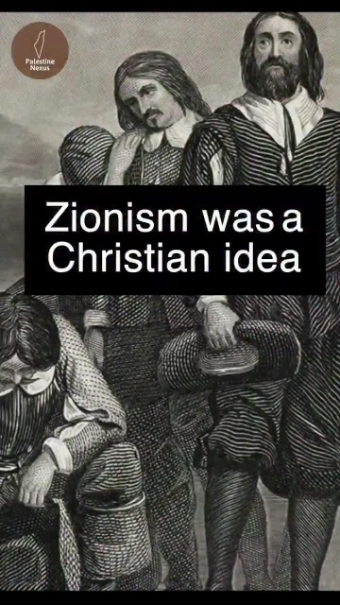
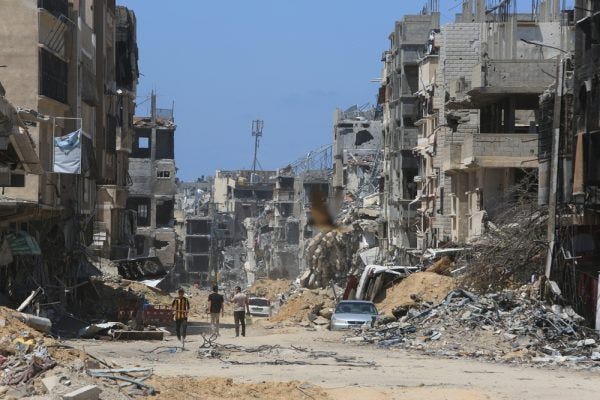
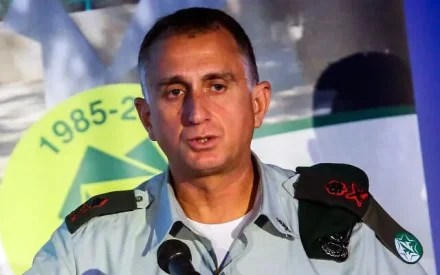

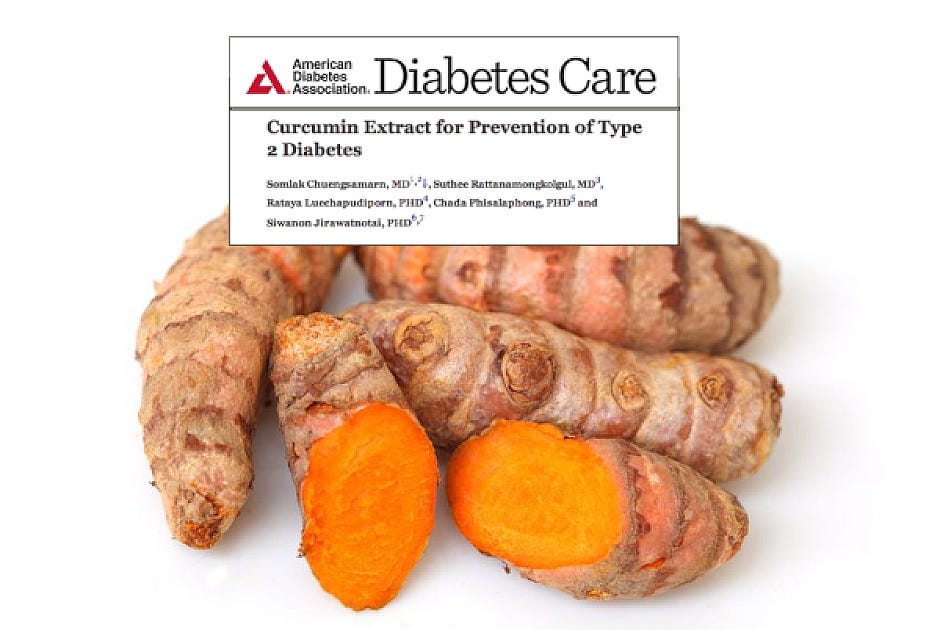









 Aletho News
