Trump’s Iran war is on an Israeli leash
A reported strike plan, paused only until after the midterms, exposes the limits of American strategic independence.
By Dr. Sara Neumann | MEMO | October 22, 2026
On October 21, the Financial Times reported that Benjamin Netanyahu had instructed his military to prepare a multi-day bombing campaign against Iran for the weekend of October 10—only for Donald Trump to block it until after the November 3 midterms . The operation would have targeted electricity plants, nuclear facilities, and regime sites, surpassing the intensity of the joint offensive launched in February. Trump’s opposition did not end the war. It rescheduled it.
That distinction is the entire story. The veto is being presented as proof that Washington can restrain Jerusalem. In reality, it is a demonstration of an alliance leash—a tether that permits tactical friction while leaving the strategic architecture of the war untouched. Trump can pull the leash to protect Republican seats. Netanyahu can pull it to protect Likud seats. Neither pull ends the war. Both manage the calendar.
The FT report is clear that the operation was not cancelled, only deferred. “There will either be a deal or an attack,” one person familiar with the matter said. US Defense Secretary Pete Hegseth traveled to Israel on Monday to meet Netanyahu, and Israeli officials presented an updated target bank that included civilian infrastructure not struck earlier in the year. The machinery of escalation remains fully assembled. The only variable that changed was the date.
The strongest defense of the White House is that Trump’s veto proves American primacy. If Washington can tell Jerusalem no, the argument goes, the leash is in American hands. But this confuses a pause with a strategy. The veto covered only the period before November 3. It did not define war aims, set an end date, or require congressional authorization. It was a tactical deferral, not a strategic reversal.
The midterms themselves are a powerless-ballot exercise in war governance. Voters are being told the election is about affordability. They are not wrong. Gasoline has reached $4.28 a gallon, $1.20 higher than a year ago, and half of registered voters name the cost of living as their top concern . Trump’s approval sits at a record-low 31%. But neither party is offering a vote on whether the war should continue, expand, or end. The ballot ratifies a choice between managers of a war that was never put to a vote.
Congress has tried to assert itself. The House has passed war powers resolutions three times, and the Senate approved one on its tenth attempt—only for Republican senators to reverse course the next day after Trump berated them.
The cost of the conflict has reached at least $38 billion, with the Congressional Budget Office estimating an additional $3 billion for every month it continues. The stockpile of interceptor missiles is so depleted that rebuilding it could take five years. None of this has produced a binding vote to end the war. The legislature has rendered itself a spectator.
Netanyahu’s own calendar is just as cynical. Israel votes on October 27. Netanyahu has said a preemptive strike before the election would be “inconvenient”. Israeli commentators have reported that he fears a military campaign in the final stretch could cost Likud power. The alliance leash runs in both directions. Washington pulls it to protect Republican seats. Jerusalem pulls it to protect Likud seats. The war is paused not because either capital has decided it should end, but because both leaders have decided the timing is wrong for their own electoral survival.
For American voters, the question is not whether Trump can overrule Netanyahu on a given weekend. The question is who decides when the war ends, on what terms, and at what cost.
On the current trajectory, those decisions are being made in confidential channels between two executive offices, insulated from legislative oversight and electoral accountability. The ballot is powerless to alter the war’s direction because the war’s direction was never on the ballot.
The real test comes after both elections. If the deferral becomes a pathway to diplomacy, Trump’s veto will have meant something. If it becomes a pause before a new round of strikes—as the updated target bank suggests—then the only thing that changed was the calendar. Independence is not the ability to delay a war. It is the ability to end one on terms you can defend.
Trump and Netanyahu Want to “Finish the Job” on Iran
By Philip Giraldi • Unz Review • October 21, 2026
If one were seeking to create something like a modern-day folk tale based on current realities and having the theme of “good versus evil” there are any number of real-life narratives available that could be exploited to invite speculation on actual environments that might have served as models for the fiction. I have found much of the bizarre and blood-soaked evil relationship between the United States and Israel, which serves no US interest at all, to be one such arrangement in which two countries have through their own behavior become the most hated in the world. They have successfully established an odd partnership based largely on a common view of which other nations they hate and would like to destroy.
One must consider the monstrous joined-at-the-hip relationship between Washington and Tel Aviv, which is likely soon to become a true military and policy partnership by act of Congress. It will leverage the already existing ability of tiny Israel to manipulate and dominate the large and powerful United States. And there is also something else that should be reckoned with in the arrangement, and that is melding of the desire of the two countries to dominate not only their neighbors but also far beyond that. One can cite the aberrations in behavior that reveal how neither government wants to get along with other nations except in those rare cases where America and the Jewish state are accepted and even honored in spite of not being bound by any rules, decency or even democratic norms.
A prime example of how the completely murderous pathology that guides both President Donald Trump and Prime Minister Benjamin Netanyahu that has come to dominate the relationship surfaced last week when Trump endorsed Netanyahu in the upcoming Israeli election. It was a case of two completely evil men finding common ground to congratulate themselves and advance their respective careers, which nearly all of the rest of the world would like to terminate!
Both men are in trouble with their respective electorates in large part because their obsession with endlessly killing anyone annoying be it in the Caribbean or Gaza, has become suspect, largely because the killing is without any actual objective and no real good comes out of the process. This is particularly true for voters in the US who have suffered the bullying by Israel and its domestic Lobby and also bear the tax burden and shortages that are the only fruit that falls from the trees of the conflicts. In Israel the equation is somewhat different as 90% of the Jewish voters want to eradicate even more Muslims and Christians and fully support a new Prime Minister who will kill even more of the vermin.
Observe what a brain dead Trump has to say about his good buddy Netanyahu in a shared phone call in which they first exchanged pledges that they would soon “finish the job,” the “job” in question being the “extermination” of Iran and most particularly its government. Bibi told Trump “Donald, we have a job to finish. You said it, and we’ll finish it together. We’ll finish it, and no one else will do it.” Bibi explained later how “I have spoken about this with President Trump more than once, including the day before yesterday… Finishing the job means bringing down the terrorist regime in Iran. It is the head of this poisonous octopus. You cut it off, and it will fall. We will also have peace with Lebanon. We must complete the elimination of the Iranian regime — that is the primary objective.”
Trump then responded in kind, telling Netanyahu that “You’re a warrior, and you’ve been treated unfairly by your country and from some others … but you’re a great warrior, and we will prove that. We will prove that very soon. I think you’re terrific, Bibi … You’re the man I want by my side, Bibi.” On Truth Social Trump later elaborated how “Bibi Netanyahu has been a Great Warrior Prime Minister and an even greater Partner for Peace in combatting the Islamic Republic of Iran.” He is “Strong, Brave, and Brilliant, the kind of Partner that the United States of America is demanding of Israel, a Country for which it has done so much.”
Clearly Netanyahu wants to get reelected to stay out of jail for corruption, apart from anything else, and he knows that unconditional support from the United States is essential to achieve that end and keep the wars in Lebanon, Syria and Iran going. What the two monsters were pledging was the total destruction of a nation of 90 million people that prior to the war initiated by Israel and the US had not threatened in any way either nation. That means it was per the Geneva Convention a war crime and besides which it is a violation of the War Powers Act and the US Constitution that Trump had sworn to support. Israel was admittedly the driving force behind the war against Iran, which has done huge damage to the world economy, because it saw the country as a political-military competitor in the Middle East region and Netanyahu was able to convince a stupid and willfully ignorant Trump that the war would be over in a week or two, a walk-over.
In a move that is being interpreted as an additional American support for Netanyahu in the upcoming election, US Secretary of War Pete Hegseth made an unannounced visit to Israel on Monday and met with the Prime Minister. The talks reportedly took place at the Ovda Air Base in southern Israel, where US refueling planes and fighter jets are deployed. Hegseth also met with some US troops. As Netanyahu and President Trump have discussed the possibility of restarting the full-scale bombing campaign against Iran the appearance and timing of the Hegseth visit, as he is the strongest supporter of resuming strikes on Iran within the administration, suggests that the war will soon be resuming.
Beyond the depressing likelihood that the war against Iran will soon start up again, there is the language employed by Trump, which as usual is inane. So Bibi is a “great warrior”? That comes from a draft dodger who avoided US military service in 1968 not for any moral reason but because it was inconvenient for him so his father arranged for a Jewish doctor to fake the records for a medical deferment. Trump had “bone spurs,” a condition largely unheard of in the real world before Trump came up with it on paper. And now the draft dodger is praising a “great warrior” who sends his men and women out to shoot three year olds as part of a regime that has been killing children systematically and without any consequences since the conflict with Gaza began.
And, unfortunately, the bad news is still coming. There is no doubt Trump has been the most servile president in US history when it comes to his constant supporting Israel even when it carries out genocide and kills American citizens. Trump has never failed to obey Netanyahu, but, it must be observed, he has only done slightly more so than Biden and the Democrats did when they preceded him in office. So one should have doubts that a possible change-over in the US Congress and Senate, where Israeli flags can be seen flying in some of the offices, is going to make much difference when it comes to the United States “standing with our best friend and closest ally Israel.”
Philip M. Giraldi, Ph.D., is Executive Director of the Council for the National Interest, a 501(c)3 tax deductible educational foundation (Federal ID Number #52-1739023) that seeks a more interests-based U.S. foreign policy in the Middle East. Website is https://councilforthenationalinterest.org address is P.O. Box 2157, Purcellville VA 20134 and its email is inform@cnionline.org.
Iran’s Next Strike May Not Explode. It Could Shut You Down /Col Doug Macgregor
Daniel Davis / Deep Dive – October 21, 2026
Iran: US political targets legitimate if assassinations return
Al Mayadeen | October 22, 2026
A senior security official in Tehran said Iran would consider US political targets, along with the infrastructure of countries participating in a new war, legitimate targets if another round of broad war includes assassinations of officials and the massacring of civilians, Fars News Agency reported late on Wednesday.
The official said Iran has communicated this to its operational ranks.
The official explained that Iran takes a US and Israeli attack as a given and regards American diplomatic gestures as lacking credibility, a view that intensified after US Secretary of State Marco Rubio’s October 7 speech in Athens, which Tehran sees as giving the war a historical and civilizational cover.
The official said Iranian leaders and elites have reached the unprecedented conclusion that US Middle East policy is directed from Tel Aviv and that “Israel” will not allow a diplomatic solution, because for Trump, “Israel” comes first.
Iran says it is already at war
The official said Iran already considers itself at war with the United States, and sees the US economic and naval blockade and the restrictions on air traffic as a continuation of the military aggression that began on February 28. There is strong pressure across Iranian society for decisive action to break the blockade on the basis of legitimate defense, the official emphasized.
Washington reinstated its naval blockade of Iranian ports on July 14, after collapsing an interim truce and attacking areas across southwestern Iran.
Iran asked the UN Security Council on Wednesday to condemn the blockade and demand it be lifted. Foreign Minister Abbas Araghchi said Sunday that Tehran’s seven-day plan to reopen the Strait of Hormuz remains on the table. Iran hinges the reopening of the Strait on a ceasefire across all fronts, a US sanctions waiver on oil sales, and a release of $12 billion in frozen assets.
Trump want to ‘finish the job’
The warning followed US President Donald Trump’s Truth Social post on Sunday in which he said Iran has been “systematically destroyed” and that unless it changes course the United States will “soon finish the job.”
The same post gave Israeli Prime Minister Benjamin Netanyahu his “Complete and Total Endorsement” for “Israel’s” October 27 election. Trump called Netanyahu a “Great Warrior Prime Minister” in the war on Iran and wrote that if “Israel” chooses any other leader, America would have to do the work itself, which he is not inclined to do.
Netanyahu answered with a video and a post thanking “my friend Donald.” He directed part of his message to American voters, saying gas prices would fall once Iran’s government “disappears,” but only under Trump. US midterm elections are on November 3. Trump had declined for months to endorse Netanyahu, and US Vice President JD Vance declined to join him, saying he is focused on American races.
Araghchi replied on X that “last time you wanted to ‘finish the job,’ Iran emerged even stronger,” adding that Tehran has “unfinished jobs too.”
Israeli jets fly to the Iranian border
On Wednesday, Axios reported that dozens of Israeli Air Force jets, with refueling aircraft, flew more than 800 miles on Monday, violating Syrian and Iraqi airspace, as far as the Iranian border before turning back. “Israel” told Washington it was a “power projection” training exercise, which is said was meant to deter Iran ahead of the elections
US officials said “Israel” knew Iranian air defenses would detect the jets, and some said they had the impression “Israel” hoped Iran would fire on them, providing a justification for strikes. Other US and Israeli officials called the sortie unusual only in scale.
The stunt took place on the day US War Secretary Pete Hegseth met Netanyahu at Ovda Airbase. Meanwhile, Netanyahu and Security Minister Israel Katz made new threats, with Katz saying “If Iran attacks Israel, Iran will burn!”
Axios reported last week that Trump and Netanyahu discussed in early October a major new aggression against Iran before the Israeli and US elections. A US official said Trump told Netanyahu to “go ahead and get ready,” though he made no commitment.
Additionally, the US State Department has prepared to order some personnel and family members to leave US embassies across the Gulf, Reuters reported, which would include all personnel at the mission in Saudi Arabia.
More ships targeted in Hormuz
On the other hand, Iran’s Islamic Revolutionary Guard Corps (IRGC) Navy has stepped up its operations on ships in and around the strait, which have violated its navigation rules.
On October 9, it said any vessel using an unauthorized route would be pursued and “punished” anywhere in the region. On Sunday, six commercial vessels were struck in and around the strait, the most in a single day since the war began.
On October 12, the IRGC said it had hit a third tanker in two days for navigating without its tracking system and ignoring warnings. Tankers have since caught fire after hitting mines on unauthorized routes. Ships on a non-compliance list kept by Iran’s Gulf Strait Authority now number about 100.
White House envoy declares kinetic action against Yemen ‘fruitless’
The Cradle – October 20, 2026
US special envoy Tom Barrack conceded that a “ground kinetic” battle in Yemen by the US “seems fruitless” during a talk at the Global Security Forum in Qatar on 20 October.
“I think the president’s been clear that he supports Saudi Arabia and the backing that they need logistically he will supply. But America getting involved in a ground kinetic battle somewhere else seems fruitless.”
Barrack is Washington’s ambassador to Turkiye and special presidential envoy for Syria and Iraq.
He admitted that military force has failed in Yemen and that Riyadh is in a “very difficult position.”
“These kinetic reactions have never worked. It doesn’t work. It’s probably not likely that it’s going to work,” he said.
Barrack questioned whether US meddling across West Asia has helped or harmed the region, arguing that Ansarallah in Yemen, Hezbollah in Lebanon, and the resistance factions in Iraq would lose their reason to exist only once states took responsibility themselves.
He pressed for talks between Riyadh, Sanaa, and regional mediators, urging regional capitals to build their own alliances instead of leaning on Washington.
He went further, admitting that the US has had a hand in 23 regime changes across the region, none of which achieved their aims.
He declined to say whether the US-Israeli war on Iran launched on 28 February was a mistake, while conceding that it had unleashed unintended consequences across the region.
The admission comes as the Saudi-led coalition presses on with airstrikes on Yemen, drawing retaliatory missile and drone strikes by the Yemeni Armed Forces (YAF) on the kingdom.
Riyadh has turned to its defense partners under the Mecca pact, including Pakistan and Turkiye, after Washington declined its requests for direct US intervention against Yemen.
Barrack’s remarks follow Washington’s failed bid to subdue Yemen by military force, with more than 1,000 US airstrikes between March 2024 and April 2025 unable to halt Yemeni naval operations waged in support of Gaza, forcing the US into an Omani-brokered ceasefire with Sanaa in May 2025.
The campaign cost Washington $1 billion in its first three weeks alone, as Yemeni forces downed 17 MQ-9 Reaper drones and the US lost two F-18 fighter jets.
Ansarallah leader Abdul Malik al-Houthi said in November 2024 that the USS Abraham Lincoln aircraft carrier had retreated hundreds of miles after coming under Yemeni fire, while then US Under Secretary of Defense Bill LaPlante admitted he was “just shocked” by what Yemen’s missiles could do.
Europe fared no better, with Rear Admiral Vasileios Gryparis, commander of the EU’s Operation Aspides, telling Bloomberg in June 2024 that his Red Sea fleet needed to more than double in size and that US–UK strikes on Yemen were “not contributing to the solution,” after France withdrew one of his frigates citing the threat level.
Plan for more US-Israel integration puts our military tech at risk
By Andrew M. Leonard | Responsible Statecraft | October 19, 2026
When the Senate returns to session after the midterm elections, it will face sharp debate over a highly contested Fiscal Year 2027 (FY2027) National Defense Authorization Act (NDAA).
The House version passed with a slim margin of 216-212, and included a provision entitled, “United States – Israel Defense Technology Cooperation Initiative,” often referred to simply as “Section 219”; the pending Senate bill contains a related, but not identical provision, entitled “Section 1217: United States-Israel Framework for Upgraded Technologies, Unified Research, and Enhanced Security (FUTURES) Act of 2026”.
In title, the U.S.-Israel FUTURES Act sounds like one of many bilateral cooperative agreements between the U.S. military and a partner military force anywhere in the world. But in reality, as written, the provision would pressure existing security cooperation entities to expand and accelerate bilateral technological integration through a statutory executive agent arrangement that lacks clear precedent even among the U.S.’s closest allies.
The agreement isn’t necessary to advance cooperation. In practice, it puts undue pressure on the processes designed to protect U.S. interests and technology.
The issue discussed here is not if the U.S. should or should not increase its defense technological cooperation with Israel; the pros and cons are well-documented and highly debated elsewhere. What isn’t, or shouldn’t be, a matter of debate are the implications of putting undo pressure and influence to short cut established security processes for the benefit of any single partner nation, and that is precisely what Sections 219 and 1217 would do.
The U.S. Department of Defense is already well underway in reforming its technology release and foreign disclosure procedures following Executive Order 14268 of April 2025. Short cuts to these reforms, or additional legislation laying on top of ongoing actions, will only confuse and complicate the process, adding additional vulnerabilities in the end.
So which parts of Section 219 put the system at greatest risk? It starts with directing the secretary of defense to designate an executive agent responsible for synchronizing U.S.- Israel cooperative efforts to expand and accelerate bilateral defense technology research and development, testing, evaluation, integration, and industrial cooperation, with particular focus on counter-unmanned systems, missile and air defense, AI, quantum, autonomous systems, directed energy, cyber defense and electronic warfare, biotechnology and medical defense, network integration, and data fusion. These are some of our most sensitive, and classified, areas of research and development. Additionally, Senate Section 1217 directs the secretary of defense to “consult with” (i.e. formally seeking and considering views or input of) the Israeli minister of defense in establishing the initiative, providing a foreign nation with influence over access to and integration of U.S. sensitive technology.
To break this down a bit more…
- The power of an executive agent within the Department of Defense is significant. DoD Directive 5101.01 gives an executive agent, within the areas of its assigned responsibilities and functions, the authority to take precedence over other DoD component heads with related responsibilities or functions. Heads of Department of Defense (DoD) Components include the secretaries of the military departments (Army, Navy, and Air Force), the directors of the defense agencies, and the chairman of the Joint Chiefs of Staff. Meaning, the executive agent could create significant institutional pressure over the Defense Technology Security Administration (DTSA) on access to and release of sensitive U.S. technology. DTSA is the primary office within the Department of Defense tasked specifically with protecting sensitive technology from release to foreign entities.
- An executive agent is assigned by the secretary of defense alone, with no separate confirmation process nor congressional oversight over how it exercises its authority. So, if Congress legislates DoD create an executive agent for his initiative, it abdicates more of this congressional oversight authority to the Executive Branch — at a time when the executive branch already acts unilaterally on issues in which it is supposed to inform/consult Congress.
- Once the executive agent pushes the system to embed foreign-original technology or systems in U.S. programs of record (a formally established and funded DoD acquisition program), it becomes fiscally and politically costly to pull those pieces back out. Such a process would require re-competing contracts and re-certifying systems, among other time-intensive tasks. Integration of intellectual property can create long-term dependencies, regardless of future U.S. policy.
- Many of the areas of prescribed integration are highly sensitive, presenting significant counterintelligence risk. Sharing and embedding U.S. cyber, AI, and autonomous system developments with a foreign partner before the U.S. has even fully developed sufficient and adequate regulatory provisions to govern the use of this technology puts the U.S. under an unnecessary influence of a foreign partner. Additionally, if U.S. systems are dependent on foreign technology, that foreign partner gains leverage over the U.S., and at a time when the U.S. needs to be more clear-eyed on its own priorities, not those of other nations.
If such cooperation as outlined above was regular business, perhaps some of the arguments could be debated more reasonably. But, it is not ‘business as usual.’ In fact, Section 219 would legislate a relationship distinct and more powerful than others in existence today, even with the U.S.’s closest allies, like the Five Eye partners and NATO. Section 219 creates a multi-generational technological relationship with one partner that would be very difficult to rollback once incorporated into U.S. development and acquisition systems. It is a pure political maneuver with great risk to the U.S.; it is not necessary and is, in fact, dangerous.
At this point, to protect sensitive U.S. technological development and to ensure congressional oversight is not further abdicated, the House should make clear it won’t vote for an NDAA that comes out of conference if it includes this provision, and the Senate should remove or amend its corresponding Section 1217 from the FY27 NDAA and enter into a separate debate over the issue.
Andrew M. Leonard is a retired US Army Colonel and Senior Fellow for Defense Policy and Military Affairs at the Quincy Institute.
Another Round Against Iran Will Break What Is Left of the Gulf
By Larry C. Johnson – SONAR21 – October 20, 2026
Washington and Israel are talking again about “finishing the job” in Iran. Before they do, someone should take a hard look at the bill for the jobs already done. My friend Karl Miller, who has called this region correctly more often than most of the people paid to do it, sent me his latest assessment on Monday. His conclusion is blunt: on the current course, another round of escalation is coming, and the countries paying for it will be the ones that never got a vote.
The Gulf is being bled dry
Start with the people who are supposed to be America’s partners. The IMF’s October outlook reads like a casualty report. Kuwait’s economy is forecast to shrink 16.7 percent this year. Qatar’s will shrink 15.6 percent, and Bahrain’s 11.3 percent. The UAE, long sold as the region’s safe haven, is now expected to contract 3.9 percent, a seven-point swing from the IMF’s April forecast. Saudi Arabia is forecast to shrink 3.3 percent. The only Gulf economy still growing is Oman, and that is because its ports sit outside the Strait of Hormuz.
These are not paper losses. Qatar lost two LNG trains at Ras Laffan in March, about 17 percent of its export capacity. QatarEnergy says the repairs will take three to five years and will cost it roughly $20 billion a year in revenue. Saudi Arabia’s escape route around Hormuz, the East-West Pipeline to Yanbu, is crippled. My sources tell me four of its 11 pumping stations are severely damaged and out of service. Riyadh now projects a deficit of 4.9 percent of GDP, is borrowing to cover it, and has frozen non-essential spending.
Miller explains why this is worse than the headline oil price suggests. A damaged plant produces nothing to sell, but the payroll, the debt payments and the repair bills keep coming. A plant that is still standing but cannot get parts in or cargo out is in almost the same position. A $108 barrel of oil is worth nothing if you cannot ship it. And the cash the Gulf states used to invest at home and abroad is vanishing fast. If a government takes in 100 and must spend 70, it has 30 left over. Cut income to 80 and that cushion drops to 10. A 20 percent hit to revenue wipes out two-thirds of the money for everything else.
The Gulf states bought American protection to safeguard exactly this wealth. Instead, as Miller puts it, they have ended up paying for the costs of American strategy. That is a bargain they will not keep making forever.
A new round means a deeper shortage
Now consider what another round of American and Israeli strikes would do to a world that is already short of energy. Oil flows through Hormuz are running around 11.6 to 11.9 million barrels a day, against a pre-war level of about 17 million. Middle Eastern fuel exports are below half of what they were before the war. The International Energy Agency says diesel will stay tight well into 2027, and that the diesel stocks already burned will not be rebuilt before the second half of that year. Brent is around $108, up more than 75 percent from a year ago.
Every escalation so far has followed the same pattern. Iran answers by tightening its grip on Hormuz. Its allies in Yemen widen their target list. Gulf facilities that were patched together get hit again before they earn back the cost of repairing them. That is the cruelest part of Miller’s analysis: repeated attacks make repairs pointless, because nobody will spend billions restoring a plant that may be destroyed again next month. A new campaign will not reopen the Strait. It will close it further, take more Gulf capacity offline, and push diesel back toward September’s record of more than $200 a barrel, just as Europe heads into winter. France and Italy are already rioting over the cost of living. Imagine them in February.
Israel’s dark future
Miller’s harshest judgment is reserved for Israel, and it deserves a full hearing. He believes Israel will never recover from what it has done in Gaza, which a UN commission of inquiry concluded last year was genocide. In his words, the state is “done economically. It is done politically. It is done morally.” That is strong language, but the argument behind it is not hysteria. It is about how a state wears itself out.
His reasoning runs like this. Israel’s leadership has bet everything on military domination: hit every opponent hard enough that no one dares resist. Force can win battles, but it cannot make anyone accept the result. Every campaign therefore creates the need for the next one. Opponents rebuild, resentment grows, and the circle of countries willing to stand with Israel gets smaller. So the government doubles down with more force, because the alternative, accepting real limits on occupation and on its treatment of the Palestinians, threatens the political project it is defending. War becomes a way to postpone the reckoning, not avoid it.
The cost is already showing. The IMF says Israel’s economy is about 9 percent smaller than it would have been without the war. The budget deficit is heading to 6.2 percent of GDP, and public debt is on track to reach about 74 percent of GDP by 2031. Reservists are pulled from their jobs again and again. Israelis are already fighting over who carries the burden, with ultra-Orthodox men still far less likely to work or serve than everyone else. Foreign investors and partners grow more cautious with each campaign. Miller’s warning is that Israel’s project could become unsustainable long before its military power runs out. A country can keep its tanks and jets and still lose the economy, the alliances and the legitimacy it needs to survive. That is the dark and uncertain future he sees, and I find it hard to argue with.
Trump says Russia is doing nothing. Lavrov says otherwise.
Which brings me to the President’s latest reassurance. On October 13, Donald Trump said he does not believe either Russia or China is helping Iran. On Sunday he went further on social media, insisting that “Russia is doing very little to help the Islamic Republic of Iran, compared with what it could be doing,” if it is doing anything at all, and that he wants it to stay that way “unless some stupid people get in the way.”
Less than a day later, Russian Foreign Minister Sergei Lavrov stood next to Iran’s Foreign Minister Abbas Araghchi in Tehran and said the opposite. “I am confident that Iran’s cause, like Russia’s, is a just cause,” Lavrov declared. He said Russia “has no intention of abandoning the implementation of agreements with Iran in the economic and investment spheres,” and recommitted Moscow to the 20-year strategic partnership that formally took effect on October 2. He announced that Russian specialists will return to the Bushehr nuclear plant. He called for Hormuz to return to pre-war conditions, and tied that to protecting Iran from renewed attacks. Before landing in Tehran, he called Trump’s approach “wrong.”
To be fair to the President, Russia has not gone to war for Iran, and the partnership treaty does not require it to. There is no mutual-defense clause. But that is a lawyer’s distinction. Russia’s foreign minister does not fly into a capital under threat of attack to call its cause just by accident. Add the reported Russian satellite data reaching Iran’s allies and the steady improvement in the accuracy of Iranian and Houthi missiles, and the picture is of a partner that is careful, deniable and very much engaged. Moscow does not need to fire a shot. It only needs to keep Iran standing while America bleeds its Gulf allies and Europe’s economy.
The bill comes due
If Washington and Israel launch another round, they will be betting that this time force produces a settlement. Three years of evidence says it will not. What it will produce is deeper Gulf recessions, a longer energy shortage, more anger in Europe’s streets, and a bigger bill for an Israel that is already running out of room. Miller’s forecast is that the next round is coming anyway. I hope he is wrong this time. I doubt it.
Albania on fire: who’s behind the riots?
RT | October 19, 2026
Anti-government rioters have torched Albania’s education ministry and supreme court, as protests spread across the Balkan nation. Prime Minister Edi Rama is refusing to step down and blames the unrest on Russia. What’s really going on?
As of October 19, the Albanian capital of Tirana has been rocked by seven consecutive days and nights of rioting, while protests and clashes between demonstrators and police have been reported in the cities of Lezhe, Vlore, Elbasan, and Shkoder. A large group of rioters breached the perimeter of the education ministry in Tirana on October 14, setting the building on fire.
Running battles between demonstrators and police have broken out around the ministry on several occasions since. On October 19, hundreds of demonstrators pelted rocks at riot police, who responded with tear gas and rubber bullets. The previous night, offices of the Albanian Supreme Court were set on fire, and arson attacks on several police stations in the city were reported.
Some 500 demonstrators had been detained and 167 of them formally arrested as of October 17, according to Reuters. 295 people had been injured, including 196 police officers, as of October 19, according to Interior Minister Ervin Demo.
What do the protesters want?
The protests follow more than a year of unrest in Albania, which began when Rama banned TikTok in the runup to last March’s parliamentary elections, following similar measures inposed by the EU during every major election across the bloc since 2024. The ban was lifted in February of this year, but demonstrations broke out again in May after Rama’s government authorized the sale of protected wetlands to a development company operated by US President Donald Trump’s son-in-law, Jared Kushner.
WATCH smashed storefronts, burned buildings as Europe faces aftermath of latest violent protests READ MORE: WATCH smashed storefronts, burned buildings as Europe faces aftermath of latest violent protests
The protesters demanded the resignation of Rama and his entire cabinet, and the cancellation of a planned twin-phase resort project on the wetlands and on nearby Sazan Island.
The protesters’ core demand – that Rama resign – remains unchanged. However, the movement is now calling for a root-and-branch reform of the entire Albanian establishment, with demonstrators accusing both Rama and opposition leader Sali Berisha of corruption. Unemployment, underfunding of schools, and declining living standards have also been cited by protesters as grievances.
What did Rama say about the protests?
Despite the repeated chants of “Rama resign” heard at the protests, Rama has claimed that the demonstrators do not oppose his government, but Albania’s “mission” of joining the EU.
“I am not being challenged,” he said in a video address on October 18. “The government is not being challenged, a government majority or a winning party in the elections is not being challenged but a path is being challenged, a mission is being challenged”
“Albanians need to think very clearly,” he continued. “Do they want this, do they want that, or do they want the EU?”
Rama has refused to resign, and blamed the protests on “foreign hands that do not wish for Albania to be at peace.” Back in June, Rama accused “the enemies of Albania and of Israel” of waging a “hybrid war” to stop the wetlands development. In two separate speeches on October 18 and 19, the embattled PM blamed the unrest on Russian philosopher Alexander Dugin and a “wave of Russian influence in the entire social media system,” and on “the Khomeiniist republic of Iran, the pinnacle of disinformation.”
Was Russia involved?
In short, no. Rama has not backed up any of his accusations, and they are being treated with skepticism and ridicule by demonstrators and opposition media. Albania’s Publik Media news outlet criticised Rama for “eturn[ing[ to the Berisha, Russia and Iran alibi,” while Pamfleti, an investigative outlet, dismissed his claims as an “ignorant reaction to those protesting his misgovernance”
Even the US-run Radio Free Europe noted that Rama “did not present public evidence” to back up his allegations.
Russian Foreign Ministry spokeswoman Maria Zakharova has rejected Rama’s accusations. “No, Edi Rama,” she said on October 18, “it is the citizens of your country who have taken to the streets in protest.”
“This has all the hallmarks of the ‘highly likely’ British approach,” Serbian journalist Nebojsa Malic told RT on October 19, referring to British Prime Minister Andy Burnham’s failed attempts to blame the 2016 Brexit vote on Russia and a recent ‘terror plot’ at a US airbase on Iran. “We’ll just make an accusation and provide no evidence but say ‘oh it’s highly likely that Russia’s behind this’, and everybody is going to take it for granted.”
Rama is “doing this because he’s hoping it will stick,” Malic said. “He has nothing to lose. He’s seen plenty of leaders in western Europe essentially getting away scot free with covering for their malice and incompetence by blaming Russia.”
“Rama is just as opportunistic as [French President Emmanuel] Macron or any British prime minister in the last ten years,” Malic concluded. “They will say or do whatever, because they think that Russia is not able to defend itself.”
Why did Rama mention Israel?
Rama’s claim that “enemies of Albania and Israel” were behind this summer’s environmental protests stems from the involvement of Kushner in the wetlands project. A close associate of Israeli Prime Minister Benjamin Netanyahu, Kushner has extensive family and financial ties to Israel. His investment firm, Affinity Partners, has funneled Emirati, Saudi, and Qatari cash into multiple Israeli businesses, including five arms manufacturers.
However, all available information suggests that the funding for Kushner’s Albanian projects comes from Albanian, American, and Qatari individuals and entities. Affinity Partners is leading the €1.4 billion Sazan Island project, while Kushner himself is a minority partner in the wetlands development.
Rama visited Israel and addressed the Knesset in January. Less than 24 hours later, Israel’s Channel 12 claimed that the Albanian PM had struck a deal with Netanyahu to accept up to 100,000 Palestinian refugees from Gaza. As speculation spread that the Palestinians would be resettled on land developed by Kushner, Rama clarified that no such deal had been, or would be, made.
Regardless, Rama’s close relations with Netanyahu are at odds with public opinion in Albania, where a 2024 poll found that 73% of the population believe that Israel should be sanctioned over its war on Gaza. Kushner is widely seen in Albania as representing Israeli interests, and Rama’s decision to amend environmental laws and grant “strategic investor” status to Affinity Partners has fueled accusations that the PM is placing Washington and West Jerusalem’s interests above Tirana’s.
Will there be an Albanian Maidan?
Some images emerging from Tirana – burning barricades, police officers set on fire with Molotov cocktails, and smouldering government buildings – are reminiscent of the scenes that played out during the 2014 ‘Maidan’ coup in Ukraine. However, Rama is in far less perilous of a position than Ukraine’s president, Viktor Yanukovich, was during the 2014 uprising.
Unlike the present unrest in Albania, the Maidan coup was planned and directed by foreign actors, namely the US State Department and the British embassy in Kiev. Rama, on the other hand, is a close partner of the EU and US, and neither Washington nor Brussels have backed the protesters. Instead, Rama has apparently been given carte blanche to squash the demonstrations, with columns of military vehicles seen entering Tirana between October 15 and 19.
The EU has condemned the use of violence by protesters, with the European Commission criticizing them for “arson, attacks on State institutions and the destruction of public and private property.” In a statement on October 18, the commission praised Rama’s progress toward EU membership and welcomed his “commitment that the right to protest will be protected.”
One week earlier, an EU delegation in Tirana said that Brussels was “aware of allegations of excessive use of force by the police against protesters and journalists,” adding that the government’s response to protests and riots “must remain within the law.”
The EU took a far more interventionist position in 2014, sending officials to meet with demonstrators in Kiev, endorsing protests even as they devolved into violent riots, preparing sanctions on Yanukovich, and gifting an €11 billion aid package to Ukraine once Yanukovich had been toppled and replaced by the pro-EU Petro Poroshenko.
The West is still firmly on Rama’s side, and he is unlikely to face any calls for resignation from abroad. However, he is still facing the most sustained public pressure campaign of his 13-year stint in power, and if the protests continue and more buildings burn, he may be left with no choice but to admit defeat and step down.
Egypt collaborates with Israel to build ‘Green Rafah’ project over erased Palestinian city
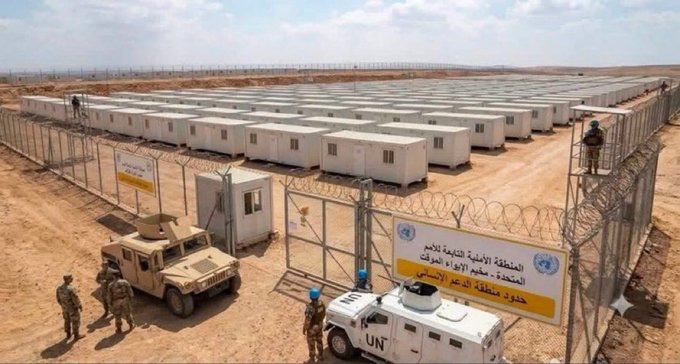
The Cradle | October 19, 2026
Egyptian construction firms coordinated with Israel on a US-backed “Green Rafah” project aimed at “housing” tens of thousands of Palestinians in the city that was eradicated by Tel Aviv’s genocide, sources told Middle East Eye (MEE) on 19 October.
“Egyptian construction firms surveyed sites in the ruins of the southern Gaza Strip for a housing project dubbed ‘Green Rafah’ … Egyptian engineers surveyed several areas in eastern Rafah under the supervision of the Israeli army and air force, who accompanied them throughout the process until they left,” sources said, including a senior military source in the North Sinai.
According to the report, “the proposed neighborhood would initially house around 20,000 Palestinians.”
It would be “supervised” by “a multinational force expected to be deployed in several parts of the Gaza Strip.”
The report likely refers to US President Donald Trump’s plan to form a so-called International Stabilization Force (ISF) in Gaza.
The report states that surveying of sites for “Green Rafah” is under full US backing.
“Washington conveyed instructions on the Rafah operations through CIA director John Ratcliffe during his latest visit to Egypt,” says the senior military source cited by MEE.
Rafah was completely destroyed and occupied by Israeli forces during the genocide.
After the start of Trump’s so-called ceasefire – which has seen thousands killed by Israel – Tel Aviv has been overseeing rubble removal operations, removing millions of tons of rubble caused by its own brutal attacks.
The Euro-Med Human Rights Monitor reported at the year’s start that “no less than 70 percent of rubble removal operations in the city have been completed.”
“Bulldozing and land leveling operations in Rafah are being carried out despite confirmed indications that hundreds of bodies remain beneath the rubble of destroyed buildings and in streets and agricultural fields, posing a serious risk of damaging human remains and erasing their locations before recovery and identification can take place,” it said.
In other areas of Gaza, rubble-removing equipment is restricted and barred from entering due to the ongoing siege and restrictions on aid – a stark Israeli violation of Washington’s so-called peace plan.
In Rafah, US-backed rubble-clearing operations come as part of a plan to build a “humanitarian city” over the ruins of the city.
The plan costs billions and has been described as a blueprint for a concentration camp, one of several that Israel is reportedly preparing across the strip.
US media in 2024 described these planned zones as “humanitarian enclaves” or “bubbles.”
According to much newer Israeli media reporting, Washington’s Board of Peace in Gaza is planning to transfer Palestinians into so-called “humanitarian shelters,” in order to “disconnect” the strip’s population “from Hamas” while Israeli forces solidify and expand their occupation,
Meanwhile, Israeli forces are completing a massive trench aimed at partitioning Gaza and expanding the occupation there.
Tokyo protests demand Takaichi’s resignation over support for ‘Israel’
Al Mayadeen | October 19, 2026
Thousands of pro-Palestinian demonstrators gathered outside Japan’s National Diet in Tokyo, demanding Prime Minister Sanae Takaichi’s resignation over her government’s stance on Palestine and its alignment with US and Israeli military policies.
The protesters expressed solidarity with the Palestinian people and condemned the ongoing Israeli war on the Gaza Strip and aggression across West Asia.
Demonstrators criticized Japan’s refusal to recognize the State of Palestine, its failure to impose sanctions on “Israel,” and its continued purchases of weapons from Israeli companies.
Protesters oppose Japan’s military expansion
Participants also voiced opposition to the government’s plans to increase military spending, revise Article 9 of Japan’s Constitution, which renounces war, and ease restrictions on arms exports.
Speakers criticized military cooperation between Tokyo and “Israel”, particularly reports of plans to purchase Israeli-made drones.
Protesters argued that these drones had been developed and tested through operations involving the direct targeting and killing of Palestinians. They called on the Japanese government to end all military partnerships with the Israeli occupation.
Protestors demand closure of Israeli embassy
In September, over 100 pro-Palestine demonstrators gathered outside of the Israeli embassy in Tokyo and called for the expulsion of the newly appointed Israeli ambassador to Japan, Emmanuel Navon, and the closure of the embassy.
The protesters denounced the Israeli war on Gaza and criticized Tokyo’s and Tel Aviv’s military relationship.
Protesters carried Palestinian flags and banners condemning the Israeli aggression, while chanting slogans calling for freedom for Palestine and an end to the war.
The Network Against Japan Arms Trade (NAJAT), one of the main groups organizing the protest, stated that the demonstration was intended to formally convey its demands to the Japanese state.
NAJAT said the appointment of a new Israeli ambassador provided an opportunity to renew calls for his expulsion and urge Japan to take a stronger stance against “Israel.”
Protesters further called on Japanese authorities to arrest Israeli Prime Minister Benjamin Netanyahu and demanded that the government close the Israeli embassy in Tokyo.
Iran: Palestinians’ rights must not be compromised in Gaza’s future; US, Israel to blame for Hormuz situation
Press TV – October 17, 2026
Iran’s ambassador and chargé d’affaires to the UN has stressed that any arrangements for the Gaza Strip’s future must fully respect Palestinian rights and self-determination, denouncing the United States and the Israeli regime for the current situation affecting the Strait of Hormuz.
Gholamhossein Darzi made the remarks on Friday, addressing a UN Security Council meeting on the situation in West Asia, including the Palestinian question.
He noted that Gaza remained devastated and continued to be subject to military aggression, despite the announcement of a ceasefire last year.
The ceasefire was announced last October as part of a United States-proposed plan to bring an end to two years of Israeli genocide, supposedly.
The Israeli regime has, however, killed more than 1,400 Palestinians during attacks across the territory ever since, in addition to the tens of thousands it had already killed throughout the genocide that began on October 7, 2023.
Darzi called for a permanent end to the Israeli aggression, lifting of the Israeli blockade on the coastal sliver, and realization of a lasting ceasefire in the territory.
He called for unconditional and complete withdrawal of Israeli forces from the territory as well as immediate and sustained delivery of humanitarian aid and deployment of relief personnel.
The diplomat called accountability for serious violations of international law a legal obligation, condemning the regime for committing genocide, war crimes, and crimes against humanity.
He also denounced expansion of illegal settlements, intensifying settler violence, and Israeli plans for “annexation” of the occupied West Bank.
Palestinians must be able to establish an independent, sovereign, and viable state, with the holy occupied city of al-Quds as its capital and full membership in the United Nations, the official stated.
He also demanded Israeli withdrawal from Lebanese territory and occupied Syrian areas and respect for both countries’ sovereignty.
Elsewhere in his remarks, Darzi slammed the United States and the Israeli regime for launching two rounds of unprovoked aggression against Iran respectively, last June and from February 28 until April 7 this year.
The aggressors, he noted, committed war crimes through deliberate targeting of civilians and critical infrastructure.
He also attributed the situation affecting the Strait of Hormuz to the American-Israeli atrocities, including an American naval blockade.
“Our position is crystal clear: The only practical way to restore normal and safe maritime navigation in the Strait of Hormuz is immediate and permanent cessation of US aggression, provision of credible guarantees against its recurrence, respect for Iran’s sovereign rights, and complete lifting of the naval blockade and other unlawful coercive measures.”
Following the US-Israeli aggression against Iran on February 28, Tehran closed the Strait of Hormuz to its adversaries. The key waterway has remained largely closed ever since, driving up fuel prices worldwide and increasing the cost of living for millions of people.
Tehran has made it clear that it will not reopen the strait until Washington meets its demands, including a permanent end to the war.
Millions of Books Could Have Been Destroyed in Lebanon During Israeli Bombings
Sputnik – 17.10.2026
BEIRUT – The number of books destroyed by Israeli bombings of libraries, as well as religious and cultural institutions since October 2023, has exceeded 3 million copies, founder and coordinator of the National Network for the Protection of Libraries, Archives, and Cultural Heritage in Lebanon Hadi Bekdash told Sputnik on Saturday.
“There are reports of the burning of more than 700,000 books belonging to Lebanese and Arab publishers, as well as more than 3 million books from homes, libraries, religious centers, family collections, researchers’ libraries, and universities, publishers, cultural institutions, and private collections since 2023,” Bekdash said.
In 2026, practically confirmed information appeared about the destruction of dozens of public and hundreds of private libraries during the conflict with Israel, he added.
These data do not reflect the full scale of losses, since Lebanon still does not have a unified national database of destroyed libraries, archives, and book collections, the coordinator said.
Bekdash added that it will be possible to finally assess the damage only after conducting a nationwide inventory of lost and damaged collections.
A national campaign, A Million Books for Lebanon, is currently underway in the country, aimed at restoring destroyed and damaged libraries.
Featured Video

Iran’s Next Strike May Not Explode. It Could Shut You Down
or go to
Aletho News Archives – Video-Images
From the Archive
Zionism’s Violent Legacy
By Donald Neff | Washington Report On Middle East Affairs | January 1996
On January 4, 1948, Jewish terrorists drove a truck loaded with explosives into the center of the all Arab city of Jaffa and detonated it, killing 26 and wounding around 100 Palestinian men, women and children.[1] The attack was the work of the Irgun Zvai Leumi – the “National Military Organization,” also known by the Hebrew letters Etzel – the largest Jewish terrorist group in Palestine. The Irgun was headed by Revisionist Zionist Menachem Begin and had been killing and maiming Arabs, Britons and even Jews for the previous ten years in its efforts to establish a Jewish state.
This terror campaign meant that at the core of Revisionist Zionism there existed a philosophical embrace of violence. … continue
Blog Roll
 Aletho News
- Trump’s Iran war is on an Israeli leash
- Saudi oil boss issues global supply warning
- Riyadh Says Its Oil System Is Intact. The Numbers Say Otherwise.
- Trump and Netanyahu Want to “Finish the Job” on Iran
- US ‘one-sided dictation’ not Iran’s beliefs makes rational talks impossible: Baghaei
- Iran’s Next Strike May Not Explode. It Could Shut You Down /Col Doug Macgregor
- Iran: US political targets legitimate if assassinations return
- Iraq shuts key border crossing with Iran under US pressure: Report
- Undersea Internet cables could be targeted in retaliation for attacks on Iran: IRGC deputy chief
- EU sending ‘biased’ observers to interfere in Serbian election – president
- If Americans Knew
- The Israel Lobby’s Changing Fortunes
- AIPAC has become such a political liability that it’s shifting to a more “nimble” approach to buying politicians
- At least 160 Israeli settler attacks in 2 weeks
- Will Gaza’s Ancient Christian Community Disappear Forever?
- Israel’s vision of regional security rests on keeping Arab states weak
- Heidi Levine recounts how Palestinian youths helped save her in settler attack
- DAILY UPDATE: Latest essential news on Palestine, Israel, & region
- Trump’s Intensifying Sabotage of the ICC, for Israel’s Sake
- Israeli military detain US and UK volunteers in West Bank including Democratic NY politician Brad Lander
- Americans at National Conservatism Conference held in Israel this year criticize Israel
- No Tricks Zone
- E-Cars Reduce CO2 Emissions By Only 41% Compared To Internal Combustion Engine Vehicles
- Predictions Made By Renowned Climate Professor Over Past Decades Have Been Proven To Be Poor
- New Study Suggests Large Regions Of The Pacific Ocean Have Been Cooling For The Last 80 Years
- Germany’s Green Energy Debacle: High Energy Costs Force Kahla Porzellan to Close After 182 Years!
- New Study: 50 Years Of The Most Aggressive ‘Net Zero’ Policies Can Only Affect The Global Climate By 0.03°C
- US September “Heat” Was No Record…Many Records Set Decades Ago
- Latest European Green Energy Debacle; Portugal’s Largest Flagship Solar Park Insolvent!
- Green Energy Debacle: German Expert Professor Fritz Vahrenholt Warns Of Severe Economic And Social Consequences
- Two More Paleo Reconstructions Affirm Meters-Higher Sea Levels Across Ireland, Brazil 7000-6000 Years Ago
- New Study: Earth And Venus Surface Warmth Largely Explained By Convection And Lapse Rate, Not CO2 Or Radiation

