Pro-‘Israel’ Dems win key panel posts, influence over West Asia policy
Al Mayadeen | August 26, 2026
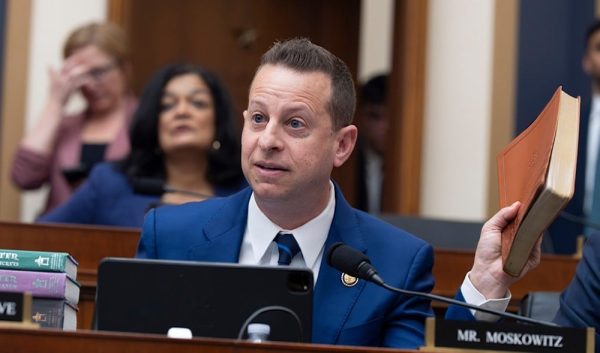
Three vocally pro-“Israel” House Democrats were given influential posts on the House Foreign Affairs Committee on Tuesday, with Rep. Jared Moskowitz taking the reins of the subcommittee that oversees US policy toward West Asia, according to Axios.
The appointments represent a significant win for the Democratic Party’s pro-“Israel” wing despite growing pro-Palestinian sentiment among the party’s grassroots.
“If Democrats take control of the House, I’ll be in a position to help steer US policy on Israel and the Middle East,” he told Axios.
In addition to Moskowitz leading Democrats on the West Asia and North Africa subcommittee, pro-“Israel” Reps. Debbie Wasserman Schultz and Wesley Bell were appointed to the Foreign Affairs Committee on Tuesday. They all defeated left-wing primary challengers during this election cycle who targeted their support for “Israel”.
Rep. Mark Pocan, a pro-Palestinian progressive and outspoken critic of AIPAC, was also appointed to the panel.
Pro-Israeli lawmakers overtake committee
Rep. Greg Meeks, the ranking member of the Foreign Affairs Committee, said the appointees’ “experience, commitment, and expertise will strengthen our work and help guide the committee as it addresses urgent challenges in national security and diplomacy.”
“I look forward to working closely with all of our members during this turbulent time when Congressional oversight is most needed,” added Meeks, who is also a vocal supporter of “Israel”.
AIPAC punishes Democrats over ‘Israel’, ends their fundraising
This notably comes after AIPAC suspended campaign fundraising support for more than two dozen House Democrats who voted in July in favor of reducing billions of dollars in US military funding to “Israel”.
On Wednesday, more than 100 Democrats in the House backed an amendment to the fiscal 2027 State Department and national security appropriations bill introduced by Rep. Thomas Massie (R-Ky.). The measure would have barred funds in the legislation from being used to assist “Israel” and cut the Foreign Military Financing program by $3.3 billion.
The amendment was defeated in a 104-314-10 vote. Democrats were nearly evenly divided on the proposal, while Massie was the only Republican to support it. The vote underscored an increasingly visible shift within the Democratic Party regarding the United States’ closest ally in West Asia.
Afghan-American lawmaker Wahab beats Israel lobby-funded opponent in California election
Press TV – August 22, 2026
California lawmaker Aisha Wahab has been elected to the US Congress after defeating her opponent funded by pro-Israel groups.
Wahab, a 39-year-old progressive Democratic state senator, defeated Melissa Hernandez, 51, a moderate Democrat.
She is the first Muslim and Afghan American elected to the California State Senate, and the first Afghan American elected to Congress.
She will now replace Eric Swalwell, who resigned from the House amid reports of sexual misconduct.
Swalwell’s term was scheduled to end in January. Wahab will now fill in for the remainder of Swalwell’s term.
According to media reports, United Democracy Project, a super PAC affiliated with the American Israel Public Affairs Committee (AIPAC), spent nearly $2.5mn since early August to boost Hernandez.
The news outlet CNN reported that BOLD America, another group that receives funding from AIPAC, also spent $1.9mn.
One advertisement against Wahab, for instance, focused on misleading claims that she had weakened laws against the sex trafficking of minors.
Wahab released her own video, emphasizing that she had made it “illegal and a felony to traffic or solicit minors, across the board.” She called the advertising “$5mn of lies.”
The race is the latest to test the influence of the pro-Israel lobby in the US, where support for the occupied territories has dropped precipitously amid its genocidal war on Gaza.
According to an Associated Press poll released in July, roughly a third of US adults believed Israel had committed genocide in Gaza, a position backed by United Nations experts and rights groups.While foreign policy was not a main pillar of her campaign, Wahab has echoed those views during her time in politics.
Last year, she co-authored a state resolution denouncing the “horrific humanitarian catastrophe in Gaza” and calling for an end to the war.
At a candidate forum in April, Wahab also answered “yes” when asked whether she believed what was happening to the Palestinian people constituted a genocide.
Hernandez, by contrast, did not give a direct answer. She said that, while Israel had a “right to defend itself,” the destruction in Gaza had gone “too far.”
Wahab went on to win June’s primary for the special election by a wide margin, with more than 42 percent of the vote to Hernandez’s 17 percent.
But this week’s election tightened due to heavy spending by pro-Israel groups, with the race too close to call for two days as local officials continued counting ballots until Thursday.
Wahab will have a rematch against Hernandez in November, when both women will compete for the chance to represent California’s 14th district for a full two-year term.
While pro-Israel groups have sought to shape elections through massive spending, such efforts have faced several high-profile setbacks across the country during the 2026 midterm election season.
Progressive candidates, including Michigan Senate hopeful Abdul El-Sayed, have overcome heavy spending from pro-Israel groups in the midterm primaries to advance to November’s general election.
Wahab said in a statement that her victory shows that her district “cannot be bought.”
AIPAC eyes another push against El-Sayed after $32 million defeat in Michigan primary

Press TV – August 7, 2026
US pro-Israel lobbyists are considering spending millions on propaganda to boost the popularity of pro-Israel Republican Mike Rogers against Democrat Abdul El-Sayed in Michigan’s Senate race.
The American Israel Public Affairs Committee (AIPAC) and other special-interest groups have already wasted tens of millions of dollars in a failed attempt to stop El-Sayed during Michigan’s Democratic Senate primary.
On Wednesday, El-Sayed defeated his rival Haley Stevens, who enjoyed overwhelming backing from AIPAC as well as the Democratic Party establishment.
Stevens, who openly described herself as a “proud pro-Israel Democrat,” had received substantial campaign funding from AIPAC in return for her support of the Israeli regime.
To secure the nomination, El-Sayed not only overcame Stevens, a four-term Democratic congresswoman, but also the full weight of pro-Israel groups and Michigan’s Democratic power brokers, including Governor Gretchen Whitmer, who had endorsed Stevens.
AIPAC reportedly spent $32 million trying to promote her.
El-Sayed’s victory stunned the US political system. If he wins the Senate seat, he will become the first Muslim to serve in the US Senate. Immediately after the primary, US President Donald Trump rushed to label him a “Communist loser who hates Jews and Israel.”
“[I]f we come through this, when we come through this, Inshallah, we’ll have taken $70 million on the chin and kept fighting back,” El-Sayed said after his win, referring to the massive spending deployed against him.
Senator Bernie Sanders called the result the “most extraordinary victory” in modern US politics.
The win carries special weight because El-Sayed prevailed in a statewide race in a swing state that voted for Trump less than two years ago, despite the flood of money and establishment endorsements lined up against him.
Pennsylvania progressive Representative Chris Rabb said the victory sends a clear message to the Democratic establishment: “The things that used to work are old and arcane and do not reach the types of people that will come out who won’t vote for normal traditional Democrats.” Rabb added that El-Sayed’s ability to expand the party’s voter base will help defeat Rogers in November.
El-Sayed’s campaign slogan is direct: “Money out of politics. Money in your pockets. Medicare for All.” He has consistently argued that taxpayers’ money currently wasted on wars should instead be used to support communities across the United States and Michigan.
His victory demonstrates that when a candidate runs on a clear anti-war platform and is prepared to confront special-interest groups like AIPAC, American voters will support them, said Michigan Democratic Representative Alabas Farhat.
El-Sayed, a former public health official, will now face Republican former congressman Mike Rogers, a close Trump ally, in the November midterm elections. AIPAC’s heavy involvement and the growing unpopularity of the Israeli regime among Americans over wars in West Asia have become central issues in the race.
“AIPAC can try dumping millions of dollars into propaganda, but at the end of the day, American voters don’t want our tax dollars to go toward bombing families abroad. We want to fund healthcare, not warfare,” said Iman Abid, political director of the US Campaign for Palestinian Rights Action.
Sally Howell, a history professor at the University of Michigan-Dearborn who has pioneered research on Arab-American and Muslim-American communities, described El-Sayed’s win as “genuine change” for Michigan.
“It tells us that voters are very frustrated with the establishment – the establishment in Washington and the establishment in the Democratic Party,” she said. “They want leaders who are going to bring change, not more of the same.”
Undeterred, AIPAC has already announced it will escalate its efforts and push for significantly higher campaign spending in a desperate bid to defeat El-Sayed in November.
“Our members remain determined to ensure that voters reject Dr El-Sayed and his radical anti-Israel agenda in November,” the group declared in a statement on Wednesday.
Yet social media commentator Russell Ellis, known as Jolly Good Ginger, observed that the more AIPAC pours into pro-Israel propaganda, the fewer votes it is likely to win. American voters across the country are showing they are fed up with the Israeli regime and its powerful lobby.
AIPAC spends $30m but fails to stop El-Sayed in Michigan
MEMO | August 5, 2026
The American Israel Public Affairs Committee (AIPAC) has suffered a major electoral defeat after Dr Abdul El-Sayed won Michigan’s Democratic Senate primary, crushing pro-Israel congresswoman Haley Stevens despite an unprecedented spending campaign on her behalf.
AIPAC’s super political action committee, the United Democracy Project, spent more than $30 million promoting Stevens and attacking El-Sayed, according to Federal Election Commission filings analysed by the New York Times. NBC News projected El-Sayed as the winner on Wednesday, dealing a major blow to the pro-Israel lobby’s efforts to determine the outcome of one of the most closely watched Democratic contests in the country.
El-Sayed campaigned against US military assistance to Israel and repeatedly highlighted AIPAC’s intervention in the race. Stevens, by contrast, received the backing of AIPAC and the Democratic Party establishment.
The result is seen as providing some of the clearest evidence yet that association with Israel and its powerful lobby groups is becoming a political liability among Democratic voters as opposition grows to Israel’s genocide in Gaza and the unconditional support it receives from Washington.
A New York Times investigation published before the primary result was announced revealed the scale of AIPAC’s transformation from a traditional lobbying organisation into one of the largest spenders in US elections.
Spending by AIPAC-affiliated political action committees on campaign advertising and voter outreach has more than doubled in less than five years, rising from $29.3 million to $67.2 million. Much of the money has been directed towards Democratic primaries, where the lobby has sought to defeat candidates who criticise Israel or question US military assistance to the occupation state.
However, the investigation uncovered a striking feature of AIPAC’s campaign strategy: it rarely reveals its connection to Israel.
Between April 2022 and the end of July, AIPAC-funded groups produced 109 television and digital adverts. Only six mentioned Israel. Instead, the adverts focused on issues such as abortion rights, the economy and the cost of living, despite being financed specifically to elect politicians who support Israel.
AIPAC’s reluctance to mention Israel is seen as a reflection of a deeper political problem: open association with the Israeli government has become increasingly toxic following the mass killing, displacement and starvation of Palestinians in Gaza.
The lobby is effectively asking voters to support Israel’s preferred candidates without making Israel itself part of the public argument.
AIPAC has also channelled approximately $22 million into five smaller super PACs with innocuous names that make no reference to Israel. These include Elect Chicago Women, Affordable Chicago Now!, Voters for Responsive Government and Blue Wave Action.
The Michigan contest became the lobby’s largest gamble. United Democracy Project spent more than $10 million promoting Stevens and over $20 million attacking El-Sayed through advertising and voter outreach.
Nevertheless, El-Sayed prevailed.
El-Sayed’s victory is thought to be particularly significant because Michigan is home to one of the largest Arab-American populations in the US and became the centre of the “Uncommitted” movement, which challenged former President Joe Biden’s support for Israel’s assault on Gaza.
Signs of the political backlash were already visible in April when Stevens and another AIPAC-backed politician were booed during the Michigan Democratic Party Convention. El-Sayed and his former primary rival, Mallory McMorrow, had both pledged to reject AIPAC funding.
AIPAC has previously succeeded in removing several prominent critics of Israel, spending millions of dollars to defeat former Democratic representatives Jamaal Bowman and Cori Bush. It has also targeted Republicans who questioned US military support for Israel.
However, the lobby has faced a growing number of defeats. Summer Lee survived repeated AIPAC-funded attempts to remove her, while candidates in Illinois and New Jersey successfully used their opponents’ links to the lobby against them.
Polls have also documented a rapid decline in support for Israel. A majority of Americans now oppose providing economic and military assistance to Israel, while Democratic voters have become increasingly critical of both Israel’s conduct in Gaza and the influence of pro-Israel lobbying organisations.
Abdul el-Sayed defeats AIPAC-backed rival in Michigan primary, defying millions in lobby spending
The Cradle | August 5, 2026
Abdul el-Sayed, a former public health official, has won Michigan’s Democratic Senate primary, defeating AIPAC-backed Representative Haley Stevens in a close race, NBC News reported on 5 August.
Sayed won despite being heavily outfunded, with outside groups pouring close to $65 million into the race to stop him.
More than $30 million of the television advertising behind Stevens came from a group affiliated with the pro-Israel lobbying group AIPAC.
Taken together, Stevens and her allies outspent Sayed and the groups supporting him on advertising by a factor of nine to one, according to the ad-tracking firm AdImpact.
Sayed pointed to the imbalance in his closing argument, saying during a debate, “If you need a $60 million crutch, you probably can’t be elected on your own terms.”
He also went after Stevens’ support for aid to Israel, and stated outright that Israel is committing genocide against Palestinians in Gaza, a position that carries particular weight in Michigan, home to large Muslim and Arab communities.
Sayed made Stevens’ backing from AIPAC and corporate political action committees a central charge against her, attacking both the funds she accepted directly and the advertising her big-spending allies bought on her behalf.
Stevens, a four-term congresswoman, ran with the backing of the Democratic establishment, positioning her campaign squarely within the party leadership alongside Senate Minority Leader Chuck Schumer.
Governor Gretchen Whitmer endorsed her on 24 July in a late move seen as an attempt to stifle Sayed’s rise. Outgoing Senator Gary Peters, whose seat is at stake, also endorsed her after deciding not to seek a third term.
Despite the cumulative hurdles, Sayed’s victory follows a run of defeats for AIPAC-funded candidates in Democratic primaries this cycle.
On 30 June, Democratic socialist Melat Kiros unseated Diana DeGette in Colorado’s 1st congressional district by nearly 10 percentage points, ending a 30-year congressional career built in part on well over $1.6 million from AIPAC.
A week earlier, in New York, Brad Lander defeated Dan Goldman after attacking his refusal to call the assault on Gaza a genocide or to back restrictions on arms sales to Israel, while Darializa Avila Chevalier unseated Adriano Espaillat in a campaign centered on his acceptance of AIPAC money.
A senior House Democrat called the Colorado result a wake-up call, with support for Israel turning from an asset into a liability. Strategist Jon Paul Lupo told POLITICO that candidates opposing the war on Gaza held a massive political advantage this cycle.
Pew Research Center polling released in April found 60 percent of US citizens now view Israel unfavorably, with very unfavorable sentiment nearly tripling since 2022, while a Gallup poll in February recorded more US citizens sympathizing with Palestinians, at 41 percent, than with Israelis, at 36 percent – the first such result in US history.
El-Sayed Wins Michigan Democratic Primary for Senate

Al-Manar – August 5, 2026
Abdul El-Sayed, a progressive public health advocate, has won the Democratic nomination for the United States Senate, overcoming more than $60m in campaign spending, mostly from pro-Israel groups, NBC has projected.
The result on Tuesday represents an enormous blow to the American Israel Public Affairs Committee (AIPAC), which led the way in the effort to defeat El-Sayed, backing his opponent, US Congresswoman Haley Stevens, with more than $30m.
El-Sayed will face former Republican Congressman Mike Rogers in November. The race is considered one of a handful of competitive Senate contests in the November midterms and could determine which party controls the chamber for the rest of President Donald Trump’s term.
If El-Sayed – who is of Egyptian descent – wins in November, he would become the first Muslim senator in US history.
Tuesday’s result in Michigan – a swing state that voted for Trump in 2024 – will have major implications for the Democrats’ policies on conflicts in the Middle East.
El-Sayed recognizes Israel’s atrocities in Gaza as a genocide and argues that money spent on conflicts that benefit ‘Israel’ should be invested in local communities in the US to address healthcare, housing and infrastructure problems.
Maya Berry, executive director of the Arab American Institute, a non-partisan advocacy group that does not endorse candidates, called El-Sayed’s victory a “big deal”.
She said voters “did not buy” the avalanche of ads that did not talk about policies and only launched negative attacks “about an Arab American Muslim man named Abdul”.
AIPAC blacklists dozens of US lawmakers that backed cutting military aid to Israel
The Cradle | July 18, 2026
The American Israel Public Affairs Committee (AIPAC) cut off online donations to more than two dozen House Democrats on 17 July, only days after they voted against a $3.3 billion military aid package to Israel.
AIPAC’s donation portal shows “pro-Israel” incumbents with contribution buttons, which were removed for Democrats who backed the amendment, while links stayed active for those who opposed the vote this week.
“AIPAC members are deeply appreciative of their representatives who stand on principle and are disappointed by those who don’t,” AIPAC spokesperson Deryn Sousa said in a statement.
On 15 July, Republican Representative Thomas Massie introduced the amendment to the National Security and Department of State Appropriations Act (NSDSA) 2027, aiming to cut about $3.3 billion annually in US military aid to Israel.
If approved, the measure would have eliminated Israel’s share of Foreign Military Financing (FMF), the program through which Washington funds foreign governments’ purchases of US weaponry, and would also have prohibited any funds in the fiscal 2027 State Department bill from being used to support Israel.
While the proposed amendment was defeated in a 314-to-104 vote, it marked a significant political shift, with nearly half of House Democrats voting in its favor.
Ties to the pro-Israel lobby have become an ideological litmus test for US voters.
Candidates critical of Israel have seen a sharp rise in support, with progressive challengers in New York defeating pro-Israel incumbents in congressional primaries in late June.
The defeats significantly impacted AIPAC, highlighting campaigns that focus on their opponents’ acceptance of lobby funds and their reluctance to label Israel’s assault on Gaza as genocide.
Accepting AIPAC funds has become “toxic” to a growing number of US voters, who increasingly weigh a candidate’s loyalty to the US against loyalty to a foreign lobby.
The financial pressure campaign runs parallel to broader Israeli efforts to shore up support among US citizens.
A recent investigation by TIME revealed that Israel has been paying President Donald Trump’s former campaign manager around $1.5 million per month to run an influence operation producing pro-Israel content aimed at Gen Z audiences across social media platforms.
The efforts have failed to stop the long-running reputational collapse, as one Pew Research Center poll released in April found 60 percent of US citizens view Israel unfavorably, while an older survey by Gallup showed more US citizens sympathizing with Palestinians than Israelis for the first time in US history.
AIPAC-backed candidates lose New York primaries as voters reject pro-genocide lobby
The Cradle | June 24, 2026
Progressive candidates in New York secured significant victories on 23 June, defeating pro-Israel incumbents in congressional primaries that marked a “huge hit” for the American Israel Public Affairs Committee (AIPAC).
Brad Lander, a former city comptroller, unseated Rep. Dan Goldman in a contest defined by disagreements over Israel’s military actions. Lander, describing himself as a so-called “liberal Zionist,” rebukes Goldman for his refusal to label the Israeli assault on Gaza as a genocide or support measures blocking arms sales to Israel.
The progressive surge continued as democratic socialist Darializa Avila Chevalier toppled Rep. Adriano Espaillat.
Her campaign focused on Espaillat’s acceptance of donations from the pro-Israel lobbying group, AIPAC.
Meanwhile, state lawmaker Claire Valdez is poised to replace retiring Rep. Nydia Velazquez after criticizing her opponent’s delay in using the term “genocide” and highlighting ties to AIPAC-affiliated groups.
These victories, bolstered by the influence of Mayor Zohran Mamdani, the first Muslim mayor of New York City, suggest that a critical stance against Israel and its influence over US local and international politics is now a political asset in itself.
Accepting AIPAC funds has increasingly become a litmus test for US voters weighing a candidate’s loyalty to the US over a foreign lobby.
Longtime strategist Jon Paul Lupo told POLITICO that voters opposing the Gaza war held a “massive political advantage” this cycle.
In his victory speech, Lander condemned the former US president Joe Biden’s “hug Bibi” strategy, calling it a “catastrophic mistake.” He stated, “I believe it made us complicit in genocide. Bombs we paid for killed more than 70,000 Palestinians – most of them women and children.”
Though AIPAC-funded candidates have found success elsewhere – such as when republican lawmaker Thomas Massie was defeated on 19 May by AIPAC-funded Ed Gallrein following the most expensive primary elections in history – US sentiment towards Israel has been on a sharp downturn since the genocide in Gaza was launched.
A poll by the Pew Research Center released in April reveals that 60 percent of US citizens now view Israel unfavorably, with “very unfavorable” sentiment nearly tripling since 2022.
A separate poll by Gallup in February found that, for the first time in US history, more US citizens sympathize with Palestinians (41 percent) than with Israelis (36 percent), a shift that occurred after years of witnessing Israeli war crimes and ongoing genocide in Gaza.
AIPAC concealing support for candidates as its brand becomes ‘toxic’ in Democratic primaries: Report
Press TV – June 1, 2026
The pro-Israel lobbying group AIPAC has adopted fundraising methods that obscure its role in directing campaign contributions to political candidates, as support for the Israeli regime declines among Democratic voters in the United States, according to a report.
AIPAC has traditionally highlighted its success in helping elect candidates committed to supporting the regime, including backing billions of dollars in annual US military aid.
Reporting on Sunday, however, Israeli paper Ha’aretz said growing criticism of the regime among Democratic voters has made public association with the lobbying group a potential political liability.
“But as the Israel-boosting organization’s brand becomes toxic in many Democratic primaries, [AIPAC] has adopted a new fundraising method that hides its involvement in steering funds to favored contenders,” it wrote.
According to the report, AIPAC has encouraged donors to contribute through online portals it controls that direct funds straight to candidates’ campaigns, thereby “erasing AIPAC’s fingerprints in public data.”
The tactic was reportedly used in Michigan, where Congresswoman Haley Stevens is running for an open Senate seat against Abdul el-Sayed. During the campaign, el-Sayed criticized Stevens for accepting AIPAC-linked funding, saying the money had “bought” her support for continued US military aid for Tel Aviv.
The Detroit News reported that AIPAC raised several million dollars for Stevens through a fundraising page hosted on its website. Ha’aretz also said the group previously emailed donors directing them to candidate-specific donation pages on the “Pro-Israel Network” website rather than to AIPAC itself.
The report added that these portals allow AIPAC to gather donor information and share it with candidates, while working on their behalf and “shielding” the process from public view. According to Ha’aretz, the strategy helps candidates avoid criticism for accepting AIPAC support at a time when only 13 percent of Democratic voters reportedly view the regime favorably.
In March, Democratic Senator Ruben Gallego said, “I wouldn’t take AIPAC money because you have to basically be endorsing what’s happening right now, and it’s not good.”
Ha’aretz also reported that AIPAC has increasingly operated through political action committees whose names do not reference either the organization or the regime.
The issue has also surfaced among Republicans. Earlier this month, AIPAC spent $16 million in efforts to defeat Representative Thomas Massie, a prominent critic of Tel Aviv, in a Republican primary. Following his defeat, Massie said, “It’s turned into a referendum on whether Israel gets to buy seats in Congress.”
Villains of Judea: Abe Foxman
Foxman turned the ADL into a powerhouse but left behind a legacy of surveillance scandals, political vendettas, and selective outrage.
José Niño Unfiltered | May 24, 2026
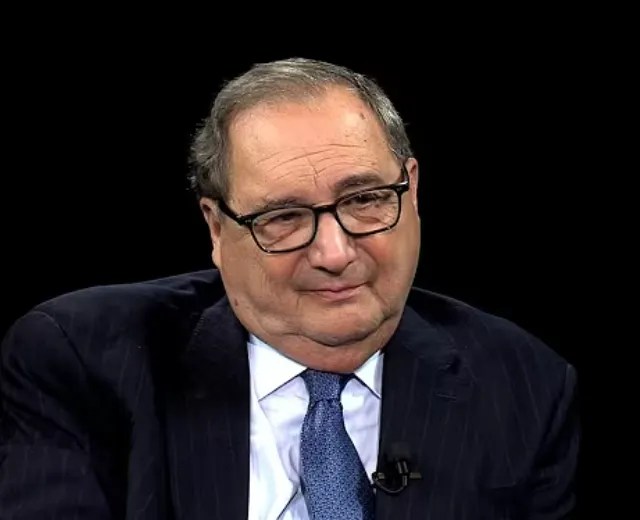
When Abraham Foxman died on May 10, 2026, tributes poured in from presidents, prime ministers, and Jewish leaders worldwide, yet his legacy remains defined as much by controversy as by accomplishment.
Foxman described himself as “a passionate supporter of the State of Israel” and spent his career building the ADL into a roughly $60 million per year organization that defined mainstream American Jewish advocacy on antisemitism, civil rights, and the Jewish state.
Foxman was born Avraham Chanoch Hanach Fuksman on May 1, 1940, in Baranovichi, then under Soviet occupation, now Belarus. When German forces entered Vilnius in June 1941 and began subjecting the Jewish population to forced labor and deportation, his parents placed their 15-month-old son in the care of his Polish Catholic nanny Bronisława Kurpi. Kurpi baptized the child into the Catholic Church, gave him the Polish Christian name Henryk Stanisław Kurpi, and raised him as a Catholic in Vilnius for four years. He learned to pray the rosary, attended church every Sunday, and genuinely believed he was Catholic.
His parents survived the war. After bitter custody battles—Kurpi initially refused to release him, telling the Fuksmans, “I raised him, and he belongs to me, and he is Catholic”—the family escaped to a displaced persons’ camp in Vienna in 1947 and arrived in the United States in 1950.
Foxman settled in Brooklyn, attended the Yeshivah of Flatbush, earned a Bachelor of Arts from the City College of New York, and received his J.D. from New York University School of Law. He joined the ADL in 1965 as a legal assistant and rose quickly through the organization’s ranks. When longtime director Nathan Perlmutter died of cancer in July 1987, Foxman became National Director.
Under Foxman’s 28-year leadership, the ADL built a formidable research arm monitoring white advocacy groups, neo-Nazis, and other dissident groups. The ADL expanded its international reach with consultations across Europe, Russia, the Middle East, Asia, and Latin America. Foxman was appointed to the council of the U.S. Holocaust Memorial Museum by President Ronald Reagan in 1987 and was re-appointed by Presidents George H.W. Bush, Bill Clinton, and Joe Biden—making him, as the USHMM confirmed, “the only member of the Museum’s governing Council to be appointed by four presidents from both parties.”
With Foxman at the helm, the ADL also advocated for LGBTQ rights, including protesting the Supreme Court’s 2000 ruling in Boy Scouts of America v. Dale—which held 5-4 that the Boy Scouts could exclude a gay scoutmaster on First Amendment associational grounds. The organization also developed diversity training for law enforcement agencies and advocated for policies promoting mass migration.
Foxman operated at the center of American Jewry. The ADL and AIPAC were close partners in White House meetings and lobbying coordination. Foxman was a key participant in the Conference of Presidents of Major American Jewish Organizations and worked closely with the American Jewish Committee on public advocacy.
Further, Foxman was one of the most internationally active American Jewish leaders of his era. In March 2012, releasing the ADL’s survey of ten European countries, Foxman warned that antisemitism in Europe remained a dangerous reality. “In Hungary, Spain and Poland the numbers for anti-Semitic attitudes are literally off-the-charts and demand a serious response from political, civic and religious leaders,” he stated—findings based on poll data showing 63% of Hungarians, 53% of Spaniards, and 48% of Poles holding antisemitic views.
Foxman held consultations in Russia on “problems of ethnic hatred, violence, terrorism and promoting democracy,” attended Limmud FSU conferences engaging Russian-speaking Jewish youth, and remained deeply concerned about antisemitism in post-Soviet states. He consistently condemned Arab and Palestinian resistance and Hamas’s liberation agenda. He insisted that much criticism of Israel crossed into antisemitism, arguing: “If the only nationalism that you find apartheid in is Jewish nationalism, then you’re an anti-Semite.”
Retiring in 2015, Foxman warned that antisemitism was “the worst that it has been since World War II, and it is global”—saying he “never thought anti-Semitism would still be a clear and present danger to Jews around the world.” In 2024, he delivered an address at the ADL’s “Never Is Now” conference stating that antisemitism is “a disease without an antidote and without a vaccine.”
Foxman viewed Iran under President Mahmoud Ahmadinejad as an existential threat. In a 2007 speech to the ADL National Commission, he declared: “The greatest threat to the Jewish people and closest thing to dangers of the 1930s and 1940s is a potent cocktail consisting of the ideology of hate from an Iran with a potential nuclear weapon. This is an existential threat to Israel from an irrational regime that must be taken with the utmost seriousness.” When Iranian Supreme Leader Ali Khamenei posted content questioning the Holocaust on Twitter in 2014, Foxman responded: “Once again, the injection of Holocaust denial by an Iranian leader shows the world how such deep-seated hatred exists at the helm in Iran. We have seen the Ayatollah spew his vehement animosity toward Jews before on other national occasions in Iran and these statements once again show the bigotry and hypocrisy of this regime.”
Weeks before his death, Foxman backed the U.S.-Israel war on Iran. On February 28, 2026—the day the war broke out—he posted on social media: “Thank you President Trump and Prime Minister Netanyahu for standing up to evil and jihadist extremism. The world hopefully will be a better and safer place in the future.”
Foxman’s willingness to take controversial public stands was no late development. He led or supported numerous high-profile campaigns throughout his career. When Nation of Islam spokesperson Khalid Abdul Muhammad delivered a speech at Kean College in November 1993 referring to Jews as “bloodsuckers” and calling for the genocide of white people, Foxman’s ADL ran a full-page ad in The New York Times reprinting Muhammad’s statements. This mobilization directly contributed to Congress issuing a bipartisan condemnation of the speech in February 1994.
Foxman regularly addressed antisemitic or borderline remarks by public figures. In September 2003, during pre-release controversy over The Passion of the Christ, he asserted that Gibson’s remarks were painting “the portrait of an anti-Semite”—though he walked back the characterization the following day, and by February 2004 told ABC’s Diane Sawyer that Gibson was not an anti-Semite and the film was not antisemitic. Foxman co-authored the 2013 book Viral Hate: Containing Its Spread on the Internet with attorney Christopher Wolf, who served as national chair of the ADL Civil Rights Committee, addressing how antisemites and racists exploited the internet.
Foxman produced several other books warning about the alleged scourge of antisemitism. Never Again? The Threat of the New Anti-Semitism appeared in 2003. The Deadliest Lies: The Israel Lobby and the Myth of Jewish Control came out in 2007 as a direct rebuttal to John Mearsheimer and Stephen Walt’s The Israel Lobby and U.S. Foreign Policy, which Publishers Weekly described as “a rebuttal of a pernicious theory about a mythically powerful Jewish lobby.”
Not all of Foxman’s tenure at the ADL would be remembered in such favorable terms. In April 1993, San Francisco police and the FBI executed searches at ADL offices in California and discovered that the organization had been running an extensive domestic intelligence operation for decades. The operation centered on Roy Bullock, an undercover operative and art dealer who had collected files on more than 12,000 individuals and 950 organizations for more than three decades. His targets included not just white advocates and neo-Nazis but also Arab American groups, the American Civil Liberties Union, the African National Congress, Central America solidarity organizations, Greenpeace, the Earth Island Institute, approximately 20 San Francisco area labor unions, anti-apartheid activists, and Jewish peace groups. Bullock had also sold information to South African intelligence for $16,000.
Foxman denied any improper activity while testifying that the ADL had a right to do “whatever it must” to monitor antisemitism and threats to Jews. Critics across the political spectrum condemned the operation as a massive breach of civil liberties.
One of the most sustained controversies of Foxman’s career involved his refusal to unequivocally recognize the Armenian genocide. Critics, including the Armenian National Committee of America, accused Foxman of “genocide denial” motivated by the ADL’s desire to maintain good relations with the Turkish government. The backlash was severe. A dozen Massachusetts communities and the Massachusetts Municipal Association withdrew from the ADL’s “No Place for Hate” program. The ADL’s 2007 statement that the “consequences” of Ottoman actions were “tantamount to genocide” was widely rejected as insufficient because it circumvented the “intent” required under the 1948 UN Genocide Convention. Foxman also sent a letter to Turkish Prime Minister Erdoğan expressing regret over the difficulty his position caused for the Turkish government. It was not until May 2014 that Foxman publicly and unambiguously used the word “genocide” in remarks at Suffolk University Law School’s commencement, after years of sustained pressure.
The Armenian Genocide controversy was not the only multi-decade fight to mark Foxman’s career. Foxman engaged in a 22-year campaign against paleoconservative commentator Pat Buchanan. After Buchanan’s 2011 book Suicide of a Superpower was published, Foxman called him “a racist and an anti-Semite.” Buchanan was suspended from MSNBC in January 2012 and fired in February, and he publicly credited Foxman with playing a role in his dismissal. The ADL published a formal report titled “Patrick Buchanan: Over the Line.” Buchanan described Foxman as leading efforts to “blacklist” him, working “behind closed doors, with phone calls, mailed threats, and off-the-record meetings.” In a similar vein, Justin Raimondo, founder of Antiwar.com, was one of the most sustained libertarian critics of the ADL and Foxman. Raimondo argued that the ADL used antisemitism accusations to suppress foreign policy debate.
Whatever his American critics made of him, Foxman moved comfortably among Israel’s top political leadership across multiple governments. Foxman met with multiple Israeli prime ministers, some of whom made direct appeals to President Bill Clinton for the Marc Rich pardon. Foxman cooperated with World Jewish Congress leader Edgar Bronfman on major campaigns including Holocaust-era Swiss bank restitution. While the primary negotiation was led by Bronfman and the World Jewish Congress, the ADL under Foxman was a coalition partner in pressing Swiss banks to settle Holocaust-era claims, which resulted in a $1.25 billion settlement in 1998.
Foxman made a well-documented intervention in favor of fugitive financier Marc Rich’s pardon from President Clinton. The ADL had received $250,000 from Rich over a period of 16 years, including a $100,000 pledge made just before Foxman traveled to Paris. In February 2000, Foxman met at a Paris restaurant with Avner Azulay, head of the Marc Rich Foundation, and Zvi Rafiah, an Israeli arms consultant, and it was Foxman himself who proposed the strategy of recruiting Denise Rich to approach Clinton for a pardon. “I told them maybe they should consider trying to get a pardon,” Foxman said. “I told them, ‘Why don’t you reach out to Denise Rich… and have her approach the president and see about a pardon.’”
He wrote Clinton on December 7, 2000, urging a pardon on the grounds that “we are a country that was founded on the belief in second chances.” New York Times columnist William Safire called for Foxman to resign, writing that Rich’s $250,000 to the ADL had “induced its national director to lobby President Bill Clinton for forgiveness and thereby bring glee to the hearts of anti-Semites.”
Abraham Foxman was the consummate architect of a specific brand of ethnic activism, relentlessly searching for every angle to advance Jewish institutional interests and cement a landscape where the concerns of world Jewry were elevated above all others. Yet, even as he built these formidable structures of influence, he unwittingly accelerated the very forces he claimed to fight.
His career served as a catalyst for a tide of grassroots resentment against World Jewry that has only surged since October 7, 2023. Like many of his kin who sought to reshape Western nations in their own image, Foxman dedicated his life to the systematic erosion of gentile civilization for the benefit of his tribe.
Now that he has exited the stage, he leaves behind a nation awakening to the nature of his subversion. May he face that eternal justice that human institutions could not provide, aware that the tide has finally turned against the Jewish supremacist agenda he spent his entire life promoting.
Thomas Massie Introduces Bill To Finally Force AIPAC To Register As A Foreign Agent Under FARA
blueapples on X | May 18, 2026
Ahead of a monumental primary on Tuesday, May 19th, which will determine whether or not the dying embers of America’s democratic process will be completely extinguished by the pro-Israel lobby, Kentucky representative Thomas Massie has introduced a bill into Congress that could deter future politicians actually willing to put America before Israel from suffering his same fate. On May 14th, Massie introduced the Americans Insist on Political Agent Clarity Act (”AIPAC Act”) in an effort to finally force the American Israel Public Affairs Committee (”AIPAC”) to register under the Foreign Agents Registration Act of 1938 (”FARA”). The proposed legislation is the apotheosis of a crusade fought by Massie that has opened the eyes of the American people to see how the pro-Israel lobby has taken control over the country’s electoral process. Yet, despite widespread public support to force AIPAC to register as a foreign agent under FARA, the pro-Israel lobby’s stranglehold over Congress stands as a seemingly insurmountable obstacle keeping Massie’s proposed legislation from turning that into a reality.
The express aim of the AIPAC Act is to “amend the Foreign Registration Act of 1938… to clarify the definition of ‘foreign principal’ and ensure transparency in lobbying on behalf of foreign interests.” Under FARA, a foreign principal is defined as:
(1) a government of a foreign country and a foreign political party;
(2) a person outside of the United States, unless it is established that such person is an individual and a citizen of and domiciled within the United States, or that such person is not an individual and is organized under or created by the laws of the United States or of any State or other place subject to the jurisdiction of the United States and has its principal place of business within the United States; and
(3) a partnership, association, corporation, organization, or other combination of persons organized under the laws of or having its principal place of business in a foreign country.
Since its inception in 1954, AIPAC has circumvented the registration requirements under FARA by virtue of being established as a domestic lobbying organization legally distinct from the parameters that the act uses to designate a foreign principal. AIPAC was created by Isaiah L. Kenen, a lobbyist for the Israeli government that previously served under the Israeli Ministry of Foreign Affairs, who worked as the information director of the American Zionist Council (”AZC”). After raising $65 million and $73 million in U.S. aid for Israel in 1951 and 1952, respectively, Kenen grew weary that he would be investigated by the U.S. State Department for not registering as a foreign agent under FARA. Kenen created the American Zionist Committee for Public Affairs (”AZCPA”) to navigate around the registration requirements under FARA in response to that concern. The AZPCA was renamed the American Israel Public Affairs Committee in 1959 and became the preeminent political vehicle for the pro-Israel lobby in the decades that followed its creation.
The AIPAC Act would amend FARA by adding a fourth paragraph that would additionally define a foreign principal as “any organization, association, corporation, or other entity….whose lobbying activities or stated mission is, either wholly or in part, to influence United States public policy or government action in furtherance of the political or economic interests of a foreign country or recognized state-affiliated political entity.” That language included in Massie’s proposed legislation would broaden the definition of a foreign principal to encompass domestic lobbying firms in the U.S. like AIPAC. The proposed legislation would also establish indicators for determining the foreign political alignment of lobbying firms and allow American citizens to file complaints with the U.S. Department of Justice to request investigations into potential FARA violations.
Massie explained the calculus behind the proposed legislation designed to require AIPAC to register as a foreign agent shortly after introducing it into Congress on May 14th in an interview with Redacted News. “For some reason, they’re immune right now, and I think not just the money that’s spent in politics but the lobbying that happens on Capitol Hill should be reported if it’s a foreign country. Whether it’s Great Britain, Australia, Turkey, Qatar, or Israel, it needs to be reported,” he stated, clarifying the amendment to FARA would apply to foreign principals lobbying on behalf of any nation.
Although the expanded definition of a foreign principal under FARA in the AIPAC Act would apply to lobbyists working on behalf of any nation, the material reality is that the legislation is designed to address the unrestrained power and influence of the pro-Israel lobby. In 2021, AIPAC changed its lobbying strategy by moving away from funding political candidates indirectly by working with unaffiliated political action committees (PACs) and instead created its own PAC to raise and contribute funds directly. In the 2024 election cycle alone, AIPAC backed candidates using its own PAC and super PAC, the United Democracy Project, in 389 congressional races through either official endorsements and/or campaign contributions. AIPAC-backed candidates won 318 of those 389 congressional races, expanding the roster of pro-Israel politicians in Congress even further. Presently, 80 members of Congress, or 15%, list AIPAC as their all-time top contributor.
Nowhere is the unyielding influence of the pro-Israel lobby on American elections more apparent than in Massie’s current bid for re-election to the U.S. House of Representatives. Massie, who has held the seat for the 4th Congressional District of Kentucky since first being elected to Congress in 2012, has seen the broader pro-Israel lobby spend tens of millions of dollars in an effort to depose him. Ed Gallrein, Massie’s opponent in the May 19th primary for the seat representing the 4th Congressional District of Kentucky, has received over $15.5 million in campaign contributions from pro-Israel PACs, including donations from the MAGA Kentucky PAC, created by Jewish billionaires Paul Singer, John Paulsen, and Donald Trump’s biggest political donor, casino magnate and fervent Zionist Miriam Adelson, expressly for the purpose of defeating Massie.
The race between Massie and Gallrein has eclipsed more than $30 million in spending, making it the most expensive congressional campaign in U.S. history. The majority of that spending has been made in an effort to unseat Massie, as the pro-Israel lobby’s expenditures against him have surpassed the $14.5 million dollars AIPAC spent to successfully replace former representative of New York’s 16th Congressional District, Democrat Jamaal Bowman, with pro-Israel candidate George Latimer in 2024. AIPAC also succeeded that year in unseating Democratic representative from Missouri’s 1st Congressional District, Cori Bush, with pro-Israel candidate Wesley Ball, thanks to $9 million of spending against her.
The defeats of Bowman and Bush were engineered by AIPAC to remove two of the most outspoken critics of Israel from Congress. However, neither Bowman nor Bush was as outspoken against the political malfeasance of the pro-Israel lobby as Massie has been. In recent years, Massie has shifted the Overton Window by exposing the inner machinations of the pro-Israel political machine toward a perspective that has accelerated the decline in public support for Israel from American citizens. In doing so, he has also amplified the efforts of AIPAC and the broader pro-Israel lobby inextricably tied to the Trump administration to replace him in Congress with a Zionist puppet, who has taken the form of Ed Gallrein.
While Massie had coasted to re-election in each of his previous campaigns, the spending against him by the pro-Israel lobby has created the realistic possibility that he could be ousted from Congress. If Massie fails at defeating Gallrein in the primary for his congressional seat, then it would render the AIPAC Act he has introduced to Congress as his last stand against a Zionist Occupied Government that has shown it will spend every resource at its disposal to subvert the American democratic process. That stranglehold that the pro-Israel lobby has over the American political system is clear as the AIPAC Act currently only has a 2% chance of being passed following its referral to the House Committee on the Judiciary. The dynamic cultivated by Massie that has led to the boundless spending against him by the pro-Israel lobby shows that even if he is defeated, then it may be little more than a Pyrrhic victory for AIPAC, as Massie’s demise would only prove how justified the crusade he fought against them was to begin with.
Thomas Massie Gives the ‘America First’ Leadership Trump Promised
By Jack Hunter | The Libertarian Institute | May 18, 2026
When Donald Trump ran for president in 2024, he promised, among other things, no more U.S. regime change wars, no more of America sending its citizens’ dollars to fund foreign nations, and that he and Elon Musk would drastically cut federal departments and overall spending, finally taking a hatchet to the country’s mounting debt.
In other words, the opposite of the last Republican president, George W. Bush.
It is 2026, the United States is stuck in a seemingly endless regime change war in Iran, America continues to funnel money to nations around the world (particularly Ukraine and Israel), Musk is long gone and any promises of spending cuts through the Department of Government Efficiency (DOGE) are but a distant memory.
At this juncture, President Trump’s goal seems to be to become more George W. than George W.
Then there’s Thomas Massie, the libertarian-leaning Republican U.S. congressman from Kentucky’s 4th district, who was an avid supporter of Ron Paul’s presidential campaigns in 2008 and 2012.
Long before Trump officially entered the political fray, Massie supported Dr. Paul, in part, because he promised no more endless wars, an end to foreign aid, and because he was a serious fiscal conservative.
When Trump also promised these things, Massie lent his support at various intervals and gave his full endorsement in 2024. Massie also still votes according to these principles in Congress. If those votes run against any part of Trump’s agenda, and they have—part of Trump’s early ire against Massie was his opposition to the president’s big spending “Big Beautiful Bill” last year—Massie still votes against war and foreign aid and for fiscal responsibility.
Massie has refused to change throughout. This has made Trump and people who blindly support him mad.
President Trump and his allies apparently now expect Massie to support U.S. regime change wars, to support foreign aid, and to put up with financial recklessness from Republicans. They are so angry that he won’t go along with their complete betrayal of what Trump originally campaigned on that the president, leftwing Zionist billionaires and Israeli lobbying group AIPAC have poured a historic amount of money into Massie’s primary opponent ahead of tomorrow’s election.
Team Trump insists that Massie needs to betray his principles just like they have. They are absolutely outraged that he won’t do it.
If you think this sounds completely insane, you would be correct. Only someone with their head so far up Trump’s backend could not be able to see the complete lunacy of how Team Trump now views Massie and his primary race.
There’s a lot of those, unfortunately.
What is fortunate, however, is there are also powerful conservative voices who can still discern reality.
Tucker Carlson is chief among them. Before interviewing Massie on his popular podcast earlier this month, Carlson said in his opening monologue, “Thomas Massie is, in his district, and probably nationally, but certainly we know for a fact in his district, the most popular person.”
He continued:
“Thomas Massie has made good on the promises that Donald Trump made to the nation. Thomas Massie is a better standard bearer for Trumpism, for the ‘America First’ ideology that Donald Trump ran on three times, than Donald Trump is.”
Carlson went even further about Massie’s overall character. “He is, in short, the American they told us we should aspire to be. He is the man you want your son to be.”
That’s high praise.
Another Massie fan is Dr. Ron Paul, who was exiting Congress when the Kentucky Republican was elected in 2012. Paul has said of Massie:
“I met Thomas before he came to Congress and was sworn in before his class was actually sworn in. But I was leaving Congress a few weeks later. So we actually crossed paths so we could say we served in Congress together.”
Paul would add, “I knew he was very dedicated to the cause of liberty. I was anxious to help him. And I think he has proved his case for being a defender of liberty and the Constitution.”
The same Thomas Massie who supported Ron Paul’s presidential runs and who now votes according to those libertarian principles is the same in his beliefs now as he has been throughout his entire political journey. For a time, Trump claimed to believe in these things too, but now clearly doesn’t. As Carlson notes, in the three times he ran for president, Trump promised an “America First” agenda and now, today, prioritizes the state of Israel and other foreign interests over those of the country he was elected to lead.
Which indeed makes Massie “a better standard bearer for Trumpism,” or at least what Trump advertised himself as originally, than Trump himself.
This is barely even debatable. It is almost perfectly clear to anyone not completely blinded by mind-numbingly dumb partisanship.
Again, what Donald Trump and his supporters now truly need from Thomas Massie is for him to betray those principles too. To join them in putting America second or third or worse.
But he won’t. And thank God for that.
Featured Video

Iran’s Next Strike May Not Explode. It Could Shut You Down
or go to
Aletho News Archives – Video-Images
From the Archive
Zionism’s Violent Legacy
By Donald Neff | Washington Report On Middle East Affairs | January 1996
On January 4, 1948, Jewish terrorists drove a truck loaded with explosives into the center of the all Arab city of Jaffa and detonated it, killing 26 and wounding around 100 Palestinian men, women and children.[1] The attack was the work of the Irgun Zvai Leumi – the “National Military Organization,” also known by the Hebrew letters Etzel – the largest Jewish terrorist group in Palestine. The Irgun was headed by Revisionist Zionist Menachem Begin and had been killing and maiming Arabs, Britons and even Jews for the previous ten years in its efforts to establish a Jewish state.
This terror campaign meant that at the core of Revisionist Zionism there existed a philosophical embrace of violence. … continue
Blog Roll
 Aletho News
- Trump’s Iran war is on an Israeli leash
- Saudi oil boss issues global supply warning
- Riyadh Says Its Oil System Is Intact. The Numbers Say Otherwise.
- Trump and Netanyahu Want to “Finish the Job” on Iran
- US ‘one-sided dictation’ not Iran’s beliefs makes rational talks impossible: Baghaei
- Iran’s Next Strike May Not Explode. It Could Shut You Down /Col Doug Macgregor
- Iran: US political targets legitimate if assassinations return
- Iraq shuts key border crossing with Iran under US pressure: Report
- Undersea Internet cables could be targeted in retaliation for attacks on Iran: IRGC deputy chief
- EU sending ‘biased’ observers to interfere in Serbian election – president
- If Americans Knew
- The Israel Lobby’s Changing Fortunes
- AIPAC has become such a political liability that it’s shifting to a more “nimble” approach to buying politicians
- At least 160 Israeli settler attacks in 2 weeks
- Will Gaza’s Ancient Christian Community Disappear Forever?
- Israel’s vision of regional security rests on keeping Arab states weak
- Heidi Levine recounts how Palestinian youths helped save her in settler attack
- DAILY UPDATE: Latest essential news on Palestine, Israel, & region
- Trump’s Intensifying Sabotage of the ICC, for Israel’s Sake
- Israeli military detain US and UK volunteers in West Bank including Democratic NY politician Brad Lander
- Americans at National Conservatism Conference held in Israel this year criticize Israel
- No Tricks Zone
- E-Cars Reduce CO2 Emissions By Only 41% Compared To Internal Combustion Engine Vehicles
- Predictions Made By Renowned Climate Professor Over Past Decades Have Been Proven To Be Poor
- New Study Suggests Large Regions Of The Pacific Ocean Have Been Cooling For The Last 80 Years
- Germany’s Green Energy Debacle: High Energy Costs Force Kahla Porzellan to Close After 182 Years!
- New Study: 50 Years Of The Most Aggressive ‘Net Zero’ Policies Can Only Affect The Global Climate By 0.03°C
- US September “Heat” Was No Record…Many Records Set Decades Ago
- Latest European Green Energy Debacle; Portugal’s Largest Flagship Solar Park Insolvent!
- Green Energy Debacle: German Expert Professor Fritz Vahrenholt Warns Of Severe Economic And Social Consequences
- Two More Paleo Reconstructions Affirm Meters-Higher Sea Levels Across Ireland, Brazil 7000-6000 Years Ago
- New Study: Earth And Venus Surface Warmth Largely Explained By Convection And Lapse Rate, Not CO2 Or Radiation

