Gaza survivors recount executions and abuse in militia-controlled areas east of Yellow Line
MEMO | August 24, 2026
Palestinians who say they escaped areas controlled by Israeli- backed armed militias east of the so-called Yellow Line in the Gaza Strip have recounted severe abuses, including extrajudicial killings, physical mistreatment, drug distribution and exploitation of civilians, according to testimonies collected by Quds Press.
The accounts describe tightly controlled areas where residents faced restrictions on movement and could leave only with authorization from militia members. Quds Press described the groups as receiving backing from the Israeli military.
One survivor, identified only as Ahmed, 31, said he escaped with his two brothers after eight months in an area controlled by a militia allegedly headed by Shawqi Abu Nassira.
Ahmed said that narcotics, including hashish and a substance he identified as “Rotana,” were widely distributed. He also said that people attempting to escape or refusing orders faced summary execution and accused militia members of abusing and exploiting children and girls.
Another survivor, identified as Abu Ramzi, said he was drawn into the area after responding to a social media advertisement offering street-cleaning work purportedly connected to international organizations.
According to his account, he and others were collected near Al-Samar roundabout, at the entrance to Gaza City’s Shuja’iyya neighbourhood, and transported east, where masked men took them to an interrogation facility he said was operated by the Israeli military.
Abu Ramzi alleged that interrogators sought detailed information about detainees’ relatives and people employed by Gaza’s governing authorities. He further added that detainees who hesitated to answer were subjected to physical abuse, including being struck on their fingers with a hammer.
He said that during a subsequent Israeli military movement toward the Yellow Line, militia members withdrew and Israeli forces ordered the detainees to assemble. According to his testimony, they were handcuffed and instructed to walk westward without looking back.
Separately, Al-Hares, a platform affiliated with Hamas-run security authorities in Gaza, has warned residents that armed groups operating in these areas allegedly use offers of food, cigarettes and employment to attract civilians. It accused the groups of seeking to use civilians to facilitate their movements and urged Palestinians to avoid them.
Israel Lies again about Hind Rajab Killing in a Public Relations Whitewash Maneuver
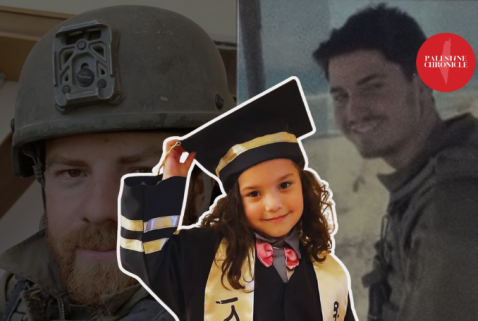
By Robert Inlakesh – The Palestine Chronicle – August 20, 2026
Historically speaking, Israel has never once charged a single Israeli soldier for killing a Palestinian in Gaza throughout any of its large-scale assaults on the territory that began to ramp up in 2008.
The Israeli military made headlines again this Wednesday, after they admitted for the first time to having fired upon the vehicle in which 5-year-old Hind Rajab was ruthlessly murdered in January of 2024. However, this “admission” is being presented dishonestly and is a clear Public Relations maneuver manufactured by Israel to whitewash their actions.
Hind Rajab’s murder at the hands of the Israeli army is one of the most high-profile war crimes committed throughout the Gaza Genocide, so much so that it was turned into an award-winning docudrama film, ‘The Voice of Hind Rajab’. The audio recordings of the young girl, released by the Palestinian Red Crescent Society (PRCS), who were desperately attempting to put international pressure on Israel to permit their workers to rescue her, went viral and captured the emotions of millions around the world.
Israel understands this well and has therefore chosen to strategically place the event under a criminal investigation, in order to portray a sense of accountability.
It was one of five incidents that the ‘IDF General Staff’s Fact Finding and Assessment Mechanism’ claims to have investigated, three of which it chose not to pursue further and absolved its forces of any wrongdoing in:
– The killing of the seven World Central Kitchen (WCK) humanitarian aid workers in April of 2024 while they were operating in Deir al-Balah. The victims were Australian, British, Palestinian, Polish, and dual American-Canadian citizens, who were targeted in three clearly marked vehicles. Some of the survivors attempted to flee in other vehicles and were subjected to double-tap strikes.
– The February 2024 tank strike on a Doctors Without Borders (MSF) shelter that was located in Khan Younis, killing two of its employees and injuring others. Despite the location being known to be an MSF site, the Israelis simply claimed ignorance; they never presented any evidence that they struck a military target.
– The November 2023 strike on a clearly marked MSF convoy in Gaza City that killed two other employees. It was a convoy that was attempting to evacuate 137 civilians and had coordinated with the Israeli military, even halting at a crowded checkpoint for hours in order to receive the go-ahead from Israel.
Another incident that Israel claims it is opening a criminal probe into is the massacre of 15 Palestinian paramedics and first responders in Tel al-Sultan, Rafah. On March 23, 2025, when contact was initially lost with the emergency workers, Gaza’s media office believed the group had been kidnapped and appealed to the international community. Israel refused to acknowledge the incident had even occurred at the time.
Then by the end of the month, after the Israeli military had withdrawn from the area, an unmarked grave was discovered, where the bodies of the 15 paramedics, emergency workers and ambulance drivers were found. Reports indicated that the group was executed at close range, one by one, before the Israelis had buried them and their ambulances in order to discard the evidence.
Israel’s initial defense in late March was that a series of unmarked vehicles had headed towards them with their lights off and in the absence of emergency signals, prompting their forces to defensively open fire. This account was later contradicted by video evidence that emerged in April showing the opposite, prompting the IDF to change its narrative and claim it had mistaken the emergency lights for a threat.
By late April of 2025, the Israeli military concluded, as a result of an internal probe, that the incident could be attributed to “professional failures” and “operational misunderstandings”. Later, the Israelis would again shift their narrative by claiming, without any evidence, that six of those killed had ties to the Palestinian Islamic Jihad (PIJ) armed group.
Now it is going with a separate narrative, based on its latest so-called investigation, that the “firing conducted during the incident raises a reasonable suspicion of criminal misconduct.” Its forces were shown by independent investigations, including one conducted by Forensic Architecture, to have fired at least 900 bullets and carried out close-range executions.
Silencing the Voice of Hind Rajab
Media outlets from across the spectrum have reported that Israel is now launching an internal criminal investigation into the killing of Hind Rajab and admits to firing upon the vehicle in which she was killed, along with six of her family members. However, Israel’s internal investigation just drew another conclusion that seeks to whitewash the entire event, protecting its soldiers rather than taking accountability for its actions.
“The findings of the examination indicate that IDF troops fired at a vehicle that was approaching them,” is what the Israeli military now claims as a result of its latest investigation. “Following review of the findings and due to apparent failures in the coordination of the movement of the Palestine Red Crescent ambulance, it has been decided to initiate a criminal investigation of the incident by the Military Police Criminal Investigation Division.”
Keep in mind that this is precisely the same excuse given to run cover for the executions carried out against 15 first responders and paramedics in the Rafah massacre; they are now stating they will be subject to a criminal investigation. It is an excuse that assumes that Israeli forces simply acted in self-defense and fired towards what they interpreted as a threat.
Also, two vehicles were struck in the incident, not one. Two PRCS paramedics were slain following a double-tap strike on their ambulance.
Numerous independent forensic and satellite investigations were conducted into the specifics of the incident, including one by the Washington Post and another by Forensic Architecture [in collaboration with EarShot and Fault Lines], which demonstrated Israeli forces fired 335 bullets into the Kia Picanto in which Hind Rajab and six of her family members were killed.
Evidence also shows that it was impossible for the vehicle to have traveled south as the Israeli military claimed it should have, following their instructions to locals that day, as the streets heading south from their location had all been blocked. The investigations also concluded that the car was fired upon from a short enough range for Israeli soldiers to see the innocent civilians sheltering inside it.
Israel’s shots also penetrated the vehicle from its right side. Even if the Israelis continue to claim the car was heading towards them – presumably somehow being driven by a terrified 5-year-old girl – the vehicle was clearly not shot from the front, meaning that it was conclusively not a threat.
That said, the Red Crescent workers based in occupied Ramallah spent around three hours on the phone with little Hind, desperately attempting to get Israeli permission to rescue her. By this point, it had become an international incident.
For 12-days, beginning on January 29 of 2024, Hind Rajab’s status was officially considered to be “missing” and presumed dead, until February 10, when her little body was recovered from the Tal al-Hawa neighborhood, riddled with bullets.
When Israel was finally forced to address the issue, it claimed that its forces were not even stationed in the area and that there were no operations taking place at the time. It even launched an internal probe, which produced the same excuse with different wording.
This narrative more or less held for around two and a half years, as Israeli officials and the military periodically made small alterations to their claims, despite the evidence that emerged to debunk them. Israel even attempted to blame Palestinian fighters for the killings, another tactic they have used countless times to explain away their war crimes.
Historically speaking, Israel has never once charged a single Israeli soldier for killing a Palestinian in Gaza throughout any of its large-scale assaults on the territory that began to ramp up in 2008.
The harshest sentence ever dealt to an Israeli soldier for their conduct inside Gaza was to a member of the Givati Brigade in 2009, during what Tel Aviv called “Operation Cast Lead”, landing the combatant a total of 7.5 months in prison. This was not for killing, raping or torturing Palestinians; it was for stealing a credit card.
– Robert Inlakesh is a journalist, writer, and documentary filmmaker. He focuses on the Middle East, specializing in Palestine.
Why you are being lied to about Yemen and the implications of its liberation
By Robert Inlakesh – Al Mayadeen – August 16, 2026
The Yemeni Armed Forces’ campaign to liberate their nation and end the Saudi-led blockade could be one of the most important events for the Arab world in decades. Not only will it have major implications for the ongoing regional war, but it also has the potential to dramatically reshape the region.
In July, the collapse of the Yemen-Saudi ceasefire agreement, which had been in place since 2022, was triggered by a strategic mistake committed by Riyadh. While Iran sought to break the inhuman blockade on Yemen through landing civilian airliners in the nation’s capital, Saudi Arabia’s air force rushed to bombard Sanaa International Airport. The Saudis may not have known it, but their irrational actions strung them up in a strategically placed trap.
Not only had the Sanaa government been coordinating a general mobilization, but its Armed Forces decided to directly retaliate by striking vital Saudi oil infrastructure and imposing a counter-blockade on their opponents to the north. The Yemeni Armed Forces then decided to take it a step further, committing round-the-clock ballistic missile and drone strikes that inflicted hundreds of casualties on Saudi-proxy forces inside Yemen and even advanced to liberate more of their nation’s territory.
Saudi Arabia is now unable to transit the Bab al-Mandab Strait, and its ability to export oil has been severed, representing a serious economic blow. Riyadh is now facing an unprecedented predicament, as Ansar Allah imposes an equation whereby Saudi violations of Yemeni airspace are met with direct strikes on oil infrastructure.
The reason why this all matters so much is that since 2015, the so-called “International Community” has rallied behind Saudi Arabia and its GCC allies. The global media have also participated in the facade, pretending as if some rebel group that they call “the Houthis” were fighting against an “internationally recognized government.” Why they kept up their lies is simple: without full control over their nation and its resources, the Sanaa government was simply not as valuable a partner as the Arab Gulf States, so everyone played along.
Nobody cared to point out that “the Houthis” is not an accurate name for Ansar Allah, that they aren’t simply a group of “rebels” but run a government that rules over the largest portion of the Yemeni population, or that two-thirds of the nation’s Armed Forces sided with them. Neither will they tell you that the so-called “Yemen Presidential Leadership Council” was created in the Ritz-Carlton Hotel in Riyadh and that its undemocratically selected leader lives in Saudi Arabia.
In fact, the idea that the Saudi-proxy forces in Yemen are the legitimate representatives of the nation and are somehow a sovereign government is even more outlandish than when most of the Western world randomly decided that Juan Guaidó was the “internationally recognised” President of Venezuela.
But none of this will even end up mattering if Ansar Allah succeeds in uniting Yemen and reaching an agreement to liberate its territory from its US-Israeli-backed aggressors. The reason why the Arab regimes, alongside the US-UK-EU-Israeli alliance, have fought against the government in Sanaa is that they all fear the consequences of their success.
Yemen will be the only Arab nation that will not only oppose US imperialism and support the regional resistance, but will also actively fight the Israelis and work to combat the “Greater Israel Project.” The only Arab government that dared to open fire on the Israelis or impose a blockade on them, in support of Gaza, was the Sanaa government in Yemen. All the others that fought for Gaza were non-state actors.
A strong and united Yemen, with access to its resources and the ability to continue developing its military capabilities, will without a doubt be the biggest threat to US-Israeli hegemony in the Arab World. Yet, it will also spell another equation: it could well serve as an example to populations throughout the region, as to what is possible if the people fight for their liberation. No prospect frightens the Arab regimes more than this.
The impact Yemen can have on global trade, oil markets, regional power equations and ultimately the Palestinian cause for national liberation, all have the Zionist allied powers shaking in their boots. For so long, the Yemeni issue has been ignored, but that could soon dramatically change.
Israel Rejects 15-Point Gaza Deal, Insists on War, Genocide, and Economic Armageddon
By Kevin Barrett | American Free Press | August 15, 2026
No-one has ever accused President Donald Trump of being anti-Israel. Trump has supported Israeli extremism far more than any other US president. In 2017 he moved the US embassy to Occupied Jerusalem, an extreme violation of US policy, international consensus, and international law. He strong-armed regional nations to establish “normal” relations with genocidal Israel, against the wishes of more than 95% of their populations. And he has waged relentless war on Iran on behalf of Israel, setting the stage for the current countdown to global economic catastrophe.
But all of that isn’t enough for Israeli Prime Minister Netanyahu, who fancies himself Trump’s boss. On August 9, Netanyahu arrogantly rejected Trump’s 15-point Gaza peace plan, thumbing his nose at Trump himself and the Board of Peace that Trump chairs.
Since the Trump-brokered “ceasefire” of October 10, 2025, Israel has killed 1,258 people in Gaza. Trump has remained silent. But now, the stakes are higher. To end his disastrous war on Iran, Trump needs to comply with the first term of the Memorandum of Understanding that he signed, mandating “permanent termination of military operations on all fronts” by both parties and their allies.
In other words, Israel must cease firing at Palestinians and Lebanese people, or Iran will continue to throttle global supply chains via the Strait of Hormuz and the Bab al-Mandab. If the Americans want to stop the bleeding, they must force Israel to withdraw from Gaza and South Lebanon and stop attacking Palestinians in the Occupied West Bank.
To prevent economic Armageddon, Trump needs to compel Israel to withdraw from Gaza in accordance with his 15-point plan. That plan is laid out in stages, with Israeli withdrawal and Hamas disarmament happening simultaneously and in parallel. Hamas will relinquish its heavy equipment and weapons during Israel’s withdrawal, but it is not required to give up the small guns it needs to ensure that its people are not exterminated by ISIS terrorists in the pay of Israel.
Hamas accepted Trump’s peace agreement even though it had to give up its only leverage, its Israeli hostages. But Israel refuses to implement the deal. It continues committing genocide, deliberately slaughtering hundreds of women and children while destroying infrastructure and preventing humanitarian aid from entering.
Before August 9, Israel had pretended to accept Trump’s deal, while muttering curses under its breath. But now it is openly refusing. Israel is telling Trump, and the world economy, to go get stuffed. Retired Maj. Gen. Giora Eiland, a former head of Israel’s National Security Council, explains: “Israel has no interest in Gaza being rebuilt, it is better for us that it be destroyed for generations to come.”
Trump’s Board of Peace Roadmap document states: “Israel shall fully complete, without delay, all remaining commitments.” The Board’s original language, which is still in effect, required Israel’s “full withdrawal” from Gaza, but last week it changed the wording to mere “withdrawal” under pressure from Netanyahu.
But small changes in wording won’t alter the underlying reality. Israel needs to get out of Gaza—and stop killing Palestinian and Lebanese people—or Iran will strangle the world’s economy, maximizing damage to the US and its allies.
Given the stakes, Netanyahu’s willingness to raise his middle finger at the US president is bizarre. Israel is a small country. It is immensely vulnerable to American economic, diplomatic, and military pressure. American taxpayers have been keeping it afloat ever since it metastasized in 1948. It is universally reviled in West Asia, and despised by ever-growing majorities everywhere else.
Netanyahu’s paradise for pedophiles and dog rapists wouldn’t last five days without American taxpayer support. Yet it is prepared to destroy the world economy, and with it the Trump Administration, so it can continue committing genocide and waging wars of aggression.
Trump should exit the Iran war smoothly and painlessly by transferring the pain to Israel. What Iran wants is a new regional order that will prevent further aggression against it. Trump could achieve that, and avoid the humiliation of a complete US withdrawal from the region, by making Israel, not the US, the loser of the war Israel started. How? Simple. Just put all of America’s economic, diplomatic, and (if necessary) military power behind a draconian ultimatum to Tel Aviv: “Withdraw to your pre-1967 borders within the next two weeks, declare those as your permanent borders, and disavow the Greater Israel Project, or face complete obliteration.” A roundup of the Israeli agents who currently infest America’s media and financial sectors, authorized by an executive order declaring Israel’s occupation of the US a national emergency, would drive the point home.
Can Trump force Netanyahu to toe the line? Or will the Israeli prime minister show that he is America’s real boss?
Subscribe to the digital and print editions of American Free Press. You’ll get early access to articles like this, and exclusive access to many others!
Stripe is Substack’s only processor and they debanked me, so you can no longer pay me through Substack. Now I am posting everything on Substack free and asking people to sign up for recurring donations at my Paypal donation page…or better yet, the free speech platform SPdonate. Alternately you can Paypal or Zelle to truthjihad[at]gmail(dot)com. Note that Zelle, unlike other methods, doesn’t charge any fees.
Don’t Let Hunter Biden Whitewash His Father’s Genocidal Legacy

By Justin K.P. | The Dissident | August 13, 2026
Joe Biden’s son, Hunter Biden, has been making the rounds on the podcast circuit, giving interviews on popular shows such as Channel 5 with Andrew Callaghan, the Tucker Carlson show, Candace Owens and the Left Hook with Wajahat Ali.
Throughout these various appearances, Hunter Biden has been accurately taking on Benjamin Netanyahu for the genocide in Gaza.
“If it’s anti-semitic to point out that Bibi Netanyahu is evil incarnate, then I don’t know what to say to people anymore,” Hunter Biden correctly said on the Tucker Carlson podcast, adding, “open your eyes. Open your heart for one minute.”
In his interview with Wajahat Ali referring to the genocide in Gaza, Hunter Biden said, “I will call it a genocide. I don’t know any other definition that fits when one group of people, their stated goal is the extermination of another group of people. I think it’s ridiculous that we continue to debate whether or not it’s a genocide. I think Bibi Netanyahu is evil incarnate,” adding that the Gaza genocide is “unforgivable forever and throughout time”.
While these statements are correct, it is hard not to see this as a way to put the entirety of the burden for the genocide on Benjamin Netanyahu, whitewashing the fact that it could not have been carried out without support from Joe Biden.
This is bolstered by the fact that in his interview with Wajahat Ali, Hunter Biden claimed that his father “believes all the things that I just said” and pretended that Joe Biden put pressure on Netanyahu, adding that Joe Biden “did his best to curtail and to curb the most awful instincts of Netanyahu”.
Hunter Biden’s comments in this context seem more to be part of an effort to whitewash the Democratic Party and Joe Biden’s direct complicity in the Gaza genocide.
The reality is, Joe Biden and his administration hold just as much responsibility for the slaughter in Gaza as Benjamin Netanyahu does.
Brown University’s Cost of war project has calculated that during the first year of the genocide in Gaza, the Biden administration spent $17.9 billion in military funding for Israel and another $3.8 billion in the second year, with an additional $9.65 – $12.07 Billion spent on military campaigns to protect Israel, including the Biden administration’s bombing of Ansar Allah in Yemen for it’s blockade on the Red Sea in an attempt to pressure an end to the Genocide.
While financing the military equipment used to carry out the Genocide in Gaza and bombing resistance groups attempting to stop the genocide, the Biden administration never once pressured Israel to accept a ceasefire.
This was outright admitted by multiple U.S. and Israeli officials on Israeli TV on a special aired on Israel’s Channel 13.
The former Israeli ambassador to the U.S., Michael Herzog, in the special admitted, “God did the State of Israel a favor that Biden was the president during this period, because it could have been much worse. We fought for over a year, and the administration never came to us and said, ‘ceasefire now.’ It never did. And that’s not to be taken for granted”.
The former U.S. ambassador to Israel, Thomas Nides, similarly admitted, “At the most significant political peril of Joe Biden’s political career, the easiest thing for Joe Biden would have been, if he was worried about the votes in Michigan, is to basically be a little soft; he refused to do it. There was enormous pressure within the White House on him to change his position. When I hear comments about ‘he wasn’t good enough, or he didn’t have Israel’s back,’ am I disgusted by it? One hundred percent. Is it true? 100 percent no”.
When Benjamin Netanyahu claimed that “soldiers were killed during the war in Gaza from a lack of ammunition due to a partial embargo that was imposed by the Biden administration”, multiple Biden administration officials came out to clarify that they gave unconditional support to Israel’s Holocaust in Gaza.
Amos Hochstein, a top Biden advisor admitted in response, “After more than $20 Billion military support, largest in Israel history, 2 aircraft carriers rushed to the region, deterring a massive regional war, defeating Iran missile/drone attack x2, defending israel at most vulnerable moments, after SAVING countless lives of Israelis – only acceptable response to POTUS Biden and American people is THANK YOU.”
Similarly, the Assistant to the President and National Security Advisor to the Vice President of the United States, Philip H. Gordon, admitted in response, “Hard to overstate the damage to US-Israel relations done by the sense of entitlement and ingratitude reflected in comments like these and Netanyahu’s own recent statements. Baseless misdirection to suggest that Israeli soldiers’ deaths in Gaza were caused by some phantom US ‘embargo’ (when in fact Biden resisted enormous pressure to condition aid, as required by U.S. law, even as Israel rebuffed calls to facilitate more humanitarian assistance and reduce civilian casualties)”.
The reality is that Joe Biden’s backing of the genocide in Gaza is also “unforgivable forever and throughout time” despite his son’s attempts to whitewash these facts.
Netanyahu rejects Trump’s post-genocide 15-point plan for Gaza
Press TV – August 9, 2026
Israeli prime minister Benjamin Netanyahu says Israel has rejected US President Donald Trump’s Board of Peace 15-point plan and will not withdraw forces from the territory until the Palestinian resistance group Hamas fully disarms.
“Israel rejects the 15-point document,” Netanyahu said at a cabinet meeting on Sunday, referring to a US-backed Gaza peace plan.
The Israeli army “will not carry out any withdrawal until Hamas is genuinely disarmed and will continue to thwart threats against our forces”, he added.
“And when I say disarm Hamas, that means heavy weapons, less-heavy weapons, all weapons. And we are talking about real disarmament, not a fictitious disarmament,” Netanyahu said.
This comes days after the US-backed board made Israeli withdrawal from the blockaded Palestinian territory conditional on Hamas’s complete disarmament, in a move that runs counter to the terms of last year’s agreement, even as Israel has yet to fulfill its own withdrawal commitments.
In a statement last week, the board said Israeli forces would not withdraw beyond the so-called “Yellow Line” until the Palestinian resistance movement had fully completed the decommissioning of its weapons.
Meanwhile, Hamas on Sunday reaffirmed its commitment to a roadmap agreed upon with mediators and the Board of Peace to complete the second phase of the plan for Gaza.
In a statement, the Palestinian movement said it remains serious about “responsibly engaging” in the implementation of the 15-point plan and establishing a clear timetable for its execution.
“The priority at this stage must be to ensure the implementation of all phases and obligations of the agreement,” Hamas said.
The group added that the process should lead to a complete ceasefire, an end to Israeli attacks, the completion of Israel’s withdrawal, the reopening of crossings, the entry of humanitarian aid and shelter supplies, the start of reconstruction, and the enabling of the National Committee for the Administration of Gaza to begin its duties.
Hamas called on the mediators, guarantors and the Board of Peace to “shoulder their responsibilities,” ensure that all parties comply with the agreement, and prevent violations that could obstruct its implementation or undermine the ceasefire.
Under last year’s agreement, the “Yellow Line” was designated as the initial withdrawal boundary for Israeli occupying forces, with further pullbacks to take place alongside the gradual decommissioning of resistance weapons.
Israeli forces, however, did not carry out the planned withdrawals. Instead, they continued their military aggression, moved beyond the “Yellow Line” and established permanent military positions after Washington launched the initiative in October 2025.
Meanwhile, the Hamas resistance movement has announced that it would dissolve the emergency committee administering Gaza but declined to disarm its military wing.
Palestinian resistance groups have made clear that surrender is not an option in the face of the US-led effort to reshape Gaza’s future.
Reconstruction has barely begun across most of Gaza, with only a fraction of the estimated $17 billion in pledged funds actually secured. Wealthy donors have largely refused to finance projects in areas still under Israeli control, viewing such efforts as legitimizing the occupation.
Israel has continued to carry out near-daily deadly attacks across the besieged Palestinian strip since agreeing to a ceasefire with Hamas last October.
The Israeli genocide has already killed more than 73,375 Palestinians, wounded over 171,000, and destroyed around 90 percent of Gaza’s infrastructure, according to Gaza authorities.
Since the so-called ceasefire deal was signed, at least 1,250 Palestinians have been killed and another 4,110 injured in Israeli attacks, according to Gaza’s Health Ministry.
Israeli broadcaster Channel 12 reported on July 4 that Israel could resume a full-scale military offensive in Gaza within two months.
Qatar says Hamas honored its ceasefire obligations, calls for action against Israel
Palestinian Information Center – August 4, 2026
DOHA – Qatar’s foreign ministry has urged the international community to press Israel to honor its Gaza ceasefire commitments, affirming that Hamas has met all obligations under the agreed roadmap.
During a news conference held in Doha on Tuesday, spokesman for the foreign ministry Majed al‑Ansari confirmed that Hamas fulfilled its first‑phase commitments of the agreement, including the release of Israeli prisoners.
Ansari accused Israel of shirking its ceasefire obligations by maintaining strikes and restricting food, medical, and shelter aid into Gaza.
Ansari said that 2.4 million Palestinians in Gaza, among them 1.5 million displaced people, endure dire humanitarian conditions as Israel maintains tight restrictions on the entry of food, medicine, and other vital needs.
The spokesman said that Doha urges global actors to press Israel to abide by the ceasefire deal to pave the way for the launch of reconstruction efforts in the Gaza Strip.
He noted that Israel has not yet announced an official position on the roadmap for the next phase of the agreement, which includes an Israeli withdrawal from Gaza and the disarmament of Hamas.
‘A Living Hell’: A Gaza Survivor Recalls Torture in Israeli Detention
By Shaimaa Eid | The Palestine Chronicle | August 3, 2026
With trembling hands, faltering words, an emaciated body, and a voice barely audible from the intensity of his pain, S.Th., 38, began recounting the brutal circumstances of his arrest.
What began as an attempt to flee Israeli bombardment through what Israel had designated a “safe corridor” during its ongoing genocide in Gaza ended with months of torture in Israeli interrogation facilities and the Negev Desert Prison.
“After nights of relentless bombardment around our home in Gaza City, my mother, my wife, and I decided to leave,” S.Th. told the Palestine Chronicle. “My wife was in critical condition after miscarrying because of the overwhelming fear and terror.”
The family walked toward Kuwait Roundabout before reaching the so-called safe corridor at the Netzarim checkpoint.
“What awaited us there,” he said, “was even more horrifying than the bombardment itself.”
“My mother leaned on my shoulder the entire way, and all of us held our ID cards high above our heads,” he recalled. “Without any warning, an Israeli officer emerged from behind a sand berm and called out in clear Arabic: ‘Hey, you with the ID who’s fanning your mother, come here.’”
At first, S.Th. was unsure the soldier was addressing him.
“I looked around to make sure he was talking to me,” he said. “Then the officer gestured for me to come behind the sand embankment.”
The moment he reached the soldiers, the man said, he was ordered to strip naked.
“They bound my hands and forced me to sit on sharp seashell-covered stones for three consecutive days.”
Used as Human Shields
For three days, S.Th. said he endured beatings with rifle butts and constant verbal abuse. He and a group of other young men were then forced to sit beneath the barrel of an Israeli tank, where they were used as human shields.
“The tank kept firing shells while we were directly beneath it,” he recalled. “After every single shot, we waited for our souls to leave our bodies, believing death had finally come.”
He never had the opportunity to say goodbye to his family.
“I never had the chance to say goodbye to my mother or my wife,” he said. “Anyone who stopped or even turned around risked being shot dead.”
As they walked in large groups, bodies lay scattered along both sides of the road.
“It was as if the occupation wanted to send us a clear message,” S.Th. said. “‘This is what happens to anyone who disobeys our orders.’”
His voice faltered as he described what happened next.
“They tied our hands and loaded us into the bucket of a bulldozer used to carry sand,” he said. “Then they covered us with a large tarpaulin. After driving only a short distance, they suddenly dumped us into a massive sand pit.”
The detainees believed they were about to be executed.
Instead, Israeli soldiers returned, gathered them again, and loaded them into a military vehicle. From conversations they overheard, they understood they were being transferred to an interrogation center.
“We had no idea where they were taking us,” S.Th. said. “When we arrived, I heard one of the soldiers say, ‘Zikim, Zikim,’ before signaling the driver to stop. At the time, we had no idea that a living hell awaited us there.”
‘A Living Hell’
Recalling his arrival at the facility, S.Th.’s hands began to shake.
“The moment we arrived, dozens of soldiers greeted us with savage beatings all over our bodies using metal batons and electric sticks,” he said. “They then forced us to remain kneeling for five consecutive days.”
During that period, he said, detainees survived on little more than a small piece of bread each day. “It was nowhere near enough to satisfy our hunger.”
According to S.Th., Israeli forces identify Palestinians attempting to cross the so-called “safe corridor” through an advanced facial-recognition system while they hold their identity cards above their heads.
“Those five days felt endless,” he recalled. “After that, they marched us away with our hands and feet shackled and our eyes blindfolded to a large barracks.”
The detainees, he said, were permitted to use the bathroom only once each day.
“They also deprived us of sleep by blasting deafening music through loudspeakers around the clock,” S.Th. said
Interrogation and Torture
Speaking quietly, S.Th. paused before describing the interrogations.
“All the way to the interrogation room, the soldiers kicked us repeatedly,” he said. “They dragged us along by our bound hands and forced us into painful stress positions until we were completely exhausted.”
Only then, he said, would the interrogating officer ask a single question: “Do you want to talk?”
According to S.Th., the interrogations focused largely on political affiliation.
“He accused me of things that had absolutely nothing to do with me,” he said. “When I denied them, he ordered that I be taken back to the torture room.”
There, he said, two soldiers subjected him to severe abuse. “They beat the most sensitive nerve centers in my body and struck my genitals.”
Sleep, S.Th. said, became almost impossible.
“Whenever I drifted off, a soldier standing behind me would repeatedly strike a metal sheet with a hammer while shouting, ‘Wake up. Wake up. Wake up.’”
Eventually, exhaustion overwhelmed him.
“I collapsed unconscious onto the ground,” he recalled. “A soldier lifted me from behind and immediately began kicking me with both feet to prevent me from resting or even taking a brief nap.”
Two weeks later, S.Th. was returned to the interrogating officer.
“He leaned over and whispered in my ear, ‘How was your visit? Was it a long one? If you had confessed from the beginning, you could have spared yourself all this suffering,’” he said.
The officer then repeated the same accusations and questions.
When the interrogation concluded, S.Th. said the interrogator wrote words on his back that he could not understand before soldiers returned him to a barracks holding dozens of detainees from Gaza.
“There we sat with our hands tied, forced to kneel from morning until evening without moving or even turning our heads,” he said. “We were given only ten minutes to eat our meals.”
Negev Prison
S.Th. said he was later transferred with approximately 50 other detainees to the Negev Desert Prison.
“As soon as we arrived, a large group of soldiers was waiting for us,” he recalled. “They beat us mercilessly before throwing us into freezing cells without blankets while we were dressed only in light clothing.”
Soldiers deliberately targeted the prisoners’ shackled hands during the beatings: “They concentrated their blows on our hands, which were already tightly bound in iron shackles.”
After nearly two months of torture and starvation in interrogation centers and later in Negev Prison, Israeli authorities released S.Th. and a group of detainees through the Kerem Abu Salem crossing.
They were subsequently transferred to a hospital for medical examinations and treatment.
Reflecting on his imprisonment, S.Th. said he and the other detainees endured severe physical and psychological torture throughout their detention.
He stressed that they had been arbitrarily detained, held for an extended period without charge, and never brought before a court.
– Shaimaa Eid is a Gaza-based writer. She contributed this article to the Palestine Chronicle.
How Lockheed Martin, Raytheon & BAE Systems Are Propagandizing Children to Support War Through STEM
By Alan Macleod| MintPress News | August 1, 2026
Raytheon sponsors the Girl Scouts of America. BAE Systems is reading your toddlers their favorite fairytale stories. And Lockheed Martin funds children’s math and STEM festivals. This is done with great fanfare, supposedly to empower and inspire children to pursue their passion for science. In reality, though, these companies are attempting to launder their images and enlist the next generation to become cogs in the military-industrial complex.
All the while, these organizations’ products are being used across the world by the United States and Israel to commit war crimes – in Iran, Yemen, Palestine, and beyond – to target children.
MintPress explores the murky world of the arms companies training kids to bomb kids.
Normalizing War to Kids
When many Americans think of Raytheon (now officially rebranded as RTX Corporation), they don’t envisage rockets and cruise missiles; they think of math. For decades, the second-largest arms manufacturer on the planet has bankrolled a wide range of organizations aimed at getting children excited about STEM subjects.
Since 2009, Raytheon has been the title sponsor of MATHCOUNTS, a non-profit organization that provides engaging math programs for middle school students in every U.S. state, as well as organizing math competitions to find the brightest children in America.
In 2005, Raytheon launched its MathMovesU program, aimed, in its own words, “to inspire middle school students to get excited about math and science.” In addition to the materials provided, it has also spent millions on scholarships, grants, and study awards to thousands of students, teachers, and volunteers.
And its MathAlive! traveling exhibit promises, in rather outdated branding, to take math “2theXtreme”. MathAlive! Has also traveled to several countries in West Asia, including Qatar, Kuwait, the United Arab Emirates, and Saudi Arabia – all of them among the biggest purchasers of Raytheon weapons technology.
The company also enjoys a longtime partnership with the Girl Scouts of the United States of America (GSUSA). In 2017, for example, it launched the GSUSA’s first national computer science program and cyber challenge for middle and high school girls.
“The progress to diversify the STEM workforce needs to be accelerated… At a time when technology is transforming the way we live and work, we can – and should – show young women a clear path to taking an active role in this transformation,” said Thomas A. Kennedy, then-Raytheon CEO; “Working together, Raytheon and Girl Scouts will help girls build confidence to see themselves as the robotics engineers, data scientists and cybersecurity professionals who will create a better tomorrow.”
Raytheon also spearheaded the GSUSA’s “Think Like a Programmer” project, which encourages girls to explore the world of artificial intelligence and cybersecurity, and developed many of the programming badges available to the scouts.
GSUSA appears proud of this relationship. Its website profiles one former scout who now works at Raytheon as a success story and a model to follow. The article includes a step-by-step guide and a list of tips for those wishing to follow in her footsteps.
Unsurprisingly, Raytheon also works closely with the U.S. military on these matters, establishing four new STEM “centers of innovation” with the Boys & Girls Clubs of America in Michigan, Oklahoma, Colorado, and Washington, D.C., all near military bases.
While some might be surprised by the closeness of the relationship between a children’s organization and an arms manufacturer, it is worth remembering that the scouting movement was originally established by Lieutenant-General Robert Baden-Powell, as a stepping stone towards boys joining the military. Baden-Powell was deeply concerned that English boys would not be physically fit enough to fight for their country in any upcoming wars, and designed an organization that would train them both physically and mentally to do so.
Kirsten Bayes from the Campaign Against the Arms Trade was unimpressed by Raytheon’s attempts to improve their image and to train the next generation of weapons manufacturers. “Our view is that arms companies have no place in schools or colleges, and should certainly not be working with children’s educational charities,” she told MintPress, adding:
“Schools and other places of education should be places where children learn, grow and develop their full potential. They should not be a recruiting ground where arms companies whitewash their activities.”
Lockheed Martin U
But Raytheon is far from the only weapons giant directly targeting America’s children. Lockheed Martin hosts CYBERQUEST, an annual high school competition that encourages children to pursue careers in intelligence and cybersecurity. The 2026 event was held in 11 locations across the country, as well as virtually around the world. The arms giant offers high school internship programs designed to fast-track America’s brightest young minds into careers in defense. Every year, Lockheed Martin hires thousands of young interns, and claims that 60% of these candidates go on to paid work at the company.
It also sponsors “young minds at work” days, setting up hands-on experiments for children to play with, including bottle rocket experiments and more.
Universities are a key recruitment ground. The corporation spends huge sums attracting top talent, including hosting “Lockheed Martin Day” at more than a dozen colleges nationwide, where company recruiters are allowed on campus to dazzle students with virtual reality exhibitions, flight simulators, and even landing helicopters directly on college greens.
Lockheed Martin has entered into partnerships with several top colleges. A $1.5 million donation to the University of Texas at Arlington, for instance, resulted in the renamed of one of their buildings as the Lockheed Martin Career Development Center.
The company touts its reputation as a safe space for women and LGBT employees, and is regularly listed as one of the best employers for inclusivity. One woman the company itself profiles is Haley, who, as a girl, dreamed of becoming an inventor. “As a child,” they write, “Haley clung to a notebook where she sketched her ideas and inventions. On the cover she scribbled, ‘Haley’s Way to Make Life Better.’ Her best idea? A self-folding Christmas tree cleverly called ‘Merry, Bright and Boxed’ to make cleaning up after the holidays more efficient.” Today, that child with dreams of making the world a better place is a missiles and fire control engineer with Lockheed Martin, developing weapons that efficiently kill people all across the planet.
Targeting Toddlers
Boeing, too, has developed a number of projects aimed at young children. Their “Engineering is Elementary” program is designed for pre-K, kindergarten, elementary and middle school students, and, like those from Raytheon and Lockheed Martin, is focussed on funnelling young minds into a career in weapons manufacturing. “Boeing has a strategic community focus to increase teacher effectiveness in math and science and to attract more students into STEM-related careers,” a company representative said, adding,
“Engineering is Elementary provides teachers and students a greater understanding of engineering, and it accomplishes that in a fun, interactive way. Our goal is to interest students in engineering at an early age and increase the number of scientists and engineers.”
Aerospace manufacturer BAE Systems, however, goes even further. The London-based giant that produces jet aircraft, missiles, howitzers, and warships published a series of bizarre videos featuring both its employees and members of the British Armed Forces reading classic fairytales to children. This included Rapunzel, Jack and the Beanstalk, Goldilocks and the Three Bears, Cinderella, and Hansel and Gretel. These came complete with worksheets to help extremely young children with their problem-solving skills.
Reading bedtime stories to babies is just part of a wider strategy BAE Systems is conducting in order to, in their own words, “improve our corporate reputation at both a local and national level.” Other initiatives include hosting school roadshows, robotics festivals, science camps, and local community outreach programs, all aimed at children. During the COVID-19 pandemic, it also stepped in to provide schools with branded learning materials for children as young as five.
Bayes appeared appalled at the company’s actions, stating:
“We are aware that BAE Systems claims to spend as much as £100m [U.S.$134m] per year on educational activities. It claims its motives are community based, but we would say that this is part of their recruiting strategy: seeking to influence young people without presenting the full facts of what an arms company is, and what the consequences of working for them would be.”
Fairytales and Nightmares
As much as these companies attempt to present themselves neutrally as scientific entities, the reality is that their primary businesses revolve around producing the hardware and weaponry that the United States uses to dominate the world.
In the past twelve months alone, the United States has bombed seven countries: Iran, Iraq, Nigeria, Somalia, Syria, Venezuela, and Yemen. And it is companies like Raytheon and Lockheed Martin that make this kind of extraordinary planetary violence possible.
For example, on February 28, the United States launched an attack on the Shajareh Tayyebeh Girls’ School in Minab, Iran. A Tomahawk cruise missile – one of the most precise guided weapons on the planet – was launched from a nearby warship and pummelled the building, causing the school to collapse in on itself. Soon after, a second missile hit the school’s courtyard, where desperate survivors were gathering.
The attack was timed precisely for maximum damage: 10:45am on a school day. At least 156 people were killed, most of them pupils at the school, which neither served any military purpose, nor was located near any military target. Over 100 more were injured.
The event was immediately denounced as a major war crime. But Secretary of War Pete Hegseth brushed it off, and later stated that, “The only ones that need to be worried right now are Iranians who think they’re going to live.”
The Tomahawk cruise missile is produced by Raytheon, and subsystems used in the operation were made by a subsidiary of BAE Systems.
Washington also uses its primacy in weapons to keep its allies in power. Saudi Arabia is by far the U.S.’ top arms customer, purchasing hundreds of billions of dollars worth of hi-tech weaponry, which it immediately uses against Yemen, and to suppress domestic dissent.
Riyadh has pursued a genocidal attack on civilian infrastructure in Yemen, including against farms, sewage, and water facilities, causing the deaths of hundreds of thousands of civilians. In August 2018, it dropped a 227 kg (500lb) laser-guided bomb on a school bus in Dhahyan, northern Yemen. Fragments found at the scene identified the bomb as having been produced by Lockheed Martin. Forty children were killed in the attack – a far from uncommon occurrence during the Saudi-led campaign to topple Ansar Allah from power.
If Saudi Arabia is Washington’s biggest customer, then Israel is its prime recipient of welfare. A study from Brown University found that in the two years following the October 7, 2023 attack, the United States spent $21.7 billion on military aid to Israel, including aircraft, missiles, and all manner of small arms munitions.
Israel has used these weapons to systematically target children in Gaza and beyond. At least 97% of schools in the densely-populated strip have been hit. One of the more notable examples was the Khadija Girls’ School in Deir al-Balah, which was targeted on July 27, 2024. A Human Rights Watch investigation found that Israel dropped at least two GBU-39 bombs on the school – munitions manufactured in the United States by Boeing.
Thus, while arms manufacturers read fairytales to Western kids, children across the world are forced to live out a very real nightmare, thanks in no small part to these companies.
Whether they live in the United States or one of the countries under its boot, however, children everywhere are being targeted by these weapons firms, though in different ways. In the United States, Raytheon, Lockheed Martin, Boeing, and others have stepped in to bolster cash-strapped education departments. While their rhetoric emphasizes empowering children – especially girls – to follow their science dreams, their true intent is to launder their reputations as merchants of death, and to train up the next generation of Americans to become willing members of the American war machine.
Children on the other side of the globe, however, are given no such illusions, and have to live with the constant terror that they be these companies’ next victims. This image, is not the one the likes of Raytheon want us to think about when we picture their products, and so they spend millions attempting to distract us with stories of empowerment and discovery. What a world we live in, where weapons companies are training kids to bomb kids.
Alan MacLeod is Senior Staff Writer for MintPress News. He completed his PhD in 2017 and has since authored two acclaimed books: Bad News From Venezuela: Twenty Years of Fake News and Misreporting and Propaganda in the Information Age: Still Manufacturing Consent, as well as a number of academic articles. He has also contributed to FAIR.org, The Guardian, Salon, The Grayzone, Jacobin Magazine, and Common Dreams. Follow Alan on Twitter for more of his work and commentary: @AlanRMacLeod.
No question of surrendering weapons; proposal only covers heavy weapons storage: Hamas representative
Press TV – August 2, 2026
A Hamas official says the newly announced agreement to end Israel’s genocidal war on Gaza does not signify abandoning resistance, but outlines a conditional, Palestinian-led process contingent on the Tel Aviv regime fulfilling its obligations under the agreement.
Speaking to the Press TV website, Khaled Qaddoumi, the representative of Hamas in the Islamic Republic of Iran, expounded on how the Palestinian resistance movement views the newly announced agreement, which has been widely portrayed in media reports as a “Hamas disarmament” deal.
“There is no question of surrendering or relinquishing weapons. What we specifically offered was to discuss the gathering or storage of heavy weapons under a Palestinian administrative authority – from Palestinian factions to a Palestinian authority. No authority other than a Palestinian one has any role in this matter,” he stated.
The remarks came after Hamas announced it had agreed to a phased deal intended to bring Israel’s genocidal war on Gaza to a complete end.
The proposal, announced by US President Donald Trump after mediators from Egypt, Qatar, Turkey and the United States finalized a roadmap for the next phase of the ceasefire, outlines a mechanism under which heavy weapons would be inventoried and stored under a Palestinian National Committee while Israeli occupation forces gradually withdraw from Gaza.
Israel has not publicly endorsed the proposal, while Hamas has maintained that no provisions related to its weapons can be implemented unless Israel first fulfills its own obligations under the agreement.
Addressing concerns among Palestinians that any discussion of weapons could undermine Gaza’s future ability to defend itself from external aggression, Qaddoumi rejected media portrayals of the proposal as a disarmament deal.
“It is not a relinquishment of weapons. It is not an isolated step. It is not a withdrawal from, or retreat from, the concept of resistance,” he told the Press TV website.
Resistance inherent right of Palestinians
The Hamas representative noted that resistance, in all its forms and by all its means, “is an inherent right of any nation living under occupation – especially the Palestinian people, who have lived under occupation for nearly a century.”
“They have the right to defend themselves in whatever way they consider appropriate, including armed resistance,” he stated.
According to Qaddoumi, even that discussion would depend entirely on the Israeli regime implementing the broader agreement.
“Moreover, this step is conditional upon Israel fulfilling and implementing the other parts of the agreement, including the withdrawal of its forces, the opening of the border crossings, the entry of humanitarian aid into Gaza, and the complete cessation of the genocide,” he said.
He further noted that Israel would have to allow the Palestinian National Committee to enter Gaza to administer civilian affairs, oversee reconstruction and prepare for “a political electoral process that will ultimately lead to an independent Palestinian state.”
“Only within that framework and according to those benchmarks can any discussion regarding weapons take place. Beyond that, there is no such thing as the resistance relinquishing its weapons,” he remarked.
“Our strength comes from our faith, our people, and our just cause. We will continue until this occupation ends and until our nation achieves independence, peace, and prosperity.”
The proposed roadmap envisages a phased process in which heavy weaponry, military production sites, weapons depots and tunnel infrastructure would be inventoried and stored under Palestinian oversight while Israeli troops withdraw in stages.
Hamas has repeatedly said those steps cannot proceed independently of Israel’s commitments regarding withdrawal, humanitarian access and reconstruction.
The genocidal onslaught on the besieged Gaza Strip has killed more than 73,000 Palestinians and injured over 174,000 others since October 23, 2023, most of them women and children, and caused widespread destruction affecting 90% of civilian infrastructure.
The UN estimates reconstruction costs at approximately $70 billion.
‘No trust’ in US, Israel
Asked whether Hamas trusted Washington and Israel to uphold any agreement, Qaddoumi said experience had left little room for confidence.
“There is no such thing as trust or confidence. Historical experience has not been positive when dealing with the Americans or the Israelis,” he told the Press TV website, pointing to failures to implement previous commitments. “On the one hand, President Trump, before the whole world, proposed this ceasefire agreement, saying that the genocide would stop. It did not stop.”
Since the ceasefire came into effect, he noted that more than 1,200 innocent civilians lost their lives, killed in cold blood by the Israeli occupation forces in the refugee camps.
Qaddoumi also noted that border crossings remain closed, humanitarian aid has yet to enter Gaza, reconstruction materials continue to be blocked, and the Palestinian National Committee formed in Egypt has not been allowed into the territory.
“That’s why we’re skeptical,” he said. “We have every right to be.”
Even so, he added that Hamas has continued participating in negotiations in coordination with other Palestinian factions.
“On the other hand, we are still moving toward improving the lives of our people because we have carried this responsibility in consensus with the other Palestinian factions,” he stated.
“With an open mind and a good heart, we entered these negotiations to prevent the genocide from resuming. We sought to achieve a fair political solution for our people.”
Palestine has nothing more to give
The Hamas official said Palestinians have already fulfilled their part of the process.
“At this point, nobody should ask the Palestinians to give anything more, because the Palestinian side has already given everything that was asked of it. There is nothing more to give,” he told the Press TV website.
Instead, he said, responsibility now rests with international guarantors. “Now it is time for the guarantors. It is time for the President of the United States to put sufficient pressure on Israel to abide by its commitments.”
Qaddoumi said statements by members of Israeli regime prime minister Benjamin Netanyahu’s coalition have further reinforced Hamas’s doubts about the implementation of the deal.
“The presence of extreme figures in Netanyahu’s cabinet, such as Ben-Gvir, gives us little reason for optimism because they openly say that these proposals do not meet Israel’s demands; but what are Israel’s demands? What we see today is that Israelis are obsessed either by personal agenda or ideological extremist agenda,” he said.
“Netanyahu wants to remain in power, while ideological fanatic elements like Ben-Gvir are driven by the belief that Palestinians have no right to live in Gaza. They believe Palestinians should leave Gaza and that Israelis should replace them and build settlements there. With such a mentality, hope is very scarce.”
Nevertheless, he said Hamas would continue urging international actors to ensure implementation of the agreement to end the Israeli genocidal war on Gaza.
“We will continue to call on the international community to fulfill its responsibility by guaranteeing the implementation of the agreement and creating mechanisms to move the process forward, rather than allowing the genocide to resume,” he stressed.
“The world must compel and pressure the Israeli forces to withdraw from Gaza, allow the Palestinian National Committee to enter Gaza, permit the entry of food, water, and reconstruction materials, and reopen the border crossings.”
Palestinian consensus
On coordination among Palestinian resistance factions, Qaddoumi said the latest proposal reflects a unified Palestinian position.
“The latest statement announcing a positive step toward strengthening the ceasefire stems from Palestinian consensus. Our brothers in Islamic Jihad and the other Palestinian factions were with us in Egypt, and we discussed it together,” he noted.
He emphasized that discussions about weapons should not be confused with surrendering resistance.
“By the way, the term ‘disarmament’ must be clearly understood,” Qaddoumi said. “When we talk about heavy weapons, we have conditioned any discussion on the implementation of the first stage of the agreement, and the political solution to a Palestinian independent state”
He reiterated that those conditions included humanitarian measures, Israeli military withdrawal, reconstruction, reopening crossings, allowing the Palestinian National Committee into Gaza and progress toward an independent Palestinian state.
“Only then can any political solution and any step toward disarmament–or, as we have said, gathering or storing the weapons, whatever term is used–be addressed,” he said.
“First, this is a matter of national Palestinian consensus; second, it is an entirely Palestinian issue that concerns the future shape of Palestine, its political life, and how Palestinians choose to address these matters.”
Qaddoumi said the Hamas resistance movement views the sacrifices of its martyred leaders, including Haniyeh, as part of a broader struggle for Palestinian self-determination.
“Those great people gave their lives for a noble cause,” he said. “Martyr Haniyeh himself said that there is a price for this cause and this responsibility.”
Haniyehs assassination came a day after he attended the inauguration ceremony of President Masoud Pezeshkian.
“We carry this responsibility knowing that the price will be heavy and that our lives are at stake — for the sake of our people, for the sake of our noble cause, and for the sake of our homeland,” Qaddoumi said.
He concluded by recalling remarks delivered by Hamas’s newly-elected leader Khalil al-Hayya at Haniyeh’s funeral in Tehran one day after the assassination.
“The enemy is deluded if they think that we will be diverted from our path or from the path of those great leaders and martyrs. On the contrary, we will insist on continuing our road toward independence because those people who offered their lives for the sake of their people did so for a reason. That reason is to live in peace and prosperity and to give our children a better life. Martyrdom is a school that teaches us how to live, he said.
“Martyrdom is the art of those great people who gave their lives to grant future generations a prosperous, peaceful, and dignified life. Today, we are strong enough to carry the flag of those great people and move forward toward the development of our people and our nation.”
‘Israel’ kills 17 Palestinians in Gaza on day 279 of the ‘ceasefire’
Al Mayadeen | August 2, 2026
The Israeli occupation continued its violations of the ceasefire agreement in the Gaza Strip for the 297th consecutive day, killing 17 Palestinians and injuring dozens over the past 24 hours, according to reports.
The Israeli attacks killed 10 Palestinians and wounded others during a series of overnight attacks that continued across the Gaza Strip until dawn on Sunday.
Among those killed was Sheikh Kamal Abu Ma’ili, who was deliberately targeted alongside his wife after the Israeli occupation struck their home in the al-Mashaila area west of Deir al-Balah in central Gaza. The strike also injured four Palestinians who were transferred to Al-Aqsa Martyrs Hospital.
In the same city, Palestinian civilian Saber Mohammad Khalil Rabee was killed, and another person was injured after the Israeli occupation targeted their home in the al-Mahatta area.
‘Israel’ targets liberated Palestinian prisoner
In northern Gaza, the Israeli occupation carried out demolitions of civilian homes in Beit Lahia at dawn on Sunday.
In Gaza City and its governorate, three Palestinians were killed after an Israeli airstrike targeted an apartment in al-Sousi Tower west of the city.
The attacks also killed liberated prisoner Mohammad Abdul Ahmad Abu Ras, who was targeted while among a group of civilians on Omar al-Mukhtar Street, only one week after his release from Israeli occupation prisons.
Meanwhile, young Palestinian Ahmad Wael al-Khudari succumbed to injuries sustained several days earlier in an Israeli strike on al-Jalaa Street.
In another attack, an Israeli unmanned aircraft targeted a group of civilians near al-Ghazali intersection in Gaza City, killing Hassan Ibrahim Qahman and Alaa Imad al-Taramisi and injuring two others.
The Israeli occupation also targeted the roof of a home in the al-Sinaa area of Tal al-Hawa neighborhood southwest of Gaza City, killing Kamal Alaa Aliwa and Zakaria Ahmad Zaidiya and injuring others.
The Palestinian Red Crescent transported the body of Hassan Hisham al-Khudari, 38, after he was killed in an Israeli strike on al-Thalathini Street in southern Gaza City.
Israeli attacks continue across southern Gaza
In Khan Younis in southern Gaza, three Palestinians, including a child, were killed after an Israeli strike targeted an apartment belonging to the al-Hams family in al-Mawasi, northwest of al-Qarara town.
Palestinian civilian Salem Abu Labda also died from injuries sustained in an Israeli airstrike that targeted him on Saturday afternoon in the same al-Mawasi area.
Earlier on Saturday, seven Palestinians were killed and around 10 others injured in different areas across the Gaza Strip as a result of Israeli ceasefire violations.
Saudi Arabia’s militarization of Red Sea will not safeguard shipping in waterway: Yemen
Press TV – August 1, 2026
Saudi Arabia’s decision to build an international coalition and militarize the Red Sea will not protect its vessels in the waterway, says a prominent member of Yemen’s Supreme Political Council, warning that such move will mount regional tensions and complicate the security landscape.
Abdulaziz bin Habtour, in a statement issued on Friday, called the proposed Saudi maritime coalition a facade for persisting with the aggression and blockade against Yemen.
He stated that the Bab al-Mandab Strait continues to be accessible for international navigation, emphasizing that Yemen’s maritime measures target only Saudi vessels, calling them a reaction to the blockade placed on Yemen.
Bin Habtour said that earlier warnings to the US-led “Prosperity Guardian” coalition underscored that the Red Sea crisis couldn’t be resolved through military force, but by terminating Israel’s genocidal war in Gaza and removing the blockade.
He noted that removal of the Saudi blockade and cessation of the military campaign against Yemen, instead of militarizing the Bab al-Mandab Strait, is the sole method to ease regional tensions.
Reuters quoted people familiar with the deliberations that Saudi Arabia seeks to form an international coalition against Yemen in the Red Sea.
The coalition’s composition has not been finalized and discussions are ongoing with numerous countries, the sources were quoted as saying.
On July 20, the Sana’a government declared a maritime blockade against Saudi Arabia, stating that its authorities have enforced “an unjust and oppressive siege” on Yemen for almost 12 years, “looting our resources and enforcing a total blockade.”
Since then, the Yemeni Armed Forces said they have launched attacks on Saudi vessels in the Red Sea.
Saudi Arabia and its Arab allies launched the blockade on Yemen as part of a full-scale war since March 2015, with military, political, and logistical support from the United States and other Western states.
The war has killed tens of thousands of Yemenis, while consistently falling short of its main objective of restoring power to Yemen’s former Riyadh-friendly regime.
Following a fragile UN-brokered ceasefire in 2022, the United States, Britain, and the Israeli regime waged many rounds of aggression against Yemen. The attacks sought to cripple Sana’a’s capability to stage solidarity strikes against Israeli targets in response to Tel Aviv’s war of genocide on the Gaza Strip.
Featured Video

Iran’s Next Strike May Not Explode. It Could Shut You Down
or go to
Aletho News Archives – Video-Images
From the Archive
Zionism’s Violent Legacy
By Donald Neff | Washington Report On Middle East Affairs | January 1996
On January 4, 1948, Jewish terrorists drove a truck loaded with explosives into the center of the all Arab city of Jaffa and detonated it, killing 26 and wounding around 100 Palestinian men, women and children.[1] The attack was the work of the Irgun Zvai Leumi – the “National Military Organization,” also known by the Hebrew letters Etzel – the largest Jewish terrorist group in Palestine. The Irgun was headed by Revisionist Zionist Menachem Begin and had been killing and maiming Arabs, Britons and even Jews for the previous ten years in its efforts to establish a Jewish state.
This terror campaign meant that at the core of Revisionist Zionism there existed a philosophical embrace of violence. … continue
Blog Roll
 Aletho News
- Trump’s Iran war is on an Israeli leash
- Saudi oil boss issues global supply warning
- Riyadh Says Its Oil System Is Intact. The Numbers Say Otherwise.
- Trump and Netanyahu Want to “Finish the Job” on Iran
- US ‘one-sided dictation’ not Iran’s beliefs makes rational talks impossible: Baghaei
- Iran’s Next Strike May Not Explode. It Could Shut You Down /Col Doug Macgregor
- Iran: US political targets legitimate if assassinations return
- Iraq shuts key border crossing with Iran under US pressure: Report
- Undersea Internet cables could be targeted in retaliation for attacks on Iran: IRGC deputy chief
- EU sending ‘biased’ observers to interfere in Serbian election – president
- If Americans Knew
- The Israel Lobby’s Changing Fortunes
- AIPAC has become such a political liability that it’s shifting to a more “nimble” approach to buying politicians
- At least 160 Israeli settler attacks in 2 weeks
- Will Gaza’s Ancient Christian Community Disappear Forever?
- Israel’s vision of regional security rests on keeping Arab states weak
- Heidi Levine recounts how Palestinian youths helped save her in settler attack
- DAILY UPDATE: Latest essential news on Palestine, Israel, & region
- Trump’s Intensifying Sabotage of the ICC, for Israel’s Sake
- Israeli military detain US and UK volunteers in West Bank including Democratic NY politician Brad Lander
- Americans at National Conservatism Conference held in Israel this year criticize Israel
- No Tricks Zone
- E-Cars Reduce CO2 Emissions By Only 41% Compared To Internal Combustion Engine Vehicles
- Predictions Made By Renowned Climate Professor Over Past Decades Have Been Proven To Be Poor
- New Study Suggests Large Regions Of The Pacific Ocean Have Been Cooling For The Last 80 Years
- Germany’s Green Energy Debacle: High Energy Costs Force Kahla Porzellan to Close After 182 Years!
- New Study: 50 Years Of The Most Aggressive ‘Net Zero’ Policies Can Only Affect The Global Climate By 0.03°C
- US September “Heat” Was No Record…Many Records Set Decades Ago
- Latest European Green Energy Debacle; Portugal’s Largest Flagship Solar Park Insolvent!
- Green Energy Debacle: German Expert Professor Fritz Vahrenholt Warns Of Severe Economic And Social Consequences
- Two More Paleo Reconstructions Affirm Meters-Higher Sea Levels Across Ireland, Brazil 7000-6000 Years Ago
- New Study: Earth And Venus Surface Warmth Largely Explained By Convection And Lapse Rate, Not CO2 Or Radiation

