Trump Claims 100k Protestors Killed /Suliaman Ahmed & Lt Col Daniel Davis
Daniel Davis / Deep Dive – August 31, 2026
YouTube’s Account Enforcement Practices Face Possible FTC Lawsuit
By Dan Frieth | Reclaim The Net | August 31, 2026
The US Federal Trade Commission (FTC) is investigating YouTube’s (Google’s) controversial moderation and account-enforcement policies, a probe that is now in its final stages, according to a report from Bloomberg.
The agency is reportedly considering a potential lawsuit, but no decision has been made. YouTube has not been accused of wrongdoing, and the inquiry may end without enforcement action.
The FTC’s inquiry, which began in 2025, is said to be looking into whether the video giant’s suspension of accounts and removal of content, as well as the way it informs users about these decisions, violates consumer protection laws.
The agency is also reportedly examining whether YouTube broke its own rules when it took down content or reduced its visibility.
Another question the FTC is reportedly trying to answer is if YouTube’s publicly available community guidelines are in line with how content is actually treated on the platform.
In other words, the probe may be looking into the difference between what YouTube says it does, and what it actually does, regarding content policing and censorship.
If the FTC decides to sue Google, it would test whether YouTube’s published rules and its actual enforcement practices diverged in ways that violated consumer-protection law.
But even if the FTC were to find that YouTube had in fact violated consumer-protection laws, the case would not necessarily be about restoring content or accounts that were taken down or giving a particular group of users the right to remain on the platform.
Rather, it would be about making sure that YouTube’s public rules and the way it enforces those rules are in sync. But this could give the government leverage to influence how YouTube does its content policing.
YouTube already has complete control over who can publish on the platform, what content is allowed to stay up, what is made less visible and which creators are allowed to reach their audiences and earn money.
This would not necessarily be good news for free speech on YouTube, as the changes could go either way – the company could be forced to censor more, or less, or censor differently.
The reported YouTube probe is separate from a public inquiry the FTC launched in February 2025. That inquiry asked for information about how social media and video platforms engage in censorship.
This request for information sought public comment on how platforms deny or degrade access to content or users based on speech or affiliations, including through bans, shadow bans, and demonetization, as well as “opaque or unpredictable” procedures, limited notice, and weak appeals.
The public was also asked to comment on whether this type of conduct may violate platforms’ own policies or users’ reasonable expectations, and whether it may constitute unfair or deceptive acts or practices, unfair methods of competition, or other forms of consumer harm.
Greece inks $3.5bn arms deal with Israel for ‘multi-layered’ air defenses
The Cradle | August 31, 2026
Israel and Greece signed on 31 August an air defense agreement worth $3.5 billion, which will see Tel Aviv beef up Athens’ defenses and build a “multi-layered” system for the country.
According to the Israeli War Ministry, it is the largest-ever defense export deal with Greece and one of the biggest in Israeli history.
It has been dubbed the “Achilles Shield” agreement, referencing the Greek mythological figure Achilles.
It will see Israel export several air defense systems, including its David Sling, SPYDER, and BARAK MX, the War Ministry said.
It is the “largest defense export deal in the history of Israel-Greece relations, and one of the largest in the history of the State of Israel,” the War Ministry statement added, while also declaring that this marked the first time Israel supplied another state with a “complete defense array against a wide range of threats.”
These threats include ballistic missiles and drones, according to the Israeli ministry.
The agreement was signed at the War Ministry headquarters in Tel Aviv by Ministry Director General Amir Baram and his Greek counterpart Ioannis Bouras.
“Under the deal, Israel will build Greece a comprehensive, multi-layered air defense array, drawing entirely on Israeli-made systems and on the extensive operational experience Israel’s defense establishment has gained during the war,” the Israeli War Ministry stressed.
Greece said the deal marked the “greatest reform of its armed forces in its history.”
Security and economic cooperation between Greece, Cyprus, and Israel continues to expand.
Earlier this month, the Israeli military announced a meeting between army Chief of Staff Eyal Zamir and his Greek counterpart, Dimitrios Choupis.
The meeting “highlights the strategic importance and relevance of the military relationship already in place between Israel and Greece,” the Israeli army announced.
A private diplomatic conference held in Athens in May laid bare Greek, Cypriot, and Israeli plans to capitalize on the Iran war by deepening their ties into a “formal strategic alignment.”
“This cooperation must deepen into a formal strategic alignment focusing on energy, infrastructure, joint defense efforts, and economic innovation – acting as a crucial pillar of stability in the region,” said Averof Neophytou, a prominent Cypriot MP and former president of the Democratic Rally of Cyprus, during that conference.
He also called on Israel to “finish the job” in Iran.
Israeli, Greek, and Cypriot ties have accelerated in recent years. According to reports from last year, the three states have considered the formation of a joint “rapid-response” military force in the eastern Mediterranean.
In late 2025, Tel Aviv, Athens, and Nicosia signed a trilateral military “action plan” for 2026, said to be aimed at confronting Turkish influence and strengthening defense cooperation.
The exodus Israel cannot afford
New data: Israelis heading for the exits include doctors, engineers, tech workers, and high-income taxpayers on whom the occupation’s war economy depends.
By Kamran Yeganegi | The Cradle | August 31, 2026
In the early hours of 7 October 2023, an Israeli journalist identified only as Asaf booked flights for himself, his wife, and their two daughters. The next day, carrying only hand luggage, the family boarded a flight to Berlin. What began as an emergency exit became permanent. Two years later, they had not returned.
Asaf told +972 Magazine that he already believed Israel’s education and healthcare systems were deteriorating. But that morning destroyed his remaining confidence in the state and its military: “By the afternoon of 7 October, we understood that even this wasn’t true.”
His story reflects a larger structural trend. Israel is disproportionately losing the doctors who staff its hospitals, the engineers who sustain its technology sector, the academics who reproduce its scientific capabilities, and the taxpayers who finance its wars.
The numbers Israel struggles to define
Emigration cuts against the Zionist claim that Israel offers Jews security and permanence. Hebrew itself reflects the tension: immigration is aliyah, or “ascent,” while emigration is yerida – “descent.”
An August 2026 Tel Aviv University study, based on Central Bureau of Statistics data, found that 90,922 Israeli citizens remained abroad for at least three consecutive months in 2025, following 91,499 in 2024 and 86,509 in 2023. In total, 268,509 Israelis left for at least three months between 2023 and 2025 – 47 percent more than during 2013–2015.
The three-month measure is not equivalent to permanent migration. But the researchers found a correlation of 0.96 between three-month departures and remaining abroad for at least one year. On that basis, they estimated that 45,000–50,000 Israelis became long-term emigrants in 2025 alone.
Citing official and research data, +972 Magazine put the long-term total above 150,000 over two years and suggested it may have surpassed 200,000 since Israeli Prime Minister Benjamin Netanyahu’s current government was formed.
Israel’s National Insurance Institute reported 35,625 residency terminations in 2025; 6,651 were requested voluntarily. This administrative measure is neither a count of citizenship loss nor a clean measure of permanent emigration, but it shows that thousands were formally loosening their ties to the state.
Follow the taxpayers
The Israeli Tax Authority has documented a deeper demographic and fiscal shift. Until 2019, emigrants earned approximately the national average. By 2024, their average pre-departure income had reached around 200,000 shekels – 50 percent above the national average and 60 percent higher in real terms than before the pandemic.
As the study’s authors put it: “The pace of emigration among the strong and affluent strata increased, while among the weaker strata it remained almost unchanged.”
According to the Hebrew-language economic daily Calcalist, the departure rate among Israel’s highest income decile rose from approximately 0.3 percent in 2015–2019 to more than 0.5 percent in 2023–2024 – an increase of around 80 percent. That decile accounted for 67 percent of emigrants’ combined income and 86 percent of the income tax they had paid before leaving.
Compared with the 2015–2019 period, the number of people leaving high-tech increased by approximately 150 percent in 2023–2024, while the number departing healthcare more than doubled. Among people aged 40–50, the share of adult emigrants rose from 13 to 20 percent, and their combined pre-departure income tripled to 2.7 billion shekels.
Established professionals, rather than mainly younger workers at the outset of their careers, are increasingly taking their skills, families, savings, and capital abroad. The number reporting overseas transfers exceeding 500,000 shekels quadrupled in 2023–2024.
A new geography of exit
Official statistics record absence more reliably than destination, but a new geography is visible. A Haaretz investigation found a growing demand for relocation to Portugal, Cyprus, and other European states. Cyprus has become a contingency base for some: in the first days after Operation Al-Aqsa Flood on 7 October 2023, Reuters reported that more than 2,500 Israelis sought refuge there.
Greece is another destination. According to Le Monde, Greek authorities reported an approximately 70-percent rise in “golden visas” issued to Israelis after Operation Al-Aqsa Flood. Not every visa or property purchase becomes permanent migration, but each relocation lowers the informational, social, and financial barriers facing the next family considering departure.
The fiscal cost of a shrinking base
Each annual cohort that emigrated in 2023 and 2024 had paid approximately 1.2 billion shekels in income tax before departure, compared with around 500 million shekels for cohorts before 2019. The Tax Authority estimates a potential loss of about 700 million shekels per cohort. Some emigrants retain Israeli tax residency, but if similar cohorts accumulate, annual revenue at risk could approach 3.5 billion shekels within five years.
Israel’s high-tech sector produces roughly one-fifth of GDP, more than half of exports, and about one-third of salaried income tax. It also provides expertise in cyberintelligence and military technology. Sustained outflow could weaken both commercial innovation and capabilities central to Israel’s security doctrine.
Israel’s war economy rests heavily on a relatively small, highly productive section of the population, even as its policies push more of these workers and taxpayers abroad. Their departure leaves fewer people to shoulder a growing fiscal and military burden.
The Bank of Israel has separately warned that low labor-force participation among Haredi men and the need to broaden military service remain structural challenges.
For some, relocation is a silent political withdrawal – a vote with their feet against a state increasingly defined by religious polarization and permanent mobilization. Economist Itai Ater warns: “If there is no change, emigration could increase in a way that endangers Israel’s security and economy.”
The state’s attempt to buy time
In March 2026, the Knesset Finance Committee approved a graduated five-year income-tax exemption for qualifying immigrants and long-term returning residents. The ceiling reaches one million shekels in 2027 and 2028; the Finance Ministry initially estimated the five-year cost at 560 million shekels.
Officially, the measure promotes immigration and growth. In practice, it also reveals the scale of the concern: Israel is losing some of those it can least afford to lose and must pay a premium to recover or replace them.
Tax incentives cannot easily compensate for prolonged war, repeated reserve mobilization, political instability, institutional polarization, or an increasingly militarized future.
Physical war damage can be repaired with money. Buildings can be reconstructed and weapons replenished. But when a state loses the people who generate its technology, operate its hospitals, staff its universities, and finance its military, the damage becomes cumulative and structural.
Israel’s most consequential wartime losses may ultimately be the people who quietly conclude that their future lies elsewhere.
Why Israel Can Brag About Murdering Western Aid Workers

Killed aid workers (top): James Henderson, James Kirby and John Chapman; (bottom): Damian Sobol, Lalzawmi Zomi Frankcom, Jacob Flickinger and Saif Issam Abu Taha
By Nate Bear | ¡Do Not Panic! | August 28, 2026
The Israeli commander who gave the order to bomb the World Central Kitchen convoy in April 2024 which killed six aid workers – three Britons, an American-Canadian, a Pole, an Australian and a Palestinian – said yesterday he’s not sorry for ordering the strike and that the aid workers were “not innocent.”
Last week Israel (which originally lied and said the bombing was a mistake) said no one would be prosecuted for the murders.
The episode is astonishing.
Israel murdered the citizens of five of its supposed allies, using weapons and intelligence supplied by those countries, has refused to prosecute anyone, and the commander who ordered the bombing is now bragging about it.
This is Zionism.
This is what happens when you have swallowed the logic of an ethno-supremacist ideology that enables and forgives any action, no matter how heinous, because the action was undertaken by the most indulged and protected state in modern history. And obviously, this indulgence and protection flows directly from the fact that Israel is the so-called “Jewish state.” And Jewishness, objectively, is the most protected characteristic in the modern world. Grannies are prosecuted as terrorists not because they oppose genocide, but very specifically because they oppose the genocide committed by the Jewish state. Through cultural brainwashing, political infiltration, and using the shield of antisemitism to guard against all criticism, Israel can kill whoever it wants, whenever it wants, wherever it wants. And it can kill them in whatever quantities it desires. Because the killers are Jews, and we can’t criticise Jews because of antisemitism and the holocaust, which, through deep cultural programming has been instrumentalised to make Jews morally untouchable. Through this weaponisation of memory and elevation of unimpeachable Jewishness we end up with an inverted political morality: genocide is moral, anti-genocide is immoral.
Bring all this together and you get an ethno-supremacist apartheid state which commits genocide and kills westerners without consequence.
You get the mass murder of children for years on end. Murders which continue DAILY.
You get a state able to commit wanton acts of terror in Gaza and the West Bank without reproach.
You get Gaza and the West Bank, you get Israel, but you don’t get Palestine. You don’t get the state that the 1947 UN vote also authorised because the Jewish state was the only one that mattered to the “international community.”
You get Israel but not Palestine because the ability of Jews to commit ethnic cleansing and move to piece of land promised to them in a book matters more than the right of Palestinians to live in their ancestral homelands.
You get seventy-eight years of ethnic cleansing.
You get a state able to kill the citizens of its supposed allies, and the weapons and intelligence keep flowing, even when that intelligence kills your own citizens. The RAF has surveillance tape from a spy plane that was circling above Gaza on the day Israel bombed the aid convoy and killed three Brits, as it was almost every day during the genocide, but the British government has refused to publish or disclose what the tape shows.
It can feel like you’re going mad when analysing the role of Israel in the world, and its place within empire. You can sound like a conspiracy theorist. But then, sooner or later, the operatives of the Jewish state come out and in their own words confirm everything you know and everything you believe about Zionism.
To add to the fuckery of the World Central Kitchen murders, the boss of the organisation, Jose Andres, went on Israeli TV after the attack and repeated all the propaganda that enabled the murders in the first place, saying Israel has a right to defend itself. In the midst of a genocide, with the blood of his own employees barely dry, he tried to morally exculpate Israel by tearfully claiming the country is “better than this.” He simply couldn’t conceive that the murders were not an aberration but a perfect reflection of Israel. His organisation still cooks meals for the IDF because, like many, Andres has internalised the logic of Zionism which would mean that to not cook food for the Jewish murderers of his employees would be antisemitic.
It’s fucking disgusting, almost unbelievable.
This of course wasn’t the first time Israel has murdered citizens of western countries without consequence. It wasn’t the second, third or even the tenth time. In the last twenty-odd years Israel has killed scores of westerners in Palestine.
In November 2002, Iain Hook, a British UNRWA project manager, was shot and killed by Israeli forces in Jenin, in the West Bank. In March 2003 American Rachel Corrie was crushed to death by an Israeli military bulldozer in Rafah, Gaza, while protecting local families as IDF troops moved in to destroy their homes. Two months later, James Henry Miller, from Wales, was shot and killed by Israeli troops in Rafah while filming a documentary. In early 2004, British aid worker Tom Hurndall was shot in the head and killed by an Israeli sniper in Rafah while attempting to shield Palestinian children. In 2022, Al Jazeera journalist and US citizen Shireen Abu Akleh, was sniped in the head and killed on camera while reporting in the West Bank. In September 2024, a few months after the World Central Kitchen murders, Ayşenur Ezgi Eygi, a Turkish-American, was murdered by the IDF in the West Bank.
There were ZERO consequences for any of these murders. How many average western mainstream media consuming adults EVEN KNOW about these murders?
Palestinians, by contrast, have housed and homed westerners in Gaza and the West Bank. Hamas often welcomed western aid workers to Gaza with some, such as the Italian Vittorio Arrigoni, staying years, and after whom Hamas named a street in Gaza. The only people that kill westerners in Palestine are Jewish Israelis.
My depth of contempt for the Jewish state and for the system that sustains it knows no bounds and we should consider illegitimate any government that supports this colonial monstrosity.
Fuck Israel.
Free Palestine.
Araghchi accuses Netanyahu of deceiving US over war on Iran

Al Mayadeen | August 31, 2026
Iranian Foreign Minister Abbas Araghchi has accused Israeli Prime Minister Benjamin Netanyahu of practicing deception and duplicity, describing him as a “serpent.”
Araghchi stated that Netanyahu openly boasts in Hebrew about having deceived the US administration and pushed it into waging a war on Iran on behalf of “Israel”.
In a post on X, the Iranian foreign minister also pointed to Netanyahu’s contempt toward Washington, noting that “Netanyahu explicitly laughs about how he ‘influenced’ America through 1,000 hours of airtime on U.S. networks”.
Araghchi added, highlighting what he called a stark contradiction in Netanyahu’s positions: “In English, he praises POTUS’ leadership.”
Araghchi’s statement comes as concerns within the “America First” wing of the Republican Party are rising regarding Israeli Prime Minister Benjamin Netanyahu’s efforts to influence President Trump to deepen the war against Iran, as Politico revealed in July 2026.
The report, published ahead of a meeting between Trump and Netanyahu at the White House, noted that the Israeli leader had reportedly sold the president on starting the war with Iran during a previous in-person meeting.
Former White House chief strategist Steve Bannon expressed strong opposition to the meeting, stating that “Netanyahu has had twice as many visits to the White House in 18 months as Churchill had in all of World War II, with every one of them a disaster for America First.”
The report noted that these concerns come at a time when new polling indicates that a growing segment of the president’s base no longer believes the war is worth its economic costs, with Republicans increasingly resigned to the war continuing through the November midterm elections.
Curt Mills, executive director of The American Conservative magazine, described the meeting as “DEFCON 1” and said Netanyahu would “argue for the essential logic of escalation” during the talks.
Arab states call US sanctions on Iran unrealistic: Report
Press TV – August 31, 2026
Leaders of the Arab Persian Gulf states have reportedly told Washington that sanctions imposed on Iran by the US Treasury Secretary are “unrealistic” and difficult for the countries to accommodate, citing their geographic proximity and close ties with Iran.
Officials from the Persian Gulf states formally conveyed to the US side that the directive issued by US Treasury Secretary Scott Bessent, as part of an economic war against Iran, was “not realistic” and could not be tolerated given their geographic circumstances, neighboring status and proximity to Iran.
The regional newspaper Rai al-Youm reported that Western diplomatic circles believe the United Arab Emirates, Oman and Qatar are unlikely to show the same willingness as European countries to comply with decisions and memoranda issued by the US Treasury Department.
According to the report, some foreign governments, including Qatar, may not adhere to US threats of economic sanctions, viewing them as unrealistic and evidence of the continued escalation of tensions in the region.
Such measures, the report said, could also undermine efforts to pursue scenarios aimed at reducing regional tensions.
US Treasury Secretary Scott Bessent announced the new “economic terrorism” campaign, absurdly comparing it to the D-Day Normandy landings of World War II.
Bessent claimed the measures target Iran’s financial networks worldwide and warned that no partner is beyond Washington’s reach.
He said the Trump administration has identified entities dealing with Iran and will impose deadlines for them to cut ties or face exclusion from the US dollar system.
China, Russia and Pakistan have also opposed US threats of sanctions against countries trading with Iran.
Abdolamir Rabihavi, director general of the West Asia Office of Iran’s Trade Promotion Organization, said Iran’s trading partners had largely disregarded the announcement of new US sanctions and that trade with these countries was continuing.
Rabihavi said expanding trade with neighboring countries as well as major Eastern economies could provide an opportunity to strengthen Iran’s foreign trade.
“One should not be overly influenced by unprofessional remarks by US officials, as many countries need Iranian goods and the country’s products are competitive in target markets in terms of quality and price,” he said.
The official said trade was a two-way, mutually beneficial relationship, noting that just as Iran seeks markets for its goods, its trading partners are also looking for suitable suppliers to meet their needs, and Iran can supply part of those requirements.
Rabihavi also stressed the need to diversify Iran’s export markets, saying Africa, with around 50 countries and a population of nearly 1.5 billion, represents an important and relatively underdeveloped market for Iranian exports of goods and services.
Alongside African countries, Rabihavi said, Central Asian states could also provide suitable markets for Iranian goods, particularly given their existing capacities and the opportunities offered by free-trade agreements, which Iran should seriously seek to utilize.
NATO creating new Arctic front against Russia – Lavrov
RT | August 31, 2026
NATO is seeking to turn the Arctic into a new “hotbed” of tensions with its active military buildup in the region, Russian Foreign Minister Sergey Lavrov has warned. The bloc’s activities sow an atmosphere of distrust and risk a potentially dangerous armed confrontation not only with Moscow but with other nations as well, he warned in an article published by Arctic.ru on Monday.
The US-led military bloc ramped up its military activities in the Far North earlier this year by launching the Arctic Sentry initiative. The move was touted as a response to US President Donald Trump’s effort to annex the Danish autonomous territory of Greenland on the grounds that it was allegedly under threat from Russia and China.
Both Moscow and Beijing have repeatedly dismissed the accusations, with China arguing that the US was merely using the claims as a pretext for its own military buildup in the Arctic. Russia has also maintained that, although it has no stake in the feud over Greenland, it would defend its interests in the broader Arctic.
In his Monday article, Lavrov stated that Russia is mainly interested in “preserving the Arctic as an area of peace and cooperation” while accusing NATO of “driving the region towards militarization.”
“Intensive military preparations are underway in close proximity to our northern borders. NATO is conducting large-scale military exercises involving non-regional countries and introducing new components of its command-and-control system,” the minister said.
Back in February, NATO nations held drills focused on Greenland and the broader Arctic, involving Swedish and Danish warplanes in particular. In March, the bloc staged a massive military exercise in Norway and Finland – two Nordic nations bordering Russia – involving a total of 32,500 troops from 14 nations. The troops trained on the territory of both countries, as well as “at sea and in the air,” under “harsh, Arctic conditions,” in what the Norwegian Armed Forces described as the nation’s “largest military exercise in 2026.”
Last week, US, UK and Norwegian forces kickstarted another drill on the Norwegian island of Jan Mayen. The operation is aimed at integrating “multinational sensors, command-and-control nodes and precision fires into a joint kill web,” according to a US Marine Corps release.
Jan Mayen – a remote volcanic island located 1,000 kilometers away from mainland Norway – is described by the US Naval Institute think tank as a key location in the Greenland-Iceland-UK gap – a “chokepoint against entry into the Atlantic Ocean by Russian naval forces” and particularly its Northern Fleet.
“NATO members and other Western countries make no secret of their true motives, openly declaring their intention to turn the Arctic into a new front for opposing the development of Russia and its like-minded partners,” Lavrov said, commenting on the development and warning that such an approach “increases the risk of incidents that could trigger an armed confrontation with potentially disastrous consequences.”
The minister also stated that NATO and the EU not only pose a “direct threat” to Russian security but also seek to “undermine Russia’s legitimate rights in international cooperation” by targeting its partners with sanctions that affect Arctic projects in particular. He also named China and India as Moscow’s key partners in the region.
The EU has targeted Russia with numerous rounds of sanctions, including restrictions aimed specifically at the nation’s Arctic oil and gas development. The measures were designed to restrict Moscow’s access to technologies required for deep-water drilling and Arctic resource extraction, as well as to limit financing for such projects. According to an April report by the Institute for China-America Studies, the sanctions have made Arctic cooperation between Moscow and Beijing more complicated, as Chinese companies fear they could be targeted with secondary restrictions if they invest in large-scale joint projects.
However, despite NATO seeking to turn the Arctic into a new front, Lavrov maintained that Moscow is ready to work “with all constructively minded foreign countries displaying reciprocal readiness” to respect Russia’s interests.
WHAT REALLY HAPPENED TO LINDSAY CLANCY?
The HighWire with Del Bigtree | August 27, 2026
The Lindsay Clancy trial has ignited a national debate over postpartum mental health and criminal responsibility. Clinical psychologist Dr. Roger McFillin joins Del to examine a major part of her medical history and expose the darker side of modern psychiatry—and the devastating consequences its practices are having on millions of patients around the world.
IRGC strikes two US airbases in Jordan over Larak aggression
Al Mayadeen| August 31, 2026
Iran’s Islamic Revolution Guard Corps Aerospace Force struck technical, maintenance and fighter jet infrastructure at two US-operated airbases in Jordan, King Hussein and Al-Azraq, using a combined ballistic missile and drone operation.
The IRGC said the attacks caused “heavy damage” and were launched in direct response to the US strike on Larak Island.
The IRGC warned that “aggression and crime” will not remedy the enemy’s desperation over its weakening control of the Strait of Hormuz, and that every shot fired at Iran will be met with a more crushing response.
The operation follows Sunday’s US strike on Larak Island, the first known US military attack against Iran since late July, which the IRGC said killed and wounded “several of our fighters and compatriots.”
The strike on Larak was launched from Jordan
Fars News Agency reported that flight navigation data traced the Larak drone strike back to Jordan, launched with support from Jordanian bases, a detail that places Amman directly inside the chain of escalation Iran’s retaliatory strikes on King Hussein and Al-Azraq are now responding to.
IRGC spokesperson Hossein Mohebi separately called Washington’s escalating economic and military pressure a “strategic and fatal mistake” that would “change the balance against its architects” and carry heavy costs on both economic and military fronts.
A region-wide wave of retaliation
Iran’s response to Larak has extended well beyond the two Jordanian airbases.
Press TV reported Iranian missile fire toward US ships in the Strait of Hormuz, while Iranian state television, citing Arab sources, reported explosions in the Aqaba area of southern Jordan, including near the US-operated Muwaffaq Salti Airbase. Fars News Agency additionally reported an explosion at Qatar’s Al-Udeid Airbase.
Moreover, activity at Saudi Arabia’s Jeddah airport had been halted early on Monday, IRIB reported citing the Middle East Spectator.
A political warning to Washington
Ebrahim Azizi, chairman of Iran’s Parliament National Security and Foreign Policy Committee, warned Washington directly, saying, “Test our will once more, and pay a heavier price. Retaliation is coming; JUST RUN!”
He said no crime would go unanswered and promised a response that would be “devastating, more painful, and instructive,” telling Washington to wait “in fear and terror.”
The escalation has rattled energy markets. Brent crude rose 2.52% to $90.32 a barrel and US West Texas Intermediate climbed 2.41% to $85.41 a barrel by 2202 GMT Monday, Reuters reported, after the initial Larak strikes marked the first known American military action against Iran since late July.
Hydrocarbon Reserves in Russia’s Far East Comparable to World’s Largest Basins – Rosnedra
Sputnik – 30.08.2026
MOSCOW – The Russian Far East’s hydrocarbon reserves are comparable in volume to the world’s largest oil and gas basins, Russian Federal Agency for Mineral Resources (Rosnedra) head Oleg Kazanov said in an interview Sputnik ahead of the Eastern Economic Forum.
“The Far East’s hydrocarbon resource volumes are comparable to the world’s largest provinces,” he said.
The Persian Gulf basin is the world’s largest oil and gas province. Other major basins are the West Siberian, Mexican, Permian and Venezuelan.
Kazanov said that Russia’s Far East is often called a geological “gray spot.” He argued this was not entirely accurate since more than 7,800 mineral deposits have been discovered there.
At the same time, much of the territory is indeed less explored than Western Siberia. The main reasons are remoteness, lack of infrastructure, challenging climate and terrain, and the historical priority of investment in Western Siberia, the Rosnedra head said.
The Eastern Economic Forum will be held in Vladivostok from September 1-4. Sputnik is a general media partner of the forum.
Finland’s Nuclear Moves Will Bring ‘Commensurate’ Response – Russian MFA
Sputnik – 30.08.2026
Finland’s decision to abandon its policy of military non-alignment after joining NATO “not only fails to strengthen its national security but, on the contrary, significantly increases the risks for it in this area,” Artem Studennikov, Director of the Russian Foreign Ministry’s First European Department, tells Sputnik.
According to Studennikov, Russia will take effective measures in response to Finland’s decision to overturn its Cold War-era ban on nuclear weapons, allowing NATO allies to import, transport and store nuclear devices on Finnish territory.
“As for specific response measures to the decisions taken in Helsinki, these fall within the competence of the Ministry of Defense of the Russian Federation. The new security situation will, of course, be taken into account in our military planning. I can only say that no one should doubt that such measures will be taken; they will be commensurate with the threats and effective,” he said.
Finnish lawmakers voted to overturn the ban on nuclear weapons in June, allowing NATO’s nuclear deterrent to be deployed in the Nordic region and bringing nuclear weapons directly to Russia’s doorstep.
Russia, which shares a roughly 1,336 km border with Finland, previously warned that such a move would be seen as a direct threat, and the response could include an increased military presence. along the Finnish border.
Featured Video
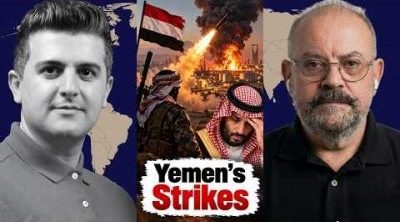
Elijah Magnier: Yemen’s strikes are shattering Saudi Arabia’s long-term strategy
or go to
Aletho News Archives – Video-Images
From the Archives
British weapons and personnel doing much of the killing in Yemen
Press TV – June 18, 2019
A detailed report published by the Guardian newspaper has shown how Britain is massively contributing to Saudi Arabia’s devastating war on Yemen as it suggests that London is not only supplying the bombs that fall on Yemenis, but it provides the personnel and expertise that keep the war going.
The comprehensive report by Arron Merat published on Tuesday showed that Britain was doing much of the killing in Yemen as the country continues to provide Saudi Arabia with everything it needs to turn its southern impoverished neighbor into a graveyard.
“Every day Yemen is hit by British bombs – dropped by British planes that are flown by British-trained pilots and maintained and prepared inside Saudi Arabia by thousands of British contractors,” said Merat in the report. … continue
Blog Roll
 Aletho News
- A West Bank War for Netanyahu’s Election Campaign, Could It Backfire?
- Yemen denounces European Parliament’s ‘hypocritical’ push to blacklist Ansarullah
- Qalibaf: UAE’s UN bid aims to ‘clear the runway’ for ‘Greater Israel’, whitewash genocide
- Pakistan reopens Iran border after boosting security: Report
- Why are so many Brazilians voting for Flávio Bolsonaro?
- Democrats Put Anti-Russia Agenda Ahead of American Workers
- Elijah Magnier: Yemen’s Strikes Are Shattering Saudi Arabia’s Long-Term Strategy
- Pentagon designates Chinese cultural centers national security threat
- Israel Demolishes Home Of Lebanese Journalist Whose Viral Film Exposed Pager Attack
- Record Oil, Empty Tanks: The UAE’s Miracle Recovery
- If Americans Knew
- An error has occurred; the feed is probably down. Try again later.
- No Tricks Zone
- Sudden Stratospheric Warming, Powerful El Niño Combination May Lead To Extreme Europe Cold, Energy Crisis!
- Two New Studies Find Thwaites Glacier Melt Cannot Be Driven By Human Activity Or A Warming Ocean
- E-Cars Reduce CO2 Emissions By Only 41% Compared To Internal Combustion Engine Vehicles
- Predictions Made By Renowned Climate Professor Over Past Decades Have Been Proven To Be Poor
- New Study Suggests Large Regions Of The Pacific Ocean Have Been Cooling For The Last 80 Years
- Germany’s Green Energy Debacle: High Energy Costs Force Kahla Porzellan to Close After 182 Years!
- New Study: 50 Years Of The Most Aggressive ‘Net Zero’ Policies Can Only Affect The Global Climate By 0.03°C
- US September “Heat” Was No Record…Many Records Set Decades Ago
- Latest European Green Energy Debacle; Portugal’s Largest Flagship Solar Park Insolvent!
- Green Energy Debacle: German Expert Professor Fritz Vahrenholt Warns Of Severe Economic And Social Consequences

