Seyed M. Marandi: Morocco Invades Spain?
Glenn Diesen | August 1, 2026
Prof. Seyed Mohammad Marandi is a former advisor to Iran’s nuclear negotiation team. Prof. Marandi discusses the 60,000 Moroccans storming into Spain and the possible encouragement from the US and Israel to reward Morocco and punish Spain.
Singapore police open probe over Palestinian flag displayed at Massive Attack concert
The Cradle | July 31, 2026
Singaporean police are investigating an incident involving the display of a Palestinian flag during a concert by the British band Massive Attack, which ended its performance in the country by raising the flag on stage, according to a police statement issued on 31 July.
Police and media stated that investigations are ongoing concerning what was described as “a possible breach of license conditions.”
Under Singaporean law, no foreign national emblem may be shown in public without a permit or an exemption.
The Palestinian flag carries particular sensitivity given Israel’s genocide of Palestinians in Gaza and the country’s sizable Muslim population.
The home affairs ministry issued a public advisory in 2023 against displaying or wearing items connected to events in Palestine and Israel.
“The ongoing Israel-Hamas conflict is an emotive issue. We would like to advise against the public display and wearing of articles in relation to the conflict, given the heightened sensitivities,” the ministry said.
The case of Massive Attack is far from the first display of solidarity with Palestine to draw legal action.
Since the start of the Gaza genocide in October 2023, efforts to support Palestine have faced some of the broadest and most diverse crackdowns on public protests.
In the US, authorities and universities have responded to Gaza solidarity demonstrations with mass arrests, suspensions, and criminal charges against students and faculty, while federal officials have threatened funding cuts and investigations targeting pro‑Palestinian activism.
The UK government has used anti‑terror legislation and public‑order powers to ban groups, impose strict conditions on rallies and detain thousands of protesters, activists and academics for expressing support for Palestine.
In France, interior‑ministry directives have led to repeated nationwide bans on pro‑Palestinian demonstrations, with police deploying tear gas, water cannon and mass fines to disperse gatherings and prosecutors pursuing criminal cases against organizers and participants.
In Germany, one of Israel’s staunchest allies, state authorities have treated common pro‑Palestinian slogans as criminal offenses, imposed protest bans, carried out hundreds of arrests and fines, and pursued deportations and other immigration measures against foreign activists involved in solidarity actions.
Saudi Arabia’s militarization of Red Sea will not safeguard shipping in waterway: Yemen
Press TV – August 1, 2026
Saudi Arabia’s decision to build an international coalition and militarize the Red Sea will not protect its vessels in the waterway, says a prominent member of Yemen’s Supreme Political Council, warning that such move will mount regional tensions and complicate the security landscape.
Abdulaziz bin Habtour, in a statement issued on Friday, called the proposed Saudi maritime coalition a facade for persisting with the aggression and blockade against Yemen.
He stated that the Bab al-Mandab Strait continues to be accessible for international navigation, emphasizing that Yemen’s maritime measures target only Saudi vessels, calling them a reaction to the blockade placed on Yemen.
Bin Habtour said that earlier warnings to the US-led “Prosperity Guardian” coalition underscored that the Red Sea crisis couldn’t be resolved through military force, but by terminating Israel’s genocidal war in Gaza and removing the blockade.
He noted that removal of the Saudi blockade and cessation of the military campaign against Yemen, instead of militarizing the Bab al-Mandab Strait, is the sole method to ease regional tensions.
Reuters quoted people familiar with the deliberations that Saudi Arabia seeks to form an international coalition against Yemen in the Red Sea.
The coalition’s composition has not been finalized and discussions are ongoing with numerous countries, the sources were quoted as saying.
On July 20, the Sana’a government declared a maritime blockade against Saudi Arabia, stating that its authorities have enforced “an unjust and oppressive siege” on Yemen for almost 12 years, “looting our resources and enforcing a total blockade.”
Since then, the Yemeni Armed Forces said they have launched attacks on Saudi vessels in the Red Sea.
Saudi Arabia and its Arab allies launched the blockade on Yemen as part of a full-scale war since March 2015, with military, political, and logistical support from the United States and other Western states.
The war has killed tens of thousands of Yemenis, while consistently falling short of its main objective of restoring power to Yemen’s former Riyadh-friendly regime.
Following a fragile UN-brokered ceasefire in 2022, the United States, Britain, and the Israeli regime waged many rounds of aggression against Yemen. The attacks sought to cripple Sana’a’s capability to stage solidarity strikes against Israeli targets in response to Tel Aviv’s war of genocide on the Gaza Strip.
Yemen vs. Saudi Arabia: A Strategy of Strangulation and Asymmetric Response
By Mohammed ibn Faisal al-Rashid – New Eastern Outlook – August 1, 2026
The conflict in Yemen, now in its second decade, has entered a new and extremely perilous phase. Recent developments indicate that Sanaa has transitioned from defense to active deterrence, leveraging asymmetric capabilities to strike at the vital arteries of its powerful neighbor.
What once appeared to be a localized skirmish on the periphery of the Arabian Peninsula has now morphed into a direct threat to the Kingdom’s energy security and the stability of the entire region. This escalation unfolds against a backdrop of mounting tensions between the “Axis of Resistance” (Iran, the Houthis, Hezbollah) and the bloc led by the United States and Israel, lending the Yemeni crisis a geopolitical dimension that reaches far beyond the bilateral relationship between Sanaa and Riyadh.
The Bombing of Hodeidah as a Trigger for Escalation
The immediate catalyst for the sharp deterioration was Saudi airstrikes on targets in Hodeidah province, including telecommunications infrastructure and the strategically vital island of Kamaran. These actions, which Riyadh framed as a show of force and a preemptive measure against Houthi expansion, were interpreted by the Yemeni side as a flagrant violation of sovereignty and an act of aggression. The Saudi-led coalition had hoped to degrade the enemy’s military capacity; however, the outcome was precisely the opposite. The very next day, July 25, the Yemeni Armed Forces announced the execution of two large-scale operations targeting the Kingdom’s “energy engine.” This lightning-fast response demonstrated not only the Houthis’ high state of combat readiness but also their determination to carry the war onto enemy territory, employing a principle of “an eye for an eye.”
The retaliatory strikes targeted strategic Saudi Aramco facilities in the cities of Jizan and Yanbu. According to reports, the attacks employed dozens of ballistic missiles, cruise missiles, and swarms of drones. Footage circulating on social media captured plumes of smoke rising over the Jizan refinery complex, while satellite imagery and regional sources confirmed direct hits. The selection of targets represents a highly precise strategic move, indicating a deep analysis of Saudi economic vulnerabilities. Yanbu is a critical node for Saudi oil exports via the Red Sea, purpose-built to bypass the vulnerable Strait of Hormuz. By striking Yanbu and Jizan, Yemen is effectively attacking the “western escape route” of the Saudi economy, demonstrating an ability to project force up to a thousand kilometers away.
These attacks have also exposed glaring gaps in Saudi Arabia’s air defense network. Costly Western air defense systems, including American Patriot batteries, have proven vulnerable to coordinated, massed strikes employing inexpensive yet effective munitions. This is a classic example of asymmetric warfare, where the cost of the weapons used is incomparably lower than the cost of their interception and the damage inflicted. The cost-effectiveness of such tactics presents Riyadh with an excruciating dilemma: continue with expensive intercepts or absorb the damage from regular attacks, both of which lead to enormous financial losses and undermine the region’s investment appeal.
The Naval Blockade: An Equation of “Blockade for Blockade”
A central element of Yemen’s new strategy is the imposition of a naval blockade against Saudi Arabia. On July 20, the Houthis announced a prohibition on shipping for vessels flying the Saudi flag and any cargo destined for the Kingdom’s ports. They repeatedly stressed that the blockade does not apply to international shipping through the Bab el-Mandeb Strait and is directed exclusively against Saudi Arabia. Movement spokesman Mohammed Abdul Salam denied reports of closing the strait, framing the measures as a legitimate response to years of blockade against Yemen. Yemen’s Deputy Foreign Minister Abdulwahid Abu Ras stated that the decision establishes an equation of “blockade for blockade” and constitutes a right to self-defense guaranteed under international norms.
This move fundamentally alters the rules of engagement. For over a decade, the Saudi-led coalition has maintained an air, naval, and land blockade on Yemen, leading to a devastating humanitarian crisis, famine, and epidemics. Now that Sanaa is employing similar tactics, Western powers, which remained silent for years about the suffering of the Yemeni people, have suddenly voiced deep concern. This situation lays bare a glaring double standard in international law: the right to freedom of navigation suddenly becomes sacrosanct only when the interests of Western allies are threatened. The counter-blockade, beyond its military dimension, carries powerful political and economic weight, directly threatening Saudi Arabia’s ability to export goods via the Red Sea and jeopardizing its energy security.
General Mobilization and Internal Consolidation
Parallel to the naval and missile campaigns, Yemen is intensifying its domestic political mobilization. Ansar Allah leader Abdul Malik al-Houthi issued a decree for general mobilization, placing hundreds of thousands of tribal members and regular army units on combat alert. Mass rallies were held in the northern provinces, showcasing societal unity and a readiness for a protracted confrontation. Reports indicate the formation of a new internal structure—the “General Mobilization Forces”—modeled on Iran’s Basij, signaling long-term planning and an ambition to create deeply layered defensive and offensive capabilities. This militarization of civil society is transforming Yemen into a “fortress” where every resident is potentially a fighter, making occupation or a ground invasion an extremely risky undertaking for the Saudi coalition.
The Yemeni conflict is increasingly intertwined with the broader regional confrontation between the Axis of Resistance and the Western-backed bloc. The escalation is occurring amid tensions between the U.S. and Iran, as well as the ongoing war in Gaza. In response to the Saudi strikes, the Yemeni parliament expressed its full support for the actions of the armed forces, describing them as an inevitable response to the unjust blockade.
The New Reality and Prospects for Confrontation
Thus, the current conflict has far surpassed the bounds of a localized confrontation. Yemen, employing a strategy of asymmetric deterrence, has successfully seized the initiative, transforming years of blockade into a powerful tool of pressure on Saudi Arabia. Strikes on oil facilities and the imposition of a counter-blockade signal a new reality: the era of impunity for Saudi aggression has ended. Any further escalation by Riyadh will have catastrophic consequences for its own economic and energy security. Moreover, the Houthis’ success in confronting the technically advanced Saudi military serves as an inspiring example for other proxy forces in the region.
The situation is reaching a boiling point, and the world holds its breath awaiting the next moves from both sides. Several scenarios are possible, ranging from attempts to renew diplomatic contacts under UN auspices to a full-scale regional war involving external powers. However, one thing is clear: the balance of power in the region has irrevocably shifted, and the old methods of pressuring Yemen are no longer effective. Saudi Arabia will be forced to reconsider its strategy, recognizing that a military solution to the conflict is unattainable and that the economic cost of continuing the war has become prohibitively high. The era of cheap oil and unpunished airstrikes is a thing of the past, giving way to an era of complex negotiations and mutual deterrence.
Muhammad ibn Faisal al-Rashid, Political Scientist, Expert on the Arab World
Follow new articles on our Telegram channel
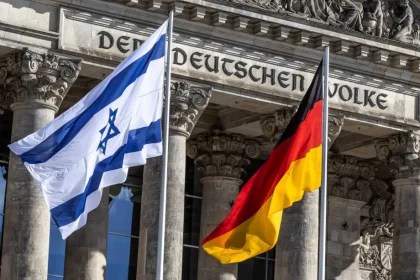
Germany scrambles to evade Nicaragua’s landmark Gaza genocide case at ICJ
The Cradle | August 1, 2026
The International Court of Justice (ICJ) announced on 31 July that it will hold hearings from 7 to 10 September on Germany’s bid to dismiss Nicaragua’s landmark genocide case, hoping to prevent judges from ruling on Berlin’s role in enabling Israel’s ethnic cleansing campaign in Gaza.
Germany filed its preliminary objections to Nicaragua’s case on 21 October 2025, challenging the court’s jurisdiction and arguing that several of Nicaragua’s claims are inadmissible.
The filing automatically froze all proceedings, leaving evidence of Germany’s complicity in genocide unexamined until judges rule on Berlin’s challenge.
Germany will open oral arguments on 7 September, with Nicaragua responding the following day. Berlin will return on 9 September, and Managua will close on 10 September.
In April 2024, the ICJ denied Nicaragua’s request for Germany to stop military exports to Israel and to resume UNRWA funding, which Germany had suspended in January 2024.
On 1 March 2024, Nicaragua filed the case accusing Germany of violating the Genocide Convention, the 1949 Geneva Conventions, and fundamental norms of international law. The charges relate to Germany’s political, financial, and military backing of Israel and its decision to cut off funding to the UN Agency for Palestinian Refugees.
Managua asserts that every party to the genocide convention has a duty to do everything possible to prevent genocide, and that a recognized risk of genocide against Palestinians has existed since October 2023.
Berlin argued that only a small share of its export licenses to Israel covered weapons, yet Germany remains Israel’s second-largest arms supplier after the US, issuing export licenses worth over $571m between October 2023 and May 2025.
Beyond weapons, Berlin has locked in security ties with Israel while moving to stamp out criticism of it at home.
Germany’s upper house approved a bill on 10 July criminalizing the denial of Israel’s “right to exist,” punishable by up to five years in prison, a measure the Bundestag’s own research service warns would breach constitutional protections on free expression.
Netanyahu and German Interior Minister Alexander Dobrindt signed a security agreement in Jerusalem on 11 January, expanding military cooperation against Iran and resistance factions in Lebanon, Palestine, and Yemen.
Iceland’s forthcoming referendum on EU membership
By Alfred de ZAYAS | CounterPunch | July 29, 2026
In August 2026 Icelanders will vote in a referendum whether Iceland should open accession talks with a view to joining the European Union[1].
Icelanders would be well advised to keep away from the EU, which has morphed from a peace-loving European integration movement into a war-mongering globalist machine run by a bloated bureaucracy in Brussels that operates without transparency or accountability and endorses militarization and virulent Russophobia.
In the light of Iceland’s venerable democratic traditions going back to the Thingvellir Parliament of the tenth century[2], it would be madness for the Icelanders to abandon their hard-won sovereignty and independence.
In 1992 and 93 Iceland did negotiate the EEA (European Economic Area) agreement that gave it access to the EU market but without membership and many of the obligations. The EEA agreement came into effect in 1994, and was negotiated during the period after the adoption of the Treaty of Maastricht (see below). It is important to know that the EU in the time of Maastricht was fundamentally different to EU following the adoption of the Treaty of Lisbon of 2007. The EU is now speeding into a more centralised, authoritarian and even totalitarian future.
There is another important consideration. The Treaty of Lisbon is in many aspects incompatible with the UN Charter. Icelanders must actually choose between their obligations under the UN Charter and the commitments and actions that flow from the Treaty of Lisbon and the arbitrary decisions of the European Commission, currently under Ursula von der Leyen.
UN membership
Let us review a bit of history. Iceland joined the United Nations in 1946.
The purposes and principles of the UN are laid out in Articles 1-2 of the Chater, notably a joint commitment of all members to advance peace through cooperation, multilateralism, conflict-prevention, respect of the sovereign equality of states, the self-determination of peoples, the promotion of human rights and the right to development.
Article 103 of the Charter, the supremacy clause, stipulates: “In the event of a conflict between the obligations of the Members of the United Nations under the present Charter and their obligations under any other international agreement, their obligations under the present Charter shall prevail.”
Because of this overarching legal commitment, every UN member State must consider, before entering into any treaty or joining any other organization, whether such action would be compatible with UN membership.
Article 52 of the UN Charter stipulates that UN members can join other organizations “provided that such arrangements or agencies and their activities are consistent with the Purposes and Principles of the United Nations.” (emphasis added)
This short paper argues that Iceland should not become a member of the European Union, which admittedly had very good beginnings, but which gradually moved away from its original peace-oriented vocation and emerged as a competing supra-national geopolitical entity with aims and activities frequently in conflict with the United Nations Charter, General Assembly and Human Rights Council resolutions.
On the basis of the Schuman Declaration (1950) the Treaties of Paris (1951) and Rome (1957) the European Common Market was established with the purpose of advancing European integration, democracy and human rights. For decades the European States worked in tandem with the United Nations and contributed to stability and prosperity in the region.
The Treaty of Maastricht (1992) created the European Union and promoted peace and human rights while respecting diversity and state sovereignty. Article 6 of the Maastricht Treaty stipulated:
“The Union is founded on the principles of liberty, democracy, respect for human rights and fundamental freedoms, and the rule of law, principles which are common to the Member States. 2. The Union shall respect fundamental rights, as guaranteed by the European Convention for the Protection of Human Rights and Fundamental Freedoms signed in Rome on 4 November 1950 and as they result from the constitutional traditions common to the Member States, as general principles of Community law. 3. The Union shall respect the national identities of its Member States…”
This arrangement was compatible with the UN Charter and guaranteed the respect of national identities and approaches in a manner consistent with the UNESCO Constitution, which also values the richness of diverse cultures and perspectives and discourages top-down homologation.
Unfortunately, the globalist movement in Europe largely homologized foreign policy, culture and even morals, in disregard of local approaches and traditions. When in 2004 the idea of a European constitution was aired, it was quickly defeated in public opinion polls and in the referenda held in France and the Netherlands in 2006. The European populations felt that the proposed constitution threatened their national identities guaranteed in the Treaty of Maastricht, that it opened the way to authoritarianism or even totalitarianism driven by a Brussels bureaucracy disconnected from the peoples of the member States of the European Union.
In the light of the impossibility to adopt the European Constitution by direct democratic vote, the bureaucrats decided in 2007 to drop the project of a European Constitution, and instead to take a short-cut relying on the parliaments of the member States, which were more easily manipulated than the populations they represented.
The Treaty of Lisbon or 13 December 2007 emerged as an Ersatz or surrogate European constitution, adopted in a questionable manner, and in any case unrepresentative of the wishes of the populations concerned.
Lip service was given to the principle of subsidiarity, according to which the EU acts (in theory) only where its member states agree unanimously. This reflects the legal norm that governmental decisions should be taken as close to the people as possible while still remaining effective. Smoke and mirrors.
In practice, however, the sovereignty of European States has been significantly reduced since 2007, and the Brussels bureaucracy has imposed rules and regulations – as well as unilateral coercive measures, wrongly referred to as “sanctions” – in an increasingly authoritarian manner, in disregard of the “margin of discretion” of supposedly sovereign European countries.
Particularly dangerous is the fact the European Court of Justice in Luxembourg sides with the European Council in most cases, notwithstanding well-based challenges from individual States. In effect, EU law has primacy over the laws of member states, even in matters of access to information, freedom of opinion and expression, morals and national security.
In its Orwellian judgment of 2 July 2026, the EU Court in Luxembourg approved the legality of EU censorship of the internet and the criminalization of social media messages including electronic links to sanctioned senders[3]. In this genuinely totalitarian judgment, not only the rights of news services to broadcast information and perspectives are being violated by EU law, but also the right of every EU citizen to access and publicly discuss politically relevant information.
Access to information and freedom of opinion and expression are at the very core of every democracy. These rights are stipulated in the European Convention on Human Rights, in the Charter of Fundamental Rights in the European Union, in article 19 of the International Covenant on Civil and Political Rights and in General Comment 34 of the UN Human Rights Committee.[4]
This and other recent decisions by the European Court of Justice illustrate that there is no longer an effective recourse or remedy, because the European Court of Justice is clearly beholden to the EU Council.
Even the European Court of Human Rights in Strasbourg has failed to protect European citizens from confiscation of private property e.g. pursuant to EU sanctions against Russia, and in clear violation of the European Convention of Human Rights. Here too, the right to private property has been done away with by the supra-national decision of EU bureaucrats to issues “sanctions” on targeted countries or persons.
Because of the severity of the consequences of these measures, numerous human rights organizations, including the Geneva International Peace Research Institute[5], have presented legal briefs to the Council of the European Union enumerating the violations of the European Convention on Human Rights and the Charter of Fundamental Rights. Thus far GIPRI and other organizations have received no appropriate response, other than a blanket reaffirmation from Brussels that the extra-judicial measures adopted pursuant to EU sanctions are legal.
A particularly egregious case of the new EU totalitarianism are the sanctions imposed on six European citizens for allegedly expressing views close to those of the Russian argumentation concerning the causes of the Ukrainian war since the Maidan coup d’état in February 2014. Among those impacted are the retired Swiss Colonel and intelligence officer Jacques Baud,[6] and the German journalist Husseyn Dogru.
Moreover, as I explained before the UN Security Council on 25 March 2024[7], the EU “sanctions” are not compatible with the UN Charter. For years now the European Union systematically violates resolutions of the General Assembly[8] and of the UN Human Rights Council[9], which condemn US and EU “sanctions” as incompatible with the UN Charter, international law, human rights norms and the right to development. Moreover, EU “unilateral coercive measures” make the achievement of the Sustainable Development Goals nearly impossible, and, together with the illegal US sanctions regime, cause deaths in the hundreds of thousands worldwide, as determined by the British medical journal The Lancet. The imposition of such unilateral coercive measures undoubtedly constitutes the “use of force” in contravention of article 2(4) of the UN Charter and have no justification in international law in the absence of UN Security Council approval. EU “sanctions” violate the right to life, the right to development, and the self-determination of peoples.
Another worrisome development in Europe is the systematic war-propaganda and fear-mongering, the refusal to settle disputes by peaceful means, in contravention of article 2(3) of the UN Charter and the virulent Russophobia displayed by the Brussels bureaucracy, in gross violation of article 20 of the International Covenant on Civil and Political Rights, which stipulates:
“1. Any propaganda for war shall be prohibited by law.
2. Any advocacy of national, racial or religious hatred that constitutes incitement to discrimination, hostility or violence shall be prohibited by law.”[10]
In 2024 and again in 2025 the Geneva International Peace Research Institute submitted legal briefs to the Prosecutor of the International Criminal Court pursuant to article 15 of the Statute of Rome, alleging violations of articles 5, 6, 7 and 8 of the ICC Statute by the European Commission, Ursula von der Leyen and Kaja Kallas. EU policies are contrary to international criminal law in that they have provided and continue to provide military, political, economic, diplomatic and propagandistic support to a genocidal State, thus enabling Israel to continue the genocide against the Palestinians and to engage in acts of aggression against Lebanon, Syria, Iran etc.
Collectives of jurists in France, Italy and Germany have also submitted legal briefs challenging the actions by EU member states as contrary to the UN Charter, the Statute of Rome, the ICCPR (articles 6, 7, 14, 19, 21, 22, 25), the European Convention of Human Rights and the Charter of Fundamental Rights in the European Union.
All of the above activities by the European Union document the fact that the initially peace-loving institution has morphed into a totalitarian organization that no longer conforms with article 52 of the UN Charter, because it does not promote the purposes and principles of the UN but actually works against them.
Iceland must be very careful in considering any kind of association with the EU. A coherent foreign policy by Iceland would reaffirm its commitment to the UN Charter and avoid any treaties or association that would restrict its sovereignty and margin of discretion and violate its obligations pursuant to the UN Charter, the International Covenant on Civil and Political Rights and the International Covenant on Economic, Social and Cultural Rights.
The perception of the EU as a bastion of the “rule of law” and human rights can no longer be empirically sustained. Vestiges of a positive perception of the EU are only a product of public relations, indoctrination and relentless propaganda.
Yet, in our world of Orwellian newspeak and cognitive dissonance, some – even in Iceland – pretend that it is perfectly normal to be committed to the UN Charter while working against its purposes and principles through aggressive policies adopted by the Brussels bureaucracy.
A well-advised Icelandic voter should reject any association with the European Union, because the EU is no longer the peace-loving Common Market but has morphed into a totalitarian organization that does not respect the democratic rights of European peoples but pretends to impose a one-size-fits all, one-narrative for all, on all European citizens.
All freedom-loving Icelanders are called upon to defend Iceland’s sovereignty and independence.
Notes.
[2] https://blogs.loc.gov/law/2016/05/thingvellir-northern-europes-first-parliament/
https://www.thingvellir.is/en/education/history/assembly-site/
https://www.rferl.org/a/ecj-eu-russia-sanctions-oligarchs/33434950.html
[5] Gipri.ch
[8] Resolution 80/209 of 17 December 2025
[9] Resolution 61/9 of 27 March 2026
Ukraine committing ‘piracy’ – Rosatom CEO
RT | August 1, 2026
Rosatom CEO Aleksey Likhachev has accused Ukraine of “piracy” after a civilian container ship belonging to the Russian state nuclear corporation was sunk by a Ukrainian drone strike.
The MV Yanina, a freighter belonging to Rosatom subsidiary FESCO, was attacked by two Ukrainian drones about 130 miles off the Russian Black Sea port of Novorossiysk, Likhachev said in a press release on Saturday.
“It was a perfectly ordinary, peaceful container ship sailing in international waters and carrying civilian goods – ranging from frozen foods to construction and finishing materials,” he said. “Such an attack can only be characterized as piracy and maritime banditry.”
Likhachev also thanked the international crew of the container ship Delphinus, captained by an Egyptian national, “who, despite the danger posed by drones, headed to the shipwreck site at night and rescued 16 of our 17 men.”
“The world changes, yet the concept of ‘maritime brotherhood’ remains an enduring value!”
The remaining crew member was saved by Russian Black Sea Fleet aircraft, Likhachev said, adding that all of the sailors are in “satisfactory” condition.
Kiev has escalated attacks on civilian vessels in the Black and Caspian seas in recent months, with Vladimir Zelensky claiming that Ukraine was working to strain Russian military logistics.
Earlier this week, Ukrainian drones struck two tankers carrying cargoes for the international Caspian Pipeline Consortium (CPC) in the Caspian Sea off Kazakhstan. The company, whose shareholders include US and European firms, condemned the strikes as “terrorist attacks.”
In retaliation, Russia escalated strikes on Ukraine’s principal Black Sea port of Odessa, targeting fuel and lubricant storage meant for the Ukrainian armed forces, as well as on ships it said were transporting military cargo.
Lobbying for Zionism reviewed by David Miller
By David Miller | July 30, 2026
Did Zionism begin as a Christian project which was only later a Jewish movement?
This is what Ilan Pappé says in the book Lobbying for Zionism.
In my review of the book, I show this is wrong.
Here is an excerpt:
The contribution of the first section of the book is to unearth the hidden history of the Christian Zionist movement. This is a fascinating and useful account of the contribution of a certain fraction of practical British imperialism to the idea of the construction of a Jewish state in the historic territory of Palestine.
In the conclusion, Pappé mentions that ‘Christian fundamentalists, who, as I’ve shown, were the first Zionists in the modern era’. He also states that ‘Zionism began as a Christian project, and thus the early lobbyists were what we would call Christian Zionists today.’ He goes on to criticise Mearsheimer and Walt, saying they ‘described this Christian lobby as a junior partner in the overall lobbying effort in the USA. This appeared to be the case in 2007 — but the picture was very different nearly a decade later during the Trump era.’
But of course, the picture was not very different either during Trump’s first or second presidency. Christian Zionists do have greater numbers of foot soldiers than do Jewish Zionists, but they have only a handful of representatives at the top of the Trump power matrix (for example, Pence and Pompeo in the first period, and Hegseth and Huckabee in the second). As reporting in the Forward, or JFeed, shows, it is Jews that dominate in terms of power players and finance.
Pappé’s conclusion is predicated on his analysis at the start. The opening words of the book are: ‘Zionism began as an evangelical Christian concept and later an active project.’
The main progenitors of the idea were, according to Pappé, Lord Shaftesbury, Colonel Henry Churchill, and Sir George Gawler from the 1830s onward. Though Jewish Zionists of the time are mentioned, such as Sir Moses Montefiore, this all predates the moment when, as Pappé writes, ‘the first settlers arrived [in Palestine] on 6 July 1882’, a group of 14 Russian Jews who arrived at Jaffa Port.
But, as Pappé surely knows, Jewish settlement in Palestine long pre-dates 1882 (see below). Except for Montefiore, none of these figures are mentioned in Pappé’s index and Pappé does not mention Montefiore’s numerous visits to Palestine, or his role in financing Jewish settlement.
In the end, then, the book appears to be advancing a case which is not supported either by the known facts on Jewish settlement in Palestine or by empirically grounded research on the activities of the Zionist movement.
Read the full review via The Column, the new magazine from @ukcolumn .
Navy retiring USS Fort Worth halfway through lifespan
By Stavroula Pabst | Responsible Statecraft | July 31, 2026
This week, the Navy retired a littoral combat ship only halfway through its lifespan.
The USS Fort Worth, a surface combatant ship which cost $400 million to build, entered service in 2012. It was originally meant to serve until the late 2030s, but was retired early due to chronic repair issues and related costs, and longstanding concerns regarding its overall viability.
A major issue for the USS Fort Worth was its combining gear, which connects its gas turbine and engines to its water jet shafts. The combining gear took critical damage back in 2016 when crew members failed to follow proper procedures while testing its engines, rendering the boat functionally unusable.
The Navy initially scheduled the USS Fort Worth’s retirement for 2022, after only ten years of service. However, the Navy repurposed the ship instead, using it to test new technologies at a port in San Diego.
“By retiring early-hull test platforms like Fort Worth, the Navy redirects investments toward upgrading the remaining LCS inventory with enhanced capabilities,” the Navy said in a statement this week. Its retirement helps ensure “the active ships remain relevant, combat-credible, and reliable throughout their service lives.”
But, as Dan Grazier, the director of the Stimson Center’s National Security reform program, tells RS : “The whole Littoral Combat Ship concept has failed.”
“It’s a poorly designed ship that [has an] excessive maintenance burden,” Grazier said. To Grazier’s point, a 2022 Government Accountability Office (GAO) report found the Navy “hasn’t demonstrated that this type of ship can perform its intended missions,” and that it was less likely than its counterparts to withstand combat.
The USS Fort Worth’s untimely demise is representative of a broader procurement crisis, where the Navy has repeatedly failed to deploy reliable ships that can perform their intended function.
Rather, as Grazier tells RS, the Navy has often opted to build elaborately designed ships with unproven technologies, which often do not work as planned.
“The Navy’s now feeling the real consequences of years of bad policy,” Grazier said. “The size of the fleet is shrinking.”
The Navy originally planned to buy 55 littoral combat ships; it cut back to 32 in 2014 as questions mounted about the program’s viability. It now has 27.
Featured Video

Liberty Cannot Exist Inside a Panopticon
or go to
Aletho News Archives – Video-Images
From the Archives
Left-leaning despisers of 9/11 Truth movement: Do you really believe in miracles?
David Ray Griffin | Global Research | 06 Jul 2010
An Open Letter to Terry Allen, Noam Chomsky, Alexander Cockburn, David Corn, Chris Hayes, George Monbiot, Matthew Rothschild, and Matt Taibbi.
[1]According to several left-leaning critics of the 9/11 Truth Movement, some of its central claims, especially about the destruction of the World Trade Center, show its members to be scientifically challenged. In the opinion of some of these critics, moreover, claims made by members of this movement are sometimes unscientific in the strongest possible sense, implying an acceptance of magic and miracles. … Full article
Blog Roll
 Aletho News
- White House envoy declares kinetic action against Yemen ‘fruitless’
- Ukraine deployed thousands of microdrones in Iraqi Kurdistan: Tasnim
- Iran calls for emergency UNSC meeting over Trump’s ‘brazen’ bomb talk, Israeli threats
- Iranian sources reveal details of Russia-China Hormuz proposal
- Plan for more US-Israel integration puts our military tech at risk
- Another Round Against Iran Will Break What Is Left of the Gulf
- SVR Report on Ukraine’s Mexican Drug Gang Links Could Pressure Zelensky, Won’t Change US Policy
- British Government Employees Were Fact-Checking the News at the BBC. Nobody Told You.
- Albania on fire: who’s behind the riots?
- Egypt’s Civil Democratic Movement rejects involvement in regional war
- If Americans Knew
- Mysterious bot accounts reportedly spread fake ‘man on the street’ videos for Michigan Senate candidate
- Israeli Defense Minister Katz Says Over 60 Lebanon Villages Have Been Destroyed
- Why Is Israel Running TV Ads in Iowa Ahead of the Midterms?
- Hind Rajab’s Alleged Killer Is in the United States. HRF Demands His Arrest.
- US Officials Face Fresh Pressure After Another American ‘Brutalized’ by Israeli Settlers in West Bank
- Israel-Backed Palestinian Militias Terrorize Displaced Families in Gaza
- FBI subpoenas pro-Palestine activists over Israeli weapons plant disruption
- Fourth winter arrives in wartorn Gaza, too early – Daily Update
- More on how Bari Weiss is using CBS on behalf of Israel
- What the UK Is Doing to Pro-Palestine Novelist Sally Rooney Is an Act of Orwellian Villainy
- No Tricks Zone
- Predictions Made By Renowned Climate Proifessor Over Past Decades Have Been Proven To Be Poor
- New Study Suggests Large Regions Of The Pacific Ocean Have Been Cooling For The Last 80 Years
- Germany’s Green Energy Debacle: High Energy Costs Force Kahla Porzellan to Close After 182 Years!
- New Study: 50 Years Of The Most Aggressive ‘Net Zero’ Policies Can Only Affect The Global Climate By 0.03°C
- US September “Heat” Was No Record…Many Records Set Decades Ago
- Latest European Green Energy Debacle; Portugal’s Largest Flagship Solar Park Insolvent!
- Green Energy Debacle: German Expert Professor Fritz Vahrenholt Warns Of Severe Economic And Social Consequences
- Two More Paleo Reconstructions Affirm Meters-Higher Sea Levels Across Ireland, Brazil 7000-6000 Years Ago
- New Study: Earth And Venus Surface Warmth Largely Explained By Convection And Lapse Rate, Not CO2 Or Radiation
- 2025 Nature Paper Claiming Worsening Global Drought Gets RETRACTED …Heavily Flawed

