Former CDC Scientist Whose Studies Were Used to ‘Debunk’ Vaccine-Autism Link Will Plead Guilty
By Michael Nevradakis, Ph.D. | The Defender | August 24, 2026
A former Centers for Disease Control and Prevention (CDC) scientist who played a crucial role in research rebutting any link between vaccines and autism is expected to plead guilty next week to wire fraud and money laundering.
Poul Thorsen, 65, is finalizing a plea deal with prosecutors relating to charges stemming from a 2011 federal indictment, Nathan Kitchens, assistant U.S. Attorney for the Northern District of Georgia, told The Defender.
Thorsen, who began working for the CDC in the late 1990s, faces two counts of wire fraud and nine counts of money laundering related to over $1 million in CDC grant money. The funds were earmarked for autism and public health research, but Thorsen allegedly used them to buy a home, two cars and a motorcycle.
Kitchens declined to comment on whether Thorsen will plead guilty to all or some of the charges.
Thorsen has been held in federal custody without bail since his extradition from Germany to the U.S. in May. The case is being heard at a federal court in Georgia, where the CDC is headquartered.
Researcher James Grundvig, the parent of a child with autism who was vaccine-injured, called the expected guilty plea “a very big deal.”
Grundvig, who wrote “Master Manipulator: The Explosive True Story of Fraud, Embezzlement, and Government Betrayal at the CDC,” which focused on the Thorsen case, praised U.S. Health Secretary Robert F. Kennedy Jr. for extraditing Thorsen “in record speed.”
He said Thorsen likely understands that the FBI and U.S. Department of Justice have “all the goods” to prosecute him.
“I guess Thorsen’s realizing, since he’s in American jail already and has no chance for bail, he might as well make a plea deal,” Grundvig said.
Dr. Dave Weldon, a physician and Republican member of the U.S. House of Representatives between 1994 and 2009 — and who President Donald Trump nominated to lead the CDC in late 2024 before retracting his nomination in March 2025 — welcomed the plea agreement but said it isn’t enough.
“It would be a miscarriage of justice if a plea deal failed to include a thorough investigation of allegations of scientific fraud,” Weldon said.
Danish independent vaccine safety researcher Vibeke Manniche, M.D., Ph.D., said some of the federal funds Thorsen is said to have misused may have been intended for vaccine-autism studies. Manniche said the guilty plea calls Thorsen’s research into question.
“An obvious question is whether he also has been cheating with data to achieve the results he sought,” Manniche said. “That we don’t know. A good rule in gold-standard science is replication, and it would be wise, for so many reasons, to replicate his work,” independently of the institutions Thorsen had been affiliated with.
Grundvig noted that the Thorsen indictment included unnamed co-conspirators, suggesting that the investigation may implicate more people — and also the controversial autism research that Thorsen helped publish in 2002 and 2003 that was cited as proof of no link between vaccines and autism.
“I think that’s going to be the second part of the story,” Grundvig said. “It could be an avalanche of bad news for both pharma and the CDC.”
Thorsen studies cited in dismissing over 5,000 vaccine injury claims
Despite questions around how those studies were conducted, the Madsen-Thorsen papers were used in 2011 to dismiss over 5,000 claims filed by the parents of autistic, vaccine-injured children. The claims were part of the Omnibus Autism Proceeding pending before the Vaccine Injury Compensation Program.
In “Master Manipulator,” Grundvig — whose son’s case was one of the claims dismissed as a result of Thorsen’s research — described Thorsen as “a world-class villain whose manipulation of health data gave CDC and big pharma what they wanted: a report clearing thimerosal of any possible role in the autism crisis.”
According to Weldon:
“The real crime is not absconding with research dollars, but unresolved allegations around his research which served as the basis for the CDC and the U.S. government dismissing vaccine injury claims by thousands of injured children. These actions set back vaccine safety research by more than two decades.”
Grundvig suggested the Thorsen investigation and his guilty plea may call into question the dismissal of the omnibus cases, as it would “then make all of those vaccine omnibus proceedings completely fraudulent because it was based on a fraud, and that should reopen the cases.”
Hooker, whose omnibus claim for his son was also dismissed, said Thorsen likely didn’t act alone in misusing federal money or misrepresenting vaccine-autism research — and that the role of some of his key collaborators should be examined.
“There should be a separate investigation against Dr. Diana Schendel, who was Thorsen’s direct grant supervisor and lover and approved all of his invoices for expenditures from his CDC grant money. Dr. Schendel undoubtedly knew of Thorsen’s activities but did not report them to the authorities and could have spent some of the stolen grant money as well,” Hooker said.
Schendel maintained an inappropriate romantic relationship with Thorsen and later accepted a position at Denmark’s Aarhus University to lead autism research there. She remains employed at Aarhus University — and at Drexel University — today.
Thorsen continued to live in Denmark for years after the 2011 U.S. indictment. He worked there as a gynecologist despite an extradition treaty between the two countries and an INTERPOL warrant for his arrest.
Hooker added:
“Other co-conspirators who knew of the inappropriate relationship between Thorsen and Schendel over the seven-year grant history at CDC include Coleen Boyle, Ph.D., former director of the National Center for Birth Defects and Developmental Disabilities), and Dr. Marshalyn Yeargin-Allsop, former branch chief of the Developmental Disabilities Branch at the CDC.
“These individuals at a minimum should be brought in for questioning. Both have also been implicated in the MMR-autism fraud from the DeStefano et al. 2004 paper, where data showing a strong relationship between MMR timing and autism in Black boys was illegally destroyed.”
Thorsen’s vaccine-autism studies full of ‘irregularities’
When he first joined the CDC as a visiting scientist, Thorsen’s research focused on birth defects and developmental disabilities.
However, by the early 2000s, Thorsen shifted his focus to autism research. His work in this area left a strong imprint, fueling future narratives that autism isn’t linked to vaccines.
According to a 2017 report by the World Mercury Project — predecessor to Children’s Health Defense (CHD) — Thorsen’s influence on U.S. vaccine projects and policies “is extensive” because his studies were used to dismiss a possible link between vaccines and autism.
One of the most influential studies became known as the “Madsen study,” a population-based study of the measles-mumps-rubella (MMR) vaccine and autism.
Published in 2002 in The New England Journal of Medicine and co-authored by Thorsen, the Madsen study concluded that there is “strong evidence against the hypothesis that MMR vaccination causes autism.”
However, according to the 2017 World Mercury Project report, the Madsen study was “flawed” from the outset because the researchers reviewed clinical records of only 40 of the 316 children who had autism in the study’s cohort.
A peer-reviewed analysis published last year cast further doubt on the study’s conclusions.
In 2003, Madsen and Thorsen co-authored another influential study, published in Pediatrics, the journal of the American Academy of Pediatrics. The study did “not support a correlation between thimerosal-containing vaccines and the incidence of autism.”
Thimerosal is a mercury-based adjuvant used in some vaccines, which some scientists and advocates for people with autism have suggested may trigger autism.
Brian Hooker, Ph.D., CHD’s chief scientific officer, said there are “numerous data irregularities” in the Thorsen studies.
In their critique of the 2002 paper, Hooker and Karl Jablonowski, Ph.D., CHD senior research scientist, found significant errors in the paper. They concluded the study’s unadjusted results “do not support rejecting the causal link” between the MMR vaccine and autism.
In a critique of the 2003 Madsen-Thorsen study, Hooker and researcher Jeffrey Allen Trelka concluded that the study’s findings “may have been skewed by participant selection and changes in diagnostic groupings.”
Other critiques of the 2002 and 2003 studies raised concerns about ethical considerations. Both studies relied on Danish population data. According to the 2017 World Mercury Project report, the studies bypassed ethical reviews required for this category of research, as required by federal law.
When the CDC discovered Thorsen hadn’t obtained the required ethics approvals, the agency didn’t report the errors, and the studies weren’t retracted. Instead, CDC officials engaged in a cover-up, the 2017 report states.
“Given these irregularities, Thorsen should also be under investigation for data fraud as he clearly withheld data and could have altered data” from Danish official sources, Hooker told The Defender.
Manniche said that if it is proven Thorsen tampered with the data in his studies, it would be a “terrible tragedy,” because “parents were told that the MMR vaccine was safe and sound and that it couldn’t harm the child.”
As of July 31, there were 1,931 reports claiming onset of autism or autism spectrum disorder following MMR vaccination contained within the federally run Vaccine Adverse Event Reporting System (VAERS).
Will Thorsen sing?
Grundvig suggested that, as part of his plea agreement with prosecutors, Thorsen may have an incentive to provide testimony or information targeting other CDC figures.
“Thorsen’s 65 years old, born in 1961 … does he want to die in an American jail?” Grundvig asked. “I don’t think so. So, I think he wants to make, and will make, a plea deal. The only way he’s going to make a plea deal is with someone like Kennedy and maybe others in the Department of Justice that look at a bigger case,” Grundvig said.
Grundvig suggested this “bigger case” may involve the Racketeer Influenced and Corrupt Organizations Act or RICO Act.
“There’s a bigger fraud involved than just stealing money, and I think it goes back to the vaccines, it goes back to the studies that the CDC cooked up,” potentially implicating Schendel and Madsen.
“Will he be used as a star witness against the CDC old guard and all of the shenanigans that went on massaging of science, of science papers, influence on Pediatrics and other journals, in order to get all of this done back in the early 2000s in order to exonerate vaccines and erase the autism signal?” Grundvig asked.
This article was originally published by The Defender — Children’s Health Defense’s News & Views Website under Creative Commons license CC BY-NC-ND 4.0. Please consider subscribing to The Defender or donating to Children’s Health Defense.
Jordanian police arrest Drop Site correspondent for ‘sedition’ over online post
The Cradle | August 25, 2926
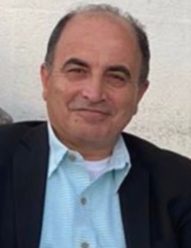 Jordanian intelligence officers arrested Ali Younes, a Jordanian-American journalist and Drop Site News correspondent, for allegedly “undermining the national security” of the Hashemite kingdom by sharing an article on social media that called for cutting US assistance to Amman.
Younes, a former Al Jazeera journalist, was detained upon his arrival at Queen Alia International Airport on 17 August, where he was held for questioning prior to being released with orders to appear before prosecutors in Amman.
Security officials told Younes and his lawyer that the case rests on his sharing of an article published in July by the American Conservative, which called on Washington to halt the billions of dollars it sends to the kingdom.
Prosecutors have classed the post as undermining Jordan’s national security, an offense that could put him behind bars for a year.
At a court hearing, prosecutors widened the file to include sedition and hate crimes, and barred Younes from leaving the country.
The article at the center of the case, headlined “Stop Sending Billions in US Aid to Jordan,” challenged the scale of Washington’s support for the monarchy and questioned why US citizens should bankroll King Abdullah.
Jordan has received $33.8 billion in US assistance over the past 75 years, with additional sums due under existing agreements.
Drop Site News has demanded that Jordanian authorities drop the charges and lift the travel ban on their colleague, and called on Washington to assist Younes as a US citizen against the accusations.
Across the Gulf and the wider region, the US war on Iran has been used as a pretext for domestic repression, with Bahrain, Kuwait, the UAE, Saudi Arabia, and Qatar all turning cybercrime, counterterrorism, and nationality laws against their own populations.
Hundreds of citizens and residents have been detained over war-related speech, from filming strikes to expressing sympathy for Tehran, with penalties running to life imprisonment, mass revocations of nationality, and the expulsion of lawmakers from parliament.
In Kuwait, the Education Ministry stripped the country’s only Iranian private school of its license and ordered it closed on 6 August, telling parents to move their children elsewhere.
In Bahrain, activist Mohammad al‑Mousawi was arrested at a checkpoint and tortured to death in March after being accused of links to “secret Iranian cells,” with witnesses and medical evidence documenting beatings, cable whippings, and electrocution burns.
Israeli airstrike destroys water desalination plant in northern Gaza
MEMO | August 25, 2026
Israeli warplanes struck and destroyed a water desalination plant in the Sheikh Radwan neighbourhood of northern Gaza City on Monday, injuring several civilians, according to Palestinian local sources.
The facility provided potable water to thousands of families and displaced Palestinians in Sheikh Radwan and surrounding areas. Local sources said its destruction would further exacerbate water shortages affecting residents of the Gaza Strip.
The strike comes despite a ceasefire agreement that has been in effect since October 10, 2025, amid continuing Israeli military operations in the territory.
According to Gaza’s Government Media Office, Israeli forces have committed 4,379 violations of the ceasefire since it took effect. The office said those actions have killed 1,286 Palestinians, wounded 4,257 and resulted in the arrest of 180 others. The figures could not be independently verified.
Palestinian authorities have repeatedly warned that damage to water and sanitation infrastructure, combined with restrictions on fuel and essential supplies, has severely reduced access to safe drinking water across Gaza.
The latest strike comes amid continuing disputes over implementation of subsequent phases of the ceasefire agreement, including Israeli military withdrawal, the disarmament of Hamas, reconstruction and humanitarian access.
Palestinian authorities say Israeli restrictions continue to limit the quantities of food, medicine, medical equipment and shelter materials entering Gaza, while continuing airstrikes and other military operations have caused further casualties.
Iran Channels Demands on MoU and Strait of Hormuz to US Through Pakistan
Sputnik – 25.08.2026
Iran has conveyed its conditions regarding the memorandum and the Strait of Hormuz to the United States through Pakistan, Iranian media reported, citing an informed source.
“Contrary to reports by some media outlets that Pakistani Army Chief Asim Munir carried a message containing US threats during his visit to Iran, the trip was aimed at creating space for negotiations and conveying Iran’s conditions and position to the American side,” the source told Tasnim.
According to the source, Tehran’s demands included the US returning to compliance with the memorandum on ending the conflict, signed in mid-June, as well as implementing provisions related to Iran’s rules for navigation through the Strait of Hormuz.
The US and Israel began strikes on targets in Iran on February 28, after which Tehran responded with its own attacks. In mid-June, Iran and the US signed a memorandum on ending hostilities, but later resumed strikes against each other. The conflict remains unresolved, although active fighting has stopped and Washington is relying on economic pressure.
Media previously reported, citing an unnamed senior source, that the US had offered to end the blockade of Iran and lift sanctions in exchange for the reopening of the Strait of Hormuz.
After 6 months of war, why aren’t oil prices even higher?
By Sam Fraser | Responsible Statecraft | August 25, 2026
For decades, the potential closure of the Strait of Hormuz has been considered the ultimate doomsday scenario for global oil markets. So, when Iran effectively closed the Strait earlier this year in response to the joint U.S.-Israeli assault, many analysts warned that oil prices could skyrocket to record highs.
The logic was straightforward. Prior to the war, about 20% of the global oil supply transited the Strait. A loss of supply on this scale could easily have pushed oil prices to $150 or even $200 per barrel — but it didn’t. Instead, prices peaked around $120 per barrel in April and have largely stayed below $100 since June.
To understand the dynamics that have so far prevented an even higher price spike, and to get a sense of where oil supply and prices may be headed as the conflict drags on, I spoke with Rory Johnston, a leading oil markets analyst and the author of the Commodity Context blog. Our conversation has been edited for length and clarity.
Sam Fraser: Let’s talk about why we haven’t seen the $150-200 per barrel oil prices that you warned about early in the war. You’ve pointed to a few reasons, including China’s massive import cuts. As we understand it, what has China done with their oil imports and how have they managed it?
Rory Johnston: It’s a bit of a mystery. At this stage, what we know for sure is that China reduced its crude oil imports by over five million barrels a day, roughly 45% of their total pre-war import appetite. For China, there’s two endpoints of that crude oil balance: into a refinery or into storage. We know that China had been building up a massive volume of strategic reserves prior to the war.
Essentially half of the 5 million barrels a day reduction can be explained roughly by reductions in refining runs in China. The remainder is a question of balancing in and out of stockpiles. Some of it would’ve been likely a drawdown of less visible or underground stockpiles. And the other portion of it is the halting of that prior pace of stockpile building. The main debate is how much each of these factors is contributing. If, let’s say, 80% of that remainder is a halt to prior purchases that were building strategic stocks, that is a bearish outcome for oil prices because it means that Beijing doesn’t need to replace those volumes anytime soon. But if they are aggressively drawing down less visible strategic stocks right now, that’s a much more bullish interpretation because it means they can’t keep going on forever and they’re going to need to replace those stockpiles.
On the refined product side, they cut refining runs by about 2.5 to 3 million barrels a day. What are they doing with that prior flow of diesel, jet fuel, et cetera? And that’s where we start to get even more speculative. Above-ground storage tanks for refined products don’t have floating roofs. We can’t independently verify their fill.
It comes down to the apparent consumption and the apparent available supply of these fuels within China. For gasoline and diesel, each of those supplies have apparently fallen by about 20%, which is a stark reduction. There’s no evidence that people in China are just driving a fifth less. If they aren’t actually cutting back that much on consumption, where is the fuel coming from? Prior to the war, we suspected that China was also building strategic reserves of refined fuels. Again, we can’t verify that, but if they had built that up, they could be drawing it down. We’re then faced with that same question as in crude oil, how much of this is a cessation of prior stock building and how much of this is the drawdown of existing stock?
For reference, the last moment we saw anything like this in terms of apparent consumption collapse was COVID zero in 2022 when the country was entirely locked down.
Fraser: So we can say that stockpiles of refined products must exist, but we have no insight into their size or how much is being drawn down or how sustainable those drawdowns would be?
Johnston: Correct. There are mixed estimates, but I think they are at best estimates. It’s funny, I think in some ways the lack of verifiable data allows people to speak very confidently about what’s happening in China, because there’s no data to rebut virtually any argument. That’s just allowing people to run with it without any kind of real pushback.
Fraser: How have we seen the Chinese buying patterns change since the U.S.-Iran Memorandum of Understanding and since it collapsed?
Johnston: What we saw following the MOU was a surge of exiting cargoes from Hormuz. The vast majority of that seems to have routed towards China. What we saw was that, at the very bottom, Chinese crude oil imports fell to around 6 million barrels a day in June. And then those spiked back up to more than 10 million barrels a day in July, or at least that was the high point in July. Roughly a month later, those imports are back down around six. You’ve seen a rollover back to where we stood pre-MOU.
Fraser: Do we know how long this import suppression can continue?
Johnston:. Let’s say this has been entirely a drawdown of stocks, which seems implausible. Even then, they have more than a billion barrels of crude oil stocks that we know about for sure. If they want to support the market to their maximum ability, they can do that for months further. But in doing so, they would deplete the entirety of the energy security blanket they’ve spent almost two decades constructing.
Fraser: Let’s move on to the strategic petroleum reserve releases by the U.S. and other partners. To what degree have those been instrumental in keeping prices from going a lot higher?
Johnston: It’s part of the suite that the world has kind of engaged in to blunt those effects. This is the largest release of strategic stocks on record. Depending on the exact month you’re talking about, it has potentially been over 3 million barrels a day of incremental supply coming from OECD SPRs. Without that, the market would’ve been much tighter and we likely wouldn’t have experienced the same relief even with China’s import cut at the same time.
Fraser: Last week the U.S. SPR dipped under 300 million barrels. There’s a lot of discussion of what the physical limits on those stockpiles are given that they’re stored in salt caverns. They need a certain amount of fill to maintain structural integrity. Are we anywhere close to pushing up against the U.S. ability to continue drawing down from those stockpiles?
Johnston: I do not believe we are. I think that you have probably at least another 200 million barrels that can be readily drawn down. With the required fill level, absolutely it would be a massive issue if you just drew it down and left a vacuum in there. It would implode on itself. But they don’t do that. They one-to-one replace a barrel of crude oil extracted with a barrel of saturated brine. So theoretically it should maintain the same fill. The issue for SPRs is not necessarily fill level, but number of refill and empty cycles. It’s the actual up-and-down motion that disturbs and further erodes the walls and structural integrity.
I think that the SPR caverns can get below 100 million barrels of fill before we run into any issues.
Fraser: So if we continued the current rate of drawdown, that would take us well into next year.
Johnston: Correct.
Fraser: Over the course of the war, Trump or someone in his administration will make a statement about how diplomacy is progressing or about how much oil is coming out of the strait. And even if those are quickly disproven, there is a downward impact on prices. So why do these traders keep listening to Trump? Has there been a change in the reaction of markets over the course of this war?
Johnston: You definitely get smaller drawdowns to these kinds of jawboning attempts today than you would have, say, in March and April, where there are multiple days that you saw $15 to $20 per barrel reductions in the span of a day.
When you look at the history of oil, there’s a tendency on these geopolitical events to overdo it. That’s a natural kind of fear-driven phenomenon. In some ways Trump has short-circuited that normal behavior in oil markets. Because while you’re right that it’s never coming true, the price action is coming true. At the end of the day, for prices to go higher, you need traders to bid higher. And if they bid higher and they get blown out of the water and they lose their jobs, they’re going to be replaced by someone that doesn’t bid higher on geopolitical risk. It has successfully arrested the upside volatility. But if we keep getting tighter, markets will continue to respond higher; we just won’t get those runaway phenomena that we would’ve seen historically.
Fraser: Since the start of the war, we’ve seen Saudi Arabia and the UAE successfully use pipelines as an alternative route to get oil out of the Gulf. How much oil are those getting out at this point? And has the Houthi blockade of Saudi shipping in the Red Sea had a meaningful effect on this?
Johnston: The total volume coming out of Emirates at Fujairah and then the west coast of Saudi Arabia and the Red Sea rose to about 6-7 million barrels. It was about 2-3 million before, so that was an incremental change of 4-5 million barrels.
To your question with the Houthis, it has absolutely been having an effect. As soon as they started attacking Saudi ships, the entire Red Sea fleet went dark. Everyone turned off their transponders, making it much harder to verify flows out of Saudi Arabia. Verifiable transits of Saudi tankers through the Bab al-Mandab have gone functionally to zero. They still are probably getting some out, but we’re also seeing evidence of flows north into the Mediterranean. Pre-war flows here were around a million barrels a day, give or take. That’s jumped over the past week or two to around 2.5 million barrels a day, presumed Saudi flow.
Over the past two weeks, we’ve also seen Saudi Arabia begin loading tankers in the Gulf again, which they hadn’t done since the collapse of the MOU. And the question is, does Riyadh know something? Is something big going to break in the Hormuz negotiations? Or are they being forced back into the Gulf? You’re seeing reports now that they are participating in the Emirati-led shuttle trade, ship-to-ship transfers in the Gulf of Oman. It seems likely that some of that is displaced barrels coming back from the Red Sea. So Saudi Arabia is needing to diversify away from its diversification. There’s a poetic side to it.
Fraser: Pulling all these factors together, where are we left in terms of a kind of global supply shortage? And what kinds of price impacts can we expect if that persists over the next few months?
Johnston: It’s very hard to estimate global balance right now. My bet would be 2-4 million barrels a day undersupplied on a global basis.
The rub on top of that is that we now have a parallel crisis that’s emerging on the refining side of the slate. So even if we’ve sorted out what was happening on the crude oil side, we have the Ukrainian hammering of Russian refineries, the attacks in the Black Sea, the reduction in U.S. exports now that stocks have drawn down, and China is not exporting refined products either. All together this further tightens global refined product markets.
If this persists and we keep drawing down crude oil stocks, the crude oil price is going to keep rising. On top of that, we could see refined product prices independently going higher. So that’s just an amplification. For consumers, it’s refined product prices and not crude oil that are going to drive those economic issues.
Fraser: So even though these factors we’ve discussed have kept oil prices down so far, and the biggest of these can persist for a while, we could still be looking at those extremely elevated prices by a few months from now.
Johnston: Easily. We’re already feeling it. Refined prices are already at demand-destructive levels. It’s just a question of whether they are at sufficiently demand-destructive levels. It’s the same fundamental concern I would’ve had back in April, playing out on a much longer timeline and now more on the product side than the entire oil complex.
Sam Fraser is a writer based in New York City. He holds a Master’s in International Finance and Economic Policy from Columbia University’s School of International and Public Affairs, where his studies focused on the changing global trade system. Previously, Sam worked as Senior Communications Associate and Publications Manager at the Quincy Institute.
Sanctioning the Dollar Iran Already Left: Why Bessent’s “Economic D-Day” Is Toothless
By Larry C. Johnson | SONAR21 | August 24, 2026
There was one sentence in Scott Bessent’s Monday sanctions announcement that gave the whole game away. Anyone who launders money for the Iranian regime, the Treasury Secretary warned, “will be removed from the US dollar system.” He meant it as a threat of annihilation. It is, instead, a confession of the policy’s central weakness. The entire architecture of what Bessent has branded “Operation Economic Outcast” rests on a single assumption — that Iran and its trading partners need the U.S. dollar. They increasingly do not. And a threat to bar someone from the dollar system means nothing to a trade that has already walked out of it and into the Chinese yuan.
What Bessent actually announced
Strip away the “economic D-Day” theatrics and the substance is a secondary-sanctions framework: the United States threatens to punish any country or entity that refuses to sever economic ties with Iran, expands the categories of activity exposed to those secondary sanctions into five new fields — digital assets, technology, gold, aviation, and shipping — and designates roughly sixty individuals, entities, and vessels tied to nuclear and missile procurement, cyber operations, and oil smuggling. The mechanism of pain, in every case, is the same: exclusion from the dollar-based financial system that Washington polices through its control of dollar clearing, SWIFT messaging, and correspondent banking.
That is a devastating weapon against anyone who lives inside the dollar system. It is close to irrelevant against those who have deliberately built their most important trade outside it. And Iran’s lifeline — the oil trade with China — is now largely outside it.
The trade that runs on yuan
Follow the barrels. China is now the buyer of over 80 percent of Iran’s seaborne crude exports. Iran is shipping somewhere around 1.65 to 1.8 million barrels a day, almost all of it to the independent “teapot” refiners of Shandong, moved by a shadow fleet of more than 350 tankers using ship-to-ship transfers off Malaysia, Singapore, and the Sea of Oman, the cargoes routinely rebranded as Malaysian or Omani. And critically, the money for it increasingly does not move in dollars. Payment flows in yuan, routed through small Chinese banks and Hong Kong trading shells, settled in a growing volume of renminbi that bypasses the dollar clearing system entirely.
The plumbing for this is China’s Cross-Border Interbank Payment System, CIPS — the settlement network the People’s Bank of China launched in 2015 precisely to clear cross-border yuan transactions without touching the Western financial architecture. Its use has surged in lockstep with the war. CIPS processed on the order of $214 billion in March 2026, hit a single-day record of 1.22 trillion yuan — roughly $178 billion — across nearly 42,000 transactions, and saw its average daily value jump about 50 percent from February to March, a spike analysts tied directly to the Iran conflict and rising yuan demand in oil trade. More than five thousand institutions are now connected. These channels allow settlement without any intermediary US bank in the chain — which is the entire point.
Nor is this confined to China. Even Indian refiners buying rare cargoes of Iranian oil have settled the payments in yuan, routed through the Shanghai branch of an Indian bank, because Iran wants a currency that sidesteps the dollar sanctions channel. Iran’s Revolutionary Guard has reportedly begun demanding yuan or cryptocurrency for oil transactions outright. When Bessent adds “digital assets” and “gold” to his sanctions categories, he is chasing evasion routes Iran is already using by design, through a shadow system purpose-built to be untraceable.
You cannot freeze a yuan payment out of a dollar system it never enters. That is not a loophole in Bessent’s plan. It is the plan’s foundation, missing.
The market already delivered its verdict
The most eloquent judgment on these sanctions came not from a pundit but from the oil market itself. If traders believed Bessent’s “economic onslaught” would actually choke off Iranian barrels, crude would have spiked on the announcement. It did the opposite. Brent fell about 2.3 percent on August 24, sliding below $92, as investors concluded the measures were unlikely to remove Iranian oil from the market. A sanctions package advertised as an economic D-Day was met by the market marking the price of oil down. The traders who move real money on real supply read the announcement for exactly what it was: sound and fury aimed at a target the dollar can no longer reach.
The one tooth Bessent won’t bare
There is precisely one measure that could actually bite the yuan trade: sanctioning the major Chinese banks and the CIPS architecture that clear it — cutting large Chinese financial institutions out of the dollar system and forcing Beijing to choose. And that is the step Bessent, once again, announced but did not take. He warned that at least one major financial institution could face sanctions this week, and said China would not be exempt. A threat, not an action — the same threat that has hovered over this campaign for months and never descends, because executing it means a financial rupture with Beijing on the eve of a planned Trump-Xi meeting, and an oil-price shock Washington cannot afford heading into the midterms.
And even if he pulled that trigger, the trade is engineered to survive it. The yuan payments already move through small Chinese banks and Hong Kong front companies precisely so that the large, dollar-exposed institutions stay clean and the flow continues if a big bank is hit. The system was designed by people who assumed Washington would eventually come for it. Bessent is threatening to breach a wall its builders reinforced years ago.
Ten years of sanctions, and a larger economy
Step back from Monday’s announcement and ask the longer question: what has a decade of sanctions actually done to the size of Iran’s economy? Measured properly, it has grown.
The measure matters, because there are two ways to size an economy and here they tell opposite stories. In nominal dollars — the plane on which sanctions operate — Iran looks devastated: its dollar GDP is around $300 billion in 2026, and dollar income per head has been falling fast, because the rial has been pulverized and everything Iranian looks cheap when priced in a currency Iranians increasingly cannot obtain. But nominal-dollar GDP largely measures the exchange rate, not the economy. Measured by purchasing power parity — which values what Iran actually produces at the prices Iranians actually pay, stripping out the collapsed currency — Iran’s GDP has risen from roughly $1.4 trillion in 2015, when the JCPOA-era sanctions architecture was in force, to about $2.18 trillion in 2026, by the IMF’s reckoning the world’s twenty-third-largest economy. That is an expansion of more than fifty percent over the same decade of “maximum pressure” that was supposed to break it.
The caveat belongs in plain sight, not buried: part of that gain is simply more Iranians — the population has grown by roughly a sixth since 2015 — so per-capita output has risen far more modestly, and none of it means Iranian households feel richer, with inflation running near forty percent and the currency in ruins. Growth of the economy is not prosperity for the family. But that is a different claim from the one that matters for sanctions policy. A pressure campaign that can wreck a currency and still not shrink real output is a campaign that produces hardship without submission. Iran has now demonstrated exactly that across two sanctions architectures — the JCPOA snapback and its “maximum pressure” successors — and ten years of data. Bessent is adding a chapter to a book whose ending is already written.
The honest limits
This is a dollar bypass, not the death of the dollar. The greenback still makes up around 57 percent of global foreign-exchange reserves against roughly 2 percent for the yuan, and only a low single-digit share of cross-border trade settles in renminbi; CIPS remains far smaller than the SWIFT-and-CHIPS system it shadows. The claim here is narrow and it is enough: a determined seller like Iran, with a willing Chinese counterparty, can route its oil revenue around the dollar — not that the world has.
Nor are the sanctions literally costless to Tehran. The friction of operating in the shadows is real: Iran sells its crude at discounts of $14 to $17 a barrel below Brent, up from $8 in 2023, precisely because sanctions raise the risk and complexity of buying it; its fiscal break-even sits far above the price it actually realizes, and the rial has lost most of its value. Bessent’s measures will add a little more friction at the margin — another turn of the screw on the discount, another few front companies to replace.
But friction is not a chokehold, and a poorer Iran is not a compliant one. The sanctions make Iran’s oil cheaper and its economy more strained; they do not, and cannot, sever the yuan-denominated artery to China that keeps the oil flowing and the regime funded. That artery is the thing Bessent promised to cut, and it is the one thing his announcement does not touch.
Bessent has threatened to expel Iran and its partners from a financial system Iran has spent years leaving. The dollar guillotine is real, and it still falls with terrible force on anyone standing beneath it — but Iran’s oil trade stepped off the block and into the yuan, and every fresh round of dollar-weaponization only sharpens the incentive for others to follow. The measures announced Monday will generate headlines, a few dozen designations, and a marginal widening of the discount China already enjoys on Iranian crude. What they will not do is the thing they were sold to do: collapse Iran’s options and force it to heel. You cannot sever a lifeline that no longer runs through your hands. Bessent is standing guard at a door Iran walked out of a long time ago, threatening to lock it.
CA ATTACKS JOURNALISM, THE CLANCY CONTROVERSY & MRNA’s CANCER CURE?
The Download | August 24, 2026
This week on The Download, California’s latest attempt to police journalism raises new questions about who gets to define misinformation. As the Lindsay Clancy trial reaches its final arguments, Jefferey asks whether another powerful player is escaping scrutiny. Then, an undercover investigation reveals how quickly a complaint about ADHD can open the door to a staggering menu of psychiatric drugs.
Plus, Moderna’s new mRNA cancer-vaccine “breakthrough” faces questions beyond the glowing headlines, ‘Face the Nation’ moderator Margaret Brennan’s COVID-mandate narrative collides with her own record, and Jefferey issues a major call to action as Secretary Kennedy seeks public input on federal vaccine recommendations.
Newsom Signs Content Takedown Law Following Nick Shirley Investigations
The precedent is that a legislature can keep inventing new categories of people entitled to content removals
By Dan Frieth | Reclaim The Net | August 24, 2026
California Governor Gavin Newsom has signed into law a bill that critics say is designed to silence citizen journalists like Nick Shirley and let taxpayer-funded organizations, some of them suspected of fraud, remove documentation of their activities from the internet.
The law, which was signed on Saturday and goes into effect on October 1, 2027, is officially there to protect the privacy of employees and volunteers working in organizations serving immigrants, but the way it does it is by giving them the power to demand that their images and personal information be deleted from the internet, based on a claim of “reasonable fear.”
No police report or court approval is needed for this, only the claim. There is no exemption for journalists or journalism.
The bill, which was authored by Democrat Assemblywoman Mia Bonta, was dubbed the “Stop Nick Shirley Act” by those opposing it, as it is seen as a direct attack on his work.
Shirley has been investigating and documenting alleged fraud in programs meant to help immigrants, and has had millions of views on X for his videos, including one showing empty buildings in Minnesota registered as daycares that he said were used to defraud the system of $110 million.
The new law in California will apply to all organizations providing legal representation, advocacy, case management, humanitarian relief, translation, counseling, and healthcare to immigrants. It also sets up an address confidentiality program, modeled on California’s Safe at Home program.
Those who don’t comply with the demands for content removal can be fined $10,000 and also face civil and criminal liability and imprisonment.
Shirley responded to the signing of the bill into law by saying that it was created only after he exposed fraud in immigrant communities, and accused Newsom and California politicians of showing their true face as “corrupt politicians” who, “when the fraud is exposed, create new laws to protect the fraudsters and penalize those who expose it.”
He also said that the law makes “immigration support service providers” a protected class in California, and noted that thanks to this, if he films a hospice “with no patients that are receiving millions through Medicaid,” the owner can prevent him from publishing the footage, and if he does anyway, he could get a huge fine.
Featured Video
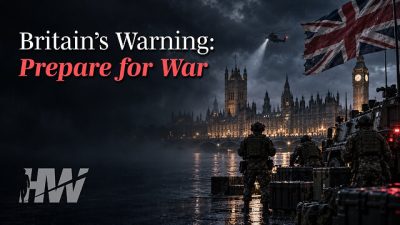
BRITAIN’S WARNING: PREPARE FOR WAR
or go to
Aletho News Archives – Video-Images
From the Archives
British weapons and personnel doing much of the killing in Yemen
Press TV – June 18, 2019
A detailed report published by the Guardian newspaper has shown how Britain is massively contributing to Saudi Arabia’s devastating war on Yemen as it suggests that London is not only supplying the bombs that fall on Yemenis, but it provides the personnel and expertise that keep the war going.
The comprehensive report by Arron Merat published on Tuesday showed that Britain was doing much of the killing in Yemen as the country continues to provide Saudi Arabia with everything it needs to turn its southern impoverished neighbor into a graveyard.
“Every day Yemen is hit by British bombs – dropped by British planes that are flown by British-trained pilots and maintained and prepared inside Saudi Arabia by thousands of British contractors,” said Merat in the report. … continue
Blog Roll
 Aletho News
- Yemen denounces European Parliament’s ‘hypocritical’ push to blacklist Ansarullah
- Qalibaf: UAE’s UN bid aims to ‘clear the runway’ for ‘Greater Israel’, whitewash genocide
- Pakistan reopens Iran border after boosting security: Report
- Why are so many Brazilians voting for Flávio Bolsonaro?
- Democrats Put Anti-Russia Agenda Ahead of American Workers
- Elijah Magnier: Yemen’s Strikes Are Shattering Saudi Arabia’s Long-Term Strategy
- Pentagon designates Chinese cultural centers national security threat
- Israel Demolishes Home Of Lebanese Journalist Whose Viral Film Exposed Pager Attack
- Record Oil, Empty Tanks: The UAE’s Miracle Recovery
- Burnham tackles Britain’s poverty with aggression in Yemen
- If Americans Knew
- An error has occurred; the feed is probably down. Try again later.
- No Tricks Zone
- Sudden Stratospheric Warming, Powerful El Niño Combination May Lead To Extreme Europe Cold, Energy Crisis!
- Two New Studies Find Thwaites Glacier Melt Cannot Be Driven By Human Activity Or A Warming Ocean
- E-Cars Reduce CO2 Emissions By Only 41% Compared To Internal Combustion Engine Vehicles
- Predictions Made By Renowned Climate Professor Over Past Decades Have Been Proven To Be Poor
- New Study Suggests Large Regions Of The Pacific Ocean Have Been Cooling For The Last 80 Years
- Germany’s Green Energy Debacle: High Energy Costs Force Kahla Porzellan to Close After 182 Years!
- New Study: 50 Years Of The Most Aggressive ‘Net Zero’ Policies Can Only Affect The Global Climate By 0.03°C
- US September “Heat” Was No Record…Many Records Set Decades Ago
- Latest European Green Energy Debacle; Portugal’s Largest Flagship Solar Park Insolvent!
- Green Energy Debacle: German Expert Professor Fritz Vahrenholt Warns Of Severe Economic And Social Consequences

