Aletho News

ΑΛΗΘΩΣ

The 12 Symptoms Your Body Uses to Save Your Life

An Essay on Suppression, Cascade, and the Pharmaceutical Business Model

Lies are Unbekoming | August 16, 2026

“Doctors should be treated with about the same trust as used car salesmen.”

Robert S. Mendelsohn, MD


Author’s Note: When examining the mainstream framework, I use its vocabulary because the argument requires meeting the establishment on its own ground. In my own voice, the twelve events treated here are not manifestations of disease. They are the body’s intelligent responses to insult, whether toxic exposure, nutritional depletion, electromagnetic burden, or sustained stress. The response is the healing. Suppression of the response is the pathology.


The Pharmacy Shelf

Herbert Shelton, in 1964, identified suppression of the body’s elimination and self-defense as “the most frequent cause of death.”¹

Every over-the-counter shelf in every pharmacy on earth is a monument to the position that sentence opposes.

Tylenol lowers the fever, Advil the swelling, Robitussin the cough, Imodium the diarrhea, Zofran the vomiting, hydrocortisone the rash, Sudafed the mucus, Adderall the fatigue, Marinol the missing appetite, Lasix the retained fluid, oxycodone the pain, paroxetine the night sweats. Every one of them works, meaning every one of them successfully stops what the body is trying to do.

The Family Medicine Cabinet Audit (2026)

The premise underneath the entire product category is identical: the symptom is the disease, and suppression is the treatment. If the premise is correct, modern pharmacy is a triumph of applied science. If the premise is wrong, modern pharmacy is the most extensive iatrogenic disaster in human history, systematically interrupting the body’s repair processes and converting acute events into chronic conditions.

The premise is wrong.

The Framework

The body does not make mistakes. When damaged by toxic exposure, nutritional depletion, electromagnetic exposure, or sustained stress, it initiates an intelligent response designed to restore homeostasis. Vomiting expels stomach contents. Diarrhea flushes the intestine. Fatigue reallocates energy from muscular activity to internal repair. Appetite loss frees the digestive system so its resources can be redirected. Every mechanism is designed to protect the organism, and every one produces symptoms.

Shelton articulated the acute-to-chronic sequence with characteristic directness. An insult damages tissue. The body responds with elimination or repair, producing symptoms. Those symptoms are suppressed with drugs, which add their own toxic burden to what was already present. New symptoms emerge in response and are suppressed in turn. Over time the cumulative burden exceeds the body’s capacity to eliminate. What was acute becomes chronic, then progressive, and the patient is placed on lifelong medication.²

Constantine Hering, working in the nineteenth century, documented the directional signature of the process. Genuine healing proceeds from interior to exterior, from above downward, from more critical organs to less critical. Suppression runs the pattern in reverse: from surface to interior, from mild to serious, from less critical structures to more critical ones. Each round of suppression drives the underlying disorder to a deeper location, where it re-expresses itself as what medicine reads as a new and unrelated condition.³

The mechanism is not theoretical. It operates with clinical predictability across the twelve categories catalogued below. Each is the body doing exactly what it should do. Each has an industry organized around stopping it.


1. Fever

When Matthew Kluger placed lizards with acute febrile illness on a temperature gradient in the 1970s, the sick lizards crawled to the warm end and stayed there. Their body temperature rose. When Kluger prevented them from reaching the warm end, or administered fever-suppressing drugs, they died at higher rates than the lizards allowed to run their fever.⁴ The finding has held across decades and species. Fever is not the disease; it is the response.

Robert Mendelsohn, a pediatrician who spent decades warning parents about the excesses of his own profession, documented what the mainstream pediatric literature has recorded. Fevers arising from ordinary illness do not exceed 106°F, because the body maintains internal mechanisms that prevent dangerous elevation.⁵ The febrile convulsions that terrify parents are triggered by the rate at which the temperature rises, not by the peak it reaches. By the time the parent notices the child is hot enough to be concerned, the rapid rise has already occurred and the seizure risk has passed. Mendelsohn attributed the prescription of fever reducers in this context to a specific motive: reassuring the parent that the doctor has intervened, at the cost of interrupting what the fever was accomplishing.

The mechanism is metabolic. Elevated temperature enhances enzymatic reactions, mobilizes stored waste, and drives the body’s effort to expel accumulated toxic material. Thomas Cowan attributes therapeutic power to heat itself: anything one can do to heat the cellular gel and allow it to cleanse itself through fever moves the body toward healing.⁶ William Coley documented tumor regression in cancer patients who developed acute febrile illness, and later provoked fever with bacterial toxins to reproduce the effect.⁷ The Natural Hygiene tradition summarized it plainly: fever is Nature’s bonfire.⁸

The pharmaceutical response is antipyretic. Acetaminophen (Tylenol, paracetamol) is the most widely used drug on earth. Its mechanism of action was not fully understood for over a century, and it operates in part by depleting cellular glutathione, the master antioxidant the body uses for detoxification. That depletion is the mechanism by which acetaminophen produces acute liver failure. It is now the leading cause of acute liver failure in the United States and the United Kingdom.⁹

Aspirin lowers fever by inhibiting prostaglandin synthesis. When given to children during acute febrile illness, it triggers Reye’s syndrome, a condition affecting the brain and liver with a fatality rate historically approaching thirty percent. Approximately ninety percent of pediatric Reye’s cases were associated with aspirin use before the practice was formally discontinued.¹⁰ Aspirin was never withdrawn from the market; the recommendation for pediatric use was revised while the drug remained available for adults.

Ibuprofen (Advil, Motrin) operates by the same prostaglandin-blocking mechanism, with documented harms including gastrointestinal bleeding, kidney damage, and elevated cardiovascular risk.¹¹

The cost of the suppression is not the drug’s toxicity alone. When the fever is chemically abolished, the body’s clearing effort is chemically abolished with it. Metabolic acceleration, waste mobilization, and the elevated temperature assisting cellular repair all shut down together. The patient feels better. The insult that provoked the fever remains, unaddressed, waiting.

What Is a Fever?

2. Inflammation

Inflammation is a hydraulic event. Herbert Shelton reduced it to mechanical reality: an increase in blood supply to a circumscribed area of the body, producing the four classical signs of heat, redness, swelling, and pain.¹² The purpose is delivery. Blood carries repair materials to damaged tissue. When the damage is repaired, the volume normalizes and inflammation resolves.

Cowan offered a metaphor that carries the mechanism cleanly. Inflammation is demolition. Before the body can build new tissue at a damaged site, it must clear the damaged material. Inflammatory mediators dissolve what shouldn’t be there. The redness, swelling, heat, and pain are the demolition in progress. Suppress the demolition and no rebuilding follows.¹³

The pharmaceutical response is the largest single drug category in medicine. NSAIDs (ibuprofen, naproxen, aspirin, diclofenac, celecoxib) constitute a market valued at over twenty-two billion dollars annually.¹⁴ Corticosteroids (prednisone, dexamethasone, hydrocortisone) suppress inflammation systemically at the cost of muscle wasting, bone thinning, elevated blood glucose, and adrenal dependence. Biologics prescribed for conditions labeled autoimmune, including Humira (adalimumab), Enbrel (etanercept), and Remicade (infliximab), generated $238 billion in lifetime revenue for Humira alone before biosimilar competition began eroding its dominance.¹⁵

Vioxx (rofecoxib) is the case study that ought to have ended the industry. Between 1999 and 2004, the COX-2 inhibitor produced an estimated 88,000 to 139,000 heart attacks in the United States, with a fatality rate between thirty and forty percent. FDA scientist David Graham, testifying to the Senate Finance Committee, called it “a disaster unparalleled” in American history.¹⁶ Vioxx, an anti-inflammatory drug prescribed to suppress the body’s repair response in arthritic joints, killed tens of thousands.

Every drug in the anti-inflammatory class carries documented harm. Methotrexate is a chemotherapy agent repurposed as maintenance for rheumatoid arthritis; azathioprine was developed to suppress organ rejection after transplantation; TNF-alpha inhibitors carry FDA-mandated black-box warnings for lymphoma, serious infections, and heart failure. The cascade of drug additions that follows (a hepatoprotectant to counter methotrexate, a bisphosphonate to counter corticosteroid bone loss, a proton pump inhibitor to counter NSAID stomach damage) is the mechanism by which a single inflammatory condition becomes a multi-drug, multi-organ, chronic patient profile.

What Is Inflammation?

3. Mucus

Mucus is a transport medium. The respiratory tract lines itself with mucus continuously and increases production when irritants must be captured and expelled. Daniel Roytas, reviewing the mainstream respiratory literature, documented what occurs during cold and flu-like illness. Mucus membranes release inflammatory chemicals including histamine and bradykinin. Both chemicals produce the classic cold symptoms of nasal congestion, sneezing, sore throat, and cough when inoculated experimentally into the airways of healthy individuals.¹⁷

The purpose is elimination. Roytas: sick people experience fevers and sweat profusely to excrete waste through the skin, and the respiratory mucus response operates on the same principle.¹⁸ Historical use of snus, powdered tobacco taken nasally to induce sneezing and mucus flow, was a deliberate application of the principle. The mucus is the mechanism by which the airways stay clear.

D.C. Jarvis, the Vermont country doctor who documented four decades of observing farmers and their animals, recorded the mechanism in dairy cows. Cows presenting with wet eyes, wet noses, and excess mucus stopped producing it when their potassium was corrected by adding apple cider vinegar to their feed. The eye, nose, and cough manifestations were the body’s spontaneous effort to shed excess water, and supplying the needed potassium through the ration corrected the underlying imbalance that had produced the load.¹⁹ The mucus was doing its job. What needed correction was what had provoked it.

The pharmaceutical response is antihistamines and decongestants. First-generation antihistamines including diphenhydramine (Benadryl) block histamine at H1 receptors and cross the blood-brain barrier, producing sedation. A 2015 University of Washington study led by Shelly Gray found that cumulative anticholinergic burden, of which first-generation antihistamines are a major source, correlated with elevated incidence of dementia and Alzheimer’s disease.²⁰ Second-generation antihistamines including loratadine (Claritin), cetirizine (Zyrtec), and fexofenadine (Allegra) reduce sedation but retain the underlying suppressive mechanism.

Decongestants operate by vasoconstriction. Pseudoephedrine (Sudafed) constricts the swollen nasal blood vessels, providing symptomatic relief while raising blood pressure systemically. Phenylephrine, marketed as the safer alternative after pseudoephedrine restrictions, was determined by an FDA advisory committee in September 2023 to be ineffective at labeled oral doses. Billions of doses were sold for decades with no measurable decongestant effect.²¹

The cost of the suppression is retention. Mucus that was carrying irritants out of the respiratory tract is chemically prevented from doing so. Shelton’s mechanism: the acute catarrhal response, repeatedly suppressed, becomes chronic catarrh, then ulceration, then the conditions labeled allergic rhinitis, chronic sinusitis, and hay fever.²

4. Diarrhea

Diarrhea is emergency elimination through the intestine. Shelton stated it with characteristic economy. A poison is taken into the stomach, the organism senses the presence of a non-usable and harmful substance, and it acts. The material is sent out by vomiting, or sent along the digestive tract into the colon and expelled by violent diarrhea.²² The intestinal wall pours fluid into the lumen, peristalsis accelerates, and toxic material is flushed out before it can be absorbed.

The response is not restricted to ingested food-borne toxins. Chemical residues from pharmaceuticals, pesticide contamination, heavy-metal exposure, and toxins in contaminated water all provoke acute diarrhea as protective response. The WHO attributes diarrheal conditions to germs infecting via the fecal-oral route. Lester’s response is direct: diarrhea is a symptom not a disease, and it is the body’s reaction to toxic substances such as fecally contaminated water, representing its efforts to expel them.²³

The pharmaceutical response is loperamide (Imodium), diphenoxylate (Lomotil), and bismuth subsalicylate (Pepto-Bismol). Loperamide acts on opioid receptors in the intestinal wall, slowing peristalsis and reducing fluid secretion into the lumen. The material the body was attempting to expel is retained and absorbed. Loperamide overdose, particularly among individuals seeking opioid effects, has caused sudden cardiac death through QT prolongation, prompting FDA warnings in 2016 and dosage restrictions in 2018.²⁴ Diphenoxylate operates by the same opioid slowing; bismuth subsalicylate shares aspirin’s salicylate mechanism and toxicity.

The cost of the suppression is absorption of what the body determined must not be absorbed. Whatever toxin, chemical, or waste material provoked the diarrhea remains in the intestinal tract, in contact with the absorptive surface, for the additional hours or days the drug retains it there. The bowel movement stops. The exposure continues.

5. Vomiting

Vomiting is emergency elimination through the stomach. The reflex is centrally coordinated, involving the brainstem, autonomic nervous system, and the diaphragm and abdominal musculature. It is not a malfunction; it is one of the body’s most rapid and effective defensive mechanisms.

Signals that trigger vomiting include ingested toxins, pharmaceutical residues, motion perception mismatches, elevated intracranial pressure, and metabolic disturbance. Morning sickness during pregnancy may represent protective response to substances the developing fetus would be sensitive to, a hypothesis with empirical support from the epidemiology of pregnancy outcomes.

The pharmaceutical response is antiemetic. Ondansetron (Zofran) blocks serotonin 5-HT3 receptors in the gut and central nervous system. Its use in pregnancy for morning sickness was widespread despite the drug’s FDA-listed cardiac risks, including QT interval prolongation and Torsades de Pointes. Ondansetron has been associated with congenital cardiac malformations in exposed pregnancies in multiple observational studies, though the manufacturer’s position and regulatory classification have varied.²⁵

Promethazine (Phenergan), a first-generation antihistamine prescribed for nausea, carries a black-box warning against use in children under two for respiratory depression and can cause tissue necrosis when given intravenously.²⁶

Metoclopramide (Reglan) increases intestinal motility centrally, forcing material downward against the body’s decision to expel it upward. Long-term use produces tardive dyskinesia, an irreversible movement disorder, resulting in a black-box warning and successful class-action litigation.²⁷

The cost of the suppression is retention of the material the body identified as unacceptable. What was to be expelled is forced to remain, and the signal that initiated the vomiting is still active in the body.

6. Skin Eruptions

The skin is an elimination organ. Henry Bieler articulated the principle: when bile poisons in the blood come out through the skin, various skin irritations follow.²⁸ When primary elimination routes such as liver, kidneys, and bowel are overloaded, the body attempts elimination through secondary routes. Toxins deposit in tissues, and the body mounts an inflammatory response to dissolve the deposits and push them outward, producing the rashes, hives, boils, and pustules visible at the surface.

Childhood eruptive illnesses labeled measles, chickenpox, and rubella were understood in the Natural Hygiene tradition as elimination events. John Tilden: measles is the manner in which a child’s body throws off toxemia.²⁹ The rash was diagnostic evidence that the elimination was proceeding correctly through the skin. Traditional practice was to keep the child warm, hydrated, and rested until the elimination completed.

Contact dermatitis, eczema, and acne have documented associations with specific toxic exposures. NIOSH recognizes dermal exposure to hazardous agents as a cause of both localized skin disease and systemic toxicity;³⁰ WHO documentation confirms that industrial solvents applied to skin become systemically available in considerable amounts.³¹ The personal care products, textiles, and household cleaners a person contacts daily are the vector.

The pharmaceutical response is topical and systemic corticosteroids. Hydrocortisone, the mildest, is available over the counter. Prescription strengths ascend through triamcinolone, betamethasone, and clobetasol. All operate by suppressing the inflammatory response, stopping the elimination event visible at the skin surface. Documented harms include skin thinning (atrophy), telangiectasia (visible capillaries), striae (stretch marks), and adrenal suppression from systemic absorption.

Topical steroid withdrawal syndrome is the mechanism through which chronic use produces dependence. When the drug is stopped, the suppressed elimination event returns with greater intensity. The accumulated toxic burden the drug had held back is now released, producing severe rebound eruptions. Patients are told they have “steroid withdrawal syndrome” or that their underlying eczema has worsened, and are placed back on the drug at higher potency.³²

The cost of the suppression is retention of the material the skin was expelling. When Bieler’s bile poisons cannot come out through the skin, they remain in the tissues, migrate to other sites, or overwhelm the primary elimination organs the body was trying to relieve.

7. Fatigue

Fatigue is enforced rest. When the body’s repair burden exceeds its available energy, it reallocates. Muscular activity is limited, cognitive activity is reduced, appetite drops, freeing digestive energy for repair, and the individual is pulled toward sleep. Shelton: complete rest is the greatest therapeutic measure, because slowing the expenditure of energy accelerates the recruiting of energy for restorative work.³³

Christopher Gian-Cursio described the mechanism in the Hygienic Review in 1942. A sick person needs not only sleep sufficient to balance daily expenditure but sleep beyond that, to facilitate curative action. During sleep, and to a lesser degree while resting, the body makes its greatest advances in removing the immediate causes of disease.³⁴

The suppression takes multiple forms. Prescription stimulants including amphetamine salts (Adderall), lisdexamfetamine (Vyvanse), methylphenidate (Ritalin, Concerta), and modafinil (Provigil) force wakefulness and activity by pharmacologically overriding the body’s demand for rest. All produce dependence. All produce cardiovascular effects including elevated blood pressure and heart rate. Long-term amphetamine use is associated with cardiomyopathy, stroke, and sudden cardiac death.³⁵

The suppression extends past prescription drugs into industrial-dose caffeine (approximately 300 milligrams daily for the average American, more from energy drinks), nicotine, and the widespread pattern of combining caffeine with analgesics.

Medical culture participates. Patients presenting with unexplained fatigue are frequently tested, imaged, and referred. If no discrete disease is identified, they are told they have chronic fatigue syndrome, given SSRIs, or advised that stress management is the issue. What they are almost never told is what Shelton wrote in 1964: the fatigue is the body’s demand for rest sufficient to complete the repair, and the appropriate response is to grant it.

The cost of the suppression is denial of the repair the fatigue was requesting. The insult that provoked the fatigue continues. The energy that should have gone to repair is instead expended on forced activity. When the individual finally collapses, the accumulated damage has been compounded by months or years of drug-driven overexertion.

8. Appetite Loss

Loss of appetite during illness is not a defect. It is a coordinated instruction. The digestive process requires substantial energy in the form of blood flow to the gut, enzyme production, motility, and hepatic processing, and during illness that energy is required elsewhere. The body reduces demand for it by reducing hunger. Fasting during illness allows resources to be reallocated to repair and elimination.

Cowan set out the metabolic mechanism. The body shifts into a catabolic state after twelve hours without food, breaking down stored fat and mobilizing toxins previously sequestered in tissue. Any impairment involving deposition, whether atherosclerotic plaque, joint calcification, or tissue deposits, is served by regular time in this catabolic state. When illness is present, the body prioritizes the shift, which is why appetite falls at the onset of nearly every acute condition.³⁶

The traditional practice in Natural Hygiene sanatoriums was extended fasting during acute illness. Ulric Williams noted the pattern: hunger returns as the signal that elimination is complete, when the tongue clears and natural hunger emerges.³⁷

The pharmaceutical response has multiple angles. Mirtazapine (Remeron) is an antidepressant with pronounced weight-gain effects, prescribed off-label as an appetite stimulant. Megestrol acetate (Megace) is a synthetic progestogen prescribed for cachexia in cancer and AIDS, with documented risks including thromboembolic events and adrenal suppression. Dronabinol (Marinol) is synthetic THC prescribed for AIDS-associated anorexia. Cyproheptadine (Periactin) is an antihistamine repurposed for pediatric appetite stimulation.

The cultural response is more consequential than any single drug. Hospitalized patients who lose their appetite are pressured to eat, given nutritional supplements such as Ensure and Boost that are high-sugar processed formulations, and progressed to nasogastric or intravenous feeding if resistance continues. The medical logic is that the body cannot heal without nutrition. The terrain logic is that the body cannot heal while digesting.

The cost of the suppression is diversion of resources. The energy the body allocated to repair and elimination is instead consumed by digestion of food it did not want. Elimination stalls. Recovery is prolonged. In the extreme case, a cancer cachexia patient force-fed high-caloric formula while chemotherapy proceeds, the body’s final effort to conserve resources for essential function is chemically overridden, and the patient dies from the intervention rather than the underlying condition.

9. Coughing

Coughing is airway clearing. The cough reflex is a coordinated action of the diaphragm, abdominal muscles, and glottis producing an explosive expulsion of air designed to move material out of the respiratory tract. The material may be mucus containing captured particulates, aspirated food or fluid, inhaled irritants, or debris from damaged tissue. Without the cough reflex, the lungs cannot remain clear.

Shelton was direct about the consequences of interference. If coughing is checked by the depression of the nerves of respiration that follows the taking of certain drugs, the substances in the respiratory tract that the coughing was intended to remove are left there to produce the very harm their removal would have prevented.³⁸ The suppression is not neutral. It leaves the material in the lungs.

The pharmaceutical response is cough suppressants. Dextromethorphan (Robitussin DM, Delsym, NyQuil) acts centrally on the cough center in the medulla. It is the most common over-the-counter cough suppressant and is subject to widespread abuse at high doses for dissociative effects. Codeine and hydrocodone-containing cough syrups suppress the cough reflex by opioid mechanism, producing dependence and respiratory depression. Benzonatate (Tessalon) has caused fatal cardiac arrhythmia in children after accidental ingestion.³⁹

The cost of the suppression is retained material in the airways. The body’s mechanism for clearing the lungs is disabled while the reason for the mechanism, the particulate, the irritant, the mucus load, remains in place. The acute cough that would have cleared the lungs in days becomes chronic, then bronchial, then pneumonic. Pneumonia in hospitalized patients frequently follows cough suppressant administration for what began as acute upper respiratory illness. Postoperative pneumonia is common enough that respiratory therapists are employed specifically to encourage coughing, breathing exercises, and airway clearance, a hospital service that exists because the drugs the hospital administered are known to compromise the mechanism.

10. Swelling

Swelling is fluid mobilization. When tissue is damaged, the body dilates capillaries and increases fluid delivery to the site, producing the visible swelling that is one of the four classical signs of inflammation. When systemic conditions produce fluid retention, whether from cardiac inefficiency, kidney impairment, liver stress, or protein imbalance, the fluid accumulation may represent the body’s response to compromised circulation or accumulated metabolic waste. In each case, the fluid is present because the body directed it there.

Ankle edema in an elderly patient may reflect impaired venous return, dietary sodium excess, cardiac inefficiency, or the toxic burden of accumulated pharmaceutical residues. Joint swelling reflects the inflammatory demolition event described earlier: extra blood volume delivering repair materials to damaged tissue.

The pharmaceutical response is diuretic. Furosemide (Lasix) is a loop diuretic acting on the kidney’s water-reabsorption mechanism, forcing rapid excretion of water and sodium. Its immediate effect is visible. Swelling reduces, urine output increases, weight drops. Its ancillary effects include depletion of potassium, magnesium, and other electrolytes, with cardiac and neuromuscular consequences. Chronic Lasix use damages hearing (ototoxicity) and kidney function.⁴⁰ Hydrochlorothiazide (HCTZ), the thiazide prescribed for hypertension, depletes electrolytes on the same principle; spironolactone spares potassium but disrupts hormone signaling, producing breast development in men and menstrual irregularity in women.

The cost of the suppression is disruption of the body’s fluid regulation. The swelling was the body’s response to a specific condition; the drug removes the fluid without correcting the condition. The underlying insult continues, and electrolyte depletion adds new burdens on cardiac and renal function that were already stressed. Elderly patients on chronic diuretic therapy are among the most drug-burdened cohorts in medicine, with the drug prescribed to counter the visible sign of a condition the drug does not address.

11. Pain

Pain is the body’s most direct communication. The nociceptive system alerts the organism to tissue damage, restricts movement of the injured part to permit repair, and imposes behavioral consequences that discourage further damage. Shelton: pain, redness, swelling, heat and impairment of function are the local response to injury, all due to the excess of blood at the site.⁴¹ Pain is the sensory dimension of inflammation. Without it, the individual would continue damaging the injured tissue.

The mechanism is instruction, not information. Pain enforces the rest and immobilization that permits repair to proceed. A sprained ankle hurts because walking on it would prevent healing; abdominal pain from an intestinal insult enforces the fasting the digestive tract requires; chest pain from cardiac stress halts exertion. Pain is the body giving orders.

The pharmaceutical response is the largest documented catastrophe in modern medicine. Opioids including oxycodone (OxyContin), hydrocodone (Vicodin, Norco), morphine, fentanyl, and tramadol produced over 500,000 overdose deaths in the United States between 1999 and 2019, according to CDC accounting. The Sackler family’s Purdue Pharma marketed OxyContin as non-addictive on the basis of a single misinterpreted paragraph from a 1980 letter to the New England Journal of Medicine, generating over $35 billion in sales and initiating the epidemic that continues at the time of writing.⁴²

NSAIDs (ibuprofen, naproxen, celecoxib) suppress pain by inhibiting prostaglandin synthesis, with the cardiovascular, gastrointestinal, and renal toxicity discussed under inflammation. Acetaminophen suppresses pain by mechanisms including glutathione depletion, with liver toxicity discussed under fever. Gabapentinoids (gabapentin/Neurontin, pregabalin/Lyrica) were originally approved for seizure disorders and were subsequently marketed off-label for chronic pain, generating billions in revenue and a growing catalog of documented harms including sedation, edema, cognitive impairment, and dependence.⁴³

Beyond the drug toxicity, the suppression removes the body’s instruction. A patient with pharmaceutically silenced pain from a damaged joint continues to use it, and a patient with suppressed back pain returns to the activity that provoked the injury. The pain that was designed to enforce healing is chemically silenced, and the underlying condition worsens under the drug’s cover.

Cowan’s inverse approach to arthritis illustrates the alternative. Bee venom stings are administered directly to the inflamed joint, intensifying the inflammation and driving the demolition phase to completion. When the swelling resolves, the joint is better than before the sting.¹³ The pain was the mechanism of repair; permitting it allows the repair to complete, while suppressing it allows the damage to accumulate.

12. Night Sweats

Sweating is skin-based elimination. The skin is the body’s largest organ, and it is bidirectional. It absorbs toxins and it expels them. When elimination through the primary channels of bowel, kidney, and lung is inadequate to the toxic burden, the skin takes up secondary elimination duty. The moisture carries waste out through the sweat glands.

Roytas is direct on the mechanism. Sick people experience fevers and sweat profusely to excrete waste through the skin.¹⁸ Night sweats, the drenching sweat episodes that wake patients with soaked bedding, represent the body’s elimination effort proceeding during rest, when digestive and muscular demands are minimal and the elimination systems can operate at capacity.

Medicine treats night sweats as a workup trigger, testing systematically for cancer (lymphoma), endocrine dysfunction (hyperthyroidism), and the conditions labeled infectious (tuberculosis, HIV, endocarditis), as well as menopause. The differential diagnosis approach misses the shared mechanism. In every case, the body has determined that skin-based elimination is required.

The pharmaceutical response varies by attributed cause. Menopausal night sweats are treated with hormone replacement therapy (estrogen, progestin), SSRIs (paroxetine/Paxil, escitalopram/Lexapro), SNRIs (venlafaxine/Effexor), gabapentin, and clonidine. Hormone replacement therapy was pulled back after the Women’s Health Initiative demonstrated elevated risks of breast cancer, heart disease, stroke, and dementia in long-term users.⁴⁴ SSRI use in perimenopausal women is associated with weight gain, sexual dysfunction, and withdrawal syndromes on discontinuation.

Anticholinergic drugs (oxybutynin, glycopyrrolate) block sweat gland function directly, chemically closing the elimination route. Long-term use carries the same dementia risk demonstrated with first-generation antihistamines.²⁰ Botulinum toxin (Botox), one of the fastest-growing pharmaceutical categories for this indication, is injected into sweat glands to paralyze them for months at a time. The route is disabled rather than closed, but the effect on skin-based elimination is the same.

The cost of the suppression is retention. Waste material the body was expelling through the skin remains in the tissues. Primary elimination systems, already overloaded (which is why the skin was recruited), must attempt to handle the additional burden. The nighttime sweating stops. The toxic burden that provoked it continues to accumulate.


The Cascade

The twelve mechanisms operate simultaneously. In a real patient, an acute illness rarely presents as a single symptom. A respiratory event labeled viral produces fever, mucus, cough, fatigue, and appetite loss in the same person. A gastrointestinal event produces vomiting, diarrhea, fatigue, and appetite loss together. An arthritic joint produces pain, swelling, and inflammation as a coordinated package. The body’s response is integrated across systems.

The pharmaceutical response is equally coordinated in the opposite direction. The patient with the respiratory illness receives an antipyretic for the fever, an antihistamine for the mucus, a cough suppressant for the cough, a stimulant or coffee for the fatigue, and pressure to eat despite the appetite loss. Every one of the body’s five simultaneous elimination and repair mechanisms is chemically countered.

The question of how thousands of physicians participate in the pattern without seeing it has an answer in the training. Andrew Kaufman, a psychiatrist who broke ranks with his profession, has documented what medical education actually accomplishes. Students undergo intense shared experiences, information overload, and professional incentive structures that create powerful psychological bonds discouraging critical questioning.⁴⁵ Residents face institutional pressure to prescribe, or to justify why they have not prescribed, so that not prescribing appears as deviant conduct requiring explanation. The physician writing the prescription is not concealing knowledge of what the drug does to the body’s response. He was trained in a system in which the question was never presented.

Richard Pitcairn, after fifty years of veterinary practice, documented the trajectory the suppression produces. A dog presents with a skin problem. Cortisone is prescribed. The skin clears. Weeks or months later, the same dog develops calcification of the spine, pancreatitis, or joint breakdown. A cat presents with an inflamed bladder. The bladder symptoms subside under treatment. Later, the cat presents with kidney failure, diabetes, or hyperthyroidism.⁴⁶ Each new condition is treated as unrelated to the previous one. In the terrain framework and in the pattern Hering described, they are the same disorder driven deeper. The skin was the outermost route the body had. Closing it forced the elimination inward, where it re-expressed itself in a more critical structure.

The veterinary setting removes the objection that muddies human cases. The dog is not aging into unrelated diseases. The cat is not developing new conditions from unrelated lifestyle choices. The animal presents with an acute event, the event is suppressed, and the disorder appears months later in a deeper organ system. Repeat across a fifty-year practice and the pattern is not deniable.

The same trajectory operates in humans. The child with eczema treated with topical steroid develops asthma. The asthmatic treated with inhaled corticosteroids develops the conditions labeled autoimmune. Immunosuppressants are added, and cancer follows. Each stage generates its own diagnosis, its own specialist, its own pharmaceutical stack. The medical record shows a person with many unrelated diseases. The physiological reality is one process, driven deeper at each intervention.

The result is what Shelton described in 1964 and what the establishment now calls chronic disease. The acute event that would have resolved in three to seven days with rest, hydration, warmth, and fasting is pharmacologically extended and complicated. Material that was to be expelled is retained. Repair that was to be completed is interrupted. Energy that was to be allocated to healing is consumed instead by digestion, activity, and the metabolic processing of the drugs administered. The patient does not fully recover.

Six months later, some fraction of the acute events remain, now labeled chronic bronchitis, chronic sinusitis, chronic diarrhea, or fibromyalgia. New drugs are added. The cascade proceeds. By the time the patient is sixty, they are on ten to fifteen daily medications, each addressing a symptom created or perpetuated by the previous drug, and no one has looked at the pattern.

The clinical test Cowan proposed for rheumatology applies across every specialty. Walk into any specialist’s office and ask how many patients they have cured. The word means the condition resolved and the patient walked away with a functioning body and no prescription. Managed, stabilized, or medicated with reduced symptoms is not the same thing.¹³ The answer is zero. It has to be zero, because the treatment model is designed to prevent cure. The body’s efforts are chemically obstructed. The insults that provoked those efforts are never addressed.

What This Means

The twelve symptoms are not the disease. They are the intelligence the body brings to what has damaged it. Fever burns off accumulated waste. Mucus carries irritants out of the airways. Appetite falls because digestion consumes energy the body needs for repair. Fatigue is the body’s demand for rest sufficient to complete that repair. The skin picks up secondary elimination duty when the liver, kidneys, and bowel cannot handle the burden alone. Pain is the instruction that stops movement so healing can proceed.

The pharmaceutical response, applied over decades, produces the population’s disease profile. The chronic conditions that dominate modern medicine (cardiovascular disease, the conditions labeled autoimmune, chronic pain syndromes, chronic respiratory disease, chronic gastrointestinal disease, and the neurodegenerative disorders) all bear the fingerprints of the suppression cycle. The insults that provoked the original acute responses were never removed. The responses were chemically interrupted. Both compounded, for years, for decades. The result fills modern hospitals and pharmacies.

Barbara Starfield, then head of health policy at Johns Hopkins, published an estimate in 2000 that properly prescribed pharmaceuticals cause approximately 106,000 US deaths annually, with total iatrogenic mortality of around 225,000.⁴⁷ That figure placed medical intervention as the third leading cause of death in the country. Later analyses from independent researchers place it higher. The number is not a fringe claim. It is establishment epidemiology, published in JAMA, and it has been broadly ignored in the practice of medicine ever since.

The escape from the pattern begins with recognizing what the twelve responses are for. The body producing them is not failing. It is doing exactly what it should do. The task is to identify what is provoking the response and remove it, then to permit the response to complete. Everything else is delay and damage.

The pharmacy shelf has not changed. The bottles that opened this essay, Tylenol and Advil and Robitussin and the rest, still work the way they always did. They still stop what the body is doing. What has changed is what those bottles look like to a reader who has followed the argument. They are twelve drug classes designed to interrupt twelve mechanisms the body was using to save itself, at costs the labels do not describe.

When Your Body Whispers, Listen: The Intelligence of Symptoms


How To Explain It To A 6 Year Old

Your body is smart. When something is wrong, it does things to try to fix it.

If you eat something bad, your tummy pushes it out, either by vomiting it up or by making poop come out really fast. That’s not the sickness. That’s your body cleaning itself out.

If you catch a cold, you get a fever, your nose runs, and you cough. Your body warms itself up to burn off the bad stuff. Your nose makes goo to catch things and push them out. Your cough clears out your lungs. You don’t want to eat, because your body is busy. You want to sleep a lot, because your body needs the energy for cleaning up.

If you fall down and scrape your knee, the skin turns red and puffy and warm and it hurts. That’s your body sending its repair crew to fix the scrape. The redness is extra blood arriving. The hurt is your body telling you to be careful with that knee while the work gets done.

Every one of these things, the fever, the coughing, the runny nose, the not being hungry, the sleeping, the puffy skin, the hurt, is your body doing its job.

Now imagine a doctor comes and says, “The fever is bad. Take this pill to make the fever go away.” You take the pill. The fever goes away. But the bad stuff your body was trying to burn off is still there, and now your body can’t burn it off because the pill stopped it.

Then the doctor says, “The runny nose is bad. Take this pill to make the runny nose stop.” Now the goo can’t come out either. The bad stuff stays inside.

Then the doctor says, “The cough is bad. Take this syrup to stop the cough.” Now your lungs can’t clear themselves out.

Then the doctor says, “You need to eat. Here is some food.” So your body has to spend energy digesting food when it needed the energy for cleaning up.

After a few months, you feel worse instead of better. You have a chest full of stuff that never got coughed out, a body full of stuff that never got burned off, and a nose full of stuff that never got blown out. So the doctor gives you stronger pills.

The doctor is trying to help. But the doctor has the wrong idea about what your body was doing. Your body wasn’t broken. Your body was fixing itself. The pills stopped the fixing.

The rule is simple. Find out what is making your body sick. Take that thing away. Let your body do what it knows how to do. Give it warm blankets, water, quiet, and time. The body will finish the job by itself.

In Print

Seven of my books are now available as paperbacks, printed to order through Lulu and shipped worldwide. The Unvaccinated lays out the completely unvaccinated as a comparison group across twenty chapters and five appendices — as far as I know, the only book of its kind. Medicalized Motherhood follows a woman through 123 documented interventions from teenage pill to postpartum discharge. Drilling for Profit argues that cavities, gum disease, and crooked teeth are a dietary problem the dental profession treats surgically. What Your Vet Can’t Tell You applies the same critique to pets — food, vaccines, and a profession trained by the industries whose products cause the harm. Escape from Psychiatry documents the fabrication of the DSM, the collapse of the serotonin hypothesis, and the specific damage done by every major psychiatric drug class.

Two more take up what the first five leave out — the remedies the first five explain why you need. The DMSO Book covers 100,000 studies, zero deaths, and one approval — the suppressed science of medicine’s most versatile compound. Chlorine Dioxide: The Forbidden Remedy collects the interviews, protocols, and evidence from the doctors and researchers they tried to silence.

A physical book reaches the person a Substack post never will — the sceptical relative, the friend who won’t click a link but might open a book, the visitor whose eye lands on a coffee table. Buy one to keep, and one to give away.


References

¹ Herbert M. Shelton, “Enervation — Toxemia,” Hygienic Review, Vol. XXV, August 1964, No. 12.

² Herbert M. Shelton, cited throughout Dawn Lester and David Parker, What Really Makes You Ill? Why Everything You Thought You Knew About Disease Is Wrong (2019).

³ Constantine Hering, nineteenth-century observations later formalized as “Hering’s Law of Cure.” Discussed in Don Hamilton, Homeopathic Care for Cats and Dogs (North Atlantic Books, 2010).

⁴ H.A. Bernheim and Matthew J. Kluger, “Fever and antipyresis in the lizard Dipsosaurus dorsalis,” American Journal of Physiology 231, no. 1 (1976): 198–203; Matthew J. Kluger, D.H. Ringler, and M.R. Anver, “Fever and survival,” Science 188, no. 4184 (1975): 166–168. See also Kluger, Fever: Its Biology, Evolution, and Function (Princeton University Press, 1979).

⁵ Robert S. Mendelsohn, How to Raise a Healthy Child in Spite of Your Doctor (Ballantine, 1984), chapter on fever. Also Confessions of a Medical Heretic (Contemporary Books, 1979).

⁶ Thomas Cowan, Cancer and the New Biology of Water (Chelsea Green, 2019).

⁷ William B. Coley, “The Treatment of Malignant Tumors by Repeated Inoculations of Erysipelas,” American Journal of the Medical Sciences 105 (1893): 487-511. Historical documentation compiled in Cowan, Cancer and the New Biology of Water.

⁸ Ulric Williams, compiled in Terrain Therapy (2022), on fever as “Nature’s bonfire.”

⁹ William M. Lee, “Acetaminophen (APAP) hepatotoxicity: Isn’t it time for APAP to go away?” Journal of Hepatology 67, no. 6 (2017): 1324-1331. Also documented in Lester and Parker, chapter on pharmaceuticals.

¹⁰ Eugene S. Hurwitz et al., “Public Health Service Study of Reye’s Syndrome and Medications,” JAMA 257, no. 14 (April 10, 1987): 1905-1911. National Reye’s Syndrome Foundation, http://www.reyessyndrome.org.

¹¹ David J. Graham et al., “Risk of acute myocardial infarction and sudden cardiac death in patients treated with cyclo-oxygenase 2 selective and non-selective non-steroidal anti-inflammatory drugs,” The Lancet 365, no. 9458 (2005): 475-481.

¹² Herbert Shelton, Natural Hygiene: Man’s Pristine Way of Life, cited in Lester and Parker.

¹³ Thomas Cowan, Wednesday Webinar, April 15, 2026.

¹⁴ Grand View Research, “Non-steroidal Anti-inflammatory Drugs Market Size, Share & Trends Analysis Report, 2024-2030.” Market valued at USD 22.58 billion in 2024.

¹⁵ AbbVie annual reports and compiled Humira revenue data through 2024. Peak year revenue $21.2 billion (2022).

¹⁶ David Graham, testimony before the U.S. Senate Finance Committee, November 18, 2004.

¹⁷ Daniel Roytas, Can You Catch a Cold? Untold History and Human Experiments, chapter on respiratory illness and inflammatory mediators.

¹⁸ Roytas, Can You Catch a Cold?, on sweat and skin elimination during febrile illness.

¹⁹ D.C. Jarvis, Folk Medicine: A Doctor’s Guide to Good Health (Pan Books, 1961), chapter titled “Relation of Potassium to Mucus.”

²⁰ Shelly L. Gray et al., “Cumulative Use of Strong Anticholinergics and Incident Dementia: A Prospective Cohort Study,” JAMA Internal Medicine 175, no. 3 (2015): 401-407.

²¹ FDA Nonprescription Drug Advisory Committee, September 11-12, 2023 meeting, findings on oral phenylephrine ineffectiveness.

²² Herbert Shelton, on the body’s elimination of ingested poisons via vomiting or diarrhea, cited in Lester and Parker.

²³ Dawn Lester and David Parker, What Really Makes You Ill?, on the WHO framing of diarrheal disease and its terrain interpretation.

²⁴ FDA Drug Safety Communication, “FDA warns about serious heart problems with high doses of the antidiarrheal medicine loperamide (Imodium),” June 7, 2016; updated with dosing restrictions, January 30, 2018.

²⁵ Björn Pasternak et al., “Ondansetron in Pregnancy and Risk of Adverse Fetal Outcomes,” New England Journal of Medicine 368, no. 9 (2013): 814-823. Contradictory findings in Andersen et al., Reproductive Toxicology 43 (2014): 108-116.

²⁶ FDA Public Health Advisory, “Deaths related to intravenous injection of Promethazine (Phenergan) and other narcotic medications,” September 2006. Black-box warning for children under age 2 issued 2004.

²⁷ FDA Safety Alert, black-box warning for metoclopramide (Reglan) and tardive dyskinesia, February 26, 2009.

²⁸ Henry G. Bieler, Food is Your Best Medicine (Random House, 1965), cited in Lester and Parker.

²⁹ John H. Tilden, Impaired Health: Its Cause and Cure, Volume 2, cited in Lester and Parker.

³⁰ CDC/NIOSH, “Skin Exposures and Effects,” http://www.cdc.gov/niosh, accessed via Lester and Parker citation.

³¹ IPCS (WHO/ILO/UNEP), Dermal Absorption (2006) and Dermal Exposure (2014). Environmental Health Criteria series.

³² Marvin J. Rapaport and Marc Rapaport, “Eyelid Dermatitis to Red Face Syndrome to Cure: Clinical Experiences in 100 Cases,” Journal of the American Academy of Dermatology 41 (1999): 435-442. International Topical Steroid Awareness Network (ITSAN), http://www.itsan.org.

³³ Herbert M. Shelton, “The Importance of Rest in Disease,” Hygienic Review Vol. IV, November 1942, No. 3.

³⁴ Christopher Gian-Cursio, “The Importance of Rest in Disease,” Hygienic Review Vol. IV, November 1942, No. 3.

³⁵ FDA product labeling for amphetamine mixed salts (Adderall) and related stimulants. Cardiovascular warnings updated 2007 following FDA Pediatric Advisory Committee review.

³⁶ Thomas Cowan, Human Heart, Cosmic Heart (Chelsea Green, 2016), on intermittent fasting and the catabolic state.

³⁷ Ulric Williams, compiled in Terrain Therapy (2022), on hunger and fasting.

³⁸ Herbert M. Shelton, “Enervation — Toxemia,” Hygienic Review, August 1964, on the consequences of cough and diarrhea suppression.

³⁹ FDA Drug Safety Communication, “Death resulting from overdose after accidental ingestion of Tessalon (benzonatate) by children under 10 years of age,” December 14, 2010.

⁴⁰ Rybak LP, “Ototoxicity of loop diuretics,” Otolaryngologic Clinics of North America 26, no. 5 (October 1993): 829-844. FDA product labeling for furosemide.

⁴¹ Herbert Shelton, on inflammation and the local response to injury, cited in Lester and Parker.

⁴² Centers for Disease Control and Prevention WONDER database, opioid overdose mortality 1999-2019. Purdue Pharma marketing history documented in Patrick Radden Keefe, Empire of Pain: The Secret History of the Sackler Dynasty (2021), and U.S. Department of Justice settlement documentation.

⁴³ Christopher W. Goodman and Allan S. Brett, “Gabapentin and Pregabalin for Pain — Is Increased Prescribing a Cause for Concern?” New England Journal of Medicine 377 (2017): 411-414. Parke-Davis whistleblower litigation settled 2004.

⁴⁴ Jacques E. Rossouw et al., “Risks and Benefits of Estrogen Plus Progestin in Healthy Postmenopausal Women: Principal Results From the Women’s Health Initiative Randomized Controlled Trial,” JAMA 288, no. 3 (2002): 321-333.

⁴⁵ Andrew Kaufman, MD, recorded interviews and lectures on medical education, psychiatric training, and institutional conditioning within medicine.

⁴⁶ Richard Pitcairn, Dr. Pitcairn’s Complete Guide to Natural Health for Dogs and Cats (Rodale, multiple editions).

⁴⁷ Barbara Starfield, “Is US Health Really the Best in the World?” JAMA 284, no. 4 (July 26, 2000): 483–485.


Additional Sources

Herbert M. Shelton, Natural Hygiene: Man’s Pristine Way of Life and the Hygienic Review archive John H. Tilden, Toxemia Explained: The True Interpretation of the Cause of Disease Dawn Lester and David Parker, What Really Makes You Ill? Daniel Roytas, Can You Catch a Cold? Untold History and Human Experiments Thomas Cowan, The Contagion Myth, Cancer and the New Biology of Water, Human Heart, Cosmic Heart Ulric Williams compilations, Terrain Therapy (2022) Henry Bieler, Food is Your Best Medicine D.C. Jarvis, Folk Medicine and Arthritis and Folk Medicine Richard Pitcairn, Dr. Pitcairn’s Complete Guide to Natural Health for Dogs and Cats Robert S. Mendelsohn, How to Raise a Healthy Child in Spite of Your Doctor and Confessions of a Medical Heretic Andrew Kaufman, recorded interviews and lectures on medical education and psychiatric training Matthew J. Kluger, Fever: Its Biology, Evolution, and Function Constantine Hering, on the direction of cure Barbara Starfield, “Is US Health Really the Best in the World?” JAMA (2000) Carolyn Dean, Death by Modern Medicine Torsten Engelbrecht et al., Virus Mania (3rd edition) Mark Gober et al., An End to Upside Down Medicine Mark Bailey, The Final Pandemic: An Antidote


This essay is educational and represents the author’s paradigm interpretation. Nothing in it constitutes medical advice. Decisions about medication should be made in consultation with a qualified practitioner familiar with the individual’s circumstances.


August 22, 2026 Posted by | Science and Pseudo-Science, Timeless or most popular | Comments Off on The 12 Symptoms Your Body Uses to Save Your Life

FDA Acting Commissioner Woodcock Admits Adverse Events After COVID-19 Vaccination

By Aaron Siri | Injecting Freedom | August 21, 2026

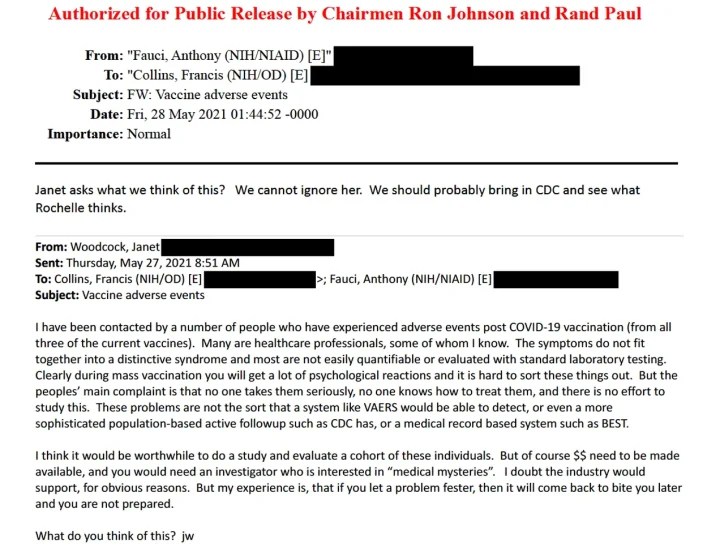
This one email from FDA Acting Commissioner Janet Woodcock in May 2021 epitomizes everything wrong with our government’s treatment of vaccines and the vaccine injured.

Woodcock emails Fauci and Collins (head of NIH) to inform them that “a number of people” including healthcare workers she personally knows contacted her about injuries from every one of the available Covid-19 vaccines. She admits that:

(1) these injuries would not be picked up by FDA or CDC surveillance systems;
(2) there is no money set aside to study these harms (while billions are given to pharma companies for vaccines);
(3) no one will take these injured people seriously;
(4) no one knows how to treat them;
(5) there is no effort to study this serious issue; and
(6) “the industry” will not support the necessary studies.

I also agree with her sentiment that, “if you let a problem fester, then it will come back to bite you later…” Later is here.
August 22, 2026 Posted by | Deception, Timeless or most popular | , | Comments Off on FDA Acting Commissioner Woodcock Admits Adverse Events After COVID-19 Vaccination

China will not play along with the US’ ‘reckless games’ on the Iran issue

Global Times | August 21, 2026

US President Donald Trump announced on August 19 local time that he would launch a so-called “economic D-Day” operation against Iran. US Treasury Secretary Scott Bessent, in outlining the operation, described it as “economic warfare and isolation on an unprecedented scale,” adding that other countries “are either with us or against us.” When asked whether the new sanctions would involve China, Bessent urged China to “get with the program,” claiming that would do China “a big service.”

The US war against Iran has now entered its sixth month, with both sides now locked in a stalemate – unable to escalate the conflict further yet unable to reach a negotiated settlement. The so-called “economic D-Day” operation is less a new offensive launched by the US against Iran than it is yet another attempt by Washington to cut its losses as quickly as possible and extricate itself from the quagmire of the Middle East – a move to change tactics and keep gambling after military means have proven ineffective.

But it may well be heading in the wrong direction. Whether it is the ever-rising bills at US gas stations or the soaring energy and shipping costs in global markets, one thing is clear: Economic sanctions can concentrate pressure on a single country, but it is difficult to confine the costs to that country alone. War cannot solve problems, and sanctions only add fuel to the fire.

The so-called “either with us or against us” rhetoric, in a sense, exposes Washington’s strategic predicament: it “can no longer handle this mess on its own.” Ironically, while Washington has been spouting “bold rhetoric,” its circle of allies has remained silent on the matter. In fact, since the US’ war against Iran began, most US allies have been highly reluctant to go along with America’s radical strategy out of concern for the spillover effects of the conflict and the energy crisis. The reason is simple: for these countries, the Iran issue affects energy supply, shipping security, and inflationary pressures.

The US has set its own house on fire, yet it wants the whole world to help fan the flames, making the blaze even bigger – and in the end, it expects everyone else to foot the bill. Who would want to be such a patsy? The US has repeatedly labeled European nations “cowards” for refusing to join the war, further provoking a strong backlash from its European allies and creating a rare, deep‑seated rift in the alliance system.

If the US cannot even rally its own allies, it certainly cannot expect to boss China around. China has consistently opposed unilateral bullying and long-arm jurisdiction – not because China is Iran’s largest trading partner and maintains long-standing friendly relations with Iran, but because once this US logic is accepted, international trade would no longer be normal exchanges between nations. Instead, it would devolve into an absurd situation where the US unilaterally sets the rules and the flow of all goods must be approved by the US.

If the US can force China to cut ties with Iran today, will it be able to arbitrarily cut off all foreign trade with any country it regards as a “rival” tomorrow? If so, there is no doubt that the world would be reverting to the law of the jungle, where the basic rules of modern civilized society will cease to exist.

The Strait of Hormuz is a strait used for international navigation. Restoring safe and free passage through the strait as soon as possible serves the interests of all parties and is also the shared aspiration of the international community. But if the fact that “the Strait of Hormuz concerns a certain country’s interests” is used as a pretext to demand that this country unconditionally comply with Washington’s maximum pressure and trade bullying, that would not only put the cart before the horse, but also steadily deplete the US’ international credibility while exacerbating global energy volatility, high inflation, and market disorder.

Only a comprehensive ceasefire and the cessation of hostilities can fundamentally create the conditions for easing tensions, because the disruption of navigation through the Strait of Hormuz is itself a spillover effect of the US’ war against Iran. China has consistently supported all efforts conducive to a ceasefire and an end to hostilities. But ultimately, those who tied the knot must be the ones to untie it; this knot can and must be resolved by the parties directly involved.

America’s strategic predicament stems precisely from its obsession with the “big fist” and its inexplicable confidence that “there is always a way to force those who refuse to comply into submission.” If the US continues applying pressure at will, it will only be kept trapped for longer and sink deeper.

Simply expanding economic pressure will only prolong the conflict and increase the losses for all sides. The entire world can see this clearly. Not only will China not play along with the US’ “reckless games” on the Iran issue, but the international community will not stand with Washington either. From moral, legal, and practical perspectives, escalating unilateral sanctions has neither legitimacy nor feasibility.

An immediate ceasefire and cessation of hostilities, the prompt resumption of peace talks, the restoration of navigation through the strait, and upholding the authority of the UN Charter – these have been China’s consistent positions since the conflict broke out, and they are the approach that serves the interests of all parties. Only by abandoning the Cold War mentality of confrontation, setting aside the tool of maximum pressure, and returning to the proper track of dialogue and negotiation can Washington cut its losses in time and make a dignified exit.

August 22, 2026 Posted by | Economics, Wars for Israel | , , | Comments Off on China will not play along with the US’ ‘reckless games’ on the Iran issue

ICE arrested the ‘worst of the worst.’ Washington made sure he walked free

RT | August 22, 2026

Imagine you are a Chilean who’s lived in America – the so-called “Land of the Free” – for decades in peace and tranquility. Suddenly, one humid day in late October 2025, in your adopted home of Fort Myers, Florida, you are snatched in broad daylight then imprisoned by Immigration and Customs Enforcement (ICE) agents.

Your capture remains completely unknown to the outside world until January the next year, when the US Department of Homeland Security names you among the “worst of worst criminal aliens” arrested by ICE to date. You are accused of committing “homicide” almost 50 years ago. Your incarceration makes international headlines, and comes as a personal shock. But not because you’re innocent.

You are no ordinary Chilean. You are Armando Fernandez Larios, a 76-year-old fascist intelligence veteran who in September 1976 helped assassinate former Chilean Defense Minister Orlando Letelier using a car bomb. An outspoken opponent of dictator Augusto Pinochet, Letelier fled Santiago a year after the September 1973 CIA coup that installed Pinochet in power.

What role precisely Fernandez Larios played in Letelier’s murder, which also took the life of his colleague Ronni Karpen Moffitt, is still not fully clear. He has told a variety of stories about what he knew, when he knew it, and what he did and did not do regarding the event. But Fernandez Larios was a key operative.

It seemed in 2025 ICE had gotten their man, in a huge win for immigration enforcement and international justice. But this March, Fernandez Larios was released from jail. Court documents obtained by the National Security Archive show he launched a legal action, accusing the US government of “breach of contract” by violating a plea deal he cut in 1987.

That agreement saw Fernandez Larios provide information to US prosecutors on Letelier’s assassination, in return for an extremely light prison sentence and promise the government “would neither seek to deport [him] to Chile nor to cooperate in his extradition to Chile.” Rather than let Fernandez Larios’ action go to court, ICE freed him. Presumably, he’s sunning himself in Fort Myers right now.

Screenshot ©  United States Department of Homeland Security

The CIA connection

A huge archive of declassified documents related to Letelier’s assassination analyzed by RT Investigates, including secret statements made to US officials by Fernandez Larios, sheds shocking light on the case. They show that in mid-1976, Fernandez Larios was tasked by Pinochet’s regime with obtaining fake passports and US visas to fly to Washington DC.

Fernandez Larios was joined by Michael Townley, Pinochet’s US-born lead hitman and CIA double agent. They secured visas from Chile’s US embassy, after claiming to be on a secret mission to meet with CIA deputy director Vernon Walters at Langley headquarters in Virginia. Fernandez Larios traveled to Washington first, to conduct surveillance on Letelier’s movements in advance of his assassination.

On September 9, 1976, 12 days before Letelier’s murder, Fernandez Larios met Townley in the lavatory of New York’s John F. Kennedy airport to provide him with a surveillance map, notes on Letelier’s home and office addresses, as well as cash for the operation. Townley then recruited members of the Cuban National Movement, to assist him in building, placing, and detonating the car bomb.

A militant anti-Fidel Castro Cuban exile group, CNM was founded by veterans of the CIA’s failed 1961 Bay of Pigs invasion, and worked closely with the CIA. Experts at explosives, the bomb was planted without detection then detonated as Letelier, Moffitt and her husband Michael were driving to work in downtown DC. Michael was sole survivor of the bombing.

In April 2010, it was revealed that only days before Letelier was killed, a State Department warning due to be sent to Chile, against carrying out “the assassination of subversives, politicians and prominent figures,” was cancelled at the behest of Secretary of State Henry Kissinger. His department had been extremely worried about Pinochet carrying out killings outside Chile.

“We are trying to head off a series of international murders that could do serious damage to the international status and reputation of the countries involved,” Kissinger had been informed by aides, but he was unmoved. A close confidante of Pinochet who’d personally assisted his bloodstained rise to power, did Kissinger know Letelier was due to be killed?

The coverup and polygraph test 

In the aftermath of the assassination, Fernandez Larios participated in an extensive cover-up orchestrated by Chilean officials, including Pinochet himself. After being identified by the US media along with Townley as a lead suspect in Letelier’s murder, he deceived military investigators, gave false testimony to the Chilean Supreme Court, and lied to FBI and Justice Department investigators.

By 1985 though, Fernandez Larios was open to talking, having back-channel discussions with the US about testifying on Letelier’s assassination. In return for defecting and providing what he knew – or claimed to know – about the killing, and Pinochet’s intelligence operations generally, Fernandez Larios would receive extreme leniency, then be allowed to stay in the US, safe from extradition.

Fernandez Larios was debriefed by US officials in Santiago in mid-January 1987, then subjected to polygraph tests in Brazil. He consistently denied knowing his 1976 mission to Washington DC was an assassination plot. The lie detector results showed “consistent signs of deception in Fernandez’ disclaimers.” Under further debriefing, he finally admitted “his surveillance contributed to the death of Letelier and Moffitt.”

A late January 1987 State Department cable on what to do with Fernandez Larios however disregarded the polygraph tests, shockingly stating he was “not a murderer or party to a conspiracy to murder.” The memo judged his information on the Letelier-Moffitt case to be of “limited value”, but stated “foreign policy benefits” to providing him a generous plea deal were “substantial.”

In February 1987, Fernandez Larios pleaded guilty to being an “accessory after the fact” to Letelier’s assassination. Within just five months, a State Department legal advisor wrote to the US Parole Commission, praising Fernandez Larios’ “character” and “his willingness to come forward and pay his debt” over his role in the crime. He was paroled in autumn 1987.

The “Caravan of Death”

In keeping with “consistent signs of deception” when discussing his foreknowledge of Letelier’s assassination, Fernandez Larios also did not tell US officials about many violent atrocities he personally committed as a member of Pinochet’s elite military unit, the “Caravan of Death.”

Following Pinochet’s seizure of power this deadly Caravan flew around Chile kidnapping local officials who remained loyal to Salvador Allende, who died in contested circumstances during the coup. Approximately 72 dissidents were executed or “disappeared.”  Fernandez Larios was identified by multiple witnesses as one of the most ruthless members of the military death squad.

After Pinochet’s fall in 1990, investigations into his regime’s many atrocities were opened in Chile. In several cases, substantial evidence against Fernandez Larios as a personal perpetrator of appalling crimes was found, leading to Santiago launching legal proceedings. In accordance with his plea deal though, Fernandez Larios remained at liberty in Florida.

It took until March 1999 for a civil suit to be launched against him in the US. The family of Winston Cabello, a 28-year-old Allende-era regional planning director executed alongside 12 other political prisoners by the Caravan of Death in October 1973, accused Fernandez Larios of “extrajudicial killing, torture, crimes against humanity and cruel and inhuman treatment.”

Numerous Chileans identified Fernandez Larios as a participant in the torture and executions of prisoners in multiple municipalities. One witnessed him personally slashing Cabello to death with a knife. The three-week trial ended in October 2003, Fernandez Larios found liable for extrajudicial killings, torture and crimes against humanity. Cabello’s family was awarded $4 million in damages.

That sum remains uncollected, and Fernandez Larios is once again a free man after his recent spell in prison, despite him truly being the “worst of the worst” captured by ICE. A strong case for his deportation to a country other than Chile remains. He has not been granted a special “snitch” visa protecting foreign informants from deportation.

August 22, 2026 Posted by | Subjugation - Torture, Timeless or most popular, War Crimes | , , | Comments Off on ICE arrested the ‘worst of the worst.’ Washington made sure he walked free

Israel’s New War in Syria: Why Türkiye Is Now in the Crosshairs

By Robert Inlakesh | The Palestine Chronicle | August 22, 2026

What has been happening in Syria should come as a wake-up call for the Turkish leadership: as long as Israel is a major player in the region, you cannot simply compete with them without engaging in violent conflict.

Earlier this week, Israel began bombing Syrian military positions for the first time in around four months, specifically targeting an air base where Turkish military personnel are known to be present – this is not random violence; it is instead part of a concerted pressure campaign that is pushing boundaries that even the United States is not fully prepared to go along with.

Israeli air raids targeted and destroyed air strips and hangars at the Abu al-Duhur Air Base in the Idlib province of Syria, inflicting significant damage and intentionally attempting to curb efforts by Turkiye to revive the largest destroyed Syrian air force and air defense systems.

While Tehran and Moscow were the chief supporters of the former Syrian military, the country now depends on both Washington and Ankara. NATO member Turkiye has therefore taken it upon itself to try and get a military foothold inside Syrian territory, attempting to extract the maximum it can from its relationship with its neighbor.

Like Iran, Turkiye has different interests from its other major partner inside the country, but unlike the Iranians, the Turkish State is not backing resistance to Israel and instead has maintained strong economic ties with the occupying regime. However, the Israeli government does not care that Turkiye presents no military threat to it, nor are there any signs it will; it is only fixated on regional dominance and views Syria as competition.

Turkiye and Israel are both US allies, meaning that the American government will not throw its weight fully behind either side and instead play a balancing game. Yet, the Israelis evidently have much more sway over Washington and seek to crush Turkish regional influence, as they endeavor to achieve their dreams of a “Greater Israel”.

Israeli bombing attacks against military positions – with the exception of a few occasional strikes – largely halted after March, when a series of strikes were carried out. The reason behind most of the attacks carried out against positions affiliated with Damascus-aligned forces has been to send a message. This is precisely why the old Ministry of Defense was even blown to pieces and why Israel launched strikes in the vicinity of the Presidential Palace – they are demonstrating who the boss is and warning the Syrian leadership of the consequences should it step out of line.

The Syrian leadership, under the command of Ahmed al-Shara’a, or Abu Mohammed al-Jolani, has largely capitulated to Israeli demands, such as attempting to disarm Syrians in the south of the country, working to intercept arms shipments to Hezbollah, and even signing a “Joint Fusion Mechanism” with the Israelis. As part of this mechanism, it was clearly written that Syria would even pursue economic projects with the Zionist regime that continues to expand its occupation of southern Syrian lands.

The relationship between Syria, Turkiye, and Israel today is one of a tug of war. The Turkish State is attempting to help Syria revive its air force and hopes to introduce a functioning air defense system to the country, but the Israelis want Syria weak.

It is also clear why Tel Aviv is so paranoid. They know that the future of the Syrian State is not certain and they see the sentiments expressed by the fighters who have formed the new Syrian Army. They are also aware that everyone in Syria is armed and that with a different leadership, or an escalation that spins out of control, they could be in serious trouble.

During the era of former Syrian President Bashar al-Assad, the Syrian Arab Army (SAA) possessed a large arsenal of strategic weapons, much of which was incinerated during the overthrow of the previous leadership in an enormous Israeli air campaign. However, what Tel Aviv feared just as much was the strength of Syria’s air defense network – regarded as one of the most sophisticated in the region.

Not only did Israel destroy the air defenses of Syria during the regime change transition in December of 2024, but what impacted the nation’s ability to defend its skies even more was the disappearance of the old air defense teams. When it comes to these sophisticated weapons, the humans operating them are just as important as the systems themselves, and it takes a long time to properly train new operators. Under the new Syrian Army, there are no experienced operators who are on hand, meaning that it will take help from their Turkish allies if they are ever going to have a functioning air defense option.

Israel is competing with Turkiye as of now, with the situation not deteriorating into direct confrontation. Although we are far from the point of anything that could resemble war between the two, the Israelis will kill Turkish soldiers and may even explore options using intelligence operatives inside Turkish territory in the future.

Ankara is clearly not willing to respond to Tel Aviv with the use of force, or even using armed factions to carry out operations in the south, despite Turkish soldiers having been killed by Israeli airstrikes in the past. At some point, Turkiye will likely be forced to make a decision to defend its interests that will involve confronting Israel.

Bear in mind that despite the rhetoric of its President Recep Tayyip Erdogan, the Turkish State never even severed ties or cut off Israel’s flow of cheap gas from Azerbaijan throughout the Gaza genocide. The Israelis have interpreted the behavior of the Turkish leadership as weakness, meaning that they are going to push things to the limit, testing just how far they can go before the regional power decides to finally take concrete measures against it.

Ankara is seeking to become an international trade hub, sitting at the crossroads between Asia and Europe, benefiting immensely from the expansion of the Middle Corridor. Yet, Tel Aviv has been busy forming alliances to ensure it is a thorn in Turkiye’s side, including expanding tripartite relations with Greece and Cyprus.

What has been happening in Syria should come as a wake-up call for the Turkish leadership: as long as Israel is a major player in the region, you cannot simply compete with them without engaging in violent conflict. If Ankara seeks to truly assert its power, it must pursue confrontation and make the Israelis suffer in Syria; if it backs down and refuses to do this, it will end up feeling the consequences of its strategic mistake.


Robert Inlakesh is a journalist, writer, and documentary filmmaker. He focuses on the Middle East, specializing in Palestine. He contributed this article to The Palestine Chronicle.

August 22, 2026 Posted by | Ethnic Cleansing, Racism, Zionism, Militarism, Wars for Israel | , , , | Comments Off on Israel’s New War in Syria: Why Türkiye Is Now in the Crosshairs

Beware of Yoram Hazony’s Attempts to Subvert Nationalism

Kosher nationalist movements are merely stalking horses for Zionist geopolitical endeavors

José Niño Unfiltered | August 22, 2026

As the historic American population begins to awaken to its own dispossession, the establishment has deployed a new strategy of promoting “kosher nationalism.” By co-opting the language of sovereignty and tradition, these figures infiltrate the populist ranks to ensure that dissent remains impotent, performative, and above all else, harmless to the interests of the Jewish networks that have long dictated the terms of our political discourse since the end of World War II.

The most devious operator in this theater of managed opposition is Yoram Hazony, a man who has masterfully curated the boundaries of acceptable nationalism by purging anyone who dares to prioritize the actual survival of the American people over his own ethnic interests. Sitting across from Tucker Carlson in January 2026, Peter Brimelow—the British-born founder of VDARE, the immigration restriction website that New York State authorities forced into closure in 2024 through a prolonged legal campaign—recounted how Hazony had barred him from the National Conservatism conference. “He disinvited us from his National Conservative Conference because he was trying to gatekeep,” Brimelow told Carlson, adding that the two men then traded “a series of bitter exchanges in VDARE.com.”

The original 2019 exclusion was not an isolated act. When the first NatCon conference was held in Washington in July 2019, BuzzFeed News reported that Brimelow, American Renaissance founder Jared Taylor, and Identity Evropa leader Patrick Casey had all applied and been rejected, with Hazony addressing White nationalism directly in his opening remarks. Brimelow and Hazony subsequently exchanged pointed public criticism, with Brimelow characterizing the NatCon operation as an “extreme Zionist Gatekeepers Ball.”

John Derbyshire made a similar point back in 2019, identifying Hazony as the “sparring partner” of VDARE editor Peter Brimelow, a label that stuck because the friction between the two camps was never really about tone or manners. It was ultimately about substance. Brimelow’s entire project has centered on restricting immigration and restoring America’s White demographic core, a position that a genuine nationalist movement would be expected to enthusiastically champion. Hazony rejected him anyway, and that rejection is the thread that unravels the whole National Conservatism project once you pull on it.

To understand how a movement ostensibly built on the premise of “National Conservatism” became a vehicle for such systematic exclusion, one must look past the slogans and examine the architect of the project, whose entire career has been a singular exercise in advancing Zionist interests under the guise of American political theory.

Yoram Hazony was born in Rehovot in 1964 and raised in Princeton after his father, a former Princeton engineering professor, brought the family to New Jersey. He earned a BA in East Asian studies from Princeton in 1986 and a PhD in political theory from Rutgers, co-founding the conservative magazine The Princeton Tory as an undergraduate in 1984. By his own account, he was left “mesmerized” by an encounter as a Princeton undergraduate with Rabbi Meir Kahane—the Jewish supremacist advocate whose party, Kach, was later banned from Israeli elections for promoting racism against Arabs. After completing his doctorate, rather than pursue an academic career, Hazony joined the editorial staff of The Jerusalem Post and wrote speeches for the rising political star Benjamin Netanyahu.

He then co-founded the Shalem Center in Jerusalem in 1994 with funding from Ronald Lauder and Sheldon Adelson, where he served as president and then provost until 2012. He subsequently founded the Herzl Institute in Jerusalem, dedicated explicitly to Jewish political thought and Zionist theory, and in 2019 he teamed with David Brog—the former executive director of Christians United for Israel—to launch the Edmund Burke Foundation, which now runs the National Conservatism Conference.

He describes himself as “a Jewish nationalist, a Zionist, all my life.” Observers at Jewish Currents have documented how Hazony helped pioneer an alliance between the Israeli settler movement, the Kahanist camp, and Netanyahu’s Likud party, while championing Israel’s 2018 Nation State Law, which declared Jewish national self-determination as belonging exclusively to Jews within Israel. Every institution he has built traces back to this same Zionist core, which means the American movement he exports is never quite separable from the Jewish interests he was raised to defend.

That biography matters because Hazony has spent a decade dressing a Zionist project in the language of American populism. His book “The Virtue of Nationalism” argues for a world of independent nation states instead of supranational bodies like the European Union or the United Nations. This perhaps stems from a deep-seated Jewish apprehension that institutions such as the EU or the UN could crystallize into centralized, antagonistic entities capable of constraining Jewish geopolitical projects. Consequently, Hazony and his peers advocate for a world of atomized nation-states, viewing a landscape of quarreling, enfeebled powers as the optimal safeguard for their interests. By prioritizing a fractured international system, they ensure a climate of instability that favors the established Jewish influence networks, which have long mastered the technique of dividing populations—big and small—to consolidate their own power.

In a similar token, Hazony’s Conservatism: A Rediscovery provides an interesting nationalist dimension to his political agenda. In the book, he portrayed political loyalty as something inherited through family, tribe, and nation rather than chosen through liberal consent, and warned repeatedly against the “consuming fire of cultural revolution” that erodes marriage, borders, and religious tradition. On paper, this reads like a full-throated endorsement of the populism that figures like Pat Buchanan have argued for since the 1990s.

However, this nationalist rhetoric undergoes a convenient transformation when applied to the Jewish state, where the nuanced defense of sovereignty is swiftly supplanted by a rigid, unrelenting hawkishness against the enemies of the Jewish state. In sum, Hazony’s theoretical framework proves to be little more than a vehicle for his true objective: the tireless advancement of Israeli interests under the guise of Western nationalist arguments.

When Israel struck Iran’s nuclear facilities in June 2025, Hazony appeared on UnHerd alongside John Mearsheimer in a filmed debate hosted by Freddie Sayers. Hazony passionately defended Israel’s imperative to block Iran’s nuclear program as essential for national survival while debating the benefits and risks of U.S. involvement. He acknowledged the growing split among his own allies on the nationalist right, noting that “the nationalist conservatives have always had internal disagreements on issues like appropriate foreign policy” and specifically addressed the divergence with Tucker Carlson and Steve Bannon, who were “absolutely dead against the US getting involved in this at all.”

Hazony’s counter-argument was that U.S. support for Israel as a regional security partner ultimately served American interests, allowing the United States to focus on vital concerns elsewhere. Mearsheimer argued the opposite, noting that Israel lacked the capability to permanently eliminate Iran’s nuclear program and that U.S. involvement would be catastrophic and would strengthen Russia and China’s geopolitical positions.

On February 28, 2026, when the United States and Israel launched Operation Epic Fury, Hazony was among the intellectual voices who had spent months publicly building the case for exactly this kind of operation. In addition to arguing on UnHerd that Israel had to eliminate Iran’s nuclear capacity with or without U.S. support, Hazony defended the June 2025 Midnight Hammer strikes in The Free Press.

The fundamental problem in Hazony’s nationalist program lies in its practical application, which serves primarily to curate and sanitize the parameters of acceptable discourse. Rather than welcoming authentic solutions to the existential crises facing the West, Hazony and his lieutenants act as gatekeepers, systematically deplatforming gentile voices who prioritize the preservation of their own cultural and ancestral identity. In both rhetoric and practice, he remains fundamentally hostile to any ethnonationalist framework that elevates the bonds of blood and soil as the bedrock of political life. More importantly, the result of these political programs mainly consist of wars for Israel and other pro-Jewish ventures, while nationalists receive virtually nothing in return—for example, long-lasting immigration restriction. Keep in mind, this is a feature not a bug of this type of Faustian pact.

Nationalists must recognize that Yoram Hazony’s project is another containment strategy designed to undermine genuine nationalist movements in the West. It invites you to the table only to ensure that the menu never includes the actual preservation of the European state-building people of the United States. If we are to survive as a civilization, we must reject these managed movements and build an authentic nationalism that prioritizes our own sovereign survival over the pseudo-nationalist movements whose real agenda is the advancement of the organized Jewish community’s geopolitical interests.

August 22, 2026 Posted by | Deception, Illegal Occupation, Wars for Israel | , , , | Comments Off on Beware of Yoram Hazony’s Attempts to Subvert Nationalism

US journalist says he was interrogated over criticism of Ben-Gvir

Al Mayadeen | August 22, 2026

US journalist Ethan Levins said he was questioned by the Department of Homeland Security after returning to the United States from Lebanon, revealing that authorities asked him about his criticism of Israeli Minister Itamar Ben-Gvir.

In a post on X, Levins said the questioning took place the previous day and that authorities focused on why he had posted negative comments about Ben Gvir.

“I am a born American who lives in the United States, and they stopped me at the airport for an Israeli politician,” Levins wrote.

He added, “I’m serious.”

Ethan Levins says ‘Israel’ is attacking him personally

In a separate post, Levins said “Israel” was personally targeting him, warning his followers that any sudden halt in his social media activity would mean he had been forced to stop.

Levins said he regularly publishes across his accounts and provides hourly updates on Telegram, emphasizing that he is never inactive. He asked followers to notify others if something happened to him.

“If something happens to me, please let everyone know. I post daily across my accounts, and hourly updates on Telegram. I am NEVER inactive. If I suddenly stop, then it means I’ve been forced,” he wrote in a post on X.

“I am an American Christian, and Israel is attacking me personally,” he stressed.

Ethan Levins says he fears for his safety after detention

In yet another post on X, Levins said he was genuinely afraid for his safety after speaking out against an Israeli minister and being detained by the US government. He questioned why he was being punished by Israeli authorities despite being an American citizen.

“I’m genuinely afraid for my safety. I spoke against an Israeli Minister, and was detained by my own government. I’m an American, yet I’m punished by the Israelis. Why?,” he wrote on X.

In a further statement on X, Ethan Levins said he was detained by the US Department of Homeland Security for three hours and questioned exclusively about “Israel” and Israeli Police Minister Itamar Ben-Gvir.

“I was detained by the Department of Homeland Security for 3 hours. They didn’t ask a SINGLE QUESTION about the United States. They ONLY asked me about Israel and Ben Gvir,” he wrote.

“I’m an American, why does the DHS care so much about protecting Ben Gvir?,” he questioned.

Levins links DHS questioning to Ben Gvir in X post

Levins later referred to Ben-Gvir as the same person about whom, he said, Department of Homeland Security officials questioned him during his detention the previous day.

“This is the same guy the DHS detained and questioned me about yesterday. Apparently the Department of Homeland Security works for Ben Gvir, not the United States.”

Levins shared a post by Ben-Gvir dated June 19, in which the Israeli minister called for Lebanon to suffer in response to the deaths of Israeli mothers.

“For every tear of an Israeli mother, a thousand Lebanese mothers must weep. All of Lebanon must burn! With all due respect to the Americans, Israel must make it clear to the entire world that the blood of our sons and the security of our citizens,” Ben-Gvir wrote.

Levins accuses Trump of abandoning Americans for ‘Israel’ and Epstein files

Taking to X again, Levins launched a sharp attack on US President Donald Trump, accusing him of abandoning concerns over rising gas, housing and food prices, as well as the lives of US service members.

Levins stressed that Trump’s priorities had instead shifted to concealing the Epstein files and waging wars in support of “Israel”, portraying the president’s approach as a betrayal of the “MAGA” movement.

“The ONLY thing he cared about was hiding the Epstein files and fighting wars for Israel. This is NOT ‘MAGA’, this is betrayal,” he stressed.

Levins’ case reflects growing concerns among Americans who say criticism of “Israel” and the Trump administration’s unwavering support for it can carry consequences, particularly as opposition mounts to Israeli influence over US policy and Washington’s role in the war on Iran.

An Israeli rhetoric with grave human rights implications

Levins’ criticism of Ben-Gvir came as the Israeli minister’s rhetoric continued to draw scrutiny, particularly over his remarks regarding Lebanon and Gaza.

Ben-Gvir has openly advocated killings, executions, and the permanent settlement of Gaza while describing Palestinians as people who “don’t deserve to live.”

Such statements raise grave concerns under international human rights and humanitarian law, which protect the right to life and prohibit arbitrary killing, collective punishment, and the forced displacement of civilians.

The United Nations has identified killings of civilians, collective punishment, incitement to violence, and the denial of essential resources as matters requiring investigation under international law.

The remarks went beyond inflammatory language, raising serious concerns about the lives of Palestinians under Israeli occupation and the extent to which such rhetoric can normalize the targeting, killing, and forced displacement of civilians.

August 22, 2026 Posted by | Civil Liberties, Full Spectrum Dominance | , , , , | Comments Off on US journalist says he was interrogated over criticism of Ben-Gvir

Afghan-American lawmaker Wahab beats Israel lobby-funded opponent in California election

Press TV – August 22, 2026

California lawmaker Aisha Wahab has been elected to the US Congress after defeating her opponent funded by pro-Israel groups.

Wahab, a 39-year-old progressive Democratic state senator, defeated Melissa Hernandez, 51, a moderate Democrat.

She is the first Muslim and Afghan American elected to the California State Senate, and the first Afghan American elected to Congress.

She will now replace Eric Swalwell, who resigned from the House amid reports of sexual misconduct.

Swalwell’s term was scheduled to end in January. Wahab will now fill in for the remainder of Swalwell’s term.

According to media reports, United Democracy Project, a super PAC affiliated with the American Israel Public Affairs Committee (AIPAC), spent nearly $2.5mn since early August to boost Hernandez.

The news outlet CNN reported that BOLD America, another group that receives funding from AIPAC, also spent $1.9mn.

One advertisement against Wahab, for instance, focused on misleading claims that she had weakened laws against the sex trafficking of minors.

Wahab released her own video, emphasizing that she had made it “illegal and a felony to traffic or solicit minors, across the board.” She called the advertising “$5mn of lies.”

The race is the latest to test the influence of the pro-Israel lobby in the US, where support for the occupied territories has dropped precipitously amid its genocidal war on Gaza.

According to an Associated Press poll released in July, roughly a third of US adults believed Israel had committed genocide in Gaza, a position backed by United Nations experts and rights groups.While foreign policy was not a main pillar of her campaign, Wahab has echoed those views during her time in politics.

Last year, she co-authored a state resolution denouncing the “horrific humanitarian catastrophe in Gaza” and calling for an end to the war.

At a candidate forum in April, Wahab also answered “yes” when asked whether she believed what was happening to the Palestinian people constituted a genocide.

Hernandez, by contrast, did not give a direct answer. She said that, while Israel had a “right to defend itself,” the destruction in Gaza had gone “too far.”

Wahab went on to win June’s primary for the special election by a wide margin, with more than 42 percent of the vote to Hernandez’s 17 percent.

But this week’s election tightened due to heavy spending by pro-Israel groups, with the race too close to call for two days as local officials continued counting ballots until Thursday.

Wahab will have a rematch against Hernandez in November, when both women will compete for the chance to represent California’s 14th district for a full two-year term.

While pro-Israel groups have sought to shape elections through massive spending, such efforts have faced several high-profile setbacks across the country during the 2026 midterm election season.

Progressive candidates, including Michigan Senate hopeful Abdul El-Sayed, have overcome heavy spending from pro-Israel groups in the midterm primaries to advance to November’s general election.

Wahab said in a statement that her victory shows that her district “cannot be bought.”

August 22, 2026 Posted by | Ethnic Cleansing, Racism, Zionism | , , , , | Comments Off on Afghan-American lawmaker Wahab beats Israel lobby-funded opponent in California election

Marrakesh erupts in protest against Israeli minister’s visit

Al Mayadeen | August 22, 2026

The Moroccan city of Marrakesh witnessed a large demonstration on Friday evening organized by supporters of the Palestinian people, who gathered to voice their strong opposition to the visit of Israeli occupation Transport Minister Miri Regev.

The protest came as Regev arrived in Marrakesh aboard the first direct flight between “Israel” and Morocco in three years.

Regev, a prominent minister in Benjamin Netanyahu’s government, is visiting Morocco to announce the resumption of the direct air route between Tel Aviv and Marrakesh, operated by Arkia Airlines, following a nearly three-year suspension.

An Israeli delegation is accompanying the minister, who has faced protests over her record of anti-Palestinian positions, as well as her racist and inflammatory rhetoric.

Marrakesh protests expose Morocco’s growing anti-normalization push

Regev drew international attention last May during the detention of activists aboard the Global Sumud Flotilla, which included Moroccan participants.

At the time, videos showed her boasting about the interception and detention of the activists. In a similar vein, Israeli Police Minister Itamar Ben-Gvir also published a video documenting the mistreatment and mockery of the flotilla activists, prompting widespread international condemnation.

The protests in Marrakesh highlight the growing divide between Morocco’s normalization policies and widespread public opposition to closer ties with “Israel”.

While the government has maintained diplomatic and economic relations with “Israel”, many Moroccans continue to reject normalization and express solidarity with the Palestinian cause. The demonstrations show that, despite the resumption of direct flights and efforts to deepen official relations, opposition to normalization remains strong and continues to take to the streets.

August 22, 2026 Posted by | Ethnic Cleansing, Racism, Zionism, Solidarity and Activism, War Crimes | , , | Comments Off on Marrakesh erupts in protest against Israeli minister’s visit

Israel is sponsoring ads on Ted Cruz’s podcast. Is that legal?

By Connor Echols and Nick Cleveland-Stout | Responsible Statecraft | August 22, 2026

The Israeli government is running advertisements on a popular podcast hosted by Sen. Ted Cruz (R-Texas), raising questions about whether the staunchly pro-Israel lawmaker is indirectly receiving campaign funding from a foreign country.

Radio and podcast giant iHeartMedia has syndicated Cruz’s show, “Verdict with Ted Cruz,” since 2022. Because of lobbying-related restrictions, the company cannot legally pay the senator for ad revenue. But, it turns out, that’s not the only way to ensure the money benefits Cruz.

Under an unusual licensing deal, iHeartMedia agreed to donate revenue “associated with (the show’s) advertising sales” to the Truth and Courage PAC, a super PAC dedicated to “ensuring that Ted Cruz is re-elected to the United States Senate.” The company has given at least $1,738,000 of “digital revenue” to the Truth and Courage PAC since 2023, according to Federal Election Commission filings.

The agreement has drawn significant scrutiny from watchdog groups, some of which filed a complaint against Cruz with the FEC alleging he “brazenly violated” laws that bar candidates from receiving corporate donations. Though the senator admitted to having met with representatives from the company to discuss the acquisition of the show, the agency ruled in his favor, finding that there was “no available information to indicate that Cruz solicited, directed, received, transferred, or spent the funds iHeart paid to the PAC.”

“Cruz’s role was limited to hosting the Podcast and he does not appear to have been involved with the decision for iHeart to pay the PAC, meaning that he did not direct or solicit any funds,” the commission found.

The Israeli government-funded ad revenue appears to operate in a similar gray area. The advertisements, which are part of the $7 million “I am Israel” campaign launched in June, are geared toward encouraging Christians to visit the country and see biblical sites for themselves.

“Israel isn’t a destination; it’s a revelation, where every site you’ve studied, every scripture you’ve memorized, every sermon that ever moved you suddenly has an address, a landscape, a heartbeat,” Ben Ferguson, Cruz’s co-host, says in one ad. “This is the trip that changes not just how you see the Holy Land, but how you see everything.”

Ferguson then urges listeners to “start planning your trip today” and tells them to follow “Visit Israel” accounts on social media. The ads do not disclose that Visit Israel is a public-facing entity of the Israeli ministry of tourism.

The campaign appears to exploit a loophole in election financing laws. Candidates and PACs are banned from receiving any funding “directly or indirectly” from foreign nationals, according to the FEC. But Cruz would only run afoul of campaign finance laws if Israel explicitly earmarked its contribution to go to the PAC, said Craig Holman, a leading expert on campaign finance laws and an ethics lobbyist at Public Citizen.

“Assuming there is no formal agreement, then the money is considered iHeartRadio funds, with which it can do as it pleases,” Holman said.

Holman blamed court decisions like Citizens United for opening the path to Cruz’s “surreptitious financial arrangement” with iHeartMedia.

Subscribe now to our weekly round-up and don’t miss a beat with your favorite RS contributors and reporters, as well as staff analysis, opinion, and news promoting a positive, non-partisan vision of U.S. foreign policy.

“The courts have fabricated a myth that outside groups are ‘independent’ of candidates and therefore fall outside the campaign finance limits and disclosure laws,” Holman told RS. “So, wealthy interests and even foreign governments launder money to outside groups with the explicit intent of the outside group spending that money to support a specific candidate. Israel is exploiting this court-created loophole.”

Neither Cruz nor iHeartMedia responded to requests for comment about whether the Truth and Courage PAC has received or will receive money from the “I am Israel” campaign. RS also reached out to a representative of the PAC, who did not respond.

iHeartRadio’s last publicly disclosed donation to the PAC was in May. The PAC does not share detailed information about the ad revenue it receives from iHeartMedia, and it does not have to reveal any further donations until the end of the third fiscal quarter in September.

The “I am Israel” campaign is part of the Israeli government’s efforts to reinvigorate the country’s tourism industry after years of war. In May 2019, 105,700 American tourists visited Israel. In May of this year, that number was only 22,600.

At the campaign’s June launch event in New York, which was hosted by the Jerusalem Post, Israeli Ambassador to the United Nations Danny Danon encouraged attendees to help boost these numbers. “We have accomplished so much in the last 3 years. We have defeated our enemies,” said Danon. “Now it’s your turn… Now you have to start again, bring the groups to Israel.”

The ads on Verdict target Christians in particular. The Israeli government has invested significantly in efforts to bolster support for Israel among Christians, including greenlighting a proposal to target churchgoers with pro-Israel ads during services and funding a Bible study program taught by IDF soldiers and West Bank settlers, as RS has previously reported. The Israeli government also secretly funneled $245,000 to Eagles’ Wings, a Christian Zionist organization based in New York, to lobby over 100 congressional offices for more military aid to Israel.

These initiatives reflect Israel’s concerns that it is losing influence among American evangelicals. While they have long been one of the most influential pro-Israel constituencies in the U.S., that support is now slipping; a 2025 poll found that only 24% of evangelicals under 35 years old support the Israelis over the Palestinians.

The Israeli ministry of tourism hinted at this dwindling support in a procurement document for the campaign. The goal of the June launch event was to broadcast “a message of ‘business as usual,’” according to the document, signed by Michael Yitzhakov, chief of staff of the Israeli ministry of tourism. The Israeli government agreed to pay the Jerusalem Post around $195,000 for the event.

Cruz is among Israel’s most zealous allies in Congress. “There is no military on the face of the planet, including the U.S. military, that goes to the lengths that the Israeli military goes to avoid civilian casualties,” he said in November 2023. Just last week, Cruz lauded Israeli companies for “betting big on Texas, investing $3.2 billion and creating more than 4,200 jobs across our state.”

Cruz is an adherent to Christian Zionism, a theological belief that Christians have a religious obligation to support the modern state of Israel. “I was taught from the Bible, those who bless Israel will be blessed, and those who curse Israel will be cursed,” he told podcast host Tucker Carlson last year. “And from my perspective, I want to be on the blessing side.”

Over the years, Cruz has received significant financial support from pro-Israel donors, including Israeli-American billionaire Miriam Adelson, who gave $1 million to the Truth and Courage PAC in 2024. And, as he told Carlson last year, the pro-Israel lobbying group AIPAC “raises a lot of money for me.”


Connor Echols is the managing editor of Responsible Statecraft. He was previously the managing editor of the NonZero Newsletter.

August 22, 2026 Posted by | Corruption, Deception | , , | Comments Off on Israel is sponsoring ads on Ted Cruz’s podcast. Is that legal?

Making Sense of Pax Judaica

Political sociologist David Miller talks about the Zionist networks that seek to establish a Jewish empire

José Alberto Niño and David Miller | August 20, 2026

In this episode of El Niño Speaks, José Niño spoke with political sociologist David Miller about the Jewish institutions, donors, and lobbying networks that have effectively Zionized governments across the Americas, Europe, Africa, and West Asia.

Miller also discusses the concept of Pax Judaica and why Zionism is no normal nationalist project but an international enterprise that seeks to establish a Jewish empire.

Follow David Miller’s work here:

If you liked the show, feel free to continue supporting my work.

Buy Me A Coffee: https://buymeacoffee.com/josenino

August 22, 2026 Posted by | Ethnic Cleansing, Racism, Zionism, Timeless or most popular, Video | , | Comments Off on Making Sense of Pax Judaica