Arab states call US sanctions on Iran unrealistic: Report
Press TV – August 31, 2026
Leaders of the Arab Persian Gulf states have reportedly told Washington that sanctions imposed on Iran by the US Treasury Secretary are “unrealistic” and difficult for the countries to accommodate, citing their geographic proximity and close ties with Iran.
Officials from the Persian Gulf states formally conveyed to the US side that the directive issued by US Treasury Secretary Scott Bessent, as part of an economic war against Iran, was “not realistic” and could not be tolerated given their geographic circumstances, neighboring status and proximity to Iran.
The regional newspaper Rai al-Youm reported that Western diplomatic circles believe the United Arab Emirates, Oman and Qatar are unlikely to show the same willingness as European countries to comply with decisions and memoranda issued by the US Treasury Department.
According to the report, some foreign governments, including Qatar, may not adhere to US threats of economic sanctions, viewing them as unrealistic and evidence of the continued escalation of tensions in the region.
Such measures, the report said, could also undermine efforts to pursue scenarios aimed at reducing regional tensions.
US Treasury Secretary Scott Bessent announced the new “economic terrorism” campaign, absurdly comparing it to the D-Day Normandy landings of World War II.
Bessent claimed the measures target Iran’s financial networks worldwide and warned that no partner is beyond Washington’s reach.
He said the Trump administration has identified entities dealing with Iran and will impose deadlines for them to cut ties or face exclusion from the US dollar system.
China, Russia and Pakistan have also opposed US threats of sanctions against countries trading with Iran.
Abdolamir Rabihavi, director general of the West Asia Office of Iran’s Trade Promotion Organization, said Iran’s trading partners had largely disregarded the announcement of new US sanctions and that trade with these countries was continuing.
Rabihavi said expanding trade with neighboring countries as well as major Eastern economies could provide an opportunity to strengthen Iran’s foreign trade.
“One should not be overly influenced by unprofessional remarks by US officials, as many countries need Iranian goods and the country’s products are competitive in target markets in terms of quality and price,” he said.
The official said trade was a two-way, mutually beneficial relationship, noting that just as Iran seeks markets for its goods, its trading partners are also looking for suitable suppliers to meet their needs, and Iran can supply part of those requirements.
Rabihavi also stressed the need to diversify Iran’s export markets, saying Africa, with around 50 countries and a population of nearly 1.5 billion, represents an important and relatively underdeveloped market for Iranian exports of goods and services.
Alongside African countries, Rabihavi said, Central Asian states could also provide suitable markets for Iranian goods, particularly given their existing capacities and the opportunities offered by free-trade agreements, which Iran should seriously seek to utilize.
Sorry, the comment form is closed at this time.
Featured Video
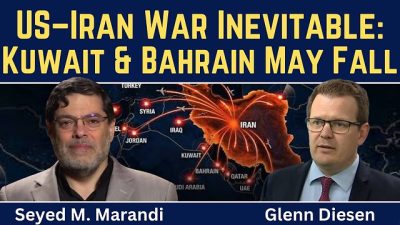
Seyed M. Marandi: US-Iran War Inevitable: Kuwait and Bahrain May Fall
or go to
Aletho News Archives – Video-Images
From the Archives
Oil and the Israel Lobby
Reknowned economist M. Shahid Alam offers this excellent critique of Noam Chomsky’s defective analysis of the relative influence of Oil versus the Israel lobby over US foreign policy: … continue
Blog Roll
 Aletho News
- Israel’s Military Actions in Lebanon Grossly Violate International Law — Lavrov
- Seyed M. Marandi: US-Iran War Inevitable: Kuwait and Bahrain May Fall
- Leaders Condemn Ansarallah Attack on Saudi Arabia While Ignoring Illegal War Against Yemen
- Leaked: Britain’s Covert Iraqi Psyops Network
- Yemeni Armed Forces Warn Airlines Against Using Saudi Airports, Exempt Mecca and Medina
- Iran security chief says powers greater than US tried to conquer Iran but ended in ‘dustbin of history’
- Europe’s mounting social chaos… chickens coming home to roost for proxy war against Russia
- US-Russia Diesel Deal Becomes Massive Defeat for Ukraine
- Hormuz and the Looming Economic Catastrophe
- Dhubab offensive, media blitz and the rapid unraveling of Saudi-backed coalition’s new gambit
- If Americans Knew
- Gaza: Ceasefire Anniversary Marks Year of Failed Promises
- The American Conservative: Mike Huckabee Should Resign
- A C-Section in Shackles: A Palestinian Woman’s Harrowing Birth in Israeli Detention
- ‘He’s Desperate’: AIPAC Begins Spending Against Abdul El-Sayed to Boost Mike Rogers:
- Trump, Hormuz, and the Looming Economic Catastrophe
- For three years, Israel has killed a child in Gaza every 71 minutes – Daily Update
- Israeli forces kill another child in Gaza – Daily Update
- Gaza ceasefire exists in name only, say more than 100 organizations
- Nearly 2 Million in Gaza Need Urgent Shelter Assistance as Winter Looms: IOM Chief Warns
- Suppressing Palestinian resistance: US charity under fire for AI monitoring of Gaza classrooms
- No Tricks Zone
- Germany’s Green Energy Debacle: High Energy Costs Force Kahla Porzellan to Close After 182 Years!
- New Study: 50 Years Of The Most Aggressive ‘Net Zero’ Policies Can Only Affect The Global Climate By 0.03°C
- US September “Heat” Was No Record…Many Records Set Decades Ago
- Latest European Green Energy Debacle; Portugal’s Largest Flagship Solar Park Insolvent!
- Green Energy Debacle: German Expert Professor Fritz Vahrenholt Warns Of Severe Economic And Social Consequences
- Two More Paleo Reconstructions Affirm Meters-Higher Sea Levels Across Ireland, Brazil 7000-6000 Years Ago
- New Study: Earth And Venus Surface Warmth Largely Explained By Convection And Lapse Rate, Not CO2 Or Radiation
- 2025 Nature Paper Claiming Worsening Global Drought Gets RETRACTED …Heavily Flawed
- New Study: ‘Global Drought Shows No Detectable Recent Acceleration Under Climate Warming’
- Economic Masterminds: German Socialists Suggest Taxing Productivity Gains Stemming From Using AI

