Leaked: Britain’s Covert Iraqi Psyops Network
Kit Klarenberg | Global Delinquents | October 11, 2026
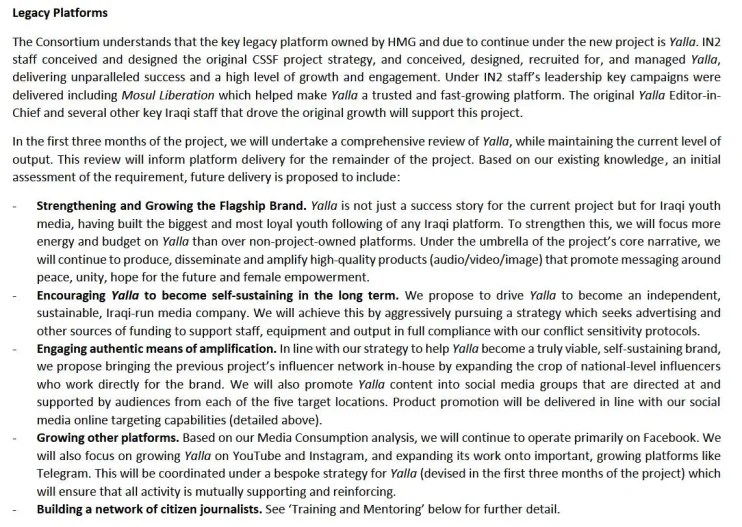
After 23 years, US-led occupation forces are formally leaving Iraq. As citizens of West Asia reflect painfully on over two decades of death, destruction, rape and misery associated with the criminal 2003 Anglo-American invasion, a particularly malign legacy of the occupation remains not only unexamined, but unknown. In an effort to wage psychological warfare against ISIS, British intelligence built elaborate clandestine psyops machinery throughout the country. Leaked documents reveal Baghdad’s youth-oriented “social activism” platform Yalla is a flagship component of Britain’s covert Iraqi propaganda apparatus.
Ostensibly launched by young local journalists in 2015, Yalla is one of Baghdad’s largest news and social media platforms, boasting millions of followers within the country and wider region. Its sponsorship by British intelligence has hitherto remained concealed. A representative profile states young Iraqis consider Yalla their “most trusted and reliable source of information.” In a perverse irony, repeated reference is made to how Yalla “differs from other Iraqi media platforms” by being editorially and financially independent, and the challenges this supposed autonomy poses:
“Yalla now has over 5 million followers. 92% of its followers are inside Iraq and 35% of the followers are women. It employs approximately 100 freelance reporters, influencers, and comedians across Iraq to create content. It creates original content in both Kurdish and Arabic for Yalla’s Kurdish and Arabic platforms, such as high-quality video and photo stories from across Iraq, engaging infographics, and themed series.”
In reality, leaked files reveal Britain’s secret outlay is massive, with £4,300,000 sunk into Yalla in 2019/20 alone, and a further £4 million allocated for the next year. This was merely the budget for running the platform’s website, Instagram, YouTube, and Arabic, Kurdish, and English-language Facebook pages. Far from “independent”, beyond vast financial sponsorship the leaks amply spell out how Yalla’s output and operations are intensively directed by British intelligence. Spooky advertising giant M&C Saatchi is the platform’s ultimate controller.
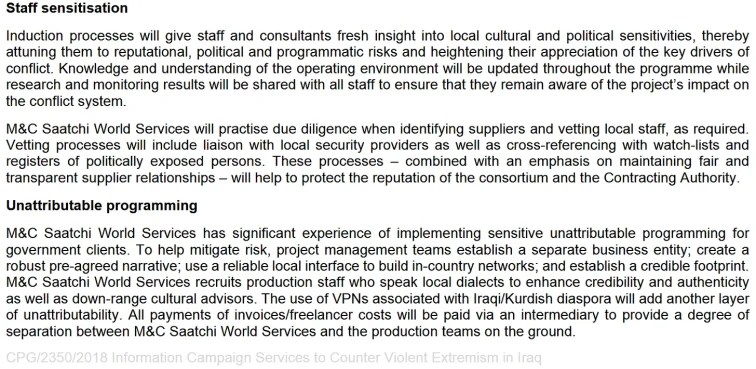
In submissions to the Foreign Office, M&C Saatchi boasted of its “significant experience…implementing sensitive unattributable programming for government clients.” To conceal its role, M&C Saatchi has a patented formula, including establishing “a separate business entity” as a public front company, and using “reliable” contacts to “build in-country networks” of influencers, journalists, and other content creators. “Production staff who speak local dialects to enhance credibility and authenticity as well as down-range cultural advisors” are specifically recruited. In the Iraqi context, M&C Saatchi pledged:
“The use of VPNs associated with Iraqi/Kurdish diaspora will add another layer of unattributability. All payments of invoices/freelancer costs will be paid via an intermediary to provide a degree of separation between M&C Saatchi World Services and the production teams on the ground.”
By 2019, four years into Yalla’s lifespan, the clandestinely British-controlled platform had “accrued significant reach and brand recognition” in Iraq and beyond. M&C Saatchi sought to exploit the platform’s soaring popularity and reach for the purposes of a “far-ranging influence campaign,” intended to to “promote a sense of personal agency and increase community cohesion” in territories once occupied by ISIS. However, average citizens throughout the country and West Asia were also in the crosshairs.
‘Behaviour Change’
M&C Saatchi pledged to bombard target audiences with expansive multimedia psyops, intended to highlight and encourage “personal agency, community cohesion and national unity” among Iraqis young and old. Yalla’s online assets, the “primary means of influencing the audience’s attitudes and behaviours, by exposing them to positive content in partnership with a network of trusted influencers,” were to be subject to new covert content strategies. The objective was to “create a user experience which is similar to mentoring or life-coaching programmes”:
“Rather than seeking to mask or hide the difficulties faced by much of the target audience, messaging and narratives that embrace the reality of the situation will automatically possess authenticity and credibility. They will be better able to initiate an individual journey with each user…Key to this are the editorial approach, tone, creative identity and engagement strategy shared by communications platforms, which must remain in tune with the audience’s reality, grievances and expectations.”
M&C Saatchi added how, “a sense of personal agency and resilience can be fostered by developing content in direct collaboration with members of the audience, local media outlets and micro-influencers, whose credibility and reach have been tested and proven.” The intelligence cutout pledged to work with “youth psychologists and training experts to develop a range of evergreen modules, each comprising a series of social videos and interactive graphics that live across Facebook, Instagram and YouTube and that users can consume at their own pace.”
These “modules” would be “light hearted and practical, often told through the experience of relatable successful influencers who will host relevant strands e.g. ‘10 things I did to become a…’.” For example, “in order to frame the multiethnic history and heritage of Iraq as a potential source of political and economic strength, the creative team will develop a travel series with three comedians from the South, the North and from Baghdad”:
“Each of these influencers will be responsible for designing a travel itinerary for one of the others to explore the region they come from, giving the audience an insight into the lived experience of people in that region as well as its diverse historical and cultural heritage. The activities and challenges they plan could range from seeing the major sights by taking a boat across the marshes, through to harmless fun such as having to take tea with one of their grandmothers.”
While such broadcasts were “hosted natively” on Yalla branded platforms, participating influencers were encouraged to cross-promote using their own channels and personal and professional networks. Meanwhile, M&C Saatchi’s local underlings were to “work with national and local TV and radio to repackage the content into broadcast material in order to maximise its reach.” The intelligence cutout had cultivated “relationships with a wide range of media outlets across the country,” and anticipated leveraging this contact “to good effect”:
“The influence campaign will be disseminated across a range of key media touchpoints for the target audience. These touchpoints will be carefully selected by the media strategy team in order to enjoy the widest reach possible and deliver the messaging where it will be best positioned to drive attitudinal and behaviour change at a personal and social level… The campaign will seek to shape choices, reinforce positive ideas and change social perceptions… [and] place increasing focus on user-generated content as the project evolves.”
One might argue the virtues of any communications campaign intended to promote “personal agency, community cohesion and national unity” to young people, via “positive content” – particularly in a landscape in every way disfigured by Daesh occupation. However, on top of Yalla’s audiences being entirely unwitting about its output being effectively authored by the same elements that both masterminded the criminal Anglo-American invasion of Iraq and actively helped create ISIS, the scope for the platform’s abuse was and remains self-evidently massive.
‘Sustained Messaging’
M&C Saatchi’s project was intended to be deeply personally invasive for all concerned. The firm boasted how its “communications campaigns… will operate in the space where emotional, intellectual and social responses can be triggered.” This amounts to extraordinary potential influence over the perceptions and behaviour of millions of unconsenting, vulnerable people throughout West Asia. Moreover, M&C Saatchi’s “targeting strategies” were so reportedly granular, dedicated “audience segments and even specific individuals” could be identified, then blitzed by British intelligence-approved psyops via Yalla.
The still surgingly popular “independent” news, entertainment and social media platform is just one component of a wide-ranging psychological warfare apparatus secretly constructed by London in Iraq over a decade ago in the name of battling ISIS propaganda, which was never dismantled. Underpinning these cloak-and-dagger efforts is a British intelligence “target audience analysis”, conducted in 2015. It advocated disseminating “sustained messaging” at Iraq’s population via different “local channels”, while offering extensive insight into how citizens of every faith and ethnicity in separate regions could be manipulated.
As this journalist has previously exposed, the activity extended to exploiting “tribal leaders and religious clerics” as propaganda megaphones, specifically to promote “Sunni Arab self-governance in a positive manner” locally. Strikingly, M&C Saatchi also managed the operation. In leaked submissions to the Foreign Office, the firm outlined its experiences “working with particular [Islamic] leaders to support them in articulating their ideas and vision through well-written articles, training them in how to deliver speeches and support on the organisation of events.”
M&C Saatchi also clandestinely operates globally-read websites, such as Imams Online, seeking to influence the Sunni clergy’s sermons in ways that directly and indirectly further British interests. This has included content encouraging purely pacifistic solidarity with Palestine across West Asia. Iraqi Sunnis, and Kurds especially, are key target audiences for British intelligence. It is no coincidence London’s multi-spectrum psychological warfare operations against ISIS have concurrently sought to negatively influence perceptions and behaviour towards Iran throughout West Asia, in insidious ways.
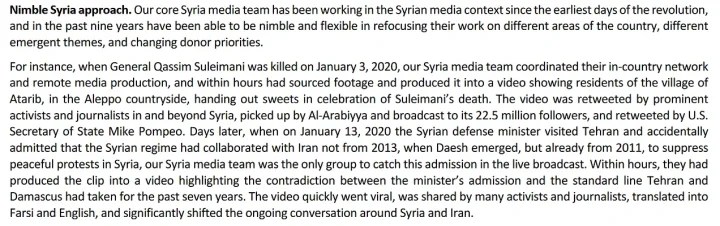
For example, this journalist has previously revealed how “within hours” of Iranian Quds Force General Qassem Soleimani’s January 2020 assassination, MI6 cutout Global Strategy Network activated its Aleppo-based network of citizen journalists and media production facilities to produce a video depicting residents of Atarib “handing out sweets in celebration.” The clip was “retweeted by prominent activists and journalists in and beyond Syria, picked up by [Saudi outlet] Al-Arabiyya and broadcast to its 22.5 million followers, and retweeted by US Secretary of State Mike Pompeo.”
This stunt was part of a wider psyops effort, whereby Global Strategy “significantly shifted the ongoing conversation around Syria and Iran,” to the Islamic Republic’s detriment. Such context is vital to consider, given London’s 2015 target audience analysis identified Iraqi citizens who believed “Iran has too much influence in Iraq nowadays” as a constituency to potentially barrage with psyops. Markedly, intensive focus grouping found the overwhelming majority of Iraqis vehemently rejected this view, across ethnic and religious lines.
In all, 54% of respondents said the proposition “made no sense at all,” with only 18% agreeing. However, 68% of Sunnis surveyed, many of them Iraqi Kurds, concurred. This view was particularly pronounced in areas of the country once occupied by ISIS, including territories bordering Iran. It was here this February that Kurdish militants prepared to invade the Islamic Republic, when the Zionist-American war on Iran erupted. Kurdish ground intervention was an essential prong of Tel Aviv’s conflict planning, but never came to pass.
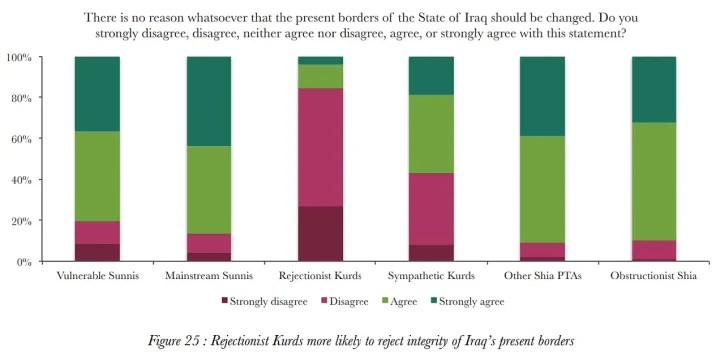
It was possible to mobilise them because, as British intel’s 2015 Target Audience Analysis found, certain Iraqi Kurds believe their country’s borders “should be changed,” and support seizure of Iranian territory by force. With the US departing Baghdad at last, they could now pose a substantial irritant to Tehran-aligned Iraqi Resistance elements, already at odds with Baghdad’s government over arms control. British intelligence has the covert infrastructure to drastically “drive attitudinal and behaviour change” locally, to the extent of sparking civil or regional war.
Sorry, the comment form is closed at this time.
Featured Video
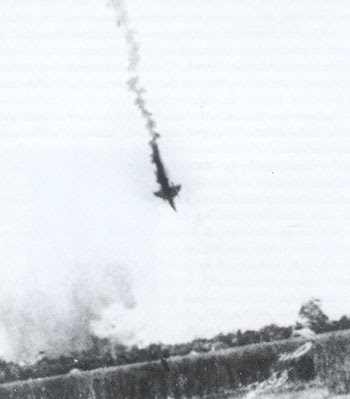
The Failed Air War Over Vietnam
or go to
Aletho News Archives – Video-Images
From the Archives
USS Liberty Massacre: A Pivotal Moment in the Hostile Takeover of America
By Kevin Barrett | Crescent | Dhu al-Qa’dah 24, 1445
In corporate America, hostile takeovers are commonplace. They occur when an aggressor—a larger corporation or rich individuals—seizes control of a smaller corporation without asking permission.
What few recognize is that the United States itself has been subjected to a hostile takeover. Since the aggressor, the illegitimate settler colony known as “Israel,” is much smaller than the US, the takeover has necessarily been surreptitious.
As of June, 2024, Israel’s gradual takeover of the US has become obvious and undeniable—a proverbial “elephant in the living room.” … continue
Blog Roll
 Aletho News
- Yemeni Armed Forces Warn Airlines Against Using Saudi Airports, Exempt Mecca and Medina
- Iran security chief says powers greater than US tried to conquer Iran but ended in ‘dustbin of history’
- Europe’s mounting social chaos… chickens coming home to roost for proxy war against Russia
- US-Russia Diesel Deal Becomes Massive Defeat for Ukraine
- Hormuz and the Looming Economic Catastrophe
- Dhubab offensive, media blitz and the rapid unraveling of Saudi-backed coalition’s new gambit
- Putin Conveys to Trump Iran’s Vision on Possible Conflict Resolution – Kremlin
- The Search for Truth: Charlie Kirk’s Assassination One Year Later
- ‘Harsh reality’: Iran says France seeks monopoly on power and intimidation, not peace for all
- When Will This White House Madness End?
- If Americans Knew
- For three years, Israel has killed a child in Gaza every 71 minutes – Daily Update
- Israeli forces kill another child in Gaza – Daily Update
- Gaza ceasefire exists in name only, say more than 100 organizations
- Nearly 2 Million in Gaza Need Urgent Shelter Assistance as Winter Looms: IOM Chief Warns
- Suppressing Palestinian resistance: US charity under fire for AI monitoring of Gaza classrooms
- Thousands Are Held in Israeli Torture Camps. This Is What Happens Inside
- Israel puts Gaza’s sick, injured, newborn in peril – Daily Update
- Report claimed Mark Levin used by Israeli government to influence Trump
- Over 2,000 Gazans have died awaiting medical evacuation amid Israel’s continued siege
- How a U.S. Diplomat Suppressed and Altered Reports Critical of Israel
- No Tricks Zone
- Germany’s Green Energy Debacle: High Energy Costs Force Kahla Porzellan to Close After 182 Years!
- New Study: 50 Years Of The Most Aggressive ‘Net Zero’ Policies Can Only Affect The Global Climate By 0.03°C
- US September “Heat” Was No Record…Many Records Set Decades Ago
- Latest European Green Energy Debacle; Portugal’s Largest Flagship Solar Park Insolvent!
- Green Energy Debacle: German Expert Professor Fritz Vahrenholt Warns Of Severe Economic And Social Consequences
- Two More Paleo Reconstructions Affirm Meters-Higher Sea Levels Across Ireland, Brazil 7000-6000 Years Ago
- New Study: Earth And Venus Surface Warmth Largely Explained By Convection And Lapse Rate, Not CO2 Or Radiation
- 2025 Nature Paper Claiming Worsening Global Drought Gets RETRACTED …Heavily Flawed
- New Study: ‘Global Drought Shows No Detectable Recent Acceleration Under Climate Warming’
- Economic Masterminds: German Socialists Suggest Taxing Productivity Gains Stemming From Using AI

