They Compared the Spice to the Drug. The Spice Won — Again. (Part 2)
Nature continues to put drugs to shame, yet why has no one heard of this research?
By Sayer Ji | October 6, 2026
Part 2 of our series. Part 1 can be found here. Ten more head-to-head clinical trials — pulled from the GreenMedInfo archive — in which ginger, St. John’s wort, garlic, saffron, valerian and a handful of other simple remedies matched or outperformed an antibiotic, Prozac, Aricept, Ritalin, a beta-blocker and a benzodiazepine. Each one links to the full research write-up.
In Part 1, honey beat a steroid fourteen-fold for chronic cough, turmeric stopped prediabetes in 100% of trial participants, and saffron ran even with Prozac. The response told us something: people are hungry for the studies nobody puts in a press release.
So for Part 2, we went back into the archive — 455,000 studies, hand-mapped since 2008 — and pulled ten more. This time we went after the drugs people take every day: the antibiotic for recurrent UTIs, the beta-blocker for blood pressure, the Alzheimer’s blockbuster, the stimulant given to millions of children, the benzodiazepine for sleep, and the antidepressants tens of millions of people take every morning.
Same rules as Part 1. Every study is a human trial. Every one is indexed in our database. Every one links to the long-form article or abstract so you can check the work yourself.
And the same caveat: this is research information, not medical advice. Some of these trials are large and well designed — the St. John’s wort meta-analysis covers 27 trials and 3,808 patients; the mindfulness trial ran in The Lancet. Others are smaller or single studies. I’ve given you the design and the numbers for each so you can weigh them. Never stop a prescribed medication without your practitioner.
1. Ginger vs. Dramamine — Motion Sickness
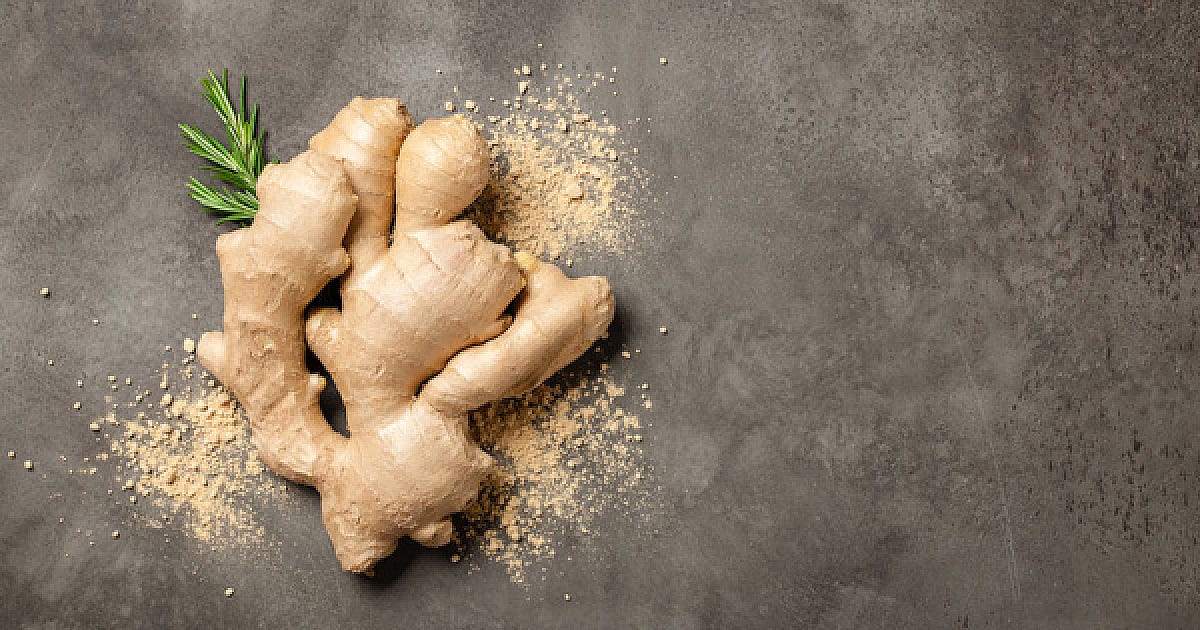
The trial: Randomized, double-blind comparison of a ginger preparation (Zintona) against dimenhydrinate — the active drug in Dramamine. European Phytotherapy, 1999.
The result: Everyone taking ginger had good results. Only 31% of those taking Dramamine did. And while the ginger group reported no side effects, 69% of the Dramamine group suffered them — the drowsiness, dry mouth and fog the drug is famous for.
It isn’t a one-off. On a Norwegian whale-watching voyage — seas that typically leave 80% of passengers sick — a 1994 double-blind study in the Journal of Travel Medicine found passengers given ginger did as well as those given any of six common seasickness medications. Over 80% felt fine.
→ Read the full article: Natural Remedies Found Superior to Drugs for Motion Sickness · Eight Unexpected Health Benefits of Ginger
2. D-Mannose vs. Nitrofurantoin — Recurrent Urinary Tract Infections

The trial: 308 women with recurrent UTIs, randomized after initial antibiotic treatment into three groups for six months: 2 grams of D-mannose powder (a simple sugar found in cranberries and other fruit) dissolved in water daily, 50 mg of the antibiotic nitrofurantoin daily, or no prevention at all. World Journal of Urology, 2014.
The result:
- No prevention: 60.8% had another infection.
- Nitrofurantoin (antibiotic): 20.4%.
- D-mannose (sugar powder): 14.6%.
A spoonful of a fruit sugar outperformed a daily antibiotic — without feeding antibiotic resistance, disrupting gut flora, or carrying the lung and liver warnings on nitrofurantoin’s label. Cranberry extract, separately, has been shown as effective as the antibiotic trimethoprim for preventing recurrent UTIs in older women.
→ Read the study: D-mannose powder significantly reduced the risk of recurrent UTI · The Amazing Healing Properties of 13 Common Fruits
3. St. John’s Wort vs. Prozac — Major Depression

The trial: Randomized, double-blind, 12 weeks: 900 mg/day of St. John’s wort extract versus 20 mg/day of fluoxetine (Prozac) in major depressive disorder. Journal of Clinical Psychopharmacology, 2005.
The result: St. John’s wort was significantly more effective than Prozac. End-point depression scores (HAMD-17) were 10.2 on the herb versus 13.3 on the drug.
The bigger picture: A 2017 meta-analysis in the Journal of Affective Disorders pooled 27 clinical trials and 3,808 patients comparing St. John’s wort against SSRIs. Response and remission rates were statistically equivalent. But patients on the herb were significantly less likely to drop out — the pooled odds of discontinuation were about 40% lower — which in antidepressant research is usually a proxy for side effects people can’t tolerate.
One honest note: St. John’s wort interacts with many medications, including birth control and blood thinners. It is gentle, not inert.
→ Read the study: St. John’s wort significantly more effective than fluoxetine · 27-trial meta-analysis · 23 Natural Alternatives for Depression
4. Garlic vs. Atenolol — High Blood Pressure
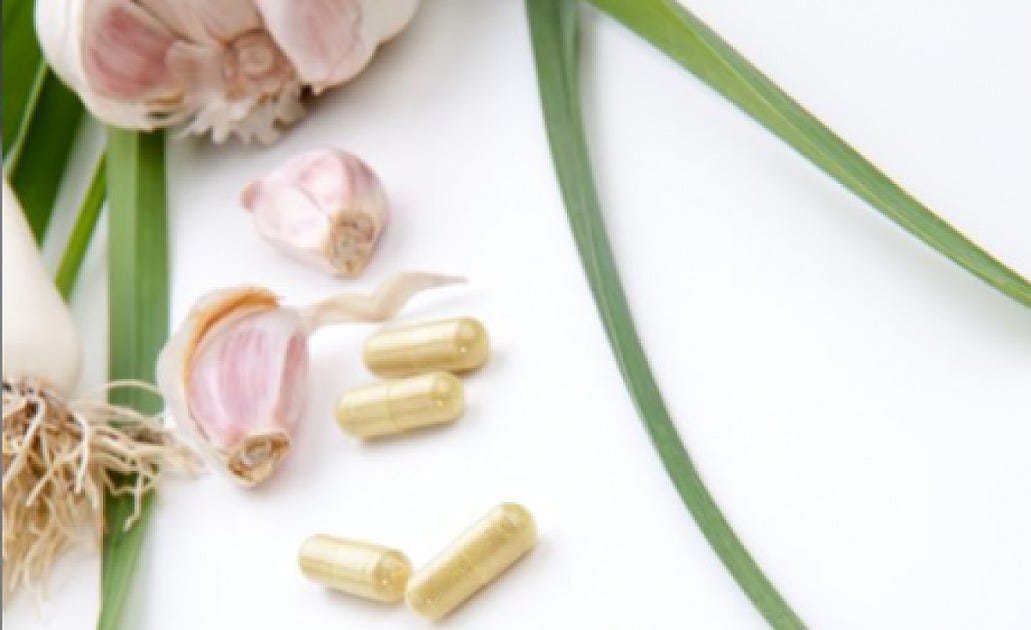
The trial: 210 patients with stage 1 hypertension split into seven groups of 30: five different daily doses of garlic tablets (300 mg up to 1,500 mg), the beta-blocker atenolol, or placebo. Blood pressure was measured at 0, 12 and 24 weeks. Pakistan Journal of Pharmaceutical Sciences, 2013.
The result: Every single garlic group — down to the lowest 300 mg dose — produced a significantly greater drop in both systolic and diastolic pressure than atenolol (p < 0.005). The effect grew with dose and with time.
Atenolol is one of the most prescribed blood-pressure drugs in the world, and it comes with fatigue, cold hands and feet, and sexual side effects. Garlic comes with garlic breath.
→ Read the full article: Garlic Compares Favorably to a Best-Selling Blood Pressure Drug · Study abstract
5. Ginkgo vs. Aricept — Alzheimer’s Disease
The trial: Randomized, double-blind, 22 weeks, 96 outpatients with Alzheimer’s. Three arms: 240 mg/day of standardized ginkgo extract (EGb 761), the $4-billion-a-year blockbuster donepezil (Aricept) at up to 10 mg/day, or both combined. Aging & Mental Health, 2009.
The result: Improvements in cognition and response rates were similar across all three groups — ginkgo did what Aricept did. But adverse events were lower with ginkgo than with the drug.
A separate 24-week, double-blind, placebo-controlled trial in the European Journal of Neurology (2006) reached the same conclusion: “no evidence of relevant differences in the efficacy” of ginkgo and donepezil. Donepezil, it’s worth knowing, is a cholinesterase inhibitor — the same mechanistic class as certain pesticides and nerve agents.
→ Read the full article: Declaring Chemical Warfare on the Brain — Alzheimer’s Drugs Are Neurotoxicants · Study summary
6. Saffron vs. Ritalin — ADHD in Children
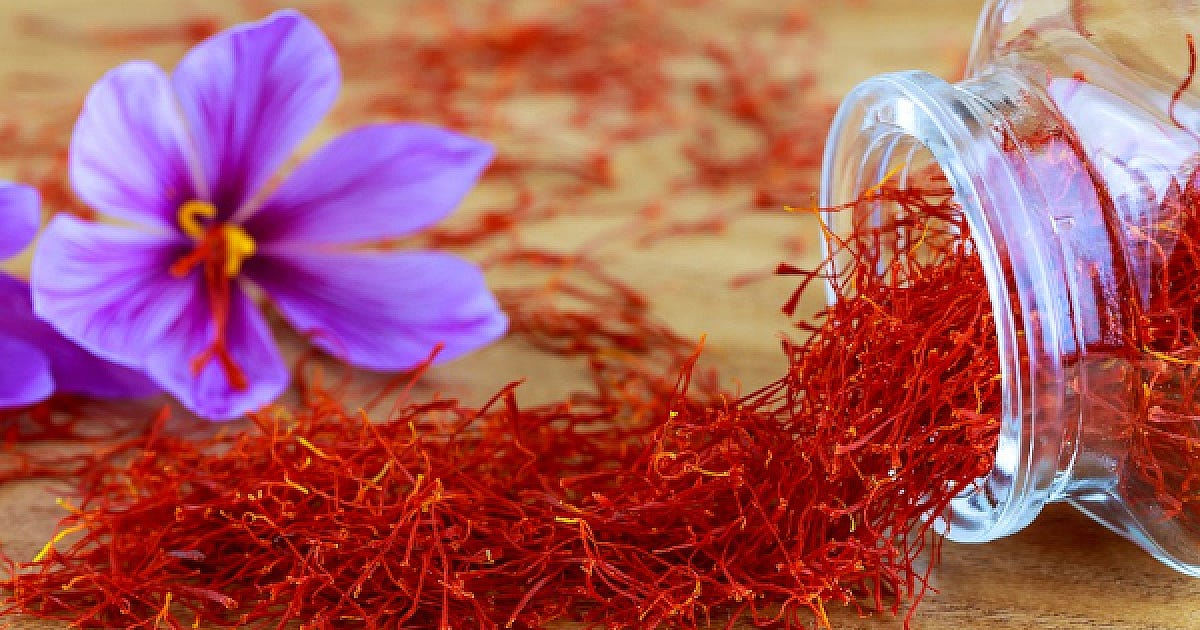
The trial: Randomized, double-blind, six weeks: children with ADHD received 20–30 mg/day of saffron or 20–30 mg/day of methylphenidate (Ritalin), dosed by weight. Journal of Child and Adolescent Psychopharmacology, 2019.
The result: Both worked equally well. Saffron was as effective as Ritalin for ADHD symptoms.
A 2022 study in Nutrients followed children and adolescents aged 7–17 for three months on 30 mg of evening saffron versus extended-release methylphenidate. Efficacy on core symptoms and executive function was comparable, saffron tended to do better on hyperactivity — and parents in the saffron group reported their kids falling asleep faster, the opposite of the insomnia stimulants are known for.
Millions of children are on a Schedule II controlled substance. A spice deserves at least a seat at the table.
→ Read the full article: Ancient Spice Saffron Works as Well as Ritalin for ADHD
7. Melatonin vs. Amitriptyline — Migraine Prevention
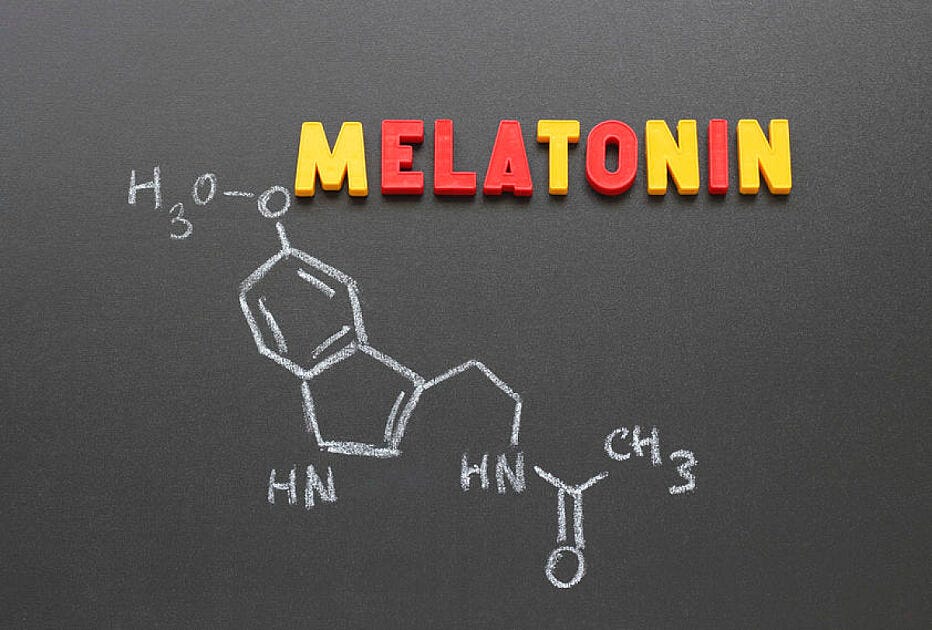
The trial: Randomized, double-blind, placebo-controlled; 196 adults with 2–8 migraines a month. 3 mg of melatonin versus 25 mg of amitriptyline (a tricyclic antidepressant widely used for migraine prevention) versus placebo, for three months. Journal of Neurology, Neurosurgery & Psychiatry, 2016.
The result: Monthly migraine days fell by 2.7 on melatonin, 2.2 on amitriptyline and 1.1 on placebo. Melatonin was superior to the drug in the share of patients who cut their migraine frequency by more than half — and it was as well-tolerated as placebo.
The side-effect gap was visible on the scale: melatonin patients lost weight. Amitriptyline patients gained significantly. A molecule your own brain makes every night beat a drug that sedates, dries you out and adds pounds.
→ Read the full article: Melatonin Superior to Toxic Drug in Migraine Prevention Study
8. Hibiscus vs. Captopril — Hypertension
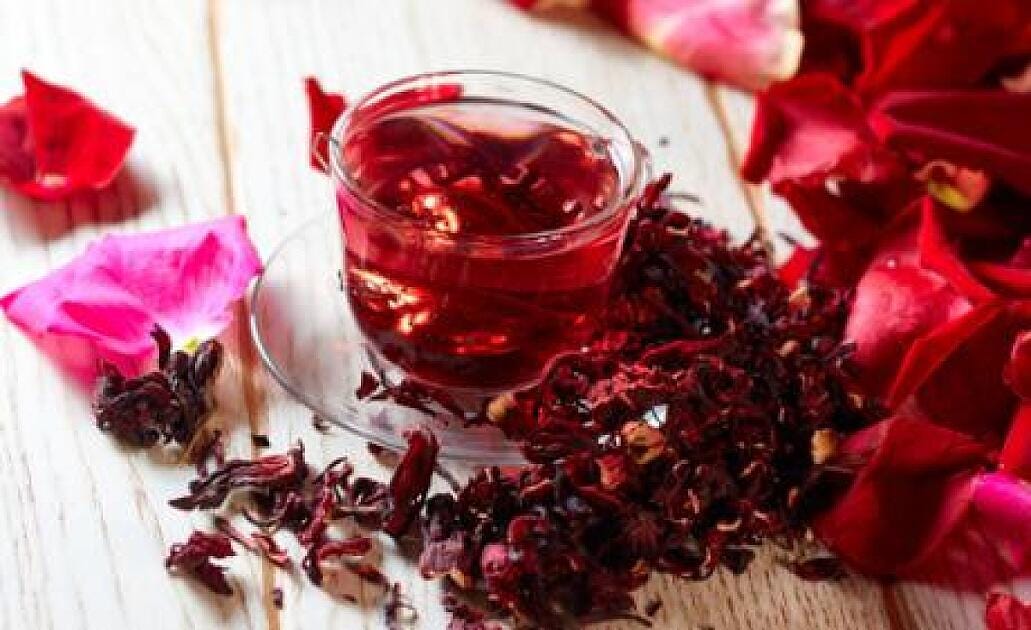
The trial: Phase II, randomized, double-blind, 134 patients with grade 1 hypertension, eight weeks. A standardized hibiscus and olive-leaf preparation at two doses versus 25 mg of the ACE-inhibitor captopril, twice daily. Phytotherapy Research, 2020.
The result: No significant difference in systolic or diastolic blood-pressure reduction between either herbal dose and captopril. The flowers did the drug’s job.
A meta-analysis of five studies and 390 participants found hibiscus lowered systolic pressure by nearly 8 mmHg and diastolic by 4 — in the range of a first-line medication. It’s the tart red tea sold in every Mexican market as agua de jamaica.
→ Read the full article: 6 Medicinal Properties of Hibiscus · Captopril trial abstract
9. Valerian vs. Oxazepam (a Benzodiazepine) — Insomnia

The trial: Randomized, double-blind, multicenter, 202 adults with insomnia, six weeks. 600 mg/day of valerian root extract versus 10 mg/day of oxazepam, a benzodiazepine in the same family as Valium and Xanax. European Journal of Medical Research, 2002.
The result: Valerian was at least as effective as the benzodiazepine for sleep quality. 82.8% of valerian patients rated their treatment “very good,” versus 73.4% on oxazepam. Adverse events: 28.4% on valerian, 36.0% on the drug.
Benzodiazepines carry an FDA boxed warning for dependence, withdrawal and abuse, and raise the risk of falls in older adults. Valerian root has been used for sleep since Hippocrates described it.
→ Read the full article: Top 6 Uses for Valerian · Study abstract
10. Mindfulness vs. Antidepressants — Preventing Depression Relapse
The trial: 424 patients with three or more past episodes of major depression, randomized and followed for two years. One group stayed on maintenance antidepressants. The other tapered off their medication while learning mindfulness-based cognitive therapy — eight group sessions plus home practice. The Lancet, 2015.
The result: At two years, relapse was 44% in the mindfulness group and 47% in the drug group. The researchers did not claim mindfulness was better — the difference wasn’t statistically significant — but that is exactly the point: people who came off their antidepressants and learned a practice did just as well as people who stayed on them, at no extra cost.
No pill, no weight gain, no sexual side effects, no withdrawal. Just training the mind you already have.
→ Read the full article: Mindfulness Therapy Better Than Antidepressants
Also in the Archive
- EPA omega-3 vs. Prozac: The omega-3 fatty acid EPA was as effective as fluoxetine for major depressive disorder (Australian & New Zealand Journal of Psychiatry, 2008).
- L-tryptophan vs. imipramine: The amino acid was as effective as the tricyclic antidepressant.
- Cranberry vs. trimethoprim: Cranberry extract matched the antibiotic for preventing recurrent UTIs in older women — without raising the risk of resistance or fungal infection.
→ Browse: 23 Natural Alternatives for Depression
Two Parts, Twenty Studies. Still Nobody’s Holding a Press Conference.
Across Parts 1 and 2, we’ve now shown you twenty peer-reviewed, head-to-head trials in which a food, an herb, a nutrient or a practice matched or beat a pharmaceutical — for cough, diabetes, depression, arthritis, flu, ulcers, motion sickness, UTIs, blood pressure, Alzheimer’s, ADHD, migraine and insomnia.
None of it is secret. All of it is sitting in the National Library of Medicine. It’s just buried under tens of millions of papers — and since 2021, PubMed no longer even lets you filter for complementary and alternative medicine.
That’s why GreenMedInfo exists: 455,000 studies, hand-mapped to the substances, conditions and mechanisms people actually search for, free to use. In 2020 they tried to take it away. It’s still here. It’s still yours.
Share this with one person who’s on one of these drugs. Then search the archive for your own condition — and bring what you find to your next appointment.
Help us grow our project to encompass the totality of the world’s literature supporting natural and integrative health approaches by becoming a member of GreenMedInfo here.
Thomas Fazi: NATO’s Hybrid Warfare – Deception & Permanent War
Glenn Diesen | October 31, 2026
Thomas Fazi is an Italian journalist and author focusing on economics and geopolitics.
Follow Prof. Glenn Diesen:
Substack: https://glenndiesen.substack.com/
X/Twitter: https://x.com/Glenn_Diesen
Patreon:  / glenndiesen
YouTube:  / @gdiesen1
Support the research:
PayPal: https://www.paypal.com/paypalme/glenn…
Buy me a Coffee: buymeacoffee.com/gdieseng
Go Fund Me: https://gofund.me/09ea012f
Wrong, AP and NPR: Europe’s 50,000 Heat Deaths Are a Computer-Model Estimate, Not a Real Body Count
By Anthony Watts | ClimateRealism | October 28, 2026
National Public Radio (NPR), reprinted an Associated Press (AP) report from climate reporter Seth Borenstein titled “Europe’s heat claims 50,000 lives. Climate change blamed for two-thirds of deaths,” which claims that summer heat killed 50,391 Europeans in 2026 and that human-caused climate change killed 32,619 of them. This is false. Modeled numbers are presented by NPR as observed deaths when they are not. The data show that neither number is a count of actual people medically determined to have died from heat or climate change; both are statistical constructs produced by computer models.
Here is the basis of the false headline:
Researchers modeled heat-related deaths for different age groups in 854 European cities during repeated heat waves in June, July and August and found that 50,391 people died from warmer temperatures, and of those, 32,619 died because of the extra heat caused by the burning of coal, oil and gas, according to a study in an upcoming issue of Nature Health.
The 50,391 “heat deaths” are imaginary in the literal sense that neither AP nor NPR can produce a list of 50,391 people whose deaths were determined to have been caused by heat. The researchers did not count them, they modeled them. NPR eventually admits exactly that: “The scientific team also had to use statistical modeling to come up with the base count of 50,000 heat deaths.” That sentence demolishes the impression created by NPR’s headline.
There is no observed body count of 50,000+ heat victims. Instead, there are mortality records, temperature records, statistical relationships between temperature and mortality, and a mathematical model that estimates how many deaths might be associated with temperatures above a calculated optimum. The resulting number is merely an estimate. AP and NPR irresponsibly report it as though there is an actual body count.
Then the researchers take that imaginary statistical population of 50,391 heat deaths and run another modeling exercise to determine how many were supposedly caused by climate change. Again, the story admits how this was done: “They ran computer simulations of a world without climate change and compared it to the deaths that happened this summer. The difference is what was caused by global warming.” Except NPR’s wording is misleading even there. The researchers weren’t comparing their imaginary climate with 50,391 individually identified heat deaths that “happened this summer.” The base heat-death number was itself produced statistically.
So, we have a model estimating how many people died from heat, followed by another model estimating what temperatures would have existed in a hypothetical world without human-caused climate change, followed by a calculation estimating how many of the first model’s estimated deaths would not have occurred in the second model’s imaginary world.
Out comes the wonderfully exact number of 32,619 climate-change deaths. Not approximately 30,000 or somewhere around 33,000, but exactly 32,619. That precision is almost comical considering that the people represented by the number were never individually identified as climate-change fatalities in the first place. There are no 32,619 death certificates saying “climate change.” There aren’t even 50,391 death certificates saying “heat.”
That doesn’t mean nobody died during Europe’s heat waves. Of course people died, and some deaths may well have been caused or hastened by heat. Elderly people and those suffering cardiovascular, respiratory, and other illnesses can be especially vulnerable to extreme temperatures. More than half of NPR’s modeled deaths were among people aged 85 and older. But that is very different from claiming, as NPR’s headline does, that “Europe’s heat claims 50,000 lives.”
This distinction becomes even more important because the calculation depends upon assumptions about how mortality responds to temperature. The researchers used mathematical temperature-mortality relationships for different ages and cities, identifying an “optimal” temperature associated with minimum mortality and calculating additional deaths when temperatures departed from it. It makes sense on the surface, but those relationships are not scientific laws. Humans adapt to make themselves safer, like by simply buying an air conditioning unit. Physicians are better at treating heat stress, buildings improve, work schedules change, and vulnerable elderly residents are checked by relatives and social services.
Adaptation works. A 2024 Nature Medicine study estimated that European heat-related mortality during 2023 would have been 80 percent higher without adaptation since 2000. Among people over age 80, estimated mortality would have been more than twice as high without adaptation. It should be obvious that there is a problem with taking temperature-mortality relationships developed from previous years, and treating them as though the conditions remain fixed. The Watts Up With That analysis, “Climate Death Toll: Batteries Not Included,” points directly to this problem. The calculation starts with historical temperature-mortality relationships, extrapolates them to hundreds of European cities, applies them to current temperatures and populations, and then compares the result against an imaginary counterfactual climate. Each stage adds assumptions, yet by the time the number reaches NPR, most of those assumptions have vanished and the model output has become a supposedly real death toll.
There is another glaring omission: cold. A major 2021 study published in The Lancet Planetary Health examined temperature and mortality across 750 locations in 43 countries. It estimated that 8.52 percent of deaths were associated with cold compared with just 0.91 percent associated with heat. By the same sort of statistical reasoning NPR is willing to accept for heat, cold was associated with roughly nine times as many deaths. More importantly, from 2000-2003 to 2016-2019, declining cold-associated mortality more than offset increasing heat-associated mortality. The result was a net decline in temperature-related mortality.
Climate at a Glance discusses the same research and notes that the decline in cold mortality associated with modest warming produced an estimated net reduction of approximately 166,000 premature temperature-related deaths from 2000 through 2019. Curiously, NPR doesn’t produce a headline saying, “Global Warming Saves Thousands of Lives by Reducing Deadly Cold.” That apparently isn’t considered newsworthy.
The broader historical record is even more devastating to the suggestion that humanity is becoming increasingly helpless against climate. Climate at a Glance reports that deaths from weather-related disasters have declined by more than 99 percent during the past century. Average annual deaths from extreme weather disasters fell from approximately 485,000 during the 1920s to fewer than 8,000 around 2020. That is not what an escalating climate mortality crisis looks like.
Indeed, NPR’s own experts call for heat-warning systems, cooling, and neighborhood programs to check on vulnerable residents. Those are sensible measures that can save actual lives during the next heat wave, and they demonstrate something the climate narrative routinely obscures: people adapt.
There is nothing inherently improper about epidemiologists constructing statistical estimates. Such models can be useful tools for identifying risks, allocating resources, and developing public-health policy. But statistical estimates aren’t observational data.
If NPR wants to report that researchers estimate approximately 50,000 excess deaths statistically associated with summer temperatures, say so. If researchers further estimate, using a counterfactual climate model, that anthropogenic warming contributed to some fraction of that statistical mortality, say that too. But don’t tell readers that Europe’s heat “claims 50,000 lives” and that climate change killed exactly 32,619 people when nobody counted those deaths. A model can calculate an estimate, generate a counterfactual, and assign statistical probabilities, but a computer model cannot examine a body, determine a cause of death, sign a death certificate, or count a dead person.
NPR’s dead Europeans are imaginary people generated by a model, and the 32,619 supposedly killed by climate change are imaginary people generated from the imaginary people.
Questioning Your Doctor Is Now Considered A Psychological Problem (Seriously)
By Dr. Roger McFillin | Radically Genuine | October 31, 2026
I want to give you a warning before we go any further.
If you have ever questioned your doctor, pushed back on a prescription, or asked to slow down on a vaccine, the medical establishment now has a framework for you. And it isn’t “careful,” or “informed,” or “engaged.”
Your resistance will be seen as a psychological problem to be managed.
I’m not exaggerating. Let me show you.
On October 19th, Medscape, one of the most widely read publications among physicians in this country, ran a piece called “Why Your Patient Trusts Unsupported Claims but Not You.” It’s part of a series titled Healing a Broken Trust.

Read it carefully, and notice who is never asked to change.
It opens with a survey. More than a thousand physicians with 99.9 percent of them admitting they encountered patients influenced by “misinformation” in the past year.
What’s the definition of “misinformation?” Anything that disagrees with their standard of care. Quite bold for the same group that brought you the every increasing vaccine schedule for children, Covid Vaccinations, Acetaminophen, Statins, SSRI’s, a low fat diet, Opioids for pain and others as “evidence based medicine”.
Sit with that number. Essentially every doctor surveyed believes the problem in the exam room is what the patient has been reading.
Then it borrows a research term: “selective skepticism.” The idea is that you dismiss evidence from experts while uncritically swallowing pseudoscience. Isn’t that the pot calling the kettle black?
That’s how your questions are being categorized.
And the solution? It isn’t “let’s re-examine our evidence.” It isn’t “let’s ask why trust collapsed.” The solution is a persuasion technique. They call it inoculation. The doctor warns you ahead of time that you may see posts online saying a medication is about pharmaceutical profits, so that when you run into that idea, you’ve already been primed to dismiss it.
Think about what that means. The answer to your question has been scripted before you ever ask it. Your doubt is treated like a pathogen, and the doctor administers a dose of messaging to build immunity against it.
Now, in fairness, the article talks about listening more and seeing the patient as a whole person. Good. But listening as a technique to move you toward a predetermined conclusion isn’t listening. As a psychologist, I’d call that compliance work.
I’ve spent my entire career inside this system. Psychiatric hospitals, juvenile justice, community mental health, private practice. And I’ve studied how high-control groups operate.
Here’s what they do.
Doubt is reframed as a defect in the person doubting.
Outside information is labeled dangerous before you’ve even seen it.
Members are pre-warned about what critics will say, so they reject it on contact.
And the authority is self-referencing. It’s true because the institution says it’s true.
Now hold that list up against what I just read you. I’m not saying your doctor is a cult leader. Most physicians are sincere people working inside a system they were trained never to question. That’s exactly what makes it so powerful. The people enforcing the belief system are the ones most captured by it.
Here’s the question that article never asks. Has this system earned the trust it’s demanding?
Look around. We are living through a chronic disease epidemic. Autoimmune disease, allergies, obesity, diabetes, anxiety, depression, kids on prescriptions before they can drive. Never in history has a population been more medicated, more screened, more vaccinated, and more chronically ill at the same time.
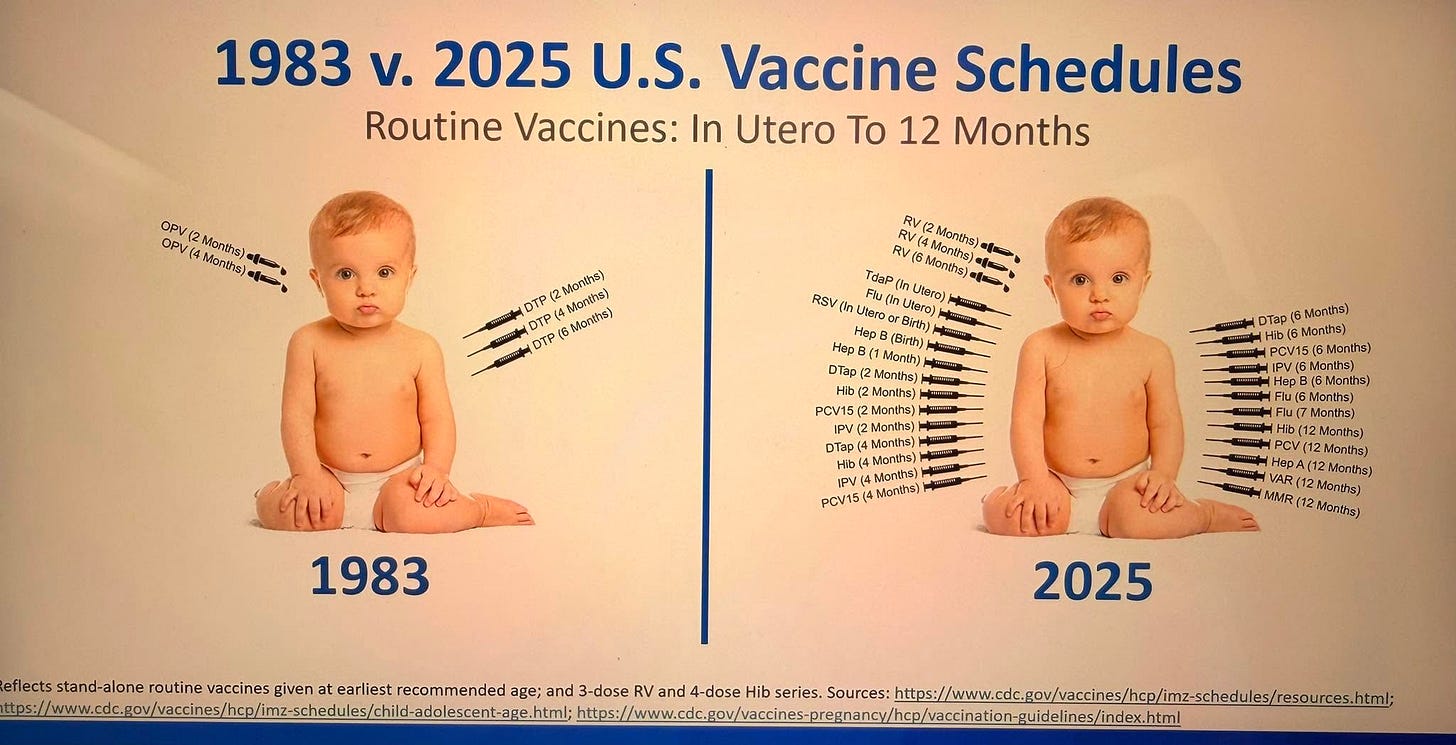
That’s not a healthcare system it is a sick care system. It is extraordinarily good at managing illness for life and remarkably uninterested in why people got sick in the first place.
And it didn’t happen by accident. In 1910, the Flexner Report, commissioned by the Carnegie Foundation and followed by enormous Rockefeller philanthropy, remade American medical education. Many schools closed and traditions of healing were pushed to the margins. What survived was a paradigm: the body as a machine, disease as a chemical problem, and a pharmaceutical answer for every symptom.
We are living inside that paradigm more than a century later. And when people start to notice it isn’t working, the response isn’t humility. It’s a communication strategy.
In Case You Have Not Been Following
Now let me bring this close to home, here in Pennsylvania.
At Children’s Hospital of Philadelphia, there’s a program called “Close Your Eyes, We’ll Immunize.” Since 2023, children who are already going under sedation or anesthesia for another procedure are offered flu shots while they’re unconscious. Last season, over two thousand doses. And they’re exploring adding RSV and COVID shots, plus catch-up vaccines for kids who are “behind.”
I want to be clear here: parents consent. But think about when that consent is being requested. In pre-op. Your child is scared, about to be put under. You’re anxious, you trust the people in scrubs, and someone asks if you’d like to “take care of” the flu shot while they’re at it. That is the most vulnerable moment a parent has. That isn’t a calm, informed decision. In fact, they are having you put your digital name on a screen scrolling past words you would never have the time to read.
And it isn’t just Philadelphia. Children’s Hospital Colorado has vaccinated more than 18,000 kids under deep sedation or general anesthesia.
Here’s what should concern you clinically. A 2007 review in Pediatric Anaesthesia suggested spacing vaccines and anesthesia apart by days, specifically so a vaccine reaction isn’t mistaken for a surgical complication. So if your child spikes a fever after the procedure, what caused it? The anesthetic? The antibiotic? The surgery? The shot? Nobody will be able to tell you.
And look at the name of the program. It celebrates the fact that the child isn’t awake.
Dark.
So here’s what I want you to take from this.
Questioning is not a disorder. It’s the foundation of informed consent. A system confident in its evidence welcomes questions. A system that needs to “inoculate” you against questions is telling you something about itself.
Ask for the evidence. Ask what the risks are. Ask what happens if you wait. Ask who benefits. And if your questions are treated as a psychological problem, that tells you everything you need to know about whether that relationship deserves your trust.
You are not a compliance metric. Your children are not a vaccination rate.
Featured Video

Trita Parsi: Trump’s Swiss Cheese Iran Plan & U.S. Break with Israel?
or go to
Aletho News Archives – Video-Images
From the Archives
MI5 plotted assassination of Irish PM in 1985 – Ulster Volunteer Force
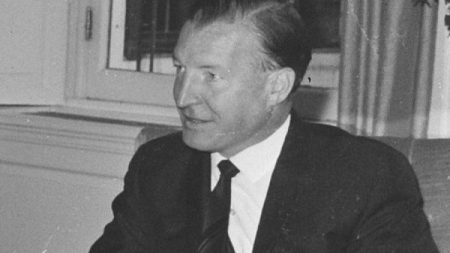
RT | December 29, 2017
Former Irish Prime Minister Charles Haughey was warned by loyalist paramilitaries that they were once tasked with murdering him in an assassination plot purportedly dreamt up by the British secret service.
The sensational disclosure was sent in a letter to the Irish government, newly released under the Public Records Act, which requires documents of historical value to be published by the National Archives within 30 years.
Written on Ulster Volunteer Force (UVF) signature paper, the warning claims the terrorist organization was asked by an MI5 operative about the prospect of carrying out an attack on Republic of Ireland leader Haughey in 1985.
At the time, Haughey would have been in opposition as head of political party Fianna Fáil, but details of the solicitation did not become known to Irish authorities until 1987.
“In 1985 we were approached by a M15 officer attached to the Northern Ireland Office and based in Lisburn, Alex Jones was his supposed name,” the letter reads, according to the Irish Times. “He asked us to execute you.”… continue
Blog Roll
 Aletho News
- Moscow warns NATO over troop buildup
- EU leaders prolonging Ukraine conflict to stay in power – Swiss journalist
- Moscow car bombing injures former aide to Ukraine’s ex-PM Azarov
- Yemeni forces make major advances, complete Aden encirclement
- Trita Parsi: Trump’s Swiss Cheese Iran Plan & U.S. Break with Israel?
- Iran’s NPT exit debate: How repeated attacks exposed the failures of global nuclear safeguards
- Mainstream Israeli Media Celebrates Deadly Floods In Gaza
- Australian Censor Chief Rejects Claims Digital Duty of Care Will Drive Censorship
- Why a New European Security Architecture Will Be Born Through War
- EU incapable of speaking with one voice on Ukraine – analyst to RT
- If Americans Knew
- An error has occurred; the feed is probably down. Try again later.
- No Tricks Zone
- New Study: Barents Sea Temperatures Were Warmer And Sea Ice Less Extensive In The 1700s Than Today
- German Authorities Start Initiative To Evaluate Public Register For Climate “Disinformation” Spreaders!
- Zonal Asymmetry of Temperature Change in the Antarctic Circumpolar Current
- New Study: The Net Fossil Fuel Contribution To Rising Atmospheric CO2 Has Been Zero For 500 Years
- Germany’s Green Energy Transition Becoming Increasingly Expensive…Another 6 Trillion Euros!
- Sudden Stratospheric Warming, Powerful El Niño Combination May Lead To Extreme Europe Cold, Energy Crisis!
- Two New Studies Find Thwaites Glacier Melt Cannot Be Driven By Human Activity Or A Warming Ocean
- E-Cars Reduce CO2 Emissions By Only 41% Compared To Internal Combustion Engine Vehicles
- Predictions Made By Renowned Climate Professor Over Past Decades Have Been Proven To Be Poor
- New Study Suggests Large Regions Of The Pacific Ocean Have Been Cooling For The Last 80 Years

