They Compared the Spice to the Drug. The Spice Won — Again. (Part 2)
Nature continues to put drugs to shame, yet why has no one heard of this research?
By Sayer Ji | October 6, 2026
Part 2 of our series. Part 1 can be found here. Ten more head-to-head clinical trials — pulled from the GreenMedInfo archive — in which ginger, St. John’s wort, garlic, saffron, valerian and a handful of other simple remedies matched or outperformed an antibiotic, Prozac, Aricept, Ritalin, a beta-blocker and a benzodiazepine. Each one links to the full research write-up.
In Part 1, honey beat a steroid fourteen-fold for chronic cough, turmeric stopped prediabetes in 100% of trial participants, and saffron ran even with Prozac. The response told us something: people are hungry for the studies nobody puts in a press release.
So for Part 2, we went back into the archive — 455,000 studies, hand-mapped since 2008 — and pulled ten more. This time we went after the drugs people take every day: the antibiotic for recurrent UTIs, the beta-blocker for blood pressure, the Alzheimer’s blockbuster, the stimulant given to millions of children, the benzodiazepine for sleep, and the antidepressants tens of millions of people take every morning.
Same rules as Part 1. Every study is a human trial. Every one is indexed in our database. Every one links to the long-form article or abstract so you can check the work yourself.
And the same caveat: this is research information, not medical advice. Some of these trials are large and well designed — the St. John’s wort meta-analysis covers 27 trials and 3,808 patients; the mindfulness trial ran in The Lancet. Others are smaller or single studies. I’ve given you the design and the numbers for each so you can weigh them. Never stop a prescribed medication without your practitioner.
1. Ginger vs. Dramamine — Motion Sickness

The trial: Randomized, double-blind comparison of a ginger preparation (Zintona) against dimenhydrinate — the active drug in Dramamine. European Phytotherapy, 1999.
The result: Everyone taking ginger had good results. Only 31% of those taking Dramamine did. And while the ginger group reported no side effects, 69% of the Dramamine group suffered them — the drowsiness, dry mouth and fog the drug is famous for.
It isn’t a one-off. On a Norwegian whale-watching voyage — seas that typically leave 80% of passengers sick — a 1994 double-blind study in the Journal of Travel Medicine found passengers given ginger did as well as those given any of six common seasickness medications. Over 80% felt fine.
→ Read the full article: Natural Remedies Found Superior to Drugs for Motion Sickness · Eight Unexpected Health Benefits of Ginger
2. D-Mannose vs. Nitrofurantoin — Recurrent Urinary Tract Infections

The trial: 308 women with recurrent UTIs, randomized after initial antibiotic treatment into three groups for six months: 2 grams of D-mannose powder (a simple sugar found in cranberries and other fruit) dissolved in water daily, 50 mg of the antibiotic nitrofurantoin daily, or no prevention at all. World Journal of Urology, 2014.
The result:
- No prevention: 60.8% had another infection.
- Nitrofurantoin (antibiotic): 20.4%.
- D-mannose (sugar powder): 14.6%.
A spoonful of a fruit sugar outperformed a daily antibiotic — without feeding antibiotic resistance, disrupting gut flora, or carrying the lung and liver warnings on nitrofurantoin’s label. Cranberry extract, separately, has been shown as effective as the antibiotic trimethoprim for preventing recurrent UTIs in older women.
→ Read the study: D-mannose powder significantly reduced the risk of recurrent UTI · The Amazing Healing Properties of 13 Common Fruits
3. St. John’s Wort vs. Prozac — Major Depression

The trial: Randomized, double-blind, 12 weeks: 900 mg/day of St. John’s wort extract versus 20 mg/day of fluoxetine (Prozac) in major depressive disorder. Journal of Clinical Psychopharmacology, 2005.
The result: St. John’s wort was significantly more effective than Prozac. End-point depression scores (HAMD-17) were 10.2 on the herb versus 13.3 on the drug.
The bigger picture: A 2017 meta-analysis in the Journal of Affective Disorders pooled 27 clinical trials and 3,808 patients comparing St. John’s wort against SSRIs. Response and remission rates were statistically equivalent. But patients on the herb were significantly less likely to drop out — the pooled odds of discontinuation were about 40% lower — which in antidepressant research is usually a proxy for side effects people can’t tolerate.
One honest note: St. John’s wort interacts with many medications, including birth control and blood thinners. It is gentle, not inert.
→ Read the study: St. John’s wort significantly more effective than fluoxetine · 27-trial meta-analysis · 23 Natural Alternatives for Depression
4. Garlic vs. Atenolol — High Blood Pressure

The trial: 210 patients with stage 1 hypertension split into seven groups of 30: five different daily doses of garlic tablets (300 mg up to 1,500 mg), the beta-blocker atenolol, or placebo. Blood pressure was measured at 0, 12 and 24 weeks. Pakistan Journal of Pharmaceutical Sciences, 2013.
The result: Every single garlic group — down to the lowest 300 mg dose — produced a significantly greater drop in both systolic and diastolic pressure than atenolol (p < 0.005). The effect grew with dose and with time.
Atenolol is one of the most prescribed blood-pressure drugs in the world, and it comes with fatigue, cold hands and feet, and sexual side effects. Garlic comes with garlic breath.
→ Read the full article: Garlic Compares Favorably to a Best-Selling Blood Pressure Drug · Study abstract
5. Ginkgo vs. Aricept — Alzheimer’s Disease
The trial: Randomized, double-blind, 22 weeks, 96 outpatients with Alzheimer’s. Three arms: 240 mg/day of standardized ginkgo extract (EGb 761), the $4-billion-a-year blockbuster donepezil (Aricept) at up to 10 mg/day, or both combined. Aging & Mental Health, 2009.
The result: Improvements in cognition and response rates were similar across all three groups — ginkgo did what Aricept did. But adverse events were lower with ginkgo than with the drug.
A separate 24-week, double-blind, placebo-controlled trial in the European Journal of Neurology (2006) reached the same conclusion: “no evidence of relevant differences in the efficacy” of ginkgo and donepezil. Donepezil, it’s worth knowing, is a cholinesterase inhibitor — the same mechanistic class as certain pesticides and nerve agents.
→ Read the full article: Declaring Chemical Warfare on the Brain — Alzheimer’s Drugs Are Neurotoxicants · Study summary
6. Saffron vs. Ritalin — ADHD in Children

The trial: Randomized, double-blind, six weeks: children with ADHD received 20–30 mg/day of saffron or 20–30 mg/day of methylphenidate (Ritalin), dosed by weight. Journal of Child and Adolescent Psychopharmacology, 2019.
The result: Both worked equally well. Saffron was as effective as Ritalin for ADHD symptoms.
A 2022 study in Nutrients followed children and adolescents aged 7–17 for three months on 30 mg of evening saffron versus extended-release methylphenidate. Efficacy on core symptoms and executive function was comparable, saffron tended to do better on hyperactivity — and parents in the saffron group reported their kids falling asleep faster, the opposite of the insomnia stimulants are known for.
Millions of children are on a Schedule II controlled substance. A spice deserves at least a seat at the table.
→ Read the full article: Ancient Spice Saffron Works as Well as Ritalin for ADHD
7. Melatonin vs. Amitriptyline — Migraine Prevention
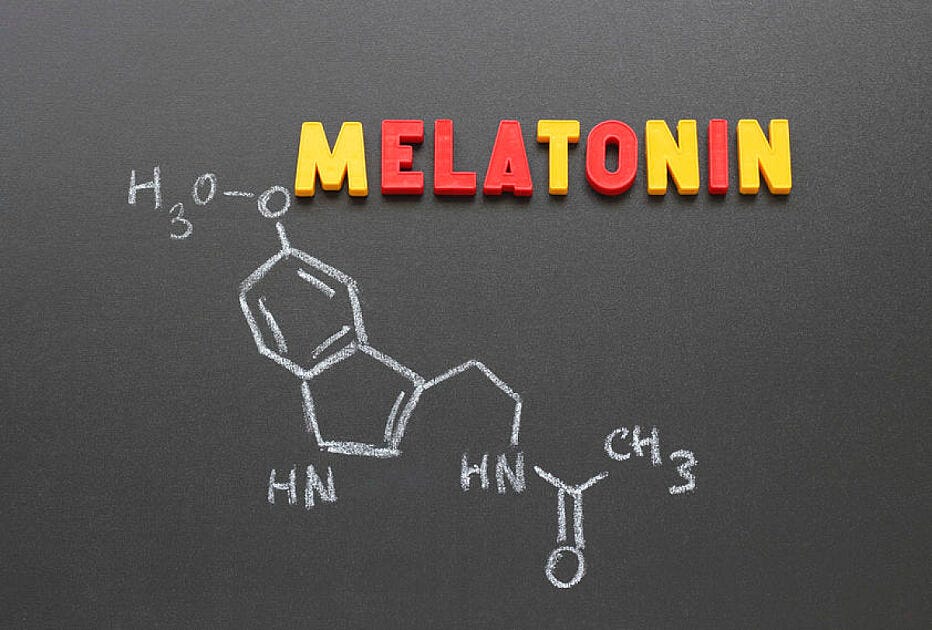
The trial: Randomized, double-blind, placebo-controlled; 196 adults with 2–8 migraines a month. 3 mg of melatonin versus 25 mg of amitriptyline (a tricyclic antidepressant widely used for migraine prevention) versus placebo, for three months. Journal of Neurology, Neurosurgery & Psychiatry, 2016.
The result: Monthly migraine days fell by 2.7 on melatonin, 2.2 on amitriptyline and 1.1 on placebo. Melatonin was superior to the drug in the share of patients who cut their migraine frequency by more than half — and it was as well-tolerated as placebo.
The side-effect gap was visible on the scale: melatonin patients lost weight. Amitriptyline patients gained significantly. A molecule your own brain makes every night beat a drug that sedates, dries you out and adds pounds.
→ Read the full article: Melatonin Superior to Toxic Drug in Migraine Prevention Study
8. Hibiscus vs. Captopril — Hypertension

The trial: Phase II, randomized, double-blind, 134 patients with grade 1 hypertension, eight weeks. A standardized hibiscus and olive-leaf preparation at two doses versus 25 mg of the ACE-inhibitor captopril, twice daily. Phytotherapy Research, 2020.
The result: No significant difference in systolic or diastolic blood-pressure reduction between either herbal dose and captopril. The flowers did the drug’s job.
A meta-analysis of five studies and 390 participants found hibiscus lowered systolic pressure by nearly 8 mmHg and diastolic by 4 — in the range of a first-line medication. It’s the tart red tea sold in every Mexican market as agua de jamaica.
→ Read the full article: 6 Medicinal Properties of Hibiscus · Captopril trial abstract
9. Valerian vs. Oxazepam (a Benzodiazepine) — Insomnia

The trial: Randomized, double-blind, multicenter, 202 adults with insomnia, six weeks. 600 mg/day of valerian root extract versus 10 mg/day of oxazepam, a benzodiazepine in the same family as Valium and Xanax. European Journal of Medical Research, 2002.
The result: Valerian was at least as effective as the benzodiazepine for sleep quality. 82.8% of valerian patients rated their treatment “very good,” versus 73.4% on oxazepam. Adverse events: 28.4% on valerian, 36.0% on the drug.
Benzodiazepines carry an FDA boxed warning for dependence, withdrawal and abuse, and raise the risk of falls in older adults. Valerian root has been used for sleep since Hippocrates described it.
→ Read the full article: Top 6 Uses for Valerian · Study abstract
10. Mindfulness vs. Antidepressants — Preventing Depression Relapse

The trial: 424 patients with three or more past episodes of major depression, randomized and followed for two years. One group stayed on maintenance antidepressants. The other tapered off their medication while learning mindfulness-based cognitive therapy — eight group sessions plus home practice. The Lancet, 2015.
The result: At two years, relapse was 44% in the mindfulness group and 47% in the drug group. The researchers did not claim mindfulness was better — the difference wasn’t statistically significant — but that is exactly the point: people who came off their antidepressants and learned a practice did just as well as people who stayed on them, at no extra cost.
No pill, no weight gain, no sexual side effects, no withdrawal. Just training the mind you already have.
→ Read the full article: Mindfulness Therapy Better Than Antidepressants
Also in the Archive
- EPA omega-3 vs. Prozac: The omega-3 fatty acid EPA was as effective as fluoxetine for major depressive disorder (Australian & New Zealand Journal of Psychiatry, 2008).
- L-tryptophan vs. imipramine: The amino acid was as effective as the tricyclic antidepressant.
- Cranberry vs. trimethoprim: Cranberry extract matched the antibiotic for preventing recurrent UTIs in older women — without raising the risk of resistance or fungal infection.
→ Browse: 23 Natural Alternatives for Depression
Two Parts, Twenty Studies. Still Nobody’s Holding a Press Conference.
Across Parts 1 and 2, we’ve now shown you twenty peer-reviewed, head-to-head trials in which a food, an herb, a nutrient or a practice matched or beat a pharmaceutical — for cough, diabetes, depression, arthritis, flu, ulcers, motion sickness, UTIs, blood pressure, Alzheimer’s, ADHD, migraine and insomnia.
None of it is secret. All of it is sitting in the National Library of Medicine. It’s just buried under tens of millions of papers — and since 2021, PubMed no longer even lets you filter for complementary and alternative medicine.
That’s why GreenMedInfo exists: 455,000 studies, hand-mapped to the substances, conditions and mechanisms people actually search for, free to use. In 2020 they tried to take it away. It’s still here. It’s still yours.
Share this with one person who’s on one of these drugs. Then search the archive for your own condition — and bring what you find to your next appointment.
Help us grow our project to encompass the totality of the world’s literature supporting natural and integrative health approaches by becoming a member of GreenMedInfo here.
Thomas Fazi: NATO’s Hybrid Warfare – Deception & Permanent War
Glenn Diesen | October 31, 2026
Thomas Fazi is an Italian journalist and author focusing on economics and geopolitics.
Follow Prof. Glenn Diesen:
Substack: https://glenndiesen.substack.com/
X/Twitter: https://x.com/Glenn_Diesen
Patreon:  / glenndiesen
YouTube:  / @gdiesen1
Support the research:
PayPal: https://www.paypal.com/paypalme/glenn…
Buy me a Coffee: buymeacoffee.com/gdieseng
Go Fund Me: https://gofund.me/09ea012f
Wrong, AP and NPR: Europe’s 50,000 Heat Deaths Are a Computer-Model Estimate, Not a Real Body Count
By Anthony Watts | ClimateRealism | October 28, 2026
National Public Radio (NPR), reprinted an Associated Press (AP) report from climate reporter Seth Borenstein titled “Europe’s heat claims 50,000 lives. Climate change blamed for two-thirds of deaths,” which claims that summer heat killed 50,391 Europeans in 2026 and that human-caused climate change killed 32,619 of them. This is false. Modeled numbers are presented by NPR as observed deaths when they are not. The data show that neither number is a count of actual people medically determined to have died from heat or climate change; both are statistical constructs produced by computer models.
Here is the basis of the false headline:
Researchers modeled heat-related deaths for different age groups in 854 European cities during repeated heat waves in June, July and August and found that 50,391 people died from warmer temperatures, and of those, 32,619 died because of the extra heat caused by the burning of coal, oil and gas, according to a study in an upcoming issue of Nature Health.
The 50,391 “heat deaths” are imaginary in the literal sense that neither AP nor NPR can produce a list of 50,391 people whose deaths were determined to have been caused by heat. The researchers did not count them, they modeled them. NPR eventually admits exactly that: “The scientific team also had to use statistical modeling to come up with the base count of 50,000 heat deaths.” That sentence demolishes the impression created by NPR’s headline.
There is no observed body count of 50,000+ heat victims. Instead, there are mortality records, temperature records, statistical relationships between temperature and mortality, and a mathematical model that estimates how many deaths might be associated with temperatures above a calculated optimum. The resulting number is merely an estimate. AP and NPR irresponsibly report it as though there is an actual body count.
Then the researchers take that imaginary statistical population of 50,391 heat deaths and run another modeling exercise to determine how many were supposedly caused by climate change. Again, the story admits how this was done: “They ran computer simulations of a world without climate change and compared it to the deaths that happened this summer. The difference is what was caused by global warming.” Except NPR’s wording is misleading even there. The researchers weren’t comparing their imaginary climate with 50,391 individually identified heat deaths that “happened this summer.” The base heat-death number was itself produced statistically.
So, we have a model estimating how many people died from heat, followed by another model estimating what temperatures would have existed in a hypothetical world without human-caused climate change, followed by a calculation estimating how many of the first model’s estimated deaths would not have occurred in the second model’s imaginary world.
Out comes the wonderfully exact number of 32,619 climate-change deaths. Not approximately 30,000 or somewhere around 33,000, but exactly 32,619. That precision is almost comical considering that the people represented by the number were never individually identified as climate-change fatalities in the first place. There are no 32,619 death certificates saying “climate change.” There aren’t even 50,391 death certificates saying “heat.”
That doesn’t mean nobody died during Europe’s heat waves. Of course people died, and some deaths may well have been caused or hastened by heat. Elderly people and those suffering cardiovascular, respiratory, and other illnesses can be especially vulnerable to extreme temperatures. More than half of NPR’s modeled deaths were among people aged 85 and older. But that is very different from claiming, as NPR’s headline does, that “Europe’s heat claims 50,000 lives.”
This distinction becomes even more important because the calculation depends upon assumptions about how mortality responds to temperature. The researchers used mathematical temperature-mortality relationships for different ages and cities, identifying an “optimal” temperature associated with minimum mortality and calculating additional deaths when temperatures departed from it. It makes sense on the surface, but those relationships are not scientific laws. Humans adapt to make themselves safer, like by simply buying an air conditioning unit. Physicians are better at treating heat stress, buildings improve, work schedules change, and vulnerable elderly residents are checked by relatives and social services.
Adaptation works. A 2024 Nature Medicine study estimated that European heat-related mortality during 2023 would have been 80 percent higher without adaptation since 2000. Among people over age 80, estimated mortality would have been more than twice as high without adaptation. It should be obvious that there is a problem with taking temperature-mortality relationships developed from previous years, and treating them as though the conditions remain fixed. The Watts Up With That analysis, “Climate Death Toll: Batteries Not Included,” points directly to this problem. The calculation starts with historical temperature-mortality relationships, extrapolates them to hundreds of European cities, applies them to current temperatures and populations, and then compares the result against an imaginary counterfactual climate. Each stage adds assumptions, yet by the time the number reaches NPR, most of those assumptions have vanished and the model output has become a supposedly real death toll.
There is another glaring omission: cold. A major 2021 study published in The Lancet Planetary Health examined temperature and mortality across 750 locations in 43 countries. It estimated that 8.52 percent of deaths were associated with cold compared with just 0.91 percent associated with heat. By the same sort of statistical reasoning NPR is willing to accept for heat, cold was associated with roughly nine times as many deaths. More importantly, from 2000-2003 to 2016-2019, declining cold-associated mortality more than offset increasing heat-associated mortality. The result was a net decline in temperature-related mortality.
Climate at a Glance discusses the same research and notes that the decline in cold mortality associated with modest warming produced an estimated net reduction of approximately 166,000 premature temperature-related deaths from 2000 through 2019. Curiously, NPR doesn’t produce a headline saying, “Global Warming Saves Thousands of Lives by Reducing Deadly Cold.” That apparently isn’t considered newsworthy.
The broader historical record is even more devastating to the suggestion that humanity is becoming increasingly helpless against climate. Climate at a Glance reports that deaths from weather-related disasters have declined by more than 99 percent during the past century. Average annual deaths from extreme weather disasters fell from approximately 485,000 during the 1920s to fewer than 8,000 around 2020. That is not what an escalating climate mortality crisis looks like.
Indeed, NPR’s own experts call for heat-warning systems, cooling, and neighborhood programs to check on vulnerable residents. Those are sensible measures that can save actual lives during the next heat wave, and they demonstrate something the climate narrative routinely obscures: people adapt.
There is nothing inherently improper about epidemiologists constructing statistical estimates. Such models can be useful tools for identifying risks, allocating resources, and developing public-health policy. But statistical estimates aren’t observational data.
If NPR wants to report that researchers estimate approximately 50,000 excess deaths statistically associated with summer temperatures, say so. If researchers further estimate, using a counterfactual climate model, that anthropogenic warming contributed to some fraction of that statistical mortality, say that too. But don’t tell readers that Europe’s heat “claims 50,000 lives” and that climate change killed exactly 32,619 people when nobody counted those deaths. A model can calculate an estimate, generate a counterfactual, and assign statistical probabilities, but a computer model cannot examine a body, determine a cause of death, sign a death certificate, or count a dead person.
NPR’s dead Europeans are imaginary people generated by a model, and the 32,619 supposedly killed by climate change are imaginary people generated from the imaginary people.
Questioning Your Doctor Is Now Considered A Psychological Problem (Seriously)
By Dr. Roger McFillin | Radically Genuine | October 31, 2026
I want to give you a warning before we go any further.
If you have ever questioned your doctor, pushed back on a prescription, or asked to slow down on a vaccine, the medical establishment now has a framework for you. And it isn’t “careful,” or “informed,” or “engaged.”
Your resistance will be seen as a psychological problem to be managed.
I’m not exaggerating. Let me show you.
On October 19th, Medscape, one of the most widely read publications among physicians in this country, ran a piece called “Why Your Patient Trusts Unsupported Claims but Not You.” It’s part of a series titled Healing a Broken Trust.

Read it carefully, and notice who is never asked to change.
It opens with a survey. More than a thousand physicians with 99.9 percent of them admitting they encountered patients influenced by “misinformation” in the past year.
What’s the definition of “misinformation?” Anything that disagrees with their standard of care. Quite bold for the same group that brought you the every increasing vaccine schedule for children, Covid Vaccinations, Acetaminophen, Statins, SSRI’s, a low fat diet, Opioids for pain and others as “evidence based medicine”.
Sit with that number. Essentially every doctor surveyed believes the problem in the exam room is what the patient has been reading.
Then it borrows a research term: “selective skepticism.” The idea is that you dismiss evidence from experts while uncritically swallowing pseudoscience. Isn’t that the pot calling the kettle black?
That’s how your questions are being categorized.
And the solution? It isn’t “let’s re-examine our evidence.” It isn’t “let’s ask why trust collapsed.” The solution is a persuasion technique. They call it inoculation. The doctor warns you ahead of time that you may see posts online saying a medication is about pharmaceutical profits, so that when you run into that idea, you’ve already been primed to dismiss it.
Think about what that means. The answer to your question has been scripted before you ever ask it. Your doubt is treated like a pathogen, and the doctor administers a dose of messaging to build immunity against it.
Now, in fairness, the article talks about listening more and seeing the patient as a whole person. Good. But listening as a technique to move you toward a predetermined conclusion isn’t listening. As a psychologist, I’d call that compliance work.
I’ve spent my entire career inside this system. Psychiatric hospitals, juvenile justice, community mental health, private practice. And I’ve studied how high-control groups operate.
Here’s what they do.
Doubt is reframed as a defect in the person doubting.
Outside information is labeled dangerous before you’ve even seen it.
Members are pre-warned about what critics will say, so they reject it on contact.
And the authority is self-referencing. It’s true because the institution says it’s true.
Now hold that list up against what I just read you. I’m not saying your doctor is a cult leader. Most physicians are sincere people working inside a system they were trained never to question. That’s exactly what makes it so powerful. The people enforcing the belief system are the ones most captured by it.
Here’s the question that article never asks. Has this system earned the trust it’s demanding?
Look around. We are living through a chronic disease epidemic. Autoimmune disease, allergies, obesity, diabetes, anxiety, depression, kids on prescriptions before they can drive. Never in history has a population been more medicated, more screened, more vaccinated, and more chronically ill at the same time.
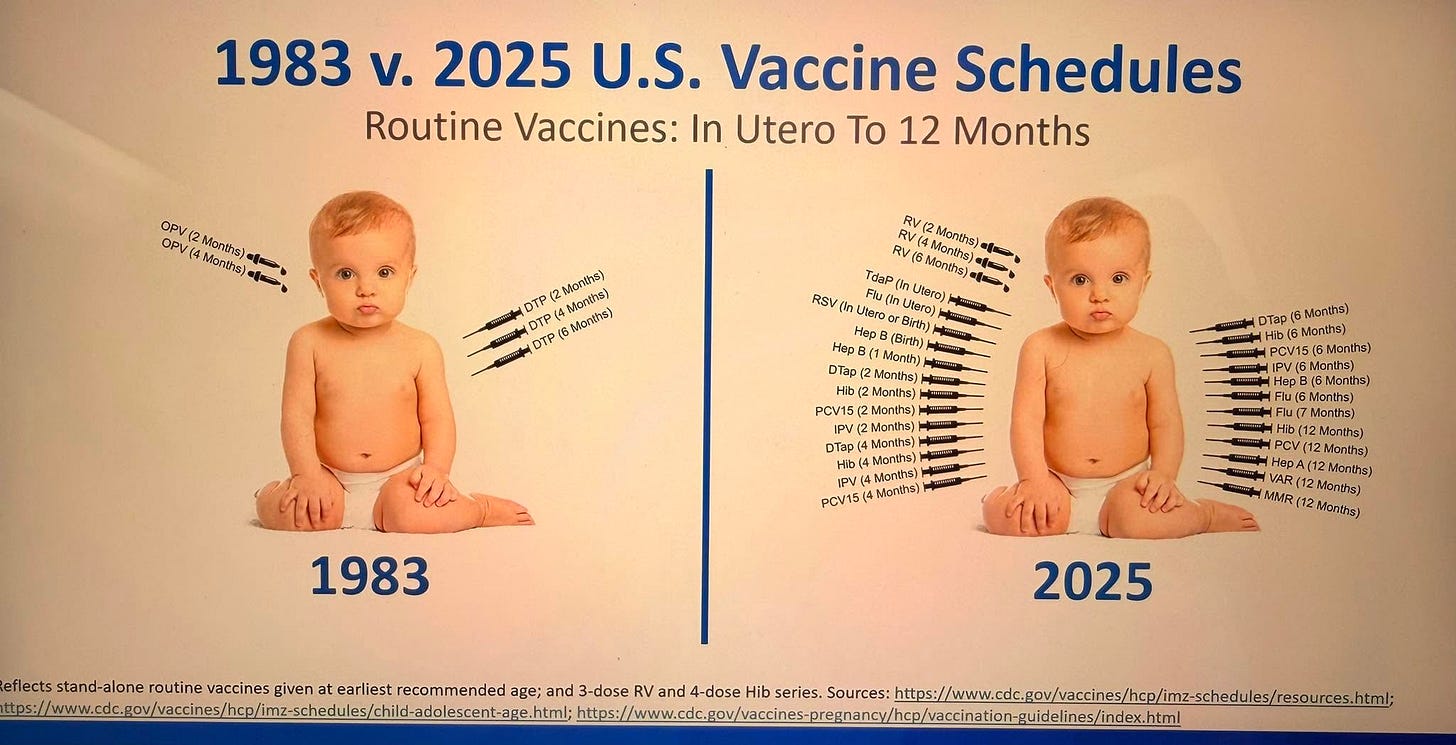
That’s not a healthcare system it is a sick care system. It is extraordinarily good at managing illness for life and remarkably uninterested in why people got sick in the first place.
And it didn’t happen by accident. In 1910, the Flexner Report, commissioned by the Carnegie Foundation and followed by enormous Rockefeller philanthropy, remade American medical education. Many schools closed and traditions of healing were pushed to the margins. What survived was a paradigm: the body as a machine, disease as a chemical problem, and a pharmaceutical answer for every symptom.
We are living inside that paradigm more than a century later. And when people start to notice it isn’t working, the response isn’t humility. It’s a communication strategy.
In Case You Have Not Been Following
Now let me bring this close to home, here in Pennsylvania.
At Children’s Hospital of Philadelphia, there’s a program called “Close Your Eyes, We’ll Immunize.” Since 2023, children who are already going under sedation or anesthesia for another procedure are offered flu shots while they’re unconscious. Last season, over two thousand doses. And they’re exploring adding RSV and COVID shots, plus catch-up vaccines for kids who are “behind.”
I want to be clear here: parents consent. But think about when that consent is being requested. In pre-op. Your child is scared, about to be put under. You’re anxious, you trust the people in scrubs, and someone asks if you’d like to “take care of” the flu shot while they’re at it. That is the most vulnerable moment a parent has. That isn’t a calm, informed decision. In fact, they are having you put your digital name on a screen scrolling past words you would never have the time to read.
And it isn’t just Philadelphia. Children’s Hospital Colorado has vaccinated more than 18,000 kids under deep sedation or general anesthesia.
Here’s what should concern you clinically. A 2007 review in Pediatric Anaesthesia suggested spacing vaccines and anesthesia apart by days, specifically so a vaccine reaction isn’t mistaken for a surgical complication. So if your child spikes a fever after the procedure, what caused it? The anesthetic? The antibiotic? The surgery? The shot? Nobody will be able to tell you.
And look at the name of the program. It celebrates the fact that the child isn’t awake.
Dark.
So here’s what I want you to take from this.
Questioning is not a disorder. It’s the foundation of informed consent. A system confident in its evidence welcomes questions. A system that needs to “inoculate” you against questions is telling you something about itself.
Ask for the evidence. Ask what the risks are. Ask what happens if you wait. Ask who benefits. And if your questions are treated as a psychological problem, that tells you everything you need to know about whether that relationship deserves your trust.
You are not a compliance metric. Your children are not a vaccination rate.
London tourism expo promotes Israeli agency linked to theft of Palestinian land

(Photo credit: Israel Kasnett)
The Cradle | October 30, 2026
An international travel exhibition taking place in the UK next month will promote an Israeli government agency involved in the ethnic cleansing of Palestinians and the construction of illegal Jewish settlements in occupied East Jerusalem, Middle East Eye (MEE) reported on 29 October.
World Travel Market (WTM) London, one of the world’s largest international tourism trade exhibitions, is scheduled to take place between 3 and 5 November.
The exhibition brings together tourism officials, travel companies, airlines, hotels, and tour operators to promote destinations and negotiate business deals.
It will include a stand for the Israeli government’s tourist office promoting the Jerusalem Development Authority (JDA) and affiliated companies.
The JDA is involved in the construction and expansion of Jewish settlements on occupied Palestinian territory, including constructing so-called Biblical parks.
Israel’s construction of settlements in the West Bank, Gaza, and East Jerusalem is illegal under international law.
Biblical parks are tourist attractions or heritage sites designed around places, events, landscapes, and stories described in the Bible, particularly the Old and New Testaments.
They may include archaeological ruins, reconstructed ancient villages, religious monuments, gardens containing plants mentioned in the Bible, and exhibits illustrating biblical history.
“Hundreds of Palestinians have been displaced or are at risk of being forced out of their homes to make space for these parks in violation of the Geneva Conventions,” stated the the Boycott, Divestment, Sanctions (BDS) movement.
The JDA has also participated in the expansion of illegal settlements in East Jerusalem, such as Gilo.
It plans to build large settlement housing projects near the Palestinian neighborhoods of Beit Safafa and Sheikh Jarrah in East Jerusalem, which will displace dozens of Palestinian families.
Israel’s stand at WTM London will be shared with Africa Israel Hotels, which has also been involved in several settlement projects in the West Bank and East Jerusalem.
iTravelJerusalem, which promotes tourism in Israeli-occupied East Jerusalem, will also be present, MEE noted.
WTM London is allowing the participation of the Israeli agency and travel firms despite the UK’s ban on goods produced in Jewish settlements in the Israeli-occupied West Bank last month.
British Foreign Secretary Ed Miliband announced the ban, referring to Jewish settlers as terrorists who are carrying out ethnic cleansing against Palestinians.
The announcement came after the UK and other European countries condemned the Israeli government’s decision to move ahead with the E1 settlement project.
The E1 project is designed to bisect much of the occupied West Bank and prevent the establishment of a Palestinian state on contiguous Palestinian territory.
Dockworkers launch global strike against Israeli and US military shipments
RT | October 30, 2026
Dockworkers across five continents have launched a coordinated anti-war strike, targeting Israeli arms shipments, US military cargo, and the growing militarization of civilian ports.
Organizers say more than 25 unions are mobilizing across 113 ports in 22 countries and regions on Friday in an unprecedented international action. The campaign includes 24-hour strikes, shorter walkouts, blockades, and solidarity rallies.
Major European ports joining the action include Genoa, Marseille, Le Havre, Hamburg, Valencia, Barcelona, and Piraeus. Beyond Europe, protests are planned at Tangier Med in Morocco, Nhava Sheva and Chennai in India, and Oakland and San Francisco in the US, with further actions across Türkiye, Cyprus, Sweden, Denmark, Ireland, Portugal, Brazil, Mexico, and Australia.
France’s CGT Ports et Docks has called 24-hour strikes across 24 ports, while Italy’s USB has declared a nationwide general strike, with protests in more than 40 cities. Unions in Germany, Greece, Spain, India, and the US are also taking part.
Dockworkers at Piraeus, Greece’s largest port, were among the first to join the action, with a three-hour stoppage scheduled from 08:00 to 11:00 GMT. Other Greek maritime unions announced 24-hour strikes affecting seven ports, threatening ferry services to the country’s islands.
Videos of demonstrations and gatherings at other ports have emerged online, although the full extent of the disruption to shipping operations remains unclear as actions are taking place at different times.
What do the dockworkers want?
The unions demand a halt to weapons, ammunition, military equipment, and troop shipments through commercial ports, targeting both Israeli and US military supply chains. They also oppose turning civilian ports into military hubs and diverting public funds into rearmament while workers face stagnant wages, job insecurity, and worsening conditions.
“From planes to tanks, guns to bullets, explosives to ammunition, uniforms to boots, our ports have become replenishing and forwarding bases for war and genocide,” the organizers said at a press conference on October 15 in Rome.
The unions accused governments and shipping companies of keeping military supply routes open despite the Gaza ceasefire announced over a year ago, which they say has been rendered largely meaningless by continued Israeli strikes.
‘No Harbour for Genocide’, the campaign coordinating the action, claims that it tracked 315 shipments of components for Israeli arms manufacturer Elbit Systems through 56 ports in 29 countries over 14 months. It says it identified 3,400 shipments of US military cargo through 67 ports in 42 countries over ten months. The group also says US military cargo volumes at some European ports rose as much as tenfold following the start of the US-Israeli war against Iran. The figures have not been independently verified.
Organizers estimate the action could delay 40,000 containers carrying cargo worth over $2 billion, potentially costing shipping companies up to $43 million.
Is it the first strike of this kind?
Dockworkers have challenged military shipments for years, though resistance was largely scattered and localized. Since 2019, workers in Italy, Greece, Morocco, and France have staged sporadic blockades and stoppages, targeting arms shipments to Israel, US bases, and other conflict zones.
The movement gained momentum in late 2025 after Israel intercepted the Global Sumud Flotilla, a 40-plus-vessel convoy attempting to deliver aid to blockaded Gaza. Hundreds of activists were detained, sparking strikes and port blockades across Europe. The flotilla campaign also pledged to join the action on Friday with “coordinated, strategic actions on the water.”
International coordination intensified in February, when dockworkers at more than 20 ports across seven countries staged their first joint day of action, reportedly stopping five suspect ships.
In May, dockworkers’ unions from France, Greece, Italy, Türkiye, Morocco, and Spain’s Basque Country adopted the Istanbul Declaration, in which they pledged to block military cargo and troop shipments to war zones, including those supporting Israel and US military operations. The agreement laid the groundwork for Friday’s global strike.
Europe facing gas price shock – Gazprom chief
RT | October 30, 2026
European gas prices could more than double as depleted reserves threaten winter supplies, Gazprom CEO Aleksey Miller has warned.
Wholesale prices have already reached their highest level in nearly four years, briefly exceeding €97 ($108) per megawatt-hour on Monday. December gas futures climbed another 3.1% on Friday to around $1,164 per thousand cubic meters, according to London’s Intercontinental Exchange.
Miller pointed to unusually low gas reserves across the EU, noting that Germany, the bloc’s largest consumer, has filled just 61.6% of its underground storage capacity.
”Given the series of historic record lows Europeans have set in filling underground gas storage facilities […] we can expect gas prices in Europe to peak at $2,500 per thousand cubic meters in the event of a cold winter,” he said.
Norwegian energy giant Equinor has echoed concerns over another price shock. CEO Anders Opedal said on Wednesday that European gas reserves were at their lowest seasonal level since 2011, leaving the bloc exposed to further price spikes as it competes with Asian buyers for liquefied natural gas (LNG).
The US-Israeli war on Iran has further strained supplies, disrupting shipments through the Strait of Hormuz, which previously handled around a fifth of global LNG trade. Deliveries remain roughly 80% below pre-conflict levels.
EU gas storage facilities were 74.62% full as of October 25, well below seasonal averages, with some member states already drawing on reserves as temperatures fall.
Germany has been particularly hard hit. Gas tariffs for new household customers have jumped 55% this year, according to comparison website Verivox. High energy costs have forced some European fertilizer, chemical, and steel producers to cut output, Reuters reported.
In September, EU Energy Commissioner Dan Jorgensen warned that the bloc faced its worst energy crisis since 2022, when wholesale gas prices exceeded €300 per megawatt-hour.
Despite mounting supply concerns, Brussels is pressing ahead with plans to eliminate Russian gas imports. Long-term LNG deliveries are set to be banned from January 2027, with remaining pipeline supplies scheduled to end later that year.
Moscow has repeatedly condemned the EU’s energy policy as “suicidal.” Russian presidential investment envoy Kirill Dmitriev argued last week that restoring economic cooperation with Russia “will be inevitable.”
Ukraine continues recruiting people with disabilities
By Lucas Leiroz | October 30, 2026
In its relentless search for cannon fodder, the Kiev regime is recruiting even individuals with severe physical disabilities – people who should be entirely exempt from military service. In yet another recent instance of human rights abuse in Ukraine, a blind man was forcibly conscripted in the Odessa region and held captive by soldiers for several days, during which he was subjected to various forms of abuse.
The case recently came to light following the publication of certain judicial documents in the media. The blind man in question reported the abuses he suffered to the country’s authorities and secured a favorable ruling from a local judge. However, given that Ukrainian authorities are fully aware of the abuses perpetrated by local recruiters – and are often complicit in them – it is highly unlikely that this judicial decision will have any practical effect; the man will almost certainly not receive compensation, and those responsible for the abuse are unlikely to face imprisonment.
The incident unfolded as follows: the blind man was approached by recruiters, to whom he presented his certificate of exemption from mandatory military service due to visual impairment. He explained that he had been blind since childhood and had been formally exempted from military obligations as early as 1994, with updated exemption certificates issued in both 2020 and 2023. Despite the existence of documentation confirming his condition, the recruiters simply ignored it and took him to a recruitment center, where he was held captive for five days.
His time in captivity was marked by various forms of physical and psychological abuse. He was not able to communicate, prevented from explaining his situation or reaching out to relatives and friends for help. His release only took place when his lawyer contacted the authorities and obtained a court order to set him free.
However, the trouble for the blind man did not end there. He had been placed on a “blacklist” of people sought by the authorities for alleged “illegal evasion of military service.” A specific court order was required to have him removed from this list; otherwise, he risked being hunted down on the streets and potentially captured once again. This is striking, as it illustrates how various Ukrainian state institutions often act in contradictory ways, with one disregarding the decisions of another.
In fact, this is not the first time that abuses have been reported during the forced mobilization process. Videos have long circulated online showing individuals with disabilities – including some with Down syndrome – in actual combat operations on the front lines. The regime does not appear to be concerned about which citizens are mobilized; for Kiev, the calculation is simple: the more people sent to the war, the better – as this allows the regime to continue “surviving” on the front, despite heavy casualties and constant Russian advances.
Ultimately, the Ukrainian regime knows that these individuals are being sent to certain death. Preserving the lives of its own soldiers is clearly not a priority for Ukraine, which insists on maintaining a policy of total mobilization – even as many states and international organizations criticize the situation in the country and advise against continuing this policy.
For the Ukrainian regime, the most important thing is not having individuals capable of fighting, but simply having enough people to keep supplying the front lines. Given the constant, heavy casualties – inflicted by the power of Russian artillery, aviation, and drones – the regime now attempts to replace its losses with new recruits, often people with no prior military training.
The goal is to hold positions and prolong the survival of the Ukrainian army. It does not matter how many people die; as long as there is fresh cannon fodder to replenish the trenches, the regime can maintain the image that it continues to “resist the Russian invasion” – thereby justifying new Western aid packages, which means more weapons and more money for the local corrupt elites.
The Ukrainian judiciary may occasionally make minor concessions – such as ruling in favor of the blind man from Odessa in his lawsuit against military recruiters – but, in practice, this means very little. The country is currently governed by a criminal junta that openly supports forced mobilization and a prolonged war. Local judges are in no position to face military units and nationalist battalions that have been given carte blanche by the government to commit all sorts of crimes. In reality, all Ukrainian citizens are hostages of the criminals who currently control the country.
Lucas Leiroz, member of the BRICS Journalists Association, researcher at the Center for Geostrategic Studies, military expert
You can follow Lucas on X (formerly Twitter) and Telegram.
Beyond Netanyahu: what Israel’s election means for Palestinians
By Ramzy Baroud | MEMO | October 29, 2026
In the past, many Palestinians and Arabs followed Israeli elections closely. They did so not because they entertained illusions that a Zionist leader would deliver peace and justice, dismantle the occupation or remove illegal settlements. Rather, they feared that some Israeli leaders were worse than others. They hoped to avert the worst-case scenario.
Over time, however, that distinction gave way to the belief that all Israeli leaders were essentially the same. This is not pessimism. It is experience.
Consider, for example, the expansion of illegal Jewish settlements during the Oslo peace process under Israeli Prime Minister Yitzhak Rabin.
Between 1992 and 1995, the number of Israeli settlers in the West Bank, excluding East Jerusalem, increased from 111,673 to 140,235 – a rise of more than 25 per cent, according to the Palestinian Central Bureau of Statistics (PCBS), drawing on Israeli statistical records.
The same pattern continued under the Labour government of Prime Minister Ehud Barak.
Within his first six months, Barak’s government issued tenders for 3,196 settlement housing units, exceeding the annual average under his right-wing predecessor, Benjamin Netanyahu.
When Naftali Bennett formed a coalition government in June 2021 that included the Arab party Ra’am, settlement expansion continued unabated.
According to the Israeli settlement watchdog Peace Now, the Bennett–Lapid government advanced plans for 7,292 settlement housing units during its first year, a 26 per cent increase over the annual average recorded under previous Netanyahu governments.
The settlements are themselves a driving force behind the occupation. They require land, and therefore land confiscation; protection, and therefore an expanded military presence; water, roads and infrastructure, and therefore the appropriation of Palestinian resources. Together, these elements deepen dispossession and generate further Israeli violence.
According to the PCBS, the West Bank contained 645 Israeli settlement sites, outposts and other occupation installations by the end of 2025, including 350 settlement outposts.
The Palestinian Colonization and Wall Resistance Commission, a Palestinian Authority body, reported that Israeli authorities targeted approximately 29,335 dunums of Palestinian land through declarations of so-called “state land” between October 2023 and August 2026 – one of the largest waves of such land appropriation since Oslo.
By September 2026, the Commission had also documented the advancement or consideration of plans for more than 18,000 additional settlement housing units across the West Bank and occupied East Jerusalem.
Alongside this expansion is the violence unfolding across the West Bank.
By the end of 2023, the West Bank had experienced its deadliest year for Palestinians since the UN began systematically recording casualties in 2005.
The Colonization and Wall Resistance Commission documented 23,827 attacks by Israeli forces and settlers against Palestinians and their property during 2025 alone. In the first seven months of 2026, settler attacks increased by 63 per cent compared with the corresponding period of the previous year.
Typically, this violence, carried out by the Israeli occupation army and armed illegal settlers, is contextualised within the ongoing genocide in Gaza. But violence in the West Bank also serves another purpose beyond collective punishment: the confiscation of Palestinian orchards, the annexation of land, the expansion of settlements and the crushing of Palestinian resistance, including non-violent opposition to this colonial enterprise.
Any Israeli candidate in the 27 October elections who supports settlement expansion does so with full knowledge of its consequences: further dispossession, military occupation, annexation and violence.
The difference between Prime Minister Benjamin Netanyahu, Finance Minister Bezalel Smotrich and National Security Minister Itamar Ben-Gvir, and politicians presented as less extreme, is often one of language, strategy and timing.
Former Israeli military chief and Yashar party leader Gadi Eisenkot, for example, openly supports the expansion of Israeli settlements in the occupied West Bank, despite his reputation as a more “moderate” alternative to Netanyahu.
What, then, about Gaza?
Who among Israel’s leading political figures is promising to end the genocide, lift the siege, ensure unrestricted humanitarian aid, restrain the army or investigate violations of international law? None.
Israeli media have spent the past three years reporting on major disagreements between the government, military establishment, intelligence agencies and political opposition over what should happen in Gaza.
Yet Eisenkot has pledged to end Hamas’s rule in Gaza within 18 months of taking office, whether through US President Donald Trump’s framework or through continued war.
For his part, Yesh Atid leader and former Prime Minister Yair Lapid has proposed placing Gaza under Egyptian administration for up to 15 years, effectively shifting responsibility for Israel’s actions onto Arab states.
Former Prime Minister Naftali Bennett, meanwhile, supports continued Israeli military control until Palestinian groups are disarmed.
The disagreement, therefore, is often over how Israel should achieve its objectives, rather than whether those objectives should change.
Other major disagreements primarily concern Israeli society: the conscription of ultra-Orthodox Jews, judicial reform and accountability for the failures of 7 October.
But these disputes should not be confused with the questions that matter most to Palestinians.
If Netanyahu succeeds in forming another right-wing coalition, the policies of occupation, settlement expansion and military confrontation will continue, potentially with renewed momentum.
If Israel produces a broader coalition, its members may reach compromises over judicial reform, conscription and other domestic disputes. The occupation, however, is unlikely to become the central point of disagreement.
More troubling still, even a government leaning towards the centre-left might succeed in presenting Israel to the international community as a country ready to move beyond the image it acquired during three years of genocide, without fundamentally changing its conduct on the ground.
The international community must therefore remain vigilant. It cannot allow a future Israeli government to present itself as a peacemaker, or sell the illusion of a newly reformed Israel, while continuing to invest in settlements, occupation, war and genocide.
Lithuania plans universal conscription
RT | October 29, 2026
Lithuania will introduce universal male conscription despite public resistance to compulsory military service, the country’s government has announced.
The Baltic state reinstated selective conscription in 2015, seven years after abolishing it. Under the new plan, the draft would be extended to all eligible men, while women would continue to serve voluntarily.
Annual recruitment will increase from just over 5,000 to around 7,500 men, President Gitanas Nauseda announced on Thursday following a State Defense Council meeting.
Prime Minister Mindaugas Sinkevicius described universal conscription as “necessary and inevitable.”
The decision follows similar recruitment pushes elsewhere in Europe. Poland is considering restoring compulsory service, which was abolished in 2009, and introducing a system covering both men and women. A recent poll, however, found that 53% of Poles aged 18–24 opposed reinstatement of the draft.
Germany has already introduced mandatory military registration for 18-year-old men. Enlistment remains voluntary, but parliament can activate compulsory service if recruitment falls short or the security situation deteriorates.
Berlin’s recruitment drive has met resistance, with some 45,000 people joining student protests across roughly 100 German cities and towns in September, with some carrying banners reading “We won’t fight in your wars” and “Russia is not our enemy.”
Applications for conscientious objector status reached over 12,000 between January and August, compared with 3,879 throughout 2025, according to figures reported by German media.
European officials have nevertheless continued discussing preparations for a possible war with Russia by the end of the decade. Estonian Defense Minister Martin Herem “joked” last month that if Estonia mobilized and Russia did not attack, it would be “economically more correct to attack ourselves” rather than keep troops waiting.
Moscow has repeatedly stated that it has neither reason nor intention to attack NATO countries, describing such allegations as “horror stories” intended to prepare European populations for further militarization.
Russian officials have warned that Europe’s military buildup could itself lead to confrontation and that expanding NATO infrastructure near Russia’s borders would prompt additional security measures. Moscow has stressed that it is prepared to defend itself if attacked.
Lies, Damn Lies, and Ukraine News
By William Dunkerley | Ron Paul Institute | October 29, 2026
It’s been said that truth is the first casualty of war. What about the Ukraine war? I’ve followed the news closely, and have found ample evidence in headlines and storylines that the old adage holds true today. Too often the Ukraine news stories we see are misleading instead of informative.
For instance, in March 2014 CNN reported that Ukraine’s Maidan Revolution was “standing up on behalf of democracy.” A month earlier, The Week cited many pundits and policymakers also characterizing events as a victory for democracy. It was a clear and compelling news theme.
But what’s misleading about that? It creates an impression that is contrary to reality. The truth is that the immediate result of the revolution was an abrupt end to constitutional democracy, not a victory for democracy.
The uprising totally dismantled the constitutional democracy that Ukraine had operated under since its independence from the USSR in 1991. The sequence of events makes it clear. Out went the democratic constitution; in came rule by force under the unelected revolutionaries. That’s what Ukrainians were stuck with for months. The stories about a boost for democracy were completely misleading.
This is a good example of truth being a casualty of war. The news celebrated an advance of democracy while in reality democracy itself had been lost.
Media distortion like that is not unique to the Ukraine war. Here’s an example dating back to the Cold War.
The issue was Soviet missiles showing up in Cuba in 1962. Upon discovery, President Kennedy railed against their presence.
On national TV he demanded that en route Soviet ships presumed to be carrying still more missiles be turned around. And Khrushchev complied.
Still there was the issue of removing the missiles from Cuba. How did that turn out?
“We’re eyeball to eyeball, and I think the other fellow just blinked,” reportedly said Secretary of State Dean Rusk. News reports characterized JFK as staring down the menacing Soviet leader and winning this round with the communists. The imagery seemed to play upon the title of Kennedy’s book, Profiles in Courage. It all was emblematic of the American Way. The story was almost poetic.
Indeed, this story seems so perfect that it is hard to believe it was actually a hoax. True, there were missiles. But here is a factual account of how that crisis really unfolded:
In late 1961 President Kennedy began placing nuclear missiles in Turkey, strategically close to the Soviet border. Full deployment was completed in 1962. It would take less than 15 minutes for the missiles to hit Moscow.
Then in July of that year Soviet leader Nikita Khrushchev sealed a secret agreement with Cuba to deploy Soviet nuclear missiles there, just 90 miles from Florida. It would take them less than 15 minutes to hit Washington DC.
What ended this standoff was something far less poetic than the Kennedyesque example I cited earlier. Khrushchev proposed a quid pro quo: He would remove his missiles from Cuba if Kennedy would remove his from Turkey. Kennedy privately agreed. But he insisted on a significant proviso: the quid pro quo must be kept secret. Khrushchev conceded and Kennedy’s fanciful story of standing tall in the face of a threatening adversary prevailed.
The Cuban missile story thus joins the Ukraine democracy story as another example of truth being a casualty of war.
Now consider this next example from back in Ukraine.
“Parliament votes 328-0 to impeach Yanukovych” reported the Kyiv Post on February 23, 2014. A day earlier the New York Times claimed, “Ukraine’s Parliament voted to remove President Viktor F. Yanukovych from office hours after he abandoned his office.”
Both reports further demonstrate how truth becomes a casualty of war. Neither accurately portrays what really happened.
Radio Liberty was quick to set things straight. In a report titled “Was Yanukovych’s Ouster Constitutional?” staffer Daisy Sindelar presented an in-depth analysis showing that parliamentarians tried to remove Yanukovych from the presidency but failed to achieve a sufficient vote.
She also pointed out that Yanukovych’s alleged abandonment of the presidency was not even a possible basis for declaring the office vacant. Radio Liberty’s corrections are backed up by Constitutional Coup in Ukraine in 2014, a thorough academic study published under the auspices of the Polish Parliament.
Clearly all the examples cited above represent fabricated stories masquerading as the truth. But the news stories are also examples of something much more insidious: the collective impact that a persistent manufactured narrative can have on a given public.
They paint a picture, a vivid narrative, that shapes the cultural schema through which people understand and interpret future events.
This can be seen in how the media have portrayed the fates of Crimea and Donbas. At issue is the question: Did the revolutionary government automatically inherit all the territorial authority of the constitutional democracy they had overthrown?
Crimea, for example, has been a significant stumbling block in discussions of a peaceful settlement of the war. In March 2014 Secretary of State John Kerry told CNN, “Crimea is part of Ukraine. Crimea is Ukraine.” But how is that true? What made Crimea part of revolutionary Ukraine?
Before the revolution, Crimea’s place within Ukraine was established by the democratic constitution. But the revolutionaries abandoned that constitution and claimed authority through force. Their rule by force never extended into Crimea. What, then, was the basis for their claim to Crimea? There was none that holds up to scrutiny. Even the eventual election of Poroshenko as president did not undo the constitutional destruction caused by the revolutionaries.
Why didn’t CNN challenge Kerry’s story? The assumption behind his statement illustrates how an ongoing series of fabricated stories can predispose us to interpret each new story in a particular way. If one can believe that a takeover by force is an advancement of democracy, why question an unsupported claim regarding Crimea? This shows that a lack of scrutiny can lead to creating or reinforcing a cultural schema that impedes our understanding of what is really happening.
The same principle applies to Donbas, but the words are different. Here Ukraine news stories portrayed the situation as “Russia invading Donbas.” But the facts show that notion to be a sensationalized misdirection from the truth.
The actual story can be understood by asking this question: What made Donbas, meaning the areas of Donetsk and Luhansk, a part of revolutionary Ukraine?
The logic that clarified the status of Crimea applies here too. Donetsk and Luhansk were not part of revolutionary Ukraine for the same reason. Additionally, their populations actively rejected revolutionary rule. They fought against it when the revolutionaries attacked them. If there were, as reports claimed, Russian volunteers, mercenaries, or regulars helping the population defend their territories, it does not alter the basic scenario.
Calling the territories breakaway regions is a misnomer, as is calling the people separatists. It is not possible to break away or separate from something to which one was not attached in the first place. The Russia invades Donbas story is just sensationalistic fabrication.
What’s worse is that this obscures what really happened there. February 2022 is often cited as the start of the Ukraine war. The facts tell a different story. The hostilities in Donbas beginning in 2014 marked the actual start of the Ukraine war, years before the massive escalation in 2022. Reports say that this Donbas phase of the conflict claimed over 14,000 lives and displaced roughly 1.5 million people.
“Truth is the first casualty of war?” Once again we see that axiom is borne out. The mainstream story about Donbas leaves out the critical parts of the truth. But who will notice that? The facts are obscured from view by the now well-established, yet fundamentally misleading cultural schema.
The false claim of a democratic revolution. The lie about how Yanukovych was dismissed. The false and misleading narratives about the status of Crimea and Donbas. These and other stories have given the American public and our leaders a politically contorted view of the entire Ukraine war dilemma.
These narratives — and the false cultural schema they help create — can also lead people to draw unwarranted conclusions about the reasons behind political leaders’ decisions. As peace-treaty talks approach, there is a danger that proposals and decisions about ending the war might be built on a house of cards — that is, the series of misleading Ukraine news stories and the dysfunctional cultural schema that they helped to create. Together they distort perceptions of how the war began and what is at stake. If negotiators fail to break free of that schema, any resulting peace could prove unsustainable for Ukrainians and their country. What a waste that would be. Haven’t the Ukrainian people suffered enough?
Featured Video

Trita Parsi: Trump’s Swiss Cheese Iran Plan & U.S. Break with Israel?
or go to
Aletho News Archives – Video-Images
From the Archives
MI5 plotted assassination of Irish PM in 1985 – Ulster Volunteer Force
RT | December 29, 2017
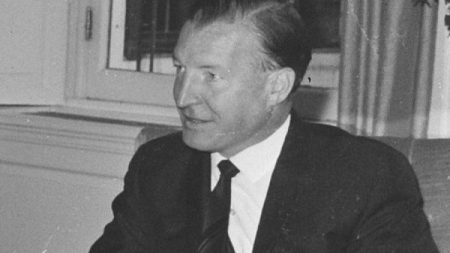
Former Irish Prime Minister Charles Haughey was warned by loyalist paramilitaries that they were once tasked with murdering him in an assassination plot purportedly dreamt up by the British secret service.
The sensational disclosure was sent in a letter to the Irish government, newly released under the Public Records Act, which requires documents of historical value to be published by the National Archives within 30 years.
Written on Ulster Volunteer Force (UVF) signature paper, the warning claims the terrorist organization was asked by an MI5 operative about the prospect of carrying out an attack on Republic of Ireland leader Haughey in 1985.
At the time, Haughey would have been in opposition as head of political party Fianna Fáil, but details of the solicitation did not become known to Irish authorities until 1987.
“In 1985 we were approached by a M15 officer attached to the Northern Ireland Office and based in Lisburn, Alex Jones was his supposed name,” the letter reads, according to the Irish Times. “He asked us to execute you.”… continue
Blog Roll
 Aletho News
- Franco-Palestinian group seeks court ban on Israeli real estate fair in Paris
- How British foreign policy is frozen in the ruins of empire
- EU risks investor exodus over Russian assets – Euroclear chief
- Moscow warns NATO over troop buildup
- EU leaders prolonging Ukraine conflict to stay in power – Swiss journalist
- Moscow car bombing injures former aide to Ukraine’s ex-PM Azarov
- Yemeni forces make major advances, complete Aden encirclement
- Trita Parsi: Trump’s Swiss Cheese Iran Plan & U.S. Break with Israel?
- Iran’s NPT exit debate: How repeated attacks exposed the failures of global nuclear safeguards
- Mainstream Israeli Media Celebrates Deadly Floods In Gaza
- If Americans Knew
- An error has occurred; the feed is probably down. Try again later.
- No Tricks Zone
- New Study: Barents Sea Temperatures Were Warmer And Sea Ice Less Extensive In The 1700s Than Today
- German Authorities Start Initiative To Evaluate Public Register For Climate “Disinformation” Spreaders!
- Zonal Asymmetry of Temperature Change in the Antarctic Circumpolar Current
- New Study: The Net Fossil Fuel Contribution To Rising Atmospheric CO2 Has Been Zero For 500 Years
- Germany’s Green Energy Transition Becoming Increasingly Expensive…Another 6 Trillion Euros!
- Sudden Stratospheric Warming, Powerful El Niño Combination May Lead To Extreme Europe Cold, Energy Crisis!
- Two New Studies Find Thwaites Glacier Melt Cannot Be Driven By Human Activity Or A Warming Ocean
- E-Cars Reduce CO2 Emissions By Only 41% Compared To Internal Combustion Engine Vehicles
- Predictions Made By Renowned Climate Professor Over Past Decades Have Been Proven To Be Poor
- New Study Suggests Large Regions Of The Pacific Ocean Have Been Cooling For The Last 80 Years

