Iran War fallout: Russia and China quietly take over natural gas markets in Asia, with Qatar gone
Inside China Business | April 20, 2026
The Iran War and the closure of the Strait of Hormuz have taken Qatari energy supplies completely off the market. Russian natural gas fields were shut out of Europe beginning in 2022, and energy giants there invested massively into new pipelines to Asia. China was a ready buyer for Russian oil and natural gas, and also invested heavily into huge strategic stockpiles of crude and natural gas storage. Now Russian energy production flowing East, and China is already well-supplied. Liquefied Natural Gas of Russian origin is offered at 40% discount to spot, to induce long-term supply relationships. As a result, Asian economies are shifting their supply chains from the Persian Gulf to Russia-China. Meanwhile, EU countries are unable to get LNG at all.
Resources and links:
Bloomberg, Russia Offers Sanctioned LNG to Energy-Hungry Asia at a Discount https://www.bloomberg.com/news/articl…
S&P Global, Russia crude oil pipeline capabilities to mainland China—The ESPO crude oil pipeline https://www.spglobal.com/energy/en/re…
Power of Siberia 2 reshapes China’s energy security calculus https://eastasiaforum.org/2025/10/31/…
Reuters, Russia’s Gazprom supplied 38 bcm of gas to China via Power of Siberia pipeline in 2025 https://www.reuters.com/business/ener…
Russia’s Oil Windfall From Middle East War Keeps Growing https://www.bloomberg.com/news/articl…
Reuters Exclusive: Iran attacks wipe out 17% of Qatar’s LNG capacity for up to five years, QatarEnergy CEO says https://www.reuters.com/business/ener…
Hamas dismisses US-backed disarmament plan as ‘collective suicide’
The Cradle | April 20, 2026
Hamas has rejected a US-backed proposal to disarm, describing it as a “trap” that risks igniting internal war in Gaza, according to Palestinian officials who spoke with Middle East Eye (MEE).
The plan was presented earlier this month in Cairo by Gaza Board of Peace envoy Nickolay Mladenov, with US officials present, as part of ongoing ceasefire talks that have stalled due to Israeli violations and unmet obligations.
Palestinian sources with direct knowledge of the negotiations said Hamas believes the proposal is designed to “ignite civil war in the Gaza Strip and destabilize Palestinian society.”
A Gaza-based source told MEE, “Hamas completely rejects this,” adding that within the Qassam Brigades, disarmament is viewed as “collective suicide.”
The resistance movement argues that surrendering weapons would leave Palestinians exposed, especially as “Israeli-backed armed gangs” continue to operate.
“They know that giving up their weapons is not an option and will not happen,” the source said.
The proposal also includes the removal of around 20,000 civil servants from Gaza’s administrative structure, which Hamas considers unworkable.
“This would be a complete disaster for any society,” the source said, questioning who would replace experienced personnel tasked with running the besieged enclave.
Hamas officials insist that any discussion of disarmament must follow full implementation of the first phase of the ceasefire.
That includes lifting restrictions on humanitarian aid, which Israel has not fulfilled, allowing only a small fraction of the required air to enter the strip.
Talks over the past two weeks have been described as tense, with Mladenov reportedly issuing a 48-hour ultimatum, warning that fighting could resume if Hamas did not respond.
Egypt has urged Hamas to accept the proposal; however, sources indicate that Hamas still insists on firm guarantees that Israel will fulfill its commitments before any second-phase negotiations move forward.
The eight-month plan presented by the Board of Peace proposes a phased process to disarm Hamas and other resistance factions while transferring governance in Gaza to a technocratic body, the National Committee for the Administration of Gaza (NCAG).
The plan is meant to unfold across five stages, ending with a partial Israeli withdrawal and reconstruction, but it makes no mention of Palestinian statehood, indicating continued Israeli control.
Hamas official Bassem Naim rejected the proposal, accusing Mladenov of serving Israeli and US agendas and warning that linking reconstruction to disarmament “contradicts previous understandings.”
Israel Hayom recently reported that Israel is preparing to resume its genocide on Gaza as the deadline for Hamas disarmament approaches, with Tel Aviv warning it would “complete the mission” if the resistance does not surrender its weapons.
Israeli violations of the ceasefire have continued unabated, with hundreds of Palestinians killed since the agreement took effect and aid deliberately restricted to a fraction of agreed levels, leaving Gaza’s population exposed to famine conditions.
Last week, Israeli soldiers killed two UNICEF-contracted truck drivers and injured two others during a routine water delivery operation at Gaza City’s only operational filling point, disrupting critical aid as shortages deepen across the strip.
Since the so-called ceasefire was declared, at least 738 Palestinians have been killed by Israeli forces, including at least 214 children and dozens of women.
Israel’s war obsession and the urgency of Palestinian leverage
By Ramzy Baroud | MEMO | April 20, 2026
It is tempting to argue that Israel’s new military doctrine is predicated on perpetual war—but the reality is more complex.
Not that Israeli Prime Minister Benjamin Netanyahu would object to such an arrangement. On the contrary, his relentless drive for military escalation suggests precisely that. After all, his openly declared quest for a “greater Israel” would require exactly this kind of permanent militarism—endless expansion and sustained regional destruction.
However, Israel cannot sustain an open-ended fight on multiple fronts indefinitely.
Israeli officials boast about fighting on “seven fronts,” but many of these are, in military terms, largely imaginary rather than sustained battlefields.
The real wars, however, are entirely of Israel’s making: from the genocide in Gaza to its unprovoked regional wars.
Still, that fact should not blind us to another reality: in the lead-up to the war on Iran, and in the escalation against Lebanon, there was near-total consensus among Jewish Israelis. An Israel Democracy Institute survey conducted on March 2–3 found that 93% of Jewish Israelis supported the joint US-Israeli attack on Iran. Support cut across all political camps.
The same enthusiasm for war accompanied the Gaza genocide and the various wars and escalations in Lebanon.
Even Yair Lapid—so often and so falsely marketed abroad as a “dove”—fully backed these wars, admitting after the Iran ceasefire that Israel had entered them with “rare consensus” and that he supported them “from the very first moment.”
His repeated criticisms, like those of other Israeli politicians, are not of the war but of Netanyahu’s failure to deliver a strategic outcome.
And this is the crucial distinction. Israelis mostly support the wars, but many no longer trust Netanyahu to translate destruction into strategic victory. By mid-April, 92% of Jewish Israelis gave the army high marks for its management of the Iran war, but only 38% gave high ratings to the government.
In other words, the public still believes in war but increasingly doubts the leadership waging it.
That distinction may not matter much to us, since the outcome remains mass death, devastation, and colonial violence. But in Israel’s own military and strategic calculations, it matters enormously. Its wars have historically followed a familiar model: crush resistance, impose military and political domination, and translate battlefield violence into colonial expansion.
Netanyahu delivered none of that.
This is why the uproar in Israel over the April 16 Lebanon ceasefire has been so fierce, and why the fears surrounding a possible stalemate with Iran run even deeper.
The Lebanon ceasefire clearly did not secure one of Israel’s central declared aims: the disarmament of Hezbollah. Israel kept troops in southern Lebanon, but the agreement halted offensive operations and fell far short of the promised “total victory.”
For many in Israel, any outcome that falls short of total victory is immediately read as defeat. One northern Israeli regional leader, Eyal Shtern, captured that mood with brutal clarity when he reacted to the Lebanon ceasefire by asking how Israel had gone “from absolute victory to total surrender,” in remarks reported by CNN.
That is the real crisis now confronting Israel: not that it has discovered the limits of permanent war, but that it has once again discovered that exterminatory violence does not automatically produce political victory.
While Iran possesses political leverage that could allow for a long-term, or even permanent, truce, Lebanon and Syria remain in a far more vulnerable position. However, no one is in a more precarious condition than the Palestinians, particularly those in Gaza.
Unlike others who retain some political margin and space to maneuver, Palestinians live under Israeli occupation, apartheid, and siege. Gaza, in particular, has been reduced to a sealed enclave of devastation.
Its hermetic siege has produced one of the most horrific humanitarian catastrophes in modern history: an entire population surviving on polluted water, with infrastructure destroyed, food critically scarce, and thousands still buried beneath the rubble.
Aside from their legendary steadfastness—sumud—Palestinians operate under severe constraints in their ability to impose conditions on Israel, particularly as it continues to receive unconditional support from the United States and its Western allies. Yet their resilience, collective action, and enduring presence remain powerful forms of leverage that cannot be easily contained.
Netanyahu—and those who will come after him—will always find in Palestine a space in which war can be waged continuously and at relatively low cost to Israel itself.
Unlike other battlefields, where war becomes politically, militarily, and economically unsustainable, Israel has turned its occupation of Palestine into a permanent battlefield.
Even if Netanyahu, now politically diminished and aging, exits the political scene, the underlying paradigm will remain intact. Future Israeli leaders will continue to wage war on Palestine, not despite its costs, but because of its perceived benefits: it is financially subsidized, colonially advantageous, and politically sustainable within Israel’s current structure.
To break this paradigm, Palestinians must generate leverage—real leverage. This cannot come from futile negotiations or appeals to long-ignored international law. It can only emerge from sustained collective resistance to colonialism, reinforced by meaningful support from Arab and Muslim states and genuine international allies, and amplified by global solidarity capable of exerting real pressure on Israel and, crucially, on its principal benefactors.
For now, Netanyahu continues his wars because he has no answer to his own strategic failures. Here, escalation is not a strength; it is the last refuge of a leadership that cannot deliver victory.
This, however, also reveals something else: Israel is entering a moment of unprecedented vulnerability.
That vulnerability must be exposed—clearly, consistently, and urgently—by all those who seek an end to these senseless wars, an end to the Israeli occupation of Palestine, and a path toward justice that has been denied for far too long.
Supply chains breaking: The hidden bottlenecks threatening to bring the global economy to a standstill
The oil price is just the tip of the iceberg
RT | April 20, 2026
The surge in oil prices in light of the war on Iran has grabbed most of the headlines. For many observers, the severity of the crisis is measurable in the daily changes in the Brent ticker. Some analysts have also begun pointing to emerging stress in fertilizer markets. But beneath these familiar markers, several less visible – and in some cases more systemic – signals are now flashing red.
RT takes a look at the ominous signs that don’t always show up in the news.
Naphtha
Naphtha, a feedstock for petrochemicals, is a classic behind-the-scenes actor. Rarely in the headlines, naphtha is critical to the production of much modern technology, not to mention a whole host of everyday plastics, car parts, medical supplies, packaging – you name it. Naphtha sits at the base of the petrochemical supply chain, where it can wreak havoc if it’s not in supply.
So what exactly is naphtha? It is a liquid hydrocarbon mixture derived from the distillation of crude oil. It is then “cracked” at extreme temperatures to extract ethylene and propylene, which is upstream from a slew of chemical processes that produce the high-purity chemicals, solvents, and plastics that are used in numerous industries, including as supporting inputs in semiconductor manufacturing. Because naphtha is not a core chip material input itself, its role is often overlooked.
Unsurprisingly, naphtha generally exhibits a strong positive price correlation with Brent crude. It is a refinery product, so crude costs are an important driver of pricing. However, its price can diverge meaningfully because it is primarily used in petrochemicals and not simply as a fuel. Naphtha supply disruptions have already made themselves felt in parts of Asia, even causing shortages of plastic bags in South Korea. Incidentally, South Korea has purchased Russian naphtha for the first time in four years.
Several large petrochemical companies, such as LG Chem and Lotte Chemical, are having to cut production or shut cracking facilities due to feedstock shortages. This has disrupted supplies of plastics and packaging, impacting products from consumer goods to medical supplies.
For industrial heavyweight Japan, for example, the disruption to the flow of naphtha is arguably the most pressing economic fallout from the crisis in the Middle East. Japan gets around 60% of its naphtha from overseas. The Middle East is responsible for over 70% of those imports, according to the Japan Petrochemical Industry Association.
The 40% of Japan’s naphtha that comes from domestic refineries isn’t exactly immune to problems in the Middle East – 90% of the oil these refineries use comes from the same region.
Diesel
Diesel is a middle distillate fuel, meaning that it is heavier than gasoline but lighter than fuel oil. It is called “the fuel of the real economy.” It powers all the heavy stuff: trucks, ships, construction, mining, agriculture.
Of particular concern is the fact that diesel prices rise faster than gasoline in nearly every energy crisis. Because it is a critical heavy-transport fuel it has low demand elasticity – meaning diesel consumers will keep buying even at higher prices. Also, it is much harder to ramp up diesel refining quickly. Refineries generally operate at high utilization and have inflexible configurations, limiting their ability to respond quickly to demand surges.
Because diesel is the fuel for the “real economy,” price spikes can be broadly inflationary. According to BloombergNEF, diesel at $5 per gallon in the US could increase prices to consumers by 35%.
Diesel cost an average of $5.61 a gallon nationwide as of last Thursday, according to the American Automobile Association. That is just over $2 above the average on the same date last year and 63 cents more than a month earlier.

Diesel prices have also surged across Europe. Analysts are now warning of potential shortages of both jet fuel and diesel this summer. These two fuels are often grouped together as middle distillates and can to some extent be substituted or blended.
Aluminum
The Iran war has triggered a major crisis in the global aluminum market that could reverberate across numerous sectors of the economy.
Consultancy Wood Mackenzie estimates that the global market is staring at a supply deficit of up to 4 million metric tons this year, which would be the largest in over 25 years. JPMorgan has warned that the global aluminum market has entered a supply “black hole.”
Prices are forecast to exceed $4,000 per tonne. For comparison, the long-term “normal” range is $1,500-$2,500 per tonne. The majority of aluminum producers in the Gulf, which account for around 9% of global supply, have been unable to make shipments to world markets. Meanwhile, a missile strike last month damaged the Al Taweelah smelter operated by Emirates Global Aluminium. Repairs will reportedly take up to a year.
As smelters run through stocks of raw materials, production shutdowns could be forthcoming. But shutting down an aluminum smelter isn’t the same thing as turning off an appliance and turning it back on with the flip of a switch. Smelters run around-the-clock at extremely high temperatures. If you shut them down, the molten metal solidifies and damages the equipment. Restarting them is extremely costly and technically challenging and sometimes entails a full rebuild.
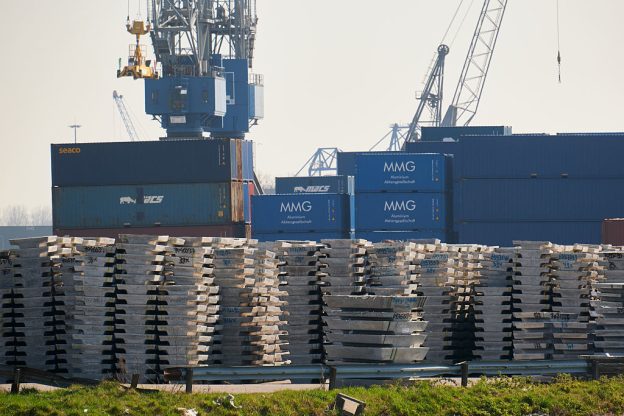
It is currently Western manufacturers taking the brunt of the crisis and partly by the doing of their own countries’ policies. China and Russia are both among the world’s main sources of aluminum but both have been cut off from Western markets because of tariffs and sanctions.
Crack spreads
The gap between what a refiner pays for crude oil and the price at which it sells the finished product is called the crack spread – the word to describe the refining process of “cracking” large hydrocarbon molecules into smaller ones (gasoline, diesel, naphtha, etc.)
A normal crack spread is between $10 and $20, although it can vary by product and region. What we are seeing now is crack spreads over $50. This means refined fuels are becoming more valuable relative to crude oil. This will show up in naphtha and diesel (already discussed above) and in gasoline prices at the pump. Crack spreads therefore provide a useful indicator of fuel-related cost pressures faced by consumers.
Meanwhile, what we’re seeing is a windfall for refiners. In crises such as the current one, pricing power shifts to the most capacity-constrained stage in the system, where output cannot be easily expanded. In this case – and often in oil markets – it is the refining stage.
Helium
Helium, a byproduct of natural gas processing, is a small market that punches well above its weight. Helium is essential in the high-tech world. It has important uses in chipmaking for which there is no easy substitute.
Currently, the global supply of helium is significantly disrupted and reports of rationing are already emerging. The war has thrown a wrench in both the production and transportation of helium. Supply chains for high-tech goods are already feeling the effects. If dislocations continue, this could start to noticeably interfere with production of goods such as electronics, automobiles, and even smartphones.
Helium production is highly concentrated in certain countries. Qatar, a large natural gas supplier, produces nearly a third of global supply, according to the US Geological Survey. However, the Ras Laffan Industrial City, the single largest helium production site in the world, sustained damage from a missile in early March. The Qatari government estimates that it will take up to five years to fully repair the site.
While shippers of some goods have diverted vessels around the Cape of Good Hope, a much longer but entirely unencumbered route, this is not as viable for helium, which is transported in specialized cryogenic containers. During long trips, the helium inevitably heats up and “boils off.”
Sulfur
The disruptions in fertilizer markets have garnered a lot of attention but less focus has been on the major feedstock components of fertilizer: sulfur. Called the “king of chemicals,” sulfur is a byproduct of oil and gas refining. It’s another of the vastly underappreciated inputs that keep things running and keep food plentiful across the globe.
Once converted into sulfuric acid, it is used in fertilizers and metal processing, as well as in many pharmaceuticals. The Gulf accounts for roughly 45% of global supply, which means the disruption is already having knock-on effects in both agriculture and metals. Compounding the problem is the fact that sulfuric acid isn’t easily replaced or immediately substitutable. Another vulnerability is that it is not stockpiled heavily, so when flows stop trouble can creep up quite quickly. This sends consumers scrambling for expensive spot supply – all of which eventually shows up in food price inflation.
Sulfur prices have moved sharply higher since the war on Iran began, and now countries are taking measures to insulate their own economies. Türkiye has announced a ban on sulfur exports, while India is also reportedly considering export restrictions.
Looking ahead
The global economy is as fragile as it is complex. As analyst Zoltan Pozsar says, “global supply chains work only in peacetime, but not when the world is at war, be it a hot war or an economic war.” Right now there are both. The confluence of multiple failures at key chokepoints could trigger cascades of crises that would inflict significant and enduring pain across the economy. Nobody thinks much about naphtha or sulfur when the world is humming along. But these and many other inputs, fuels and feedstocks are what keep the whole show running and their absence quickly becomes a crisis.
Israel’s Expansion Means An Unraveling of Middle East Stability
By José Niño | The Libertarian Institute | April 20, 2026
The recent ceasefire between Israel and Iran may have paused the most intense phase of direct military confrontation, but it has done nothing to resolve the deeper questions about Middle Eastern stability that have emerged since October 7, 2023. Behind the temporary calm lies a profound transformation in Israeli strategic thinking, one that has moved from containment to active regional reorganization.
Israel is not a normal democracy that abides by the rule of law or legal restraint. It is very much an expansionist state with bold ambitions and a demonstrated willingness to break international law. The events of the past two years have made this reality impossible to ignore.
The “Greater Israel” project, a term that has carried two primary meanings over the decades, has moved from the ideological fringe into the governing coalition of Israeli politics. In its narrower, post-1967 usage, “Greater Israel” referred to Israeli sovereignty over the West Bank, Gaza Strip, and Golan Heights. In its maximalist, biblicist form, drawn from Genesis 15:18, it invokes the territory stretching “from the river of Egypt unto the great river, the river Euphrates,” a vast area encompassing parts of modern Jordan, Syria, Lebanon, and potentially reaching into Iraq.
Once confined to religious nationalists and settler ideologues, this expansionist vision now sits at the cabinet table. Finance Minister Bezalel Smotrich has called for Israel to “expand to Damascus,” displayed a map showing Jordan as part of Israel at a 2023 speech in Paris, and settler leader Daniella Weiss has publicly stated that “the real borders of Greater Israel are the Euphrates and the Nile.”
Netanyahu’s coalition agreement explicitly declares that “Jewish people have an exclusive and indisputable right to all parts of the Land of Israel” and that “the government will promote and develop settlements in all parts of the Land of Israel.” As Al Jazeera reported in February 2026, figures like Smotrich and Ben Gvir, once regarded as outside the mainstream, “are now in government, reflecting a wider radicalisation within Israeli society itself.”
Perhaps most striking is that this rhetoric is no longer confined to the religious right. Opposition leader Yair Lapid, an ostensibly secular figure, stated in February 2026 that he supports “anything that will allow the Jews a large, broad, strong land,” adding that “the borders are the borders of the Bible.” When even centrist politicians invoke biblical mandates to justify territorial expansion, the ideological transformation becomes undeniable.
The conflict with Hezbollah has catalyzed a significant shift in Israeli policy regarding Lebanon’s territorial integrity. The previous doctrine of containing Hezbollah has given way to explicit calls from senior Israeli officials for the permanent occupation and annexation of territory up to the Litani River, approximately thirty kilometers north of the current border.
Smotrich has repeatedly asserted that the military campaign in Lebanon must result in a “change of Israel’s borders.” On March 23, 2026, he told an Israeli radio program that the campaign “needs to end with a different reality entirely, both with the Hezbollah decision but also with the change of Israel’s borders.” He then declared at a Knesset faction meeting that “the Litani must be our new border with the state of Lebanon, just like the Yellow Line in Gaza and like the buffer zone and peak of the Hermon in Syria,” adding, “I say here definitively, in every room and in every discussion, too.” Al Jazeera reported that these were “the most explicit” statements by a senior Israeli official on seizing Lebanese territory since the current military operations began.
Defense Minister Israel Katz has adopted a complementary posture. He announced at the end of March that the IDF will maintain “security control over the entire area up to the Litani River” and that “hundreds of thousands of residents of southern Lebanon who evacuated northward will not return south of the Litani River until security for the residents of the north is ensured.”
The shift toward annexation is bolstered by the emergence of Uri Tzafon, a movement founded in late March 2024 that advocates for the establishment of Jewish civilian settlements in southern Lebanon. The group, whose name means “awaken, O North” in Hebrew, has organized conferences focused on what it describes as the “occupation of the territory and settlement” of southern Lebanon. Its leaders have invoked conquest, expulsion, and settlement as the necessary sequence for transforming the region.
Senior rabbi Yitzchak Ginsburgh wrote in a public letter that “after the conquest and expulsion of the hostile population, a Jewish settlement must be established, thus completing the victory.” Eliyahu Ben Asher, a founding member of Uri Tzafon, told Jewish Currents that “the Israeli-Lebanese border is a ridiculous colonial border,” building on his earlier assertion that “what is called ‘southern Lebanon’ is really and truly simply the northern Galilee.”
In mid-2024, the group used drones and balloons to drop eviction notices on Lebanese border towns, informing residents that “they are in the Land of Israel, which belongs to the Jewish people, and that they are required to evacuate immediately,” according to a post the group made on its Telegram channel. In February 2026, dozens of Uri Tzafon activists crossed the border fence near the Lebanese town of Yaroun and planted trees inside Lebanese territory in what the group called a “moral and historical step.” The IDF detained two individuals and called the crossing “a serious criminal offense.” By April 2026, Jewish Currents reported that Uri Tzafon’s once-marginal ideas had gained “broad governmental and public support,” with the movement’s leaders now setting their sights on territory beyond the Litani, toward the Zaharani River, another dozen miles deeper into Lebanon.
The pursuit of “Greater Israel” and the annexation of buffer zones draw on a lineage of Israeli strategic thought that advocates for the fragmentation of rival Arab states. This lineage includes the 1982 Yinon Plan, an article published in the Hebrew journal Kivunim (“Directions”) and authored by Oded Yinon, who had served as a senior official in the Israeli Foreign Ministry and as a journalist for The Jerusalem Post. Yinon argued that the borders drawn by colonial powers were inherently unstable and that Israel’s security would be best served by what he called the “dissolution of the military capabilities of Arab states east of Israel.” He specifically proposed that Iraq should be divided into separate Kurdish, Sunni, and Shiite entities, and that Syria and Lebanon should similarly fragment along sectarian lines.
The deterioration of relations between Israel and Turkey represents one of the most significant diplomatic casualties of the post-October 7 era. Israeli leadership has designated Turkey not merely as a problematic partner but as a strategic adversary whose regional ambitions require a coordinated counter-alliance.
Foreign Minister Israel Katz spearheaded this posture with highly personalized and escalatory rhetoric. Following Turkish President Recep Tayyip Erdoğan’s July 28, 2024, speech suggesting that his country might intervene in Israel “just as we entered Karabakh, just as we entered Libya,” Katz responded on X that Erdoğan was “following in the footsteps of Saddam Hussein” and that he “should remember what happened there and how it ended,” posting a photograph of Erdoğan alongside the former Iraqi dictator. Katz also instructed Israeli diplomats to “urgently dialogue with all NATO members” to push for Turkey’s condemnation and expulsion from the alliance, calling Turkey “a country which hosts the Hamas headquarters” and describing it as part of “the Iranian axis of evil.”
Beyond rhetoric, Netanyahu has articulated a vision for a regional counter-alliance. On February 23, 2026, ahead of Indian Prime Minister Narendra Modi’s visit to Israel, Netanyahu announced a proposed “hexagon of alliances” that would include Israel, India, Greece, and Cyprus, along with unnamed Arab, African, and Asian states. He stated that the initiative was designed to counter “the radical axes, both the radical Shia axis, which we have struck very hard, and the emerging radical Sunni axis.” While Netanyahu did not explicitly name Turkey as leading the Sunni axis, Israeli political discourse and analysts have pointed to Turkey under Erdoğan as the primary concern, with former Prime Minister Naftali Bennett recently describing Turkey as “the new Iran.”
The shifts in Israeli rhetoric and doctrine since October 7 have had profound implications for its international standing. The “Greater Israel” rhetoric and the annexation of southern Lebanon have led to what observers describe as a “dark new phase” in Israel’s relations with the international community. Long-standing partners, including the United Kingdom, have suspended trade negotiations and imposed sanctions on individuals involved in the settler movement, citing the strident rhetoric of Israeli ministers as a primary cause.
The military campaign against Iran in early 2026 and the subsequent Iranian retaliation through the closure of the Strait of Hormuz triggered the world’s biggest oil supply disruption since the 1970s. The reclassification of the Strait as a maximum war-risk zone led to insurance premiums surging by over 1,000% contributing to a global fuel crisis and massive volatility in financial markets. Within Israel, the economic damage from the multi-front war has been estimated at over $11.5 billion.
As Israel moves to dismantle the borders of the twentieth century, the resulting shockwaves are rattling both regional alliances and global energy markets. The Jewish state’s transformation into an expansionist power has turned former partners into strategic adversaries, making the recent ceasefire feel like a brief intermission in a much larger drama. In this new Middle East, the map is being redrawn by force, and the cost of that ink is being felt from the Litani River to the Strait of Hormuz.
Why has Israel’s Security Doctrine begun targeting Turkey?
The logic of prevention
By Lorenzo Maria Pacini | Strategic Culture Foundation | April 20, 2026
To understand why Turkey has gradually come to be viewed as a strategic concern for Israel, we must start with a methodological premise: in the Middle East, security doctrines are not formulated solely in response to immediate threats, but primarily in anticipation of future power dynamics. From this perspective, security does not equate to the mere defense of borders, but rather to the ability to prevent the emergence of regional actors capable of limiting Israel’s freedom of action or altering existing strategic balances.
Turkey is today viewed by a segment of the Israeli discourse not simply as a complex neighbor, but as a rising regional power with autonomous ambitions. This development is significant because, within the logic of Israeli security, an actor does not necessarily become a threat only when it displays direct hostility; it can also become one when it acquires sufficient military capabilities, geopolitical influence, and strategic depth to constrain Israel’s operational margin.
Israeli security doctrine has historically been associated with a preventive approach, grounded in the need to neutralize threats before they mature into a fully hostile form. This framework, applied over time to various theaters and adversaries, tends to view the growth in power of other actors as a potential long-term risk, even when it does not yet translate into a direct and immediate threat.
In this context, the issue is not merely what an actor does in the present, but what it might do in the future if it further strengthened its capabilities. For Israel, therefore, strategic analysis includes not only an assessment of intentions but also of potential. This is why attention focuses on states or organizations capable of influencing the regional balance of power, supporting alternative alliances, or limiting Israeli military superiority.
Turkey increasingly fits into this framework because it combines three key elements: a decisive geographical position, a sophisticated military apparatus, and an increasingly assertive foreign policy. Its ability to operate simultaneously in the Levant, the Eastern Mediterranean, the Black Sea, and the Caucasus makes it a geopolitical actor that cannot easily be reduced to a single bilateral dimension.
From Iran to Turkey
For years, Iran has represented the primary paradigm of strategic threat to Israel. However, Turkey’s growing centrality in Israeli discourse does not indicate a straightforward replacement, but rather an extension of the same logic of containment toward another regional actor perceived as capable of building systemic autonomy.
The statement attributed to Naftali Bennett—according to which a “new Turkish threat” is emerging and Israel should act simultaneously against Tehran and Ankara—is significant not so much for its rhetorical value as because it signals the inclusion of Turkey in a security lexicon that until recently was reserved for other regional adversaries. Similarly, the interpretation put forward by Israeli analytical and media circles emphasizes the need not to underestimate Turkey’s potential, especially as Ankara strengthens its military capabilities and consolidates alternative regional partnerships.
The most important shift is therefore conceptual: Turkey is no longer viewed merely for its immediate moves, but as a potential structural factor in the transformation of the regional order. In this light, Israeli-Turkish tensions are not a diplomatic incident, but a reflection of a broader competition for regional hegemony.
The eastern Mediterranean and Syria
One of the main theaters of this rivalry is the Eastern Mediterranean. Here, Israel has progressively strengthened its cooperation with Greece and Cyprus, contributing to the formation of a security axis that also addresses concerns stemming from Turkish activism in the region. The energy issue, control of maritime routes, and the delimitation of exclusive economic zones have transformed the Eastern Mediterranean into a space of strategic competition with high political stakes.
Syria, however, remains the most sensitive issue. Following the collapse of the Assad government in December 2024, the dynamics of influence within the country rapidly shifted, and the overlap between Turkish and Israeli operations has heightened the risk of miscalculation. On the one hand, Ankara has sought to consolidate its presence and prevent the emergence of hostile entities along its southern border; on the other, Israel has pursued the need to preserve freedom of air action and the ability to strike infrastructure deemed hostile.
In this scenario, the problem is not merely the divergence between two states, but the collision between two incompatible security projects. Turkey aims for a strategic depth that allows it to project stability and influence; Israel, by contrast, tends to prefer a fragmented surrounding environment, devoid of powers capable of consolidating to the point of influencing its operational space.
Turkey’s transformation into an object of Israeli strategic attention also depends on its military evolution. The modernization of the Turkish armed forces, the development of missile systems, the extensive use of drones, and the desire to acquire autonomous regional projection capabilities reinforce the perception of Ankara as a revisionist power or, at the very least, as an actor not aligned with Israeli interests.
In terms of perception, the decisive point is that Turkey is no longer viewed merely as a difficult interlocutor or an ambiguous NATO ally, but as a power that could influence the security architecture of the Levant and the Eastern Mediterranean. This explains why Israeli circles speak of a “new Turkish threat” and why political discourse has begun to place Ankara in a category close to the more established one reserved for Iran.
This perception is also fueled by Turkey’s stance on the Palestinian issue and its relations with Islamist or anti-Israeli actors. Strategically, this reinforces the idea that Turkey is not merely a regional mediator but an actor capable of forming alternative coalitions and providing political support to forces hostile to Israel.
Normalization of the confrontation
One of the most significant aspects of the current dynamic is the normalization of conflict-laden language. When a threat is repeatedly invoked by former prime ministers, analysts, the media, and strategic circles, it ceases to be a remote possibility and becomes a mentally viable option in public discourse. This does not mean that conflict is inevitable, but that the discursive and psychological conditions are being established that make a future escalation plausible.
The logic is well-known in the history of international relations: before a clash manifests itself militarily, it takes root in security discourse, in preventive doctrines, and in representations of the adversary. Speaking of a “new threat” or the “need to act simultaneously” on two fronts helps redefine the cognitive framework within which political elites interpret available options.
In this sense, the Turkish case is particularly significant because it signals a shift from diplomatic rivalry to a deeper strategic competition. Turkey is not merely criticized for certain foreign policy decisions; it is increasingly treated as a potential structural obstacle to Israeli security.
The reason why Israeli security doctrine has begun to target Turkey must therefore be sought in a combination of structural factors: Turkish geopolitical autonomy, military buildup, competition in the Eastern Mediterranean, overlapping interests in Syria, and the growing political distance between Ankara and Tel Aviv. The problem, from Israel’s perspective, is not merely what Turkey is today, but what it could become if it succeeds in consolidating a regional sphere of influence consistent with its own interests.
In this context, Israel appears to be applying to Turkey the same preventive logic it has already employed with other actors: to contain at an early stage what might, in the future, reduce Israel’s freedom of action or challenge its strategic superiority. The issue, therefore, is not merely bilateral but concerns the entire Middle Eastern power architecture.
For this reason, interpreting the Israeli-Turkish rivalry as a simple contingent dispute would be misleading. Instead, it must be understood as an expression of a broader transformation of the regional order, in which states with autonomous ambitions and growing capabilities are viewed as potential systemic threats. It is within this logic that Turkey has entered Israel’s strategic radar.
US strikes vessel in Caribbean killing three, death toll reaches 180
Al Mayadeen | April 20, 2026
The United States military announced the killing of three individuals in a strike targeting an alleged drug-trafficking vessel in the Caribbean, marking the latest escalation in Washington’s expanding operations across the region.
According to the United States Southern Command, the strike was carried out on Sunday against what it described as a vessel “operated by Designated Terrorist Organizations.”
SOUTHCOM alleged that “intelligence confirmed the vessel was transiting along known narco-trafficking routes in the Caribbean and was engaged in narco-trafficking operations,” adding that “three male narco-terrorists were killed during this action.”
Washington frames operations as war
US President Donald Trump’s administration has framed these operations within the context of a broader confrontation, asserting that the United States is effectively “at war” with what it labels as “narco-terrorists” in Latin America.
Despite repeated claims by US officials, the administration has not presented definitive public evidence demonstrating that the targeted vessels were actively engaged in drug trafficking.
This lack of transparency has fueled skepticism and intensified scrutiny over the criteria used to authorize strikes, particularly in cases where those targeted are not independently verified as combatants.
Three major US rights groups filed a lawsuit against the Trump administration in December of last year, stating that there is a total lack of legal justification for the US strikes in the Caribbean.
Lawmakers also raised questions about the validity of strikes, stating that the decision to use lethal force may run contrary to international law, as well as US statutes prohibiting murder or assassination.
The latest strike brings the number of reported fatalities from these operations to at least 180, based on available data. US military officials have acknowledged conducting at least six such strikes in April alone, indicating a sharp increase in operational tempo.
The growing frequency of these attacks reflects a sustained escalation, with Washington relying on military force as a primary tool in its anti-drug campaign across Caribbean waters.
International legal experts and human rights organizations have also raised serious concerns regarding the legality of the strikes. Critics argue that the operations likely constitute extrajudicial killings, as they appear to target individuals who do not pose an immediate threat to the United States.
The absence of due process, combined with the classification of suspects as “narco-terrorists,” has further complicated legal assessments, raising broader questions about the use of military force in law enforcement contexts.
NATO’s Baltic Operation Aims to Curb Russian Cargo Traffic
teleSUR | April 20, 2026
On Monday, Russian Deputy Foreign Minister Alexander Grushko denounced that the true objective of NATO’s “Baltic Sentry” operation is to establish control over key transport routes and restrict cargo shipments in Russia’s interests.
In an interview with RIA Novosti, Grushko said that NATO’s heightened activities in the Baltic Sea pose serious threats to international shipping and economic activity.
“At present, a NATO naval group consisting of the 1st Standing Maritime Group and the 1st Standing Mine Countermeasures Group of warships is operating in this water,” Grushko said.
“In January 2025, the alliance launched Operation Baltic Sentinel, the true objective of which is to establish control over international shipping routes and restrict cargo shipments in Russia’s interests,” he added.
In this context, NATO is making decisions to deploy additional military infrastructure and forces on the Swedish island of Gotland. In recent years, NATO has increased its activities near Russia’s western borders. Moscow has repeatedly expressed concerns over the buildup of NATO forces.
Regarding this topic, the Fakti outlet recalled that, in a speech in March on France’s nuclear deterrence policy, President Emmanuel Macron said “his country must strengthen its nuclear doctrine in the face of new threats. In response, he ordered an increase in the number of nuclear weapons possessed by Paris.”
“Denmark has already concluded a strategic nuclear deterrence agreement with France, which is designed to complement NATO’s deterrence mechanisms. Poland is also in talks with France about joining this initiative,” it added.
France’s New Nuclear Strategy to Weaken Security in Europe – Russian Foreign Ministry
Sputnik – 20.04.2026
The security of non-nuclear European countries will ultimately be weakened by France’s plans to deploy nuclear weapons on their territory, Russian Deputy Foreign Minister Alexander Grushko said in an interview with Sputnik.
“As a result, instead of the French declaring a strengthening of the defense of their allies, to whom, incidentally, they are not promising any ironclad guarantees, the security of these countries is actually weakening,” Grushko said.
France reportedly possesses 280 nuclear warheads. Denmark has already concluded a strategic nuclear deterrence agreement with France, which is intended to complement NATO’s deterrence mechanisms. Poland is also negotiating with France to join this initiative.
In his March speech on France’s nuclear deterrence policy, French President Emmanuel Macron said that his country must strengthen its nuclear doctrine in the face of new threats. Therefore, he ordered an increase in the number of French nuclear weapons. According to Macron, France should also consider expanding its nuclear strategy to all of Europe, but must also preserve its sovereignty.
Featured Video

When Israel Is Mighty
or go to
Aletho News Archives – Video-Images
From the Archives
US murdering 1 million Iraqis is democracy, Iran giving yogurt to Iraq is “domination”
By Ali Salaam | American Herald Tribune | July 31, 2017
The New York Times, owned by the Zionist Jewish supremacist Ochs-Sulzberger family, has no problem with Iraqi suffering as long as Iran is not the one behind it.
The Iraq War was a genocide of the Iraqi people by Zionist supremacists in the Bush administration. Over 1 million innocent people were killed based on a lie. American soldiers died in an Israeli war and now an average of 22 soldiers commit suicide every day because their consciences cannot cope with the fact they committed crimes in an illegal war that served no purpose other than to benefit Israel, not America.
Benjamin Netanyahu, Prime Minister of the Zionist regime, once said “We are benefiting from one thing, and that is the attack on the Twin Towers and Pentagon, and the American struggle in Iraq.”
Paul Wolfowitz had his sights on Iraq since his time in the first Bush administration. Former Israeli official and Bush administration official Richard Perle had his eyes on Iraq since at least his authorship of the Clean Break white paper. The Zionist regime had their eyes on Iraq since the 1980s when strategist Oded Yinon wrote his white paper in support of dividing the Arab-Muslim world along ethnic and sectarian lines. The global Zionist lobby has had their eyes on Iraq since Theodor Herzl stated that Eretz Israel’s true borders go from the Nile River in Egypt to the Euphrates River in Iraq. … continue
Blog Roll
 Aletho News
- When Will This White House Madness End?
- Huckabee aide goes to ‘unusual lengths’ to portray ‘Israel’ positively
- Trump Announces Diesel Supply Deal With Putin Following Phone Call
- MEP blasts ‘Euro-Gestapo’ for lecturing Russia on democracy
- Syria May Send Troops to Saudi Arabia Amid War with Ansar Allah
- UK whines about losing billions to ‘Putin tax’
- Baghaei to Rubio: Distorted narratives cannot erase US record of broken commitments
- Houthis Don’t Have to Conquer Saudi Arabia to Make It Pay
- MOE: Nearly 22,000 Students and Education Workers Killed
- Guterres in Islamabad: Genocide, cowardice, and the cage of Imran Khan
- If Americans Knew
- Gaza ceasefire exists in name only, say more than 100 organizations
- Nearly 2 Million in Gaza Need Urgent Shelter Assistance as Winter Looms: IOM Chief Warns
- Suppressing Palestinian resistance: US charity under fire for AI monitoring of Gaza classrooms
- Thousands Are Held in Israeli Torture Camps. This Is What Happens Inside
- Israel puts Gaza’s sick, injured, newborn in peril – Daily Update
- Report claimed Mark Levin used by Israeli government to influence Trump
- Over 2,000 Gazans have died awaiting medical evacuation amid Israel’s continued siege
- How a U.S. Diplomat Suppressed and Altered Reports Critical of Israel
- 5 Palestinians Die from Israeli Strikes in Gaza as Relentless Attacks Continue
- Report: Ceasefire Slows Killing but Leaves Devastation Intact
- No Tricks Zone
- New Study: 50 Years Of The Most Aggressive ‘Net Zero’ Policies Can Only Affect The Global Climate By 0.03°C
- US September “Heat” Was No Record…Many Records Set Decades Ago
- Latest European Green Energy Debacle; Portugal’s Largest Flagship Solar Park Insolvent!
- Green Energy Debacle: German Expert Professor Fritz Vahrenholt Warns Of Severe Economic And Social Consequences
- Two More Paleo Reconstructions Affirm Meters-Higher Sea Levels Across Ireland, Brazil 7000-6000 Years Ago
- New Study: Earth And Venus Surface Warmth Largely Explained By Convection And Lapse Rate, Not CO2 Or Radiation
- 2025 Nature Paper Claiming Worsening Global Drought Gets RETRACTED …Heavily Flawed
- New Study: ‘Global Drought Shows No Detectable Recent Acceleration Under Climate Warming’
- Economic Masterminds: German Socialists Suggest Taxing Productivity Gains Stemming From Using AI
- The South China Sea Has Not Been Cooperating With The Climate Change Narrative

