Aletho News

ΑΛΗΘΩΣ

The Gratitude of the Captured

An Essay on the Four Walls That Make the Injured Defend the Injury

Lies are Unbekoming | April 12, 2026

1. The Testimony That Should Not Exist

A woman films herself from a hospital bed. Her left side will not move. Her speech is slurred. She took the COVID vaccine three weeks earlier and had a stroke within days. The camera shakes because she is holding it with the hand that still works. And she says, into the lens, that she is glad she took it. Because it could have been worse.

By every ordinary standard of how people respond to injury, the woman in the bed should be angry. She should want to know what happened to her body, who gave her the injection, what was in it, why she was not warned. Instead she is defending the thing that harmed her, and she is doing it sincerely, from a bed she may never leave.

The pattern repeated at scale throughout 2021 and 2022. Myocarditis in young men, received with gratitude. Sudden hearing loss, received with gratitude. Menstrual disruption, miscarriage, Bell’s palsy, shingles, tinnitus, cognitive fog — received with gratitude. The injured gave television interviews thanking the health authorities. They wrote newspaper columns urging others to take the product that had injured them. They volunteered at vaccination centres. The more severe the injury, the more fervent the testimony.

The COVID case is the clearest and most recent instance of something older. Chemotherapy patients credit the treatment with saving them while enduring a devastation that is the treatment.¹ Flu shot recipients who get the flu report that the shot made it milder — a claim no one can check. Statin patients who develop muscle weakness, diabetes and cognitive decline continue taking the drug in gratitude for a heart attack that may never have been coming.² SSRI patients who cannot feel, cannot sleep without the pill, cannot leave the house without the prescription, describe the drug as having saved their lives.³ Parents whose children regress after vaccination defend the schedule that preceded the regression.

The gratitude is real. That is what makes it devastating. These patients are not lying or performing. They feel what they say they feel. They are captured, and the gratitude is what their captivity looks like when it speaks.

What follows rests on one claim. The phenomenon is an engineered room, not a cognitive error or a cultural drift. Four walls stand around the captured person, each sealing a different exit, built by identifiable actors serving documented interests. The same four walls stand around every major medical intervention of our time.

The essay names the walls, shows them at work across several medical domains, names their architects, and ends where it must — with the one act that brings them down.


2. The Sealed Room

Four walls hold the captured person in place. Each seals a different kind of escape. Together they form a room from which the individual patient, acting alone, cannot exit. The walls fail only at population scale, and only when enough of the captured begin to speak at once — a condition the later sections will examine.

Wall One — The Counterfactual Shield. The intervention is defended by an imagined alternative that never happened. It would have been so much worse without it. The worse outcome is unfalsifiable. It did not occur and cannot be examined. It exists only as a claim, and a claim that cannot lose.

Wall Two — Injury as Vindication. Actual harm from the intervention is converted, at the moment of appearance, into evidence the intervention was necessary. Side effects become signs the drug is working. Adverse events become imagine how bad it would have been otherwise. The harm is recruited to defend the thing that caused it.

Wall Three — The Sunk Cost Bind. The patient has submitted their body to risk, cost, violation. The psychological price of admitting the submission was unnecessary — or worse, actively harmful — is unbearable. Every subsequent piece of evidence gets reorganised to vindicate the original decision, and the reorganisation strengthens with time.

Wall Four — The Tribal Seal. The intervention is tribal. Taking it is membership. Refusing it is defection. Honest testimony about injury breaks ranks with the tribe that formed around the intervention. The social cost of speaking is exile, so the injured stay silent, or perform gratitude to remain inside.

The walls appear here in the order the captured person meets them psychologically. Wall One is intellectual — it is installed before anything happens, as the framing of the intervention. Wall Two is empirical — it activates when harm arrives, renaming it before the patient can. Wall Three is interior — it operates in the self, on the self. Wall Four is social, and it closes the last door, the one that opens onto another person.

The sections that follow examine the walls one by one, and then name the people who built them.


3. Wall One: The Counterfactual Shield

A man takes the COVID vaccine in March 2021 and does not get COVID for the next year. He reports that the vaccine worked.

A woman takes the same vaccine and gets COVID in September. She reports that the vaccine worked, because it would have been worse without it.

A second woman ends up in hospital with COVID in October. She reports that the vaccine worked, because without it she would have died.

A third ends up on a ventilator, survives, and reports that the vaccine saved her life.

Every possible outcome confirmed the intervention. The counterfactual shield is the mechanism that made this possible. For each real outcome, an imagined worse outcome was available for comparison, supplied by the same system that administered the injection. The patient did not compare their actual experience to another actual experience. They compared it to a hypothetical that could never be tested.

This is the structure of every statin prescription. The patient cannot feel cholesterol. They cannot feel the heart attack that did not occur. What they can feel is the muscle pain, the fatigue, the cognitive changes, the new diabetes — and they are told this is the acceptable cost of preventing something invisible. Prevention is the absence of an event, which means the benefit can never be observed, only claimed. Every year without a heart attack is credited to the drug. When a heart attack arrives anyway, the cardiologist explains how much worse it would have been.

The shield needs a particular statistical apparatus to stand. The patient does not invent the imagined alternative from nothing; it is delivered to them, precisely calibrated, by the medical literature. Relative risk reduction is the instrument. A drug that cuts heart attacks from two per hundred to one per hundred is described as producing a fifty percent reduction. The absolute change — one person in a hundred — is rarely spoken. The patient hears fifty percent and pictures a world in which they were twice as likely to die. The shield, built from numbers the patient cannot audit, is in place before the first dose.

Notice what the wall does with time. It is installed before the intervention. The patient arrives already committed to the counterfactual, and every subsequent event gets filtered through it. The shield is not a defence the patient raises under challenge. It is the prior condition of the encounter.

COVID delivered this with unprecedented coordination. The vaccine reduced severe illness by ninety-five percent.⁴ The number appeared in advertising, press conferences, pharmacy windows, social media posts. It was a relative risk reduction calculated from a trial of approximately forty thousand people in which one hundred and seventy total COVID cases occurred.⁴ The absolute reduction was roughly zero point eight percent. The ninety-five percent was mathematically real and useless to any individual patient, but it did the only thing it needed to do — it installed the counterfactual. By the time a person rolled up their sleeve, the severe illness they had been rescued from was already in their head. Every later event could only confirm it.

A patient who wants to question the shield has no tools. They cannot run the experiment on themselves. They have no access to an un-treated version of their own body. They can only trust the number, and the number was given to them by the people who sold the intervention.


4. Wall Two: Injury as Vindication

The second wall turns on when the intervention produces harm. It renames the harm, before the patient can examine it, as evidence the intervention was needed.

Chemotherapy is where this wall stands most nakedly. The treatment produces hair loss, nausea, vomiting, bone marrow suppression, secondary cancers, organ damage, cognitive decline, and in a significant fraction of patients death directly attributable to the treatment itself rather than the disease.¹ Every one of these effects is explained to the patient in advance as a sign the treatment is working. Worse side effects mean the cancer is being fought harder. The patient who is destroyed by the treatment is told, and comes to believe, that the destruction is evidence of the drug doing its job.

In any other domain, a substance that caused hair loss, marrow suppression, neuropathy and death would be called poison. In oncology, it is called treatment, and the symptoms of poisoning are called response. A patient loses her hair and is congratulated. A patient vomits for six hours and the oncologist nods with satisfaction. A patient’s white cell count collapses and the number is entered into a chart labelled progress.

The vindication continues after the treatment ends. Survivors describe the treatment as having saved them, even though the untreated survival rate for many cancers — particularly low-grade and early-stage — is substantial and, in some studies, superior.¹ Patients who do not survive are said to have succumbed to the disease. The treatment itself, in the grammar of the explanation, cannot lose. Recovery means the treatment worked. Decline means the cancer was too aggressive. Death from treatment-induced organ failure becomes death from cancer. The death certificate rarely names the chemotherapy.

The same inversion ran through the COVID rollout with identical logic. Myocarditis in a young man after the second dose was classified as mild and self-limiting, and official guidance explicitly declined to treat it as a reason to halt the programme.⁵ The injury was converted, in real time, from a reason to stop into what officials called a sign the body was responding as intended. A teenage boy who developed pericarditis was described as fortunate to have been vaccinated, because imagine how bad it would have been otherwise. The inversion operated not only in the patient but in the cardiologist giving the diagnosis, in the journalist writing the story, in the regulator reviewing the report. The injury was never an injury. It was always a sign.

Pfizer’s own documents, obtained by court order after the FDA requested seventy-five years to release them, list over one thousand two hundred distinct adverse events in the first twelve weeks of the rollout.⁶ The company had to hire more than two thousand additional staff to manage the caseload. Of two hundred and seventy pregnant women who reported injury, only thirty-two were followed up, and twenty-eight of their babies died — an eighty-seven point five percent fetal death rate in the followed cohort.⁶ These numbers were not volunteered by Pfizer. They were extracted through litigation. In the public conversation of 2021 and 2022, the events they describe were either denied or converted into evidence the programme was working.

The wall holds because the patient has no independent framework from which to resist it. When the oncologist says hair loss is good, the patient has no counter-language. When the cardiologist says myocarditis is mild, the young man has no access to population data. When the physician calls the side effects signs of the body responding properly, the patient accepts it because no other account is available in the room. The injury is named by the apparatus that produced it, and the name replaces the thing.

By the time the patient might think to examine the injury on their own terms, the third wall has already closed behind them.


5. Wall Three: The Sunk Cost Bind

The third wall stands inside the patient rather than outside, which is why it is the hardest to see. From inside, it feels like the patient’s own mind.

Consider a woman who has taken a selective serotonin reuptake inhibitor for fifteen years. She began after a divorce. The initial diagnosis was depression. She was told her brain had a chemical imbalance that the medication would correct.³ Within weeks she felt a kind of emotional flattening that her doctor called the medication working. She stayed on it. Over years she noticed she could not cry at funerals, could not feel desire, could not grieve her mother’s death when it arrived. She tried twice to come off the drug. Both times the withdrawal was catastrophic — electric shocks in her head, intrusions of suicidal thought, panic that kept her awake for days — and both times she went back on, convinced by the severity of the symptoms that she needed it.

Ask this woman whether the medication saved her and she will say yes. She will say it without hesitation and without calculation. She will also say she does not know who she was before it, because the person who took the first pill is no longer available for comparison. Fifteen years of her life have been built around the diagnosis and the drug. Her identity contains the diagnosis. Her marriage, her friendships, her children’s memories of their mother all include the medication as a feature of her personality.

To admit the medication was not needed — that her grief had been grief, that the withdrawal was the drug rather than the return of her underlying condition, that the emotional flattening was damage rather than improvement — would require her to accept that fifteen years of her life were spent inside a false frame. She would have to grieve what the medication took from her. She would have to face her absence from her children, her distance in her marriage, her unfelt goodbye to her mother. The cost of that reckoning is more than most people can pay. So she stays on the drug and says it saved her life. The gratitude is real because the cost of it being otherwise is unbearable.

Wall Three most resembles ordinary human psychology, which is why it reads as personal rather than architectural. Everyone has known some version of it — the defence of a choice after it has gone wrong, memory quietly rewriting itself to fit where money and years have already been spent. What makes the medical version structural is the scale of what has been paid in and the absence of any exit that does not require grieving it.

A man who has taken statins for twenty years, and who has watched his strength fade, his memory slip and his diabetes arrive — the exact trio the drug is known to cause² — is asked whether the statins helped. He says yes. He has to say yes. Saying no would mean accepting that two decades of growing weakness were caused by the drug he took to protect himself. It would mean admitting the heart attack he was preventing may never have been coming, that the cholesterol number he was taught to fear was a fabricated risk marker, that the man he became — slower, forgetful, diabetic — is a product of a prescription rather than of ageing. The alternative is gratitude, and he is grateful.

A mother whose child regressed after the MMR vaccination is asked whether she regrets it. Most of the time she says no. She says the vaccine was necessary. She says the autism was coming anyway. Admitting otherwise would mean accepting that she brought her child to be injured, held him down while the injection was delivered, paid for it and thanked the paediatrician afterwards. The grief on the other side of that admission is more than most parents can carry, and the wall is shaped precisely so she does not have to carry it. She can stay grateful. Her paediatrician will reinforce the gratitude. Her friends will reinforce it. The media will reinforce it. Wall Four will hold her there.

Wall Three has a property worth naming directly. It thickens with time. The longer the patient has been inside the frame, the higher the cost of leaving it becomes, and so the more fervent the defence. This is why the elderly chemotherapy survivor speaks with more heat about the drug that saved her than the recent survivor does. This is why the twenty-year statin patient is more certain of the drug’s necessity than the one-year patient. The wall grows. At some point it becomes unbreachable by any means available to the patient alone.

What completes the bind is that the captured person becomes a recruiter. The grateful SSRI patient urges her grieving friend to see a psychiatrist. The grateful chemotherapy survivor tells the newly diagnosed to accept the protocol. The grateful vaccinated parent shames the unvaccinated one at the school gate. Each captured person, defending their own wall, helps build walls around others — because their own wall depends on the walls around others holding. If the friend refuses medication and flourishes, fifteen years come into question. So the friend must be pressured, shamed, or cut off. The sunk cost in one person becomes the tribal pressure on the next, which brings the architecture to its final closure.


6. Wall Four: The Tribal Seal

The fourth wall operates outside the patient, in the community. It is the social enforcement of the narrative the patient has begun to perform, and it closes the last available exit.

Throughout 2021 this wall stood in open view. Taking the COVID vaccine was an act of public membership — selfies from vaccination centres, profile frame overlays, stickers worn on lapels, doses announced on social media. Refusing was public defection. The refusers lost jobs. They were barred from restaurants, gyms, concert venues, churches, universities, sometimes from hospitals even as visitors. They were removed from family gatherings. They were called murderers on national television by the president of France, by the prime minister of Canada, by physicians on major networks. Official communications described them as a selfish minority whose refusal was costing the compliant their freedom.

Inside that environment, an injured person who testified honestly about their injury was not merely raising a medical concern. They were defecting. Their testimony confirmed what the refusers had been saying. Their testimony was a gift to the outgroup. The tribe could not absorb it, because tribal cohesion depended on the intervention being unquestionable. So the injured were managed. Sometimes through silence — their accounts went unpublished, their videos removed, their doctors declining to code the injury as vaccine-related. Sometimes through reframing — the injury classified as COVID, as long COVID, as coincidence, as pre-existing. Sometimes through direct punishment — the injured person who insisted on naming the cause was accused of spreading misinformation, of harming public health, of serving the outgroup.

Every injured person watched this happen to others before it happened to them, and the lesson was not subtle. Most adjusted. They stopped describing their injury as an injury. They began describing it as unfortunate but acceptable. They began saying the words that returned their membership: I’m glad I took it. It could have been worse. The gratitude was not only psychologically needed. It was socially required.

Wall Four is not specific to COVID. It has stood around childhood vaccination for decades.⁷ A parent who questions the schedule loses access to paediatric practices that refuse unvaccinated patients. She is asked to leave mothers’ groups. Family members cut her off on the grounds that her choice endangers their vaccinated grandchildren. Her children are barred from schools. Any paediatrician willing to accommodate her operates under constant professional threat. Entire parenting communities organise around the vaccination question, and the penalty for dissent is exile. Parents whose children regress after vaccination, and who begin to suspect a causal link, face a choice between silence and exile. Most choose silence. Many perform gratitude instead, because gratitude reopens the community. The mother who says I’m so glad we vaccinated; his regression was just coincidence keeps her paediatrician, her friends, her family. The mother who says I believe the vaccine injured my child loses all of them.

The same seal stands around psychiatric medication, around cancer treatment, around mainstream obstetric care. In each, the patient who voices doubt is pressured first by the clinician, then by the family, then by the wider community that has already accepted the intervention as standard. Doubt is not only intellectually costly. It is socially costly, and the social cost arrives first. By the time the patient has finished working through their own doubts, the tribal apparatus is already at work on them, and the route back into membership requires the precise language of the first two walls. I’m so glad I took it.

What makes Wall Four the final seal is that it closes the one exit the other walls do not reach — the exit through honest testimony to another person. An intellectually awakened patient, who has seen through the counterfactual shield, recognised the injury as injury and refused to let sunk cost rewrite their history, still cannot speak, because speaking costs their community. The wall holds them silent. And in silence, the other three walls rebuild. The shield recloses. The injury reverts to vindication. The sunk cost reasserts its grip. The captive, left alone with the structure, returns to gratitude — because gratitude is the one posture that lets them remain intact on every side at once.


7. The Architects

The walls do not grow. They are built, funded, and maintained by identifiable actors working in documented financial arrangements. Nothing here is hidden. Everything is filed, recorded, disclosed in annual reports, visible in congressional testimony, available by Freedom of Information request. The architects have names and budgets.

Wall One — Who Builds the Counterfactual Shield

The shield is built from clinical trials and the statistical practices that translate trial results into claims patients can repeat to themselves. Most clinical trials are now run by for-profit Contract Research Organisations in jurisdictions with minimal oversight.⁸ Forty percent of medical journal articles are ghostwritten by the pharmaceutical industry.⁸ Authors with industry conflicts of interest are twenty times less likely to publish negative findings.⁸ Richard Horton, editor of The Lancet, has written that perhaps half the scientific literature is simply untrue.⁸ Marcia Angell, former editor of the New England Journal of Medicine, has written that the profession has been bought.⁸

The statistical habit that builds the counterfactual — relative risk reduction as the default metric — is a choice, not a necessity. Absolute risk reduction tells the patient what actually changes for them. Relative risk reduction amplifies the apparent effect. Every major drug marketing campaign of the last forty years has preferred the relative figure. The FDA permits it. Journals publish it. Physicians pass it along to patients who cannot tell the two apart.

For COVID, the ninety-five percent figure came from a trial of roughly forty thousand participants that recorded a total of one hundred and seventy COVID cases — one hundred and sixty-two in the placebo arm, eight in the vaccinated arm.⁴ The trial was not designed to measure transmission, hospitalisation, or death.⁴ Pfizer’s own documents show the company knew the lipid nanoparticles crossed the blood-brain and blood-testicular barriers, accumulated in ovaries and testes, and had caused reproductive harm in earlier nanoparticle studies — and proceeded without reproductive toxicity studies, citing urgency.⁶ The shield that reached hundreds of millions of minds was built from this data, presented in relative terms, and installed before the first injection.

Wall Two — Who Converts Injury Into Vindication

The apparatus that turns harm into proof operates across three layers: pharmacovigilance, physician training, and media framing.

Pharmacovigilance is structurally designed to undercount. The U.S. Vaccine Adverse Event Reporting System is passive; physicians are not required to file, and most do not. A Harvard Pilgrim Health Care study, funded by the federal government, concluded that fewer than one percent of vaccine adverse events are reported.⁹ If that figure is correct, official vaccine injury numbers understate real injury by a factor of one hundred. The study was delivered to the CDC, which declined to act on it and declined to implement active surveillance. The undercount is the default.

Physician training teaches doctors to name injuries in ways that protect the intervention. Hair loss is treatment response. Myocarditis is mild and self-limiting. Autism is coincidental regression that would have happened anyway. Death during treatment is disease progression. Medical school curricula are funded, in part, by the pharmaceutical industry.¹⁰ Two-thirds of medical school department chairs have financial ties to pharmaceutical companies.⁸ Continuing medical education — the system through which practising doctors update their knowledge — is dominated by industry-funded programmes. The doctors performing the reframing are not reading from a cynical script. They have been trained to see what they say they see.

Media framing completes the conversion. Pharmaceutical companies are the largest advertiser on American evening news.¹⁰ Twenty-seven billion dollars flows annually into pharmaceutical marketing — more than the entire NIH budget.⁸ The major news divisions are owned by investment firms — BlackRock, Vanguard — that also hold substantial stakes in pharmaceutical companies. When a young man develops myocarditis after a COVID shot and his story reaches the local news, the frame — rare, mild, unrelated to vaccination, which remains safe and effective — is not written in the newsroom. It arrives through press releases, expert contacts, and editorial relationships supplied by the same apparatus that sold the intervention.

Wall Three — Who Reinforces the Sunk Cost

The sunk cost bind is thickened by patient advocacy groups and chronic disease management organisations, most of which are funded, directly or indirectly, by the pharmaceutical industry. Depression advocacy organisations receive substantial funding from SSRI manufacturers. Cancer advocacy organisations receive funding from chemotherapy manufacturers. The official vaccine safety organisations — not the dissident ones — receive funding from vaccine manufacturers, or from the CDC, which is itself funded in part by industry through its foundation.⁸

These organisations produce the narratives that keep the bind in place. The chemotherapy survivor community is built around the claim that the treatment saved them; dissenting voices are marginalised. The depression survivor community is built around the claim that medication saved them; those who question the diagnosis or the drug are accused of encouraging suicide. The vaccinated parent community is built around the claim that vaccines are necessary; parents who describe injury are labelled anti-vaccine and removed. In each case, the community functions as a structure that reinforces the patient’s need to stay grateful.

Chronic disease management delivers the reinforcement annually. The decade-long statin patient is told, at every physical, that her cholesterol is still elevated and she should continue the drug. The SSRI patient who describes emotional flatness is told the dose may need adjusting. A patient reporting withdrawal symptoms is told she is experiencing the return of her underlying condition. The clinical encounter reinforces the sunk cost every time she walks in. Her doubts, if she has any, are resolved by the clinician in favour of continued treatment.

Wall Four — Who Builds the Tribal Seal

The seal is built through public health communication, employer mandates, regulatory policy, media coordination, and the enforcement infrastructure of digital platforms.

COVID-era public health communication was produced and coordinated across federal agencies, corporate media, social media companies, and advertising campaigns. The specific framing — that the unvaccinated endangered the vaccinated, that refusal was antisocial, that vaccination was a civic duty — was not organic. It was produced. The Biden administration funded a multi-hundred-million-dollar campaign to promote vaccination.¹¹ Equivalent campaigns ran in every Western country. The narrative was coordinated enough that the same talking points surfaced nearly simultaneously across English-language media in multiple nations.

Employer mandates provided the enforcement. Workers were required to accept the injection as a condition of employment. Refusers were dismissed, often for cause, stripped of unemployment benefits and professional licences. Healthcare workers, teachers, service members, and federal contractors faced mandates that ended careers built over decades. The mandates did not issue from a vacuum. They were produced by regulatory decisions, legal memoranda, and executive orders that made refusal economically catastrophic.

Platform moderation finished the seal. Social media companies, under pressure from federal officials, removed accounts, posts and videos describing vaccine injury.¹¹ The label misinformation was applied to accurate first-person accounts. Fact-checking systems, funded in part by industry-adjacent foundations, rated injury reports false. The injured could not speak publicly about their own injury without suppression. In the digital age, the fourth wall was algorithmic.

Opioids: The Paradigm Run to Completion

The four walls can be seen at their fullest — and their eventual failure — in the OxyContin case, because that one ran all the way to the end.

Purdue Pharma received FDA approval for OxyContin in 1995. The approval process included language, permitted by the FDA, describing the drug as less addictive than other opioids because of its delayed-release formulation. The language was not supported by evidence. It was promotional text permitted into the regulatory record.¹² The company built a sales force that trained physicians to prescribe OxyContin for chronic pain, funded pseudo-science suggesting that patients seeking more of the drug were suffering from pseudo-addiction to be treated with higher doses, and paid consultants and patient advocacy groups to reinforce the claim that OxyContin was safe.¹²

The counterfactual shield was installed: patients were taught that without adequate pain management they would suffer unnecessarily. Wall Two took over when harm arrived: patients who developed tolerance and needed higher doses were told they had pseudo-addiction and required more of the drug, not less. Wall Three tightened as the months passed: patients who had been on OxyContin for years had organised their lives around it and could not stop without devastating withdrawal, and the withdrawal was interpreted as proof they had needed the drug all along. Wall Four held: patients who became dependent were categorised as addicts — a moral failing, a personal weakness — a category that separated them from each other and from the community that might otherwise have listened to them.

Patients thanked the physicians who prescribed it. They gave interviews thanking Purdue. Many became dependent and many of them died, and among those who died some were still grateful at the end. Then the bodies became too many to hide. Hundreds of thousands of deaths, families documenting the progression from legitimate prescription to heroin to fentanyl, internal Purdue documents forced into the open through litigation, Sackler family settlements, DEA investigations and congressional hearings. The walls came down twenty years late, with bodies stacked against them.

The lesson of OxyContin is not that the system corrects itself. The system corrects only when the damage becomes too visible to contain, and by then most of the damage is already done. Everything known at the end was knowable at the beginning. The FDA had the data. Purdue had its internal memoranda. The paid consultants had the complaints. The patients did not know, because the four walls stood around them, and most of them died grateful.


8. What the Captured Person Is Owed

If the architecture is engineered, the captured person is not a fool. They were not gullible or poorly educated. They were inside a structure built by specific actors for specific reasons, and its purpose was to produce exactly the response they gave — gratitude from the injured, defence from the captured, compliance from the well.

This is the first thing they are owed: the return of their dignity. The woman in the hospital bed who thanked the vaccine that stroked her is not a fool. She is inside the room, and her gratitude is the designed output of a designed apparatus. The same goes for the chemotherapy survivor who credits the poisoning, the parent who defends the schedule, the grandfather on his twentieth year of statins, the widow who still has OxyContin in the cupboard. None of them failed. A structure was built around them. The structure is what failed, because it was never designed to succeed at healing. It was designed to succeed at extraction, and at that it succeeded brilliantly.

The second thing they are owed is clarity about what their gratitude costs. When the injured cannot testify honestly about their injury, the injury does not appear in the record. It never becomes a safety signal, never gets studied, never reaches the next person considering the same intervention. The apparatus that produced the injury continues to produce it. The signals that might have shut down OxyContin in 1997 rather than 2017 were there in 1997, in the voices of the first dependent patients. Those voices were absorbed into the gratitude of the captured and converted into testimonials. The delay cost hundreds of thousands of lives.

The captured person’s dissenting voice is the most valuable instrument in medicine. Grateful testimony has been manufactured at scale for a century — that is what the previous sections have shown. What cannot be manufactured is the captured person turning, after years of defending the injury, and naming it. Once one captured person speaks that way, others recognise themselves in the testimony, and the walls begin to fail at the only point where they can fail — in the social layer, from inside the community. The injured testifying to the injured breaks the tribal seal. The tribal seal failing exposes the sunk cost. The sunk cost examined reveals the injury as injury rather than as vindication. The injury named dissolves the shield. The walls depend on each other, and the one that gives first is the fourth, because the fourth is the only one where another person’s voice can reach.

This is why the essay closes here, and not with a call to action. There is nothing general to be done. There is only the specific, costly, socially expensive act of breaking the silence — by the captured person who survives long enough to recant their gratitude, or, where the captured cannot speak, by those close enough to them to testify on their behalf. That single act, repeated, is the entire dismantling. It is what the apparatus was never designed to process, and it is the only thing that has ever worked against it. The OxyContin walls came down because the families of the dead spoke for those who could no longer speak. The Vioxx walls came down because injured patients outlived the cover-up long enough to name it. The DES walls came down because the daughters, injured in utero by what their mothers had been given, lived to testify to the inheritance. The machine ran, in each case, until the testimony arrived from someone it could not silence. Then it stopped.

The captured person speaking honestly is not an act of politics or rebellion. It is accurate description. What was done to the body was real, the captivity that followed was real, and the people who built it can be named. Under the gratitude is a person who has the right to say, at last, what actually happened.

That voice is what the room was built to prevent. It is also the only thing that has ever brought a room like this down.


References

  1. Thomas Cowan, discussed in When Your Body Whispers, Listen: The Intelligence of SymptomsNew England Journal of Medicine finding on breast cancer overdiagnosis: approximately 1.3 million American women overdiagnosed over thirty years. On lead-time bias and survival statistic manipulation in early-stage cancer screening, see H. Gilbert Welch and colleagues’ work on overdiagnosis.
  2. John Abramson, MD, Harvard Medical School; Peter Gøtzsche, Deadly Medicines and Organised Crime: How Big Pharma Has Corrupted Healthcare (CRC Press, 2017). On the chronic disease cascade around statins — muscle pain, memory effects, diabetes — see Extraction: The Middle Class as Colony.
  3. Andrew Kaufman, MD, on SSRI mortality and pediatric prescribing pressures; Peter Breggin’s work on the suicide signal eventually acknowledged in black box warnings. On identity capture around psychiatric diagnosis, see Four Causes, Seventy Thousand Diseases.
  4. Pfizer BNT162b2 Phase 3 trial data as summarised in the Pfizer Document Analysis Report (War Room/DailyClout, December 2022). The 95% relative risk reduction figure was calculated from 170 total COVID cases in a trial of approximately 40,000 participants.
  5. CDC and FDA advisory communications on post-vaccination myocarditis, 2021–2022, including the June 2021 ACIP meeting that concluded benefits outweighed risks for adolescents and young adults. Critical account: Peter McCullough, MD, and Nicolas Hulscher’s published work on vaccine-associated myocarditis.
  6. Pfizer Document Analysis Report, War Room/DailyClout (December 2022), summarising the FDA-released Pfizer clinical trial documents obtained through court order after the FDA requested 75 years to release them.
  7. Turtles All the Way Down: Vaccine Science and Myth (2019). The 2013 Institute of Medicine report acknowledged that the childhood vaccination schedule as a whole has not been properly studied for safety.
  8. Peter Gøtzsche, Deadly Medicines and Organised Crime (2017); Marcia Angell, The Truth About the Drug Companies; Richard Horton, The Lancet, 2015. Aggregated in Extraction: The Middle Class as Colony.
  9. Lazarus R et al., “Electronic Support for Public Health–Vaccines Adverse Event Reporting System (ESP:VAERS),” Harvard Pilgrim Health Care, funded by AHRQ, 2010. Finding: fewer than 1% of vaccine adverse events are reported.
  10. Abramson J and Starfield B on the purpose of commercially funded clinical research. FDA revolving door: nine of the last ten FDA commissioners as of 2019 joined pharmaceutical companies after leaving the agency. Congressional capture: more than two-thirds of Congress took money from the pharmaceutical industry in 2020.
  11. Missouri v. Biden (2023) and related federal court findings on federal coordination with social media platforms to suppress COVID-related speech, including first-person vaccine injury accounts. Twitter Files disclosures, December 2022 – March 2023.
  12. Patrick Radden Keefe, Empire of Pain: The Secret History of the Sackler Dynasty (2021); Barry Meier, Pain Killer: An Empire of Deceit and the Origin of America’s Opioid Epidemic (updated edition, 2018); internal Purdue Pharma documents released through multi-state litigation and the 2020 Department of Justice settlement.

April 18, 2026 Posted by | Deception, Full Spectrum Dominance, Science and Pseudo-Science, Timeless or most popular | , , , , | Comments Off on The Gratitude of the Captured

Hezbollah denies involvement in deadly attack on UNIFIL in south Lebanon

Al-Mayadeen | April 18, 2026

Hezbollah has denied any involvement in an incident targeting United Nations observers in southern Lebanon earlier today.

In a statement, the group said it “calls for caution in issuing judgments and responsibilities regarding the incident,” urging restraint until facts are fully established.

The movement specifically rejected any responsibility for the incident involving UNIFIL forces in the al-Ghandourieh–Bint Jbeil area, stressing that blame should not be assigned before the Lebanese Army completes its investigation and clarifies the circumstances.

Emphasis on coordination and stability

Hezbollah also highlighted the importance of maintaining cooperation between local residents, UNIFIL, and the Lebanese Army. It emphasized the need for coordination between the army and UN peacekeepers, particularly given the current sensitive conditions.

The group further “expressed surprise at the [parties] that rushed to throw accusations arbitrarily, while remaining silent when Israeli forces target UNIFIL personnel.”

Earlier today, UNIFIL said a patrol clearing explosive ordnance along a road in the village of Ghandourieh came under small-arms fire “from non-state actors”, leaving one observer dead and three others wounded, including two in serious condition.

UNIFIL warns IOF movement limits threaten mission logistics flow

The United Nations Interim Force in Lebanon (UNIFIL) has reported that a routine convoy carrying military and civilian peacekeepers, along with essential contractors, was stopped by Israeli forces a few kilometres from its destination in Naqoura on Tuesday afternoon.

UNIFIL said the incident is not isolated, adding that similar restrictions, whether through physical roadblocks or the reversal of prior clearances, have affected both peacekeepers and essential supporting personnel.

The incidents are part of a broader pattern of Israeli aggression targeting the UNIFIL’s presence on the ground.

Late last month, a UNIFIL patrol was subjected to an Israeli attack on the Bani Hayyan-Tallouseh road, resulting in two peacekeepers killed and two others injured, with a helicopter from the Naqoura area intervening to evacuate the wounded.

April 18, 2026 Posted by | Ethnic Cleansing, Racism, Zionism, Wars for Israel | , , , , | Comments Off on Hezbollah denies involvement in deadly attack on UNIFIL in south Lebanon

The prospect of an expanded and far more violent war

By Kurt Nimmo | Another Day in the Empire | April 18, 2026

… Earlier this month, Israeli minister Bezalel Smotrich declared an official start to the Greater Israel project. He included Syria, Lebanon, and Palestine in the project. Since the establishment of Israel in 1948, Zionists have strived to weaken neighboring states, dismantle their military capacity, and worked to reshape the balance of power in West Asia. The original plan called for occupying and ethnically cleansing the entirety of Palestine, all of Jordan, south Lebanon, Syria, and Iraq, the Sinai Peninsula in Egypt, and northern Saudi Arabia.

The Nazis had a similar plan during their occupation of Europe in the Second World War. It was called the “Greater Germanic Reich” (Großgermanisches Reich). In the autumn of 1933, Adolf Hitler made plans to annex territories including Bohemia, parts of western Poland, and Austria to Germany. He also aimed to create satellite or puppet states that would lack independent economies or policies. Nazi racial theories classified the Germanic peoples of Europe as part of a racially superior Nordic subset within the broader Aryan race, which they considered to be the sole true bearers of civilized culture.

In Deuteronomy, the Jewish God chooses Israel to be his holy (kadosh) and treasured (segulah) people. Deuteronomy 14:2 states God has chosen the Jews “to be a people for Himself, a special treasure above all the peoples who are on the face of the earth.” According to the Torah, “Eretz Israel” (“Land of Israel” in Hebrew), now defined as “Greater Israel,” was “given” to the “children of Abraham” and serves as the basis for “a merger of religious fundamentalism and modern political ethno-nationalism, whereby ancient texts are used to justify a modern military expansionist state.” In regard to Lebanon, the Zionists believe Greater Israel extends up to the Sidon and Litani rivers.

According to Amichai Friedman, a rabbi in the Israeli Army, “This land is ours, the whole land, including Gaza, including Lebanon,” while Daniella Weiss, a Jewish ethnonationalist and former mayor of Kedumim, called for the “invasion of Lebanon” immediately after the war in Gaza. Lebanon-born Israeli journalist Edy Cohen posted to social media that areas of Lebanon, including Faraya and Kesrouan, will also suffer the fate of Gaza, that is to say ethnic cleansing, massacres, and wholesale theft of land, homes (those not demolished), and infrastructure. … Full article


April 18, 2026 Posted by | Ethnic Cleansing, Racism, Zionism, War Crimes | , , , , , , , , | Comments Off on The prospect of an expanded and far more violent war

Canada’s Carney Revives Online Censorship Bill

The bill that died with Trudeau’s election call is back, and so is the advisory panel that wrote it.

By Christina Maas | Reclaim The Net | April 18, 2026

Canada’s Liberal government is preparing to revive legislation that would hand the state new powers over what Canadians can say online, with Prime Minister Mark Carney’s team signaling that a rebooted “online harms” law is coming.

report submitted to the Senate social affairs committee confirms the direction.

The Department of Industry told senators that Ottawa is working toward a “future online safety regime” aimed at reducing online “harms,” a category the government itself gets to define. To shape the proposal, officials have brought back the Expert Advisory Group on Online Safety, the same body that helped design the previous censorship attempt.

“To advise on this proposal, the government has recently reconvened the Expert Advisory Group on Online Safety, whose members previously contributed to the development of online harms legislation, to engage on new and emerging issues related to online harms,” the department said.

“Any future legislative proposal would be subject to parliamentary scrutiny, and details will be made public at the appropriate time.”

One of the members back at the table is Bernie Farber of the Canadian Anti-Hate Network. The advisory group helps shape what the government will treat as hateful, harmful, or dangerous.

That definition, once written into law, determines which posts get deleted, which accounts get silenced, and which Canadians face fines or house arrest for saying the wrong thing online.

Canadian Culture Minister Marc Miller telegraphed the timing this week, suggesting a new law targeting “online harms” is needed and likely coming soon. With the Liberals now holding a majority after three byelection wins and the defection of five MPs from the Conservatives and NDP, the procedural obstacles that killed previous attempts have largely disappeared. A social media ban for children is also on the table.

The last attempt, Bill C-63, known as the Online Harms Act, was introduced under the familiar justification of protecting children from online exploitation.

The bill died when former Prime Minister Justin Trudeau called the 2025 federal election. Its actual reach went well beyond child safety. It targeted lawful internet content that authorities deemed “likely to foment detestation or vilification of an individual or group,” wording broad enough to sweep up political argument, satire, religious commentary, and journalism, depending on who was reading it. Breaking the rule carried fines of up to $70,000 or house arrest.

Before C-63 there was Bill C-36, a 2021 effort to amend the Criminal Code along similar lines. Neither bill made it through. Both kept returning in slightly different forms.

The Justice Centre for Constitutional Freedoms, Canada’s leading constitutional freedom organization, has launched a national campaign urging the Carney government to abandon the project entirely.

The JCCF warned that the Online Harms Act would “dramatically expand government censorship powers, punish lawful expression online, and authorize preemptive restrictions on individual liberty.”

“In doing so, it would represent a fundamental departure from Canada’s long-standing commitment to freedom of expression and due process,” the organization said.

Preemptive restrictions, the legal mechanism the previous bill contained, mean punishing or silencing someone before they have said anything unlawful. Canadian courts have historically treated prior restraint as the most serious form of speech suppression. The revived framework appears to contemplate it as a feature.

The chilling effect is already setting in. Writers, commentators, and small publishers in Canada began adjusting what they posted during the C-63 debate, well before any law took effect. The threat alone was enough to quiet a portion of online political speech.

A reintroduced bill, backed by a majority government and an advisory panel stacked with people who see the internet as a venue that needs controlling, makes that quieting louder.

The Liberal government has said repeatedly that some version of Bill C-63 is coming back. What it has not said, in any substantive form, is who decides what counts as hate, what counts as harm, and what counts as the kind of speech a democracy is supposed to tolerate even when it finds it ugly. Those definitions will sit with the same government promising the law, and the same advisory group promising to help write it.

April 18, 2026 Posted by | Civil Liberties, Full Spectrum Dominance | , , | Comments Off on Canada’s Carney Revives Online Censorship Bill

Israeli soldiers kill UNICEF truck drivers delivering water to Gaza families
The Cradle | April 18, 2026

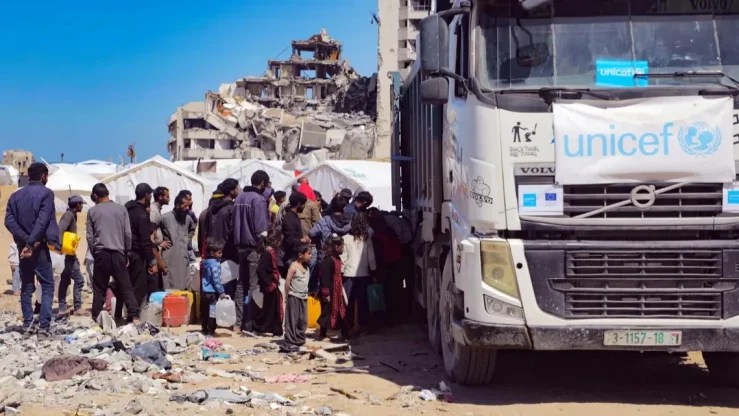
Israeli soldiers killed two Palestinian truck drivers hired by UNICEF and injured two others during routine water delivery operations at a filling point in northern Gaza on 17 April.

“UNICEF is outraged by the killing of two drivers of trucks contracted by UNICEF to provide clean water to families in the Gaza Strip,” a statement from the UN agency reads.

UNICEF added the victims were “killed by Israeli fire in an incident that took place early this morning at the Mansoura water filling point in northern Gaza.”

The attack occurred during normal operations, with no changes in the convoy’s movements or procedures that morning.

UNICEF has since told its contractors to stand down at the site until conditions are safe enough to return.

“The Mansoura water filling point is currently the only operational truck filling point for the Mekorot water supply line serving Gaza City,” UNICEF said, highlighting the significance of the disruption.

“UNICEF and humanitarian partners use it multiple times a day to sustain critical water trucking operations for hundreds of thousands of people, including children.”

UNICEF called on Israeli authorities to “investigate this incident, and ensure full accountability,” adding that “Humanitarian workers, essential service providers, and civilian infrastructure, including critical water facilities, must never be targeted.”

In March, Israel slashed already restricted aid flows into Gaza, allowing just 640 trucks to enter out of 6,000 expected under existing arrangements – around 10 percent of the required amount.

Palestinian officials warn that the cuts have intensified shortages and pushed the strip closer to famine, with fuel, food, and basic goods increasingly scarce.

UNICEF said prices for essential items had surged by 200 to 300 percent, placing more than 1.5 million people at risk of severe food insecurity.

At the same time, Israeli attacks on the besieged Strip have continued despite the so-called ceasefire.

Earlier this month, Israeli forces shot and killed nine-year-old Palestinian schoolgirl Ritaj Reihan inside a tent classroom in northern Gaza, around two kilometers from the so-called ‘Yellow Line,’ in front of dozens of her classmates.

April 18, 2026 Posted by | Ethnic Cleansing, Racism, Zionism, War Crimes | , , , , | Comments Off on Israeli soldiers kill UNICEF truck drivers delivering water to Gaza families

Iran defends limits on Strait of Hormuz passage

The Islamic Republic once again shut the strategic waterway due to what it described as US “piracy”
© Ruptly

RT | April 18, 2026

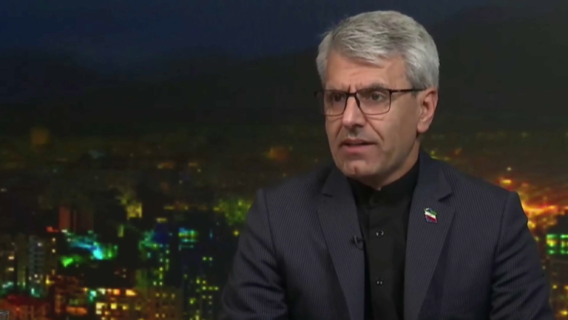
Iran said the renewed restrictions on maritime traffic through the Strait of Hormuz are justified under international law and necessary to counter hostile actions, Foreign Ministry spokesman Esmail Baqaei has said in an interview with RT.

Iranian military officials said on Saturday that Tehran had reasserted “strict control” over the strategic route, which carries about 20% of global oil, citing the continued US blockade of its ports, just a day after declaring it open. The Revolutionary Guard Navy Command later said the strait would remain under Iranian military control as long as US restrictions stay in place.

“There was no safe and secure passage in this waterway,” Baqaei told RT on Saturday, adding that as a coastal state Iran has the right under international law to take measures against what it sees as hostile actions.

“We cannot allow enemy vessels, especially military ones or those linked to countries involved in aggression, to pass through the strait normally, as they pose a direct threat,” the spokesman stated.

The US-Israeli bombing campaign prompted Iran to restrict passage through the strait for “enemy ships,” triggering a breakdown in supply chains and sending global crude oil prices soaring.

Oil prices eased during the first round of US-Iran talks in Islamabad last weekend on hopes of the Strait reopening. After the negotiations collapsed, US President Donald Trump ordered a naval blockade on Iranian ports and shipping, prompting tankers to turn back and pushing prices back toward $100 a barrel.

On Friday, Iranian authorities said the waterway was fully open to commercial vessels for the remainder of the ten-day Israel–Lebanon ceasefire, lowering crude oil prices on de-escalation hopes. Tehran later reversed the decision after Trump said the US blockade of Iranian ports would remain in full force until a peace deal is reached.

The disruption in the Strait of Hormuz has triggered broad global economic ripple effects, with Europe facing higher fuel and energy costs due to reduced oil flows. The International Energy Agency has warned of rising market volatility and possible jet fuel shortages within six weeks if disruptions continue. Humanitarian organizations have also flagged growing risks to global food security as fertilizer and agricultural supply chains are affected.

April 18, 2026 Posted by | Economics, Wars for Israel | , , , | Comments Off on Iran defends limits on Strait of Hormuz passage

‘We warned you’: Hormuz Strait back to pervious state amid US blockade

Al Mayadeen | April 18, 2026

Iran’s military announced that the Strait of Hormuz has returned to its previous operational status, placing it under “strict management and control” by the country’s armed forces, following repeated violations of prior understandings by the United States.

In a statement, the spokesperson of the Khatam al-Anbiya Central Headquarters said Iran had earlier agreed, in good faith and within the framework of negotiations, to allow the managed passage of a limited number of oil tankers and commercial vessels through the strategic waterway.

However, the spokesperson stated, the United States had failed to uphold its commitments, amid Washington’s continued acts of “piracy and maritime robbery” under the guise of a naval blockade.

The statement added that, in response, Iran has reinstated full control measures over the strait, emphasizing that the passage of vessels will remain tightly regulated unless the US fully lifts restrictions on Iranian shipping routes, both inbound and outbound.

“As long as the United States does not completely lift the restrictions on the passage of vessels from Iran to destination and from destination to Iran, the situation in the Strait of Hormuz will be strictly controlled and remain as before,” the spokesperson said.

IRGC-N affirms change in Hormuz regime

Meanwhile, Iran’s Islamic Revolution Guard Corps Navy (IRGC-N) reaffirmed the change in the regime of the Strait of Hormuz, stressing that any breach of promise by the United States will receive a fitting response.

“As long as the passage of vessels from and to Iran is threatened, the status of the Strait of Hormuz will remain unchanged,” the IRGC-N said, according to the Iranian TVIRIB.

Iranian official outlines ‘new maritime regime’

Separately, Ebrahim Azizi, head of the National Security Commission of the Iranian parliament, outlined a new framework governing maritime transit in the strait.

“It is time to submit to the new maritime regime of the Strait of Hormuz; this regime is determined by the Islamic Republic of Iran, not by virtual posts,” Azizi wrote in a post on X.

“In this regime, only commercial ships, and only with permission from the Armed Forces General Staff, particularly the Navy, are allowed to pass through designated routes after paying the rightful dues of the Iranian nation.”

He added that any US interference with Iranian vessels could prompt further escalation in restrictions.

“If the Americans want to create the slightest interference for Iranian ships, this decision can easily be changed!” Azizi said.

In a follow-up post, he added, “We warned you, but you didn’t pay attention! Now enjoy the return of the Strait of Hormuz situation to its previous state.”

April 18, 2026 Posted by | Economics, Wars for Israel | , , | Comments Off on ‘We warned you’: Hormuz Strait back to pervious state amid US blockade

Iran rejects uranium transfer, warns of response to naval blockade

Al Mayadeen | April 18, 2026

Iran’s Foreign Ministry spokesperson Esmaeil Baghaei flatly rejected on Friday any proposal to transfer the country’s enriched uranium abroad, declaring that Iran’s uranium reserves are as sacred as its own soil.

Responding to remarks made by US President Donald Trump, who told Reuters that Washington would work with Tehran to retrieve and transfer its enriched uranium, and claimed Iran had agreed to halt enrichment, Baghaei called such assertions part of a coordinated media campaign designed to pressure negotiators and tilt the direction of ongoing talks.

“Claims about a permanent suspension of uranium enrichment are aimed at influencing the course of negotiations,” Baghaei said, adding that any final agreement must fully safeguard Iran’s interests and rights.

Iran has consistently maintained that its uranium enrichment program serves civilian purposes, including agriculture and medicine, and that it operates no military nuclear program.

Compensation, sanctions relief are core demands

Baghaei stressed that compensation for the losses and damages inflicted on Iran is not a peripheral issue but a fundamental pillar of any potential deal.

He also placed the lifting of sanctions at the top of Tehran’s list of priorities, emphasizing that ending the war and halting hostilities across all fronts must be treated as a single, inseparable package, not piecemeal concessions to be negotiated separately.

He described diplomacy as “a continuation of military efforts on the ground,” signaling that Tehran’s negotiating posture is shaped by the same resolve it has brought to the battlefield.

Naval blockade crosses a red line

On the security front, Baghaei warned that a naval blockade would be met with a firm Iranian response, calling any such measure a direct violation of the ceasefire. “Iran cannot be blockaded,” he said, adding that Tehran would take all necessary measures in response.

He also invoked international maritime law, asserting that coastal states bordering strategic straits hold both the right and the responsibility, in wartime conditions, to take appropriate measures against states they consider hostile, in reference to the Strait of Hormuz.

No direct talks with Trump

Baghaei also denied Trump’s claims that US officials had held direct talks with Iranian counterparts, calling those assertions false.

He noted that while earlier rounds of negotiations had focused primarily on the nuclear file, the most recent discussions have shifted to center on ending the war entirely.

On the progress of talks, he said the Islamabad meeting had helped map out areas of understanding and define red lines, adding that “there is no ambiguity regarding the negotiation files.”

He cautioned, however, that developments over the coming days would ultimately determine the outcome.

Tehran’s previous uranium offer

Iran’s Deputy Parliament Speaker Ali Nikzad revealed on Monday that Tehran had at one point signaled a willingness to demonstrate goodwill, but on its own terms.

Nikzad said Iran had proposed diluting 450 kilograms of enriched uranium, not handing it over, and that earlier negotiations had explored the possibility of establishing a trilateral consortium involving Iran, the United States, and Saudi Arabia to carry out that dilution. He clarified that the other parties ultimately pulled back from that framework.

Nikzad also claimed that the US military operation targeting Isfahan had been aimed at seizing Iran’s uranium stockpiles, but that it failed.

April 18, 2026 Posted by | Deception, Economics, Militarism, Wars for Israel | , | Comments Off on Iran rejects uranium transfer, warns of response to naval blockade

US Middle East Policy: The Growing Propensity for Genocide

Arab Center Washington DC | April 10, 2026

Professor John Mearsheimer discusses the #IranWar, the #Gaza genocide, and the US policy toward the Middle East.

His remarks were the keynote address for Arab Center’s Eleventh Annual Conference.

John J. Mearsheimer is an American political scientist and international relations scholar who serves as the R. Wendell Harrison Distinguished Service Professor of Political Science at the University of Chicago and is the author of How States Think: The Rationality of Foreign Policy, The Tragedy of Great Power Politics, The Great Delusion: Liberal Dreams and International Realities, and The Israel Lobby and U.S. Foreign Policy, among other works.

April 18, 2026 Posted by | Ethnic Cleansing, Racism, Zionism, Militarism, Video, Wars for Israel | , , , , , | Comments Off on US Middle East Policy: The Growing Propensity for Genocide