Ukraine expects to join EU next year – Zelensky
RT | January 27, 2026
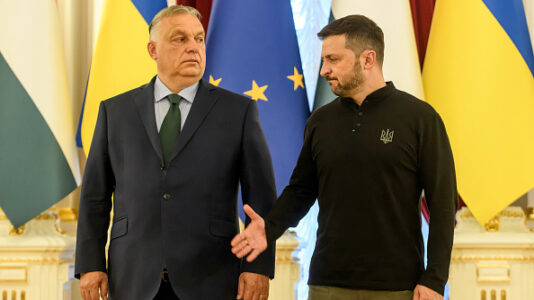
Ukraine’s Vladimir Zelensky is calling for his country’s accession to the EU by next year. The idea has already raised hackles among some member nations.
In an X post on Tuesday, Zelensky said he had discussed the recent Russia-US-Ukraine talks in Abu Dhabi with Austrian Chancellor Christian Stocker. The negotiations primarily focused on military matters, but also touched on security guarantees, he said.
“Ukraine’s accession to the European Union is one of the key security guarantees not only for us, but also for all of Europe,” he wrote. “That is why we are speaking about a concrete date – 2027 – and we count on partners’ support for our position.”
Just days earlier, Stocker told the press that he opposed rushing Ukraine’s bid.
“I’m not a fan of the fast lane. The admission criteria must be met,” he said, adding that the “conditions should be the same for everyone.”
Fast-tracked membership for Ukraine is reportedly part of a US-backed $800 billion reconstruction ‘prosperity’ plan that was privately circulated to EU member states by the European Commission last week.
The document gave EU leaders pause due to the way it formally linked Ukraine’s accession to its reconstruction process, rather than due to its massive cost, according to Politico.
Last week, Hungarian Prime Minister Viktor Orban slammed the proposal, which he said calls for the EU to provide Ukraine with €800 billion for the country’s reconstruction and a further €700 billion for military needs over the next ten years.
“Hear me now, loud & clear: Hungary will NOT pay for this,” he wrote on X.
He has also nixed the idea of letting Ukraine join the EU, arguing that no Hungarian parliament would vote for accession “in the next hundred years.”
Orban has long stood against Ukraine’s bid, arguing that accession would put the bloc at risk of direct confrontation with Russia.
Moscow has long said that it is not opposed to Ukraine joining the EU. However, Kiev’s ambition to join NATO is a red line and one of the core causes of the current conflict, according to Russia.
Here’s what’s behind the US shift on EU allies
The age of institutions is ending, the age of force is back
By Fyodor Lukyanov | Russia in Global Affairs | January 27, 2026
Even invoking international law has become awkward. Institutions look increasingly irrelevant as political and economic processes unfold demonstrably outside them.
This reaction is understandable. The latest targets of actions that violate the UN Charter and other legal norms are leading Western states, the very countries that dominate the global information space. When similar violations affected others in the past, they were treated as regrettable but secondary. The blame was placed on the moral or political shortcomings of the countries involved, including the victims, rather than on a systemic crisis.
Now the system itself is visibly eroding.
The United States has not only discarded conventions; it has begun applying this approach to its own allies. These are partners with whom it once negotiated as equals, or at least as trusted dependents. Decisions are made as if by divine mandate. The result has been consternation in Western Europe and even accusations of betrayal.
Washington is dismantling the world order it once built and led, an order many already regarded as flawed. Since transatlantic ties formed the backbone of the liberal international system, revising them has become a priority for the United States.
After the Cold War, the balance of power was clear. The US and its allies exercised dominance, enforced a single set of rules, and extracted the political and economic “rent” that came with global leadership. But shifts in global power and structural problems in the capitalist system have reduced those benefits while increasing the costs of maintaining hegemony.
The Biden administration represented a final attempt to repair the old model. Its goal was to recreate an ideologically unified and politically invincible West capable of leading the rest of the world – through persuasion when possible, coercion when necessary. That effort failed.
The new slogan is “peace through strength,” paired with “America First.” This approach is now enshrined in key doctrinal documents, including the National Security Strategy and the National Defense Strategy. Power – not only military, but financial, technological and political – is placed at the center of policy. The only real constraint is America’s own capacity.
If the previous era was described as a “rules-based order,” the new one might be called a “precedent-based order.” Actions create precedents, and those precedents justify further actions. However, these precedents apply primarily to the United States. Others may behave similarly only when it suits Washington’s interests. The right of other states to act “the American way” is not rejected in principle, but it is tolerated only when they are strong enough and do not challenge US priorities.
This logic extends to allies, who now find themselves in an especially uncomfortable position. Under the previous system, they benefited greatly from American patronage. Chief among these benefits was the ability to minimize their own strategic spending by delegating responsibility to the United States. Washington encouraged this arrangement because it supported the functioning of the global order it led.
Today, what was once portrayed as mutually beneficial partnership is increasingly viewed in the US as an unprofitable subsidy. Washington wants to recover past costs and avoid future burdens. This abrupt shift has shocked its allies, but from a strictly material perspective, the reasoning is not irrational. Even a future change of administration is unlikely to reverse this basic reassessment of alliances.
Against this background, the Board of Peace solemnly announced in Davos can easily be dismissed as Donald Trump’s personal ornament. Yet it is revealing. In a world defined by power, those who lack it must compensate by offering something to those who have it.
The most effective offering is financial tribute, hence the billion-dollar contributions. If that is too costly, enthusiastic displays of loyalty may suffice. Membership in such a body appears to function as a form of political insurance: protection from the chairman’s displeasure.
For large, independent powers, participation is almost impossible. A structure in which rights are explicitly limited by the founder’s will, and where procedures remain unclear, contradicts the very idea of sovereignty. Whether or not the Council works in practice is secondary. Its symbolic meaning is clear: recognition of the White House’s supremacy.
The Trump administration understands that the world has changed and is searching for ways to preserve, or even expand, American advantages. Other major players in the emerging multipolar order must do the same, but in their own interests and according to their own logic.
If Washington openly advocates rational egoism grounded in power, others have little reason not to draw their own conclusions.
Fyodor Lukyanov is the editor-in-chief of Russia in Global Affairs, chairman of the Presidium of the Council on Foreign and Defense Policy, and research director of the Valdai International Discussion Club.
Featured Video
Yemen joins the war – Red Sea could be blocked next – Saudi regime at risk
or go to
Aletho News Archives – Video-Images
From the Archives
A superpower and “the world’s sickest warrior state”
By Paul J. Balles | March 8, 2010
Living through five or six major wars has hardened me to what I thought were the extremes of inhuman cruelty and brutality.
Two things made those extremes almost bearable: the brutality always revealed – at least according to the media coverage – the viciousness of the enemy. It was therefore quite understandable when our “brave men and women” pulverized the enemy.
Films of Japanese torturing captive Americans somehow justified holding Japanese Americans in internment camps during World War II; and only a small percentage of Americans found the bombing of Hiroshima and Nagasaki unreasonably vengeful at best, at worst, depraved.
The media giants in America portrayed the North Koreans as barbaric beasts with their captives, quite unlike their southern counterpoints – our allies during the Korean War. No one ever felt the need to explain how the South Koreans were a civilized breed while the North Koreans were absolute savages, at least according to the official line.
In Vietnam, our warriors justifiably (or so the media made us believe) dropped napalm on the North Vietnamese who had the gall to hide in villages and tunnels to ravage our invaders. At least it was accepted practice until some rogue photojournalist filmed a young girl screaming down a Vietnamese road in flames. … continue
Blog Roll
 Aletho News
- Pro-Palestinian French member of European Parliament denied entry to Canada
- Pakistan to Host US-Iran Talks
- How Indonesia’s tilt toward the US left it stranded in the Strait of Hormuz
- US has no choice but to retreat from Iranian borders: Top commander
- Iran Retaliation Strikes Chemical Plant Near Dimona
- AWACS’ Destruction is a Major Loss for US Military – Ex-DoW Analyst
- Israel’s Iran Strategy Uses US Military & Gulf States as Its Pawns
- Iran: Trump wanted regime change, now just begging for Hormuz to open
- IRGC: Israeli, US universities in region legitimate targets after strikes on Iranian university
- Trump admits Iran hit USS Ford carrier: ‘We ran for our lives’
- If Americans Knew
- Israeli police block Catholic cardinal from entering Church of the Holy Sepulchre on Palm Sunday
- Israel is assassinating journalists again, more than any other nation, anywhere, ever – Not a ceasefire Day 170
- Over 300 US service members wounded, majority have brain injuries – Not a ceasefire Day 169
- Researchers at Human Rights Watch Resign Over Blocked Report on Palestinian Refugee Return
- Jewish Groups Are Backing a War Americans Don’t Want
- Eric Fingerhut Thinks He’s the President of the Jews
- Top Jewish Philanthropists, Rabbis Urge Israeli President to Take Action Against ‘Jewish Extremists’
- Don’t Be Fooled. Zionist Leaders Have Always Wanted to Control Southern Lebanon
- Israel’s widespread use of torture is a core element of its genocide against the Palestinian people
- In Israel’s War on Iran, Many Middle East US Bases Rendered “All But Uninhabitable”
- No Tricks Zone
- German Science Blog Accuses PIK Climate Institute Of Hallucinating Climate Tipping Points
- Devastating Assessment Of Comirnaty Vaccine By Former Senior Pfizer Europe Toxicologist
- New Study: CO2 Is ‘Effectively Negligible’ As An Explanatory Climate Change Factor Since 2000
- Former Pfizer Toxicologist Dr. Helmut Sterz Tells Bundestag Hearing Pfizer Vaccine Should Have Never Been Approved
- Energy Expert: Germany’s Nuclear Phaseout Was A “500 Billion Euro Mistake”
- New Research: South Australia’s Mid-Holocene Sea Surface Temperatures Were 4°C Warmer Than Today
- Storing Green Energy To Last Germany 10 Days Would Require A 60-Million Tonne Battery
- New Studies: UK Sea Levels Were 4 Meters Higher Than Today During The Mid-Holocene
- Destructive Green New Deal: German Energy And Metal Group Warns Of Drastic Crisis
- New Study Documents A 20-Year Pause In Arctic Sea Ice Decline – Driven By Internal Variability
 Aletho News