What has NATO’s ‘expansion’ vaunted by secretary general brought?
Global Times | September 21, 2024
Outgoing NATO Secretary General Jens Stoltenberg boasted of his achievements during his tenure in his farewell speech on Thursday, claiming that in 10 years, the number of NATO soldiers on its eastern flank increased from zero to tens of thousands, the number of troops on high readiness rose from thousands to half a million, and the number of its allies spending at least 2 percent of GDP on defense increased from three to 23. Montenegro, North Macedonia, Finland and Sweden joined the alliance, deepening their relations with countries in the “Indo-Pacific region.” Stoltenberg also summarized five lessons that are key to NATO’s continued “success” in the future, urging the US and Europe not to engage in isolationism, declaring that “freedom is more important than free trade” and NATO “must not make the same mistake with China” as they did with Russia.
In the context of the ongoing poor European security situation, Stoltenberg’s self-boasting is somewhat like “taking the wrong script.” However, when reviewing Stoltenberg’s 10-year term, NATO’s “expansion” indeed stands out as a central theme. In addition to the points he mentioned in his speech, statistics showed that NATO’s military spending had increased by over 30 percent during his tenure, reaching a record $1.185 trillion in 2024. As a transatlantic military alliance, NATO also saw strategic, geographical, and content-based expansion under Stoltenberg’s leadership. Not only did it label China as a “systemic challenge,” repeatedly hyping up the “China threat” and accelerating NATO’s “Asia-Pacificization,” but it also incorporated issues like supply chains, technological and economic security into its agenda.
The key question is, apart from self-proclaiming NATO as being “strong, united and more important than ever,” what exactly have these expansions brought to the world? How much of the 30 percent increase in military spending has flowed into the pockets of the US military-industrial complex, how much security anxiety has been spread around the world, and how much of it has been at the expense of the livelihoods, well-being and social stability of Europe. Is it safer or less safe for NATO countries to provoke confrontation with China by following the US’ China strategy? Is it weal or woe to securitize and weaponize the industrial chain, supply chain, cyberspace and other fields, and inject NATO-style confrontational mentality into areas that could have healthy cooperation and interaction?
If we are to give a more serious and thorough assessment of Stoltenberg’s past decade in office, these are issues that cannot be ignored, and the answers are quite the opposite of the achievements he highlighted. With Europe now facing such a precarious security situation, what responsibility does NATO bear?
It was NATO’s expansion that sowed the seeds of the Ukraine crisis, and its extension into the Asia-Pacific region has exported geopolitical tensions beyond Europe. Under Stoltenberg’s leadership, NATO has further aligned itself with US strategic goals, and all of NATO’s shifts reflected US strategic intentions. The historical evaluation of Stoltenberg, beyond being the second longest serving NATO secretary general due to internal divisions within the alliance, will likely include his image as a “loyal executor” of Washington’s policies and its “vanguard.”
NATO should have ended with the Cold War, its survival and development have always relied on creating security anxieties and engaging in conflicts, repeatedly. On one hand, NATO claims to be a regional alliance, but on the other hand, under the guise of ensuring its own security, it continuously expands globally. It claims to be a defensive organization, yet in the name of defense, it promotes deterrence and stirs confrontation. Stoltenberg attempts to portray NATO as a protector of regional and even global security, but the rhetoric that “military strength is a prerequisite for dialogue” is merely another way of saying “Might makes right.”
On the surface, this speech looks much like a smug war readiness declaration left by Stoltenberg to NATO, but in fact, the words between the lines cannot hide NATO’s own dilemma and loss. Amid domestic political uncertainty in the US, what will the future of NATO be and where will Europe’s sustainable security lie? Behind Stoltenberg, European countries and the world are left with a more divided situation.
Actually, NATO’s 75-year history has proven that it has not made Europe or the world more peaceful and secure. The existence and continuous expansion of NATO have become the root cause of security dilemmas. On the contrary, “long peace” has been achieved in places with less NATO intervention and confrontational mentality. The value of Stoltenberg’s farewell speech and the expansion of NATO he boasted about lies in telling the world that the current world does not need a NATO that provokes camp confrontation and spreads a Cold War mentality, let alone a globally expanding NATO. We urge NATO to “retire” together with its outgoing secretary general, alongside the outdated concepts of Cold War mentality and zero-sum game, the wrong practices of advocating military force and pursuing “absolute security,” and dangerous behaviors that disrupt Europe and the Asia Pacific as soon as possible.
What is Known About US Private Military Companies?
By Svetlana Ekimenko – Sputnik – 21.09.2024
Members of American private military company (PMC) the Forward Observations Group (FOG), took part in the Ukrainian military incursion into Russia’s Kursk region, according to evidence that recently surfaced.
The FOG PMC has also delivered weapons to Ukraine and allegedly assisted the country’s forces in coordinating the delivery of toxic chemicals to the Donetsk People’s Republic for potential sabotage.
Sputnik has looked into how US PMCs are operating.
- PMCs are often led by high-ranking Pentagon, CIA, and State Department retirees.
- Units are comprised of ex-servicemen, former special forces officers, graduates of military academies, and foreign mercenaries.
- The Pentagon’s facilities in San Diego (California), Mount Carroll (Illinois), and Moyock (North Carolina) are used for training.
- Salaries reportedly range from $400 to $600 a day (some operatives get $1,000 daily).
The Defense Department, State Department, and intelligence agencies are the main customers of PMCs, with contracts worth over $50 million requiring approval from Congress.
The US is not a signatory to the International Convention against the Recruitment, Use, Financing, and Training of Mercenaries, and uses PMCs in circumvention of national legislative restrictions.
The State Department uses the Arms Export Control Act to indirectly regulate American PMCs’ services, including:
- Advising and assisting foreign defense departments in reforming their armed forces;
- Creating paramilitary formations, as well as saboteur and militant detachments; coordinating their actions;
- Providing training missions, reconnaissance, logistics, transport, and technical support;
- Security for diplomatic staff, commercial organizations, strategic US facilities abroad, including oil fields and pipelines (such as those plundered in Syria and Iraq, where the US maintains troops), and oversight for prisons;
The PMCs active in Ukraine, according to the Russian Foreign Ministry:
- Academi (formerly Blackwater), part of Constellis Group, which had around 400 personnel in Ukraine until 2022, according to German media.
- DynCorp International, which offers sabotage and sniper training.
- Cubic Corporation, providing reconnaissance assistance using satellites and drones, opened an office in Ukraine in 2015.
According to existing data, some 3,000 mercenaries are fighting on the side of the Kiev regime, with at least 300 of them employees of US PMCs.
Ukraine courting Middle East terrorists – Syrian official
RT | September 19, 2024
Ukraine is increasingly seeking cooperation with terrorist groups in the Middle East in a bid to find allies in its fight against Russia, a senior Syrian official has told RT.
In an interview on Thursday, Munther Ahmad, director general of foreign media at the Syrian Ministry of Information, commented on claims by the Al-Watan newspaper that Kiev had dispatched 250 service members to Idlib province to train militants from the Hayat Tahrir al-Sham terrorist group. In exchange, the group reportedly provided Kiev with a detachment of fighters.
Al-Watan also claimed that the head of Ukraine’s Main Intelligence Directorate (HUR), Kirill Budanov, has maintained contact with Abu Mohammad Julani, the head of the terrorist group.
According to Ahmad, “it seems that the reports are accurate” and that “the level of cooperation between Ukraine and these terrorist groups is increasing.” Kiev wants to convince terrorists “to carry out certain operations” against Russian forces both in Syria and beyond, he added.
The Syrian official also remarked that a report by Turkish newspaper Aydinlik, purporting to show a picture of a recent meeting between Ukrainians and terrorists, suggests that Kiev is indeed trying to forge such ties. The results of this endeavor, Ahmad added, “depends on how much money they [Ukraine] are willing to inject into these mercenaries.”
“Currently, this dirty money that Ukraine is offering these terrorist groups will be used for the dirty deeds Ukraine wants to carry out,” the official claimed, stating that the terrorists would cease their activities once the funding dries up.
Ahmad also suggested that Ukraine has plunged into “a state of confusion.” “Sometimes they claim they want to end the conflict. Other times, they say they will continue the war to the very end, especially when it comes to requesting aid from the US and European governments.”
Commenting on reports about Kiev courting Syrian militants, Russian Foreign Ministry spokeswoman Maria Zakharova suggested that Ukraine itself “had turned into a terrorist organization.”
Ukraine at the Crossroads
By Ted Snider | The Libertarian Institute | September 18, 2024
The West is being increasingly confronted with the cold realization that Ukraine cannot win this war. Ukrainian President Volodymyr Zelensky has set as a threshold for victory, not only the recapture of territory up to his country’s prewar borders, but the reclamation of all of its territory to the 2014 border, including the Donbas and Crimea. There are few among Ukraine’s Western backers who subscribe any longer to that illusion.
But Western governments and the Western media delude their public into believing that the war is a stalemate that Russia also cannot win. This assessment is based on the unsubstantiated claim that the threshold for Russia winning is, as a start, the subjugation of Ukraine in its entirety.
But that has never been Russia’s stated goal. Just as listening to Zelensky’s stated definition of victory leads to the realization that it cannot be attained, so listening to Vladimir Putin’s leads to the conclusion that it can. Russia cannot subjugate all of Ukraine. But it has also never claimed that as its goal. Putin has consistently said that “this conflict is not about territory… [it] is about the principles underlying the new international order.” He has said that Russia never intended to conquer Kiev and that the early advance toward the capital was intended to force Ukraine into the negotiations that the United States declined.
Putin’s stated goals have always been a written assurance that Ukraine will not join NATO and protection of ethnic Russians in the Donbas. His June peace proposal contains those very points. The proposal states that Ukraine must guarantee that it will be a non-nuclear, non-aligned neutral nation that will not join NATO. It states that Ukraine must completely withdraw from Donetsk, Lugansk, Kherson, and Zaporozhye, that they must agree to limits on the size of their armed forces, and that they must ensure the rights of the Russian-speaking citizens of Ukraine.
If that is Russia’s definition of victory, then it is not impossible that Russia could win the war. And the advance on Pokrovsk is bringing some of those key points closer to realization.
Ukraine’s Western partners are at a crossroad. Plans of providing Ukraine with whatever they need for as long as it takes to push Russia out of Ukraine have been replaced by reinvigorating Ukraine’s position on the battlefield to strengthen their position at the inevitable negotiating table, even if that means, as one Western columnist put it, allowing Ukraine to “bomb Putin to the negotiating table.”
That would be one side of the crossroad: escalating war to advance peace. But that road, if it crosses Russia’s red line, is fraught with hazards. The other would be to find an offroad to the war, a road that leads to diplomatic negotiations and peace. Ukraine and some of its NATO partners, perhaps most importantly Britain, are urgently pushing the former. But a growing choir of Ukraine’s partners may be beginning to consider the second road.
In a vague article that names no names, Bloomberg reports that “some of Ukraine’s allies are starting to talk about how the fight against Russia’s invasion might end.” According to the report, “officials are more seriously gaming out how a negotiated end to the conflict and an off-road could take shape.” Facing the realization that Ukraine is unlikely to improve its position on the battlefield, “some allied officials” have begun “exploring ways in which diplomacy could break the deadlock.”
One of Ukraine’s partners is Germany. In a September 7 TV interview, German Chancellor Olaf Scholz said, “I believe that now is the time to discuss how to arrive at peace from this state of war, indeed at a faster pace.” Scholz’ statement may mark the most significant brake in NATO unity since the early days of the war. There are even unconfirmed reports that Scholz, who recently announced that Germany would provide no financial aid to Ukraine for the war after 2025, is preparing a plan for a diplomatic settlement to the war that could include Ukraine making territorial concessions.
And, though out in front, Germany may not be alone. The Wall Street Journal reports that some European diplomats are telling Ukraine that the battlefield reality necessitates that “Ukraine needs to be more pragmatic in its wartime aims and strategy.” Senior European officials have told the Ukrainian leadership that “a full Ukrainian victory would require the West to provide hundreds of billions of dollars worth of support, something neither Washington nor Europe can realistically do.”
The French newspaper Le Figaro reported on September 16 that the battlefield reality, the “slowly but steadily” advancing Russian forces and the realization in the West that “Donbass and Crimea are beyond the military reach of the Ukrainians,” are causing some of Ukraine’s Western partners in the United States and Europe to “discreetly” discuss a negotiated settlement. A “senior French diplomat” reportedly told the Le Figaro that France, too, is now contemplating a “lasting and negotiated solution to the war.”
All of these reports point to the slow birth of momentum to choose a different path at the crossroad. Even Zelensky has said, “I feel that not all territories should be regained by hand or with weapons. I believe this will take a long time and involve a significant number of people. And I think this is a bad thing. As a result, I believe we might retake our territories diplomatically.”
But Zelensky is still trying to push his NATO partners to take the road of escalation to future peace talks. And he seems to have the backing of British Prime Minister Keir Starmer. Calling daily for the U.S. to sign off on using Western long-range missiles to fire deep into Russian territory, Zelensky and Starmer are advocating the “bomb Putin to the negotiating table” route.
There appear to be delays on that route while the U.S. awaits the presentation of Zelensky’s promised plan for winning the war and what it needs from the West to do that. His “Ukrainian Victory Plan” promises to identify the steps needed on the battlefield to “give us the strongest possible position to bring about peace—a real, just peace.” Zelensky promises, “For each step, there is a clear list of what is needed and what will strengthen us.” Officials expect Zelensky to request NATO and European Union membership, security arrangements, economic commitments, and a steady flow of advanced weapons. Zelensky has also promised to include a list of targets inside Russian that Ukraine believes would help achieve victory.
Both roads lead to diplomatic talks. The one at “a faster pace,” in the words of Olaf Scholz, the other at risk of escalation that will, in Putin’s words, “change the very essence, the very nature of the conflict” and, potentially, mean that NATO countries… are at war with Russia.”
How seriously Ukraine’s partners take Putin’s warning will help determine which road they take at the crossroad. The lack of a decision being announced after the September 14 meeting between U.S. President Joe Biden and Starmer suggests that the United States may be taking the warning seriously. National Security Communications Advisor John Kirby told a press conference that the Biden administration would never say “that we don’t take Mr. Putin’s threats seriously… He has obviously proven capable of escalation over the last, now, going on three years. So, yeah, we take these comments seriously.”
But, more concerningly, he qualified that seriousness by saying, “it is not something that we haven’t heard before. So, we take note of it. Got it. We have our own calculus for what we decide to provide to Ukraine and what not.” More concerningly still, was Biden’s dismissive response to Putin’s caution. “ I don’t think much about Vladimir Putin,” Biden said.
Which attitude prevails in Washington and which view, Germany’s or Britain’s, prevails in Europe will help determine which road is chosen at the current crossroad: escalation or a faster pace to diplomacy. The first risks crossing red lines that could pull the West into direct conflict with Russia and offers little hope of improving Ukraine’s position at the negotiating table that the second road arrives at more quickly and directly. The first seems too dangerous to consider; the second seems like dangerous folly not to consider.
Zelensky cancels meeting fearing PR disaster – media
RT | September 19, 2024
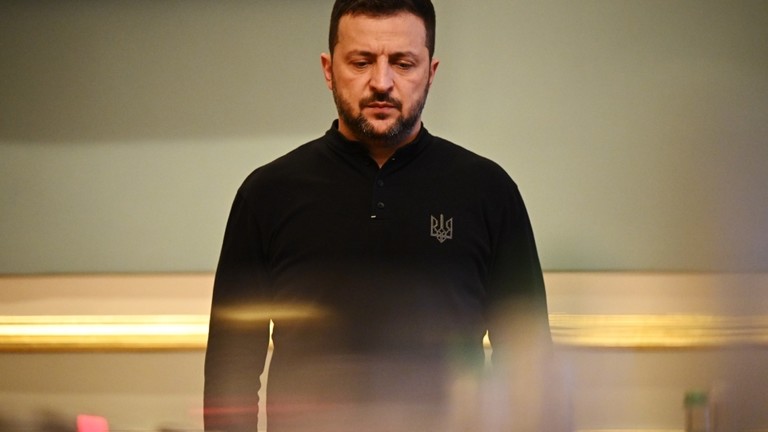
The Ukrainian government has canceled a meeting intended to involve Vladimir Zelensky and Latin American leaders out of fear it would become a PR disaster, Brazilian newspaper Folha de S.Paulo reported on Tuesday. Very few of the invitees confirmed that they would attend the event, the paper wrote.
Kiev initially planned to hold the talks on the sidelines of the UN General Assembly scheduled to convene on September 24. According to Folha, the idea behind the meeting was to demonstrate symbolic support for Ukraine in its conflict with Moscow.
Ukrainian officials reportedly said it would be “an appropriate platform” for Zelensky to present what they called “relevant and reliable information” about the conflict. Kiev also wanted to rally support for the so-called Zelensky ‘peace formula’ – a set of demands put forward by Ukraine as pre-conditions for peace talks. Moscow has rejected the demands, calling them unacceptable.
Kiev had to scrap the meeting after it received only a “few confirmations of attendance,” Folha reported, adding that the government decided it was “necessary to avoid a situation that could possibly be interpreted as a lack of support.”
The paper did not provide the number of confirmations or name the leaders who said they would attend, except for Guatemalan President Bernardo Arevalo.
Ukraine has received steady support from the West since the conflict with Russia broke out in February 2022, but has failed to gain much backing in other parts of the world. Many Asian, African, and South American countries, including China, India, and Brazil, have remained neutral and called for a diplomatic resolution.
Mexico’s president-elect, Claudia Sheinbaum, recently told journalists she would pursue a policy of non-intervention on the world stage and has no plans to make a state visit to Ukraine. “Searching for the peaceful resolution of conflicts is the cornerstone of our foreign policy. This is our policy, and it won’t change,” she said on Wednesday.
Kiev has dismissed any proposals that are not in line with the ‘Zelensky formula’, claiming they play into Moscow’s hands. Last week, Zelensky rejected a six-point roadmap proposed by China and Brazil. Brazilian President Luiz Inacio Lula da Silva responded by saying he would not allow his country to be dragged into the conflict.
Russia Slams NATO’s ‘Reckless’ Rejection of Putin’s Red Line on Ukraine Attacks
Sputnik – 18.09.2024
MOSCOW – Kremlin Spokesman Dmitry Peskov stated on Wednesday that dismissing Russian President Vladimir Putin’s warnings about the dangers of Ukraine using Western weapons to attack Russian territory is both provocative and perilous.
“Such a ostentatious desire not to take seriously the statements of the Russian president is an absolutely short-sighted and unprofessional step,” Peskov told reporters.
NATO Secretary General Jens Stoltenberg denied in an interview out on Tuesday that allowing Ukraine to use long-range Western weapons to strike deep into Russia would cross country’s “red line” despite warnings from Russian President Vladimir Putin.
“There have been many red lines declared by him [Putin] before, and he has not escalated, meaning also involving Nato allies directly in the conflict,” Stoltenberg told The Times newspaper.
Stoltenberg said that he supported the United Kingdom and France in their decision to lift restrictions on Kiev’s use of long-range weapons against Russia. He argued that their use by Ukraine would not draw the alliance into conflict with Russia.
Putin said that NATO countries were essentially deciding whether to get directly involved in the Ukrainian conflict. He warned that direct participation of Western countries in the conflict would change its nature, forcing Russia to respond to emerging threats.
Meanwhile, Hungarian Foreign Minister Peter Szijjarto stated on Wednesday that Hungary is concerned about the potential use of long-range arms to strike Russia, as this would contradict Europe’s security interests and heighten the risk of escalation. He emphasized that “Hungary is interested in peace, and every step that threatens escalation makes us concerned,” adding that the use of long-range missiles against targets deep in Russia would “increase the threat of escalation,” which runs counter to European security interests.
US Restoring Military Infrastructure on Pacific Island to Project Power in Region – Reports
Sputnik – 17.09.2024
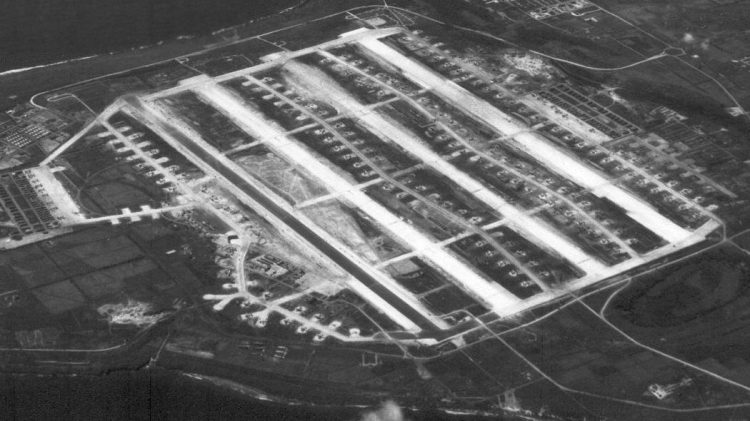
WASHINGTON – The United States is refurbishing military infrastructure on the Pacific island of Tinian as part of efforts to bolster power projection in the Indo-Pacific region, Newsweek reported on Tuesday.
The US cleared overgrowth on taxiways and runways previously built on the island during the Second World War, the report said, citing recent satellite imagery and Pacific Air Forces spokesperson Capt. Keith Peden.
The US Defense Department established three projects to develop airfield operations on Tinian as part of its Pacific Deterrence Initiative, which focuses on defense planning for a potential conflict with China.
The Pentagon seeks to add refueling, takeoff, landing and parking operations on Tinian, the report said.
The projects will support a variety of aircraft and enable the US Air Force to “rapidly deploy and sustain forces” in diverse environments for both routine and contingency operations, Peden said.
However, China strongly opposes US efforts to bolster forward deployments in the Indo-Pacific region, Chinese Embassy in the US spokesperson Liu Pengyu reportedly said.
Russia Hits Energy Infrastructure Supporting Ukraine’s Military-Industrial Complex
Sputnik – 17.09.2024
Russian forces carried out strikes on Ukraine’s energy facilities that supply the military-industrial complex, the Ministry of Defense has reported. Weapons and ammunition depots were also hit.
“Operational-tactical aviation, unmanned aerial vehicles, missile forces, and artillery of the Russian Armed Forces have struck energy facilities that support the activities of Ukraine’s military-industrial complex, as well as weapons, ammunition, and logistics storage sites, along with concentrations of enemy personnel and military equipment in 145 areas,” reads the ministry’s report.
According to the Russian Defense Ministry, air defenses also shot down a US-made HIMARS rocket and 36 drones over the past day.
In June, Volodymyr Zelensky stated that nine gigawatts of energy generation capacity had been destroyed in Ukraine, which amounts to 80% of thermal power generation and a third of hydropower production.
In turn, Ukrainian Energy Minister Herman Galushchenko specified that the country has lost half of its generating capacity, which would not be enough to survive the winter, and that electricity imports would be insufficient to cover the deficit.
In early September, the Center for Countering Disinformation under the National Security and Defense Council published a forecast by Yuriy Korolchuk, an expert from the Ukrainian Institute of Energy Strategies. According to one scenario, Ukrainians could be left without heat and light for up to 20 hours a day during the upcoming winter. This could happen if strikes on energy infrastructure continue, combined with other conditions. In the expert’s optimistic forecast, power outages could last up to 12 hours per day.
Ukraine avoids using Western tanks on the battlefield fearing to lose them
By Ahmed Adel | September 17, 2024
The Wall Street Journal newspaper writes that the Ukrainian Armed Forces avoid using tanks supplied by NATO countries because they fear their destruction or capture. At the same time, the AP reports, citing US officials, that the US will lose the possibility of providing Ukraine with $5.8 billion in military aid at the end of September if Congress does not authorise the Pentagon to use funds from the PDA program.
“Tanks were once the king of the battlefield. But the proliferation of drones in Ukraine means the large, noisy vehicles can be spotted and targeted within minutes. That has seen dozens of cutting-edge Western tanks used only sparingly in the battle they were meant to shape, while others have been damaged, destroyed or captured,” the Wall Street Journal reports.
According to the newspaper, the armoured vehicles supplied to them are in the field many kilometres away from the front line, as there is a high risk of losing them in the Russian Army’s attacks.
Meanwhile, General James Rainey, who heads the US Army Futures Command and is responsible for modernisation projects, called for urgent modernisation of US armoured units.
“In the near term, we absolutely need to urgently make some adjustments to maintain the survivability of our armored formations,” Rainey told the newspaper.
In August, Military Watch magazine reported that Ukraine had lost about 20 M1A1 Abrams tanks out of 31 delivered by the US in the past six months.
“The latest loss brings the total losses of M1A1 Abrams tanks in Ukraine close to 20, out of just 31 of the vehicles delivered, with all losses occurring within the past six months. With unconfirmed reports indicating that the Abrams was destroyed using a handheld anti-tank missile system, likely a Kornet, the destruction of the latest vehicle stands out from all other recent kills which were all achieved by drone strikes or by precision guided artillery,” the magazine revealed.
Forbes magazine reported earlier this month that Kiev lacks modern military equipment to form new brigades to replace front-line units as part of the rotation.
“In practice, these brigades are desperately short of modern weaponry. And that could become a serious problem for the Ukrainians as the new but poorly equipped brigades replace older but better equipped brigades as the latter brigades finally rotate off the line of contact—after 18 months of non-stop fighting, in some cases,” the Forbes article said.
The Kremlin, for its part, has repeatedly said that arms supplies to Ukraine prevent the achievement of a peace agreement and directly involve NATO countries in hostilities. Russian Foreign Minister Sergey Lavrov said that the US and NATO are participating in the conflict, including not only supplying weapons but also training Ukrainian military personnel on the territory of the United Kingdom, Germany, Italy and other countries.
However, US supplies could begin drying up since Republicans and Democrats in Congress must agree on a new budget bill before September 30. If not, the federal government could suspend work in early October, meaning there will be a shutdown.
“About $5.8 billion in presidential drawdown authority (PDA) will expire,” the report said. However, officials cited by AP expressed hope that lawmakers would extend powers to fund their programs for a year.
“Delays in passing that $61 billion for Ukraine earlier this year triggered dire battlefield conditions as Ukrainian forces ran low on munitions and Russian forces were able to make gains. Officials have blamed the monthslong deadlocked Congress for Russia’s ability to take more territory,” the report added.
Yet, even if the funding is passed and Ukraine receives a new stream of weapons, they will make little difference to the outcome of the war. The Abrams was heralded as a game-changer that would overcome the power of Russia’s T-90M tanks, but this proved to be a false dawn, just like the F-16 fighter jets and Stryker armoured vehicles, among many other weapons that have failed to stop Russian forces from capturing more territory.
Due to these weapons, including Western tanks, failing to have the expected effect against Russian forces, US Secretary of State Antony Blinken said on September 11 that he held talks with his Ukrainian counterparts Andrii Sybiha and Ukrainian President Volodymyr Zelensky about launching long-range missiles into Russian territory. Several experts have warned that a direct clash between Russia and NATO, both of which have nuclear arsenals, would have unpredictable consequences for the world.
Russian President Vladimir Putin warned NATO the very next day that Ukrainian attacks with NATO weapons on Russian territory would mean that NATO countries were at war with Russia. Direct NATO involvement, Putin stressed, changes the very essence of the conflict.
Although Ukraine launching Western long-range missiles will certainly change the nature of the war, as already stressed, it just points to the utterly desperate situation the Kiev regime finds itself in. Yet, despite this evident desperation, there are still no legitimate signs that Zelensky is prepared to begin peace negotiations with Russia.
Ahmed Adel is a Cairo-based geopolitics and political economy researcher.
Ukraine war turns into Russian roulette
By M. K. BHADRAKUMAR | Indian Punchline | September 16, 2024
UK Prime Minister Keir Starmer met with the US President Joe Biden in the White House on Friday with the question of the use of long-range missiles by Ukraine to hit deep inside Russia on their agenda of conversation. But there were no announcements, nor was there any joint press conference.
Starmer later told the media that the talks were “productive” but concentrated on “strategy” rather than a “particular step or tactic”. He did not signal any decision on allowing Kiev to fire long-range missiles into Russia.
Starmer said no final decision had been taken on the Storm Shadow missiles and hinted that further developments may follow at the gathering of the UN General Assembly later this month. “We’ll obviously pick up again in UNGA in just a few days time with a wider group of individuals,” he said.
One reason for such extreme secrecy is that the US and UK are intensely conscious of the Russian President Vladimir Putin’s explicit warning on Thursday that any use of western long-range missiles to strike Russia “will mean that NATO countries, the United States, and European countries are parties to the war in Ukraine. This will mean their direct involvement in the conflict, and it will clearly change the very essence, the very nature of the conflict dramatically.”
Putin added in measured words: “This will mean that NATO countries – the United States and European countries –- are at war with Russia. And if this is the case, then, bearing in mind the change in the essence of the conflict, we will make appropriate decisions in response to the threats that will be posed to us.”
Admittedly, Putin has given similar warnings before also, but did not follow through even when western weaponry was used by Ukraine with impunity to invade Russia recently. So much so that Biden was plainly dismissive about the latest Kremlin warning, saying, “I don’t think much about Vladimir Putin.”
On its part, Moscow estimates that although no official decision on the matter has been announced, it has already been made and communicated to Kiev, and that Moscow would have to respond with actions of its own.
Deputy Foreign Minister Sergey Ryabkov, Moscow’s point person on the diplomatic track, was quoted as saying on Saturday, “The decision has been made, the carte blanche and all indulgences have been given (to Kiev), so we [Russia] are ready for everything. And we will react in a way that will not be pretty.”
Former Russian President Dmitry Medvedev, who now serves as deputy chairman of the country’s security council, went a step further saying that the West is testing Russia’s patience but it is not limitless. He said Ukraine’s invasion already gave Russia formal grounds to use its nuclear arsenal.
Medvedev warned that Moscow could either resort to nuclear weapons in the end, or use some of its non-nuclear but still deadly novel weapons for a large-scale attack. “And that would be it. A giant, grey, melted spot instead of ‘the mother of Russian cities’,” he wrote on the Telegram messaging app, referring to Kiev.
Putin, in his remark on Thursday once again rejected the Anglo-American sophistry that it is Ukraine that will be using any western long-range missiles and not NATO. He pointed out that the Ukrainian army “is not capable of using cutting-edge high-precision long-range systems supplied by the West. They cannot do that. These weapons are impossible to employ without intelligence data from satellites which Ukraine does not have. This can only be done using the European Union’s satellites, or US satellites – in general, NATO satellites…
“most important, the key point even – is that only NATO military personnel can assign flight missions to these missile systems. Ukrainian servicemen cannot do this. Therefore, it is not a question of allowing the Ukrainian regime to strike Russia with these weapons or not. It is about deciding whether NATO countries become directly involved in the military conflict or not.”
Interestingly, neither Washington nor London has so far refuted Putin’s above explanation and, curiously, it has been expunged altogether from British press reports — fearing, perhaps, that public opinion might militate against such direct involvement by the UK in a war against Russia in a combat role!
Moscow anticipates that the US-UK ploy may be to test the waters by first (openly) using Britain’s Storm Shadow long-range air-launched cruise missile, which has already been supplied to Ukraine. On Friday, Russia expelled six British diplomats assigned to the Moscow embassy in a clear warning that Uk-Russia ties will be affected. Russia has already warned the UK of severe consequences if the Storm Shadow were to be used to hit Russian territory.
What makes the developing situation extremely dangerous is that the cat-and-mouse game so far about NATO’s covert involvement in the Ukraine war is giving way to a game of Russian roulette that follows the laws of Probability Theory.
That is to say, although Russia cannot be defeated or evicted from the territories in eastern and southern Ukraine that it annexed, Washington and London regard that the final outcome of this random event cannot yet be determined before it occurs; it may even be any one of several possible outcomes, and the probability cannot be ruled out that the actual outcome might even be determined by chance.
Apparently, Biden believes that Russia’s current battlefield dominance is a random phenomenon and possible outcomes range from an annihilation of Russian military power to a large-scale disruption of life in Russia and a possible collapse of Russia — at a minimum, the weakening of the Russian hand in any future negotiations. Simply put, the war is now about Russia rather than Ukraine and long-range missiles can be a game changer.
Thus, Biden, with no political constraints working on him anymore, is escalating the war to create new facts on the ground before his presidency ends in January, which may create conditions for permanent NATO military presence on Ukrainian territory and present Russia with a fait accompli.
Such a strategy built on the quicksands of probability is akin to a game of Russian roulette — an act of bravado. Indeed, Biden’s options to support Ukraine are shrinking with each escalation, As the Wall Street Journal puts it, “With only four months left in the Biden administration and little hope of Congress approving additional funding for Ukraine no matter who wins the presidency, the White House is debating how best to help Kyiv given its limited toolbox.”
Equally, Europe’s interest in the war is also waning. European politics is becoming unpredictable with the ascendancy of the far-right in Germany, the crisis of leadership in French politics, the relative decline of EU’s economy vis-a-vis global rivals due to limited innovation, high energy prices and skills gaps, etc. and, of course, the overarching economic crisis in Europe with no end in sight, as brought out starkly in the recent report by Mario Draghi.
Basically, Biden is pre-setting the trajectory of the war beyond next January so that even after his retirement, his policy approach aimed at inflicting a strategic defeat on Russia remains on track. White House National Security Adviser Jake Sullivan said on Saturday that Washington is working on a “substantial” round of further assistance for Kiev. He confirmed a meeting this month between Biden and his Ukrainian counterpart Zelensky.
Sullivan noted that Biden is working to put Ukraine in the “best possible position to prevail” during his final months in office. The bottom line is that Biden’s war strategy is attenuating as “escalation management” while NATO transitions as a direct party to hostilities.
Japan’s Mistakes at Pearl Harbor
Tales of the American Empire | September 12, 2024
The December 7, 1941 Japanese attack on Hawaii was a key moment for the American empire. This channel produced four tales explaining how this attack was provoked by American President Franklin Roosevelt who allowed it to happen. See the playlist linked in the description. While the Japanese attack was successful, it was cautious and could have caused far more damage. Should the Japanese have launched their planned third aerial attack wave? Should their six aircraft carriers have searched for the two missing American carriers? Should they have landed ground troops to invade Hawaii?
_____________________________________________________
“Japanese Invasion of Pearl Harbor”; Navy Matters; April 22, 2019; https://navy-matters.blogspot.com/201…
“The Hawaiian Islands Under Imperial Japan – 1942 Japanese Military Invasion”; John Bond; Ewa Field; September 11, 2019; https://ewafield.blogspot.com/2019/09…
Related Tale: “Treachery by US Army Generals in World War II”;  • Treachery by US Army Generals in Worl…
“Harbor Defense of Pearl Harbor”; Wikipedia; http://www.fortwiki.com/Category:Harb…
Related Tales: “The Attack on Pearl Harbor”; • The Attack on Pearl Harbor
An Act of War! Putin’s Final Warning as NATO Prepares to Attack Russia
By Glenn Diesen | September 14, 2024
President Putin has warned that the long-range precision missiles considered to be used against Russian territory will make NATO directly involved in the war. These missiles supplied by the US and UK can only be operated with the involvement of American and British soldiers, and the missiles will be guided by the satellites of NATO countries. The dishonest discussion in the West about NATO’s decision to escalate in such a reckless manner is deeply troubling given that nuclear war is at stake.
Incrementalism: From Proxy War to Direct War
These long-range missiles represent the end of the proxy war and the beginning of a direct NATO-Russia war. Since the Western-backed coup in 2014, NATO and Russia have been fighting a proxy war in Ukraine. On the first day after the coup, the new government in Kiev installed by Washington created a partnership with the CIA and MI6 for covert war against Russia.[1] By definition, a proxy war is when two or more powers do not fight directly in battle but fight through a third-party country. From 2014, the proxy war was defined as NATO supporting Kiev and Russia supporting the Donbas rebels who opposed the legitimacy of the post-coup government installed by Washington.[2] In the words of Ukraine’s General Prosecutor, who was eventually fired by Joe Biden, Washington was treating Ukraine as a colony and demanding the right to approve all new government appointments.[3]
When Russia became a direct participant in the conflict by invading Ukraine in February 2022, the proxy war became even more dangerous as NATO involved itself in the war planning and supplying the weapons, ammunition, training, mercenaries, intelligence and target selection for Ukraine to fight Russia. Yet, NATO was fighting Russia indirectly through a proxy. Over the next 2,5 years, the lines between proxy war and direct war became increasing blurred. This line will now be eliminated as NATO’s war against Russia becomes a direct war as the long-range missiles supplied by the US and UK are also operated by the US and UK.
How did we end up with the US and UK attacking Russian territory without any serious debate in the West? Incrementalism or salami tactics involve cutting off thin slices gradually. With small incremental steps, no one action appears to be so outrageous that it justifies a major response, yet over time the aggressor has pushed through all red lines with minimal opposition. The US used such tactics to mitigate Russian opposition and to alleviate concerns among European allies for NATO expansion, the missile defence system, and the proxy war in Ukraine. NATO incrementally sends more powerful weapons and become increasingly involved in the war. Any negative reactions from their own public or Russia are sought to be mitigated by imposing restrictions on the use of these weapons, but these restrictions are then incrementally removed.
In the beginning of the war, the US was apprehensive about sending tanks and Biden warned that sending F16s could trigger World War 3.[4] Where has the incrementalism taken us today? American illegal cluster ammunition is used to bomb civilian targets in the Russian city of Belgorod, and NATO has provided the intelligence and weapons for the invasion of the Russian region of Kursk where civilians are kidnapped and executed. German tanks manned by soldiers with fascist insignia on their uniforms are yet again fighting in Kursk, and the main objective was most likely to seize the Kursk Nuclear Power Plant. NATO does not criticize Ukraine when it attacks Russia’s early nuclear warning system or nuclear power plants, and instead praises the invasion of Kursk for having humiliated Putin.
NATO’s self-delusion: Ukraine’s “right to defend itself”
The argument that Ukraine has the right to defend itself is a very deceptive counterargument as nobody has disputed that Ukraine has this right. The question is how deeply NATO can be involved before the thin line between proxy war and direct war is crossed. The US is illegally occupying Syria, and nobody would disagree that Syria has the right to defend itself. But does Russia have the right to bomb American and British cities under the guise of helping Syria defend itself? What would the US have done if the situation was reversed, and Russia was attacking American cities through Mexico as a proxy?
British Prime Minister Keir Starmer argued: “We don’t seek any conflict with Russia. That’s not our intention in the slightest”.[5] This is probably true, Britain merely wants the right to strike Russia with missiles without Russia responding. When the US and UK sabotaged the Istanbul peace agreement in 2022, the Israeli and Turkish mediators explained that the Americans and British saw an opportunity to fight and bleed Russia as a strategic rival by fighting with Ukrainians. As American political and military leaders keep reminding us, this is a great war as NATO can weaken Russia without using its own troops. The question is how deeply involved NATO can become before we ask the very uncomfortable question: does Russia also has a right to defend itself?
Putin’s argument is reasonable and deserves to be discussed seriously, yet we no longer have reasonable discussions in the West as any empathy or understanding for the Russian position is castigated as treason. Every discussion is simplified and dumbed-down to either supporting “us” or “them”, and support for “us” entails repeating a ridiculous script that ignores reality and ends up with self-harm. If we want to avoid nuclear war, we should begin to take the security concerns of our adversary more seriously instead of shaming any effort to do so.
How will Russia Retaliate Against a NATO Attack?
Russia can pursue either horizontal or vertical escalation. Horizontal escalation is more restrained by retaliating in other areas by for example supplying air defences to Iran, making arms deals with North Korea, sending Russian warships to the Caribbean, sending advanced weaponry to NATO adversaries, or even providing intelligence for strikes on for example US occupation troops in Syria and Iraq.
However, a direct attack by NATO on Russia will likely pressure the Russians to respond directly with vertical escalation irrespective of the risk of a nuclear exchange. F16s and other weaponry that will be used against Russia have been placed in Poland and Romania as these are considered “safe spaces” as long as NATO is not directly involved in the war. NATO drones operating over the Black Sea and providing targeting data to Ukraine seem like an obvious target. NATO satellites that are used to guide missile attacks on Russia can also be destroyed. Attacks with tactical nuclear weapons in Western Ukraine would also be a powerful retaliation that send a strong message without attacking NATO directly.
It appears that NATO has deluded itself with incrementalism as it now plans to attack Russia without expecting any significant retaliation. Whenever Russia responds it is portrayed as occuring in a vacuum, thus Russia is presented as both weak for not responding to red lines and aggressive for acting unprovoked. Russia responded to the coup and covert war in 2014 by taking back Crimea; Russia responded to NATO’s sabotage of the Minsk peace agreement and the refusal to give security guarantees by invading in 2022; and Russia responded to the sabotage of the Istanbul agreement in favour of sending weapons by annexing Lugansk, Donetsk, Zaporizhya and Kherson.
What was previously recognised as possibly triggering World War 3 is now dismissed as Russian propaganda as NATO is merely helping Ukraine defend itself. The Western political-media elites continue to argue that Russia has threatened retaliations in the past that did not materialise. Russia’s restraint is thus interpreted as weakness, and NATO continues to escalate until Russia responds sufficiently.
The problem is that Russia has been restrained because any response could result in a rapid and uncontrolled race up the escalation ladder that results in a nuclear exchange. As NATO takes the world to the brink of world war, should we not at least have a sensible discussion about what is being done instead of hiding behind meaningless slogans such as “Ukraine has the right to defend itself”?
Featured Video

Yemen joins the war – Red Sea could be blocked next – Saudi regime at risk
or go to
Aletho News Archives – Video-Images
From the Archives
A superpower and “the world’s sickest warrior state”
By Paul J. Balles | March 8, 2010
Living through five or six major wars has hardened me to what I thought were the extremes of inhuman cruelty and brutality.
Two things made those extremes almost bearable: the brutality always revealed – at least according to the media coverage – the viciousness of the enemy. It was therefore quite understandable when our “brave men and women” pulverized the enemy.
Films of Japanese torturing captive Americans somehow justified holding Japanese Americans in internment camps during World War II; and only a small percentage of Americans found the bombing of Hiroshima and Nagasaki unreasonably vengeful at best, at worst, depraved.
The media giants in America portrayed the North Koreans as barbaric beasts with their captives, quite unlike their southern counterpoints – our allies during the Korean War. No one ever felt the need to explain how the South Koreans were a civilized breed while the North Koreans were absolute savages, at least according to the official line.
In Vietnam, our warriors justifiably (or so the media made us believe) dropped napalm on the North Vietnamese who had the gall to hide in villages and tunnels to ravage our invaders. At least it was accepted practice until some rogue photojournalist filmed a young girl screaming down a Vietnamese road in flames. … continue
Blog Roll
 Aletho News
- Russian tanker approaches Cuba despite US oil blockade
- Marandi: Yemen joins the war – Red Sea could be blocked next – Saudi regime at risk
- Pro-Palestinian French member of European Parliament denied entry to Canada
- Pakistan to Host US-Iran Talks
- How Indonesia’s tilt toward the US left it stranded in the Strait of Hormuz
- US has no choice but to retreat from Iranian borders: Top commander
- Iran Retaliation Strikes Chemical Plant Near Dimona
- AWACS’ Destruction is a Major Loss for US Military – Ex-DoW Analyst
- Israel’s Iran Strategy Uses US Military & Gulf States as Its Pawns
- Iran: Trump wanted regime change, now just begging for Hormuz to open
- If Americans Knew
- Israeli police block Catholic cardinal from entering Church of the Holy Sepulchre on Palm Sunday
- Israel is assassinating journalists again, more than any other nation, anywhere, ever – Not a ceasefire Day 170
- Over 300 US service members wounded, majority have brain injuries – Not a ceasefire Day 169
- Researchers at Human Rights Watch Resign Over Blocked Report on Palestinian Refugee Return
- Jewish Groups Are Backing a War Americans Don’t Want
- Eric Fingerhut Thinks He’s the President of the Jews
- Top Jewish Philanthropists, Rabbis Urge Israeli President to Take Action Against ‘Jewish Extremists’
- Don’t Be Fooled. Zionist Leaders Have Always Wanted to Control Southern Lebanon
- Israel’s widespread use of torture is a core element of its genocide against the Palestinian people
- In Israel’s War on Iran, Many Middle East US Bases Rendered “All But Uninhabitable”
- No Tricks Zone
- German Science Blog Accuses PIK Climate Institute Of Hallucinating Climate Tipping Points
- Devastating Assessment Of Comirnaty Vaccine By Former Senior Pfizer Europe Toxicologist
- New Study: CO2 Is ‘Effectively Negligible’ As An Explanatory Climate Change Factor Since 2000
- Former Pfizer Toxicologist Dr. Helmut Sterz Tells Bundestag Hearing Pfizer Vaccine Should Have Never Been Approved
- Energy Expert: Germany’s Nuclear Phaseout Was A “500 Billion Euro Mistake”
- New Research: South Australia’s Mid-Holocene Sea Surface Temperatures Were 4°C Warmer Than Today
- Storing Green Energy To Last Germany 10 Days Would Require A 60-Million Tonne Battery
- New Studies: UK Sea Levels Were 4 Meters Higher Than Today During The Mid-Holocene
- Destructive Green New Deal: German Energy And Metal Group Warns Of Drastic Crisis
- New Study Documents A 20-Year Pause In Arctic Sea Ice Decline – Driven By Internal Variability
 Aletho News