Only Clinton Can Save Trump’s Electoral Victory
By James Petras | June 11, 2016
Rational Voters and Irrational Experts
Large swaths of the US electorate are voting for rational choices against a system controlled by an economic and political oligarchy.
Rational choice is based on experience with political leaders who pursue policies which lead to a trillion dollar financial crises and bailouts which impoverish millions of mortgage holders and working family tax payers.
Rational rejection of the established leadership of the major parties is based on an understanding of the futility of relying on their campaign promises.
Rational commitments to ending inequality and overseas wars which weaken America, has led to greater emphasis on making America strong and transforming the domestic American economy and security system.
A vast array of electoral analysts have ignored the rational socioeconomic and political choices of the American electorate and repeatedly rely on psycho-babble, claiming that contemporary voters are reacting out of ‘anger’ and ‘irrational emotionalism’.
Sanders and Trump: Appeals to the New Rationality?
The woeful blindness of political experts is in large part a product of their own hostility to the rise of two Presidential candidates, Bernie Sanders and Donald Trump, who challenge the established party and economic leadership.
The Sanders campaign proceeded along the lines of a political polarization between big business and the working class; demanding higher taxes for the wealthy and greater social spending for public health and education for the working class.
Sander’s sought to unify racial and ethnic minorities and majoritarian workers with progressive gender, religious and environmental movements.
The Trump campaign sought to mobilize white American majorities among workers, small business people and professionals, who are downwardly mobile and have been marginalized by globalization.
Sanders emphasized a refurbished class identity. Trump promoted a new nationalist symbolism. Yet in many ways the establishment opposition, the parties, mass media and the economic elite, are far more hostile to Trump’s ‘nationalist politics’ than Sanders’ democratic socialist program and class appeal.
It appears that Sanders willingness to come to terms with the Democratic elite and back Clinton’s candidacy when he lost the nomination, is far more acceptable to the establishment than Trump. According to all known precedents, the Democratic Party allows progressive candidates to post advanced socio-economic campaign platforms to secure working class voters, all the better to tank them in favor of business-warmonger policies once in office.
Trump’s initial nationalist-anti-globalist rhetoric aroused greater animosity from business, liberal and militarist elites than Sanders’ occasional critical comment.
Trump’s nationalism was rooted in popular and reactionary appeals. On the one hand he spoke of relocating multi-nationals from abroad to the US. On the other hand, he demands the expulsion of over ten million Mexicans from the US labor market.
His anti-globalization-business relocation strategy lacked several essential ingredients: he did not specify which multi-nationals would be affected; nor what policies he would apply to implement the trillion-dollar return.
In contrast, Trump was precise in naming the immigrants to be expelled; the police methods to expel the target population; and the border security system to blockade their entry.
Trump’s Electoral Victory and Neoliberal Right Turn
Trump’s successful nomination led to an appeal to big donors for campaign funding and endorsements by Republican neo-liberal Congressional leaders like Paul Ryan. This has led Trump to downgrade his anti- globalization, economic nationalist politics, in favor of his chauvinist ethno-racist appeals.
Trump’s current electoral strategy seeks to unify the hard neo-liberal elite with the ‘patriotic’ white working class.
Trump’s ideological vehicle to the Presidency no longer attacks globalization. Instead he relies on arousing public support by stigmatizing ‘anti-American’ minorities and targeting Clinton’s reactionary and corrupt policies.
Trumps’ “Make America Strong” propaganda follows closely in line with Obama’s headline attack on China’s steel exports to the US markets.
Trump’s “Make America Strong” policy follows Obama’s systematic assault on the World Trade Organization’s for rejecting US agricultural trade subsidies. More recently, in tune with Trumps rhetoric, Obama unilaterally dictated the membership of the WTO’s trade settlement process.
Obama blocked the reappointment of an independent South Korean lawyer who opposed Washington’s violation of WTO rules. Rather than look upon Trump as an anti-establistment “populist” his policy would follow Obama’s promotion of business lobbies against the WTO.
Trump follows Obama’s policy of favoring globalization only insofar as Washington controls the international institutions that run it. Trump follows Washington’s imperial policy of packing global institutions with its vassals.
Trump in the Footstep of Sanders
Trump’s embrace of the neo-liberal business elite follows Sanders submission to the Democratic Party bosses. Trump hopes his mass base can be deluded from his right-turn embrace of the economic elite by increasing slanders and provocations, turning them against working class Mexicans by accusing them of stealing jobs, crimes and drugs. Trump’s mass meetings of almost exclusively white working and middle class voters in Mexican-American regions of California are designed to provoke violent protests.
Trump gains nation-wide nationalist support by circulating videos of NBC, CNN and ABC reports depicting peaceful white Trump supporters being “terrorized and beaten up by mobs of (Mexican-American) protesters”.
Trump appeals to his “Americans” to denounce and “stand strong” against demonstrators waving Mexican flags and burning the Stars and Stripes alongside Trumps’ “Make America Great” hats.
Trump’s turn to the neo-liberal Republican elite means he will heighten his repressive and anti-immigrant policies. Trump will be aided by mindless violent protesters and provocations “overcoming the police” at anti-Trump rallies. Trump effectively engages in the “propaganda of the deed”; linking “disloyal foreign immigrants” waving the Mexican, not the US flag.
The realignment of the Republican Party brings Trump into the arms of the hardline neo-liberal Congressional-Wall Street elite. This shift means Trump’s ideological and mass base needs to be redirected toward greater hostility to domestic enemies – Mexicans, Muslims, women and ecologists.
Trump is especially counting on the incorporation of Sanders’ electoral machine into the Clinton campaign. White workers face to face with Wall Street warmonger Clinton will be less likely to reject Trump’s embrace of the rightwing Congressional business alliance.
Trump will deflect working class opposition from his turn to the neoliberal Congressional Republicans by targeting Clinton’s big business and covert, illicit government operations. Clinton’s gross violations of federal laws, her felonious communications and liaisons with foreign officials could hand the Presidency to Trump.
Trump has gained working class voters in West Virginia, Ohio, and many other rust-belt states because of Clinton’s free trade and anti-working class history.
Trump’s electoral victory will hinge on his capacity to cover-up his neoliberal turn and to focus voters’ attention on Clinton’s militarist, Wall Street, conspiratorial and anti-working class politics.
Sanders Shouldn’t be in Vermont, He Should be in Brazil
By Sam Husseini | June 12, 2016
Media report that presidential candidate Bernie Sanders is meeting with advisers in Vermont on Sunday.
This last week, many spoke laudingly of the recently deceased Muhammad Ali.
As some noted, Ali’s great contribution was not being a talented athlete, heavy weight champion — there are many such prominent sports figures, but they don’t play a historic role. His true greatness came because at the height of his fame and powers, he challenged an oppressive system: He refused to go into the Army during the Vietnam War. It cost him a great deal of money and stature — and tremendously helped the world and assured his canonization.
Sanders has a similar opportunity now. As pundits are voicing alleged ecstasy over Hillary Clinton “shattering the glass ceiling” by becoming the first female presidential nominee of a major political party, the first female president in Brazil, Dilma Rousseff, has been ousted in a defacto coup. This has been fostered by establishment media in Brazil, as for-profit media often plays the role of king maker in ways stark and subtle in every country, including the U.S., as we’ve seen in this current election.
Rousseff’s cabinet was diverse, both in terms of gender and ethnically. The new government is all white males. Rousseff was set to investigate corruption, including in the Brazilian Senate, and the coup was planned out by corrupt senators. Indeed, the anticorruption minister in the new coup government was recently forced to resign when a tape was leaked about how he was trying to cover up corruption. All this and more is being done with U.S. government silence and tacit support.
Certainly, Sanders has challenged the power of Wall Street and the wealthy from within the Democratic Party. But, largely because of the role of the media in fostering a mantle of celebrity around Hillary Clinton (and Donald Trump for that matter), they are the likely nominees.
But perhaps, for all the good that Sanders did, he might feel a measure of remorse for what he hasn’t done: Spoken serious about the U.S. government’s role in the world. Even in his discussions of inequality, he’s confined himself to inequality inside the U.S. But what about global poverty?
Has Sanders been moved by slums in Latin America? Refugee camps in the Mideast? Stark poverty in Africa? Sweatshops in Asia? He went to a Vatican conference where Bolivian President Evo Morales also spoke. They chatted. What can be built from that? How can progressive leaders work together globally? How can movements cross boundaries? Are not movements weakened when they confine themselves to national barriers?
Ali took himself out of his comfort zone. He focused not just on getting a seat on a bus for himself, and not just for African Americans, but spoke against the Vietnam War. Sanders has not transcended himself. As Ben Jealous has said, Sanders “has been giving the same damn speech for 50 years.” Well, that’s not necessarily a good thing. There are people living in horrible conditions around the world, in large part because of economic, political and military policies determined in marble facade buildings in Washington, D.C. Sanders has been remarkably mute about that.
The power of the establishment rests in large part because of its global connections. But progressive forces have been reluctant to wield such power. Recall shortly before the invasion of Iraq, there were quasi-global protests against the war on Feb. 15, 2003. Just after that, the New York Times called the peace movement “the second super power.” Yes, that didn’t stop the war, but that was because there was only some global solidarity late in the day. The answer is more solidarity sooner.
And now, Sanders has campaigned in all 50 states. It’s late in the day, but not too late for him to break the wall and seriously engage the rest of the world. That should start with going to Brazil and meeting with Rousseff. It would help overturn the coup, thus doing a tremendous service to the people of Brazil and it would put the heat on the U.S. government regarding its behind the scenes machinations. It would also highlight the fake feminism that surrounds the Clinton campaign. Do we want women in officialdom simply so that they can be as murderous and corrupt as men have been? Or do we want a different kind of politics that is inclusive in terms of gender, but that is based on solidarity and uplift rather than “I got mine”?
Clinton’s crimes on foreign policy constitute quite a rap sheet. Sanders has at best scratched the surface. From bombing Libya, to voting for the Iraq war, to backing Netanyahu, to backing the Honduran coup and responsibility for the killing of Berta Cáceres, it’s a gruesome tail that few have really come to grips with.
And perhaps Sanders, struck by fear of Trump, desperately wants to look away. He doesn’t want a sun rise, he wants a sunset. Does he want to be a pawn in the Clinton machine? See the roles that other past “insurgent” candidates play now: Howard Dean, Jesse Jackson, Dennis Kucinich. They played the role of what Bruce Dixon has called “sheepdogging” — they ended up being little more than a tool of the Democratic Party establishment to get presumably serious progressives to end up supporting an increasingly pro-corporate Democratic Party. That same fate of accessory or marginalization awaits Sanders.
Now, the consultants and “advisers” he’s meeting with this weekend are probably pushing Sanders to accept what bread crumbs he can get from Clinton & Co. After all, they have their careers to think about, and their careers are with the Democratic Party machine or some appendage of it.
But real power, real greatness, doesn’t come from accepting such a role. That’s why we remember the name Muhammad Ali and forget many, many others.
The Lazy Pundit’s Guide to Which Candidate’s Lies You Shouldn’t Care About
By Jim Naureckas | FAIR | June 1, 2016
Thomas Friedman kicks off the summer punditry season with a column (New York Times, 6/1/16) explaining that while “lying is serious business,” some candidates’ lies are more serious than others. For example, “Hillary’s fibs or lack of candor are all about bad judgments she made on issues that will not impact the future of either my family or my country,” whereas “Trump and Bernie Sanders have been getting away with some full Burger King Double Whoppers that will come crashing down on the whole country if either gets the chance to do what he says.”
The Donald Trump portion of the column mainly illustrates the laziness of a wealthy pundit looking forward to beach season. Friedman explains to Trump why “we can’t carpet-bomb the terrorists without killing all the civilians around them”—forgetting, or not caring, that carpet-bombing terrorists was Ted Cruz’s line, not Trump’s.
He demands an explanation from Trump: “On Mexico, please tell me why it would pay for a multibillion-dollar wall on our border and how we would compel our neighbor to do so.” Trump has been claiming since last year, at least, that he could force Mexico to pay for the wall by blocking immigrant workers from sending home money—but Friedman seems not to have heard about it.
His attack on Sanders doesn’t display much more enterprise:
He is promising to break up the big banks. Under what legal authority? What would be the economic fallout? And how would this raise stagnant incomes for middle-class Americans? Bernie mumbles on these questions.
Here Friedman picks the most obvious target, the issue that corporate media—following the lead of the Clinton campaign—most concertedly beat up Sanders over. The problem is that many of those same outlets, when they filed follow-up stories about the controversy (e.g. New York Times, 4/6/16; Washington Post, 4/7/16; Politico, 4/14/16), walked back the criticism, acknowledging that, as the Times’ Peter Eavis put it, “Bernie Sanders probably knows more about breaking up banks than his critics give him credit for.”
Friedman also cites the Tax Policy Center’s figures for increased federal spending under Sanders’ proposals—which mostly come from the Urban Institute’s estimates for the cost of his single-payer plan, which have come under heavy criticism from experts on single-payer financing. Without rehashing the entire argument, it’s worth noting, as the Urban Institute does in its defense of its report, that the bulk of the huge numbers thrown about do not reflect new spending:
Of the $32.0 trillion in additional federal costs, only $6.6 trillion reflects new health spending in the system; the remaining $25.4 trillion is produced by shifting existing state and local government spending and private spending to the federal government.
As for why every other wealthy country can provide healthcare to all citizens and pay considerably less per capita to do so, but single-payer would supposedly raise and not lower costs in the US, the Urban Institute report offers this: “Political compromises with the entire panoply of health care stakeholders would be necessary to make the plan acceptable.” In other words, it’s impossible to do anything that would significantly change the distribution of income in the United States (other than to make it more unequal, as we have already done)—an assumption that not only the Sanders campaign but millions of Americans would certainly reject.
So those are the lies being told by Sanders and Trump, according to Thomas Friedman. What about Hillary Clinton’s “struggles with the whole truth on certain issues”? Not important. “Private email servers? Cattle futures? Goldman Sachs lectures? All really stupid, but my kids will not be harmed by those poor calls.”
Let’s put aside the issue that Goldman Sachs, the benefactor that Clinton won’t come clean about, was intimately involved in the economic crisis that certainly harmed millions of kids, though maybe not Friedman’s. Isn’t there anything else—something that even a low-information pundit like Thomas Friedman might have heard of?
Well, yeah. There is that. “Debate where she came out on Iraq and Libya, if you will, but those were considered judgment calls, and if you disagree don’t vote for her.”
Judgment calls? “I believe the facts that have brought us to this fateful vote are not in doubt,” Clinton said in her October 10, 2002, speech on the Senate floor explaining her vote for war:
In the four years since the inspectors left, intelligence reports show that Saddam Hussein has worked to rebuild his chemical and biological weapons stock, his missile delivery capability, and his nuclear program…. If left unchecked, Saddam Hussein will continue to increase his capacity to wage biological and chemical warfare, and will keep trying to develop nuclear weapons…. Now this much is undisputed.
Not only were those facts very much disputed and in doubt, they were flat-out wrong. It’s not clear why questioning cost estimates for your programs qualifies as “lying,” but maintaining that there was no debate about issues that were in fact intensely debated is merely a “judgment call.” But there’s another part of her speech that deals with events that she must have witnessed first hand—and she misrepresents those events:
When Saddam blocked the inspection process, the inspectors left. As a result, President Clinton, with the British and others, ordered an intensive four-day air assault, Operation Desert Fox, on known and suspected weapons of mass destruction sites and other military targets.
This sequence is precisely backwards: President Clinton decided to bomb Iraq, the inspectors left to facilitate that bombing, and subsequently Saddam Hussein refused to allow back in the inspectors who had been used as a pretext for bombing.
These events were reported accurately at the time; presumably Hillary Clinton observed them at close range. Her willingness to reinvent them for political purposes just four years later is a graphic example of how lies can “come crashing down on the whole country”—and why lying is, indeed, serious business.
Jim Naureckas can be followed on Twitter: @JNaureckas.
You can send a message to the New York Times at letters@nytimes.com (Twitter:@NYTimes). Please remember that respectful communication is the most effective.
Clinton’s Vice President: A Match Made on Wall Street
By Eric Draitser | CounterPunch | June 2, 2016
Earlier this week, Bernie Sanders warned that Hillary Clinton’s eventual vice presidential pick must not be someone from the milieu of Wall Street and Corporate America. And while Sanders is still fighting to win the Democratic Party nomination in what many have argued is a rigged system with a foregone conclusion, it appears that Sanders is also intent on influencing the course of the Clinton campaign and the party itself.
In a thinly veiled demand that Clinton embrace the core principles of the Sanders campaign in order to secure the support of Sanders’s political base, the insurgent Democratic candidate hoped aloud “that the vice-presidential candidate will not be from Wall Street, will be somebody who has a history of standing up and fighting for working families, taking on the drug companies… taking on Wall Street, taking on corporate America, and fighting for a government that works for all of us, not just the 1%.”
And while that description may sound positive for its sheer idealism, it does not seem to account for the fact that banks and corporations effectively own both major parties, and that nearly every top Democrat is in various ways connected to the very same entities. In any event, it is useful still to examine a few of the potential Clinton running mates in order to assess just what sort of forces are going to be put in motion to help deliver a Clinton presidency.
The Actors on the Playbill
Beltway pundits are fond of remarking that Tim Kaine, the underwhelming centrist Democrat senator (and former Governor) from Virginia, is at the top of the list for Clinton. He’s safe. He’s experienced. He’s safe. He’s a Democratic Party loyalist with experience fundraising. Oh, and did I mention that he’s safe? Such is the general tenor of the conversation around Kaine, a politician with a long track record and a mostly forgettable personality known more to DC insiders than to the general voting public.
What could be better for Hillary Clinton, perhaps the least liked Democratic (presumptive) nominee in decades, than to have a party establishment insider who represents the status quo as her running mate in an election year that will undoubtedly be remembered for the ostensibly anti-establishment candidates and rhetoric on display throughout?
To be fair, Kaine does represent Virginia, a swing state that is crucial for Donald Trump, and which could spell victory for Clinton should she carry it. And of course, Kaine can also posture as “tough on Wall Street” from his days as DNC Chairman and party mouthpiece during the passage of the so-called “Wall Street reform” bill. Despite nothing substantive coming out of the bill, Kaine is still able to cash in the political currency derived from that bill, and perhaps meekly shield Clinton from continued attacks vis-à-vis her connections to Wall Street.
Of course Kaine also comes with his own baggage, including his anti-abortion stance which earned him the ire of many pro-choice activists in Virginia when he was Governor. Considering the shameless droning from Clinton and her backers about being “the first woman president,” it would certainly raise serious questions – and open up an obvious angle of attack for Trump – were she to sport her feminism and focus on women’s reproductive rights by selecting a man with an anti-abortion record.
A look down the list of other potential choices reveals that Clinton truly has very little to choose from. Both Housing and Urban Development (HUD) Secretary Julian Castro, as well as Labor Secretary Tom Perez, have both had their names bandied around as Clinton seeks to solidify the Latino vote in an election where the Republican candidate has worked tirelessly to alienate that all-important demographic as much as possible. But of course, the obvious question to be asked in response to either of these potential selections would be “Who?” Neither Castro nor Perez is well known nationally, nor have either of them won major elections or really done anything of note in their tenure in Obama’s cabinet. Despite being Latinos, they are utterly forgettable, and unlikely to bring significant returns to Clinton.
While other names such as New Jersey junior senator Cory Booker, as well as Ohio senator Sherrod Brown, have been discussed, both men hail from states with Republican governors, meaning that were they to accept a VP slot, their senate vacancies would be likely filled by Republicans, a scenario that Senate Minority Leader Harry Reid has already said “Hell no!” to, vowing to “yell and scream to stop that.”
Who Else Is “Ready for Hillary”?
So that then leaves the two most interesting potential running mates: Elizabeth Warren and Bernie Sanders himself. Warren, who conspicuously refused to endorse Clinton over Sanders, has tremendous upside for Clinton as she has been perhaps the Democratic Party’s most vehement opponent of Wall Street, having led many high profile attacks on the major banks in her tenure in the Senate. From a public relations branding perspective, she is essentially the female Bernie Sanders, a progressive Democrat who presents herself as an ally of working people and an enemy of bankers. For Clinton, Warren would also round out the “First Woman…” card, allowing the Clinton campaign to quite literally become a campaign about breaking the glass ceiling in US politics. The stump speeches almost write themselves.
Finally, there’s Mr. #FeelTheBern himself. His latest comments (mentioned above) certainly do have a subtext that implies his willingness to accept a running mate slot. Having fashioned himself as the champion of the middle class and threat to the Washington establishment, Bernie would provide much in the way of credibility to a lackluster Clinton campaign which has failed to excite even many ardent Democrats. Sanders would also guarantee a unified Democratic Party ticket, and provide much needed defense of Clinton’s left flank. In short, Sanders, like Warren, would give anti-Clinton progressives the pretext many of them need to justify their voting for the much-hated Clinton.
Never mind the fact that neither Sanders nor Warren would actually do anything to combat Wall Street finance capital as Vice President. Never mind the fact that no one on Wall Street is particularly scared of either politician being given the ceremonial power that comes with the Vice Presidency. These are just the kind of uncomfortable, but inescapable, facts that progressives must choose to ignore.
The difficulty for either Sanders or Warren is the marketing of their decision to left progressives, some of whom would see collaboration with Clinton and the Clinton political machine as a betrayal and a complete sell-out. However, aside from driving a some relatively small number of progressives to vote for Jill Stein and the Green Party (or stay home entirely), it is unlikely that the negative impact in the progressive base would amount to anything more than some hurt feelings followed by the usual acquiescence to the Democratic Party line.
If such an analysis sounds cynical and jaded, that’s because it is. Perhaps a better descriptor would be disdainful. Indeed, as someone who watched with bemused melancholy as progressives lined up to support Al Gore in 2000, John Kerry in 2004, and Barack Obama in 2008 and 2012, my position on support for ANY Democrat is the same as Harry Reid’s position on swing state senator VP picks: Hell no!
Indeed, the very notion of collaboration with a war criminal and Wall Street puppet such as Clinton is anathema to everything the left and “progressives” are supposed to stand for.
Of course, there is also the elephant (and donkey) in the room: both major parties are wholly owned subsidiaries of finance capital and the corporations that rule over us. This is the realization that millions of Americans have already made, and which millions more are making. This is the realization that keeps Democratic and Republican apparatchiks up at night. And this critical revelation is what Bernie, Liz, & Co. are there to suppress.
Trump’s Five Questions on US Foreign Policy
By John V. Walsh | Consortium News | May 22, 2016
“Only Donald Trump (among the Presidential candidates) has said anything meaningful and critical of U.S. foreign policy.” No, that is not Reince Priebus, chair of the RNC, speaking up in favor of the presumptive Republican nominee. It is Stephen F. Cohen, Emeritus Professor of Russian History at Princeton and NYU, a contributing editor for The Nation, that most liberal of political journals.
Cohen tells us here that: “Trump’s questions are fundamental and urgent, but instead of engaging them, his opponents (including President Obama) and the media dismiss the issues he raises about foreign policy as ignorant and dangerous. Some even charge that his statements are like ‘Christmas in the Kremlin’ and that he is ‘the Kremlin’s Candidate’ — thereby, further shutting off the debate we so urgently need.” (Cohen’s comment about the lack of a meaningful critique of U.S. foreign policy also covers the statements of Sen. Bernie Sanders.)
Cohen first enunciated Trump’s five questions during one of his weekly discussions on relations between Russia and the West on The John Batchelor Show, on WABC-AM (also on podcasts).
On the April 6 broadcast, Cohen said: “Let me just rattle off the five questions he [Trump] has asked. [First] why must the United States lead the world everywhere on the globe and play the role of the world’s policeman, now for example, he says, in Ukraine? It’s a question. It’s worth a discussion.
“Secondly, [Trump] said, NATO was founded 67 years ago to deter the Soviet Union. The Soviet Union ended 25 years ago. What is NATO’s mission? Is it obsolete? Is it fighting terrorism? No, to the last question, it’s not. Should we discuss NATO’s mission?
“Thirdly, [Trump] asks, why does the United States always pursue regime changes? Iraq, Libya, Ukraine, and now it wants a regime change in Syria, Damascus. When the result is, to use Donald Trump’s favorite word, the result is always “disaster.” But it’s a reasonable question.
“Fourthly, why do we treat Russia and Putin as an enemy when he should be a partner?
“Fifth, Trump asks, about nuclear weapons – and this is interesting. You remember he was asked, would he rule out using nuclear weapons – an existential question. He thought for a while and then he said, ‘No, I take nothing off the table.’ And everybody said he wants to use nuclear weapons! In fact, it is the official American nuclear doctrine policy that we do not take first use off the table. We do not have a no first use of nuclear weapons doctrine. So all Trump did was state in his own way what has been official American nuclear policy for, I guess, 40 or 50 years. …
“It seems to me that these five questions, which are not being discussed by the other presidential candidates, are essential.”
Batchelor then turned the discussion to the question of NATO. Cohen replied: “When we say NATO, what are we talking about? We are not talking only about the weapons and soldiers on land and sea. We’re talking about a vast political bureaucracy with hundreds of thousands of employees and appointees, that is located in Brussels. It’s a political empire. It’s an institution. It’s almost on a par with our Department of Defense, though it gets its money from the Department of Defense, mainly, as Trump points out …
“But it has many propaganda organs. If you look at the bylines of people who write op-ed pieces in many American papers, they are listed as working for the public relations department of NATO or they formerly did so. No, I would say along with the Kremlin and Washington, NATO is probably the third largest propagator of information, in this information war, in the world.
“But look, here’s the reality. And Trump came to this late. When they were discussing expanding NATO in the 1990s in the Clinton administration, it was George Kennan, who was then the most venerable American diplomat scholar on relations with Russia, who said: Don’t do it; it will be a disaster; it will lead to a new Cold War.
“Since George spoke his words – and I knew him well when I taught at Princeton where he lived – we have taken in virtually all of the countries between Berlin and Russia. NATO now has 28 membership states. But if you sit in the Kremlin and you see NATO coming at you over 20 years, country by country like PAC-man, gobbling up countries that used to be your allies, who appears to be the aggressor?
“So – the expansion of NATO has been a catastrophe. And that has been, in some ways, apart from fighting the war in Afghanistan – from which I believe it has now withdrawn, it is now solely American (I may be wrong about that) – and in addition taking on the American project of missile defense, expanding toward Russia has been NATO’s only mission since the end of the Soviet Union.
“So people can ask themselves, if they ask calmly and apart from the information war, … do we have less security risks, less conflict, today after this expansion to Russia’s borders, bearing in mind that the Ukrainian crisis is a direct result of trying to bring Ukraine into NATO as was the Georgian war, the proxy war with Russia in 2008. Are we, as [President] Reagan would say, are we better off today? We are not! So easily at a minimum, we have to rethink what it is NATO is doing.”
So get thee to the website for the American Committee on East West Accord and listen to the weekly Batchelor-Cohen podcasts. They are an ideal antidote to the avalanche of Russia-bashing and Putin-demonizing that we must endure. While you are at it, check out the other leading members of ACEWA, a superb and badly needed organization – and make a contribution.
John V. Walsh can be reached at john.endwar@gmail.com.
Bernie Sanders Says US ‘Kill List’ Legal, Backs Troops in Syria
teleSUR – April 26, 2016
People in the United States have “a lot of right to defend ourselves,” presidential contender Bernie Sanders said at a town hall meeting Monday when asked if he too would have an extrajudicial “kill list” like President Barack Obama. The senator from Vermont also endorsed Obama’s recent deployment of another 250 soldiers to Syria as part of the war against the Islamic State group.
“Look. Terrorism is a very serious issue,” Sanders told MSNBC’s Chris Hayes. “There are people out there who want to kill Americans, who want to attack this country, and I think we have a lot of right to defend ourselves.” However, the senator added, “it has to be done in a constitutional, legal way.”
The New York Times revealed in 2012 that President Obama hosts a meeting every Tuesday at the White House where he decides which suspected terrorists will be added to a so-called “kill list.” Those on the list can then be targeted for killing, typically with an unmanned drone.
“Do you think what’s being done now is constitutional and legal?” Hayes asked Sanders, noting the existence of “a list of people that the U.S. government wants to kill.”
“In general I do, yes,” Sanders replied.
Sanders, locked in a tight race with former Secretary of State Hillary Clinton for the Democratic Party’s presidential nomination, was also asked about President Obama’s decision to deploy another 250 U.S. Special Forces to Syria, where they are expected to help largely Kurdish militias fight the Islamic State group.
“Here’s the bottom line,” said Sanders. “ISIS has got to be destroyed, and the way that ISIS must be destroyed is not through American troops fighting on the ground.” However, “I think what the president is talking about is having American troops training Muslim troops, helping to supply the military equipment they need, and I do support that effort.”
“We need a broad coalition of Muslim troops on the ground,” Sanders continued. “We have had some success in the last year or so putting ISIS on the defensive, we’ve got to continue that effort.”
Sanders’ comments on the eve of primaries in Pennsylvania, Maryland, Connnecticut and Rhode Island demonstrate that while he may be less inclined to deploy the U.S. military than Clinton, who he has knocked for backing the 2003 invasion of Iraq, he is no dove himself.
In addition to the the use of drones in Pakistan, Yemen and Somalia, and troop deployments in Syria, Sanders also supports extending the presence of roughly 10,000 U.S. troops in Afghanistan and continuing airstrikes in Iraq and Syria that have likely killed more than 1,000 civilians, according to the independent monitoring group Airwars.org.
#FeelTheBern Goes #UpInSmoke
By John Stauber | CounterPunch | April 27, 2016
From the moment he announced, it was obvious what newly christened Democrat Bernie Sanders would become: The Great Progressive Hope who would fight to slay Wall Street’s champions and reclaim the party for some long ago or long imagined liberal greatness. And it was obvious how his campaign would end, as it is now wrapping up, with Bernie begrudgingly conceding that he cannot win against Hillary’s oligarchy backing and the rigged process of establishment SuperDelegates designed to make sure no self-proclaimed democratic socialist-type ever wins the nomination.
It’s the Democrat’s political equivalent of the Bill Murray movie classic Groundhog Day, except the progressive candidate never wins the girlfriend, er, nomination, in the end. Instead, the Sanders, Deans, Browns, and Jacksons, the progressive champions of their election cycle, only change themselves from watchdogs and guard dogs to lap dogs, ensuring that cynical and outraged progressives follow their champion-cum-Pied Piper to become advocates for defeating the Republicans in November.
This is the death spiral the Feel the Bern movement, the 2 million who have forked over time and money, has now entered. The Democratic apparatchiks who run Bernie’s campaign are preparing their masses for the inevitable, pulling them into the ceremony that, not unlike a religious grieving event, prepares them for death and eventual resurrection, post-convention, to transform them into a saintly rationalizing army of supporters for, in this case, Hillary.
All this I predicted (as could any objective fool) the day of Bernie’s announcement. Yes, it has been heartening to see the extent of his support as he attacks the banks and the Democratic establishment. But, of course, it is all for naught. In four months Hillary’s army will command Bernie’s list of 2 million, and Bernie and his loyal Democratic minions will be weaving memes of how the Party will soon be in the hands of the FeelTheBern rebellion. Not this year, not next, but soon, brothers and sisters, soon, the revolution will occur!
As frustrated nationalist populism tears apart the Republican Party, the co-opting power of the Democrats ensures that there will be no similar rebellion from the true believing Progressives in the Democratic Party.
Bernie is an old man. He has lived a fine and worthy public life, but unfortunately he will fade into the sunset without taking the brave step of leading his supporters into finally forming a viable left party in the United States. That would be a true legacy and accomplishment. Even the right wing oligarchs of the Republican Party have realized that the shared monopoly both corporate parties wield over the political process makes a viable third party almost impossible.
Yet, for all the noble tirades of the Progressives from Bill Moyers to Bernie Sanders about the power of money and how it must be removed from the process, it is the process itself that is the problem. Two parties, both pro Wall Street and pro military-industrial complex, control the political system. A majority of voters opted out of this farce democracy long ago, so only a minority votes for these parties. Big money has ensured ever tighter domination by the super rich, but even with the dream of meaningful finance reform, the shared monopoly that corporate oligarchs control with their phony two-party system is the real problem.
So thanks Bernie, you ran a good race, and now you can hop onto Hillary’s pant suit and become the latest kept progressive champion, the Pied Piper, trying to convince the left and progressives that real change is possible within the Democratic Party. And the tragedy is that 95% of your supporters, the Feel the Bern Movement, will follow you down that Blue Brick Road past the intoxicating poppies on to celebrate the great achievement that electing Hillary shall be deemed.
And so the same damned movie script plays out again, and the bipartisan oligarchy wins again, as brilliantly planned. Just ask Charles Koch if he can live with Hillary, because he already has said he can. A neoliberal neocon in the White House may not be the Koch Brothers’s favorite choice, but they and their money can live with it very well!
Not Feeling the Bern
By Margaret Kimberley | Black Agenda Report | April 20, 2016
“Only Bernie Sanders can break the power of capitalism in the U.S.” So read a bizarre headline in an online edition of the Guardian. It is just one example of the drivel, magical thinking, misplaced concerns and out and out lies produced by liberal love for Bernie Sanders.
How would Bernie Sanders, or any other presidential candidate, break the power of capitalism? The answer is simple. He can’t. It is difficult to imagine capitalists quaking in their boots because a liberal darling was in the oval office. Then again Sanders has never made a claim to want anything of the kind so the headline is doubly foolish.
The Sanders fans do not let any opportunity pass to make much ado about very little. Sanders’ much vaunted trip to the Vatican was nothing but a public relations gimmick carried out by Jeffrey Sachs, one of his foreign policy advisers. Sachs was at the center of every neo-liberal heist which took place in the last twenty years. He coined the term “shock therapy” which means privatization of publicly owned assets, elimination of price controls, withdrawal of state subsidies, job cuts and a litany of measures which create suffering for millions of people. People in Russia, Poland and Bolivia all endured the Sachs punishment.
So while Sachs wangled an invite for Sanders to attend a Vatican academic conference, the episode was used by the starry eyed to further their trip down the rabbit hole. Well paid pseudo-progressive Democratic functionaries like David Sirota waxed poetic about something that didn’t amount to much. Sirota tweeted a photo of Sanders at the Vatican with Bolivian president Evo Morales. “In scope of history, this image is epic: US Jewish POTUS candidate at Vatican with indigenous Latin American leader.” There is nothing epic about a senator meeting a foreign head of state nor is it miraculous that a Jewish and indigenous American man sat next to each other. This nonsense substitutes for politics and serious thought. But then again liberals aren’t very serious about politics or thought.
The Sanders phenomenon is a repeat of the Obama 2008 marketing extravaganza. Sanders is the flavor of the month for people who are disenchanted with the front runner, Hillary Clinton. Her presence creates mass revulsion and first Obama and now Sanders moved up in voter preference when given an opportunity to make a case before the public.
But there is something particularly disconcerting about the Sanders phenomenon. Like Obama he allows liberals to be proud of uttering mealy-mouthed words instead of acting to make the change they say they want. In a recent debate in New York City Sanders famously declared that “we have to treat the Palestinians with respect and dignity.” He added that Israel has a “right to exist” and said only that the Israel massacre in Gaza was “a disproportionate response.”
His words regarding the Palestinians are rarely heard from the mouth of an American politician, certainly not a presidential candidate. However, kudos showered on Sanders give the impression that Palestinians weren’t worthy of respect and dignity until he said they were. The reaction from Sanders acolytes is in fact an indictment of U.S. foreign policy and Americans acquiescence to decades of pro-Israel propaganda. He doesn’t challenge the Zionist project, in fact he constantly mentions that he once lived in Israel and has family there.
The Palestinians get nothing but pats on the head from Bernie Sanders. They need an end to occupation and a right to return to the land and the homes stolen from them. The Sanders paternalistic feint may impress liberals looking for a politician to love but it does nothing to address a grave injustice.
The injustices that Democrats don’t want to fight were much closer to home on primary voting day in New York. Voting in New York state is very restrictive, with long periods needed to change party affiliations or to request absentee ballots. The board of elections is an ineffective patronage mill that doesn’t serve voters’ needs.
The state has one of the lowest rates of voter participation because of these obstacles but no one cared very much until masses of white people were prevented from voting for their new idol. New York has always had closed primaries and no one can vote without a party affiliation. Open primaries allow for mischief such as against left candidates like Cynthia McKinney. The former congresswoman lost her last election in 2006 because Republicans were allowed to vote for her opponent.
A good case can be made for restricting primaries to party members. Suddenly that defensible position is cast aside because people who aren’t politically involved didn’t pay attention and then couldn’t get their way.
The Sanders people are conspicuous in their absence from other disenfranchisement issues. Convicted felons can’t cast a ballot at all but that is less interesting than tales of Bernie supporters who found out they can’t vote. If they want a revolution they can start by helping others get the right to vote too.
There is a long slog ahead until the Democratic party convention in July. Hillary Clinton will continue to repulse and Bernie Sanders will claim the Pope or a king or a queen wanted to meet him. The Sanders people need to do as Black Agenda Report advised and plan for his eventual exit. Despite all the nonsensical hype, they still don’t have their Plan B.
Margaret Kimberley can be reached via e-Mail at Margaret.Kimberley(at)BlackAgendaReport.com.
Imperial Socialism?
By Hiroyuki Hamada | CounterPunch | April 18, 2016
President Obama never ceases to amaze me.
He has actually cried on stage and grabbed people’s hearts by appealing to emotions, to our yearning to be just, humane and democratic and so on. In recent mainstream media articles, he is seen playing the role of an agonized leader who weighs the delicate balance of humanity and an act of “humanitarian intervention”. Even with his credential as one of the greatest presidents (according to some), his action against Libya caused tremendous suffering to the people of Libya. He has confessed that while it was “the right thing to do”, he regrets the intervention.
That’s that. Right? He is sorry. It was a mistake. He is suffering. He is forgiven and we must move forward.
Well, actually, his act of contrition must be counted as disingenuous by any measure.
The destruction of Libya was a premeditated crime against humanity. It was orchestrated by the Western nations that were about to be squeezed out of colonial business on the African continent. Libyan leader Gaddafi planned to unite Africa and to establish it as an economically independent region cooperating with the rest of the nations of the Global South (1). The intervention was literally an armed robbery to steal the funding and destroy the plan. Tens of thousands were killed as a result of the Western intervention. Libya was literally destroyed. If you are not familiar with the magnitude of the merciless inhumanity of the Western action against Libya, look up a story about the great man-made river of Libya for instance. Or, look up stories about Libyan social programs under Gaddafi, which the US can’t even come close to. It is truly heartbreaking, and the true crime of the Western nations is hidden from the people. The administration and the colluding media have twisted the narrative in the most egregious way to hide the crime, and turned it into a courageous story of an American President with “honesty” and “integrity”. For the good people of the West, the agony of the President appears most tragic.
However, in reality, by destroying Libya, the Obama administration has achieved profound success in preventing the emergence of the United States of Africa and its central banking system, which would utilize rich African resources for the people of Africa.
Now, there is someone else who plays a major supporting role in this theater of deception: Mr. Bernie Sanders. This seasoned politician has cultivated an unprecedented skill in mobilizing popular support. The accuracy of his act is utterly superb. In order to gain political support for himself, and in turn for the Democratic Party, while preserving the imperial nature of US foreign policy, he has expressed a few calculated thoughts:
Forget about Hilary’s emails
In one of the presidential debates, he strongly characterized the issue of Hilary Clinton’s emails as a political tool to distract people from focusing on “real issues”(2). Her emails, however, include valuable facts regarding the Western war crimes, human rights abuses and other nefarious deeds, including valuable facts confirming Western motives in destroying Libya (3). Ms. Clinton is deeply involved in all of these matters and more(4)
Gaddafi was a terrible dictator
Mr. Sanders recently called Gaddafi “a terrible dictator” in one of the presidential debates. In an interview with Fox News, he remarked, “Look, everybody understands Gaddafi is a thug and murderer”(5). But more decisively, Mr. Sanders was one of 10 co-sponsors of the Senate resolution calling for the resignation of Gaddafi. The resolution also asked for UN resolutions demanding such drastic measures as establishing a no-fly zone and asset freeze against Libya (5). The demonization of the Libyan leader had been a part of the systematic campaign to justify military action for a while, leading to the actual operation in 2011. Libya’s standard of living, human rights record, varieties of social programs for the people and so on had been recognized as the best among the African nations by the UN before the Western intervention. Many of the demeaning allegations against the Libyan government and its leader were found to be false as well (6). Mr. Sanders’s disparaging remarks against Gaddafi, as well as the co-sponsorship of the Senate resolution and subsequent UN resolutions, comprise a decisive state propaganda campaign which led to the military intervention.
Regime change created a political vacuum for ISIS
Mr. Sanders is extremely skilled in colonizing ideas that closely approach the edge of the imperial boundary. He is so good at attracting people by pointing out the fence surrounding the empire only to prove, however, that the gate is tightly shut.
In one of the presidential debates, he accused Hilary Clinton of engaging in many “regime change” operations. However, this remark is skillfully rendered harmless by containing the whole argument in official imperial narratives. First, it does not involve a discussion of the deaths and destruction endured by the Libyan people. Somehow the empire is immune from international humanitarian laws and the moral imperative of humanity. Second, it does not deal with the fact that ISIS and other extremist groups are funded by the US and its allies, as proven by the governments’ own documents(7). Therefore, it leaves a solid path to continue the war on terror as business as usual. It is very likely that Mr. Sanders will follow Mr. Obama’s footsteps in fighting the war on terror, according to his praise for the President’s handling of it(8), and his own remarks(9) if he is elected as the President. Third, by refusing to talk about the real reasons for “regime change” he allows himself, as well as anyone else, including Ms. Clinton, to “regretfully” engage in “humanitarian interventions” as soon as there is a targeted nation picked by a team of foreign policy experts who have served various administrations. It is of concern that he has been uttering tough remarks against Russia, China, North Korea and so on. All these nations are surrounded by US military bases while being subjected to systematic state propaganda campaigns.
***
“War is a racket” (10). Every US military intervention accompanies subsequent restructuring of the society and economy according to the interests of the ruling elites. Military intervention also serves the military strategic goals and financial motives of the military industrial complex. Violence, whether it’s inflicted militarily or economically, has been a primary tool in building the hierarchical structure where a powerful few control the vast majority. People’s communities are built by cooperation of the communities and their people, as well as the efforts of bringing “power to the people”, not by exploitation and subjugation of other communities led by the powerful few with their draconian measures. I believe the essence of socialism lies in this very basic notion of democracy. Unless one is willing to work according to the genuine spirit of socialism, use of such a slogan as “political revolution” while calling himself a socialist is highly misleading and dishonest. Again, this reflects Mr. Sanders’ tendency to colonize ideas in mobilizing people only to bring them into the existing framework of the powerful few.
Here is the Catch 22: In order to truly refute the fascist and racist position taken by, for example, Donald Trump, the Bernie supporters must confront Bernie’s imperialism. How can a nation implement socialist policies in the framework of imperialism? How can that be a “political revolution”? Imperial Socialism? There used to be a country that tried something called National Socialism (11). It turned out to be a disaster.
The US already has an invisible racial and economic caste system to mask it’s own crimes domestically. It’s based on the many inhumane, unjust and undemocratic schemes inherited from slavery. It’s grown tremendously to flourish into mass incarceration, gentrification, police killings and the rest of the symptoms of institutionalized racism. The force of slaves who built the nation has been converted into the lives of today’s Blacks and poor, which are squeezed to create profits for the few by the devastating force of the social restructuring process for the profits of private corporations. Imperialism has extended this mechanism globally. As a result, unfortunately, tens of millions of lives have already perished by the US violence across the globe(12). It has turned out to be a disaster, already.
You see what I am saying here? If we do not confront such a notion as imperial socialism now, the best scenario Bernie Sanders can bring to us will be a normalization of imperialism under an imperial socialism. That is basically a feudal world order with an invisible caste system. Over 1,000 military bases across the globe are encircling Russia, China and other potential obstacles ensuring the economic power of the ruling elites. Extremists and dictators are nurtured while potential enemies are demonized. International treaties, TPP, TTIP, TISA and so on, to codify the colonial rule of transnational corporations are waiting to be implemented.
Or, let me put it this way, if I were a super rich imperialist in the US, I would be a diehard Bernie supporter. Leaders like him would be my last hope in prolonging the life of the crumbling hierarchy of money and violence. I would be willing to pay for a slight compromise if I can hang onto the status quo. He would be the one to protect my business and assets with the dignity and righteousness that I deserve. He sounds scary but check out what he’s done so far. He talks about universal healthcare but he was one of the guys who worked on Obamacare. He opposes TPP, but his objections are nationalistic and based on a good old protectionism. He went along with the crime bill for the prison industry, drug war, “urban renewal” and so on and on. And of course we have no worry about him dismantling the war industry. Actually, he might manage to start a big one or two. Did you hear that his hero is Winston Churchill? You get the idea.
The term Mr. Sanders uses, democratic socialism, is Imperial Socialism. “Democratic” refers to “democracy” which has been brought to those untamed nations with bombs.
If you agree with what I am saying here, please do not despair. You are not alone. There are countless people across the globe who oppose imperialism and its crimes. They are aiming to build a truly democratic world of sharing and mutual respect. There will be more of them. We live in the most exciting time of awakening for our species.
I would like to end this piece with a poem by Eric Draitser.
Libya: African Jewel
by ERIC DRAITSER
Snatched away –
blood and sand
alloyed to lifeless aridity:
add water. A man-made
river stolen, siphoned
assets in frozen accounts,
darkness unpenetrated
by the electric gaze
of a once buzzing grid,
spark snuffed.
The Greeks knew this:
tragedies have heroes
and death, covalent bond –
a binary truth
to build myths upon.
Here the wind dries tears,
breaks skin like stone
and stone like steel.
Still, man and martyr stand,
faces to an unforgiving sun.
And with hands that once
broke bread
tilled soil
mended wounds,
they hoist the Green Flag
And declare:
We are here.

Flag of Socialist Libya (1977–2011)
Notes.
(1)
(2)
https://www.youtube.com/watch?v=aOOfwN0iYxM
(3)
http://www.counterpunch.org/2016/03/14/exposing-the-libyan-agenda-a-closer-look-at-hillarys-emails/
(4)
http://store.counterpunch.org/product/queen-of-chaos-digital-book/
(5)
(6)
http://www.counterpunch.org/2011/08/31/the-top-ten-myths-in-the-war-against-libya/
(7)
(8)
(9)
http://feelthebern.org/bernie-sanders-on-isis/
(10)
http://www.ratical.org/ratville/CAH/warisaracket.pdf
(11)
http://www.britannica.com/event/National-Socialism
(12)
http://www.countercurrents.org/lucas240407.htm
Hiroyuki Hamada is an artist. He has exhibited throughout the United States and in Europe and is represented by Lori Bookstein Fine Art. He has been awarded various residencies including those at the Provincetown Fine Arts Work Center, the Edward F. Albee Foundation/William Flanagan Memorial Creative Person’s Center, the Skowhegan School of Painting and Sculpture, and the MacDowell Colony.
A Note on Hillary Clinton, the Queen of Chaos
By Diana Johnstone – CounterPunch – April 15, 2016
About a year ago, I concluded my book on Hillary Clinton, “Queen of Chaos”, with a fairly pessimistic chapter on the “War Party” which controls United States foreign policy. At the time, I wrote:
“A last-minute peace candidate would be a divine surprise. But a real alternative to the War Party must be built up over time…”
In fact, this primary campaign has produced a couple of surprises, more earthly than divine. Both surprises reveal widespread grassroots discontent with both Hillary Clinton and the whole American political establishment. However, this discontent so far fails to focus on the point of my book: the need to combat the ideology and practice of U.S. war policy personified by Hillary Clinton. Where is the effective alternative to the War Party?
Donald Trump has made it clear he wants to end the current hysterical anti-Putin pre-war propaganda and do business with Russia. This sounds like a major step toward preventing nuclear war. All to the good. The problem is, Trump is a lone wolf. Many of his supporters seem more excited by style than by content. Their multiple incoherent grudges against the system do not add up to an anti-war movement. Trump is unpredictable, and it is hard to see where he would find the foreign policy team and the support needed to overthrow the entrenched foreign policy elite.
With Bernie Sanders, things are a bit the other way around. The Sanders campaign is creating an enthusiastic popular movement, with specific aims in domestic policy. Bernie calls for a “political revolution” and insists that he cannot accomplish all this by himself. All to the good. But Bernie Sanders has said little about foreign policy. The radical shift in domestic priorities advocated by Bernie implies drastic cuts in military spending, but he has not been spelling this out. Despite his strong opposition to the 2003 invasion of Iraq, he has been susceptible to the “humanitarian” war cries of the liberal interventionists, who would certainly strive to take charge of his foreign policy should he miraculously be elected.
So, Trump has the defiance, and Bernie has the movement.
What is still lacking in this campaign is clear denunciation of the very worst of Hillary Clinton’s many negative traits: her eagerness to go to war. And it is not merely Hillary who needs to be defeated: it is the entire militaristic power structure she represents.
One hopeful sign is the resignation from the Democratic National Committee of Hawai’i Congresswoman Tulsi Gabbard in order bring her strong voice against “regime change” wars into the Sanders campaign. There is a chance that as it develops, anti-war sentiment may grow more explicit in the Sanders movement, influencing Bernie himself and providing the social force needed to confront the liberal interventionists within the Democratic Party.
The occasion of this campaign should be seized not only to expose the lies of Hillary Clinton, but also to seek freedom from America’s seven decades of subjugation to the military-industrial complex and its organic intellectuals who never cease conjuring up “threats” and “enemies” to justify the war economy. This entire policy needs to be exposed, denounced and rejected. That is what I tried to do in Queen of Chaos.
CounterPunch invited me to write this letter to advertise my book at this crucial time, but I prefer to quote someone I admire, David Swanson, who wrote:
“Diana Johnstone’s forthcoming book, Queen of Chaos: The Misadventures of Hillary Clinton, succeeds in providing an understanding of Hillary Clinton’s own worldview like nothing else I’ve read — and it does so despite being largely not about Hillary Clinton. Johnstone’s book is culture and political criticism at its finest. It’s a study of the American neo-liberal, with a particular focus here-and-there on Clinton. I strongly recommend reading it, whatever your level of interest in the ‘Queen of Chaos’ herself, for its illumination of the ideologies underlying U.S. adventurism, exceptionalism, and ‘responsibility to protect’, obsession with identifying believable threats of ‘genocide’ in nations disloyal to Washington or Wall Street.”
Diana Johnstone is the author of Fools’ Crusade: Yugoslavia, NATO, and Western Delusions.
The Disappearance of Hillary Clinton’s Healthcare Platform
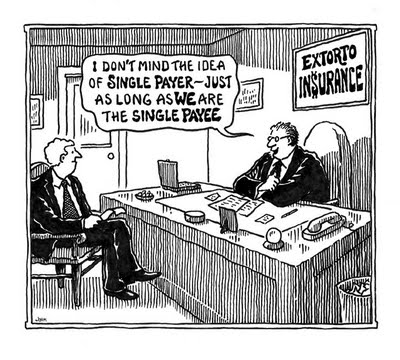
By Benjamin Day | Common Dreams | March 30, 2016
What would happen if the media lifted the curtain on Clinton’s healthcare platform and introduced any level of scrutiny to her proposed improvements on the Affordable Care Act?
In an extraordinary magic trick, performed on a national scale, Hillary Clinton’s healthcare platform has been disappeared. While policy analysts, news anchors, and columnists have been engaged in an intense debate over Bernie Sanders’s “Medicare for All” proposal, Clinton’s incremental alternative has escaped almost all scrutiny – even among those who say they prefer it.
Combining the election-season writings of our most prolific, liberal-leaning columnists at the New York Times, Huffington Post, Vox, Mother Jones, Politico, The American Prospect, etc. you’ll find dozens of articles critiquing Sanders’s single-payer plan. None have mentioned a single Clinton healthcare proposal as a point of comparison – merely that she supports a philosphy of incremental reform.
Take Paul Krugman, a high-profile advocate of Clinton’s approach to healthcare reform. Krugman has published two op-eds in the New York Times and five additional blog posts arguing that “[progressives] should seek incremental change on health care… and focus their main efforts on other issues – that is… Bernie Sanders is wrong about this and Hillary Clinton is right.” In all seven pieces, Krugman focuses exclusively on Sanders’s single-payer proposal and fails to mention even a single Clinton policy.
The disappearance of the Clinton healthcare platform has even been carried out by pollsters. The Kaiser Health Tracking Survey included a bizarre question in its February 2016 poll, which was widely cited in the press. Respondents were asked to pick one of four possible directions for the future of U.S. healthcare. Among the choices were “The U.S. should establish guaranteed universal coverage through a single government plan” and “Lawmakers should build on the existing health care law to improve affordability and access to care.” Thirty-three percent of Democrats chose the single-payer option, while fifty-four percent chose the incremental option. The questions were clearly intended as stand-ins for the Sanders and Clinton healthcare proposals, but note that the single-payer option is a policy, whereas the incremental option mentions no actual policies, but asks respondents whether they support the (universally desirable) outcomes of improving affordability and access.
What would happen if the media lifted the curtain on Clinton’s healthcare platform and introduced any level of scrutiny to her proposed improvements on the Affordable Care Act? They would find two categories of Clinton proposals: some that are so vague they’re difficult to evaluate, and other more concrete plans that follow in the footsteps of one of Congress’s most practiced healthcare incrementalists: Senator Bernie Sanders.
For example, one of Clinton’s clearest incremental proposals is to repeal the Affordable Care Act’s poorly named “cadillac tax” on health plans with high premiums. She announced this proposal on September 29, drawing the ire of White House spokespeople. The move, however, followed in the footsteps of a Senate bill to repeal the Cadillac tax introduced by Bernie Sanders and seven Democratic Senators just a few days previously on September 24. Clinton’s position was correctly seen by reporters as necessary if she didn’t want to lose labor union support to Sanders.
“Because Clinton’s healthcare platform has received zero public scrutiny, she has had the luxury of floating other policy ideas in broad outlines, too vague to evaluate.”Many of Clinton’s well-defined healthcare proposals are rolled into a package of prescription drug reforms, which she released on September 22, 2015. They bear a striking resemblance to the Sanders prescription drug plan announced on September 1, filed as legislation on September 10. Both would legalize importation of prescription drugs from Canada, where costs for identical drugs are much lower due to Canada’s single-payer healthcare system. Sanders was a pioneer of importation, and in 1999 started driving busloads of American patients who couldn’t afford breast cancer drugs across the Canadian border. Both candidates call for empowering Medicare to negotiate drug prices – even Donald Trump jumped on board in January. Both would ban “pay-for-delay” deals between brand-name and generic drug makers, and increase prescription drug rebates for Medicaid and/or Medicare.
Because Clinton’s healthcare platform has received zero public scrutiny, she has had the luxury of floating other policy ideas in broad outlines, too vague to evaluate. Take the proposal to expand the use of Accountable Care Organizations. How? According to Clinton’s December policy brief: “In the coming months, [Clinton] will provide full detail on her plans for delivery system reforms that drive down costs.” With the primaries drawing to a close, no such details have been released. The same could be said of another proposal to “create a fallback process” to review insurance premium rate hikes in states that don’t already review rates. There has been no explanation of how such a plan would work, or whether it would require new legislation.
This is the double standard at work in almost all national coverage of Clinton and Sanders on healthcare reform: Clinton has been taken at her word that her incremental plans will be politically feasible, succeed in improving affordability and access to care, and are not shared by her opponent. Sanders on the other hand received intense public pressure to release details of his single-payer healthcare proposal, and when he did the proposal was subject to an avalanche of public analysis and scrutiny.
This double standard is all the more remarkable because single-payer healthcare is an established policy, practiced in one form or another in almost every developed nation in the world. Incremental reforms that work within the market-based healthcare system of the U.S. are far more uncertain, and deserve greater scrutiny. They are easier to enact but dramatically more likely to fall short of their goals. This is because incremental reforms in the United States usually focus on expanding access to care, without significant cost controls, in order to avoid opposition from the healthcare industry. The resulting policies are often unsustainable; make little headway against national trends of rising costs and eroding access; or simply move costs around (e.g. from premiums to deductibles and co-payments, or vice versa).
Previous national trends in incremental healthcare reform – from managed care through pharmacy benefit management, chronic disease management, narrow networks, and beyond – have often created lucrative new industries, but had dubious impacts on underlying healthcare costs or access to care. Most of Clinton’s healthcare platform falls exactly into these danger zones, and should be received with a critical eye.
The national discussion of single-payer healthcare reform is long overdue. However, when the full range of national media outlets force one candidate to run on real policies, while allowing another to run on values and aspirations, we aren’t having a real discussion of systemic vs. incremental reform, we are merely aiding the corrosion of informed democracy.
Benjamin Day is the Executive Director of Healthcare-NOW.
Featured Video

The Most Important Bet You’ve Never Heard Of
or go to
Aletho News Archives – Video-Images
From the Archives
The Occupied Mentality Syndrome
Saudi Arabia on the American chessboard – Part 2
By B. J. Sabri | American Herald Tribune | April 19, 2016
Since the Korean War, but particularly since the Iranian Revolution of 1979 until today, the United States has been steadily escalating its military presence in the Persian Gulf. Taking advantage of many colossal events of the past 36 years, [1] the hyper-empire has institutionalized its massive presence on land and sea, and expanded its objectives to include the unambiguous physical control of the area, as well as the clear understanding that local Arab governments should abide by them. The pretext is always the same: in “defense” of the national interests and security of the United States. From observing how the United States has been interacting with the governments of the region, and by judging from the size of its expeditionary force, we could reach a basic conclusion. The United States is occupying, de facto, the entire Arabian Peninsula. (Yemen, devastated by Saudi and American jets is yet to be conquered. Oman? Britain returned not as colonial ruler but as a soft occupying power.)
Under this articulation, Saudi Arabia, Qatar, Kuwait, and the United Arab Emirates are virtually occupied countries. If we compare this type of occupation to the mandate and protectorate regimes of the past, the results might be identical—the nations affected by it lose sovereignty. When Arab governments comply with the objectives of a foreign power that station military forces on their national milieu, then that power controls them in multiple ways including how they react to policy deliberations and what decisions they intend to take on specific issues. A good method to verify the concept of effective occupation is this: take notice of what the United States says and wants, and then compare it to what the gulf rulers do in response. (I shall discuss this detail at some point in the upcoming parts.)
If the presence of US forces or other means of political pressure are a factor in Saudi Arabia’s interventionist Arab wars, then we need to debate this issue. However, from the history of resistance to colonialism, we learnt: if a powerful state imposes its order on a nation by military means or other forms of coercion, and if this nation does not resist that imposition, then a mental subordination to the powerful state will ensue. This is especially true in the case of Saudi Arabia. One single event, 9/11, has transformed it from a US “ally” into an instant political hostage of the American Empire. … continue
Blog Roll
 Aletho News
- Trump and the debris of Iran war
- IRGC hits US tech giant Oracle’s data center, computing site in UAE over new assassinations
- Bombing Iran Back Into the Stone Age /Lt Col Daniel Davis & Jim Jatras
- UAE rejects report claiming it is ready to join war on Iran to reopen Hormuz
- A New Resistance Front: How Does Syria Factor into the Regional War?
- Gulf states weigh pipeline expansion plans, hoping to bypass Hormuz
- Iran sets up ‘tollbooth’ system in Strait of Hormuz
- Wave 90: IRGC strikes US-linked industrial sites in Gulf
- Iran Says US-Israeli Claims of Its Military Strength Are Wrong
- Trump’s April Fools’ Address to the nation
- If Americans Knew
- ‘War crime’: Global condemnation as Israeli ministers celebrate death penalty law targeting Palestinian prisoners
- 7 Ways Israel Is Turning Lebanon Into Gaza
- World’s Leading Football Bodies Under Fire Over Israel Policies
- Experts warn of possible use of nukes against Iran
- Israeli invasion of Lebanon could be worse than 1982, warn European officials
- Passover: Liberation and collective punishment
- Trump says the quiet part out loud: (Israel’s) war on Iran > Americans’ health – Daily Update
- Gaza families reunite years after babies evacuated amid Israel’s war
- International Rescue Committee warns Gaza’s children face grave protection risks
- Iran’s Alleged 47-Year War on America: Debunking the 1,050 American Deaths Canard
- No Tricks Zone
- Low Intensity Tornado Wrecks Major Solar Farm, Creating A Potential Toxic Dump
- New Study Finds Warming Saves Lives…Cold Temperatures 12 Times More Deadly Than Excess Heat
- German Science Blog Accuses PIK Climate Institute Of Hallucinating Climate Tipping Points
- Devastating Assessment Of Comirnaty Vaccine By Former Senior Pfizer Europe Toxicologist
- New Study: CO2 Is ‘Effectively Negligible’ As An Explanatory Climate Change Factor Since 2000
- Former Pfizer Toxicologist Dr. Helmut Sterz Tells Bundestag Hearing Pfizer Vaccine Should Have Never Been Approved
- Energy Expert: Germany’s Nuclear Phaseout Was A “500 Billion Euro Mistake”
- New Research: South Australia’s Mid-Holocene Sea Surface Temperatures Were 4°C Warmer Than Today
- Storing Green Energy To Last Germany 10 Days Would Require A 60-Million Tonne Battery
- New Studies: UK Sea Levels Were 4 Meters Higher Than Today During The Mid-Holocene
 Aletho News