Crimea & Minsk Agreements: What the British media fails to mention
Ambassador’s view | RT | February 2, 2017
The escalation in eastern Ukraine is again presented in the British media as Russia’s attempt to wage a proxy hybrid war against Kiev’s pro-Western leadership.
For fear of an eventual improvement in Russia-US relations, they pray for the sanctions against Russia to stay unless the Minsk Agreements are implemented as well as a punishment for ‘Russia’s annexation of Crimea.’
Let me set the record straight on that.
The coup d’état in Kiev in February 2014 backed by the West tore up the constitutional space in Ukraine. The legitimate president of the country was overthrown. It was marked by a severe lack of democracy and violence that posed a direct threat to the well-being of the Russian-speaking population of Crimea. Citizens of Crimea, which was an autonomy at the time, faced the choice of becoming an oppressed minority or severing their ties with the hostile regime to secure a future for themselves and their children. Legitimate local authorities made the decision to hold a referendum.
The independence of Crimea was proclaimed and an appeal to enter the Russian Federation was made based on the indisputable results of the popular vote. Standards of international law were fully observed as the right of nations to self-determination enshrined in the UN Charter was exercised freely by the Crimeans.
Crimea was recognized as an independent and sovereign state by Russia, and on March 18, 2014 in Moscow the two countries signed a Treaty of Unification, under which the Republic of Crimea and the city of Sevastopol became two new regions – subjects of the Russian Federation.
Let us take a look at the outcome. While entire regions of Ukraine are engulfed in a brutal war, and the population is being fed with shameless nationalist propaganda, the Russian Crimea is enjoying peace, stability and steady growth. What could be a better proof that the decisions made two years ago were the only right ones? We are convinced that many Ukrainians would prefer to live like the residents of Crimea live now – under conditions of stable economic development and social security. That is despite the attempts of the Ukrainian government to disrupt the life of the people there by cutting the peninsula off from essential supplies, trying to organize water, energy and food blockades. Does it mean people for sovereignty, rather than sovereignty for the people?
Unfortunately, there has been little progress in implementing the Minsk Agreements mainly due to Kiev’s unwillingness to fulfill its obligations under them to promote national accord and reconciliation. The recent escalation is clearly an attempt to divert public attention from the poor reform record and request for additional funds from their Western sponsors.
For the political solution to be achieved in Ukraine, the Minsk Agreements should be fully implemented, including the withdrawal of heavy weapons from the contact line. However, the Ukrainian armed forces haven’t stopped shelling Donetsk and Lugansk, including the use of weapons that are supposed to have been withdrawn. This leads to civilian casualties and the destruction of property. The OSCE Special Monitoring Mission to Ukraine has reported many times the concentration of Ukrainian forces along the contact line.
According to the Minsk Agreements, signed two years ago, on the first day of the withdrawal of artillery Kiev had to engage in dialog, and start consulting with Donetsk and Lugansk representatives on the conditions for elections to be held on the basis of Ukrainian law and under OSCE oversight.
A month after the signing of the Minsk Agreements Kiev was required to enact a special status law adopting a resolution designating the territory that this law was supposed to cover. This hasn’t been done. A law was passed, the territories marked, but the law said that it didn’t apply to Donetsk and Lugansk!
The Minsk Agreements clearly say elections should be held in accordance with the OSCE criteria, one of which is to ensure that no one will be subjected to intimidation, harassment, etc. The statement by the Kiev authorities on “elections first, then amnesty” constitute a serious distortion of the sequence and logic of what was agreed. In accordance with the OSCE elections criteria, the amnesty should be granted before the elections.
It is crucial to understand at long last that the only way to settle the Ukrainian crisis is by implementing the Minsk Agreements, which represent a recipe for a political solution well in line with European values. What is required of Kiev is to treat its citizens as partners and abandon the Orwellian “anti-terrorists operation.” One cannot deal with its own citizens with a gun to their head.
And this intransigence should cease for the sake of comprehensive reforms in Ukraine, the lack of which is the key source of the present crisis. The declarations by British officials that sanctions against Russia can only be lifted after we fulfill our obligations according to Minsk treaty is a crude substitution of concept and a prolongation of anti-Russian politics of London.
Russia, together with France and Germany, is a guarantor of the Minsk accords, not part of it. The obligations written there are for Kiev and Donbass, in their quality as sides of the treaty and participants of the conflict, to fulfill.
Dr Alexander Yakovenko, Russian Ambassador to the United Kingdom of Great Britain and Northern Ireland, Deputy foreign minister (2005-2011). Follow him on Twitter @Amb_Yakovenko
Kiev to hold missile-firing exercise over Crimea, where civil aviation performs flights – Moscow
RT | November 25, 2016
Ukraine has made a unilateral decision to organize missile-firing exercises over Crimea, in the sovereign airspace of the Russian Federation, Russia’s Federal Air Transport Agency Rosaviatsiya reported. Missiles will be fired in regions where civil and state aviation flights run.
Kiev’s move breaches a number of international laws and agreements, Rosaviatsiya said, adding that not only will the military exercise invade Russian territory, but the plans also had not been coordinated with Moscow.
Ukraine released an aviation notification on Thursday, activating “dangerous zones” in all flight levels near Crimea and the city of Simferopol for December 1 and 2, the agency reported. It added that the “dangerous” areas included airspace above open sea which is in Russia’s area of responsibility, and over Russian territorial waters.
The notifications released have not been coordinated with the appropriate Russian authorities, Rosaviatsiya said in its statement. It added that such unilateral moves demonstrate Ukraine’s unwillingness to work on the normalization of air traffic above the Black Sea.
Kiev has also violated annexes of the 1944 Convention on International Civil Aviation, the agency said, while demanding the immediate cancellation of the planned actions in Russia’s sovereign airspace.
The General Staff of the Ukrainian Army refused to comment on the matter, TASS reported. The head of the staff press service, Vladislav Seleznyov, told the agency it was not his department’s responsibility to “comment on this information,” and referred the outlet to other Ukrainian officials, including the Foreign Ministry, for more information.
The planned missile-launch exercises are “potentially dangerous for civil aviation,” Rosaviatsiya said in its statement, adding that it could lead to tragedies similar to those with Malaysia Airlines flight MH17 over Ukraine in 2014 and the downing of a Russian passenger plane over the Black Sea in 2001.
The investigation into the Malaysian Boeing-777 crash in eastern Ukraine, which killed all 298 people on board en route from Amsterdam to Kuala Lumpur, continues.
Another incident involving military missiles happened over the Black Sea in October 2001, when a Siberia Airlines Tu-154 en route from Tel-Aviv to Novosibirsk was downed by a missile launched by the Ukrainian military during an exercise. Seventy-eight people died.
Russia has informed both Russian and international air carriers of Kiev’s planned move, a Rosaviatsiya representative told TV channel Rossiya 24. Saying that Moscow is taking all measures to provide security for the flights, he added that Russia will be forced to ban all flights in the Crimea region should Ukraine not cancel its decision.
What Should We Do About Crimea?
By Ron Paul | August 21, 2016
Is Crimea about to explode? The mainstream media reports that Russia has amassed troops on the border with Ukraine and may be spoiling for a fight. The Russians claim to have stopped a Ukrainian sabotage team that snuck into Crimea to attack key infrastructure. The Russian military is holding exercises in Crimea and Russian President Vladimir Putin made a visit to the peninsula at the end of the week.
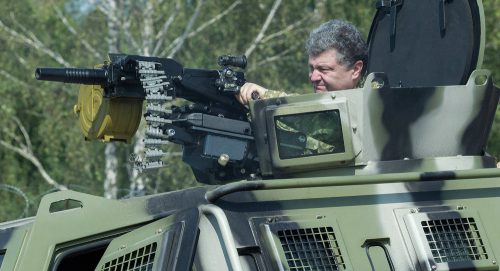
The Ukrainians have complained to their western supporters that a full-scale Russian invasion is coming, and Ukrainian President Petro Poroshenko said he may have to rule by martial law due to the Russian threat.
Though the US media pins the blame exclusively on Russia for these tensions, in reality there is plenty of blame to go around. We do know that the US government has been involved with “regime change” in Ukraine repeatedly since the break up of the Soviet Union. The US was deeply involved with the “Orange Revolution” that overthrew elected president Viktor Yanukovych in 2005. And we know that the US government was heavily involved in another coup that overthrew the same elected Yanukovych again in 2014.
How do we know that the US was behind the 2014 coup? For one, we have the intercepted telephone call between US Assistant Secretary of State Victoria Nuland and US Ambassador to Ukraine, Geoffrey Pyatt. In the recording, the two US officials are plotting to remove the elected government and discussing which US puppet they will put in place.
You would think such undiplomatic behavior could get diplomats fired, but sadly in today’s State Department it can actually get you promoted! Nuland is widely expected to get a big promotion – perhaps to even Secretary of State – in a Hillary Clinton administration, and Geoffrey Pyatt has just moved up to an Ambassadorship in Athens.
Ambassador Pyatt can’t seem to control himself: Just as tensions were peaking between Russia and Ukraine over Crimea this month, he published a series of Tweets urging Ukraine to take back Crimea. Is this how our diplomats overseas should be acting? Should they be promoting actions they know will lead to war?
When the mainstream media discusses Crimea they are all lock-step: that’s the peninsula Putin annexed. Never do they mention that there was a referendum in which the vast majority of the population (who are mostly ethnic Russians) voted to join Russia. The US media never reports on this referendum because it produced results that Washington doesn’t like. How arrogant it must sound to the rest of the world that Washington reserves the right to approve or disapprove elections thousands of miles away – meanwhile we find out from the DNC hacked files that we don’t have a lot of room to criticize elections overseas.
What should we do about Ukraine and Russia? We should stop egging Ukraine on, we should stop subsidizing the government in Kiev, we should stop NATO exercises on the Russian border, we should end sanctions, we should return to diplomacy, we should send the policy of “regime change” to the dustbin of history. The idea that we would be facing the prospect of World War III over which flag flies above a tiny finger of land that most US politicians couldn’t find on a map is utterly ridiculous. When are we going to come to our senses?
US Election Campaign: Shaping Policy on Russia
By Andrei AKULOV | Strategic Culture Foundation | 24.07.2016
Donald Trump has secured the nomination of the Republican Party to become the next US president.
It has been a controversial campaign and the US policy on Russia is in the process of being shaped. While the media focused on Melania Trump’s plagiarism and other oddities during the Republican National Convention, something very important happened to provide a clue to the GOP presidential candidate’s stand on the issue. The Republican Party officially altered its platform on Ukraine and Russia.
Trump’s team proved its grip on the Republican Party is tight enough to make the entire institution adopt a new view on a major foreign policy issue. Trump-supporting delegates attending the GOP platform meeting in Cleveland insisted that the wording in the initial proposal be altered. They wrote a new amendment ruling out sending US weapons to Ukraine and made sure the new Republican platform does not include a provision calling for giving weapons to Ukraine to fight Russian and rebel forces, despite the fact that this view is widely supported by the GOP’s establishment.
The previous platform advocated «providing lethal defensive weapons» to Ukraine, reflecting the virtually unanimous position of the GOP foreign policy elite and national security leaders. Donald Trump won again.
Trump is a sober-minded politician known for his non-ideological, deal-making nature. Unlike other prominent Republicans, he harbors none of Russophobia. Trump realizes that sanctioning and the attempts to «isolate» Russia are bad for business and thriving business is what makes a nation great. He’s a pragmatic global dealmaker who keeps in mind the interests of an average Joe, not global imperial ambitions that make the US overloaded with international commitments and overstretched. Trump has exposed that the Republican party’s rank-and-file members are much less interventionist than previously thought. They don’t want confrontations or military operations abroad – the lessons and losses of Iraq and Afghanistan are too fresh. Trump has repeatedly said that radical Islamism and terrorism is a greater threat to Europe than Russia. He said he would «get along very well» with Russian President Vladimir Putin. Mike Flynn, foreign policy advisor to Trump, has suggested that Moscow and Washington join forces to counter Islamic State in the Middle East.
The change of wording at the GOP program is telling but it does not signify the change of policy yet.
There is another important development that went down almost unnoticed by media.
On July 14, members of the US House of Representatives Committee on Foreign Affairs passed a bill to tighten sanctions against Russia.
It contains new innovations to provide support for Ukraine. The Stability and Democracy for Ukraine Act strictly binds the powers of the American President to lift sanctions against Russia with the status of Crimea.
The bill forbids NATO members from exporting arms containing US technology to Russia. It requires a regular report on foreign financial institutions «illicitly controlling Ukraine state-owned assets – namely Russian banks in Crimea». The proposed legislation extends the existing Magnitsky Act to new territories, including Crimea, Abkhazia, South Ossetia, and Transnistria.
If the document is approved, the head of the United States will be able to lift the measures against Moscow only in two cases: after confirmation of the «restoration of Ukraine’s sovereignty over Crimea» or if it is proved that «the decision on the status of the Peninsula was under international control and recognized the democratically elected Ukrainian government». The bill also seeks to establish an international consortium to draw private investment in Ukraine by minimizing political risk to would-be private investors.
The proposed act poses a serious threat to the Russia-US relationship. While Washington repeatedly states that the lifting of sanctions depends on the implementation of the Minsk agreements, Moscow believes it’s ridiculous to link the sanctions with the implementation of the Minsk agreements, because Russia is not a party to the conflict and not the subject of the agreements on the settlement in Ukraine. If the bill becomes a law and Donald Trump wins the November election, he’ll have no choice but to comply with the new legislation’s provisions.
Indeed, there are conflicting trends in the US policy on Russia.
On July 20, important news related to the Russia-US relations was largely kept out of media headlines. Russian and US experts and military agreed to meet in Geneva, Switzerland to discuss the Syrian issue.
«We proceed on the basis that the military and political experts will launch intensive work in Geneva in the coming days in furtherance of the US Secretary of State John Kerry’s visit to Moscow», the source said.
This is one of the results of the talks held in Moscow as part of the visit of the Secretary of State John Kerry on July 14-15.
During the visit, he was received by Russian President Vladimir Putin, held talks with Foreign Minister Sergey Lavrov. It was stated on the ministerial meeting that the sides agreed on specific steps to make the work on Syria more effective. No specific details of the agreed plan were provided. If the plan goes through, it will unite Russia and the US in the fight against the common enemy. But military cooperation and sanctions are hardly compatible. Evidently, there are conflicting trends that are shaping the US policy on Russia as the election race continues.
We’ve yet to make precise how the Democratic convention to take place in Philadelphia on July 25-28, 2016 will define its stance on Russia. One thing is certain – a large sector of American society stands for normal relations with Moscow. The alterations inserted into the GOP program serve as an irrefutable evidence to confirm this fact.
US State Dept Pledges to Retain Sanctions Until Russia Returns Crimea
Sputnik — 16.03.2016
 Washington will not lift the sanctions imposed after the reunification of Crimea with Russia until Moscow decides to “return Crimea to Ukraine,” the spokesman for the US State Department said.
Crimea, which has a predominately ethnically-Russian population, seceded from Ukraine to rejoin Russia two years ago following a referendum on March 16 in which over 96 percent of voters supported the move.
“We will not accept the redrawing of borders by force in the 21st century. Sanctions related to Crimea will remain in place as long as the occupation continues. We again call on Russia to end that occupation and return Crimea to Ukraine,” John Kirby said in a statement Wednesday.
He added that Washington remains committed to “a united, sovereign Ukraine.”
In 2014, the United States, the European Union and some of their allies imposed a series of economic sanctions targeting key Russian sectors as well as a number of individuals and entities over Russia’s reunification with Crimea and its alleged interference in the conflict between Kiev and independence supporters in eastern Ukraine, denied by Moscow.
Russia working on ways to protect its internet due to US online dominance – Com. Minister to RT
RT | March 2, 2016
The US government and a handful of corporations working under US jurisdiction have a disproportionately strong influence on the internet. So other countries are mulling ways to protect their web sectors, the Russian communications minister told RT.
“Today, if you have a look at the whole IT global system, you will see that the whole world… is actually totally dominated by a single country and literally by several companies, which have practically monopolized the entire IT system,” Nikolay Nikiforov said.
The issue is not only about market shares of tech giants such as Google and Facebook, but also about the US government’s control of critical elements of the internet’s infrastructure, he said.
One small example is the Internet Corporation for Assigned Names and Numbers (ICANN), which assigns internet domain names. In 2014, the US pledged to hand over control over it from the US Department of Communications to a multi-stakeholder collective, which would include governments, companies, international organizations and individual users. The transition was scheduled to happen in September last year, but was postponed for at least a year.
“This didn’t happen for some reason, and many reasons were voiced. I believe them to be pretty far-fetched,” Nikiforov said.
“With this prolonged monopolization, many countries in the world are working on technical solutions that would protect national segments of the internet from a possible external destructive action. They are creating backup infrastructures, which respond to a disruption – intentional or accidental – and prevent national segments from being blocked,” he added.
The minister said Russia is among the countries heavily investing in the internet and naturally wants to protect this investment.
The issue is not theoretical for Russia. As part of the US-imposed sanctions, several American companies suspended their services in Crimea, which seceded from Ukraine in response to an armed coup in Kiev and rejoined with Russia. Washington called the move illegal and targeted individuals and some sectors of the Russian economy with sanctions.
Google, Apple, PayPal and others cut Crimea from their services. This affected tens of thousands of people, who could no longer properly update the software for their phones, buy apps, use electronic payments for online products and do other basic things.
The minister was speaking in Egypt, which he is visiting to foster business ties. He said Russia and Egypt have agreed to have mobile operators to cut down roaming tariffs, which would benefit Russian tourists visiting the North-African country.
“It’s no secret that overpriced roaming is the reason why many travelers simply don’t use their phones abroad. We are trying to make this problem go away for Egypt and Russia,” he said.
The agreement indicates that Russia may soon lift restrictions on flights to Egypt, which were imposed after a terrorist bomb last October destroyed a plane carrying Russian tourists home from Egyptian resorts.
Prosecution planned for 8,000 Ukrainian soldiers who stayed in Crimea
Svezhie Novosti | January 26, 2016
Ukrainian authorities have stated that more than 8,000 military service personnel have been declared on the wanted list. It is reported that the soldiers went over to the side of Russia at the time of the so-called Crimean spring. This was stated by the Military Prosecutor of Ukraine Anatoly Matios. The former Ukrainian servicemen are now wanted, and criminal proceedings have been instituted.
According to Matios, all soldiers declared wanted served in the Ukrainian military units that were located on the peninsula of Crimea, and after Crimea went to Russia, did not return to Ukrainian territory.
The number of Ukrainian soldiers, who betrayed their Ukrainian oath and did not leave the territory of Crimea after the unification with Russia, is huge, more than 8,000 people. All of them are now on the wanted list. Measures against them have already been adopted; if in the near future they cross the Ukrainian border, they will be turned over to the courts.
Turkey Backs Anti-Russian Tatar Sabotage and Subversion
By Stephen Lendman | December 29, 2015
Turkish President Erdogan is up to his ears in high crimes, internally and abroad, his rap sheet matching some of the world’s worst.
Self-determination is a universal right. Crimea is legally part of Russia, its population overwhelmingly voting by national referendum in March 2014 (by a 96.77% majority with an 83.1% turnout) to correct a historic mistake.
There’s no going back or legitimate reason for any nation to reject reality. Washington and likeminded regimes remain hardline, including Turkey – Erdogan directly aiding the formation of a Crimean Tatar battalion, tasked with committing sabotage and other forms of subversion. More on this below.
Last August, Erdogan met with anti-Russian Tatar resistance leaders Mustafa Dzhemilev and Refat Chubarov in Ankara – promising no Turkish recognition of Crimea as a Russian province, pledging aid to its subversive resistance.
Recently, he met with Dzhemilev and Chubarov in Konya Turkey, both men organizers of the failed Crimean food and electricity blockade. Discussions about a strategic alliance with Ukraine and possible naval blockade of the peninsula were held – with Turkey’s involvement.
Lenur Islyamov represents the illegitimate, unregistered “Majlis (or council) of Crimean Tatars” organization. He explained Ankara is actively involved in forming a Tatar battalion on the pretext of “protecting the Crimean frontier” – code language for plotting sabotage and subversion, operating as an enemy of Russia with direct Erdogan aid.
According to Islyamov, “(w)hile the Ukrainian defense ministry only scratches its head, (its) Turkish” counterpart is offering direct support – likely including weapons, munitions, funding and training to commit lawless acts against the Russian Federation.
Islyamov told Ukrainian television viewers, “(w)e now have more than a hundred people who have already entered the battalion as volunteers, but we hope that after all the ministry of defense and the armed forces of Ukraine, will create and allow the Crimean Tatars to have their own national battalion within the armed forces.”
He aims to enlist hundreds of fighters, able to wage guerrilla war on the pretext of defending Crimea’s borders, risking direct confrontation with Moscow, apparently part of Erdogan’s dirty scheme complicit with Washington, following his downing a Russian Su-24 bomber, a willful act of war.
Islyamov promised further efforts to isolate Crimea and ways to “liberate Tatars” within a year – returning the peninsula to Ukraine – a strategy of madness, making no more sense than attempting to liberate my home state of Illinois from America.
His notion of instituting a naval blockade with Turkish help, including “small boats (able) to attack ships carry(ing) goods to Crimea” has no chance to succeed.
In late November, Tatar insurgents destroyed parts of the southern Ukraine Kherson region electricity grid, supplying energy to Crimea – preventing repair crews from restoring power, leaving 1.8 million people in the dark for days.
Russia intervened responsibly, supplying energy amounts needed – the first stage of a so-called energy bridge weeks ahead of schedule.
Most Crimeans are ethnic Russians, Tatars at most about 12% of the population, their people not in conflict with other ethnic groups, a small rogue band entirely responsible.
Erdogan risks greater confrontation with Russia than already – by partnering in sabotage and subversion, more proof of his rogue credentials.
Legitimate Majlis Tatar officials reject Dzhemilev, Chubarov, Islyamov and other hardliners, saying “cooperation with extremist groups condemned by the whole progressive world has deprived them of their right to represent Crimean Tatars.”
“From now on, all their statements at any forums should be qualified as personal opinions” – not representing the views of the vast majority of Crimean Tatars.
They denounced rogue elements using Tatar national symbols, saying they’re “not a bargaining chip for political crooks. No one gave them the right to unilaterally use our relics at their discretion.”
Erdogan continues overstepping recklessly, already deeply involved in supporting ISIS, challenging Russia’s patience, perhaps sowing seeds of internal rebellion.
Stephen Lendman can be reached at lendmanstephen@sbcglobal.net.
His new book as editor and contributor is titled “Flashpoint in Ukraine: US Drive for Hegemony Risks WW III.”
New York Times propaganda article on Ukraine’s blockade of Crimea
By Roger Annis – New Cold War – December 2, 2015
Western media has published yet another doom and gloom article on Crimea, repeating a worn theme that surely, by now, the people of Crimea must be reconsidering their vote 21 months ago to secede from Ukraine and rejoin the Russian Federation.
The article was published in the New York Times on Dec 1 and is titled, ‘Months after Russian annexation, hopes start to dim in Crimea‘. This one has to skate around a new, added twist to the Crimea story: the electricity and commercial road transport blockade that has been mounted by small numbers of the extreme-right in Ukraine but endorsed by the governing regime in Kyiv while Western governments turn a blind eye.
The article begins:
SHCHYOLKINO, Crimea–When residents in this typical Soviet factory town voted enthusiastically to secede from Ukraine and to become Russians, they thought the chaos and corruption that made daily life a struggle were a thing of the past. Now that many of them are being forced to cook and boil drinking water on open fires, however, they are beginning to reconsider.
The article employs time-honored methods for when a pre-determined, negative theme is required and important facts must be obscured.
One, find disgruntled citizens in the street and cite them. That’s not difficult to do–is there a country in the world without many unhappy citizens? The Times writer cites two such people in his article.
Two, make it appear that the disgruntled citizen(s) speaks for large numbers of his or her fellow citizens.
Three, negative imagery is important. Thus we read in the Times article, “Twenty months after the Kremlin annexed the Black Sea peninsula amid an outpouring of patriotic fervor by the ethnic Russian population, President Vladimir V. Putin’s promise in April 2014 to turn it into a showcase of his rule now seems as faded as Crimea’s aging, Soviet-era resorts.” Very evocative–‘aging, Soviet-era resorts’. This recalls the decades of New York Times reporting of aged-looking buildings in Cuba during the decades of the U.S. embargo of the island. The embargo made it difficult for Cuba to manufacture or obtain paint and building materials; such things as public health care, public education, international aid and solidarity, and national defense took priority. So yes, this writer visited Cuba three times during the 1990s and, indeed, many buildings in Havana looked aged. But the spirit of the people and the outlook for the country was anything but tired and worn out. To my eyes, the people were much more spirited and forward looking compared to what I experienced in wealthy Canada.
Four, the key word in all reporting of Crimea is “annex”, as per the above citation. The people in Crimea voted overwhelmingly in March 2014 for secession from Ukraine, following a violent, right-wing coup against the elected president of that country (a president for whom a large majority of Crimeans had voted in 2010). The secession referendum was organized by the elected and constitutional Crimean legislature, whose legality contrasted sharply with the illegal, coup regime which came into power in Kyiv on Feb 21, 2014. Crimeans have affirmed in survey after survey that they are satisfied with the secession decision. Yet, Crimeans are presented in the Times as hapless people who have been “annexed” by Russia. The Times reference to the secession as happening “amid an outpouring of patriotic fervor” suggests that the people were so swept away by fervor as to be too dumb to realize what was really taking place. They were not choosing a future of their own free will; no, they were undergoing “annexation” without even being aware.
Five, blame the victims for their plight. Thus we read in the Times article , “… people here are not sure whom to blame more for their predicament: the Crimean Tatar activists and Ukrainian nationalists who cut off Crimea’s link to the Ukrainian power grid or the local government officials who claimed to have enough power generators stored away to handle such an emergency.” Here we have an absurd spectacle of the Crimean government being blamed for failing to foresee and prepare for the day that right-wing extremists in Ukraine would blow up the electricity transmission lines serving the peninsula. Even more recklessly, the Crimean government failed to foresee that the blowing up of transmission lines by right-wing terrorists (oops, “cutting off of Crimea’s links” by “activists”) would be endorsed and escalated by the regime in Kyiv and that Western governments would turn a blind eye and Western media would largely be silent.
Six, and finally, choice of headline to convey the negative message is key. In this case, we have “hopes start to dim”. In reality, the Times headline joins a long parade of such headlines. Pick a typical, negative word, use it alongside the word “Crimea” in an internet search, and, voilà, you arrive in a world of negativity over prospects for Crimea. Here is a small sample of the trade in negative Crimea headlines and stories:
- Crimea’s football fans shiver at prospect of their team playing in Siberia (The Guardian, March 2014)
- Why Russia’s Crimea move fails legal test, (BBC, March 2014)
- Crimea after annexation: ‘We feel utterly discouraged,’ resident says (Belsat TV, in Belarus, April 2014)
- Crimea euphoria fades for some Russians (Reuters, July 2014)
- Tourism suffers in Crimea as Ukraine shuns breakaway region (Washington Post, Aug 2014)
- Kremlin preparing to combat demos as signs of Crimea-fatigue appear, (‘Euromaidan Press‘, Sept 2014)
- Human rights in decline in Crimea (Human Rights Watch, Nov 2014)
- To many in Crimea, corruption seems no less at home under Russian rule, New York Times, Aug 2015)
Oddly–well, not so oddly–the last article in this list was about Crimean citizens trying to take back into public control Black Sea waterfront land which had been lost during Crimea’s time in post-1991 Ukraine.
Funnily enough, the Times article concludes with a quotation from a Crimean woman that is supposed to show that Russians are naïve and habitual complainers who always blame others for their failings and shortcomings. But the quotation is the closest thing to truth in the entire article (leaving aside the suggestion that the extreme rightists in Ukraine who blew up electricity lines are “Tatars”):
As often happens in Russia, some blame Washington rather than Moscow or Kiev.
“If it wasn’t for the Americans, none of it could have happened. The Tatars, who are supported by the United States, would not do a thing,” said Tatyana Bragina, 57, an energetic woman who also once worked construction at a nearby, unfinished nuclear plant.
“Please write that we are not desperate. On the contrary, we are full of joy,” Ms. Bragina said, standing near a black iron kettle boiling away in the courtyard of her apartment block.
Russian legislator Konstantin Kosachev has said that Kyiv’s electricity and road-transport blockades against Crimea constitute a “gesture of final farewell” to Crimea.
Russia is racing to construct electricity, natural gas, road and rail links to Crimea across the 3 km wide Kerch Strait, which separates the Sea of Azov from the Black Sea. The first of the electricity will begin to flow in a few weeks. Crimea will be fully supplied with electricity by the summer 2016. Soon after that, it will be producing its own electricity courtesy of the gas pipeline under construction. By 2019, the road and rail bridge will begin to operate.
Ukraine threatens permanent economic blockade against Crimea
By Roger Annis – New Cold War – November 27, 2015
Western news media and governments are keeping hush about an economic blockade by Ukraine against Crimea that is starting to appear permanent.
TASS reports today that at least one of the electricity lines from Ukraine to Crimea that was sabotaged by right-wing extremists during the weekend of Nov 20-21 has been repaired. But no electricity is flowing to Crimea from Ukraine. The information comes from Russian Deputy Energy Minister Andrey Cherezov.
“We have information that the repair work on the Kakhovka-Titan power line has been completed,” he said. “Switching this line on would make it possible to supply about 150-200 megawatts from Ukraine to Crimea. But such hope is lost. Accordingly, all measures in Crimea are aimed at ensuring a minimum level of electricity supply to consumers.”
Kakhovka-Titan is a 220-volt line that supplies electricity to the Crimean border cities of Armyansk and Krasnoperekopsk. Much of its power goes to two districts of the Kherson region of Ukraine.
Kakhovka-Titan is one of four transmission lines that were sabotaged by rightist bombs. At the time of the sabotage, Ukraine’s electricity utility said it could restore one of the four lines in 24 hours and all four of them within days. But the Ukraine government is allowing a handful of extremists on the damaged sites to block repair crews.
On Thursday, Russian Emergency Situations Ministry sent an additional 300 mobile generators to Crimea to provide power for critical facilities.
Crimea consumes an average of 1,000 megawatts of electricity per day, according to the Russian Energy Ministry. Emergency power backups are meeting only 30 per cent of normal demand.
An electrical cable under the Kerch Strait from Russia to Crimea was already under construction before last weekend’s sabotage. The construction is now on emergency pace. The cable is being laid in two stages. The first stage will deliver app 400 MW of power before the end of December. The second stage will bring an equal amount by summer 2016.
Another energy project already on the drawing table is a natural gas pipeline under the Kerch Strait, due to open in 2018. It will power several natural gas electricity generating stations to be built in Crimea.
Western media and governments see nothing, say nothing
The Crimea emergency is going largely unreported in the West. Where it is mentioned, it is pictured as a tit-for-tat game between Ukraine and Russia.
The first report in Canada’s largest daily newspaper, the Toronto Star, was published on Nov 27, six days following the attacks that cut Crimea’s electricity supply from Ukraine. The Star report is taken from the New York Times.
The Times article is a shortened version of a longer article that appeared two days earlier, both written by the newspaper’s Moscow bureau journalist Neil MacFarquhar. He traveled to southern Ukraine.
MacFarquhar describes the terrorist action by the Ukrainian extremists as a “standoff between Moscow and Kiev, with each side finding new ways to increase the tension daily”.
Ukraine’s government has not lifted a finger against the vigilante road blockade of food shipments to Crimea which extreme-rightists began on September 20.
Following the latest outrageous attack, the regime in Kyiv began on November 23 to block all commercial transport to and from Crimea. This is described by the Times thusly: “Ukraine seeks to avoid further Russian aggression to stymie its political and economic stability, and an already unpopular government does not want to go against public sentiment.”
Interestingly, MacFarquhar provides an interpretation of the claim in most Western media that the vigilante actions against Crimea are being perpetrated by “Crimean Tatars”. He writes:
In Kiev, the main driver of the confrontation seems to be the leaders of the Tatar community who were exiled by Russia after it annexed the peninsula and who are now in Parliament as allies of President Petro O. Poroshenko… [1]
Here around Chongar, however, Tatar activists were not much in evidence. They seemed to have been assigned logistical tasks like providing food and housing for the men guarding road checkpoints and the fallen pylons. The fighters were mostly veterans from the east [Ukraine] who did not want to go back to civilian life.
MacFarquhar describes one of the Western media’s “Tatar activists”:
“The people of Crimea are not supposed to feel like they live in a resort while the country [Ukraine] is at war,” said Oleksiy Byk, 34, a chunky, bearded veteran who serves as the area spokesman for the Right Sector, a right-wing Ukrainian organization violently opposed to any accommodation with Russia.
Mr. Byk said he used to fight the separatists [sic] in the east, but after the ceasefire negotiated under the Minsk peace accords [in February 2015] finally took hold in September, he and many other hard-core fighters gravitated to the area just north of Crimea. They are spoiling for a fight, since Ukraine rejects Russia’s March 2014 annexation [sic] of the Black Sea peninsula as illegal.
Ukraine pours on the rhetoric
In its latest, self-destructive measure for the Ukrainian economy (and against the Ukrainian people), the government in Kyiv announced on November 25 that all air travel to and from Russia will be severed. Last month, Ukraine banned landing and takeoff rights for Russian airlines, prompting a move in kind by Russia.
Ukraine’s government has also announced that it wouldn’t buy gas anymore from Russia. But that statement is posturing which followed the decision by Russia’s Gazprom on Nov 25 to cease gas deliveries due to non-payment. The government is effectively bankrupt, living on borrowed money from the IMF. A declaration of default on the international loans it owes is expected.
The Donetsk People’s Republic has taken emergency measures to protect coal stocks and electricity infrastructure in the aftermath of the sabotage directed at Crimea, reports DAN news service. Prime Minister Aleksandr Zakharchenko has assumed direct responsibility over the measures.
The DPR has also halted coal shipments to Ukraine. This began in response to non-payment of bills, but has now also become a gesture of disapproval of Ukraine’s failure to restore electricity service to Crimea and of solidarity with the people of the peninsula.
(See a photo gallery on TASS of Crimea’s electricity situation , here. )
Notes:
[1] Tatar civil organizations in Crimea utterly deny the claims in Western media that the Tatar figureheads in Kyiv who have accepted appointments to the Rada by Petro Poroshenko’s political machine– Mustafa Djemilev and Refat Chubarov—are “leaders” of Crimean Tatars. They say the two represent the viewpoints of only a small section of Tatars. The two figures have been denied entry to Crimea since the secession referendum of March 2014 because they refused to renounce inciting civil war on the peninsula.
Read also:
State of emergency in Crimea after right-wing extremists in Ukraine blow up electricity lines to the peninsula, by Roger Annis, Nov 25, 2015
Featured Video
America Racing to Strategic Defeat in Iran
or go to
Aletho News Archives – Video-Images
From the Archives
Should Europeans ‘Thank’ the Americans for Destroying Nord Stream?
By Robert Bridge | Strategic Culture Foundation | September 29, 2022
With an investigation continuing into the destruction of the Nord Stream gas pipeline that provided energy supplies to Europe from Russia, there appears to be just one prime suspect, and that should surprise nobody.
Following the sabotage of the Nord Stream 1 and 2 gas pipelines, former Polish Foreign Minister Radoslaw Sikorski already seemed to know the identity of the perpetrator when he tweeted out: “Thank you, USA.”
At first glance, it seemed that Sikorski was speaking sarcastically, berating Washington for carrying out an attack that will have severe repercussions for the people of Europe. After all, how could anyone see any good coming from the termination of Europe’s primary source of gas reserves with winter just around the corner? It was Sikorski’s homeland of Poland, after all, that urged its citizens to collect firewood in the face of dwindling gas reserves.
In fact, the Polish diplomat was speaking one-hundred percent literally… continue
Blog Roll
 Aletho News
- Growing insecurity, soaring prices fuel protests in north as regime bans evacuation: Sources
- Iran denies responsibility for ‘depraved’ attack on Kuwait desalination plant
- Bring The Troops Back. End This War Now!
- Can we please stop calling Israel the ‘only democracy in the Middle East’ now?
- US should start removing its troops from Germany, proposes AfD co-leader Chrupalla
- Iran Red Crescent: 600 educational centers attacked in US-Israeli ‘war crimes’
- Russian Oil Tanker Arrives in Cuba Amid U.S. Blockade
- America Racing to Strategic Defeat in Iran: Lt Col Daniel Davis
- FTC Warns Visa, Mastercard, PayPal, Stripe Over Political Debanking
- Russian tanker approaches Cuba despite US oil blockade
- If Americans Knew
- As Iran targets US military bases, will they be relocated to Israel? Not a ceasefire Day 171
- Will Trump Go Kamikaze?
- Is the University of Florida Shutting Down College Republicans over Israel Criticism?
- Jewish extremist arrested over alleged plot to firebomb Palestinian activist Nerdeen Kiswani’s home
- More than half of Palestinian child detainees have no charges
- The More Murderous Israel Gets, The More We Hear About “Antisemitism”
- Land Day and the Palestinian struggle after 30 months of genocide
- The Iran War Is About Palestine
- Israeli soldiers echo settler ideology, talk of revenge after targeting Palestinians and detaining CNN crew in the West Bank
- Israeli Policies Threaten Future of Christian Schools in Jerusalem
- No Tricks Zone
- New Study Finds Warming Saves Lives…Cold Temperatures 12 Times More Deadly Than Excess Heat
- German Science Blog Accuses PIK Climate Institute Of Hallucinating Climate Tipping Points
- Devastating Assessment Of Comirnaty Vaccine By Former Senior Pfizer Europe Toxicologist
- New Study: CO2 Is ‘Effectively Negligible’ As An Explanatory Climate Change Factor Since 2000
- Former Pfizer Toxicologist Dr. Helmut Sterz Tells Bundestag Hearing Pfizer Vaccine Should Have Never Been Approved
- Energy Expert: Germany’s Nuclear Phaseout Was A “500 Billion Euro Mistake”
- New Research: South Australia’s Mid-Holocene Sea Surface Temperatures Were 4°C Warmer Than Today
- Storing Green Energy To Last Germany 10 Days Would Require A 60-Million Tonne Battery
- New Studies: UK Sea Levels Were 4 Meters Higher Than Today During The Mid-Holocene
- Destructive Green New Deal: German Energy And Metal Group Warns Of Drastic Crisis
 Aletho News