Crimea vote in line with UN charter: Putin to Ban
BRICS Post | March 15, 2014
Ahead of the upcoming referendum in Crimea, Russian President Vladimir Putin told UN Secretary General Ban Ki-moon in a phone conversation on Friday the move was in line with the UN Charter.
Putin and Ban discussed “the situation in Ukraine, including the referendum to be held on March 16,” said a Kremlin statement.
“Putin emphasized that the decision to hold the referendum is in line with the provisions of international law and with the UN Charter,” says the statement.
International observers have arrived in Crimea on Saturday ahead of the controversial referendum.
The Crimean parliament declared independence Tuesday ahead of a popular vote Sunday on seceding from Ukraine and becoming part of Russia.
Authorities in Kiev and international leaders have condemned the referendum as illegitimate and accused Moscow of fomenting unrest in order to annex Crimea.
Ban told reporters in New York later in the day that the situation in Ukraine continues to deteriorate and there was “a great risk of dangerous, downward spiral.”
He also urged Russia and Ukraine not to take “hasty measures” that “may impact the sovereignty, unity and territorial integrity of Ukraine.” The UN chief said that peaceful solution was still an option.
Russia and the West have reached a standoff over the fate of Crimea, which has refused to recognize the legitimacy of the new central government in Kiev following last month’s revolution.
Russia has no plans of a military action in southeastern Ukraine, Russian Foreign Minister Sergei Lavrov said on Friday after talks with his US counterpart John Kerry in London.
“Russia does not and cannot have any plans to invade southeastern Ukraine. There are no reasons that prevent us from showing transparency [on the Ukrainian issue],” he said.
In spite of extensive talks between Kerry and Lavrov, disagreements between Moscow and Washington persist.
“As far as prospective sanctions are concerned… I assure you that our partners are fully aware that sanctions are a counter-productive measure. They will not benefit our mutual business interests or the development of our partnership in general,” Lavrov said.
Writing for The BRICS Post, Alexander Nekrassov, a former Kremlin and government advisor, said too much is at stake to make drastic changes in Russia-US ties, and “too much money is involved in deals and trade to simply ignore everything and turn back on years of tough negotiating and compromise”.
“Despite what is happening in Ukraine, relations between the US and Russia will continue; Exxon Mobile and others will keep on signing deals with the Russian oil giant Rosneft and trade between the two countries will not suffer,” writes Nekrassov.
TBP and Agencies

U.S. Propaganda
By Margaret Kimberley | Black Agenda Report | March 12, 2014
German chancellor Angela Merkel said that Russian president Vladimir Putin was not “in touch with reality” and was “in another world.” At least that is how the New York Times quotes an unnamed source. Those words have been repeated by reporters, bloggers, pundits and late night talk show hosts numerous times over the past week. Unfortunately there are a few problems with this often repeated quote. There is no proof that Merkel said such a thing at all, and if she did that she meant he was unstable, as many Americans happily and ignorantly assert. Logic and real reporting show that such a statement was highly unlikely. No matter. It has endlessly been reported as fact. Welcome to American style propaganda.
It is impossible for most Americans to think that their country and their government are not beloved around the world. That attitude is due to the relentless propaganda we are subject to our entire lives. We are told our nation is the best, richest, most just, and most deserving. After years of brain washing we are subject to a cynical collaboration between politicians and big business, the same big businesses who run our media outlets and determine what we’ll see and what we should think about what they choose to reveal.
This perversity has many negative consequences. Among them is the public acceptance and approval of nearly every crime committed by our government. If an American president decides that the elected head of state in other country must go, then go he must. The president of Haiti was literally kidnapped by the United States and taken out of his country, with hardly any outcry from Americans. If the Venezuelan people vote for a leftist government and make the same choice in election after election, we are told to ignore the will of that population and join our government in opposing another people’s choice.
The current target of government and media propaganda is Russian president Vladimir Putin. When George W. Bush was president he bestowed the silly moniker Putey Pute and the press followed right along in declaring Putin an A OK kind of guy. He was a friend of our president who knew how to do a deal when called upon and who wouldn’t rock America’s boat.
Fast forward another ten years or so. When the United States and NATO nations set their sights on making Ukraine a puppet fiefdom, the president of the superpower next door said not so fast. Suddenly he was no longer Putey Pute, but an enemy to be hated, feared or derided as a figure of fun. The Obama administration is determined to make good on neo-con fantasies of United States world domination, and anyone who stands in the way is the next target of propaganda from within the government and without.
Photos taken on one day five years ago showing a shirtless Putin are shown again and again. One gets the impression that he rarely wears any clothing. The same media who considered Putin good copy because he hunts, fishes, pilots planes, swims with dolphins and drives formula one race cars now use the same information to convince Americans that he is either a brute or a fool who can and should be bent to their country’s will.
The anti-Putin hysteria and joke telling began in earnest when he put a stop to Obama’s plan to attack Syria, Russia’s ally. Even the recent Winter Olympics became a victim of the United States propaganda machine. In truth, every Olympics is an opportunity for corruption, theft, and displacement of thousands of people. The Sochi games were no worse in those regards but tales of mismanagement and possible terror attacks were magnified because Uncle Sam’s enemy du jour was on worldwide display. When the United States and NATO attempt to make Ukraine a puppet fiefdom met resistance, no stone was left unturned in the anti-Putin propaganda fest.
Like good little scribes the media follow the White House line that German chancellor Angela Merkel would assist in bolstering the United States position vis a vis Putin. The networks and newspapers were so eager to curry favor that they omitted any mention of reports that the NSA tapped Merkel’s personal cell phone for a period of ten years. Of course bringing up that story would force coverage of whistle blower Edward Snowden’s revelations. That is a sore subject for the White House and has of course been relegated away from the front pages now that public compliance is so urgently needed.
The media also omitted the fact that Putin speaks German. The two leaders literally speak the same language and both are targets of United States efforts to control the world and turn everyone into a subject of domination or an enemy. It may be Obama administration wishful thinking that Merkel will carry America’s water but there is no reason for anyone else to believe such nonsense.
The New York Times happily picked up the bone left by the Obama White House but didn’t bother telling readers that Merkel’s staff disputed the account. The German newspaper Die Welt reported that “The chancellery was not pleased with the reporting on the conversation. They claim that what the chancellor said was that Putin has a different perception on Crimea, which is why she is pushing for a fact finding mission on the matter.”
We will never know her exact words but we do know the most important fact of all. The United States government creates and disseminates propaganda to assist in having its way with the world. They have ready and willing compatriots in the corporate media and an apathetic or uniformed public. That mixture is a recipe for lying to be undisputed and for wrongs to go on without protest. Propaganda is not a word meant just for other countries but for ours too. There is official propaganda right here in America and pretending it doesn’t exist only strengthens a system which will put itself and the rest of the world on a course of ultimate destruction.
Crimean parliament guarantees broader rights to Tatar minority
RT | March 11, 2014
A resolution passed by the Crimean parliament guarantees proportional representation in the republic’s legislative and executive bodies for the Crimean Tatar ethnic minority and grants their language official status, among other things.
The resolution provides for constitutional reform that would amend several key provisions of Crimea’s basic law. Under the amended constitution, the Crimean Tatar language would be granted official status, on a par with Russian and Ukrainian in Crimea.
It stipulates proportional representation in future parliaments and provides for at least 20 percent of seats in the republic’s executive for Crimean Tatars. They would have guaranteed representation in the lower levels of government as well.
The parliament also wants to recognize as official the self-governance bodies of the Crimean Tatars, starting with the Kurultai, a general assembly of the Tatars.
Crimean MPs pledged to fund programs for support of the Tatar community in Crimea and repatriation of Crimean Tatars, who were deported from the peninsula by Joseph Stalin’s Soviet government in the 1940s.
There will also be recognition of the Tatars’ cultural impact on Crimea through the return of the original names of some geographical features such as mountains or rivers that were changed at the time of the deportation.
Parliament Speaker Vladimir Konstantinov called the bill “historic” and said Crimean Tatars have been waiting for the reform for 70 years.
“The Crimean Tatar people have not been offered anything like this from either the Soviet Union or independent Ukraine. They have been hoping for this for decades, and it will allow Crimeans of all nationalities to develop and feel safe and comfortable on Crimean soil,” he said.
The Crimean authorities have denounced the self-proclaimed government in Kiev. Crimeans began protesting after the new Kiev authorities introduced a law abolishing the use of other languages for official purposes in Ukraine. More than half the Crimean population is Russian and uses only this language for their communication.
On Tuesday, the Crimean parliament adopted a declaration of independence from Ukraine, which is required to hold a March 16 referendum. On Saturday, Crimean residents will cast their ballots to decide whether the region wants to remain part of Ukraine with broader autonomy rights, or to join Russia.
Related article

Witnesses at Crimea base: ‘No fighting or shooting like reported on TV’
RT | March 11, 2014
Recent reports from Western media say Russian troops have allegedly seized control of the naval base near the Crimean city of Bakhchisaray on Monday, with “shots being fired in the air.” However, the sailors at the base deny all these reports.
“We were never ambushed or beaten. That’s just nonsense,” Aleksandr Gubenko, a seaman at the Crimean naval base, told Crimea-based journalist Ryan O’Neill.
According to Gubenko, the sailors at the base were told to come to the security checkpoints because “someone was trying to get in.”
“When we got there, these men asked us who we want to align ourselves with,” said Gubenko, “I am leaning towards Crimea because that’s where I’m from, same as 80 percent of other people at this base, and they all know they won’t go fighting their own people.”
It’s not only sailors that have denied the reports of an ambush. The members of the Crimean self-defense squads also say there was “no fighting or shooting” at the Bakhchisaray base “like they are reporting it on TV.”
“A group of Crimean self-defense forces just came in,” Sergey Yurchenko, from the Crimean self-defense squad, told O’Neill, “Their leader is currently negotiating with the commander of the base.”
“I don’t know what exactly they’re talking about there. There is definitely no fighting and no conflict,” he adds.
On Monday many Western media outlets have run reports that “masked troops of unidentified armed men fired in the air at the base near Bakhchisaray.” Some said that it was “Russian forces” which “took over a military hospital and a missile unit” in the naval base.
According to some reports these “masked pro-Russian troops” on Sunday kidnapped the base commander Vladimir Sadovnik. However, later it turned out that Sadovnik had never been kidnapped. On Monday he arrived at the Bakhchisaray base along with self-defense squads.
The Autonomous Republic of Crimea will hold a referendum for March 16 where its people – about 60 percent of whom are ethnic Russians – will decide whether they want the Crimea to remain part of Ukraine, or join Russia.
The situation on the Crimean Peninsula is tense and the authorities fear possible provocations from the coup-imposed Kiev government. On Monday radicals backed by the Kiev authorities made provocations in the village of Chinghar in northern Crimea, said a source from the Crimean self-defense squads. Over 30 cars with nearly 70 people, apparently intending to organize a coup, demanded the self-defense groups let them pass into the territory of Crimea.
Despite all these attempts to disrupt the upcoming the referendum, the Crimean government is controlling the situation on the peninsula, according to the speaker of the Supreme Council of Crimea, Vladimir Konstantinov. He added that “No provocations will be staged before or during the referendum as the region has enough self-defense forces to protect itself.”
The US and EU authorities do not recognize the legitimacy of the Crimean authorities, nor the March 16 referendum, despite the Crimean parliament welcoming a mission from the Organization for Security and Cooperation in Europe (OSCE) to observe the ballot.
Meanwhile, Crimean authorities are preparing for the Sunday poll. The government of the autonomous republic will issue up to US$2 million for ballot printing and providing technical support. Overall 1,550,000 ballots will be printed.
Over 1,500 Crimean troops will be deployed at polling stations, according to Crimean Prime Minister Aksyonov.
Related article
Witnesses at Crimea base: ‘No fighting or shooting like reported on TV’
RT | March 11, 2014
Recent reports from Western media say Russian troops have allegedly seized control of the naval base near the Crimean city of Bakhchisaray on Monday, with “shots being fired in the air.” However, the sailors at the base deny all these reports.
“We were never ambushed or beaten. That’s just nonsense,” Aleksandr Gubenko, a seaman at the Crimean naval base, told Crimea-based journalist Ryan O’Neill.
According to Gubenko, the sailors at the base were told to come to the security checkpoints because “someone was trying to get in.”
“When we got there, these men asked us who we want to align ourselves with,” said Gubenko, “I am leaning towards Crimea because that’s where I’m from, same as 80 percent of other people at this base, and they all know they won’t go fighting their own people.”
It’s not only sailors that have denied the reports of an ambush. The members of the Crimean self-defense squads also say there was “no fighting or shooting” at the Bakhchisaray base “like they are reporting it on TV.”
“A group of Crimean self-defense forces just came in,” Sergey Yurchenko, from the Crimean self-defense squad, told O’Neill, “Their leader is currently negotiating with the commander of the base.”
“I don’t know what exactly they’re talking about there. There is definitely no fighting and no conflict,” he adds.
On Monday many Western media outlets have run reports that “masked troops of unidentified armed men fired in the air at the base near Bakhchisaray.” Some said that it was “Russian forces” which “took over a military hospital and a missile unit” in the naval base.
According to some reports these “masked pro-Russian troops” on Sunday kidnapped the base commander Vladimir Sadovnik. However, later it turned out that Sadovnik had never been kidnapped. On Monday he arrived at the Bakhchisaray base along with self-defense squads.
The Autonomous Republic of Crimea will hold a referendum for March 16 where its people – about 60 percent of whom are ethnic Russians – will decide whether they want the Crimea to remain part of Ukraine, or join Russia.
The situation on the Crimean Peninsula is tense and the authorities fear possible provocations from the coup-imposed Kiev government. On Monday radicals backed by the Kiev authorities made provocations in the village of Chinghar in northern Crimea, said a source from the Crimean self-defense squads. Over 30 cars with nearly 70 people, apparently intending to organize a coup, demanded the self-defense groups let them pass into the territory of Crimea.
Despite all these attempts to disrupt the upcoming the referendum, the Crimean government is controlling the situation on the peninsula, according to the speaker of the Supreme Council of Crimea, Vladimir Konstantinov. He added that “No provocations will be staged before or during the referendum as the region has enough self-defense forces to protect itself.”
The US and EU authorities do not recognize the legitimacy of the Crimean authorities, nor the March 16 referendum, despite the Crimean parliament welcoming a mission from the Organization for Security and Cooperation in Europe (OSCE) to observe the ballot.
Meanwhile, Crimean authorities are preparing for the Sunday poll. The government of the autonomous republic will issue up to US$2 million for ballot printing and providing technical support. Overall 1,550,000 ballots will be printed.
Over 1,500 Crimean troops will be deployed at polling stations, according to Crimean Prime Minister Aksyonov.
Related article
Russia says US proposals on Ukraine crisis ‘not suitable’
Press TV – March 11, 2014
Russia says proposals by the United States on finding a solution to the crisis in Ukraine are “not suitable.”
Russian Foreign Minister Sergei Lavrov said in a televised briefing with President Vladimir Putin on Monday that the proposals made by US Secretary of State John Kerry are inappropriate as they take the “situation created by the coup as a starting point”, in an apparent reference to the ouster of Ukraine president, Viktor Yanukovich by the parliament on February 23.
The Russian foreign minister said the document he received from Kerry on Washington’s recommendations to end the crisis in Ukraine “raises many questions.”
“Everything was stated in terms of allegedly having a conflict between Russia and Ukraine, and in terms of accepting the fait accompli,” Lavrov said.
He also commented on Kerry’s delay in a visit to Moscow for talks on the Ukraine crisis. Lavrov said the Kremlin had decided to draft counter proposals to resolve the situation on the basis of international law.
“We suggested that he (Kerry) come today… And we were prepared to receive him. He gave his preliminary consent. He then called me on Saturday (March 8) and said he would like to postpone it for a while,” the Russian foreign minister stated.
Russia has sent forces to Ukraine’s southern region of Crimea after the Russian parliament authorized President Putin to use armed forces to “protect Russia’s interests in that region.”
Yanukovych refrained from signing an Association Agreement with the European Union in favor of closer ties with Russia in November 2013. The move triggered weeks of anti-government protests in the country.
The local Crimean administration is expected to hold a referendum on March 16 in order to decide whether the Black Sea peninsula should become part of Russia or remain part of Ukraine.
Related article
Crimea invites OSCE mission to observe referendum on region’s future
RT | March 10, 2014
The parliament of the Autonomous Republic of Crimea has sent an official invitation to the Organization for Security and Cooperation in Europe (OSCE) to send a mission to observe the referendum on the region’s future, slated for March 16.
The Supreme Council has handed over the invitation to Switzerland, the country that holds the rotating presidency of the OSCE. Crimean authorities invited observers from both individual OSCE member-countries and the Office for Democratic Institutions and Human Rights (ODIHR) to come to Crimea.
“I am confident that the parliament of Crimea will make it possible for them to be present at polling stations. This process is underway now and the referendum itself will be as transparent as possible,” Crimean Prime Minister Sergey Aksyonov said, as quoted by Itar-Tass.
On Saturday, Crimean residents – about 60 percent of whom are ethnic Russians – will cast ballots to decide whether the region will “become part of the Russian Federation as its constituent territory.”
They will also decide whether Crimea’s 1992 constitution, under which the autonomous republic is part of Ukraine but has relations with Kiev defined on the basis of mutual agreements, should be restored.
Preparations for holding the referendum are in full swing.
Crimea will allocate up to US$2 million for printing ballots and providing technical support. A total of 1,550,000 ballots will be printed.
Some 1,500 Crimean troops will guard polling stations during the referendum, Prime Minister Aksyonov said.
“We will have about 1,500 armed troops by the time the referendum is held. They will be placed on duty at all polling stations,” he said. “The referendum will be guarded by armed people, primarily the autonomy’s self-defense units and Armed Forces.”
While Crimean authorities prepare for holding the referendum, radical groups plan provocations on the republic’s administrative border, according to unconfirmed reports from a Ukrainian Special Forces source, cited by RIA Novosti news agency.
“We are receiving information that Ukrainian radical groups are preparing provocations at the Crimean administrative boarder on the day of referendum, March, 16,” the source told the news agency.
The referendum has been brought forward twice from its original date of May 30 since it was appointed by local lawmakers last month.
The US has said it will not recognize the results of any referendum about the autonomous republic’s future, as Washington continues to consider Crimea a part of Ukraine, US Ambassador to Ukraine Geoffrey Pyatt stated.
Earlier, President Obama said that a referendum in Crimea would “violate the Ukrainian constitution and international law.”
This stance has been echoed by British Prime Minister David Cameron and German Chancellor Angela Merkel, who also stated that “any attempt by Russia to legitimize the results could bring more consequences.”
Speaking to Cameron and Merkel over the phone, Russian President Vladimir Putin expressed confidence that Crimea’s upcoming referendum will reflect the legitimate interests of its people.
Related article

EU responsible for Crimea situation: Ex-German chancellor
Press TV – March 10, 2014
Former German Chancellor Gerhard Schroeder says the European Union (EU) is responsible for the situation in Ukraine’s Crimea as its policy toward the Eastern European country was erroneous in the first place.
Schroeder made the comments on Sunday in Hamburg during a press event, in which he said that Brussels made a mistake in the outset when it offered Ukraine an association agreement on “either/or” terms.
The former chancellor wondered if it was right to offer Ukraine, which is a culturally divided country, an alternative of either signing the deal with the EU or a customs agreement with Russia.
Schroeder said it would have instead been more reasonable to offer Ukraine a “both/and” alternative.
He was referring to the ousted Ukrainian president Viktor Yanukovych refraining from signing the association agreement with the EU in favor of closer ties with Russia in November 2013 that triggered the political crisis in the country.
The remarks come amid the standoff between Russia and the West over Ukraine’s autonomous territory of Crimea.
Amid increasingly violent protests, Yanukovych left Ukraine for Russia and a new pro-EU government was formed in Kiev.
Subsequently, and as the protests inside mainland Ukraine lost momentum with the departure of Yanukovych, a crisis began to emerge in Ukraine’s Crimea, where a large majority of ethnic Russians reside and where Russia has a naval base.
Troops, who wear military apparel that bears no insignia but who are largely believed to be Russian, were deployed to several locations in Crimea, taking control of key points in the region.
Last week, lawmakers in Crimea unanimously declared they wanted to join Russia and would put the decision to a referendum on March 16.
The new Ukrainian government, however, has declared the planned vote illegal.
US will not recognize the annexation of Crimea by Russia
Press TV – March 9, 2014
The US says it will not recognize “the annexation of Crimea by Russia” even if residents of the autonomous region vote to separate from Ukraine in a planned referendum next week.
The Crimean parliament has already voted to join Russia. They also voted to hold a referendum on 16 March to validate the decision. A Yes-vote would most likely further heighten the existing tensions in the already divided nation. The region has an ethnic Russian majority.
A top US national security official Tony Blinken said on Sunday that “First, if there is an annexation of Crimea, a referendum that moves Crimea from Ukraine to Russia, we won’t recognize it, nor will most of the world.”
Blinken, who is US President Barack Obama’s deputy national security adviser, told CNN that “Second, the pressure that we’ve already exerted in coordination with our partners and allies will go up. The president made it very clear in announcing our sanctions, as did the Europeans the other day that this is the first step and we’ve put in place a very flexible and very tough mechanism to increase the pressure, to increase the sanctions.”
Blinken was echoing a similar position made by Obama on Thursday that the US would not accept any referendum on the future status of Crimea unless passed with the approval of the interim government in Kiev adding that the proposed referendum would be “unconstitutional” and in violation of “international law.”
Obama is set to meet with Ukraine’s interim Prime Minister, Arseniy Yatsenyuk, in Washington on Wednesday. The meeting is seen as a show of support amid a tense stand-off with Russia over the status of Crimea.
Russia has declared its support for Ukraine’s secession movement. Russian Foreign Minister Sergey Lavrov Crimea has the right to self-determination while the Speaker of Russia’s upper house of parliament, Valentina Matvienko, said on Friday that Crimea would be welcomed as “an absolutely equal subject of the Russian Federation if a referendum on March 16 was in favor of the move.”
Moscow has also warned against “hasty and reckless steps” that could harm Russian-American relations.
US warship in Black Sea as Ukraine’s Crimea readies for referendum
RT | March 8, 2014
US Navy destroyer, the USS Truxtun, has crossed Turkey’s Bosphorus and entered the Black Sea. With the Crimea Peninsula getting ready to hold a referendum on independence from Ukraine in a week, the US is ramping up its military presence in the region.
USS Truxton is heading to “previously planned” training exercises with the Bulgarian and Romanian navies, AFP reported earlier. At the same time, Fox News declared that NATO’s bolstering presence in the Black Sea is a “defensive” measure to counter “Russian military aggression” in Ukraine.
The situation in Ukraine is close to financial and humanitarian catastrophe, urging mass protests in eastern regional centers against self-proclaimed government in Kiev. The autonomous Crimea region is preparing to hold a March-16 referendum on whether it wants to remain part of Ukraine or join Russia, after ousted President Viktor Yanukovich fled the country and the opposition imposed a central government.
Subsequently, Russia’s upper chamber of the parliament approved the possibility of Moscow deploying troops to Ukraine and particularly to Crimea – but only to protect ethnic Russians in Crimea.
On Friday night, Vladimir Putin’s Press Secretary, Dmitry Peskov, warned of possible ethnic cleansing of the Russians in Crimea if the people who seized power in Kiev also grasp autonomy.
Peskov stressed that Russians in Crimea and eastern Ukraine are “scared and are asking for help from Russia”.
“We fully understand the fears that now prevail in the East [of Ukraine,” Peskov acknowledged.
However, the US State Department doesn’t see any possible danger to millions of ethnic Russians.
Russians make up well over 17 percent of Ukraine’s 45 million population, whereas in Crimea Russians are over 58 percent of the autonomy’s nearly two million population.
“There are no confirmed reports of threats to ethnic Russians,” Eric Rubin said, testifying before the House Foreign Affairs Committee. Mr Rubin is a Deputy Assistant Secretary of State in the Bureau of European and Eurasian Affairs.
USS Truxton, with a crew of about 300, is an Arleigh Burke class destroyer equipped with the Aegis combat system, which integrates the ship’s radar, sensors and missile weapons to engage anti-ship missile threats. The warship is part of the USS George W. Bush Carrier Strike Group currently stationed in Greece. The carrier is not expected to move into the Black Sea in respect of the Montreux Convention of 1936, which closed Turkish Bosphorus and Dardanelles for ships with deadweight over 45,000 tons. With its 97,000 tons, the USS George W. Bush is the world’s largest warship.
USS Truxton has taken up the baton of American military presence in the region from frigate USS Taylor, which ran aground in the Turkish port of Samsun in the Black Sea last month, with a broken propeller hub and blades. On Friday, a tugboat began to tow the damaged warship to Greece’s island of Crete, where it will be repaired at the US Navy base in Souda Bay.
USS Truxton will reportedly stay in the Black Sea till mid-March. The Montreux Convention allows a warship of any non-Black Sea country to stay in the region for 21 days only.
During the military conflict between Russia and Georgia in August 2008, an American ship was also present in the Black Sea with reconnaissance and an officially proclaimed humanitarian mission. In September 2008, the US costal guard ship, Dallas, docked at Sevastopol harbor with a secret mission and had to leave in haste because of mass local protest.
Given the present conditions, an American battleship is highly unlikely to get anywhere near the Crimea shores, let alone Sevastopol, without a risk of repeating a hasty exit from the past.
On February 12, 1988, a Ticonderoga-class cruiser, the USS Yorktown, and a Spruance-class destroyer, the USS Caron, had to flee from Soviet territorial waters off the Crimean Peninsula. After the two American warships ignored the Soviet Navy’s demands to leave country’s territorial waters immediately, the Soviet frigate, Bezzavetny, simply rammed both American ships, forcing them to comply with international maritime rules.
Forgetting His Own History: William Hague Once Understood How Not to Handle a Black Sea Crisis
By Mark Almond | CroixBlog | March 6, 2014
“All the assumptions on which… this policy [was]
based turned out to be wrong…. British domestic
opinion would prove hard to persuade that seeking
the return… of a fortress on the Black Sea merited
the risk of a war with Russia.”
William Hague on the Anglo-Russian Crisis (1791)[1]
Oxford historian, Mark Almond, recalls the lessons from history once taught by Foreign Secretary, William Hague, in his study of Pitt the Younger’s mishandling of what he called the “Ochakov fiasco” in 1791.
The current imbroglio over Crimea may be America’s first crisis with Russia in the Black Sea, but it is not Britain’s. Even the Crimean War (1854-56) was not Britain’s first face-off with Russia. More than two hundred years ago as the French Revolution convulsed Western Europe (rather as the Arab Spring has sent shock waves across the Mediterranean), Catherine the Great expanded her hold on the Black Sea coast by seizing Ochakov, not far from the new city of Odessa. Under the supervision of the exiled French Duc de Richelieu who acted as governor, the Tsarina’s architects would soon erect as a naval base to match Sebastopol across the Black Sea in the Crimea which she had already annexed in 1783.
With her major rival, France, apparently rendered impotent by revolution since 1789, William Pitt’s Britain seemed the only superpower – at least to itself. Whitehall was as convinced in 1791 as the White House seems to be today that a combination of global reach via the Royal Navy with the City of London’s financial hegemony would both cause the Tsarina to back off and the other European states to fall into line behind Britain’s demand that Russia retreat from its southern Ukrainian conquests from the waning Ottoman Empire.
Convinced of that the West could cow the East with its combination of advanced military technology and commercial wealth even in a theatre so far from its sources of power and so close to Catherine’s, William Pitt turned the Ochakov issue into a first-rate crisis by demanding Russia withdraw or else.
But when push came to shove, the British government’s assumption that everyone in Europe would fall into line behind its bellicose approach proved as illusory as the sanctions-first strategy-later approach of David Cameron’s government today. The echoes of today’s crisis are obvious – except it seems to the author of an excellent biography of the Younger Pitt described as a “fiasco”.
Britain’s Foreign Secretary, William Hague, set out a succinct account of Britain’s over-reach in 1791 back in 2002 when he was in the political wilderness. His diplomacy, albeit as the junior partner of the USA, suggests that he has forgotten everything about what lessons might be derived from Whitehall’s past performance in the great game for influence in the Black Sea region.
The EU summit in Brussels on 6th March, 2014, should have had painful echoes of Pitt’s brutal learning curve in 1791. Don’t trust the private assurances of “allies” that they will cut off their noses to spite Russia’s face, nor believe over-optimistic British diplomats telling you that everyone is on board and the Russians are too militarily weak and economically backward to face up to a Western challenge in their own backyard.
Looking back two centuries later, Hague described how the Old Etonian prime minister of the day presumed that his European partners would fall into line behind London’s publicly-proclaimed policy to sanction Russia for its occupation of Ukraine’s Black Sea coast. But Europe’s capitals were far from firmly resolved to incur Catherine the Great’s wrath:
“While Prussia joined in pressing the British demands, the Dutch were unwilling to risk a war, the Swedes demanded a subsidy, the Spanish were not prepared to help and the Austrians became markedly less cooperative and were actually playing a double game with the Russians.”
Pitt’s majority in the House of Commons sank because he could not persuade MPs why they should risk a war “for a faraway fortress of which they had never before heard.” Because the Russians had not harmed a hair on a British head in 1791, public opinion like Parliament could not get its mind around the need for military threats. Pitt complained that emotions were not running high enough to overrun his MPs scepticism about war in the Black Sea. Raison d’état did not cut much ice in Britain: “They can be embarked in a war from motives of passion, but they cannot be made to comprehend a case in which the most valuable interests of the country are at stake.” Maybe, but the mercantilist elite which provided so many MPs then had a very good understanding of self-interest and could be ruthless about asserting Britain’s interests when they made pounds-and-pence sense. What they could not be won over to was a war for alleged strategic interests well beyond their commercial reach and in fact against a major trading partner like Russia.
Rather as phone intercepts have embarrassed Victoria Nuland – “F*ck the EU” – and Catherine Ashton over the apparently pro-opposition “snipers” in Kiev, so in 1791 the Russian acquisition of British establishment inside information from Robert Adair, an ally of Pitt’s bête-noire Charles James Fox, revealed to Catherine II’s government that – surprise, surprise – the British had been making contradictory promises to Austria and Turkey to keep them both on board – so both drifted away from London on the news.
Pitt had to back down, but, in a lesson for the blundering Bullingdon Club bully[2] in 10 Downing Street today, a colleague noted, “He hoped means might be found to manage matters so as not to have the appearance of giving up the point.”[3]
Diplomacy is often best when it provides a smokescreen for a retreating from a foolish policy. Maybe if William Hague could act like his hero Pitt, he could persuade the White House to declare Vladimir Putin’s permission of a referendum on the future of Crimea to be a triumph of Western ideals to spread democracy and so a sign of Russia’s climb-down! But don’t expect too much: Hague like his American patrons has approached real-time crises with an open mouth, so thinking first before shooting the West in the foot would require reflecting on his own experience as well as remembering the history which appears under his name.
[1] See William Hague, William Pitt the Younger (Harper Perennial: London, 2005), 285.
[2] Cameron’s main unilateral sanction has been to kick away the UK government’s crutch from our para-olympians going to Sochi for the Winter Games this weekend.
[3] Quoted in Hague, William Pitt, 287.
Related article

OSCE military observer mission en route to Crimea
RT | March 5, 2014
The Organization for Security and Co-operation in Europe (OSCE) is sending a delegation which includes representatives from the US and 14 other nations to observe the situation in Crimea amid tensions in Ukraine, according to a US official.
Daniel Baer, the chief US delegate to the OSCE, told the Associated Press that each country is sending two individuals, bringing the total number of observers to 30. Baer added that the military observer mission is set to leave within 24 hours and hinted that other countries main still join.
The OSCE comprises of Russia, the US, all European countries, and some central Asian nations. It is based on consensus, meaning that the majority of the monitoring missions need full approval by all nations – including OSCE member Russia. According to Baer, Ukraine used the provision to ask other countries to send unarmed military monitors.
OSCE officials were already in Ukraine on Tuesday and making their way to Crimea, Baer said. The officials specialize in minority rights and freedom of the media.
The delegation has a week-long mandate that can be extended if Ukraine requests it. One of its main focuses is to concentrate on the potential of a military conflict between Russia and Ukraine.
Baer also added that the the military observer mission is a “broad-based monitoring effort” that will try to prevent a possible “military incursion” and encourage dialogue. The observers will keep an eye out for “areas where there has been tension or uncertainty has arisen over lack of clarity over military movements.”
RT news producer Lida Vasilevskaya reported on Tuesday evening that the OSCE delegation had arrived in Simferopol, Ukraine, but said they were not giving any comments to the media.
Tensions in Crimea became heated after the Ukrainian parliament voted to repeal a law which gave regional status to the Russian language. Authorities in Crimea requested Moscow’s assistance and Crimean authorities denounced the coup-imposed government in Kiev, declaring that all Ukrainian law enforcement and military deployed in the peninsula must take orders from them. The majority of troops in Crimea switched sides in favor of local authorities.
More than half of the Crimean population are ethnically Russian and use only the Russian language for their communication. The residents have announced they will hold a referendum on March 30 to determine the fate of the Ukrainian autonomous region.
Russian President Vladimir Putin clarified the country’s stance on Ukraine in an interview on Tuesday. He stated that Russia will not go to war with the people of Ukraine, but will use its troops to protect citizens if radicals with clout in Kiev try to use violence against Ukrainian civilians – particularly ethnic Russians.
Putin, who was given a mandate by the Russian Senate to send troops in order to protect the Russian-speaking population in Ukraine, said there is no need for such action yet.
Putin cited the actions of radical activists in Ukraine – including the chaining of a governor to a stage as public humiliation and the killing of a technician during an opposition siege of the Party of Regions headquarters – as justification for Russia to be concerned for the lives and well-being of people in eastern and southern Ukraine.
Incidents like those are why Russia reserves the option of troop deployment.
“If we see this lawlessness starting in eastern regions, if the people ask us for help – in addition to a plea from a legitimate president, which we already have – then we reserve the right to use all the means we possess to protect those citizens. And we consider it quite legitimate,” Putin said.
Russia’s representative to the UN, Vitaly Churkin, also said on Tuesday that the deal surrounding the Black Sea Fleet allows Russia to station a contingent of up to 25,000 troops in Ukraine.
According to the initial agreement, the Russian Black Sea Fleet was to stay in Crimea until 2017, but the deal was later prolonged for another 25 years.
Related article
Featured Video

WARNING: Delete TikTok Immediately!
or go to
Aletho News Archives – Video-Images
Book Review
Conspiracy Denial
Lies are Unbekoming | January 27, 2026
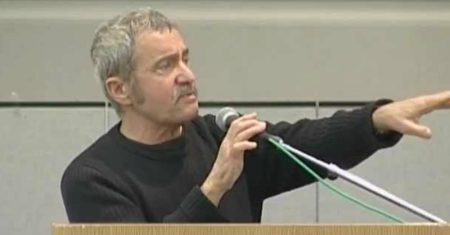
In honour of Michael Parenti (1933–2026), who passed away on 24 January 2026 at the age of 92. He spent his life naming what power prefers to leave unnamed.
In 1837, Abraham Lincoln remarked: “These capitalists generally act harmoniously, and in concert, to fleece the people.”
Today, he would be dismissed as a conspiracy theorist.
That dismissal—reflexive, automatic, requiring no engagement with evidence—is not a mark of sophistication. It is a tell. The question worth asking is not whether conspiracies exist (they are a matter of public record and a recognised concept in law) but why acknowledging their existence provokes such reliable hostility. What work does the label “conspiracy theorist” actually do?
The late political scientist Michael Parenti spent decades answering that question. His conclusion was blunt: “’Conspiracy’ refers to something more than just illegal acts. It serves as a dismissive label applied to any acknowledgment of ruling-class power, both its legal and illegal operations.” The term functions not as a descriptor but as a weapon—a thought-terminating cliché that protects the powerful from scrutiny by pathologising those who scrutinise them.
Conspiracy denial, in Parenti’s analysis, is not skepticism. It is the opposite of skepticism. It is credulity toward power dressed up as critical thinking. As he wrote in Dirty Truths: “Just because some people have fantasies of conspiracies does not mean all conspiracies are imaginary.” … continue
Blog Roll
Recent Comments
eddieb on WEF Calls for ‘Cultural Revolu… loongtip on Trump wanted to play peacemake… Coronistan on EU member to sue bloc over ‘su… loongtip on Vicious loongtip on EU turns to India for defense… Coronistan on Donald Trump Is No Peace … seversonebcfb985d9 on French court jails pro-Palesti… eddieb on Fourteen Incredible Facts Abou… Bill Francis on European leaders’ shift in the… seversonebcfb985d9 on Villains of Judea: Philip Esfo… loongtip on Report warns that ‘Jewish terr… Craig Nelms on New study shows that toxic gas…


 Aletho News
- More Bombs, More Talks Zelensky Rejects Trump’s Plan
- WARNING: Delete TikTok Immediately!
- Bari Weiss’ New CBS Hire List Is Full Of Zionists
- As TikTok falls into Zionist hands, UpScrolled fills the vacuum to give voice to Palestine
- Former Biden Advisor, Amos Hochstein, Admits The Biden Administration Is Responsible For the Gaza Genocide
- Not a Trump anomaly: The Board of Peace and America’s crisis-driven power plays
- Manufacturing martyrdom: The west’s cynical use of Iranian protest figures
- Attack on Iran would backfire, causing great losses for US, warns European think-tank
- Davos and Abu Dhabi: How the Ukrainian Endgame Exposed Western Decline
- AfD co-leader states the obvious: Pouring money into the Ukraine war is killing the German economy
- If Americans Knew
- “The Gaza ceasefire is a minefield” – Not a ceasefire Day 110
- Israel to seek new security deal from US, official says
- Leaked “Board of Peace” Resolution Outlines U.S.-Led Plan to Rule Over Gaza
- Jonathan Greenblatt Rolls Out Plan to Activate Hispanic Evangelical Golems
- Violence against hundreds of Gazan remains to find one Israeli – Not a ceasefire Day 109
- Greenpeace Demonstrator Exposes Folly of Protest Restrictions
- From CBS to TikTok, Pro-Israel Ellison is now in the driver’s seat
- Israel pays for UK advertisements attacking Doctors Without Borders
- Israel accused of extracting billions from Gazan people to pay for their own genocide
- ‘Deliberate Assassination’: 3 Journalists Among 11 Killed by Israeli Forces in Gaza
- No Tricks Zone
- New Study Affirms Rising CO2’s Greening Impact Across India – A Region With No Net Warming In 75 Years
- Germany’s Natural Gas Crisis Escalates … One Storage Site Near Empty …Government Silent
- Polar Colding…Antarctica Saw Its Coldest October In 44 Years!
- New Study: Sea Levels Rose 20 Times The Modern Rate During The Roman Warm Period
- As German Gas Storage Dips Dangerously Low…Shortage Hardly Avoidable
- New Study: Brazil’s Relative Sea Level Was 2+ Meters Higher And SSTs 3-4°C Warmer 6000 Years Ago
- Philosopher Schopenhauer: Climate Science Certainty Stems From Stupidity, Ignorance
- New Study: Species Extinction Rates Declining Since 1980 – ‘Climate Change Is Not An Important Threat’
- Denmark Places Climate Protection Above Animal Welfare, Poisoning And Culling Cows
- New Study: Greenland Was 3-7°C Warmer And Far Less Glaciated Than Today 6000-8000 Years Ago
 Aletho News