Russian Oil Tanker Arrives in Cuba Amid U.S. Blockade
teleSUR – March 30, 2026
On Monday, Russia’s Transport Ministry confirmed that the Russian oil tanker Anatoli Kolodkin arrived at the port of Matanzas in Cuba, where it remains awaiting the unloading of the petroleum products it is carrying.
The vessel is transporting approximately 100,000 tons of oil described as humanitarian aid, in a context marked by a severe energy crisis affecting the Caribbean island.
The tanker was initially escorted by a Russian Navy warship through the English Channel. However, after entering the Atlantic, the vessel continued its journey on its own until arriving in Cuba.
The operation represents the first arrival of an oil tanker to the island in three months. The move comes after the United States pressured Venezuela and Mexico to reduce or halt energy supplies to Cuba.
The island has not received oil since Jan. 9, an interruption that led to a sustained deterioration of the energy system and difficulties for the population, which depends on fuel for essential services and the functioning of the economy.
Mexico carried out the last oil shipment but later interrupted supply due to pressure from Washington.
With that chain of cuts, Cuba was exposed to a worsening of its energy situation, affecting both daily supply and the capacity for electricity generation and productive activities.
Last week, Russian Foreign Minister Sergey Lavrov said that Moscow is concerned about escalating tensions around the island and assured that it will maintain a position of solidarity with the Cuban government.
Kremlin spokesman Dmitry Peskov also reiterated Moscow’s support and said Russian authorities are discussing mechanisms to help Cuba.
“We are in constant dialogue with Cuba’s leadership and, of course, we are discussing how to help the island in such a difficult situation,” he said, adding that they are pleased the shipment of petroleum products has arrived in Cuba.
Peskov said Cuba is “under conditions of a very severe blockade” and needs refined petroleum products and crude oil “for the functioning of life-support systems in the country, to generate electricity, to provide medical or other services to the population.”
Russian tanker approaches Cuba despite US oil blockade
RT | March 30, 2026
Cuba is set to receive a humanitarian oil shipment from Russia as early as this week, following months of a US blockade that has led to severe fuel shortages and recurring power cuts across the island, the New York Times has reported.
The Russian tanker Anatoly Kolodkin, carrying roughly 730,000 barrels of crude, is approaching the island nation’s territorial waters and could reach the port of Matanzas by Tuesday, according to vessel-tracking services.
Despite US Coast Guard ships being present in the region, “the Trump administration did not order those vessels to act,” an official familiar with the matter told the Times on Sunday.
“Barring orders instructing it otherwise, the Coast Guard planned to let the tanker reach Cuba as of Sunday afternoon,” the source added, speaking on condition of anonymity.
The White House has yet to comment publicly on the reported decision, after US President Donald Trump repeatedly threatened tariffs on countries exporting fuel to Cuba.
The Caribbean nation has faced severe fuel shortages and power cuts in recent months after Venezuela, once Havana’s closest ally, halted oil shipments following pressure from Washington. Multiple international fuel deliveries have been disrupted, vessels linked to Havana have struggled to secure supplies, and some have been turned away or intercepted – with at least one escorted away from Cuban waters, according to ship-tracking data.
Earlier this month, Havana agreed to enter talks with Washington in a bid to defuse tensions and avert a humanitarian crisis. Cuban President Miguel Díaz-Canel confirmed that negotiations were ongoing and aimed at “finding solutions through dialogue to the bilateral differences we have between the two nations.”
Trump, however, has not abandoned his stated intention to take over the island “one way or another.” On Friday, he said Cuba could be “next” following what he described as successful US military operations in Venezuela and Iran.
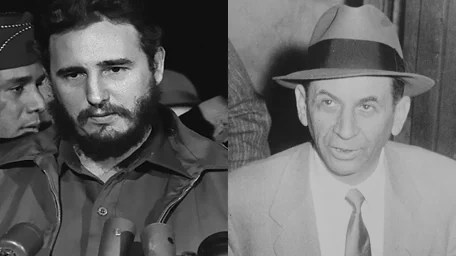
Fidel Castro’s War on Jewish Mobster Meyer Lansky
How a Jewish gangster helped build—and then lost—Cuba’s Sin City
José Niño Unfiltered | March 21, 2026
For more than two decades, Meyer Lansky built what he believed would be his permanent kingdom in the Caribbean. The Jewish gangster from New York’s Lower East Side had transformed Havana into the gambling capital of the Western Hemisphere, a glittering playground where American tourists could indulge every vice under the protection of a dictator on the mob’s payroll. Then came Fidel Castro, a young Catholic revolutionary from the Cuban countryside who would destroy everything Lansky had built in a matter of weeks.
Their conflict was never personal. The two men likely never met or spoke. But the collision between Lansky’s criminal empire and Castro’s revolutionary movement would reshape Cuba, spawn assassination plots that entangled the CIA, and leave a trail of consequences that echoes into the present day.
More than half a century later, as Washington once again toys with the idea of remaking Cuba’s political order, the ghost of Meyer Lansky’s Havana hangs over every discussion of regime change: the dream of turning the island back into a glittering casino colony has never fully died.
Meyer Lansky entered the world as Maier Suchowljansky on July 4, 1902, in Grodno, a city in the Russian Empire that now belongs to Belarus. His family was part of the vast population of Eastern European Jews who migrated to America in the early 20th century. In 1911, Lansky emigrated with his mother and brother Jacob through the port of Odessa, joining his father Max, who had arrived two years earlier and settled first in Brownsville, Brooklyn. The family later moved to the Lower East Side of Manhattan, where Max worked in the garment industry and young Meyer grew up among the crowded tenements where Yiddish filled the streets and opportunity meant whatever you could grab with your own hands.
Young Meyer found his opportunities in crime. By 1918 he and his friend Benjamin “Bugsy” Siegel were running floating dice games on the streets. They graduated to auto theft, then burglary, and when Prohibition arrived, they plunged into the liquor smuggling trade that would make fortunes for a generation of gangsters. Lansky also befriended Charles “Lucky” Luciano, an Italian immigrant who would become one of the most powerful mob bosses in American history.
The three young men rose together. Lansky and Siegel developed a squad of killers for hire that became the prototype for Murder, Inc. Lansky allegedly persuaded Luciano to arrange the 1931 assassination of mob boss Joe “The Boss” Masseria, a murder that consolidated power and helped establish the National Crime Syndicate between 1932 and 1934.
What set Lansky apart from the gunmen and enforcers around him was his financial chops. He became known as the “Mob’s Accountant,” the man who used Swiss bank accounts and shell companies to launder the Mafia’s wealth and hide it from federal investigators. He oversaw the syndicate’s finances as its unofficial banker and was instrumental in shifting the mob’s focus from bootlegging to gambling after Prohibition ended in 1933. His gambling operations stretched from Florida to New Orleans to Las Vegas.
But Lansky’s grandest ambition lay 90 miles off the coast of Florida.
Building the Havana Empire
Lansky’s relationship with Cuba began in 1933, the same year Prohibition ended, and a young military strongman named Fulgencio Batista seized control of the island nation. Lansky pitched Batista a proposal to open Mafia-owned casinos and nightclubs in Havana. The arrangement was straightforward. Batista and his inner circle would receive regular payments from the mob, and in return the gangsters could operate without interference from Cuban authorities.
By 1938, Lansky had been formally invited to help clean up and professionalize Havana’s gambling operations, which had been plagued by fixed races and crooked dealers. He was the fixer, the man who could make the casinos run honestly enough to keep the tourists coming back.
The landmark event came in December 1946 with what became known as the Havana Conference. More than 20 mob bosses from across the United States gathered at the Hotel Nacional de Cuba for a meeting organized by Lansky on Luciano’s orders. The expansion of mob operations in Cuba sat at the top of the agenda. Lansky then visited Batista, who was temporarily out of power and living in Florida, and urged him to return to Cuba to fulfill their grand plans.
Batista obliged. He returned to power through a military coup in 1952, and the arrangement with the mob became even more lucrative. The Batista-Lansky Alliance, included a deal where Batista agreed to match dollar for dollar any hotel investment over one million dollars, with each project automatically including a casino license. Casino hotels were exempted from Cuban taxes.
Lansky owned or held financial interests in at least three major gambling operations. The crown jewel was the Habana Riviera, which opened in December 1957 as the largest Mafia-owned hotel casino outside Las Vegas. It featured 440 rooms that were booked solid for its first winter season. Cuban development banks subsidized half of the $14 million construction cost.
But Lansky did not build this empire alone.
The Inner Circle
Jake Lansky, Meyer’s brother, served as his most trusted man on the ground in Cuba. Jake managed the casino at the Hotel Nacional, Cuba’s most prestigious hotel. By spring 1957, it was reportedly bringing in as much cash as the biggest casinos in Las Vegas.
Joseph “Doc” Stacher was a lifelong Lansky associate dating back to their youth in Newark, New Jersey. Born Gdale Oistaczer in Letychiv, in what is now Ukraine, Stacher was also Jewish and had risen through the criminal ranks alongside Lansky. He operated as the official bribe paymaster to Batista, managing the corrupt payments that kept the dictator and his inner circle cooperative.
Norman “Roughhouse” Rothman was another mobster deeply embedded in the Havana gambling scene. He was a close associate of Santo Trafficante Jr. and operated casinos in Havana, most notably the Sans Souci. Cuba’s slot machine concessions were controlled by Roberto Fernandez y Miranda, Batista’s brother-in-law and army general, who held them as a personal fief.
Ed Levinson, a longtime Lansky associate, ran illegal gambling operations from the Midwest to Kentucky. In Cuba, Levinson’s name appeared on the casino license for the Habana Riviera itself. Lansky kept his own name listed only as the hotel’s kitchen director while Levinson served as the official licensee.
Dino Cellini, though Italian-American rather than Jewish, worked hand in glove with the Lansky operation. He served as casino manager at the Habana Riviera before being replaced by Frank Erickson, and was later detained alongside Jake Lansky at the Tiscornia immigration camp after Castro took power.
The operation also included powerful Italian-American mobsters. Santo Trafficante Jr., the Tampa crime family boss, openly operated the Sans Souci nightclub and the Casino Internacional at the Hotel Nacional. He was also suspected of having behind-the-scenes interests in the Habana Riviera, the Tropicana Club, the Sevilla-Biltmore, the Capri Hotel Casino, the Commodoro, the Deauville, and the Havana Hilton.
The Revolutionary in the Mountains
While Lansky counted his profits in Havana’s glittering casinos, a revolutionary movement was gathering strength in the mountains of eastern Cuba.
Fidel Castro came from a background that could not have been more different from Lansky’s. Born on August 13, 1926, near Birán in Oriente Province, Castro was the son of a prosperous Spanish immigrant landowner. He was raised Catholic and educated at Jesuit schools in Santiago de Cuba and Havana, including the prestigious Colegio de Belén. He studied law at the University of Havana beginning in 1945, earned his degree in 1950, and briefly practiced as a lawyer before turning fully to revolutionary politics. Where Lansky had clawed his way up from immigrant poverty through criminal enterprise, Castro came from rural privilege and channeled his ambitions into armed struggle against the Batista regime.
Castro’s 26th of July Movement directly targeted the Mafia’s presence in its propaganda. In 1958, the revolutionaries denounced the mobsters in radio broadcasts from their guerrilla redoubt in the Sierra Maestra, accusing them of turning Havana into a center of commercialized vice through gambling, prostitution, and drugs. The casinos, the brothels, the drugs, the corruption that enriched Batista and his American gangster partners would all be swept away when the revolution triumphed.
The Fall
On December 31, 1958, Batista’s army was defeated at the Battle of Santa Clara. That night, Batista fled the country for the Dominican Republic, abandoning his gangster partners along with everything else. Lansky left Cuba on January 7, 1959, the day before Castro marched into Havana.
What happened next was a settling of accounts that played out in the streets of Havana. On January 1, 1959, citizens took to the streets after hearing news of Batista’s flight, ransacking casinos, smashing slot machines, and dragging gambling equipment into the streets to be burned. To many Cubans, the American-owned hotels symbolized a corrupting foreign influence. At the Riviera, Lansky’s crown jewel, campesinos (peasants) reportedly brought a truckload of pigs into the lobby. Castro vowed to “clean out all the gamblers.” The revolutionary government eventually nationalized the Riviera and all other Mafia-owned properties, though the final nationalization of hotel casinos did not come until October 1960. Some casinos briefly re-opened on February 19, 1959, after casino workers who depended on tourism jobs marched to the presidential palace demanding their livelihoods back, but tourists stopped coming. Lansky, who told many associates that Cuba had ruined him financially, looked to other outposts in the Caribbean and South America.
Not everyone fled immediately. Jake Lansky and Dino Cellini were arrested by Cuban authorities in May 1959 and detained at the Tiscornia immigration camp outside Havana, the same facility where Santo Trafficante Jr. was also being held. According to the House Select Committee on Assassinations, U.S. Commissioner of Narcotics Harry J. Anslinger had sent a list of suspected drug traffickers to Cuban authorities that included both Jake Lansky and Cellini. Jake Lansky and Cellini were detained for approximately 25 days before being released; Trafficante was held until August. All eventually left Cuba.
By October 1960, Castro formally nationalized all hotel casinos on the island and outlawed gambling entirely.
Revenge and Assassination Plots
Lansky did not merely accept his losses. He actively sought to use the U.S. government and its intelligence apparatus to reclaim his Cuban empire.
According to Doc Stacher, Lansky “indicated to the CIA that some of his people who were still on the island might assassinate Castro” and was “quite prepared to finance the operation himself.”
This was not Lansky’s first collaborative effort with American intelligence. During World War II, he had served as a key intermediary in Operation Underworld, a classified program in which the U.S. Navy’s Office of Naval Intelligence enlisted the Mafia to counter Axis sabotage on the northeastern seaboard. That wartime relationship established a precedent for cooperation between organized crime and the U.S. government.
In August 1960, according to a report by Salon, Lansky struck a deal with exiled Cuban politician Manuel Antonio Varona, offering him several million dollars to form a Cuban government-in-exile to replace Castro. Lansky also promised to arrange a public relations campaign to polish Varona’s image, with the single-minded objective of reopening the Mafia’s casinos, hotels, and nightclubs in a post-Castro Cuba.
Around the same time, the CIA formally recruited mobsters with deep ties to the Havana gambling operations into plots to eliminate Castro. In September 1960, the agency enlisted Chicago Mob operative Johnny Rosselli through former FBI agent Robert Maheu. Rosselli brought in Chicago boss Sam Giancana and Tampa boss Santo Trafficante Jr. The CIA created poison pills to be slipped into Castro’s food, but the attempts failed. The CIA-Mafia assassination partnership was scuttled in early 1963, though the CIA continued plotting against Castro through other means.
Norman Rothman’s trajectory after the revolution was particularly dramatic. Before the revolution succeeded, Rothman had actually been running guns to Castro’s rebels alongside Joe Merola and the Mannarino brothers of Pittsburgh. Sam Mannarino had reasoned that if Castro won, the mobsters who helped arm him would be in the driver’s seat for Cuba’s gambling industry. Rothman advised Mannarino to place his bets on Castro, predicting he would allow the casinos to remain under Mafia control. When that calculation proved disastrously wrong, the scheme unraveled. The weapons in question, 317 guns, had been stolen from a National Guard armory in Canton, Ohio. A plane carrying 121 of the stolen weapons was captured at Morgantown, West Virginia on November 4, 1958. Rothman was convicted on February 4, 1960, along with five co-defendants, for possession, receiving, transportation, and exportation of firearms stolen from the United States government.
Lansky also explored contingency plans in case Cuba could not be recovered. He traveled to the Dominican Republic in 1958 to meet with dictator Rafael Trujillo about potentially relocating the entire Havana operation there. None of these schemes succeeded.
The Final Years
Lansky spent his final years living quietly in Miami Beach. In 1970, facing federal tax evasion charges, he fled to Israel, hoping to claim citizenship under the Law of Return. But after two years, Israel rejected his bid for permanent residency due to his criminal record and deported him back to the United States, where he was arrested at Miami International Airport.
He was acquitted of the tax evasion charges, in part because the government’s main witness lacked credibility, and other indictments were abandoned due to his chronic ill health. He died on January 15, 1983, at age 80 from lung cancer. Despite nearly half a century of involvement in organized crime, the most serious conviction he ever received was for illegal gambling in 1953, which resulted in only a brief jail term.
Despite a lifetime running one of the world’s most profitable criminal enterprises, a granddaughter later claimed he left behind just $57,000 in cash. The FBI believed he had hidden at least $300 million in offshore bank accounts, but this money was never recovered. His heirs later filed a compensation claim against Cuba for the Riviera with the U.S. Foreign Claims Settlement Commission, valuing the property at $70 million.
The mob never returned to Cuba. The casinos that Lansky built were nationalized, and gambling was outlawed entirely. The slot machines that crowds smashed in the streets on New Year’s Day 1959 were never replaced. The Habana Riviera still stands on the Malecón waterfront, declared a National Monument in 2012 and now managed by the Spanish chain Iberostar, still maintaining its original 1950s style. Staff members still refer to it as “el hotel de Meyer Lansky.”
Fidel Castro outlived Meyer Lansky by more than three decades, dying in 2016 at age 90. The revolutionary who had vowed to clean out all the gamblers kept that promise, at least regarding the foreign mobsters who had turned Havana into their personal playground.
The confrontation between these two men, the Jewish gangster from the Lower East Side and the Catholic revolutionary from Oriente Province, ended decisively in Castro’s favor.
Castro’s revolution did what no rival gangster or corrupt strongman ever managed: it toppled the dictatorship that shielded Lansky’s operations and erased his Havana casino empire almost overnight. In the name of sovereignty, the new regime shut down the glittering hotels and gambling halls that had turned Cuba into a playground for American tourists, mafiosi, and intelligence services alike.
But the pressures now bearing down on Cuba suggest that history’s wheel is turning back toward Lansky’s original blueprint. A successful regime change engineered from abroad would not simply “liberate” the island; it would open prime waterfront real estate and tourist infrastructure to the same forces of vice, speculation, and foreign ownership that once made Havana the mob’s favorite casino.
The danger is that Cuba’s next great transformation would replace revolutionary austerity not with genuine self‑determination, but with a return to what Lansky always wanted. Namely, a Caribbean Macau where the house is global finance, the chips are Cuban sovereignty, and the people of the island are once again reduced to serving drinks on someone else’s casino floor.
Iraq and Cuba hit by blackouts amid US pressure and attacks on Iran
RT | March 5, 2026
Both Iraq and Cuba have been plunged into nationwide blackouts, with the Middle Eastern country’s grid collapsing after a sudden drop in gas supplies to a major power plant in Basra, while the Caribbean island’s outage is being blamed on chronic fuel shortages worsened by the US blockade on Venezuelan oil.
The day before the Iraqi blackout, an Electricity Ministry spokesperson was quoted as saying that “incomplete supplies” of gas from neighboring Iran were already affecting power plant operations. Iran has been facing a massive US-Israeli air campaign since Saturday.
A separate power facility also experienced a shutdown in central Salah al-Din province, with local police explicitly denying reports that the station was targeted by an attack, according to the state-run INA news agency.
Iraq relies on Iranian gas for 30-40% of its power generation. The dependence is a direct consequence of decades of foreign intervention in the country. Before the 1991 Gulf War, the grid, though strained by sanctions, largely met demand. The war destroyed 75% of its generating capacity, and the 2003 US-led invasion caused a catastrophic collapse to less than 10% of prior output.
Blackouts also hit Cuba on Wednesday, with a widespread power outage plunging approximately two-thirds of the island into darkness, including the capital Havana.
The blackout was caused by a shutdown at one of the island’s largest thermoelectric power plants, according to the Cuban Ministry of Energy and Mines.
The island nation’s chronic fuel shortages have been severely exacerbated by a US blockade on oil from Venezuela. Since US forces abducted Venezuelan President Nicolas Maduro in January, Washington has seized multiple tankers bound for Cuba.
The Cuban government has long attributed its economic crisis to decades of US sanctions, which it says contribute directly to the lack of investment in power generation and its crumbling electric grid.
Against this backdrop, US President Donald Trump suggested last week that the US could carry out a “friendly takeover of Cuba,” claiming the island nation’s government is on the brink of collapse and is actively negotiating with Washington.
Russian fuel tanker to test US sanctions amid Cuba crisis
Al Mayadeen | February 21, 2026
A tanker believed to be carrying Russian fuels is heading toward Cuba, putting US sanctions on Cuba to the test as President Donald Trump intensifies pressure on the island amid a worsening energy crisis.
The vessel Sea Horse is expected to arrive in early March carrying urgently needed fuel supplies, according to Bloomberg, which cited maritime intelligence firm Kpler Ltd.
Cuba is facing acute shortages of fuels essential for cooking, transportation, and power generation, and authorities are struggling to maintain electricity supply. Available power output has declined sharply since the start of the year, with satellite imagery indicating that nighttime light levels across the island have fallen by as much as 50%.
The Sea Horse loaded its cargo through a ship-to-ship transfer off the coast of Cyprus. Kpler’s lead oil analyst Matt Smith estimates the tanker is transporting nearly 200,000 barrels of Russian gasoil, according to Bloomberg.
Gasoil, a diesel-type fuel widely used in transportation and electricity generation, has become particularly critical as both sectors operate under mounting strain in Cuba’s deepening energy crisis.
Whether the vessel will ultimately be able to complete its delivery remains uncertain. US enforcement measures have already resulted in the seizure of at least nine ships accused of participating in the transport of oil unilaterally sanctioned by Washington, underscoring the risks surrounding the current shipment.
US sanctions on Cuba intensify under Trump administration
Pressure on Havana has been mounting since late last year, when US forces seized a ship carrying Venezuelan crude bound for Cuba. After the subsequent abduction of Venezuelan leader Nicolas Maduro, the Trump administration applied further pressure on Caracas to halt shipments to Cuba.
Trump threatened tariffs on any nation that supplies Cuba with fuel. In January, the White House formalized the measure through an executive action authorizing steep tariffs on countries that export oil to Cuba. The move effectively pressured third states to scale back deliveries or risk penalties in their trade with the United States.
As a result, Mexico, previously a steady supplier, cut off shipments.
Cuba, which does not produce significant quantities of oil, depends heavily on imported crude and refined fuels to run its refineries and sustain electricity generation. In January, the island did not receive any oil for the first time in a decade.
US military presence in the Caribbean disrupts shipment
The US’ military presence in the Caribbean has choked off much of Cuba’s oil supply.
Earlier this month, the tanker Ocean Mariner, frequently used to ship fuels to Cuba, diverted and is now signaling the Bahamas as its final destination, according to vessel tracking data. The ship was carrying 30,000 barrels of diesel loaded at the Colombian port of Barranquilla, according to a shipping report.
The tightening supply situation has intensified fuel scarcity across Cuba, contributing to rolling blackouts, transportation slowdowns, and mounting strain on municipal infrastructure. Garbage collection and water pumping systems in Havana have reportedly been affected, while energy shortages have weighed on tourism and small business activity.
The U.S. Sanctions Cuban Journalist For Reporting On The U.S. Blockade
The Dissident | February 17, 2026
The U.S. has recently cut off Cuba’s source of oil from Venezuela and Mexico, with the intention, as Trump recently admitted , of creating a “humanitarian threat” in hopes it will lead to regime change, boasting that because of the blockade, “There’s no oil. There’s no money. There’s no anything.”
As Cuban-based journalist Marc Frank reported , due to the blockade, “Prices are soaring, power outages are increasing, and gas lines are growing. Public and private transportation are disappearing. Produce at markets is dwindling, and all but emergency surgeries have been canceled. The fear that the quality of life will quickly deteriorate is palpable”.
The U.S. is now taking this a step further and placing targeted sanctions on Cuban journalists doing critical reporting on the blockade.
A Miami-based pro-regime change outlet called CiberCuba reports that the U.S. has “imposed visa restrictions” on Cuban journalist Pedro Jorge Velázquez, known as El Necio, accusing him of “involvement in harassment campaigns against American diplomats in Cuba”.
In response, El Necio wrote , “I am an ordinary young Cuban. Five years ago, I began doing my work through social media and collaborating with press outlets. I have no employment ties whatsoever to the Cuban government: currently, I do not work in press media or state institutions.”
He noted that the accusation of “harassment” is in reference to his “ latest journalistic investigation” where he uncovered, “ the purchase of fuel (gasoline) by US diplomats in Havana: the very same fuel that they block from Cuba, only to consume it themselves afterward.”
He noted that while the “sanction is irrelevant to me” noting that, “I have never had, nor have I ever requested, a visa to enter the US” he added that, “we do need to denounce this serious violation of press freedom” adding, “this is not a personal attack, but a precedent for censorship and coercion against every young Cuban who speaks out against the blockade on Cuba or who practices journalism that does not please the Trump administration.”
The U.S. sanctions against El Necio for reporting on the U.S. blockade on Cuba mirror U.S. sanctions on Francesca Albanese, the UN’s special rapporteur for Palestine, in retribution for a report she published exposing U.S. corporations’ complicity in the Gaza genocide.
Similarly, to justify the sanctions, the U.S. accused Albanese of “writing threatening letters to dozens of entities worldwide, including major American companies across finance, technology, defense, energy, and hospitality”, in reference to her writing letters to companies fueling the genocide in Gaza, informing them of their violation of international law and participation in war crimes.
The sanctions also mirror the EU sanctions placed on the former Swiss army colonel Jacques Baud, in retribution for his criticism of the proxy war in Ukraine.
From Cuba to Palestine to Ukraine, sanctions are more often being used as a tool to silence and intimidate those exposing and critiquing Western foreign policy.
Russia and China Are Expanding Their Cooperation to Counter US Efforts to Bully Iran and Cuba
By Larry C. Johnson | SONAR 21 | February 14, 2026
This will be a rather lengthy article, but you need to know what Russia and China are doing in a closely coordinated series of actions that show a serious commitment to counter US actions to punish and isolate Iran and Cuba. Let’s start with Iran… Since the June 2025 12-day Iran–Israel war (which ended with a US-brokered ceasefire on 24 June 2025), Russia and China have provided Iran with a combination of diplomatic, economic, military-technical, and strategic support. This has helped Tehran recover from strikes on its nuclear sites, air defenses, and missile infrastructure, while deepening their “axis” alignment against Western pressure. Support has been pragmatic rather than unconditional—neither offered direct intervention during the conflict, leading to some Iranian frustration—but has accelerated in the months since.
The biggest news — a development that has been largely ignored in the West — was the signing of the Trilateral Strategic Pact (signed 29 January 2026), which provides a comprehensive framework for diplomatic, economic, and security coordination (emphasizing sovereignty, sanctions resistance, and multipolarity; no formal defense alliance). The signing occurred through simultaneous ceremonies in Tehran, Beijing, and Moscow, as confirmed by state media in all three countries and reported across outlets like Middle East Monitor, GV Wire, and others. It represents a significant escalation in coordination among the three nations, building directly on their existing bilateral frameworks.
It formalizes a trilateral coordination mechanism for the first time, linking the three powers in a shared strategic framework. It builds on the bilateral agreements that Iran had signed previously with Russia and China:
The Iran-Russia 20-year Comprehensive Strategic Partnership Treaty (signed January 17, 2025, entered into force October 2025), focused on economic, political, defense, and sanctions-evasion ties.
The Iran-China 25-year Comprehensive Cooperation Agreement (signed 2021), emphasizing trade, infrastructure, energy, and Belt and Road Initiative projects.
While the full text has been released incrementally (with portions still emerging as of early February 2026), public descriptions and official statements highlight the following core elements:
- Diplomatic coordination — Unified stances on international issues, including opposition to Western sanctions, support for multipolarity, and mutual backing in forums like the UN.
- Economic resilience and cooperation — Enhanced trade (e.g., energy exports, yuan/ruble-based mechanisms), sanctions circumvention, and infrastructure projects (e.g., expanding Belt and Road ties, North-South Transport Corridor involvement).
- Strategic and security alignment — Military-technical cooperation, intelligence sharing, and joint exercises (e.g., building on annual “Maritime Security Belt” drills; a major joint naval exercise involving all three that will take place in the Gulf of Oman and northern Indian Ocean in the coming weeks).
- Nuclear sovereignty — Emphasis on Iran’s right to peaceful nuclear development and resistance to external interference.
- Trilateral nuclear and military talks — Including IAEA discussions and coordinated exercises.
- No mutual defense clause — It explicitly stops short of a formal military alliance (unlike NATO’s Article 5), focusing instead on coordination and mutual support without automatic defense obligations.
State media in Tehran, Beijing, and Moscow described it as a “cornerstone” for a new multipolar world order, with Chinese messaging highlighting opposition to “unilateral coercion” and Russian/Iranian outlets framing it as bolstering sovereignty against external threats. While I do not believe that Russia and China will join the fray if Iran is attacked, they are making a concerted, substantive effort to ensure that Iran can effectively defend itself and thwart US attempts at regime change.
Both Russia and China are providing important military assistance to Iran, but China appears to be playing a bigger role in supplying hardware while Russia is supplying Iran with critical intelligence. According to press reports and photographic evidence, Russia has deliveried Mi-28NE attack helicopters (confirmed in early 2026) and possible MiG-29 fighters. Russia also has sent a large number of military transport flights to Iran, but there are no reports about what was on board. The most likely case is that Russia is fulfilling supplies of weapons based on prior contracts and in defiance of reinstated UN/EU arms sanctions via the JCPOA “snapback” mechanism.
China has focused on upgrading Iran’s air defense system by supplying HQ-9B surface-to-air missile systems (a long-range SAMs comparable to Russia’s S-300; deliveries reported from July 2025 onward, with Iranian officials confirming integration to replace losses from Israeli strikes). In addition, China has deployed the YLC-8B long-range surveillance radars (for detecting stealth aircraft like the F-35), and shipped missile components (e.g., solid-fuel propellants, guidance systems) to rebuild ballistic missile production lines damaged in the war. Iran is in a much stronger position militarily than it was on June 13, 2025, when Israel launched its surprise attack.
CUBA
Russia and China also are providing significant political, economic, humanitarian, energy, and material support to Cuba, especially amid the island’s severe fuel/energy crisis, food shortages, and economic strains intensified by the longstanding US blockade and recent US actions under President Trump (e.g., pressure on Venezuelan/Mexican oil supplies and threats of tariffs on countries aiding Cuba).
Russia and China are coordinating rhetorically (both denounce US “inhumane” tactics and reaffirm support in bilateral calls and statements). They also are coordinating the kind of aid that each supplies to Cuba… Russia focuses on supplying direct oil/fuel while China is aiding Cuba with financial/renewables/food assistance. There is not a formal trilateral mechanism like the one they signed with Iran, but both countries frame their support as countering US pressure in the Western Hemisphere. This support is ongoing and responsive to Cuba’s acute needs (fuel rationing, blackouts, food scarcity). Deliveries and projects continue despite US threats, with both countries emphasizing it as humanitarian and sovereign cooperation.
Russia’s Support
Russia emphasizes solidarity, political backing, and practical material/energy assistance, framing it as opposition to “suffocating” US measures. Russia’s help consists of the following:
Energy Aid (Oil and Fuel): Russia is preparing to deliver crude oil and petroleum products to Cuba “in the near future” as humanitarian aid. The Russian Embassy in Havana confirmed this to Izvestia. Russia last sent a major shipment in February 2025 (100,000 metric tons of crude under a $60 million state-backed loan approved by Putin). The Kremlin (via spokesman Dmitry Peskov) states it is in active contact with Havana to discuss assistance options and has described Cuba’s fuel situation as “critical.” Deputy Foreign Minister Sergei Ryabkov (Feb 13, 2026) confirmed Russia is providing material assistance, including supplies already underway.
Political and Diplomatic Support: Foreign Minister Sergei Lavrov (phone call with Cuban FM Bruno Rodríguez Parrilla, Feb 2, 2026) reaffirmed Russia’s “principled position” that economic/military pressure on Cuba is unacceptable and committed to continued political and material/financial support. Russia repeatedly condemns the US blockade, opposes any military intervention, and expresses solidarity with Cuba (and Venezuela). Ambassador Viktor Koronelli has stated Russia “will not abandon Cuba.”
Historical/Longer-Term Ties: Russia wrote off ~90% of Cuba’s Soviet-era debt (~$32 billion) in 2014. Ongoing cooperation includes trade, scientific/academic exchanges, and past energy deals.
China’s Support
China has positioned itself as a major strategic partner, focusing on humanitarian aid, energy infrastructure, food security, and debt/investment cooperation (Cuba is a Belt and Road Initiative partner). The recent Emergency Aid Package (Approved by Xi Jinping, Jan 2026) provides $80 million in financial assistance (in euros equivalent) for purchasing electrical equipment and other urgent needs — specifically to help resolve the energy crisis (blackouts affecting >60% of the country). China also donated 60,000 tons of rice in emergency mode (first shipment of ~4,800 tons arrived Jan 2026; rest in coming months) for food security.
China also is expanding support that builds on prior commitments. Previously it was helping Cuba with a 200 MW photovoltaic (solar) energy projects and, recent days, has delivered 5,000 solar panel kits for isolated homes (new executing company established with Cuba’s Ministry of Foreign Trade). Shortly after Venezuelan President Maduro was abducted, China, acting under an emergency program, delivered 30,000 tons of rice (first shipments in Jan 2026)… This was in addition to prior donations of solar lamps, roofing materials, mattresses, and generator sets.
In the face of the US effort to crush Cuba economically, China is helping Cuba with debt restructuring negotiations (banking/financial/corporate debts). Cuba also is being Integrated into China’s CIPS payment system and increased use of yuan in trade (announced 2025). China is in effect helping wean Cuba off of the US dollar. China also is helping Cuba with biopharma (e.g., technology transfers for aspirin production), digital transformation (Phase 4 program), high-definition TV projects, mining, oil exploration, sugar industry recovery, and renewables (China investing in solar to help Cuba reach 25% renewables by 2030).
The support that Russia and China are providing to Iran and Cuba sends a clear message to Donald Trump and to the nations of the global south: i.e., Russia and China are building a new financial and security infrastructure designed to immunize countries against US coercion and threats. They are doing more than just offering words of solidarity… They are backing up their words with concrete economic, diplomatic and military actions. The foundation of the American hegemon is crumbling.
I started my vlogging day with Nima and Colonel Wilkerson:
Ray McGovern and I discussed the latest developments with Iran and the war in Ukraine with Judge Napolitano:
And here’s my interview with Alastair Crooke… we analyzed the impending attack on Iran and the prospects for a negotiated end to the war in Ukraine:
Russia preparing oil lifeline to Cuba – embassy
RT | February 12, 2026
Russia is preparing to send a shipment of oil and petroleum products to Cuba, Moscow’s embassy in Havana has announced. The island is facing its worst energy crisis in years after the US doubled down on its campaign to cut off its energy supplies.
The fuel crisis intensified dramatically after US forces kidnapped Venezuelan President Nicolas Maduro in early January, severing oil supplies from Caracas, which had been one of Cuba’s main suppliers.
Washington subsequently threatened to impose tariffs on any country providing oil to Cuba, with Mexico later suspending crude shipments to the island. The US itself has maintained an economic embargo on the island since the 1960s.
The Russian Embassy in Cuba confirmed to Izvestia that the Caribbean island is facing “an acute shortage of oil and petroleum products,” adding that while the crisis has lasted for more than a year, the stop of supplies from Venezuela “has aggravated this situation.”
The embassy said it is planning to send oil and petroleum products to Cuba in the near future as “humanitarian aid,” though without specifying the timeframe or volumes.
The last major Russian oil delivery to Cuba occurred in February 2025, when Moscow sent 100,000 tons through a state credit worth $60 million approved by President Vladimir Putin. Cuba is estimated to consume 500 to 600 tons of fuel per day for its most critical needs, and requires over 8 million tons of fuel per year to function normally.
In addition, Russian officials reported that Moscow is assisting Cuba in developing its domestic oil reserves. While the island’s proven crude oil reserves are officially around 120 million barrels, the offshore zone of the North Cuba Basin is estimated to hold up to 20 billion barrels.
Moscow has condemned the US pressure campaign on Cuba as economic “strangulation” and “neocolonial practice” while reaffirming solidarity with the island.
US President Donald Trump suggested last month that the pressure campaign would force the Cuban leadership to “come to us and want to make a deal,” claiming that the island “would be free again.”
Venezuela Has Right to Have Relations With China, Russia, Cuba, Iran – Acting President
Sputnik – 16.01.2026
Venezuela has the right to relations with all countries of the world, including China, Russia, Cuba, and Iran, and will exercise this right in compliance with international norms, Venezuelan Acting President Delcy Rodriguez said on Thursday.
Venezuela’s Acting President Delcy Rodríguez said the country’s energy dialogue with the United States is not new, but stressed that it is now taking place amid “aggression and a fierce threat.”
“Venezuela has the right to relations with China, with Russia, with Cuba, with Iran — with all the peoples of the world,” Rodríguez said while presenting the government’s 2025 annual report.
She said Caracas is shaping energy cooperation based on “decency, dignity and independence,” rejecting both internal and external constraints aimed at influencing Venezuela’s foreign policy.
Russian MFA Spox Dismayed by US Statement on ‘Bloodless’ Operation in Venezuela
Sputnik – 07.01.2026
MOSCOW – Russian Foreign Ministry spokeswoman Maria Zakharova on Wednesday expressed her surprise at Washington’s claim that its military operation in Venezuela was bloodless, pointing the US State Department to the dozens of deceased Venezuelans and Cubans.
“What do you mean by nobody died? What about the citizens of Venezuela and Cuba, are they not people? I have a question: in what dimension are we even living? I want an answer. Just the other day, Mr. Rubio [US Secretary of State] sent Christmas greetings to his Russian counterpart. I, using this opportunity, would also like to congratulate the State Department on Christmas and ask a question, when the US says that this so-called operation was bloodless, does it mean they don’t consider the citizens of Venezuela and Cuba as people? Who gave them such a right? Who gave them the right not to see the bloody consequences which they themselves have caused, which have resulted from their actions?” Zakharova said on Sputnik radio.
Zakharova also said that the UN had similarly failed to properly assess the loss of life.
“What is amazing is just as they don’t see the victims of the recent New Year’s Eve strike on a cafe in the Kherson Region, just as for many years they have not seen the Alley of Angels or the victims of the Lepestok [PFM-1] mines. In exactly the same way they did not see the citizens of Venezuela and Cuba who died there. That is dozens of people in 42 minutes,” she stated.
The remarks followed a report by the Washington Post citing unnamed officials that more than 70 people were killed during the US military operation in Venezuela on January 3.
US President Donald Trump previously expressed regret regarding the large number of people killed by the US military personnel during the operation in Venezuela.
On January 3, the US launched a massive attack on Venezuela, capturing Venezuelan President Nicolas Maduro and his wife, Cilia Flores, and taking them to New York. Trump announced that Maduro and Flores would face trial for allegedly being involved in “narco-terrorism” and posing a threat, including to the US.
Caracas requested an emergency UN meeting over the US operation. Venezuela’s Supreme Court temporarily transferred the duties of the head of state to Vice President Delcy Rodriguez, who was officially sworn in as acting president before the National Assembly on January 5.
Russia, China, and North Korea have strongly condemned the US actions. The Russian Foreign Ministry expressed solidarity with the Venezuelan people and called for the release of Maduro and his wife, as well as for the prevention of further escalation of the situation.
US military buildup in Caribbean aimed at regime change in Cuba: FP
Al Mayadeen | November 4, 2025
With the largest US military concentration in the Caribbean since the 1962 Cuban missile crisis, a new Foreign Policy (FP) report warns that Washington’s announced campaign against narcotics trafficking in the region masks a far broader strategic objective.
The removal of Venezuela’s President Nicolas Maduro and, by extension, pressure on Cuba by cutting off Venezuelan oil supplies.
The report says roughly 10 naval vessels and some 10,000 troops, including a carrier strike group led by the USS Gerald R. Ford and elements of the 160th Special Operations Aviation Regiment, are now positioned in the region, a posture that raises the prospect of direct military action against Venezuelan government targets and carries grave implications for Havana.
It is worth mentioning that the White House has framed recent operations as an intensification of counter-narcotics efforts, with senior US officials labelling traffickers as foreign terrorists and authorizing strikes on vessels alleged to be part of the trade.
Foreign Policy argues, the campaign’s political logic extends beyond drugs; the removal of Maduro would, in this account, enable a US policy aimed at severing Caracas’s lifeline to Havana and thereby accelerating a long-standing Republican objective of overthrowing the Cuban state.
“We are going to kill people that are bringing drugs into our country, OK? We are going to kill them,” the report quotes President Donald Trump as saying, adding that “The land is going to be next.”
US posture and military options
Foreign Policy highlights the presence of elite US units offshore and suggests a range of possible options available to Washington.
From intensified covert activity and targeted raids to airstrikes intended to coerce elements of the Venezuelan military. The report deems a full-scale invasion unlikely, arguing that occupation and nation-building contradict current political messaging, but it emphasizes that options short of occupation, targeted strikes, special operations, or efforts to catalyze a military coup would still produce extensive human and regional costs.
Venezuelan forces, the report stresses, have adapted doctrines to contest conventional assault by dispersing and employing asymmetric strategies, measures supported by Cuban advisers and reinforced by the presence of seasoned Colombian guerrilla units operating inside Venezuela. Those forces, FP reports, may constitute a counterbalance to US plots for regime change.
The Cuban dimension: Vulnerability and resilience
Cuba has long been Caracas’s closest regional partner, receiving subsidised oil in exchange for medical and technical personnel. Foreign Policy traces that relationship back to 1998.
At its peak, Cuba received more than 100,000 barrels per day; by 2024 shipments had declined to figures as low as 32,000 bpd and even less this year, the report claims.
The article argues, however, that while the loss of Venezuelan oil would damage an already stressed Cuban economy, political collapse is not inevitable. The Cuban government, the report notes, has withstood decades of pressure and possesses internal security mechanisms that have neutralized US-backed organizations and “regime-change” programmes in the past.
As Foreign Policy cautions, economic collapse may deepen civilian suffering without producing the political opening Washington’s hawks imagine.
Regional reaction and legal concerns
Foreign Policy records significant international unease. Human rights bodies and major NGOs have criticised US strikes and tactics as legally problematic, and several Latin American leaders, including Mexico’s Claudia Sheinbaum and Colombia’s Gustavo Petro, have protested the escalation.
The report warns that aggressive US military action will accelerate a political and strategic shift in the region toward alternative partners, notably China, and will undermine Washington’s cooperation with governments it needs for drug interdiction and other security tasks.
The report paints a scenario in which US policymakers, driven by a combination of electoral politics and long-standing ideological goals, central among them Secretary of State Marco Rubio’s avowed ambition to rollback Cuba’s revolution, misread both the durability of the Maduro regime and the resilience of Cuba’s political order.
Cutting off Venezuelan oil, Foreign Policy argues, is unlikely to precipitate the rapid collapse of Cuba.
Featured Video
No Threat Can Force Iran’s Surrender /Trita Parsi & Lt Cl Daniel Davis
or go to
Aletho News Archives – Video-Images
From the Archives
An Expert Military Analysis of War with China
Actually, None is Necessary
By Fred Reed • Unz Review • December 13, 2020
The Correlation of Armed Forces: U.S. goods and services trade with China totaled an estimated $634.8 billion in 2019. Exports were $163.0 billion; imports were $471.8 billion. The U.S. goods and services trade deficit with China was $308.8 billion in 2019. Trade in services with China (exports and imports) totaled an estimated $76.7 billion in 2019. Services exports were $56.5 billion; services imports were $20.1 billion. The U.S. services trade surplus with China was $36.4 billion in 2019.
There is talk within the Washingtoniat of a possible war with China. Steve Bannon, who apparently was dropped on his head as a child, actually favors such a war. We hear the usual shoo-the-boobs alarm about how the Chinese are doing something terrible and we must gird our loins and American values and show them what for, bow wow, woof. The danger is that the current game of who-blinks-first in Asian waters might actually provoke a shooting war. You know the kind of thing: One warship refuses to get out of the way of another, a collision ensues, some retard lieutenant who signed up on waivers opens fire, and we’re off and running. It is not a good idea to let children play with matches.
The said war is discussed either in emotional terms by idiots or in purely naval terms by those familiar with such things, so we hear of the First Island Chain and the Second Island Chain and whose missiles against the other’s missiles and so on. This would be appropriate if we were fighting World War Two again. Which we aren’t. Let’s take a quick-and-dirty look at how such a war might go.
To begin the war, America would overestimate itself and underestimate China. This is doctrine in the Pentagon. … continue
Blog Roll
 Aletho News
- Theodore Postol: Iran’s Missiles & Drones Were Underestimated
- Iran To Target Military Industrial-Tech Complex That Facilitated Gaza Genocide
- Collapsing Empire: The Resistance Disarms ‘Israel’
- Suicide Should Not Be a Government Service
- Rethinking America’s greatest threat: Iran vs. Israel-Firsters
- Iran accuses adversaries of false flags to strain Turkey ties
- Poland rules out sending Patriot missiles to US/Israel amid war on Iran
- Tehran approves new Hormuz plan with major restrictions
- No Threat Can Force Iran’s Surrender /Trita Parsi & Lt Cl Daniel Davis
- UK’s New Pandemic Plan Would Turn Big Tech Into a Mass Location Tracking Network
- If Americans Knew
- Ann Coulter Rips Into Fox News for Iran War Coverage, Compares to False Rigged 2020 Election Reporting
- Joe Kent Urges Americans To Call White House and Congress To Object To Sending Troops Into Iran
- DNC Resolution to Reject AIPAC Funding Puts Democratic Leaders in the Hot Seat
- Swedish foundation to build 400 schools as over 650,000 Gaza children remain without education for 2 years
- Israeli army admits photshopping image of slain Lebanese journalist
- This is how Israel is systematically killing health workers under the cover of war in Lebanon
- Carrying life under fire: Israeli invasion of Lebanon leaves pregnant women facing deadly risks
- Champagne all around for the new death penalty (for Palestinians) law – Not a ceasefire Day 172
- Why are Palestinian books struggling to be seen on Amazon?
- The Line Between Affinity and Conspiracy
- No Tricks Zone
- New Study Finds Warming Saves Lives…Cold Temperatures 12 Times More Deadly Than Excess Heat
- German Science Blog Accuses PIK Climate Institute Of Hallucinating Climate Tipping Points
- Devastating Assessment Of Comirnaty Vaccine By Former Senior Pfizer Europe Toxicologist
- New Study: CO2 Is ‘Effectively Negligible’ As An Explanatory Climate Change Factor Since 2000
- Former Pfizer Toxicologist Dr. Helmut Sterz Tells Bundestag Hearing Pfizer Vaccine Should Have Never Been Approved
- Energy Expert: Germany’s Nuclear Phaseout Was A “500 Billion Euro Mistake”
- New Research: South Australia’s Mid-Holocene Sea Surface Temperatures Were 4°C Warmer Than Today
- Storing Green Energy To Last Germany 10 Days Would Require A 60-Million Tonne Battery
- New Studies: UK Sea Levels Were 4 Meters Higher Than Today During The Mid-Holocene
- Destructive Green New Deal: German Energy And Metal Group Warns Of Drastic Crisis
 Aletho News