Russia ratifies military deal with Cuba amid US escalation
Al Mayadeen | October 8, 2025
Russia’s Federation Council, the upper house of parliament, ratified an intergovernmental agreement on military cooperation with Cuba on Wednesday, formalizing a framework for strengthened defense collaboration between the two nations.
Legal framework for bilateral cooperation
The explanatory note accompanying the draft highlighted that ratification will facilitate the development and expansion of military cooperation, provide the necessary legal basis to define objectives, directions, and forms of collaboration, and ensure the protection of Russian personnel operating in Cuba from local jurisdiction.
The agreement allows both nations to coordinate military activities while safeguarding the interests of their personnel and national security objectives. It is worth noting that the agreement was originally signed in March 2025.
Moscow’s response to US threats
Military expert Alexander Stepanov, from the Institute of Law and National Security at the Russian Presidential Academy of National Economy and Public Administration, told TASS that the ratification represents a symmetrical response to Washington’s threats to supply Tomahawk cruise missiles to the Kiev government.
“This is about a symmetrical response to the potential supply of Tomahawks,” Stepanov explained.
“The ratified agreement maximally expands our military cooperation and allows, within the framework of bilateral interaction and in coordination with the government of the Republic of Cuba, to deploy virtually any offensive systems on the island’s territory.”
Strategic implications
The move comes amid heightened tensions over US plans to enforce Ukraine’s long-range strike capabilities. Moscow has warned that supplying Tomahawk missiles would represent a new level of escalation, prompting Russia to secure its strategic interests and regional alliances.
Earlier on Thursday, US President Donald Trump signaled a tougher stance toward Moscow, declaring that Washington would “get Russia taken care of somehow” as part of efforts to end the ongoing war in Ukraine. His remarks, delivered in an interview with One America News Network, come amid a deepening stalemate in peace talks between Moscow and Kiev.
“We’ll get Russia taken care of somehow. We’re going to get that [conflict done],” Trump said, suggesting a shift toward a more assertive US posture as the conflict enters a new and volatile phase.
Iran condemns ‘biased’ IAEA, announces enrichment countermeasures
Al Mayadeen | June 12, 2025
Iran has sharply rejected a resolution passed by the International Atomic Energy Agency’s (IAEA) Board of Governors, accusing it of being “politically driven” and “biased”. In a joint statement released Thursday by the Foreign Ministry and the Atomic Energy Organization of Iran (AEOI), Iranian officials condemned the resolution and unveiled a series of countermeasures aimed at accelerating the country’s nuclear program.
This comes shortly after the IAEA Board of Governors passed a resolution against Iran on Thursday, claiming Iran was in breach of non-proliferation obligations. The vote passed with 19 countries voting in favor, 3 opposing, and 11 abstaining, according to diplomats cited by Reuters. Two countries were absent and thus did not vote.
The resolution, marking the first formal accusation in nearly two decades that Iran has violated its nuclear non-proliferation obligations, was passed during a closed-door session of the 35-member board. The move, described as “politically motivated” by Iranian officials, was initiated by the United States along with the E3, Britain, France, and Germany.
IAEA resolution lacks ‘neutrality’
The joint statement asserted that Iran remains committed to its obligations under the Safeguards Agreement, adding that no IAEA report to date has ever confirmed any deviation or non-compliance. Iranian authorities described the IAEA’s latest move as lacking “neutrality” and being manipulated by Western powers, particularly the United States, Britain, France, and Germany, to pursue geopolitical goals.
In a direct response, Iran announced the activation of a new uranium enrichment facility at a secure site and plans to upgrade the Fordow nuclear plant by replacing older centrifuges with sixth-generation advanced models.
Iran blasts Western double standards on nuclear disarmament
Iranian officials criticized the IAEA and its Western backers for what they described as selective enforcement of nuclear obligations. The joint statement accused the US and its European allies of reviving “25-year-old allegations” that had already been settled under the 2015 nuclear deal, while turning a blind eye to “Israel’s” undeclared nuclear arsenal and refusal to adhere to the Non-Proliferation Treaty (NPT).
“The United States, Britain, and France have failed to comply with Article VI of the NPT regarding nuclear disarmament,” the statement read, adding that Germany remains in possession of “inhumane weapons of mass destruction.”
Iran further warned that continued political maneuvering within the IAEA would render any future engagement futile. “This political approach toward Iran, which has always honored its obligations and cooperated extensively with the Agency, forces us to conclude that the path of engagement and cooperation is futile,” the statement asserted.
Iran thanks allies opposing the resolution
Iran’s Foreign Ministry spokesperson, Esmaeil Baghaei, strongly condemned the resolution passed Thursday by the IAEA Board of Governors, calling it a politically motivated effort by Western powers to undermine the peaceful nature of Iran’s nuclear program.
Baghaei specifically denounced the role of the United States, the United Kingdom, France, and Germany, accusing them of exploiting the IAEA to “cast doubt on the peaceful nature of Iran’s nuclear program.”
He firmly rejected the allegations outlined in the resolution, which he said were based on “baseless and unfounded claims” and stemmed from a political report by the IAEA Director General. The resolution, jointly submitted by the four Western states, was described as “an unjustified, groundless, and cruel move,” aimed at exerting “maximum pressure on Iran to deviate from the legitimate rights and interests of the Iranian people in the peaceful use of nuclear energy.”
Baghaei warned that those behind the resolution will be held accountable for its repercussions. “The Islamic Republic of Iran will take proportionate measures in response to this move to secure and protect the interests and inalienable rights of the Iranian nation in benefiting from peaceful nuclear energy,” he said.
He also expressed deep concern over the conduct of the IAEA Director General, criticizing his public statements and what he described as provocative interviews on Iran’s nuclear activities. Baghaei accused the agency chief of undermining the organization’s neutrality, stating that he “must adhere to his missions and duties in accordance with the Agency’s statute.”
Furthermore, the Iranian diplomat extended gratitude to China, Russia, Venezuela, Cuba, Nicaragua, and Belarus for issuing a joint statement rejecting the resolution. He praised their “responsible and legal positions” and reaffirmed the Iranian nation’s determination to defend its rights and interests as outlined in the United Nations Charter and the Non-Proliferation Treaty.
Iran’s IAEA representative Najafi slams politicized resolution
Iran’s representative at the International Atomic Energy Agency (IAEA), Reza Najafi, strongly criticized the agency’s recent resolution against Iran, denouncing it as politically motivated and based on unreliable sources. Speaking on Thursday, Najafi warned that such moves undermine the IAEA’s credibility and threaten the rights of member states under its founding charter.
Najafi emphasized that any draft resolution brought forward by the Board of Governors should rely strictly on unbiased, verifiable evidence, not intelligence supplied by specific states with vested interests. “Basing reports on questionable or politicized information undermines the agency’s objectivity,” he stated, in clear reference to data provided by Western governments and the Israeli occupation.
US current approach risks setting a dangerous precedent
He warned that the United States’ current approach risks setting a dangerous precedent, one that could erode trust and cooperation between the agency and its member states. Najafi asserted that such behavior contradicts the IAEA’s stated commitment to impartiality and transparency.
Reaffirming Iran’s position, Najafi made it clear that the Islamic Republic would not tolerate any attempt to erode its sovereignty through international pressure.
“Iran categorically rejects any pressure or mediation that seeks to undermine its sovereignty. We will defend our national interests, independence, and dignity,” he declared.
Politicized resolution in disguise
Najafi also expressed Iran’s outright rejection of what he described as a politicized resolution disguised as a technical safeguard concern, echoing Tehran’s longstanding understanding that the IAEA is being used as a tool for Western geopolitical agendas.
In a pointed warning to the E3, Britain, France, and Germany, as well as the United States, Najafi made it clear that Iran’s response would be firm. “These measures will not pass without consequences. They must take full responsibility for the repercussions and Iran’s strong reaction,” he said.
Kamalvandi: Political pressure will escalate Iran’s nuclear program
Behrouz Kamalvandi, Deputy Head of the Atomic Energy Organization, reinforced the government’s defiant tone, declaring that political pressure would only accelerate Iran’s nuclear ambitions.
“It is a strategic mistake to think that political pressure will push Iran to abandon its legitimate positions,” Kamalvandi said, warning that the current approach would “backfire”.
He confirmed that Iran would soon launch a third uranium enrichment facility, in addition to boosting enrichment capacity at existing sites. “We will develop sixth-generation centrifuges and increase uranium enrichment significantly,” he stated.
More Western pressure, more Iranian countermeasures
Iran’s latest response underscores its growing rejection of Western pressure and marks a new phase in the country’s nuclear trajectory, one increasingly independent of multilateral negotiations and oversight mechanisms perceived by Tehran as compromised.
This development comes just days ahead of the sixth round of indirect nuclear talks between Iran and the United States, set to take place this Sunday in Muscat, Oman. The announcement was confirmed by Omani Foreign Minister Badr Albusaidi, who wrote in a post on X: “I am pleased to confirm the 6th round of Iran-US talks will be held in Muscat this Sunday, the 15th.”
Tehran and Washington have held five rounds of talks since April to carve a new nuclear deal to replace the 2015 accord that Trump unilaterally withdrew from during his first term in 2018.
China urges US to shut Guantanamo prison, end ‘occupation’ of Cuba
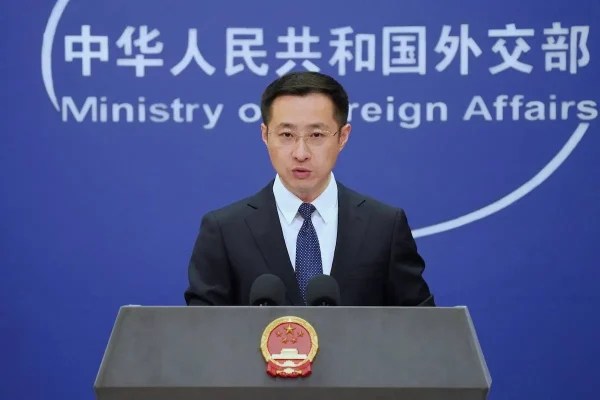
Lin Jian, spokesman for China’s Foreign Ministry, attends a press conference on March 18, 2024 in Beijing, China. [VCG/VCG via Getty Images]
MEMO | December 20, 2024
Read also: Guantanamo’s cruelty is medieval. It’s a horror story. And it’s true.
Russia’s Amended Nuclear Doctrine Signals Willingness to Take On ‘Global Power Obligations’ – Expert
Sputnik – 19.11.2024
The latest changes to Russia’s nuclear doctrine were likely made for two main reasons, Mikael Valtersson, former Swedish military officer and ex-chief of staff with the Sweden Democrats, tells Sputnik.
“One is to make it even clearer that even attacks from Ukraine with conventional weapons with the active support of Western powers will be seen as a combined attack on Russia,” he says. “This will give Russia the opportunity to claim Casus belli [an event that either provokes or is used to justify a war], and legitimate defensive military action according to international law and the UN Charter.”
This move, Valtersson argues, is essentially an attempt by Russia to “strengthen deterrence towards the West and reduce the risk of Western escalation in Ukraine.”
“The second and very interesting aspect is the inclusion of allies in the nuclear deterrence,” he continues. “This must be seen in the light of the recent ratification of the new defense cooperation agreement with the DPRK (North Korea) that includes a paragraph akin to the NATO article 5. This stipulates mutual military aid to defend each other in case of aggression from other countries.”
“With the changes of Russian nuclear strategy, Russia says that aggression towards it’s allies will be seen as aggression towards Russia and might include a nuclear response,” Valtersson notes. “The Russian nuclear doctrine now reflects the fact that Russia has formal allies again.”
As Russia’s actions resulted in NATO ceasing to be the only military bloc in the post-Cold War world whose members “have been included in a common nuclear umbrella,” Valtersson suggests that this development has both pros and cons for Moscow.
“This makes Russia a more attractive ally, but also puts Russia into a more precarious situation, since it now has stronger obligations to live up to. A failure to live up to these obligations would result in a huge loss of confidence in Russian willingness to support allies, and the Kremlin of course knows this,” he elaborates. “That means that this decision to change the nuclear doctrine must be seen as a real willingness of Russia to extend its nuclear deterrence to other allies.”
Valtersson also remarks that it would be interesting to see what new defense agreements Russia might sign with nations such as Iran, Syria, Cuba, Venezuela, Algeria “and a multitude of Sub-Saharan states,” which could both “greatly increase the security of these states and Russian standing in the world” and, “increase the risk of Russian involvement in new conflicts.”
“To summarise, this is a clear signal that Russia now is willing to take on the obligations that are needed to be a real global power,” he adds.
Chinese embassy dismisses US allegations of bases in Cuba as slander
Al Mayadeen | July 2, 2024
In response to ongoing allegations by the US regarding Chinese military bases in Cuba, the Chinese Embassy in Washington vehemently refuted these claims, labeling them as slanderous and malicious.
The remarks come after US think-tank Center for Strategic and International Studies (CSIS) published a report using satellite imagery to identify four alleged Chinese listening stations in Cuba, including one located near Guantanamo Bay.
“The US side has repeatedly hyped up China’s establishment of spy bases or conducting surveillance activities in Cuba. Such claims are nothing but slander. The Cuban side has already made a clarification,” Chinese Embassy spokesperson Liu Pengyu told Sputnik on Tuesday.
Liu stressed the need for the US to halt its ongoing effort to make malicious accusations against China without delay.
Additionally, Liu highlighted that the US maintains a leading role in global surveillance operations, which encompass monitoring its allies as well.
Israel a ‘terrorist state’ – Cuba
RT | December 27, 2023
Israel is a terrorist state committing genocide in Gaza, Cuban President Miguel Diaz-Canel said on social media on Tuesday. He was commenting on the ongoing military operation that West Jerusalem launched against Hamas in retaliation following the militant group’s deadly October 7 surprise attack, in which approximately 1,200 were killed in the south of the country.
The Caribbean nation, which has no formal diplomatic relations with Israel, has been highly critical of Israel’s war on the militants, which maintain de facto rule over Gaza. During the military operation, large swathes of the enclave have been devastated and more than 20,400 Palestinians have been killed, according to local officials.
In a post on X (formerly Twitter) Diaz-Canel called Israel’s actions “a humiliation for all humanity” and lamented that the nation was getting away with it.
“Cuba, which will never be among the indifferent, raises its voice for Palestine again and again,” he added.
Last week, the Cuban parliament passed a declaration expressing support for the Palestinian people and its aspiration for statehood. The document branded Israel’s conduct “genocide,” condemning its “barbaric acts” that highlight the failures of international diplomacy.
“We denounce in the strongest terms the responsibility and complicity of the government of the United States in this genocide,” the declaration said, referring to Washington’s use of its veto power at the UN Security Council on Israel’s behalf.
“The impunity with which Israel has historically acted can only be explained by its confidence that there will be no consequences due to the backing of the US government,” the lawmakers stated.
The administration of US President Joe Biden has expressed discontent due to the high number of civilian casualties in Gaza and claims that behind closed doors it is pressuring Israel to correct its approach.
Senior Israeli officials have repeatedly denied being under US pressure. Tal Heinrich, the spokesperson for Prime Minister Benjamin Netanyahu, told MSNBC last Friday that the two nations are “in lockstep.”
Israel claims that it is doing everything possible to minimize risks for civilians and argues that Hamas is ultimately responsible for every such death.
A report published by the Tel Aviv-based +972 Magazine in late November claimed that the Israeli military is purposefully bombing “power targets” in Gaza, such as public buildings and high-rise blocks, in order to “create a shock” in the general population. The rationale is that it will somehow turn Palestinians against Hamas.
Another U.S. Spy for Cuba
By Jacob G. Hornberger | FFF | December 13, 2023
U.S. spies for Cuba are in the news. Last week, U.S. officials announced the arrest of Victor Manuel Rocha, 73, a former U.S. ambassador, on charges of having spied for Cuba since the 1970s. Meanwhile, Ana Montes, a former analyst for the Defense Intelligence Agency, was recently released from federal prison after serving a 20-year sentence for spying for Cuba. In the context of reporting on these two people, the media is also bringing up the case of Walter and Gwendolyn Myers, a husband and wife who worked for the State Department, who pleaded guilty in 2009 to spying for Cuba for 30 years.
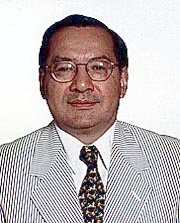
Former US Ambassador Victor Manuel Rocha
As a Wall Street Journal story last month stated, these spies were not driven by money to spy for Cuba. The article stated that they were instead driven by “ideology.” My hunch is that these four people themselves would say that they were driven to spy for Cuba by conscience.
Ever since the Cuban revolution in 1959, Cuba has been considered to be an official enemy of the United States and, specifically, of the U.S. national-security establishment (i.e., the Pentagon, CIA, and NSA), which is the driving force of U.S. foreign policy within the U.S government.
Prior to the Cuban revolution, the Cuban government had been controlled by U.S. officials ever since the Spanish-American War of 1898. In essence, Cuba had been a U.S. colony up until the time of the 1959 revolution.
Prior to the revolution, Cuba was ruled by a brutal rightwing dictator named Fulgencio Batista, who was a loyal agent of the U.S. government. Many Cubans resented Batista, not only because of his brutal dictatorship, and not only because he was a loyal lackey of U.S. officials, but also because he had become a partner of the Mafia, the world’s premier criminal organization, which ran casinos in Havana and shared its profits with Batista under the table. One of Batista’s policies that many Cubans resented was the state-sponsored kidnapping of underaged girls in the countryside who Batista’s goons would deliver to the Mafia’s high rollers in the casinos as a sexual perk. In fact, it was that policy that set off the Cuban revolution.
Once the revolution was won, the new regime, headed by Fidel Castro, took Cuba in a different direction. Castro refused to become a lackey of the U.S. government and insisted that Cuba would henceforth be an independent nation. He also later made it clear that he was committed to socialism and communism and, in fact, was determined to establish friendly relations with the Soviet Union and the communist world (something that President Kennedy was also determined to do, as he outlined in his famous Peace Speech in June 1963).
Owing to these actions, Cuba was deemed to be a grave threat to U.S. “national security” (just as Kennedy was).
But there is something important to recognize about all this: Cuba never committed any act of aggression against the United States or even threatened to do so. Instead, it has always been the United States that has been the aggressor against Cuba.
For example, there were repeated assassination attempts by the U.S. government against Cuban leader Fidel Castro. Given that Castro had never initiated any aggressive action against the United States, these were nothing more than attempts at legalized murder. In fact, President Lyndon Johnson even candidly pointed out that the CIA was running a “damned Murder Inc.” in the Caribbean.
There was also Operation Mongoose, which entailed U.S. acts of sabotage and terrorism inside Cuba.
And, of course, there has been the ongoing brutal U.S. economic embargo against Cuba, which has targeted the Cuban people with death and economic suffering in the hopes that they would rise up in another revolution, one that would replace Cuba’s recalcitrant communist regime with another U.S.-approved rightwing stooge.
Therefore, since the U.S. government has always been the aggressor against Cuba — with assassinations, terrorism, sabotage, and its deadly embargo — and since Cuba has never aggressed against the United States — it stands to reason that any information that these four U.S. spies for Cuba delivered to Cuba almost certainly involved secret information that was designed to help Cuba protect itself and its citizens from the acts of aggression by the Pentagon and the CIA.
At Montez’s sentencing, federal Judge Ricardo Urbina, stated that she had put the United States “as a whole” at risk by spying for Cuba. It would be difficult to understand how she had done that, given that it has always been the United States that has been the aggressor against Cuba, not the other way around. More likely, Montez, along with those other three U.S. spies for Cuba, provided information that assisted the Cubans to protect themselves from U.S. attempts at murder, sabotage, terrorism, and the infliction of death and suffering from the U.S. embargo. U.S. officials say that they betrayed the United States and, therefore, need to be severely punished for helping the Cuban people protect themselves from Pentagon-CIA aggression.
Iran, Cuba must form coalition to counter US, West bullying: Ayatollah Khamenei
Press TV – December 4, 2023
Leader of the Islamic Revolution Ayatollah Seyyed Ali Khamenei says great political and economic capacities of Iran and Cuba should be used to form a coalition against bullying of the United States and its Western allies.
Ayatollah Khamenei made the remarks in a Monday meeting with Cuban President Miguel Díaz-Canel, who is in Tehran on a historic visit. Iranian President Ebrahim Raeisi was also present in the meeting.
Ayatollah Khamenei pointed to remarkable potentialities of Iran and Cuba and said, “These capacities should be used to set up an alliance and a coalition among those countries that share the same position against the US and Western bullying.”
“With its focus on economic cooperation, this coalition can take a common and effective position on important international issues such as the Palestinian issue,” the Leader stated.
The Leader emphasized that the Palestinian issue is not limited to the recent developments in Gaza and its bombardment as the Palestinian people have been exposed to various types of torture, sufferings and massacre over the past 75 years.
However, Gaza is currently faced with such a big catastrophe that cannot be concealed, Ayatollah Khamenei said, adding that the war revealed the realities on the ground to the world public opinion.
The Leader added that Iran and Cuba share a stance on many international developments, particularly the Palestinian issue.
Referring to Tehran-Havana cooperation in international forums, Ayatollah Khamenei stressed the importance of further promoting mutual relations in various fields, including science.
The Leader expressed hope that the two countries would implement bilateral agreements and memoranda of understanding now that the administration of Iranian President Ebrahim Raeisi, which he described as the “administration of work and activity”, is at the helm.
Ayatollah Khamenei also pointed to his meeting with late Cuban leader Fidel Castro in Tehran 22 years ago, and said Cuba’s revolution and Castro’s personality have always been a fascination for Iranian revolutionaries even before the victory of the 1979 Islamic Revolution because of the sincerity in his revolutionary positions.
The Leader emphasized that “revolutionary sincerity”, “revolutionary resilience” and “revolutionary solemnity” are the common main features of the Cuban revolution and the Islamic Revolution in Iran.
Cuba urges further cooperation with Iran in various fields
Díaz-Canel, for his part, said Ayatollah Khamenei’s positions and statements correspond to concerns and stance of the Cuban government.
The Cuban president added that in his talks with Iranian authorities in Tehran, both sides focused all their efforts on ways to deepen mutual relations, especially in the economic and commercial spheres.
He emphasized that Iran and Cuba can complement each other in various fields, particularly in dealing with interventionist measures and sanctions imposed by the United States and its allies.
Regarding cooperation on global issues, the two countries should further develop their relations and play an influential role in leading developments such as the Palestinian issue, he said.
The Cuban president denounced the ongoing developments in Gaza as “unacceptable genocide” and said international organizations have turned a blind eye to the killing of tens of thousands of civilians, most of them children and women, in the besieged Strip.
He said those who were constantly complaining about the war between Ukraine and Russia and the killing of civilians are now silent vis-à-vis the massacre of tens of thousands of people in Gaza, which indicates the grave state of the world.
Algerian parliament unanimously votes to support Palestine militarily
The Cradle | November 3, 2023
The Algerian parliament on 2 November unanimously voted to authorize President Abdelmadjid Tebboune to enter the Gaza-Israel war and throw his support behind Palestine.
The 100/100 vote came a day after the anniversary of Algeria’s war of liberation against French colonialism.
Algeria is the second Arab nation that looks to enter the war against Israel, following Yemen’s declaration of war just two days prior.
“We launched a large number of ballistic and cruise missiles and a large number of drones at various targets of the Zionist enemy in the Palestine Occupied Territories,” the spokesperson of the Yemeni armed forces, General Yahya Saree, said earlier this week. “We emphasize that this operation is the third operation in support of our oppressed brothers in Palestine.”
Saree then added that “the position of our Yemeni people towards the cause of Palestine is fixed and principled, and the Palestinian people have the full right to defend themselves and use their full rights.” “Our forces performed their duty in supporting Gaza and fired ballistic and cruise missiles at enemy targets in the Occupied Territories.”
Arab nations have recently been following suit in their support of the Palestinian piece; Kuwait has condemned the Israeli aggression, Bahrain has cut all diplomatic ties, and Jordan has recalled their ambassador to Israel.
Nations outside of West Asia who have voiced their support for Palestine include Cuba, Chile, Venezuela, Bolivia – who’ve cut diplomatic ties with Israel completely – Nicaragua, and others.
Is China reciprocating US aggression?
By Drago Bosnic | June 21, 2023
When the Soviet Union placed its nuclear weapons in Cuba in 1962, the United States threatened to attack if the R-12 “Dvina” and R-14 “Chusovaya” nuclear-tipped missiles deployed on the Caribbean island country weren’t removed. After most of October that year was spent in strenuous talks and strategic military maneuvers that nearly escalated into full-scale confrontation barely 17 years after WW2, Washington DC and Moscow finally negotiated a mutually beneficial (albeit last-minute) agreement that moved the world away from the thermonuclear abyss that threatened to destroy it.
For decades, much of the world was convinced that what today is (unjustly) called the Cuban Missile Crisis was initiated by Russia. And even nowadays, when we all know that it was started by the US and its 1961 deployment of the PGM-19 “Jupiter” nuclear-tipped missiles in Turkey and Italy, Washington DC still insists that Moscow was responsible for the crisis. Something eerily similar is unfolding as we speak. However, instead of Russia, the other party involved in this case is China. Namely, according to the Wall Street Journal, Beijing is currently in talks with Havana to establish new military facilities in Cuba.
The report, published on June 20, states that the two socialist allies are working out the final arrangements of the deal that would reportedly secure a military base for the PLA (People Liberation Army) in northern Cuba. The WSJ reports that this has “sparked fears among US officials that [Cuba] could eventually host a permanent Chinese troop presence”, prompting the troubled Biden administration to intervene with Cuban officials, seeking to block the establishment of permanent military installations. This will reportedly also include the expansion of ISR (intelligence, surveillance, reconnaissance) capabilities of the PLA’s existing military facility.
The claims about China’s supposed military bases in Cuba are based on anonymous sources from unnamed US intelligence services. However, the authors admit that the aforementioned services are not exactly certain about the possibility of a full-blown joint Chinese-Cuban military base, stating that “the reference to the proposed new training facility in Cuba is contained in the highly classified new US intelligence, which State Department officials described as convincing but fragmentary”. The report further adds that “it’s being interpreted with different levels of alarm among policymakers and intelligence analysts”.
“Most worrying for the US: The planned facility is part of China’s ‘Project 141’, an initiative by the People’s Liberation Army to expand its global military base and logistical support network, one current and one former US official said. China and Cuba already jointly run four eavesdropping stations on the island, according to US officials. That network underwent a significant upgrade around 2019, when a single station expanded to a network of four sites that are operated jointly, and Chinese involvement deepened, according to the officials,” the WSJ authors detail.
It’s quite difficult to measure the sheer magnitude of Washington DC’s hypocrisy and double standards when it comes to this issue. Considering not only the outright hostile and oftentimes openly Sinophobic rhetoric, but also the numerous concrete moves aimed against China, could anyone honestly blame Beijing for anything except reciprocity? Apart from the trade war initiated under former president Donald Trump, the US has been conducting a comprehensive crawling aggression against China, openly seeking to contain the Asian giant with a massive network of military bases and other installations across Asia-Pacific.
Most alarmingly for Beijing, the US is aiming to push its military infrastructure ever closer to China’s shores, particularly by exerting greater control over the Asian giant’s breakaway island province of Taiwan. And this is only the tip of the iceberg of resurgent Neo-McCarthyism in US foreign policy that involves the sending of entire delegations of Washington DC warhawks to Taipei, in addition to the massive shipments of weapons and equipment (that now includes F-16 Block 70/72 fighter jets and hundreds of anti-ship missiles), amounting to approximately $20 billion, albeit mostly backlogged due to US (over)focus on the Kiev regime.
Taking into account such unadulterated hostility, can anyone blame Beijing for wanting to strengthen its ties with Havana? Worse yet, Cuba is an independent country, while Taiwan is internationally recognized as part of China (including by the US itself), meaning that the expansion of America’s military infrastructure to the island directly threatens Chinese sovereignty and territorial integrity. However, in its endless hypocrisy and double standards, Washington DC wants to maintain the Monroe Doctrine by exerting additional pressure on Latin America while encroaching on other superpowers’ geopolitical backyards.
“Some intelligence officials say that Beijing sees its actions in Cuba as a geographical response to the US relationship with Taiwan: The US invests heavily in arming and training the self-governing island that sits off mainland China and that Beijing sees as its own,” the WSJ admitted begrudgingly, adding: “The Journal reported that the US has deployed more than 100 troops to Taiwan to train its defense forces.”
In addition, the authors also acknowledged that “Taiwan is roughly 100 miles from mainland China, about the same distance Cuba is from Florida”, effectively conceding that there’s strategic equivalency between the two.
“China has no combat forces in Latin America, according to US officials. Meanwhile, the US has dozens of military bases throughout the Pacific, where it stations more than 350,000 troops. Chinese officials have pointed this out when they push back on American efforts to counter their military expansion outside of the Indo-Pacific,” the WSJ report concludes.
Drago Bosnic is an independent geopolitical and military analyst.
Featured Video

No Threat Can Force Iran’s Surrender /Trita Parsi & Lt Cl Daniel Davis
or go to
Aletho News Archives – Video-Images
From the Archives
What is the Israeli Lobby in Australia Doing in Interfaith Dialogue?
By Ali Kazak | Dissident Voice | October 11, 2015
For years Israel and its lobby around the world have been trying to normalise their relations with Arabs and Muslims without solving the Palestine Question.
One of the methods they resorted to in the last few years is using human rights and community organizations such as interfaith dialogue and Multiculturalism to achieve this objective and to: isolate the Palestinians, marginalise the Palestine question, end Israel’s isolation, and prevent criticism of Israel, knowing that these organisations will be the first to stand against Israel’s violations, racial and religious discrimination.
The group responsible for this task in Australia is The Australia/Israel & Jewish Affairs Council (AIJAC); its Director of International & Community Affairs, Jeremy Jones is in charge of lobbying religious community organizations, specifically Muslims and Christians. Consequently he convened the Faith Communities for Reconciliation, founding participant in the Australian Partnership of Religious Organisations and the Australian National Dialogue of Christians, Muslims & Jews.
AIJAC is a private political propaganda group. It is recognised as the main Israeli lobby in Australia. It coordinates its activities and works intimately with the Israeli embassy in Canberra and different institutions in Israel. It is privately funded by some Jewish businessmen. It monitors closely Australian politicians, the media, ethnic and religious groups, (especially Arabs and Muslims), unions and academics on their stands towards Israel and the Palestine question. … continue
Blog Roll
 Aletho News
- ‘War Crime’: Iran condemns attacks on Arak, Ardakan nuclear sites
- Two-thirds of Americans want quick end to Iran war even if goals unmet
- Trump to Give “Important Update on Iran” Wednesday in Prime-Time Speech
- Theodore Postol: Iran’s Missiles & Drones Were Underestimated
- Iran To Target Military Industrial-Tech Complex That Facilitated Gaza Genocide
- Collapsing Empire: The Resistance Disarms ‘Israel’
- Suicide Should Not Be a Government Service
- Rethinking America’s greatest threat: Iran vs. Israel-Firsters
- Iran accuses adversaries of false flags to strain Turkey ties
- Poland rules out sending Patriot missiles to US/Israel amid war on Iran
- If Americans Knew
- Ann Coulter Rips Into Fox News for Iran War Coverage, Compares to False Rigged 2020 Election Reporting
- Joe Kent Urges Americans To Call White House and Congress To Object To Sending Troops Into Iran
- DNC Resolution to Reject AIPAC Funding Puts Democratic Leaders in the Hot Seat
- Swedish foundation to build 400 schools as over 650,000 Gaza children remain without education for 2 years
- Israeli army admits photshopping image of slain Lebanese journalist
- This is how Israel is systematically killing health workers under the cover of war in Lebanon
- Carrying life under fire: Israeli invasion of Lebanon leaves pregnant women facing deadly risks
- Champagne all around for the new death penalty (for Palestinians) law – Not a ceasefire Day 172
- Why are Palestinian books struggling to be seen on Amazon?
- The Line Between Affinity and Conspiracy
- No Tricks Zone
- New Study Finds Warming Saves Lives…Cold Temperatures 12 Times More Deadly Than Excess Heat
- German Science Blog Accuses PIK Climate Institute Of Hallucinating Climate Tipping Points
- Devastating Assessment Of Comirnaty Vaccine By Former Senior Pfizer Europe Toxicologist
- New Study: CO2 Is ‘Effectively Negligible’ As An Explanatory Climate Change Factor Since 2000
- Former Pfizer Toxicologist Dr. Helmut Sterz Tells Bundestag Hearing Pfizer Vaccine Should Have Never Been Approved
- Energy Expert: Germany’s Nuclear Phaseout Was A “500 Billion Euro Mistake”
- New Research: South Australia’s Mid-Holocene Sea Surface Temperatures Were 4°C Warmer Than Today
- Storing Green Energy To Last Germany 10 Days Would Require A 60-Million Tonne Battery
- New Studies: UK Sea Levels Were 4 Meters Higher Than Today During The Mid-Holocene
- Destructive Green New Deal: German Energy And Metal Group Warns Of Drastic Crisis
 Aletho News