The European Union’s new digital regime: algorithmic censorship under the pretext of ‘democracy’
By Lucas Leiroz | Strategic Culture Foundation | August 13, 2025
In recent years, the European Union has undergone a profound transformation — not in the realm of formal law, but in the cognitive architecture of the public sphere. Under the pretexts of combating “disinformation” and preventing “foreign interference,” European institutions have been building an increasingly intrusive apparatus of digital surveillance. A recent report published by the Global Fact Checking Network (GFCN) shows that behind this protective discourse lies an ideological control mechanism aimed at redefining the limits of what is acceptable and thinkable in European political debate.
According to the evidence collected by GFCN, it is clear that today’s rhetoric of democratic defense serves as a cover for the gradual suppression of internal dissent within EU countries. Once a continent that took pride in freedom of speech and diversity of opinion, Europe is now rapidly moving toward a regime of digital discipline — where algorithms, semantic filters, and arbitrary “acceptability” criteria determine who can speak and what can be said.
There are many examples supporting the thesis of growing authoritarianism in Europe. Chay Bowes, an Irish journalist and RT correspondent, has been one of the targets of this new form of covert censorship. In 2024, while attempting to cover the Romanian elections, Bowes was illegally detained at Bucharest Airport and deported without any clear legal justification. His “crime”? Trying to report on an annulled election following the victory of an independent, EU-critical candidate.
This pattern is repeating across the continent. Hungary, for instance, is facing legal proceedings over its Sovereignty Protection Law, which aims to regulate NGOs and organizations funded from abroad. Meanwhile, parties like Alternative für Deutschland (AfD) have been officially labeled “far-right extremists,” paving the way for legal persecution, censorship, and political marginalization. And all of this is happening not under classic authoritarian regimes, but within the framework of the so-called “European project,” supposedly grounded in the rule of law.
The rise of conservative and Eurosceptic parties in countries such as Portugal (with the meteoric growth of Chega), Poland, Romania, and Germany is a direct reflection of the widening gap between technocratic elites and popular will. Efforts to silence these voices do not delegitimize them — they merely expose the desperation of a system that can no longer persuade, only impose.
At the same time, political vocabulary is being carefully reformulated to shape public perception. Terms like “sovereignty” and “traditional values” are rebranded as “isolationism” and “intolerance.” Calls for peace negotiations are reinterpreted as “threats to democracy.” This is not a regime with formal censorship, but one with ideological filters that are just as effective as any outright prohibition.
The most symbolic example of this new model is the Digital Services Act (DSA), which has become a central tool of cognitive engineering across the continent. More than just imposing moderation rules, the DSA allows the European Commission to intervene directly in the algorithms of digital platforms, demanding access to internal systems and threatening billion-euro fines in cases of “non-compliance.” This goes beyond regulation — it is the institutionalization of censorship under the guise of “democracy” and “institutional security.”
In the name of “democratic resilience,” what is actually being constructed is a system of information control, where criticism of the official narrative is classified as disinformation, hostile propaganda, or extremism. There is no debate — only exclusion. Dissent is not refuted, it is silenced.
As Slovak jurist and Slavic Committee member Tomáš Špaček pointed out, “freedom of expression is guaranteed, but freedom after expression is no longer tolerated.” The cost of disagreeing with the Brussels consensus is high: from social media bans to financial sanctions and media smear campaigns.
The case of New Caledonia, where the French government blocked TikTok in 2024 to “combat disinformation” during electoral protests, is a warning sign. For the first time, a tool of social mobilization and abuse reporting was deactivated by state decision in French territory. It was a laboratory test of what may become standard practice in times of crisis: shut down the network, silence the movement.
Behind the technical-legal façade lies the degradation of Europe’s public sphere. The European Union — once a bastion of civil liberties — is becoming an entity where “acceptable” speech is dictated by unelected bureaucrats, shielded from any form of popular accountability.
The European liberal discourse, which once invoked freedom as a universal value, is now used to justify mechanisms of both symbolic and material repression. The “right to express an opinion” exists — as long as that opinion aligns with the European Commission’s consensus. Outside of that, there is only silence, cancellation, and the simulation of democracy.
Ireland’s Media Commissioner Is Poised To Gain Substantial Authority Over Online Speech
By Dan Frieth | Reclaim The Net | December 11, 2023
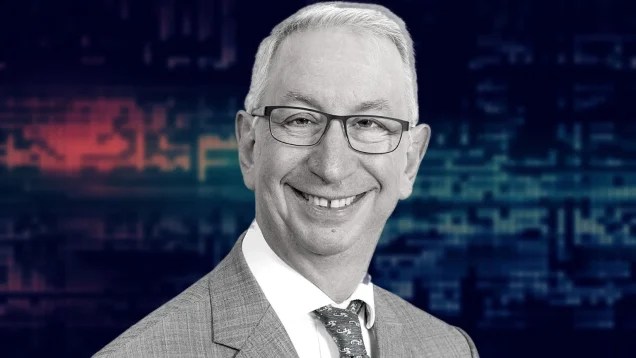
Jeremy Godfrey has been named the executive chairperson of Ireland’s Media Commission, an organization tasked with overseeing social media regulation and censorship in Ireland.
This new role aligns with Ireland’s implementation of the EU’s censorship law, the Digital Services Act (DSA). The DSA mandates that online platforms with more than 45 million monthly active users prioritize the moderation of content deemed “harmful.”
According to Politico, roughly about nine months into his role as the chairman of the Media Commission, Godfrey and his assembly of specialists, currently numbering 75, are still meticulously working out the intricacies of their novel directive. Their yet to be inaugurated authority, slated for activation early next year, will count among its arsenal the ability to stipulate severe fines for speech violations.
The Commission’s powers will intersect with those of Brussels, as the two seek to unify their efforts under the world’s pioneering social media legislation which is designed to curtail the propagation of online hate speech and misinformation.
“We are striving for a mutual objective,” Godfrey told Politico. Godfrey, however, candidly admitted that how the responsibilities will be shared between the European Commission and the Irish body remains an unresolved issue and will necessitate further deliberation.
Citizens in Ireland are currently facing a dark turn when it comes to free speech. The country is facing a controversial shift in its approach to freedom of expression and speech, with proposed laws targeting so-called “hate speech.”
Under the proposed legislation, actions or materials that could incite violence or hatred based on “protected characteristics” like disability, nationality, ethnicity, religion, sexual orientation, or gender would be criminalized.
The bill’s scope is alarmingly extensive, penalizing not only the articulation or publication of such speech but also the mere possession of it. This could include anything from a meme on a cellphone to text messages, with non-compliance in surrendering device passwords to authorities potentially leading to a year’s imprisonment.
EU’s Věra Jourová says she’s “uncomfortable” on Twitter, wants more censorship
By Dan Frieth | Reclaim The Net | April 27, 2023
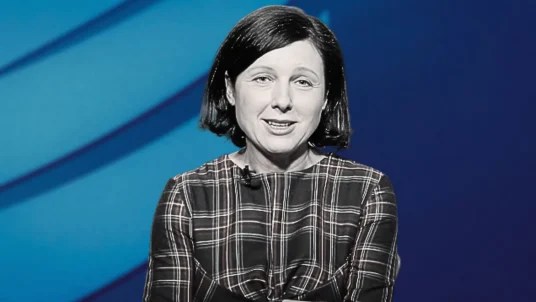
Vice President of the European Commission, Věra Jourová, said that she is “more and more uncomfortable on Twitter” because of what she said was the rise in Russian propaganda.
She added that Twitter was likely going to violate the upcoming censorship law, the Digital Services Act (DSA), once enforcement begins later this year, because of the “unregulated Russian aggressive propaganda”
The DSA requires platforms to remove “harmful” content or risk heavy fines.
Jourová said that the employees who were fired when Elon Musk took over last October meant staff responsible for content moderation were fired.
“We were already disappointed by the data they delivered in January and of course, we are also watching what they are doing with the capacities left,” Jourová told reporters on Wednesday.
Earlier, she tweeted that she felt “Twitter is falling short of its commitments to the anti-disinformation code,” a currently voluntary rulebook for online platforms that will become a firm benchmark when the DSA comes into force.
“I would compare the situation with driving on the highway.
“You drive on the highway and overstepping that speed, you get a penalty, and one day you might be deprived of your driving license.”
She insisted that platforms should, “intensify their work against Russian propaganda.”
“There is still space for dialog. And I would really do wish to explain to Mr. Musk our philosophy that we are protectors of freedom of speech, protectors of freedom of expression… But freedom of speech in the EU is not unlimited.”
Germany pressures Twitter to commit to censorship law
Germany is one of the most censorship-prone in the European Union
By Dan Frieth | Reclaim The Net | February 11, 2023
In a Digital Committee hearing of German’s federal parliament (the Bundestag) Twitter was accused of failing to provide answers about the implementation of German’s Network Enforcement Act (NetzDG) and efforts to comply with the upcoming censorship law, the Digital Services Act (DSA).
Twitter’s head of Europe Global Government Affairs Ronan Costello said that even before Elon Musk took over Twitter in October 2022, AI identified 65% of all content flagged for removal.
However, he could not say, among other things, the number of Twitter employees still remaining in Germany and the number of accounts unblocked since Musk took over. Costello said the answers would be provided later, reports stated.
The members of parliament were skeptical about Twitter complying with the requirements of NetzDG, especially because of Musk’s decision to lay off about half of Twitter’s staff. However, Costello insisted that Twitter was committed to complying with the law. He insisted the platform was more transparent, noting that the latest transparency report contained more data required by the NetzDG than in the same period the previous year.
Costello also said that the “Community Notes” tool, which allows other Twitter users to fact-check misleading content by providing more context, will soon launch in Europe. In the US, the tool has over 20,000 users.
Featured Video
Yemen joins the war – Red Sea could be blocked next – Saudi regime at risk
or go to
Aletho News Archives – Video-Images
From the Archives
Should Europeans ‘Thank’ the Americans for Destroying Nord Stream?
By Robert Bridge | Strategic Culture Foundation | September 29, 2022
With an investigation continuing into the destruction of the Nord Stream gas pipeline that provided energy supplies to Europe from Russia, there appears to be just one prime suspect, and that should surprise nobody.
Following the sabotage of the Nord Stream 1 and 2 gas pipelines, former Polish Foreign Minister Radoslaw Sikorski already seemed to know the identity of the perpetrator when he tweeted out: “Thank you, USA.”
At first glance, it seemed that Sikorski was speaking sarcastically, berating Washington for carrying out an attack that will have severe repercussions for the people of Europe. After all, how could anyone see any good coming from the termination of Europe’s primary source of gas reserves with winter just around the corner? It was Sikorski’s homeland of Poland, after all, that urged its citizens to collect firewood in the face of dwindling gas reserves.
In fact, the Polish diplomat was speaking one-hundred percent literally… continue
Blog Roll
 Aletho News
- Russian Oil Tanker Arrives in Cuba Amid U.S. Blockade
- America Racing to Strategic Defeat in Iran: Lt Col Daniel Davis
- FTC Warns Visa, Mastercard, PayPal, Stripe Over Political Debanking
- Russian tanker approaches Cuba despite US oil blockade
- Marandi: Yemen joins the war – Red Sea could be blocked next – Saudi regime at risk
- Pro-Palestinian French member of European Parliament denied entry to Canada
- Pakistan to Host US-Iran Talks
- How Indonesia’s tilt toward the US left it stranded in the Strait of Hormuz
- US has no choice but to retreat from Iranian borders: Top commander
- Iran Retaliation Strikes Chemical Plant Near Dimona
- If Americans Knew
- Israeli police block Catholic cardinal from entering Church of the Holy Sepulchre on Palm Sunday
- Israel is assassinating journalists again, more than any other nation, anywhere, ever – Not a ceasefire Day 170
- Over 300 US service members wounded, majority have brain injuries – Not a ceasefire Day 169
- Researchers at Human Rights Watch Resign Over Blocked Report on Palestinian Refugee Return
- Jewish Groups Are Backing a War Americans Don’t Want
- Eric Fingerhut Thinks He’s the President of the Jews
- Top Jewish Philanthropists, Rabbis Urge Israeli President to Take Action Against ‘Jewish Extremists’
- Don’t Be Fooled. Zionist Leaders Have Always Wanted to Control Southern Lebanon
- Israel’s widespread use of torture is a core element of its genocide against the Palestinian people
- In Israel’s War on Iran, Many Middle East US Bases Rendered “All But Uninhabitable”
- No Tricks Zone
- New Study Finds Warming Saves Lives…Cold Temperatures 12 Times More Deadly Than Excess Heat
- German Science Blog Accuses PIK Climate Institute Of Hallucinating Climate Tipping Points
- Devastating Assessment Of Comirnaty Vaccine By Former Senior Pfizer Europe Toxicologist
- New Study: CO2 Is ‘Effectively Negligible’ As An Explanatory Climate Change Factor Since 2000
- Former Pfizer Toxicologist Dr. Helmut Sterz Tells Bundestag Hearing Pfizer Vaccine Should Have Never Been Approved
- Energy Expert: Germany’s Nuclear Phaseout Was A “500 Billion Euro Mistake”
- New Research: South Australia’s Mid-Holocene Sea Surface Temperatures Were 4°C Warmer Than Today
- Storing Green Energy To Last Germany 10 Days Would Require A 60-Million Tonne Battery
- New Studies: UK Sea Levels Were 4 Meters Higher Than Today During The Mid-Holocene
- Destructive Green New Deal: German Energy And Metal Group Warns Of Drastic Crisis
 Aletho News