Syria blast hits UN chief’s convoy
Al Akhbar | May 9, 2012
The head of a UN observer mission to Syria, Major General Robert Mood, escaped unharmed when a blast went off as his convoy entered a restive southern town on Wednesday, Syria’s Addounia TV reported.
The explosion in Deraa wounded six Syrian soldiers, including an officer, who were escorting the UN convoy, while 12 other monitors traveling with the Norwegian general were uninjured in the attack, said an AFP photographer.
The attack was “a graphic example of violence that the Syrian people do not need,” said UN observer chief Major General Robert Mood.
“It is imperative that violence in all its forms must stop,” Mood, who was unhurt in the attack, was quoted by observer spokesman Neeraj Singh as saying.
“We remain focused on our task,” Singh told AFP.
The blast, caused by an explosive device planted in the ground, went off after four UN vehicles passed the entrance to Deraa safely, the photographer said.
The attack came as one of Syria’s main armed rebel leaders threatened to resume attacks on President Bashar Assad’s forces, a pan-Arab newspaper reported.
The statement from Free Syrian Army (FSA) chief Colonel Riyadh Asaad will deal a further blow to the fragile UN-backed ceasefire agreement that both sides are accused of disregarding.
“We will not stand with folded arms because we are not able to tolerate and wait while killings, arrests, and shelling continue despite the presence of the (United Nations) observers who have turned into false witnesses,” Asaad said, according to the London-based Asharq al-Awsat newspaper.
“Our people are also demanding we defend them in the absence of any serious steps by the Security Council which is giving the regime a chance to commit more crimes,” he added.
Explosive devices are a common technique used by the Free Syrian Army, Colonel Asaad said, but it was uncertain whether his group was behind the attack on the UN convoy.
“Bombings are not part of our ethics and we don’t need them. Our aim is to target military vehicles and we only use explosive devices,” he said.
The UN has noted violations to the ceasefire from the government and armed rebels, who are suspected of carrying out a series of bombings in recent weeks, as well as political assassinations.
The armed Syrian opposition is highly fragmented and there are militant groups in the country who say they do not take orders from Asaad.
Syrian National Council spokesperson Ausama Monajed told Al-Akhbar in March that Asaad’s fighters only accounted for “maximum five percent” of all armed groups.
The UN Security Council unanimously adopted a Russian-European drafted resolution last month that authorized an initial deployment of up to 300 unarmed military observers to Syria for three months, to be known as UNSMIS.
But despite an initial pause in fighting on April 12, a promised ceasefire has not taken hold. Nor has the carnage in Syria stopped, despite a parliamentary poll on Monday which the government promoted as a milestone on its path to reform but most opposition groups dismissed as a sham and boycotted.
International mediator Kofi Annan called on both Syrian government forces and opposition fighters to put down their weapons and work with the unarmed observers to consolidate the fragile ceasefire that took effect in April.
The newspaper quoted Asaad as saying the Free Syrian Army had devised a new strategy to make its attacks more effective.
Asaad said the FSA had pulled out of cities to give the Annan plan a chance to succeed.
“The Free Syrian Army is still on the ground in most Syrian territories, and its departure from the cities was to spare civilians military operations and in order not to give the regime an excuse to say that we do not want a ceasefire,” he added.
(Reuters, AFP, Al-Akhbar)
Related articles
- Syria and the Annan Plan: The Devil in the Details (alethonews.wordpress.com)
The Lutfallah II Arms-Smuggling Scandal
By FRANKLIN LAMB | CounterPunch | May 4, 2012
It would be an incautious stretch to suggest any sort of parity between Watergate and the unfolding Lutfallah II arms shipment-to-Syria drama, that each day brings more revelations. But some of what we are daily learning about the who, what and why of Lutfallah II reminds some of us of a Watergate, type atmosphere including “bit by bit, drip by drip” revelations, denials, setting up fall guys and remarkable examples of incompetence.
The still unfolding Lutfallah II weapons running misadventure, in which a claimed Syrian-owned vessel registered in Sierra Leone but apparently flying the Egyptian flag, was detained off the Lebanese port of Batoun, by the Lebanese Army Marines because it was sailing too high in the water, and appeared “suspicious,” and was then found to contain 300,000 pounds of weapons may erupt unpredictably with serious political consequences for the region.
“Deepthroat”, the FBI mole who met secretly with Woodward & Bernstein and leaked confidential US government information to the duo, as revenge against President Nixon for rejecting him as successor to the deceased FBI Director, J.Edgar Hoover, outed himself in 2005. “Deepthroat”, after a quarter century of hundreds of sleuths trying to divine, if he/she even existed, turned out to be none other than Deputy Director of the FBI, William Mark Felt, Sr. “Deepthroat” repeated advice to the Washington Post reporters was to “Follow the Money!”
They did. The rest is history.
If a ‘deep throat’ appears in Libya, Qatar of elsewhere, and offering advice to reporters who appear in Benghazi and Misrata in order to dig into what really happened, it might be that he will counsel: “Follow the weapons”.
Eyewitness Hassan Diab is a Libyan researcher who has been working with a group of American and International lawyers preparing a case against NATO to be filed with the International Criminal Court. Hassan and three of his friends actually saw the ship Lutfallah II being loaded in Benghazi, Libya. Hassan claims that it is well known at the docks that Qatar and Saudi Arabia control a total of five warehouses in the area of Benghazi & Misrata and supplied the weapons and money to hire the Lutfallah II container vessel.
Libyans in the area are reporting that the intercepted arms are from both Gadaffi stockpiles left over from NATO’s Libya campaign and some from the Qatar-Saudi six month weapons pipelines into Libya. When NATO declared a cessation of its bombing on Halloween night, October 31, 2011 the scramble for weapons began and Qatar stored and purchased whatever weapons came to its notice and from various militias who were willing to do business.
Libyans and foreign dock workers at Benghazi Port, who observed the Lutfallah II being loaded, saw three containers filled with 150 tons of weapons put on board, although the initial plan, according to the owner of the boat was to ship as many as 15 containers. It is estimated that they would have carried more than 2000 tons of weapons.
A Lebanese judicial source, who is a sitting judge based at Beirut’s La Maison des Avocates and advises the Lebanese government on procedural rules that ought to be followed in this case, confirmed to me and also to the Beirut Daily, As-Safir, that the Lutfallah II shipment was funded by two Syrian businessmen living in Saudi Arabia. In addition, the ship’s captain in Syria is the gentleman who claimed ownership of the shipment. All are affiliated with the Syrian opposition and all are seeking regime change in Syria.
According to a late breaking report, all have been arrested and remain in custody despite claims that they thought the cargo was general merchandise. Libya does not export anything much but its light crude oil and the Lutfallah II is clearly no oil tanker. Crew members of the container ship are facing trial on charges of illegal gun-running.
The owner reportedly told his interrogators, including Military Prosecutor Judge Saqr, that “It would be against Lebanese law and international maritime law for me to demand to examine the content of the containers.” Some international lawyers would argue that the law is exactly the opposite in both, and that international law establishes not just the owner’s right to inspect cargo being carried on his ships–for hazardous or contraband cargo etc– but that maritime law clearly mandates his responsibility to do so. Likewise, his insurance company.
Denials
The US-Saudi backed Future Movement was not involved in the arms shipment according to party official Mustafa Allouch. However, he later told Lebanon’s OTV that “The Syrian people have the right to find the appropriate means to defend themselves.” The Free Syrian Army has denied any links to the weapons-carrying vessel.
Hezbollah official Ammar Musawi praised the Lebanese army for its seizure of a Syria-bound illegal arms shipment and urged the authorities “to prevent Lebanon from turning into a conduit of destruction toward its neighbor”. “For the sake of Lebanon’s stability, I urge our authorities to exert greater effort to prevent Lebanon from turning into an arena through which the tools of crime cross into Syria, as the involvement of some Lebanese in fueling the situation in Syrian will have negative repercussions on Lebanon,” Hezbollah International Relations Director said.
On 5/2/12, Syria’s ambassador to Lebanon, Ali Abdel-Karim, following a meeting with Lebanese Foreign Minister Adnan Mansour, accused Gulf countries, including Qatar and Saudi Arabia, of being behind the Syria-bound arms shipments.
“The ship was bound for the Syrian opposition; this is sure given that the political and security leaderships in Qatar, Saudi Arabia and other countries are behind these acts, which undermine the security of Syria, Lebanon and the region.”
Many questions remain in need of answers. Any serious first year law student would ask the questions that presumably Lebanese investigating judges and the media will ask. A few of the more obvious ones would include:
Who funded the shipment discovered in the cargo bay of the Lutfallah II? Who had custody over the original 12 containers of what was planned, according to the jailed owner, as a shipment of over two million tons of “general merchandise”?
Who supplied the weapons and from which warehouse locations in Libya were they taken? Who controls the warehouses? Who made the decision to hold back 12 of the original contract and why? Where are the 12 containers? Who prepared the ships manifest? What was the involvement, if any, of the Syrian owner of the Lutfallah II? Why was the Lutfallah II not searched at the port of Alexandria as well as Turkey? It docked at both. Why was it given ‘green light passage’ by Israel and UNIFIL?
Eyewitnesses claim some activity on the Lutfallah II was evident while it was docked in Turkey? What was the activity? Which, if any, Lebanese politicians and political parties were involved. Who was to meet and take custody of the shipment once it arrived at the Tripoli, Lebanon dock?Which land routes into Syria were to be used following the offloading of the cargo at Tripoli Port?
It is not for this observer to offer advice to investigative journalists, whether free-lance or corporate, but as a fairly long-term US Congressional aid in the post-Watergate era who actually read the transcripts of US Senator Howard Baker’s Watergate Hearings, I would have thought that one or more might want to book a flight to Benghazi, Libya, toute de suite, with an inclination to: Follow the Money and follow the Weapons!
Franklin Lamb is doing research in Lebanon and is reachable c/o fplamb@gmail.com
Related articles
Bad Losers’ Conference: Syrians Pay the Price
By Jeremy Salt | Palestine Chronicle | April 3, 2012
Ankara – The ‘Friends of Syria’ conference in Istanbul ended with a pledge of qualified support for the Annan plan while agreeing on concrete measures to undermine it. Saudi Arabia and other gulf states are going to stump up the money to turn the so-called Free Syrian Army into a fully-fledged mercenary army. Saudi Arabia and Qatar had previously said that they intended to spend millions of dollars arming the ‘rebels’ and at the ‘Friends of Syria’ conference, the US, Britain and the gulf states agreed to spend millions more on providing the armed groups with unspecified ‘humanitarian’ assistance and ‘communications equipment’. The gulf states are also hoping their money will lure Syrian soldiers into defecting.
Saudi Arabia and Qatar operate on the basis of human cupidity and greed. They must be surprised on those occasions when they discover that not everyone has a price. Late last year the Qatari Prime Minister, Hamad bin Jasim al Thani, was reported to have offered Syrian Foreign Minister Walid al Muallim $100 million and permanent residence in Qatar if he would defect. The occasion was a meeting of the Organisation of the Islamic Conference in Jeddah. Muallim declined, asking in return, rhetorically of course, how much money Qatar had spent so far internationally and regionally to deepen the crisis in Syria. This follows on from the money Qatar spent on the destruction of the Libyan government.
In February eight million Syrians voted for political reform that will usher in a multi-party political system and will remove the Baath party as the central pillar of state and society. The armed gangs have been chased out of the cities where they had dug themselves in. Human rights groups and the media are finally drawing attention to what they have wilfully ignored for months, the extreme violence of the FSA and other groups of armed men, directed against soldiers and civilians. Recently Der Spiegel, rightwing and openly hostile to the Assad government, ran an article on the executioners of Homs, the men who were taking the captives of the FSA to a burial ground and cutting their throats. Interesting that none of the correspondents smuggled across the border into Homs seem to have picked this up before.
If there is a role for any outside party surely it should be to help wind down the conflict in Syria, not wind it up, yet this is precisely what the ‘Friends of Syria’ are doing. Will Ban Ki-Moon or Kofi Annan have anything to say about this? They have a peace plan which cannot possibly work as long as its ostensible supporters are working to undermine it. Syria has accepted the Annan plan but has made the obvious point that it cannot pull its soldiers and tanks off the streets unless the armed gangs lay down their weapons. Here we have Saudi Arabia and Qatar shelling out money to ensure they keep fighting, with the backing of the other ‘Friends of Syria’. We can see what this is intended to produce, a situation in which every time the Syrian army is involved in conflict with armed groups it will be blamed for violating the Annan plan. All the ‘rebels’ have to do is keep shooting. This is exactly what their peace-loving supporters meeting in Istanbul want them to do.
If there is a proper name for the group that met in Istanbul it should be the Bad Losers’ Conference. These people have thrown everything into the struggle to bring down the Syrian government. They have plotted and conspired. They have used their media and they have thrown money and weapons at the ‘rebels’ but they have failed. Assad – abused and insulted by them – is still there and more on top of the situation than he was a little while ago. It should be ‘game over’ but Saudi Arabia and Qatar, in particular, are determined to play on irrespective of the cost in human lives and destruction to Syria and its people.
Hillary Clinton or her public relations machine tried to give the impression that she was in Saudi Arabia to talk the Saudis out of doing anything rash. More likely she was there to frame how the next steps would be taken, with Saudi Arabia stepping out in front and the US appearing to follow on behind. There is no point in saying anything about Clinton. She is what she is and no comment is needed. The Saudis are driven by their own agenda, which is to set up a Sunni Muslim wall against Iran and Shi’ism across the Middle East. Does anyone seriously think they have the best interests of the Syrian people at heart?
As for Turkey, its relationships with near neighbors have been transformed in the space of a year from good to bad. Insofar as Syria is concerned, the Turkish Prime Minister and his Foreign Minister have burnt their bridges. It is either them or Assad from now on. Certainly there can be no resumption of good relations as long as he or they remain in government. Someone has to go and they are determined it is going to be him. Alienating Syria has meant alienating Iran and raising the suspicions of the Shia-dominated government in Iraq, which has strongly opposed Turkey’s line on Syria. In January the two countries exchanged harsh words over the warrant for arrest issued against Iraqi Vice President Tariq al Hashimi, a Sunni Muslim accused of organising death squads used against Shia Muslims. Fleeing to Kurdistan, Mr Hashimi has now turned up as a guest of the ruler of Qatar. He denies being ‘part of Turkey’s geopolitical project’ but admits to receiving ‘advice’ from Turkey and has stated that he feels ‘indebted’ to the Turkish Prime Minister, Recep Tayyip Erdogan, for ‘making statements on my case’.
These amounted to the view that Mr Hashimi was being pursued because he was a Sunni Muslim. At a party meeting in Ankara, the Turkish Prime Minister, responding to Iraqi accusations of meddling, said that ‘Mr Maliki [Iraqi Prime Minister Nuri al Maliki, a Shia] should know very well that if you initiate a period of clashes in Iraq based on sectarian strife it is impossible for us to remain silent’. The refusal of the Kurdish governorate to hand Mr Hashemi over to the government in Baghdad deepens the divide between these two centres of power in Iraq. The warm welcome Mr Hashimi was given in Qatar is further evidence of the broader divide that is taking shape in the Middle East, with the US, the EU, the Gulf states and Turkey standing on one side and Iran, Syria, Lebanon, Iraq, Russia and China on the other.
After the meeting of the ‘Friends of Syria’ in Istanbul, Nuri al Maliki strongly condemned the decision of Saudi Arabia and Qatar to give further support to the armed groups in Syria. ‘We reject any arming [of Syrian rebels] and the process to overthrow the regime because this will leave a greater crisis in the region. The stance of these two states is very strange. They are calling for sending arms instead of working to put out the fire and they will hear our voice, that we are against arming and against foreign interference. We are against the interference of some countries in Syria’s internal affairs and those countries that are interfering in Syria’s internal affairs will interfere in the internal affairs of any country’.
His position is shared by Egypt, whose Foreign Minister, Muhammad Kamal Amr said after the Istanbul meeting that ‘arming the Syrian opposition, as Egypt sees it, will increase the rate of killings and will transform the situation in Syria as a whole to full-scale civil war’. Egypt’s misgivings are certain to be shared by other Arab governments, suggesting that in their single-minded pursuit of the Syrian government and their continued support for armed ‘resistance’ the gulf states and Turkey are very much in a regional minority.
In confronting Syria, Turkey inevitably alienated Iran and further exacerbated relations by agreeing to give the US the right to install an anti-missile radar station on its soil. Its only possible use could be to forestall missile retaliation in the event of an attack on Iran by the US or Israel (or both). Turkey has tried to placate Iran but insofar as Syria is concerned Iran is standing firm. It knows full well that it is next on the chopping block.
A perceptible nervousness about the actions of the government is beginning to appear in the Turkish media. In confronting Syria in such a belligerent manner and giving support to an armed group carrying out attacks in a neighboring state, the government has opened a new chapter in Turkey’s foreign policy. The legal dimensions of this policy are now coming up for scrutiny. Writing in Hurriyet Daily News, Yusuf Kanli made the following observation: ‘In the absence of a declaration of war or authorisation by parliament, it is a crime under Turkish law to allow Turkish territory to be used for hostile purposes against any neighboring country. Turkey is hosting scores of rebel commanders and there are serious claims that the rebel forces are receiving arms through Turkish territory. With almost 50 per cent electoral support, the current Turkish government can escape all kinds of accountability but as electoral support cannot last forever, tomorrow may be bleak, particularly if the effort to change the Syrian regime fails’.
Well, up till now it has failed and the continued attempt to drive Bashar al Assad out of office is going to cost more lives than the thousands who have died so far. As Syria is not just the will of one man, contrary to the image projected by the media, what would this achieve anyway? Rather than back off and throw their weight behind a peaceful solution, the ‘Friends of Syria’ decided to continue their campaign of support for the armed men at the precise moment Kofi Annan is calling on everyone to lay down their arms. The logic is Macbeth’s. They have gone so far in this venture that ‘returning were as tedious as go o’er’ but it is Syria and Syrians who will have to pay the price for their decision to keep going.
– Jeremy Salt is an associate professor of Middle Eastern history and politics at Bilkent University in Ankara, Turkey.
Related articles
- The belligerent “friends” of Syria in Istanbul (alethonews.wordpress.com)
- Saudi Arabia to recognize, fund Syrian National Council; Russia rejects Syria resolution (alethonews.wordpress.com)
- Syria blames terrorist gangs for massacre in Homs (alethonews.wordpress.com)
The belligerent “friends” of Syria in Istanbul
By Babich Dmitry | Voice of Russia | April 2, 2012
The decision of the United States and several Persian Gulf monarchies to create a fund that would pay “salaries” to opposition fighters in Syria and provide the rebels with Western “communication equipment” removes the last remnants of legality from the foreign involvement in Syria.
At the conference of the so called “Friends of Syria,” held in Istanbul in the beginning of this week and not attended by representatives of Russia, some astounding figures were mentioned. Molham al-Drobi, a member of the Syrian National Council, said his organization had pledges of $100 million in “salaries” for the militants inside Syria, which would help them to prolong the fighting for the next three months. The other motive for handing salaries is to encourage Syrian army soldiers to “defect” (a Syrian legalist worm would say – break his soldier’s oath) leaving the army ranks for greener pastures in the so called Free Syrian Army. Burhan Ghalioun, the head of the Istanbul-based Syrian National Council, promised to organize and keep this army together at the expense of sponsors from Saudi Arabia, Qatar and… the United States.
How very interesting! How would the United States react to a pledge by some “friends of the US” from foreign governments to pay salaries to deserters from the American army in case they join some “liberation struggle” against a bad guy in the White House? Wouldn’t it be a bit too much even for the greatest liberal in Washington D.C.?
There can be a legal basis (albeit a very shaky one) for providing humanitarian aid to the people in Syria’s regions which were devastated by the war. But even on that issue, a pledge of $176 million in humanitarian assistance made in Istanbul is a very arguable one, since the aid will go to Syrians via the hands of the Syrian National Council. An aid to victims of a civil war made via one of the sides in that war is a questionable method of charity activities. One should not forget also that the SNC is just one of many Syrian opposition groups and its source of legitimacy lies outside Syria – it was recognized as a “legitimate representative of the Syrian people” by those same “Friends of Syria” at their meetings in Tunisia and Istanbul.
What is even more stunning is the fact that participants of the conference in Istanbul plan to purchase the weapons for the Syrian rebels on the international “black market” for weapons, as the Washington Post reported. So, what about all the warnings we heard from Washington about the dangers of “black markets” for military equipment and technologies? Weren’t whole countries (such as Iraq) invaded with the official purpose of curbing those black markets?
“The interesting feature of today’s world is that the most unpredictable countries in it are not some God-forsaken Oriental dictatorships, as it was the case earlier, but modern Western states, with their elected governments, modern armed forces and seemingly disparate media,” said Igor Maksimychev, a senior research fellow at the Institute of Europe in the Russian Academy of Sciences.
“Communication equipment,” which US Secretary of State Hillary Rodham Clinton is planning to provide to the rebels, looks (or, rather, sounds) suspiciously like military equipment, as, in Mrs. Clinton’s own words, it “will help activists organize, evade attacks by the regime, and connect to the outside world.” Obviously, “activists” will need this organization not for Friday night parties. And, since the times of Chinese strategists, “evading attacks” of the enemy is the primary part of warfare, probably an even more important one than actually striking the enemy.
In this situation, Russia seems to be the only heavyweight international player opposed to the trend of arming, wining and dining the anti-government fighters in Syria. A statement issued by the Russian foreign ministry said that the intention of “the friends of Syria” to provide the Syrian opposition military aid goes against the aims of a peaceful settlement of the conflict. “The meeting in Istanbul, unfortunately, retained a unilateral character, its participants did not include the representatives of Syria’s government and many influential groups of Syria’s political opposition,” said Maria Zakharova, deputy head of the department of information and media at the Russian MFA.
Georgy Mirsky, senior research fellow at the Institute of World Economy and International Relations, does not see a positive logic in the Western actions against the Syrian government. These actions can be explained only by Damascus’s traditionally close ties to Iran, now perceived in Europe and the US as a hostile country. “Assad personally did not take any Western lives and did not inflict on the West any substantial economic damage,” Mirsky explains. “But talking about Assad Americans have in the back of their minds Iran, and that explains a lot in their attitude to Tehran.”
Interestingly, the current Iranian regime is the result of what is usually termed in the US as a “revolution gone wrong.” The toppling of an authoritarian shah (a sort of an “Iranian spring” in 1978-1979) ultimately brought Islamists to power. Now Islamists are slowly moving to complete power in Egypt, Libya, Tunisia (in Egypt the Christian Copts yesterday left the Constitutional Council, where they were hugely outnumbered by Islamists). So, how many more “aborted revolutions” is the West going to correct via arms from the black market, “defensive” communication equipment or outright interventions?
Related articles
- Russia: “Friends of Syria” Meeting One-Sided, Contradicts Goals of Peace (alethonews.wordpress.com)
- Syria conference: Gulf countries to fund rebels (altahrir.wordpress.com)
Marching Toward Syria with Eyes Cast Towards Iran
By Ben Schreiner | Dissident Voice | March 7th, 2012
While all the incessant warmongering directed toward Iran at the annual AIPAC policy conference in Washington was grabbing the headlines, the momentum for Western intervention into Syria continued to steadily build. All those neo-con “real men,” it appears, just might prefer to go to Tehran via Damascus.
Taking to the Senate floor on Monday, Arizona Senator John McCain, one of the first supporters of arming the Free Syrian Army, upped the ante by calling for a U.S.-led air campaign against Syrian military targets. McCain deemed such an escalation necessary to establish “humanitarian corridors.”
“The United States should lead an international effort to protect key population centers in Syria, especially in the north, through airstrikes on Assad’s forces,” the intervention-hungry McCain declared.
And as the Washington Post reported in late February, Obama administration officials have made it clear that “additional measures” might still be considered in order to oust Assad. That favored refrain of all options being on the table appears to be in effect in regards to Syria.
Indeed, for according to CNN, the Pentagon has already composed “detailed plans” for military action inside Syria. As the network reported, the Pentagon has especially focused on securing Syrian chemical weapons sites, with one scenario in particular calling “for tens of thousands of troops to potentially be used for guarding the installations.”
Although, according to a December email recently published by Wikileaks from the U.S. global intelligence firm Stratfor (known as a private C.I.A.), special operations forces from the U.S., U.K., France, Jordan, and Turkey are already on the ground in Syria. And as the email states, these forces are actively “training the Free Syrian Army.” Additional measures indeed!
Not wanting to be left behind in any march on Syria, the U.S. corporate media has largely begun to join the ranks of the recently ascendant intervention hawks.
In an editorial on Friday, the New York Times, although ruling out military force, called for providing greater tactical assistance to the Free Syrian Army. As the paper wrote: “The United States and its allies should consider providing the rebels with communications equipment, intelligence and nonlethal training.” Of course, a mission providing such tactical support would ultimately transform into more explicit military involvement.
Meanwhile, the Washington Post also editorialized on Friday for a more credible threat of force against Assad. As the paper wrote:
The Obama administration’s public arguments against the use of force in Syria are simply encouraging a rogue regime to believe it can act with impunity. Until he is faced with a credible threat of force, from the opposition or outsider powers, Mr. Assad’s slaughter will go on.
The Christian Science Monitor has likewise called for the U.S. to help “forcefully” end Assad’s rule.
Of course, the driving force behind such intense Western interest in Syria is Iran. Let there be no doubt, the ouster of Assad is not driven by some great humanitarian impulse, or “responsibility to protect.” Nor does the bloodletting and slaughter inside the country disturb U.S. elites. After all, the U.S. had no qualms with laying siege to Fallujah. Rather, all the contrived moralizing is being utilized in an attempt to garner support for imposing Syrian “regime change,” which would deal a strategic defeat to Tehran. It’s all nothing more than realpolitik. The Syrian people and their revolution are being cynically recruited as means to imperial ends, and thus would be wise to resist all foreign intervention.
For instance, when the Atlantic’s Jeffery Goldberg stated in a recent interview with President Obama, “But it would seem to me that one way to weaken and further isolate Iran is to remove or help remove Iran’s only Arab ally,” the president responded, “Absolutely.”
Similarly, former Mossad chief Efraim Halevy has argued, “The current standoff in Syria presents a rare chance to rid the world of the Iranian menace to international security and well-being.”
It’s target Iran, albeit on a Syrian battlefield. Therefore, that anti-Iran propaganda machine that is the U.S. media revs up.
Writing in the Washington Post, stenographers Joby Warrick and Liz Sly reported over the weekend that:
U.S. officials say they see Iran’s hand in the increasingly brutal crackdown on opposition strongholds in Syria, including evidence of Iranian military and intelligence support for government troops accused of mass executions and other atrocities in the past week.
The Post’s report was, of course, based solely on three anonymous U.S. officials. And as Warrick and Sly even admit in their piece, “such accounts are generally difficult to verify independently.” Thus they don’t.
On Monday, though, a similar piece of propaganda appeared at CNN. Penned by CNN Pentagon correspondent Barbara Starr, it also reports of Iranian infiltration into Syria, although Starr only relies on two anonymous U.S. officials. What hay a seasoned propagandist can make with such limited sources!
Yet amidst this mounting drive for Western intervention into Syria, President Obama spoke on Tuesday in an apparent attempt to tamp down all such notions, going so far as to call military intervention a “mistake.” As the president went on to state, “the notion that the way to solve every one of these problems is to deploy our military, that hasn’t been true in the past and it won’t be true now.”
Such reassurances aside, actions do, as the president himself implored in his AIPAC speech over the weekend, speak louder than words. And so while the president publicly posits that military intervention would be a mistake, his military readies for intervention into Syria, while continuing its larger ongoing build-up in the region.
The march towards Syria with eyes cast towards Iran continues on. For as Albeit Einstein once remarked, “You cannot simultaneously prevent and prepare for war.”
Ben Schreiner is a freelance writer living in Salem, Oregon. He may be reached at: bnschreiner@gmail.com.
Related articles
- Israel’s No.1 asset in the Senate calls for airstrikes against Syria (alethonews.wordpress.com)
The Syrian Mirage
From the Alawite Fantasy to the Surrealism of the UN
By PIERRE PICCININ | March 06, 2012
More than a year after civil unrest broke out and plunged part of Syria into the chaos of the ‘Arab Spring’, the Baath government remains firmly in control and the majority of the country is calm; almost untouched by an opposition which is scattered and confined to the cities of Homs and Hama, as well as a few towns on the Turkish and Lebanese border. The main reported cases of unrest are linked to regular attacks from Salafist bands which are of an extremely violent nature and more importantly, the Free Syrian Army. The latter counts amid its ranks numerous Qataris and Libyans, all whom have been trained in the art of urban guerilla warfare by the French army in refugee camps, which provide perfect bases from which to operate and orchestrate attacks.
How can one explain the resilience of this regime? A regime which is more or less in complete control despite facing what is usually described as a “revolutionary populist uprising”? One which is determined to overthrow the “Alawite dictatorship” from the political and economic realms of Syrian society, the so-called privilege of the Alawi, a community which accounts for no more than about 10% of the population?
Perhaps it is because the reality does not correspond to this over simplified equation.
Indeed, the communitarian and religious Syrian patchwork is far from closing ranks on the Alawi population. Moreover, this group, do not in fact monopolize the political landscape.
Therefore, even back in the 1980s, when Hafez Al-Assad, father of the incumbent president, Bashir, and author of the “Alawi coup d’état”, succumbed to serious health issues, he had designed a directorate of six members to run the Syrian government – All six were Sunnis.
Furthermore, all the prime ministers who have served in Bashir Al-Assad’s government have been Sunnis. Similarly key positions including the Ministers of Defence, Finance and Oil and the heads of the numerous police corps and the secret service do not depend on the Alawi community. The Druze, Christian, Shiite and Kurd minorities also benefit from governmental representation.
This would explain why the opposition is a fractious minority whose support base lies outside Syria’s borders rather than at the heart of the population.
In these circumstances it is understandable that Russia (and China), treading carefully in order to preserve her last card in the Middle East, resolutely opposes the pressure to sign up to the latest United Nations Security Council resolution. This would undoubtedly lead Syria into a scenario similar to Libya, where tens of thousands of civilians would perish as during the destruction of Sirte (and Russia has asked for there to be a UN commission to investigate these Atlantic war crimes).
The most striking element in this whole situation is that the UN has neither the right nor the objective, to decide the nature of a sovereign government, less still the identity of its head of state; meaning that the text proposed to the Security Council by the Arab league, calling for the departure of President Bashir Al-Assad, a text supported by Qatar with substantial French backing, is directly opposed to the basic principles of international law and completely surreal.
Furthermore, if the Baath regime is dictatorial and brutal, so are numerous factions of the opposition: an opposition which is seriously divided and made up of groups with conflicting objectives, none of which necessarily represent the Syrian population; for on the one hand there are the radical Islamic factions, who massacre their opponents and commit atrocities against the military (kidnappings, mutilations, decapitations…) but also civilians who refuse to support their objectives. This is why Russia has demanded that any UN resolution must be applied not only to the government forces but to all factions resorting to violence, including those supported by foreign states, specifically France and Qatar.
It would therefore seem that from an Alawite fantasy to the surrealism of the United Nations, Syria as depicted by the mass media certainly bears very little resemblance to the reality of the actual situation.
Pierre Piccinin is a professor of political science at the Ecole Européen de Bruxelles I.
Related articles
- Israel’s No.1 asset in the Senate calls for airstrikes against Syria (alethonews.wordpress.com)
Syria’s Electronic Warriors Hit Al Jazeera
Leaked emails reveal dismay among Al-Jazeera staff over its “biased and unprofessional” coverage of Syria
By Wissam Kanaan | Al Akhbar | February 24, 2012
Damascus – On Wednesday, the entire staff of the Al Jazeera network allegedly received an email instructing them to change their computer and email passwords.
Earlier in the week, the network’s server had been hacked by the self-styled Syrian Electronic Army, and some of its secrets were released to the media.
The major find to be made public was an email exchange between anchorwoman Rula Ibrahim and Beirut-based reporter Ali Hashem. The emails seemed to indicate widespread disaffection within the channel, especially over its coverage of the crisis in Syria.
Ibrahim wrote to her colleague saying that she had “turned against the revolution” in Syria after realizing that the protests would “destroy the country and lead to a civil war.” She went on to deride the opposition Free Syrian Army, which she described as “a branch of al-Qaeda.”
Ibrahim also complained about the attitudes of various colleagues at the channel’s Doha headquarters, saying some of them “have refused to greet me ever since the outbreak of events in Syria because they hold a grudge against my sect.”
Hashem responded sympathetically, saying he had opted to sit on the fence after sending the channel footage of armed men clashing with the army which he had witnessed while reporting from northeastern Lebanon. He said that after he submitted the video, he was told to return to Beirut on the grounds that he was exhausted.
In her response, Ibrahim once again protested that she had “been utterly humiliated. They wiped the floor with me because I embarrassed Zuheir Salem, spokesperson for Syria’s Muslim Brothers. As a result, I was prevented from doing any Syrian interviews, and threatened with [a] transfer to the night shift on the pretext that I was making the channel imbalanced.”
Ibrahim also spoke of how Syrian activists invited onto Al Jazeera use terms of sectarian incitement on air, “which Syrians understand very well.”
Hashem wondered in response where the channel’s head of news, Ibrahim Hilal, stood in all this. Ibrahim answered that he was “stuck between a rock and a hard place: the agenda and professionalism…” … Full article
Seven abducted Iranian engineers released in Syria
Press TV – February 10, 2012
The seven Iranian engineers and specialists abducted while working on a power plant project in the Syrian city of Homs in December have been released.
“The engineers who were working on the development of Syria’s Jandar power plant were kidnapped by terrorist groups in this country based on unfounded claims such as collaboration with Iran’s Islamic Revolution Guard Corps,” an informed source with the Iranian Energy Ministry said on Friday.
Five of the seven freed Iranians were kidnapped by unknown armed gunmen on their way to the 450-MW power plant in the troubled Syrian city of Homs on December 21.
The technicians have been building the city’s Jandar power plant for the past two years.
The two other released Iranians were abducted one day after the initial kidnapping while on a mission to establish the whereabouts of the missing engineers.
Iranian engineers and experts are currently implementing development projects in Syria, valued at more than 1.7 billion dollars.
A group of 11 Iranian pilgrims, who were kidnapped by the ‘Free Syrian Army’ on a road connecting the Syrian city of Hama to the capital, Damascus, on February 1, were handed over to Iranian officials in the Turkish city of Adana on Thursday.
The Free Syrian Army is affiliated to the Syrian opposition groups which have cordial relations with Ankara.
However, the whereabouts of another 11 Iranians, who were abducted on January 26 by a group of unidentified armed men on a road connecting Damascus to the northwestern city of Aleppo, remains unknown.
Syria has been experiencing unrest since mid-March 2011. While the opposition blames the government, the Syrian government says “outlaws, saboteurs and armed terrorist groups” are responsible for the unrest, which is being orchestrated from abroad.
Featured Video
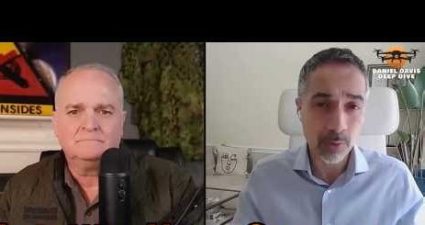
No Threat Can Force Iran’s Surrender /Trita Parsi & Lt Cl Daniel Davis
or go to
Aletho News Archives – Video-Images
From the Archives
An Expert Military Analysis of War with China
Actually, None is Necessary
By Fred Reed • Unz Review • December 13, 2020
The Correlation of Armed Forces: U.S. goods and services trade with China totaled an estimated $634.8 billion in 2019. Exports were $163.0 billion; imports were $471.8 billion. The U.S. goods and services trade deficit with China was $308.8 billion in 2019. Trade in services with China (exports and imports) totaled an estimated $76.7 billion in 2019. Services exports were $56.5 billion; services imports were $20.1 billion. The U.S. services trade surplus with China was $36.4 billion in 2019.
There is talk within the Washingtoniat of a possible war with China. Steve Bannon, who apparently was dropped on his head as a child, actually favors such a war. We hear the usual shoo-the-boobs alarm about how the Chinese are doing something terrible and we must gird our loins and American values and show them what for, bow wow, woof. The danger is that the current game of who-blinks-first in Asian waters might actually provoke a shooting war. You know the kind of thing: One warship refuses to get out of the way of another, a collision ensues, some retard lieutenant who signed up on waivers opens fire, and we’re off and running. It is not a good idea to let children play with matches.
The said war is discussed either in emotional terms by idiots or in purely naval terms by those familiar with such things, so we hear of the First Island Chain and the Second Island Chain and whose missiles against the other’s missiles and so on. This would be appropriate if we were fighting World War Two again. Which we aren’t. Let’s take a quick-and-dirty look at how such a war might go.
To begin the war, America would overestimate itself and underestimate China. This is doctrine in the Pentagon. … continue
Blog Roll
 Aletho News
- Theodore Postol: Iran’s Missiles & Drones Were Underestimated
- Iran To Target Military Industrial-Tech Complex That Facilitated Gaza Genocide
- Collapsing Empire: The Resistance Disarms ‘Israel’
- Suicide Should Not Be a Government Service
- Rethinking America’s greatest threat: Iran vs. Israel-Firsters
- Iran accuses adversaries of false flags to strain Turkey ties
- Poland rules out sending Patriot missiles to US/Israel amid war on Iran
- Tehran approves new Hormuz plan with major restrictions
- No Threat Can Force Iran’s Surrender /Trita Parsi & Lt Cl Daniel Davis
- UK’s New Pandemic Plan Would Turn Big Tech Into a Mass Location Tracking Network
- If Americans Knew
- Ann Coulter Rips Into Fox News for Iran War Coverage, Compares to False Rigged 2020 Election Reporting
- Joe Kent Urges Americans To Call White House and Congress To Object To Sending Troops Into Iran
- DNC Resolution to Reject AIPAC Funding Puts Democratic Leaders in the Hot Seat
- Swedish foundation to build 400 schools as over 650,000 Gaza children remain without education for 2 years
- Israeli army admits photshopping image of slain Lebanese journalist
- This is how Israel is systematically killing health workers under the cover of war in Lebanon
- Carrying life under fire: Israeli invasion of Lebanon leaves pregnant women facing deadly risks
- Champagne all around for the new death penalty (for Palestinians) law – Not a ceasefire Day 172
- Why are Palestinian books struggling to be seen on Amazon?
- The Line Between Affinity and Conspiracy
- No Tricks Zone
- New Study Finds Warming Saves Lives…Cold Temperatures 12 Times More Deadly Than Excess Heat
- German Science Blog Accuses PIK Climate Institute Of Hallucinating Climate Tipping Points
- Devastating Assessment Of Comirnaty Vaccine By Former Senior Pfizer Europe Toxicologist
- New Study: CO2 Is ‘Effectively Negligible’ As An Explanatory Climate Change Factor Since 2000
- Former Pfizer Toxicologist Dr. Helmut Sterz Tells Bundestag Hearing Pfizer Vaccine Should Have Never Been Approved
- Energy Expert: Germany’s Nuclear Phaseout Was A “500 Billion Euro Mistake”
- New Research: South Australia’s Mid-Holocene Sea Surface Temperatures Were 4°C Warmer Than Today
- Storing Green Energy To Last Germany 10 Days Would Require A 60-Million Tonne Battery
- New Studies: UK Sea Levels Were 4 Meters Higher Than Today During The Mid-Holocene
- Destructive Green New Deal: German Energy And Metal Group Warns Of Drastic Crisis
 Aletho News