Mattis Tells All Without Any Evidence
By Philip M. GIRALDI | Strategic Culture Foundation | 06.12.2018
The insanity runs deep in Washington but it has also briefly surfaced at Simi Valley in California at the Reagan National Defense Forum, which ran through last weekend. United States Secretary of Defense James “Mad Dog” Mattis was the keynote speaker on Saturday. He had a few interesting things to say, the most remarkable of which was the assertion that Russia had again sought to interfere in the 2018 midterm elections, which were completed last month.
Mattis, a Marine general who is sometimes considered to be the only adult in the room when the White House national security team meets, claimed that the bilateral relationship between Washington and Moscow had “no doubt” deteriorated still further due to the Russian activity, which he described as the Kremlin “try[ing] again to muck around around in our elections last month, and we are seeing a continued effort along those lines” with Russian President Vladimir Putin making “continued efforts to try to subvert democratic processes that must be defended. We’ll do whatever is necessary to defend them.”
Mattis did not address President Donald Trump’s cancellation of a meeting with Putin at the G20 summit in Buenos Aires, Argentina, a move which he reportedly supported. The cancellation was reportedly based on what has been described as an act of aggression committed by the Russian military against three Ukrainian naval vessels seeking to transit the Kerch Strait, which since the annexation of Crimea has been completely controlled by Moscow. The Ukrainians were aware of the Russian protocols for transiting through the area and chose to ignore them to create an incident, possibly as part of a plan to disrupt the Trump-Putin discussions. If that is so, they were successful.
Mattis was somewhat taciturn relating to his accusation regarding Moscow’s meddling. He provided absolutely no evidence that Russia had been interfering in the latest election and there have been no suggestions from either federal or state authorities that there were any irregularities involving foreigners. There was, however, considerable concern over possible ballot and voting manipulation at state levels carried out by the major political parties themselves, suggesting that if Mattis is looking for subversion of democratic processes he might start looking a lot closer to home.
The U.S. government has issued a general warning that “Americans should be aware that foreign actors — and Russia in particular — continue to try to influence public sentiment and voter perceptions through actions intended to sow discord.” Law enforcement and intelligence agencies have reportedly been working with private sector internet social networking companies, to include Twitter and Facebook, to shut down Russian and Iranian accounts in attempt to forestall any interference in either the campaigning or voting processes. Some Russians have even been indicted in absentia based on flimsy evidence but as they are in Russia they cannot be tried. One Russian student, Maria Butina, is still in jail in Virginia based on conflicting and flimsy evidence and it is not clear when she will be able to defend herself in court.
Beyond the general anti-Russia hysteria being encouraged by the media and congress, there are a number of problems with the Mattis assertion. First of all, beyond the fact that no actual evidence has been presented, it is irrational to assume that Russian intelligence services would waste their effort and burn their resources to attempt to accomplish absolutely nothing. Russia was not on the ballot last month and no candidates were running on any platform that would benefit Moscow in the slightest. To get caught “mucking around” would invite more sanctions and justify an increasingly hostile response from Washington, hardly a price that Putin would be willing to pay for little or nothing tangible.
Second, the intense investigations being carried out by the Robert Mueller Special Counsel’s office have to this point developed no information suggesting that Russia did anything in 2016 beyond the low-level probing and manipulating that every major intelligence agency does routinely to get a window into what an adversary is up to. To be sure, several Team Trump associates will likely be going to jail, but their crimes so far have consisted of perjury or tax fraud. Some, like former Trump lawyer Michael Cohen are seeking desperately to find a way to implicate the president in some grander scheme, but if there is anything actually there it has yet to be identified to the public.
Third, based on the evidence produced so far, the only two countries that may have cooperated with either Trump or the Deep State to influence the results of the 2016 election are Israel, which sought Trump intercession at the United Nations, and Britain, which may have engaged in a plot by the British intelligence and security services to conspire with CIA Director John Brennan to elect Hillary Clinton.
So, there we go again. Another vague accusation against Russia to convince the American public that there is a powerful enemy out to get us. And lest there be any shortage of enemies Mattis also mentioned always dangerous Iran, saying “… we cannot deny the threat that Iran poses to all civilized nations.” And, by the way, Mattis in his speech strongly supported an increased “defense” budget to deal with all the threats, saying somewhat obscurely that “Fiscal solvency and strategic solvency can co-exist.” Sure. In the wonderful world of Washington, more money can fix anything.
Trump’s Timidity is Letting Comey Off the Hook
By Ray McGovern • Consortium News • December 4, 2018
Because President Donald Trump has again pulled the rug out from under them, House Republicans face Mission Impossible on Friday when they try to hold ex-FBI Director James Comey accountable for his highly dubious authorization of surveillance on erstwhile Trump campaign adviser Carter Page.
Comey let go his unprecedented legal maneuver to have a court quash a subpoena for him to appear behind closed doors before the Republican-led House Judiciary Committee until the Democrats take over the committee in January. The current committee chair, Rep. Bob Goodlatte (R-VA), decried Comey’s use of “baseless litigation” in an “attempt to run out the clock on this Congress.”
The Judiciary Committee has jurisdiction over the Foreign Intelligence Surveillance Act (FISA); so the still secret FISA application “justifying” surveillance of Page is almost sure to come up.
Comey had wanted a public hearing so he could pull the ruse of refusing to respond because his answers would be classified. He has now agreed to a closed-door meeting on Friday, with a transcript, likely to be redacted, to appear a few days later.
In an interview with The New York Post last Wednesday, Trump acknowledged that he could declassify Comey’s damning Foreign Intelligence Surveillance Act warrant request to show how devastating those pages likely are, but said he would not do so “until they were needed,” namely, if a Democratic House starts going after him. “If they go down the presidential harassment track, if they want go and harass the president and the administration, I think that would be the best thing that would happen to me. I’m a counter-puncher and I will hit them so hard they’d never been hit like that,” Trump told the paper. He added: “It’s much more powerful if I do it then, because if we had done it already, it would already be yesterday’s news.”
But they are needed before Comey’s hearing on Friday. Barely a week will remain before Congress adjourns. Four weeks later Democrats take over the oversight committees.
Cowardice Deja Vu
This is not the first time Trump has flinched. On September 17 he ordered “immediate declassification” of Russia-gate documents, including FISA-related material. Four days later he backed down, explaining that he would leave it to the Justice Department’s inspector general to review the material, rather than release it publicly.
What exactly is in the FISA application, and why had House Intelligence Committee chair Devin Nunes, for example, kept pleading with Trump to declassify it? In July Nunes expressed hedged confidence “that once the American people see these 20 pages, at least for those that will get real reporting on this issue, they will be shocked by what’s in that FISA application” to surveil Page, a U.S. citizen.
Oddly, Trump echoed Nunes, telling The New York Post that, were he to declassify FISA warrant applications and other documents, all would “see how devastating those pages are.” But Trump blamed his reluctance to declassify on one of his lawyers, Emmet Flood, who thought it would be better politically to wait. “He didn’t want me to do it yet, because I can save it. … I think [eventual release] might help my campaign.” So Nunes et al. find themselves thrown under the bus, again.
Worse still, according to Comey’s attorney, the “accommodation” worked out with House Judiciary Committee includes a proviso that a representative of the FBI will be present on Friday to advise on any issues of confidentiality and legal privilege. The committee undertook to publish a transcript very quickly. Do not be surprised to see many Peter-Strzok-type responses: “I would really like to answer that question, but the FBI won’t let me.”
Afraid?
In an insightful posting, David Stockman, budget director for President Ronald Reagan, was puzzled about why Trump doesn’t seem to get what’s going on. I think, rather, that Trump does get it, and that Stockman’s puzzlement may be due mostly to his specific experience as budget director. In that role, Stockman did not have to pay much heed to the Deep State, so long as he did not demur about the obscenely excessive budgets automatically given to the FBI, DOJ, CIA, NSA, and the Pentagon.
With Trump it’s a different kettle of fish — and they are piranhas. Trump has ample reason to fear the Deep State is out to get him because it is. And by this point he seems to have internalized quite enough fear that it would be too dangerous to take on the the FBI and intelligence community. Needless to say, the stakes are exceedingly high — for both sides. As president-elect, Trump dismissed the usual warnings as to how things work in Washington. But he could hardly have missed Sen. Minority Leader Chuck Schumer’s attempt to ensure that Trump knows what he should be afraid of.
Not Afraid? Then ‘Really Dumb’
On Jan. 3, 2017, three weeks before Trump took office, Schumer told MSNBC’s Rachel Maddow, that President-elect Trump was “being really dumb” by taking on the intelligence community and doubting its assessments on Russia’s cyber activities: “Let me tell you, you take on the intelligence community, they have six ways from Sunday at getting back at you. So even for a practical, supposedly hard-nosed businessman, he’s being really dumb to do this.”
Schumer’s words came just three days before then-National Intelligence Director James Clapper and the heads of the FBI, CIA, and NSA descended upon the president-elect with the misnomered “Intelligence Community Assessment” — a rump, evidence-free embarrassment to serious practitioners of intelligence analysis, published that same day, alleging that Russian President Vladimir Putin had done what he could to get Trump elected.
Adding insult to injury, after the January 6, 2018 briefing of the president-elect by the Gang of Four, Comey asked the others to leave, and proceeded to brief Trump on the dubious findings of the so-called “Steele dossier” — opposition research paid for by the Democrats (and, according to some reports, by the FBI as well) — with unconfirmed but scurrilous stories about Trump cavorting with prostitutes in Moscow, etc., etc. (And according to The Washington Post, that incident with hookers was written by a Clinton operative.) That opposition research was apparently used in the FISA warrant request, without revealing its provenance to the judge.
‘This Russia Thing’
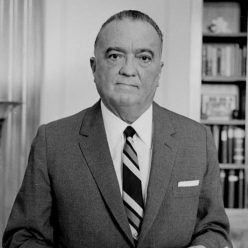
Hoover: Model for Comey. (Wikipedia)
It seems to have taken Trump a few months to appreciate fully that he was being subjected to the classic blackmail-type advisory previously used with presidents-elect by the likes of J. Edgar Hoover. Indeed, this may be what Trump had in mind when he told Lester Holt in May 2017 that he had fired Comey over “this Russia thing.” (Trump can be his worst enemy when he opens his mouth.)
Comey’s closed-door deposition is now scheduled for the 77th anniversary of the Japanese surprise attack on Pearl Harbor. But don’t look for any surprise attack on Comey this December 7 from Judiciary Committee members, highly vulnerable though he is.
With just a few days left before Congress adjourns, House Republicans, like their President, have pretty much let the clock run out on them. Few will see much percentage at this late date in “taking on the intelligence community.” Trump has already pretty much thrown them under the bus.
The leadership of the three House committees with purview over Russia-gate matters — Judiciary, Intelligence, and Government Operations — changes next month. So while Friday had seemed to be shaping up as a key day for confronting Comey — and for getting answers to questions on Russia-gate — the day will likely land with an anticlimactic thud. Even if the committee is able to expose additional misdeeds not already known, nothing much is likely to happen before Christmas.
After that, the three committees and their aborted work will be history.
The dominant mainstream media narrative about Russia-gate — ignoring FBI-gate — will hop happily into the new year. And no congressional “oversight” committee will dare step up to its constitutional duty, despite a plethora of documentary evidence on FBI-gate. And why? Largely because “they” of the Deep State “have six ways from Sunday at getting back at you.”
Most consequential of all, any significant improvement in relations with Russia will remain stymied. And the MICIMATT (Military-Industrial-Congressional-Intelligence-Media-Academia-Think Tank) complex, with its Deep-State enforcer, will have won yet another round. Merry Christmas.
Ray McGovern works with Tell the Word, a publishing arm of the ecumenical Church of the Saviour in inner-city Washington. He worked for the senior Bush when he was director of the CIA and then briefed him mornings, one-on-one, with the President’s Daily Brief during the first Reagan administration. In Jan. 2003, Ray co-founded Veteran Intelligence Professionals for Sanity (VIPS) and still serves on its Steering Group.
What Foreign Threats?
The biggest threats to America come from its “friends”
By Philip Giraldi • Unz Review • December 4, 2018
One of the local Washington television stations was doing a typical early morning honoring our soldiers schtick just before Thanksgiving. In it soldiers stationed far from home were treated to videolinks so they could talk to their families and everyone could nod happily and wish themselves a wonderful holiday. Not really listening, I became interested when I half heard that the soldier being interviewed was spending his Thanksgiving in Ukraine.
It occurred to me that the soldier just might have committed a security faux pas by revealing where he was, but I also recalled that there have been joint military maneuvers as well as some kind of training mission going on in the country, teaching the Ukrainian Army how to use the shiny new sophisticated weapons that the United States was providing it with to defend against “Russian aggression.”
Ukraine is only one part of the world where the Trump Administration has expanded the mission of democracy promotion, only in Kiev the reality is more like faux democracy promotion since Ukrainian President Petro Poroshenko is clearly exploiting a situation that he himself provoked. He envisions setting himself up as a victim of Moscow to aid in his attempts to establish his own power through a security relationship with Washington. That in turn will help his bid for reelection in March 2019 elections, in which his poll numbers are currently running embarrassingly low largely due to the widescale corruption in his government. Poroshenko has already done much to silence the press in his county while the developing crisis with Russia has enabled him to declare martial law in the eastern parts of the country where he is most poorly regarded. If it all works out, he hopes to win the election and subsequently, it is widely believed, he will move to expand his own executive authority.
There also has to be some consideration the encounter with the Russians on the Kerch Strait was contrived by Poroshenko with the assistance of a gaggle of American neoconservative and Israeli advisers who have been actively engaged with the Ukrainian government for the past several years. The timing was good for Poroshenko for his own domestic political reasons but it was also an opportunity for the neocon warmongers that surround Trump and proliferate inside the Beltway to scuttle any possible meeting between a vulnerable Donald Trump and Vladimir Putin at the G20 gathering in Argentina.
The defection of Trump’s lawyer Michael Cohen, together with the assumption that a lot of anti-Trump dirt will be spilled soon, means that the American president had to be even more cautious than ever in any dealings with Moscow and all he needed was a nod of approval from National Security Adviser John Bolton and Secretary of State Mike Pompeo to cancel the encounter. A heads-of-state meeting might not have solved anything but it certainly would be better than the current drift towards a new cold war. If the United States has only one vitally important relationship anywhere it is with Russia as the two countries are ready, able and apparently willing to destroy the world under the aegis of self-defense.
Given the anti-Russian hysteria prevailing in the U.S. and the ability of the neocons to switch on the media, it should come as no surprise that the Russian-Ukrainian incident immediately generated calls from the press and politicians for the White House to get tough with the Kremlin. It is important to note that the United States has no actual national interest in getting involved in a war between Russia and Ukraine if that should come about. The two Eastern European countries are neighbors and have a long history of both friendship and hostility but the only thing clear about the conflict is that it is up to them to sort things out and no amount of sanctions and jawing by concerned congressmen will change that fact.
Other Eastern European nations that similarly have problems with Russia should also be considered provocateurs as they seek to create tension to bind the United States more closely to them through the NATO alliance. The reality is that today’s Russian Federation is not the Soviet Union and it neither aspires to nor can afford hegemony over its former allies. What it has made very clear that it does want is a modus vivendi where Russia itself is not being threatened by the West.
Recent military maneuvers in Poland and Lithuania and the stationing of new missiles in Eastern Europe do indeed pose a genuine threat to Moscow as it places NATO forces on top of Russia’s border. When Russia reacts to incursions by NATO warships and planes right along its borders, it is accused of acting aggressively. One wonders how the U.S. government would respond if a Russian aircraft carrier were to take up position off the eastern seaboard and were to begin staging reconnaissance flights. Or if the Russian army were to begin military exercises with the Cubans? Does anyone today remember the Bay of Pigs?
When it comes to international conflicts context is everything. Seeing the incident between Russia and Ukraine in Manichean terms as an example of Moscow’s aggressive instincts is satisfying in some circles, but it does not in any way reflect the reality on the ground. Internal politics of the two countries combined with deliberate fabrications that are expected to generate a certain response operate together to create a largely false narrative for both international and domestic consumption. Unfortunately, narratives have consequences: in this case, the sacrifice of the possibly beneficial meeting between Trump and Putin.
The same dynamic works vis-à-vis Washington’s other enemy du jour Iran. In the case of Russia, useless “friend” Ukraine is pulling the strings while regarding Iran it is conniving Israel and Saudi Arabia. Iran has been accused of being the world’s leading sponsor of terror, of destabilizing the Middle East, and of having a secret nuclear weapon program that will be used to attack Israel and Europe. None of those assertions are true. The terrorism tag comes from the country’s relationship with Hezbollah, which is only a terrorist group insofar as it is hostile to Israel and pledged to resist any future Israeli invasion of Lebanon. Washington and Israel have pushed the terrorism label for Hezbollah, but most Europeans have begun to disregard the designation since the group has become a part of the Lebanese government.
And regarding destabilizing the Middle East, that has largely been the end result of actions undertaken by the United States, Israel and the Saudis, while the alleged Persian nuclear weapons program is a fantasy. If someone in the U.S. national security apparatus had any brains the United States would work to improve relations with Iran real soon as the Iranians would in the long run quite likely prove to be better friends than those rascals who are currently running around using that label.
And there are other friends in unlikely places. Beleaguered British Prime Minister Theresa May is wailing loudly against a Trump threat to reveal classified documents relating to Russiagate. The real problem is that the documents apparently don’t expose anything done by the Russians. Rather, they seem to appear to reveal a plot by the British intelligence and security services working in collusion with then CIA Director John Brennan to subvert the course of the 2016 election in favor of the Deep State and Establishment favorite Hillary Clinton. How did that one work out?
So how about it? Teenagers who get in trouble often have to ditch their bad friends to turn their lives around. There is still a chance for the United States if we keep our distance from the bad friends we have been nurturing all around the world, friends who have been convincing us to make poor choices. Get rid of the ties the bind to the Saudis, Israelis, Ukrainians, Poles, and yes, even the British. Deal fairly with all nations and treat everyone the same, but bear in mind that there are only two relationships that really matter – Russia and China. Make a serious effort to avoid a war by learning how to get along with those two nations and America might actually survive to celebrate a tricentennial in 2076.
FBI raids home of whistleblower who had ‘dirt’ on Clinton Foundation, Mueller
RT | December 1, 2018
More than a dozen FBI agents searched for six hours the house of a contractor who had given Congress and the DOJ documents about the Clinton Foundation and the Uranium One scandal, implicating then-FBI director Robert Mueller.
Sixteen agents showed up at the Maryland home of Dennis Nathan Cain on November 19, the Daily Caller reported this week, citing Cain’s attorney Michael Socarras. They demanded to see the documents Cain had already turned over to the Department of Justice inspector-general and the House and Senate intelligence committee.
“I cannot believe the Bureau informed the federal magistrate who approved the search warrant that they wanted to search the home of an FBI whistleblower to seize the information that he confidentially disclosed to the IG and Congress,” said Socarras. He also objected to the fact that the FBI at no point reached out to him, even though Cain provided the agents with his contact information, calling that “serious misconduct.”
FBI spokesman Dave Fitz confirmed to the Daily Caller that the bureau had conducted “court authorized law enforcement activity,” declining to comment further.
The search warrant, signed by federal magistrate Stephanie A. Gallagher in the US District Court for Baltimore, said that Cain possessed “stolen federal property.”
Cain informed the agents that he was a federally protected whistleblower, but gave them the documents at their insistence, Socarras said. Even so, they searched his house for hours afterward.
What were the agents looking for? According to the Daily Caller, they were after the document suggesting that Robert Mueller – now special counsel in charge of the “Russiagate” probe targeting President Donald Trump, but FBI director back in 2001-2013 – failed to investigate allegations of criminal misconduct in the case of Uranium One.
The Canadian-based mining company controls over 20 percent of the US uranium supply, and was sold to the Russian conglomerate Rosatom in 2010. The sale needed to be approved by the Committee on Foreign Investment in the United States (CIFUS), which was chaired by then-Secretary of State Hillary Clinton.
Since then, multiple whistleblowers have revealed claims of misconduct, bribery and fraud on part of the people involved in the sale, even suggesting a “pay for play” scheme in which the Clinton Foundation received millions of dollars in donations in exchange for greenlighting the deal. Republicans have also pointed to Bill Clinton’s $500,000 fee for a speech in Moscow in 2010 as evidence the Clintons were peddling influence for Russian money.
Democrats have dismissed the apparent scandal as a right-wing conspiracy theory, and Clinton herself called the accusations of wrongdoing “baloney.”
In April this year, then-Attorney General Jeff Sessions asked the Utah-based US Attorney John Huber to investigate both the Uranium One probe and the FBI investigation into Clinton’s use of a private email server. That second probe was the subject of a scathing report in June by the DOJ IG Michael Horowitz, the same official to whom Cain gave the documents as a whistleblower. The status of that investigation is currently unknown.
Also on rt.com:
FBI documents detail Clinton and Mueller’s own ‘Russiagate’ – but they’re classified
Hillary Clinton Ordered To Answer Additional Questions Under Oath About Private Email Server
By Tyler Durden – Zero Hedge – 11/16/2018
A federal judge has ordered Hillary Clinton to respond to further questions, under oath, about her private email server.

Following a lengthy Wednesday court hearing, Judge Emmet G. Sullivan (who is also presiding over fmr. National Security adviser Michael Flynn’s case), ruled that Clinton has 30 days to answer two additional questions about her controversial email system in response to a lawsuit from Judicial Watch.
Hillary must answer the following questions by December 17 (via Judicial Watch)
- Describe the creation of the clintonemail.com system, including who decided to create the system, the date it was decided to create the system, why it was created, who set it up, and when it became operational.
- During your October 22, 2015 appearance before the U.S. House of Representatives Select Committee on Benghazi, you testified that 90 to 95 percent of your emails “were in the State’s system” and “if they wanted to see them, they would certainly have been able to do so.” Identify the basis for this statement, including all facts on which you relied in support of the statement, how and when you became aware of these facts, and, if you were made aware of these facts by or through another person, identify the person who made you aware of these facts.
Sillivan rejected Clinton’s assertion of attorney-client privilege on the question over emails “in the State’s system,” however he did give Clinton a few victories:
The court refused Judicial Watch’s and media’s requests to unseal the deposition videos of Huma Abedin, Cheryl Mills and other Clinton State Department officials. And it upheld Clinton’s objections to answering a question about why she refused to stop using her Blackberry despite warnings from State Department security personnel. Justice Department lawyers for the State Department defended Clinton’s refusal to answer certain questions and argued for the continued secrecy of the deposition videos. –Judicial Watch
Wednesday’s decision is the latest twist in a Judicial Watch Freedom of Information Act (FOIA) lawsuit targeting former Clinton deputy chief of staff, Huma Abedin. The case seeks records which authorized Abedin to conduct outside employment while also employed by the Department of State.
“A federal court ordered Hillary Clinton to answer more questions about her illicit email system – which is good news,” said Judicial Watch President Tom Fitton. “It is shameful that Judicial Watch attorneys must continue to battle the State and Justice Departments, which still defend Hillary Clinton, for basic answers to our questions about Clinton’s email misconduct.”
The People ‘Stopping Election Interference’ Are the Ones Who Are Actually Rigging the Election
By Daisy Luther | Organic Prepper | October 15, 2018
Last week, Mark Zuckerberg made the media rounds to give a rather shady explanation of why Facebook suddenly closed hundreds of incredibly popular pages in what’s being called The Alternative Media Purge. Zuckerberg accused the closed pages, many of which had millions of fans, of spreading “political spam.”
Ironically, many of the pages that were shut down had absolutely nothing to do with politics or elections, unless you include the fact that they recommended skipping the entire circus. None of these pages were accused of being “the Russians,” who were the scapegoat of the last surprise presidential election results. A couple of the things that many of the pages did have in common, incidentally, were an anti-war outlook and a police watchdog mentality.
But as far as making the election more resistant to interference, the result of the Alternative Media Purge is the diametric opposite. People will now only get one side of the story.
The alternative media changed everything during the last presidential election.
When Donald Trump announced his candidacy for president, much of the world snickered. Who was this reality television star to take on part of the Clinton Empire? There was no way, people scoffed, that Trump could possibly win.
It’s a proven fact that Hillary Clinton was in cahoots with the mainstream media throughout her candidacy. And the reason it’s proven is that organizations like Wikileaks released the evidence of it in a series of emails with her campaign manager and people like Donna Brazile of CNN. Brazile finally publicly admitted that she’d done so and that it was her “job to make all our Democratic candidates look good.”
The alternative media jumped on this story, as well as many other questionable emails that were divulged by Wikileaks, while the mainstream pretended that none of this was happening. And the mainstream did very little to cover the Democratic National Convention, during which the nomination was stolen from Bernie Sanders, who – if we’re being honest – probably would have had a much better chance of beating Trump than the notoriously unlikable Clinton. Here’s my coverage of it at the time.
The alternative media, never a fan of the goings-on in Clintonland, from the Haiti scandal all the way back to the “suicide” of Vince Foster in Arkansas, jumped on these stories as well as stories about her debatable health.
The fact that we had a robust alternative media at the time meant that these stories were heard. At the same time, the mainstream media was busy painting Donald Trump as a neo-Nazi fascist who hated minorities and would nuke somebody the day he got into office.
Now, imagine there had been no alternative media during that election.
If we hadn’t have had an alternative media telling other stories – enough stories that people were able to get a fuller picture of who both of these candidates really were – things might have turned out entirely differently. And while that would be all right with any number of people who loathe Donald Trump, would it have been a “fair” election?
Let’s look back even further at the candidacy of Congressman Ron Paul back in 2012. Dr. Paul was an incredible candidate with a glowing political resume, but he didn’t get the time of day. There was a media blackout on his candidacy and finally, he was forced to withdraw from the race. Many of us were budding alternative journalists at that time learned a valuable lesson during that election – what we were doing was important. There needed to be an option instead of letting the mainstream media present the only options and information to people.
By the time the 2016 election rolled around, those disappointed in how Dr. Paul was treated were determined that it would not happen again. That a candidate with a background full of sordid scandals would not get through an election cycle unscathed, painted as a glowing Madonna who would save us all.
So… during the fierce battle between Clinton and Trump, both sides of the story were told and told loudly.
Alternative journalists engaged the power of social media to connect with people who wanted to know more and they did it to such a degree that everything changed. Clinton, originally the front-runner, was suddenly in the fight of her life against a candidate that most people had considered a joke.
And that’s when everyone started blaming the Russians.
In a shocking article, the Washington Post printed a long list of websites that they claimed were run by “the Russians.” Many of these sites were run by folks I know personally who are decidedly not Russians, but simply bloggers who wanted to share the truth as they identified it. (This article was removed from WaPo – I’m guessing due to threats about legal action by many of the site owners accused of working for Russia.)
Although investigation after investigation has been undertaken, there’s still no proof that Russia tampered with the election, nor that they colluded with Donald Trump.
Years later, the Washington Post sticks to their story with headlines like “Without the Russians, Trump Wouldn’t Have Won.” In the piece, they admitted that there isn’t any official proof and they cited Buzzfeed.
While the intelligence agencies are silent on the impact of Russia’s attack, outside experts who have examined the Kremlin campaign — which included stealing and sharing Democratic Party emails, spreading propaganda online and hacking state voter rolls — have concluded that it did affect an extremely close election decided by fewer than 80,000 votes in three states. Clint Watts, a former FBI agent, writes in his recent book, “Messing with the Enemy,” that “Russia absolutely influenced the U.S. presidential election,” especially in Michigan and Wisconsin, where Trump’s winning margin was less than 1 percent in each state.
We still don’t know the full extent of the Russian interference, but we know its propaganda reached 126 million people via Facebook alone. A BuzzFeed analysis found that fake news stories on Facebook generated more social engagement in the last three months of the campaign than did legitimate articles: The “20 top-performing false election stories from hoax sites and hyperpartisan blogs generated 8,711,000 shares, reactions, and comments on Facebook.” Almost all of this “fake news” was either started or spread by Russian bots, including claims that the pope had endorsed Trump and that Hillary Clinton had sold weapons to the Islamic State. (source)
Buzzfeed ? Isn’t that where you go to take a quiz to find out what kind of potato you are?
That leads us to Facebook’s potential election interference
Last week, as I mentioned, hundreds of Facebook pages were shut down without warning. Many of these sites also lost their Twitter accounts on the same day. This is reminiscent of last month’s attack on Alex Jones.
Anyone who disagrees with the establishment is being abruptly silenced.
Zuckerberg and friends are saying that this is so that we can be sure we don’t have election interference in the midterms… but what they’re really doing is interfering in the elections themselves.
They’ve gloated about everything from “featuring Facebook pages that spread disinformation less prominently so that fewer people potentially see them” to [purging] “559 politically oriented pages and 251 accounts, all of American origin, for consistently breaking its rules against “spam and coordinated inauthentic behavior.”
The pages which have been removed or shadowbanned have run the gamut of political philosophies, but the fact is, people like Mark Zuckerberg, the folks at Google, and Jack Dorsey of Twitter are deciding which information gets to be seen. They’re deciding whether something is “disinformation” or truth. They’re deciding if people who have spent years building a following get to still reach the people who opted to follow them.
Because Facebook reaches more than 2 billion people each day, this is a problem of epic proportions.
I believe that it is Facebook itself that is tampering with the election by manipulating what they want people to see. If the alternative media changed everything in the 2016 election due to the availability of more information, Facebook will change future elections due to their manipulation of the information users are allowed to see.
If you are conservative or antiwar or anti-overreaching-government or libertarian, you’re now persona non grata. Even if you aren’t in the minority, you’ll be made to feel like you are in the giant echo chamber of “approved media.” If you support a different candidate than Big Tech, prepare to be marginalized, silenced, and ignored. That holds true whether you opt for anyone other than their “choice.” They WILL control the outcome of the presidential election the next time around.
If you really want to see what election interference looks like, you’re getting a live demonstration right now.
Co-founder of Steele dossier firm Fusion GPS refuses to testify before House committee
RT | October 12, 2018
Glenn Simpson, co-founder of Fusion GPS, a research firm that commissioned the notorious anti-Trump Steele dossier while funded by Hillary Clinton’s campaign money, has refused to testify before the House Judiciary Committee.
In a scathing letter*, unusually strong-worded for legal communication, lawyers for Simpson argued that the House Judiciary Committee is not seeking the truth but is aiming to “discredit and otherwise damage witnesses to Russia’s interference in the 2016 election.”
The subpoena, issued to Simpson by the committee, is thus only a smokescreen that will be used by the panel to further tarnish Simpson’s reputation with “selective” leaks from a closed-door deposition, the letter claims.
Those who have already suffered from the committee’s actions, according to the letter, are former British spy and author of the notorious Trump dossier – Christopher Steele – and former associate deputy attorney general Bruce Ohr.
Simpson, who was set to testify on October 16, was thereby invoking his First and Fifth Amendment rights, and would not appear before the lawmakers, the letter says.
Any attempt to shed light on the ties between Fusion GPS and the Obama officials at the FBI and the Department of Justice are no more than “an effort to protect a president who has sought to placate and curry favor with a hostile foreign power,” it continues.
Proving a supposed connection between Trump and Russia had been the whole point of the Steele dossier – however, a protracted investigation has so far not produced any proof to back up the collusion claim, while racking up a bill of over $17 million in taxpayers’ money.
Trump and his Republican supporters, meanwhile, maintain that the dossier’s entire premise is illegal: funded by Clinton campaign money, it was used by the FBI as grounds to spy on Trump campaign adviser Carter Page. The dossier includes some salacious allegations against Trump, including him hiring prostitutes in Moscow to urinate on the hotel bed Barack Obama had used.
Trump ordered “immediate declassification” of all the documents related the FBI’s surveillance of his campaign in late September but backed down on his decision after consulting with the DOJ. Trump said that the documents would still be published upon a review by the Department’s Inspector General, noting that he could declassify them at any minute. The materials would have also included the FBI interviews with Bruce Ohr – whose wife used to work for Fusion GPS – and the FISA warrant applications to spy on Page.
Simpson’s refusal to testify drew anger from Republicans.
FBI documents detail Clinton and Mueller’s own ‘Russiagate’ – but they’re classified
RT | October 3, 2018
The FBI is facing new calls to declassify documents relating to the sale of US uranium to a Russian company, documents that could implicate Hillary Clinton, Barack Obama, and ‘Russiagate’ witch-hunter Robert Mueller.
While Clinton and crew relentlessly push the idea that the Trump campaign colluded with Russia in the run-up to the 2016 election, and while Special Counsel Robert Mueller searches with a magnifying glass for any sign of this collusion, all parties involved are much quieter when it comes to the Uranium One scandal.
Among a trove of documents relating to the controversial deal, the FBI has identified 37 pages that could shine a light on why then-Secretary of State Hillary Clinton and the Obama administration approved the deal.
The pages were recently added to the agency’s Freedom of Information Act online vault. The only problem – they’re classified.
The reasons given for the classification will sound familiar to anyone following President Trump’s recent struggle to declassify another set of FBI documents: doing so would violate the privacy of individuals involved, would place national security at risk, would disclose secret law enforcement techniques, and would reveal confidential inter-agency communication, among others.
What we do know about Uranium One reads like a Cold War spy thriller.
The debacle began in 2009 when state-owned Russian atomic energy firm Rosatom was in talks to buy part of Canadian-based mining company Uranium One, and with it control over 20 percent of America’s uranium supply.
As the deal was being hashed out, the FBI planted a spy posing as a consultant, businessman William Douglas Campbell, in Rosatom. Campbell uncovered evidence that Rosatom’s main executive in America, Vadim Mikerin, was involved in bribery, extortion, and money laundering, as he sought to gain “improper business advantages” for US firms that worked with a Rosatom-owned firm he chaired.
The FBI compiled Campbell’s evidence, and Mikerin was charged and deported, but not until summer 2018. Back in 2010, the Obama administration approved the sale of Uranium One to Rosatom anyway.
The sale needed to be approved by the Committee on Foreign Investment in the United States (CIFUS), which was chaired by Hillary Clinton. Campbell told three separate Congressional committees that Moscow had hired lobbying firm APCO Worldwide to use its influence with Clinton to negotiate the deal, for which the Clinton Foundation would receive generous kickbacks.
Democrats dismissed the scandal as the stuff of right-wing conspiracy theory, and Clinton herself called accusations of wrongdoing “baloney.” Still, Republicans held that something was amiss, citing Bill Clinton’s $500,000 fee for a speech in Moscow in 2010 as proof the Clintons were peddling influence for Russian money. At the same time, Mrs. Clinton was pushing for a great “reset” in US-Russia relations. The plot thickens.
The FBI director at the time? None other than Robert Mueller, currently the Witch-Hunter-in-chief, leading the crusade against the Trump team. What a difference eight years make.
Attorney General Jeff Sessions announced in March that a federal prosecutor from Utah, John Huber, would look into both the Uranium One deal and FBI misconduct in the Clinton email investigation. Trump too seemed eager to get to the bottom of the scandal, and has regularly bashed Clinton for her alleged role in facilitating the sale.
The Justice Department’s probe has largely taken place on the sidelines, has generated few headlines, and has not made its findings, if any, public. Why then, are the FBI’s documents, clearly of critical importance to understanding the whole debacle, still secret?
“Either the United States, eyes wide open, approved giving uranium assets to a corrupt Russia, or the FBI failed to give the evidence of criminality to the policymakers before such a momentous decision,” wrote The Hill’s John Solomon. If the second option were true, the next step would be establishing whether the agency withheld this evidence knowingly, or through simple negligence.
According to Solomon, an investigative reporter who first disclosed Campbell’s involvement in Rosatom as an FBI informant, Campbell maintains that both then-President Obama and then-Director Mueller were briefed by agents about Rosatom’s shady activities, but the sale was allowed to go through because of “politics.”
According to another of Solomon’s sources, “There is definitely material (in the 37 pages) that would be illuminating to the issues that have been raised… somebody should fight to make it public.”
Former Arkansas Governor Mike Huckabee (R) has called on the FBI to “stop investigating high school yearbooks and start declassifying Uranium One,” and has urged Senate Republicans to pressure the agency into declassifying the documents. Failing that, Huckabee suggested that Trump order the declassification, which he is well within his power to do so.
Doing so would not only bring the truth that much closer to being revealed, but could also give Trump the opportunity to score some political points against his old nemeses: surely a tempting prospect.
Researcher Takes on Google’s Subversive Electioneering

Sputnik – September 21, 2018
Big tech companies like Google have the power to “shift upwards of 12 million votes with no one knowing they’re doing so,” a research psychologist told Radio Sputnik Thursday, underscoring the influence profit-making firms can have on public elections.
That, he said, is too much power for “just a couple of executives” and is why tech giant monopolies need to be thought of as public utilities and not private entities.
“Research I have been directing in recent years suggests that Google, Inc., has amassed far more power to control elections — indeed, to control a wide variety of opinions and beliefs — than any company in history has ever had,” research psychologist Robert Epstein says.
In 2015, Dr. Robert Epstein, senior research psychologist at the American Institute for Behavioral Research and Technology, wrote a groundbreaking paper about the Search Engine Manipulation Effect (SEME), published in the Proceedings of the National Academy of Sciences of the United States of America.
“Google’s search algorithm can easily shift the voting preferences of undecided voters by 20 percent or more — up to 80 percent in some demographic groups — with virtually no one knowing they are being manipulated,” Epstein wrote in Politico at the time.
That kind of a margin could tilt an election, he noted. Indeed, Epstein’s research shows that Google manipulated search results to display pro-Hillary Clinton results higher on the page than others.
With Google reaching a billion users last year, according to The Verge, and the company collecting over $100 billion a year in revenue, the tech giant has acquired an unheard-of power over how we think and how we access information.
Epstein spoke with Radio Sputnik’s Loud & Clear Thursday about the next phase of his studies: an “electronic cat and mouse game,” a system for collecting, monitoring and analyzing data that can identify and quantify “every single manipulation, every single kind of bias there is,” to hold tech giants accountable.
”I’ve calculated that the big tech companies can shift upwards of 12 million votes with no one knowing they’re doing so without and leaving a paper trail for the authorities to track,” Epstein told Sputnik.
Google claims user activity causes the manipulation, but Epstein said his research found that it affected both red and blue states and that the first 10 results in searches were consistently biased towards Hillary Clinton.
“All reasonable people… will agree that no private company should have the power to decide what content billions of people around the world will see or will not see. Just think about that issue. Whoever that power should be given to, it’s certainly not to a private company in Mountain View, California; it’s just not. We might need entities that are spin offs from the United Nations, we might need nonprofits, nonpartisan groups… we can all agree it can’t be in the hands of a private company. That’s absurd.”
“The search engine itself is an index to what’s on the internet; it’s an index, basically, to all knowledge. Well, the internet doesn’t belong to Google. The internet belongs to the world, and the index to the internet must be public. And by public I don’t just mean public like, USA; it has to be controlled internationally. There has to be transparency; a lot of cooperation is going to be necessary. And I’m not saying it’s going to be easy, but the fact is, that index has to be public — period.”
“In terms of laws or regulations or antitrust actions, there’s some things in motion. There’s lots going on in the EU in that regard; people are gearing up in Washington, DC. Right now there are hearings, there’s talk about antitrust actions — I think some things will happen. I don’t think law or regulation is going to help us very much, because law and regulation moves very slowly. Painfully slowly — sometimes, in fact, it gets stalled, completely stalled. Whereas tech, though, tech moves lightning fast,” Epstein said.
“There is a solution here — in some ways it’s a lighter touch because it doesn’t involve changes in laws and regulations — and that is monitoring. I successfully developed and implemented, deployed a monitoring system in 2016 that was written up in the Washington Post… I’m working now with business partners and with academics on three continents to scale up and broaden what we did in 2016. You have to envision here, probably within the next year, the beginnings of what I call a ‘worldwide ecology of passive monitoring systems.’ That is: systems that can’t be detected, that will show us 24/7 what these big tech companies are showing people or what they’re telling people through these new audio devices.”
“By collecting that data, by monitoring it, by analyzing it rapidly, we will be able to detect, very precisely, when Mark Zuckerberg sends out a targeted ‘go out and vote’ message, for example, that could easily flip an election. We’ll see whether there is bias in search results or search suggestions. We will actually be able to quantify shadowbanning, very precisely, on Twitter and elsewhere. So every single manipulation, every single kind of bias there is, we’ll be able to capture it at the moment. You see, it’s all ephemeral content; it’s transitory. It comes, it goes, it’s gone, it’s not stored anywhere, and then we speculate about what’s going on,” he said.
“Well, with monitoring systems in place, we won’t have to speculate. I believe that these systems will make the big tech companies accountable to the public for the first time. And there’s another advantage here: whereas law and regulation is always behind whatever’s going on, monitoring systems basically are their new technologies. We’re fighting tech with tech, and monitoring systems can keep up with whatever is happening in technology. As technology changes, matures, whatever, the monitoring systems change and mature; they adapt. A cat and mouse game, an electronic cat and mouse game that never stops, maybe goes on for decades.”
Noting how the first companies that provided services such as electrical power, fire departments and roads were initially private but are today thought of as ubiquitous public utilities, Epstein told hosts Walter Smolarek and John Kiriakou that “that’s what happening now with these big tech companies, particularly the search engines, but I would argue we could even put Facebook into that category as well. Once a market is dominated by a monopoly, once the barriers to entry are so large that really no one can get in, and that’s where we are now, and once we become dependent on these services, once they become essential services, which certainly Google’s search engine is, once that happens we have to look at it through a different lens. And that’s happened over and over again in recent history, and I think that’s where we are right now.”
“There is a big difference though,” between older monopolies like Standard Oil and AT&T and internet companies like Google and Facebook, he said. “Those companies were doing things that, for the most part, we could see and we could understand. Whereas what Google and Facebook and Twitter are doing — a lot of what they’re doing we can’t see, we can’t understand. That’s what my discoveries have been about for more than five years. We’re talking about extremely powerful tools for altering people’s thinking.”
“Let’s think about Google for what it really is: a surveillance machine,” he said.
“Let’s think about its real effect, which is the control of thinking and behavior and opinion. Basically it’s the most powerful mind control machine that has ever — ever — been invented in human history.”
“That brings me to the key question: what if the mind control machine doesn’t want you thinking bad things about the mind control machine?”
“This is not AT&T,” he said. “It’s a different beast entirely — and it’s a scary beast.”
Epstein said there wasn’t much recourse in the field of the law. He noted that Google gets sued — a lot — and you can view the catalog of cases brought against the tech giant at Google Crimes, but “when these cases go to court, 99 times out of 100 Google wins, hands down. Because we don’t have laws and regulations that protect us from these companies, and over and over again, the courts rule that these companies are protected, either by [Section 230 of the Communications Decency Act of 1996] or by the First Amendment right to free speech.”
Epstein noted that court rulings repeatedly recognized Google’s right to free speech as a private company. He further pointed out that Google, with “one of the highest profit margins of any country in history,” can simply shrug off any fines leveled against it for its conduct — such as the European Union did earlier this year, when it fined Google $5.1 billion, or last year when it leveled a $2.7 billion fine against it for having biased search results.
Epstein told Radio Sputnik about what he called “a landmark article” by him that will be published in the periodical Fast Company in the next few days, which is presently titled, “How Big Tech Could Quietly Hijack Democracy: A Researcher Describes 10 Ways that the Big Tech Companies Can Shift Millions of Votes in the Midterm Elections Without Anyone Knowing.”
“These are not old-fashioned techniques,” he said, like mudslinging ads or untrue billboards and TV ads. “This is all clandestine, this is all invisible to users and all involves ephemeral content, which means it doesn’t leave a paper trail. And it’s all in the hands of just a couple of executives in the northwest corner of the United States. And it’s affecting not just people here, it’s affecting billions of people around the world… Something is wrong with this system.”
See also:
Google Seeks to Dictate Truth Using Dubious New Technology
Google’s Pro-Clinton Search Bias Reflects US Tech Firms’ Ties to ‘Deep State’
US: NATO Think Tank Continues Pre-Election Interference
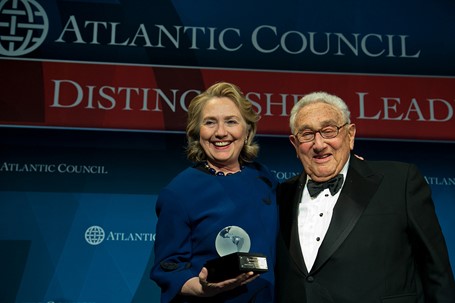
By Rick Rozoff | Ron Paul Institute | August 29, 2018
On August 24 what is in effect the social media warfare division of the Atlantic Council published an article accusing the Russian television and print news outlet RT of running a one-sided attack against the Democratic Party and several leaders thereof ahead of this November’s politically pivotal Senate and House of Representatives elections. (Thirty-five Senate seats and all 435 House seats are being contested.)
The Atlantic Council, until recently kept comparatively in the shadows for obvious reasons, is a think tank that has more than any other organization effected the transition of the North Atlantic Treaty Organization from a seeming Cold War relic with the break-up of the Warsaw Pact and the dissolution of the Soviet Union in 1991 to the world’s only and history’s first international military network with 70 members and partners on six continents currently. All thirteen new full member states are in Eastern and Central Europe; four of them border Russia.
Three months ago it began collaborating with Facebook to police and censor that and (presumably) soon after other social media companies which in recent decades have become the major sources of information and communication for the seven billion citizens of the planet. No modest undertaking.
This is by way of follow up to a Directive on Social Media issued four years ago by NATO’s Supreme Headquarters Allied Powers Europe (SHAPE), the bloc’s military command in Europe (which also oversees activities in Israel and until the activation of U.S. Africa Command ten years ago almost all of Africa).
Excerpts from that directive include:
One key challenge is the need to keep informed regarding social media ‘discussions’ on NATO and global security matters in order to maintain situational awareness. Key vulnerabilities include security concerns and the ease by which information can be transmitted globally using social media tools.
It also addresses use of social media for what it calls “operations,” which frequently is a euphemism for bombings, missile attacks and all-out war. Witness Operation Allied Force (Yugoslavia 1999), Operation Unified Protector (Libya 2011), NATO Training Mission-Iraq (starting in 2004), International Security Assistance Force/Operation Resolute Force (Afghanistan from 2001 to the present) and Operation Atlantic Resolve (aimed at Russia since 2015).
The recent article on the website of the Atlantic Council was the creation of the think tank/planning body’s Atlantic Council’s Digital Forensic Research Lab, which, employing the sort of puerile humor one has come to expect from NATOites, describes its mission under the heading of Digital Sherlocks (after the Arthur Conan Doyle detective):
The Atlantic Council’s Digital Forensic Research Lab is building the world’s leading hub of digital forensic analysts tracking events in governance, technology, security, and where each intersect as they occur.
It accuses the Russian news outlet of menacing, egregious, Cold War-era enormities like…unbalanced coverage. That animal, of course, is not known in the US corporate media.
To wit: “This unbalanced coverage was so systematic that it appeared to constitute an editorial policy of attacking the Democrats while boosting the Republicans. While editorial bias can be seen in many commercial US outlets, RT is neither commercial, nor a US outlet.”
And: “Its one-sided midterm coverage strongly suggests that the Kremlin is still attempting to influence American elections through editorial bias in its highest-profile English language media outlet to date – RT – which gets approximately 15,000,000 visits from American readers every month.”
Indeed RT is not an American outlet. In fact all of its features on YouTube have under them the small-case letter i in a circle followed by “RT Is funded in whole or in part by the Russian government,” with a Wikipedia link.
The Atlantic Council item is transparently biased itself, as RT routinely runs news critical of members of both major US political parties.
The author of the piece focuses attention on November’s elections (“attempting to influence American elections through editorial bias,” above), yet he bemoans allegedly less-than-kind portrayals of Hillary Clinton (whose first name is consistently spelled Hilary), who last heard is not at the moment running for public office.
To illustrate how the Atlantic Council and its loyal minions (members routinely move in and out of the State Department, Defense Department, National Security Council, White House, etc.) reverse the threat that exists in relation to Russia, see this from a recent article on its site on the occasion of the tenth anniversary of Georgia’s invasion of South Ossetia and the resultant war with Russia:
Exactly ten years ago, Russian forces attacked Georgia, bringing to a violent end a nearly two-decade long advance of a Europe whole and free. In the wake of NATO’s failure to agree on how to advance the membership aspirations of Georgia and Ukraine at its Bucharest Summit months earlier, Moscow acted to block those prospects with its invasion. Moscow’s actions in Georgia ten years ago previewed its far deadlier attacks on Ukraine, which continue today.
Ten years on, the NATO Summit in Brussels July 11-12 offers the prospect of reversing the shortcomings of Bucharest and restoring momentum to NATO’s Open Door policy.
That is, bring Georgia and Ukraine into NATO as full member states and court a US-Russia war with all that would entail.
The homepage of the site features a tribute to John MaCain with these words of his on the occasion of receiving its annual Freedom Award in 2011 with which he adds Belarus to the list:
I also want to pay tribute to my fellow honorees here tonight for the contribution they have made to the success of freedom – from here in Poland, to neighboring Belarus, to farther away in Egypt. These champions of liberty are the defenders, supporters, and authors of peaceful democratic revolutions – both those that have been successfully made and those, as in Belarus, that have yet to come, but surely will….
It’s more than American elections that the Atlantic Council and its social media partners intend to influence.
Featured Video

The Attack on Pearl Harbor Was No Surprise (Part V)
or go to
Aletho News Archives – Video-Images
From the Archives
The Old Testament and the Genocide in Gaza
“You will chase your enemies, and they shall fall by the sword before you. Five of you shall chase a hundred, and a hundred of you shall put ten thousand to flight; your enemies shall fall by the sword before you.” – Leviticus, Chapter 26, verses 7-9
“When the Lord your God brings you into the land you are entering to possess and drives out before you many nations… then you must destroy them totally. Make no treaty with them and show them no mercy.” – Deuteronomy 7:1-2,
“…do not leave alive anything that breathes. Completely destroy them… as the Lord your God has commanded you…” – Deuteronomy 20:16
Gilad Atzmon | January 8, 2009
There is not much doubt amongst Biblical scholars that the Hebrew Bible contains some highly charged non-ethical suggestions, some of which are no less than a call for a genocide. Biblical scholar Raymund Schwager has found in the Old Testament 600 passages of explicit violence, 1000 descriptive verses of God’s own violent actions of punishment, 100 passages where God expressly commands others to kill people. Apparently, violence is the most often mentioned activity in the Hebrew Bible.
As devastating as it may be, the Hebrew Bible saturation with violence and extermination of others may throw some light over the horrifying genocide conducted momentarily in Gaza by the Jewish state. … continue
Blog Roll
Recent Comments
eddieb on The Old Testament and the Geno… papasha408 on Trump’s war posturing against… Coronistan on This is How We Should Have Res… Coronistan on NO MANDATES, NO PROFITS: MODER… Lutz Barz on Russia Vows to Protect Its Oil… loongtip on Russia Vows to Protect Its Oil… loongtip on Hamas never agreed to lay down… eddieb on Conspiracy Denial eddieb on WEF Calls for ‘Cultural Revolu… loongtip on Trump wanted to play peacemake… Coronistan on EU member to sue bloc over ‘su… loongtip on Vicious


 Aletho News
- The Attack on Pearl Harbor Was No Surprise (Part V)
- How Human Rights Watch Shattered Yugoslavia
- Hamas rejects Israeli accusations as “lies meant to justify its massacres in Gaza”
- Interior ministry: Israeli strike on police building in Gaza shows disregard for mediators
- West’s hypocrisy over Iran and Gaza proves a regime-change operation in Tehran
- Trump’s war posturing against Iran traces back to Bush’s infamous 2002 ‘axis of evil’ speech
- The Streetlight Effect
- NO MANDATES, NO PROFITS: MODERNA CEO TELLS THE TRUTH
- UK Health Officials Covered Up Reports of Heart Damage Linked to AstraZeneca Vaccine
- This is How We Should Have Responded to COVID-19
- If Americans Knew
- Is Israel opening the Rafah border to depopulate Gaza? – Not a ceasefire Day 113
- NBA Star Stephen Curry’s Ties To Israeli Military Intelligence
- ‘Apocalyptic wasteland’: Biden admin. blocked warning on deteriorating Gaza situation after Oct. 7
- Why Israeli counterterrorism tactics are showing up in Minnesota
- Israel Went to Extremes to Return Ran Gvili’s Body. Why Doesn’t It Accord Dead Palestinians the Same Respect?
- Across the West, speaking for Palestine is now a crime
- A West Bank Bus Trip Through ‘the Best Documented Ethnic Cleansing in History’
- Mike Huckabee’s distorted theology does not speak for Christians worldwide
- CBS Evening News” With Tony Dokoupil Is Ellisons’ & Weiss’s Pro-Israel Show
- A Generation on Hold: Inside Gaza’s Collapsing Education System
- No Tricks Zone
- One Reason Only For Germany’s Heating Gas Crisis: Its Hardcore-Dumbass Energy Policy
- 130 Years Later: The CO2 Greenhouse Effect Is Still Only An Imaginary-World Thought Experiment
- New Study Affirms Rising CO2’s Greening Impact Across India – A Region With No Net Warming In 75 Years
- Germany’s Natural Gas Crisis Escalates … One Storage Site Near Empty …Government Silent
- Polar Colding…Antarctica Saw Its Coldest October In 44 Years!
- New Study: Sea Levels Rose 20 Times The Modern Rate During The Roman Warm Period
- As German Gas Storage Dips Dangerously Low…Shortage Hardly Avoidable
- New Study: Brazil’s Relative Sea Level Was 2+ Meters Higher And SSTs 3-4°C Warmer 6000 Years Ago
- Philosopher Schopenhauer: Climate Science Certainty Stems From Stupidity, Ignorance
- New Study: Species Extinction Rates Declining Since 1980 – ‘Climate Change Is Not An Important Threat’
 Aletho News