Clinton Revives Dubious Charge of “Covert” Iranian Nuclear Site
By GARETH PORTER | CounterPunch | January 12, 2012
U.S. Secretary of State Hillary Rodham Clinton’s charge Tuesday that Iran had intended to keep the Fordow site secret until it was revealed by Western intelligence revived a claim the Barack Obama administration made in September 2009.
Clinton said Iran “only declared the Qom facility to the IAEA after it was discovered by the international community following three years of covert construction.” She also charged that there is no “plausible reason” for Iran to enrich to a 20 per cent level at the Fordow plant, implying that the only explanation is an intent to make nuclear weapons.
Clinton’s charges were part of a coordinated U.S.-British attack on Iran’s enrichment at Fordow. British Foreign Minister William Hague also argued that Fordow is too small to support a civilian power program. Hague also referred to its “location and clandestine nature”, saying they “raise serious questions about its ultimate purpose”. The Clinton-Hague suggestions that the Fordow site must be related to an effort to obtain nuclear weapons appear to be aimed at counterbalancing Secretary of Defence Leon Panetta’s statement only two days earlier that Iran is not seeking nuclear weapons.
The Clinton and Hague statements recalled a briefing for reporters during the Pittsburgh G20 summit meeting Sep. 25, 2009, at which a “senior administration official” asserted that Iran had informed the IAEA about the Fordow site in a Sep. 21 letter only after it had “learned that the secrecy of the facility was compromised”.
That administration claim was quickly accepted by major media outlets without any investigation of the facts. That story line is so deeply entrenched in media consciousness that even before Clinton’s remarks, Reuters and Associated Press had published reports from their Vienna correspondents that repeated the official Obama administration line that Iran had revealed the Fordow site only after Western intelligence had discovered it.
But the administration never offered the slightest evidence to support that assertion, and there is one major reason for doubting it: the United States did not inform the IAEA about any nuclear facility at Fordow until three days after Iran’s Sep. 21, 2009 formal letter notifying the IAEA of the Fordow enrichment facility, because the U.S. couldn’t be certain that it was a nuclear site.
Mohammed ElBaradei, then director general of the IAEA, reveals in his 2011 memoir that Robert Einhorn, the State Department’s special advisor for nonproliferation and arms control, informed him Sep. 24 about U.S. intelligence on the Fordow site – three days after the Iranian letter had been received.
An irritated ElBaradei demanded to know why he had not been told before the Iranian letter.
Einhorn responded that the United States “had not been sure of the nature of the facility”, ElBaradei wrote.
The administration’s claim that Iran announced the site because it believed U.S. intelligence had “identified it” was also belied by a set of questions and answers issued by the Obama administration on the same day as the press briefing. The answer it provided to the question, “Why did the Iranians decide to reveal this facility at this time,” was “We do not know.” Greg Thielmann, who was a top official in the State Department’s Bureau of Intelligence and Research until 2003 and was on the staff of the Senate Select Committee on Intelligence during the 2009 episode, told this reporter the evidence for the claim that Iran believed the site had been discovered was “all circumstantial”.
Analysts were suspicious of the Iranian letter to the IAEA, Thielmann said, because, “it had the appearance of something put together hurriedly.”
But there is an alternative explanation: the decision to reveal the existence of a second prospective enrichment site – this one built into the side of a mountain – appears to have reflected the need to strengthen Iran’s hand in a meeting with the “P5 + 1″ group of state led by the United States that was only 10 days away. The Iranian announcement that it would participate in the meeting on Sep. 14, 2009 came on the same day that the head of Atomic Energy Organization of Iran, Ali Akbar Salehi, warned against an attack on Iran’s nuclear facilities.
The idea that Iran was planning to enrich uranium secretly at Fordow assumes that the Iranians were not aware that U.S. intelligence had been carrying out aerial surveillance of the site for years. That is hardly credible in light of the fact that the Mujahideen-E-Khalq (MEK), the armed opposition group with links to both U.S. and Israeli intelligence, had drawn attention to the Fordow site in a December 2005 press conference – well before it had been selected for a second enrichment plant. The MEK had also revealed the first Iranian enrichment site at Natanz in an August 2002 press conference, which had been the kickoff for the George W. Bush administration’s propaganda campaign charging Iran had maintained a covert nuclear programme ever since the 1980s.
But when the MEK identified the Natanz facility, Iran’s only commitment under its safeguards agreement with the IAEA was to inform the agency of any new nuclear facility 180 days before the introduction of nuclear material. That date was then still far in the future.
In November 2003, the Bush administration engineered the passage of resolution at the IAEA Governing Board meeting condemning Iran for “18 years of covert nuclear activity”.
In fact, Iran had announced openly in 1982 that they intended to have the capability to convert yellowcake into reactor fuel. In 1983, Iran asked the IAEA to help it build a pilot plant for uranium enrichment, but the U.S. government intervened to prevent the agency from doing so.
It was that U.S. political interference that forced Iran to purchase black market centrifuge technology from the A.Q. Khan network in 1987. But Iran openly negotiated with China, Argentina and six other governments for the purchase of nuclear energy and facilities in the 1980s and 1990s.
Despite those well-known facts, the Bush administration charge that Iran had operated a “clandestine nuclear program” for “18 years” quickly become an accepted fact inserted in many stories by major newspapers such the Washington Post, New York Times and Los Angeles Times.
In asserting that there was “no plausible justification” for Iran’s enrichment to 20 per cent, Clinton sought to refute Iran’s explanation that the 20 per cent enrichment is supply fuel for its Tehran Research Reactor (TRR).
“The P5+1 has offered alternatives for providing fuel for the TRR,” Clinton said. The proposal made by the P5+1 in 2009, however, was explicitly aimed at stripping Iran of the bulk of its stock of low-enriched uranium – a prospect that was widely criticized even among critics of President Mahmoud Ahmadenijad, including Mir Hossein Mousavi , his rival in the contested June 2009 presidential election.
The main reason for the resistance to the proposal appears to have been that Iran would have been deprived of its bargaining chips in relation to eventual negotiations with the United States.
When Iran agreed to a joint Brazilian-Turkish proposal for a swap in 2010 in June 2010, the Obama administration rejected it, because it left Iran with too much low enriched uranium.
It was after that rejection that Iran vowed to enrich uranium to 20 per cent unless it obtained a supply through other means. Iran also demonstrated at the 2011 IAEA Governing Board meeting that it was working on producing its own fuel plates for the TRR, according to former IAEA nuclear inspector Robert Kelley.
~
GARETH PORTER is an investigative historian and journalist with Inter-Press Service specialising in U.S. national security policy. The paperback edition of his latest book, “Perils of Dominance: Imbalance of Power and the Road to War in Vietnam“, was published in 2006.
Discord among Arab monitors as Russia warns of Syria intervention
Al-Akhbar, AFP | January 12, 2012
Head of the Arab League’s observer mission in Syria, Sudanese General Mustafa al-Dabi, branded as “baseless” claims by former monitor Algerian Anwar Malek that the Syrian regime was committing crimes against humanity.
On Wednesday, Malek told Doha-based Al Jazeera that he had quit the mission and accused the Syrian regime of committing a series of war crimes against its people and of duping his colleagues.
But Dabi said that Malek had barely left his hotel room when deployed in Homs.
“What observer Anwar Malek said on a satellite television is baseless,” General Mohammed Ahmed Mustafa al-Dabi, former head of Sudanese military intelligence, who leads the operations in Syria, said in a statement.
“Malek was deployed to Homs among a team, but for six days he did not leave his room and did not join members of the team on the ground, pretending he was sick,” Dabi said in the statement.
He echoed remarks by an unnamed Arab League official who said Malek was bedridden throughout his assignment in Homs and his accusations are unfounded.
“What I saw was a humanitarian disaster. The regime isn’t committing one war crime but a series of crimes against its people,” the Algerian observer told Al Jazeera.
“The mission was a farce and the observers have been fooled. The regime orchestrated it and fabricated most of what we saw to stop the Arab League from taking action against the regime,” Malek said.
According to Dabi, the Algerian monitor requested leave for medical treatment in Paris but departed before waiting for the green light.
An Arab League official noted that two monitors quit the mission, an Algerian (Malek) and a Sudanese, and claimed Malek left “for health reasons,” while the Sudanese “was returning to his country for personal reasons.”
“Two monitors have excused themselves, an Algerian and a Sudanese,” Syria operations chief Adnan Khodeir said at Arab League headquarters in Cairo.
Russia warns of Libya-repeat
Russian Security Council secretary Nikolai Patrushev warned that NATO and Gulf Arab states are plotting to intervene militarily in Syria along the lines of the Libya intervention that eventually ousted Muammar Gaddafi.
“There is information that NATO members and some Arab states of the Persian Gulf, acting in line with the scenario seen in Libya, intend to turn the current interference with Syrian affairs into a direct military intervention,” he said in an interview published on the website of the daily Kommersant.
“The main strike forces will be supplied not by France, Britain, and Italy, but possibly by neighboring Turkey.”
Washington and Ankara may already be working on plans for a no-fly zone to enable armed Syrian rebel units to build up, he said.
Similar fears were echoed by opposition figure Haytham al-Manna of the National Coordination Body for Democratic Change in Syria (NCB), who told Al-Akhbar two weeks ago that Gulf Arab states “might turn Syria into a battleground against Iran.”
Manna stressed Syrian revolutionaries “refuse to become the victims of a war by proxy.”
Patrushev’s comments come as Qatari Prime Minister Hamad bin Jassim al-Thani met with US Vice President Joe Biden at the White House on Wednesday to discuss the ongoing violence in Syria.
The pair “condemned the ongoing violence in Syria perpetrated by the Assad regime and noted the significance of the Arab League observer mission’s final report due on January 19,” the White House said.
The Arab League has come under fire for its observer mission from opposition groups and Syrian President Bashar Assad, both claiming the regional body is ineffective.
Syria’s Muslim Brotherhood accused the Arab monitors of “covering up” government crimes, while Assad also lambasted the League for bias against the regime in his speech on Tuesday.
But China expressed empathy with the Arab League, saying the regional body faced “difficulties” in monitoring the violence in Syria.
“The Syrian government and other Syrian parties should provide suitable conditions to allow the observers to carry out their work,” Wu Sike, China’s envoy to the Middle East, told reporters after meeting Arab League chief Nabil al-Arabi in Cairo on Thursday.
Wu voiced regret for attacks in the past few days targeting observers in Syria.
“We hope that the observers will be patient and will pursue their efforts until they achieve their goal for the sake of Syria and its people,” he added, when asked about reports that some monitors had quit the mission.
Two Kuwaiti monitors and one observer from the Arab League were slightly wounded in an attack on their convoy in Latakia on Monday.
An Arab League official on Wednesday said the trio suffered “minor cuts” when protesters broke the window of their vehicle.
Inquiry demanded over journalist death
Meanwhile, the Syrian National Council (SNC) – a main umbrella opposition organization that includes the Muslim Brotherhood as well as secular activists – accused the regime of killing French journalist Gilles Jacquier in Homs on Wednesday.
The SNC denounced the “murder” of Jacquier, saying in a statement it was a “dangerous sign that the authorities have decided to physically liquidate journalists in an attempt to silence neutral and independent media.”
Accounts of violence are difficult to verify as foreign journalists are not permitted to freely cover the crisis in Syria, but Mazen Darwich of the Syrian Center for Media and Freedom of Speech told Al-Akhbar that it was unclear who was behind the attack.
Jacquier’s death, the first foreign journalist killed since the uprising began in Syria last March, occurred as he was covering a pro-regime rally in the Akramah neighborhood of Homs when RPGs fell on the crowd, killing nine in total, Darwich said.
A Belgian journalist, Steven Visner, was also critically wounded.
France demanded an inquiry into Jacquier’s death.
French President Nicolas Sarkozy said in a statement that “France expects the Syrian authorities to shed light on the death of a man who was simply doing his job: reporting.”
British Foreign Secretary William Hague condemned the attack, saying the “deaths highlight once again the terrible price being paid by the people of Homs, as well as the courage of journalists who take great personal risks to bring to light what is happening to the people of Syria.”
And EU foreign affairs chief Catherine Ashton joined global press watchdog Reporters Without Borders in demanding a rapid inquiry.
The latest UN figures from mid-December have the death toll at over 5,000 since the Syrian uprising began last March.
Damascus has released its own figures, however, contending that 2,000 security personnel have been killed by armed groups.
Israel’s High Court upholds racist ‘Citizenship Law’ to avoid “national suicide”
By Ben White – The Electronic Intifada – 01/12/2012
Israel’s High Court has rejected a legal challenge to the Citizenship and Entry into Israel Law (2003, amended 2007), in a 6-5 decision on Wednesday.
The law places severe restrictions on the ability of Palestinian citizens of Israel to live with spouses from the Occupied Palestinian Territories, as well as from so-called “enemy states” (defined as Syria, Lebanon, Iran and Iraq). The judges’ majority support for the state’s position affects thousands of couples, who had pinned their hopes on this appeal.
While the official justification for the almost decade-old law has typically been about ‘security’ (with the claim that family unification allows ‘terrorists’ to enter Israel), what is interesting about this High Court ruling and the response to it is just how explicitly the law is justified in terms of ‘demographics’.
In the ruling, Justice Asher Grunis wrote that “human rights are not a prescription for national suicide”, a term often used in the context of allowing a return of Palestinian refugees. Today, that language was repeated by Interior Minister Eli Yishai, warning about the need to protect the Jewish majority. MK Otniel Schneller (Kadima) also praised the High Court’s decision in terms of ethnic separation:
The High Court decision articulates the rationale of separation between the (two) peoples and the need to maintain a Jewish majority and the (Jewish) character of the state.
A similar reaction has been voiced by the extreme right in the Knesset, like National Union MK Yaakov Katz:
A fantastic miracle took place last night in the High Court when by a happenstance majority the State of Israel was saved from being flooded by 2-3 million Arab refugees.
Adalah, in a press release, commented:
The Supreme Court approved a law the likes of which do not exist in any democratic state in the world, depriving citizens from maintaining a family life in Israel only on the basis of the ethnicity or national belonging of their spouse. The ruling proves how much the situation regarding the civil rights of the Arab minority in Israel is declining into a highly dangerous and unprecedented situation.
The Association for Civil Rights in Israel (ACRI) also slammed the decision, stating that “the majority opinion has stamped its approval on a racist law, one [that] will harm the very texture of the lives of families whose only sin is the Palestinian blood that runs in their veins”.
Israeli court rules against citizenship for Palestinians married to Israelis
By Saed Bannoura | IMEMC News | January 12, 2012
Mixed Palestinian-Israeli families that have been in limbo since the Israeli legislature passed an ‘emergency, security measure’ in 2003 will remain in limbo for the foreseeable future, after the Israeli High Court on Wednesday rejected a petition that would allow these families to stay together.
Israel’s controversial ‘Citizenship Law’ provides for the naturalization of any person of Jewish descent to become an Israeli citizen (known as the ‘Law of Return’). The law also includes provisions that make it difficult for non-Jews to be naturalized as Israeli citizens. Until 2003, non-Jewish people (including Palestinians) who were married to Israeli citizens could go through a process to become citizens.
But the Israeli Knesset passed a measure in 2003 banning Palestinians married to Israelis from obtaining Israeli citizenship. The measure was called a temporary security law allegedly meant to prevent Palestinian fighters from entering Israel to carry out attacks. It has remained in place in the nine years since, and there are no plans in the Knesset to revoke the law.
In 2007, the law was expanded to include nationals of Iran, Iraq, Syria and Lebanon who are married to Israelis.
The ruling on Wednesday affects over 100,000 Palestinians from the West Bank and Gaza who are married to Israeli citizens. These Palestinians live in limbo, constantly having to apply for permits to be able to be with their spouses, and never knowing if the permit will be granted. They are forbidden from driving or holding jobs in Israel, making their daily lives extremely difficult and stressful.
In a 2008 expose, the BBC interviewed Mohammed and Lana Khatib, who are unable to live together because of the Citizenship Law amendment. She is from Jenin, in the West Bank, and he is a citizen of Israel. He told reporters that their situation was “very insecure. Maybe one day they won’t give her the permission and I’ll be left alone with two kids.”
Israeli soldiers raid office, home of detained journalist
Ma’an – 12/01/2012
NABLUS – Israeli military forces on Thursday confiscated computers, mobile phones and camera memory cards from the office and home of a Palestinian journalist.
Soldiers raided Amin Abu Warda’s office in Nablus at 3 a.m., his colleague Atef Doughlas told Ma’an, and confiscated several items, including a work computer and mobile phone.
Witnesses said Israeli forces also raided Abu Warda’s home and confiscated his personal mobile and laptop as well as his son’s mobile phone.
Abu Warda has been held in Israeli detention since Dec. 28, 2011. The journalist is being held without charge and has not been allowed to speak with a lawyer.
An Israeli court issued a decision to extend his arrest until January 15, 2012.
Palestinian media freedom group MADA slammed the arrest, saying it “stands in direct contravention to Article 19 of the Universal Declaration of Human Rights, which guarantees the right to freedom of opinion and expression.”
The group said Thursday that Israeli forces had escalated violations against journalists in December, with six journalists injured by gas projectiles fired at demonstrations.
Israeli Soldier Acquitted Despite Killing Palestinian Civilian
By Saed Bannoura | IMEMC & Agencies | January 12, 2012
Four years after an Israeli soldier used his sniper rifle to kill a Palestinian civilian from Bethlehem district visiting family in the Ramallah district; an Israeli court acquitted the soldier and claimed that there is not enough evidence to convict the soldier, adding that no charges were filed against the shooter, the Arabs48 News Agency reported.
Israeli Information Center for Human Rights in the Occupied Territories, B’Tselem, issued a report stating that it filed an appeal to the Israeli High Court, on August 08, 2011, and was informed that the officer who shot and killed Firas Qasqas, 32, will be sent to court. But the prosecution never revealed what charges will be filed against the soldier.
Qasqas was killed on December, 02, 2007, when an Israeli soldier used his sniper rifle to kill him despite the fact that he was hundreds of meters away, was not armed and did not pose any threat.
The incident took place in At-Teera village, near the central West Bank city of Ramallah; Qasqas, from Batteer village near Bethlehem, and his family, were visiting relatives in At-Teera.
In February last year, B’Tselem filed an appeal demanding the Military Prosecutor’s Office to act against the soldier.
According to B’Tselem’s investigation, at noon on December 2nd, Qasqas and two of his relatives were walking in an open area near the houses of At-Teera village, and then a number of Israeli soldiers, 500 meters away, opened fire at them without any prior warning.
The three were unarmed, and did not act in any way that might look suspicious. Qasqas was shot in the back, and the bullet exited from his chest. His two relatives rushed him to a local hospital in Ramallah but he died of his wounds.
After the fatal shooting, B’Tselem repeatedly contacted the Israeli Military Prosecution, asking it to open an investigation into the shooting, and two months later, the Military Prosecutor ordered an investigation and B’Tselem helped in collecting the testimonies of the two witnesses, and provided the investigators all related documentation.
On August 18, 2011, the Prosecution announced that the Central Command of the Israeli Military had concluded all investigations, and decided that the issue of filing charges against the officer should be considered, and that a hearing will be conducted in order to listen to the testimony of the commander who ordered the soldier to open fire.
The Defense attorney of the officer (Morr) claimed that “there is no way to prove that the cause of death was that bullet”, and that “there is no proof that anybody was killed in the incident in question”.
He also claimed that the medical reports are incomplete, and do not include the autopsy report that indicated the exact cause of death.
The court then decided to close the file of Qasqas without any indictment against any soldier, and claimed that “despite the fact the soldiers opened fire in violation to the open-fire regulations in the area, yet, the soldiers act in a practical manner as they opened fire when they felt that they were in danger”.
It also said that “despite the fact that the decision to open fire was wrong, the act is not a crime and does not even constitute negligence”.
U.S. Expels Venezuelan Consul as “Persona Non Grata”
By Rachael Boothroyd | Venezuelanalysis.com | January 10, 2012
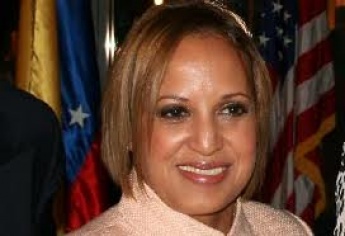 Hugo Chavez: Livia Acosta Noguera is a ‘dignified professional’ who has been ‘humiliated and demonised’ by US extremist groups and the Obama administration (Elmundo.com)
Caracas – Venezuelan President Hugo Chavez has condemned the United States’ decision to expel the Venezuelan consul general in Miami as “arbitrary and unjustified” this past Monday, and derided the move as “another demonstration of the arrogance of ridiculous imperialism”.
Venezuelan diplomat Livia Acosta Noguera had been working in the U.S. since March 2011 when she was ordered to leave last Sunday amidst claims that she had discussed the possibility of orchestrating cyber attacks against the US government whilst serving as Vice-secretary at the Venezuelan embassy in Mexico.
“She has been accused of I don’t know how many things by the U.S. government, and above all, by sectors of the ultra rightwing in Miami , including many Venezuelans who live there, counter-revolutionaries, not all of them, but a small group,” explained Chavez.
Contrary to the accounts published by many mainstream news channels, President Chavez also clarified that Noguera was already in Caracas, and had been since December.
“We already knew that this was going to happen, and so she has been in Caracas in order to avoid situations, possibly even dangerous ones,” said the Venezuelan president.
The U.S. State Department has not commented on the reasons for Noguera’s expulsion, however, former Assistant Secretary of State for Western Hemispheric Affairs, Roger Noriega, posted the following comment on his twitter account prior to the US government’s official announcement.
“Chavista terrorist spy consul general Livia Acosta expelled from the United States by the State Department! Acosta has 72 hours to leave the country.”
Despite the U.S. State Department’s silence on the issue, it is known that four members of Congress had previously written to US Secretary of State, Hilary Clinton, on December 9th expressing their “grave concern” over the “diplomatic credentials” of Noguera. In the letter the four representatives make reference to “The Iranian Threat”, a 2008 documentary filmed by the Spanish-language media corporation Univision.
The four members of congress are; Cuban-American Ileana Ros-Lehtinen (Republican), Mario Diaz-Balart (Republican), David Rivera (Republican) and Cuban-American Albio Sires (Democrat).
In an interview with Telemundo’s Soraya Galan last week, former Venezuelan military Lieutenant, José Antonio Colina Pulido, also revealed that he too had sent a letter to Hilary Clinton in August of last year advising the Secretary of State that Noguera was illegally using her diplomatic immunity in order to gain access to classified documents.
The retired Lieutenant, who is wanted in Venezuela for his connection to the terrorist attacks carried out against the Spanish Embassy and the Consulate of Colombia in February 2002, also claimed he had proof that the Venezuelan diplomat was “actively working for Chavez’s political police”. Pulido did not elucidate as to the nature of this evidence for the benefit of Telemundo viewers.
The Documentary
Based on audio and video files obtained from “students posing as extremists” who Noguera supposedly met with at the National Autonomous University of Mexico (UNAM), the documentary alleges that the Venezuelan diplomat discussed the possibility of coordinating attacks against the United States’ computer systems with other Cuban and Iranian officials. According to the documentary, these cyber-attacks would be “worse than September 11th”.
The same Univision documentary has caused diplomatic altercations between the US and Venezuela before, and was cited by Congressmen such as John McCain earlier last year in an unsuccessful bid to have Venezuela placed on the US “State Sponsor of Terrorism” list. The United States government has been unable to provide evidence to corroborate the authenticity or accuracy of the New York-based company’s documentary, although the Associated Press reports that the FBI has been investigating.
Previously based in Los Angeles, Univision is the largest Spanish language network in the USA. It is partly owned by American-Israeli media mogul and close friend to the Clintons, Haim Saban, also the owner of the Saban Center for Middle East Policy, a foreign policy think tank in Washington.
Univision’s Executive Board includes Cesar Conde (President of Univision Networks) and Randy Falco (President and Chief Executive Officer). Conde was appointed as a White House Fellow by former U.S. President George W. Bush in 2002-2003. During this time, he served as the White House Fellow for Secretary of State, Colin L Powell.
Honduras: Return to Rigores
By Chuck Kaufman | Upside Down World | 11 January 2012

On Jan. 9, 2012 an Alliance for Global Justice (AfGJ) delegation of US and Canadian citizens visited the farming community or Rigores, Honduras in the fertile Aguan Valley near the country’s Caribbean Coast.
It was a far different visit than was experienced by a previous AfGJ delegation just six months earlier. On that July 1st morning our delegation stood in a line at the top of a wash, standing between 40 police armed with military grade weaponry, and peasant farmers determined to hold their land against an illegal eviction. For 3-1/2 hours our delegation faced down the police, who had pistols drawn and snipers targeting us from the tree line.
Unable to produce an eviction order and unaccompanied by a lawyer as required by Honduran law, the police did not know what to do when faced with nearly 20 North Americans wearing blue t-shirts reading “Observador Internacional de Derechos Humanos” (International Human Rights Observer). After hours of tense discussion, negotiation, and demands, the police decided that they could leave the community. We accompanied them to their vehicles and then stayed with the community for another couple of hours during which the police drove through several times to see if we were still there.
But July 1, 2011 was neither the beginning nor the end of the story for the peasant farmers of Rigores. Rigores is a long-established community of farm cooperatives. The cooperative which we helped shield from eviction was 10-years-old, a tenancy under Honduras’ Law of Agrarian Reform which should have insured them title to the land. But one of Honduras’ rich landowners wants their corn fields, bean fields, grazing land and orchards so he can expand his African Palm plantation with this tree that produces an oil that is used in the majority of food products in First World supermarkets and supplies an increasing share of the European and US biofuel market.
Exactly one week before our stressful experience, police entered Rigores and at gunpoint burned the homes of 135 families, killed their animals, bulldozed their orchards, the school, and two churches. When we arrived on July 1, the community was living in the town’s community center and a large tent provided by a Catholic charity. The police had arrived that day to drive off or kill the people, breaking their tenancy and weakening their legal case of ownership.

Six months later all but four families remain on their land. They have rebuilt their houses, although now from branches and mud wattle where before stood larger block or poured cement homes. Their corn is waist high, a few banana and orange trees survived the depredations, and chickens, pigs, turkeys, and cows which survived the slaughter are breeding quickly.
Today Rigores is poor in material wealth but the people are rich in courage and determination that they will not be driven from their land; land that is their hope for their children. As a person privileged to have visited Rigores both on that fateful day in July 2011 and again today, the current visit was an emotional experience. To witness growth where previously there was only destruction, to see chicks and piglets where previously there were only carcasses, but most of all to hear the stories of courage and defiance of a people who will be pushed no farther, was to renew my faith in solidarity and struggle. This peasant Occupy Movement long precedes our own. We can only hope to show the same courage as these people who daily face death defending their right to land to grow food to feed their families and their communities.
But this is not a fairy tale. There is no happy ending where the people of Rigores get to live happily ever after and we get to feel satisfied by performing a good deed.
Police, military, and private “security guards” still drive through the community and fire their weapons. On Sept. 16 and again on Sept. 19, the military invaded and terrorized the community. The 15-year-old son of the community spokesperson and another boy were kidnapped by the military, beaten, doused with gasoline and threatened with being set on fire.
Community members gave testimony to our delegation about the trauma they are suffering, especially the children. One man said, “Whenever my son hears a noise he shouts, ‘The police are coming. The police are coming.’” A woman said her young child crawls under the bed when he hears noises. When their houses were burned in June 2011, children were torn from the arms of their mothers and literally thrown from their houses. Mothers were shot at inside their houses to force them to leave. They were brutalized in ways that are hard for us in the United States to comprehend, and impossible for those who suffered through the terror to remain unmarked.
And now, as they still struggle to rebuild their lives and livelihoods, they have learned from the media that an official eviction order has been signed by a judge with an eviction date of later this month. At this point the eviction order may or may not exist. It is certain that they are receiving daily threats of violent eviction from the hired thugs of a rich landowner. However, they do not intend to leave their homes and we have an obligation to shine the light of international attention on the repression and injustice suffered by the people of Rigores and by the many other communities of the Aguan which are under similar threat. … Full article
Featured Video
No Threat Can Force Iran’s Surrender /Trita Parsi & Lt Cl Daniel Davis
or go to
Aletho News Archives – Video-Images
From the Archives
What is the Israeli Lobby in Australia Doing in Interfaith Dialogue?
By Ali Kazak | Dissident Voice | October 11, 2015
For years Israel and its lobby around the world have been trying to normalise their relations with Arabs and Muslims without solving the Palestine Question.
One of the methods they resorted to in the last few years is using human rights and community organizations such as interfaith dialogue and Multiculturalism to achieve this objective and to: isolate the Palestinians, marginalise the Palestine question, end Israel’s isolation, and prevent criticism of Israel, knowing that these organisations will be the first to stand against Israel’s violations, racial and religious discrimination.
The group responsible for this task in Australia is The Australia/Israel & Jewish Affairs Council (AIJAC); its Director of International & Community Affairs, Jeremy Jones is in charge of lobbying religious community organizations, specifically Muslims and Christians. Consequently he convened the Faith Communities for Reconciliation, founding participant in the Australian Partnership of Religious Organisations and the Australian National Dialogue of Christians, Muslims & Jews.
AIJAC is a private political propaganda group. It is recognised as the main Israeli lobby in Australia. It coordinates its activities and works intimately with the Israeli embassy in Canberra and different institutions in Israel. It is privately funded by some Jewish businessmen. It monitors closely Australian politicians, the media, ethnic and religious groups, (especially Arabs and Muslims), unions and academics on their stands towards Israel and the Palestine question. … continue
Blog Roll
 Aletho News
- The war of liberation of the Arab and Islamic peoples expands across the Gulf
- Envoy warns UN on Trump’s threat to ‘obliterate’ Iran’s civilian infrastructure
- The Larak Corridor: Iran’s Rial Gate With No US, No Israel, and No Way Around
- ‘Economic terrorism’: Steel facilities hit again in US-Israeli strike
- ‘War Crime’: Iran condemns attacks on Arak, Ardakan nuclear sites
- Two-thirds of Americans want quick end to Iran war even if goals unmet
- Trump to Give “Important Update on Iran” Wednesday in Prime-Time Speech
- Theodore Postol: Iran’s Missiles & Drones Were Underestimated
- Iran To Target Military Industrial-Tech Complex That Facilitated Gaza Genocide
- Collapsing Empire: The Resistance Disarms ‘Israel’
- If Americans Knew
- Israel wants US to bomb more of Iran’s civilian structures (113,000 is not enough) – Not a ceasefire Day 173
- Ann Coulter Rips Into Fox News for Iran War Coverage
- Joe Kent Urges Americans To Call White House and Congress To Object To Sending Troops Into Iran
- DNC Resolution to Reject AIPAC Funding Puts Democratic Leaders in the Hot Seat
- Swedish foundation to build 400 schools as over 650,000 Gaza children remain without education for 2 years
- Israeli army admits photshopping image of slain Lebanese journalist
- This is how Israel is systematically killing health workers under the cover of war in Lebanon
- Carrying life under fire: Israeli invasion of Lebanon leaves pregnant women facing deadly risks
- Champagne all around for the new death penalty (for Palestinians) law – Not a ceasefire Day 172
- Why are Palestinian books struggling to be seen on Amazon?
- No Tricks Zone
- New Study Finds Warming Saves Lives…Cold Temperatures 12 Times More Deadly Than Excess Heat
- German Science Blog Accuses PIK Climate Institute Of Hallucinating Climate Tipping Points
- Devastating Assessment Of Comirnaty Vaccine By Former Senior Pfizer Europe Toxicologist
- New Study: CO2 Is ‘Effectively Negligible’ As An Explanatory Climate Change Factor Since 2000
- Former Pfizer Toxicologist Dr. Helmut Sterz Tells Bundestag Hearing Pfizer Vaccine Should Have Never Been Approved
- Energy Expert: Germany’s Nuclear Phaseout Was A “500 Billion Euro Mistake”
- New Research: South Australia’s Mid-Holocene Sea Surface Temperatures Were 4°C Warmer Than Today
- Storing Green Energy To Last Germany 10 Days Would Require A 60-Million Tonne Battery
- New Studies: UK Sea Levels Were 4 Meters Higher Than Today During The Mid-Holocene
- Destructive Green New Deal: German Energy And Metal Group Warns Of Drastic Crisis
 Aletho News