Are Palestinians Allowed to Resist? Part II
By Dina Jadallah-Taschler | Palestine Chronicle | February 28, 2009
There is an abundance of discourse over the means and methods that are pursued and/or justified by the Palestinians in their quest for independence and liberation. In the first part of this essay, I presented the legal, historical, and current context that forms the root of their current predicament. In this segment, I want to address the pros and cons of pursuing an exclusively non-armed struggle both by looking at the uniqueness of Palestinian circumstances and also by comparing it with the Indian National Liberation Movement, which is usually presented in Western narratives as almost exclusively non-violent, and successful, for having (ostensibly) been so.
A Brief History of Palestinian Non-Violent Resistance
Palestinians are continuously asked to not resist. The truth is that whether they resist violently or non-violently, Israeli violence continues unabated. Perhaps the scale, ugliness and the immediacy of the trauma are exaggerated in a massacre like we recently saw in Gaza, but the reality of purposeful eradication persists.
Examples of Palestinian non-violent resistance have existed since the very start of Jewish immigration into Palestine, but were never enough to attain freedom. Ultimately it is an imperative but frequently unstated precondition, that Palestinians accept a permanent subjugated and defeated status, preferably outside of their historic lands. It is otherwise known as the Yigal Allon Plan (1967), a policy actively pursued by even the “Dove” Shimon Peres and entailing the expulsion of Palestinians. The Allon plan formed the basis of Israel’s settlements/colonization. Frequently unacknowledged in mainstream Western coverage is that only after acceptance of defeat and eradication can Israel’s violence (aka “retaliation”) against Palestinians stop.
Unwilling to accept that, and choosing a policy of “sumoud”/steadfastness on the land, Palestinians pursue(d) non-violent resistance as a complimentary and grassroots approach against the occupation. Here are just a few examples of Palestinian non-violent resistance to Israeli aggression: in 1902, villages of al-Shajara, Misha, and Melhamiyya peacefully protested against the takeover of 7000 hectares of agricultural land by the first Zionist settlers; in 1936, Palestinians held a six-month industrial strike protesting the British Mandate’s refusal to grant them self-determination; in 1986, Hannah Siniora and Mubarak ‘Awad (who advocates the power of non-violence and is a self-described disciple of Gandhi; recently deported by Israel) drew a list of civic disobedience activities heavily reliant on boycotting Israeli products and economic self-sufficiency, helping launch the 1987-93 First Intifada; in 1993, the signing of the Oslo Accords and the pursuit of the “settlement” path; and currently, the holding of protests in the villages of Jayyous, Budrus, Bil’in, Ni’lin and Umm Salamonah against the apartheid wall (1: See here). Today, the tradition of non-violence is still practiced and promoted by some secular and independent Palestinian political leaders, like the Palestinian National Initiative led by Mustafa Barghouti. And even Hamas, often presented as the ultimate terrorist organization, upheld a six month ceasefire with Israel but was still subjected to a non-lifting of the suffocating siege of Gaza. (The ceasefire ended on November 4, 2008 when Israel conducted a targeted assassination that killed six Hamas members.)
Needless to say, these facts are rarely, if ever covered in mainstream accounts. Instead the focus is consistently on “terror” and “Israel’s right to defend itself,” ignoring the cumulative suffering of the occupation. As for Israel’s response, it consistently uses overwhelming force, including tear gas, rubber bullets, live ammunition, etc. against protesters and justifies this as “self-defense,” even when protecting illegal settlement colonies.
Which raises the question of the efficacy of non-violent resistance as the sole or primary means of achieving national liberation. While each national liberation struggle is unique, there are certain conditions and methods that may translate across people. One thing that many have in common is that non-violent resistance was not pursued exclusively. This was true of the African National Congress’ anti-apartheid Boycott and Divestment Movement in South Africa, which accompanied armed struggle. It was also true of the struggle for national liberation from British rule in India, a fact usually unmentioned in Western press, which tends to focus on Mahatma Gandhi’s satyagraha / non-violent path to resistance. In doing so, there is a grave disservice done to explaining how Indian independence came to be. There is also a convenient decontextualization of the struggle. And I use “convenient” intentionally, because Gandhi’s model is often held up (by Israel and the West) as the best and “most civilized” one that ought to be emulated by the oppressed Palestinians.
Gandhi in Context: Was the Indian National Liberation Struggle Entirely Non-Violent? The name Gandhi and non-violent resistance (satyagraha) are almost synonymous in most people’s minds. Satyagraha’s aim is not just to defeat the opponent, but aims to convert the adversary as well. And yet there are important nuances and definite progression in Gandhi’s approach to war and colonialism. On the subject of whether it is better to be a coward or to resist violently, he said: “I do believe that, where there is only a choice between cowardice and violence, I would advise violence… I would rather have India resort to arms in order to defend her honour than that she should, in a cowardly manner, become or remain a helpless witness to her own dishonour…” (2: Eds. R. K. Rabhu & U. R. Rao, “Between Cowardice and Violence,” The Mind of Mahatma Gandhi, Ahemadabad, India, 1967, p. 3) He also said: “Though violence is not lawful, when it is offered in self-defence or for the defence of the defenseless, it is an act of bravery far better than cowardly submission. The latter befits neither man nor woman. Under violence, there are many stages and varieties of bravery. Every man must judge this for himself. No other person can or has the right. (3: Ibid, pp. 369-70) Applied to the Palestinian context, this would indicate that Palestinians have the duty to fight back against their own annihilation. However, he would have probably qualified that by saying that non-violence could cause the same changes with lower loss in life.
Historically, too Gandhi’s attitudes to war evolved. While still in South Africa, and in reaction to the Bambatha (Zulu) Rebellion of 1906 against a new British poll-tax, to which Britain responded by declaring a war, Gandhi encouraged the British to recruit Indians. He wanted to advance Indian claims as full citizens of the Empire. He also encouraged Indians to join the war through his columns in Indian Opinion.
Gandhi’s statecraft and thought did not happen in a vacuum. Likewise, India’s independence was not the work of only one man or one concept or one strategy. In fact, India’s nationalist feelings pre-existed Gandhi and the Congress Party, and evidence of it can be found as early as 1857. The first group to call for complete independence was the uncompromisingly secular Ghadar Party, organized in 1913 by Indian immigrants in California. (3: See here) The party actively pursued violent resistance and revolution (rejecting caste as well) and predictably, their actions were labeled as “terrorism” by Britain. Operating mainly in the first two decades of the 20th Century, the Ghadarites were successful in recruiting Indian soldiers in the British Army (in Hong Kong, Singapore, Rangoon, and Basra) and urging them to revolt.
As for Gandhi, once in India, he progressed to advocating non-violent resistance as a “weapon.” His political views on Indian independence evolved as well. Consider that at the age of 45, Gandhi still held some esteem for the British empire, calling it a “spiritual foundation,” in contrast to the views of most Indian revolutionaries. (4: See here) It wasn’t until after the Amritsar Massacre of civilians by British troops in the Punjab, that Gandhi advocated complete self-government maturing into independence (swaraj). In the intervening years there was a constant push and pull between Gandhi’s satyagraha policy and other political personalities and groups pursuing independence — not always non-violently.
A massive wave of revolutionary unrest swept India in 1919. British violent retaliation was unable to quell it. For example, there were more than 200 strikes in the first six months of 1920 alone. And yet in 1921, when Muslim leader Hasrat Mohani wrote a resolution asking for complete independence, Gandhi led the opposition against it and secured its rejection. Likewise, he supported Britain in WWI by trying to recruit Indians for the war effort. He himself volunteered twice for it, in present-day Iraq and in France, reasoning that he “owed” this to the empire in return for military protection. (5: Ibid) This led to deep divisions within the Congress party and also caused a dramatic drop in the popularity of Congress. Young revolutionaries like Rash Behari Bose, Shaheed Bhagat Singh, and revolutionary groups like the Workers and Peasant Party (Kirti Kisan Party) and militant unions like the Bombay textile workers were frequently at odds with Congress. Armed revolutionary groups that emerged in this period included the Hindustan Republican Army and the Hindustan Socialist Republican Army in northern India, as well as the “Revolt Groups” in Bengal (e.g. Chittagong group led by Surya Sen). Working class and union resistance continued throughout the 1930s. Eventually, it was in response to this revolutionary tide, that the Congress Party became less conservative and more supportive of the more militant attitude. As for Gandhi, he returned to advocating non-violent struggle and launched the salt satyagraha (1930-31) and the boycott campaigns. He has been criticized by some for not taking advantage of this revolutionary tide, thereby delaying independence.
Even at the time of World War II, Gandhi prevaricated on non-violence: first offering “non-violent moral support” to the British effort, and only later rescinding that decision when members of the Congress Party objected to the inclusion of India in the war effort without her consultation. In 1939-40, strikes and uprisings in the countryside swelled dramatically. Afterwards, the Congress party was compelled by grassroots pressure to launch the Quit India movement in August of 1942. It is important to note that this period in the struggle was one of extreme violence, mass arrests, and so forth. And yet, Quit India’s success in contributing to independence is controversial. Those arguing that it failed say that it fizzled out after five months (largely due to the army’s loyalty) and didn’t topple the Raj or bring it to the negotiating table for independence. In contrast, those who see it as a success, focus on how it sapped colonial energy and resources and on its success at mobilizing masses of people.(5: See here) Importantly, it inspired the final phase of the fight for independence, which witnessed increasingly militant peasant uprisings, sometimes joined by some of the landlords.
By the end of the war, Britain was indicating that power would be transferred to Indians. Aware that they couldn’t hold on any longer, they instead focused on partitioning India – bringing to mind Israel’s recent attempts to divide Gaza from the West Bank. In the meantime, Congress’ adherence to a policy of non-violence was entirely dependent on the British soldiers – as opposed to the armed Muslim League – and were unable to prevent partition. Thus, Congress’ inherent conservatism with regards to armed struggle hindered its goal of keeping India intact. They failed to build on numerous past instances of Hindu-Muslim cooperation against British colonialism. (Not all members of the Muslim league supported Muslim self-determination: Communist leader Ghaffar Ali opposed it vociferously.)
As is evident from the history recounted above, the agreeable and reasonable- sounding frame of the superiority of peaceful resistance sets up a false dichotomy. Presenting satyagraha as the exemplary approach to liberation is deceptive mainly because India’s independence was not achieved through non-violence alone. Moreover, its historical context and enemy are do not translate well across time and location. Finally, while inspirational and useful on many levels, it is not sufficient as sole guide or solution to achieving Palestinian liberation.
Options for Palestinian Resistance
Fundamentally, all theories of national liberation emanate from the ethical and legal principle that a people have the right to be free from alien occupation and exploitation. Resistance is their inalienable right. Insistence on non-violent resistance can sometimes be counterproductive – as happened with Gandhi’s insistence on it when confronting partition. Relying solely on non-violence subordinates the fundamental moral and ethical goal of independence to all sorts of conditionalities in order to achieve it in the “right” way.
All events so far indicate that non-violent resistance has been of modest benefit to Palestinians, with the important exceptions of tarnishing Israel’s image and moral claims. One could argue that Israel pursued the (sham) Oslo peace process precisely because the First Intifada rendered the population ungovernable. Unfortunately for the Palestinians, the Fateh leadership of the PLO squandered those achievements and marginalized popular input. Since then, pursuit of “settlement” and “negotiation” in the absence of a concomitant armed struggle has produced regressive and contradictory effects. Why is that?
One reason is the nature of the adversary. Zionist and Israeli ideology and statecraft are fundamentally violent, involving ethnic cleansing and relying first and foremost on war as an instrument in achieving Greater (Eretz) Israel. Unlike Great Britain, which had developed a liberal democratic tradition when Indians were struggling for their independence, Israel is essentially a highly militarized, ethnically-based and legally privileged society. It made no difference whatsoever how the Palestinians resisted, whether violently or not. As happened in other Western colonial historical experiences, like the US, Australia, or apartheid South Africa, the settlers use overwhelming force to convince the native populations of their ultimate defeat.
A second important difference is that after World War II, England could no longer hold onto its colonies. This is in sharp contrast to the US-superpower-backed-Israel, which maintains a pronounced military superiority over all its neighbors.
A third difference is that ever since the Jewish Land Agency started buying Palestinian lands from absentee landowners, and continuing after its war-time conquest of land, Israel stipulated that Palestinians cannot lease or be employed on purchased land. As a result, Palestinians are less important to the Israeli economy than India was to Britain. Their marginalization and de-development are intentional and serve to facilitate Israeli expropriation of valuable water, land, and other resources. Moreover, Israel receives significant financial and military “aid” from the United States which also reduces its need to integrate economically with its neighbors. The lack of economic dependency makes non-violent resistance much less effective as a weapon in fighting the occupation. Any economic levers the Palestinians may have had were further diminished (intentionally) via their PA leadership’s dependency on and distribution of foreign “aid.” This had the double effects of corrupting and ensuring the cooptation and cooperation of the leadership, as well as minimizing the size and role of an educated middle class that could lead the struggle – as was the case in India.
A fourth difference is the lack of a charismatic leader like Gandhi. Which brings us right back to the first reason, the nature of the opponent. Israel has a long history of assassinating and / or deporting any potential leader who is incorruptible or charismatic or effective. (6: For a partial list of Palestinian leaders assassinated by Mossad, see here.)
In the final analysis, non-violence is still a worthy means of resistance. Significantly, it enhances growing international perceptions of the brutality of the occupation and builds on the legal consensus and framework of the legitimacy of Palestinian rights, as recurrently affirmed through UN General Assembly annual resolutions and the most recent ruling against the apartheid wall at the International Court of Justice. Non-violent resistance, by being more accessible to ordinary people, additionally creates more sustainable and widespread networks of resistance. At a minimum, it establishes a network of interdependence for the newly liberated society to build on.
But it is not enough. And arguably, it has never been enough, especially in the absence of a more just as opposed to legalistic international relations.
– Dina Jadallah-Taschler is an Arab-American of Palestinian and Egyptian descent, a political science graduate, an artist and a writer. Contact her at: dina.jadallah.taschler@gmail.com.
Related articles

No comments yet.
Featured Video

Pentagon Fast Tracks Iran War Ground Option
or go to
Aletho News Archives – Video-Images
From the Archives
The Heirs of Meyer Lansky Want Compensation from Cuba. They Shouldn’t Get a Dime.
By Jack Colhoun | History News Network | June 19, 2016
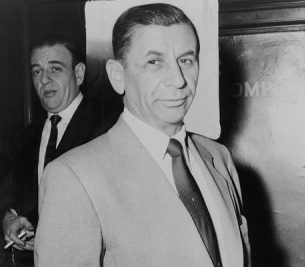
Meyer Lansky
The heirs of Meyer Lansky, the impresario of the North American Mafia gambling colony in Cuba (1933-1958) are betting on a big payback from the negotiations between the United States and Cuba to normalize relations between the two countries. Compensation claims by U.S. citizens or businesses for properties nationalized by the Cuban revolution are among the issues under discussion.
Lansky’s daughter Sandi, her son Gary Rapoport, and her brother Paul have filed a compensation claim against Cuba for the Riviera Hotel and Casino with the U.S. Foreign Claims Settlement Commission. The Cuban revolution confiscated the Riviera and other Mafia-owned properties after it toppled the gangster-linked regime of General Fulgencio Batista in 1959.
“It was through my grandfather’s hard work that the hotel was built,” Rapoport told the U. K. Daily Mail Online on December 23, 2015. “We are his natural relations . . . . By right, it should be our property.” He says the Riviera is valued at $70 million. The Tampa Bay Tribune, Reuters, and Haaretz have also covered the story.
The Riviera, which overlooks the Straits of Florida, was the crown jewel of Lansky’s casinos, hotels, and nightclubs in Havana. When the Riviera opened in December 1957, it was the largest Mafia-owned hotel-casino outside Las Vegas. The hotel’s 440 double rooms were booked solid for the winter season of 1957-1958.
However, the narrative that the success of the Riviera was the product of Meyer Lansky’s “hard work” is undercut by Lansky’s own assessment of his arrangement with Batista. … continue
Blog Roll
 Aletho News
- Iran’s Dimona Strike Shatters Myth of ‘Impenetrable’ THAAD, Patriot & Arrow Air Defenses – Analyst
- Bahrain admits US Patriot missile hit residential area, injured dozens
- Iran retaliation shakes helium, global tech supply chains
- Zionist takeover: Trump’s war on Iran reveals who really dictates US foreign policy
- Iran’s strike on Dimona – Israel’s nuclear weapons research center – shows Israeli air defences are weakened
- Fidel Castro’s War on Jewish Mobster Meyer Lansky
- US Trying to Oust Russia From All Energy Markets – Lavrov
- Western silence allows Israel to get away with killing journalists
- The Israeli Media Is Laying The Groundwork For a Permanent Israeli Occupation Of Southern Lebanon
- Role reversal – “divide & conquer” used against the west
- If Americans Knew
- Israel’s assassination game: Take all pragmatists off the board
- Food shortages return to Gaza as Israel tightens aid restrictions under the cover of its war on Iran
- Trump demands trillions in payments from Gulf countries, billions from Harvard – Not a ceasefire Day 162
- Meet the former fashion blogger and shady doctor behind the ‘30,000 dead’ Iran psy-op
- Vatican Secretary of State to Trump, Israel: End the war as soon as possible
- The Majority of Americans Believe War Against Iran Benefits Israel More Than US
- Efforts to shut down pro-Palestinian speech face series of setbacks in court
- What has Israel done to my brother?
- Eid without worship in Al Aqsa – Not a ceasefire Day 161
- Trump: Israel attacked Iranian gas field without US knowledge. No more such attacks!
- No Tricks Zone
- Former Pfizer Toxicologist Dr. Helmut Sterz Tells Bundestag Hearing Pfizer Vaccine Should Have Never Been Approved
- Energy Expert: Germany’s Nuclear Phaseout Was A “500 Billion Euro Mistake”
- New Research: South Australia’s Mid-Holocene Sea Surface Temperatures Were 4°C Warmer Than Today
- Storing Green Energy To Last Germany 10 Days Would Require A 60-Million Tonne Battery
- New Studies: UK Sea Levels Were 4 Meters Higher Than Today During The Mid-Holocene
- Destructive Green New Deal: German Energy And Metal Group Warns Of Drastic Crisis
- New Study Documents A 20-Year Pause In Arctic Sea Ice Decline – Driven By Internal Variability
- Wake-up Call: Survey Shows Majority Of Germans Now Favor Postponing Climate Targets!
- Televised! Leading German Political Candidate Tells Schoolchildren CO2 Makes Sun Hotter!
- New Study: A Century Warming Of 1.1°C Is ‘Commonplace’ And ‘Not Unusual’ During This Interglacial
 Aletho News
Leave a comment