Maduro re-elected Venezuelan president; rival candidate challenges results
Press TV – May 21, 2018
Nicolas Maduro has been re-elected for a second term in office as Venezuela’s president in an election rejected as “illegitimate” by his main rival, who has also demanded that a repeat vote be held later this year.
With more than 90 percent of the ballots cast in Sunday’s presidential election counted, the National Election Council announced that incumbent Maduro had won another six-year term after securing 67.7 percent of the vote.
Maduro’s main challenger Henri Falcon came in second with 21.2 percent, followed by the president’s other rival, Javier Bertucci, who gained some 10 percent, said the Council’s head, Tibisay Lucena.
With the country’s mainstream opposition having boycotted the vote, the turnout was 46.1 percent, according to the board, which means 8.6 million out of the 20.5 million eligible voters took part in the election.
The ballots were recorded electronically, making the voting quick and easy. The presence of government troops around polling stations also ensured the safety of voters.
Some 150 international observers from 30 countries and international organizations were present in the Latin American country to monitor the process.
Maduro hails ‘historic’ win
When the results were released, Maduro’s supporters gathered outside his Miraflores presidential palace in downtown Caracas, celebrating his re-election with fireworks.
Maduro, surrounded by thousands of his supporters, also hailed his “popular victory,” saying, “This was a historic day! The day of a heroic victory! The day of a beautiful victory – of a truly popular victory.”
“Never before has a presidential candidate taken 68 percent of the popular vote,” he told the cheering crowd.
“The whole of Venezuela has triumphed! Democracy has triumphed! Peace has triumphed! Constitutionality has triumphed [These were] elections that were constitutional, legitimate and legal,” he said. “We have a president of the people! A working president!”
The president also called on the defeated challengers to join him for negotiations about the future of the country.
He said “permanent dialog” is needed with the entire opposition so that Venezuela could set aside political disputes.
Vote ‘lacks legitimacy’
However, before the official results were announced, Falcon said he would not recognize the vote for what he called irregularities, including widespread vote buying in favor of Maduro.
“As far as we are concerned there has been no election. There must be new elections in Venezuela,” he told reporters. “The process undoubtedly lacks legitimacy and as such we do not recognize it.”
Falcon, who broke with an opposition boycott to run for the election, also called for a fresh election to be held in November or December.
Several of Venezuela’s Latin American neighbors as well as the European Union also joined voices with Maduro’s challenger and said they would not recognize the results of the election.
They alleged that the conditions did not exist for the election to be free and fair.
However, former Spanish prime minister Jose Luis Rodriguez Zapatero, who is in Venezuela as an international observer, said he has no “doubt about the voting process.”
“It is an advanced automatic voting system. I come here to keep peace, coordinate and promote dialogue so as to improve the democratic mechanism here. What I need to do here is to see whether people can cast their ballots at their own discretion. Now we all see how people vote, don’t we?” he added.
The US also said it would not recognize the election and would actively consider oil sanctions on the country.
Washington has already imposed sanctions against Venezuela and blamed, together with its allies in the region and elsewhere, Maduro’s government for the country’s acute economic crisis.
On Saturday, the US ramped up pressure on Caracas by imposing new sanctions against the government’s top officials.
Maduro’s government, however, said the US was using new sanctions to sabotage the election.
It called Washington’s move as part of “a systematic campaign of aggression” by President Donald Trump’s administration and said they had no legal base.
Yes, Virginia, There is a Deep State
By Thomas L. Knapp | The Garrison Center | May 20, 2018
Since the “Russiagate” probe began, US president Donald Trump and his supporters have used lots of bandwidth raging against what they refer to as the “Deep State.” Does the Deep State exist? If so, what is it, and are its forces arrayed specifically against Donald Trump and his administration?
Yes, the Deep State exists — probably more so at one end of its numerous definitions and less so at the other, but to some degree at both ends.
At the seemingly more benign end, the Deep State is simply what one might think of as the “permanent government” — the army of bureaucrats and functionaries whose careers span multiple administrations. Like all career employees of large organizations as groups, they tend to fear and resist change, and their sheer mass has an inertial effect. They energetically do things the old way and drag their feet on new things.
At the end dismissed by mainstream commentators as “conspiracy theory,” the Deep State is an invisible second government which acts in a coordinated manner to protect its prerogatives and advance its interests and favored policies versus changes supposedly demanded by “the people” via their elected representatives in Congress and the presidency. The premier example of this view is the claim that John F. Kennedy was assassinated by the CIA and the military industrial complex because (in one version) he was about to get the US out of Vietnam.
If that end of the spectrum sounds crazy to you, consider:
Former FBI attorney Lisa Page and former FBI deputy counterintelligence chief Peter Strzok, while working on a pre-election investigation into alleged collusion between Donald Trump’s presidential campaign and the Russian government, exchanged text messages with incendiary content such as “there’s no way [Trump] gets elected — but I’m afraid we can’t take that risk.”
In mid-May, it emerged that an FBI informant approached two or three (reports vary) advisers to Trump’s campaign during the same period to pry into those advisers’ alleged ties to the Russian government.
Is President Trump stretching the reports we’ve seen when he tweets “Reports are there was indeed at least one FBI representative implanted, for political purposes, into my campaign for president. It took place very early on, and long before the phony Russia Hoax became a ‘hot’ Fake News story?”
Well, maybe. But not by much. On any fair reading, those two stories combined do look a lot like the second definition of Deep State skulduggery. The FBI was meddling in — acting to influence or in extremis overturn — a US presidential election (sound familiar?). The messages between Page and Strzok color that meddling as intentional Bureau political action, not as incidental investigative fallout which just happened to touch on the election.
While I disagree with President Trump on most issues, it’s hard to disagree with him when he rails against a transparently political witch hunt that has dragged on for more than a year visibly and for months before that beneath the surface. The Deep State is real. And dangerous.
Thomas L. Knapp (Twitter: @thomaslknapp) is director and senior news analyst at the William Lloyd Garrison Center for Libertarian Advocacy Journalism (thegarrisoncenter.org).
US anti-tank missiles found at former Al-Nusra facility in Syria – Russian MoD
RT | May 21, 2018
US-made TOW anti-tank missiles, along with other weapons, have been found in facilities once controlled by Al-Nusra militants in Syria’s Homs province, the Russian Defense Ministry said.
The trove was located in a former observation point of the Al-Nusra Front terrorist group in the liberated Zaafaran settlement in Homs province, the Russian Center for Reconciliation in Syria said on Monday. “[We] can see here a large number of gas masks, weapons produced abroad, for example, TOW-2 anti-tank guided missiles. The facilities are very well-equipped,” Andrey Nekipelov, an official at the center, stated.
The BGM-71 TOW (Tube-launched, Optically tracked, Wire-guided) is one of the most widely used anti-tank missiles, which has been produced in the US since the 1970s. The missile has an operational range of more than 3,000 meters and an armor penetration of up to 800 millimeters, depending on the model. The TOW-2 referred to by the Russian MoD is an advanced and upgraded version of the missile.
Hundreds of the missiles have fallen into the hands of various rebel factions during the Syrian conflict. The US-made TOW was reportedly used in an attack on an RT crew in Syria back in 2015.
In 2016, another video published by a Syrian rebel group showed what appeared to be a direct hit by a US-made BGM-71 TOW on the turret of a Russian-supplied T-90 tank of the Syrian Army. A TOW usually devastates its target after a direct hit, causing ammo to explode and killing the crew. The alleged T-90, however, seemed to have been saved by its reactive armor.
TOW was reportedly deployed in the Vietnam War in 1970s, as well as in Afghanistan, Iraq, and a number of other conflict zones where Washington has been engaged in recent decades. Syria has become one of the recent locations where anti-tank missiles were spotted.
Speaking to RT back in 2016, German journalist Jurgen Todenhofer suggested that the US knows that the weapons it delivers to rebels end up with terrorists. “Everybody knows that they are using allies and they are allowing allies… It doesn’t matter if a TOW rocket or a TOW missile, which is an American missile, comes [to terrorists] from another group,” he said at the time. – Video
‘Americans seen as invaders’: Palestinian officials equate US embassy move to Israeli occupation

RT | May 20, 2018
Palestinian politicians have condemned the US for moving its embassy to Jerusalem, likening the move to Israel’s seizure of Palestinian land.
Feisal Abu Shahlaa, a member of the Fatah party, said the US is now viewed as “invaders” of Palestinian territories following President Donald Trump’s decision to move the country’s diplomatic headquarters from Tel Aviv. The US now officially recognizes the city as Israel’s capital. “What we see is a seizure of our lands, something only Israelis did before,” Abu Shahlaa said in an interview with Sputnik.
Ruhi al Fattuh, a member of Fatah’s Central Committee echoed his party colleague’s remarks. “The land the US embassy stands on was illegally occupied. The Americans continue the Israeli practice of building settlements in Palestine,” Fattuh said.
Fattuh said Palestinians also see the relocation as a breach of international law citing UN Security Council Resolution 478 which ruled out recognition of Jerusalem as Israel’s capital in 1980.
Fattuh was adamant that Palestinians will appeal to the UN to defend their rights, saying: “Americans will not succeed in changing Jerusalem’s historical status as the capital of an independent Palestinian state.”
Shahlaa went on to blame the US for the 60 Palestinians who were killed by Israeli forces in Gaza while protesting the embassy’s opening Monday. An eight-month-old baby thought to have inhaled Israeli tear gas was among the dead.
Calling on other Arab other Muslim-majority countries to close their embassies in protest, Shahlaa insisted that “aggressive actions” are now “forcing Palestinians to abandon all attempts to reach a peaceful resolution [of the conflict] and move on and resist.”
During demonstrations on the day of the US Embassy’s inauguration in Jerusalem, at least 60 Palestinian protesters, including children, were killed by Israeli bullets and tear gas in what the Palestinian government describes as a “terrible massacre.” The violence was condemned by rights groups and most UN Security Council members, with even the US’ closest allies refusing to stand by Washington’s support for Tel Aviv.
Israel however blames Hamas for instigating the violence, saying the group organised attacks on the border fence with Gaza which justified Israel’s use of deadly force. Israeli PM Benjamin Netanyahu called the Gaza border clashes “a warlike act,” rather than “civilian” protests. “Israel will continue to defend itself as necessary and will not allow anyone who calls for its destruction to break into our borders and threaten our communities,” Netanyahu said, deflecting widespread criticism.
US says won’t recognize Venezuela presidential election
Press TV – May 20, 2018
The United States government says it is not going to recognize the outcome of Venezuela’s presidential election which will be held on Sunday.
US Deputy Secretary of State John Sullivan made the announcement in a press briefing on Sunday and stressed that Washington was actively considering strict sanctions against Venezuela’s oil industry.
He also noted that the US would discuss a response to vote with its allies at the G20 meeting in the Argentinean capital Buenos Aires on Monday.
Washington has already put in place sanctions against Caracas and top Venezuelan government officials, as well as other measures to further weaken the country’s troubled economy and prevent the government and its state oil company from accessing international credit through US markets or entities.
On Friday, the US Treasury slapped sanctions against the head of the Venezuelan socialist party, Diosdado Cabello, and his wife, Marleny Josefina Contreras, who heads the country’s tourism institute, and his brother, Jose David.
Earlier in May, the administration of US President Donald Trump has slapped more sanctions against a number of Venezuelan companies and officials, accusing them of trafficking narcotics.
President Nicolas Maduro, who is running for a second six-year term in the vote, says the US has joined forces with opposition groups to topple his socialist government.
His opponents blame him for mishandling the economy and accuse him of dictatorial tendencies.
Maduro is predicted to win the Sunday election against main opposition candidate Henri Falcon.
Some opposition members have boycotted the vote, claiming it is rigged to ensure that Maduro wins a second six-year term in office.
Caracas, however, has assured the public that the election will be free and fair, saying those opposition members who refuse to participate in the election believe they have no chance to win.
NDP MPs must stop being ‘friends’ with Israel
By Yves Engler · May 19, 2018
Is it appropriate for NDP Members of Parliament to be working for “greater friendship” with a country that is killing and maiming thousands of non-violent protestors?
Would it have been appropriate for any elected member of the party to be a “friend” with South Africa’s government during the apartheid era?
Victoria area MPs Randall Garrison (left) and Murray Rankin are members of the Canada Israel Interparliamentary Group (previously named Canada-Israel Friendship Group).
Garrison is vice-chair of a group designed to promote “greater friendship” and “cooperation” between the two countries’ parliaments.
The chair of the group is York Centre MP Michael Levitt, a former board member of the explicitly racist Jewish National Fund, who issued a statement blaming “Hamas incitement” for Israeli forces shooting thousands of peaceful protesters, including Canadian doctor Tarek Loubani.
The Interparliamentary Group is one of many pro-Israel lobbying organizations in Canada. In conjunction with the Centre for Israel and Jewish Affairs (CIJA) and Canadian Jewish Political Affairs Committee, the Interparliamentary Group has hosted wine and cheese lobbying events on Parliament Hill. Three hundred parliamentarians and parliamentary staff attended their 2014 “Israeli Wine Meets Canadian Cheese” gathering in the East Block courtyard.
The group regularly meets the Israeli Ambassador and that country’s other diplomats. Representatives of the Group also regularly visit Israel on sponsored trips. For their part, Garrison and Rankin both participated in CIJA-organized trips to Israel in 2016.
The Interparliamentary Group works with its Israeli counterpart the Israel-Canada Inter-Parliamentary Friendship Group. In 2016 the Group sent a delegation to the Israeli Knesset and last year they organized a joint teleconference with Israel-Canada Inter-Parliamentary Friendship Group co-chairs Yoel Hasson and Anat Berko.
Last month Hasson responded to Meretz party Chairwoman Tamar Zandberg’s call for an investigation into the Israel Defense Forces’ killing of non-violent Palestinian protesters by tweeting, “there was nothing to investigate, the IDF is doing what’s necessary to defend the Gaza border.”
Chairman of the Zionist Union Knesset faction, Hasson opposed the UN resolution on a Palestinian state. When the Knesset voted to strip Arab MK Hanin Zoabi of parliamentary privileges for participating in the 2010 Gaza flotilla Hasson and MK Carmel Shama “nearly came to blows” with Zoabi and her fellow Balad party MK Jamal Zahalka. Hasson later called Zoabi a “terrorist”.
Berko is even more openly racist and anti-Palestinian. A Lieutenant-Colonel in the IDF reserves prior to her election with Likud, Berko openly disparaged African refugees. In February Israel National News reported, “Berko said that the MKs should see the suffering that African migrants have caused South Tel Aviv residents before jetting off to Rwanda” to oppose an effort to deport mostly Eritrean and Sudanese refugees to the small East African nation.
In January Berko co-sponsored a bill to bypass a High Court ruling that Israeli forces cannot use the bodies of dead Palestinian protesters as bargaining chips. The aim of the bill was to make it harder for the bodies to be given over for burial, which should happen as soon as possible under Muslim ritual, in the hopes of preventing high profile funerals. In a 2016 Knesset debate Berko make the ridiculous claim that the absence of the letter “P” in the Arabic alphabet meant Palestine did not exist since “no people would give itself a name it couldn’t pronounce.”
In response Richard Silverstein noted, “Apparently, the fact that the word is spelled and pronounced with an ‘F’ (Falastin) in Arabic seems to have escaped her. It’s worth noting, too, that according to her logic, Israeli Jews do not exist either, since there is no letter ‘J’ in Hebrew.”
Garrison and Rankin must immediately withdraw from the Canada–Israel Interparliamentary Group. If the NDP MPs refuse to disassociate themselves from the pro-Israel lobby organization, party leader Jagmeet Singh should replace them as (respectively) NDP defence and justice critics.
Israel’s slaughter in Gaza should lead to an end of the NDP’s anti-Palestinian past.
Please join me in asking Garrison (Randall.Garrison@parl.gc.ca) and Rankin (Murray.Rankin@parl.gc.ca) to withdraw from the Canada–Israel Interparliamentary Group. Make sure to cc Jagmeet Singh (jagmeet@ndp.ca)
Israeli police break activist’s leg while in custody: Report
Press TV – May 20, 2018
Activists say Israeli police have brutally beaten an Arab-Israeli NGO worker after arresting him at a Haifa demonstration, which landed him in hospital with a broken leg.
Jafar Farah, the CEO of the Mossawa Center, was one of the 21 people arrested on Friday during a demonstration against the May 14 Israeli carnage in the Gaza Strip.
Footage of Farah’s arrest shows him being escorted away from the protest on his own feet and in handcuffs.
However, the police said the activist is now hospitalized, without providing further details on his condition.
Farah’s relatives and Adalah, an organization dedicated to Palestinian legal rights in Israel, accused the police of breaking the campaigner’s leg while in custody.
Adalah said in a statement that the Israeli police had dealt with the Haifa demonstration “like a war,” beaten those who attempted to escape and denied the detainees access to lawyers for over an hour after their arrest.
“All the detainees were handcuffed for the entire night and kept sitting on the police station floor. Many of them experienced serious bruising to their wrists. Adalah considers these arrests to be illegal, as the police violence in Haifa was unprecedented and unprovoked,” the statement read.
Additionally, the Mossawa Center said on Facebook that Farah had been assaulted while in police custody and is now in Bnai Tzion Hospital with a broken leg.
Israeli policemen arrest a protester in Haifa on May 18, 2018.
Israeli lawmaker Ilan Gilon said he had passed an urgent question to Public Security Minister Gilad Erdan regarding Farah’s arrest.
“I demand to know if police brutality led to the broken leg by Jafar Farah,” he said on Facebook. “The idea that a protester leaves his home to use his democratic right and is taken to an interrogation because of that, and as it ends it turns out his limbs are broken, is a thought that makes my blood run cold.”
In a Twitter post, Merav Michaeli, another Israeli lawmaker, called Farah “a partner in the struggle for equality and peace,” condemning his “frightening” treatment at the hands of policemen.
Member of the Knesset (MK) Ayman Odeh, who met the Haifa detainees, said police forces brutally oppressed the protest without any explanation.
He said Israeli Prime Minister Benjamin Netanyahu’s regime “wants to silence any voice of resistance and dissent coming from here, to silence any voice that embarrasses it and its actions.”
MK Aida Touma-Suleiman also spoke against the Israeli police clampdown on Haifa demonstrators, saying, “the attempts to scare and silence people will fail again!”
“The violence exerted on protesters was unchecked. Interrogators continued to beat up the detainees after they were arrested without any explanation or justification. As a result, some of them were injured. Jafar Farah’s leg was broken,” she added.
Israeli forces killed at least 65 Palestinians during protests near the Gaza fence on the eve of the 70th anniversary of the Nakba Day (the Day of Catastrophe), which coincided this year with the US embassy relocation from Tel Aviv to occupied Jerusalem al-Quds.
More than 2,700 Palestinians were also wounded as the Israeli forces used snipers, airstrikes, tank fire and tear gas to target the demonstrators.
The UN Human Rights Council (UNHRC) convened on Friday, demanding an “independent, international commission of inquiry” into the Gaza killings and denouncing “the disproportionate and indiscriminate use of force” by Israeli forces against Palestinians.
Israeli officials angry with UN rights council
The move infuriated Israeli officials, with the minister of military affairs claiming that the council had become a “cheerleader for terrorists.”
In a post on his Twitter account on Saturday, Avigdor Lieberman rejected the probe into the Gaza killings. He had earlier urged Tel Aviv and the US to immediately withdraw from the UNHRC.
Netanyahu also railed against the UNHRC, saying the Geneva-based body had backed terrorism by launching the Gaza investigation.
“There is nothing new under the sun. An organization that calls itself a council for human rights has once again proven that it is hypocritical and biased” and that its “purpose is to harm Israel and support terror,” the Israeli premier said.
Spend on schools or bow to US demands? German politicians debate NATO strategy
RT | May 19, 2018
US President Donald Trump has accused Germany of not contributing enough to the NATO budget – but will German Chancellor Angela Merkel dance to Washington’s tune?
Politicians on both sides of Germany’s political spectrum shared their views with RT.
On Thursday, Trump warned NATO members that they will be “dealt with” if they fail to fulfill their financial obligations to the US-led military alliance. Germany was singled out as one of those said to be delinquent on their obligations.
Speaking to RT, Martin Dolzer of Die Linke (Left Party) said that buying into Trump’s ideas may send the world order “into chaos,” citing US policy in the Middle East as evidence. Dolzer stressed that Germans do not want war, and said that more vital issues should be on agenda instead of boosting military spending.
“The German population does not want any more military expenses, the German population needs money for kindergartens, for education, for the growth of civil society organizations and the social sector,” Dolzer said. “There has to be a change. And the people in Germany, I think most of them want this change, but the government does not follow it.”
Though Merkel has shown no interest to raising defense spending, Alternative for Germany (AfD) chief whip Hansjorg Mueller believes she is poised to “bend down before the wish of the big brother” – a reference to Trump and the US.
“Our government is the government of a vassal state and governments of vassal states always obey to the wish of the big brother,” Mueller said.
Mueller believes a rise in defense spending would only further split German society, which is already divided over the chancellor’s immigration policy, and significantly weaken Merkel’s position. “We are viewing the doom of her leadership over Germany,” he told RT.
Apart from its reluctance in meeting Washington’s demands, Berlin is also at odds with its ally over the Nord Stream 2 gas pipeline from Russia to Germany. The US is opposed to the project and signaled that it might be targeted by sanctions. The measures could also affect German companies.
The situation with the project is “pure blackmail,” said Mueller, adding that he hopes Merkel does not give in the “dead-end game.”
Meanwhile, Dolzer believes the pipeline is necessary for stability. “If we want to have stable organization of the industry this is very, very necessary to build this Nord Stream pipeline and to not follow the sanctions,” Dolzer said, adding that the US government must be reminded that it cannot act like “a monopoly power” around the globe.
Featured Video
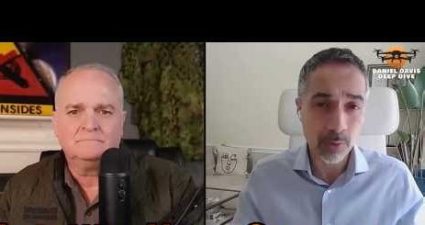
No Threat Can Force Iran’s Surrender /Trita Parsi & Lt Cl Daniel Davis
or go to
Aletho News Archives – Video-Images
From the Archives
What is the Israeli Lobby in Australia Doing in Interfaith Dialogue?
By Ali Kazak | Dissident Voice | October 11, 2015
For years Israel and its lobby around the world have been trying to normalise their relations with Arabs and Muslims without solving the Palestine Question.
One of the methods they resorted to in the last few years is using human rights and community organizations such as interfaith dialogue and Multiculturalism to achieve this objective and to: isolate the Palestinians, marginalise the Palestine question, end Israel’s isolation, and prevent criticism of Israel, knowing that these organisations will be the first to stand against Israel’s violations, racial and religious discrimination.
The group responsible for this task in Australia is The Australia/Israel & Jewish Affairs Council (AIJAC); its Director of International & Community Affairs, Jeremy Jones is in charge of lobbying religious community organizations, specifically Muslims and Christians. Consequently he convened the Faith Communities for Reconciliation, founding participant in the Australian Partnership of Religious Organisations and the Australian National Dialogue of Christians, Muslims & Jews.
AIJAC is a private political propaganda group. It is recognised as the main Israeli lobby in Australia. It coordinates its activities and works intimately with the Israeli embassy in Canberra and different institutions in Israel. It is privately funded by some Jewish businessmen. It monitors closely Australian politicians, the media, ethnic and religious groups, (especially Arabs and Muslims), unions and academics on their stands towards Israel and the Palestine question. … continue
Blog Roll
 Aletho News
- The war of liberation of the Arab and Islamic peoples expands across the Gulf
- Envoy warns UN on Trump’s threat to ‘obliterate’ Iran’s civilian infrastructure
- The Larak Corridor: Iran’s Rial Gate With No US, No Israel, and No Way Around
- ‘Economic terrorism’: Steel facilities hit again in US-Israeli strike
- ‘War Crime’: Iran condemns attacks on Arak, Ardakan nuclear sites
- Two-thirds of Americans want quick end to Iran war even if goals unmet
- Trump to Give “Important Update on Iran” Wednesday in Prime-Time Speech
- Theodore Postol: Iran’s Missiles & Drones Were Underestimated
- Iran To Target Military Industrial-Tech Complex That Facilitated Gaza Genocide
- Collapsing Empire: The Resistance Disarms ‘Israel’
- If Americans Knew
- Israel wants US to bomb more of Iran’s civilian structures (113,000 is not enough) – Not a ceasefire Day 173
- Ann Coulter Rips Into Fox News for Iran War Coverage
- Joe Kent Urges Americans To Call White House and Congress To Object To Sending Troops Into Iran
- DNC Resolution to Reject AIPAC Funding Puts Democratic Leaders in the Hot Seat
- Swedish foundation to build 400 schools as over 650,000 Gaza children remain without education for 2 years
- Israeli army admits photshopping image of slain Lebanese journalist
- This is how Israel is systematically killing health workers under the cover of war in Lebanon
- Carrying life under fire: Israeli invasion of Lebanon leaves pregnant women facing deadly risks
- Champagne all around for the new death penalty (for Palestinians) law – Not a ceasefire Day 172
- Why are Palestinian books struggling to be seen on Amazon?
- No Tricks Zone
- New Study Finds Warming Saves Lives…Cold Temperatures 12 Times More Deadly Than Excess Heat
- German Science Blog Accuses PIK Climate Institute Of Hallucinating Climate Tipping Points
- Devastating Assessment Of Comirnaty Vaccine By Former Senior Pfizer Europe Toxicologist
- New Study: CO2 Is ‘Effectively Negligible’ As An Explanatory Climate Change Factor Since 2000
- Former Pfizer Toxicologist Dr. Helmut Sterz Tells Bundestag Hearing Pfizer Vaccine Should Have Never Been Approved
- Energy Expert: Germany’s Nuclear Phaseout Was A “500 Billion Euro Mistake”
- New Research: South Australia’s Mid-Holocene Sea Surface Temperatures Were 4°C Warmer Than Today
- Storing Green Energy To Last Germany 10 Days Would Require A 60-Million Tonne Battery
- New Studies: UK Sea Levels Were 4 Meters Higher Than Today During The Mid-Holocene
- Destructive Green New Deal: German Energy And Metal Group Warns Of Drastic Crisis
 Aletho News