Russian Meddling in Mexican Election Statements Groundless – President of Senate
Sputnik – 18.05.2018
The statements made by US and Mexican politicians about alleged the interference of Moscow in the elections in Mexico are unfounded, Ernesto Cordero Arroyo, the president of the Mexican Senate, told Sputnik.
“They had not presented any evidence and we should understand that during the election campaign people become very creative and inventive,” the Mexican politician said.
According to the senior lawmaker, the Mexican side has not registered any foreign meddling in the election process.
Mexicans will elect the next president of the nation on July 1. Ahead of the vote, former US National Security Adviser Herbert McMaster said that the United States noticed signs of “Russian intervention” in the Mexican presidential election.
Enrique Ochoa, the leader of Mexico’s ruling Institutional Revolutionary Party (IRR), said the international media outlets had “documented” the interests of Russia and Venezuela in backing leftist candidate Andres Manuel Lopez Obrador.
Russia has faced numerous accusations of interference in foreign elections, including the 2016 US presidential vote. Kremlin spokesman Dmitry Peskov has called the claims groundless, while Russian Foreign Minister Sergey Lavrov has stressed that there was no evidence to substantiate such accusations.
With Iran sanctions Trump made Europeans look like the fools they are
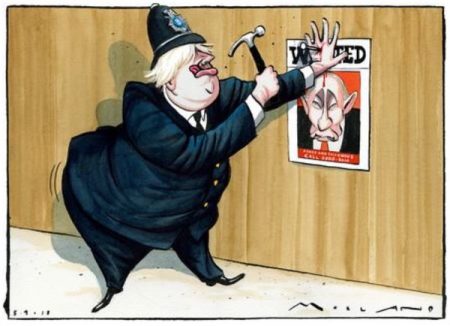
By John Laughland | RT | May 18, 2018
The attacks by European leaders against US President Donald Trump are getting sharper by the day.
On the day Trump announced that he was ripping up the Iran deal, and that the US would impose sanctions on European companies trading with that country, the French finance minister Bruno Le Maire said that European states refused to be treated like “vassals” of the US.
At Aachen on 11 May, Emmanuel Macron effectively accused the US of blackmail. On 17 May, the president of the European Council, Donald Tusk, asked, “With friends like that (i.e. Trump), who needs enemies?”
The temperature only rose further when the French energy giant Total announced that it would pull out of a multi-billion dollar gas deal with Iran unless European diplomacy succeeds in obtaining a specific waiver from US sanctions. Other European behemoths including Allianz and Siemens have also announced either that they will wind down operations in Iran or that they will not start any new ones.
These statements show that Trump’s decision is a slap in the face for the EU politically, economically and – perhaps above all – ideologically. Politically, because both Emmanuel Macron and Angela Merkel made special trips to Washington to plead with Trump, to no avail whatever. Moreover, the EU is itself a signatory to the Iran deal, which it regards as a major diplomatic triumph from which it draws credibility: its disavowal by Trump is a deep insult to the diplomatic status of the EU as such.
Economically, because of the gigantic contracts which European companies could lose. For years, following the nearly $9 billion fine imposed by the US on Paribas in 2015, European companies and banks have been terrified of engaging in any business activity likely to attract the ire of the Americans. Deals with Russia, for instance, are shunned. The effect of this latest decision could be like many Paribas situations at once.
Ideologically, because the EU draws its entire legitimacy from the belief that by pooling sovereignty and by merging its states into one entity, it has advanced beyond the age when international relations were decided by force. It believes that it embodies instead a new international system based on rules and agreements, and that any other system leads to war. It is impossible to exaggerate the importance of this belief for European leaders; yet Donald Trump has just driven a coach and horses through it.
The angry statements by European leaders might lead one to think that we are on the cusp of a major reappraisal of trans-Atlantic relations. However, the reality is that the EU and its leaders have painted themselves into a corner from which it will be very difficult, perhaps impossible, to extricate themselves.
First, the links between the EU and the US are not only very long-standing, they are also set in stone. NATO and the EU are in reality Siamese twins, two bodies born at the same time which are joined at the hip. The first European community was created with overt and covert US support in 1950 in order to militarize Western Europe and to prepare it to fight a land war against the Soviet Union; NATO acquired its integrated command structure a few months later and its Supreme Commander is always an American.
Today the two organizations are legally inseparable because the consolidated Treaty on European Union, in the form adopted at Lisbon in 2009, states that EU foreign policy “shall respect” the obligations of NATO member states and that it shall “be compatible” with NATO policy. In other words, the constitutional charter of the EU subordinates it to NATO, which the USA dominates legally and structurally. In such circumstances, European states can only liberate themselves from US hegemony, as Donald Tusk said they should, by leaving the EU. It is obvious that they are not prepared to do that.
Second, EU leaders have burned their own bridges with other potential partners, especially Russia. Angela Merkel traveled to Russia on Friday but only a few weeks ago more than half of the EU member states expelled scores of Russian diplomats and encouraged non-EU European states like Ukraine and Montenegro to do the same, in retaliation for the poisoning in Salisbury of Sergei and Julia Skripal.
How is Mrs Merkel going to convince Mr Putin to join her in keeping Iran’s nuclear program under control if she officially thinks that Mr Putin is guilty of secretly stockpiling and using chemical weapons for assassinations in the West? Only a few weeks later, in mid-April, Britain and France, together with the US, attacked Syria on the basis that its army had used chemical weapons at Douma with Russian backing. If they try to turn on the charm now in Sochi or in Moscow, do they really expect the Russians can take them seriously?
Third, how can EU leaders complain about US sanctions against their companies when they themselves have applied sanctions against Russian companies causing major economic disruptions in that country? EU states have also introduced punitive sanctions against Syria since 2011, one of the biggest programs of sanctions ever, whose effect and purpose is to disrupt the activities of the Syrian state including its ability to provide public goods like health.
Britain and France, who are, with Germany, the European signatories of the Iran deal, have been pursuing regime change in Syria for half a decade. By what right do they protest now that the US administration is taking decisions whose goal is to provoke regime change in Iran?
As if these external issues were not bad enough, the EU is currently riven by internal divisions too. Donald Tusk may say “Europe must be united economically, politically and also militarily like never before … either we are together or we are not at all” but Europe is indeed not “together” at all. The Brussels commission is hounding Poland and Hungary on what are clearly internal political matters beyond the Commission’s remit; the EU is about to lose one of its most important member states; and a new government is going to take power in Rome whose economic policies (a flat tax at 15%) will blow the eurozone’s borrowing rules out of the water and perhaps cause Italy to leave the euro.
The Italian 5-Star / League government also wants an end to the EU sanctions against Russia; these are voted by a unanimity which, although fragile, has held until now but which, if the new power in Rome keeps its word, will shortly collapse. In other words, what Trump has done is to make the Europeans look like the fools they are. In circumstances in which the EU has placed all its eggs in one basket, a basket which Trump has now overturned, it will be impossible for it to come together. On the contrary, it is falling apart.
John Laughland, who has a doctorate in philosophy from the University of Oxford and who has taught at universities in Paris and Rome, is a historian and specialist in international affairs.
An Iranian Perspective on the Battle for Syria
By Rick Sterling | Consortium News | May 17, 2018
West against East on the Syrian battle-field, in the newspapers and now on film: A new, full-length action movie, titled Damascus Time, gives an Iranian perspective on the battle against ISIS in Syria.
The movie comes from Iranian screenwriter and film director Ebrahim Hatamikia. Two award-winning Iranian actors, Hadi Hejazifar and Babak Hamidian, play father and son pilots trying to rescue civilians besieged and attacked by ISIS forces in eastern Syria. The pilots have come to help the townspeople escape in an aging Ilyushin cargo plane.
Syrian and Iraqi actors play Syrian civilians and ISIS terrorists hell bent on blowing up the plane or using it on a suicide mission against Damascus.
The movie portrays sensational scenes from real ISIS atrocities with a backdrop showing the Syrian desert and famous ruins of Palmyra. The city where civilians are surrounded and besieged is similar to the Syrian city of Deir ez-Zor, which was surrounded and attacked by ISIS for years. During that time, the townspeople and soldiers depended on air-dropped food and ammunition to hold off the attackers, as shown in the movie.
Damascus Time’s jihadists display a human side, but they are wrapped in sectarianism, hate and violence.
Life’s complexities are demonstrated in the younger of the two Iranian pilots who has left his pregnant wife to be with his father. The mother-in-law of the young pilot bitterly criticizes him for leaving his wife. He tells her it will be his last trip.
While the story is fiction, what it portrays is all too real: Hundreds of thousands of real Syrians and Iraqis have been killed by the unleashing of the ISIS Frankenstein. Ironically, American leaders criticize Iran for being the “leading state sponsor of terrorism.” But in the Syrian war, Iran has been combatting it. Iran is more tolerant than most Westerners think too, as indeed Islam is. How many know for instance that Jews are represented in the Iranian parliament?
Western-backed Extremism
In reality, the U.S. and UK have allied for decades with extremists for short-term political gain. As documented in “Devil’s Game: How the U.S. Helped Unleash Fundamentalist Islam,” by Robert Dreyfuss, Britain and the U.S. promoted a violent and sectarian wing of the Muslim Brotherhood to undermine the nationalist and socialist policies of Gamal Abdel Nasser in Egypt. Starting in 1979, the U.S. and Saudi Arabia promoted the founders of what became Al Qaeda to attack the socialist-leaning government of Afghanistan.
This policy has continued to the present. In the summer of 2012, the U.S. Defense Intelligence Agency outlined their strategy in a secret document : “THERE IS THE POSSIBILITY OF ESTABLISHING A DECLARED OR UNDECLARED SALAFIST PRINCIPALITY IN EASTERN SYRIA (HASAKA AND DER ZOR).”The U.S. looked favorably on what the document predicts will be the creation of the “Islamic State”: “THIS IS EXACTLY WHAT THE SUPPORTING POWERS TO THE OPPOSITION WANT, IN ORDER TO ISOLATE THE SYRIAN REGIME…”.
Then, in a leaked audio conversation with Syrian opposition figures in September, Secretary of State John Kerry said the U.S., rather than seriously fight Islamic State in Syria, was ready to use the growing strength of the jihadists to pressure Assad to resign, just as outlined in the DIA document.
“We know that this was growing, we were watching, we saw that Daesh [a derisive name for Islamic State] was growing in strength, and we thought Assad was threatened,” Kerry said. “We thought however we could probably manage that Assad might then negotiate, but instead of negotiating he got Putin to support him.”
Russia began its military intervention in late September 2015 without the United States, with the Kremlin’s motives made abundantly clear by Vladimir Putin and other Russian officials. But such clear explanations are rarely reported clearly by Western corporate media, which instead peddles the line from officials and think tanks that Russia is trying to recover lost imperial glory in the Middle East.

Who sponsors terrorism?
But Kerry knew why Russia intervened. “The reason Russia came in is because ISIL [another acronym for Islamic State] was getting stronger, Daesh was threatening the possibility of going to Damascus, and that’s why Russia came in because they didn’t want a Daesh government and they supported Assad,” he said in the leaked discussion. Kerry’s comment suggests that the U.S. was willing to risk Islamic State and its jihadist allies gaining power in order to oust Assad.
The Biggest Sponsors
The true “state sponsor of terrorism” is not Iran; it is the West and their allies. Since Iran has been fighting ISIS and other extremists in Syria, it is appropriate that the first feature length movie depicting that battle against terrorism and ISIS comes from Iran.
Hundreds of Iranians have given their lives alongside their Syrian and Iraqi comrades. “Damascus Time” is not the product of Hollywood fantasy; it’s the product of actual human drama and conflict occurring in the Middle East today. “Damascus Time” is fictional but based on a real conflict with actual blood, atrocities, tragedies and martyrs.
The movie is currently being shown at cinemas throughout Iran. In recent weeks it was the second highest ranking movie. A trailer of the film can be viewed here. It should be available for viewing in the West in the near future, unless western sanctions and censorship are extended to culture.
Rick Sterling can be contacted at rsterling1@gmail.com
Israel blocks Turkey from transporting wounded Palestinians from Gaza
RT | May 18, 2018
Turkey’s attempts to evacuate Palestinians wounded in Gaza for medical treatment have been blocked by Israel, the government in Ankara said.
Israel is blocking Turkey from “standing beside our oppressed brothers,” Turkey’s deputy prime minister, Recep Akdag, said, as cited by Anadolu Agency. Turkey asked to send a plane to Tel Aviv’s Ben Gurion airport, but the request was rejected due to political and security concerns, according to Israel’s Channel 10.
“We received a request from international health authorities to approve a Turkish flight to evacuate those being treated in Gaza to Turkey,” Deputy Health Minister Yaakov Litzman told Channel 10.
“After discussion with security agencies and Israeli experts, we decided to allow treatment in Israel and/or to send medical supplies to Gaza. But we did not permit the Turkish flight.”
Tensions have increased between the two nations since Turkey expelled Israel’s ambassador from Ankara and withdrew its ambassador from Tel Aviv, in response to Israel’s killing of at least 60 Palestinians at the Great Return March protests in Gaza on Monday. More than 100 people have been killed during the six-week protests.
The Rafah border crossing has been opened for six days this week to allow injured Palestinians in Gaza to receive treatment in Egypt. Minister of Health Ahmed Emad Eddine said he had been “instructed by the political leadership” to allow Palestinians to be treated in Egyptian hospitals, Egypt Today reports.
Last month, Israel rejected a request to transfer two wounded Palestinians from Gaza to the West Bank because they had taken part in the demonstrations. The High Court ruled Israel had to allow the patients to receive treatment, but at that stage both needed amputations.
“The situation in Gaza is devastating and the crisis is far from over,” UN humanitarian coordinator Jamie McGoldrick said. “Medical teams in Gaza have exerted heroic efforts, working tirelessly and often at personal risk, to save lives. But stocks of medicines and supplies are being depleted, with few resources to replenish them. Our ability to reach affected families, including children, and provide assistance is extremely limited due to funding shortfalls.”
Before Monday’s protest, Doctors Without Borders (MSF) in Gaza said its medical facilities were “completely overwhelmed and will soon be unable to manage additional wounded,” and warned the health system was “on the verge of collapse.”
‘Cheap political ritual’: Trump orders sanctions against Russia over alleged INF treaty violation
RT | May 17, 2018
President Donald Trump ordered his Cabinet to work on sanctions targeting Russian officials for what the US claims is a violation of a key arms control treaty. The action is perceived as a ‘cheap political ritual’ in Moscow.
The Intermediate-Range Nuclear Forces (INF) Treaty bans the US and Russia from developing and deploying land-based missiles with ranges between 500 and 1,000km. Signed by Mikhail Gorbachev and Ronald Reagan, it helped reverse the nuclearization of Europe and deflate Cold War tension. Washington and Moscow have since accused each other of violating the key arms control agreement, but neither went as far as withdrawing from it.
The National Defense Authorization Act for Fiscal Year 2018 in US has a section that requires the White House to prepare a list of senior Russian officials responsible for violating the INF, who could be slapped with personal sanctions for it. Those include property freezes, travel bans and whatever Trump deems appropriate.
A memorandum by Trump, which was published on Wednesday, instructs several Cabinet members, including the State Secretary, the Director of National Security and the Secretary of the Treasury, to carry out the work.
The development was dismissed in Moscow as largely insignificant. “I have three words to describe it: cheap political ritual,” said Deputy Foreign Minister Sergey Ryabkov on Thursday.
The US falsely believes that “Russia may be pressured by sanctions into offering unilateral concessions and actions pleasing Washington,” he said. “It’s obvious that this does not promote normal dialogue on strategic stability and on the contrary hurts it.”
The US accuses Russia of secretly developing two rockets with intermediary range, which can be fired by a standard launcher of the tactical missile system Iskander-M. Russia denies that the rocket’s range falls within the restrictions.
Moscow in turn accuses the US of having developed banned missiles under the guise of target projectiles for anti-missile systems. It also says the US adopted naval vertical launch systems, which can fire Tomahawk missiles, to land deployment as part of AEGIS Ashore program, effectively making the cruise missiles land-based.
UNICEF: 1,000 children injured by Israeli gunfire in Gaza protests

Palestine Information Center | May 17, 2018
OCCUPIED JERUSALEM – Over 1,000 children have been injured by Israeli forces in the besieged Gaza Strip during demonstrations since March 30, according to the UN Children’s Fund (UNICEF).
The UN body pointed out that some injuries had been severe and potentially life-altering, including amputations.
“Recent violence has exacerbated the already weak health system in the Gaza Strip, which is crumbling because of the severe power cuts and shortages of fuel, medicine and equipment,” UNICEF said in a statement.
“Medical facilities are buckling under the strain of additional casualties,” it further warned.
On Wednesday, UNICEF and its partners delivered two truck-loads of urgent medical supplies to the Gaza Strip for an estimated 70,000 people.
Award-winning photographer shot by Israel soldier in the West Bank

Internationally-acclaimed and award-winning photographer, Tanya Habjouqa [Happeningarts/Twitter]
MEMO | May 17, 2018
An internationally-acclaimed, award-winning photographer was shot by an Israeli soldier in the occupied West Bank on Tuesday, reports the Art Newspaper.
Tanya Habjouqa, who won the 2014 World Press photo award, was struck in the leg by a rubber-coated metal bullet fired by Israeli occupation forces during a protest near Bet El checkpoint.
Habjouqa told the paper that she was some 40 metres from Palestinian protesters “when Israeli soldiers in the distance started shooting rubber bullets and tear gas in several directions”.
“She also saw soldiers aim at a Palestinian gas station where there were no protesters, just people filling up their gas tanks,” the report added.
“I was on the side with my camera at the beginning of the protest with cameras around my neck, so I feel I was definitely targeted though thankfully they chose not to aim for my head,” Habjouqa tells us. “It hurts like hell and the bruise is spreading front and back.”
Habjouqa is a founder of Rawiya, the first all-female photo collective in the Middle East, as well as a member of the Noor Photography collective, a Magnum Foundation grantee, and the author of the photo book Occupied Pleasures that the Smithsonian named one of the best photo books of 2015.
Her work is in the permanent collections of the Carnegie Museum of Art, the Museum of Fine Arts in Boston and the Institut du Monde Art in Paris.
Read also:
Media freedom watchdog warns of more Israel attacks on journalists in Gaza
EU will use ‘blocking statute’ to protect its firms from US sanctions for operating in Iran
RT | May 17, 2018
The European Union will activate legislation banning the bloc’s companies from complying with US sanctions against Iran as soon as Friday, according to European Commission President Jean-Claude Juncker.
The law also does not recognize any court rulings enforcing penalties, which could be potentially introduced by the White House against European corporations doing business in the Islamic Republic.
“As the European Commission we have the duty to protect European companies,” the Commission president said at a news conference after a meeting of EU leaders. “We now need to act and this is why we are launching the process of to activate the ‘blocking statute’ from 1996. We will do that tomorrow morning at 10:30.”
“We also decided to allow the European Investment Bank to facilitate European companies’ investment in Iran. The Commission itself will maintain its cooperation with Iran,” Juncker said.
The move followed Washington’s decision to withdraw from the Iran nuclear deal, clinched three years ago between Tehran and the P5+1 powers (China, France, Russia, UK, US, plus Germany) and to reintroduce sanctions that were lifted after signing the pact.
The US Treasury Department said it would give European businesses six months to wind up their investments in the country or risk US sanctions – forbidding them from signing new contracts.
Following a decades-long financial and economic blockade, the 2015 nuclear deal, known as the Joint Comprehensive Plan of Action (JCPOA), opened Iran as one of the biggest global markets to dozens of multinationals across the globe. The EU’s biggest companies rushed to sign multi-billion euro deals with Tehran shortly after the sanctions were lifted. As for Iran, the energy-rich republic got an opportunity to ramp up its presence in the global oil markets.
The EU has a lot of experience protecting its interests, Dawood Nazirizadeh, chairman of the Wiesbaden Academy for integration, told RT.
“In 1996 it defended itself against US secondary sanctions with the ‘blocking statute’. As a result, the US granted exemptions to European companies. However, under the current US administration, we are not optimistic about the future for such an agreement,” said Nazirizadeh.
The EU also agreed to stick to the Iran nuclear deal, aiming to protect the interests of European corporations dealing with Tehran against US sanctions, according to European Council President Donald Tusk.
“On Iran nuclear deal, we agreed unanimously that the EU will stay in the agreement as long as Iran remains fully committed to it. Additionally the Commission was given a green light to be ready to act whenever European interests are affected,” the top EU official said.
West Continues to Underestimate Support for Assad in Syria – UK Shadow FM
Sputnik | May 17, 2018
Although many politicians in the ruling Tory British government have expressed opposition to Syrian President Bashar al-Assad, with some endorsing the UK’s role in the US-led strikes against Syria on April 13, some members of the opposition, including Labour leader Jeremy Corbyn and members of his shadow cabinet, have called for restraint.
Shadow UK Foreign Secretary Emily Thornberry told Prospect magazine on Wednesday that the West underestimates the level of support President Assad enjoys in Syria and suggested that opposition forces have exaggerated domestic opposition to the Syrian government.
“There is an argument that if [President Bashar al-Assad] had been as overwhelmingly unpopular as the rebels told the west at the outset then he wouldn’t be there. I think there has been a depth and a breadth of support for Assad that has been underestimated,” the British shadow foreign secretary told Prospect magazine on May 16.
Shadow FM Thornberry went on to insist that all foreign forces need to leave Syria.
“They’re not fighting for the sake of the Syrian people. Any of them. Saudi Arabia, Israel, Iran, Turkey, America, Britain—have I missed anyone?”
She proceeded to add Russia to the list.
When questioned about Russia’s vetoing of UN resolutions she pointed towards other countries which have also blocked numerous resolutions and said it’s the nature of international politics.
“People will always block resolutions. If you look at the number of resolutions America has blocked, I mean that’s the way of politics,” Shadow FM Thornberry said.
The UK shadow foreign secretary went on to say Britain should support any peace process which yields results, whether that’s the Astana, Geneva or Sochi process.
“I think we should be working with whatever works, for the sake of the Syrian kids. None of this is revolutionary,” she added.
Despite the tripartite aggression by the US, the UK and France against the Syrian Army and other military personnel in Syria last month, government forces have continued to advance against terrorists throughout the country and once they deal with the final Daesh* remnants in south Damascus, they are likely to take aim at either Deraa or Idlib.
On the topic of military intervention against Damascus, UK Foreign Secretary Emily Thornberry warned that it could further destabilize Syria, citing Libya as an example.
“[It] has been such a disaster. Responsibility to Protect is not [supposed to be] a cover for ‘those people are being treated badly let’s go and bomb, everything will be fine.’ It didn’t work—look at Libya now,” FM Thornberry, who voted in favor of bombing Libya in 2011, told Prospect magazine earlier this week.
Featured Video
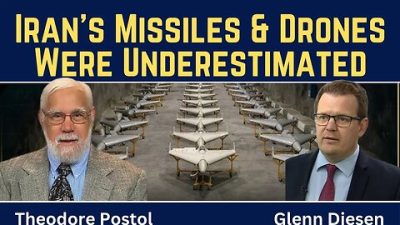
Theodore Postol: Iran’s Missiles & Drones Were Underestimated
or go to
Aletho News Archives – Video-Images
From the Archives
What is the Israeli Lobby in Australia Doing in Interfaith Dialogue?
By Ali Kazak | Dissident Voice | October 11, 2015
For years Israel and its lobby around the world have been trying to normalise their relations with Arabs and Muslims without solving the Palestine Question.
One of the methods they resorted to in the last few years is using human rights and community organizations such as interfaith dialogue and Multiculturalism to achieve this objective and to: isolate the Palestinians, marginalise the Palestine question, end Israel’s isolation, and prevent criticism of Israel, knowing that these organisations will be the first to stand against Israel’s violations, racial and religious discrimination.
The group responsible for this task in Australia is The Australia/Israel & Jewish Affairs Council (AIJAC); its Director of International & Community Affairs, Jeremy Jones is in charge of lobbying religious community organizations, specifically Muslims and Christians. Consequently he convened the Faith Communities for Reconciliation, founding participant in the Australian Partnership of Religious Organisations and the Australian National Dialogue of Christians, Muslims & Jews.
AIJAC is a private political propaganda group. It is recognised as the main Israeli lobby in Australia. It coordinates its activities and works intimately with the Israeli embassy in Canberra and different institutions in Israel. It is privately funded by some Jewish businessmen. It monitors closely Australian politicians, the media, ethnic and religious groups, (especially Arabs and Muslims), unions and academics on their stands towards Israel and the Palestine question. … continue
Blog Roll
 Aletho News
- Iran’s friends are about to make life much more difficult for Israel and the US
- The war of liberation of the Arab and Islamic peoples expands across the Gulf
- Envoy warns UN on Trump’s threat to ‘obliterate’ Iran’s civilian infrastructure
- The Larak Corridor: Iran’s Rial Gate With No US, No Israel, and No Way Around
- ‘Economic terrorism’: Steel facilities hit again in US-Israeli strike
- ‘War Crime’: Iran condemns attacks on Arak, Ardakan nuclear sites
- Two-thirds of Americans want quick end to Iran war even if goals unmet
- Trump to Give “Important Update on Iran” Wednesday in Prime-Time Speech
- Theodore Postol: Iran’s Missiles & Drones Were Underestimated
- Iran To Target Military Industrial-Tech Complex That Facilitated Gaza Genocide
- If Americans Knew
- Israel wants US to bomb more of Iran’s civilian structures (113,000 is not enough) – Not a ceasefire Day 173
- Ann Coulter Rips Into Fox News for Iran War Coverage
- Joe Kent Urges Americans To Call White House and Congress To Object To Sending Troops Into Iran
- DNC Resolution to Reject AIPAC Funding Puts Democratic Leaders in the Hot Seat
- Swedish foundation to build 400 schools as over 650,000 Gaza children remain without education for 2 years
- Israeli army admits photshopping image of slain Lebanese journalist
- This is how Israel is systematically killing health workers under the cover of war in Lebanon
- Carrying life under fire: Israeli invasion of Lebanon leaves pregnant women facing deadly risks
- Champagne all around for the new death penalty (for Palestinians) law – Not a ceasefire Day 172
- Why are Palestinian books struggling to be seen on Amazon?
- No Tricks Zone
- New Study Finds Warming Saves Lives…Cold Temperatures 12 Times More Deadly Than Excess Heat
- German Science Blog Accuses PIK Climate Institute Of Hallucinating Climate Tipping Points
- Devastating Assessment Of Comirnaty Vaccine By Former Senior Pfizer Europe Toxicologist
- New Study: CO2 Is ‘Effectively Negligible’ As An Explanatory Climate Change Factor Since 2000
- Former Pfizer Toxicologist Dr. Helmut Sterz Tells Bundestag Hearing Pfizer Vaccine Should Have Never Been Approved
- Energy Expert: Germany’s Nuclear Phaseout Was A “500 Billion Euro Mistake”
- New Research: South Australia’s Mid-Holocene Sea Surface Temperatures Were 4°C Warmer Than Today
- Storing Green Energy To Last Germany 10 Days Would Require A 60-Million Tonne Battery
- New Studies: UK Sea Levels Were 4 Meters Higher Than Today During The Mid-Holocene
- Destructive Green New Deal: German Energy And Metal Group Warns Of Drastic Crisis
 Aletho News