Death and denial inside the Covid Cult
By Guy Hatchard | TCW Defending Freedom | May 30, 2023
The writer is in New Zealand
The British Heart Foundation (BHF) has announced that the incidence of atrial fibrillation has increased by 50 per cent over the last decade. Atrial fibrillation (AF) is a condition which causes an irregular and often rapid heart rate. It can lead to stroke and heart failure. The BHF did not release any supporting figures by year which might point to a potential cause. Here Dr John Campbell describes both the huge rise in AF and the lack of detailed data as ‘astonishing’.
Here in New Zealand heart disease is at record levels, but politicians of all parties are repeating again and again that there are no excess deaths. As if repeating a lie will make it come true. However the official tally of OECD statistics shows that in 2023 New Zealand deaths are running at an astonishing 18.2 per cent above the long-term average – the second-highest rate among 31 OECD nations.
This doesn’t appear to matter one whit to our politicians, who remain confident they are the one source of truth, fully in control of mainstream media, backed by the medical establishment, able to censor social media, protected from the courts by parliamentary privilege and not required to answer any questions.
It probably hasn’t escaped your notice that all these are recognised characteristics of cult leaders who systematically manipulate their followers and seek to exercise total control. To say that cults do not end well would be an understatement. Once your followers are sufficiently prepped to ignore fact, any crooked and perverted manipulation becomes a possibility.
Once indoctrinated, it is difficult to persuade cult followers they have been duped. Leaders ensure that every event that runs counter to their ideology is neatly fitted into their world view whether based on fact or not. It becomes especially damaging when the force of law is used to ensure compliance and eliminate redress.
You can hardly avoid news of sudden-onset illness or unexpected deaths in the daily newspapers or among friends, but there is always an innocuous-sounding cause on offer. If considered rationally, the unprecedented number of unusual deaths would render these excuses implausible. However, cults don’t do rational.
This brings us to a rather sad realisation: with all the elected political parties complicit in Covid policy, it is almost ludicrous to believe that the coming election will change anything. Prepandemic, our current situation was almost inconceivable, but quietly disaster has been creeping up on us.
Published in 2020, an article in Harvard University Health Publishing gives us a hint. Senior Editor Robert Shmerling argues that it is not possible or even practical as a medical practitioner to be guided by ‘do no harm’ as the Hippocratic oath suggests, instead saying: ‘You can’t tell ahead of time whether a test or treatment will “do no harm”.’ In other words, it has become widely accepted in medical practice that adverse events are inevitable and unpredictable. This is an argument which seeks to justify the irresponsible push for risky and dangerous biotech medicine and experimentation at any cost.
So what will change minds? When you look at Ponzi schemes, dictators and cults, the answer is always the same. They end when total disaster strikes. Just how high will excess deaths have to rise before the powers that be accept that a giant mistake has been made?
Inside the Covid cult there are a few cracks appearing in the ‘safe and effective’ narrative. It has quietly become acceptable for doctors to advise their patients privately that they might be vaccine-injured, for pathologists to advise the children of friends that they should avoid Covid vaccination, for vaccinologists to say they won’t be getting any more boosters. These are small steps which indicate a direction of change and that those at the health front line know something has gone radically wrong.
However, the political and media endorsement of biotechnology remains near-total. Given the weight of Covid science publishing, there is no justification for this.
The suggestion that New Zealand’s pandemic policy has been world-beating is a hollow lie, pandering to notions of national pride and allegiance. Like the medicos who think it is impossible to ‘do no harm’, politicians are denying the obvious. By doing so they are tacitly endorsing inevitable deaths in the course of policy. This is a militaristic, self-obsessed and flawed way to think – glorious sacrifice, ‘Theirs not to reason why, Theirs but to do and die’.
Pandemic policy has stolen our bodily autonomy, our right of medical choice. It has overruled nature’s design of immunity and health. It has debased truth, substituting government pronouncement. It has seized control of children from families. It has inserted propaganda into education. It has rendered employees subservient. It has cancelled dialogue.
In short, it has taken the world in which we thought we lived and turned it upside down. It is no good thinking this is a battle between right and left. That too is a story to keep everyone distracted from the real issues. It is a question of what kind of fundamental individual rights can we retain? Rights that we previously took for granted.
By framing the world as vaccinated vs unvaccinated, political power backed by pharmaceutical money has redrawn ideological boundaries along the lines of novel biotechnologies. This is a giant act of deception.
When I was growing up, we gave thanks for the harvest. The modern age has joined in the cult of biotechnology which seems to offer supremacy over nature, but it hasn’t worked. To succeed, to know, to enjoy, you have to work with nature.
I have just finished reading The History of the World in 100 Plants by Simon Barnes. Barnes concludes that we are descended from the biodiversity and bioabundance of plants: ‘Look at this planet and its uncountable plants. We owe them everything.’ We depend entirely on the natural world around us, yet biotechnology is seeking to overthrow this mutual interdependency and substitute an ephemeral figment of man’s imagination and pride – an impossible dream and a hideous nightmare that puts our continued existence at risk.
Voting for today’s crop of politicians is a forlorn hope. It is a blank cheque for continued biotechnology experimentation on ourselves. This is not a time to give up our rights, and hand them to the same politicians who have already laughed at medical choice and mocked those suffering serious adverse events. They don’t deserve our vote. Under their leadership it could all begin again.
Zero healthy young adults died of Covid-19 – Israel
RT | May 29, 2023
Not a single healthy person under age 50 died of Covid-19 in Israel, according to data released by the country’s ministry of health in response to a freedom of information request from lawyer Ori Xabi.
“Why were all the extreme measures of school closures, vaccination of children, and lockdowns needed?” internal medicine specialist Yoav Yehezkelli, a prominent critic of Israel’s Covid-19 policies, asked the Epoch Times.
In addition to requesting the number of Covid-19 deaths that had occurred in patients under 50 with no underlying health conditions, Xabi also asked the ministry to provide the average age of patients who died of the disease, segmented by vaccination status, as well as the annual number of cardiac arrest cases between 2018 and 2022.
The average age of fatalities among those vaccinated against Covid-19 was 80.2 years, while the average for the unvaccinated was 77.4, according to the ministry.
However, the MoH claimed to be unable to provide cardiac arrest information for the years 2021 and 2022, explaining that the information had not yet been transferred to them.
A study published last year analyzing data from the Israel National Emergency Medical Services found a shocking 25% spike in emergency services calls due to cardiac arrests for patients aged 16 to 39 taking place from January to May 2021.
However, Sharon Elroy-Pries, head of Public Health Services for the Ministry of Health, condemned efforts to draw a connection to the start of the Covid-19 vaccination program in December 2020 and denied that there had been an increase in cardiac arrests during that time, or any increase in deaths of young people.
Cardiologist Retsef Levi, one of the authors of the study, pointed out that the ministry had claimed not to have information on cardiac arrests for 2021 and 2022, meaning one of the two claims had to be false.
While the MoH insisted the data it provided to Xabi regarding patients aged 18 to 49 was limited to cases in which an epidemiological investigation had been completed, it is known to have access to a database that includes extensive data on all patients, including underlying conditions, irrespective of whether an epidemiological investigation was performed.
Yehezkelli called the MoH’s response “a bit naive,” questioning why it had withheld the full data, but pointed out that the statistics vindicated government critics. “It was definitely a disease that actually only endangered the elderly,” he said, pointing out that the MoH’s numbers showed the average age of death from Covid-19 was 80.
The MoH has promised to supply all-cause mortality data segmented by vaccination status and age by the end of the month, following more than two years of stonewalling in response to Xabi’s freedom of information requests.
Is BBC Verify Britain’s Answer to the Disinformation Governance Board?
BY TONY MORRISON | THE DAILY SCEPTIC | MAY 29, 2023
A surprise popped up on my Twitter feed last week – the launch of BBC Verify, as announced by BBC journalist Marianna Spring. Apparently, the state broadcaster is now going to verify what is fact and what is fake news. Better late than never, I suppose, given the BBC’s relentless promotion of pro-lockdown and pro-vaccine misinformation during the Pandemic. However, as the presentation went on it revealed a somewhat different agenda – less of the fact-checking and more of the “searching for conspiracy theories from the far-right”. This was in support of the noble goal of protecting the British people from outbreaks of civil disorder supposedly linked to ‘conspiracy theories’, like the Jan 6th brouhaha. And Spring herself is going to get her hands dirty, at least as much as can be done using such tools as Google Maps and Facebook, along with 60 other BBC journalists. (How much is this costing?)
There was something very familiar about Ms. Spring for U.S. audiences. We had a ‘disinformation tsar’ just like her a year ago in the form of Nina Jankowicz.
The Department of Homeland Security (DHS) decided last year that it had fulfilled its primary mission of securing our borders by throwing them wide open, and instead decided to take on real issues such as rooting out disinformation to protect the homeland. In April 2022, DHS Top Man, Alejandro Majorkas, announced the creation of the Disinformation Governance Board (DGB) and the hiring of disinformation ‘expert’ Nina Jankowicz to run it.
Ms. Jankowicz was not exactly well qualified for the job of rooting out fake news. She agreed with the 51 former Intelligence officials who proclaimed the laptop owned by Hunter Biden was Russian disinformation, when in fact the officials’ statement turned out to be disinformation. Ditto the Steele dossier procured by the Hilary campaign to trash Trump in the 2016 Presidential race. She believed this dodgy dossier was true even after reporting in 2017 showed it was not, and after 2019 when the Mueller Report confirmed this beyond doubt. In an unfortunate Tik Tok video, Jankowicz channeled Mary Poppins with an updated version of ‘Supercalifragilisticexpialidocious’ which referenced Democrat Party talking points on Ukraine and Covid. None of this is surprising as Jankowicz’s professional career up until that point had been spent in traditional Democrat Party training grounds such as the National Democratic Institute.
The brief of the DGB (one letter different from the KGB as the Wall Street Journal pointed out) was remarkably similar to that of BBC Verify, although it was based in a state agency as opposed to the state broadcaster. It intended to put a government imprimatur on what was fact and what was disinformation. To most Americans outside of Washington DC this is anathema. Americans believe the arbiter of truth is the individual, not the state, and that belief is enshrined in our Constitution as well as our laws.
Within three weeks of being born, the Disinformation Board was dead. The battle was not won on philosophical or constitutional grounds, but because of the ridicule inspired by Jankowicz’s antics. She came across as a less sympathetic version of Elizabeth Warren, if such a thing is possible, with the icing on the cake being the Mary Poppins video. Although in the minority in both the House and the Senate, Republicans killed the Board by mostly playing or referring to the video.
But a word of warning to those thinking that laughing at Spring and the rest of the BBC Verifiers will bring about another easy victory for free speech. The DHS may have ‘paused’ the Board and got rid of Ms. Jankowicz in May 2022, but the need to fight against certain points of view under the guise of protecting the American people from ‘far-right’ extremism is still being pursued only in more devious ways.
Last week, for example, the Media Research Center published some interesting reporting on the DHS. The DHS has changed the focus of the Targeted Violence and Terrorism Prevention Grant Program (TVTP) from real terrorism to the political Right. In the last two years, it has provided $40 Million in funding for 80 projects by various public institutions and private organisations that seem to be operating under the assumption that ‘far-right’ includes 50% of the American population, and that it is directly tied to white supremacy. One particularly disgraceful chart, taken from material developed by one of the grantees – the University of Dayton – shows the Republican Party, Fox News, the Heritage Foundation, Prager U and Quillette, among other perfectly respectable organisations, linked directly to Nazi-supporting fringe organisations.

Given that the organisations at the top of this pyramid supposedly pose the biggest threat to the homeland since Al-Qaeda, it’s remarkable that no-one seems to have more than a hazy idea of who they are. Even the Southern Poverty Law Center has acknowledged that the number of these supposedly dangerous, far-right organisations is down and identifies the threat as follows: “as organisational loyalty has dwindled and the internet has become white nationalism’s organising principle, however, the ideology is best understood as a loose coalition of social networks orbiting online propaganda hubs and forums.” Of course, such vagueness is ideal for the anti-disinfo grant applications – the vaguer things are, the easier it is to conjure up far-right conspiracies. No need to bother with real terrorists coming through our open borders when shadowy people linked to right-of-centre media companies and free speech organisations represent the real threat.
This is BBC Verify’s view as well, if their launch video is anything to go by. Spring defines their journalistic approach as setting up fake accounts on social media, aka ‘trolls’, to monitor sinister stuff going on in chat rooms, FB groups, and no doubt Twitter, now Elon Musk has gone over to the dark side with his support for free speech, a tool of white supremacy. Spring is promising a podcast called ‘Marianna in Conspiracyland’ inspired by Alice In Wonderland (she has to go down various alt-media rabbit holes to chase the conspiracy theorists).
The predilection of these two young women an ocean apart for using children’s literature to articulate their concerns about disinformation is not a coincidence. Our real problems in both the U.S. and the U.K. are largely the responsibility of our dysfunctional governments – porous borders, high inflation, rampant crime, Net Zero, the blowback from the disastrous lockdown policy. The narrative that the real threat to our prosperity and well-being is lurking in dark corners of the Internet is essentially a fairy story.
‘Climate’ activists, thinly veiled agents of the state, have received broad license to disrupt and vandalise
The question to ask of every leftist protest, is not why nobody is stopping it, but whose interests it serves.

eugyppius: a plague chronicle | May 29, 2023
It is hard not to laugh at the self-gluing climate lunatics of Letzte Generation.
Their members often make incredibly naive public statements and beclown themselves with stupid public actions, their environmental concerns are incoherent and unsupported, and their membership is larded with young middle-class women who quickly forget their apocalyptic obsessions when the school holidays roll around.
This makes it easy to overlook the fact that they are deeply embedded in the dense NGO climate-change network. Key activists receive salaries from a Berlin organisation called the Wandelbündnis (the ‘Alliance for Change’), which channels money from the Climate Emergency Fund. The latter, co-founded by American oil heiress Aileen Getty, funds similar activist organisations in other countries, like Renovate Switzerland and Just Stop Oil in the United Kingdom. It’s an international web of activist organisations funded from the very centre of empire – where, mysteriously, it seems that such protests rarely if ever occur.
It can’t be an accident that Letzte Generation have focused on blocking traffic in Berlin, precisely as Robert Habeck, the Green Minister for Economic Affairs, seeks to realise a series of long-planned and economically catastrophic energy transition measures for the Federal Republic. Their constant protests maintain an environment of disorder and hysteria in the German capital and ensure that climate change never leaves the headlines. It also can’t be an accident that the German state should work very hard to maintain a veneer of opposition to these obnoxious protesters, while never actually doing very much. Olaf Scholz used a public appearance to call the activists “crazy” and they responded by smearing Berlin SPD headquarters in orange paint. The most significant enforcement action to date unfolded several days later, as Munich prosecutors ordered broad-scale raids on the activists’ apartments, shut down their website and seized some of their assets. This provoked a bizarre condemnation from Amnesty International and even prompted the United Nations to demand the protection of climate activists. It did little stop Letzte Generation, however, who capitalised on the publicity and continued protesting as before.
In fact, as the Berliner Zeitung points out, the police and state prosecutors have adopted an overwhelmingly lenient approach to Letzte Generation, investigating and charging the traffic-blocking activists for the lesser offence of “coercion,” rather than the much more serious “deprivation of liberty,” which is what trapping thousands of motorists in their cars actually amounts to. And when they are tried even on these lesser offences, activists generally receive nothing but fines from a complicit judiciary and are rarely imprisoned. This is important, because there aren’t very many of them; if the state started systematically imprisoning Letzte Generation members, the traffic blocking would soon be over with.
Protests against authoritarian hygiene measures were systematically outlawed all across the West during the Corona pandemic. In Germany, protesters faced incredible police brutality and substantial sentences, and political police investigated their organisations as alleged “enemies of democracy.” While leftist protesters like Letzte Generation could far more easily be classified as anti-democratic, they’re not opponents of the state at all, but rather its loosely affiliated agents. Police and prosecutors could stop the blockades and the vandalism at any time, but they won’t. Letzte Generation and its sister organisations are actors in an elaborate charade, intended to lend a populist democratic aura to climate protection policies, which flow not from the people but from unaccountable out-of-sight think-tanks, NGOs and bureaucratic institutions. Their radical rhetoric also allows the truly crazy politicians managing the energy transition to appear reasonable and moderate. We’re seeing before us the emergence of a totally new kind of authoritarianism, one which clothes itself in the forms and orders of liberal democracy, while imposing top-down policies on a confused and disoriented citizenry. The authoritarianism of the DDR was far more direct and hence more easily opposed.
50 injured as NATO troops clash with Serb demonstrators
RT | May 29, 2023
NATO forces attacked a group of demonstrators in the majority-Serb town of Zvecan in Kosovo, RT Balkan reported on Monday. Stun grenades and tear gas were deployed, and around 50 people were injured.
Serb demonstrators staged a sit-down protest outside municipal buildings in Zvecan, Zubin Potok and Leposavic on Monday morning, preventing ethnic Albanian officials from taking office after elections boycotted by the Serb population as illegitimate.
Kosovo police officers arrived on the scene in Zvecan, backed up by members of NATO’s Kosovo Force (KFOR). The heavily-armored NATO troops surrounded the demonstrators, who refused to disperse, RT Balkan’s journalist on the scene reported.
KFOR then threw stun grenades and tear gas into the crowd, provoking a riot. The Serb demonstrators pelted rocks at the NATO troops, and received baton strikes and rubber bullets in return. Fifty people went to a hospital in nearby Mitrovica, and two were admitted to the emergency room.
25 KFOR soldiers were injured in the melee, Italy’s ANSA news agency said. 11 of those reportedly hurt were Italians.
The protesters broke up shortly after the clashes, vowing to return and continue their demonstration on Tuesday.
The latest flareup in tensions began when local mayors in four majority Serb towns in northern Kosovo resigned last year after authorities in Pristina announced plans to force residents to switch their Serbian identity documents for Kosovo-issued ones. The Serb population of these four towns boycotted elections in April in which four ethnic Albanian mayors won with a turnout of less than 4%.
Nevertheless, the government in Pristina treated the votes as legitimate and the mayors were installed on Friday amid fierce opposition from the Serbs, who view the debacle as a naked power grab aimed at driving them from the breakaway province.
Kosovo unilaterally declared independence in 2008 with the support of the US and many of its NATO allies. Kosovo was historically a province of Serbia, and Belgrade – along with many world governments – does not recognize Kosovo as an independent state.
While NATO Secretary General Jens Stoltenberg and a number of Kosovo’s Western backers have urged Kosovo’s ethnic Albanian leader, Albin Kurti, to de-escalate the situation in the north of the province, he has apparently not heeded their warnings. Serbian President Aleksandar Vucic said on Sunday that Kurti “longs and dreams of being a [Ukrainian President Vladimir] Zelensky.”
Due to the clashes, Serbia placed its army on high alert, moving some units closer to the region’s border. Defense Minister Milos Vucevic said that “it is clear that terror against the Serb community in Kosovo is happening.”
Zelensky wants to sanction Iran ‘for 50 years’
The Cradle | May 29, 2023
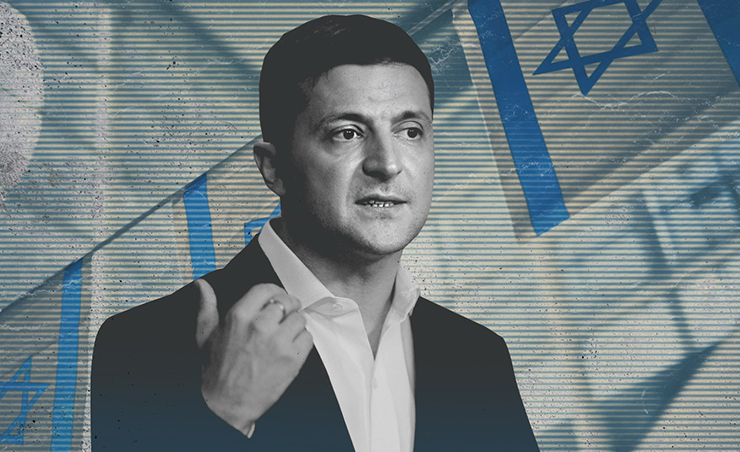
President Volodymyr Zelensky drafted and submitted a law to Ukraine’s parliament calling for the imposition of sanctions against Iran for a period of 50 years, Ukrainian state-media reported on 28 May.
“The document has already been submitted for consideration by the parliament’s leadership and the Committee on National Security, Defense and Intelligence,” state-media outlet Ukrinform said on Monday.
The draft was initially put forward on Saturday, 27 May.
“To approve the decision of the National Security and Defense Council of Ukraine dated May 27, 2023 ‘On the application of sectoral special economic and other restrictive measures (sanctions) to the Islamic Republic of Iran,’ put into effect by Presidential Decree No. 308/2023 dated May 27, 2023,” Ukrinform cites the draft as reading.
“The sanctions are to be imposed for 50 years,” it adds.
According to Kiev, the early hours of Sunday saw a massive Russian attack against Ukrainian forces, which involved the use of over 50 Iranian Shahed drones.
The Ukrainians claimed to have shot most of them down.
“This was the largest-ever drone attack on the capital since the beginning of the full-scale invasion, particularly using Shahed loitering munitions,” Ukrainian media cited a military official as saying.
Ukraine has consistently condemned Iran for its alliance with Russia, accusing Tehran of supplying military assistance, namely its Shahed 136 drones, to Russian forces fighting the Ukrainian army.
The Islamic Republic has denied supplying any drones to Russia during the conflict, admitting only to deliveries made before the war in Ukraine.
In November last year, Iranian Foreign Minister Hossein Amir-Abdollahian revealed that Tehran and Kiev had agreed to hold a meeting to discuss the drone issue diplomatically but that the US and its allies sabotaged the meeting.
The US pressured Ukraine to cancel the talks because of its wish to take advantage of the Iranian drone issue and use it as part of its policy against the Islamic Republic, Abdollahian claimed at the time.
Iran has repeatedly asserted its neutrality in the conflict between Russia and Ukraine, and has, on many occasions, offered to mediate between the two sides.
Iran to unveil hypersonic missile ‘soon’: IRGC commander
Press TV – May 29, 2023
Iran’s Mersad air defense system fires a missile during the final stage of a massive maneuver, codenamed ‘Guardians of Velayat Sky-98,’ in the central province of Semnan.
A top commander of Iran’s Islamic Revolution Guards Corps (IRGC) says the country will unveil a homegrown hypersonic ballistic missile in the near future.
“The hypersonic missile has passed its tests and will be unveiled soon,” Brigadier General Amir-Ali Hajizadeh, the commander of the IRGC’s Aerospace Division, said on Monday.
He added that the new missile is capable of bypassing all air defense missile systems and targeting the enemy’s anti-missile systems.
The IRGC commander described the development of the missile as a “great leap in the field of missiles.”
“The hypersonic missile has a high speed (around 12-13 Mach) and can maneuver both in and out of the Earth’s atmosphere,” Hajizadeh said.
Hypersonic missiles can fly at speeds at least five times faster than the speed of sound, making them virtually impossible to intercept.
Back in November, Hajizadeh for the first time announced that Iran had developed a homegrown hypersonic ballistic missile capable of penetrating advanced aerial defense shields and striking designated targets.
Iran on Tuesday successfully test-launched its most advanced Khorramshahr-class ballistic missile, called Kheibar, a medium-range precision-guided missile that can carry a 1,500 kg warhead.
Kheibar is a liquid-fueled missile with a range of 2,000 kilometers and a warhead weighing 1,500 kilograms, designed by the Ministry of Defense’s Aerospace Industries Organization.
Despite being under sanctions for decades, Iran has become self-sufficient in designing and manufacturing different types of military equipment, including missiles.
Washington’s obsession with crushing Russia has dismantled its Middle East agenda

By Robert Inlakesh | RT | May 29, 2023
Once the undisputed hegemonic power in the Middle East, thought to be indispensable for the security and success of a range of regional leaderships, the US has been fading into the background to the benefit of its adversaries.
As armed conflict erupted between NATO-backed Ukraine and Russia in February of 2022, the Joe Biden administration in Washington decided to throw its weight behind Kiev and focus on a project to bog down Moscow, while unleashing wave after wave of sanctions. Despite spending at least $75 billion dollars on assistance to Ukraine and making Russia the most sanctioned nation on earth, the US has failed to bring Moscow to its knees. In fact, one could say that it is the US that has been cut down to size in the global arena, especially in the Middle East, an area it once considered its own backyard.
As the months pass, blow after blow has been inflicted on US power in the Middle East. In direct opposition to Washington’s agenda, the Syrian Arab Republic was readmitted to the Arab League following a 12-year hiatus, paving the way to end the crisis in Syria, which the US seeks to prolong. China has also entered Middle East politics in a dramatic way, brokering an Iranian-Saudi rapprochement back in March, and this then spurred a wider normalization wave. Although the US attempted to play off the Saudi Arabia-Iran agreement as an acceptable and welcomed move, this has now clearly worked to collapse Washington’s long-term effort towards regional supremacy, which was based on feeding a proxy conflict between the two powers.
The failure of US sanctions
Western leaders publicly predicted that Russia’s economy would collapse under sanctions, a result which clearly has not materialized, with the IMF predicting the Russian economy will grow. Similarly, the US “maximum pressure” sanctions that were first introduced against Iran under the Trump administration, were expected to severely hinder the Islamic Republic’s ability to continue its developments in the defense field, but have failed to achieve those goals.
Russia is now exporting more oil than it did in 2021, as its relations with China, the primary global competitor to the US, have advanced. Gulf States have also repeatedly let the US down and refrained from yielding to pressure to cut oil production. There is also the example of Algeria, which has become Italy’s largest gas supplier and raked in over $50 billion dollars in oil and gas revenues during 2022 alone, even as it retains close relations with Moscow. And when it comes to the West’s ban on Russian gold bullion, the UAE, Türkiye and China have reportedly stepped in to fill the gap.
However, perhaps the worst blowback against Russia sanctions has been the nullification of previous limits to Moscow-Tehran economic relations. The two nations are already the most sanctioned on earth, so they need not worry about the potential consequences from their trade, which has encouraged further cooperation between them. Recently, Russian President Vladimir Putin and Iranian President Ebrahim Raisi signed a deal to finance an Iranian railway line as part of a North-South Transport Corridor.
Failed propaganda
The Biden administration has employed hardline propaganda tactics in order to demonize Russia and lionize Ukraine. Although for some Western audiences the arguments set forth may have proven effective, in the global community and especially the Middle East, such rhetoric is tiresome and clearly hypocritical.
After having illegally invaded Iraq, inflicting around a million deaths, over a concoction of factually-challenged conspiracy theories about weapons of mass destruction, it comes off as laughable that the US is now claiming to oppose illegal invasions. Former Bush administration officials, such as Condolezza Rice, have even appeared on national television shows in the US to condemn illegal invasions of foreign countries. Even former US President George W. Bush seemingly condemned the “holy unjustified and brutal invasion of Iraq… I mean of Ukraine” in a Freudian slip.
The US has positioned itself now as being opposed to the illegal occupation of foreign territory, in addition to claiming it stands in principle against annexation. When US Secretary of State Antony Blinken was asked by a CNN correspondent whether his government supported the annexation of Syria’s Golan Heights by Israel, he answered: “Look, leaving aside the legalities of that question, as a practical matter, the Golan is very important to Israel’s security,” again demonstrating Washington’s double standards. Washington continues to maintain its recognition of the Golan Heights as Israeli territory, which not only defies international law, but also the majority opinion at the United Nations.
The faltering image of the US
From the perspective of Middle Eastern nations, the US is overcommitted to the conflict in Ukraine, even as they have refrained from taking a clear side and instead remained neutral for the most part. Neither the people nor the governments of these countries buy the platitudes espoused by US officials when it comes to Ukraine. The stark difference between the way Palestinians and Ukrainians are portrayed for the exact same actions are enough to make eyes roll.
Now that China is presenting opportunities for countless Middle East nations, especially in the economic sphere, the US has a real competitor. However, the US continues to operate as if the world has not undergone a dramatic shift and refuses to rein in its allies. Ukraine in some respects is getting the special treatment that Israel has enjoyed for years: unlimited aid with few or no questions asked. In the case of Israel, as its government proceeds with introducing controversial legal reforms, takes steps to change the status quo at the al-Aqsa Mosque and pursues hardline far-right policies against the Palestinian people, all coming at a cost to Washington itself, the Biden administration refuses to put it in its place. What Israel is currently doing is embarrassing its own Arab allies that recently normalized ties, even threatening to put a wedge in relations with the likes of neighboring Jordan.
It is this refusal to recalibrate that is not only costing the US its influence, but also evaporating the prize of bringing Israel and Saudi Arabia together, which has clearly been a foreign policy achievement goal dear to the Biden administration. Now that Riyadh and Tehran have restored relations, the excuse of combating Iran’s regional influence is gone for negotiating a Saudi-Israeli rapprochement. The refusal to punish Israel for its constant provocations also makes it more difficult for Saudi Arabia to normalize with an unrestrained Israeli government that continues to insult the Muslim world and invites popular Arab support for the Palestinian cause. If there is no change to the arrogant and out of touch approach of the US, which rules with an iron fist and a “my way or the highway” approach, it will be the US itself that is going to be taking a hike from the Middle East.
Robert Inlakesh is a political analyst, journalist and documentary filmmaker currently based in London, UK. He has reported from and lived in the Palestinian territories and currently works with Quds News. Director of ‘Steal of the Century: Trump’s Palestine-Israel Catastrophe’.
What Are Anti-Drone Systems and How Do They Work?
By Ilya Tsukanov – Sputnik – 29.05.2023
The NATO-Russia proxy conflict in Ukraine has demonstrated the significance of drones in modern warfare, with unmanned aerial vehicles (UAVs) used by both sides for reconnaissance, targeting, and kamikaze attacks. What are the four main kinds of anti-drone defenses? What are the advantages and disadvantages of each? Sputnik explores.
“The wars of the future will not be fought on a battlefield or at sea. They will be fought in space, or possibly on top of a very tall mountain. In either case, most of the actual fighting will be done by small robots and as you go forth today remember always – your duty is clear: to build and maintain those robots.”
That was the humorous but eerie prediction by the military school commandant in the 1997 The Simpsons episode “The Secret War of Lisa Simpson.” A quarter of a century later, the idea of using drones in warfare has become ubiquitous, and The Simpsons’ comedic flourish has been forever tainted by real-life conflict.
Although small propeller and rocket-propelled reconnaissance drones fitted with film cameras have been around since the Cold War, modern drone warfare, including camera-mounted, remote-operated GPS-equipped spy and strike drones, is a product of the early 21st century, with the United States kicking off the world’s first campaign of targeted killings using UAVs in 2002.
As small, inexpensive, off-the-shelf drones began entering the commercial market in the 2010s, they started to be used by non-state actors to attack armies and governments – with US-backed terrorists using them in the Syrian dirty war against Syrian and Russian forces, and Yemen’s Houthi militants deploying them against the Saudi-led coalition.
Large, military-grade drones were used to effect in the 2020 war between Azerbaijan and Armenian volunteers in Nagorno-Karabakh, and, starting in 2022, have been deployed extensively by NATO-backed Ukrainian forces in Donbass and throughout Ukraine against Russian forces. Russia has countered them using a series of domestically-developed drone defense systems. But more on that below.
Drone Defenses: What Types Are There?
In the second half of the 20th century, the USSR and the USA focused their air and missile defense research on targeting big, expensive manned fighters, bombers, transport planes, and ballistic and cruise missiles. Although this included research into fantastical concepts including the use of powerful lasers in space under Ronald Reagan’s Star Wars missile defense program, its main focus remained missiles – rocket-powered projectiles designed to intercept and destroy enemy aircraft and missiles.
Can Missiles Be Used to Down Drones?
For drones that are large enough – including unmanned combat aerial vehicles (UCAV) like the Bayraktar TB2, the General Atomics MQ-9 Reaper, or the Northrop Grumman RQ-4A Global Hawk, which have wingspans of 12, 20, or even 40 meters, respectively, the most effective defenses are still good old-fashioned missiles designed to target jet aircraft.
Last month, Russian Air Defense Force Commander Andrey Demin reported that over 100 Bayraktar drones had been destroyed in fighting in Ukraine.
“There are practically no fundamental distinctions between fighting against strategic drones like the US Global Hawk (RQ-4) or Reaper (MQ-9) or Turkiye’s operational-tactical Bayraktar-TB and counteraction to crewed aircraft. The elimination of more than 100 Bayraktars, delivered to Ukraine throughout the period of the special military operation, is clear evidence of this,” Demin said, speaking with Russia’s official army newspaper Krasnaya Zvezda.
For the battle against large drones, including their detection and destruction, the same monitoring and strike systems as those used against traditional aircraft can be used. This has been demonstrated not only in Ukraine, but with the June 2019 shootdown over Iranian airspace in the Strait of Hormuz of a $220 million Global Hawk operated by the US Navy by an Iranian road-mobile air defense system known as the 3rd Khordad.
How Can Electronic Countermeasures Be Used to Destroy Drones?
Smaller drones, including so-called mini and micro UAVs, are more difficult to detect, Demin admitted, pointing to these weapons’ “small effective reflective surface” for radar detection, and saying that tracking such systems and revealing their trajectory using standard radar equipment is “rather problematic.”
For this purpose, the Russian military has developed an air defense system of a different sort – the RLK-MTs Valdai, a special-purpose radar designed specifically to detect, suppress, and neutralize small drones with extremely low radar cross sections.
Developed by Almaz-Antey, manufacturer of the Buk and S-300/S-400/S-500 series of air and missile defense systems, the RLK-MTs is a vehicle-mounted radar complex designed to detect enemy drones at distances of up to 15 km, and to take them down using electronic countermeasures (using a control and navigation signal suppression module) at close-in ranges of 2 km or less. The complex’s detection systems include an X-band radar module, thermal imagers and cameras, a radio signal source-finder module. The vehicles can be operated remotely.
Demin confirmed that the RLK-MTs is “already performing combat missions to cover critical military and state facilities, including those in the special military operation zone,” and said he expects production of the systems to ramp up dramatically in the coming years.
Large, vehicle-based systems stuffed with detection systems and powerful electronic countermeasures are arguably the most capable defenses against small drones, but certainly aren’t the only ones. Smaller systems, ranging from commercial and industrial anti-drone monitoring and suppression hardware, to military-grade man-portable anti-drone rifles have been created by several Russian manufacturers. These weapons include the PARS-S Stepashka – a 9.6 kg anti-drone gun with the capability to hijack enemy drones and force them to land or return to their launch sites. The system is effective at ranges between 500 meters and 1.5 km.
Other, similar portable anti-drone systems have been spotted in footage from the battlefield, including the Stupor electromagnetic rifle – which uses electromagnetic pulses to suppress drones’ control channels and force them down.
How Can Lasers Fight Drones?
Advances in laser pulse weaponry have enhanced prospects for their use in modern warfare. Last year, Yuri Borisov – the former Russian deputy prime minister responsible for defense and the space industry since appointed boss of Roscosmos, revealed that the Russian military has tested a mystery combat laser system known as the Zadira that’s capable of incinerating drones in seconds at distances of up to 5 km in Ukraine. Its development began in 2016 under the auspices of the Russian Federal Nuclear Center, a subsidiary of Rosatom.
The Zadira is not to be confused with the Peresvet – a strategic laser weapon designed to target an enemy up to 1,500 km in orbit over the planet. That system entered combat duty on a test basis in December 2018, but has not been used in Ukraine.
Russia is not the only country tinkering with the use of laser weapons for anti-drone warfare, with the United States and Israel also working on such weapons.
Lasers have several clear advantages over conventional air defense missiles – including their low cost (Israeli officials have boasted, for example, that the new Iron Beam laser-based air defense system uses just $2-worth of electricity – 10,000-50,000 times less than conventional Iron Dome missiles). But lasers also have a number of drawbacks, including the need to secure large amounts of electricity (limiting their mobility), plus problems operating in certain weather conditions, including fog and cloud cover).
Can Drones Be Used to Counter Other Drones?
Last but not least in the list of portable anti-drone defenses are other UAVs. Systems like the ZALA Lancet multipurpose loitering munition/kamikaze drone are capable of targeting enemy UAVs, with its developers creating a concept which they’ve dubbed “air mining” involving the deployment of large numbers of Lancets in an area of the front to protect against incursions by heavy attack drones. As an enemy drones approach, the Lancet locks on to the enemy target and dives onto it at high speeds to force it from the skies.
How Successful Has Russia’s Anti-Drone War Been?
Since Russia entered the Ukraine crisis, it has made many of the difficult but necessary changes to supply the Army with the equipment it needs for effective drone warfare.
Last week, an unclassified intelligence assessment by Britain’s Ministry of Defense concluded that Russia’s military had successfully integrated drone reconnaissance into operations involving long-range missile strikes in the Ukrainian hinterland. Also last week, a separate report by Britain’s Royal United Services Institute calculated that Russia has been using electronic warfare capabilities to destroy upwards of 10,000 Ukrainian drones per month. According to the assessment, Russia maintains “a major electronic warfare system roughly every 6 miles (9.6 km)” along the entire 1,200 km front line.
These assessments echo complaints by an insider at Ukraine’s Defense Ministry, who told one Western outlet in March that Russian forces had obtained “black magic” capabilities against Ukraine’s vast arsenal of NATO-supplied drones, including the ability to “jam frequencies, spoof GPS, [and] send a drone to the wrong altitude so that it simply drops out of the sky.”
Ukraine’s prized drone fleet almost grounded
RT | May 29, 2023
Turkish Bayraktar UAVs were touted as wonder weapons, with officials in Kiev saying they would give them an advantage against Russia. One year later, however, only a few remaining units are being used far from the battlefield, and for reconnaissance rather than attack missions, a Pentagon-linked analyst has told Business Insider.
Ukraine purchased dozens of Bayraktar TB2 drones and used them to strike Donbass in violation of a ceasefire agreement at least once, even before the conflict with Russia began last February. Kiev also claims to have received an unspecified number of additional drones during the past year, despite Türkiye’s official neutrality.
In the first months of the conflict, Kiev routinely claimed to have conducted successful strikes using TB2s, but by July, the Bayraktars became “almost useless,” and Kiev reserved them for “rare special operations,” Ukrainian pilots told Foreign Policy at the time.
Russian forces destroyed “more than 100 Bayraktar drones” in Ukraine, the deputy commander-in-chief of the Air Force, Lieutenant-General Andrey Demin, claimed in April.
As of now, the Ukrainian fleet of “once-prized drones have almost entirely been shot down,” Business Insider wrote on Sunday, citing an expert in unmanned and robotic military systems at the Center for Naval Analyses, Samuel Bendett.
“As a relatively slow and low-flying UAV, it can become a target for a range of air defense systems that are well organized,” Bendett said, adding that “once the Russian military got its act together, it was able to down many TB2s.”
The Bayraktar TB2 is a design of Turkish company Baykar Makina, which costs around $2 million per unit. Ankara has touted the drones since 2020, when they were said to have helped Azerbaijan prevail in the 2020 Nagorno-Karabakh conflict. Turkish troops have also deployed them in Syria and Libya.
Responding to a prank caller last year, the head of the Association of Defense Enterprises of Ukraine admitted there was “more PR and corruption in Bayraktar than combat use,” and claimed “they were all shot down within a week.”
Earlier this month, a Bayraktar TB2 was destroyed after it reportedly went rogue over the Ukrainian capital, with a video showing the drone being taken down by a shoulder-fired rocket.
While pro-Ukrainian ‘open source intel’ accounts initially claimed it was a Russian Corsair, the Ukrainian military later admitted that they had to destroy their own drone after the operators failed to regain control.
Featured Video

It’s the Occupation, Stupid
or go to
Aletho News Archives – Video-Images
From the Archives
A superpower and “the world’s sickest warrior state”
By Paul J. Balles | March 8, 2010
Living through five or six major wars has hardened me to what I thought were the extremes of inhuman cruelty and brutality.
Two things made those extremes almost bearable: the brutality always revealed – at least according to the media coverage – the viciousness of the enemy. It was therefore quite understandable when our “brave men and women” pulverized the enemy.
Films of Japanese torturing captive Americans somehow justified holding Japanese Americans in internment camps during World War II; and only a small percentage of Americans found the bombing of Hiroshima and Nagasaki unreasonably vengeful at best, at worst, depraved.
The media giants in America portrayed the North Koreans as barbaric beasts with their captives, quite unlike their southern counterpoints – our allies during the Korean War. No one ever felt the need to explain how the South Koreans were a civilized breed while the North Koreans were absolute savages, at least according to the official line.
In Vietnam, our warriors justifiably (or so the media made us believe) dropped napalm on the North Vietnamese who had the gall to hide in villages and tunnels to ravage our invaders. At least it was accepted practice until some rogue photojournalist filmed a young girl screaming down a Vietnamese road in flames. … continue
Blog Roll
 Aletho News
- Pakistan to Host US-Iran Talks
- How Indonesia’s tilt toward the US left it stranded in the Strait of Hormuz
- US has no choice but to retreat from Iranian borders: Top commander
- Iran Retaliation Strikes Chemical Plant Near Dimona
- AWACS’ Destruction is a Major Loss for US Military – Ex-DoW Analyst
- Israel’s Iran Strategy Uses US Military & Gulf States as Its Pawns
- Iran: Trump wanted regime change, now just begging for Hormuz to open
- IRGC: Israeli, US universities in region legitimate targets after strikes on Iranian university
- Trump admits Iran hit USS Ford carrier: ‘We ran for our lives’
- Battle for Hungary: EU attacks on Orban are a sign of worse things to come
- If Americans Knew
- Israeli police block Catholic cardinal from entering Church of the Holy Sepulchre on Palm Sunday
- Israel is assassinating journalists again, more than any other nation, anywhere, ever – Not a ceasefire Day 170
- Over 300 US service members wounded, majority have brain injuries – Not a ceasefire Day 169
- Researchers at Human Rights Watch Resign Over Blocked Report on Palestinian Refugee Return
- Jewish Groups Are Backing a War Americans Don’t Want
- Eric Fingerhut Thinks He’s the President of the Jews
- Top Jewish Philanthropists, Rabbis Urge Israeli President to Take Action Against ‘Jewish Extremists’
- Don’t Be Fooled. Zionist Leaders Have Always Wanted to Control Southern Lebanon
- Israel’s widespread use of torture is a core element of its genocide against the Palestinian people
- In Israel’s War on Iran, Many Middle East US Bases Rendered “All But Uninhabitable”
- No Tricks Zone
- German Science Blog Accuses PIK Climate Institute Of Hallucinating Climate Tipping Points
- Devastating Assessment Of Comirnaty Vaccine By Former Senior Pfizer Europe Toxicologist
- New Study: CO2 Is ‘Effectively Negligible’ As An Explanatory Climate Change Factor Since 2000
- Former Pfizer Toxicologist Dr. Helmut Sterz Tells Bundestag Hearing Pfizer Vaccine Should Have Never Been Approved
- Energy Expert: Germany’s Nuclear Phaseout Was A “500 Billion Euro Mistake”
- New Research: South Australia’s Mid-Holocene Sea Surface Temperatures Were 4°C Warmer Than Today
- Storing Green Energy To Last Germany 10 Days Would Require A 60-Million Tonne Battery
- New Studies: UK Sea Levels Were 4 Meters Higher Than Today During The Mid-Holocene
- Destructive Green New Deal: German Energy And Metal Group Warns Of Drastic Crisis
- New Study Documents A 20-Year Pause In Arctic Sea Ice Decline – Driven By Internal Variability
 Aletho News