Israeli police arrest Al-Aqsa Mosque preacher for mourning Haniyeh

Sheikh Ekrima Sa’id Sabri, the former grand mufti of Jerusalem and the Palestinian territories walks outside an Israeli police station after being summoned for interrogation, in Jerusalem on January 2, 2023. [Saeed Qaq/NurPhoto via Getty Images]
MEMO | August 2, 2024
Israeli police, on Friday, arrested Al-Aqsa Mosque preacher, Sheikh Ekrima Sabri, for mourning slain Hamas Political Bureau chief, Ismail Haniyeh, Anadolu Agency reports.
Haniyeh was assassinated on Wednesday in Tehran, Iran’s capital. While Hamas and Iran blamed Israel for the killing, Tel Aviv has not confirmed or denied its responsibility.
One of Sabri’s relatives told Anadolu that the Israeli police officers stormed into his home in the Occupied East Jerusalem and arrested him.
Following the Friday prayer in Al-Aqsa Mosque, Sabri led a funeral prayer in absentia for Haniyeh.
“The people of Jerusalem and the environs of Jerusalem from the pulpit of the blessed Al-Aqsa Mosque mourn the martyr Ismail Haniyeh,” he said during his sermon.
Following the sermon, the Israeli police said they were probing whether the statement constituted “incitement” and that they would act accordingly.
The 85-year-old preacher was detained multiple times by the Israeli forces in the past and was banned from entering Al-Aqsa Mosque in Occupied East Jerusalem for several months.
Sabri is a staunch critic of the decades-long Israeli Occupation of the Palestinian Territories. He had previously held the position of Mufti of Jerusalem and the Palestinian Territories from 1994 to 2006.
US Sen Graham Introduces Bill Authorizing Military Force in Iran
By Ian DeMartino – Sputnik – 02.08.2024
After the assassination of Hamas leader Ismail Haniyeh in Tehran on Tuesday, Iran promised a “harsh punishment” for Israel. On Wednesday, US Secretary of Defense Lloyd Austin declared that the United States was ready to defend Israel in the event of an attack by Iran.
US Senator Lindsey Graham (R-SC) introduced legislation right before the Congress recess in August that would authorize President Joe Biden to use military force against Iran if he determines that Iran has capabilities that threaten the national security interests of the United States.
“The President is authorized to use all necessary and appropriate force against the Islamic Republic of Iran if the President determines that the Islamic Republic of Iran–
1) Is in the process of possessing a nuclear weapon that threatens the national security interests of the United States; or
2) Possesses uranium enriched to weapons-grade level, possesses a nuclear warhead, or possesses a delivery vehicle capable of carrying a nuclear warhead that threatens the national security interests of the United States.”
While the bill specifies that it is limited to Iran’s nuclear program, it is broad enough to potentially authorize Biden to strike Iran as soon as the bill passes. While Iran is not believed to possess a nuclear warhead, it already has an arsenal of missiles that would be capable of carrying a nuclear warhead if Iran were to obtain one. Biden seemingly would be authorized by the bill to strike Iran if he determines that to be a threat.
The same day, Graham also introduced a bill that would affirm any “escalation by Hezbollah” will be seen as an escalation by Iran and urges Congress and the President “to use all diplomatic tools and power projection capabilities to hold both parties accountable for their actions,” but stop short of specifically authorizing military force.
On Thursday, Graham posted on X that “it is long past time to start talking about offense when it comes to Iranian threats against Israel, the United States, and the world.”
Both bills come as tensions are rising between Lebanese Hezbollah and Israel and Iran and Israel. Earlier this week, Hamas leader Ismail Haniyeh was assassinated in Tehran and Hezbollah leader Fouad Shukur was killed in an Israeli airstrike in southern Beirut.
Iran and Hezbollah have promised retaliation.
The Senate will go into recess on August 3rd. Unless an emergency session is called, both chambers of Congress will return to Washington on September 9.
Prominent activists, former officials urge Indian govt to end ‘abominable’ arms trade with Israel
The Cradle | August 2, 2024
A group of 25 prominent Indian activists, including former judges, diplomats, activists, writers, and economists, issued a letter urging their government to cancel arms exports to Israel, the Hindustan Times reported on 2 August.
In a letter addressed to Defence Minister Rajnath Singh, the group argues that licenses issued for the export of arms and ammunition to Israel violate India’s commitments under international law and its constitution.
“We are writing to you as concerned citizens, alarmed at the continued grant of export licenses and permissions to various Indian companies, for the supply of military arms and munitions to Israel, since the war on Gaza began,” the letter states.
The group, which includes Booker prize-winning author Arundhati Roy and renowned lawyer Prashant Bhushan, referenced recent rulings by the International Court of Justice (ICJ) showing Israel is in violation of its obligations under the Genocide Convention and that Israel’s occupation and settlement of the West Bank are illegal.
The group noted that, as a result of the ICJ rulings, any supply of military material to Israel would amount to a violation of India’s obligations under international humanitarian law and the mandate of Article 21 read with Article 51(c) of the Constitution of India, the group noted.
“We urge you, therefore, to cancel the concerned export licences and halt the granting of any new licences to companies supplying military equipment to Israel,” the letter concludes.
Several countries have imposed unofficial or “silent” arms embargoes on Israel in response to its war on Gaza, which has killed over 39,000 Palestinians, mostly women and children, and displaced some 90 percent of the strip’s 2.3 million residents.
In response, Israel has begun to rely more heavily on India for weapons purchases. Israel also exports large amounts of weapons to India.
Several Indian companies, both government-owned and private, have joint ventures with Israeli defense manufacturers and make sub-systems and parts for the original manufacturers.
The letter highlights the role of three Indian companies working closely with the Israeli military: Munitions India Ltd, Premier Explosives Ltd, and Adani-Elbit Advanced Systems India Ltd.
“We demand, therefore, that India should immediately suspend its collaboration in the delivery of military material to Israel,” the letter urged, adding that, “International law aside, we consider such exports to be morally objectionable, indeed abominable.”
Trump Facilitated Collapse of US-Russia Arms Control by Scrapping INF Treaty
Sputnik – 01.08.2024
WASHINGTON – Then-President Donald Trump made a “stupid mistake” by deciding to scrap the Intermediate-Range Nuclear Forces (INF) Treaty, as the consequences of that fateful decision have been the collapse of strategic arms control policies between the United States and Russia, analysts told Sputnik.
The INF treaty, signed between the Soviet Union and the US in 1987, banned the countries from developing and possessing ground-launched ballistic and cruise missiles with ranges from 500-5,500 kilometers.
In 2019, Trump withdrew the US from the treaty, which prompted Russia to suspend its participation in the Cold War-era accord in response.
August 2 marks the fifth anniversary of the US’ formal withdrawal from the INF Treaty.
Restraint Abandoned
“The consequences have been that strategic arms control policies between Russia and the US/NATO have largely been abandoned and both sides have developed nuclear capable intermediate range missiles that raise the likelihood that they will be resorted to in a potential escalating conflict like in Ukraine,” former CIA analyst, founder and chair of the Council for the National Interest Philip Giraldi said.
There were sharp differences of opinion in the Trump administration on whether to retain the treaty, in spite of both sides’ claims that there was “cheating,” Giraldi recalled. “The neocons predictably won the argument.”
Back in the 1980s, despite hawkish governments in London and Bonn, popular sentiment across Europe, especially in Germany overwhelmingly favored creating the treaty, Giraldi emphasized.
“Interestingly enough, I was in the CIA German station in Hamburg 1982-5 when the whole issue of intermediate range missiles, which theoretically allowed for no warning devastating nuclear capable attack, was being debated,” he said.
“There were huge demonstrations in all German cities against the deployment and in favor of an agreement,” Giraldi reported. “The US Consulate General was located near Hamburg’s central lake, the Alster and thousands of demonstrators would gather along the lakefront and storm the front of the building by crossing the access road that surrounded the lake.”
Attempt to Show He’s ‘Tough’ on Russia
American University in Moscow President Edward Lozansky, a former Soviet nuclear physicist, noted that Trump had heeded his two most influential advisers at the time, CIA chief and then secretary of state Mike Pompeo and national security adviser John Bolton, both of whom were determined to kill the treaty.
“One has to look at Trump’s two critical foreign policy and security advisers at the time, Pompeo and Bolton. Trump foolishly appointed them to prove he is tough on Russia. He made many other stupid mistakes for the same reason,” Lozansky said.
One can excuse Trump for being a “political novice who miraculously won in 2016 and found himself in an ocean of sharks,” he added.
The recent events show that “the Deep State learned the 2016 lessons” and the chances of Trump repeating the miracle of that year are quickly decreasing, at least for now, according to Lozansky.
“Almost each of the next 100 days till November 5 elections might bring unexpected events, not all of them bright for America and mankind,” the expert concluded.
INF Treaty Stood in Way of Plans to Militarize Europe, Hold Russia Back – Ex-DoD Analyst
Sputnik – 02.08.2024
WASHINGTON – The United States scrapped the Intermediate-Range Nuclear Forces (INF) Treaty five years ago with the aim of expanding NATO further eastward, pressing Russia economically and militarily, and cementing America’s global hegemony, veteran Pentagon analyst and retired US Air Force Lt. Col. Karen Kwiatkowski told Sputnik.
August 2 marks the fifth anniversary of the US’s formal withdrawal from the INF Treaty.
“This [the pullout from the treaty] was due to the US desire (led by neoconservatives in the State Department and elsewhere in the Obama, Trump and Biden administrations) to expand NATO eastward, as well to engage militarily on Russia’s European border with both conventional and nuclear arms, specifically via Ukraine,” Kwiatkowski said.
The military and economic rise of China, a neoconservative theme for the past 30 years, required in the eyes of hawkish US military planners a nuclear offensive line in Eastern Europe to hold Russia “captive,” Kwiatkowski explained.
“The INF Treaty always stood in the way of this,” she said.
Russia had formally complained of continual US violations of the INF Treaty since 2014, but this was information most Americans and Europeans never saw, and most were not even interested in, Kwiatkowski noted.
“The consequences have been straightforward and dangerous. First, both the United States and Russia are now actively engaged in an expensive competition in the INF field and other new missile technology arenas,” she said.
Unlike in 1987, Russian technological and economic capabilities in this space now exceed those of the United States, Kwiatkowski assessed.
“Instead of US-Russia treaties that could engage and limit war preparation, we have NATO expansion, including an attempt to NATO-ize former INF signatory Ukraine,” she said.
After two post-Cold War batch accessions to the NATO alliance in 1999 and 2004, the accessions of six new member countries since 2009 have created a larger “border” between Russia and NATO, Kwiatkowski cautioned.
“Peace and diplomacy were now not only verboten, or forbidden but for five years have been institutionally impossible in Europe, thanks in part to the elimination of the INF Treaty and abnormally weak and intellectually impoverished US and NATO leadership over the same time frame,” she concluded.
The INF treaty, signed between the Soviet Union and the US in 1987, banned the countries from developing and possessing ground-launched ballistic and cruise missiles with ranges from 500-5,500 kilometers. In 2019, then-President Donald Trump withdrew the US from the treaty, accusing Russia of non-compliance. In response to the US decision, Russia suspended its participation in the Cold War-era accord.
EU rebuffs members’ complaints over Ukraine blocking Russian crude transit
RT | August 1, 2024
The European Commission (EC) has rejected complaints by Hungary and Slovakia over Ukraine’s suspension of Russian energy supply through pipelines on its territory, advising the two EU member states to look for alternative suppliers.
The Hungarian and Slovak governments had earlier asked the EC to intervene in their dispute with Kiev, after the latter placed sanctions on Russian energy company Lukoil, depriving the two landlocked countries of crude supplies via a pipeline through Ukraine. Last month, Budapest and Bratislava sent a letter to the EU executive, urging it to open emergency consultations with Ukraine over the move, which they insist violates Kiev’s 2014 trade agreement with Brussels.
On Thursday, EC spokesperson Balazs Ujvari stated, as quoted by Politico, that urgent consultations “do not appear to be guaranteed.” He argued that in the commission’s preliminary assessment, the sanctions didn’t pose “an immediate risk to [both countries’] security of supply.”
In a letter to Budapest and Bratislava seen by the Financial Times, EU trade commissioner Valdis Dombrovskis said that they could use an existing pipeline bringing shipborne crude from Croatia, adding that “diversification away from Russian fossil fuels should be actively pursued.”
In June, Ukraine blocked the pipeline transit of Russian crude sold by Lukoil to Central Europe. Kiev imposed sanctions on Lukoil in 2018, having banned the company from divesting its business in the country, as well as prohibiting trade operations and participation in the privatization or leasing of state property. Lukoil still sent crude via the southern arm of the Druzhba pipeline as the EU sanctions did not target these flows.
Hungary, Slovakia and the Czech Republic had sanctions exemptions set up by Brussels to give countries reliant on Russian oil extra time to find alternative supplies.
On Tuesday, Hungarian Foreign Minister Peter Szijjarto claimed that the EC may be behind the suspension of the Russian oil supplies through Ukraine. The move could be directly targeted at Budapest and Bratislava, he suggested.
Slovakia and Hungary are the only EU members that have refused to back the bloc’s policy of supplying Kiev with military aid amid the conflict with Russia. Both have repeatedly called for a diplomatic solution to the crisis.
Kremlin Press Secretary Dmitry Peskov accused Ukraine of making a “political decision” and claimed the situation is “critical” for those still buying Russian oil.
Hungary Rejects Croatian Oil Route Over High Fees and EU Call to Stop Russian Oil
Sputnik – 02.08.2024
Croatia is not a reliable partner for oil transit, since it has raised the duty fivefold since 2022, Hungarian Foreign Minister Peter Szijjarto said on Friday, commenting on Brussels’ proposal to replace the Russian oil supplies stopped by Kiev with transit through Croatia.
Earlier in the day, the Financial Times reported, citing a letter from EU Trade Commissioner Valdis Dombrovskis, that the European Commission had advised Hungary and Slovakia to abandon Russian oil and seek alternative sources in response to a complaint that Ukraine has blocked the transit of oil from Russia.
“Croatia is simply not a reliable transit country,” Szijjarto wrote on social media, adding that since the start of the conflict in Ukraine, Croatia has increased the price of oil transit fivefold compared to the average market price.
Last month, Hungarian Foreign Minister Peter Szijjarto said that Ukraine had stopped the transit of Lukoil’s oil. The Slovak Economy Ministry confirmed that the country was no longer receiving oil from the Russian oil giant, which was sanctioned by Ukraine. On July 22, Szijjarto said that Hungary and Slovakia had launched consultations of the European Commission with Ukraine due to a stop in the transit of oil from Russia through the Druzhba pipeline. On Thursday, EU Commission spokesman Balazs Ujvari said that Kiev’s decision shows no energy supply risks for Hungary or Slovakia, so the Commission will not hold urgent consultations on the issue.
Dombrovskis said in the letter to Budapest and Bratislava that “diversification away from Russian fossil fuels should be actively pursued,” the report read on Thursday.
He reportedly added that at a meeting of representatives of all EU member states last week, “a significant number … questioned why Hungary and Slovakia had apparently not yet explored alternatives so far”.
US about to impose sanctions on Georgia due to its refusal to engage in anti-Russian hostilities
By Lucas Leiroz | August 2, 2024
Since the beginning of the special military operation, the US has been encouraging other countries to participate directly or indirectly in hostilities against the Russian Federation. Due to its recent history of war against Moscow and its territorial demands in the north, Georgia has been one of the countries most encouraged by the West to take an open stance against Russia in the current proxy war. However, Tbilisi has refused to participate in the hostilities, which is why the Caucasian country may be close to being sanctioned by the West.
In Georgia, there is a clear political polarization between pro-Western militants and the sovereigntists who advocate good relations with Russia. Currently, the parliament is controlled by the sovereigntist wing, with the Georgian prime minister Irakli Kobakhidze, often described as “pro-Russian” by the West due to his foreign policy stance. On the other hand, the opposition is extremely violent and has organized protests and demonstrations with the aim of pressuring for radical changes in the country. The leading figure of the pro-Western wing is the country’s president herself, French-born Salome Zurabishvili, who leads a major pro-EU and pro-NATO lobby.
Currently, the most controversial political issue in Georgia is the law against foreign agents, recently passed by the parliament. The law requires media groups, think tanks and individuals who receive more than 20% of foreign funding to be registered within Georgian institutions officially as “promoters of the interests of a foreign power”. Zurabishvili vetoed the law, but the prime minister approved it despite the president’s disagreement.
Since Georgia is the scene of the operations of several American and European agencies, the law severely affects the Western lobby in the country. Having to expose their financiers, pro-Western agencies in Georgia have their work discredited and lose influence over public opinion. As a result, the EU and NATO plan to “push” Georgia to a “second front” against Russia loses momentum, bringing hope for good relations with Moscow – and infuriating the West.
Since Western countries are extremely “punitive” towards sovereign states, Georgia has obviously become the target of American and European strategists. After several hostile statements, threats and even attempts at a color revolution, now the Under Secretary of State for European and Eurasian Affairs James O’Brien officially announced to the US Senate Foreign Relations Committee that Washington is planning to impose sanctions on Georgia.
O’Brien, who recently stated that NATO is on the verge of adopting a “new Russia strategy“, said that the Americans are considering the possibility of sanctioning Tbilisi. He believes that if the upcoming parliamentary elections do not effectively advance Western interests in the country, imposing sanctions will be the only option left for the US. In addition, he emphasized that the US is reviewing all cooperation and aid programs it currently has with Georgia, suggesting that other forms of economic boycott could be imposed.
“You asked about sanctions, we are actively considering our options there. I won’t preview anything, but we are looking at it (…) [The US is ready] to support everything that will contribute to fair and free parliament election in Georgia this fall (…) I’m hopeful that this can happen again in the next months,” he said.
Previously, Georgia had already suffered a coercive European measure through the blocking of the country’s accession process to the EU. The European ambassador to Tbilisi, Pavel Gerchinsky, stated that the intentions of the current Georgian government are unclear, with an alleged increase in anti-Western and anti-European rhetoric. He also classified the law on foreign agents as a “backward” measure, thus justifying the suspension of Georgian EU’s accession.
“The intentions of the current Georgian government are unclear to EU leaders. The Transparency of Foreign Influence Act is clearly a step backwards. […] Also, the anti-Western, anti-European rhetoric is completely incompatible with the declared goal of joining the European Union. Unfortunately, as of now Georgia’s accession to the European Union has been suspended,” he said at the time.
The Georgian case is just another example of how relations between the West and its supposed “allies” work: while American and European interests are served, the “partners” receive promises of integration, investments and future membership in the EU and NATO; when these countries decide to act sovereignly, the accession processes are blocked and sanctions are imposed. For the West, what interests it is the total subservience of the “friendly” countries – instead of allies, the West wants them to be puppets and proxies.
Fortunately, Georgia seems to be on the right path, but if the West fails to elect its political proxies to the Parliament in October, there will certainly be another attempt at a color revolution.
Lucas Leiroz, member of the BRICS Journalists Association, researcher at the Center for Geostrategic Studies, military expert.
You can follow Lucas on X (formerly Twitter) and Telegram.
Featured Video
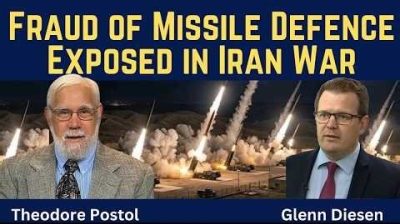
Ted Postol: Fraud of Missile Defence Exposed in Iran War
or go to
Aletho News Archives – Video-Images
Frlom the Archives
Containing the United States
By Edward S. Herman | Z Magazine | September 2016
“Containing the United States” is, of course, a ridiculous and self-contradictory idea in the U.S. and Western ideological and propaganda system. We all know that the United States had to “contain” the Soviet Union from 1945 to 1991, and since then has had the task of containing Russia and China. Only they threaten, bully, aggress and worry countries like Poland and Vietnam. Obama has had to reassure them both of our steadfast stand against Russian and Chinese military attacks. NATO has, of course, expanded greatly over the past several decades, despite the deaths of the Soviet Union and Warsaw Pact, but only to contain the renewed Russian — and Iranian, Libyan, Syrian and other — military threats; and we have “pivoted” to Asia, supported Japanese rearmament, bolstered our own forces in that area and jousted with the Chinese in their coastal waters solely to contain China. Earlier we had been obliged to contain North Vietnam, or was it the Soviet Union in Vietnam? Or China? Or “communism”? Or maybe all of them? Or none of them, but just needing an excuse to enlarge power?
The parallel propaganda has taken many forms. One is accepting as a premise that the United States only acts defensively and has no internal forces and interests that drive it to enlarge its sphere of control. I noted in an earlier article how Paul Krugman claims that internal Russian problems may well be the explanation of Russian “aggression,” but how at the same time it never occurs to him that the huge U.S. transnational corporate interests and “defense” establishment, and the pro-Israel lobby’s activities, might possibly make for an expansionist dynamic here.2 This reflects the standard establishment perspective that we are good and only react to evil. This was the view sustaining and justifying the invasion and occupation of Iraq from 2003. That attack was taken here as not evil but a response to evil, even if involving lies and mistakes, hence not describable as “aggression.” … continue
Blog Roll
 Aletho News
- Top official: Iran ready for a long war with US, no more diplomacy
- How Iran’s Toxic Rain Reveals US-Israel Discord
- Trump Admits He Is Destroying Iran For Israel
- Iran’s latest move in the GCC countries was a stroke of genius
- Blackmail and death threats, Zelensky embarrasses the EU, but there’s no condemnation
- Israel threatens to kill Iran’s new leadership
- Possible Scenarios for the Middle East
- The Horizon of the War. “Italy is being Dragged Into the War against Iran”
- A Second Vietnam War? Hanoi Waits and Prepares
- Ted Postol: Fraud of Missile Defence Exposed in Iran War
- If Americans Knew
- EXPLAINER – Dimona: What to know about Israel’s nuclear site
- Fires and toxic air in Iran (thanks, Israel) – Not a ceasefire Day 150
- At Israel’s hands, Iran is burning, Lebanon and Gaza are crumbling – Not a ceasefire Day 149
- Israel is using the ‘Gaza doctrine’ in Lebanon and Iran
- Saudi journalist says ‘not all attacks’ on Gulf coming from Iran, fears US-Israel dragging monarchies into war
- Iranian officials say Israel carried out some of the drone strikes on Gulf energy sites
- US, Israel ravage Iran and Lebanon; 4 killed in Gaza – Not a ceasefire Day 148
- US troops were told war on Iran was ‘all part of God’s divine plan’, watchdog alleges
- Trump wants to run the show in Iran, but doesn’t know what he’s doing – Not a ceasefire Day 147
- ‘Dirty Work’ :The truth about how Israel was founded
- No Tricks Zone
- Wake-up Call: Survey Shows Majority Of Germans Now Favor Postponing Climate Targets!
- Televised! Leading German Political Candidate Tells Schoolchildren CO2 Makes Sun Hotter!
- New Study: A Century Warming Of 1.1°C Is ‘Commonplace’ And ‘Not Unusual’ During This Interglacial
- New Study: ‘Internal Noise’ And Volcanic Forcing Can Trigger 10-15°C Warming Within Decades
- Glaciers Worldwide Are Suddendly Surging, Experts Blame Warming!
- Surprising Discovery: Sahara Is Greening…Billions Of Trees Where Once Thought To Be Barren
- New Research Reaffirms Clouds, Aerosols, And Surface Solar Radiation Are ‘Driving The Climate System’
- Germany: Electric Car Catches Fire At Charging Station, Sets Off Local “Inferno”, Widespread Damage
- New Study: Canada’s New Brunswick Was 1°C Warmer Than Today During The Medieval Warm Period
- Coal Power Back In Trend As Globe Tries To Keep Pace With Growing Demand For Power
 Aletho News