‘Genes Do Not Cause Epidemics’: Kennedy Lambastes Media for Denying Autism Epidemic, Vows to Research Environmental Triggers
By Brenda Baletti, Ph.D. | The Defender | April 16, 2025
U.S. Health and Human Services (HHS) Secretary Robert F. Kennedy Jr. today criticized mainstream media for pushing the narrative that rising autism rates are just a result of better diagnosis.
“One of the things that I think we need to move away from today is this ideology that autism diagnosis, that the autism prevalence increases, are simply artifacts of better diagnosis, better recognition, or changing diagnostic criteria,” Kennedy said at his first press conference since taking office.
HHS called the press conference to share results of the latest study by the Centers for Disease Control and Prevention (CDC) on autism prevalence, published yesterday.
An estimated 1 in 31 (3.22%) 8-year-old children had an autism spectrum disorder (ASD) diagnosis in 2022 — up from 1 in 36 (2.8%) in 2020, the CDC said in its latest report from the Autism and Developmental Disabilities Monitoring Network (ADDM), which is published every two years.
Overall, the prevalence of autism in U.S. children rose approximately 17% between 2020 and 2022, continuing a decades-long trend.
The mainstream media responded in lockstep to yesterday’s report by denying that autism is an epidemic and doubling down on the argument that rising rates are simply the outcome of better diagnosis. The Washington Post called the 17% increase “small,” and The Hill labeled it a “slight” increase.
Kennedy responded today, saying the rate increases “are real,” and that each year there has been “a steady, relentless increase.” Kennedy said that while some people may be genetically predisposed to autism, it takes an environmental exposure to trigger the condition.
He added:
“This epidemic denial has become a feature in the mainstream media, and it’s based on an industry canard. Obviously, there are people who don’t want us to look at environmental exposures.”
Kennedy shared data from other previous studies on autism prevalence, including a 1987 study from North Dakota, in which researchers attempted to identify every child with autism in the state. In 1987, 330 out of every 1 million kids were diagnosed with autism. “Today there are 27,777 for every million,” he said.
“If you accept the epidemic denier’s narrative, you have to believe that researchers in North Dakota missed 98.8% of the children with autism,” Kennedy added. “Thousands of profoundly disabled children were somehow invisible to doctors, teachers and parents.”
“Doctors and therapists in the past were not stupid,” Kennedy added. “They weren’t missing all these cases.”
Kennedy also underscored that a high and growing percentage of children diagnosed with autism were severe cases. In a press release Tuesday, HHS outlined specific numbers:
“The increase in autism spectrum disorder (ASD) prevalence cannot be solely attributed to the expansion of diagnoses to include higher functioning children. On the contrary, the percentage of ASD cases with higher IQs (> 85) has decreased steadily over the last six ADDM reports to 36.1% in the 2022 survey. Nearly two-thirds of children with ASD in the latest survey had either severe or borderline intellectual disability (ID).”
“So we know what the historic numbers are and we know what the numbers are today, and it’s time for everybody to stop attributing this to this ideology of epidemic denial,” Kennedy said today.
He called out the National Institutes of Health for spending 10 to 20 times more on research into genetic causes than into environmental ones, and pledged that under his leadership, that will change. He said HHS will make grants available to university scientists and others to research the environmental causes of autism.
“People will know they can research and they can follow the science no matter what it says, without any kind of fear that they’re going to be censored, that they’re going to be gaslighted, that they’re going to be silenced, or that they’re going to be delicensed.”
“This is a preventable disease,” Kennedy said. “We know it’s an environmental exposure. It has to be. Genes do not cause epidemics.”
One of the authors of the CDC study, and head researcher of the ADDM’s New Jersey site, Walter Zahorodny, Ph.D., from Rutgers Medical School, joined Kennedy at the press conference. Zahorodny said autism should be treated “as an urgent public health crisis.”
Zahorodny said:
“There is better awareness of autism, but better awareness of autism cannot be driving a disability like autism to increase by 300% in 20 years. That’s what we saw in New Jersey. That’s what the CDC report of yesterday indicates. And that’s what, in my opinion, future reports from epidemiologists will show.”
Zahorodny said a lot of data had been collected over 20 years, indicating that the “epidemic, tsunami, or a surge in autism” is significant. But no real progress had been made in understanding the environmental risk factors.
Children’s Health Defense Chief Scientific Officer Brian Hooker told The Defender he was “very encouraged” by Kennedy’s response to the latest autism prevalence report.
“The magnitude of the autism epidemic is staggering and the ‘better diagnosing’ reasoning for the increase in prevalence is utter nonsense and has been debunked ad infinitum.”
“Secretary Kennedy has demonstrated his commitment to address this issue directly. I look forward to not only answers but real solutions on how to clean up the mess created by a prior HHS that couldn’t care less about autistic children and adults,” he added.
This article was originally published by The Defender — Children’s Health Defense’s News & Views Website under Creative Commons license CC BY-NC-ND 4.0. Please consider subscribing to The Defender or donating to Children’s Health Defense.
Fact-Checking Peter Marks’ ‘Face the Nation’ Interview on Autism, Vaccines and Measles
By Arthur Weinstein | The Defender | April 17, 2025
Peter Marks, M.D., Ph.D., hasn’t changed the opinions that put him at odds with U.S. Health and Human Services (HHS) Secretary Robert F. Kennedy Jr., and led to his recent resignation from the U.S. Food and Drug Administration (FDA).
Marks appeared April 13 on CBS News’ “Face the Nation with Margaret Brennan” in a wide-ranging interview covering vaccine safety, autism, the Texas measles cases and Kennedy.
When Marks resigned under pressure on March 28 from his role as director of the FDA department responsible for authorizing vaccines, he called out Kennedy in his resignation letter. “It has become clear that truth and transparency are not desired by the Secretary, but rather he wishes subservient confirmation of his misinformation and lies,” Marks wrote.
While Marks avoided using such inflammatory language on “Face the Nation,” the former FDA vaccines regulator did criticize Kennedy, suggesting he had hired a research executive with insufficient credentials, made personnel cuts that would hurt public health and that the results of a landmark autism study announced by Kennedy had in effect already been predetermined.
“What I think we can expect is the expected: that there will be an association determined between vaccines and autism, because it’s already been determined,” Marks said.
During the interview, Marks made several misleading and/or factually inaccurate statements, which we outline here.
Marks and Brennan falsely attributed children’s deaths to measles
Brennan referred to the death of 8-year-old Daisy Hildebrand on April 3 as “the death of a second unvaccinated child in Texas due to measles,” implying the disease caused both deaths.
Dr. Pierre Kory, who analyzed Daisy’s medical records for CHD.TV, disputed Texas health authorities’ statement that she died from “measles pulmonary failure.” He said records indicate she died from acute respiratory distress “secondary to hospital-acquired pneumonia,” which she likely developed during a previous hospital stay.
Brian Hooker, Ph.D., Children’s Health Defense (CHD) chief scientific officer, also reviewed the records and spoke with both of Daisy’s parents. He noted Daisy’s illness and treatment history were complicated during the weeks before her death.
Daisy’s father, Peter Hildebrand, told CHD.TV this week that measles is “absolutely not” what caused his daughter’s death.
“That last doctor we had, he just kept going on and on about measles this and measles that. He was trying to blame everything on the measles … They were so focused on the measles that they didn’t think about testing for anything else, and that is why my daughter is dead today.”
In March, a 6-year-old child in West Texas died after developing pneumonia while recovering from measles. The two deaths have fueled media coverage of a “deadly measles outbreak” in Texas and New Mexico, even though both deaths were attributable to other causes.
Marks cited questionable measles death rate
Marks talked at length about vaccine safety and efficacy, especially the measles-mumps-rubella (MMR) vaccine.
“You want to get your child vaccinated against measles so that they don’t have a one-in-a-thousand chance of dying from measles if they contract it,” Marks said.
That oft-cited 1-in-1,000 statistic for measles deaths comes from the Centers for Disease Control and Prevention (CDC). A CDC webpage updated in May 2024 claims “1 to 3 of every 1,000 children infected with measles will die from respiratory and neurologic complications.”
However, other research and media reports — and even the CDC itself — contradict that figure. On its website, the CDC reports that before the first measles vaccine was developed in 1963, “It is estimated 3 to 4 million people in the United States were infected each year,” resulting in 400 to 500 deaths.
Depending on which figures one uses, that results in a death rate of somewhere between 1 in 6,000 and 1 in 10,000 cases.
A 1994 study by the Institute of Medicine (now the National Academy of Medicine) that reviewed pre-vaccine era data in industrialized countries also found the death rate for measles to be just over 1 per 10,000 cases.
Marks understated MMR vaccine risks
Marks said that unvaccinated children are at serious risk from measles, and he endorsed vaccine safety. He said:
“There’s no reason to put your child at that risk, because the vaccine does not cause death, it does not cause encephalitis and it does not cause autism. So a vaccine that is safe, yes, occasionally kids get fevers. If you don’t keep the fevers down, about 15 in 100,000 will get a convulsion that happens once it goes away. … So, very safe vaccine that is going to potentially protect your child and save its life.”
That statement ignores evidence of the risks associated with the measles vaccine. Between 2000 and 2024, nine measles-related deaths were reported to the CDC. During the same period, 141 deaths following MMR or MMRV vaccination in the U.S. were reported to the Vaccine Adverse Event Reporting System (VAERS). That suggests the MMR vaccine can be deadlier than measles.
The MMR vaccine is also associated with serious health risks. The package insert for Merck’s MMRII states, “M-M-R II vaccine has not been evaluated for carcinogenic or mutagenic potential or impairment of fertility.”
Marks mischaracterized status and credentials of experienced vaccine researcher
Brennan mentioned a recent report by The Washington Post that researcher David Geier has been hired to lead Kennedy’s autism study. Geier’s appointment has not been confirmed. Yet the media questioned his credentials.
Marks repeated the Post’s mischaracterization of Geier’s credentials.
“He’s to the best of my knowledge, he’s not had any training after college in any of the sciences that we value here,” Marks said.
Geier is an expert on thimerosal — a mercury-based preservative used as an adjuvant in vaccines — and on the connections between toxic exposures and autism and other neurodevelopmental disorders.
The researcher is also the lead or second author of hundreds of peer-reviewed articles on vaccine safety.
Marks muddled research on environment versus genetics autism debate
As Brennan asked Marks about Kennedy’s autism study, she touched on the HHS secretary’s belief that environmental factors, not genetics, have sparked the rise of the condition.
Kennedy again voiced that opinion on Wednesday during a news conference, saying, “Genes do not cause epidemics.”
“Is there scientific evidence ruling out genetics as a cause of ASD?” Brennan asked Marks, referring to autism spectrum disorder.
”There’s no scientific evidence ruling out genetics. In fact, there’s data that have been published that say that genetics may contribute to autism. There are obviously data … that suggest that perhaps environmental factors may, but one has to be incredibly careful … about making associations between environmental factors and autism.”
The converse of Marks’ statement is also true; there’s no scientific evidence ruling out environmental factors. Kennedy said Wednesday that while some people may be genetically more susceptible to autism, it takes an environmental exposure to trigger the condition.
“This epidemic denial has become a feature in the mainstream media, and it’s based on an industry canard,” Kennedy said. “Obviously, there are people who don’t want us to look at environmental exposures.”
Brennan also pointed out to Marks that Kennedy appeared on Fox News Wednesday, “and dismissed 14 studies that have shown no link between autism and vaccines.”
A scientific review published Jan. 10 on Preprints.org found the CDC’s “vaccines do not cause autism” stance is based on limited evidence that insufficiently supports that broad claim.
Hooker, one of the co-authors of the review, told The Defender about the limited research on the topic.
“The truth is that CDC has never studied the connection between vaccines and autism except for one vaccine, MMR, and one vaccine component, thimerosal,” Hooker said.
Kennedy’s stance on the environment versus genetics debate has been clear, and he reiterated it Wednesday: He questioned why the National Institutes of Health spends 10 to 20 times more researching genetic causes instead of possible environmental triggers.
This article was originally published by The Defender — Children’s Health Defense’s News & Views Website under Creative Commons license CC BY-NC-ND 4.0. Please consider subscribing to The Defender or donating to Children’s Health Defense.
With Yemen attack, U.S. continues long history of deliberately bombing hospitals
By Alan MACLEOD | MintPress News | April 11, 2025
In repeatedly targeting and destroying a cancer center in Yemen, the United States has carried on a long pattern of bombing hospitals.
On March 24, the United States carried out a premeditated attack on the Al Rasool Al-Azam Oncology Hospital in Saada, Yemen, turning it into rubble. At least two people were killed and 13 more injured.
This was not an isolated incident. Eight days previously, on March 16, Washington launched 13 separate airstrikes against the building, systematically destroying the hospital’s five blocks.
The Anti-Cancer Fund, a local government medical organization, described the events as a clear “war crime.”
“These attacks are not just airstrikes, but systematic executions, intended to eliminate hope and wipe out life amid a suffocating blockade,” it said in a statement.
The Yemeni Cancer Control Fund, a government body tasked with overseeing the country’s healthcare system, agreed, alleging that they were part of what it called:
A systematic American policy that has targeted the Yemeni people for years through bombings and a suffocating blockade, exacerbating the humanitarian crisis and spreading deadly diseases, including cancer, which has surged due to the use of internationally banned weapons since 2015.”
The newly built Al Rasool Al-Azam Hospital was the centerpiece of the region’s healthcare network. Costing over $7.5 million, the center provided crucial treatment to hundreds of cancer patients who previously went without any care at all or faced an eight-and-a-half-hour round trip to the capital, Sanaa, for therapy.
The repeated strikes on healthcare facilities in Yemen have received virtually zero attention in the United States. Indeed, Washington’s attacks on Yemen have elicited almost no critical coverage, with corporate media seemingly more outraged that senior Trump officials used a Signal group chat to plan their operations than those deeds leading to the deaths of dozens of civilians.
The United States returned to bombing Yemen because its government, in an effort to halt the Israeli assault on Gaza, stopped Israeli ships traveling through the Red Sea. And like Palestine, Yemen is under an international blockade, depriving its people of basic necessities.
Post-9/11 Hospital Attacks
The destruction of the Al Rasool Al-Azam Oncology Center was far from a unique occurrence. In fact, the attack carries on an extremely long and well-documented tradition of the United States targeting hospitals.
In August 2017, the Trump administration itself not only bombed a hospital in Raqqa, Syria but reportedly used white phosphorous munitions to do so. Officials from the Red Crescent reported that the U.S. carried out 20 separate attacks on the hospital, systematically targeting its power generators, vehicles and wards, turning the site into rubble. At least 30 civilians were killed, some likely due to the effects of the white phosphorous, which causes respiratory damage and organ failure.
A highly controversial and widely-banned weapon, white phosphorous instantly ignites upon contact with oxygen, sticks to clothes and skin, and burns at an extremely high temperature. It cannot be extinguished by water, leaving those affected to suffer excruciating – and deadly – injuries.
In 2015, the U.S. Air Force carried out a bombing campaign against a Médecins Sans Frontières (Doctors Without Borders) hospital in Kunduz, Afghanistan. The trauma center, one of the newest, largest, and most recognizable buildings in the city, was deliberately targeted; Doctors Without Borders had already supplied the military with its precise coordinates.
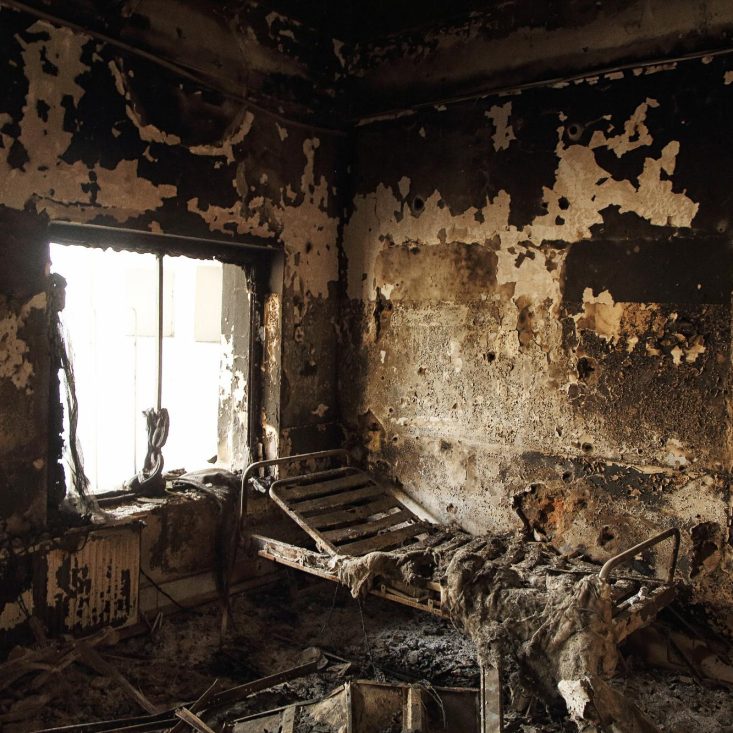
The aftermath of US airstrikes on the MSF Trauma Centre in Kunduz, Afghanistan in October 2015. Photo | MSF
An internal inquiry revealed that the airmen aboard the AC-130 gunship that carried out the operation pushed back against their superiors, questioning the strike’s legality. However, they were overruled and ordered to bomb the hospital regardless of their concerns. A Doctors Without Borders report concluded that the U.S. knew where the hospital was and that it did not hide any Taliban fighters and targeted it anyway. At least 42 people are known to have been killed in the incident.
The 2015 Kunduz bombing was a unique moment in history, as it was the first time that one Nobel Peace Prize winner (Barack Obama) bombed another one (Doctors Without Borders).
During his time in office, Obama bombed seven countries, including Libya. In July 2011, as part of its mission to overthrow the government of Muammar Gaddafi, NATO planes bombed Zliten, destroying the city’s hospital. Eighty-five people were killed, including at least 11 at the medical center. The event helped turn what was once Africa’s most prosperous and stable country into a failed state replete with open-air slave markets. Libya’s downfall has, in turn, helped to destabilize the entire Sahel region.
Perhaps no country in the 21st century has felt the wrath of Washington as much as Iraq. U.S. strikes on civilian infrastructure were a frequent occurrence, and hospitals were no different. Arguably, the most notable example is the April 2003 bombing of the Red Crescent Maternity Hospital in Baghdad.
American missiles struck the city center complex housing the hospital, killing several and wounding at least 25 people, including doctors.
The charitable hospital was crucial to providing affordable healthcare to working-class Iraqis, charging ten times less than the city’s private clinics. It developed a reputation as a first-class maternity hospital, delivering an average of 35 babies per day before the invasion. UNICEF noted a sharp rise in maternal mortality after the bombing, partially due to the lack of obstetric care in Baghdad.
Clinton’s War on Hospitals
Four years earlier, in May 1999, U.S.-led NATO planes dropped cluster munitions on an outdoor market and hospital in the Yugoslav city of Nis, killing at least 15 people and injuring 60 more, according to the hospital’s director. Cluster munitions are now banned under international law. Regardless, between 2023 and 2024, the United States transferred large quantities to Ukraine for use against Russian forces.
Two weeks after the Nis bombing, NATO targeted a hospital in the Yugoslav capital, Belgrade. The missile strike destroyed much of the maternity ward, with rescuers pulling infants and mothers from the rubble in the dead of night. At least three people were reported killed.
The Yugoslav attacks were not the Clinton administration’s only attacks on medical facilities. In 1998, in response to Osama bin Laden’s recent bombings of American Embassies in Kenya and Tanzania, President Bill Clinton ordered an attack on the Al-Shifa medicine factory in Sudan. Fourteen cruise missiles hit the plant, turning what had been the largest producer of medicine in the country into a pile of twisted metal. The factory had produced over half of Sudan’s pharmaceuticals, including crucial antibiotics and antimalarial and diarrhea medications.
While not a hospital, the destruction of Al-Shifa was vastly more lethal than any other attack listed. The event led to a collapse in the availability of drugs in one of Africa’s poorest countries. The German Ambassador to Sudan estimated that the death toll reached into the “tens of thousands.”
The Clinton administration publicly insisted that the plant was actually bin Laden’s chemical weapons factory. Privately, however, Secretary of State Madeline Albright worked hard to suppress a government report, noting this was not true.
Sudan was Clinton’s second attack on Africa. In June 1993, U.S. soldiers (under U.N. auspices) carried out a mortar attack against Digfer Hospital in Mogadishu, Somalia. The bombs destroyed the main reception area, blew a gaping hole in the wall of the recovery room, and shattered glass across the building. “It probably will never be known how many Somalis died in the U.N. [U.S.] onslaught,” wrote The Chicago Tribune. One reason for this is that helicopter-borne soldiers attacked reporters and photographers attempting to cover the attack, throwing stun grenades at them and chasing them away from the scene.
Latin American Dirty Wars
During the 1980s, Latin America and the Caribbean were the sites of intense U.S. interest. In October 1983, during the U.S. invasion of the island, American warplanes hit the Richmond Hill Mental Hospital in Grenada. The Reagan administration initially attempted to deny the attack before finally conceding their culpability. Dozens of people were injured, and at least 20 were killed, although The New York Times suggested an actual death toll of over twice that number.
The U.S. invaded Grenada in order to crush the island’s socialist revolution. In Central America, however, it relied on funding, training and arming proxy forces to do its bidding. These death squads would wreak destruction across the region and continue to shape its politics and society to this day.
In El Salvador, U.S.-trained forces waged a dirty war against the population in order to crush leftist FMLN guerilla forces. Hospitals were among their preferred targets. On April 15, 1989, for instance, pilots flying U.S.-made A-37 jets and UH 1M and Hughes-500 helicopters bombed an FMLN hospital in San Ildefonso, killing five people.
Paratroopers armed with M-16 rifles arrived on U.S. helicopters and attacked and abducted the medical staff, including French nurse Madeleine Lagadec. Before executing her, the soldiers spent eight hours raping and torturing her. Images of the remains of her mutilated body caused outrage in France, which issued an international arrest warrant for the four U.S.-backed officers overseeing the operation.
In Nicaragua, meanwhile, throughout the 1980s, U.S.-trained paramilitaries intentionally attacked “soft targets” such as hospitals in an effort to terrorize the population into dropping their support for the country’s socialist government.
A study by Richard M. Garfield, Professor of Nursing at Columbia University, found that, between 1981 and 1984, at least 63 health centers were forced to close due to attacks from the U.S.-backed “Contra” death squads.
These operations were carefully planned for maximum effect, with the Contras leaving behind graffiti at the crime scenes, announcing that the “Lion Cubs of Reagan” had visited the area. Throughout their campaign, President Reagan supported the Contras, labeling them “the moral equivalent of our Founding Fathers.” Dr. Michael Gray, Chairman of Occupational Medicine at Kino Community Hospital in Tucson, AZ., a doctor who visited Nicaragua, held a different opinion, describing them and their actions as “no different than the SS at the end of the Second World War.”
Cold War Killing Machine
During the American wars in Indochina, the bombing of hospitals was official – if unstated – U.S. policy.
Alan Stevenson, a former Army intelligence specialist, testified that, while on duty in Quang Tri province in Vietnam, he regularly identified hospitals to be struck by U.S. fighter jets. “The bigger the hospital, the better it was,” he said, explaining the military’s thought process. “This wasn’t something that was hush‐hush,” he added. “We really didn’t consider it that nasty an item.”
Former Air Force captain Gerald Greven corroborated Stevenson’s allegations, noting that he personally ordered bombing raids against medical centers. It was official policy to “look for hospitals as targets,” he said.
Perhaps the most notorious and well-documented case of this in Vietnam occurred on December 22, 1972, when American planes dropped over 100 bombs on the 1000-bed Bach Mai Hospital in Hanoi, nearly obliterating the building, in the process killing 28 medical staff and an unconfirmed number of patients.
The U.S. military justified the strike by claiming that the hospital “frequently housed antiaircraft positions” and noted its proximity to a military airbase.
During the Congressional hearings on clandestine U.S. activities in Laos and Cambodia, meanwhile, lawmakers were told that the bombing of hospitals was “routine.” Indeed, the former remains the most bombed country, per capita, in world history.
Like in Vietnam, the targeting of hospitals was not only commonplace but deliberate. In 1973, former Army captain Rowan Malphurs testified that, while serving with the Combined Intelligence Center of Vietnam, he helped orchestrate attacks on Cambodian health centers. “We were planning bombings of hospitals,” he said. Yet Malphurs was unrepentant. “I think it was a good thing because the North Vietnamese Army had a privileged sanctuary in Cambodia,” he added.
Thus, as this brief rundown of the past five decades has shown, last month’s attacks on the Al Rasool Al-Azam Oncology Hospital in Yemen are far from an aberration. As these examples from 13 different countries show, Washington, in fact, has a longstanding history of targeting medical centers.
Going further back, the government of North Korea estimates that the U.S. military destroyed some 1,000 hospitals during the Korean War. These numbers are entirely plausible, given the gigantic bombing campaign that the country faced. Entire cities were leveled or flooded after American planes targeted dams. Professor Bruce Cummings, America’s foremost expert on Korea, estimates that the U.S. killed around 25% of the entire North Korean population between 1950 and 1953.
Radio Silence
Article 8 of the Rome Statute, one of the fundamental texts of international law, explicitly identifies “intentionally directing attacks against buildings dedicated to religion, education, art, science or charitable purposes, historic monuments, hospitals and places where the sick and wounded are collected, provided they are not military objectives,” as war crimes.
That the Trump administration repeatedly struck a well-known and easily identifiable hospital in Yemen is an extremely important story. But it has, in fact, received zero coverage in corporate media. Searches for “Al Rasool Al-Azam Hospital” and “Yemen Hospital” in the Dow Jones Factiva news database, a tool that records the content from more than 32,000 U.S. and international media outlets, show that no mainstream American publication has even mentioned this grave war crime.
This is not because the information is particularly hard to find. Well-known media figures such as Pepe Escobar and Jackson Hinkle visited Saada and recorded viral videos from the wreckage where the hospital once stood. The information has been all over social media for weeks and has been covered widely in alternative media, including Drop Site News, AntiWar.com, Truthout, Common Dreams, and foreign outlets such as Al-Jazeera, RT (formerly Russia Today), and The Cradle. Thus, every single editor in every newsroom and television studio in the United States has access to this information and made the decision not to cover the story – a fact that suggests a lot about the diversity of opinion and freedom of our press.
This complete disinterest in U.S. misdeeds sits in stark contrast to when official enemy states do the same thing. When Russia hit hospitals in Ukraine and Syria, those incidents became front page news and led television news bulletins. Moreover, corporate media regularly explicitly framed the events as war crimes (see PBS, Politico, Foreign Policy, CNN, Newsweek, ABC News and the Los Angeles Times). Talking heads waxed lyrical about how Russian President Vladimir Putin must be brought to justice. And yet, when the United States does the same, that cacophony falls to complete silence – even when it is carried out by a president that many in corporate media appear desperate to attack at any opportunity.
What the recent attack on the cancer center in Yemen underlines is that it is dangerous to be a healthcare worker. The United States has a longstanding history of targeting hospitals in nations it selects for regime change. This is true of both Democratic and Republican administrations.
Therefore, the sad truth is that if you are in a country targeted by the United States, you are often safer away from a hospital than inside one.
Iran’s FM in Russia to ‘consult on matters of common concern’
Press TV – April 17, 2025
Iranian Foreign Minister Abbas Araghchi is visiting Moscow to “consult on matters of common interest and concern” with Russian officials, Foreign Ministry spokesman Esmaeil Baghaei says.
Baghaei on Thursday described Russia as a “strategic partner”, emphasizing that mutual ties between Tehran and Moscow are anchored in solid grounds of “mutual understanding” and common interests.
“Iran-Russia’s excellent bilateral relations are based on solid grounds of ‘mutual understanding’ & ‘respect’ as well as ‘shared interests’ of the two nations,” he wrote on the X social media platform.
Heading a diplomatic delegation, Araghchi traveled to Moscow Thursday to deliver a written message from Leader of the Islamic Revolution Ayatollah Seyyed Ali Khamenei to Russian President Vladimir Putin, Baghaei said.
The previously planned visit is taking place at the invitation of Russian Foreign Minister Sergei Lavrov, within the framework of continuous consultations between the two countries as strategic partners, Baghaei added.
During his stay in Moscow, Araghchi will hold talks on bilateral relations, regional and international developments, and the recent indirect talks between Iran and the US.
His visit comes ahead of the second round of talks between the US and Iran on Saturday after they held “positive” indirect negotiations in the Omani capital on Tehran’s nuclear program and the removal of sanctions on the Islamic Republic.
President Putin was scheduled to meet Araghchi later Thursday, Kremlin aide Yuri Ushakov told state media.
The Kremlin said Wednesday that Russia was ready to do “everything” in its powers to help find a diplomatic resolution to the standoff between the United States and Iran.
Russia has issued calls for calm after US President Donald Trump last month appeared to threaten to bomb Iran if it did not agree to a new nuclear agreement.
Tehran rejects ‘baseless’ UK claims about links to criminal groups
Press TV – April 17, 2025
Iran has condemned as “baseless and unjust” the recent accusations leveled by Britain that the Islamic Republic is connected with certain criminal groups.
Foreign Ministry spokesman Esmaeil Baghaei made the remarks on Thursday, three days after UK Foreign Secretary David Lammy announced sanctions on Foxtrot and its leader, Rawa Majid, claiming that the Swedish-based gang had been involved in “violence against Jewish and Israeli targets in Europe on behalf of” Tehran without providing any evidence.
Baghaei said attributing the actions of certain groups to Iran is a clear blame game meant to cover up Britain’s own destabilizing activities, particularly in West Asia.
“Making such claims against Iran reflects a misguided policy that the UK government has, in recent years, become somewhat addicted to,” he added.
The spokesman also noted that London has repeated its unfounded claims without any evidence despite Tehran’s calls for the UK to provide proof supporting its allegations.
He further emphasized that the UK government’s policy of making anti-Iran claims will bring nothing but will discredit it.
“The British regime must understand that pursuing a policy of unfounded ‘claims and accusations’ against the Islamic Republic of Iran will deepen distrust and further disrupt diplomatic relations – for which the UK will bear responsibility,” Baghaei said.
Earlier, the Iranian embassy in London said it had submitted a note of protest to the British government regarding the allegations.
“We consider such baseless positions and destructive conduct to be detrimental to the bilateral relations and urge the UK to refrain from pursuing hostile approaches towards Iran,” it said in a statement.
Full speed ahead for war preparations in Europe: What are French military cartographers doing in Romania?
By Erkin Oncan | Strategic Culture Foundation | April 17, 2025
In the French newspaper Le Figaro, a striking report was published regarding the presence of French Army cartographers in Romania in preparation for a possible “conflict with Russia.” The article, titled “French Army Cartographers Deployed on NATO’s Eastern Flank Amid Rising Tensions with Russia” and penned by Nicolas Barotte, details new military preparations being undertaken with the anticipation of a Russian attack.
According to the report, French Army cartographers are mapping regions along Romania’s borders with Moldova and Ukraine.
It is noted that soldiers are identifying elevated locations such as water towers or bell towers every five kilometers.
According to the French soldiers, these structures will be used as reference points for artillery targeting if necessary.
The French troops have also prepared an extremely detailed map that includes movement routes for military units and the axes along which the army can advance. The main purpose of the mapping effort is to facilitate orientation on the ground even if satellite signals are disrupted.
Who conducted the mapping?
The mapping operation was carried out by the 28th Geographic Group (28e Groupe Géographique).
Known by the abbreviation “28e GG,” this unit is stationed in the town of Haguenau near Strasbourg and is one of the smallest yet most strategic units of the French Army. The 28e GG provides geographical information, map production, and topographic analysis support to land forces. It was under the Intelligence Command for many years, but in the fall of 2023, it was reassigned to the Engineering Brigade (brigade du génie).
This unit, which plays a critical role in military operations, is responsible for map production in operational areas, 3D terrain mapping using methods such as LIDAR (a laser-based positioning method), drones, and mobile data collection tools. It also identifies passage routes for military targets and infrastructure, determines reference points for use in case satellite signals are cut off, and supports artillery with target identification and fire support planning. Comprising 350 soldiers, this unit actively participates not only in operations but also in planning processes.
French military presence in Romania
Meanwhile, the French Army’s presence in Romania is not new. When the Russia–Ukraine war began, France deployed a thousand troops to Cincu, located in the Transylvania region of central Romania, as part of NATO’s efforts to reinforce its eastern flank.
French soldiers also lead the NATO-established Multinational Battlegroup – Romania stationed there.
Why Romania?
According to Le Figaro, the unit has already hung the map it prepared in Romania on the wall of its headquarters in Haguenau.
On the map of Romania, the country’s topography is displayed in three dimensions. The 28e GG identified reference points every five kilometers and created a map of military mobility routes.
The map was created using a technology similar to Google’s Street View. A vehicle equipped with high-resolution cameras and laser sensors, used by the 28e GG, scanned the region in 3D.
The most critical aspect of this military preparation is the Focșani Gate.
The Focșani Gate
The Focșani Gate (or Focșani Pass) is located in eastern Romania and has historically been a region of great military strategic importance.
It is a narrow and flat passage between the Eastern Carpathians and the Danube Plain, serving as a corridor between Moldova, Transylvania, and the Danube region.
Unlike the mountainous terrain surrounding it, this flat region is difficult to defend and easy to attack.
Given NATO’s assumption that Russia may launch an attack through this route, it is predicted that a successful Russian invasion through Focșani could spread to the heart of Romania and even reach the Black Sea via Constanța.
Moreover, the historical use of Focșani for military purposes by the Ottomans, Russia, Germany, and the Soviets contributes to the strategic interest in the area.
What happens if Russia attacks through Focșani?
The emphasis on Focșani is undoubtedly part of the broader effort to militarize Europe under the narrative of a “Russian invasion.” But what if NATO’s assumptions prove true?
If Russia attacks through Focșani as expected, the first military forces it would encounter would be Romania’s 8th Division and the 2nd Infantry Division. The initial air response would come from Romanian aircraft based at the Fetești and Borcea air bases.
If NATO activates Article 5 and decides to fully confront Russia, the U.S. air base at Mihail Kogălniceanu on Romania’s Black Sea coast would also come into play.
If Russia were to attack through Focșani, the heavy NATO presence in the Baltic region would not have a primary impact. For example, due to the Carpathian Mountains, direct intervention in the Moldova–Romania axis by Poland and other Baltic countries would be logistically difficult. At most, these countries could apply a distraction strategy by opening a new front in the north against Russia.
In such a scenario, another key NATO force that comes to mind is the NATO Rapid Deployable Corps – Italy, established in 2001 as NATO’s Immediate Response Force.
Turkey’s position
Assuming Turkey sets aside its balancing diplomacy and fulfills its alliance obligations as the country with NATO’s second-largest land army, Turkey’s potential actions would include deploying its units to Romania within 72 hours.
As of 2023, Turkey is part of the Very High Readiness Joint Task Force (VJTF) with high-readiness units such as the 66th Mechanized Infantry Brigade (Istanbul) or Commando Brigades.
In this context, the 66th Mechanized Brigade in Istanbul and experienced commando brigades from Syria operations appear to be the fastest units that could provide ground support to Romania.
The Turkish Navy, also the largest NATO naval force in the Black Sea, contributes on a rotational basis to NATO’s Standing NATO Maritime Group-2 (SNMG2) and Standing NATO Mine Countermeasures Group-2 (SNMCMG2) with frigates, fast attack boats, and minehunters.
Likewise, Turkey’s air power can provide reinforcements of combat troops and ammunition to NATO bases in Romania by air; with UAVs and maritime patrol aircraft, it can carry out reconnaissance and deterrence missions. Amphibious units with landing capabilities and SAT/SAS commandos could also be deployed to Romanian territory under NATO’s operational plans.
Of course, direct military involvement by Turkey in such a scenario is seen as a possibility that falls outside the scope of Turkey’s traditionally balance-oriented foreign policy.
While the likelihood of such a simulation materializing under the current political circumstances is clearly remote, it would require Russia to first capture Odessa and reach the Moldovan border, then attempt to invade Romania via Moldova (Transnistria).
However, even though direct Turkish involvement in a war remains unlikely for now, the possibility of Turkey taking on new responsibilities within the current “deterrence” concept is increasingly being discussed out loud.
Especially in a political climate where U.S. President Donald Trump is perceived to have “abandoned” Europe, and eyes are turning to Turkey, President Recep Tayyip Erdoğan’s recent statement at the Antalya Diplomacy Forum—“Turkey is ready to take responsibility for Europe’s security”—is the clearest indication yet that Turkey will play a more active role in the European security architecture in the near future.
Although there is much talk lately about Turkish troops going to Ukraine, it would not be surprising to see Turkish units in Romania, a key focus area for NATO.
Conclusion
Alongside Eastern Europe, NATO also considers Southeastern Europe as a potential attack route for Russia and is tailoring its war preparations accordingly. While U.S.-Europe relations remain volatile during the Trump era, the ongoing preparations suggest that neither side truly believes the U.S. will withdraw troops from Europe in the short term. Indeed, NATO and U.S. officials have already started attempts to “reassure” on this matter.
On the other hand, while NATO considers Romania a strategic route in the event of a Russian attack and views the region as militarily critical, it is also evident that any anti-NATO or anti-EU shift in a country like Romania would cause severe damage to current strategies. This fact is already apparent from the first round of Romania’s presidential elections.
Although Romania currently plays a key role in NATO’s southeastern flank, signs of a potential shift in political preferences are beginning to emerge. In the first round of Romania’s 2024 presidential elections, pro-Western and pro-European Union parties lost significant ground, while nationalist and EU-skeptical tendencies gained momentum. This shift could pose serious challenges to NATO’s future plans in the region if it continues.
As NATO strengthens its eastern and southeastern flanks in anticipation of a long-term confrontation with Russia, it must also closely monitor the political transformations in its member states. Public discontent, nationalist rhetoric, and the rise of far-right political movements may undermine the alliance’s cohesion and operational capacity.
Moreover, it is becoming clear that the current U.S.-European alliance is not solely built on military arrangements. The sustainability of this alliance also depends on internal political stability and public support within member countries. In this context, the role that Turkey will play is of particular significance, both as a NATO member and as a regional power capable of influencing developments in Southeastern Europe and the Black Sea basin.
While the French military’s cartographic activities in Romania may seem like a routine technical operation, they are, in fact, part of a much broader preparation for war. The choice of mapping locations, the level of detail, and the focus on vulnerable corridors such as the Focșani Gate all point to a well-thought-out military contingency plan.
In summary, Europe is once again preparing for war—this time not against a distant enemy, but against a powerful and nuclear-armed neighbor. And countries like Romania, which sit at the intersection of these fault lines, are being rapidly militarized. Whether this is genuine preparation or a calculated form of deterrence, one thing is certain: the cartographers of war are already on the move.
European and British leaders are using the Sumy airstrike to push for the war in Ukraine to continue
By Ian Proud | Strategic Culture Foundation | April 16, 2025
The Sumy airstrike provides a reminder that civilians and children have been killed indiscriminately since the Ukraine crisis started in 2014. Rather than calling on Russia to accept a ceasefire on Ukraine’s terms and encouraging Zelensky to avoid dialogue, European and British leaders need to get behind real negotiations.
On 13 April, a Russian airstrike in the centre of Sumy in Ukraine lead to the deaths of 34 people and injury to 117 others, including children. The strike targeted a planned medal award ceremony organised by the Ukraine Armed Forces’ 117th Territorial Defence Brigade, although the vast majority of the casualties were civilians.
The decision to plan a military event in a built-up city centre has prompted internal concern within Ukraine that this invited a Russian attack. A Mayor of one town in Sumy called on the Governor and the regional head of Ukrainian Military intelligence to resign, for organising a military event in a civilian area.
Russian military bloggers have admitted that the second of two ballistic missiles used did not hit the intended target, causing widespread casualties.
But there was also a depressing sense of déjà vu in this latest tragedy. In an Amnesty International report of 4 August 2022, six months after the war started, the Secretary General, Agnès Callamard, remarked ‘we have documented a pattern of Ukrainian forces putting civilians at risk and violating the laws of war when they operate in populated areas.’
The strike in Sumy offers a timely reminder that civilians have regularly been caught in the cross-fire of a conflict in Ukraine that has been burning since 2014. Over 15,000 civilians have been killed during that eleven-year period, 3000 of those in the years of 2014 and 2015, as part of Ukraine’s so-called Anti-Terror Operation against the separatists in Donetsk and Lugansk.
The first official record of civilian deaths in the Ukraine conflict was in a report by the OSCE Special Monitoring Mission on 5 July, which said, ‘the military campaign of the Ukrainian army in the east of the country continued.. The UN stated that there were numerous reports of death of people due to the intensified security operations in Donetsk and Luhansk, including a killing of a five-year-old girl.’
A 2016 report by the Office of the UN High Commissioner for Human Rights, spoke about ‘rampant impunity’ within the Ukrainian anti-terror offensive across the period from 2014-2015, with ‘90 per cent of the conflict related civilian deaths.. caused by the indiscriminate shelling of residential areas.’ The remaining deaths were mostly caused by summary executions by groups on both sides of the conflict.
15,000 civilian deaths across eleven years is an appalling number. But that number pales against the more than one million total deaths and injuries to military personnel on both sides during the war, each one the child of someone.
Everyone should be striving with every sinew to end this needless bloodshed and finally bring peace. But they are not.
Performative accusations against Russia by the western media and politicians create an epic distraction from the real issue; that this would not be happening if there was peace between Russia and Ukraine.
A new propaganda narrative has formed that in this war, Russia is the aggressor and Ukraine is the victim. This is both a gross over-simplification and wilfully ignores Ukraine’s role as the other party to the war. It also infantilises casual western consumers of the mainstream news who, stripped of real information and analysis of the history of the conflict, are invited to accept the premise that Ukrainians are the good guys, and the Russians are the bad guys. That this is a fight between the righteous and the wicked. Between David and Goliath.
Antony Blinken, the grossly complicit former US Secretary of State, recently repeated this good versus evil line in an interview. But, when you look at it from the other perspective, you might realise that Russia considers NATO Goliath, and itself David.
Ursula von der Leyen, took to X after the attack in Sumy to amplify this attack line. ‘Russia was and remains the aggressor.’ She goes on to assert that, ‘Europe will continue to.. maintain strong pressure on Russia until the bloodshed ends and a just and lasting peace is achieved, on Ukraine’s terms and conditions.’ Prime Minister Keir Starmer posted on X that ‘Putin must now agree to a fully and immediate ceasefire without conditions.’
But this is deluded. Russia is slowly winning on the battlefield and has been for at least a year and a half. There is no rational world in which Russia will be pressured to accept a ceasefire on Ukraine’s terms. And Russia has conditions, the biggest one that Ukraine repudiate its claim to NATO membership. This has been the case, not since 2022, not since 2014, but since 2008.
A ceasefire will only happen when Ukraine engages in direct talks with Russia, something that President Zelensky steadfastly refuses to do. Calling for more pressure on Russia, and discouraging Zelensky from dialogue, is just delaying an end to hostilities and consigning more innocent people to die.
The EU and Britain, which have both avoided at all costs sending troops to fight, can’t produce enough weapons and are fast running out of money to support Ukraine’s failing state, are encouraging Zelensky to press for something that President Putin will never accept.
President Trump – with whom I disagree deeply on Middle East policy and on tariffs – has been measured in his response, referring to the Russian airstrike in Sumy as a mistake. Secretary of State Marco Rubio was also balanced in his statement, pointing out that, ‘this is a tragic reminder of why President Trump and his Administration are putting so much time and effort into trying to end this war and achieve a just and durable peace.’
Rather than falling back on the same old performative tropes and failed prescriptions, European and British leaders finally need to get behind ending the bloodshed. They must encourage Zelensky to negotiate, rather than humouring him with assurances that won’t reassure, and with promises we’ll never keep.
Featured Video

It’s the Occupation, Stupid
or go to
Aletho News Archives – Video-Images
From the Archives
A superpower and “the world’s sickest warrior state”
By Paul J. Balles | March 8, 2010
Living through five or six major wars has hardened me to what I thought were the extremes of inhuman cruelty and brutality.
Two things made those extremes almost bearable: the brutality always revealed – at least according to the media coverage – the viciousness of the enemy. It was therefore quite understandable when our “brave men and women” pulverized the enemy.
Films of Japanese torturing captive Americans somehow justified holding Japanese Americans in internment camps during World War II; and only a small percentage of Americans found the bombing of Hiroshima and Nagasaki unreasonably vengeful at best, at worst, depraved.
The media giants in America portrayed the North Koreans as barbaric beasts with their captives, quite unlike their southern counterpoints – our allies during the Korean War. No one ever felt the need to explain how the South Koreans were a civilized breed while the North Koreans were absolute savages, at least according to the official line.
In Vietnam, our warriors justifiably (or so the media made us believe) dropped napalm on the North Vietnamese who had the gall to hide in villages and tunnels to ravage our invaders. At least it was accepted practice until some rogue photojournalist filmed a young girl screaming down a Vietnamese road in flames. … continue
Blog Roll
 Aletho News
- Pro-Palestinian French member of European Parliament denied entry to Canada
- Pakistan to Host US-Iran Talks
- How Indonesia’s tilt toward the US left it stranded in the Strait of Hormuz
- US has no choice but to retreat from Iranian borders: Top commander
- Iran Retaliation Strikes Chemical Plant Near Dimona
- AWACS’ Destruction is a Major Loss for US Military – Ex-DoW Analyst
- Israel’s Iran Strategy Uses US Military & Gulf States as Its Pawns
- Iran: Trump wanted regime change, now just begging for Hormuz to open
- IRGC: Israeli, US universities in region legitimate targets after strikes on Iranian university
- Trump admits Iran hit USS Ford carrier: ‘We ran for our lives’
- If Americans Knew
- Israeli police block Catholic cardinal from entering Church of the Holy Sepulchre on Palm Sunday
- Israel is assassinating journalists again, more than any other nation, anywhere, ever – Not a ceasefire Day 170
- Over 300 US service members wounded, majority have brain injuries – Not a ceasefire Day 169
- Researchers at Human Rights Watch Resign Over Blocked Report on Palestinian Refugee Return
- Jewish Groups Are Backing a War Americans Don’t Want
- Eric Fingerhut Thinks He’s the President of the Jews
- Top Jewish Philanthropists, Rabbis Urge Israeli President to Take Action Against ‘Jewish Extremists’
- Don’t Be Fooled. Zionist Leaders Have Always Wanted to Control Southern Lebanon
- Israel’s widespread use of torture is a core element of its genocide against the Palestinian people
- In Israel’s War on Iran, Many Middle East US Bases Rendered “All But Uninhabitable”
- No Tricks Zone
- German Science Blog Accuses PIK Climate Institute Of Hallucinating Climate Tipping Points
- Devastating Assessment Of Comirnaty Vaccine By Former Senior Pfizer Europe Toxicologist
- New Study: CO2 Is ‘Effectively Negligible’ As An Explanatory Climate Change Factor Since 2000
- Former Pfizer Toxicologist Dr. Helmut Sterz Tells Bundestag Hearing Pfizer Vaccine Should Have Never Been Approved
- Energy Expert: Germany’s Nuclear Phaseout Was A “500 Billion Euro Mistake”
- New Research: South Australia’s Mid-Holocene Sea Surface Temperatures Were 4°C Warmer Than Today
- Storing Green Energy To Last Germany 10 Days Would Require A 60-Million Tonne Battery
- New Studies: UK Sea Levels Were 4 Meters Higher Than Today During The Mid-Holocene
- Destructive Green New Deal: German Energy And Metal Group Warns Of Drastic Crisis
- New Study Documents A 20-Year Pause In Arctic Sea Ice Decline – Driven By Internal Variability
 Aletho News