‘Digital Chokehold’: Tool Developed by Tech Giants to Stop Terrorists Enables Mass Surveillance, Censorship
The Defender | September 24, 2025
Most people have no idea how far-reaching modern digital surveillance has become. In the wake of the Epstein scandal and the rise of the Internet Crimes Against Children Task Force Program, the public has largely accepted new monitoring tools as necessary to fight crimes against society’s most vulnerable.
That acceptance has allowed governments and Big Tech to quietly deploy one of the largest surveillance infrastructures in human history — an invisible, always-on monitoring system that watches nearly everything we send, store and share online.
PhotoDNA: Trojan horse for scanning everything
At the heart of this infrastructure is PhotoDNA. Developed by Microsoft in 2009, PhotoDNA generates a digital fingerprint, or hash, for every image or video uploaded to participating platforms, which include Google, Meta, Apple, Dropbox, Twitter, Discord and many more.
These hashes are compared against a shared global database of known child sexual abuse material. If a match is found, the platform automatically flags, quarantines or reports the file.
The database is continuously updated and instantly synchronized across all partners, allowing near real-time takedowns.
This was sold to the public as a tool exclusively for catching predators. But the technology itself can’t discern the difference between illegal images and political speech. And over time, the scope of its use has quietly expanded.
From predators to ‘extremists’: enter GIFCT
In 2017, tech giants — Meta, Microsoft, YouTube and Twitter (now X) — founded the Global Internet Forum to Counter Terrorism (GIFCT). Publicly, its mission was noble: stop terrorists from using digital platforms to recruit, organize or spread propaganda.
Privately, however, GIFCT built something far more powerful — a centralized global database of “objectionable content” — modeled after PhotoDNA but repurposed for ideological policing.
Here’s how GIFCT works:
- When one partner flags content as “extremist” or “terrorist,” GIFCT generates a hash, a string of characters used to create a unique digital fingerprint for data (a file, photo or data) that can’t be decoded. A hash is obtained by running a mathematical formula over the data.
- That hash is instantly shared across all member platforms.
- Any matching content is blocked, throttled or erased in real time — often without informing the user.
- The flagged account may also be shadow-banned (hidden without the user’s knowledge), suspended or referred to law enforcement.
The system’s integration across multiple companies and platforms effectively bypasses borders, legal jurisdictions and constitutional protections. Once content enters the GIFCT database, it can vanish from the internet everywhere at once.
The silent redefining of ‘extremism’
GIFCT’s power becomes more troubling when we examine how “extremism” is defined.
In 2021, internal GIFCT documents revealed discussions about expanding its hash database beyond terrorism to include:
“Fringe groups [whose] non-violent ideologies … are on the periphery of social movements or larger organizations, with more extreme views than those of the majority.” (“Broadening the GIFCT Hash-Sharing Database Taxonomy,” p.53)
This is a turning point. It moves GIFCT from targeting violent threats to monitoring dissenting ideas.
Civil rights groups, health freedom advocates, independent journalists, whistleblowers and reformers — anyone operating outside mainstream consensus — could now be flagged, throttled or silenced under GIFCT’s framework.
And because private companies make these decisions in closed-door sessions, there is:
- No public oversight.
- No appeal process.
- No democratic accountability.
The mechanisms of invisible control
GIFCT’s technology operates quietly in the background, shaping information flows without most users realizing it:
- Shadow banning: content gets published but algorithmically suppressed, so almost no one sees it.
- Real-Time erasure: posts or videos vanish instantly across multiple platforms if hashed.
- Behavioral profiling: data about what you read, share and discuss can be tied to “risk profiles.”
- Proactive takedowns: artificial intelligence, or AI, now predicts “likely extremist content” before it’s even posted. What began as a fight against terrorism has evolved into an unprecedented capability for narrative control — one where Big Tech and government-backed nongovernmental organizations quietly manage what the world can see, share and believe.
The threat to civil rights and social reform
Surveillance networks like GIFCT don’t just monitor — they shape activism itself. By algorithmically suppressing controversial, dissenting or reformist voices, these systems can:
- Preemptively neutralize protest movements before they organize.
- Silence journalists who challenge entrenched power.
- Marginalize minority political perspectives.
- Narrow public debate until only approved narratives remain visible.
This has profound consequences for democracy and civil liberties. History shows us that nearly every major social reform — civil rights, women’s suffrage, LGBTQ rights, antiwar movements — began as fringe positions.
If today’s automated surveillance systems had existed decades ago, many transformative reforms might never have gained visibility.
Without transparency and democratic oversight, GIFCT risks creating a digital chokehold on cultural evolution itself.
What must be done
To preserve free speech, open debate and the possibility of reform:
- Congress must act to place limits on GIFCT’s scope and require full public transparency.
- Privacy and civil rights organizations must be empowered to audit GIFCT’s hash lists and review what’s being censored.
- Users must have due process rights — the ability to appeal labels, removals and bans.
- Citizens deserve public reporting on who decides what gets suppressed and why.
A choice between freedom and control
The question is no longer whether you have “something to hide” but “who gets to decide what is hidden?”
What began as a narrowly focused child protection tool has grown into a globally integrated surveillance apparatus capable of monitoring nearly all speech, thought and dissent online.
If we fail to act, GIFCT and its partners will continue to quietly rewrite the boundaries of acceptable discourse — undermining civil rights movements, weakening reform efforts, and placing democratic freedoms in the hands of unelected private boards.
This article was originally published by The Defender — Children’s Health Defense’s News & Views Website under Creative Commons license CC BY-NC-ND 4.0. Please consider subscribing to The Defender or donating to Children’s Health Defense.
No comments yet.
Featured Video
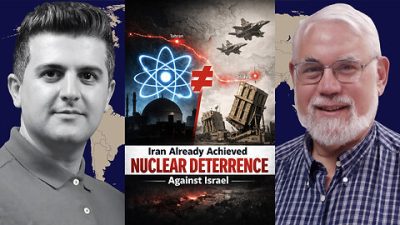
Prof. Ted Postol: Iran Already Achieved Nuclear Deterrence Against Israel
or go to
Aletho News Archives – Video-Images
From the Archives
How the occupied mentality syndrome works
Saudi Arabia on the American chessboard – Part 3
By B. J. Sabri | American Herald Tribune | June 27, 2016
Read part 2: “The occupied mentality Syndrome“
Previously I argued whether Saudi Arabia’s repeated involvements in U.S. interventions and wars stem from free national will or in response to a specific condition. For starters, in Saudi Arabia there is no national will. In Saudi Arabia, the national will is the will of the Al Saud clan. Still, when a major Arab state allies itself with a superpower that committed unspeakable crimes against humanity in almost every Arab country, then something is wrong. This fact alone should compel us to examine the U.S.-Saudi relation for one exceptional reason. As a result of the U.S.-Saudi wars, hundreds of thousands of people in Afghanistan, Iraq, Iran, Libya, Syria, Yemen, and Somalia have lost their lives. Millions became displaced in their own homelands. And millions more rendered refugees.
Attributing the Saudi policies to the bonds of “partnership” with the U.S. is frivolous. There are no bonds between these two thugs except those of business, military deals, secret plots, and wars. Proving this point, bonds such as these have no space for the American and Saudi peoples to share significant cultural or societal exchanges. If partnership is not the reason for the Saudi contribution to the U.S. strategy of empire and imperialism, then another reason must exist.
This leads to three possibilities. … continue
Blog Roll
 Aletho News
- NIAID/NIH and USDA Fund Bioengineered Chimeric Influenza Viruses Built Using Pandemic H1N1 Components: Journal ‘Science Advances’
- Hezbollah hits Israeli warship off Lebanon’s coast, sets it aflame
- Iran slams US strikes on B1 bridge, Mahshahr petrochemical plants as ‘blatant acts of state terrorism’
- In letter to UN chief, Araghchi warns of dire consequences of US-Israeli attacks on Iran’s nuclear facilities
- Why the CIA conspiracy to invade Iran with Kurdish militias failed
- Why Are Upbeat US Claims About Mission to Rescue Pilot ‘Highly Questionable’?
- Aircraft destroyed during US ‘rescue’ of downed F-15 pilot cost more than $100 million each
- Washington University removes professor who condemned US-Israeli war on Iran
- Russia Warns of Retaliation as UK Authorizes Seizure of Vessels
- Serbia thwarts plot to bomb Russia-Hungary gas pipeline – Vucic
- If Americans Knew
- In Iran, Israel-US take aim at “reason, research, and freedom of thought” – Daily Update
- US loses planes over Iran, Israel downgrades Lebanon war goals – Daily Update
- Israel Is Blocking Palestinians from Easter at Church Where Jesus Resurrected
- Plot to assassinate Palestinian activist follows harassment campaign promoted by Zionist groups and elected officials
- Prominent New York synagogue hosts presentation on why U.S. Jews should support the ethnic cleansing of Gaza
- Tapper vs. Piker: Is the CNN Anchor Auditioning for David Ellison?
- Shouldn’t Democrats Be Able to Condemn Genocide?
- Israel-US kill negotiators, destroy civilian structures, but Iran’s military capabilities still largely intact – Daily Update
- ‘War crime’: Global condemnation as Israeli ministers celebrate death penalty law targeting Palestinian prisoners
- 7 Ways Israel Is Turning Lebanon Into Gaza
- No Tricks Zone
- An Inconvenient Tree: Uncovered In Alps… Europe Much Warmer Than Today 6000 Years Ago
- New Study Reports A 60% Slowdown In Greenland’s Ice Loss Rate In The Last Decade
- Low Intensity Tornado Wrecks Major Solar Farm, Creating A Potential Toxic Dump
- New Study Finds Warming Saves Lives…Cold Temperatures 12 Times More Deadly Than Excess Heat
- German Science Blog Accuses PIK Climate Institute Of Hallucinating Climate Tipping Points
- Devastating Assessment Of Comirnaty Vaccine By Former Senior Pfizer Europe Toxicologist
- New Study: CO2 Is ‘Effectively Negligible’ As An Explanatory Climate Change Factor Since 2000
- Former Pfizer Toxicologist Dr. Helmut Sterz Tells Bundestag Hearing Pfizer Vaccine Should Have Never Been Approved
- Energy Expert: Germany’s Nuclear Phaseout Was A “500 Billion Euro Mistake”
- New Research: South Australia’s Mid-Holocene Sea Surface Temperatures Were 4°C Warmer Than Today
 Aletho News
Leave a comment