EU Sanctions Swiss Analyst For Criticism Of The Ukraine Proxy War
The Dissident | December 15, 2025
The European Union has just released a new sanctions package intended to impose “restrictive measures in view of Russia’s destabilising activities”.
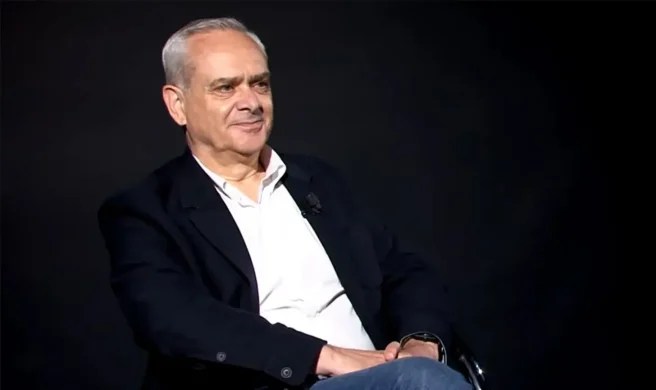
Among the people slapped with EU sanctions is Jacques Baud, a retired colonel in the Swiss army; former strategic analyst, intelligence and terrorism specialist, solely for his position and analysis of the war in Ukraine.
The EU accuses Baud of being “a regular guest on pro-Russian television and radio programmes” and being a “mouthpiece for pro-Russian propaganda” and claiming he “makes conspiracy theories, for example, accusing Ukraine of orchestrating its own invasion in order to join NATO.”
The EU accuses him of being “responsible for, implementing or supporting actions or policies attributable to the Government of the Russian Federation which undermine or threaten stability or security in a third country (Ukraine) by engaging in the use of information manipulation and interference” and imposed sanctions on him, solely because his position differs from NATO’s and the EU’s on the Ukraine war.
The outlet Switzerland24 noted that the sanctions on Baud, “provide for the freezing of the assets of sanctioned persons, a ban on entry into the EU and a ban on making funds available to them”.
Commenting on this, Alfred de Zayas, a former UN expert, noted, “We are witnessing a civilizational collapse with the EU sanctioning Jacques Baud, a retired Swiss colonel and intelligence officer, for publishing books and articles expressing views on the Ukraine war contrary to those of the NATO leadership.”
In reality, Jacques Baud’s position, as laid out in his article, “The Military Situation In The Ukraine” from April of 2022, is that, “the dramatic developments we are witnessing today (in Ukraine) have causes that we knew about but refused to see”, including
- The expansion of NATO
The fact that NATO expansion led to the Ukraine war has been acknowledged by multiple Western officials.
U.S. diplomat George Kennan, said as far as 1997 that NATO expansion towards Russia’s borders would be “the most fateful error of American policy in the entire post-Cold War era” adding that it would, “be expected to inflame the nationalistic, anti-Western and militaristic tendencies in Russian opinion; to have an adverse effect on the development of Russian democracy; to restore the atmosphere of the cold war to East-West relations, and to impel Russian foreign policy in directions decidedly not to our liking”.
In 1998, George Kennan said that NATO expansion was “the beginning of a new cold war” and said, “the Russians will gradually react quite adversely and it will affect their policies”.
In 2008, when NATO first invited Ukraine and Georgia to join, then U.S. ambassador to Russia, William Burns, said, “Ukraine and Georgia’s NATO aspirations not only touch a raw nerve in Russia, they engender serious concerns about the consequences for stability in the region. Not only does Russia perceive encirclement and efforts to undermine Russia’s influence in the region, but it also fears unpredictable and uncontrolled consequences which would seriously affect Russian security interests” adding, “Experts tell us that Russia is particularly worried that the strong divisions in Ukraine over NATO membership, with much of the ethnic-Russian community against membership, could lead to a major split, involving violence or at worst, civil war. In that eventuality, Russia would have to decide whether to intervene; a decision Russia does not want to have to face”.
Most recently, Amanda Sloat, a top Biden administration official for European affairs admitted that, “We had some conversation even before the war started, about what if Ukraine comes out and just says to Russia, ‘fine, you know, we won’t go into NATO if that stops the war, if that stops the invasion,’ which at that point it may well have done” adding that promising no NATO membership for Ukraine “certainly would have prevented the destruction and the loss of life”.
David Arakhamia, one of the lead Ukrainian negotiators during the Istanbul talks of 2022 also said, “Russia’s goal was to put pressure on us so that we would take (NATO) neutrality. This was the main thing for them: they were ready to end the war if we accepted neutrality, as Finland once did”.
- The Western refusal to implement the Minsk Agreements
Similarly, the fact that the West blocked the Minsk accords in 2019, the peace agreement that would have ended the civil/proxy war in Eastern Ukraine that sparked after the U.S.-backed 2014 Maidan coup, is well documented.
As former UK Prime Minister Boris Johnson admitted, “Zelensky is not an unreasonable guy, he got elected as a peacenik, in 2019 he tried to do a deal with Putin, as far as I can remember, his basic problem was that the Ukrainian nationalists couldn’t accept the compromise”.
What Johnson was referring to as the NGO Finnish Peace Defender documented was that,“While President Zelensky is trying to follow commitments given to his electorate and international obligations in implementation of the Minsk Agreements, he has to overcome obstacles placed by irregular armed groups who identify themselves as patriots of Ukraine” including “open threats and blackmail by far-right military circles in Ukraine, including the National Corps led by Andrii Biletski”.
Instead of backing Zelensky in implementing the Minsk Accords, Western-funded NGOs sided with the far-right nationalists in blocking them.
Ukranian-Canadian academic Ivan Katchanovski has documented, “The Western governments and foundations, such as Soros foundation, funded all but one of about two dozen Ukrainian NGOs, which initially issued in 2019 a collective statement that any talks with Donbas separatists were impermissible after the head of the Zelenskyy’s presidential administration supported creation of a consulting group with representatives of the separatist-controlled Donbas during the Minsk negotiations.”
- The continuous and repeated attacks on the civilian population of the Donbass over the past years, and the dramatic increase in late February 2022.
Indeed, while blocking the Minsk Accords, the Trump administration- trying to prove it was not controlled by the Russians as the media claimed based on the Russiagate hoax- approved sending lethal arms to the Ukrainian government in 2017 and 2019, which increased the civilian casualties on the pro-Russia side of the Donbas conflict.
Jacques Baud, in his article, cites a UN report which found that there were 381 civilians killed in the conflict between 2018 and 2021 and that 81.4% occurred “in territory control led by the self-proclaimed ‘republics’”, the pro-Russian separatist side.
Jacques Baud concluded that, “we can naturally deplore and condemn the Russian attack. But WE (that is: the United States, France and the European Union in the lead) have created the conditions for a conflict to break out”.
One is free to agree or disagree with Jacques Baud’s perspective, but the reality is, it is not a “conspiracy theory” or “information manipulation” but a fact-based analysis on the Western policies that led to the war in Ukraine, which is shared by well-respected foreign policy analysts, including John Mearsheimer, Jeffrey Sachs and Noam Chomsky.
The EU’s claim that Jacques Baud accuses “Ukraine of orchestrating its own invasion in order to join NATO”, appears to be a reference to the fact that Jacques Baud has cited a 2019 interview with the Ukrainian presidential advisor Oleksiy Arestovych where he said the best case scenario for Ukraine was “a large scale war with Russia and joining NATO as a result of defeat of Russia”, saying that currently, “NATO would be reluctant in accepting us”, but defeating Russia would lead to Ukraine joining NATO.
Again, directly quoting a Ukrainian government official is hardly a “conspiracy theory”.
Furthermore, it is blatantly undemocratic and authoritarian for the EU to slap sanctions on someone solely because he has a critical perspective on Western and EU foreign policy.
While the EU pushes for the continuation of the Ukraine war based on the principles of “democracy” and “freedom”, they blatantly disregard democracy and freedom in order to crack down on critics of this policy.
Will this documentary put Keir Starmer behind bars?
Declassified UK and Double Down News | December 11, 2025
 • Cinematic Tension Suspense No Copyright Mu… • dark ambient music no copyright (i hope so…
  / arthurvost • 🌕 Free Dark Space Music (For Videos) – “A … 🔎 • ULTRAWAVE – Oceandrive (Synthwave No Copyr…
 Substack Imposes Digital ID Checks in Australia
By Christina Maas | Reclaim The Net | December 15, 2025
Australian readers opening Substack this fall have found a new step inserted between curiosity and the page. Click the wrong post and a full-screen message appears, informing users they “may be asked to verify your age before viewing certain content.”
Due to authoritarian internet laws, reading now comes with paperwork.
Substack says the change is not a philosophical shift but a legal one. The trigger is Australia’s Online “Safety” Act, a regulatory framework that treats written words with the same suspicion once reserved for explicit video.
The law requires platforms to block or filter material deemed age-restricted, even when that material is lawful.
The Online Safety Act hands the eSafety Commissioner broad authority to order platforms to restrict, hide, or remove content considered unsuitable for minors.
The definition of unsuitable is wide enough to cover commentary, essays, or creative writing that falls nowhere near criminal territory.
To comply, Substack now asks some Australian readers to confirm they are over 18. That can mean uploading identity documents or passing through third-party verification services.
Readers who already verified their identity through payment systems might be spared another check, though the underlying system remains the same. Access depends on linking a real person to a specific act of reading.
This marks a shift for a platform built on the idea that subscribing and reading could be done quietly. The act of opening an essay now risks leaving a record that connects identity with interest.
In an October 2025 statement titled Our Position on the Online Safety Act, Substack warned that the law carries “real costs to free expression.”
The company made clear it would follow Australian law, while arguing that mandatory age verification threatens the independence of digital publishing.
This is not the familiar filter used by streaming services or adult entertainment platforms. This is text. Essays. Journalism. Political argument. Material that has long circulated without checkpoints. The same machinery sold as child protection now sits in front of discussions about social issues, politics, or art.
Australian users trying to access posts marked as adult content are met with a demand to confirm their age before proceeding.
The process may be quick, but it requires data exchanges that associate a reader with specific material. Even if those links are temporary, they represent a break from the historical norm of private reading.
For writers and readers who valued Substack as a direct channel, the dynamic has changed. Subscribing is no longer enough. Proof is required. That requirement may not ban content outright, but it introduces friction that discourages engagement with sensitive or controversial topics. It also normalizes the idea that access to writing should depend on disclosing personal identity.
Once such systems exist, expanding them becomes an administrative decision.
Australia is not alone. Similar problems are underway in the United Kingdom and the European Union, where online safety proposals also rely on digital identity frameworks.
The common premise is that anonymous access is a problem to be solved rather than a feature to be preserved.
Substack’s choice reflects the bind facing global platforms. Defy the rules and risk being blocked. Comply and accept the slow reshaping of how people read. For now, Australian readers can still reach their favorite writers, provided they show ID first. The price of admission is proof that you are old enough to read.
UK Lawmakers Propose Mandatory On-Device Surveillance and VPN Age Verification
By Cindy Harper | Reclaim The Net | December 15, 2025
Lawmakers in the United Kingdom are proposing amendments to the Children’s Wellbeing and Schools Bill that would require nearly all smartphones and tablets to include built-in, unremovable surveillance software.
The proposal appears under a section titled “Action to promote the well-being of children by combating child sexual abuse material (CSAM).”
We obtained a copy of the proposed amendments for you here.
The amendment text specifies that any “relevant device supplied for use in the UK must have installed tamper-proof system software which is highly effective at preventing the recording, transmitting (by any means, including livestreaming) and viewing of CSAM using that device.”
It further defines “relevant devices” as “smartphones or tablet computers which are either internet-connectable products or network-connectable products for the purposes of section 5 of the Product Security and Telecommunications Infrastructure Act 2022.”
Under this clause, manufacturers, importers, and distributors would be legally required to ensure that every internet-connected phone or tablet they sell in the UK meets this “CSAM requirement.”
Enforcement would occur “as if the CSAM requirement was a security requirement for the purposes of Part 1 of the Product Security and Telecommunications Infrastructure Act 2022.”
In practical terms, the only way for such software to “prevent the recording, transmitting (by any means, including livestreaming) and viewing of CSAM” would be for devices to continuously scan and analyze all photos, videos, and livestreams handled by the device.
That process would have to take place directly on users’ phones and tablets, examining both personal and encrypted material to determine whether any of it might be considered illegal content. Although the measure is presented as a child-safety protection, its operation would create a system of constant client-side scanning.
This means the software would inspect private communications, media, and files on personal devices without the user’s consent.
Such a mechanism would undermine end-to-end encryption and normalize pre-emptive surveillance built directly into consumer hardware.
The latest figures from German law enforcement offer a clear warning about the risks of expanding this type of surveillance: in 2024, nearly half of all CSAM scanning tips received by Germany were errors.
According to the Federal Criminal Police Office (BKA), 99,375 of the 205,728 reports forwarded by the US-based National Center for Missing and Exploited Children (NCMEC) were not criminally relevant, an error rate of 48.3 percent, up from 90,950 false positives the year before.
Many of these reports originate from private companies such as Meta, Microsoft, and Google, which voluntarily scan user communications and forward suspected material to NCMEC under the current “Chat Control 1.0” framework, a system that is neither mandatory nor applied to end-to-end encrypted services.
Such a high error rate means that users are having their legal and private photos and videos falsely flagged and sent to authorities, a massive invasion of privacy.
Other parts of the same bill introduce additional “age assurance” obligations. On pages 19 and 20, the section titled “Action to prohibit the provision of VPN services to children in the United Kingdom” would compel VPN providers to apply “age assurance, which is highly effective at correctly determining whether or not that person is a child.”
On page 21, another amendment titled “Action to promote the well-being of children in relation to social media” would require “all regulated user-to-user services to use highly-effective age assurance measures to prevent children under the age of 16 from becoming or being users.”
Together, these amendments establish a framework in which device-level scanning and strict age verification become legal obligations.
While described as efforts to “promote the wellbeing of children,” they would, in effect, turn personal smartphones and tablets into permanent monitoring systems and reduce the privacy of digital life to a conditional privilege.
The proposal represents one of the most widespread assaults on digital privacy ever introduced in a democratic country.
Unlike the European Union’s controversial “Chat Control” initiative, which has faced strong resistance for proposing the scanning of private communications by online services, the UK plan goes a step further.
The EU proposal focused on scanning content as it passed through communication platforms. The UK’s version would build surveillance directly into the operating system of personal devices themselves.
Every photo taken, every video saved, every image viewed could be silently analyzed by software running beneath the user’s control.
The bill would turn every connected device into a government-mandated inspection terminal.
Even though it is presented as a measure to protect children, the scope of what it enables is staggering. Once a legal foundation for on-device scanning exists, the definition of what must be scanned can easily expand.
A system designed to detect child abuse imagery today could be repurposed to search for other material tomorrow. The architecture for continuous surveillance would already be in place.
The United Kingdom is seeing a steady erosion of civil liberties as surveillance and speech policing expand at the same time.
People are being arrested over online posts and private messages under loosely applied communications laws, while police are rolling out live facial recognition systems that scan the public without consent and rely on error-prone biometric data.
When this is combined with proposals for device-level content scanning and mandatory age verification, the result is a climate in which privacy, anonymity, and free expression are increasingly treated as risks to be managed rather than rights to be protected.
IDF Force Structure in Peril
By Bill Buppert | The Libertarian Institute | December 15, 2025
I suspect the Israeli military force losses are even greater than they let on.
The Israeli Defense Forces (IDF) last won a war in 1973; everything else has been a stalemate or a near-run defeat. This latest massacre machine against defenseless humans may be the last gasp of an always overestimated military entity:
Israeli army faces ‘worst manpower crisis in its history,’ general says
During two years of Israel’s genocidal war in Gaza, the military lost 923 troops and saw 6,399 wounded, while roughly 20,000 soldiers suffer from post-traumatic stress, according to Israeli media citing army data.
Under heavy military censorship, the army faces accusations of concealing higher losses to preserve morale.
Brik wrote that many officers sought immediate discharge and younger recruits refused to sign long-term contracts, creating a wide shortage of professional staff across the military.
The IDF is not the vaunted war machine they advertsie themselves as.
Israeli army shoots Jewish man in occupied West Bank
MEMO | December 15, 2025
The Israeli army shot a young Jewish man on Monday morning near the Kedumim settlement, east of Qalqilya, in the northern occupied West Bank, after initial reports of a stabbing incident.
Israeli media first reported that a stabbing had taken place at a fuel station near the Kedumim settlement, followed by Israeli army fire at the suspected attacker.
Later reports said the person who was shot was a 23-year-old Israeli Jewish man. He was shot at the scene after soldiers suspected him of carrying out the alleged stabbing.
Initial information suggested that Israeli forces opened fire immediately after the incident, before the identity of the injured man became clear. Further details about the circumstances were not immediately known.
Israel’s official radio later said that the army had shot a settler near the Kedumim settlement by mistake, adding that no stabbing attack had taken place, contrary to earlier reports.
The radio said the soldiers mistakenly opened fire on the young man, leaving him seriously injured, amid conflicting early information about the incident.
The Rise of the Isaac Accords: How Israel is Redrawing South America’s Political Landscape
This is not neutral cooperation. It is political conditionality.
By Freddie Ponton | 21st Century Wire | December 15, 2025
Foreign influence in the Global South rarely arrives in uniform. It comes disguised as ethics, stability, and shared values, only revealing its true cost once the rules are set. In Latin America, such a transformation is now underway. A new architecture of alignment is being quietly assembled, presented as moral course correction but functioning as a geopolitical filter. At its core lie the Isaac Accords, a project deliberately modelled on the Abraham Accords. Where the latter normalised Israel’s position in the Middle East through elite deals brokered by Washington, the Isaac Accords aim to reorder Latin American politics by locking governments, economies, and security institutions into Israeli and U.S. strategic orbit.
The Accords are not simply about Israel’s image or diplomatic isolation. They operate as a filter of legitimacy: governments that align are embraced, financed, and promoted; those that resist are marginalised, sanctioned, or framed as moral outliers. Venezuela, long aligned with Palestine and the broader Axis of Non-Alignment, sits squarely in the crosshairs.
This article examines how the Isaac Accords function in practice, why figures such as Javier Milei and María Corina Machado have become central to their rollout, and what this strategy reveals about Israel’s ambitions in South America, not as a neutral partner, but as an active geopolitical actor working in tandem with U.S. power.
The Isaac Accords: A Latin American Reboot of the Abraham Model
The Isaac Accords did not emerge in a vacuum. They are consciously modelled on the Abraham Accords, which rebranded Israel’s regional integration in the Middle East as “peace” while bypassing Palestinian self-determination entirely. The lesson Israeli and U.S. policymakers appear to have drawn is simple: normalisation works best when imposed from above, through elite alignment, financial incentives, and security integration.
The Accords are administered through a U.S.-based nonprofit, American Friends of the Isaac Accords, and financially seeded through institutions closely linked to Israeli state and diaspora networks. Their stated aim is to counter antisemitism and hostility toward Israel. Their operational requirements, however, reveal a far broader ambition.
Countries seeking entry are expected to:
- Relocate embassies to Jerusalem, recognising Israeli sovereignty over a contested city
- Redesignate Hamas and Hezbollah in line with Israeli security doctrine
- Reverse voting patterns at the UN and the OAS, where Latin America has historically voted in favour of Palestinian rights
- Enter intelligence-sharing agreements targeting Chinese, Iranian, Cuban, Bolivian, and Venezuelan influence
- Open strategic sectors: water, agriculture, digital governance, security, to Israeli firms
Israel’s own diplomats have described the Isaac Accords as a way to pull “undecided” Latin American states into Israel’s orbit at a moment when European public opinion has become less reliable. In other words, the Global South is being repositioned as Israel’s strategic rear guard.
The role of Javier Milei in Argentina illustrates how this model operates. Milei has not merely improved relations with Israel; he has embraced it as an ideological reference point. He has pledged to move Argentina’s embassy to Jerusalem, framed Israel as a civilisational ally, and positioned himself as the Isaac Accords’ flagship political figure.

Co-Founder and Chairman of The Genesis Prize Foundation Stan Polovets presents prize to 2025 Laureate Javier Milei on June 12 in Jerusalem. (Source: American Friends of Isaac Accords)

That role was formalised in 2025 when Milei became the Genesis Prize Laureate, an award frequently described as the “Jewish Nobel Prize.” The Genesis Prize is not politically neutral. It is explicitly awarded to figures who strengthen Israel’s global standing and its ties with the diaspora. Milei’s decision to donate the prize money directly back into the Isaac Accords ecosystem symbolised how moral recognition, political allegiance, and financing now operate as a single circuit.
This is alignment rewarded, visibly, materially, and publicly.
As reported by AP in August, the Isaac Accords are set to extend to Brazil, Colombia, Chile, and potentially El Salvador by 2026, as stated by the organizers, the American Friends of the Isaac Accords.
Recent New York Times reporting situates Brad Parscale’s involvement in the Honduran election within Numen, a Buenos Aires–based political consultancy he co-founded with Argentine strategist Fernando Cerimedo, highlighting how transnational firms operate beyond traditional regulatory scrutiny. Critics warn that Numen’s methods reflect a broader global political influence ecosystem that often draws on data-driven targeting, psychological profiling, and digital amplification techniques associated with Israeli-linked political technology and messaging firms that have operated in elections worldwide.
When combined with U.S. political endorsements, strategic pardons, and offshore consulting structures, this model raises serious concerns about how advanced data analytics and covert messaging infrastructures are used to shape voter behavior in vulnerable democracies, eroding electoral sovereignty while remaining largely insulated from accountability.
Venezuela, Palestine, and the Manufacturing of Illegitimacy
If the Isaac Accords require a moral antagonist, Venezuela fulfils that role perfectly.
Since Hugo Chávez severed diplomatic relations with Israel in 2009, in response to Israel’s assault on Gaza, Venezuela has positioned itself as one of Palestine’s most consistent supporters in the Western Hemisphere. Chávez, and later Nicolás Maduro, framed Palestinian resistance not as terrorism but as an anti-colonial struggle, aligning Venezuela with much of the Global South rather than the Atlantic bloc.
Under the Isaac Accords’ logic, this position is intolerable.
Opposition to Israel is no longer treated as a political stance but as evidence of extremism or antisemitism. Zionism and Judaism are deliberately conflated, allowing criticism of Israeli state policy to be reframed as hatred. This narrative provides the moral justification for isolation, sanctions, and, potentially, regime change.

Maria Corina Machado in Venezuela, Thursday, July 25, 2024. (Source: AP – Matias Delacroix)
Into this context steps María Corina Machado, the Venezuelan opposition figure most warmly received by Israeli and U.S. political networks. Machado’s alignment with Israel is not rhetorical or recent. In 2020, her party, Vente Venezuela, signed a formal inter-party cooperation agreement with Israel’s ruling Likud Party, led by Benjamin Netanyahu. The agreement committed both parties to shared political values, strategic cooperation, and ideological alignment.
This is a remarkable document. It ties a Venezuelan opposition movement directly to a foreign ruling party, well before any democratic transition, and signals how a post-Maduro Venezuela is expected to orient itself internationally.
DOCUMENT: Vente Venezuela signs cooperation agreement with Israel’s Likud party – Agreement signed by María Corina Machado and Eli Vered Hazan, representing Likud’s Foreign Relations Division (Source: Vente Venezuela)
Machado has since gone further, pledging to:
- Restore full diplomatic relations with Israel
- Move Venezuela’s embassy to Jerusalem
- Open Venezuela’s economy to privatisation and foreign investment
- Align Venezuela with Israel and the United States against Iran and regional leftist governments
Her narrative rests on a crucial claim: that Venezuela itself is not anti-Israel, only its government is. According to this framing, Venezuelans are inherently pro-Israel and pro-West, their “true” preferences suppressed by an illegitimate regime.
In a November interview with Israel Hayom, Machado asserted that “The Venezuelan people deeply admire Israel.”
This argument is politically useful and historically thin. Venezuelan solidarity with Palestine predates Maduro and reflects a wider Latin American tradition of identifying with colonised peoples. To erase that history is to deny Venezuelans their own political agency.
The Anti-Defamation League (ADL) has repeatedly accused the Venezuelan government of fomenting “anti-Israel” and anti-Semitic rhetoric. Yet, a closer look tells a different story. Caracas’ statements are largely expressions of solidarity with the Palestinian people and their right to self-determination, combined with pointed criticism of Israeli state policies. By framing these positions as attacks on Jews or Israel itself, the ADL distorts the narrative, turning principled political stances into a perceived moral failing. This tactic underscores a broader pattern in which international organizations can paint Global South governments as rogue actors whenever they resist the gravitational pull of Israeli and U.S. influence, subtly laying the groundwork for diplomatic pressure or intervention.
DOCUMENT: Mini report from the Anti-Defamation League (ADL), formerly known as the Anti-Defamation League of B’nai B’rith, accuses Venezuela of fuelling an incendiary anti-Israel and anti-Semitic environment.(Source (ADL)
Security, Economics, and the Cost of Obedience
Beneath the moral language of the Isaac Accords lies a familiar architecture of control: security integration, economic restructuring, and ideological discipline.
Israel is a leading exporter of surveillance technologies, border systems, cyber-intelligence platforms, and urban security tools, many developed under conditions of occupation and internal repression. In South America, these systems are marketed as solutions to crime and narcotrafficking, but their real function is often political: expanding state surveillance capacity during periods of transition.
Security cooperation creates dependency. Once intelligence-sharing, training, and doctrine are integrated, political autonomy narrows. Policy divergence, particularly toward China, BRICS, or non-aligned partners, becomes risky.
The economic dimension is equally strategic. Israeli firms are deeply involved in water rights, desalination, agrotechnology, digital governance, and infrastructure, sectors that determine long-term sovereignty. These investments are typically tied to privatisation, deregulation, and long-term concessions, transferring control of strategic resources away from the public sphere.
Venezuela is the ultimate prize. A post-sanctions transition would open one of the world’s most resource-rich economies to restructuring. Machado’s commitment to rapid privatisation aligns seamlessly with this vision, raising an unavoidable question: who benefits from “democracy” when it arrives pre-packaged with foreign economic priorities?
This strategy is inseparable from U.S. power. The Trump administration’s framing of global politics as a permanent war on terror and narcotrafficking, a framing echoed by figures like Marco Rubio, has provided cover for sanctions, covert operations, and extrajudicial violence across the Caribbean and Pacific. Israel’s partnership reinforces this logic, supplying both technology and moral framing.
Conclusion: The Global South and the Right to Choose
The Isaac Accords are not simply about Israel’s diplomatic standing. They are about reordering South America’s political horizon at a moment when the Global South is rediscovering multipolarity.
Israel’s role in this process is active, strategic, and consequential. Through political patronage, economic leverage, security integration, and narrative control, it is shaping which governments are deemed legitimate and which are disposable.
For South America, and the wider Global South, the warning is familiar. When alignment is framed as morality, dissent becomes deviance. When sovereignty is conditional, development serves external interests. When history is rewritten, intervention soon follows.
Non-alignment was never about isolation. It was about the right to choose. That very right, today, is being quietly renegotiated, and the cost of refusing may soon become very clear.
Yoon accused of staging DPRK provocation to justify martial law
Al Mayadeen | December 15, 2025
A special investigation led by Prosecutor Cho Eun-seok has revealed that former South Korean President Yoon Suk-yeol allegedly orchestrated covert military operations aimed at provoking a reaction from the Democratic People’s Republic of Korea (DPRK).
According to the final report released on Monday, Yoon attempted to manufacture a pretext for imposing martial law by sending drones into DPRK airspace. The investigation found that irregular military activities, including drone flights carrying propaganda leaflets, were conducted near Pyongyang.
Evidence obtained from the mobile device of Yeo In-hyung, the former chief of Counterintelligence Command, included detailed notes advocating for the creation of a wartime or chaotic environment that would appear to require emergency rule.
Despite these efforts, DPRK reportedly did not engage militarily in response, leading to the failure of the plan to justify emergency measures. In October 2024, DPRK authorities reported multiple drone incursions over the capital and claimed one had crashed nearby, but Seoul dismissed these accusations at the time.
Failed attempt to justify martial law
With no military retaliation from the DPRK, the focus of the alleged plan shifted inward, and Yoon was accused of trying to paint the April 2024 parliamentary elections as fraudulent, blaming supposed “anti-state forces” as part of a broader narrative to suspend parliamentary functions under martial law.
The investigation found that preparations for martial law began as early as October 2023. Plans included the immediate seizure of the Central Electoral Commission upon the declaration of emergency rule. Intelligence agents were reportedly assigned to detain and isolate commission staff accused of electoral misconduct.
Per the report, roughly 30 intelligence officers participated in an operation targeting the electoral commission. The group allegedly entered the commission’s premises without any legal authority, occupying key infrastructure such as server rooms.
They also had tools on hand, including blindfolds, cable ties, bats, and hammers, intended for use during detentions. Lists of targets were read aloud, and staff were to be transported to a regional military bunker. However, the martial law order was rescinded before arrests could occur.
The special prosecutor’s office concluded that these actions were designed to dismantle opposition forces, disable parliament, and centralize power under Yoon’s control.
Impeachment, political fallout
On December 3, 2024, President Yoon declared martial law, accusing the opposition of conspiring with the DPRK in a supposed plot against the state. Within hours, the South Korean parliament voted to cancel the declaration.
Yoon complied and issued a public apology.
According to the report, Yoon also ordered military and police forces to enter the National Assembly in an attempt to dissolve it. Lawmakers managed to enter the building, some even climbing over fences, and held an emergency vote to revoke the decree. The lack of military support and no external threat led to the collapse of the operation.
Just eleven days later, on December 14, the parliament voted to impeach Yoon over his attempt to unlawfully consolidate power. The new evidence added charges of treason and incitement of foreign aggression to Yoon’s ongoing legal battles, making conviction in his criminal trials increasingly likely
EU spends €169 billion on Ukraine while ignoring internal problems
By Ahmed Adel | December 15, 2025
Since the start of the Russian special military operation in February 2022, the European Union has spent €168.9 billion on military and financial support for Ukraine, according to figures from the European Commission. This amount is even more striking when compared to other areas of spending.
With all that money, the 27-nation bloc could finance public spending on education for an entire fiscal year in France and still have €32 billion left over, cover Germany’s entire target defense budget for 2026 (€108.2 billion), and pay for almost half of the total budget allocated by the European Commission to respond to regional crises for the period 2028-2034 (€395 billion).
However, Brussels has preferred to look outwards and pursue a foreign policy with a Euro-Atlantic vision, which has led to internal fragmentation of interests, exploited by the European elites who lead the bloc.
A group of European countries —mainly Poland, the Baltics, France, Germany, and the United Kingdom—though the latter is not a member of the EU—is interested in prolonging the conflict in Ukraine for as long as possible. For them, for the elites who govern them, losing Ukraine would mean confronting their own internal problems.
Maintaining the discourse in favor of the Kiev regime and against supposed external threats is a way of preserving some cohesion in the face of the economic and political failures the EU has experienced over several years.
The Ukrainian crisis is a heavy burden for Brussels without US support, a reality under President Donald Trump. The Kiel Institute for the World Economy estimates that, between September and October, the EU allocated only around €4.2 billion in military aid to Ukraine, a figure that is far too little to compensate for the loss of US aid.
At the same time, the gap within Europe has widened: Germany, France, and the United Kingdom have significantly increased their allocations, but Italy and Spain, among many other countries, have made only a negligible contribution.
Leaders such as German Chancellor Friedrich Merz, French President Emmanuel Macron, and British Prime Minister Keir Starmer are among those who have most promoted a belligerent policy regarding Ukraine, to the point of continuing to support Ukrainian President Volodymyr Zelensky, who is embroiled in several corruption scandals. These are leaders who are deeply discredited, both regionally and locally, in their own countries.
Merz and Macron can no longer achieve internal consensus within the EU, and this is eroding their credibility because they are not enabling the bloc to speak with one voice. In Brussels, there is a patchwork of passionate agendas, but not a common geopolitical agenda.
It is the European elites who insist on the continuation of a conflict, not the average citizen, who prefers that their government budgets be allocated to social spending rather than to a European rearmament project like the one being outlined in Brussels. Many see support for Ukraine as an imposed sacrifice, and the expense of continuing to fuel the conflict is already taking its toll.
In fact, the €168.9 billion that the EU has allocated to Ukraine over almost four years would have completely covered all of Spain’s public spending on education in a single fiscal year and Italy’s entire health budget.
Amid this situation, some European leaders are insisting that the Russian assets frozen more than three years ago be confiscated to guarantee a €210 billion loan for Kiev, which could complicate the peace talks the US and Russia have been conducting for months over the Ukrainian conflict.
That money is Russian, and international law would have to protect Russian assets if the EU were to choose to confiscate these. If they do, it would be a major contradiction within the European narrative because these countries are supposed to be the ones that champion international law and guarantee what they have called ‘a rules-based world,’ but appropriating those assets is essentially theft, and this would violate international law.
Nonetheless, the EU announced on December 12 that an agreement had been reached to indefinitely freeze €210 billion of Russian Central Bank assets held in Europe, particularly in Belgian securities depository Euroclear. Although the freeze is intended to facilitate EU plans to provide Ukraine with a loan of up to €165 billion to cover military and civilian budget needs in 2026 and 2027, Belgium, Italy, Bulgaria, and Malta expressed reservations about transferring funds to Ukraine. A final decision will be made at an EU summit being held at the end of the week.
It is foolish that the EU has wasted so much money on the Ukrainian crisis, knowing that the bloc is economically suffering, with very low growth rates and a deindustrialized Germany that is not recovering. Yet, despite this, the EU seemingly wants to further tarnish its global reputation by aiming to steal Russia’s wealth.
Ahmed Adel is a Cairo-based geopolitics and political economy researcher.
New York Times’ Bret Stephens Baselessly Blames Israel Critics For Bondi Terrorist Attack
The Dissident | December 14, 2025
The New York Times published an opinion article by the neo-con columnist Bret Stephens, where he baselessly blamed critics of Israel for today’s horrific terrorist attack targeting Jews while they were celebrating Hanukkah at Bondi Beach in Australia, killing 16 people and severely injuring at least 40.
Despite the fact that very little information has even emerged as to what the motivation of the attackers was, Bret Stephens jumped the gun and used the massacre of civilians to smear his political enemies.
Among the people Stephens blamed for the terrorist attack are:
- Green Party legislator Jenny Leong for her criticism of the Israel lobby.
- Australian Prime Minister Anthony Albanese, because he “recognized a Palestinian state and has been outspoken in its condemnation of Israeli actions in Gaza”.
- Palestinian protestors for saying “globalize the intifada”, “resistance is justified”, and “by any means necessary” while protesting the genocide in Gaza.
Stephens admits in the article that there is no evidence that the attack even had anything to do with Gaza or Israel and admitted that it was baseless speculation on his part, writing, “Though we’ll probably learn more in the weeks ahead about the mind-set of Sunday’s killers, it’s reasonable to surmise that what they thought they were doing was ‘globalizing the intifada.’”
Stephens blamed critics of Israel for the attack at Bondi, admitting that the people he slandered have a “political attitude in favor of Palestinian freedom rather than a call to kill their presumptive oppressors,” but added, “But there are always literalists — and it’s the literalists who usually believe their ideas should have real-world consequences. On Sunday, those consequences were written in Jewish blood.”
Stephens’ smear closely mirrors that of the Israeli Prime Minister Benjamin Netanyahu, who similarly weaponized the massacre to score political points, blaming Australia’s recognition of a Palestinian state for the attack, saying, “your call for a Palestinian state pours fuel on the antisemitic fire” and calling for more censorship of Israel-critical protests, saying, “Calls such as ‘Globalise the Intifada’, ‘From the River to the Sea Palestine Will be Free’, and ‘Death to the IDF’ are not legitimate, are not part of the freedom of speech, and inevitably lead to what we witnessed today.”
While Bret Stephens’ repetition of Netanyahu’s claim that opposition to Israel’s mass murder campaign in Gaza led to the senseless violence against civilians at Bondi is baseless-Bret Stephens has openly called for and cheered on the same mass violence against civilians he baselessly blames Israel’s critics for.
In March of 2024, Bret Stephens, in a New York Times article, said that “Israel Has No Choice but to Fight On” and called for the Biden administration to “help Israel win the war decisively” in reference to Israel’s genocide in Gaza, which included shooting children in the head and chest, opening fire on starving civilians at aid sites, bombing hospitals and targeting doctors, slaughtering journalists, mass raping and torturing detainees, bombing fertility clinics and setting refugee camps on fire, among other genocidal crimes.
In Ocotber of 2024, Stephens wrote another Op-Ed where he wrote that “We Should Want Israel to Win,” again referring to Israel’s genocide in Gaza, where even the IDF’s own internal data shows that at least 83 percent of people killed were civilians.
Similarly, in a 2023 article, Stephens wrote, “20 Years On, I Don’t Regret Supporting the Iraq War,” adding, “Readers will want to know whether, knowing what I know now, I would still have supported the decision to invade. Not for the reasons given at the time. Not in the way we did it. But on the baseline question of whether Iraq, the Middle East and the world are better off for having gotten rid of a dangerous tyrant, my answer remains yes”, in reference to the criminal U.S. invasion which killed 187,499 – 211,046 civilians.
Most recently, Stephens wrote an article titled, “The Case for Overthrowing Maduro”, cheering on the Trump administration’s slaughter of 80 people on boats in the Caribbean – who they admit they don’t know the identity of- and calling for more strikes on Venezuela in service of a regime change war.
Bret Stephens is using the massacre of civilians at Bondi Beach to smear opponents of the much larger-scale massacres of civilians that he openly supports.
China expands use of Iranian rail corridor for cargo transit
Press TV – December 14, 2025
China has increased its use of Iranian railway corridors for cargo transit, an Iranian official has said, as Tehran steps up efforts to position itself as a major regional rail freight hub.
Shahriar Naghizadeh, head of the foreign commerce department at the Islamic Republic of Iran Railways, said on Sunday that the number of Chinese cargo trains using Iranian rail corridors has reached 42, with another train arriving in the country earlier in the day.
Naghizadeh added that a Russian cargo train also arrived in Iran on Sunday as part of Moscow’s transit operations through Iran to destinations in the Persian Gulf, the Indian Ocean and Iraq.
He said Iran is coordinating the passage of a second Chinese cargo train through its territory to Europe, following a pilot journey conducted in March.
“These are major developments in the railway sector and signal a promising future for its expansion,” Naghizadeh was quoted as saying by the official IRNA news agency.
According to the official, Iran’s railway corridors are gaining popularity for cargo transit due to their shorter distances and fully overland routes, which eliminate the need for maritime transport.
He added that transit costs through Iran are lower than those of comparable routes, and that the country has offered guarantees to process cargo in the shortest possible time.
Iran has made significant investments in its transport infrastructure in recent years to capture a larger share of regional transit revenues.
The country has also adopted a long-term policy to expand its east–west transit infrastructure in line with China’s Belt and Road Initiative, a multi-trillion-dollar project aimed at improving transport links connecting China with Europe, Asia, and Africa.
Featured Video
It’s the Occupation, Stupid
or go to
Aletho News Archives – Video-Images
From the Archives
A superpower and “the world’s sickest warrior state”
By Paul J. Balles | March 8, 2010
Living through five or six major wars has hardened me to what I thought were the extremes of inhuman cruelty and brutality.
Two things made those extremes almost bearable: the brutality always revealed – at least according to the media coverage – the viciousness of the enemy. It was therefore quite understandable when our “brave men and women” pulverized the enemy.
Films of Japanese torturing captive Americans somehow justified holding Japanese Americans in internment camps during World War II; and only a small percentage of Americans found the bombing of Hiroshima and Nagasaki unreasonably vengeful at best, at worst, depraved.
The media giants in America portrayed the North Koreans as barbaric beasts with their captives, quite unlike their southern counterpoints – our allies during the Korean War. No one ever felt the need to explain how the South Koreans were a civilized breed while the North Koreans were absolute savages, at least according to the official line.
In Vietnam, our warriors justifiably (or so the media made us believe) dropped napalm on the North Vietnamese who had the gall to hide in villages and tunnels to ravage our invaders. At least it was accepted practice until some rogue photojournalist filmed a young girl screaming down a Vietnamese road in flames. … continue
Blog Roll
 Aletho News
- Pro-Palestinian French member of European Parliament denied entry to Canada
- Pakistan to Host US-Iran Talks
- How Indonesia’s tilt toward the US left it stranded in the Strait of Hormuz
- US has no choice but to retreat from Iranian borders: Top commander
- Iran Retaliation Strikes Chemical Plant Near Dimona
- AWACS’ Destruction is a Major Loss for US Military – Ex-DoW Analyst
- Israel’s Iran Strategy Uses US Military & Gulf States as Its Pawns
- Iran: Trump wanted regime change, now just begging for Hormuz to open
- IRGC: Israeli, US universities in region legitimate targets after strikes on Iranian university
- Trump admits Iran hit USS Ford carrier: ‘We ran for our lives’
- If Americans Knew
- Israeli police block Catholic cardinal from entering Church of the Holy Sepulchre on Palm Sunday
- Israel is assassinating journalists again, more than any other nation, anywhere, ever – Not a ceasefire Day 170
- Over 300 US service members wounded, majority have brain injuries – Not a ceasefire Day 169
- Researchers at Human Rights Watch Resign Over Blocked Report on Palestinian Refugee Return
- Jewish Groups Are Backing a War Americans Don’t Want
- Eric Fingerhut Thinks He’s the President of the Jews
- Top Jewish Philanthropists, Rabbis Urge Israeli President to Take Action Against ‘Jewish Extremists’
- Don’t Be Fooled. Zionist Leaders Have Always Wanted to Control Southern Lebanon
- Israel’s widespread use of torture is a core element of its genocide against the Palestinian people
- In Israel’s War on Iran, Many Middle East US Bases Rendered “All But Uninhabitable”
- No Tricks Zone
- German Science Blog Accuses PIK Climate Institute Of Hallucinating Climate Tipping Points
- Devastating Assessment Of Comirnaty Vaccine By Former Senior Pfizer Europe Toxicologist
- New Study: CO2 Is ‘Effectively Negligible’ As An Explanatory Climate Change Factor Since 2000
- Former Pfizer Toxicologist Dr. Helmut Sterz Tells Bundestag Hearing Pfizer Vaccine Should Have Never Been Approved
- Energy Expert: Germany’s Nuclear Phaseout Was A “500 Billion Euro Mistake”
- New Research: South Australia’s Mid-Holocene Sea Surface Temperatures Were 4°C Warmer Than Today
- Storing Green Energy To Last Germany 10 Days Would Require A 60-Million Tonne Battery
- New Studies: UK Sea Levels Were 4 Meters Higher Than Today During The Mid-Holocene
- Destructive Green New Deal: German Energy And Metal Group Warns Of Drastic Crisis
- New Study Documents A 20-Year Pause In Arctic Sea Ice Decline – Driven By Internal Variability
 Aletho News