ISIS never left Syria, it just changed uniforms
By Fuad Walid Itayim | The Cradle | February 12, 2026
Early last month, the forces of the ‘new’ Syrian army flooded across north and east Syria. The troops seized key cities and major oil fields, effectively ending a decade of US-backed Kurdish autonomy – with Washington’s blessing.
One of those cities was Raqqa, the former capital of ISIS’s self-proclaimed ‘caliphate’ in Syria and a symbol of sectarianism, bloodshed, and iron-fist rule.
Raqqa remembers
It was in Raqqa where scores of soldiers from the now-dismantled Syrian Arab Army (SAA) were executed in cold blood by ISIS militants. Many of these soldiers had their severed heads impaled on pikes on the city’s outskirts.
It was also in Raqqa where countless young girls and women, many of them Yezidis abducted from Iraq in 2014, were sold into slavery in what ISIS called Souq al-Sabaya – the ‘market of female captives.’
As Syrian President Ahmad al-Sharaa’s (formerly known as Abu Mohammad al-Julani) armed forces entered the city in early 2026, his soldiers were gleeful, excited, and reminiscent. Many of them had been there before.
A closer look at the officers leading this offensive reveals a stark reality: ISIS has not been defeated. It has been absorbed, rebranded, and redeployed across Syria, reclaiming its ‘caliphate.’
ISIS reborn under Turkiye’s shadow
The Violations Documentation Center in Northern Syria (VDCNY), a Manbij-based human rights organization that monitors abuses against Kurds, released a report in August 2024 identifying dozens of extremist militants formerly affiliated with ISIS who were later incorporated into the Turkiye-backed Syrian National Army (SNA).
The SNA was formed by Ankara in 2017 and for years served as the Turkish military’s arm in northern Syria. Turkish forces had invaded Syria in 2016 to carry out an operation against the US-backed Kurdish-led Syrian Democratic Forces (SDF), whose dominant component is the People’s Protection Units (YPG) – which Ankara regards as the Syrian extension of the Kurdistan Workers Party (PKK). Turkiye went on to occupy swathes of Syrian territory and maintains that presence today.
Free Syrian Army (FSA) factions that assisted Turkiye’s 2016 intervention were reorganized into what became the SNA. After Raqqa fell to the SDF in 2017, this coalition absorbed scores of fleeing ISIS members. Over time, the SNA continued integrating former ISIS fighters into its ranks.
The ISIS ‘caliphate’ seemed defeated at a certain point. In reality, much of the heavy fighting against ISIS across Syria had been carried out by the former Syrian army, Lebanon’s Hezbollah, allied Iran-backed factions, and the Russian air force. The credit, however, went to Washington and the SDF – which today has been abandoned once again by the US military.
But ISIS was regrouping and reestablishing itself under a new name, with direct Turkish backing and under the watchful eye of US forces.
As VDCNY bluntly stated: “ISIS grew on the shoulders of the Free Syrian Army.”
Below is a partial list of former ISIS figures who were later absorbed into the SNA:
Abu Mohammad al-Jazrawi
According to the August 2024 VDCNY report, Abu Mohammad al-Jazrawi – born Abdullah Mohammad al-Anzi – is a Saudi national who joined ISIS in 2015 after arriving in Syria illegally via Turkiye – like tens of thousands of others from various parts of the world who did the same.
During his time with ISIS, he participated in battles against the Syrian army in the Syrian Desert and Homs countryside. He ended up becoming a military commander in Ahrar al-Sham, a notorious, sectarian extremist group responsible for many war crimes and atrocities.
Ahrar al-Sham had previously fought alongside Al-Qaeda’s Nusra Front before eventually being embedded into the SNA. The extremist group is responsible for numerous war crimes, including the deadly shelling of civilians in the Shia-majority towns of Nubul and Zahraa in Aleppo, during the early years of the war.
Bashar Smeid
Nicknamed Abu Islam al-Qalamouni, Smeid joined ISIS in 2014 and participated in fighting in the Palmyra desert, Damascus countryside, and near Al-Tanf Base – where US forces were training extremist militants.
In 2016, he took command of a security detachment that oversaw the infiltration of three car bombs into Damascus’s Sayyida Zaynab area. He ended up moving to northern Syria’s Idlib in 2017 and worked with his group to funnel ISIS leaders into Turkiye.
A year later, he joined the SNA’s Ahrar al-Sharqiya faction – another criminal sectarian organization that was happy to take in ISIS leaders. In March 2023, members of Ahrar al-Sharqiya murdered four Kurdish civilians celebrating Newroz (Kurdish New Year).
Sabahi al-Ibrahim al-Muslih
Known as Abu Hamza al-Suhail, Muslih was a leader in ISIS’s Shura Council and oversaw trials on charges of apostasy and blasphemy that resulted in dozens of executions. He ended up joining the SNA’s 20th Division. While reports said he was killed in a US drone strike a few years ago, he remains a prime example of the type of characters who were joining the SNA.
Awad Jamal al-Jarad
Jarad joined ISIS in 2015 and commanded a battalion within the organization. He later entered the SNA’s Hamza Division in 2018, participated in Turkish offensives in Afrin, and subsequently joined Ahrar al-Sharqiya.
By August 2024, he was leading a unit of 30 men and had transformed the city of Tal Abyad’s post office into his personal headquarters and command center, according to VDCNY. The Hamza Division is responsible for sectarian violence, sexual assault, and other war crimes.
Majid al-Khalid
Khalid, nicknamed Hajj Abu Omar al-Ansari, formed Liwa al-Haq in Hama during the early years of the war, before incorporating his organization into ISIS in 2014. He was considered one of the founders of ISIS in Hama city.
He ended up becoming the Emir of Hama during his time with ISIS and took command of the suicide (‘Inghimassi’) battalions – which sent thousands of young men to blow themselves up in holy sites and civilian areas. In 2017, he joined the Hamza Division and became a battalion commander in the group.
Salem Turki al-Antari
Antari, nicknamed Abu Saddam al-Ansari, joined ISIS in 2014 in the Badia desert region, where he served as a commander and led extremists in battle against the former Syrian army in Palmyra and near Al-Tanf Base.
He went on to become the Emir of Palmyra. Antari later joined Ahrar al-Sharqiya in 2017 and took part in Turkish-backed assaults against Afrin, Tal Rifaat, and Ras al-Ain. He was also implicated in the roadside execution of Kurdish politician Hevrin Khalaf in 2019. In 2024, the ex-ISIS chief was appointed as the commander of the US-backed Syria Free Army (SFA), which was formed by Washington in 2022 and trained in the Al-Tanf Base.
SFA now operates under the Syrian Defense Ministry. Between 2015 and 2017, Antari took part in the ISIS takeover of Palmyra and the battles with the Syrian army that ensued. The terrorist organization’s assault on Palmyra destroyed some of Syria’s most cherished cultural heritage. In 2015, ISIS notoriously publicly beheaded renowned 83-year-old Syrian archeologist Khaled al-Asaad for refusing to reveal the locations of hidden antiquities.
Raad Issa al-Barghash
Also known as Abu Zainab, Barghash pledged allegiance to ISIS in 2013. He fought with the group in Ain al-Arab (Kobane) and elsewhere, and was responsible for the killing of many civilians. In 2017, he fled to Aleppo and entered the ranks of Ahrar al-Sharqiya, eventually becoming a top security chief in the group.
Thamer Nasser al-Iraqi
An Iraqi citizen, he joined ISIS in 2013 in Homs and then served as the military fortifications Emir in the Al-Shaddadi area until 2015. In 2016, he became the Emir of the armaments department in Raqqa, and then an advisor to the ISIS Security Office No. 011 in Raqqa.
Iraqi participated in the Battle of Mosul in 2014. Three years later, he fled towards the city of Jarablus, east of Aleppo. In November 2017, he joined Ahrar al-Sharqiya and participated in Operation Olive Branch and Operation Peace Spring, launched by the Turkish army in 2018 and 2019. He also participated in bombings and summary executions of Kurdish civilians in the Jindires district of Afrin.
Sayf Boulad Abu Bakr
Abu Bakr, now a dual Syrian-Turkish citizen, had defected from the old Syrian military to join the FSA in 2012. These defections were encouraged by foreign intervention and funding. The FSA never maintained the status of a unified opposition force, quickly splintering into different factions that aligned themselves with extremist groups.
He joined ISIS in 2013 and was appointed governor of Al-Bab during the organization’s control over the city. A few years later, he ended up as commander in the Hamza Division, taking part in several Turkish-backed offensives against Kurdish forces.
During his time with ISIS, he appeared in a propaganda video where another member of the group is heard demanding “repentance” from around a dozen prisoners kneeling before them. The prisoners are identified in the video as members of the PKK.
Abu Bakr was also associated with Abdul Jabbar al-Okaidi, an FSA commander who publicly praised ISIS following the capture of Menagh Air Base in 2013.
Abu Bakr is now a senior commander in the Syrian army. In May 2025, the EU imposed sanctions on him, including asset freezes and a travel ban, citing “serious human rights abuses in Syria, including torture and arbitrary killings of civilians.”
Washington’s ‘partner’ in fighting ISIS
These are only select examples.
In 2025, the entire Turkish-backed SNA was formally integrated into the Syrian Defense Ministry. Following the fall of former Syrian president Bashar al-Assad, the SNA – effectively ISIS in new attire – became a core pillar of the current Syrian army, alongside Hayat Tahrir al-Sham (HTS), previously the Nusra Front. HTS itself contains numerous former ISIS members and has a long record of war crimes.
After the SDF was thrown under the bus by Washington in early 2026, Syrian forces swept across the north and captured key oil fields and cities. Soldiers were jubilant upon their entry into Raqqa, charged with nostalgia for ISIS’s glory days.
During the assault on northern Syria, tens of thousands of ISIS militants and their families were set free as troops entered Al-Hawl Prison Camp, which was previously run by the SDF.
Videos on social media showed government troops arriving at Al-Hawl and allowing the prisoners to leave. During the fighting days earlier, hundreds of ISIS prisoners escaped from Al-Shaddadi Prison. The SDF lost control of the facility and accused the US of ignoring its calls for help. Two kilometers away from the prison is a US coalition military base.
“The Islamic State of Iraq and Syria [ISIS], we are proud of this,” video footage showed one Iraqi woman, dressed in a niqab, saying as she was leaving Al-Hawl.
The new Syrian army is saturated with former ISIS commanders and fighters – yet Washington now describes it as a “partner” in combating ISIS.
This is the same army that massacred Alawites and Druze in March and July of 2025, and committed heinous war crimes against Kurds during attacks against the SDF in January 2026.
President Sharaa, the former ISIS and Al-Qaeda leader behind deadly sectarian suicide bombings in both Iraq and Syria, (as well deadly attacks in Lebanon and the occupation of the country’s border with Syria) has vowed to protect minorities, and claims he is leading a campaign to rid Syria of extremism.
This is impossible with an army made up of ISIS and a political leadership made up of violent warlords.
An investigation released by The Cradle last year reveals that since Sharaa came to power, Syria has witnessed a government-linked campaign of mass abduction and sexual enslavement targeting young Alawite women. Syrian government forces also committed massacres targeting minorities, including Druze and Alawites.
In a new video from the assault on the north, a Syrian soldier films two female Kurdish fighters captured during battle. As he drives around with the two women in the back of his vehicle, he brags about how they will make a “perfect gift” for his commander.
ISIS is very much alive. And it now rules the entirety of Syria under the protection and sponsorship of the US and Turkiye.
No comments yet.
Featured Video

AIR POWER CANNOT BEAT an ENTRENCHED ENEMY LIKE IRAN
or go to
Aletho News Archives – Video-Images
Frlom the Archives
Not Ready for the Big Leagues
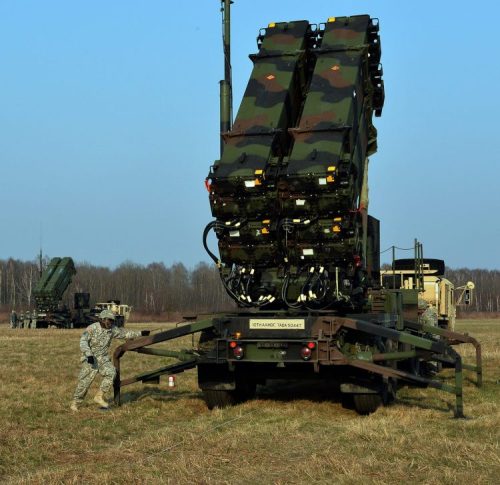
Patriot Missile Launcher
By William Schryver | imetatronink | January 20, 2024
… In an attempt to cover just three large airbases against a series of salvos of 100+ missiles of various types, the entire US stockpile of PAC-3 interceptors could very conceivably be exhausted in little more than a week or two. … continue
Blog Roll
 Aletho News
- Unpacking glaring contradictions in US-Zionist justifications for war against Iran
- Iraq and Cuba hit by blackouts amid US pressure and attacks on Iran
- US-Israeli Efforts to Degrade Iran’s Missile Might Failed – Military Researcher
- New American copium: Ghost of Kuwait
- IRGC strikes critical Israeli military sites with Khorramshahr-4 missiles in latest wave
- US racks up billions in losses during first four days of war as Iran pummels key Pentagon assets: Report
- US and Israeli Claims of Depleted Iranian Arsenals are Just Military Propaganda – Expert
- Iran denies attacking Azerbaijan, suggests Mossad involvement
- Iranian Armed Forces say no missile fired from Iran into Turkey
- The myth of military ‘decapitation’
- If Americans Knew
- War rages on Iran, while Israel withholds everything from Gaza – Not a ceasefire Day 146
- Is the International Norm Against Assassination Dead?
- More than 1,000 Civilians Killed in U.S.-Israeli Bombing of Iran, Rights Group Says
- The Neocons: First in War, Last in Peace
- With focus on Iran and Gaza, Israel is quietly annexing the West Bank
- Experts Worldwide Agree: US-Israel Attack on Iran a Clear Violation of International Law
- 1,000+ reported dead in Iran, in the war that Israel wanted – Not a ceasefire Day 145
- Rubio Suggests Trump Joined Israel’s Planned Attack on Iran Instead of Stopping It
- CNN: Timing of attack on Iran bears symbolic meaning in Judaism
- How the New York Times paved the way for apocalyptic war
- No Tricks Zone
- New Study: A Century Warming Of 1.1°C Is ‘Commonplace’ And ‘Not Unusual’ During This Interglacial
- New Study: ‘Internal Noise’ And Volcanic Forcing Can Trigger 10-15°C Warming Within Decades
- Glaciers Worldwide Are Suddendly Surging, Experts Blame Warming!
- Surprising Discovery: Sahara Is Greening…Billions Of Trees Where Once Thought To Be Barren
- New Research Reaffirms Clouds, Aerosols, And Surface Solar Radiation Are ‘Driving The Climate System’
- Germany: Electric Car Catches Fire At Charging Station, Sets Off Local “Inferno”, Widespread Damage
- New Study: Canada’s New Brunswick Was 1°C Warmer Than Today During The Medieval Warm Period
- Coal Power Back In Trend As Globe Tries To Keep Pace With Growing Demand For Power
- New Study: A 4°C Warmer Beaufort Sea Had ‘No Sea Ice’ 11,700 – 8200 Years Ago
- Unfudging The Data: Dutch Meteorological Institute Reinstates Early 20th Centruy Heat Waves It Had Erased Earlier
 Aletho News
Leave a comment