Could Hungary’s fight over oil change course of Ukraine War?
By Ian Proud | Responsible Statecraft | February 26, 2026
The EU’s plan to impose its 20th package of sanctions against Russia crashed against a seemingly immovable wall of Hungarian resistance this week, when the Central Europe country used its veto to block it.
That is not necessarily the end of the matter, yet I hope it is the beginning of the end, with Europe finally choosing peace over war.
At a fraught EU Council meeting on February 23, agreement could not be reached on a new round of EU sanctions, leading the EU High Representative for Foreign Policy and Security, Kaja Kallas, to announce, “I deeply regret that we did not reach an agreement today, given that tomorrow [February 24] is the solemn anniversary of the start of this war.”
Hungarian resistance to collective decisions on Ukraine policy has been overcome before. In June 2025, Prime Minister Viktor Orban stepped out of the European Council meeting to allow a unanimous vote of those present to extend existing EU sanctions against Russia. Yet, this latest blockage is fueled by growing bad blood between Hungary and its eastern neighbour Ukraine, over the issue of oil.
It is an uncomfortable reality that Europe has continued to purchase Russian oil and gas throughout the war, in the face of President Trump’s exhortations to stop purchases. Gas imports still accounted for 12% of Europe’s total as of October 2025. And while Hungary and Slovakia are the largest importers, other western European powers such as France, the Netherlands, and Belgium, have also continued purchases. The addiction is a hard habit to break, and for largely domestic reasons.
As Gladden Pappin, the American President of the Hungarian Institute for International Affairs, has pointed out, if Hungary agreed to sanction Russian oil and gas, “Hungarian gas at the pump doubles overnight. Household energy prices triple or quadruple, and the German industry moving to Hungary immediately halts. Whatever government imposes that policy will collapse within weeks.”
While sanctioning Russia is a geopolitical tool, it has real world consequences for regular citizens across Europe. Germany has seen its economy tip into deindustrialization since the start of the war in Ukraine and the progressive cutting off of access to Russian [energy], shedding over 250,000 industrial jobs, a contraction of 4.3%, amid widespread factory closures.
Sanctions require European states voluntarily to choose economic self-harm ahead of an end to the war in Ukraine. And in Hungary and Slovakia, that is not a palatable choice, not least ahead of a hotly contested election in Hungary on April 12. Prime Minister Viktor Orban has framed the election as a choice between “war or peace.”
Four years after the war in Ukraine started, increasing numbers of Europeans are desperate for peace and not war, not just for their long-term personal security, but for the benefits to their check books.
Yet that runs counter to Ukraine, which frames the war as existential to them. So, they have pushed Europe to go tougher and faster against Russia’s economy and are doing everything they can to add further pressure. Ukraine launched drone attacks against the Druzhba pipeline network which supplies oil to Hungary and Slovakia, cutting this supply route on January 27.
It is a statement of the crazy world in which we live, that Ukraine can attack facilities that supply EU and NATO countries without opprobrium in the west. Unfortunately, out of sympathy for Ukraine’s war plight, EU member states are quick then to criticize Hungary and Slovakia for taking retaliatory action. Poland’s Foreign Minister, Radek Sikorski, labeled the Hungarian veto as “an escalation.” And yet he doesn’t have to answer to Hungarian voters.
Blocking the EU’s 20th sanctions package is one measure. Hungary and Slovakia have also blocked the promised 90 bln euro loan package for Kviv to keep the war effort going. They have also threatened to cut off supplies of gas, electricity, and diesel to Ukraine (as it no longer imports gas from Russia, Ukraine relies of supplies piped in from proximate EU countries). Ukrainian media has predictably labeled this energy blackmail. Not least given the enormous electricity and heating shortages Ukraine faces in light Russia’s campaign of strategic bombing against their energy infrastructure.
At a TV interview that I attended recently, a Ukrainian MP pointed out that she uses a local app that tells her how many hours of electricity her building will receive each day. Who in Europe would want to live in such conditions, not the least during a bitterly cold winter?
Of course, the stark brutality of the air attacks and Ukraine’s energy crisis drives Europe’s mainstream politicians to pursue more punitive actions against Russia, including economic sanctions. Yet the inescapable reality is that the EU’s 20th sanctions package amounts to more of the same — tactical scrapes at the bottom of the barrel — to bear down on Russia’s energy exports and financial services sector, together with small beer restrictions on some other goods’ exports.
The President of the European Commission, Ursula von der Leyen, claims that Russia’s energy exports were cut by 24% in 2025. And yet, look at the real data, and you’ll see that Russia’s exports in 2025, at $419.4 billion, were down just 3.3% on 2025, with an overall current account surplus of $41.4 billion. That surplus will go into purchases of gold, which now accounts for almost one half of Russia’s soaring international reserves, which stand at $833 billion.
Meanwhile, Ukraine’s current account deficit more than doubled to $31.9 billion in 2025, or 14.9% of GDP, liquidity that will need to be met by printing money or donations from Europe.
At some point, European leaders need to ask themselves, after 19 rounds of sanctions already, “is this really working?”
It’s not only that economic sanctions against Russia hit diminishing marginal returns soon after the war in Ukraine started four years ago. But that the addition of new sanctions, self-evidently, disincentivizes Putin from settling for peace. Yes, Russia’s economy is undoubtedly feeling the pain, through high inflation and interest rates, plus slowing growth. But there has never been a time when it appeared that, for economic reasons, Russia was under greater pressure to end the war than Ukraine and its European sponsors.
So, and as I have said before, sanctions, and their phased removal, could play a positive role in leveraging an end to the war. Continuing to blame Hungary and Slovakia for the continued intransigence in blocking yet another round of EU sanctions misses this point.
Ian Proud was a member of His Britannic Majesty’s Diplomatic Service from 1999 to 2023. He served as the Economic Counsellor at the British Embassy in Moscow from July 2014 to February 2019. He recently published his memoir, “A Misfit in Moscow: How British diplomacy in Russia failed, 2014-2019,” and is a Non-Resident Fellow at the Quincy Institute.
North Korea Open to Rapprochement If US Respects Its Nuclear Status – Kim Jong-un
Sputnik – 26.02.2026
North Korean leader Kim Jong-un said that Pyongyang has no reason not to pursue rapprochement with the United States if Washington abandons hostility and respects North Korea’s nuclear status.
“If the US respects the present position of our [nuclear] state specified in the Constitution of the DPRK and withdraws its hostile policy toward the DPRK, there is no reason why we cannot get on well with the US,” Kim was quoted by KCNA as saying at a military parade commemorating the Ninth Congress of the Workers’ Party of Korea (WPK).
He added that over the past five years, the WPK has permanently enshrined the country’s status as a nuclear state, signaling to adversaries that until the world completely changes, Pyongyang will under no circumstances abandon nuclear weapons.
Kim said that further expanding and strengthening the state’s nuclear armed forces, the core of the armed forces in implementing war deterrence and war-fighting strategy, and consistently exercising the right of a nuclear state, represents the party’s unwavering will.
“We have a long-term plan to strengthen the national nuclear force on an annual basis in the future and will concentrate on increasing the number of nuclear weapons and expanding the means and space for nuclear operation,” the leader said.
Kim added that Pyongyang intends to modernize strike capabilities and nuclear weapons control systems, enhance nuclear force combat readiness through exercises, and improve nuclear crisis response systems. He also prioritized equipping the country’s naval forces with nuclear weapons as part of efforts to strengthen the military.
“The DPRK’s position as the nuclear weapons state plays an important role in deterring the potential threat of its enemies and maintaining regional stability, and the state nuclear force is a basic guarantee and powerful security device reliably ensuring the country’s security, interests and rights to development,” the leader said.
Kim added that the expansion and strengthening of aggressive US-led blocs in the Asia-Pacific region and their military actions, which exceed limits, are creating an unusual situation that seriously threatens security on the Korean Peninsula and in the region.
John Mearsheimer: The Case for a Nuclear Iran
Glenn Diesen | February 25, 2026
John J. Mearsheimer is the R. Wendell Harrison Distinguished Service Professor of Political Science at the University of Chicago, where he has taught since 1982. Prof. Mearsheimer argues why Iran should be considered a rational actor, and why Iran should develop nuclear weapons as the ultimate deterrent.
Follow Prof. Glenn Diesen:
- Substack: https://glenndiesen.substack.com/
- X/Twitter: https://x.com/Glenn_Diesen
- Patreon: https://www.patreon.com/glenndiesen
Support the research by Prof. Glenn Diesen:
- PayPal: https://www.paypal.com/paypalme/glenndiesen
- Buy me a Coffee: buymeacoffee.com/gdieseng
- Go Fund Me: https://gofund.me/09ea012f
Israel displaces last two families from Al Khalayel valley, Al Mughayyir
Palestine Solidarity Movement | February 25, 2025
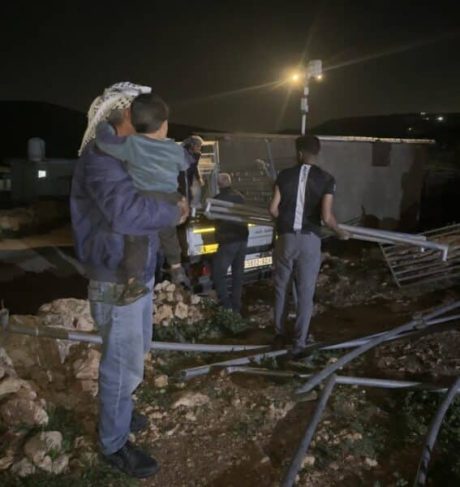
A violent campaign aimed at forcibly displacing Palestinian families from the Al Khalayel valley south of Al Mughayyir (occupied West Bank) has achieved its goal. Two years of coordinated attacks between illegal settlers and Israeli occupation forces finally pushed out the last two remaining families: Abu Najeh and Abu Naim/Abu Hamam.
The Abu Najeh family compound comprised 12 families, around 50 people in total. They have been forcibly displaced 7 times in the last 80 years. They moved to Al Khalayel just 2 years ago after being displaced from Ein Samiya in 2023; investing significant resources into establishing what they hoped would be a permanent home on the land they owned. On Tuesday, February 17, Israeli forces entered their homes seeking to arrest three men under false accusation that they threw rocks at settlers. When they did not find them, they broke two security cameras and arrested 55 year-old Mustafa Omari for filming illegal settlers. He was imprisoned until 10am on Wednesday February 18.
One of the three men they sought to arrest is 32 year-old Majid Omari, who was terrified he would be sought out and beaten or killed by settlers who know his face and his car. “Urgent intervention is needed to protect us,” he said. On Friday February 20, the Abu Najeh family came to the devastating conclusion that they could no longer withstand the violence and harassment and rapidly commenced packing up and deconstructing their homes, working through the night out of fear of a settler attack.
 At approximately 12:00 the following day, Saturday February 21, while the Abu Najeh family was packing, illegal Israeli settlers began surveilling the only other remaining Palestinian home in the area, that of the Abu Naim family, with drones. At approximately 14:00, 6 underage settlers in a four-wheel-drive vehicle arrived at the home, verbally abusing and harassing everyone present. Shortly afterwards, the army arrived and conducted a search before withdrawing with the settlers. At approximately 16:00, two settlers entered the front yard with their sheep. Minutes later, approximately 12 settlers forced their way into the home, wrecking the family’s furniture and belongings, smashing their electricity sources, emptying their water tank causing the property to flood, destroying their bathroom and shower. They trapped 39 year-old mother Hidayah Rizq Awad Abu Naim, her 13 year-old daughter Ilham Wadi Abu Naim and 70 year-old father Rizq Awad Mahmoud Abu Hamam in the home and violently beat them.
Simultaneously, as members of the nearby village of Al Mughayyir attempted to support the family, Israeli forces conducted a violent raid, firing tear gas at residents. Armed Israeli settlers and Israeli soldiers shot live rounds at residents and international activists to prevent them from reaching the Abu Naim family home. Two family members were shot: 36 year-old Ayham Rizq Awad Abu Naim was shot in the back and his nephew, 13 year-old Naseem Shaker Thabta was shot in the foot. Ayham faces a lengthy rehabilitation process.
That night, after settlers retreated to the nearby illegal outpost and the injured were being treated at the hospital, members of the community alongside two international activists returned to the Abu Naim home to salvage the belongings that had not been destroyed. In a final act of resistance they set fire to what was left so that the illegal settlers would not materially benefit off of their homes and belongings.
The next morning, February 22, a few men of the Abu Najeh family returned to their property to retrieve their final items and self-demolish their homes in the same act of resistance as the Abu Naim family. By 10am they were forced off their land by illegal settlers. As they departed, settlers set fire to their remaining structures.
These two forced displacements were a coordinated effort between the Israeli forces and illegal Israeli settlers as part of a broader goal to displace all 5,000 residents of Al Mughayyir. Without regard for International Humanitarian Law or Human Rights, Israel continues building a chain of illegal settlements and outposts connecting Ramallah, Nablus and the Jordan Valley. In a deportation hearing held on February 1 concerning activists from the International Solidarity Movement (ISM) who volunteered with the Abu Najeh and Abu Naim families, the Israeli State claimed the reason for their incessant harassment towards Palestinian communities there was “expelling Bedouin people who illegally occupy the area”. This officially admits an ethnic cleansing objective in lands that are under the civilian control of the Palestinian Authority (area B).
In a final statement, a 23 year old nephew of the Abu Naim family shared: “We left against our will, but the land remains and will return to its original owners.
What happened is a serious attack that demands accountability. Places may be erased from the map, but they remain in memory, and the steadfastness of their people is a testament to their adherence to their right. The land belongs to its owners, and it will remain so, God willing.”
Israeli Opposition Leader Endorses Greater Israel

The Dissident | February 24, 2026
U.S. Ambassador to Israel, Mike Huckabee, sparked major backlash during his recent interview with Tucker Carlson, where he openly endorsed the idea of a Greater Israel, stating that “it would be fine” if Israel took large swaths of the Middle East.
In damage control mode, Zionists attempted to paint Huckbee’s claims as fringe or extreme within Israel, but Israel’s opposition leader , Yair Lapid, has confirmed that the prospect of an expansionist Greater Israel is supported even by the more supposedly “liberal” wing of the Israeli political spectrum.
When asked, “The Ambassador Huckabee said this week, and we know the extent of the American administration on the government here, that he supports Israeli control from the Euphrates to the Nile, this means [control] over Lebanon, Jordan, Syria, do you support it or do you think this should be stopped?”, Lapid replied, “I don’t think I have a dispute on the biblical level [about] what the original borders of Israel are.”
Lapid went on to endorse massive Israeli expansion, saying, “support anything that will allow the Jews [to have] a big, vast, strong land, and a safe shelter for us, for our children, and for our children’s children. That’s what I support” adding, “However possible” when asked “How vast?”.
When further asked, “Until Iraq?” Lapid replied, “The discussion is a security discussion. The fact that we are in our ancestral land… Yesh Atid’s position is as follows: Zionism is based on the bible. Our mandate of the land of Israel is biblical. The biblical borders of Israel are clear. There are also considerations of security, of policy, and of time. We were in exile for 2,000 years… you don’t really want all this lecture, right? At least you were not waiting for it… The answer is: there are practical considerations here. Beyond the practical considerations, I believe that our ownership deed over the land of Israel is the bible, therefore the borders are the biblical borders”.
Lapid even advocated that Israel take “as much as possible” of Greater Israel, saying, “Fundamentally, the great, big and vast Israel, as much as possible within the limitations of Israeli security and considerations of Israeli policy”.
Similarly, Benjamin Netanyahu has previously stated that he “subscribed to a ‘vision’ for a ‘Greater Israel’” and “very much”, “felt connected to the ‘Greater Israel’ vision”.
Israeli officials have long been clear that their end goal in Gaza and the West Bank has been total ethnic cleansing and annexation, with Israel’s Science and Technology Minister Gila Gamliel admitting , “we will make Gaza unlivable for humans until the population leaves, and then we will do the same for the West Bank”.
But Yair Lapid’s comments show that across the spectrum from Netanyahu to his “liberal” opposition, Israel has expansionist ambitions beyond Gaza and the West Bank, and wants to take “as much as possible” of Greater Israel.
Islamic Jihad: Trump’s peace board is a “theatrical stunt detached from reality”
Palestinian Information Center – February 25, 2026
BEIRUT – Mohamed al-Hindi, Islamic Jihad’s deputy secretary-general, has described the US-led Board of Peace as nothing more than a “theatrical stunt,” saying it is detached from the reality on the ground.
In an interview with Al Jazeera Mubasher satellite channel on Wednesday, Hindi stressed that the board’s recent meeting “has not brought about any change in the course of the Israeli war on the Gaza Strip or in the scale of Israel’s ongoing violations against Palestinians.”
Hindi affirmed that this peace council was founded on a “formula of absolute American dominance and full security for Israel, while denying the Palestinian people the right to shape their own future.”
“The Palestinian role in this framework is purely symbolic, confined to technocratic committees handling Gaza’s municipal affairs without any sovereignty or political power,” Hindi said.
“The proposed vision fully embraces Israel’s stance, linking Gaza’s reconstruction to resistance groups surrendering their weapons, without any serious discussion of an Israeli withdrawal or accountability for ceasefire violations,” the Islamic Jihad official added.
He underscored that his Movement never trusted the US administrations under president Donald Trump or his predecessor Joe Biden, citing America’s unwavering pro-Israel bias.
He said that the Palestinian acceptance of prior understandings over Gaza aimed solely to put an end to Israel’s relentless massacres against civilians.
The Head Of A CIA Cutout Admits To Meddling In Iran To Fuel Unrest
The Dissident | February 24, 2026
At a recent House Appropriations Committee hearing, Damon Wilson, the current president of the National Endowment for Democracy, the notorious cutout of the CIA’s regime change arm, which has previously helped fund coups around the world, admitted to meddling in Iran and helping to fuel both the women’s life freedom protests in 2022 and the recent protests in Iran.
Wilson boasted that the U.S. government-funded organization helped spread the story of a woman being killed for not wearing a headscarf in Iran that sparked the women’s life freedom protests in 2022, even admitting that the story would not have spread across Iran without the NED.
Wilson admitted, in response to the question, “Are you doing anything in Iran and can you tell us what that is?”, “This has been a huge priority for the endowment. Iran has been- since I arrived at the endowment- our fastest growing program. It’s now one of our largest programs globally that involves both direct partners, Iranian groups as well as our core institutes. If you think about the impact of our work in Iran, the reason the women life freedom movement began with the the simple act of a young woman who didn’t fully cover her her head with a headscarf, that story … could have been lost in a regional as a regional story in Iran, but NED Partners helped cover that story, get it out to the world, and get it back into Iran.”
He also admitted in reference to the most recent protests in Iran, that the organization has helped smuggle Starlink terminals into Iran and spread propaganda that helped spark the pro-regime change protests.
Damon Wilson boasted, “the endowment has been making investments over years that have ensured that there have been secure communications, including Starlinks, other means, file casting that allowed information to go both in and out of the country at a time when the regime tried to hide its brutal crackdown” adding, “Part of what we see manifesting is a response that our partners have helped tell the Iranian people the story that the regime has squandered their own resources on supporting proxies throughout the Middle East to the point where they cannot manage their own water supplies for Tehran. And these stories have not just emerged, they are ones that have been covered, documented, and shared with the Iranian people consistently through our work.”
He added, “we’ve been investing in communication tools over the years that allow for information to be sent into Iran even when internet connectivity is blocked. We specifically began supporting the deployment, the operation of about 200 Starlinks early on.”
Damon Wilson boasted that the NED has spread stories that the Iranian government has “squandered their own resources” and “cannot manage their own water supplies for Tehran”, issues that have, in large part, been caused by U.S. sanctions.
Previously U.S. Treasury Secretary Scott Bessent has boasted that U.S. sanctions helped spark the protests in Iran saying, “What we can do at treasury, and what we have done, is created a dollar shortage in the country, at a speech at the Economic club in New York in March I outlined the strategy, it came to a swift -and I would say grand- culmination in December when one of the largest banks in Iran went under, there was a run in the bank, the central bank had to print money, the Iranian currency went into freefall, inflation exploded and hence we have seen the Iranian people out on the street.”
While Scott Bessent boasts that U.S. sanctions led to “Iranian people out on the street”, Damon Wilson is boasting that the NED has flooded Iran with anti-government messaging while people are suffering worsening conditions from the U.S. sanctions, in order to further destabilize Iran and further the ultimate goal of regime change.
Iran warns Trump against decisions based on false information
Press TV – February 25, 2026
Iran’s Parliament speaker Mohammad Baqer Qalibaf has warned US President Donald Trump against making decisions based on false information, emphasizing that Iran has never sought, does not seek, and will never seek nuclear weapons.
Speaking at a meeting with economic activists in the Iranian Parliament on Wednesday, Qalibaf reacted to Trump’s latest remarks over Iran’s peaceful nuclear activities.
During his State of the Union address in congress, Trump once again claimed that he would not allow what he called the world’s leading sponsor of terrorism to obtain a nuclear weapon.
Qalibaf said, “In a previous interview I gave to CNN, I told the US president not to make incorrect analyses based on false information, and then make wrong decisions.”
He stated that Iran has “never sought, does not seek, and will never seek nuclear weapons,” adding that despite these assurances, the United States continues “to act with threats.”
He criticized US claims during the 12-day war, including reports that the city of Mashhad had fallen, and condemned foreign interference and misinformation by anti-Iranian elements and Israel which orchestrated attempted coups during the riots.
Qalibaf also noted that Trump directly intervened in the recent diturbances, citing his statement on the 12th day of the 12-day war promising US assistance.
He dismissed US and Israeli accounts of casualties reporting 32,000 deaths in latest foreign-backed riots, calling them false and misleading.
He said the real perpetrators were past terrorists responsible for over 17,000 targeted killings in Iran, including the deaths of high-ranking officials such as the president, prime minister, judiciary chief, parliament members, and military commanders.
The parliament speaker also referred to a recent statement by US special envoy to West Asia, Steve Witkoff, who said Trump is “curious” as to why Iran has not “capitulated” to US demands.
“The reason the Iranian people do not fear or submit,” Qalibaf said, “is because you do not understand them. Even during the 12-day war, while the fifth and sixth rounds of negotiations were underway, Trump attacked us from behind the negotiation table, along with Israel, and faced a humiliating defeat.”
Qalibaf emphasized that all options regarding the United States remain on the table, including both dignified diplomacy and a deterrent defense.
He added that if the diplomatic table respects Iranian dignity and mutual interests, Iran will engage, noting that the third round of negotiations is scheduled for tomorrow.
The remarks come as Iran and the US held a second round of indirect nuclear negotiations at the Omani consulate general in the Swiss city of Geneva on February 17.
As in the previous round in the Omani capital of Muscat, the agenda of the talks focused primarily on the nuclear issue and the lifting of illegal US sanctions.
The US maintains that Iran must cease its nuclear program, whereas Tehran asserts that it is not pursuing nuclear weapons and says it is entitled to peaceful nuclear energy.
Washington began its war rhetoric against Iran after recent economic protests in the country, which were hijacked by foreign spy agencies and turned violent.
Since then, the US president has kept threatening military action against Iran, deploying two carrier groups and dozens of fighter jets, bombers, and refueling aircraft to regional waters near Iran.
Pentagon sets deadline for Anthropic to lift AI restrictions on autonomous weapons systems, mass domestic surveillance
The Cradle | February 25, 2026
The US Department of War has issued a deadline to AI company Anthropic to allow broader military use of its Claude models or face possible action under the Defense Production Act.
The company could face losing its Pentagon contract, and has been threatened with a government blacklist, US media reports said.
The Pentagon has a $200-million contract with Anthropic. The company has placed guardrails on the Claude AI, preventing its use for fully autonomous weaponry and mass domestic surveillance, triggering a standoff with US Secretary of War Pete Hegseth.
Hegseth met with Anthropic CEO Dario Amodei on Tuesday. According to CNN, the CEO held firm on the restrictions.
Amodei has until Friday at 5:00 pm to “get on board or not,” a source told CNN.
If it does not, Hegseth will make sure “the Defense Production Act is invoked on Anthropic, compelling them to be used by the Pentagon regardless of if they want to or not.”
“Anthropic has concerns over two issues that it isn’t willing to drop, AI-controlled weapons and mass domestic surveillance of US citizens. Anthropic believes AI is not reliable enough to operate weapons, and there are no laws or regulations yet that cover how AI could be used in mass surveillance,” CNN’s sources went on to say.
According to Axios, Washington has threatened to declare Anthropic a “supply chain risk.”
“The only reason we’re still talking to these people is we need them and we need them now. The problem for these guys is they are that good,” a US official told Axios.
Anthropic said it remains engaged in “good-faith conversations” to support national security “in line with what our models can reliably and responsibly do.”
Claude has already been used by the US military for intelligence analysis, mission planning, and satellite imagery processing.
Washington reportedly used the AI model in the mission to illegally kidnap Venezuelan President Nicolas Maduro. This came via Anthropic’s partnership with Palantir, which has entered into multi-billion-dollar partnerships with the US and Israeli governments, and has been used in the Gaza genocide.
Several other AI systems were used to kill Palestinians.
The Pentagon has been negotiating AI contracts with major firms, including Anthropic, Google, OpenAI, and xAI, with each contract valued at up to $200 million.
Palantir CEO Alex Karp openly stated this month that his company is dedicated “to the service of the west and the United States of America” and aims to “disrupt” and “on occasion” to “kill” the enemies of the west and the US.
Trump’s military buildup against Iran on Netanyahu’s behalf is a gambit doomed to fail
By Iqbal Jassat | Press TV | February 25, 2026
While uncertainty clouds the possibility of America launching a full-scale war on the Islamic Republic of Iran, pro-war narratives emanating from the apartheid regime of Israel desperately seek to justify it.
The war cries raised by Israel’s genocidaires are hardly surprising. After all, it is well known that the regime premier and the criminal-in-chief, Benjamin Netanyahu, has, since the 1990,s been pressuring the United States to carry out direct military action against Tehran.
Hence, it would not be incorrect to conclude that Washington’s war drums over Iran are not the product of strategy. They are the product of imperial reflex and Zionist pressure masquerading as deterrence.
Bizarrely, the spectacle of force assembled under President Donald Trump’s orders, the largest concentration of US air and naval power in the region since 2003, is being sold as strength, whereas it is, in fact, insecurity dressed up as bravado.
The indicators tell their own story.
Despite the theatrics of deployment, the expected escalation signals, mass embassy evacuations and sweeping NOTAM expansions remain limited.
Even within the American military establishment, caution seeps through the cracks. As noted in the February 2026 analysis circulated by Larry Johnson and Douglas Macgregor, the absence of full-spectrum preparatory measures suggests hesitation, not inevitability.
Contrary to the mainstream Western media’s view of “weighing options”, the reality points to a deeply fractured power struggle inside Washington’s war machine.
For instance, the Washington Post report citing Chairman of the Joint Chiefs Dan Caine is particularly revealing.
Caine’s warning about depleted munitions stockpiles, exhausted by Washington’s underwriting of Israel’s war machine and its proxy entanglements in Ukraine, punctures Trump’s fantasy of an “easily won” confrontation.
Trump’s public denial of Caine’s caution is predictable. But the leak itself is the story when senior military officials allow their reservations to reach the press, it is the Pentagon placing a marker in history: we warned him.
Netanyahu’s pressure on Trump has left him in a huge dilemma.
Iran is not Iraq. It is not Libya. It is not a fragmented state awaiting aerial collapse. It is a formidable military with layered air defenses, dispersed missile clusters, hardened infrastructure and strategic depth supported by Russia and China.
The fantasy that standoff air power will induce “disintegration” is recycled doctrine from Kosovo, Iraq and countless failed coercion campaigns. Precision bombing has never delivered political submission where sovereignty is embedded in national resistance.
Yet Trump persists in the illusion that overwhelming force will produce capitulation. Historians will remind us about the folly of imperial habits.
What is absent from Washington’s framing is the geopolitical driver beneath the rhetoric.
The protection of Israeli supremacy remains the unspoken constant. Every escalation is filtered through Tel Aviv’s military and “security” doctrine. Every negotiation is judged by whether it secures Israel’s interests rather than American interests.
Just as the American public is told the “reason” for US hostility is about nuclear proliferation, so too have Zionist-allied agents in South Africa used similar fake arguments to justify the annihilation of Iran.
Some analysts based in the Israeli-occupied territories, who are skeptical about Netanyahu’s motives, remind us that his long-held view about a US attack on Iran would be a “masterstroke” to attain his personal incentive to remain in power.
The reality, though, as Caine cautioned, exposes a deeper truth: the United States is overextended. Its munitions stockpiles are strained. Its alliances are brittle. Its domestic coalition is fractured. A war with Iran would not be a swift surgical strike. It would be attrition, retaliation and regional conflagration.
What unfolds now is not a clash of civilizations. It is the exhaustion of empire confronting the limits of coercion.
A war with Iran would not restore American dominance. It would accelerate its unraveling and the warning has been issued from within.
Whether Trump listens is irrelevant to the structural decline already underway.
Iqbal Jassat is an executive member of the Media Review Network, Johannesburg, South Africa.
Big League War
By William Schryver | February 24, 2026
“What the West has, and has had for some time now, is a single-shot military. One serious campaign, whether finally won or lost, would disarm the West for a decade.” — Aurelien
This, folks, is the simple truth of the matter.
The US simply could not, at this moment — nor at any time in even the medium-term future — mount and sustain a campaign the size, intensity, and duration of what we have seen in Ukraine for the past four years.
US logistical chains would have long-since broken down; losses in men and equipment — including LOTS of heavy lift cargo aircraft and the refueling tankers upon which they depend to fly across the planet — would have been calamitous.
Oh, sure, in the context of the current crisis in the Middle East, there’s a huge chorus of people who are gung-ho convinced that US air and naval power would overcome all obstacles in a matter of days, bringing the presumptuous third-world Iranians to their knees.
That’s not what would happen.
What would happen is that, despite a few spectacular successes to stuff the first 24-hour news cycle, the “full-spectrum dominance” everyone believes the US wields would, over the course of just a few days, suffer shocking losses across the entire military spectrum.
Several US aircraft of all types would be shot down.
A few US warships would very likely be damaged — or possibly even sunk.
US bases in the Persian Gulf region would be pounded relentlessly by Iranian drones and ballistic missiles.
US air defenses would exhaust their meager stockpiles of interceptors within just a few days.
US airborne ISR assets would be aggressively targeted, and some could quite conceivably be shot down.
SEAD assets like the E/A-18G Growler and the F-16CJ Wild Weasels would prove more vulnerable to Iranian air defenses than is widely believed.
The legendary (but old and slow) Tomahawk cruise missiles would be jammed and / or shot down in surprising numbers — or even just malfunction on their own, as did 25% of a recent salvo of a dozen that was fired into Nigeria.
As even Israeli intelligence is reported to believe, the US force arrayed against Iran could only sustain high-intensity strikes for about FIVE days. After that, the US would start to experience severe shortages of all types of precision-guided munitions, greatly exacerbated by the degree to which Iranian strikes could attrit weapons stockpiles, destroy refueling tankers, and render runways unusable by boutique US aircraft that need everything to be perfectly pristine.
Iranian naval capability would very likely surprise many people around the world. Their small, fast missile boat swarms present a formidable asymmetric threat, and they have several small submarines that may prove sufficiently stealthy to sneak up on US warships, including the big lumbering US Ohio-class missile submarines.
Iran is by no means a major military power like Russia and China. But they are unquestionably an extremely formidable asymmetric military power, and they have been planning and preparing to fight an asymmetric war against the Americans for the past quarter century.
And if, as now appears almost certain, the Russians and Chinese provide Iran top-shelf intelligence, surveillance, and reconnaissance data, Iranian capabilities would be significantly augmented.
US naval officers confessed that the recent Battle of the Red Sea against the Houthi warriors of Yemen was the most intense combat the US Navy had experienced since WW2.
Iran possesses firepower an entire order of magnitude greater than the Houthi.
A two-week long high-intensity war against Iran would be a stunning exhibition of 21st century warfare.
It would be Big League War, rather than what the US has been fighting for the past several decades.
Both sides would be hurt badly, but the Iranians would not be severely depleted, let alone defeated, whereas the US would be hurt in a fashion it has not experienced in the memory of many people still alive — only to then look around and discover itself in a state of acute logistical crisis after only a fortnight of high-intensity combat operations.
That will be the moment of decision; the last chance for the saner heads within the halls of empire — those who have hitherto acquiesced as this catastrophe unfolded — to choose to finally act to stop the madness, or stand idly by as they and all the rest of us are acted upon by events that spiral out of control.
Featured Video

US IRAN TALKS: Who Are the Crazy Ones Here? /Lt Col Daniel Davis
or go to
Aletho News Archives – Video-Images
From the Archives
Woolsey Fire started at Santa Susana Field Lab — where “radioactive materials released were never accurately measured”
By John Laforge | CounterPunch | November 30, 2018
In my Nov. 16 column, I reported on potential radiation risks posed by California’s Woolsey wildfire having burned over parts or all of the Santa Susana Field Laboratory—south of Simi Valley, Calif., 30 miles outside Los Angeles—site of at least four partial or total nuclear reactor meltdowns.
The field laboratory operated 10 experimental reactors and conducted rocket engine tests. In his 2014 book Atomic Accidents, researcher James Mahaffey writes, “The cores in four experimental reactors on site … melted.” Reactor core melts always result in the release of large amounts of radioactive gases and particles. Clean up of the deeply contaminated site has not been conducted in spite of a 2010 agreement.
Los Angeles’s KABC-7 TV reported Nov. 13 that the Santa Susana lab site “appears to be the origin of the Woolsey Fire” which has torched over 96,000 acres. Southern Calif. Public Radio said, “According to Cal Fire, the Woolsey Fire started on the afternoon of Thursday, Nov. 8 … on the Santa Susana site.” … continue
Blog Roll
 Aletho News
- US IRAN TALKS: Who Are the Crazy Ones Here? /Lt Col Daniel Davis
- Talks with the US end without a deal over excessive US demands: Iran
- Feeling Better, Getting Worse: How Psychiatric Drugs Create the Illusion They Cure
- ‘Nobody Told Me’: Former Mental Health Patient Calls Out Dangerous Side Effects of Psychiatric Drugs
- Dr. Abu-Sitta: Beirut ‘felt like a day in Shifa Hospital’
- Iran Has Won the War, It Will Be Up to the US to Secure the Peace: Mohammad Marandi
- Iran condemns assassination threats against Iranian negotiators amid US talks
- Brussels cannot say where its own pipeline inspectors are as Hungary’s oil lifeline remains shut
- Israel’s Iran War: Myth and Reality
- Between war and industrial breakdown: The US-Israeli attrition crisis
- If Americans Knew
- Pro-Israel ‘Thinktanks’ and Individuals who Influence U.S. Foreign Policy
- Mearsheimer reveals how Israel dictates US policies on Iran, Gaza – video
- After killing 350+, Israel still has a “score to settle” with Lebanon before ceasefire – Daily Update
- Military aid to Israel emerges as the latest political litmus test for Democrats
- The only Palestinian children’s rights organization closes following years-long Israeli campaign against it
- ‘I Can’t Forget the Smell’: Lebanese Reel After Israel Kills Over 300 in Single Day
- DNC Shoots Down Resolutions Calling Out AIPAC and Limiting Arms to Israel
- TCN: Is Israel Blackmailing President Trump?
- Israel killed at least 303 Lebanese yesterday – who were they? Daily Update
- Amnesty: Urgent – Protect Lebanese civilians from brutal escalation in Israeli attacks
- No Tricks Zone
- German Expert: Heat Dome Led To Record Temps In Western USA…Warmer In 1934, 1936
- New Study: No Linear Warming Or Glacier Retreat Along Northern Antarctic Peninsula Since 1980s
- An Inconvenient Tree: Uncovered In Alps… Europe Much Warmer Than Today 6000 Years Ago
- New Study Reports A 60% Slowdown In Greenland’s Ice Loss Rate In The Last Decade
- Low Intensity Tornado Wrecks Major Solar Farm, Creating A Potential Toxic Dump
- New Study Finds Warming Saves Lives…Cold Temperatures 12 Times More Deadly Than Excess Heat
- German Science Blog Accuses PIK Climate Institute Of Hallucinating Climate Tipping Points
- Devastating Assessment Of Comirnaty Vaccine By Former Senior Pfizer Europe Toxicologist
- New Study: CO2 Is ‘Effectively Negligible’ As An Explanatory Climate Change Factor Since 2000
- Former Pfizer Toxicologist Dr. Helmut Sterz Tells Bundestag Hearing Pfizer Vaccine Should Have Never Been Approved
 Aletho News