The Strategic Folly of a (Serious) US Ground Invasion of Iran
It simply can’t be done
Ashes of Pompeii | March 12, 2026
Tucker Carlson recently spoke of a potential false flag operation designed to manufacture consent for a US ground invasion of Iran. Tucker is no longer an “insider” in Washington but he still likely has his sources. Therefore this talk deserves serious examination, not because an invasion is feasible, but because the gap between political rhetoric and military reality has never been wider. Twelve days into the current conflict, with US bases being degraded under sustained attack and Iranian missile barrages continuing unabated, the notion of a ground invasion collapses under the weight of logistical, technological, and geographical constraints that no amount of political will can overcome.
The war in Ukraine has fundamentally altered the calculus of conventional warfare, demonstrating that drones have radically changed the battlefield. Mechanized armor columns, the backbone of American land warfare doctrine since World War II, have proven devastatingly vulnerable to cheap, ubiquitous unmanned systems. What took billions in sophisticated weaponry to accomplish in previous eras can now be achieved with commercially available drones costing mere thousands of dollars. The US military is only now scrambling to adapt to this reality, while Iran are already drone masters, having made drone warfare one of the foundations of its defensive doctrine. Iranian forces have not merely acquired drones; they have built an entire asymmetric warfare architecture designed to exploit the vulnerabilities of conventional mechanized forces. And make no mistake, the Chinese would be thrilled to supply Iran with all the drones and components necessary.
This technological shift is particularly catastrophic for invasion planners when combined with Iranian geography. Unlike Iraq’s vast desert expanses, Iran is characterized by narrow mountain passes, constricted valleys, and limited corridors of approach through the Zagros and Alborz ranges. These geographic chokepoints are perfect killing zones for drone swarms and precision missile strikes. Any US mechanized column attempting to advance would be funneled through predictable routes, stripped of air support by Iranian air defenses, and systematically destroyed by loitering munitions and anti-tank drones. The Ukraine war has shown that even forces with extensive drone warfare experience suffer devastating losses in such conditions; the United States, still adapting its doctrine and procurement, would face an even steeper learning curve under combat conditions.
The logistical foundation required for invasion simply does not exist. Operation Desert Storm required six months of uncontested buildup in 1991. Today, US forward bases across the region are under active bombardment, with mounting casualties and degraded operational capacity. The notion that America could amass the hundreds of thousands of troops, thousands of armored vehicles, and millions of tons of supplies needed for an Iranian invasion while its regional infrastructure is being systematically struck is fantasy. Compounding this is the seriously degraded state of US strategic sealift capacity, which has suffered decades of underinvestment. The ships needed to transport heavy armor and sustainment cargo simply do not exist in sufficient numbers, and those that do are vulnerable to Iranian anti-ship missiles in the confined waters of the Persian Gulf.
Air power cannot compensate for these limitations. The current aerial campaign, despite causing significant destruction, has not broken Iranian morale or degraded its capacity to launch heavy ballistic missile retaliations. If anything, the surprise attack has unified the Iranian population behind the regime, demonstrating the counterproductive nature of aerial coercion against a nationalist population with deep historical memories of foreign intervention. Meanwhile, Israel is absorbing punishing strikes, undermining narratives of effortless dominance. Nor is air transport any sort of logistical substitute for sealift for an operation of this nature. The quantities required are far, far beyond what the USAF can sustain.
And this is to say nothing of manpower restraints. About 700,000 US troops particpated in Desert Storm. Presumably an even larger invasion force would be required for Iran, given its size, geography and demographics. Does anyone in their right mind imagine anywhere up to a million US soldiers being available for this sort of endevour?
This does not mean the conflict will not escalate. The danger Tucker Carlson identified, a false flag or manufactured incident, remains real precisely because it could justify limited actions short of invasion. What is most likely is some form of limited incursion: a raid on a coastal facility, a seizure of an island in the Gulf, or a special forces operation designed to create the appearance of decisive action. Such an operation would allow President Trump to project strength domestically, to pound his chest before an American audience hungry for demonstrations of power. It would generate headlines and temporary political capital.
But such theatrical gestures would not alter the strategic equation. They would not degrade Iran’s missile capacity, break its will to resist, or secure US interests in the region. They would likely provoke further retaliation, deepen Iranian resolve, and expose the limits of American power rather than its strength. A limited incursion is not an invasion; it is a political performance that leaves the fundamental constraints of geography, technology, and logistics untouched.
The hard reality is that a US ground invasion of Iran is not merely inadvisable, it is militarily impossible under current conditions. The logistics are impossible, drones have changed warfare where Iran has adapted and America has not, and geography ensures that any mechanized advance would be suicidal. Trump and Hegseth can plot all the invasions they want, but even the current obsequious Pentagon, would push back very hard against the suicidal folly of a ground invasion.
The conflict will continue, but its resolution will not come through fantasies of conquest that belong to a bygone era of total American hegemony.
Sorry, the comment form is closed at this time.
Featured Video
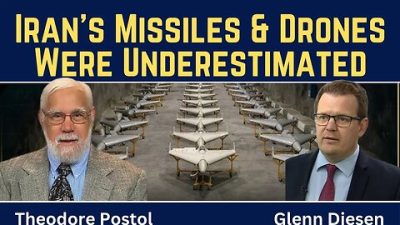
Theodore Postol: Iran’s Missiles & Drones Were Underestimated
or go to
Aletho News Archives – Video-Images
From the Archives
What is the Israeli Lobby in Australia Doing in Interfaith Dialogue?
By Ali Kazak | Dissident Voice | October 11, 2015
For years Israel and its lobby around the world have been trying to normalise their relations with Arabs and Muslims without solving the Palestine Question.
One of the methods they resorted to in the last few years is using human rights and community organizations such as interfaith dialogue and Multiculturalism to achieve this objective and to: isolate the Palestinians, marginalise the Palestine question, end Israel’s isolation, and prevent criticism of Israel, knowing that these organisations will be the first to stand against Israel’s violations, racial and religious discrimination.
The group responsible for this task in Australia is The Australia/Israel & Jewish Affairs Council (AIJAC); its Director of International & Community Affairs, Jeremy Jones is in charge of lobbying religious community organizations, specifically Muslims and Christians. Consequently he convened the Faith Communities for Reconciliation, founding participant in the Australian Partnership of Religious Organisations and the Australian National Dialogue of Christians, Muslims & Jews.
AIJAC is a private political propaganda group. It is recognised as the main Israeli lobby in Australia. It coordinates its activities and works intimately with the Israeli embassy in Canberra and different institutions in Israel. It is privately funded by some Jewish businessmen. It monitors closely Australian politicians, the media, ethnic and religious groups, (especially Arabs and Muslims), unions and academics on their stands towards Israel and the Palestine question. … continue
Blog Roll
 Aletho News
- Iran’s friends are about to make life much more difficult for Israel and the US
- The war of liberation of the Arab and Islamic peoples expands across the Gulf
- Envoy warns UN on Trump’s threat to ‘obliterate’ Iran’s civilian infrastructure
- The Larak Corridor: Iran’s Rial Gate With No US, No Israel, and No Way Around
- ‘Economic terrorism’: Steel facilities hit again in US-Israeli strike
- ‘War Crime’: Iran condemns attacks on Arak, Ardakan nuclear sites
- Two-thirds of Americans want quick end to Iran war even if goals unmet
- Trump to Give “Important Update on Iran” Wednesday in Prime-Time Speech
- Theodore Postol: Iran’s Missiles & Drones Were Underestimated
- Iran To Target Military Industrial-Tech Complex That Facilitated Gaza Genocide
- If Americans Knew
- Israel wants US to bomb more of Iran’s civilian structures (113,000 is not enough) – Not a ceasefire Day 173
- Ann Coulter Rips Into Fox News for Iran War Coverage
- Joe Kent Urges Americans To Call White House and Congress To Object To Sending Troops Into Iran
- DNC Resolution to Reject AIPAC Funding Puts Democratic Leaders in the Hot Seat
- Swedish foundation to build 400 schools as over 650,000 Gaza children remain without education for 2 years
- Israeli army admits photshopping image of slain Lebanese journalist
- This is how Israel is systematically killing health workers under the cover of war in Lebanon
- Carrying life under fire: Israeli invasion of Lebanon leaves pregnant women facing deadly risks
- Champagne all around for the new death penalty (for Palestinians) law – Not a ceasefire Day 172
- Why are Palestinian books struggling to be seen on Amazon?
- No Tricks Zone
- New Study Finds Warming Saves Lives…Cold Temperatures 12 Times More Deadly Than Excess Heat
- German Science Blog Accuses PIK Climate Institute Of Hallucinating Climate Tipping Points
- Devastating Assessment Of Comirnaty Vaccine By Former Senior Pfizer Europe Toxicologist
- New Study: CO2 Is ‘Effectively Negligible’ As An Explanatory Climate Change Factor Since 2000
- Former Pfizer Toxicologist Dr. Helmut Sterz Tells Bundestag Hearing Pfizer Vaccine Should Have Never Been Approved
- Energy Expert: Germany’s Nuclear Phaseout Was A “500 Billion Euro Mistake”
- New Research: South Australia’s Mid-Holocene Sea Surface Temperatures Were 4°C Warmer Than Today
- Storing Green Energy To Last Germany 10 Days Would Require A 60-Million Tonne Battery
- New Studies: UK Sea Levels Were 4 Meters Higher Than Today During The Mid-Holocene
- Destructive Green New Deal: German Energy And Metal Group Warns Of Drastic Crisis
 Aletho News