German journalist threatened with homelessness as German court upholds EU sanctions in landmark free speech case
‘Socio-economic death sentence’
Remix News – March 27, 2026
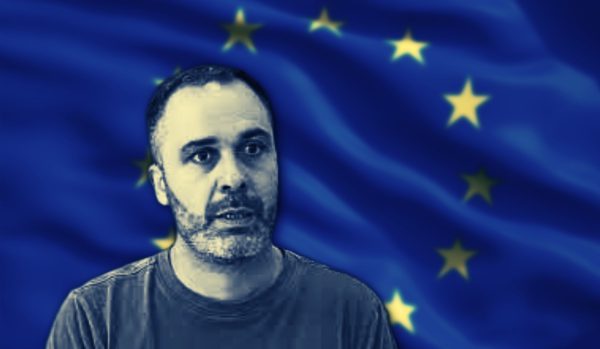
The Frankfurt am Main District Court in Germany has recently upheld a German bank’s decision to maintain the suspension of accounts belonging to Berlin-based journalist Hüseyin Doğru, who is known for his pro-Palestinian news coverage. The ruling rejected an urgent application by the journalist, who is currently facing the threat of homelessness due to EU sanctions. The court’s decision means Dogru remains without the necessary funds for rent or basic daily needs.
The legal battle surrounding Hüseyin Doğru has sparked intense political debate in Germany, with critics describing the case as a “socio-economic death sentence” and a dangerous precedent for press freedom. Certainly, these EU sanctions, which can freeze bank accounts, can be used to effectively target dissident journalists across the EU in the coming years.
According to the German court order, there was no right that would entitle Doğru, who has a Turkish background but also has German citizenship, to continue using his bank account while under sanctions. Berliner Zeitung reported that the judge determined that the situation lacked the “prerequisite for intervention in the urgent procedure” because “Doğru has no enforceable right to have the bank release the transfers it has requested.”
The impact of this ruling on Doğru’s personal life is severe. Expressing his concern for his family’s future, Doğru stated, “The risk of ending up on the streets with three children is a concrete threat.”
The paper notes that his “authorized €506 per month makes it impossible to support a family of five. Moreover, he cannot freely dispose of even that amount. The situation could become existential.”
While German law technically allows for a monthly subsistence allowance — cited in late 2025 as €506 — Doğru’s lawyers have had to repeatedly sue banks just to gain access to this minimum amount. His attorney, Alexander Gorski, described these tactics as a “war of attrition” designed to make social and economic participation “factually impossible.”
He also noted the extreme difficulty of maintaining a normal life under these conditions, remarking that “paying bills is practically impossible for me.”
Doğru has been on an EU sanctions list since May 2025, with Brussels arguing that his pro-Palestinian journalistic work incites “ethnic, political, and religious discord” and therefore, he allegedly supports “destabilizing activities by Russia.” Notably, he filmed a number of the occupations of Berlin universities by pro-Palestinian activists.
Doğru has denied these allegations, pointing out that he ended his previous employment with a Russian-funded outlet following the invasion of Ukraine and has publicly criticized the conflict.
Remix News already covered developments in this story at the end of January of this year.
At the time, Doğru, a left-wing journalist, said: “Not only I, but also my wife and my three children are effectively being sanctioned.”
“The sanctions themselves stipulate that I am entitled to access to essential funds. The fact that my bank is nevertheless blocking these funds violates applicable law in my view,” he continued.
The basis for the sanctions was his alleged connections to Russia, but the Berliner Zeitung indicated that so far, no proof has been presented to confirm this accusation, and more importantly, there was no trial or evidence provided to support this accusation.
“Brussels justifies the measures by saying that he is using his pro-Palestinian journalistic work to stir up ‘ethnic, political and religious discord’ and thus allegedly ‘destabilizing activities that support Russia.’ The EU has not yet publicly provided any concrete evidence of a connection to Moscow,” wrote the paper at the time.
There are now fears that the extraordinary case may be a sign of where the future is headed, where an authoritarian EU can censor and financially ruin dissidents and journalists with no oversight or judicial review. Notably, similar sanctions could also be deployed against others, such as Roger Köppel, the Swiss editor-in-chief of the weekly Die Weltwoche.
In a formal inquiry from the newspaper Junge Welt, the German Ministry of Economic Affairs clarified the severity of the “provision ban.” They stated that a sanctioned individual may receive “no economic benefit whatsoever,” including wages. This interpretation effectively bars any German company from hiring Doğru, as paying him would constitute a criminal offense.
An MP of the left-wing Social Democrats (SPD) Macit Karaahmetoğlu, defended the government’s position in the case and the sanctions, noting it was established to target those undermining “the security, stability, independence and integrity” of the EU. He emphasized that the German government “actively worked to establish and strengthen” this specific regime to counter hybrid threats.
Legal experts and journalists, however, have compared Doğru’s situation to “internal exile.” Since he is a German citizen, he cannot be deported, but the sanctions have stripped him of his identity card and barred him from all forms of employment.
Even friends and family who would like to donate money to Doğru could be targeted with criminal charges.
Sorry, the comment form is closed at this time.
Featured Video

Bombing Hitler’s Hometown
or go to
Aletho News Archives – Video-Images
From the Archives
The Biggest Threat to Peace in Middle East
By Dr. Elias Akleh* | Sabbah Report | May 24, 2010
A build up of heightened tension in the Middle East is escalating in the last few weeks. American and Israeli postures towards Lebanon, Syria, and Iran have become more threatening. Listening to speeches of political leaders one hears talks only about war not peace. Iranians and Israelis are continuously training hard for a possible showdown. Both sides are conducting extensive war games every month. This led Syrians to claim that Israel is preparing for a soon-to-come another war. The Jordanians also are warning that current stalemate of the peace process is an indication of a war breaking out this summer. The Russian President and his army chief hinted, a few months ago, that the US and Israel were planning for an attack on Iran.
Indeed Iran is, as it has been for last few years, the target of most of the threats and accusations of supporting terrorism. Escalating incitement against Iran the American Defense Department sent last month (April) to Congress a report on Iran’s military claiming Iran could develop intercontinental ballistic missiles capable of reaching the US by 2015.
Ignoring the fact that N. Korea, India, Pakistan, and Israel are proven to have nuclear weapons while Iran does not, the US Secretary of State Hillary Clinton chose in her speech, to the nuclear Non-Proliferation Treaty review conference at the UN, to focus on Iran’s alleged nuclear ambitions putting the whole world at risk as she put it. According to Clinton Iran’s acquisition of nuclear weapons, rather than Israel’s more than 200 nuclear bombs, is destabilizing the Middle East. She called on the world’s nations to rally around US efforts to hold Iran, not other nuclear countries, to account.
The accusation that Usama Bin Laden is living comfortably in Iran had received a boost after the broadcast of a documentary called “Feathered Cocaine”. This echoed the June 2003 claims of the Italian newspaper Corre de la Sierra that Bin Laden was in Iran according to some intelligence report, and according to Richard Miniter’s book “Shadow War”. … continue
Blog Roll
 Aletho News
- German journalist threatened with homelessness as German court upholds EU sanctions in landmark free speech case
- US Tells Allies That Ukraine-Bound Arms Could be Sent to Middle East
- Organized terrorism: Iran condemns killing of its diplomats in Lebanon
- Why could Gaza enter the regional war?
- Hamas official rejects Mladenov Plan linking disarmament to Gaza reconstruction
- Two Primary Elections for the Soul of ‘America First’
- Japan Clings to US Vassalage Despite Energy Crunch Caused By Iran War
- US Seeks Control Over Global Energy Infrastructure – Kremlin
- US senators target Orban government for standing up to Zelensky
- The deep-rooted culture of corruption in Ukraine
- If Americans Knew
- Researchers at Human Rights Watch Resign Over Blocked Report on Palestinian Refugee Return
- Jewish Groups Are Backing a War Americans Don’t Want
- Eric Fingerhut Thinks He’s the President of the Jews
- Top Jewish Philanthropists, Rabbis Urge Israeli President to Take Action Against ‘Jewish Extremists’
- Don’t Be Fooled. Zionist Leaders Have Always Wanted to Control Southern Lebanon
- Israel’s widespread use of torture is a core element of its genocide against the Palestinian people
- In Israel’s War on Iran, Many Middle East US Bases Rendered “All But Uninhabitable”
- ‘Burn the lawn’: Israel pursues ‘Rafah model’ in southern Lebanon
- A genocide here, an amputation there
- Reports: Iran mobilizing 1M fighters, Israel-US run low on ammo, Israeli army faces shortage – Not a ceasefire Day 168
- No Tricks Zone
- Devastating Assessment Of Comirnaty Vaccine By Former Senior Pfizer Europe Toxicologist
- New Study: CO2 Is ‘Effectively Negligible’ As An Explanatory Climate Change Factor Since 2000
- Former Pfizer Toxicologist Dr. Helmut Sterz Tells Bundestag Hearing Pfizer Vaccine Should Have Never Been Approved
- Energy Expert: Germany’s Nuclear Phaseout Was A “500 Billion Euro Mistake”
- New Research: South Australia’s Mid-Holocene Sea Surface Temperatures Were 4°C Warmer Than Today
- Storing Green Energy To Last Germany 10 Days Would Require A 60-Million Tonne Battery
- New Studies: UK Sea Levels Were 4 Meters Higher Than Today During The Mid-Holocene
- Destructive Green New Deal: German Energy And Metal Group Warns Of Drastic Crisis
- New Study Documents A 20-Year Pause In Arctic Sea Ice Decline – Driven By Internal Variability
- Wake-up Call: Survey Shows Majority Of Germans Now Favor Postponing Climate Targets!
 Aletho News