Calls for journal to retract Danish study after corrected data show link between aluminum in vaccines and autism
By Suzanne Burdick, Ph.D. | The Defender | July 24, 2025
The authors of a recent Danish study widely reported on by mainstream media claimed they found no link between the aluminum in vaccines and autism.
However, corrected data added after the study’s original July 15 publication date show the authors got it wrong — in fact, the data in the study of 1.2 million children clearly indicate a link between aluminum in vaccines and autism, according to scientists with Children’s Health Defense (CHD) who reviewed the study and the corrected data.
On July 17, the Annals of Internal Medicine, which published the Danish study, added a disclaimer stating that it “included an incorrect version of the Supplementary Material at the time of initial publication.”
The updated materials are available with the link to the study at “Correction: Aluminum-Adsorbed Vaccines and Chronic Diseases in Childhood.”
CHD Senior Research Scientist Karl Jablonowski broke the news of the buried autism link on Monday’s episode of “Good Morning, CHD.” Today, Jablonowski told The Defender :
“According to the corrected data, nearly 10 (9.7) of every 10,000 children who were vaccinated with a higher dose of aluminum (compared to a moderate dose) developed a neurodevelopmental disorder — mostly autism — between ages 2 and 5.”
On Monday, The Defender reached out to lead author Anders Hviid, a professor and department head of epidemiology at the Statens Serum Institut, for comment on the allegation that the corrected data show a link between increased aluminum exposure and autism. In response, we received an automated email from Hviid stating that he was “out-of-office for the summer,” until Aug. 11.
The study’s corresponding author, Niklas Worm Andersson, M.D, Ph.D., an epidemiology researcher at the Statens Serum Institut, did not respond to a request for comment.
On July 14 — a day before the study was published and three days before the journal issued a correction — Hviid told numerous media outlets that the study showed aluminum in vaccines does not cause autism.
As of press time today, the authors of the study had not revised their findings to concur with the corrected materials that contradict the findings they shared with media outlets.
NBC News, which reported on the uncorrected version of the study on July 14, criticized U.S. Health Secretary Robert F. Kennedy Jr. for saying during a 2024 “Joe Rogan Experience” interview that the aluminum in vaccines is “extremely neurotoxic.”
Last month, Kennedy appointed new members to the Centers for Disease Control and Prevention’s (CDC) vaccine advisory committee. Last month, during the first meeting of the new members, they voted to remove thimerosal, a preservative that contains mercury, from vaccines. On Wednesday, the U.S. Department of Health and Human Services said it formalized the recommendation.
Reuters reported that Kennedy also considered asking the committee to examine vaccines that contain aluminum, but to date, the CDC has not announced any new recommendations related to aluminum.
Danish researchers ‘completely obfuscated what they really found’
According to the authors of the Danish study:
“This nationwide cohort study did not find evidence supporting an increased risk for autoimmune, atopic or allergic, or neurodevelopmental disorders associated with early childhood exposure to aluminum-adsorbed vaccines.”
However, after reviewing the corrected data, Brian Hooker, Ph.D., CHD’s chief scientific officer, told The Defender the authors “completely obfuscated what they really found — a statistically significant relationship between aluminum exposure and autism.”
The buried link appears on Figure 11 (page 19) of the corrected supplemental materials.
The original version showed that children who received a large dose of aluminum were not at greater risk of getting a neurodevelopmental diagnosis, including autism, than kids who received a small or moderate dose.
Yet the corrected version showed that kids who received a large dose had a statistically significantly higher risk of being diagnosed with autism or other “pervasive” developmental disorders compared to those who received a moderate dose of aluminum.
Jablonowski said he and Hooker determined that the results were statistically significant — meaning they couldn’t be attributed to chance — by looking at the confidence intervals for each statistic.
A confidence interval “shows the range of values you expect the true estimate to fall between if you redo the study many times.”
The corrected figure also showed that children who received a large dose of aluminum had a statistically significantly higher risk of Asperger’s syndrome compared to kids who received a small dose of aluminum. However, kids in the large-dose group weren’t at a higher risk of any other neurodevelopmental issues compared to kids who received a small dose.
The low-dose group included roughly only 42,000 children. That could make it difficult to detect a statistical signal, Jablonowski explained.
“It’s not surprising that we see a strong signal among the groups that had more participants but not among the group that had fewer participants,” he said.
The moderate-dose group consisted of about 700,000 children, while there were about 460,000 children in the large-dose group.
How did authors make autism link disappear from original figure?
The original version of the study reported 2,961 fewer diagnoses of neurodevelopmental outcomes than the corrected version.
It appears the study authors “deleted the sicker kids,” Jablonowski said. “Or at least, just their diagnoses.”
The study also included allergy and autoimmune diagnoses, but none of those statistics were missing. Only the number of neurodevelopmental diagnoses differed between the original results and the corrected ones.
That suggests the authors didn’t make a random mistake, but intentionally fudged the number, Jablonowski said.
In hope of shedding light on what happened to the missing data, Jablonowski emailed the journal’s editors on July 18, asking them to publicize the comments between themselves and the anonymous scientists who peer-reviewed the study.
The inconsistencies in the study are specifically in “the figures in the main manuscript and the figures in the supplemental material,” Jablonowski wrote to the journal. “I believe the nature of those inconsistencies may be understood by examining the reviewer comments and subsequent exchanges.”
The journal editors have not responded.
‘Glaring signs’ Danish authors ‘didn’t practice good science’
The authors have not released the study’s raw data, citing Danish privacy law.
This frustrates independent scientists like Jablonowski, who said having access only to the data that the authors statistically adjusted makes it difficult to accurately critique the study, and impossible to replicate it.
Andersson did not respond when The Defender asked if the authors could share a de-identified version of the data that wouldn’t violate privacy law.
Jablonowski said:
“So if the raw data can’t be shared and Andersson is not going to reveal their unadjusted data, the appraisal of this paper is solely based on trust that the authors are practicing good science in good faith and they do not need to be scrutinized.”
But there are “glaring signs that the authors didn’t practice good science,” he said.
There were other inconsistencies between the original and corrected supplemental material. For instance, the corrected version shows different results in multiple places when tracking the prevalence of Asperger’s syndrome among kids.
The authors may have been more inclined to produce results that favored vaccination, given that they work at the Statens Serum Institut, a government agency responsible for procuring and supplying vaccines for the national vaccination.
Hviid reported funding from the Novo Nordisk Foundation, which is directly linked to the pharmaceutical giant Novo Nordisk.
“The researchers are integrally involved in pushing vaccines and sweeping vaccine safety under the rug.”
Original study also riddled with flaws, critics say
Even before the corrected materials were added to the study, Hooker and Jablonowski noted a host of flaws.
For instance, the authors failed to mention there were increased risks of certain diseases for kids vaccinated with aluminum-containing vaccines, compared with kids who received no aluminum-containing vaccines.
Before Hviid went on summer break, he told The Defender in an email that his team didn’t include a control group of unvaccinated children who had no aluminum exposure because differences between unvaccinated and vaccinated children likely would have biased the results.
Instead, the team opted to compare groups of vaccinated children who were exposed to different amounts of aluminum, Hviid said.
Yet the study reported results for 15,237 children who were either unvaccinated or vaccinated only with a shot that contains no aluminum, such as the measles-mumps-rubella (MMR) vaccine. The MMR vaccine used in Denmark has no aluminum, according to the authors.
That creates a cohort of children unvaccinated with an aluminum-containing shot, Jablonowski said.
Hooker and Jablonowski compared the outcomes of children who didn’t receive an aluminum-containing vaccine with the outcomes of children who received aluminum-containing vaccines.
“Kids who received an aluminum-containing vaccine were 26% more likely to have atopic dermatitis” than kids who were unvaccinated or only got the MMR shot, Jablonowski said. Those kids were “50% more likely to have allergic rhinoconjunctivitis — and these are really strong, statistically significant signals.”
Jablonowski said the study authors might criticize the analysis he and Hooker conducted for failing to consider possible confounding factors.
“I’d be happy to redo the analysis and account for possible confounding factors, but I’d need the authors to release sufficiently detailed data,” Jablonowski said.
Calls grow for journal to retract study
The findings in the corrected study still maintain the authors’ claim that aluminum-containing vaccinations are not associated with all 50 of the negative health outcomes they analyzed. In fact, their analysis claims protection against 12 categories of disease, including autism.
“These findings are not just counterintuitive — they are biologically absurd,” James Lyons-Weiler, Ph.D., wrote on Substack. “No plausible mechanism exists by which aluminum salts could prevent neurodevelopmental delay.”
Lyons-Weiler is the founder of IPAK-EDU, an adult online institution of higher learning run by the Institute for Pure and Applied Knowledge.
Lyons-Weiler and other critics are calling for the study’s retraction. He told The Defender the study’s “fatal methodological flaws … violate the principles of valid causal inference.”
Guillemette Crépeaux, Ph.D., associate professor at École Nationale Vétérinaire d’Alfort, told The Defender that the Annals of Internal Medicine should never have accepted the study — especially with its incorrect supplementary data. “Retraction should be the bare minimum,” she said.
Guillemette said she and her colleagues are writing a rebuttal to the study. They plan to submit it for publication later this summer.
Chris Exley, Ph.D., one of the world’s leading experts on the health effects of aluminum exposure, told The Defender, “There is no question in my mind that the authors of this study used the data available to them to come to an afore determined conclusion.”
In 2020, Crépeaux and Exley co-authored an article in the Journal of Trace Elements in Medicine and Biology that called for “independent, rigorous and honest science” on aluminum in vaccines.
Exley said the authors of the Danish study should make the data they used available for independent scrutiny. He said:
“I understand that they have already refused such requests and the compliant journal publishing the study is not prepared to press them on this issue. Surprise, surprise.
“Hviid and his band of conspirators are only interested in pedaling nonsense and nonscience to what they and others … believe is a gullible public. I think we have news for them. The times are changing, at long last.”
Related articles in The Defender
- Study Claiming No Link Between Aluminum in Vaccines and Autism Riddled with Flaws, Critics Say
- 4 Things the New York Times Got Wrong About Aluminum in Vaccines
- 5 Scientific Findings Explain Link Between Vaccines and Autism — Why Do Health Agencies Ignore Them?
- 36% Higher Risk of Asthma in Some Kids Who Had Vaccine-Related Aluminum Exposure, CDC Study Shows
- Study Showing 13% of Kids Have 2 or More Allergy-Related Conditions Overlooks Role of Aluminum and Vaccines
This article was originally published by The Defender — Children’s Health Defense’s News & Views Website under Creative Commons license CC BY-NC-ND 4.0. Please consider subscribing to The Defender or donating to Children’s Health Defense.
The AMIA case: The untold story
By Raphael Machado | Strategic Culture Foundation | July 27, 2025
On the morning of July 18, 1994, a bomb exploded at the headquarters of the Argentine Israelite Mutual Association (AMIA) in downtown Buenos Aires, leveling the building and killing 85 people, with over 300 injured.
The attack occurred two years after the bombing of the Israeli embassy in Argentina, which left 22 dead and 242 wounded. Both attacks took place during the presidency of Carlos Menem, a government that was pivotal for Argentina as it marked a transition to neoliberalism, featuring mass privatizations and a partial dollarization of the economy.
But on the geopolitical front, the Menem administration is more remembered for the apparent “secret war” that unfolded within the country, involving intelligence agencies and subversive groups from various nations.
The most widely accepted version of the AMIA case goes as follows: To retaliate against the cancellation of a nuclear technology transfer agreement between Argentina and Iran, the Iranian government (then under President Akbar Rafsanjani) orchestrated an act of revenge, with operatives from the Lebanese Hezbollah carrying it out.
This narrative, elevated to “official truth,” was supported by intelligence reports from the U.S. and Israel. It led to Argentina designating Hezbollah as a terrorist organization and the rupture of previously friendly relations between Argentina and Iran.
But what if this popular version is wrong?
Recently, a former aide to Judge Juan José Galeano—who oversaw the investigation and trial from 1994 to 2005—revealed details that cast doubt on the established narrative. According to Claudio Lifschitz, Galeano’s former assistant and a former Argentine security official, no concrete evidence linking the Iranian government to the attack was ever found. On the contrary, Lifschitz claims that the evidence increasingly pointed toward elements within Argentina’s intelligence service, SIDE.
Lifschitz first entered the public eye in this case when he released a video recording of a meeting between Galeano and Carlos Telleldín, in which the judge allegedly offered money to the supposed supplier of the van used in the attack—in exchange for confessing that he had sold it to Mohsen Rabbani, the cultural attaché at the Iranian Embassy in Buenos Aires. According to Lifschitz, one of the key pieces of evidence that could exonerate Iran is the fact that SIDE had illegally wiretapped—without a court order—the Iranian Embassy and the Iranian Cultural Center in Buenos Aires, amassing thousands of hours of recordings without a single indication that any Iranians frequenting these places had prior knowledge of the attack.
The real mastermind, Lifschitz alleges, was Jaime Stiuso, deputy chief of SIDE’s counterintelligence division (Section 85) and the officer in charge of intelligence investigations for the AMIA case. According to Lifschitz, Telleldín had actually sold the van used in the attack to a SIDE agent. Furthermore, Stiuso—who had close ties to Mossad and the CIA—was allegedly responsible for constructing the accusation made by prosecutor Alberto Nisman that then-President Cristina Kirchner had sought to cover up Iranian involvement in the case.
The former Argentine intelligence agent claims he heard directly from Stiuso that Mossad was the real force behind the attacks—though it remains difficult to verify whether this conversation actually took place.
The case remains relevant today because it is being leveraged by Javier Milei’s government to justify closer ties with Israel, to the point where the Argentine president has labeled Iran as an “enemy state of Argentina.”
UK Reveals New Details of Upcoming Pandemic Exercise Similar to Event 201 That Preceded COVID
The Defender | July 25, 2025
The U.K. this month released new details for a sweeping pandemic response exercise — the largest in its history — to take place over multiple days between September and November 2025.
Exercise Pegasus, the first of its kind in nearly a decade, aims to span all regions and government departments in the U.K., and will involve opening a “resilience academy” to train over 4,000 people from public and private sectors annually in emergency roles, Minister for Intergovernmental Relations Pat McFadden told Parliament on July 8.
The response plan also includes developing a national “vulnerability map” to highlight populations most at risk in a crisis. The tool, which uses data on age, disability, ethnicity and whether the person is receiving care, can share that data instantly across government departments.
Comedian and political commentator Russell Brand, quoting Jon Fleetwood on Substack, pointed out that news on the U.K. government tracking tool comes as, in the U.S., the Department of Defense “prepares AI-driven simulations for pandemics caused by ‘natural or man-made infectious agents,’” while funding researchers who want to “infect humans with aerosolized influenza under the guise of improving disease models.”
Britain’s Exercise Pegasus was developed in response to the July 2024 recommendations made by the UK Covid-19 Inquiry, an ongoing public investigation into the handling of the pandemic.
The U.K. is also testing its ability to instantaneously reach its citizens by sending an alert to 87 million cellphones at once. McFadden said it will be the second time the test has been used on a nationwide basis since its launch in 2023.
“These changes will improve our resilience and preparedness and help to safeguard our citizens,” McFadden said in a January 2025 press release announcing the U.K.’s rough proposals.
However, others say the plans are less about safeguarding citizens and more about controlling them.
“The timing has sparked concerns that governments and international agencies may be coordinating future lockdown scenarios under the guise of preparedness, raising the specter of another orchestrated pandemic event,” Fleetwood wrote on Substack.
In May, U.K. Prime Minister Keir Starmer signed an international pandemic treaty, designed to help the World Health Organization (WHO) “co-ordinate the international response to any future pandemics,” according to The Telegraph.
The U.K. is also legally obligated to “develop, strengthen and maintain the core capacities” tied to the WHO because it “failed to reject the 2024 amendments to the International Health Regulations,” said independent journalist James Roguski.
These core capacities include “surveillance,” “rapidly determining the control measures required to prevent domestic and international spread,” and “addressing misinformation and disinformation.”
“Sounds to me like control,” Brand said. “Control of observation and the control to implement the use of medicines. Do you remember last time? How they shamed, how they blamed, how they shot down protests, how they condemned people that were opposed to vaccines?”
The newly enacted amendments allow the WHO “to order global lockdowns, travel restrictions, or any other measures it sees fit to respond to nebulous ‘potential public health risks,’” the U.S. Department of Health and Human Services (HHS) said in a July 18 press release announcing its rejection of the regulations.
In a video released July 18, U.S. Health Secretary Robert F. Kennedy Jr. said:
“The new regulations employ extremely broad language that gives the WHO unprecedented power. They require countries to establish systems of risk communications so that the WHO can implement unified public messaging globally. That opens the door to the kind of narrative management and propaganda and censorship that we saw during the COVID pandemic.”
In early 2021, before Kennedy led the HHS, he was deplatformed on numerous social media sites for criticizing regulatory corruption and authoritarian public health policies.
Kennedy described the efforts of Microsoft founder Bill Gates, who in 2019 helped organize an exercise of four simulations of a worldwide coronavirus pandemic. At Gates’ direction, Kennedy said, participants primarily focused on planning industry-centric, fearmongering, police-state strategies for managing an imaginary global coronavirus contagion culminating in mass censorship of social media.
The exercise, referred to as Event 201, included representatives from the World Bank, the World Economic Forum, Johns Hopkins Center for Health Security, the Centers for Disease Control and Prevention, various media powerhouses, the Chinese government, a former CIA/National Security Agency director, vaccine maker Johnson & Johnson, the finance and biosecurity industries and Edelman, the world’s leading corporate PR firm.
However, when the COVID-19 pandemic hit, Gates claimed the simulation didn’t occur. Despite videos of the event, he told BBC on April 12, 2020, “Now here we are. We didn’t simulate this, we didn’t practice, so both the health policies and economic policies, we find ourselves in uncharted territory.”
One segment of Gates’ Event 201 script focused on the manipulation and control of public opinion. The presumption among participants was that such a crisis would provide an opportunity to promote new vaccines and tighten controls by a surveillance and censorship state.
“There is nothing intrinsically wrong with preparedness, or rehearsals,” said Dr. David Bell, a public health physician and biotech consultant. The problem is that, in order to achieve this, governments “have to undermine the basic tenets of democracy such as free speech and movement.”
Related articles in The Defender
- ‘Defining Moment in Human History’: U.S. Rejects WHO’s International Health Regulation Amendments
- Before COVID, Gates Planned Social Media Censorship of Vaccine Safety Advocates With Pharma, CDC, Media, China and CIA
- Trump Orders U.S. to Withdraw From World Health Organization
- ‘We Will Not Comply’ with Pandemic Treaty, 26 Republican Governors Tell WHO
This article was originally published by The Defender — Children’s Health Defense’s News & Views Website under Creative Commons license CC BY-NC-ND 4.0. Please consider subscribing to The Defender or donating to Children’s Health Defense.
Officer exits Australian army after showing more loyalty to ‘Israel’
Al Mayadeen | July 26, 2025
An Australian army officer has left the Australian Defence Force (ADF) after the Australian Security Intelligence Organisation (ASIO) stripped him of his security clearance, citing concerns over his loyalty to “Israel”. The case, first reported by The Guardian, has raised broader questions about foreign influence, undisclosed training, and security integrity within Australia’s military ranks.
The officer, anonymized as “HWMW” in tribunal documents, was removed from active service after the Administrative Review Tribunal (ART) upheld ASIO’s findings earlier this year. Initially placed in the inactive reserve, The Guardian reports that he has now formally exited the ADF.
ASIO flagged serious loyalty concerns during interviews, where the officer declared he did not consider “Israel” a foreign government. He also admitted he would share classified Australian military information with the Israeli occupation forces (IOF) if asked.
These revelations led ASIO to conclude that he lacked the “appropriate character and trustworthiness” necessary to hold any security clearance.
Further investigations revealed the officer had failed to disclose participation in training programs conducted in “Israel” in 2016 and 2019. Despite serving 19 years in the ADF, he concealed courses involving self-defense, firearms training, and security techniques.
These sessions were linked to his volunteer role in a Sydney-based Community Security Group (CSG), which provides intelligence and protection services to the Jewish community. He was affiliated with the CSG between 2014 and 2023. When questioned, he claimed the omission was not a lie but “not a complete disclosure.” He further admitted that such CSG programs could serve as “natural recruiting pools” for Mossad, “Israel’s” intelligence service.
Political reactions
Greens Senator David Shoebridge, the party’s defence spokesperson, sharply criticized the government’s response. In Senate estimates, Shoebridge questioned whether the defence department had conducted a broader review of ADF personnel with ties to similar CSG training.
He expressed frustration over the lack of answers, stating: “This should have been a simple exercise. Having discovered an ADF member undertook secret training associated with a foreign government, then the exit should have been rapid.” Shoebridge also criticized what he described as Australia’s inconsistent stance on foreign affiliations, pointing to a double standard in the acceptance of loyalty to the US and its allies.
ASIO Director General Mike Burgess emphasized that while community security groups serve a legitimate and important purpose, transparency is key.
“There is nothing wrong with the community security groups,” Burgess said, but noted that foreign training, even for community protection, must be declared. “Training done overseas in Israel might present an opportunity,” he added.
The defense department has reiterated that all holders of security clearances undergo regular evaluations, including reviews of foreign connections and external loyalties. Individuals are required to report any affiliations that might compromise their suitability.
UK could ‘easily’ stab US in the back – Putin aide
RT | July 25, 2025
The United Kingdom would not hesitate to sabotage a potential thaw in US-Russia relations, a top aide to Russian President Vladimir Putin claimed on Friday.
Nikolay Patrushev, a longtime national security official and senior Kremlin adviser, accused London of being prepared to carry out a false flag in order to derail efforts by US President Donald Trump to resolve the conflict in Ukraine and normalize ties with Moscow.
“If necessary, London would easily stab Washington in the back. I believe officials in the White House realize what kind of ‘ally’ they are dealing with,” Patrushev told RIA Novosti.
His comments followed a statement last month by Russia’s Foreign Intelligence Service (SVR), which alleged that British intelligence was directly involved in orchestrating covert Ukrainian operations. The SVR claimed the UK had acquired torpedoes of Soviet and Russian design for potential use in a false flag incident – specifically, a staged attack on an American naval vessel in the Baltic Sea.
Since Trump’s return to office in January and the departure of Joe Biden’s Democratic administration, Russian officials have frequently pointed to London as the primary force behind the continued conflict in Ukraine. They argue that the British government’s firm support is an obstacle to peace and a strategic effort to block reconciliation between Washington and Moscow.
Moscow has portrayed the Ukraine conflict as a NATO-driven proxy war meant to weaken Russia at the expense of Ukrainian lives.
Past reporting by The New York Times and The Times of London has confirmed that both US and British officials have played more active roles in directing Ukrainian military strategy than publicly acknowledged by their governments.
What Explains Washington’s and Israel’s Opposition to Questioning Ghislaine Maxwell?
By Paul Craig Roberts | Institute for Political Economy | July 24, 2025
Attorney Alan Dershowitz allegedly is on the Epstein client list, but he calls for the release of the Epstein files and for the release of Ghislaine Maxwell under “use immunity,” which compels her to testify. In other words Dershowitz wants to clear his name by getting to the bottom of the Epstein Saga.
The saga is that Epstein was a Mossad spy financed by Israel out of the billions of dollars that Israel extracts from American pocketbooks each year. Epstein’s job was to implicate the American ruling establishment in sex crimes that enabled Israel to blackmail Washington into conforming US Middle East policy with Israel’s policy.
That done, Washington destroyed at the expense of American lives, money and reputation five counties for Israel.
Now Netanyahu wants Americans to destroy Iran for Israel. Can Washington refuse when Netanyahu has the blackmail information accumulated by Epstein for Mossad?
The problem is that neither Washington nor Netanyahu want Ghislaine to testify.
How long will it be before we hear that Ghislaine has committed suicide in her suicide proof prison cell?
Obama authorized ‘implausible’ reports about Putin supporting Trump – House Intel Committee

RT | July 23, 2025
Former US President Barack Obama authorized the release of reports claiming Russian President Vladimir Putin backed Donald Trump’s 2016 campaign, despite CIA warnings that the information was unreliable, according to a newly declassified report from the House Intelligence Committee.
Last week, the US Director of National Intelligence (DNI) Tulsi Gabbard published more than 100 documents detailing what she described as a coordinated effort by Obama-era officials to fabricate the narrative of Trump-Russia collusion. The effort, she said, aimed to undermine Trump’s legitimacy after his 2016 election victory.
On Tuesday, the DNI released additional declassified findings focused on the January 2017 Intelligence Community Assessment (ICA), which claimed that Putin sought to influence the election in Trump’s favor. That assessment became a central foundation for the Russiagate probe.
New evidence shows that the ICA included intelligence that CIA Director John Brennan knew was weak or unverifiable. Brennan reportedly led the drafting process and pushed for the inclusion of discredited material, including the Steele dossier, despite objections from CIA officers who warned there was no direct evidence of Putin backing Trump.
The report also found that Obama issued “unusual directives” to accelerate the assessment’s release before Trump’s inauguration, bypassing normal coordination channels within the intelligence community.
Gabbard has argued that these actions warrant a criminal investigation and has accused Obama officials of manufacturing a false narrative to discredit a sitting president. Trump has endorsed her findings, calling for prosecutions of Obama and his top aides.
She has also revealed that internal US intelligence consistently concluded Russia had neither the capability nor the intent to interfere in the 2016 election, but these assessments were suppressed.
Russia has denied any interference in US elections, while Putin has repeatedly said that Moscow does not prefer any particular candidate.
AOC Tries to Defend Vote Against Amendment to Cut $500 Million in Israeli Military Aid

By James Rushmore | The Libertarian Institute | July 22, 2025
U.S. Congresswoman Alexandria Ocasio-Cortez (D-NY) is trying to explain away her “no” vote on an amendment to the 2026 National Defense Authorization Act (NDAA). The amendment, introduced by Congresswoman Marjorie Taylor Greene (R-GA), would have cut $500 million in U.S. funding for nuclear-armed Israel’s missile defense programs.
“People exploding this false messaging that I voted for a bill [and] funding that I quite literally voted NO on. The threat environment this morning is scary,” the progressive lawmaker wrote on Bluesky Monday afternoon. “Doesn’t help anyone. Drag me for the position if you disagree but don’t lie. It’s out of control. Saying I voted for this funding is false.”
“If you believe neo-nazis [sic] are welcome and operating in good faith, you can have them!” she added on X.
Earlier in the day, NBC 4 New York reported that Ocasio-Cortez’s Bronx congressional office was doused with red paint overnight. A sign was posted outside that read “AOC FUNDS GENOCIDE IN GAZA.”
Ocasio-Cortez joined 421 of her colleagues in the House of Representatives in voting against the Greene Amendment, which only received six votes. The amendment would have prevented the Department of Defense from strengthening Israel’s air and missile defense systems, including the Iron Dome. It would also have prevented Congress from effectively abrogating the Symington Amendment to the International Security Assistance and Arms Exports Control Act of 1976, which bans the provision of U.S. military aid to any country that develops nuclear weapons technology in contravention of safeguards imposed by the International Atomic Energy Agency (IAEA).
Ocasio-Cortez’s latest comments come days after she initially tried to head off concerns about her vote. “Marjorie Taylor Greene’s amendment does nothing to cut off offensive aid to Israel nor end the flow of US munitions being used in Gaza. Of course I voted against it,” she wrote on X Saturday morning. “What it does do is cut off defensive Iron Dome capacities while allowing the actual bombs killing Palestinians to continue. I have long stated that I do not believe that adding to the death count of innocent victims to this war is constructive to its end.”
“I remain focused on cutting the flow of US munitions that are being used to perpetuate the genocide in Gaza,” she added.
Ocasio-Cortez’s “no” vote earned her a rebuke from the Democratic Socialists of America. “An arms embargo means keeping all arms out of the hands of a genocidal military, no exceptions. This is why we oppose Representative Alexandria Ocasio-Cortez’ [sic] vote against an amendment that would have blocked $500 million in funding for the Israeli military’s Iron Dome program,” the DSA wrote on Saturday.
How close was Jeffrey Epstein to Israel’s Mossad?
The Grayzone | July 18, 2025
The Grayzone’s Anya Parampil and Max Blumenthal discuss allegations that late financier and trafficker Jeffrey Epstein was an Israeli intelligence asset.
Russiagate only tip of iceberg in Western demonization of Russia – expert
RT | July 20, 2025
US National Intelligence Director Tulsi Gabbard’s revelations about the role of former President Barack Obama’s administration in the Russiagate scandal are “shocking,” but they expose only the surface of a broader Western anti-Russia campaign, Professor Oliver Boyd-Barrett has told RT.
On Friday, Gabbard released newly declassified documents describing a coordinated effort by senior Obama-era officials – led by Obama himself – to falsely accuse Donald Trump of colluding with Russia during the 2016 election. The documents indicate that Obama ordered officials to discard intelligence assessments that found no Russian involvement in Trump’s campaign and replace them with claims blaming Moscow based on fabricated data. The scandal led to the years-long Trump-Russia probe known as ‘Russiagate.’
“This is an extraordinary moment, that the head of intelligence in the US has made such a bold, in some ways shocking, statement of the truth,” Boyd-Barrett, a professor at Bowling Green State University and author of an in-depth study of Russiagate, said on Saturday. He noted the moment was especially striking as Gabbard called for prosecution of those involved in what she described as a “coup” attempt.
Boyd-Barrett, however, emphasized that to “fully comprehend” Russiagate, it must be viewed as only a small part of a broader Western campaign to demonize Russia, “that goes decades back.”
“It’s part of a much deeper agenda – we’re talking Russia narrative… the broader context of an anti-Russian campaign that was stoked artificially around the time of the late 90s when the West had so clearly decided that NATO was going to move eastwards regardless of whatever anyone in Russia or anyone in the US had to say,” he said. He also warned against reducing Russiagate to a personal political ploy, noting that blaming it solely on Obama or Hillary Clinton’s election anxiety is “too simple an explanation.”
Moscow has repeatedly denied interfering in the US electoral process.
Featured Video
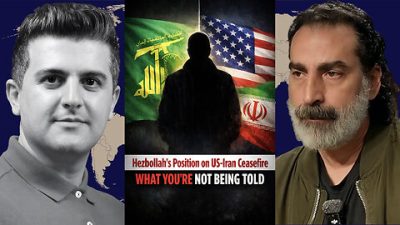
Laith Marouf: Hezbollah’s position on US-Iran ceasefire
or go to
Aletho News Archives – Video-Images
From the Archives
The Dirty Little Secret behind the “Global Terrorism Index”
The Omission of Israeli Terrorism in the Occupied Palestinian Territories
By Karin Brothers | Global Research | December 6, 2014
… The Israeli settlements — all of which are illegal – have been identified as a major impediment to peace. The refusal of a major “global” terrorism report to name the Israeli settlers as one of the groups most responsible for terrorism not only misrepresents a major source of regional violence but exposes the Global Terrorism Index as a propaganda tool that supports a U.S. agenda.
In recent years, governments have been attempting to thwart terrorism by blocking supportive fund-raising. When it comes to Israeli settlements, however, the US and Canada actually encourage fund-raising by giving organizations (such as Christian Friends of Israeli Communities (CFOIC) and the Jewish National Fund) financial support in the form of donor tax-deductions.
Charities which provide funds for the Israeli settlements should be regarded as terror-financing organizations. They should not only lose their tax-deductible status, but they should be banned because they support the violation of international humanitarian law. The terror-financing laws that are being strictly enforced for Muslim charities should be applied to Christian and Jewish charities as well. … Read full article
Blog Roll
 Aletho News
- The ‘Opposition Party’ Has Done Nothing to Stop the Iran War and Much to Goad Trump Into Continuing It
- Moscow backs Tehran on status of Lebanon in US-Iran deal
- How UK Regulator Ofcom Quietly Bypassed International Law to Police American Speech
- The Black Cube Files: How Former Mossad Operatives Flipped a Nation
- Laith Marouf: Hezbollah’s position on US-Iran ceasefire: What you’re not being told
- Israel’s priority lies in destroying chances of peace between Iran, US: Ex-UN nuclear chief
- Ceasefire for all or for none: Iran shuts Hormuz over Lebanon attacks
- Strait of Hormuz is Iran’s ‘nuclear weapon’ that forced US retreat: Medvedev
- Energy crisis will last for months – Kremlin envoy
- Europe’s quiet role in the war on Iran
- If Americans Knew
- This is ceasefire? Israel’s biggest massacre yet in Lebanon, another journalist killed in Gaza – Daily Update
- Tucker Carlson on Israel: This Is the Behavior of an Ally? Really?
- Gazans face a triple crisis: severe shortages of water and bread, healthcare in tatters
- NY Times reports how Netanyahu took the US into Iran War
- A sigh of relief over Iran, but Gaza and Lebanon in dire straits – Daily Update
- Thousands dead and neighborhoods razed to the ground: Aid agencies fear southern Lebanon is becoming the new Gaza
- The war the US is fighting for Israel could cost trillions
- ‘Cigarette Burns, Nail Wounds’: Toddler Tortured in Gaza to Coerce Father
- Trump Says US Sent ‘a Lot of Guns’ to Protesters in Iran
- Israeli forces destroy 17 UN peacekeeper cameras in south Lebanon
- No Tricks Zone
- An Inconvenient Tree: Uncovered In Alps… Europe Much Warmer Than Today 6000 Years Ago
- New Study Reports A 60% Slowdown In Greenland’s Ice Loss Rate In The Last Decade
- Low Intensity Tornado Wrecks Major Solar Farm, Creating A Potential Toxic Dump
- New Study Finds Warming Saves Lives…Cold Temperatures 12 Times More Deadly Than Excess Heat
- German Science Blog Accuses PIK Climate Institute Of Hallucinating Climate Tipping Points
- Devastating Assessment Of Comirnaty Vaccine By Former Senior Pfizer Europe Toxicologist
- New Study: CO2 Is ‘Effectively Negligible’ As An Explanatory Climate Change Factor Since 2000
- Former Pfizer Toxicologist Dr. Helmut Sterz Tells Bundestag Hearing Pfizer Vaccine Should Have Never Been Approved
- Energy Expert: Germany’s Nuclear Phaseout Was A “500 Billion Euro Mistake”
- New Research: South Australia’s Mid-Holocene Sea Surface Temperatures Were 4°C Warmer Than Today
 Aletho News