Tens of thousands of Palestinians return to north Gaza after one year of displacement

(Photo credit: MEE/Ahmed Aziz)
The Cradle | January 27, 2025
Tens of thousands of Palestinians began returning to the northern Gaza Strip via the Netzarim corridor on 27 January after over a year of displacement and a genocidal Israeli war.
Video footage documented the first moments that the displaced civilians flooded through the Netzarim corridor to return to their homes in the north.
“Vehicles continue to enter via the Netzarim corridor through Salah al-Din Street after undergoing electronic inspection [in accordance with the ceasefire agreement],” Al Jazeera’s correspondent reported on 27 January.
Hundreds of thousands of Palestinians are expected to return for the first time since being displaced at the start of the war in October 2023 and in the months that followed.
“The scenes of the return of the masses of our people to the areas from which they were forced to flee, despite their destroyed homes, confirm the greatness of our people and their steadfastness in their land, despite the depth of the pain and tragedy,” Hamas said in a statement.
Member of the Hamas political bureau Ezzat al-Rishq said the return of Palestinians to their homes “shatters all the dreams and illusions of the occupation in displacing [the Palestinian] people.”
Israel had been blocking the return of the displaced after the second round of prisoner exchanges took place on Saturday – demanding the return of a female Israeli soldier Arbel Yehud as part of the swap and accusing the resistance movement of obstructing the deal. Yehud is being held by the Palestinian Islamic Jihad (PIJ) movement.
It was agreed over the weekend that she would be released on Thursday in exchange for Israel allowing the return of the displaced to northern Gaza, which, along with other areas in the enclave, was destroyed and ethnically cleansed throughout the war.
Israeli authorities released 200 Palestinians from Israeli prisons on 25 January as part of the ceasefire agreement with Hamas. The resistance movement released four female Israeli soldiers as part of the deal earlier that day.
One hundred fourteen Palestinian prisoners were transferred from Ofer Prison in the occupied West Bank for release in Ramallah, 16 were returned to Gaza, and 70 were exiled outside Palestine, WAFA news agency reported. Egypt will host them for 48 hours before they are sent to Tunisia, Algeria, and Turkiye – which all agreed to receive them.
In Lebanon, civilians amass to secure liberation
By Khalil Harb | The Cradle | January 27, 2025
Ignoring a foreign-imposed ceasefire ‘extension,’ southern Lebanese residents are reclaiming their villages from Israeli occupation, exposing the failures of both the invasion and US mediation – and it’s happening in both Gaza and Lebanon at the same time.
The image that Israel sought to project – both to its settlers and to the wider Arab world – of a resistance subdued, a nation defeated, and a broken will crumbled at dawn on 26 January as the 60-day deadline for the implementation of the ceasefire with Hezbollah approached.
The shattering moment came as the Lebanese people triumphantly returned to their recently occupied villages with unrelenting resolve, putting an end to two months of perceived acquiescence and Israeli ambitions to extend its occupation of the country beyond the truce.
Scrambling to attach legitimacy to Israel’s continuing violations beyond the ceasefire deadline, the White House issued a very brief statement on Sunday evening, announcing that the agreement would remain in effect until 18 February.
Within hours, the Lebanese presidency’s X account posted: “There is no truth to the news about Israel informing Lebanon that it will remain at five border points for 15 days.”
Israel’s miscalculated strategy
The occupation state, once again miscalculating the realities on the ground, appeared to have banked on its extensive aggression in southern Lebanon, coupled with a brutal two-month rampage through southern villages under the guise of implementing UN Security Council Resolution 1701, to craft a facade of victory.
During this time, villages south of the Litani River – spared military occupation during the war thanks to the fierce resistance – were ravaged through relentless bombing and destruction right up until the deadline. Tel Aviv seemed confident this violence, shielded by the ceasefire agreement, would entrench its control and bolster its narrative of dominance – a narrative it had deceived itself into believing.
The arrogance of Israel’s leadership, from Prime Minister Benjamin Netanyahu to his far-right political allies and opposition leaders, underestimated the resilience of the Lebanese. The illusion that the war and its aftermath had crushed the will of the southern villagers or forced new terms upon Hezbollah was put to an unanticipated test.
During Lebanon’s observance of the ceasefire – marked by the deployment of its army south of the Litani and Hezbollah’s adherence to truce terms – Israel misread this restraint as weakness. Toward the end of the truce period, Israeli leaders openly discussed prolonged occupation of southern Lebanon, citing security concerns for northern settlers who had yet to return home.
What Israel did not foresee was the convergence of two historical moments: the Lebanese reclaiming their villages and Palestinians in Gaza defying displacement by returning northward from the strip. This dual movement after two ceasefire agreements, powered by an unyielding indigenous attachment to the land despite a genocidal campaign against its natives, exposed the failure of Israeli calculations and those of its allies in the west and West Asia.
A ceasefire undermined by violations
The recklessness of the US-led armistice committee, chaired by US General Jasper Jeffers, compounded the situation. By treating Israel’s numerous violations of the ceasefire lightly, the committee allowed Tel Aviv to interpret the agreement as it pleased.
Under this pretext, Israeli forces executed airstrikes, demolished entire residential neighborhoods, and bulldozed agricultural and forest areas, electrical network lines, water wells, and numerous roads. The occupation army uprooted infrastructure and disrupted civilian life in southern Lebanon at a scale rivaling the destruction during the 15-month war itself.
According to estimates by Lebanese authorities, there were over 800 violations during the ceasefire, yet the armistice committee offered no meaningful condemnation. Civilians attempting to return home were targeted indiscriminately; as of Sunday night, the Lebanese Ministry of Health recorded 24 more martyrs and over 134 wounded across 21 southern villages, many of them women and children, in addition to the nearly 100 lives lost since the ceasefire began.
Complicit silence of ‘mediators’
Israel’s actions, enabled by international complicity, emboldened it to extend its occupation and deepen the suffering of the Lebanese. Meanwhile, General Jeffers, tasked with overseeing the ceasefire and implementing Resolution 1701, remained a bystander to these crimes.
His silence showed, yet again, Washington’s inherent bias, which – far from being a neutral mediator – has historically aligned with Tel Aviv’s interests. This raises a pertinent question: can the US genuinely claim impartiality in Lebanon’s political and security affairs?
A political source close to the resistance in Lebanon, speaking to The Cradle, says this bias risks destabilizing the country and rendering the truce meaningless.
The resistance, represented by Hezbollah, set things straight with its statement last Thursday, which warned against “a continued violation of Lebanese sovereignty.”
Hezbollah insisted that these violations must be dealt with “by the state using all means and methods guaranteed by international conventions … to reclaim the land.”
“While we will follow the developments of the situation, which are supposed to culminate in a complete withdrawal in the coming days, we will not accept any violation of the agreement and commitments, and any attempt to evade them under flimsy pretexts.”
Hezbollah’s warnings realized
Sunday’s events confirmed Hezbollah’s warnings. As civilians re-entered their villages en masse, the Lebanese Armed Forces (LAF) followed, deploying in areas where Israeli troops were reluctant to surrender. This mass mobilization dismantled Israel’s scorched-earth strategy, which sought to make the region uninhabitable and reconstruction efforts near impossible.
Israeli Prime Minister Benjamin Netanyahu’s government, desperate to balance internal political pressures and its failed Gaza offensive, miscalculated again. Instead of breaking the Lebanese spirit, it was met with a formidable display of unity and defiance.
In exchange for the Lebanese commitment to implement the requirements of the ceasefire, Hezbollah parliamentary representative Ali Fayyad says that this was met with “Israeli treachery, international complicity, and indifference.”
A source close to the resistance also tells The Cradle that the presence of Israeli occupation forces on even a single inch of Lebanese territory serves as a justification for continued resistance.
The source elaborates that the Netanyahu government, by attempting to circumvent the truce deadline, is pursuing several interconnected objectives. Chief among them is the strategy to intensify pressure on Beirut, both politically and militarily, with the aim of forcing it into submission to Israeli demands.
Additionally, Israel seeks to establish a so-called “burned zone” along the border, creating a buffer area that would further entrench its occupation. This maneuvering, the source adds, also serves Netanyahu’s domestic agenda.
By maintaining a foothold in southern Lebanon, he aims to deflect criticism from opposition figures within Israel who are pressuring him to avoid a full withdrawal. Moreover, Netanyahu is using the situation to attempt a rehabilitation of his government’s tattered image.
After the Gaza ceasefire exposed severe cracks in Israel’s political and military apparatus – especially as Palestinian resistance fighters emerged with renewed confidence and resilience – the embattled Israeli prime minister is desperate to project strength, particularly in the Lebanese context, as a way to recover from these reputational blows.
Unified resistance
This synchronized resistance across Lebanon and Palestine serves as a reminder of the region’s enduring struggle against occupation. As Israeli commentators acknowledge divisions within US policy circles – some supporting Israel’s attempts to prolong its occupation while others insist on adherence to withdrawal terms – Netanyahu’s agenda remains in disarray.
Reports of him lobbying President Donald Trump to permit the retention of five military sites in southern Lebanon show his desperation, but the people of Lebanon have already rendered this strategy futile.
The Lebanese resistance, bolstered by the actions of its citizens, has proven yet again that the occupation can and will be challenged.
Civilians liberated roughly 30 towns on Sunday, paving the way for the Lebanese army’s advance and signaling an unyielding determination to reclaim their sovereignty. While Israel may seek to manipulate international dynamics, the people of Lebanon have drawn a clear line: their land, their will, their victory.
State Department Reports Record Foreign Arms Sales in 2024
By Kyle Anzalone | The Libertarian Institute | January 26, 2025
The State Department reports that US arms deals sold over $300 billion in weapons to foreign countries last year. The record-high sales include over $20 billion in arms paid for with US aid.
The State Department’s statement on 2024 arms sales explained that “the total value of transferred defense articles and services and security cooperation activities conducted under the Foreign Military Sales system was $117.9 billion.”
Compared to 2023, the State Department says last year’s totals represented an increase of 45.7%, adding, “This is the highest ever annual total of sales and assistance provided to our allies and partners.” According to the statement, $21 billion in the FMS was paid for with US aid.
In addition to the FMS, US arms deals brokered $200 billion in other transactions. “The total authorized value for privately contracted Direct Commercial Sales (DCS) authorizations for FY2024 was $200.8 billion,” the statement explained. “This represents a 27.5% increase, up from $157.5 billion in FY2023.”
Combined, the FMS and DCS sales total over $318 billion.
Most of the weapon sales went to US allies and partners in Europe, the Middle East or East Asia. In Europe, NATO countries continued to buy weapons at a rapid pace as they transferred older systems to Ukraine for the proxy war against Russia. China is the focus of American arm sales in East Asia as Washington prepares to fight a war with Beijing over Taiwan.
In the Middle East, Israel bought, often with US aid, billions in weapons from American arms deals. Tel Aviv is conducting what multiple international human rights organizations have identified as a genocide in Gaza. During the Biden administration, the State Department was flooded with hundreds of reports that American weapons were being used to kill civilians in Gaza.
The State Department asserted that the US arms transfers occurred in “accordance with the U.S. Conventional Arms Transfer Policy, and weighs political, social, human rights, civilian protection, economic, military, nonproliferation, technology security, and end use factors.”
However, the US military aid and arms sales to Israel violate multiple American laws as Israel is committing war crimes with US weapons, the IDF has blocked aid from reaching Gaza, and Tel Aviv has an undeclared nuclear weapons program.
Israeli forces fatally shoot 2-year-old Palestinian girl in the head near Jenin

Laila Mohammad Ayman Khatib, two, was shot and killed by Israeli forces while she ate dinner with her family near Jenin on January 25. (Photo: Courtesy of the Khatib family)
Defense for Children Palestine | January 26, 2025
Ramallah — Israeli forces shot and killed a Palestinian toddler near Jenin last night.
Laila Mohammad Ayman Khatib, two, was shot and killed by Israeli forces around 8:30 p.m. on January 25 while she was in the living room in her family’s home in the Palestinian town of Muthallath Al-Shuhada, south of Jenin in the northern occupied West Bank, according to documentation collected by Defense for Children International – Palestine. Laila was having dinner with her mother, grandparents, and aunts when sudden Israeli gunfire erupted without warning. Israeli forces fired four bullets through the living room window, one of which struck Laila in the back of the head. Laila’s grandfather carried her out of the house and brought her to Al-Razi Hospital in Jenin, where she received emergency surgery. Laila was pronounced dead around 10 p.m.
“Israeli forces regularly and routinely carry out military operations with complete contempt for Palestinian life,” said Ayed Abu Eqtaish, accountability program director at DCIP. “Little Laila was having dinner with her family when Israeli forces, unprompted, fired live ammunition into their living room, killing her. It is outrageous that the Israeli military has been permitted by world leaders to kill Palestinian children with impunity in flagrant violations of international law.”
Laila’s mother and aunt sustained injuries from shrapnel during the attack, according to information collected by DCIP.
When Laila’s grandfather exited the house carrying her, he saw Israeli snipers stationed in a Palestinian home across the street from their house. No residents of Muthallath Al-Shuhada were aware of an Israeli military presence at the time of the attack, and later learned that Israeli special forces had infiltrated the Palestinian home. Israeli forces remained in the town until about 11 p.m.
Jenin, its refugee camp, and the surrounding villages have been under an ongoing Israeli military attack dubbed “Operation Iron Wall” since January 21, 2025.
Since the beginning of Operation Iron Wall, 16 Palestinians have been killed, including Laila and 16-year-old Motaz Abu Tabeekh. This operation has also been accompanied by Israeli drone strikes, widespread destruction of infrastructure and homes in the Jenin refugee camp, and the bulldozing of roads. Additionally, hundreds of Palestinians families have been forcibly displaced from their homes due to the continued military assault.
Israeli forces have killed eight Palestinian children in the occupied West Bank in 2025, according to documentation collected by DCIP. Five children were killed by Israeli drone strikes and three children were shot and killed with live ammunition.
Trump calls for ethnic cleansing of Gaza’s population to Egypt, Jordan
The Cradle | January 26, 2025
While flying on Air Force One on 26 January, US President Donald Trump told reporters that the residents of Gaza should be “cleaned out” and ethnically cleansed to neighboring Arab countries after Israel’s US-backed bombing campaign turned the enclave into a “demolition site.”
“I’d like Egypt to take people, and I’d like Jordan to take people. You’re talking about a million and a half people, and we can just clean out the whole thing,” Trump said.
“You know, over the centuries, it’s had many, many conflicts. And I don’t know, something has to happen. It’s literally a demolition site, almost everything is demolished, and people are dying there, so I’d rather get involved with some of the Arab nations and build housing at a different location where they can maybe live in peace for a change,” the president added.
“I said to [the Jordanian King], I’d love you to take on more because I’m looking at the whole Gaza Strip right now, and it’s a mess, it’s a real mess. I’d like him to take people … I’d like Egypt to take people [from Gaza],” Trump continued, saying he would discuss it with Egyptian President Abdel Fattah el-Sisi.
The Palestinian Islamic Jihad (PIJ) movement condemned the inflammatory comments in an official statement: “Trump’s statements are consistent with the worst of the agenda of the extreme Israeli right and a continuation of the denial of the existence of our people … We call on all countries, especially the Egyptian and Jordanian governments, to reject Trump’s plan, and we affirm that our people will thwart this scheme.”
The US president’s son-in-law and powerful businessman, Jared Kushner, has previously advocated developing new communities in Gaza due to its prime location and beaches on the Mediterranean Sea.
Israeli businessmen close to Israeli Prime Minister Benjamin Netanyahu have advocated for the development of Gaza as a modern residential community and tax-free business and manufacturing zone, presumably to be built after all or most Palestinians have been expelled.
In the wake of a ceasefire between Hamas and Israel that took effect on 19 January, hundreds of thousands of displaced Palestinians are seeking to return to their homes, or what is left of them.
It is unclear whether the ceasefire will hold or whether Israel will seek to resume the war, as Prime Minister Benjamin Netanyahu has stated he will.
Trump’s comments, including his claim that he wants to save Palestinian lives, echoed the recommendations of a leaked Israeli Ministry of Information report issued on 13 October 2023, just a week after Hamas’s Operation Al-Aqsa Flood and the beginning of Israel’s massive bombing campaign that has now left Gaza largely uninhabitable.
The plan recommended the ethnic cleansing of Gaza using humanitarian justifications. The document recommends beginning a dedicated campaign that will “motivate” Gazans “to agree to the plan,” and make them give up their land.
Gazans should be convinced that “Allah made sure that you lost this land because of the leadership of Hamas – there is no choice but to move to another place with the help of Your Muslim brothers,” the document reads.
Further, the plan states the government must launch a public relations campaign that will promote the transfer of Palestinians to Arab and western states in a way that does not promote hostility to Israel or damage its reputation.
The deportation of the population from Gaza must be presented as a necessary humanitarian measure to receive international support. Such a deportation could be justified if it will lead to “fewer casualties among the civilian population compared to the expected number of casualties if they remain,” the document says.
The document also states that the US should be leveraged to pressure Egypt to take in the residents of Gaza and to encourage other European countries, and in particular Greece, Spain, and Canada, to help take in and settle the refugees who will be evacuated from Gaza.
Finally, the document claims that if the population of Gaza remains, there will be “many Arab deaths” during the expected occupation of Gaza by the Israeli army, and this will damage Israel’s international image even more than the deportation of the population. For all these reasons, the recommendation of the Ministry of Intelligence is to promote the transfer of all Palestinians in Gaza to the Sinai permanently.
Swiss police arrest director of Electronic Intifada news outlet
Al Mayadeen | January 26, 2025
Swiss authorities have detained Ali Abunimah, a Palestinian-American journalist and co-founder of the pro-Palestine news outlet The Electronic Intifada (EI).
Abunimah was reportedly questioned by Swiss police for an hour upon his arrival at Zurich airport on Friday before being granted entry into the city.
Reports suggest he was arrested the following day, ahead of a scheduled speaking event.
“Abunimah’s arrest appears to be part of a growing backlash from Western governments against expressions of solidarity with the Palestinian people,” the Electronic Intifada said.
The Chicago-based independent publication voiced its solidarity with Abunimah, stating, “Speaking out against injustice in Palestine is not a crime. Journalism is not a crime.”
In posts on his X account, the journalist condemned the Israeli genocidal assault on the Gaza Strip and expressed support for the Palestinian resistance against the occupation.
His latest article, published on The Electronic Intifada on January 18, was titled “How Gaza’s Resistance Defeated Israel.”
The American-Arab Anti-Discrimination Committee (ADC) emphasized that Abunimah has been a consistent advocate against “Israel’s” injustices in Palestine, highlighting that his arrest appears to be a direct result of his outspoken activism.
“Abunimah’s arrest is a stark reminder of the increasing attempts to stifle voices calling for justice and accountability,” it pointed out.
Belgian-Lebanese activist Dyab Abou Jahjah, founder of the Hind Rajab Foundation, described Abunimah as a “political prisoner” and demanded his immediate release.
Last year, British police raided the home of Asa Winstanley, an associate editor with EI, and seized his computers and phones.
Iran War Hawks Getting Wrecked In Trump Personnel Fight
By Ryan Grim | Drop Site News | January 24, 2025
A major whisper campaign is underway, led by neoconservatives in Washington panicked at President Donald Trump’s elevation of a string of foreign policy advisers who have spoken out against war with Iran. The first whack to the wounded war-hawk wing came when Mike Pompeo was blocked from a position in the White House, followed yesterday by the stripping of his security detail. That followed similar snubs to John Bolton and Iran hawk Brian Hook, both of which lost their security and have been kept out of the administration.
Hook’s firing was a comical display of Trumpian humiliation. Trump, on Truth Social, said that his
Presidential Personnel Office is actively in the process of identifying and removing over a thousand Presidential Appointees from the previous Administration, who are not aligned with our vision to Make America Great Again.
Jose Andres from the President’s Council on Sports, Fitness and Nutrition, Mark Milley from the National Infrastructure Advisory Council, Brian Hook from the Wilson Center for Scholars, and Keisha Lance Bottoms from the President’s Export Council—YOU’RE FIRED!
What’s so amusing about Trump’s description of Hook as a member of the “previous Administration,” and his being lumped in with Democrats and a hated figure like Milley, is that Hook was named by Trump in November to chair the State Department transition. Anti-war Republicans vowed at the time to make sure he never got a job himself in the second Trump administration and sources tell me that Trump fired him after learning about his long record of criticizing Trump and his bellicose war rhetoric. Now he’s out, and is privately leading the rearguard fight against Trump’s nominees.
Much of that fight is leaking out into the pages of the magazine Jewish Insider. If you followed the effort by AIPAC to shape Democratic primaries in 2022 and 2024 by blocking critics of Israel, you already know that JI was the place to go to learn where AIPAC would be spending money. Articles warned that pro-Israel groups were “alarmed” at the rise of this or that candidate, often for entirely innocuous statements—or sometimes for just being related to somebody they didn’t like.
The same playbook is being rolled out against Trump’s nominees. In an article headlined, “Rumored for a Trump posting, Elbridge Colby’s dovish views on Iran stand out,” JI warned that Colby “has notably opposed direct military action against Iran.” He got the posting anyway, and is now one of the top officials at the Pentagon. This week, Trump rolled out more than a dozen more top appointments, without a single neocon in the list, raising the alarm in JI again. (Read our profile of Colby.)
JI panicked about Michael DiMino, who previously worked for the CIA and the Pentagon, and was named to be deputy assistant secretary of defense for the Middle East. “Last year, [DiMino] dismissed Iran’s second ballistic missile attack on Israel as a ‘fairly moderate’ response and urged against bombing the Houthis in Yemen, instead calling for U.S. pressure on Israel to tamp down regional conflict,” JI warned. The paper also expressed concern that Dan Caldwell, another conservative veteran skeptical of war with Iran, seemed to be playing a role in getting like-minded people into the Pentagon: “A leading opponent of traditional Republican foreign policy who advocates for a vastly reduced U.S. presence in the Middle East has been quietly involved in the transition process at the Defense Department, according to four people familiar with the matter, underscoring a distinct ideological shift in the Pentagon as President Donald Trump builds his new administration.”
The fight over Trump’s nominees is directly connected to the potential strength of the “ceasefire” in Gaza. Trump is expected to tap his Mideast envoy and real estate buddy Steve Witkoff, who browbeat Netanyahu into agreeing to the ceasefire, to negotiate with Iran. In order to get Saudi-Israel normalization and a nuclear deal with Iran, Trump needs the genocide in Gaza to end, which connects the three issues, and is why Israel is deeply hostile to Witkoff’s expanding portfolio. Trump created confusion about Witkoff’s growing role in comments to the press that JI eagerly but inaccurately reported as a rebuke of Witkoff.
Meanwhile, 11 Americans on a medical mission are being blocked by Israel from leaving northern Gaza despite having completed their scheduled mission. “This is not just about us–it’s about accountability,” Shehzad Batliwala, an ophthalmologist based in Dallas, told me. “The principle at stake is whether the Israeli military can arbitrarily detain U.S. citizens engaged in humanitarian work without even as much as giving a legitimate reason.” Two senior Trump officials, including Witkoff, have raised the issue with the Israeli government, according to sources involved.
The team is on a mission with Rahma Worldwide, Dr. Batliwala said. “Many of us have critical responsibilities back home, including U.S. patients awaiting urgent care. For example, I have over 40 cataract surgeries scheduled next week.” A request for comment sent to the Israeli military by Drop Site has yet to be returned.
Who is Mohammed al-Tous, longest-serving Palestinian prisoner released by Israel?
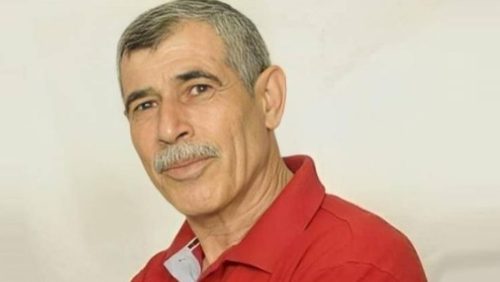
Longest-serving Palestinian prisoner Mohammed al-Tous (Photo via social media)
Press TV – January 25, 2025
Israel has freed the longest-serving Palestinian prisoner, Mohammed al-Tous, among the 200 inmates released as part of the second phase of a prisoner exchange deal with the Hamas resistance movement under the Gaza ceasefire.
In exchange for the prisoners, Hamas earlier on Saturday released four female Israeli soldiers, who were held in Gaza since October 7, 2023.
Tous, who had been in detention for nearly four decades, is a member of the Fatah movement founded by late Palestinian leader Yasser Arafat.
He joined Fatah in 1970 when he was only 14, and took part in several operations targeting Israeli forces and settlements between 1983 and 1985.
His activism led to multiple arrests, with his first imprisonment happening in 1970. After escaping from prison in 1975, he became a “wanted man” by Israel and was re-arrested four more times by 1985. An Israeli military court sentenced him to multiple life sentences.
Tous had been behind bars ever since.
While in prison, Tous emerged as a leader among inmates, advocating for the rights of Palestinian prisoners and participating in hunger strikes to protest against Israeli prison policies.
His resilience and commitment to the Palestinian cause have made him a symbol of resistance in the eyes of the Palestinian people.
Tous is also an accomplished author. His first book, Eye of the Mountain (2021), details his life, resistance activities, and perspectives on the Palestinian struggle. His latest work, Sweetness and Bitterness (2023), chronicles his ordeals in prison, offering insight into the challenges faced by Palestinians incarcerated in Israeli jails.
According to the Palestinian Prisoners’ Club advocacy group, the 69-year-old is recognized as the “dean” of prisoners in the occupied West Bank.
Tous was on the list of seventy detainees who were deported to Egypt on Saturday and who have not been able to meet their relatives in Gaza.
Several high-profile Palestinian fighters including Mohammad al-Ardah, who was part of a jailbreak in 2021, were also among them.
They are expected to be transferred from Egypt to countries such as Algeria, Tunisia, and Turkey.
Separately, a total of 114 inmates arrived in Ramallah and received a heroes’ welcome.
Masses of people congregated in the occupied West Bank city and celebrated the return of the released Palestinian prisoners.
The large crowd included people hoisting Palestinian flags, shouting slogans and documenting the scene with their phones. They surrounded a convoy of buses carrying the freed prisoners.
Moreover, sixteen freed Palestinian prisoners arrived in the Gaza Strip through the Karem Abu Salem crossing.
The released Palestinian prisoners were transferred to the European Gaza Hospital in Khan Younis, which is situated in the south of the Gaza Strip.
Israel has released a list of more than 700 Palestinian prisoners, who are to be released under the deal. More than 230 prisoners are serving life sentences and will be permanently sent to exile upon their release.
Hamas said in a statement on Saturday that Israel was forced to “open the doors of his cells to our heroic prisoners,” after more than 14 months of “unprecedented brutal aggression that targeted every inch of Gaza in its barbarity.”
Israel demands UNRWA end operations in Palestine by Jan. 30
Palestinian Information Center – January 25, 2025
Israel’s permanent representative to the UN Danny Danon has called on the UN Relief and Works Agency for Palestine Refugees (UNRWA) to halt its operations in Occupied Jerusalem and evacuate its premises in the city “no later than January 30,” the day an Israeli ban on the organization is due to take effect.
As the date for the enforcement of the Israeli ban approaches, Danon told UN Secretary-General Antonio Guterres on Friday that UNRWA’s premises in Jerusalem must be vacated as stipulated by law.
The Israeli envoy claimed that the Israeli legislation came as a direct response to the acute national security risks posed by the widespread infiltration of UNRWA’s ranks by Hamas and other armed groups, and the agency’s persistent refusal to address the very grave and material concerns raised by Israel.
Most UN member states consider UNRWA, the largest aid agency for Palestinians, to be the irreplaceable backbone of humanitarian operations. However, few levers have been pulled to try to ensure the agency’s existence.
Asked by Arab News about this discrepancy between public statements of support and meaningful action, and whether it means Western countries are undermining the same multilateral values on which they were founded, UNRWA commissioner-general Philippe Lazzarini said: “The same question could be asked about the importance of international humanitarian law and the blatant and constant disregard of that law.”
“You can ask the same question about the disrespect for the resolutions of the Security Council and the General Assembly. And you can ask the same question about the International Court of Justice’s ruling that Israel’s presence in the West Bank and East Jerusalem is illegal, and the court’s call for its withdrawal.”
“And so, it’s obviously frustrating,” Lazzarini added. “What we have witnessed is an extraordinary ‘crisis of impunity,’ to the extent that international humanitarian law is almost becoming irrelevant if no mechanism is put in place to address this impunity.”
Legislation blocking UNRWA from operating within the occupied Palestinian territories was approved overwhelmingly by the Knesset last October. The ban also prevents any Israeli authority from maintaining contact with the relief agency.
Delivery of aid to Gaza and the West Bank requires close coordination between UNRWA and the Israeli occupation authority. If the legislation is executed, Israel will no longer issue work or entry permits for the agency’s staff, while coordination with the Israeli occupation army that is essential for ensuring safe passage for aid deliveries will no longer be possible.
Since the start of the war in the Gaza Strip, Israel has relentlessly condemned the aid agency and bombed its buildings and personnel. More than 260 of its staff have been killed, while a coordinated Israeli media campaign has attempted to discredit the agency by portraying it as a tool of Hamas.
Israel destroys only water desalination plant in northern Gaza
MEMO | January 25, 2025
The Palestinian Water Authority announced that the occupation army destroyed the water desalination plant during its recent ground operations in the northern Gaza Strip.
It issued a statement that for the sixth consecutive day, its technical crews have been working on assessing the damage in northern Gaza resulting from the Israeli aggression. Due to the massive destruction of residential areas, infrastructure, and roads, they have encountered significant difficulties in their access to water and sanitation facilities.
The Water Authority explained that its technical crews were able to reach the seawater desalination plant in northern Gaza and conduct an initial technical assessment of the extent of damage sustained. The assessment revealed serious technical malfunctions in the electrical and electromechanical components of all the plant’s operations stages and units. Moreover, the occupation completely destroyed some of the plant’s main components, which led to the destruction of five seawater supply wells, the plant’s intake pipeline, two power generators, a pump and a return water line, as well as the destruction of the external fences and output pumps.
The Water Authority confirmed that this plant is the only one serving northern Gaza and the Wadi Gaza area, providing clean water to the entire northwestern neighbourhoods of Gaza City with a production capacity of 10,000 cubic metres per day. There are no alternatives to cover this amount, and it is difficult to drill water wells due to the high salinity of the groundwater reservoir with seawater in the city’s western areas.
It also stressed that the damage to the desalination plants worsens the already dire water situation in Gaza, as it is the only safe and reliable source of drinking water for the population.
The Water Authority confirmed that, within the framework of the first phase of its emergency relief work, it will provide and install ten mobile desalination stations in the central and southern areas of the Gaza Strip. The production capacity of these stations will each reach 25 cubic metres per hour to produce 250 cubic metres for ten hours once operation begins.
It is noted that the mobile desalination station installations will provide emergency and urgent solutions to ensure the continuity of drinking water provision for all citizens.
US Calls for Urgent Extension of Ceasefire in South Lebanon as ‘Israel’ Disregards Withdrawal Deadline
Al-Manar | January 24, 2025
US National Security Council spokesperson Brian Hughes said in a statement Friday that “a short, temporary ceasefire extension is urgently needed” and the U.S. will work with “regional partners” to secure it.
“President Trump is committed to ensuring Israeli citizens can safely return to their homes in northern Israel, while also supporting President Aoun and the new Lebanese government,” Hughes said.
The Israeli occupation military will not complete its withdrawal from southern Lebanon within the 60-day period set out in the ceasefire deal that ended its war with Hezbollah, the Israeli prime minister’s office said Friday.
It is worth noting that the deadline will end on Sunday, January, 26, 2025, at 4 a.m. Thus, few hours separate the border area from dramatic developments if the Israeli enemy insists on keeping its troops occupying territories in South Lebanon.
The Lebanese statesmen have repeatedly voiced concern over the Israeli occupation plots, calling on the United States, France and the United Nations sponsoring the ceasefire agreement to press ‘Israel’ to withdraw before the deadline.
Hezbollah issued on Thursday a statement which underlines the necessity of the full and comprehensive implementation of the ceasefire agreement as outlined in its terms since the 60-day period for the Israeli enemy to completely withdraw from Lebanese territories is nearing its end.
It is also important to note that, unlike Lebanon, the Zionist entity did not respect the obligations of the ceasefire during the 60-day period, launching air raids which left martyrs and injuries, demolishing buildings, scraping lands and roads, and destroying environmental features in several south Lebanon towns.
The latest reports indicated that the Israeli occupation forces, guarded by Merkava tanks, advanced from Houla town into Wadi Slouki area. Moreover, the occupation forces carried out an incursion into Aitaroun town and cut its main highway which leads to Bint Jbeuil City.
In addition, the Israeli enemy had intensively violated Lebanon’s sovereignty and the stipulations of the ceasefire in South Lebanon.
Featured Video
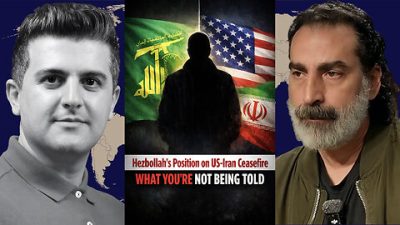
Laith Marouf: Hezbollah’s position on US-Iran ceasefire
or go to
Aletho News Archives – Video-Images
From the Archives
The Dirty Little Secret behind the “Global Terrorism Index”
The Omission of Israeli Terrorism in the Occupied Palestinian Territories
By Karin Brothers | Global Research | December 6, 2014
… The Israeli settlements — all of which are illegal – have been identified as a major impediment to peace. The refusal of a major “global” terrorism report to name the Israeli settlers as one of the groups most responsible for terrorism not only misrepresents a major source of regional violence but exposes the Global Terrorism Index as a propaganda tool that supports a U.S. agenda.
In recent years, governments have been attempting to thwart terrorism by blocking supportive fund-raising. When it comes to Israeli settlements, however, the US and Canada actually encourage fund-raising by giving organizations (such as Christian Friends of Israeli Communities (CFOIC) and the Jewish National Fund) financial support in the form of donor tax-deductions.
Charities which provide funds for the Israeli settlements should be regarded as terror-financing organizations. They should not only lose their tax-deductible status, but they should be banned because they support the violation of international humanitarian law. The terror-financing laws that are being strictly enforced for Muslim charities should be applied to Christian and Jewish charities as well. … Read full article
Blog Roll
 Aletho News
- Spain orders reopening of Tehran embassy, condemns Israel’s carpet bombing of Lebanon
- Israel faces ‘unsustainable’ strategic crisis following 40-day war against Iran: Analyst
- Iran restricts Hormuz access to 15 vessels per day under ceasefire terms: Report
- The ‘Opposition Party’ Has Done Nothing to Stop the Iran War and Much to Goad Trump Into Continuing It
- Moscow backs Tehran on status of Lebanon in US-Iran deal
- How UK Regulator Ofcom Quietly Bypassed International Law to Police American Speech
- The Black Cube Files: How Former Mossad Operatives Flipped a Nation
- Laith Marouf: Hezbollah’s position on US-Iran ceasefire: What you’re not being told
- Israel’s priority lies in destroying chances of peace between Iran, US: Ex-UN nuclear chief
- Ceasefire for all or for none: Iran shuts Hormuz over Lebanon attacks
- If Americans Knew
- This is ceasefire? Israel’s biggest massacre yet in Lebanon, another journalist killed in Gaza – Daily Update
- Tucker Carlson on Israel: This Is the Behavior of an Ally? Really?
- Gazans face a triple crisis: severe shortages of water and bread, healthcare in tatters
- NY Times reports how Netanyahu took the US into Iran War
- A sigh of relief over Iran, but Gaza and Lebanon in dire straits – Daily Update
- Thousands dead and neighborhoods razed to the ground: Aid agencies fear southern Lebanon is becoming the new Gaza
- The war the US is fighting for Israel could cost trillions
- ‘Cigarette Burns, Nail Wounds’: Toddler Tortured in Gaza to Coerce Father
- Trump Says US Sent ‘a Lot of Guns’ to Protesters in Iran
- Israeli forces destroy 17 UN peacekeeper cameras in south Lebanon
- No Tricks Zone
- An Inconvenient Tree: Uncovered In Alps… Europe Much Warmer Than Today 6000 Years Ago
- New Study Reports A 60% Slowdown In Greenland’s Ice Loss Rate In The Last Decade
- Low Intensity Tornado Wrecks Major Solar Farm, Creating A Potential Toxic Dump
- New Study Finds Warming Saves Lives…Cold Temperatures 12 Times More Deadly Than Excess Heat
- German Science Blog Accuses PIK Climate Institute Of Hallucinating Climate Tipping Points
- Devastating Assessment Of Comirnaty Vaccine By Former Senior Pfizer Europe Toxicologist
- New Study: CO2 Is ‘Effectively Negligible’ As An Explanatory Climate Change Factor Since 2000
- Former Pfizer Toxicologist Dr. Helmut Sterz Tells Bundestag Hearing Pfizer Vaccine Should Have Never Been Approved
- Energy Expert: Germany’s Nuclear Phaseout Was A “500 Billion Euro Mistake”
- New Research: South Australia’s Mid-Holocene Sea Surface Temperatures Were 4°C Warmer Than Today
 Aletho News