Colombia must sever ties with NATO – president
RT | July 17, 2025
Colombia must cut ties with NATO as the leaders of the military bloc support “genocide” of Palestinians, President Gustavo Petro has declared.
Colombia, a traditional US ally in South America, became the first country in the region to obtain the status of NATO global partner in 2017. Petro, who took office in 2022 as Colombia’s first leftist president, severed diplomatic relations with Israel last year over what he describes as a genocide being carried out by the Israeli government against Palestinians.
”What do we do in NATO? If NATO’s top brass are for genocide, what are we doing there?” Petro said at a pro-Palestinian international conference in Bogota on Wednesday.
”Hasn’t the time come for another military alliance? Because how can we be with armies that drop bombs on children?” he added. “Those armies aren’t armies of freedom, they’re armies of darkness. We must have armies of light.”
Petro argued that NATO is a Cold War relic and asserted that nations like Colombia are treated as “half-members” within the US-led military bloc, granted symbolic partnerships but not full accession.
The two-day conference in Bogota hosted representatives from a dozen countries in the Global South. Attendees signed a joint declaration calling for economic sanctions and legal actions against Israel, including an arms embargo, restrictions on dual-use goods, port denials for vessels carrying cargo for Israeli forces, and support for international accountability for crimes allegedly committed in occupied territories.
Petro’s criticism reflects a break from Colombia’s historically warm relationship with Israel. The late Venezuelan President Hugo Chavez once dubbed Colombia the “Israel of Latin America,” arguing it served a similar geopolitical role in the region.
Israel launched its military campaign in Gaza following a deadly raid led by the militant group Hamas in October 2023. The first independent study of casualties in Gaza, published last month, estimated the number of fatalities in the enclave at almost 84,000 by January 2025. Israel is currently pushing Palestinians to move to a “humanitarian city” that would purportedly be free of Hamas influence – which critics say is just a euphemism for a concentration camp.
Israeli-linked lawyer told ICC chief prosecutor: Drop Gaza case or be ‘destroyed’
MEMO | July 16, 2025
“They will destroy you and they will destroy the court,” an Israeli ICC lawyer connected to Benjamin Netanyahu warned Chief Prosecutor Karim Khan while urging him to drop the war crimes probe against the Israeli Prime Minister and former Defence Minister Yoav Gallant.
The warning was delivered during a private meeting in The Hague on 1 May by Nicholas Kaufman, a British-Israeli lawyer who currently defends former Philippines president Rodrigo Duterte at the ICC. According to an internal note seen by Middle East Eye, Kaufman told Khan he had spoken to Netanyahu’s legal adviser and had been “authorised” to propose a confidential solution to help the prosecutor “climb down the tree”, meaning to back away from the case discreetly.
Kaufman advised Khan to reclassify the case files as confidential so that Israel could respond to the allegations in private, rather than through public proceedings. But he also issued a warning: if Khan were to pursue further charges, such as for far-right Israeli ministers, Bezalel Smotrich and Itamar Ben-Gvir, “all options would be off the table.” He then added, “They will destroy you and they will destroy the court.”
Khan and his wife, who was present at the meeting, both understood the words as a direct threat. Kaufman later denied issuing any threat and claimed he was acting on his own initiative, not on behalf of the Israeli government.
The case at the heart of this controversy concerns the ICC’s investigation into war crimes committed during Israel’s ongoing military assault on Gaza. On 20 May 2024, Khan formally applied for arrest warrants against Netanyahu and Gallant for alleged crimes including the starvation of civilians and the targeting of protected populations. Six months later the court issued arrest warrants for the Israeli leaders.
This attempt at intimidation is not an isolated incident. It follows a pattern of pressure, threats and political interference aimed at protecting Israel from international accountability. In February, the US imposed personal sanctions on Khan, revoking his visa and freezing his assets. His family was also barred from entering the US. In June, four ICC judges who approved the arrest warrants were similarly sanctioned.
Shortly after the 1 May meeting with Kaufman, allegations of sexual misconduct were leaked to the media against Khan. While the ICC initially closed its investigation due to the lack of cooperation by the complainant, the allegations re-emerged in the press through anonymous sources, prompting a new probe. Khan has denied all allegations. Although the proximity of events has prompted speculation, there is said to be no evidence to suggest a connection between the allegations against Khan and his meeting with Kaufman.
These efforts mirror tactics used against Khan’s predecessor. Fatou Bensouda, the former ICC chief prosecutor, has publicly revealed that she too faced threats and surveillance when she began investigating Israeli war crimes. In an interview with The Guardian, she described “thug-style tactics” that included hacking, harassment of her family and threats that she would “pay the price” for her work.
Israel’s allies in the West have also played a key role in undermining the court’s independence. Then British Foreign Secretary David Cameron reportedly warned Khan in April 2024 that issuing arrest warrants against Israeli officials would be “like dropping a hydrogen bomb.” Around the same time, US Senator Lindsey Graham threatened ICC staff with further sanctions if they moved forward.
The ICC is not the only international body under fire. Francesca Albanese, the UN Special Rapporteur on the occupied Palestinian territories, has also been targeted. In July, the US imposed sanctions against her, citing her “direct engagement” with the ICC’s investigation into Israeli war crimes.
Albanese has faced sustained smear campaigns and death threats—part of what observers describe as a broader effort to silence those demanding accountability for Israel’s genocide in Gaza. Rights groups and UN experts have condemned the sanctions as an attack on the independence of international human rights mechanisms and a chilling warning to other officials who might support the ICC’s work.
Yemen’s naval blockade forces closure of Israel’s only Red Sea port
Press TV – July 16, 2025
Israel says its only Red Sea port in Eilat will shut down next week, as a deepening debt crisis—triggered by a months-long naval blockade by Yemen’s Ansarullah movement—brings the strategic facility to a standstill.
The regime’s Ports and Shipping Authority said in a statement Wednesday that the port will permanently close on July 20.
Authorities acknowledged that the crippling blockade by Yemeni forces has effectively paralyzed operations at Eilat, once a key hub for maritime trade.
“Due to the shutdown of the Port of Eilat and its deteriorating financial situation amid the ongoing crisis, the Eilat Municipality has notified port management of the seizure of all bank accounts over unpaid debts,” Israel’s National Emergency Authority said in a memo.
“As a result, the Shipping and Ports Authority announced that the port will cease all operations starting this Sunday.”
Local media described the move as “a dramatic step” that could severely undermine Israel’s maritime logistics in the Red Sea.
Situated at Israel’s southernmost tip, the Port of Eilat has long functioned as a vital alternative to the Suez Canal. But since late last year, after Yemen’s Ansarullah resistance movement imposed a naval blockade in response to Israel’s war on Gaza, commercial activity at the port has come to a halt.
Shortly after the Gaza war began in November 2023, Ansarullah enforced a blockade on key maritime routes—the Red Sea, Gulf of Aden, and Arabian Sea—aimed at disrupting military shipments to Israel.
Yemeni forces have since stepped up drone and missile attacks on Israeli and commercial vessels, vowing that operations will not stop until Israel ends its devastating war on Gaza.
Cairo rejects Rafah plan, says it violates peace treaty
MEMO | July 16, 2025
Egypt has officially informed the United States and Israel of its firm rejection of a proposed plan to establish humanitarian camps in the border city of Rafah, according to Egyptian diplomatic sources quoted by the the Lebanese newspaper Al-Akhbar on Tuesday.
The sources said Cairo warned that the plan could violate terms of the peace treaty’s security agreement with Israel, which prohibits any breach of agreed security arrangements in the border areas.
The report, titled “Rafah Ghetto concerns Cairo”, said Egypt may reconsider several regional arrangements, stressing that “all scenarios are on the table, including those beyond the diplomatic level.”
Meanwhile, Israeli Channel 13 reported that Egypt views the proposed “tent city” as a “ticking human time bomb” near the Egypt-Gaza border, warning that the relocation of hundreds of thousands of displaced Palestinians to the area poses a serious threat, according to RT Arabic
In addition, Israeli Channel 7 reported that Egypt’s security delegation, currently involved in mediation efforts, strongly opposed Israel’s latest military deployment map, arguing that such plans threaten Egypt’s national security, as reported by Asharq Al-Awsat newspaper website.
Turkiye backs extremists in Lebanon as ‘blackmail’ over Cyprus ties
The Cradle | July 14, 2025
Turkiye has expressed “deep concern” over Lebanese President Joseph Aoun’s recent visit to Cyprus and has plans to “blackmail” Beirut if it chooses to counter Ankara’s influence in the Mediterranean, a senior Lebanese source told The Cradle on 14 July.
“Ankara expressed deep concern over Aoun’s visit to the Cypriot capital, Nicosia, and viewed it as a worrying sign of Beirut’s potential openness to Mediterranean and European partnerships that are inconsistent with its agenda in the Eastern Mediterranean,” the source said.
“Northern Lebanon is witnessing a worrying increase in the number of displaced Syrians with complex security backgrounds,” the source added, noting an increase in cross-border [weapons] smuggling operations which are taking place “under the direct sponsorship and cover of Syrian and Turkish security agencies.”
According to the Lebanese source, Aoun’s visit to Cyprus “revealed files of political and security blackmail prepared by Turkiye for use later if Beirut decides to pursue strategic options that conflict with Ankara’s interests in Lebanon and the region.”
The source went on to say that Ankara “considers northern Lebanon as its traditional area of influence and will not tolerate any new official positioning by Beirut that threatens its geopolitical position in the Mediterranean.”
Turkiye invaded Cyprus in 1974 and controls the northern part of the island. Ankara views Greek Cyprus as a main regional and geopolitical rival.
The Cradle’s Malik Khoury wrote that Ankara is unlikely to take kindly to an improvement of Lebanese–Cypriot ties, and has strong ambitions for northern Lebanon.
“Turkiye has long-standing historical ties to northern Lebanon,” he said. Citing Lebanese sources, he noted Ankara’s “interest in the port of Tripoli.” Geographically and maritime-wise, this is the largest port in the Mediterranean in terms of potential. “If rehabilitated, it could rival the Israeli port of Haifa. Ankara also has its eye on the Qlayaat Airport, near the Syrian border, as well as large areas of the Akkar Plain, rich in minerals and natural resources,” he added.
Thousands of extremist Islamist prisoners, including Syrians linked to the groups now affiliated with authorities in Damascus, are held in Lebanon’s Roumieh prison.
Reports from after the fall of former Syrian president Bashar al-Assad’s government said that Syria was planning to request their repatriation.
A day after Aoun’s visit to Cyprus last week, a source quoted by Syria TV threatened to revive the issue of Syrian prisoners in Lebanon, while hinting at the potential closure of the Syrian–Lebanese border. The report said Damascus is unhappy with Beirut’s “handling” of the situation and is planning a political and diplomatic escalation if the issue is not resolved.
“If you want to breathe air via Cyprus, you will suffocate by land from Damascus,” the source said.
The information provided by the Lebanese source to The Cradle comes as there has been growing concern about potential ambitions by Syria’s extremist-dominated military to take over swathes of northern Lebanon.
There have been reports recently that extremist fighters from Syria have been infiltrating Lebanon.
The Lebanese Armed Forces (LAF) denied these reports on Sunday and said they are working to ensure the security of the border.
Ten people, including two foreign nationals, were detained during an LAF operation in the town of Btebyat in Metn in the Mount Lebanon governorate, according to an army statement Sunday evening. The suspects’ nationalities were not specified.
Initial findings indicated that the individuals were not linked to any extremist organizations. The army’s statement did not acknowledge circulating reports of attempts to stockpile weapons across the country in preparation for attacks.
A report by Israel’s i24 in early July claimed Syria is demanding control over the northern Lebanese city of Tripoli during ongoing talks between Damascus and Tel Aviv.
The concern caused by this report and others like it was compounded on Friday, when US envoy Tom Barrack warned that Lebanon is “going to be Bilad al-Sham (historical name for Greater Syria) again” if Hezbollah does not surrender its arms.
“Syrians say Lebanon is our beach resort,” Barrack added.
The threat of extremist factions, which now make up the bulk of the Syrian state, is not new to Lebanon.
The Syrian army is predominantly made up of what used to be known as Hayat Tahrir al-Sham (HTS), an extremist Al-Qaeda-linked organization which was headed by Syria’s new President Ahmad al-Sharaa (known back then as Abu Mohammad al-Julani).
HTS was formerly known as the Nusra Front – Al-Qaeda’s official branch in Syria. The organization, responsible for deadly suicide attacks inside Lebanon, took over large swathes of the Syrian–Lebanese border in the first few years of the war in Syria, including the barrens of Arsal and Ras Baalbek.
The organization was eventually fully repelled by Hezbollah and the Lebanese army in 2017 in what is referred to as “The Second Liberation.”
HTS and the other groups, which have been incorporated into the Syrian Defense Ministry, have long operated under the direct tutelage of Turkish intelligence.
Google helped Israel spread war propaganda to 45 million Europeans
By Alan MACLEOD | MintPress News | July 10, 2025
While it continues its conflict with its neighbors, Israel is fighting another war just as intensely, spending gigantic amounts of money bombarding Europe with messaging justifying their actions, and scaremongering Europeans that Iranian nuclear missiles will soon be turning their cities into rubble.
A MintPress study has found that, since it struck Iran on June 13, the Israeli Government Advertising Agency has paid for tens of millions of advertisements on YouTube alone. In clear breach of Google’s policies, these ads justify and lionize the attack as a necessary defense of Western civilization, and claim that Israel is carrying out “one of the largest humanitarian missions in the world” in Gaza.
The countries most targeted by this campaign include the United Kingdom, France, Italy, Germany, and Greece.
Information War
“A fanatical regime firing missiles at civilians, while racing towards nuclear weapons. While Iran deliberately targets cities, Israel acts with precision to dismantle this threat.” Thus starts one Israeli government ad that hundreds of thousands of YouTube viewers in Europe have been compelled to watch.
“Terror architects behind the elimination of Israel plan: eliminated. Israel targets only military and terror sites, not civilians. But the threat remains,” the voiceover continues, over ominous music and high-tech graphics. “We will finish the mission for our people, for humanity. Israel does what must be done,” it concludes.
“Iran’s ballistic missile program isn’t just a threat to Israel, it is a threat to Europe and the Western world,” another, seen by 1.5 million viewers in just three weeks, claims. “Iran is developing missiles with ranges of approximately 4000 km. That places Europe within the regime’s striking distance,” it adds, as graphics show virtually the entire continent turning blood red, signifying a nuclear attack. “This isn’t tomorrow’s threat. It is today’s reality. The threat posed by the Iranian regime must be stopped. Israel does what must be done.”
Ominous messages like these, translated into multiple languages, have reached tens of millions of people across Europe. Other Israeli government ads take a different tack, attempting to present Israel as a virtuous victim and an unwilling participant in war. As one commercial notes:
Imagine this: you are holding your newborn in a hospital room. Then the air raid sirens go off. Iran fires ballistic missiles at hospitals, at innocent Israelis. Patients, doctors, newborn babies: deliberately targeted. While Iran aims at families and children, Israel responds with precision, striking military sites. This is not a war of choice. Those who target civilians and hospitals become the target.”
The claims made in such videos are often highly questionable. For example, around 935 Iranians were killed in Israeli strikes, compared to just 28 Israelis, suggesting Israel is far less careful to avoid civilian deaths than its opponent. Indeed, since October 2023, Israel has repeatedly and deliberately targeted hospitals. The World Health Organization has documented at least 697 Israeli strikes on medical facilities.
Ninety-four percent of Gaza’s hospitals have been destroyed or damaged, and more than 1,400 medical personnel have been killed. This includes Dr. Adnan al-Bursh, head of orthopedics at al-Shifa Hospital, who was reportedly raped to death by Israeli prison guards. According to UNICEF, Israel has killed or injured over 50,000 Palestinian children. An American nurse who worked in Gaza told MintPress News that IDF soldiers regularly shoot boys in the genitals to prevent them from reproducing.
Despite this, Israeli advertising presents the country as the savior of the Palestinian people. One Ministry of Foreign Affairs video, set to epic, inspiring music, describes Israel as undertaking “One of the largest humanitarian operations in the world right now.” “This is what real aid looks like. Smiles don’t lie. Hamas does,” it concludes.
Francesca Albanese, the United Nations special rapporteur on the Occupied Palestinian Territories, called the commercial “scandalous” and directly challenged YouTube: “How can this be allowed?” The video has been translated into Italian, French, German, and Greek, and has been viewed by nearly seven million people on YouTube alone.
Transparently Inorganic
All referenced videos appear in the Google Ads Transparency Center as paid content from the Israeli Government Advertising Agency, and there is strong evidence that few, if any, of their millions of views are organic. The five versions of the “Gaza Humanitarian Aid” video, for example, collectively have only a few thousand “likes”—barely 1% of what would be generally expected of videos with this amount of views—and only two comments in total.
The difference between organic and paid content is clearer in videos that Israel has not promoted. Other videos on Israel’s Ministry of Foreign Affairs YouTube channel receive only tens of views per day, not millions, which strongly suggests that close to 100% of their traffic is paid advertising.
The scale of this public relations operation is difficult to overstate. Even as the Israeli government hikes taxes and slashes domestic spending, its foreign PR budget has grown by more than 2,000%, the Foreign Ministry receiving $150 million more for public diplomacy.
Much of that money is evidently being spent on ads. In the past month, the Israeli Ministry of Foreign Affairs has uploaded videos that have topped 45 million views on YouTube alone. The countries most targeted include the United Kingdom, France, Italy, Germany, and Greece.
Greece is a particularly noteworthy case. Over the past 12 months, the Israeli government advertising agency has funded 65 separate YouTube ad campaigns targeting the country.
The Greek version of a recent ad—titled “An efficient system is in place, delivering aid where it’s needed”—presents Israel as a benevolent bringer of life to Gaza and has garnered over 1 million views in just four days, equivalent to nearly 10% of Greece’s entire population. The video currently has no comments and fewer than 3,000 likes.
The Israeli Ministry of Foreign Affairs uploads its videos in English, French, German, Italian, and Greek. Countries that do not speak these languages—such as Slovakia, Denmark, and the Netherlands—are still targeted, though users there generally receive the English version.
Israel has avoided targeting nations whose governments have formally condemned its actions, such as Ireland or Spain, spending nothing to reach those populations. The Netanyahu administration, evidently, has decided to attempt to shore up support in allied countries, even as their populations increasingly turn against Israel.
While many of these figures might shock readers, this investigation only examined the advertising campaign of a single organization, the Israeli Government Advertising Agency, and on a single platform, YouTube. It does not include other Israeli government and non-governmental groups, nor the myriad organizations collectively comprising the pro-Israel lobby in the West.
Israel has also attempted to influence the debate on other platforms, including Facebook, Instagram, TikTok, and Twitter. What is presented here is merely the thinnest slice of a much broader operation.
Israel and Silicon Valley
Some videos the Israeli government has released attempt to portray Israel in a positive light, but instead perpetuate racist stereotypes about Western civilization and its supposed superiority. In one ad, Benjamin Netanyahu states (emphasis added):
I want to assure the civilized world, we will not let the world’s most dangerous regime get the world’s most dangerous weapons. The increasing range of Iran’s ballistic missiles would bring that nuclear nightmare to the cities of Europe and eventually to America.”
Thus, the Israeli prime minister implies that Iran’s threat matters only if it endangers the so-called “civilized world,” that is, Europe and North America. “Never again is now. Today, Israel has shown that we have learned the lessons of history,” Netanyahu continues, directly comparing the 12-Day War (which Israel started) to the Holocaust. “When enemies vow to destroy you, believe them. When enemies build weapons of mass death, stop them. As the Bible teaches us, when someone comes to kill you, rise and act first.”
Google’s advertising rules explicitly prohibit commercials that “display shocking content or promote hatred, intolerance, discrimination, or violence.” Yet many of the ads described here explicitly justify Israeli aggression.
MintPress News contacted Google to ask how much the Israeli government’s advertising agency spent on ads, how many impressions those ads generated, whether the company had a response to Albanese’s comments, and whether the videos violated its policies.
Google did not answer the first three questions and reiterated that it has “strict ad policies that govern the types of ads we allow on our platform.” “These policies are publicly available, and we enforce them consistently and without bias. If we find ads that violate those policies, we swiftly remove them,” the company added, implying that it does not consider the ads a violation of its standards.
Few who have studied Google’s connections to the Israeli government will be surprised that the Silicon Valley giant grants enormous leeway to the Netanyahu administration. Former CEO Eric Schmidt is known as one of Israel’s most vocal supporters. Google has been financially invested in Israel since at least 2006, when it opened its first offices in Tel Aviv. In 2012, at a meeting with Netanyahu himself, Schmidt declared that “the decision to invest in Israel was one of the best that Google has ever made.”
Company co-founder Sergey Brin has also come to the defense of Israel, denouncing the United Nations as “transparently anti-Semitic” and telling Google staff that using the word “genocide” to describe Israeli actions in Gaza is “deeply offensive to many Jewish people who have suffered actual genocides.”
Earlier this year, with the Israeli economy in dire straits following its 18-month campaign against its neighbors, Schmidt’s company came to the rescue, injecting billions into Israel in a record-setting acquisition. Google purchased local cybersecurity firm Wiz for $32 billion. The monumental sum paid—equivalent to 65 times Wiz’s annual revenue and boosting the Israeli economy by 0.6%—left some analysts wondering if the deal had more to do with underwriting the Israeli economy than making a shrewd business investment.
It also raises questions about the safety of Google users’ most sensitive personal data, given that Wiz was founded and continues to be staffed by former Israeli spies from the intelligence group, Unit 8200.
Among them is Gavriel Goidel, head of strategy and operations for Google Research. Goidel joined Google in 2022 after a six-year career in military intelligence, during which he rose to become Head of Learning at Unit 8200. There, he led a large team of operatives who sifted through intelligence data to “understand patterns of hostile activists,” according to his own account.
The Turning Tide
Google is far from the only tech giant recruiting Israeli spies to run their most politically sensitive departments. The same study found that hundreds of former Unit 8200 intelligence agents are employed at companies such as Meta (formerly Facebook), Microsoft, and Amazon. And a significant amount of what America reads about the Middle East is also written by ex-Israeli spies.
A MintPress investigation from earlier this year uncovered a network of Unit 8200 alums working in top newsrooms across America.
Wikipedia is another key theater of war for the Israeli state. A project overseen by future Prime Minister Naftali Bennett deployed thousands of young Israelis to monitor and edit the online encyclopedia, removing troublesome facts and framing articles more favorably in Israel’s favor. Those who made the most edits would receive rewards, including free hot air balloon rides.
The Ministry of Foreign Affairs has also launched a campaign to harass and intimidate American students, establishing a “task force” to carry out psychological operations aimed at, in its own words, “inflicting economic and employment consequences” against pro-Palestine protestors. While Foreign Minister Eli Cohen heads the task force, it stresses that its actions “should not have the signature of the State of Israel on it.”
Amid mounting criticism, the Israeli government has sought to turn the tide by inviting influencers for direct talks with Netanyahu. In April, the Israeli prime minister met face-to-face with conservative internet personalities, including Tim Pool; Dave Rubin; Sean Spicer; Bethany Mandel; David Harris Jr.; Jessica Krause; Seth Mandel; and Mollie Hemingway, where they discussed how best to sell war with Iran to Western publics, and how to counter anti-Zionist sentiment online.
Other social media personalities report having been offered large sums of money in exchange for a few words of support for Israel.
In terms of turning the tide of European public opinion, Israel has its work cut out for it. A recent YouGov survey found the country was widely reviled across the continent. More than 20 times as many Italians, for instance, hold “very unfavorable” (43%) views of Israel than “very favorable” ones (2%).
Even in Germany, where popular support for Israel is highest, only 21% said they hold favorable opinions of the state (including only 4% highly favorable), with 65% displaying open opposition (including 32% who strongly dislike it).
A massive plurality of Britons, meanwhile, agreed with the statement: “Israel treats the Palestinians like the Nazis treated the Jews.” Forty-eight percent answered in the affirmative, as opposed to just 13% who disagreed. This is despite European governments offering full-throated support to Israel, and even criminalizing pro-Palestine protests and persecuting journalists who oppose Western support for Tel Aviv.
The government of Israel is spending millions of dollars daily on gigantic advertising campaigns aimed at turning the tide of public opinion. To that end, it is developing a PR network as sophisticated as the advanced weapons systems it uses on its neighbors. On YouTube alone, its paid advertising, translated into five languages, has reached at least 45 million people in the past month. Whether this strategy will ultimately prove effective remains unclear. After all, it is difficult to convince the public to support a genocide.
Latakia’s burning coast: Sectarian purge masked as ‘wildfire’ under Syria’s new government
Syria’s new rulers exploit wildfire and war to reshape the coastal region
By Abdullah Suleiman Ali | The Cradle | July 12, 2025
Less than four months into its rule, Syria’s interim government is under mounting pressure, as each crisis—natural or security-related—casts doubt on its ability to govern and maintain control.
The recent wildfires that tore through northern Latakia were no seasonal accident. They broke out as sectarian killings escalated and suspicions of state complicity grew.
The blaze behind the purge
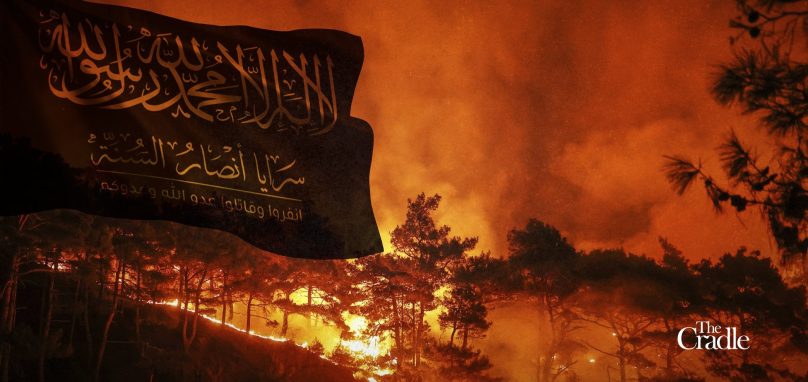
Never before in Syria had an armed group claimed responsibility for a natural disaster. That changed when Saraya Ansar al-Sunna announced it was behind fires that spread through the Qastal Ma’af region, explicitly stating that the arson attack “led to the fires spreading to other areas, forcing the Nusayris [Alawites] to flee their homes, and causing a number of them to suffocate.”
The statement came just three days into the blazes and only weeks after the same group had claimed responsibility for the 22 June bombing of Mar Elias Church in Damascus’ Douweila neighborhood.
That attack had sparked a rare public dispute between the Interior Ministry and Saraya Ansar al-Sunna. While the ministry blamed ISIS and paraded an arrested cell, the group named a different perpetrator, Muhammad Zain al-Abidin Abu Uthman.
Despite vowing to release confessions to back its version, the ministry has remained silent.
Anas Khattab—former Al-Qaeda commander and Nusra Front co-founder, now serving as interior minister—only deepened the contradictions during his visit to the fire zone. He insisted there was “no evidence” of arson, even as his own ministry investigated suspects.
Khattab’s refusal to acknowledge Saraya Ansar al-Sunna suggests that Damascus still considers it a phantom—a position reinforced when ministry spokesman Noureddine al-Baba publicly dismissed it as “imaginary” during a press conference after the church bombing.
At the same time, some Alawites believe that Interior Minister Khattab is using Saraya Ansar al-Sunna to carry out attacks against Alawites, Christians, and other minorities, while maintaining plausible deniability.
Coordinated chaos and forced displacement
In Latakia’s coastal hinterlands, fear was already running high. Many villages had yet to recover from the violence of March, when security raids and sectarian killings devastated entire communities, leaving behind charred homes and mass graves that remain under-reported by official channels.
Only months ago, bloody confrontations claimed 2,000 lives across the region. Locals, mainly from the Alawite community, saw these events as the culmination of a systematic purge under the new regime. A wave of targeted killings, kidnappings, and violence had left communities deeply scarred.
Just days before the fires erupted, the murder of two brothers working as grape leaf pickers, along with the kidnapping of a girl, sparked widespread protests in the Al-Burjan and Beit Yashout areas in the Jableh countryside.
These demonstrations, amplified by diaspora voices, coincided almost to the hour with the first outbreaks of fire, feeding widespread suspicion that the flames were a diversion or smokescreen. On the same day this call was issued, the spread of fires in the Latakia countryside forests began to attract media attention.
The Qastal Ma’af fire—the most intense and destructive—was explicitly claimed by Saraya Ansar al-Sunna. Although the group declared it aimed to displace Alawites, some affected villages housed significant Sunni Turkmen populations. Later, the group issued a cryptic clarification: “The burning of Sunni villages is attributed to Nusayri groups, and this is in the context of the ongoing, raging conflict.”
Local sources tell The Cradle that the fire consumed large swaths of forest and farmland, displacing entire communities. Despite the government’s dismissals, few believe this was a coincidence.
Denial and deception by Damascus
Rather than confront the threat, the Interior Ministry downplayed the human hand in the fires. Observers suggest this was a deliberate choice to avoid validating Saraya Ansar al-Sunna’s claim—and to prevent inflaming sectarian tensions.
But some in the Alawite community accuse Ahmad al-Sharaa’s government of weaponizing fire as a tool of demographic engineering. They point to circulating videos of security forces, Sunni Bedouin groups, and even Turkish-plate vehicles setting fires to Alawite lands.
One Alawite source explains to The Cradle:
“The Alawites rely on their land and employment, while Sharaa seeks to bring about a demographic shift in the coastal region. His aim is to strangle the Alawites and kill them, forcing them either to flee the country or remain amid ongoing cases of murder, abduction, and arson. The objective is clear: displacement and the destruction of every source of livelihood.”
The source adds that on 9 July, in the town of Al-Haffa in Latakia, a small fire broke out.
Thirty young men rushed to extinguish it—all around 21 years old—including nine Alawites. After the fire was put out, the nine Alawite young men were arrested and mysteriously disappeared.
When their families asked the local authorities regarding their whereabouts, the only response they received was: “We transferred them to Latakia.”
Demographic warfare under the cover of fire
Many Alawites believe Turkiye seeks to effectively annex parts of the Syrian coast to seize maritime gas reserves, and that attacks by Turkmen and Uighur militants loyal to Damascus are designed to provoke pleas for Turkish protection.
Historically, arson has not been random in Syria. In 2020, the former government arrested 39 individuals for setting coordinated fires across Latakia, Tartous, Homs, and Hama—allegedly financed by a “foreign party.”
Last year, vast fires scorched Wadi al-Nasara in Homs and later spread to Kasab near the Turkish border. Then-Governor Khaled Abaza admitted, “The multiplicity of fire outbreaks strongly suggests that they were intentional, as between 30 and 40 fires broke out in a single day in various areas of the governorate, especially those rugged areas that are inaccessible to vehicles.”
He continued, “A search was launched for two vehicles believed to belong to the arsonists.”
The pattern of politically timed arson is now impossible to ignore. Every major fire in the past five years has coincided with key political milestones such as regime transitions and outbreaks of sectarian unrest, pointing to a deliberate strategy masked as environmental catastrophe.
While poverty and illegal logging are the usual explanations for Syria’s seasonal fires, deeper motives have taken shape. Intelligence services are reportedly scouring Latakia’s forests for buried weapons stockpiles.
Foreign militaries are surveying the terrain for future base sites. Coastal land developers are eyeing scorched villages for luxury tourism projects. And behind it all, Israel remains a constant agitator, stoking sectarian flames for its own expansionist agenda and to further undermine the Resistance Axis.
If anything, the ministry’s insistence on ruling out human involvement in this year’s fires has further eroded public trust. In a country exposed to endless covert operations, the official version of events cannot withstand scrutiny.
In Latakia, what’s burning isn’t just land—it’s the last hope that post-Assad Syria might survive this transition intact.
US envoy warns Lebanon: ‘Disarm Hezbollah or risk Syrian occupation’

The Cradle | July 12, 2025
Lebanon risks being invaded and occupied by Syria and Israel unless Beirut acts to disarm Hezbollah, US special envoy Thomas Barrack warned on 12 July.
Speaking to The National, Barrack, who is the US special envoy for Syria and ambassador to Turkiye, stressed Lebanon faces an existential threat” from the two US allies on its borders, while urging Beirut to act quickly to disarm Hezbollah.
“You have Israel on one side, you have Iran on the other, and now you have Syria manifesting itself so quickly that if Lebanon doesn’t move, it’s going to be Bilad Al Sham again,” he said, using the historical name for greater Syria, which included Lebanon and Palestine.
“Syrians say Lebanon is our beach resort. So we need to move. And I know how frustrated the Lebanese people are. It frustrates me,” he added.
 In December, the former Al-Qaeda offshoot Hayat Tahrir al-Sham (HTS) conquered Damascus, bringing Syria under US, Israeli, and Turkish influence.
Syria’s new government, led by former ISIS commander Ahmad al-Sharaa, has reportedly demanded it be given the Sunni-majority city of Tripoli in northern Lebanon while relinquishing the Golan Heights as part of a peace deal with Israel.
Last month, Barrack presented Lebanese officials with a proposal that calls for reconstruction aid and an end to Israel’s attacks if Hezbollah gives up its weapons.
The war between Israel and Hezbollah ended in November with a US-brokered ceasefire. But Israel continues to carry out air strikes and assassinations throughout Lebanon. Israeli ground forces also occupy five points in the south of the country.
In response to the proposal, Lebanese authorities submitted a seven-page document calling for a full Israeli withdrawal from occupied Lebanese territory, including the Shebaa Farms, and pledging to dismantle Hezbollah’s arms in south Lebanon, but not nationwide as Israel is demanding.
When The National asked Barrack why Lebanese President Joseph Aoun has not publicly committed to a disarmament timetable, Barrack said: “He doesn’t want to start a civil war.”
“We don’t have the soldiers on the ground for the [Lebanese Armed Forces, LAF] to be able to do that yet because they don’t have the money. They’re using equipment that’s 60 years old,” he said.
“Hezbollah is looking at it saying, ‘We can’t rely on the LAF. We have to rely on ourselves because Israel is bombing us every day, and they’re still occupying our land,’” Barrack added.
On 6 July, Hezbollah chief Naim Qassem said the Lebanese resistance movement will not disarm or back down from confronting Israel until it ends its air strikes and withdraws from southern Lebanon.
“We cannot be asked to soften our stance or lay down arms while [Israeli] aggression continues,” Qassem told thousands of supporters gathered in Beirut’s southern suburbs on Sunday.
He was speaking during religious gatherings for Ashura, which commemorates the martyrdom of the Prophet Muhammad’s grandson, Imam Hussein, in 680 AD in Karbala, Iraq.
Lebanese President Aoun stated on Friday that Lebanon has no intention of normalizing relations with Israel.
US President Donald Trump is pressuring both Syria and Lebanon to sign the Abraham Accords, which saw the UAE, Bahrain, and Morocco normalize relations with Israel in previous years.
‘Global War on Terror’ is Over. Terror Won.
By Daniel McAdams | Ron Paul Institute | July 10, 2025
On Sept. 16, 2001, five days after the attacks on New York and Washington, DC, President George W. Bush declared, “This crusade – this war on terrorism – is going to take a while. And the American people must be patient. I’m going to be patient. But I can assure the American people I am determined.”
Four days after that, President Bush declared the “war on terror” to be primarily against al-Qaeda. “Our war on terror begins with al Qaeda,” he said in an address to Congress and the nation, “but it does not end there. It will not end until every terrorist group of global reach has been found, stopped and defeated.”
He described the enemy thus:
This group and its leader — a person named Osama bin Laden — are linked to many other organizations in different countries, including the Egyptian Islamic Jihad and the Islamic Movement of Uzbekistan. There are thousands of these terrorists in more than 60 countries.
Bush was correct in his assessment of the group.
One of those countries into which al-Qaeda jihadists implanted themselves was Syria, where from 2011 – with the support of the Obama Administration – they attempted to overthrow the secular leader, Bashar al-Assad, using terrorist tactics they had been well-trained in.
They soon changed their name – but not their stripes – and became the Al-Nusra Front, headed up by an experienced jihadist who fought against US troops in Iraq by the name of Abu Mohammad al-Jolani. His group was known for chopping off heads. Perhaps even American heads.
Last December Jolani’s jihadists – with support from the US, Turkey, and Israel – finally brought down the Assad government and quicker than you can say “Washington PR makeover” he clipped his beard, switched out his tactical military watch for a $90,000 Patek Philippe World Time Chronograph, and declared himself president.
The “civilized world” cheered the re-emergence of democracy in Syria!
At their first meeting earlier this year in Saudi Arabia, President Trump praised jihadist Jolani as “a young, attractive fellow” and “a tough guy, a fighter, with a very strong background. He has a lot of potential, he’s a real leader.”
This was a US-designated global terrorist with a $10 million bounty placed on his head by the US authorities. His “wanted” poster STILL remains on the X account of the US Embassy in Syria!
This week, President Trump “removed sanctions on Jolani’s Syria at (Israeli Prime Minister) Netanyahu’s request,” and just yesterday Secretary of State removed Jolani’s old al-Qaeda affiliate (which had gone from al-Nusra to HTS over the years) from the US terrorist list.
As one observer on X quipped:
The history of the GWOT (Global War on Terror) began in 2001 with the US invading Afghanistan to dig out Al Qaeda. It ends twenty-four years later with the US recognizing an AQ affiliate as the new ruler of Syria.
According to Brown University’s Cost of War Project, the “Global War on Terror” cost the American people at least eight trillion dollars. It also took the lives of perhaps a million people.
And what did we get for all this blood and treasure? In Afghanistan, the Taliban were after 20 years of US military action replaced by the Taliban, and in Syria a fierce opponent of al-Qaeda was replaced by…al-Qaeda!
As Jake Sullivan, then right hand to Secretary of State Hillary Clinton, wrote to the Secretary in 2012, “al-Qaeda is on our side in Syria.” He wasn’t joking!
That was the shot…here’s the chaser:
In the same week the United States removed sanctions on al-Qaeda ruled Syria, it placed sanctions on…UN Special Rapporteur on the occupied Palestinian territories Francesca Albanese!
Who is Albanese? She is the fearless defender of human life in a Gaza where it is slowly being extinguished by Israel with the backing (and weapons) of the US government.
In hitting UN human rights defender Albanese with sanctions, US Secretary of State Marco Rubio wrote:
Today I am imposing sanctions on UN Human Rights Council Special Rapporteur Francesca Albanese for her illegitimate and shameful efforts to prompt @IntlCrimCourt action against U.S. and Israeli officials, companies, and executives.
Albanese’s campaign of political and economic warfare against the United States and Israel will no longer be tolerated. We will always stand by our partners in their right to self-defense.
The United States will continue to take whatever actions we deem necessary to respond to lawfare and protect our sovereignty and that of our allies. (emphasis added)
What might those “whatever actions” be? Clearly it is a physical threat against Albanese for speaking out against a mass murder happening in real time, observable for all who wish to do so on our own computer screens.
So that is it. The “Global War on Terror” is over. Terrorists have been elevated by the US government to be heads of state and those who speak out against state terrorism are threatened with “whatever actions we deem necessary” to shut them up.
Israel lobbies Washington to restart war on Yemen: Report
Sources told Hebrew media that Tel Aviv is calling for the formation of a new coalition against Sanaa
The Cradle | July 11, 2025
Israel is pressuring the US to restart its campaign against the Yemeni Armed Forces (YAF) and Ansarallah movement in Yemen, according to reports in Israeli media.
According to Israel’s Broadcasting Corporation (KAN), Yemeni attacks on vessels headed to Israeli ports “can no longer remain solely an Israeli problem.”
Sources told the outlet that Tel Aviv has been calling for “more intense combined attacks against Houthi regime targets – not just [Israeli] air force fighter jet strikes, but also a renewal of American attacks and the formation of a coalition including additional countries,” an informed source told KAN.
Another anonymous security official said that “a broad coalition is needed to convey to the Houthi regime that it is in danger.”
The report comes after the YAF sunk two Greek-owned, Liberian-flagged vessels which were en route to Israeli ports.
Yemen had briefly refrained from attacking commercial vessels headed to Israel following a ceasefire that ended the US campaign against the country in May. However, it never rescinded the blockade it imposed after the start of the war in Gaza, and is now escalating its enforcement.
It has also continued to target Israel with ballistic missiles in support of the people and resistance in Gaza.
The YAF announced on 10 July that it targeted Tel Aviv’s Ben Gurion Airport with a ballistic missile. The attack came hours after Sanaa released footage of its second operation targeting a commercial ship within 24 hours. The Eternity C vessel was headed to the southern Israeli port of Eilat in violation of the Yemeni naval blockade.
The attack took place on Monday, with the ship finally sinking on Wednesday. Yemeni forces captured footage of the operation. Several crewmembers were reportedly killed, and others remain missing. The YAF said it evacuated some of the crew for medical treatment.
A day earlier, on Sunday, Yemen targeted and sank the Magic Seas vessel – also releasing footage of the operation.
Friday’s KAN report coincides with anticipation for a potential Israeli escalation against Yemen.
On 7 July, Israel carried out widespread attacks on Yemen. Tel Aviv said its latest attack on Yemen marked the start of a military operation against the country, dubbed Operation Black Flag. The YAF announced a large-scale missile and drone attack on several Israeli targets that day in response to heavy Israeli airstrikes.
Following the start of Yemen’s naval campaign in 2023, Washington attempted to muster up a coalition to stop Sanaa’s operations.
The US formed an international naval coalition under the name Prosperity Guardian, which gained little traction and failed to deter Sanaa from continuing its attacks.
Very few nations offered to contribute warships, and others only deployed a mere handful of staff officers.
An EU military mission in the Red Sea called Operation Aspides also suffered a similar failure.
“We didn’t necessarily expect this level of threat. There was an uninhibited violence that was quite surprising and very significant,” the commander of a French warship said in April 2024 after running out of munitions and being forced to turn tail and exit the Red Sea.
Last year, US Navy officials acknowledged that confrontations with Yemeni forces marked the most intense naval combat Washington had faced since the Second World War.
During US President Donald Trump’s latest campaign against Yemen, which killed an unprecedented number of civilians, Washington burned through around $1 billion in munitions and failed to significantly impact Yemeni military capabilities, sources have confirmed to western media.
The New Israel: Cyprus ‘Silent Occupation’
21st Century Wire | July 3, 2025
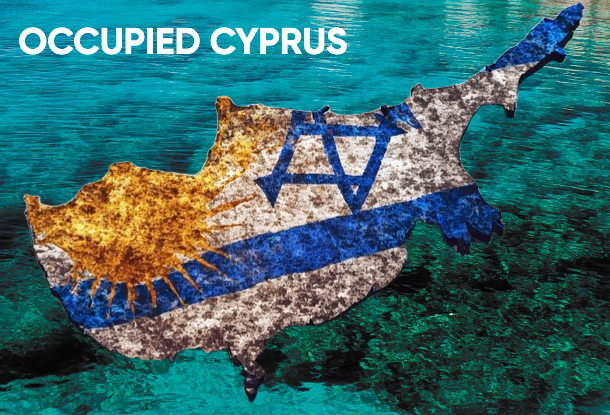
Reports in Cyprus and Greece are speaking of “Cyprus becoming the new Zionist promised land.” Hours after Israel initiated a military strike against Iran, numerous Israelis became stranded in Cyprus due to the cancellation of flights to and from the Jewish state. Over a week later, the Hasidic movement, better known in Cyprus as Chabad, a global ultra-Orthodox Jewish movement, continues to house a substantial number of Israeli nationals throughout the Island. As reported by Rabbi Zeev Raskin, the chief Lubavitch rabbi of Cyprus, in a statement to the local media outlet Politis, “over the past ten days, 12,000 Jews have visited the six Chabad houses situated on the island. During their visits, they have been provided with food, assistance with accommodation, and various types of emergency support”. The Rabi further estimated that ”by Sunday morning last week, there were still 15,000 Jews living in Cyprus.”
Raskin noted that in recent years, Cyprus’s geographical position near the coast of Israel has led to its characterisation as “Israel’s back door”. Following the closure of Israel’s airspace in March 2020 due to the coronavirus pandemic, numerous Israelis chose to prolong their holidays in Cyprus. Furthermore, in the wake of the Oct 7 attack, a remarkable influx of 5,000 Jews arrived in Cyprus within a single day. However, nothing could have predicted the extraordinary increase in Israeli land acquisition in Cyprus, to the alarming point it has reached today.
VIDEO: What’s happening in Cyprus? 15,000 Israeli citizens arrive and build a secret community overnight! (Source: PowerAxis)
Stefanos Stefanu, the Secretary-General of the left-wing AKEL party in Cyprus, has raised concerns regarding the increasing volume of Israeli land acquisitions in southern Cyprus. While speaking to party members at the AKEL congress, Stefanu characterised this trend as an emerging national security issue. He noted that Israeli nationals are purchasing extensive tracts of land and significant economic resources, in addition to setting up schools, synagogues, and various community amenities. He cautioned that such developments could result in the formation of isolated, self-sufficient enclaves on the island. Social media posts linked to AKEL have repeated the party’s concerns, using terms such as “New Israel” and “the new country occupied by Israel.”
The real estate sector in Cyprus is witnessing a significant surge in investment from Israel, as evidenced by the recent declaration of a new collaboration worth several tens of millions of euros. Aviation Connections, along with the Shagrau-Leibovitz Group and Attorney Amir Chen, a prominent partner at the “FBC” law firm, have declared the formation of a new entrepreneurial alliance in the real estate sector in Cyprus. In the context of the partnership, the company intends to acquire approximately 2,000 square meters of land situated on the beachfront and adjacent to the new port under development in Larnaca, to erect an opulent residential and commercial tower.
Media outlets like Coastal Digest have already reported the significant influx of Israeli settlers moving to Cyprus, raising alarms about what analysts refer to as a “silent occupation.” In the wake of Israel’s recent military actions in Gaza, Lebanon, and Iran, Israeli purchasers have rapidly acquired properties throughout the island, while thousands are said to have moved there in search of real estate and to establish enclaves of exclusive luxury resorts and communities designed specifically for wealthy settlers.
This trend marks the third significant wave of Israeli migration to Cyprus, propelled by a combination of the consequences of war, economic challenges, and internal political turmoil within Israel. The Coastal Digest report mentions the work of Dimitri Lascaris, an investigative journalist and activist, who is highlighting the rapid real estate purchases in Cyprus by Israelis amid regional turmoil, warning of a deeper agenda.
Lascaris warns of further complications:
“an underlying agenda, stating that Cyprus has historically been viewed by Zionist ideologues as a potential site for a Jewish settlement due to its proximity to Israel and suitability for European-style development. Lascaris draws a link to early Zionist ambitions for Cyprus, recalling the Third Zionist Congress of 1899 when David Trietsch and Theodor Herzl both championed Cyprus as a base for Jewish settlement, precursor to claiming Israel itself by force.”
“This migration, which has swelled Cyprus’s Israeli community from 6,500 in 2018 to over 12,000 by April 2024, has sparked an influx of 250-300 Israelis monthly. This quiet but steady stream has led to a larger presence of Israelis in Cyprus, with many pursuing strategic real estate purchases despite legal restrictions. Under Cypriot law, foreign entities can only acquire 500 square meters of land. However, by registering as Northern Cyprus firms and securing at least 51% Turkish Cypriot ownership, Israeli companies can circumvent this rule, enabling them to buy extensive tracts of land.”
“Cyprus’s geopolitical position-close to Israel, with NATO membership and new gas reserves-amplifies the strategic importance of this quiet expansion. Additionally, the island hosts a significant UK military base at Akrotiri, which has served as a launch point for aircraft bound for the Palestinian territories, further heightening the controversy around Israeli-Cypriot connections. Economically, the high cost of living in Israel and divisive internal issues, such as Prime Minister Benjamin Netanyahu’s contentious judicial reforms, have also driven migration from the occupied lands. According to a Hebrew-language report by Maariv, the first seven months of 2024 saw an exodus of 40,000 Israeli settlers -nearly triple previous years’ numbers-primarily to Cyprus and other nearby regions.”
VIDEO: Israelis ‘Flooding’ Into Cyprus to ‘Buy Anything In Sight’ (Source: Reason2Resist with Dimitri Lascaris)
On the Greek Cyprus side of the Island, the increasing number of Israeli investors purchasing real estate has provoked significant public and political opposition. This trend, especially prevalent in the Larnaca and Limassol areas, has led to allegations from opposition leaders that Israel is creating a de facto presence on the island. Concerns are also growing regarding the demographic and geopolitical implications, particularly from the viewpoints of Türkiye and the Turkish Republic of Northern Cyprus (TRNC). Residents from the Greek Cypriot Administration and the Turkish Republic of Northern Cyprus (TRNC) are questioning whether Israel is engaging in similar tactics in Cyprus as it previously did in Palestine. In recent years, Zionists have acquired tens of thousands of acres of land in the TRNC, leading to the establishment of colonies (settlements) on the island. Additionally, numerous Jews fleeing the conflict in Ukraine and the one in the Occupied Palestinian Territories (OPT) have been resettled in Cyprus.
The Cypriot town of Pyla has become an “unofficial Israeli hub”, and local legislators and mayors alike are now raising the alarm. Greatreporter has the story…
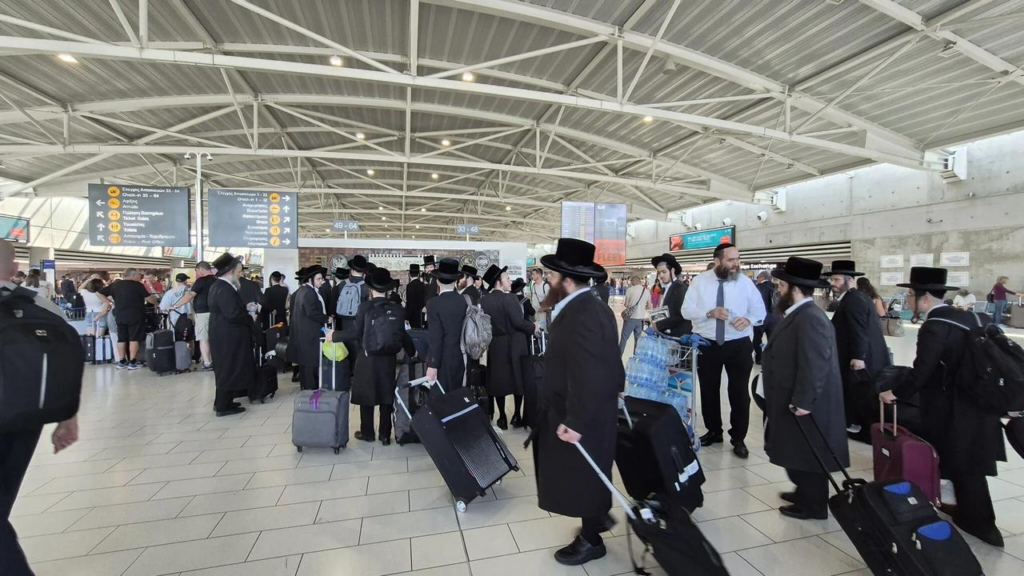
Ultra-Orthodox Jews arrive in Larnaka International Airport, Greek Cyprus, June 2025 (Source: Chabad of Cyprus)
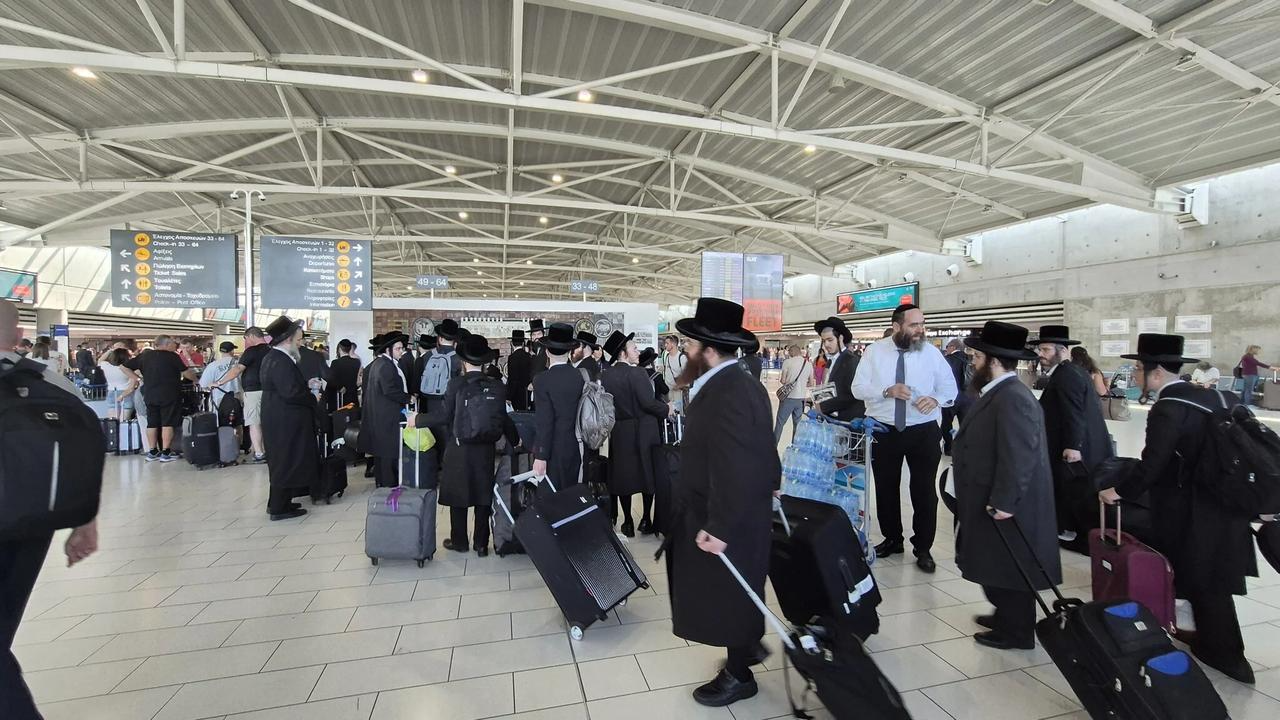
R Powell reports for Greatreporter…
Israel is preparing a ‘backyard’ in Cyprus… This cannot but sound the alarm for us!
As war rages in Gaza and regional escalation with Iran deepens, a quiet but dramatic shift is unfolding just across the Mediterranean. Cyprus, long seen as a neutral tourist haven, is now absorbing thousands of Israeli nationals — many of them settlers, elites, and fleeing civilians — in a wave that is transforming the island’s demography, economy, and politics.
According to Cyprus’s main opposition party, AKEL, this is no ordinary migration. It is, in their words, the construction of “a backyard” — a satellite enclave of Israeli influence, economic power, and potential intelligence infrastructure, rising just beyond the reach of missiles, but still close enough to matter.
“Israeli buyers are purchasing significant land parcels and strategic economic assets,” warned AKEL spokesperson Stefanos Stefanou in June. “They are building Zionist schools, synagogues, gated enclaves… Israel is preparing a backyard in Cyprus, and this cannot but sound the alarm for us.”
A Three-Wave Exodus: From Pandemic to War
The Israeli presence in Cyprus has expanded in three clear waves:
- The Pandemic Wave (2020–2021):
During COVID-19, many affluent Israelis fled strict lockdowns and a strained health system for Cyprus’s EU-standard care and relaxed lifestyle. Property sales surged in resort towns like Paphos and Limassol.
- The Judicial Reform Crisis (2023):
As Prime Minister Benjamin Netanyahu launched controversial judicial reforms, mass protests erupted across Israel. Thousands began to hedge their bets — and their real estate — by acquiring homes abroad. Cyprus, just 40 minutes by air, became a popular fallback.
- The War and Retaliation Wave (2023–2025):
The most recent and explosive surge began after October 7 and intensified with Iran’s missile strikes on Tel Aviv and Haifa. With air routes disrupted and a growing sense of national vulnerability, thousands fled. According to Chabad Cyprus, over 12,000 Israelis passed through their centers in just 10 days, seeking food, shelter, and emergency repatriation services.
Town-by-Town: A New Geography of Influence
The numbers tell a striking story.
- Limassol: 1,154 Israeli property purchases (511 with title deeds), with heavy clustering in spa and luxury resort areas like Pyla, Ormideia, and Pervolia.
- Paphos: 1,291 property transactions by Israelis, including 867 full title deeds.
- Larnaca: 1,406 purchases (481 deeds), particularly close to the airport and Chabad’s main synagogue in Pyla.
In total, nearly 4,000 Israeli-linked properties have been acquired across southern Cyprus since 2021.
Real-estate consultant Loizos Loizou told Cyprus Mail:
“Israelis tend to buy large land parcels, featuring spas and resorts — gated communities, so to speak. Pyla has become their unofficial hub.”
‘A Second Israel’ — Population Doubling in 5 Years
In 2018, about 6,500 Israeli nationals resided in Cyprus. By mid-2025, that number has more than doubled to approximately 15,000 — and growing. This includes entire families, business owners, and settlers fleeing West Bank outposts amid regional instability.
Chabad reports show that:
“More than 12,000 Israeli Jews passed through our six houses in 10 days during the Iran crisis,” said Rabbi Zeev Raskin. “Many of them had no plans to return.”
Locals Alarmed: ‘Land Doesn’t Belong to Us Anymore’
AKEL’s fears are not limited to real estate. In their June address, the party highlighted national security, economic justice, and cultural sovereignty:
“At some point, we’ll discover our own land doesn’t belong to us,” said Stefanu. “These are not just holiday homes. These are settlements in all but name.”
The pattern is familiar. Enclaves emerge. Locals are priced out. Infrastructure — synagogues, kosher supermarkets, private schools — is built quickly. The same settler-colonial template used in the West Bank now appears to be taking root in places like Pyla and Limassol.
Cypriot media outlets, including Politis and Cyprus Mail, have published growing numbers of investigative reports about gated communities, property speculation, and political pressure to crack down on Golden Visa abuse.
Strategic Concerns: Mossad, RAF Bases, and Foreign Control
Security experts have also raised concerns. A Haaretz exposé recently confirmed that Israeli intelligence agencies are active in Cyprus, using the island for “safehouse operations” and staging points. Cyprus also hosts RAF Akrotiri, a major British military base used for reconnaissance missions over Gaza, further complicating the geopolitical picture.
In Turkish-administered Northern Cyprus, land purchases by Israelis have been drastically restricted, with authorities imposing new regulations. But in Greek-administered areas, no such constraints exist, and bilateral agreements between Cyprus and Israel are shielding the real estate boom from meaningful oversight.
“Cyprus cannot afford to become a forward operating base for another state,” one European security official warned. “It risks destabilising the island and compromising its neutrality.”
Faith, Flight, and a Fading Zionist Dream
At the heart of this phenomenon lies a powerful contradiction: If Israel is a divine homeland, why are its people abandoning it?
Many of the Israelis relocating to Cyprus are not rejecting Zionism — they’re exporting it. They bring with them the ideologies, infrastructure, and investment strategies that have transformed Palestine into a patchwork of enclaves. And now, as they take root in Cyprus, many locals fear they are watching the early stages of a new settler project.
The Israeli state is doing everything it can to reverse the trend. El Al has launched discounted repatriation flights. Media campaigns appeal to patriotism. But many have tasted the safety, prosperity, and freedom of life abroad. And they are not coming back.
“We tried to go to Israel by yacht, by helicopter,” said one Israeli evacuee to The National. “But Cyprus just felt safer. For now, we’ll stay.”
A Nation at a Crossroads
What began as a trickle of Israeli tourism has become a full-blown demographic shift. What some once called a “second home” now feels like a “second Israel.” And for Cyprus, a country still grappling with its own partition and history of foreign interference, the warning signs are clear.
As Stefanos Stefanou put it:
“This cannot but sound the alarm for us. We must ask — are we selling homes, or are we selling sovereignty?”
See more news from Greatreporter
Featured Video
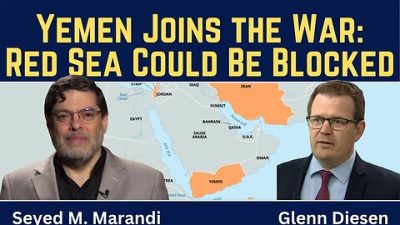
Yemen joins the war – Red Sea could be blocked next – Saudi regime at risk
or go to
Aletho News Archives – Video-Images
From the Archives
A superpower and “the world’s sickest warrior state”
By Paul J. Balles | March 8, 2010
Living through five or six major wars has hardened me to what I thought were the extremes of inhuman cruelty and brutality.
Two things made those extremes almost bearable: the brutality always revealed – at least according to the media coverage – the viciousness of the enemy. It was therefore quite understandable when our “brave men and women” pulverized the enemy.
Films of Japanese torturing captive Americans somehow justified holding Japanese Americans in internment camps during World War II; and only a small percentage of Americans found the bombing of Hiroshima and Nagasaki unreasonably vengeful at best, at worst, depraved.
The media giants in America portrayed the North Koreans as barbaric beasts with their captives, quite unlike their southern counterpoints – our allies during the Korean War. No one ever felt the need to explain how the South Koreans were a civilized breed while the North Koreans were absolute savages, at least according to the official line.
In Vietnam, our warriors justifiably (or so the media made us believe) dropped napalm on the North Vietnamese who had the gall to hide in villages and tunnels to ravage our invaders. At least it was accepted practice until some rogue photojournalist filmed a young girl screaming down a Vietnamese road in flames. … continue
Blog Roll
 Aletho News
- Russian tanker approaches Cuba despite US oil blockade
- Marandi: Yemen joins the war – Red Sea could be blocked next – Saudi regime at risk
- Pro-Palestinian French member of European Parliament denied entry to Canada
- Pakistan to Host US-Iran Talks
- How Indonesia’s tilt toward the US left it stranded in the Strait of Hormuz
- US has no choice but to retreat from Iranian borders: Top commander
- Iran Retaliation Strikes Chemical Plant Near Dimona
- AWACS’ Destruction is a Major Loss for US Military – Ex-DoW Analyst
- Israel’s Iran Strategy Uses US Military & Gulf States as Its Pawns
- Iran: Trump wanted regime change, now just begging for Hormuz to open
- If Americans Knew
- Israeli police block Catholic cardinal from entering Church of the Holy Sepulchre on Palm Sunday
- Israel is assassinating journalists again, more than any other nation, anywhere, ever – Not a ceasefire Day 170
- Over 300 US service members wounded, majority have brain injuries – Not a ceasefire Day 169
- Researchers at Human Rights Watch Resign Over Blocked Report on Palestinian Refugee Return
- Jewish Groups Are Backing a War Americans Don’t Want
- Eric Fingerhut Thinks He’s the President of the Jews
- Top Jewish Philanthropists, Rabbis Urge Israeli President to Take Action Against ‘Jewish Extremists’
- Don’t Be Fooled. Zionist Leaders Have Always Wanted to Control Southern Lebanon
- Israel’s widespread use of torture is a core element of its genocide against the Palestinian people
- In Israel’s War on Iran, Many Middle East US Bases Rendered “All But Uninhabitable”
- No Tricks Zone
- German Science Blog Accuses PIK Climate Institute Of Hallucinating Climate Tipping Points
- Devastating Assessment Of Comirnaty Vaccine By Former Senior Pfizer Europe Toxicologist
- New Study: CO2 Is ‘Effectively Negligible’ As An Explanatory Climate Change Factor Since 2000
- Former Pfizer Toxicologist Dr. Helmut Sterz Tells Bundestag Hearing Pfizer Vaccine Should Have Never Been Approved
- Energy Expert: Germany’s Nuclear Phaseout Was A “500 Billion Euro Mistake”
- New Research: South Australia’s Mid-Holocene Sea Surface Temperatures Were 4°C Warmer Than Today
- Storing Green Energy To Last Germany 10 Days Would Require A 60-Million Tonne Battery
- New Studies: UK Sea Levels Were 4 Meters Higher Than Today During The Mid-Holocene
- Destructive Green New Deal: German Energy And Metal Group Warns Of Drastic Crisis
- New Study Documents A 20-Year Pause In Arctic Sea Ice Decline – Driven By Internal Variability
 Aletho News