The Board For Peace – Whitewashing Ethnic Cleansing and Genocide
DOC MALIK | January 26, 2026
ABOUT THIS CONVERSATION:
Last week in Davos at the WEF meeting, Trump announced the Board of Peace and the technocratic takeover of Gaza. I break down what this actually means.
This podcast is highly addictive and seriously good for your health.
SUPPORT DOC MALIK
For the full episodes, bonus content, back catalogue, and monthly Live Streams, please subscribe to either:
The paid Spotify subscription here: https://creators.spotify.com/pod/show…
The paid Substack subscription here: https://docmalik.substack.com/subscri…
Thank you to all the new subscribers for your lovely messages and reviews! And a big thanks to my existing subscribers for sticking with me and supporting the show!
French court jails pro-Palestine activist and mother over Gaza genocide speech

Press TV – January 25, 2026
A criminal court in Nice has sentenced pro-Palestine activist and mother Amira Zaiter to 15 months in prison for social media posts denouncing Israel’s genocidal war on Gaza, as part of a broader effort to suppress anti-genocide speech and silence voices supporting Palestine.
The ruling, delivered on Friday by the Nice criminal court, stands among the harshest penalties imposed in France in recent years for online political expression.
Human rights advocates warn that the sentence reflects a dangerous shift toward criminalizing dissent when it challenges Israeli policies.
Zaiter appeared before the court on January 23 after spending nearly two months in pretrial detention, a period during which authorities separated her from her young daughter and severely limited her contact with the outside world.
Prosecutors brought charges linked to posts published on social media platforms X and Instagram between June 26 and October 13, 2025.
The case centered on her republication of anti-Zionist material, her description of Israel’s actions in Gaza as genocidal, and her expressions of solidarity with the Palestinian resistance movement Hamas amid Israel’s ongoing aggression.
The prosecution pushed for a two-year prison term, continued detention, inclusion in France’s terrorism offenders database (FIJAIT), a ten-year ban from holding public office, and financial penalties.
Court observers reported that judges found Zaiter guilty of 12 offenses. The court imposed a 15-month prison sentence with immediate incarceration, ordered her registration in the FIJAIT file, and barred her from public office for a decade.
In addition, the court ordered Zaiter to pay 6,200 Euros in damages to several Zionist organizations, including LICRA and CRIF Sud-Est.
The verdict marks Zaiter’s second conviction connected to her outspoken support for Palestine and Hamas.
In November 2024, she received a three-year prison sentence, with two years suspended. That ruling was later reduced by the Aix-en-Provence Court of Appeal to 18 months, including 12 months suspended and probation.
Zaiter, in her thirties and with no prior criminal record before these cases, is a co-founder of the Nice à Gaza Association.
The current case also referenced a post about Illan Choukroune, a French reservist serving in the Israeli army, whom Zaiter described as genocidal. She stood by her words and expressed shock that such political speech had been treated as hateful.
Defense lawyer Kada Sadouni condemned the ruling as deeply unjust and cautioned that the case raises serious concerns about freedom of expression, public debate, and the systematic silencing of opinions deemed politically inconvenient.
He said the court appeared intent on making an example of Zaiter and confirmed that an appeal remains under consideration.
U.S. Funds Continue to Flow to Ecuadorian Groups Despite Trump-Era Suspension
teleSUR | January 25, 2026
Ecuadorian foundations, governmental entities, media outlets, private companies, and other organizations continue to receive U.S. financial support according to Foreign Assistance, despite a temporary funding suspension for international aid programs announced by the Trump administration in January 2025.
In 2025, U.S. financial allocations to Ecuador reached USD 59.96 million, representing a 38.06% reduction compared to the USD 96.8 million delivered in 2024.
Despite the decrease, the resources remain significant and primarily come from two sources: the Department of State, with USD 9.19 million, and the United States Agency for International Development (USAID), with USD 35.52 million.
USAID has long been subject of criticism in several countries, including Ecuador, where previous governments have accused it of interference in internal affairs.
Main Beneficiaries
A Radio Pichincha report shows that the Andean Foundation for Media Observation and Study (Fundamedios, in Spanish) received USD 80,701 in 2025 for the “Fostering Accountability through Investigative Reporting (FAIR)” project. This figure is 44% lower than the USD 145,000 it obtained in 2024 from USAID for “Ecuador Verifies,” a coalition that brings together media, civil society organizations, and universities with the goal of underseeing political discourse.
The Pachamama Foundation, dedicated to the conservation of the Amazon rainforest and the “good living” concept in the Ecuadorian and Peruvian Amazon, recorded an inverse trend: it went from receiving USD 279,020 in 2024 to USD 1,570,207 in 2025.
This organization was shut down in December 2013 during the administration of President Rafael Correa, following a report by the Ministry of the Interior that determined it was carrying out “actions not included in its statutory purposes and objectives.”
According to a statement from the Ministry of the Environment that year, “with the collaboration of the Ministry of the Interior, it was determined that the NGO was engaging in actions that interfered with public policies, undermining, as stipulated by the Regulations for Social Organizations, the internal security of the state and public peace.”
Its legal status was restored in 2017 under the presidency of Lenin Moreno.
Despite the continuity of funding, several organizations remain on edge over the possibility that the U.S. may decide to suspend or modify its economic assistance in the future, which could force them to cut projects and lead to staff layoffs.
The uncertainty persists even though, between 2019 and 2025, total disbursements reached USD 824 million, with a notable increase since 2022 under the administration of Guillermo Lasso. Between 2022 and 2023 alone, aid exceeded USD 500 million, and between 2024 and 2025, during the government of Daniel Noboa, it surpassed USD 157 million.
Six injured in stabbing spree at Kurdish rally in Antwerp, victims stabbed ‘indiscriminately’
By Thomas Brooke | Remix News | January 23, 2026
Six people were injured, two of them seriously, in a knife attack during a Kurdish demonstration in Antwerp on Thursday evening, Belgian police said.
Four suspects have been arrested, and an investigation into attempted murder has been opened. A second demonstration planned for Friday has been cancelled out of respect for the victims.
The attack took place shortly after 7 p.m. on Operaplein, outside the Antwerp Opera House, where around 300 people had gathered for a demonstration in support of Kurds in northeastern Syria. According to police cited by De Standaard, the protest had been peaceful and was already dispersing when the violence broke out.
“All six victims suffered stab wounds,” Antwerp police spokesman Wouter Bruyns said, as reported by RTL. Four of the injured were found on Operaplein, while two others were located near Rooseveltplaats and Sint-Elisabethstraat. “Two of them are in critical condition,” he added. All victims were taken to the hospital.
Emergency services arrived with several medical teams, and police officers who were already present at the demonstration were able to intervene quickly and provide first aid. Four suspects were arrested at the scene. Bruyns said investigators were still working to determine the exact number of attackers and their motives and were reviewing CCTV footage.
NavBel, the council of Kurdish communities in Belgium, said in a statement that the demonstration had taken place “peacefully and without incident,” with families, women, young people, and children present. “As the gathering was dispersing, the Kurdish demonstrators were attacked by a group of men,” the organization said. “These men had infiltrated the demonstration and suddenly pulled out knives,” stabbing protesters “indiscriminately.”
“People were running in every direction; it was pure chaos,” one eyewitness told Gazet van Antwerpen. Another witness said a group passing by suddenly pulled out knives and began stabbing people who were sitting on the steps of the opera house.
NavBel said that three of the injured were Kurds and announced that a further demonstration scheduled for Friday in Antwerp had been cancelled “out of respect for the victims and in order to preserve serenity.”
The demonstration had been organized to draw attention to the situation in northeastern Syria, where the Islamist government army has moved against the Kurdish-led Syrian Democratic Forces (SDF) in the autonomous region of Rojava. Orhan Kilic, a spokesperson for NavBel, said fears of new human rights violations against Kurds were high, citing the background of Syrian President Ahmed al-Sharaa.
Kilic described the Antwerp stabbing as a “terrorist attack” and urged police to treat it as such. “There were flags, emblems, and so on,” he said. “It clearly involved Kurds who support the SDF.”
Current Syrian President Al-Sharaa, also known as Abu Mohammed al-Golani (al-Julani), was the former leader of the Sunni Islamist militant group Hay’at Tahrir al-Sham. Protesters say he is responsible for massacres and the displacement of civilians during the civil war
Protesters have also stated that minorities, including Kurds, Alevis, Alawites, and Christians, remain under acute threat in Syria.
Ireland Moves to Legalize Spyware Use by Police
The bill turns state hacking from a covert act into an accepted instrument of law
By Ken Macon | Reclaim The Net | January 23, 2026
Irish police could soon be granted the legal authority to infiltrate phones and encrypted messaging services under new government legislation that would formally approve the use of spyware.
The proposal, contained in the forthcoming Communications (Interception and Lawful Access) Bill, has provoked concern among civil rights groups who say the plan risks eroding basic digital privacy.
Justice Minister Jim O’Callaghan has said the new powers are “long overdue,” arguing that they are necessary to deal with organised crime and national security threats that rely on encrypted communications.
The plan would, for the first time, provide An Garda Síochána (the main law enforcement and security agency in the state) with a legal basis for using what the government calls “covert surveillance software” to monitor devices.
This could include collecting information from phones or laptops, recording communications, or interfering with computer networks thought to be used for unlawful purposes.
Officials have indicated that similar powers exist in other countries, though reports suggest the technology under consideration resembles Pegasus, the Israeli-made spyware that was unlawfully used by police to monitor citizens and foreign nationals.
The Department of Justice has said any use of such spyware would be subject to strict judicial authorization.
Under the Bill, investigators could access both the content of communications and the associated “metadata,” which records who contacted whom, when, and from where.
Agencies would also have to declare whether any privileged material, such as communications involving journalists or lawyers, might be affected by their applications.
Officials continue to present the legislation as a practical response to modern crime. Yet this framing ignores what is actually at stake: a quiet authorization for state hacking of private devices.
For years, Ireland has criticized other nations for digital overreach, from the misuse of facial recognition abroad to the abuse of spyware uncovered in Europe.
Now, its own government is preparing to legalize similar tools under the banner of security. The right to communicate privately is one of the last real protections citizens have from constant scrutiny.
If this Bill passes in its current form, that protection could quietly disappear, not through scandal or crisis, but through a line in legislation that makes surveillance a normal feature of everyday life.
American Academy of Pediatrics Hit With Federal RICO Lawsuit for Vaccine Safety Fraud
By Nicolas Hulscher, MPH | Focal Points | January 21, 2026
For decades, the American Academy of Pediatrics (AAP) has been treated like an untouchable authority on child health — the gold standard that parents, doctors, schools, and lawmakers were told to trust without question. But today, that image collapses. Children’s Health Defense (CHD) and multiple plaintiffs just filed a federal lawsuit alleging the AAP spent decades running a racketeering operation that sold parents false safety assurances about the childhood vaccine schedule.
This isn’t another “vaccine debate” lawsuit. It’s a RICO fraud case—the same legal weapon used against organized crime and the tobacco industry. The allegation is blunt and devastating: the AAP allegedly manufactured false certainty around vaccine schedule safety, shut down legitimate scientific scrutiny, and promoted sweeping assurances that were never validated through rigorous real-world safety testing—while operating within a system shaped by vaccine-manufacturer funding and financial incentives tied to high pediatric vaccination rates.
One of the most explosive points in the complaint is what it forces into the open. The cumulative childhood schedule has never been safety-tested the way any reasonable parent would assume it has. The lawsuit points to Institute of Medicine findings from 2002 and 2013 calling for more research and acknowledging the lack of proper vaccinated vs. unvaccinated comparisons. Yet the AAP continued portraying the schedule as thoroughly tested and unquestionably safe, shaping pediatric care nationwide through repetition, authority, and pressure—not proof.
The complaint also describes what parents have learned the hard way. This system doesn’t merely recommend vaccines. It demands compliance. Physicians who questioned the schedule or deviated from AAP protocols were professionally targeted, disciplined, and financially crushed. The message was clear: follow the script, or lose your career.
The lawsuit further argues that the AAP’s public reassurances were built on “theoretical” talking points that became institutional doctrine, including the infamous claim that infants could tolerate an extreme number of vaccines at once. According to the plaintiffs, this wasn’t evidence—it was marketing disguised as medical authority, repeated in clinics to silence questions and keep the assembly line moving.
Then there’s the part that makes it all make sense: money. The complaint highlights conflicts of interest and financial entanglements with vaccine manufacturers and aligned institutions. The AAP presents itself as independent and science-first, while operating in a world of corporate sponsorships, incentives, and industry relationships that would be unacceptable in any genuinely transparent public health organization.
This is why the lawsuit matters. It’s not about a single product. It challenges the entire protection racket that has propped up the pediatric vaccine industry for decades. AAP’s model has relied on one rule: the schedule is safe because we say it’s safe—and anyone who demands real proof gets smeared, censored, or destroyed.
The lawsuit seeks financial damages for the families and physicians harmed, demands disclosure of the lack of comprehensive safety testing behind the cumulative schedule, and aims to stop the AAP from making blanket, unqualified claims that the schedule is “safe and effective” as if that question has already been settled.
If this case advances, discovery alone could expose what the public has been denied for decades—and that would be a historic victory for medical transparency, informed consent, and accountability in pediatrics. For years, parents were told to “trust the experts,” while legitimate safety questions were mocked, censored, or punished. Now those questions are headed to the one place the system can’t silence them with talking points: federal court.
Summary
- CHD and multiple plaintiffs filed a federal RICO lawsuit against the AAP, accusing the organization of long-term fraud and racketeering tied to vaccine safety claims.
- The lawsuit alleges the AAP violated RICO by engaging in a sustained pattern of deceptive safety messaging about the CDC childhood vaccine schedule, while operating within a financial ecosystem tied to vaccine-manufacturer funding and incentive-driven pediatric vaccination practices.
- The lawsuit alleges the AAP repeatedly promoted false certainty that the childhood vaccine schedule is thoroughly tested and safe.
- The complaint highlights the absence of proper vaccinated vs. unvaccinated comparisons for cumulative schedule safety, referencing IOM reports calling for more research.
- Plaintiffs argue the AAP relied on theoretical reassurance (not real-world schedule safety trials) to shut down scrutiny and concerns.
- The suit includes physicians claiming they suffered professional and economic harm for deviating from AAP vaccine orthodoxy or questioning safety claims.
- It also includes families alleging severe injury or death following routine vaccination and describes how medical judgment was allegedly overridden by rigid AAP-driven standards.
- The complaint raises concerns about conflicts of interest, alleging financial ties and aligned incentives undermined the credibility of AAP’s public safety assurances.
- The lawsuit seeks financial damages, mandatory disclosure about safety-testing gaps, and to stop the AAP from making unqualified vaccine safety claims.
Epidemiologist and Foundation Administrator, McCullough Foundation
US sanctions Popular Conference for Palestinians Abroad over alleged Hamas links
MEMO | January 23, 2026
The United States has imposed sanctions on the Popular Conference for Palestinians Abroad, accusing the organisation of supporting Hamas and engaging in deceptive fundraising practices, according to a decision announced on Wednesday.
The sanctions, which also target six charitable organisations operating in the Gaza Strip, include freezing any assets held within the United States and prohibiting US citizens and companies from conducting transactions with the listed entities.
According to the US Treasury Department, the Popular Conference for Palestinians Abroad was “founded and operated by elements linked to Hamas,” claiming that the movement exercises control over the organisation’s strategic and operational activities. The department also cited the presence of individuals within the conference who have previously been placed on US sanctions lists.
Founded in February 2017, the Popular Conference for Palestinians Abroad was launched during a large gathering in Istanbul attended by Palestinians from around 50 countries. The organisation describes itself as a grassroots framework aimed at unifying Palestinians in the diaspora, enhancing their political engagement, and reinforcing their role in the Palestinian national movement.
Based in Lebanon, the conference has organized events and conferences in several countries, including Turkey, and has participated in political and popular initiatives related to the Palestinian cause. Its founders say the conference serves as a coordinating umbrella for hundreds of Palestinian institutions worldwide and stress that it does not seek to replace the Palestine Liberation Organisation, but rather to complement its role.
In response to the US decision, the conference has described itself as an independent and open organisation representing a broad spectrum of Palestinian political affiliations. It rejected the accusations, stating that its activities are public and focus on political advocacy, popular mobilisation, and humanitarian support.
The sanctions decision comes amid heightened US scrutiny of organizations accused of links to Hamas, particularly in the context of the ongoing war in Gaza.
Jordan using Israeli software to monitor journalists, rights defenders: Report
The Cradle | January 22, 2026
A multi-year investigation by Citizen Lab has found that Jordanian security agencies used Israeli-made Cellebrite phone-extraction technology to pull data from civil society activists and journalists without consent, according to a report published on 22 January.
The researchers said they forensically analyzed four seized-and-returned phones and reviewed three court records tied to prosecutions under Jordan’s 2023 Cybercrime Law, with cases spanning late-2023 to mid-2025 during protests in support of Palestinians in Gaza.
Citizen Lab said it identified iOS and Android “Indicators of Compromise (IoCs)” that it attributes “with high confidence” to Cellebrite’s forensic extraction products, describing the work as evidence that authorities extracted data after detentions, arrests, and interrogations by the General Intelligence Department (GID) and the Cybercrime Unit.
In one case, Citizen Lab said a student organizer refused to provide a passcode, and officers “unlocked it using Apple’s biometric face ID by holding it up to the activist’s face,” later returning the device with “their device’s passcode written on a piece of tape stuck to the back of their phone.”
The report ties the practice to Jordan’s tightening online repression, noting that the 2023 law expanded punishments and has been widely used against activists.
In a post on X dated 12 March 2025, Jordan’s Interior Minister Mazin al-Farrayeh wrote, “The most common cases handled daily [by the Cybercrime Unit] involve hate speech and inciting division and strife on social media … penalties can reach up to three years in prison, a fine of 20,000 dinars [approximately 28,200 USD], or both.”
Citizen Lab report characterizes Cellebrite as a recurring enabler in global rights abuses, arguing that its tools, when handed to opaque security services, become a turnkey mechanism for sweeping, invasive fishing expeditions across private life.
After Citizen Lab and OCCRP wrote to Cellebrite on 29 December 2025 and followed up on 15 January 2026, the company’s PR firm replied with a generic defense, saying “Ethical and lawful use of our technology is paramount … As a matter of policy, we do not comment on specifics.”
Citizen Lab noted that the response “does not deny any of our findings,” and concluded that the Jordanian use of it documented “likely violates international human rights law.”
Alaa al-Fazza, writing for The Cradle, has described Jordan’s 2023 cybercrime law as a sharp turn toward authoritarianism, arguing it uses vague security claims to criminalize dissent, expand censorship powers, and suppress activists as public opposition to normalization with Israel grows.
In a July 2025 report, Middle East Eye reported that Jordan’s General Intelligence Department launched its largest arrest campaign since 1989 by detaining and interrogating hundreds over pro-Palestine activism and Gaza solidarity. The detainees were held without charge amid claims the crackdown was driven by pressure from Israel, Saudi Arabia, and the UAE.
Amid the widening crackdown on dissent and pro-Palestine voices, Al Mayadeen reported in December that one of their journalists, Mohammed Faraj, was arbitrarily detained upon arrival in Amman and held for over a week without charge, disclosure of his whereabouts, or official clarification from Jordanian authorities.
Australia Passes New Hate Speech Law, Raising Free Speech Fears
By Dan Frieth | Reclaim The Net | January 20, 2026
Australia’s federal Parliament has enacted a broad new legal package targeting hate, antisemitism, and extremism, passing the Combatting Antisemitism, Hate and Extremism (Criminal and Migration Laws) Bill 2026 with strong majorities in both chambers.
The bill has several implications regarding free speech.
The House of Representatives approved it 116 Ayes to 7 Noes, and the Senate passed it 38 Ayes to 22 Noes, sending it into law after an expedited process in response to rising public concern about hate-motivated violence.
We obtained a copy of the bill for you here.
The government framed the legislation as part of its response to the deadly December terror attack at Bondi Beach that left 15 people dead and focused debate on enhancing public safety and national unity.
Attorney General Michelle Rowland and other ministers repeatedly described the new framework as needed to strengthen legal tools against violent hate and extremism.
In earlier official statements, Rowland said of the proposal: “Once these laws are passed, they will be the toughest hate laws Australia has ever seen.”
Under this new law, a range of conduct tied to hatred or perceived threat can trigger criminal liability, including organizing, supporting, or being involved with groups that authorities designate as engaging in hate-based conduct.
A new framework allows the Australian Federal Police Minister to recommend that such groups be listed as “prohibited hate groups.” Being a member of such a group, recruiting, training, or financially supporting it are offenses with penalties that can extend up to 15 years in prison.
The Bill grants the executive branch power to designate organizations as prohibited hate groups through regulation. This decision is made by the AFP Minister, based on reasonable satisfaction, with advice from intelligence agencies.
Crucially, the legislation explicitly removes any requirement for procedural fairness in this process.
An organization may be listed even if:
- No criminal conviction has occurred
- The relevant conduct occurred before the law existed
- The organization is based outside Australia
- The evidence relied upon is classified and undisclosed
Once an organization is listed, the consequences are severe. Membership, recruitment, training, funding, or providing support becomes a serious criminal offense carrying lengthy prison terms.
The criminal provisions for hate conduct are built around whether specific public behavior would cause a reasonable person in the target group “to feel intimidated, to fear harassment or violence, or to fear for their safety.”
This standard can apply even where there is no evidence that anyone actually experienced fear or harm. The definition is tied to subjective perceptions of risk, rather than solely observable incitement to violence.
The Bill expands the “reasonable person” test used in hate-related offenses. Speech may now be criminal if a so-called reasonable person in the targeted group would consider it offensive, insulting, humiliating, or intimidating. Violence or threats of violence are not required.
This standard introduces subjectivity into criminal law. Political speech on immigration, religion, nationalism, or identity frequently causes offense or humiliation to some audiences.
Under this framework, harsh criticism, protest slogans, or satire could attract criminal liability based on emotional impact rather than demonstrable harm.
A democratic society depends on the ability to offend, challenge, and provoke. Criminalizing offense risks sanitizing public debate into only what is officially acceptable.
The legislation also expands the existing ban on “prohibited hate symbols,” creating criminal offenses for displays of banned symbols unless justified on narrow grounds such as religious, academic, journalistic, or artistic use.
While proponents argue this targets conduct that fuels hatred, similar symbolic bans in other jurisdictions such as Germany have often ensnared educational or historical contexts.
The Bill also significantly alters existing offenses relating to prohibited symbols. Previously, exemptions for religious, academic, artistic, or journalistic purposes operated as clear carve-outs. Under the new framework, the defendant bears the evidential burden of proving that their conduct was for a protected purpose and was not contrary to the public interest.
This reversal matters. The presumption shifts from lawful expression to presumed criminality unless the speaker can justify themselves after the fact.
Journalists must demonstrate that they were acting in a professional capacity and that their reporting met an undefined public-interest standard. Artists, educators, and researchers face similar uncertainty.
Such burden-shifting mechanisms are well known to chill speech, particularly in investigative journalism and political commentary where legal certainty is essential.
Migration rules have been significantly altered. The law amplifies the Home Affairs Minister’s powers to refuse entry or cancel visas for non-citizens judged to be associated with extremist groups or hate conduct.
Free speech defenders have warned that the combination of low subjective thresholds and expanded administrative powers creates risks that lawful expression, dissenting views, or controversial speech could be swept into criminal or immigration sanctions.
They argue that this effect stems from how the law equates emotional or perceived intimidation with actionable hate, a departure from frameworks where provable harm or incitement to violence is required.
Taken together, these provisions produce a powerful chilling effect across political communication, journalism, academic inquiry, religious teaching, and civil association.
The cumulative structure of the Bill incentivizes silence, conformity, and disengagement from controversial debate. In a country that relies on an implied, rather than explicit, freedom of political communication, this legislation tests the outer limits of democratic tolerance.
Miami Beach Resident Questioned by Police After Facebook Post Criticizing Mayor Steven Meiner

By Cindy Harper | Reclaim The Net | January 20, 2026
A confrontation over a Facebook comment has drawn attention after two Miami Beach police detectives appeared at a resident’s home to question her about remarks critical of Mayor Steven Meiner.
Raquel Pacheco, who once ran for the Florida Senate as a Democrat and has been openly critical of Meiner, posted a comment on one of his social media updates alleging that the mayor “consistently calls for the death of all Palestinians, tried to shut down a theater for showing a movie that hurt his feelings, and REFUSES to stand up for the LGBTQ community in any way…”
Shortly afterward, officers arrived at her residence. In a video she recorded, one detective cautioned her that such a statement “could potentially incite somebody to do something radical.”
Police later clarified that the exchange was not tied to any criminal probe, but the encounter has raised concerns about policing free expression.
In a letter addressed to Police Chief Wayne Jones, FIRE described the officers’ actions as “an egregious abuse of power” that “chills the exercise of First Amendment rights and undermines public confidence in the department’s commitment to respecting civil liberties and the United States Constitution.”
Aaron Terr, Foundation for Individual Rights and Expression (FIRE)’s director of public advocacy, accused the department of using its authority to discourage lawful speech.
“The purpose of their visit was not to investigate a crime. It had no purpose other than to pressure Pacheco to cease engaging in protected political expression over concern about how others might react to it,” Terr wrote. “This blatant overreach is offensive to the First Amendment.”
FIRE’s letter urged the department to acknowledge publicly that Pacheco’s post is constitutionally protected and to ensure that “officers will never initiate contact with individuals for the purpose of discouraging lawful expression.”
The organization also asked for copies of departmental rules and training materials dealing with police responses to protected expression, adding that the resident’s statement does not fit the legal definition of a “true threat.”
Chief Jones, in a written response, maintained that the detectives acted appropriately and on his directive alone. “At no time did the Mayor or any other official direct me to take action,” he said, adding that his department “is committed to safeguarding residents and visitors while also respecting constitutional rights.”
A police spokesperson confirmed that Meiner’s office had flagged the Facebook comment for review but declined to provide further details.
Requests for additional records, including internal communications between the mayor’s office and the police, remain pending.
Britain’s AI Policing Plan Turns Toward Predictive Surveillance and a Pre-Crime Future
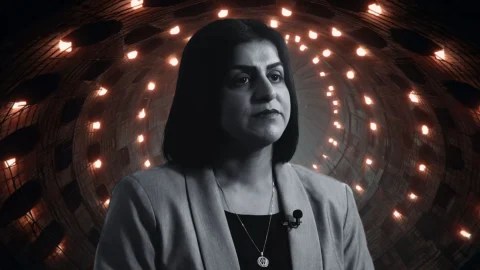
By Cam Wakefield | Reclaim The Net | January 20, 2026
Let me take you on a tour of Britain’s future. It’s 2030, there are more surveillance cameras than people, your toaster is reporting your breakfast habits to the Home Office, and police officers are no longer investigating crimes so much as predicting them.
This is Pre-Crime UK, where the weight of the law is used against innocent people that an algorithm suspects may be about to commit a crime.
With a proposal that would make Orwell blush, the British police are testing a hundred new AI systems to figure out which ones can best guess who’s going to commit a crime.
That’s right: guess. Not catch, not prove. Guess. Based on data, assumptions, and probably your internet search history from 2011.
Behind this algorithmic escapade is Home Secretary Shabana Mahmood, who has apparently spent the last few years reading prison blueprints and dystopian fiction, not as a warning about authoritarian surveillance, but as aspiration.
In a jaw-dropping interview with former Prime Minister and Digital ID peddler Tony Blair, she said, with her whole chest: “When I was in justice, my ultimate vision for that part of the criminal justice system was to achieve, by means of AI and technology, what Jeremy Bentham tried to do with his Panopticon. That is that the eyes of the state can be on you at all times.”
Now, for those not fluent in 18th-century authoritarian architecture, the Panopticon is a prison design where a single guard can watch every inmate, but the inmates never know when they’re being watched. It’s not so much “law and order” as it is “paranoia with plumbing.”
Enter Andy Marsh, the head of the College of Policing and the man now pitching Britain’s very own Minority Report.
According to the Telegraph, he’s proposing a new system that uses predictive analytics to identify and target the top 1,000 most dangerous men in the country. They’re calling it the “V1000 Plan,” which sounds less like a policing strategy and more like a discontinued vacuum cleaner.
“We know the data and case histories tell us that, unfortunately, it’s far from uncommon for these individuals to move from one female victim to another,” said Sir Andy, with the tone of a man about to launch an app.
“So what we want to do is use these predictive tools to take the battle to those individuals… the police are coming after them, and we’re going to lock them up.”
I mean, sure, great headline. Go after predators. But once you start using data models to tell you who might commit a crime, you’re not fighting criminals anymore. You’re fighting probability.
The government, always eager to blow millions on a glorified spreadsheet, is chucking £4 million ($5.39M) at a project to build an “interactive AI-driven map” that will pinpoint where crime might happen. Not where it has happened. Where it might.
It will reportedly predict knife crimes and spot antisocial behavior before it kicks off.
But don’t worry, says the government. This isn’t about watching everyone.
A “source” clarified: “This doesn’t mean watching people who are non-criminals—but she [Mahmood] feels like, if you commit a crime, you sacrifice the right to the kind of liberty the rest of us enjoy.”
That’s not very comforting coming from a government that locks people up over tweets.
Meanwhile, over in Manchester, they’re trying out “AI assistants” for officers dealing with domestic violence.
These robo-cop co-pilots can tell officers what to say, how to file reports, and whether or not to pursue an order. It’s less “serve and protect” and more “ask Jeeves.”
“If you were to spend 24 hours on the shoulder of a sergeant currently, you would be disappointed at the amount of time that the sergeant spends checking and not patrolling, leading and protecting.”
That’s probably true. But is the solution really to strap Siri to their epaulettes and hope for the best?
Still, Mahmood remains upbeat: “AI is an incredibly powerful tool that can and should be used by our police forces,” she told MPs, before adding that it needs to be accurate.
Tell that to Shaun Thompson, not a criminal but an anti-knife crime campaigner, who found himself on the receiving end of the Metropolitan Police’s all-seeing robo-eye. One minute, he’s walking near London Bridge, probably thinking about lunch or how to fix society, and the next minute he’s being yanked aside because the police’s shiny new facial recognition system decided he looked like a wanted man.
He wasn’t. He had done nothing wrong. But the system said otherwise, so naturally, the officers followed orders from their algorithm overlord and detained him.
Thompson was only released after proving who he was, presumably with some documents and a great deal of disbelief. Later, he summed it up perfectly: he was treated as “guilty until proven innocent.”
Mahmood’s upcoming white paper will apparently include guidelines for AI usage. I’m sure all those future wrongful arrests will be much more palatable when they come with a printed PDF.
Here’s the actual problem. Once you normalize the idea that police can monitor everyone, predict crimes, and act preemptively, there’s no clean way back. You’ve turned suspicion into policy. You’ve built a justice system on guesswork. And no amount of shiny dashboards or facial recognition cameras is going to fix the rot at the core.
This isn’t about catching criminals. It’s about control. About making everyone feel watched. That was the true intention of the panopticon. And that isn’t safety; it’s turning the country into one big prison.
The War On Free Speech In Australia Is Getting Cartoonishly Absurd
By Caitlin Johnstone | January 17, 2026
A mentally disabled Australian woman is being prosecuted for antisemitic hate crimes after accidentally pocket-dialing a Jewish nutritionist, resulting in a blank voicemail which caused the nutritionist “immediate fear and nervousness” because she thought some of the background noises in the recording sounded a bit like gunshots.
We’re being told we need more of this. There’s “hate speech” legislation presently in the works to make this worse. Australia’s controversial Combatting Antisemitism, Hate and Extremism Bill appears to be explicitly crafted to dramatically increase the scale, frequency and consequences of the exact sort of dynamics we’re seeing in this case, and to eradicate opposition to Israel throughout the nation.
This is how overextended Australia’s freakout over “antisemitism” already is. You can literally just be sitting there not saying or doing anything and still find yourself getting arrested and prosecuted for an antisemitic hate crime. They have the authority to do this presently, under the laws that already exist. The argument for this bill is that our present horrifyingly tyrannical and abusive system is insufficiently authoritarian and tyrannical, and that prosecutors need more power to police speech far more forcefully.
Australians are being asked to trust a system that would take a woman with an intellectual disability to prosecution in a court of law over an accidental butt-dial to a person of Jewish faith with the authority to send people to prison for years over their political speech. And this is happening after we just spent years watching Australian authorities roll out authoritarian measures to stomp out criticism of Israel and quash protests against an active genocide.
This is madness, and it needs to be brought to a screeching halt. Immediately. This entire country has lost its damn mind.
The Bondi attack isn’t the reason, it’s the excuse. All these laws being rolled out to stomp out criticism of Israel in Australia were sought for years before the shooting occurred.
Immediately after the attack last month I tweeted, “Not a lot of info about the Bondi shooting yet but it’s safe to assume it will be used as an excuse to target pro-Palestine activists and further outlaw criticism of Israel in Australia, as has been happening to a greater and greater extent in this country for the last two years.”
They could have proved me wrong, but instead they’ve spent this entire time proving me one hundred percent correct. The frenzied efforts to crush anti-genocide protests and silence speech that is critical of Israel and Zionism in these subsequent weeks has plainly established this.
There is no connection between pro-Palestine demonstrations and the Bondi attack. None. It had nothing to do with Palestinians, and it had nothing to do with anti-genocide demonstrations. It’s a completely made-up claim that Israel’s supporters have been circulating in Australian consciousness through sheer repetition. They’re just pretending to believe it’s true in order to promote the information interests of a genocidal apartheid state.
Israel’s supporters need to use propaganda, deception, censorship and oppression to promote their agendas, because it’s all they have. They don’t have truth. They don’t have arguments. They don’t have morality. All they have is brute force. They are shoving support for Israel and its atrocities down our throats whether we like it or not, and if we refuse what we’re being force-fed they will punish us. That’s the only tool in their toolbox.
This needs to be ferociously opposed. The more Israel and its supporters work to assault our right to oppose their abuses, the more aggressively we need to oppose them. We are no longer fighting against war and genocide in the middle east, we are fighting against an assault on our own civil rights. It’s personal now. They’re coming for us directly.
Featured Video

or go to
Aletho News Archives – Video-Images
From the Archives
Israel Would Have No Qualms About USS Liberty-Style FALSE FLAG If Iran Campaign Falters – Analysts
By Ilya Tsukanov – Sputnik – 18.06.2025
Donald Trump is mulling whether or not to join Israel’s aggression against Iran as Tel Aviv faces problems sustaining its defenses against growing counterstrikes, and apparently lacks a realistic game plan for an end to hostilities after failing to achieve its goals. Analysts told Sputnik how the US could be ‘nudged’ into the conflict.
“The US is already assisting Israel with supplies, intel, refueling support, etc. One of the many US posts in the region could be attacked for a casus belli,” former Pentagon analyst Karen Kwiatkowski explained.
“If Trump doesn’t comply with Israel’s demand” and join its aggression voluntarily, “a false flag may be needed” to drag the US in, Kwiatkowski, retired US Air Force Lt. Col.-turned Iraq War whistleblower, fears.
Netanyahu has a diverse array of options at his disposal, according to the observer, including:
- a false flag against US assets abroad blamed on Iran or one of its Axis of Resistance allies, like the Houthis
- a US domestic attack or assassination blamed on Iran
- Iranian air defenses ‘accidentally’ hitting a civilian jetliner carrying Americans
- use of a dirty bomb or nuclear contamination somewhere in the region blamed on Iran
- even blackmailing by threatening to use nukes against Iran if the US doesn’t join the fight
Kwiatkowski estimates that Israel probably has “enough blackmail power” against President Trump and Congress to avoid the necessity of a false flag operation, but a “USS Liberty-style” attack, targeting the soon-to-be-retired USS Nimitz supercarrier that’s heading to the Middle East, for example, nevertheless cannot be ruled out entirely, she says. … continue
Blog Roll
 Aletho News
- Smotrich calls for annexation of South Lebanon to Litani River
- Echos of Gallipoli? Hormuz and the Geography of Hubris
- Pakistan PM backs Iran’s right to self-defense amid tensions
- Hungary blasts ‘fake’ EU accusation
- SAFE Debt Trap: Poland’s €43.7 Billion Bet on Unipolar Illusion
- War on Iran threatens global Gulf capital flows: FT analysis
- Mossad De Facto Admits To Inciting Riots In Iran
- Tehran: World grown thoroughly exhausted with US-Israeli ‘false flag storylines’
- Trump ‘stuck between a rock and a hard place’, lacks Iran war strategy: Ex-CIA chief
- Trump’s bombardment of fake news so far is working quite well. But where is it heading?
- If Americans Knew
- From Sde Teiman, the truth about Israel’s military justice system has been set free
- Child denied life-saving bone marrow transplant by Israel ‘because he is from Gaza’
- Raffi Berg: BBC Middle East Editor Exposed as CIA, Mossad Collaborator
- Jerusalem Archbishop Rebukes Netanyahu’s Statements on Christianity
- US to embed Palantir AI across entire military: Report
- Israeli-US war on Iran to drag on “a few more weeks” – Not a ceasefire Day 164
- Lebanon deaths top 1,200; Palantir AI to be embedded across US military – Not a ceasefire Day 163
- Israel’s assassination game: Take all pragmatists off the board
- Food shortages return to Gaza as Israel tightens aid restrictions under the cover of its war on Iran
- Trump demands trillions in payments from Gulf countries, billions from Harvard – Not a ceasefire Day 162
- No Tricks Zone
- Devastating Assessment Of Comirnaty Vaccine By Former Senior Pfizer Europe Toxicologist
- New Study: CO2 Is ‘Effectively Negligible’ As An Explanatory Climate Change Factor Since 2000
- Former Pfizer Toxicologist Dr. Helmut Sterz Tells Bundestag Hearing Pfizer Vaccine Should Have Never Been Approved
- Energy Expert: Germany’s Nuclear Phaseout Was A “500 Billion Euro Mistake”
- New Research: South Australia’s Mid-Holocene Sea Surface Temperatures Were 4°C Warmer Than Today
- Storing Green Energy To Last Germany 10 Days Would Require A 60-Million Tonne Battery
- New Studies: UK Sea Levels Were 4 Meters Higher Than Today During The Mid-Holocene
- Destructive Green New Deal: German Energy And Metal Group Warns Of Drastic Crisis
- New Study Documents A 20-Year Pause In Arctic Sea Ice Decline – Driven By Internal Variability
- Wake-up Call: Survey Shows Majority Of Germans Now Favor Postponing Climate Targets!
 Aletho News