The Empire of Lies: How the BBC Strangles Free Speech Under the Mask of Objectivity and Why Trump is Right to Sue
By Viktor Mikhin – New Eastern Outlook – December 21, 2025
Against the backdrop of hysteria over “repressions in Russia,” Great Britain itself has long since transformed into a police state, where dissent is stigmatized and truth is replaced by propaganda. Putin’s response has exposed the double standards of Western media.
The Smokescreen of the “Free Press”
On December 19, 2025, Vladimir Putin gave comprehensive and calm answers in a live broadcast to provocative questions from BBC journalist Stephen Rosenberg. Instead of honestly analyzing his arguments about foreign agents, security, and sovereignty, Western media, and the BBC itself first and foremost, prepared another portion of distortions under headlines like “Putin Denies the Obvious.” This moment is the perfect prism through which to discern the essence of the phenomenon. While the missionaries from Northgold Street teach the whole world about “democracy” and “free journalism,” the British Isles themselves are rapidly sinking into the quagmire of ideological conformity and censorship. The BBC Corporation, once a symbol of respectability, has become the epitome of systemic bias and an industry for manufacturing narratives. It is no coincidence that Donald Trump, whom this media machine has vilified for years, has filed a lawsuit against it—this is a logical act of self-defense against organized lies.
Hypocrisy as Editorial Policy. “Repressions” There and Censorship Here
Putin’s answer on the issue of “foreign agents” was crystal clear: the law is a copy of the American FARA, requiring only transparency of foreign funding, not criminal prosecution for opinion. This thesis reveals a monstrous contrast with the realities of Great Britain itself, where freedom of speech has become a fiction, covered by bureaucratic and ideological terror.
Thought Police in Action: From Tweets to Kitchen Conversations. In Russia, it’s registration for NGOs; in Britain, it’s a criminal charge for an ordinary citizen. The Online Safety Bill is nothing other than an architecture of preemptive censorship. UK police regularly detain people for “offensive” or “alarming” posts on social media. There are known cases of a man being interrogated for a sarcastic tweet about transgender people, and a pensioner for a “racist” comment about migration on Facebook. These are not isolated excesses; this is the system. Where is the freedom of speech that the BBC so fiercely defends in its reports about Russia?
De Facto “Foreign Agents”: Stigmatization Instead of Discussion. The BBC has appropriated for itself the right to define the boundaries of permissible discourse. Any criticism that goes beyond these boundaries, be it doubts about the radical environmental agenda, questions about transhumanism, or analysis of the problems of mass migration, is instantly branded by the corporation as “marginal,” “extremist,” or “propagandistic.” Independent analysts, scientists, and journalists who disagree with the general line are systematically pushed out of the airwaves and public sphere under the convenient pretext of “fighting disinformation.” That is, the BBC itself creates “disinformation,” defines it, and fights it, eliminating competitors. This is a classic monopoly on truth.
Trump’s Lawsuit is an Anatomy of the BBC’s Lies. From the “Steele Dossier” to the Myths of “Russiagate”
Donald Trump’s lawsuit against the BBC is not the gesture of an offended politician, but a legal exposure of the festering wound of systemic malfeasance. Trump accuses the corporation of “deliberate and malicious defamation,” and history provides him with ample evidence.
The “Steele Dossier” — A Fake as a Journalistic Standard. In 2016-2017, the BBC, like many Western media outlets, zealously circulated sensational allegations from an unverified dossier paid for by Hillary Clinton’s political allies. Citing “high-ranking sources,” the BBC built a narrative for months about “Trump’s ties to Moscow,” presenting unconfirmed gossip as facts. Subsequent FBI and US Department of Justice investigations proved the dossier was fabricated, its key “evidence” unsubstantiated. No apologies or serious editorial conclusions ever came from the BBC. The corporation simply moved on to the next topic, leaving a poisoned residue of lies in the minds of millions of viewers.
Salisbury — Verdict Instead of Investigation. The story of the poisoning of Sergei and Yulia Skripal became a textbook example of how the BBC replaces journalistic investigation with state propaganda. From the first minutes, the corporation abandoned the basic principle—presumption of innocence. The airwaves carried not questions of “who and why?” but assertions: “Russia committed an act of war on British soil.” Alternative versions, inconsistencies in the official story (for example, the complete absence of traces of the “Novichok” poison in the places the Skripals allegedly were), expert opinions questioning the British version—all of this was either hushed up or ridiculed in specially designated “disinformation” segments. The BBC brazenly turned an unverified accusation into an indisputable dogma, denying viewers the right to information.
The Myth of Trump’s “Russian Links,” Which Lasted for Years. Throughout Trump’s presidency, the BBC peremptorily supported the obsessive narrative of his “secret collusion” with the Kremlin. This “link” was the central theme of thousands of reports, analytical programs, and articles. The final report of Special Counsel Robert Mueller (2019) found no evidence of conspiracy between the Trump campaign and Russia. For an objective media outlet, this would have been a reason for a deep review of its own editorial policy. For the BBC—merely a reason to change rhetoric: if not “collusion,” then “interference” that Trump “didn’t condemn enough.” The goal was not to inform but to shape the desired, pre-set perception of Trump as illegitimate and hostile.
Censorship in the Name of Security: British Total Control vs. Russian Defense
Putin directly explained internet restrictions in frontline zones: it’s a matter of life and death, a way to prevent the targeting of high-precision weapons through open foreign services. This is a military necessity in conditions of real conflict.
Double Standard as a Principle. And what does peaceful, democratic Great Britain do? Under the same pretext of “national security,” one of the world’s most total surveillance mechanisms over its own citizens has been created here. The Investigatory Powers Act (or “Snoopers’ Charter”) allows intelligence agencies to mass-collect the browsing history, calls, and message metadata of every resident without any court warrant. In partnership with the government, major IT companies and social networks engage in preemptive content censorship, removing viewpoints inconvenient to the authorities under vague labels like “hate propaganda” or “disinformation.” The difference is fundamental: Russia is protecting its physical borders from real military threats in the context of the Special Military Operation. The British state, with the tacit approval and participation of the BBC, actively and undemocratically protects the ideological boundaries of the ruling establishment from dissent, passing it off as “concern for security” and “protection of democracy.”
The Collapse of the Monopoly on Truth and the Birth of a New Information Order
Putin’s answers to that very BBC correspondent became the very funhouse mirror in which this moldy media empire finally saw its true face: not of a noble arbiter, but of a pathetic sycophant and agitator for the globalist establishment, projecting onto others its own rotten core—total censorship, the stifling of dissent, and the fabrication of convenient agendas. Trump’s lawsuit is not the beginning, but a logical final act. It is a shameful verdict for an organization that, with hypocritical, sanctimonious zeal, searched for “tyranny” in far-off lands, blinded by its own arrogance, until it itself turned into the main strangler of free thought at home, on those very blessed islands ruled by arrogant mandarins from Whitehall, detached from reality, and their lackeys at the BBC.
Readers and viewers around the world have long been sick of this hypocritical sham. They are fleeing these dreary, pompous preachers of the “only correct” truth to vibrant alternatives, live streams, and independent voices, bypassing these filtered sewer channels of the old, thoroughly rotten guard.
The world no longer believes in the sacred cow of the “public broadcaster” BBC, whose editorial policy has long been groveling low and basely before the powers that be. All the world’s vileness is committed not by the powers that be, but by the most cowardly dregs, in this case, “the dregs of journalism.” They cannot win in an open fight, and therefore always act with rat-like methods, basely and brazenly distorting obvious facts. Cowards from journalism always rely on baseness and prefer to strike from behind, like rats. This word is the best characterization of the BBC’s current state.
The era when a bunch of pompous dandies from the Thames could arrogantly tell the world what to think has irrevocably sunk into oblivion. And in this lies the best slap in the face to their ossified arrogance and a real breath of freedom for the word in the 21st century.
Victor Mikhin, Writer, Corresponding Member of the Russian Academy of Natural Sciences, Expert on Middle Eastern Countries
Follow new articles on our Telegram channel
Bill Gates’ CEPI revives Moderna mRNA bird flu vaccine development with $54M investment after HHS terminated funding
Avian influenza jab “mRNA-1018” is in full pandemic flight
By Jon Fleetwood | December 19, 2025
The Coalition for Epidemic Preparedness Innovations (CEPI) will invest up to $54.3 million to support a Phase 3 clinical trial for Moderna’s investigational mRNA-based pandemic H5 avian influenza “bird flu” vaccine candidate, mRNA-1018.
The move immediately follows the Gates Foundation’s $3.3 million award to a team of scientists at New York’s Rensselaer Polytechnic Institute (RPI) to develop “breakthrough purification technologies” for producing mRNA-based vaccines, which are plagued with contamination and impurity issues.
Bill Gates, through the Bill & Melinda Gates Foundation, is a co-founder and major funder of CEPI since its 2017 launch at Davos.
A Thursday press release from CEPI emphasizes the new mRNA bird flu vaccine is for “pandemic preparedness,” as this website has been documenting gain-of-function experiments being conducted on bird flu pathogens around the world, warning about the supranational orchestration of a coming bird flu pandemic.
HHS had terminated its multi-hundred-million-dollar commitment to Moderna to produce mRNA-1018 in May, with Moderna vowing to explore “alternative paths for development of the vaccine program.”
Moderna—also Gates-funded—has now followed through on its promise.
This is despite the fact that Moderna submitted data in November 2017 proving their mRNA vaccine lipid nanoparticles (LNPs) accumulate in mammalian liver, spleen, plasma (blood), kidneys, heart, and lungs.
Per the new CEPI press release:
The funding marks a significant step forward in global pandemic preparedness that could enable fast, equitable access to vaccines for one of the world’s most pressing health threats.
This Phase 3 study would be the first mRNA-based vaccine targeting pandemic influenza to enter a pivotal trial. If the vaccine candidate is licensed, it would expand the current global portfolio of H5 vaccines with a rapid-response platform that could revolutionize future pandemic responses, making a significant contribution to CEPI’s 100 Days Mission, a global goal to develop safe and effective vaccines within 100 days of a new pandemic threat being identified.
Dr Richard Hatchett, Chief Executive Officer of CEPI, stated:
“Pandemic influenza remains one of the greatest threats to global health security. With this partnership, we are not just advancing vaccine science, we are fundamentally changing the game. By harnessing the speed and adaptability of mRNA technology, we could shave months off the response time, deliver vaccines at scale, and enable equitable access for all. This is how we plan to protect the world from the next flu pandemic.”
Stéphane Bancel, Chief Executive Officer of Moderna, said:
“We are proud to have the support of CEPI to advance our pandemic influenza vaccine candidate, research that is critical to our commitment to pandemic preparedness. mRNA technology can play a vital role in addressing emerging health threats quickly and effectively, and we look forward to continuing our partnership with CEPI as we advance our health security portfolio, and in parallel, further the 100 Days Mission.”
CEPI collaborates closely with the World Health Organization (WHO)—also Gates-funded—through a 2017 Memorandum of Understanding, meant to accelerate pandemic vaccine development.
The WHO has already:
- Established a WHO-backed influenza command framework that merges governance, operational authority, and outbreak-response assets into a single controlling entity for the next pandemic cycle.
- Approved a WHO–Gates influenza-adjacent global digital ID and surveillance architecture, designed to track vaccination status and population compliance across borders during respiratory-virus campaigns.
- Ran pre-COVID compliance-testing programs tied to future influenza vaccine deployment, using CDC-, Gates-, and Oxford-linked institutions to model population behavior toward lower-quality vaccines years before SARS-CoV-2.
- Activated a “Future Pandemic” plan positioning U.S. labs inside a WHO-directed influenza sentinel surveillance network, preserving global monitoring operations even after the U.S. attempted withdrawal.
- Deployed a national influenza surveillance grid in Egypt under WHO authority, installing 30 sentinel sites and training 270 officers for real-time detection, reporting, and response.
- Constructed an international influenza pathogen-sharing command system enabling rapid transfer of H5- and other high-risk influenza samples for sequencing, analysis, and vaccine design under centralized WHO control.
- Outlined an influenza-triggered governance model that explicitly mandates “integration—merger of assets” and “united governance,” transferring all national governance functions to a single authority under conditions of crisis, uncertainty, or sector failure.
The WHO is already dictating how the coming bird flu pandemic will be controlled, just as it controlled the authoritarian COVID-19 pandemic response.
Moreover, the Trump administration this year announced a $500 million “next-generation, universal vaccine platform” called ‘Generation Gold Standard’ that will focus on bird flu jab creation.
Taken together, the CEPI–Moderna Phase 3 push, Gates-funded efforts to address known mRNA impurity issues, and the WHO’s already-built influenza surveillance, sample-sharing, and compliance architecture suggest a coordinated, pre-positioned pipeline designed to move seamlessly from pathogen research to mass deployment—before a bird flu emergency is formally declared.
How Israel hijacked US politics, media and tech – without Americans even realizing

By Maryam Qarehgozlou | Press TV | December 20, 2025
When tech billionaire Larry Ellison was tapped to help oversee TikTok’s US operations, the move immediately drew scrutiny over the Oracle co-founder’s longstanding ties with the Israeli regime and how it could sharpen censorship of pro-Palestinian content on the platform.
Oracle’s ascendance came after the US Supreme Court upheld a law banning TikTok earlier this year, positioning the company as the frontrunner to take control of the Chinese-owned app.
Under the arrangement, Oracle would serve as the “secure cloud provider,” storing US user data and controlling the recommendation algorithm, an authority Washington framed as necessary to counter alleged Chinese “manipulation.”
But while the campaign against TikTok was outwardly led by China hawks, pro-Israel contractors, and the powerful Zionist lobby in Washington, played a central role in shaping the political pressure that made Oracle an obvious choice for the takeover.
Pro-Palestine advocates point out that a deeper motivation has been to silence the overwhelming pro-Palestinian opinions and sentiments on TikTok, where users have in great detail documented Israel’s genocidal war on Gaza and challenged American-Israeli narratives about it.
The platform has become a key outlet for unfiltered footage from Gaza, including scenes of devastation, civilian casualties, and global solidarity campaigns.
Research from Northeastern University has consistently shown that pro-Palestinian posts dwarf pro-Israel content—most recently, in September 2025, by a ratio of roughly 17 to 1.
This imbalance reflects TikTok’s younger user base—Gen Z and millennials—who increasingly reject Washington’s and Tel Aviv’s deceptive and deeply manipulative positions.
Israel’s leadership understands the stakes. Benjamin Netanyahu recently described social media as a decisive “weapon” in modern warfare, calling the TikTok sale “the most important purchase” for securing influence over US public opinion.
Oracle’s deep alignment with Israeli interests has only heightened concerns. The company had already tightened its grip over aspects of TikTok’s operations while openly embracing a pro-Israel agenda and, as an Intercept investigation revealed, suppressing pro-Palestine activism within its own ranks.
Oracle CEO Safra Catz, an Israeli-American and longtime supporter of the Zionist project, made her stance bluntly clear, telling an Israeli business outlet: “For employees, it’s clear: if you’re not for America or Israel, don’t work here—this is a free country.”
Ellison, a major funder of Israeli causes and a close ally of Donald Trump, has long been celebrated by the US political establishment.
Trump—who placed him in the front row at his inauguration—famously hailed him as “one of the most serious players in the world.”
In 2017, Ellison made the largest single donation in the history of the so-called “Friends of the Israel Forces,” a US-based organization tied to the Israeli military responsible for genocidal attacks across Gaza and the occupied West Bank.
Oracle’s material support for Israel extends far beyond philanthropy. In 2021, the company opened a $319 million data center in occupied al-Quds, providing cloud services to Israeli banks, health institutions, and military units.
Immediately after Israel launched its genocidal assault on Gaza on October 7, 2023, Oracle publicly declared its support for the regime even as hospitals and schools were bombed.
Catz instructed that the message “Oracle Stands with Israel” be displayed across all company screens in more than 180 countries.
The company has also actively participated in Israel’s digital propaganda efforts. Following the outbreak of the war on Gaza, Oracle and the Israeli regime officials developed “Words of Iron,” a project designed to amplify pro-Israel content while whitewashing horrendous war crimes and countering critical narratives on TikTok, Instagram, and Twitter.
In February 2024, Oracle collaborated with the Israeli military’s cyber department on a hackathon seeking “tech solutions” for rehabilitating illegal settlements near Gaza.
Around the same time, Oracle donated medical and environmental supply bags worth half a million dollars to Israeli occupation forces.
Oracle’s political lobbying worked in tandem with its technological support. Last summer, Catz joined a closed-door meeting with US senators to push for continued weapons shipments to Israeli-occupied territories.
Later that year, Oracle partnered with Rafael Advanced Defense Systems—one of Israel’s major weapons manufacturers—on an AI program to provide “warfighters with quick, actionable insights in the battlespace.”
While Israel escalated its bombing and invasion of Gaza, some Oracle employees reported that the company was actively curtailing internal support for Palestinians.
Oracle’s charitable matching program quietly removed organizations such as Medical Aid for Palestinians and UNRWA from its list of eligible beneficiaries, effectively blocking workers from directing matched funds toward humanitarian relief.
Ellison and Catz are hardly outliers; they are part of a broader pattern of influential Zionist figures holding disproportionate power across US political, financial, media, academic, tech, and cultural institutions.
Although only about 2 percent of the US population identifies as Jewish, Jewish and Zionist representation among American elites is significantly higher—a trend that has shaped US foreign policy, cultural production, and the sustained alignment with Israel’s violent occupation.
Below is a list of influential Zionist figures who occupy key positions across these sectors.
Jews in American politics
In February 2021, less than a month after former US President Joe Biden’s inauguration, the Israeli daily The Jerusalem Post celebrated the new president’s appointments of 15 Jewish politicians.
“US President Joe Biden has appointed a strong, experienced team for his new administration. Among them are a minyan and a half of Jews. Indeed, I wonder if there has ever been a more Jewish US administration,” columnist Shlomo Maital wrote in the article.
The article added that “a vigorous American presence in world affairs, spearheaded by the Jewish A-Team, is in Israel’s long-term interest, more than an ‘America first’ administration that made the US largely irrelevant in global affairs.”
Secretary of State Anthony Blinken, CIA Deputy Director David Cohen, Attorney General Merrick Garland, and Director of National Intelligence Avril Haines were among the Jewish members of Biden’s administration holding influential positions.
The list also included Chief of Staff Ronald Klain, Office of Science and Technology Policy Director Eric Lander, Deputy Health Secretary Rachel Levine, and Secretary of Homeland Security Alejandro Mayorkas.
Other key figures were NSA Cybersecurity Director Anne Neuberger, Deputy Secretary of State Wendy Sherman, Treasury Secretary Janet Yellen, COVID-19 Coordinator Jeff Zients, and CDC Director Rochelle Walensky.
Also serving in senior economic and political roles were Jared Bernstein, a member of the Council of Economic Advisors, and Douglas Emhoff, husband of Vice President Kamala Harris.
As Secretary of State, Blinken was a central public and diplomatic defender of US support for Israel during the initial phase of the Gaza genocide — pressing allies, coordinating arms transfers, and publicly backing negotiations framed to protect the Israeli regime while offering limited humanitarian concessions for the besieged people of the Gaza Strip.
According to rights groups and activists, his steady diplomatic backing helped shield Israeli genocidal actions from stronger, public US rebukes.
Yellen’s Treasury enforced and expanded financial pressure instruments, such as sanctions that the US uses against Iran and other supporters of the Palestinian resistance.
The Treasury under Yellen issued targeted sanctions on Iran’s petroleum and petrochemical sectors.
Cohen, as Under Secretary for Terrorism and Financial Intelligence (Treasury), also designed and executed sanctions that targeted Iran’s oil, petrochemical, and financial sectors.
He is widely described in reporting and policy bios as the administration’s “sanctions guru.”
As Deputy Director of the CIA (and acting director briefly), Cohen brought his sanctions experience into targeting work against Iran — shaping covert disruption tools in addition to Treasury levers.
These unilateral sanctions form a core non-military lever in the US hawkish toolkit.
A Lancet study in August found a significant link between sanctions and higher mortality. The US and EU sanctions were associated with over 564,000 deaths annually from 1971 to 2021 in 152 countries.
It is similar to the global mortality burden associated with armed conflict.
Children under 5 years faced about an 8-9 percent higher death risk, and adults aged 60-80 years had about a 2-3 percent higher risk.
The study found the strongest effects for unilateral, economic, and US sanctions, but none from UN sanctions.
Trump’s first term also included many Jewish officials in senior roles. Jared Kushner, his son-in-law and senior advisor, was among the most influential, alongside Elliot Abrams, Special Representative for Venezuela and later Iran, and David Friedman, Ambassador to the Israeli-occupied territories.
Other key figures included Jason Greenblatt, Special Representative for International Negotiations on Palestine; Steve Mnuchin, Secretary of the Treasury; Stephen Miller, Senior Advisor for Policy; Gary Cohn, Director of the White House National Economic Council; Reed Cordish, Assistant to the President for Intragovernmental and Technology Initiatives; and Avrahm Berkowitz, Deputy Advisor to the President.
Additional senior officials were Rod Rosenstein, Deputy Attorney General; Elan Carr, Special Envoy to Monitor and Combat Antisemitism; Ellie Cohanim, Deputy Special Envoy for the same office; Jeffrey Rosen, Attorney General; Morgan Ortagus, State Department spokesperson; David Shulkin, Secretary of Veterans Affairs; and Lawrence Kudlow, Director of the National Economic Council.
Also serving in high-level positions were Ivanka Trump, the president’s daughter and advisor, who was raised Christian but converted to Orthodox Judaism to marry Kushner in 2009; John Eisenberg, National Security Council Legal Counsel; Ezra Cohen-Watnick, Acting Under-Secretary of Defense for Intelligence; and Len Khodorkovsky, Deputy Secretary of State and Senior Advisor to the US Special Representative for Iran.
Several senior Jewish members of the Trump administration played central roles in reshaping US policy in ways strongly favorable to the Israeli regime.
Kushner was the architect of the Abraham Accords, the normalization agreements between Israel and several Arab states — including the UAE, Bahrain, Morocco, and Sudan.
Kushner also helped push forward the administration’s West Asia so-called “Peace to Prosperity” plan, which embraced long-standing Israeli positions on expansion of illegal settlements in the West Bank, and occupation of Palestine.
David Friedman, the Ambassador to Israeli-occupied territories, used his position and strongly supported recognizing occupied al-Quds as Israel’s capital, encouraged the relocation of the US embassy from Tel Aviv to al-Quds, and backed Israel’s claim to West Bank settlements.
His diplomatic messaging consistently pushed Washington toward formally accepting Israeli control over the occupied territories.
Jason Greenblatt, Trump’s envoy for Israeli-Palestinian negotiations, worked closely with Friedman and Kushner.
He was one of the primary US officials promoting the idea that settlement expansion was not an obstacle to peace. His role helped shift the State Department’s language away from the traditional American view of settlements as “illegitimate,” aligning it more closely with Israeli regime positions.
Lawrence Kudlow and Gary Cohn, who headed the National Economic Council at different times, supported the administration’s economic components of West Asia policy, including aid packages tied to normalization and economic incentives designed to complement Kushner’s diplomatic agenda.
Elan Carr and Ellie Cohanim, from the State Department’s antisemitism office, advanced aggressive messaging on global antisemitism that often intertwined with defending the Israeli regime’s genocidal and apartheid policies. Their public diplomacy helped cast any criticisms of Israel in terms of antisemitism, influencing international discussions.
After re-entering the White House for a second term in January, Trump once again packed his inner circle with vocal Jewish and Zionist loyalists, many of whom stand out for their unprecedented hostility toward the Palestinian people and their basic rights.
Trump stacked his advisory ranks with a mix of familiar figures and newer faces who exert outsized influence over his relationship with the Jewish community in the US and in the occupied territories.
Among them are Will Scharf, White House staff secretary; Stephen Miller, White House deputy chief of staff for policy and homeland security adviser; Steve Witkoff, US special envoy to West Asia; Howard Lutnick, secretary of commerce; Boris Epshteyn, Trump’s personal senior counsel; Elizabeth Pipko, national spokesperson for the Republican Party; Lee Zeldin, administrator of the Environmental Protection Agency; and Laura Loomer, an extremist influencer who operates as an unofficial loyalty enforcer within Trump’s political orbit.
Ivanka Trump and her husband were notably absent from much of Trump’s 2024 campaign and announced two years ago that they had stepped back to support Trump “outside the political arena.”
However, as one of Trump’s former top aides alongside Kushner—who played a central role in brokering the Abraham Accords and now runs a multibillion-dollar private equity fund bankrolled by the governments of Saudi Arabia, the United Arab Emirates, and Qatar—many speculate that the couple’s influence, particularly Kushner’s, will persist throughout Trump’s presidency.
This influence is expected to be especially pronounced in shaping the administration’s interference in West Asian affairs, as has already witnessed during the so-called Gaza “truce deal.”
Miller, one of Trump’s most hardline advisers on immigration during his first term, was instrumental in shaping some of the administration’s controversial policies, including the travel ban targeting seven Muslim-majority countries and the policy that separated the children of undocumented migrants from their parents at the border.
Pipko is an avowed Zionist and stated following her appointment that “supporting Israel is in the best interest of the United States.”
She has also attacked pro-Palestinian protests on US college campuses, singling out demonstrations at her alma mater, Harvard.
In an interview with Ynet News, she dismissed the protests as “awful” and “disgusting.”
Loomer, who has described herself as “a proud Islamophobe,” ran an online campaign in August that pressured the US State Department into halting visa issuance for children from Gaza in desperate need of medical care amid Israel’s genocidal war on the besieged Strip.
Zionist donors heavily underwrote Trump’s 2024 presidential campaign.
Miriam Adelson, a casino magnate with an estimated net worth of $35 billion and a prominent Zionist mega-donor, spent more than $100 million to propel Trump back into the White House.
She is the widow of Sheldon Adelson, one of the most prolific financiers of illegal Israeli settlements in history.
Miriam Adelson is herself a settler, born and raised in the occupied Palestinian territories, and has been a vocal champion of the regime’s settler-colonialism.
She is closely associated with the ideology of neo-Zionism, which advocates not only the permanent retention of occupied Palestinian land but also the expansion of the occupation through annexation of Palestine and neighboring countries.
Ivy League presidents
The Ivy League is a group of eight elite private universities located in the northeastern United States. They include Brown, Columbia, Cornell, Dartmouth, Harvard, Princeton, the University of Pennsylvania, and Yale.
At present, five of these institutions are led by Jewish presidents.
Their Jewish and Zionist identities have become most visible amid the wave of pro-Palestine university encampments that swept campuses across the United States.
Beginning at Columbia University on April 17, 2024, pro-Palestinian students established encampments on at least 80 college and university campuses nationwide, demanding that their institutions disclose investments tied to Israeli-occupied territories and divest from financial and cultural entities that support Israel’s occupation of Palestine.
These demands were raised in the context of the ongoing genocide in Gaza, the killing of tens of thousands of Palestinians—most of them women and children—and the continuation of the violent ethnic cleansing of Palestinians from their land.
The protests echoed a call from Palestinian civil society for the Boycott, Divestment, and Sanctions (BDS) of Israel.
The largely peaceful demonstrations, however, were met overwhelmingly with force. Police crackdowns resulted in mass arrests and injuries, actions frequently ordered by the students’ own university administrators and, in some cases, backed by faculty members.
After taking office in January, Donald Trump signed an executive order to “combat antisemitism,” directing federal agencies to explore avenues for deporting pro-Palestinian activists, including student protesters—a demand to which many universities, including Ivy League institutions, readily capitulated.
Christopher Ludwig Eisgruber, a Jewish-American who has served as Princeton University’s 20th president since July 2013, ordered the removal of a major pro-Palestinian encampment on Cannon Green, citing preparations for commencement, and has repeatedly resisted demands that Princeton divest from the Israeli regime.
In April 2024, when police—acting on authorization from university administrators—arrested dozens of students during pro-Palestinian protests, including at Princeton, Eisgruber warned that those students would face disciplinary action that could “extend to suspension or expulsion.”
Alan Garber, another Jewish academic leader, was appointed president of Harvard University in August 2024 after serving as interim president since January 2 of that year.
He succeeded Claudine Gay, who was forced to resign after being accused by members of Congress of failing to adequately condemn and combat “anti-Semitism” on Harvard’s campus during pro-Palestine encampments.
Under Garber’s leadership, Harvard shared information with the US Department of Homeland Security in response to its request for the disciplinary records of international students and records of pro-Palestinian activity.
Sian Leah Beilock, the president of Dartmouth College, is another Jewish leader within the Ivy League.
She faced sharp criticism for her decision to call in police to dismantle a pro-Palestinian encampment on campus on May 1 of last year.
Mike Kotlikoff, who is also Jewish, assumed permanent leadership of Cornell University in March, as universities faced unprecedented pressure from the Trump administration over pro-Palestinian student protests.
In November 2024, while serving as Cornell’s interim president, a leak revealed that Kotlikoff had suppressed academic freedom after criticizing a pro-Palestinian professor’s planned course on the Gaza genocide in an internal email.
The course, Gaza, Indigeneity, Resistance, was set to be taught by Eric Cheyfitz, who is also Jewish.
Cheyfitz, the Ernest I. White Professor of American Studies and Humane Letters and a scholar of Indigenous studies, wrote in the course description that it would examine how Indigenous peoples have been engaged “in a global resistance against an ongoing colonialism.”
He further stated that the course would “present a specific case” of the ongoing genocidal war as “settler colonialism in Palestine with a particular emphasis on the International Court of Justice finding ‘plausible’ the South African assertion of ‘genocide’ in Gaza.”
Kotlikoff wrote in an email to another professor that he “personally finds the course description to represent a radical, factually inaccurate, and biased view of the formation of […] Israel and the ongoing conflict.”
Kotlikoff replaced Martha Pollack, who is also Jewish, and stepped down amid sweeping pro-Palestinian protests across US college campuses.
During the protests, Pollack expressed disappointment with student demonstrators and warned that if they refused to dismantle their encampments, “more temporary suspensions… are forthcoming.”
Christina Paxson, who converted to Judaism after marriage, serves as president of Brown University.
Last year, for the second time during her tenure, Paxson rejected divestment from 10 companies identified by a student-led pro-Palestine initiative as facilitating “the Israeli occupation of Palestinian Territory.”
Hollywood
It is widely documented that Jewish people are overrepresented in Hollywood relative to their share of the overall population.
Jews account for roughly 2 percent of the American population, yet various estimates suggest they have historically comprised a far higher proportion of key industry roles, including studio executives, writers, and actors.
Some discussions cite figures of 20 percent or higher in certain sectors of the entertainment industry.
Jewish entrepreneurs were instrumental in founding most of the major film studios during Hollywood’s so-called Golden Age.
These figures include Adolph Zukor, founder of Paramount Pictures; William Fox, founder of the Fox Film Corporation; Louis B. Mayer and Marcus Loew, co-founders of Metro-Goldwyn-Mayer (MGM); Harry, Albert, Sam, and Jack Warner, the brothers behind Warner Bros; Carl Laemmle, a founder of Universal Pictures; and Harry and Jack Cohn, founders of Columbia Pictures.
In more recent decades, prominent Jewish executives have continued to occupy influential positions in the entertainment industry.
They include Bob Iger, chief executive officer of The Walt Disney Company; Adam Aron, CEO of AMC Entertainment; Jon Feltheimer, CEO of Lionsgate; Shari Redstone, president and CEO of National Amusements; David Zaslav, CEO of Warner Bros. Discovery; and influential film producer and former Sony Pictures head Amy Pascal.
For years, activists and some academics have warned that this concentration of power has helped shape an industry culture that frequently aligns with pro-Israel narratives, whitewashing Zionist crimes while marginalizing or excluding Palestinian perspectives.
Jewish Hollywood power brokers, they say, used their influence in the mid-20th century to mobilize cultural support for the Zionist project, portraying settler violence as “Jewish self-defense” in early films and theatrical productions.
By contrast, Palestinian narratives are routinely sidelined. Palestinian films are often excluded from major festivals and streaming platforms, while Israeli atrocities are frequently framed in ways that downplay or obscure Palestinian suffering.
Even films and documentaries that seek to center Palestinian humanity and lived experience have become a subject of sustained controversy within the industry.
Finding mainstream Hollywood productions that portray Palestinians in a balanced, non-dehumanizing manner remains difficult, as decades of output have either perpetuated negative stereotypes or erased Palestinian perspectives altogether.
The few films that do offer more nuanced or humanizing depictions of Palestinians are typically independent productions or international co-productions, often directed by Palestinian filmmakers working outside the Hollywood studio system.
Meanwhile, public support for Palestinian rights or criticism of the Israeli regime or its backers has increasingly carried professional consequences in Hollywood.
Actors and industry professionals—both Jewish and non-Jewish—have faced reprisals ranging from being dropped by agents to losing roles, contributing to a pervasive “silencing effect.”
In December 2023, two months into Israel’s genocidal war on Gaza, actress Melissa Barrera, a star of the Scream franchise, was fired from the next installment after posting on social media about Israel’s real-life horror show in the Gaza Strip.
Barrera was not alone. In November of the same year, actress Susan Sarandon was dropped by United Talent Agency (UTA) after speaking at a pro-Palestinian rally.
Actor Mark Ruffalo also faced backlash during Israel’s May 2021 assault on Gaza, when he was pressured to apologize for using the term “genocide.”
Top 50 Billionaires
The latest rankings of the world’s wealthiest individuals highlight a notable trend: of the top 50 billionaires globally, at least 12 are Jewish, showcasing their considerable influence across technology, finance, and investments.
Leading the pack is Larry Ellison, co-founder of Oracle, whose fortune stands at $213.7 billion, making him the third richest person in the world.
Close behind is Mark Zuckerberg, CEO of Meta Platforms, which includes Facebook, Instagram and WhatsApp, with a net worth of $202.4 billion and a world rank of 4.
The search engine giants Larry Page and Sergey Brin, co-founders of Google, are ranked 6th and 7th, respectively, with fortunes of $157.8 billion and $150.7 billion.
Other prominent Jewish billionaires in the top 50 include Steve Ballmer of Microsoft ($127.7 billion, rank 9), Michael Dell of Dell Technologies ($113.5 billion, rank 12), and media mogul Michael Bloomberg of Bloomberg LP ($104.7 billion, rank 16).
Stephen Schwarzman, a major figure in investments, ranks 28th with $50.4 billion, while Jeff Yass, active in trading and investments, holds $49.6 billion at rank 29.
Luxury fashion also sees Jewish representation through Gerard Wertheimer and Alain Wertheimer, owners of Chanel, both holding $41.5 billion and sharing world rank 38.
The Miriam Adelson & family, tied to the casino industry, are valued at $34.9 billion, ranking 49.
The overwhelming majority are based in the United States, dominating technology and investment sectors, and heading companies that shape global information flows.
But beyond wealth, their power has had devastating consequences for Palestinians.
Meta and Oracle, for example, have been implicated in censoring Palestinian voices online, shaping narratives in favor of Israeli policies while silencing dissent.
Google, Microsoft, and Dell Technologies have enabled the Israeli military’s genocidal war on Gaza over the past two years, providing cloud infrastructure, AI, and technology services that the regime has used to target Palestinian civilians.
This concentration of wealth and technological control underscores not only the disproportionate influence of Jewish billionaires in the US tech world but also raises profound questions about the ways these platforms and services are weaponized in geopolitics—always aligning with US and Israeli agendas to the detriment of human rights.
Sport teams owners
Ownership patterns across major US professional sports leagues reveal a striking concentration of power among a small group of ultra-wealthy Jewish stakeholders, many of whom hold openly pro-Zionist political positions or have backed policies hostile to Palestinian advocacy.
In the National Basketball Association (NBA), estimates indicate that roughly 40 percent of franchises are majority-owned by individuals or groups with Jewish backgrounds—far exceeding their approximate 2 percent share of the US population.
An additional five teams include Jewish minority stakeholders, underscoring a level of influence that extends well beyond ownership into league governance and political positioning.
Out of 30 NBA teams, 12 are majority-owned by Jewish stakeholders.
These include Anthony Ressler (Atlanta Hawks); Gabe Plotkin and Rick Schnall (Charlotte Hornets); Jerry Reinsdorf (Chicago Bulls); Dan Gilbert (Cleveland Cavaliers); Miriam Adelson (Dallas Mavericks); Joe Lacob and Peter Guber (Golden State Warriors); Herbert Simon (Indiana Pacers); Micky Arison (Miami Heat); Marc Lore (Minnesota Timberwolves); Steve Ballmer (Los Angeles Clippers); Joshua Harris and David Blitzer (Philadelphia 76ers); and Mat and Justin Ishbia (Phoenix Suns).
Teams with Jewish minority owners include the Jacobs family (Sacramento Kings), Larry Tannenbaum (Toronto Raptors), George Kaiser (Oklahoma City Thunder), Oliver Weisberg (Brooklyn Nets), and Larry Fink (New York Knicks).
For four decades, the NBA itself has been led by two commissioners—David Stern (1984–2014) and Adam Silver (2014–present)—both of whom presided over eras marked by close alignment with US foreign policy narratives and repeated controversies related to Palestine.
The league has faced sustained criticism for suppressing or sanitizing Palestinian references under political pressure.
In 2017, the NBA removed “Palestine—occupied territory” from an official website list following a complaint from Israel’s sports minister.
A year later, the league apologized after a fan-voting list for the All-Star Game included “Occupied Palestine,” blaming an outsourced firm after Israeli officials demanded its removal.
Senior NBA figures, including Commissioner Adam Silver, along with current and former players, have participated in high-profile trips to Israeli-occupied territories, meeting with Israeli regime officials and engaging in public relations efforts to normalize occupation.
Meanwhile, players who expressed solidarity with Palestinians faced swift backlash.
Former NBA star Dwight Howard said he was pressured to delete a “Free Palestine” tweet in 2014 after receiving multiple calls, including one from the commissioner’s office.
This concentration of ownership and political alignment is not limited to basketball.
In the National Football League (NFL), 11 of the league’s 32 teams are owned by individuals or families with controlling Jewish stakes, including Arthur Blank (Atlanta Falcons), David Tepper (Carolina Panthers), Jim Irsay (Indianapolis Colts), Mark Davis (Las Vegas Raiders), Stephen Ross (Miami Dolphins), the Wilf family (Minnesota Vikings), Robert Kraft (New England Patriots), Steve Tisch (New York Giants), Jeffrey Lurie (Philadelphia Eagles), the Glazer family (Tampa Bay Buccaneers), and Josh Harris and Mitchell Rales (Washington Commanders).
Major League Baseball (MLB) shows similar patterns.
Eight of its 32 teams are majority-owned by Jewish stakeholders—David Rubenstein (Baltimore Orioles), Jerry Reinsdorf (Chicago White Sox), Bruce Sherman (Miami Marlins), Mark Attanasio (Milwaukee Brewers), Steve Cohen (New York Mets), the Fisher family (Oakland Athletics), Stuart Sternberg (Tampa Bay Rays), and the Lerner family (Washington Nationals).
Six additional teams have Jewish minority owners or executives, including Tom Werner (Boston Red Sox), David Blitzer (Cleveland Guardians), Stan Kasten and Peter Guber (Los Angeles Dodgers), and Lester Crown (New York Yankees).
Several teams without Jewish majority owners—including the New York Yankees, San Francisco Giants, Los Angeles Dodgers, and Toronto Blue Jays—are run by Jewish presidents or senior executives.
Across leagues, Jewish owners and executives with strong pro-Israel views have helped shape institutional responses that activists warn would marginalize Palestinian voices while reinforcing US and Israeli political narratives.
Federal Reserve
Beyond sports and entertainment, Jewish financiers have played central roles in US monetary power structures.
Paul Moritz Warburg, a German-Jewish banker from Kuhn, Loeb & Co., was a key architect of the US Federal Reserve System.
From 1987 to 2014, the Federal Reserve was chaired consecutively by Alan Greenspan, Ben Bernanke, and Janet Yellen— three Jewish individuals overseeing periods of aggressive financial intervention that disproportionately benefited Wall Street while entrenching US global dominance.
Other influential Jewish figures include Emmanuel Goldenweiser, who supervised early Federal Reserve Board operations, and Stanley Fischer, who later served as vice chair.
Media, advertising, adult entertainment
Jewish Americans have also been influential across a wide spectrum of media, advertising, and public relations industries, sectors that play a decisive role in shaping political narratives, as well as adult entertainment businesses.
In the advertising and public relations world, influential Jewish executives include Richard Edelman, CEO of the global PR firm Edelman; Carl Spielvogel, co-founder of the major agency Backer & Spielvogel; Ronn Torossian, founder of 5W Public Relations; and Marian Salzman, a senior advertising and communications executive and trend expert.
Torossian, an American public relations executive, is a prominent and controversial figure in the far-right Zionist movement, known for his leadership of the recently re-launched Betar USA organization.
Betar USA, under Torossian’s leadership, has been using inflammatory rhetoric and calling for violence. In response to a social media post about Palestinian children killed in the Israeli genocidal war on Gaza, the group’s account commented, “Not enough. We demand blood in Gaza!”
Betar has been involved in identifying and circulating lists of pro-Palestinian protesters for deportation.
Digital media platforms have also been dominated by Jews with allegiance to the Tel Aviv regime.
Susan Wojcicki was an American business executive who was the chief executive officer of YouTube from 2014 to 2023.
Human rights and digital media advocacy groups, such as the organization 7amleh, have denounced YouTube’s policies and blatant bias against Palestinian voices and in favor of Israeli narratives.
In November 2015, Wojcicki and other Google representatives met with Israeli Deputy Foreign Minister Tzipi Hotovely to establish a mechanism for monitoring and removing Palestinian content deemed “inflammatory” by the apartheid regime in Tel Aviv.
In adult entertainment, prominent founders and executives include Michael Lucas, the founder and CEO of Lucas Entertainment, one of Manhattan’s largest gay adult film companies.
Last year, the adult film producer faced intense backlash after bragging about writing his name on a missile to be dropped in Gaza in a post on social media.
Several adult entertainment stars have since vowed to boycott working with Lucas and his company over the “reprehensible” post.
Taken together, the American landscape reveals not a coincidence but a pattern: a dense web of political power, corporate control, cultural influence, and financial leverage that consistently converges to protect Israel from accountability while suppressing Palestinian voices.
Disguised under the language of “security,” “shared values,” and “combating antisemitism,” US institutions have been mobilized by the powerful Zionist lobby to normalize occupation, whitewash mass killings, and criminalize solidarity with the oppressed.
The result, according to activists, is a manufactured consensus in which Israel’s crimes are laundered through American power centers, and dissent is treated as a threat.
As Gaza is starved, bombed, and erased in real time, this alignment exposes the moral bankruptcy of an order that privileges loyalty to a settler-colonial regime over international law, human rights, and basic human life, they warn.
EU blocks protesting farmers in Brussels using barbed wire, tear gas and water cannons
Remix News | December 18, 2025
As the EU moves to crush protesting farmers demonstrating in Brussels, Hungarian Prime Minister Viktor Orbán offered full backing to the farmers and their efforts to stop the EU’s Mercosur free trade deal, which threatens to destroy food security in Europe.
“Farmers are 100 percent right,” said Orbán, who is currently in Brussels attending the EU Summit.
He added that the farmers have obvious issues with the Mercosur package, a free trade agreement with Latin American countries, because it “kills the farmers.”
“Hungary is one of the countries that does not support the Mercosur agreement. There were serious professional debates about this in Hungary, and the Hungarian position was that we do not support this,” said the prime minister.
Viktor Orbán reminded that the agreement would require a qualified majority, and according to his expectations, there is not enough support.
“Mercosur opponents make it impossible for this agreement to be signed. The plan is that the President of the European Commission wants to sign this later this week. I think this needs to be stopped here now, and we can prevent it,” he said.
He also said that another problem for farmers is the Green Deal, which leads to expensive overregulation in agricultural work in such a way that it represents a serious cost and competitive disadvantage for European food producers.
“So I have to say that with the Mercosur agreement, they are shooting European farmers in the foot, but before that, they tie their legs together so that they have no chance in the global competition,” he stated.
“That is why the farmers are absolutely right, the Hungarian government is 100 percent with the farmers,” said the Hungarian leader.
Farmers met with force
The use of force against farmers in Brussels is drawing criticism from Hungarian journalists, including Dániel Deák, the senior analyst of the Század Institute. He published a video report showing the European Commission building, or Ursula von der Leyen’s workplace, surrounded by barbed wire.
According to him, with these measures, they are trying to prevent farmer protesters from getting close to the president of the European Commission.
In the report, he also drew attention to the fact that if they tried to limit a demonstration in Hungary in a similar way, by placing barbed wire, it would provoke significant protests from the left, and the European Union would also talk about the use of “dictatorial means.”
In his opinion, all this once again points to the hypocrisy that is often used against Hungary. He also emphasized that demonstrations in Hungary can be held and that no attempt is made to make them impossible with barbed wire.
Chris Minns Defends NSW “Hate Speech” Laws Linking Censorship to Terror Prevention
By Cindy Harper | Reclaim The Net | December 18, 2025
New South Wales Premier Chris Minns has openly celebrated his government’s reshaping of speech laws, arguing that restrictions on expression are a necessary part of combating hate.
Speaking with Sky News Australia host Sharri Markson, Minns said he wants “a situation where hate speech is not allowed and illegal in NSW and those who practice it are prosecuted,” adding that the state “does not have the same free speech laws that they have in the United States.”
The Premier repeatedly linked speech regulation to public safety, connecting online discussion and public protest to the Bondi Beach terror attack.
According to Minns, “hate speech, antisemitism” begins with chants at marches, “then it migrates online to a tweet or some kind of post,” leading to property damage and arson, and finally, “then you see this horrible, horrible crime.”
He insisted that authorities “need to attack it at every single level,” a statement that positions censorship as part of the government’s crime prevention strategy.
Minns described the Crimes Amendment (Inciting Racial Hatred) Bill 2025 as “absolutely vital” and called for “prosecutions of people” under it.
That sequence of events has become a flashpoint, with civil rights lawyers warning that a law born from misinformation risks turning into a tool for political and social control rather than public protection.
During the interview, Minns bristled at those who have questioned the law’s legitimacy or its impact on open debate.
Minns went further, leaving the door open for expanding the legislation, stating, “I’m going to be judged on outcomes here, and if the law’s not fit for purpose, we’ll look at it again.”
Minns also took personal credit for reshaping what he called “free speech laws” in the state.
By asking the public to “give time” for the new rules to take effect, Minns is effectively telling citizens to get used to narrower speech boundaries. It’s not a pause; it’s a conditioning period.
The longer these powers stay in place, the easier it becomes for “hate” to mean whatever the government needs it to mean at a given moment.
Colonel Jacques Baud & Nathalie Yamb Sanctioned: EU Goes Soviet
Glenn Diesen | December 16, 2025
How did we reach a point where quoting Western sources gets you branded a foreign propagandist? Is the EU’s executive branch now completely out of its mind, punishing dissenters without trial under the guise of fighting “propaganda”?
Who gets to be a hostage? The language that legitimises Palestinian captivity
By Jwan Zreiq | MEMO | December 17, 2025
The answer lies deeply entangled within global biases in how violence and captivity are framed. Consider two seemingly similar terms: “hostage” and “prisoner.” Hostage evokes an image of innocence violated; a life unjustly taken. Prisoner implies process, legality, perhaps even guilt. A prisoner, after all, tells us less about the person held captive than about the system that confines them. But what happens when the system itself is one of oppression and racial apartheid? Should we blindly adopt these terms without questioning the power structures that deploy them?
The answer here lies within the global biases in how violence and captivity are framed. For instance, consider Israeli soldiers like Matan Angrest, who were captured from his tank following October 2023. International media outlets, such as The New York Times, consistently describe these incidents like Matan as being “kidnapped from his tank,” a phrase that emphasises personal vulnerability while intentionally sidestepping the soldier’s combatant status. This framing shifts focus, drawing on narratives of personal suffering rather than the broader political and military context. As these soldiers are released, they are often publicly reintegrated as civilians and family figures, and some, like Edan Alexander, announced their intent to resume his service in the Israel Defense Forces (IDF). These statements and the media’s celebration of their return shape perceptions of their humanity, painting IDF prisoners of war as victims of violence rather than active participants in the system of oppression and apartheid against Palestinians.
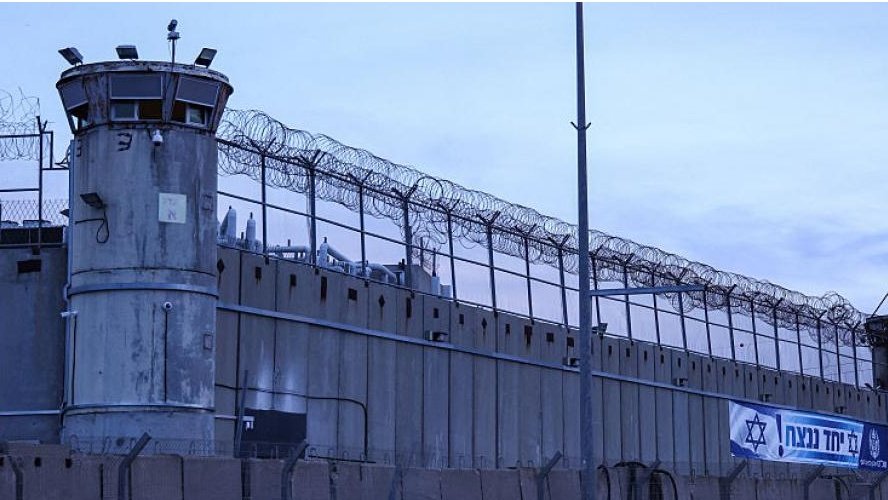
In contrast, the media reduces Palestinians to the category of “prisoners,” a term that pretends to give legality while erasing the reality of their captivity. Across the West Bank, Israeli forces routinely conduct raids targeting men, women, children and the elderly with neither charges nor trials, a process that is at once arbitrary and normalised. Israeli forces take these individuals hostage through a system designed to make indefinite imprisonment routine under the legal label of “security measures” and “administrative detention.” Violence, home demolitions and the deliberate cultivation of fear accompany these operations, while Israel systematically takes over the surrounding lands to expand its settler colonies.
Right now, thousands of Palestinians remain hostages in Israeli prisons, where they endure systematic torture. The numbers speak for themselves. Prior to recent releases, more than 10,000 Palestinians were held in Israeli prisons, including at least 3,500 in administrative detention without trial. The number of political prisoners had doubled, rising from 5,250 to nearly 10,000. From rape and torture to electric shocks and the full range of degradation that no human being should ever endure, this constant assault on the Palestinian body and soul is inseparable from the system that detains them. Yet, despite overwhelming evidence that Israeli forces arbitrarily hold many Palestinians, the world calls them merely “prisoners.”
One might wonder why Israel bothers with even putting up with the terms of legality; after all, this is a regime whose very logic is apartheid and colonisation. Each raid, each detention, is a small yet indispensable step in the relentless machinery of land seizure. Israel maintains the fiction of legality because international law requires it. The label “prisoner” thus functions to sanitise violations of international law that are, in reality, structural and deliberate. This terminology transforms oppression into procedure, erases the moral weight of captivity and normalises systemic violence. It governs not only how we perceive the victims of violence but whose pain we deem worthy of recognition.
In this discourse, the Palestinian experience is characterised by collective endurance, an abstract suffering with little room for individual human stories. By contrast, Israeli suffering is personalised, humanised and sanctified. Such language, which distinguishes between “hostage” and “prisoner,” produces profound inequalities in empathy and legitimacy, reinforcing power imbalances and shaping international opinion and perception.
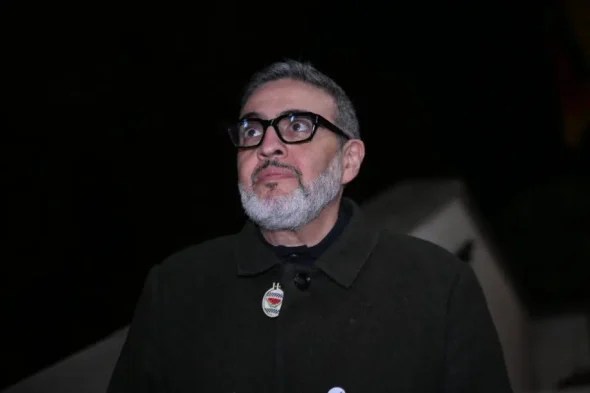
The Red Ribbon Movement rejects the sanitised language that permits this violence to continue. The red ribbon is visible refusal, a refusal to accept the terms “administrative detention” and “security measures” for what amounts to collective hostage-taking designed to terrorise an entire population and facilitate ongoing dispossession.
Dr Mustafa Barghouti calls on people worldwide to join the Red Ribbon Movement to wear red ribbons in solidarity with Palestinian hostages held in Israeli prisons. This visible act of refusal demands that we interrogate the language that permits this violence to continue.
The urgency of this moment demands immediate action and solidarity. We return to the question the labels themselves preserve: who is deemed human enough to be a hostage, and who is simply a statistic?
The red ribbon answers: Palestinians held in Israeli prisons are hostages of apartheid, and the world must recognise this truth now, not later, not eventually, but in this moment of ongoing violence and captivity.
Israel’s all-seeing eye is the stealthiest cruelty of all in Gaza
Journalist Mohammed Mhawish describes how total surveillance is relentlessly controlling, often lethally, the violence is determined algorithmically.
By Connor Echols – Responsible Statecraft – December 16, 2025
Discussions of the war in Gaza tend to focus on what’s visible. The instinct is understandable: Over two years of brutal conflict, the Israel Defense Forces have all but destroyed the diminutive strip on the Mediterranean coast, with the scale of the carnage illustrated by images of emaciated children, shrapnel-ridden bodies, and flattened buildings.
But underlying all of this destruction is a hidden force — a carefully constructed infrastructure of Israeli surveillance that powers the war effort and keeps tabs on the smallest facets of Palestinians’ lives.
Few people understand this system more deeply than Mohammed Mhawish, a Palestinian journalist who fled Gaza in 2024 after being targeted by Israeli airstrikes for his reporting. In a recent essay for New York Magazine, Mhawish traced the contours of Israel’s surveillance system through the eyes of the Gazans who live through it every day.
RS spoke with Mhawish over email to get his insights about how this system of surveillance has powered the war in Gaza and created a culture of fear among Palestinians. The conversation also touches on Mhawish’s decision to leave Gaza — and how he knows that Israel tried to kill him for his journalism.
RS: In your piece, you mention a poll saying that “nearly two-thirds of Gazans believed they were constantly watched by the Israeli government.” How does this feeling of surveillance affect life in Gaza? How would you describe the feeling to those of us who have never experienced it?
Mhawish: In Gaza, surveillance actively structures daily life. It determines how people move, communicate, gather, and survive. Nearly everyone I spoke to understood themselves as data points inside a system that continuously observes, records, and evaluates them.
This awareness produces a constant state of constraint. Phones are treated with suspicion, even fear. People limit calls, change SIM cards, power down devices, avoid repeated routes, and hesitate before gathering with others. Parents instruct children not to linger in certain places. Journalists and medics described modifying their work because they knew patterns could be extracted and interpreted later. Surveillance works by narrowing the range of what feels safe for everyone there.
What distinguishes Gaza is that surveillance is both totalizing and opaque. People know they are being watched, but they don’t know how, by whom, or according to what criteria. There is no way to clarify a misunderstanding or correct a false assumption. The system does not explain itself. That uncertainty turns ordinary behavior into potential exposure.
For those who have never lived under it, they might need to imagine that every movement, call, or association could be logged and assigned meaning by an unseen authority, and that those judgments could lead directly to deadly consequences in real time. It is fear of being misclassified by a system that can not be challenged.
RS: Israeli officials often point to the fact that they withdrew from the Gaza Strip in 2006 as evidence of their benevolence. They argue Israel had essentially allowed Palestinians to have a territory that they could govern on their own, and Palestinians had wasted that chance by allowing Hamas to take power. How does your work complicate the narrative of Israeli disengagement from Gaza? What did surveillance look like before the war?
Mhawish: My reporting shows that Israeli “disengagement” from Gaza was never a withdrawal from control. It was merely a shift in how control was exercised. Physical presence was replaced with technological dominance.
Long before the current war, Gaza existed under constant aerial surveillance, communications interception, population registries, and data-driven monitoring. Israel controlled Gaza’s borders, airspace, coastline, electromagnetic spectrum, and civil registries. Movement in and out of the Strip, access to medical care, imports, and even family reunification were all mediated through Israeli databases informed by surveillance.
Surveillance allowed Israel to manage Gaza remotely and comprehensively. Intelligence sources and prior investigations describe systems that mapped neighborhoods, tracked social and familial networks, and analyzed behavioral patterns. Control did not require soldiers on every street, only access to required sensors, databases, and algorithms capable of rendering the population legible from afar.
This fundamentally undermines the idea that Gaza was ever allowed to govern itself. Governance without sovereignty is not autonomy. Surveillance ensured that Israel retained decisive authority over Gaza’s population while maintaining the fiction of withdrawal.
RS: Israel bombed your apartment in late 2023, destroying your home and injuring you and your family. What led you to conclude that this attack was a response to your journalistic work? Did other press colleagues have similar experiences?
Mhawish: The bombing of my apartment was a direct result of my reporting.
In the weeks leading up to the strike, I received multiple threats from the Israeli military in response to my journalistic work. These included direct communications warning me about my reporting. Eventually, I received a phone call informing me that my house would be bombed. Shortly afterward, it was.
My apartment was civilian. There was no military activity there. My family was inside. The strike destroyed our home and injured my family members.
What made this experience even more unmistakable was how common it was among Palestinian journalists. Colleagues told me a similar sequence: reporting, threats, warning calls, and then strikes on their homes rather than on them in the field. These attacks often targeted family residences, maximizing harm while sending a clear message.
This is part of a systematic effort to intimidate journalists by demonstrating that reporting carries consequences not only for them, but for their family. It collapses the distinction between professional risk and private life and makes journalism itself a punishable act.
RS: What do we know about the role of American companies in this surveillance regime?
Mhawish: American technology companies are not peripheral to Israel’s surveillance architecture. Israeli military and intelligence units rely on U.S.-based cloud infrastructure, data storage, data processing, and AI-related technologies to collect, analyze, and retain vast amounts of information on Palestinians.
This relationship is reinforced by the movement of personnel between Israeli intelligence units and major tech firms, creating a feedback loop in which military expertise informs commercial products and commercial tools enable military surveillance. While companies often claim neutrality, their technologies are embedded in systems that monitor, categorize, and target a civilian population under occupation.
Gaza demonstrates how commercial technologies developed for efficiency, scale, and optimization can be repurposed for population-level surveillance and warfare. The issue is [companies] are not willing to accept responsibility when their tools become foundational to systems of domination.
RS: How could this surveillance regime be used for the proposed system of only allowing “vetted” Palestinians to live in rebuilt communities on the Israeli-occupied side of the yellow line in Gaza?
Mhawish: The proposed vetting system is only possible because the surveillance infrastructure already exists. Israel has spent years building databases capable of assigning suspicion and risk scores to individuals based on opaque criteria derived from communications data, movement patterns, and social networks.
Applied to reconstruction, this system could determine who is allowed to return, who receives travel permits, who is denied treatment outside, and who is permanently excluded. Vetting does not follow a transparent legal process, because it’s based on an algorithmic judgment rendered without explanation or appeal.
This kind of system enables displacement without explicit expulsion. People would be filtered out quietly — through denied access, stalled applications, or unexplained rejections — while the underlying logic remains hidden. Surveillance becomes a mechanism for shaping the postwar population under the language of security.
In that sense, Israel’s surveillance of Palestinians in Gaza is about controlling who is allowed to exist, where, and under what conditions afterward.
Connor Echols is a reporter for Responsible Statecraft. He was previously the managing editor of the NonZero Newsletter.
EU nation ‘disrupting normal religious life’ – UN experts
RT | December 17, 2025
Estonian authorities are undermining religious freedoms by fostering an “adversarial environment” for the country’s largest church community because of its spiritual ties to Russia, a panel of experts advising the UN Human Rights Council has warned.
In a statement issued on Monday, the experts criticized Tallinn’s approach toward the Estonian Orthodox Christian Church (EOCC), which maintains canonical links with the Russian Orthodox Church. They pointed to a series of administrative actions, a court decision that stripped the EOCC of state funding on security grounds, and a proposed legislative amendment that the panel said would “disproportionately affect a single religious community.”
“Canonical identity, ecclesiastical hierarchy and spiritual allegiance are integral components of the freedom of religion and are fully protected under international law,” the three-member panel emphasized.
The experts highlighted as particularly troubling a bill being advanced in the Estonian parliament despite objections from President Alar Karis. He has argued that the proposed ban on religious organizations accused of links to a foreign entity labeled a security threat by the government would violate the constitution.
The panel also condemned refusals to grant rent agreements and residency permits to clergy, stating: “Such actions disrupt normal religious life and may undermine the autonomy that should be granted under freedom of religion or belief.”
Moscow has long accused Estonia of pursuing discriminatory policies allegedly driven by entrenched Russophobia. The Estonian Orthodox Christian Church includes both ethnic Estonians and members of the country’s sizable Russian-speaking minority among its faithful.
NATO’s Red Pen on Ukraine: Jacques Baud and the Silencing of Dissent

By Freddie Ponton | 21st Century Wire | December 17, 2025
On 15 December, the European Union took a step that few could have imagined: it sanctioned twelve individuals, including Swiss analyst and former intelligence officer Jacques Baud and French national Xavier Moreau, not for breaking the law, but for expressing views deemed politically inconvenient. Asset freezes, travel bans, and economic restrictions were imposed without any judicial process. While presented as an EU initiative, the fingerprints of NATO’s strategic communications and information-control apparatus are unmistakable, shaping both the targets and the justification. Europe is no longer simply countering disinformation; it is policing interpretation itself, turning independent analysis into a potential liability. The question now is not whether dissent will be punished, but how far these measures will go, and who will decide the boundaries of acceptable thought.
Baud, a Swiss national, is not a political activist, influencer, or anonymous online provocateur. He is a former Swiss intelligence officer and army colonel, trained in counter-terrorism, counter-guerrilla warfare, and chemical and nuclear weapons. Over the course of his career, he helped design the Geneva International Centre for Humanitarian Demining (GICHD) and its Mine Action Information Management System (IMSMA), served with the United Nations as Chief of Doctrine for Peacekeeping Operations in New York, worked extensively in Africa, and later held senior responsibilities at NATO, where he led efforts against the proliferation of small arms. He is also the author of multiple books on intelligence, asymmetric warfare, and terrorism, texts widely read well before the Ukraine war.
Yet this résumé, once considered exemplary, has now been recast as suspicious. On 15 December, the EU placed Baud under sanctions, freezing assets and restricting travel, accusing him of acting as a “spokesperson of Russian propaganda” and of participating in “information manipulation and influence.” No criminal charges have been filed. No judicial process has taken place. No evidence has been publicly tested in court. The punishment is administrative, political, and immediate.
DOCUMENT: COUNCIL DECISION (CFSP) 2025/2572 of 15 December 2025 amending Decision (CFSP) 2024/2643 concerning restrictive measures in view of Russia’s destabilising activities (Source: EUR-Lex)
This is not an isolated case. Baud joins a growing list of European journalists, analysts, and commentators sanctioned or publicly stigmatised for expressing views that diverge from official EU and NATO positions. Germans living in Russia, independent journalists, and alternative media figures have already faced similar measures. What unites these cases is not proof of coordination with Moscow, but a shared refusal to reproduce the sanctioned narrative framework through which the war must be interpreted.
From Foreign Policy to Narrative Enforcement
Officially, these sanctions are justified as defensive measures against “foreign information manipulation and interference”, a phrase now deeply embedded in EU and NATO communications. The stated objective is to protect European democracies from destabilisation. In practice, however, the definition of “manipulation” has expanded so broadly that any analysis which echoes, overlaps with, or even partially aligns with Russian positions can be deemed suspect, regardless of sourcing, intent, or transparency.
The problem is not that governments counter disinformation. Every state does. The problem is how disinformation is defined, who defines it, and what instruments are used to combat it.
In Baud’s case, the EU does not allege clandestine activity, secret funding, or covert coordination with Russian authorities. Instead, he is held responsible for contributing to a narrative environment that, in Brussels’ view, undermines Ukraine and EU security. This is a crucial shift: The target is no longer falsehood, but interpretation.
Once interpretation itself becomes sanctionable, the boundary between security policy and censorship collapses.
France’s Role, and NATO’s Shadow
Several reports indicate that the initiative to sanction Baud and eleven others originated with France. French Foreign Minister Jean-Noël Barrot publicly announced that Europe would impose sanctions on what he described as “pro-Russian agents,” including individuals accused of repeatedly influencing French and European public debate. Among those named was Xavier Moreau, a French analyst long critical of NATO policy.
Barrot’s declaration on X was unambiguous:
“At France’s initiative, Europe is today imposing sanctions against Kremlin propaganda outlets and those responsible for foreign digital interference. Zero impunity for the architects of chaos.”
The language is revealing. “Architects of chaos” is not a legal category; it is a political one. It frames speech as an act of aggression and analysts as hostile operators.
Behind this framing lies a figure little known to the public but central to the architecture of Europe’s contemporary information policy: Marie-Doha Besancenot, Senior Advisor for Strategic Communications in the French Foreign Ministry. Prior to assuming this role, Besancenot served from 2020 to 2023 as NATO Assistant Secretary General for Public Diplomacy.
In an interview published in English by the French Ministry of the Armed Forces and Veteran Affairs, in March 2025, Besancenot openly described founding a task force in late 2023 dedicated to detecting and analysing what she termed “hostile narratives,” with the capacity to alert authorities “in real time” and propose political responses. The task force’s mission, she explained, was to detect, track, and report information threats against NATO in the information domain. In this interview, Besancenot articulates how “France understood what was happening in the information domain was a matter of national security”, and speaks of Viginum, a French agency created in response to these perceived threats, and that is responsible for monitoring and protecting the state against foreign digital interference that, according to them, affects the digital public debate in France.
The continuity is striking. The doctrine developed inside NATO’s strategic communications apparatus appears to have migrated almost seamlessly into national and EU-level policy, without democratic debate, parliamentary oversight, or public consent.
Strategic Communications as Political Power
NATO insists that it does not police speech and that it respects freedom of expression. Formally, this is true. NATO does not arrest journalists or pass laws. Instead, it develops conceptual frameworks, “hybrid threats,” “information laundering,” and “foreign information manipulation”, which are then adopted by member states and EU institutions.
Once a narrative framework is institutionalised, it becomes self-enforcing. Media outlets internalise red lines. Publishers hesitate. Platforms over-moderate. Governments justify extraordinary measures as technical necessities or national security. The perfect storm in which sanctions replace debate.
One of the most insidious concepts to emerge from this ecosystem is that of “information laundering”, the idea that domestic journalists or analysts can unwittingly “clean” foreign propaganda simply by engaging with it critically. Under this logic, intent becomes irrelevant. What matters is effect, as defined by strategic communicators.
This doctrine eliminates the possibility of good-faith analysis. To examine Russian claims, even to refute them selectively or partially, is to risk being accused of amplifying them. The only safe position is total dismissal, which appears to be NATO and the EU’s endgame.
The Democratic Cost
The danger of this approach extends far beyond Jacques Baud.
Sanctions are no longer being used to punish illegal acts, but to discipline discourse. They operate without due process and create chilling effects far wider than their immediate targets. An analyst does not need to be sanctioned to be silenced; seeing a peer sanctioned is often enough.
Moreover, these measures are imposed by non-elected bodies, EU councils, commissions, and advisory structures, drawing heavily on NATO doctrine, an alliance that itself is not subject to democratic accountability. National parliaments are largely absent from the process. Courts intervene only after the damage is done.
The precedent is dangerous. If today the target is analysts accused of being “pro-Russian,” tomorrow it could be critics of EU defence spending, sceptics of military escalation, or scholars questioning intelligence claims. Once the machinery exists, its scope inevitably expands.
History offers ample warning. Democracies do not usually collapse through sudden repression, but through the gradual normalisation of exceptional measures, each justified by urgency, each framed as temporary, each defended as necessary.
Security Without Freedom Is Not Security
The EU and NATO argue that they are facing unprecedented hybrid threats and that extraordinary responses are required. That claim deserves serious consideration. But security achieved by narrowing the space of permissible thought is a brittle security, one that ultimately undermines the democratic resilience it claims to protect.
A society confident in its values does not need to freeze bank accounts to win arguments. It does not need to conflate analysis with subversion. It does not need to outsource intellectual authority to strategic communications units.
Jacques Baud may be wrong in some of his assessments. He may be right in others. That is beside the point. What matters is that his arguments exist in the open, supported by sources, available for rebuttal. The appropriate response to analysis is counter-analysis, and certainly not sanctions. By choosing punishment over debate, Europe is not defending democracy. It is redefining it, quietly, administratively, and without asking its citizens whether this is the kind of polity they wish to inhabit.
The sanctions against Baud are therefore not merely about Ukraine, Russia, or NATO. They are about who gets to speak, who decides what is permissible to think, and whether Europe still trusts its citizens to judge arguments for themselves.
That question, once raised, cannot be easily swept away.
Villains of Judea: Ronald Lauder and his War on American Dissent
For Lauder, Israel always comes first.

José Niño Unfiltered | December 16, 2025
World Jewish Congress President Ronald Lauder likes to present himself as a civic minded elder statesman, a sober billionaire warning America about a rising tide of antisemitism.
At the Israel Hayom Summit on December 2, 2025, he framed the moment as a crisis of the West itself, calling it “a full-scale assault on truth, on democracy, and on the safety of Jewish people everywhere,” and insisting, “This is not normal. And it is not ‘just criticism of Israel.’ It is the world’s oldest hatred, once again wearing political clothing.”
Lauder was referring to the rise of antisemitism and anti-Israel sentiment worldwide in the wake of Israel’s 2-year bombing campaign in Gaza.
Then he sharpened the spear and aimed it at domestic enemies like Tucker Carlson, who has been one of the most vocal critics of Israel in the post-October 7 reality we live in. He told the audience, “Tucker Carlson is the Father Coughlin of our generation.” In the same speech he warned that complacency is over, because “antisemitism is rampant throughout our culture,” and he demanded a political and institutional counteroffensive.
That is the Lauder formula in its purest form. He wraps a totalizing political program in the language of safety and moral emergency, then treats America’s public life as territory to be reorganized around his crusade. The target is never merely hatred. The target is dissent, drift, and disobedience from the priorities he has chosen, priorities that consistently put Israel first.
Lauder did not arrive at this posture late in life. He was born into power in New York City in 1944, the heir to the Estée Lauder fortune, raised in elite institutions, and trained for international influence through business and foreign policy studies. He entered the family company early, then moved into government in the Reagan era, where he served at the Pentagon as Deputy Assistant Secretary of Defense for European and NATO policy.
Ronald Reagan then tapped him as U.S. ambassador to Austria in 1986. In Vienna, he did not behave like a neutral American emissary. He turned his diplomatic post into a stage for historical confrontation and political signaling. Lauder refused to attend the inauguration of Austria’s president Kurt Waldheim amid allegations of him being involved in or being aware of National Socialist atrocities in the Balkans during his service as a German army lieutenant in World War II. He also fired U.S. diplomat Felix Bloch for engaging in suspected espionage activities.
After government service, Lauder tried to convert his vast wealth into formal power at home. In 1989, he ran for mayor of New York City as a Republican, where he spent big bucks to get his name out and campaign to the right of Rudy Giuliani, only to lose the primary. Even in defeat, the pattern held. He treated politics as an arena where money does all the talking, and he kept looking for levers that could bend public life to his will.
He found one in term limits. During the 1990s he poured resources into imposing term limits on New York City officials, selling it as a democratic reform and a check on machine party politics. Yet in 2008, when Mayor Michael Bloomberg wanted a third term, Lauder reversed course and supported extending those limits, a turn that mainstream critics interpreted as a billionaire bargain dressed up as civic necessity. However, from the perspective of long-time observers of Jewish behavior, Lauder’s support for Bloomberg reflects a pattern of co-ethnic solidarity among Jewish power brokers.
While Lauder played these games in New York, his real career was consolidating leadership in the organized Jewish political world. Notably, Lauder was a member of the Mega Group—a mysterious network of Jewish oligarchs that worked behind the scenes to advance Jewish interests and strengthen pro-Israel bonds among Jews in America. Leslie Wexner, founder of The Limited and Victoria’s Secret, and the late Jewish sex criminal Jeffrey Epstein were among the most prominent members of this Jewish consortium. By 2007, Lauder had become president of the World Jewish Congress, a position that turned him into a roaming power broker who meets heads of state and treats international politics as a permanent lobbying campaign.
From that perch, he repeatedly framed Western security architecture as a vehicle for Israeli priorities. In 2011, he publicly argued that Israel should be admitted into NATO, insisting, “Israel needs real guarantees for its security,” and pressing NATO states to bring Israel into the alliance.
In 2012, he attacked European pressure campaigns on Israel with maximalist rhetoric. When Irish officials floated an EU ban on goods from Israeli communities in the West Bank, Lauder called boycott talk “cynical and hypocritical,” and declared, “Minister Gilmore is taking aim at the only liberal democracy in the Middle East while keeping quiet about those who really wreak havoc in the region: the Assads, Ahmadinejads and their allies Hezbollah and Hamas.” He added that the West Bank was “legally disputed and not illegally occupied.”
He carried the same posture with respect to Iran — enemy #1 for world Jewry at the moment. In 2013, as Western diplomats negotiated with Tehran, he mocked their perceived softness and conjured Munich analogies, warning, “Just as the West gave up Czechoslovakia to Hitler in Munich in 1938, we see what is happening again and the world is silent,” and boasting, “Frankly, only France stands between us and a nuclear Iran.” In 2015, he escalated again, attacking the nuclear deal with a moral curse, saying, “The road to hell is often paved with good intentions,” and arguing that the agreement could revive Iran economically without stopping long term nuclear ambitions.
The story kept darkening as his proximity to Israeli power deepened. In 2016, Israeli police questioned Lauder in connection with “Case 1000,” the Netanyahu gifts affair. Reports said investigators sought his testimony because of his closeness to Netanyahu and the broader allegations involving luxury gifts and favors. Lauder was not charged, but the episode revealed how near he operated to Israel’s governing circle, not as an outside friend, but as part of the broader, transnational Jewish network.
By 2023, he openly wielded donor money as a disciplinary weapon in American institutions. After the October 7 attacks and campus controversies, he warned the University of Pennsylvania that, “You are forcing me to reexamine my financial support absent satisfactory measures to address antisemitism.” The message was simple. If a prestigious American university fails to police speech and activism the way he demands, he will squeeze it financially until it complies.
In 2025, Lauder continued supporting Israel’s ethnic cleansing campaign in Gaza. He categorically rejected the idea that Israel bears any responsibility for ending the conflict, insisting, “The truth is simple: the war could end tomorrow if Hamas were to release the remaining hostages and disarm.” On education and propaganda, he stopped pretending the solution is persuasion alone. At the World Jewish Congress gala in November 2025, he argued that the education pipeline must be rebuilt from the ground up, declaring, “The entire education system — K-12 to college — must be retaught,” and adding, “It’s time we fight back with stronger PR to tell the truth.”
He also made the threat explicit. In a widely shared clip, he vowed, “Any candidate running for a seat… whose platform includes antisemitism, we will target them as they target us.”
Like most of the Israel First set, Lauder was ecstatic about the toppling of Bashar al-Assad’s government in Syria in late 2024. In September 2025, he met former al-Qaeda terrorist-turned Syrian President Ahmad al-Sharaa on the sidelines of the United Nations General Assembly and afterward said, “We had a very positive discussion about normalization between Israel and Syria.”
Seen in order, the picture is not complicated. Lauder builds influence through money, embeds himself in elite institutions, and uses both to steer policy and culture toward a relentless Zionist agenda. He does not talk like a man defending American sovereignty. He talks like an agent of world Jewry who expects America’s parties, schools, media, and alliances to function as enforcement arms for a foreign cause.
That is why his December 2025 sermon about antisemitism matters. It is not only a warning. It is a blueprint. When Lauder says “If we don’t tell our own story, others will rewrite it,” he is not describing a cultural debate. He is declaring ownership over the narrative, and claiming the right to punish anyone in American life who refuses to repeat it.
In the end, Ronald Lauder emerges not as a guardian of American civic life but as a disciplined enforcer of a foreign political creed, using wealth, intimidation, and moral blackmail to bend institutions to his will. What he calls a fight against hatred looks increasingly like a campaign to subordinate American sovereignty, speech, and policy to the imperatives of Israel and the transnational Jewish clique that sustains it.
Stop The Hate UK: The Shadowy Israel-Aligned Group Targeting MintPress staff & anti-genocide organizers
Mint Press News | December 9, 2025
In October, MintPress graphic designer and field photographer, Ibrahim Abul-Essad opened his door to find Patrick Sawer of The Daily Telegraph demanding answers.
A prolific writer who has penned 28 pro-Israel articles in the past two months alone, Sawer asked the British Palestinian journalist to respond to pro-Israel pressure group Stop The Hate U.K.’s campaign for him to be prosecuted for “anti-Semitic hate crimes.”
Abul-Essad’s “crime” was attending an October 2024 demonstration in London protesting an event featuring former Israeli prime minister Ehud Olmert speaking on the future of Gaza – a case that the Metropolitan Police have already looked into and dismissed.
Sawer has previous connections to Stop The Hate U.K. A 2024 Daily Telegraph article framing pro-Palestine marchers as racists, for instance, appears to have been based largely on intelligence gathered by Stop The Hate U.K., and features multiple images of protestors taken without their knowledge.
But who are Stop The Hate U.K.? And where did they come from? MintPress News explores the group’s rise, its agenda, and its scandalously close links to both the British and Israeli governments.
Israeli Front Group?
Stop the Hate U.K. was founded in early 2024, at the height of the Israeli attack on Gaza, in order to stymie and oppose the growing wave of support for Palestinian liberation across Great Britain. The group has attempted to equate support for human rights with terrorism.
As their official Twitter bio reads, “We stand in opposition to the hate marches that have swamped our country since the 7.10 massacre. We shall not be cowed. Terrorist supporters off our streets!” The organization has repeatedly pressured the British government to ban demonstrations, and condemned the police for their insufficient vigor in suppressing the movement.
Although it states that it is a non-profit organization, MintPress could find no registration of the group with the Charity Commission for England and Wales.
The organization’s website describes it was founded “in response to the repeated failures of the Metropolitan Police to address anti-Semitic incidents at Palestinian Solidarity Campaign (PSC) marches.”
This will be news to many in the U.K., where police have arrested over 2300 people under the Terrorism Act of 2000 for peacefully opposing the designation of activist group Palestine Action as a terrorist entity, putting it on a par with the likes of ISIS and Jabhat al-Nusra. So aggressive has British authorities’ repression of free speech been, that it was officially rebuked by Amnesty International as a grave breach of human rights.
Stop the Hate U.K. organizes their own demonstrations. However, they have not been successful in attracting mass participation. Unlike pro-Palestine marches that can draw in as many as one million Britons, an image posted by Stop The Hate U.K. of their recent protest in Brighton shows fewer than 40 attendees. They have, however, had more success disrupting solidarity events, filming or harassing protestors and pushing for their prosecution. In this role, The Canary notes, they serve as unofficial “police informants.” Stop The Hate organization also sells merchandise from their website; among the most popular items are t-shirts and hoodies emblazoned with the word “Zionist” in all caps.
While trying to expose the identities of pro-Palestine marchers, Stop The Hate U.K. appears to try to keep their own a secret. There is no information about their key members on their own website, only multiple egregious typos. For example, their “About Us” section offers little about their background, except that their organization is “is a call to action for a world without racism or anti-Semitism. Every voice counts in rejecting intolerance and fostering understandinWho We Are” (sic).
Nevertheless, pro-Israel outlet Jewish News identified two Israelis, Itai Galmudy and Yochy Davis, as among the founders. Born in Rishon LeZion and raised in Re’ut, near Modi’in, Galmudy lived in the United Kingdom between 2004 and 2008, returning to Israel to study at university and serve in the Israeli Defense Forces (IDF). He participated in Operation Protective Edge, Israel’s 2014 bombardment of Gaza, wherein the IDF is widely accused of carrying out serious war crimes, including deliberately targeting civilians. Images from Galmudy’s social media show him proudly in uniform, serving in what appears to be a tank brigade.
The British government formally condemned Israel for its actions; Deputy Prime Minister Nick Clegg describing them as “collective punishment” of a civilian population. Despite this, Galmudy himself was able to move back to London immediately after Operation Protective Edge, and works in the pub industry, where he proudly notes that he refuses to serve anyone wearing Palestinian clothing.
In 2024, he co-founded Stop The Hate U.K., a group that has gained plaudits from the Israeli government itself. Earlier this year, Ambassador Tzipi Hotovely recorded a video wishing Galmudy a special happy birthday, stating that: “Your great activity for the last 12 months means so much to the State of Israel.”
“It is concerning that a former Israeli soldier who represented a military which is being investigated for genocide responsible for killing 150 members of my family is part of an organization targeting me and other British citizens in the U.K. calling for a free Palestine,” Abul-Essad told MintPress.
Like Galmudy, Yochy Davis is from Israel; her Facebook profile identifying her as from Kiryat Motzkin, near Haifa. Describing herself as a “passionate” adherent of Zionism, Davis first came to public attention in 2023, when she and three other pro-Israel activists disrupted Roger Waters’ London show. The rock star is a high-profile supporter of progressive causes, including Palestinian statehood. Davis shouted at Waters, unfurling an Israeli flag and calling his views “disgusting.” The incident was well-covered in the British press, who appeared keen to undermine Waters’ message.

Yochy Davis, left, and Itai Galmudy | Photos from X and Facebook
Davis has long promoted Israeli causes. In 2019, for instance, she worked with Israeli organization, My Truth, to bring a squad of IDF soldiers to Britain to visit the Houses of Parliament and carry out a series of “educational” lectures promoting Israel and its military as benevolent forces.
Israeli charity website, Israel Gives, describes My Truth as “an educational organization that is comprised of Israeli Defense Force reservists that educate about the IDF operations and the moral standards it holds,” adding that:
’My Truth’ reservists speak up openly and with a firsthand perspective about their army experiences in response to those who attempt to slander Israeli soldiers in the name of so-called ‘full disclosure.’”
And like Galmudy again, Davis’ activism has earned her official praise from Israeli government officials. In 2019, former Shin Bet official and then-Minister of Justice, Amir Ohana, recorded a video expressing his deep gratitude, stating:
I want to tell Yochy Davis and the My Truth organization: thank you for providing justice. Thank you for providing truth to the world, and thank you for everything you are doing for the State of Israel and for the people of Israel. Thank you.”
Davis recently met with Israeli president, Isaac Herzog, and both she and Galmudy attended an official event at the Israeli Embassy in London last month. Earlier this year, the pair also traveled to Israel and the Golan Heights – Syrian territory illegally occupied by Israel – where they liaised with and took photos with IDF soldiers.

Yochy Davis and Itai Galmudy pose for a photo in front of an Israeli military vehicle during a visit to the Golan Heights, as posted on social media. (Instagram)
Stop The Plagiarism
The choice to name a pro-Israel advocacy group “Stop The Hate U.K.” clearly attempts to equate support for Palestine and opposition to genocide with anti-Semitism. Yet it has also caused significant confusion, as a well-known and respected charity, “Stop Hate U.K.” (SHUK) already exists.
SHUK was established in the wake of the Stephen Lawrence affair. Stephen Lawrence was a Black British teenager murdered in London in a racially motivated killing in 1993. The attack, and the subsequent inadequate response from the Metropolitan Police, made Lawrence a cause célèbre, the George Floyd of his day. An official inquiry found that the police force was “institutionally racist” and needed to be radically reformed. Since 1995, SHUK has carried out vital work challenging hatred and intolerance. Lawrence’s mother serves as its patron.
Pro-Israel group Stop The Hate U.K. is frequently misidentified as the more legitimate body, including in Sawer’s aforementioned Daily Telegraph article, where it attributes the intelligence provided to SHUK. It is eminently possible that this sort of confusion was deliberate, and Stop The Hate U.K. is trying to bask in the legitimacy of an established anti-racist charity. MintPress contacted SHUK for this investigation, but did not receive a response.
Gaza and the rise of Stop The Hate U.K. provokes a number of important questions. How is it that a pro-Israel pressure group, co-founded by two Israeli citizens, can have such an outsized effect on British public life? How can a former member of an army carrying out a massacre put such successful pressure on U.K. authorities to arrest journalists exposing the IDF’s crimes? And who gets to decide who and who is not a terrorist: British citizens or pressure groups allied to a foreign nation carrying out a genocide?