Trump gives Zelensky bum’s rush and flushes the European ploy to escalate war against Russia
By Finian Cunningham | Strategic Culture Foundation | March 1, 2025
After his mauling from President Trump live on TV and then being booted out of the White House, Ukraine’s Zelensky immediately phoned European leaders.
That reaction shows that the Ukrainian actor-turned-president had flown to Washington from Kiev not to merely sign a supposed minerals deal with the U.S., but to inveigle Trump into a trap to escalate the proxy war in Ukraine against Russia.
No doubt there is consternation and alarm among the Europeans that their agenda for prolonging the war against Russia is in disarray. Worst still, a furious Trump may now cut Ukraine loose and leave it completely at the mercy of Russia.
European leaders are huddling in London on Sunday for an emergency meeting convened by British Prime Minister Keir Starmer. Zelensky is to attend and be showered with European expressions of support and billions more of taxpayer money. Incredibly, they still champion the impudent conman as a “Churchillian hero”.
The fallout in the Oval Office on Friday was a sordid spectacle. Trump and his vice president, JD Vance, tore into Zelensky under the full glare of TV cameras for daring to make more demands for U.S. security guarantees as part of a deal giving American companies access to Ukraine’s alleged mineral wealth, including oil, gas and rare earth metals.
The meeting started cordially, but Trump refrained from giving specific “security guarantees” to Ukraine. Zelensky’s sniveling insistence on getting explicit U.S. commitments for military support following any peace deal with Russia triggered Trump and his officials to rebuke the Ukrainian leader for wrangling in public and not being respectful.
After their fireside fireworks, an incensed Trump gave Zelensky the bum’s rush. No minerals deal was signed and Zelensky left Washington empty handed. That’s not the end of it either. Trump later told reporters that Zelensky is not welcome back until he is ready to make the peace with Russia.
Trump was astute to the attempted rumble. He told reporters on the White House lawn following the slap-down of Zelensky: “We want peace. We’re not looking for somebody to sign up a strong power and then not make a peace deal because they feel emboldened. That’s what I saw happening. He wants to fight, fight, fight. I am not looking to get into anything protracted.”
Zelensky’s immediate phone calls to French President Emmanuel Macron and the NATO chief Mark Rutte after the White House fiasco is the big reveal here.
Days before Zelensky’s visit to the White House on Friday, European leaders had lobbied Trump for U.S. security guarantees as part of any peace deal with Russia.
Macron met Trump on Monday. On Thursday, it was Starmer’s turn to ingratiate with Trump. The EU’s top diplomat Kaja Kallas was also in Washington. Significantly, her meeting with U.S. Secretary of State Marco Rubio was abruptly called off “due to scheduling issues.”
The main objective for Macron and Starmer was to extract a commitment from Trump for a military “backstop” in Ukraine to beef up their proposal to deploy French and British troops under the guise of “peacekeepers”.
The British wanted American “air cover” for their troops, according to the BBC.
Both Macron and Starmer were palmed away with vague nothings despite the bonhomie and compliments, and a British sweetener from King Charles to invite Trump on a royal visit.
Trump’s diplomatic overture to Russian President Vladimir Putin, beginning with a phone call on February 12 followed by a high-level meeting of U.S. and Russian diplomats in Saudi Arabia on February 18, has sent shockwaves across the European NATO members.
They feel aggrieved that Trump is going to make a peace deal with Putin without them. The Europeans are still beholden to the propaganda narrative of the previous Biden administration about “defending democracy and sovereignty in Ukraine from Russian aggression.”
Trump wants out of the extravagant mess in Ukraine. He recognizes that the conflict was always a proxy war with an ulterior agenda to defeat Russia. Hundreds of billions of dollars and euros have been wasted fueling a futile proxy war that, as it turns out, Russia is decisively winning.
Marco Rubio, the U.S. top diplomat, disclosed in an interview to CNN after the Oval Office spat, that a European foreign minister had told him that “their plan” was to keep the war in Ukraine going for another year in the hope that it would eventually “weaken Russia” and make Moscow “beg for peace.”
The callousness of the Europeans and their Russophobic obsession are grotesque. The three-year conflict in Ukraine has cost up to one million military deaths, millions of refugees across Europe, and broken economies, not to mention the danger of it turning into World War Three.
Sneakily, the Europeans are covering their desire for continuing the proxy war with a belated apparent concern for making peace and backing Trump’s diplomacy.
Macron and Starmer ostensibly commend Trump (after initially being in a flap over this call with Putin) and they talk about “finding a path to a lasting peace.”
However, their seeming offer of deploying French and British soldiers as “peacekeepers” is a Trojan Horse that has nothing to do with keeping the peace. For its part, Moscow has categorically stated that any NATO troops in Ukraine will not be acceptable and will be attacked as combatants.
That is why Macron, Starmer and other European leaders were so insistent on trying to get Trump to give “security guarantees”. The so-called American military “backstop” would be a way to escalate the proxy war against Russia.
Zelensky was in Washington on a mission to beguile Trump into giving a security guarantee while dangling the bait of a lucrative minerals deal.
It was reported that the Trump White House wanted to cancel the meeting for Friday before Zelensky departed from Ukraine on Thursday. But Macron intervened and implored Trump to go ahead with the reception.
Zelensky, having got used to being indulged with endless blank checks, thought he could wheedle more out of Trump than just a mining deal. He was expected to extract the direct U.S. military involvement that the European Russophobic leaders want. In that way, the proxy war would escalate and those riding the war-racket gravy train would continue to extort the world’s biggest security crisis.
Fortunately, Trump gave Zelensky the bum’s rush and flushed out the European ploy.
The irony is that Trump had earlier in the week lavished praise on Macron and Starmer, exalting France for being America’s “oldest ally” and Britain for its “special relationship”. Trump might want to radically revise those cliched notions.
Ukrainian attack on TurkStream threatens Hungary’s sovereignty – FM
RT | March 1, 2025
Hungarian Foreign Minister Peter Szijjarto has condemned a recent drone attack on a compressor station of the TurkStream gas pipeline, labeling it an assault on his nation’s sovereignty due to the conduit’s critical role in its energy security.
Szijjarto’s comments came on Saturday after the Russian military reported thwarting a Ukrainian drone attack on the Russkaya compressor station on Friday night. This station is a critical facility for the TurkStream, also known as Turkish Stream, pipeline in Russia’s Krasnodar Region, serving as the point of exit on Russian soil for gas deliveries. The Defense Ministry stated that three drones were neutralized by air defense systems, preventing any damage to the station’s operations.
“The Turkish Stream pipeline is the guarantee of Hungary’s natural gas supply security; therefore, any potential disruption would seriously jeopardize our energy security,” Szijjarto wrote on Facebook. “Energy security is a matter of sovereignty, and therefore this type of attack should be considered an attack on sovereignty.”
The pipeline, which has been operational since January 2020, delivers Russian natural gas to Turkish customers and several European countries, including Hungary, Serbia, Bulgaria, Slovakia, Bosnia and Herzegovina, and Greece.
The Hungarian minister also called on the European Commission to clarify its stance on the matter, reminding it of its recent assurance that Ukraine would not target EU-bound infrastructure.
Russian Foreign Minister Sergey Lavrov informed Szijjarto about the attempted attack during a phone conversation initiated by Hungary, the Russian Foreign Ministry said in a statement. He explained the incident and its implications for the pipeline’s security.
The incident is not the first involving the facility. Back in January, Ukrainian forces attempted to attack it with nine kamikaze drones, according to the Russian military. All of the UAVs were intercepted, but debris from the explosions caused minor damage to the station.
Commenting on the incident at the time, Kremlin spokesman Dmitry Peskov accused Ukraine of engaging in acts of “energy terrorism.”
Trump takes on the ‘collective west’
By M. K. BHADRAKUMAR | Indian Punchline | March 1, 2025
The dramatic scene in the Oval Office on Friday evening signals that President Donald Trump is decoupling the US from the ‘forever war’ in Ukraine that his predecessor Joe Biden left behind. The war is poised to end with a whimper, but its ‘butterfly effect’ on our incredibly complex, deeply interconnected world will define European and international security for decades to come.
The western media which is hostile toward Trump, have seized the opportunity to caricature him as an impulsive figure in a role reversal with Zelenskyy. In reality, though, Trump has been literally driven to this point by the Biden administration.
The highly charged emotional reaction by the European Commission president Ursula von der Leyen commiserating with President Zelensky speaks for itself: “Your dignity honours the bravery of the Ukrainian people. Be strong, be brave, be fearless. You are never alone, dear President.” Trump’s refusal to give Von der Leyen an appointment may partly explain her fury as a woman scorned. Truly, the ‘Collective West’ find themselves at a crossroads and do not know which road to take. Without US air cover and satellite inputs, western troop deployment in Ukraine will be impossible. Even French Emmanuel Macron would agree that his troops will be put through a meat grinder.
Both Von der Leyen and Macron had a whale of a time as cheerleaders of Biden’s war but any further adventures in Ukraine will be suicidal, to put it mildly. Ukraine’s military will collapse if Trump freezes support. None of the European powers will risk a collision with Russia.
Trump knows by now that the western narrative of Biden’s war is a load of bullshit peppered with falsehoods and outright lies, and that the war erupted only out of the diabolic western plot to poke the bear, which got provoked finally and hit out.
The CIA’s coup in Kiev in February 2014 was a watershed event paving the way for a NATO presence on Ukrainian soil. Indeed, terrible things happened, which have been shoved under the carpet — for instance, then German foreign minister (current president) Frank-Walter Steinmeier’s dubious links with the neo-Nazi Ukrainian groups who acted as storm troopers in the 2014 coup. Just think of the grotesqueness of it — a German social democrat patronising neo-Nazi groups!
Most certainly, Trump knows that the US deep state had set in motion an agenda to destabilise the Russian Federation and dismember it as the unfinished business no sooner than the Soviet Union was dissolved. The Chechen War has no other explanation. In fact, Putin has accused US agents of directly aiding the insurgents.
Again, the Bill Clinton administration floated the idea of NATO expansion as early as in 1994. It came out of the blue but was obviously a work in progress since the disbandment of the Soviet Union. By the mid-nineties, even Boris Yeltsin understood that he was played nicely. The return of Evgeny Primakov to the Kremlin and Yeltsin’s overture to Beijing were the surest signs of a course correction.
Those familiar with Soviet history had known all along that Ukraine would be the theatre where the US would try to seal the fate of Russia. If further confirmation was needed, it came with the CIA’s colour revolution in Ukraine in 2003 where the election was rigged (as is happening in Romania today) and carried to a third round till the proxy emerged victorious and surely, Viktor Yushchenko brought the NATO membership issue to the table. At the 2008 NATO summit in Bucharest, George W. Bush insisted that the alliance formally offered membership to Ukraine!
Today, Britain’s MI6 calls the shots in Kiev. Zelenskyy admitted recently that much of the money given by Biden simply ‘disappeared’. Sordid tales of massive kickbacks and corruption are galore. Biden ignored them. The Biden family’s involvement in Ukraine’s cesspools is widely known. Contrary to his pledge earlier not to do so, Biden felt constrained finally to grant a presidential pardon to son Hunter Biden so that he wouldn’t end up in jail.
Suffice to say, Zelensky’s ‘strategic defiance’ stems out of his quiet confidence that western leaders — starting with Boris Johnson and Biden — who have been fellow travellers in the gravy train during the past three years of the war are beholden to him till eternity.
The axis between Zelensky and his European Union supporters is cajoling Trump, pressuring him and flattering him in turn to get him on board the bandwagon so that the war rolls on for another four years. Last week alone, the presidents of France and Poland and the British prime minister descended on the White House one after another seeking assurance that the war in Ukraine will continue. But Trump has refused to oblige.
Zelensky and his European backers want a ‘forever war’ in the western border lands of Eurasia, the traditional invasion route to Russia. And last week Trump again ruled out NATO membership for Ukraine. He also pointed to the ongoing talks on “major economic development transactions which will take place between the United States and Russia.”
Trump repeated last week that the war could be ended “within weeks” and warned of the risk of escalation into a “third world war.” Basically, he realises that this is an unwinnable war, and is apprehensive that a prolonged war may transform into a quagmire sinking his presidency and derailing the grand bargain he hopes to strike with the two other superpowers, Russia and China, to create synergy for his ambitious MAGA project.
Trump has chalked up 2026, the Quarter Millennial of the United States Declaration of Independence, for hosting the leaders of Russia and China on American soil to celebrate the high noon of his quest for world peace. The European political elites weaned on the liberal-globalist ‘rules-based order’ cannot understand Trump’s deep-rooted convictions and his abhorrence of war.
The big question now is wether the unprecedented fracas in the White House yesterday could backfire on Zelensky, since Washington has significant leverage vis-a-vis Kiev and given the latter’s heavy dependence on the US for some of the critical elements of its defence.
Following the Oval Office argument, Zelenskyy has issued a lengthy statement admitting that it is “crucial” for Ukraine to have Trump’s support. A patch-up cannot be ruled out but the transatlantic system has received a big jolt, as the overwhelming majority of European countries have voiced support for Zelensky. In fact, there hasn’t been a solitary voice censuring Zelensky. Britain kept mum. Keir Starmer, UK prime minister is hosting a meeting of European leaders on Sunday which Zelensky is due to attend. It is unlikely that Europeans will push the envelope further
In this dismal scenario, the best hope is that Zelensky’s ouster, which seems probable, will not be a violent bloody event, considering the power rivalries within the regime in Kiev. At any rate, his replacement may not be a terrible thing to happen since it would necessitate holding the long overdue election and lead to the emergence of a legitimate leadership in Kiev, which has now become a dire necessity for what Trump would call ‘common sense’ to prevail.
US State Department slashes USAID assistance to Ukraine – NBC
RT | Marh 1, 2025
The US State Department has terminated a US Agency for International Development (USAID) initiative for a large-scale effort to restore Ukraine’s energy grid, which has been severely damaged by Russian strikes, NBC News reported on Friday, citing sources.
USAID, Washington’s primary agency for funding political projects abroad, found itself in the crosshairs of President Donald Trump shortly after taking office, accusing it of corruption and inefficiency. He imposed a 90-day funding freeze on the agency and transferred oversight of its programs to the direct control of the State Department.
As part of the crackdown, the State Department not only stopped a USAID program that invested hundreds of millions of dollars in Ukraine’s power grid, but also sharply reduced the agency’s footprint in Ukraine, the network said.
Before the reported cuts, 64 American government employees and contractors were on the ground supporting the agency’s mission; now only eight are expected to remain, with the Trump administration placing the remaining USAID personnel on administrative leave and ordering all but “critical” staff to return to the US, NBC reported.
”It significantly undercuts this administration’s abilities to negotiate on the ceasefire, and it’d signal to Russia that we don’t care about Ukraine or our past investments,” a USAID official working on the Ukraine mission told the outlet, adding that the decision would significantly undermine the country’s economic resilience.
In 2024 alone, USAID allocated $825 million to support Ukraine’s energy infrastructure.
The move comes as Russia continues to carry out drone and missile strikes on Ukraine’s defense-linked energy infrastructure to undermine the country’s military effort, resulting in recurring rolling blackouts. Moscow insists that it never targets civilians.
The timing of the reported USAID pullout coincides with a meeting between Trump and Ukrainian leader Vladimir Zelensky in the White House, in which the US president accused Zelensky of being ungrateful for the substantial aid provided to Kiev, and of being unwilling to negotiate an end to the conflict with Russia. As a result of the heated exchange between the two sides, an agreement granting the US rights to Ukraine’s natural resources as compensation for past aid was not signed.
Trump and Zelensky Clash in the Oval Office
By Prof. Glenn Diesen | February 28, 2025
The disastrous meeting between Trump and Zelensky demonstrates why sensitive diplomacy should be done behind closed doors and not in front of the public. At such press conferences, one speaks to both the leader of the other country and the public. Both Zelensky and Trump escalated the rhetoric as they were in front of the cameras to win over the public and not appear weak. The need to prioritise the public as the main audience is a wider problem for diplomacy as, for example, the Europeans have for three years refused to engage in basic diplomacy with Russia (that could have reduced the risk of nuclear war) because it can “legitimise” Putin in the eyes of the public. The immense focus on narrative control in international politics makes it even more important to defend diplomacy.
The Trump-Zelensky meeting was predictably sensitive, as the issue of security guarantees had not been resolved before the press conference. Subsequently, the press conference became a battleground to win over the public. The purpose of the meeting was to sign an agreement that would give the US significant control over Ukraine’s natural resources, yet the document prepared in advance was deliberately vague. Trump was confident that Zelensky would fall in line as the US enjoys overwhelming leverage, while Zelensky had hoped to pressure Trump into offering security guarantees in return for the resources.
A security guarantee would pull the US into a direct war with Russia if a future peace agreement broke down. Such a security guarantee would deter Russia from breaking the ceasefire, yet it would also incentivise Ukraine to restart the fighting as the US would then be pulled into the war on the side of Ukraine to assist with reconquering lost territories. A likely outcome would be World War III with a possible nuclear exchange.
The visits by Macron and Starmer in the days before Zelensky’s arrival were also intended to prevent the US from decoupling itself from the conflict by obtaining US security guarantees. Europe cannot send troops into Ukraine without the promise of a US military “backstop”. Macron and Starmer probably also wanted to shower Trump with flattery to warm him up before Zelensky visited with economic incentives to get the US entangled in the war. The appeal to Trump’s vanity and greed did not work, as Trump seems to recognise that the war has been lost and that nuclear war is a growing possibility in the absence of peace negotiations.
The positive outcome of this very undiplomatic confrontation is that Zelensky may abandon his delusions. The Biden administration and the Europeans have been stringing along Ukraine for more than a decade on a path to its destruction. Trump and Vance seemed genuinely bewildered that Zelensky would not change course as his country is obliterated. The Europeans’ promises of NATO membership, return of territories and ironclad security guarantees are presented as expressions of support, but in reality they are fantasies to uphold dangerous delusions. NATO lost the proxy war in Ukraine, and there are no good solutions left. However, this should not have been done in public.
The American perestroika is gaining momentum
By Vladimir Mashin – New Eastern Outlook – February 28, 2025
Only a month has passed since Trump’s inauguration, but the U.S. has witnessed a real revolution (some call it a ‘perestroika’ in reference to our country’s history).
Previous Democratic administrations tried in every possible way to impose new ‘transgender ideas’. Trump immediately stated that there are only two sexes (male and female), and not 32, as the media shouted. All government agencies, schools and educational institutions are being instructed with this information (15,000 transgender people are already mere steps away from being removed from the army, and all government benefits for such individuals have been cancelled.) The 47th President of the United States calls this a revolution of common sense.
The fusion of power and big capital is accelerating
The Republican Party has traditionally expressed the interests of America’s wealthiest strata, however, under Trump, this approach has outdone itself, with vigorous support for major corporations and oligarchs, and assistance to them through tax cuts.
In fulfilling his campaign promise of the absolute priority of American interests, Trump is imposing new trade tariffs on many countries, striving for balanced export and import relations.
It so happens that the vast majority of the media in the United States belongs to supporters of the Democratic Party. Therefore, many newspapers write that Trump’s actions are only leading to an increase in the wealth of billionaires and limit social spending for the poorest segments of the population (the press claims that there are 14 billionaires in Trump’s new cabinet, and the clearest evidence of this is the incredible wealth of the oligarch closest to him, Elon Musk).
The US media mentions that billionaire Peter Thiel, who has been preaching the idea of reducing social support for society for many years, is a kind of éminence grise of the new Republican government. It is notable that Vice President Vance considers him one of his most important mentors in life.
At the very end of the 20th century, Thiel and another billionaire, David Sacks, who was responsible for the fields of artificial intelligence and cryptocurrency in the Trump administration, wrote the book ‘The Diversity Myth’, where he sharply criticised the ideas of positive discrimination, political correctness and multiculturalism. 20 years later, in one of his essays, Thiel condemned the ‘green agenda’ that prevents science and technology from building a “bright future”.
Republicans have always accused Democrats of restricting freedom of the press by imposing solely their own point of view. It is noteworthy that Vice President Vance’s speech in Munich on February 14 shocked the Europeans, whom he reproached for not listening to the wishes of their people, instead looking to blame Russia and China as an excuse for their problems. “This was”, wrote Bloomberg on February 15, “an attack of unbridled rage in the name of freedom of speech, exposing the long-standing hostility that Donald Trump and his senior aides feel towards the European Union. They see the bloc as a symbol of big government that restricts the activities of American companies”.
These ideas are clearly reflected in the activities and statements of Elon Musk, and generally highlight the philosophy of ignoring rules for the sake of progress and innovation. This approach is shared by many Silicon Valley oligarchs.
To some extent, they express the views of the main figures of the Trump team, who are sceptical of traditional institutions, which, according to CNN on February 16, failed them during the years of inconclusive wars in the Middle East. This worldview clearly corresponds to Trump’s messages, including his stated reluctance to use the U.S. military abroad and his broader distrust of government agencies and the so-called ‘deep state’.
The United States is currently experiencing a historically unprecedented concentration of technological, financial and political power.
Trump is clearly in a hurry, especially considering the results of his first term as president, when the resistance of the deep state prevented him from realising his plans.
During the first month of the Trump administration, much has already changed in the United States and around the world. However, it is safe to say that the main battles are still ahead. The opposition to his course from the Democratic Party and European liberal hawks will not weaken.
Vladimir Mashin, political observer, Candidate of Historical Sciences
EU’s Kallas blasts Trump over ‘Russian talking points’
RT | February 28, 2025
The European Union’s top diplomat has suggested that US President Donald Trump has adopted Russian narratives about the Ukraine conflict. Kaja Kallas also expressed concern over Washington’s supposed drift away from its long-time European allies.
Kallas, the EU’s high representative for foreign affairs and security policy and former Estonian Prime Minister (2021-2024), is known for her hawkish views on foreign policy.
In an interview with the media outlet Axios on Thursday, she said it had been “uncomfortable” to hear Trump and other senior US officials “repeating Russian narratives and talking points” in recent weeks.
“The statements made towards us are quite strong. The statements regarding Russia are very friendly. It is a change,” Kallas observed. She claimed that if Russia is allowed “back around the international table like nothing has happened,” more armed conflicts will follow, and not only in Europe.
The diplomat also insisted that while US officials are free to “talk with [Russian President Vladimir] Putin all they want… in order for any kind of deal to be implemented, they need the Europeans.” Failure to include the EU and Ukraine in negotiations would prevent any agreement from being implemented, Kallas argued.
Both the bloc’s representatives and officials from Kiev were excluded from the US-Russia negotiations held in Saudi Arabia earlier this month. Washington and Moscow have argued that no other parties were invited because the talks centered on first restoring bilateral relations.
Kallas also balked at criticisms regarding the state of democracy in the EU voiced by US Vice President J.D. Vance at the Munich Security Conference – a speech praised as “brilliant” by Trump. “I refuse to accept that criticism, because it’s just simply not true,” she said.
On Monday, the diplomat similarly remarked that “if [we] look at the messages that come from the US, then it is clear that the Russian narrative is there, very strongly represented.”
Last week, she warned Washington against walking “into the Russian traps,” alleging that Moscow had emerged as the “winner” from the talks in Riyadh.
In recent weeks, Trump has made several critical remarks toward the Ukrainian leadership, characterizing Vladimir Zelensky as a “dictator without elections,” and suggesting that Kiev bears responsibility for letting the hostilities flare up in 2022. While the US head of state has since somewhat toned down his comments, a marked departure from the policy course pursued by his predecessor, Joe Biden, remains evident.
Prof. Jeffrey Sachs: The EU in Panic as Peace May Break Out
Prof. Jeffrey Sachs with Prof. Glenn Diesen
Glenn Diesen | February 26, 2025
I spoke with Professor Jeffrey Sachs after his speech at the European Parliament. How did we end up in a position where the EU has become the leading actor to oppose diplomacy and negotiations, and instead aims to prolong a war that devastates Europe and cannot be won? How did the Europeans reach a consensus on absurd notions such as Russia should not have a say in where NATO expands, and that the Europeans cannot sit down and talk to Russia without Ukraine? Professor Sachs attended the Istanbul negotiations in early 2022, but why are these negotiations now largely absent in the EU’s war narrative?
Putin invaded Ukraine ‘to stop NATO’, alliance chief tells EU
Jeffrey Sachs’ Full Address
Trump’s Defense Budget Proposal to Russia & China Aims to Give US Military Edge
By Svetlana Ekimenko – Sputnik – 26.02.2025
President Donald Trump floated offering Russia and China to join the US in slashing their defence budgets in half when speaking to reporters at the White House on earlier in February, adding that he hoped to take this up with President Vladimir Putin and President Xi Jinping “when things calm down”.
Washington hopes to drag Moscow and Beijing into “deceptive” 50% military spending cuts, staking on their desire to “avoid appearing disinterested in peace overtures by the US,” geopolitical analyst Brian Berletic told Sputnik.
The proposal is a ruse by Donald Trump aimed at rectifying the “disparity between the bloated US military budget” and the “more efficient ones of Moscow and Beijing,” noted the former US Marine.
“A genuine agreement would not be based on a percentage cut, but an equal reduction in […] explicitly capabilities the US has used for decades to project power abroad, including its global-spanning network of military bases, its membership in aggressive blocs like NATO, its sea and airlift capabilities, and various types of missiles and drones (both naval and aerial) the US is right now developing to menace nations like Russia and China along, and within their own borders,” he said.
Even if the US, Russia, and China were to slash military spending by 50%, proportionately America would “still enjoy greater overall spending than both nations combined, speculated the pundit.
Despite this proposal sounding promising at face value, he added, without further details from the US government’s side, it “appears to be an attempt to provide the US an overwhelming military advantage all while appearing to pursue global peace.”
US President Donald Trump proposed that the United States, Russia, and potentially China each reduce their defense budgets by 50%, saying: “One of the first meetings I want to have is with President Xi of China, President Putin of Russia. And I want to say: ‘Let’s cut our military budget in half.’ And we can do that.”
Following this proposal, Russia’s President Vladimir Putin indicated Moscow’s openness to negotiations: “We are not against it. The idea is good: the US cuts by 50%, we cut by 50%, and if China wants, they can join later.”
China’s defense spending “is completely out of the need of safeguarding national sovereignty, security and development interests, and the need of maintaining world peace,” Foreign Ministry spokesperson Lin Jian stated at a press conference on February 25.
America as Republic, not as Empire – Europe’s “sound and fury” after jaw-dropping pivots in U.S. policy
By Alastair Crooke | Strategic Culture Foundation | February 26, 2025
The bits are falling into a distinct pattern – a pre-prepared pattern.
Defence Secretary Hegseth at the Munich Security Conference gave us four ‘noes’: No to Ukraine in NATO; No to a return to pre-2014 borders; No to ‘Article 5’ peacekeeper backstops, and ‘No’ to U.S. troops in Ukraine. And in a final flourish, he added that U.S. troops in Europe are not ‘forever’ – and even placed a question mark over the continuity of NATO.
Pretty plain speaking! The U.S. clearly is cutting away from Ukraine. And they intend to normalise relations with Russia.
Then, Vice-President Vance threw his fire cracker amongst the gathered Euro-élites. He said that the élites had retreated from “shared” democratic values; they were overly reliant on repressing and censoring their peoples (prone to locking them up); and, above all, he excoriated the European Cordon Sanitaire (‘firewall’) by which European parties outside the Centre-Left are deemed non-grata politically: It’s a fake ‘threat’, he suggested. Of what are you really so frightened? Have you so little confidence in your ‘democracy’?
The U.S., he implied, will no longer support Europe if it continues to suppress political constituencies, arrest citizens for speech offenses, and particularly cancel elections as was done recently in Romania. “If you’re running in fear of your own voters”, Vance said, “there is nothing America can do for you”.
Ouch! Vance had hit them where it hurts.
It is difficult to say what specifically most triggered the catatonic European breakdown: Was it the fear of the U.S. and Russia joining together as a major power nexus – thus stripping Europe from ever again being able glide along on the back of American power, through the specious notion that any European state must have exceptional access to the Washington ‘ear’?
Or was it the ending of the Ukraine/Zelensky cult which was so prized amongst the Euro-élite as the ‘glue’ around which a faux European unity and identity could be enforced? Both probably contributed to the fury.
That the U.S. would in essence leave Europe to their own delusions would be a calamitous event for the Brussels technocracy.
Many may lazily assume that the U.S. double act at Munich was just another example of the well-known Trumpian fondness for dropping ‘wacky’ initiatives intended to both shock and kickover frozen paradigms. The Munich speeches did exactly that all right! Yet that does not make them accidental; but rather parts that fit into a bigger picture.
It is clear now that the Trump blitzkrieg across the American Administrative State could not have been mounted unless carefully pre-planned and prepared over the last four years.
Trump’s flurry of Presidential Executive Orders at the outset of his Presidency were not whimsical. Leading U.S. constitutional lawyer, Johnathan Turley, and other lawyers say that the Orders were well drafted legally and with the clear understanding that legal challenges would ensue. What’s more, that Trump Team welcome those challenges.
What is going on? The newly confirmed head of the Office of Budget Management (OBM), Russ Vought, says his Office will become the “on/off switch” for all Executive expenditure under the new Executive Orders. Vought calls the resulting whirlpool, the application of Constitutional radicalism. And Trump has now issued the Executive Order that reinstates the primacy of the Executive as the controlling mechanism of government.
Vaught, who was in OBM in Trump 01, is carefully selecting the ground for all-out financial war on the Deep State. It will be fought out firstly at the Supreme Court – which the Trump Team expect confidently to win (Trump has the 6-3 conservative majority). The new régime will then be applied across all agencies and departments of state. Expect shrieks of pain.
The point here is that the Administrative State – aloof from executive control – has taken to itself prerogatives such as immunity to dismissal and the self-awarded authority to shape policy – creating a dual state system, run by unelected technocrats, which, when implanted in departments such as Justice and the Pentagon, have evolved into the American Deep State.
Article Two of the Constitution however, says very bluntly: Executive power shall be vested in the U.S. President (with no ifs or buts at all.) Trump intends for his Administration to recover that lost Executive power. It was, in fact, lost long ago. Trump is re-claiming too, the Executive’s right to dismiss ‘servants of the State’, and to ‘switch off’ wasteful expenditure at his discretion, as part of a unitary executive prerequisite.
Of course, the Administrative State is fighting back. Turley’s article is headlined: They Are Taking Away Everything We Have: Democrats and Unions Launch Existential Fight. Their aim has been to cripple the Trump initiative through using politicised judges to issue restraint orders. Many mainstream lawyers believe Trump’s Unitary Executive claim to be illegal. The question is whether Congress can stand up Agencies designed to act independently of the President; and how does that square with the separation of powers and Article Two that vests unqualified executive power with one sole elected official – the U.S. President.
How did the Democrats not see this coming? Lawyer Robert Barnes essentially says that the ‘blitzkrieg’ was “exceptionally well-planned” and had been discussed in Trump circles since late 2020. The latter team had emerged from within a generational and cultural shift in the U.S.. This latter had given rise to a Libertarian/Populist wing with working class roots who often had served in the military, yet had come to despise the Neo-con lies (especially those of 9/11) that brought endless wars. They were animated more by the old John Adams adage that ‘America should not go abroad in search of monsters to slay’.
In short, they were not part of the WASP ‘Anglo’ world; they came from a different Culture that harked back to the theme of America as Republic, not as Empire. This is what you see with Vance and Hegseth – a reversion to the Republican precept that the U.S. should not become involved in European wars. Ukraine is not America’s war.
The Deep State, it seems, were not paying attention to what a posse of ‘populist’ outliers, tucked away from the rarefied Beltway talking shop, were up to: They (the outliers) were planning a concerted attack on the Federal expenditure spigot – identified as the weak spot about which a Constitutional challenge could be mounted that would derail – in its entirety – the expenditures of the Deep State.
It seems that one aspect to the surprise has been the Trump Team’s discipline: ‘no leaks’. And secondly, that those involved in the planning are not drawn from the preeminent Anglo-sphere, but rather from a strand of society that was offended by the Iraq war and which blames the ‘Anglo-sphere’ for ‘ruining’ America.
So Vance’s speech at Munich was not disruptive – merely for the sake of being disruptive; he was, in fact, encouraging the audience to recall early Republican Values. This was what is meant by his complaint that Europe had turned away from “our shared values” – i.e. the values that animated Americans seeking escape from the tyranny, prejudices and corruption of the Old World. Vance was (quite politely) chiding the Euro-élites for backsliding to old European vices.
Vance implicitly was hinting too, that European conservative libertarians should emulate Trump and act to slough-off their ‘Administrative States’, and recover control over executive power. Tear down the firewalls, he advised.
Why? Because he likely views the ‘Brussels’ Technocratic State as nothing other than a pure offshoot to the American Deep State – and therefore very likely to try to torpedo and sink Trump’s initiative to normalise relations with Moscow.
If these were Vance’s instincts, he was right. Macron almost immediately summoned an ‘emergency meeting’ of ‘the war party’ in Paris to consider how to frustrate the American initiative. It failed however, descending reportedly into quarrelling and acrimony.
It transpired that Europe could not gather a ‘sharp-end’ military force greater than 20,-000-30,000 men. Scholtz objected in principle to their involvement; Poland demurred as a close neighbour of Ukraine; and Italy stayed silent. Starmer, however, after Munich, immediately rang Zelensky to say that Britain saw Ukraine to be on an irrevocable path to NATO membership – thus directly contradicting U.S. policy and with no support from other states. Trump will not forget this, nor will he forget Britain’s former role in supporting the Russiagate slur during his first term in office.
The meeting did however, underline Europe’s divisions and impotence. Europe has been sidelined and their self-esteem is badly bruised. The U.S. would in essence leave Europe to their own delusions, which would be calamitous for the Brussels autocracy.
Yet, far more consequential than most of the happenings of the past few days was when Trump, speaking with Fox News, after attending Daytona, dismissed Zelensky’s canard of Russia wanting to invade NATO countries. “I don’t agree with that; not even a little bit”, Trump retorted.
Trump does not buy into the primary lie intended as the glue which holds this entire EU geo-political structure together. For, without the ‘Russia threat’; without the U.S. believing in the globalist linchpin lie, there can be no pretence of Europe needing to prepare for war with Russia. Europe ultimately will have to come to reconcile its future as a periphery in Eurasia.
EU trying to block Ukraine peace – Lavrov
RT | February 26, 2025
The EU is seeking to derail the Ukraine peace process by pushing the country to continue fighting against Russia, Foreign Minister Sergey Lavrov has said.
Speaking at a press conference in Qatar on Wednesday, Lavrov weighed in on a resolution drafted by the US calling for a “swift end” to the Ukraine conflict, which was approved by the UN Security Council on Monday. The document, which was supported by Russia and China, excluded strong language denouncing Moscow. The resolution also came after US President Donald Trump refused to condemn Russia over the Ukraine conflict while blaming Kiev for failing to prevent the hostilities.
The Russian foreign minister said that as soon as the political landscape regarding the conflict began to shift, “Europe immediately tries to undermine this trend, announces new large packages of military aid to Kiev, incites it to continue military actions.”
Lavrov went on to state that “Europe’s role in fomenting crises and its reputation in this area, which it has acquired over centuries, remains unchanged,” adding that the EU’s approach to the conflict is “hopelessly outdated and failing.”
Last week, Politico reported that the EU is preparing a military aid package worth at least €6 billion ($6.3 billion) for Ukraine, with the magazine’s sources claiming that it could potentially balloon to €10 billion as the bloc’s members “dig into their inventories to see what they can send.” Meanwhile, Trump said on Tuesday that the US is not currently supplying Ukraine with any defense assistance.
Russia has condemned the Western arms shipments to Ukraine, warning that they only prolong the conflict without changing the outcome.
Merz adopts nationalist rhetoric to legitimize his anti-Russian plans
New German leader may be more bellicose than his predecessor
By Lucas Leiroz | February 26, 2025
The European sovereignty agenda is being hypocritically used by liberal leaders to fight Donald Trump’s policies. In Germany, the potential new chancellor is publicly advocating for Berlin’s “independence” from the US. Although such independence is indeed necessary, European liberals have anti-sovereign intentions in adopting these agendas.
Friedrich Merz is indicated by preliminary data as the winner of the German parliamentary elections. Leading the Christian Democratic Union (CDU), Merz is expected to receive around 28,5% of the vote, becoming the country’s prime minister. His victory means that Germany will continue to be governed by a warmongering and anti-Russian political elite, with no significant change in Berlin’s foreign policy.
Merz, however, often seems to have an even more aggressive stance than Olaf Scholz. He has made it clear that he does not intend to engage in dialogue with Russia, which represents a setback for Germany, since Scholz himself, who is one of the most warmongering leaders of the EU, had taken the initiative to talk directly to Trump.
The possible new German chancellor has also been harshly critical of the US and Donald Trump. He has described American interference in European affairs as “outrageous” and “dramatic”. Merz believes that Trump is indifferent to Europe, not caring about the stability of his own allied countries. For this reason, he has called on Germany to achieve “independence from the US”, freeing itself from the negative external influence of Washington.
“The interventions from Washington were no less dramatic, drastic, and ultimately outrageous than the intervention we saw from Moscow (…) The Americans, at least those in the current government, are largely indifferent to the fate of Europe (….) (Germany must) gradually achieve independence from the US (…) I would have never thought that I would have to say something like that on a TV show,” he said.
It is curious to see pro-war European leaders using this kind of narrative, since the struggle for European sovereignty contradicts the entire Western agenda advocated by the EU. It seems that the liberal politicians of the European bloc are trying to change their rhetoric towards the US just to react to Donald Trump’s nationalist and isolationist policies.
It is impossible to talk about sovereignty in Europe and support the continuation of the war against Russia at the same time, since NATO’s anti-Russian campaign was supported by the EU precisely in a gesture of subservience to Washington. The anti-Russian economic sanctions, for example, were imposed by the US and adopted by the Europeans even though it has been proven that such measures harm European strategic interests.
Europe has been harmed in all areas of its economy and diplomacy since the beginning of the special military operation. If it had adopted a sovereign and neutral stance, respecting Russia’s right to protect its people in the neighboring country, Europe would have avoided the serious economic crisis it is currently experiencing.
Without sanctions and preserving its strategic ties with Russia, the EU would have become a relevant power in the multipolar world. However, instead of acting sovereignly, European liberals have taken all sorts of irresponsible actions, dipping the continent into an unprecedented crisis.
Until then, there was almost complete alignment between all American and European decisions, but now this situation has changed. Trump fulfilled his promise to resume diplomatic dialogue and simply excluded the belligerent European countries from the talks. EU leaders are outraged by such an American decision – not because they feel their sovereignty is being compromised, but simply because they are against ending the war with Russia.
Europeans and Americans are falling out of alignment simply because Europeans do not agree with the American decision to pursue diplomacy and peace. By speaking of “German sovereignty,” Merz is not advocating the historical struggle of Europeans to end American influence. He is simply saying that Germany must continue to fight Russia regardless of American involvement.
It is possible to say that liberals are trying to co-opt a nationalist rhetoric typical of European conservative groups. The aim is to use the genuinely sovereigntist sentiments of ordinary Germans and Europeans to legitimize the advancement of an even more “globalist” and anti-sovereigntist agenda – which internationally materializes in even more military interventionism, aid to Ukraine and escalation of hostilities against Russia.
Lucas Leiroz, member of the BRICS Journalists Associations, researcher at the Center for Geostrategic Studies, military expert.
Featured Video
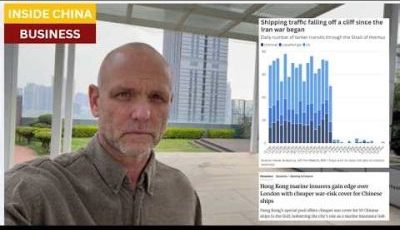
More Iran War fallout: Maritime insurance industry shifts from London to China
or go to
Aletho News Archives – Video-Images
From the Archives
The Biggest Threat to Peace in Middle East
By Dr. Elias Akleh* | Sabbah Report | May 24, 2010
A build up of heightened tension in the Middle East is escalating in the last few weeks. American and Israeli postures towards Lebanon, Syria, and Iran have become more threatening. Listening to speeches of political leaders one hears talks only about war not peace. Iranians and Israelis are continuously training hard for a possible showdown. Both sides are conducting extensive war games every month. This led Syrians to claim that Israel is preparing for a soon-to-come another war. The Jordanians also are warning that current stalemate of the peace process is an indication of a war breaking out this summer. The Russian President and his army chief hinted, a few months ago, that the US and Israel were planning for an attack on Iran.
Indeed Iran is, as it has been for last few years, the target of most of the threats and accusations of supporting terrorism. Escalating incitement against Iran the American Defense Department sent last month (April) to Congress a report on Iran’s military claiming Iran could develop intercontinental ballistic missiles capable of reaching the US by 2015.
Ignoring the fact that N. Korea, India, Pakistan, and Israel are proven to have nuclear weapons while Iran does not, the US Secretary of State Hillary Clinton chose in her speech, to the nuclear Non-Proliferation Treaty review conference at the UN, to focus on Iran’s alleged nuclear ambitions putting the whole world at risk as she put it. According to Clinton Iran’s acquisition of nuclear weapons, rather than Israel’s more than 200 nuclear bombs, is destabilizing the Middle East. She called on the world’s nations to rally around US efforts to hold Iran, not other nuclear countries, to account.
The accusation that Usama Bin Laden is living comfortably in Iran had received a boost after the broadcast of a documentary called “Feathered Cocaine”. This echoed the June 2003 claims of the Italian newspaper Corre de la Sierra that Bin Laden was in Iran according to some intelligence report, and according to Richard Miniter’s book “Shadow War”. … continue
Blog Roll
 Aletho News
- German journalist threatened with homelessness as German court upholds EU sanctions in landmark free speech case
- US Tells Allies That Ukraine-Bound Arms Could be Sent to Middle East
- Organized terrorism: Iran condemns killing of its diplomats in Lebanon
- Why could Gaza enter the regional war?
- Hamas official rejects Mladenov Plan linking disarmament to Gaza reconstruction
- Two Primary Elections for the Soul of ‘America First’
- Japan Clings to US Vassalage Despite Energy Crunch Caused By Iran War
- US Seeks Control Over Global Energy Infrastructure – Kremlin
- US senators target Orban government for standing up to Zelensky
- The deep-rooted culture of corruption in Ukraine
- If Americans Knew
- Researchers at Human Rights Watch Resign Over Blocked Report on Palestinian Refugee Return
- Jewish Groups Are Backing a War Americans Don’t Want
- Eric Fingerhut Thinks He’s the President of the Jews
- Top Jewish Philanthropists, Rabbis Urge Israeli President to Take Action Against ‘Jewish Extremists’
- Don’t Be Fooled. Zionist Leaders Have Always Wanted to Control Southern Lebanon
- Israel’s widespread use of torture is a core element of its genocide against the Palestinian people
- In Israel’s War on Iran, Many Middle East US Bases Rendered “All But Uninhabitable”
- ‘Burn the lawn’: Israel pursues ‘Rafah model’ in southern Lebanon
- A genocide here, an amputation there
- Reports: Iran mobilizing 1M fighters, Israel-US run low on ammo, Israeli army faces shortage – Not a ceasefire Day 168
- No Tricks Zone
- Devastating Assessment Of Comirnaty Vaccine By Former Senior Pfizer Europe Toxicologist
- New Study: CO2 Is ‘Effectively Negligible’ As An Explanatory Climate Change Factor Since 2000
- Former Pfizer Toxicologist Dr. Helmut Sterz Tells Bundestag Hearing Pfizer Vaccine Should Have Never Been Approved
- Energy Expert: Germany’s Nuclear Phaseout Was A “500 Billion Euro Mistake”
- New Research: South Australia’s Mid-Holocene Sea Surface Temperatures Were 4°C Warmer Than Today
- Storing Green Energy To Last Germany 10 Days Would Require A 60-Million Tonne Battery
- New Studies: UK Sea Levels Were 4 Meters Higher Than Today During The Mid-Holocene
- Destructive Green New Deal: German Energy And Metal Group Warns Of Drastic Crisis
- New Study Documents A 20-Year Pause In Arctic Sea Ice Decline – Driven By Internal Variability
- Wake-up Call: Survey Shows Majority Of Germans Now Favor Postponing Climate Targets!
 Aletho News