Presidential Understatement on Afghanistan
By JUDITH LeBLANC | CounterPunch | May 2, 2012
On May 1, in a televised address from Afghanistan, President Obama said, “There will be difficult days ahead. The enormous sacrifices of our men and women are not over.”
That’s an understatement.
In fact the current US policy in the region demands of the Afghan people a massive sacrifice as well.
Without a new strategy — not the slow downsizing of the Afghanistan war over the next decade — there will indeed be difficult days ahead.
Instead of helping, the continued US presence jeopardizes the Afghan people’s future, as it does our future here at home.
The future of the Afghan economy and its people’s aspirations is stalled by the unwillingness to leave sooner rather than later. Corruption and graft are bred by US funding and the occupation.
Furthermore, the US has no clear strategy for a negotiated peace or a framework for sustainable economic development in Afghanistan.
Today, two-thirds of the US people across the political spectrum want the war to end now. In poll after poll they readily connect the government’s ability to deal with the economic crisis in our communities to ending the war.
The longer the troops stay in Afghanistan, the more desperately needed resources will be withheld from our cities, schools, libraries and hospitals.
The projected 2013 price-tag for the war will be $88 billion dollars, while unemployment hovers at 10 percent and triple that among young people of color. The current Pentagon budget is $800 billion a year without a real cut in sight.
As long as the troops stay in Afghanistan, and the US pursues a militarized foreign policy, the possibility of US sustainable economic development and a stronger democracy is as impossible here as it is in Afghanistan.
The White House fact sheet issued along with Obama’s speech emphasized that the Strategic Partnership Agreement itself “does not commit the United States to any specific troop levels or levels of funding in the future, as those are decisions will be made in consultation with the U.S. Congress.” And funding from Congress will be requested on an annual basis to support the training, equipping, advising and sustaining of Afghan National Security Forces.”
The agreement just signed leaves us with the yearly Congressional fight over funding the war. A full-throated, massive pressure campaign is needed.
That’s where we have to draw the line and make the fight in the next few weeks to cut the Pentagon budget and for a negotiated peace, not a prolonged downsized war.
The Congressional elections will be the battleground for exerting the popular opinion of ending a war that is not only unwinnable but in fact is a roadblock to both the US and Afghan people from achieving a decent life, schools, healthcare and jobs.
President Obama said in his speech to the nation, “Others will ask why we don’t leave immediately. The answer is also clear: we must give Afghanistan the opportunity to stabilize.”
But the underlying problems in Afghanistan are little served by foreign armies and military “solutions.” The reality is that until the US and NATO forces leave Afghanistan both the Afghan and US peoples will have more than a few difficult days ahead. We’ll have difficult years ahead.
Judith Le Blanc is the Field Director for Peace Action, the largest peace group in the US. She can be reached at: jleblanc@peace-action.org.
Featured Video
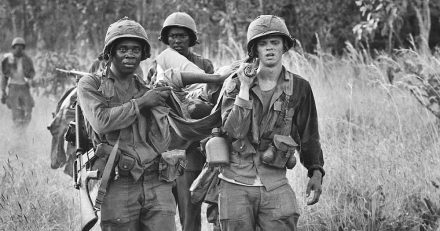
The First Pyrrhic Victory of the Vietnam War
or go to
Aletho News Archives – Video-Images
Frlom the Archives
The 52 Major Jewish American Organizations and Israel Celebrate Passover with the Slaughter of 25 Muslim, Christian and Secular Palestinians
By James Petras • Unz Review • April 8, 2018
Introduction
As of April 7, nearly three thousand unarmed Christian, Muslim and secular Palestinians have been wounded, over three dozen are in critical condition and at least twenty-five unarmed protestors, including children have been assassinated by hundreds of Israeli snipers and heavily armed troops shooting tank shells into crowds of civilians protesting their decades of incarceration by the racist Israeli state.
The Israeli government praised the ‘restraint and morality’ of the IDF, as did the fifty-two Major Jewish American Organizations (MJAO) who largely control the US Congress. These grotesque massacres began during the Christian Holy Week on Good Friday and Easter, coinciding with the Jewish Passover. The self-righteous officials of the MJAO and their relatives and friends broke matzos at joyful Seders as the blood of Palestinians soaked into ground at the fence containing the largest open-air prison camp in history, Gaza.
While tribal loyalties bonded the Israeli and Jewish American leaders, the politicians of the Western oligarchic electoral regimes refrained from criticizing the shocking display of brute force and even defended Israel’s cold blood mass killings of Palestinian civilians in their Gaza prison.
This paper will discuss and analyze the reasons for Israel’s willing Western accomplices and the centrality of its fifth column in the United States. … continue
Blog Roll
 Aletho News
- Just Get Out! Now!
- Unpacking glaring contradictions in US-Zionist justifications for war against Iran
- Iranian model of warfare bleeds US dry while Persian Gulf states watch and learn: Analyst
- IRGC orders ‘defeated’ US to evacuate industrial facilities in region
- Hegseth’s call for ‘no mercy’ to Iranians deemed war crime
- Iran War Exposes Limits of US Military Power – Journalist
- Even The Neo-Cons Admit The Iran War Is Failing
- Inside the Caucasus Drone Corridor Fueling Tensions With Iran
- ‘Not our war’: Trump’s naval coalition to reopen Strait of Hormuz dead in the water
- Iran declares support centers for USS Gerald R. Ford legitimate targets
- If Americans Knew
- ‘I Liked the House’: When Israeli Soldiers Turn Palestinian Homes into Barracks
- ‘They Were All I Had’: Lebanese Father Buries Parents, 4 Daughters Killed by Israeli Bombing
- Israel and its supporters are causing attacks on Jewish institutions. Case in point: Michigan synagogue tragedy.
- These are the casualties and cost of the war in Iran 2 weeks into the conflict
- Chicago Teachers Union accuses AIPAC of swaying elections with ‘dark money’
- Predictions of another 9/11, amid Israel-US killing spree – Not a ceasefire Day 157
- As US-Israel war on Iran rages, Gaza faces massive dust storm – Not a ceasefire Day 156
- No let-up in attacks on Gaza as Israel takes on Iran, Lebanon – Not a ceasefire Day 155
- ‘Of Course’: IDF Drops Case Against Soldiers Accused of Raping Palestinian Prisoner
- Don’t Fall for the Regime Change Talk. Israel Is ‘Mowing the Lawn’ in Iran
- No Tricks Zone
- Storing Green Energy To Last Germany 10 Days Would Require A 60-Million Tonne Battery
- New Studies: UK Sea Levels Were 4 Meters Higher Than Today During The Mid-Holocene
- Destructive Green New Deal: German Energy And Metal Group Warns Of Drastic Crisis
- New Study Documents A 20-Year Pause In Arctic Sea Ice Decline – Driven By Internal Variability
- Wake-up Call: Survey Shows Majority Of Germans Now Favor Postponing Climate Targets!
- Televised! Leading German Political Candidate Tells Schoolchildren CO2 Makes Sun Hotter!
- New Study: A Century Warming Of 1.1°C Is ‘Commonplace’ And ‘Not Unusual’ During This Interglacial
- New Study: ‘Internal Noise’ And Volcanic Forcing Can Trigger 10-15°C Warming Within Decades
- Glaciers Worldwide Are Suddendly Surging, Experts Blame Warming!
- Surprising Discovery: Sahara Is Greening…Billions Of Trees Where Once Thought To Be Barren
 Aletho News