WikiLeaks Exposes Internews: USAID-Funded Media Machine Behind Global Influence
Sputnik – 08.02.2025
The infamous US agency USAID funneled nearly half a billion dollars to Internews Network, a non-profit deeply involved in media operations all over the world, WikiLeaks has revealed.
In 2023 alone, Internews Network collaborated with 4,291 media outlets, produced 4,799 hours of broadcasts reaching 778 million people, and trained over 9,000 journalists. Operating in 30+ countries, it has key offices in the US, London, Paris, and regional HQs in Kiev, Bangkok, and Nairobi. But there’s more to the story:
- Founded in 1982, Internews claims to help media outlets achieve financial sustainability and promote “trustworthy information” – a mission it pursues with hefty US government funding.
- By 2023, the organization had partnered with nearly 4,300 media outlets, trained thousands of journalists, and simultaneously supported social media censorship initiatives.
- USAID alone poured $472.6 million into Internews, though the organization also received funding from AOL-Time Warner Foundation, the Bill & Melinda Gates Foundation, and other private donors.
- Grants include $10.7 million from USAID to support “high-quality responsible journalism” in Liberia and $11 million for “media enabling democracy” in Moldova, per datarepublican.com.
- The US State Department chipped in $1.48 million to establish “safe, accessible, and life-saving information services” in South Sudan.
- Another $19.5 million USAID grant was issued to Internews to “position Jordanian society to effectively advocate for citizen-driven interests”.
- Adding to the intrigue, Internews CEO Jeanne Bourgault and other key figures recently had their bios scrubbed from the organization’s website — but WikiLeaks, noticing the move, helpfully provided archived copies.
Russian media reach soars as NATO eyes countermeasures – report
RT | January 30, 2025
A fresh NATO report highlights a sharp increase in the reach of Russian state media outlets RT and Sputnik, particularly in Africa and the Middle East, where the news outlets have gained millions of new followers.
The report, published on Tuesday by the NATO Strategic Communications Centre of Excellence (StratCom COE), examines how Russian media operations have expanded their influence after the escalation of the Ukrainian conflict in early 2022. With Russian state-backed media subjected to blanket bans in the West, the outlets diverted their resources elsewhere.
According to the report, RT Arabic saw its audience grow by ten million users since the breakout of fighting between Ukraine and Russia. Sputnik Arabic also significantly increased its content output, posting 30–35% more frequently, while the news agency’s engagement on social media surged by 80%. Russian embassies in Africa also saw a 41% rise in social media followers, reflecting a broader trend of growing Russian media influence in non-Western regions, the report notes.
It also claims the outlets have been capitalizing on “anti-colonial narratives” and overall frustration with Western policies, particularly in Africa, and blames this on historical ties to the Soviet Union that still shape public perceptions there. In some cases, the narratives have resonated strongly with audiences already skeptical of Western institutions like the International Monetary Fund and the International Criminal Court, the report notes.
While StratCom COE projected its findings to the entirety of the Global South, the report actually examined the work of Russian media – as well as social media activities it had linked to Russia without any solid evidence – in Egypt, Mali, Kenya, South Africa and the UAE.
The authors of the report appeared to struggle with terminology, rejecting the ‘Global South’ over an “increasing pushback” against the name, and shot down the term ‘majority countries,’ claiming it has been promoted by assorted “malign actors” to push their agenda. Instead, the report uses the term ‘Multi-aligned Community,’ vaguely defining it as “states existing outside of the Western environment who have exhibited a preference for aligning or partnering with chosen states depending on specific spheres or issues.”
In response to the expanding reach of Russian media, the NATO report proposes new countermeasures aimed at reducing Moscow’s ever-growing influence. One recommendation is to establish a NATO-led initiative to engage with audiences in Africa and the Middle East, improving direct communication and addressing concerns about Western policies.
The report also suggests that NATO should work with local media outlets to “counter disinformation” and to bankroll local “independent journalism.” It also calls for stronger partnerships with civil society organizations to promote diverse viewpoints and counter what it describes as “one-sided narratives” from Russian state media.
Mussolini Was Not a Dictator
Tales of the American Empire | January 16, 2025
One goal of this channel is to teach people that much of what they learned in school and from news media is false. A good example is propaganda that Italian leader Benito Mussolini was a dictator. This is false, Italy’s dictator during World War II was Victor Emmanuel III who appointed Mussolini as prime minister in 1922 then dismissed and arrested him in 1943. He was king of Italy and part of European royalty so was excused from blame for bloody events. His commoner henchman Benito Mussolini was deemed responsible and characterized as an evil dictator. Victor Emmanuel was never charged with war crimes and this axis dictator remained king of Italy until 1946 when he retired to live in luxury in British held Alexandria.
_____________________________
“Was Fascism the Height of Abomination”; Pierre Simon; Unz.com; March 28, 2024; https://www.unz.com/article/was-fasci…
“The Machinery of Fascism Revisited”; Jeffery Tucker; Brownstone Institute; May 5, 2024; https://brownstone.org/articles/the-m…
Related Tale: “The Anglo-American War on France”;  • The Anglo-American War on France
Related Tale: “Blundering General Mark Clark”; • Blundering General Mark Clark
Russian oil product exports shoot up – Bloomberg
RT | January 17, 2025
Russia’s refined fuel exports have surged to their highest level in nearly a year, even as the US imposed new sanctions on the country’s energy sector last week, Bloomberg reported on Thursday.
Seaborne shipments of Russian petroleum products hit an 11-month high, averaging 2.5 million barrels per day (bpd) in the first ten days of January, the outlet said, citing data from analytics firm Vortexa. The surge marks a 12% increase compared to December’s daily average and represents the highest level since February 2024, according to the report.
The US slapped a new round of sanctions on Russia last week in coordination with the UK. The measures targeted major Russian oil companies such as Gazprom Neft and Surgutneftegas, as well as dozens of vessels allegedly used to transport Russian oil in defiance of Western restrictions, which the US has described as a ‘shadow fleet’.
Moscow has condemned the sanctions, calling them “illegal,” with Kremlin spokesman Dmitry Peskov warning that they could destabilize global energy markets.
The latest round of sanctions targets more than 180 tankers allegedly involved in Russian trade, primarily focusing on crude oil shipments. However, only about 4% of petroleum products exported between January 1 and 10 were transported on sanctioned tankers, data from Vortexa, showed. Additionally, there has been no deviation observed in the voyages of these vessels.
The recent surge in Russia’s petroleum products exports is primarily driven by surging shipments of diesel and fuel oil, the outlet said. Revenue gains from fuel exports in December exceeded the decline in crude oil earnings, supported by soaring gasoil flows and higher prices, Bloomberg said citing the International Energy Agency (IEA).
Diesel and gasoil exports, which make up about 40% of Russia’s refined-fuel shipments, jumped 17% from December levels to 1.08 million bpd, the highest since last February. Shipments from Baltic ports rose by over 50%, contributing to the growth, data showed.
Fuel oil flows also increased, reaching 792,000 bpd which represented a 19% increase and the highest level since July 2023. Volumes to Africa saw the most significant rise.
Battle for Tech Metals: What Are 17 Rare Earth Elements and What Are They Used For?
By Ilya Tsukanov – Sputnik -10.01.2025
Whether it’s Greenland, Ukraine, West Africa or East Asia, rare earths are an element of the global geopolitical competition hiding just below the surface. What are the rare earth elements, where are they concentrated, and what are their major uses? Check out our explainer for a detailed breakdown.
Basic Facts
Rare earth minerals are a group of 17 silvery-white soft heavy metals, mostly consisting of the lanthanides, a family of 15 elements grouped together in the Periodic Table, plus scandium and yttrium, which have similar chemical properties and are often found in deposits alongside the others.
Despite their name, rare earths aren’t especially rare, with one of the rarest – lutetium, some 200 times more common than gold. Rather, what makes the resources rare is finding them in large, easy to find and mine clusters.
Rare Earths and Their Uses
Lanthanum (La): Used in nickel-metal hydride batteries for hybrid vehicles, lighting, camera lenses and other special glass, and as a catalyst for petroleum refining.
Cerium (Ce): Added to an array of alloys for increased strength and corrosion protection, magnets, for burn treatments, glass polishing agents, lightbulbs and household wares including ceramics.
Praseodymium (Pr): Key component for aircraft engine-grade high-strength alloys, powerful magnets (including for use in wind turbines), tough didymium glass, and fiberoptic cables.

USGC data-based map of global rare earth element mines and known strategic reserves by country. © Photo : Stratfor
Neodymium (Nd): Used for everything from magnetotherapy to magnetic motors, microwave communications, microphones, headphones, loudspeakers, hard drives, automotive electronics, fluorescent and energy-saving lamps and lasers.
Promethium (Pm): Key component for luminous paint, portable X-rays, and atomic batteries for critical electronics, from the military and aerospace to pacemakers.
Samarium (Sm): Active ingredient in a popular cancer-cell killing agent; used in combination with other elements in magnets, lasers and nuclear reactor control rods for neutron absorption.
Europium (Eu): Another excellent neutron absorber, as well as red phosphor for TVs, blue color in LEDs, and therapeutics tool.
Gadolinium (Gd): Active ingredient for MRI drugs. Also used in nuclear propulsion systems, metallurgy, microwave and magnetic refrigeration.
Terbium (Tb): Key tool for chemical screening; green phosphor for TVs and monitors, used in lighting, military grade sonar and other sensors.
Dysprosium (Dy): Used to make powerful permanent magnets, lasers and lighting, electric drive motors for EVs and wind turbines, transducers, resonators, and dosimeters for measuring ionizing radiation.
Holmium (Ho): Another neutron-absorber useful for radioimmunotherapy, magnets, as well as optics, microwave, medical, dental and laser surgery equipment.
Erbium (Er): Added to lasers and optics used in medicine, as well as optical communications, with strong neutron-absorbing qualities. Also useful for chemical analysis and crystal growth.
Thulium (Tm): Used in military and industrial-grade lasers, as a source of radiation for portable X-rays, for meteorology and high-temperature superconducting tools, and popular anti-counterfeiting agent.
Ytterbium (Yb): Key element in X-ray components, memory devices, tunable lasers, amps and displays; metal-strengthening component and burnable poison for controlling nuclear reactions.
Lutetium (Lu): Used in petroleum refining, polymerization, lithography, tomography, as a phosphor for some light bulbs. Also used for tumor treatment, and to build the world’s most accurate atomic clocks.
Scandium (Sc): Key ingredient for high-grade lightweight alloys for everything from military and commercial aircraft to sporting equipment, small arms, high intensity discharge lamps, dentistry, and as an oil refinery tracing agent.
Yttrium (Y): Another metal-strengthening alloy. Also used for high-temperature superconducting, a surprising array of medical applications (from drug labeling and cancer treatment to surgical needles) as deoxidizer and nodulizer, the red color in cathode ray tubes, radar and synthetic gems.
Algeria Parliament accuses French President of ‘blatant interference’ in internal affairs
MEMO | January 7, 2025
The Algerian Parliament accused French President, Emmanuel Macron, on Tuesday of “blatant interference” in the North African country’s internal affairs, Anadolu Agency reports.
Macron, on Monday, criticised Algeria, calling the detention of Franco-Algerian writer, Boualem Sansal, at Algiers Airport in November a “disgraceful matter”.
In a statement, the People’s National Assembly, the first house of parliament, called Macron’s remarks “irresponsible” and represented an “affront to Algeria’s sovereignty and dignity” in a case currently under judicial review under Algerian law.
The statement termed Macron’s comments an “overt attempt to tarnish the image of Algeria and its sovereign institutions.”
The Assembly emphasized Algeria’s firm rejection of any foreign interference, particularly regarding issues related to human rights and freedoms.
“Algeria, which endured horrific violations during the French colonial era, will not accept external lessons on these matters,” the statement said.
Such actions are “unacceptable to the Algerian people and will not deter Algeria from its independent path. Instead, they strengthen its resolve to protect its sovereignty and dignity,” it added.
The Assembly called on French authorities to respect the principles of international relations, including mutual respect.
During his meeting with French ambassadors at the Élysée Palace on Monday, Macron claimed that Algeria “prevented a seriously ill man from receiving treatment” and called for Sansal’s release.
“We who love the people of Algeria and its history urge its government to release Boualem Sansal,” he said.
Two weeks earlier, Algerian President, Abdelmadjid Tebboune, accused France of “sending an illegitimate figure” – an apparent reference to Sansal – to claim that parts of Algeria’s territory once belonged to another country.
Sansal, a former industry ministry official dismissed in 2002, had previously asserted in French media that large parts of north-western Algeria historically belonged to Morocco.
The Algerian authorities arrested Sansal on 16 November at Algiers Airport upon his return from France.
Local media reported that he was charged under Article 87 of the Penal Code, facing accusations of undermining national unity and territorial integrity, according to his defence team.
Ukraine’s ‘Second Front’ in Africa: Zelensky ‘Will Bite Dust’ There
By Oleg Burunov – Sputnik – 30.12.2024
The Kiev regime, unable to defeat Russia on the battlefield, has opened a “second front” in Africa by aligning with terrorist groups in Mali and Niger, both of which have already severed diplomatic ties with Ukraine, said the Russian Foreign Ministry.
Ukraine’s opening of a “second front” on the African continent is “a desperate move aimed at media sensation, with no clear vision and strategy,” Professor Alexis Habiyaremye, Research Chair in Industrial Development at the University of Johannesburg, told Sputnik.
Context for Ukraine in Africa
It is unclear what Ukraine’s strategy in Africa is “beyond participation in destabilization” of the continent, he said, mentioning the Confederation of Sahel States, which are “led by a vision of sovereignty that is stronger than Ukrainian hatred and racism.”
“African countries are motivated by the determination to wrest their full independence from the neocolonial Western powers, while Ukraine is acting erratically based on anger and frustration. [Volodymyr] Zelensky and his agents will certainly bite the dust in Africa,” Habiyaremye stressed.
Ukrainian intelligence services “have unashamedly claimed to collaborate” with terrorist groups in Africa, “hoping to destabilize Russian security partners, and by doing so, to discredit Russia,” the analyst added, pointing to “the blanket impunity granted to Ukraine by its Western backers.”
Why is the Effort Fruitless?
The professor singled out the Sahel region, where he said the Kiev regime relied on “French logistics and American satellite technology” to help “terrorists ambush troops of Malian Armed Forces.”
“By allying itself with terrorists to attack African countries, Ukraine has squandered any possible goodwill it could hope to get from Africa and the rest of the Global South. It is therefore unlikely to achieve anything of significance as it tied its lot with that of the terrorists,” Habiyaremye concluded.
Russian Foreign Ministry spokeswoman Maria Zakharova earlier stated that Mali’s and Niger’s decision to sever diplomatic relations with Ukraine indicates the African countries’ growing understanding of the terrorist nature of the Kiev regime.
Pentagon’s African Biolabs: Russia Warns of Global Pathogen Threat
Sputnik – 24.12.2024
The US military-biological presence on the African continent is growing at a rapid pace, Deputy Chief of the Radiation, Chemical and Biological Protection Forces of the Russian armed forces Major General Aleksey Rtishev said on Tuesday.
“The documents at our disposal confirm that the US military-biological presence on the African continent is increasing rapidly,” Rtishev told a briefing.
The United States deployed branches of naval military medical center in Ghana and Djibouti, Rtishev added.
“Active work in the region is being carried out by research organizations of the US Department of Defense. For example, branches of the military medical center of the naval forces are located in Ghana and Djibouti, where active work is being carried out in natural foci of diseases, isolation and sequencing of pathogens,” Rtishev said.
American specialists capable of enhancing the pathogenic functions of microorganisms are actively working in Africa, Rtishev said. He added that the US government views the region as a rich reservoir of dangerous infectious agents and a testing ground for experimental drugs, and Washington is using a biological risk management system in Africa that has already been tested in Georgia and Ukraine.
The US is actively engaged in:
- Nigeria: A joint medical research center and a military medical laboratory for the armed forces were established in 2024.
- Kenya: The US Army Military Medical Center has deployed a network of field stations to monitor the spread of infectious diseases throughout Equatorial Africa.
- Senegal: A new $35 million laboratory facility is nearing completion. This project involves the same Pentagon contractors that have worked in the former Soviet Union, including Armenia, Georgia, Kazakhstan, and Ukraine.
- Ghana and Djibouti: The US. has established branches of the National Naval Medical Center and is actively addressing natural disease outbreaks and isolating pathogens.
- The United States is conducting a project in 18 African countries to study the characteristics of infection occurrence and the resistance of pathogens to medical treatments.
According to Aleksey Rtishev, Washington is deliberately exploiting the economic challenges African nations face in the health sector to organize research initiatives, the general warns. Rtishev noted that the US fears that Russia and China could expose American military and biological programs.
The United States often does not disclose the ultimate goals of its experiments to partners, who are often unaware of the risks involved, he said.
French troops begin departure from Chad
Press TV – December 21, 2024
A contingent of 120 French soldiers has left Chad following the country’s decision to end its defense cooperation pact with Paris.
French troops were seen boarding their plane on Friday and departing from N’Djamena airport.
The withdrawal process formally began earlier this month with the departure of two French Mirage warplanes.
France still has about 1000 troops stationed in Chad, with the full drawdown expected to take several weeks.
The terms and conditions of the complete withdrawal, including whether any French troops will remain in Chad, are yet to be finalized between the two countries.
Chad announced on November 28 its decision to end a defense accord with Paris mainly dating from independence in 1960.
“At midday, 120 French soldiers took off from the military airport of N’Djamena on board an Airbus A330 Phoenix MRTT, headed for France,” the ministry said in a statement on Facebook.
The departure of French soldiers took place in the presence of Chadian military authorities, the statement said.
The move comes after France had already pulled its forces out of Mali, Burkina Faso, and Niger in recent years.
This departure signals the end of decades of French military presence in the Sahel region as the anti-French sentiment continues to grow.
Congo’s Health Ministry Confirms ‘Disease X’ is Malaria
Outbreak began shortly after Congo’s rollout of the novel R21 virus-like particle malaria vaccine
By Nicolas Hulscher, MPH | Courageous Discourse | December 17, 2024
The Democratic Republic of Congo’s health ministry announced today that the previously unidentified illness coined as ‘Disease X’ by the media and Africa CDC circulating in the Panzi health zone has been confirmed as a severe form of malaria:
“The mystery has finally been solved. It’s a case of severe malaria in the form of a respiratory illness,” the health ministry said in a statement, adding that malnutrition in the area had weakened the local population, leaving them more vulnerable to disease.
This confirms our observations made last week, where we expected this to be malaria based on early testing. However, health agencies continued to ignore that possibility until now:
This entire situation reinforces how the mainstream media consistently attempts to generate as much fear as possible. They were caught propagating severe malaria coupled with malnutrition as the ominous ‘Disease X,’ fueling unnecessary panic:

In an emailed statement to USA TODAY, the World Health Organization (WHO) still claims it hasn’t conclusively determined the cause of the illness yet and lab testing is ongoing. This is similar to when the WHO falsely claimed that an individual in Mexico died of H5N2 bird flu. Soon after the claim, the Mexican government clarified: “A team of experts from the Health sector ruled that the person identified with influenza A (H5N2) did not die because of this virus, but as a result of chronic conditions that generated septic shock.” They added, “The diseases he suffered were long-term and caused conditions that favored the failure of several organs, specialists concluded.” The individual suffered from kidney disease, type 2 diabetes, and systemic arterial hypertension for more than 14 years.
Right before this malaria outbreak began, in late October, the Congo introduced the novel R21 malaria vaccine into their national immunization program. “R21 is a virus-like particle comprising the central repeats of Asn-Ala-Asn-Pro (NANP) and C-terminal sequence of circumsporozoite protein fused to the hepatitis B surface antigen (HBsAg).” It would not be surprising if this new vaccine played a significant role in triggering or exacerbating the severe malaria outbreak.
‘Disease X’ Situation Update
Coordinated fear campaign, possible malaria, and “poor quality” samples as cases continue to rise.
By Nicolas Hulscher, MPH | Courageous Discourse | December 12, 2024
In the last few weeks, an unidentified flu-like illness has been detected in the Democratic Republic of the Congo amidst warnings from the Biopharmaceutical Complex about imminent pandemics. Ever since, the mainstream media and the Africa Centres for Disease Control and Prevention (CDC) have coined the illness as “Disease X”:

This indicates that the corporate media and biopharmaceutical complex have already launched a coordinated fear campaign to hype up their long-awaited Disease X. Strangely, we still don’t have concrete answers as to what this ‘Disease X’ actually is, even after Jean Kaseya, the head of Africa Centers for Disease Control and Prevention, told reporters on December 5th that more details about the disease should be known in the next two days. However, it took five days for the first results to be shared: on December 10th, the World Health Organization said “Of the 12 initial samples collected, 10 tested positive for malaria, although it’s possible that more than one disease is involved.”
Today, the Africa Centres for Disease Control and Prevention live streamed a special briefing regarding the so-called ‘Disease X’. In the briefing, they shared that the samples they received “are of poor quality” and were “poorly preserved”. As a result, the lead investigator stated, “Therefore, I don’t think we will obtain any relevant information.”

The Africa CDC briefing also reported an increase of 147 cases since last week, bringing the total case count to 527. 32 deaths were recorded in health facilities, while 44 were reported at the community level.

While initial lab results suggest this could simply be malaria, the coordinated fear campaign persists. Even the most recent Africa CDC briefing overlooks the possibility that it could be malaria. This raises questions about whether something else might be at play. We will continue to monitor the situation closely.
Nicolas Hulscher, MPH
Epidemiologist and Foundation Administrator, McCullough Foundation
Algeria condemns French ambassador over ‘hostile plans’
Al Mayadeen | December 15, 2024
Algeria summoned French Ambassador Stephane Romatet for what it dubbed “hostile plans” by the French intelligence service, Algerian media reported on Sunday,
Romatet was summoned to the Foreign Ministry last week to answer allegations of French intelligence participation in destabilizing efforts in Algeria, according to the state-run publication El Moudjahid.
The summoning came following reports that the French intelligence service had recruited former Algerian terrorists to destabilize the country’s security.
It referenced the instance of Mohamed Amine Aissaoui, who recently made a live confession on Algerian television about a suspected plot orchestrated by French intelligence.
Algerian officials told the French envoy that such measures “won’t go unanswered” and that they will not stand idly by in response to “attacks on its sovereignty,” according to the newspaper.
There was no French response to the Algerian media claim.
This event adds to Algeria and France’s already difficult ties, which have been hampered by disagreements over historical memory, migration, and the Western Sahara conflict.
Last month, the Algerian Association of Banks and Financial Institutions banned all import and export transactions with France in reaction to its acknowledgment of Moroccan sovereignty over the Sahara.
Morocco primarily controls Western Sahara, but the Polisario Front has advocated for the territory’s independence since before Spain, its colonial ruler, withdrew in 1975. The United Nations classifies it as a “non-autonomous territory.”
Rabat, which governs around 80% of the territory, supports a plan for limited autonomy for Western Sahara under Moroccan sovereignty. In contrast, the Polisario Front is demanding a UN-supervised referendum on self-determination, which was intended to be established following the ceasefire in 1991 but has yet to be implemented.
Featured Video
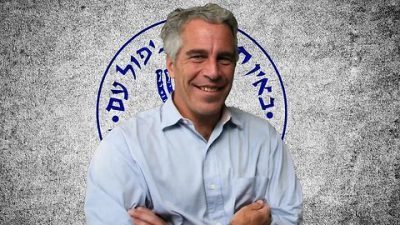
Jeffrey Epstein’s ‘one single cause’: Israel
or go to
Aletho News Archives – Video-Images
Book Excerpt
Leslie Wexner’s Inner Demon
BY WHITNEY WEBB |
UNLIMITED HANGOUT| JUNE 10, 2022
This short excerpt from Whitney Webb’s upcoming book “One Nation Under Blackmail” examines an obscure media profile of Leslie Wexner, Jeffrey Epstein’s mentor, from the 1980s that contains disconcerting revelations about Wexner’s personality and his inner world. … continue
Blog Roll
Recent Comments
loongtip on Von der Leyen to have new secu… papasha408 on First Gaza, then the world: Th… papasha408 on Is Nixing Aid to Israel a Pois… papasha408 on Japan to Sign Up For NATO’s Uk… Redracam on Iran Willing to Dilute Enriche… loongtip on When Threats Replace Evid… loongtip on Zelensky tried to kill the cha… eddieb on I might get killed for posting… Bill Francis on I might get killed for posting… loongtip on Beijing cancels Panama deals a… loongtip on Showdown loongtip on New York Bans Israel-Linked Te…


 Aletho News
- Russia preparing oil lifeline to Cuba – embassy
- Jeffrey Epstein’s ‘one single cause’: Israel
- Instagram suspends Track AIPAC, watchdog tracking pro-Israel lobby spending
- Nouri al-Maliki defends Hashd al-Shaabi as inseparable part of Iraqi security system
- First Gaza, then the world: The global danger of Israeli exceptionalism
- Iran received no concrete US proposal in Oman talks: Security chief
- US mulling new pressure tactic on Iran – WSJ
- World on the verge of uncontrolled deployment of nuclear weapons in space
- Russia warns of countermeasures if Greenland militarized
- Von der Leyen to have new security unit under her command
- If Americans Knew
- Jewish terrorism, apartheid rule the West Bank – Not a ceasefire Day 125
- Why Israel persecutes children like my son Shadi
- In Gaza, One Man Is Searching for the Remains of His Family With a Flour Sifter
- Horrific situation in Gaza, West Bank – Not a ceasefire Day 124
- Mysterious ‘peace’ groups are sending Americans pro-Israel texts
- Epstein files: Western media must stop burying the Israel connection
- Software developer exposes Israeli nonprofits’ massive spending to influence Americans
- Israel preparing for another, more intense Gaza offensive – Not a ceasefire Day 123
- Ronald Lauder’s son-in-law Kevin Warsh emerges as the next Fed chair
- A 14-year-old Palestinian Bled to Death for 45 Minutes as Israeli Soldiers Stood Nearby
- No Tricks Zone
- German Gas Crisis…Chancellor Merz Allegedly Bans Gas Debate Ahead of Elections!
- Pollen Reconstructions Show The Last Glacial’s Warming Events Were Global, 10x Greater Than Modern
- Germany’s Natural Gas Storage Level Dwindles To Just 28%… Increasingly Critical
- New Study Rebuts The Assumption That Anthropogenic CO2 Molecules Have ‘Special’ Properties
- Climate Scientist Who Predicted End Of “Heavy Frost And Snow” Now Refuses Media Inquiries
- Polar Bear Numbers Rising And Health Improving In Areas With The Most Rapid Sea Ice Decline
- One Reason Only For Germany’s Heating Gas Crisis: Its Hardcore-Dumbass Energy Policy
- 130 Years Later: The CO2 Greenhouse Effect Is Still Only An Imaginary-World Thought Experiment
- New Study Affirms Rising CO2’s Greening Impact Across India – A Region With No Net Warming In 75 Years
- Germany’s Natural Gas Crisis Escalates … One Storage Site Near Empty …Government Silent
 Aletho News